Spain is famous for Barcelona, Madrid, and the packed beaches of the Costa del Sol, but the country hides dozens of places that most tourists never find. From medieval hilltop towns to wild desert landscapes and misty ancient forests, the variety is honestly staggering.
I spent years visiting Spain’s big hits before a local friend finally pulled me aside and said, “You’re missing all the good stuff.” She was absolutely right, and this list is my attempt to make sure you don’t make the same mistake.
Albarracín, Aragón
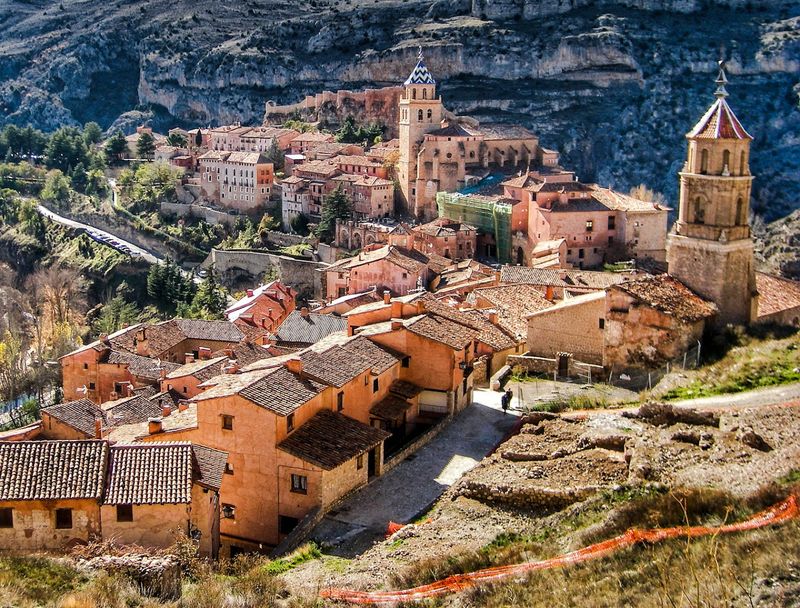
Albarracín is the kind of place that makes you stop mid-step and stare. Built from warm rose-colored stone in the hills of Teruel, this medieval town looks like it was painted by someone with a very dramatic imagination.
The narrow lanes twist unexpectedly, wooden balconies jut out over cobblestones, and the old fortress walls wrap around the hillside like a stone hug.
It regularly tops lists of Spain’s most beautiful villages, yet the crowds never seem to match the hype. Arrive early on a weekday morning and you may have entire streets to yourself, with just the sound of your own footsteps echoing off ancient walls.
Staying overnight is a genuinely good idea here. Once the day-trippers leave, the town takes on a completely different mood.
The pink stone glows in the evening light, the restaurants fill with locals, and Albarracín finally exhales.
Cudillero, Asturias
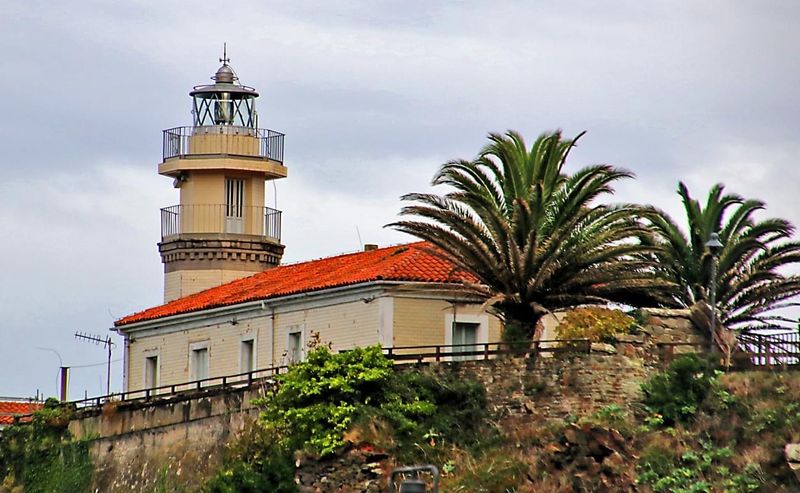
Cudillero is what happens when a fishing village decides to show off. Houses in every shade of yellow, white, and terracotta stack themselves up a steep hillside above a tiny harbor, creating a scene that looks almost too cheerful to be real.
It sits on Spain’s northern coast in Asturias, a region that most sun-chasing tourists skip entirely.
That is very much their loss. The seafood here is outstanding, the pace is slow, and the coastal walks along nearby cliffs reward you with views that rival anything in the south.
Unlike the overdeveloped resorts further down the Spanish coastline, Cudillero still feels like a working village with actual fishermen and actual character.
Head to the upper viewpoints for the best angle on the harbor. Go on a weekday if possible.
The whole place has a beautifully unpolished quality that more famous spots in Spain have long since traded away.
Las Médulas, Castilla y León
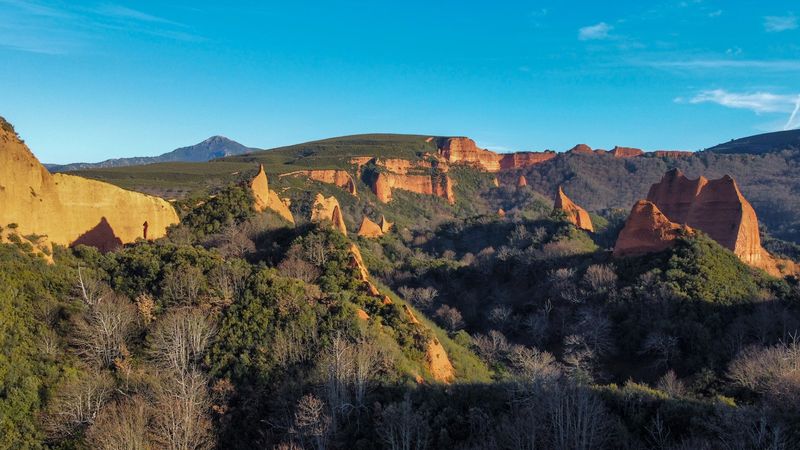
The Romans essentially ate an entire mountain here, and what they left behind is jaw-dropping. Las Médulas was once the largest gold mine in the Roman Empire, and the hydraulic mining technique they used carved out a surreal landscape of red rock towers, deep ravines, and scattered chestnut groves that covers the hillside like nature’s own art installation.
It earned UNESCO World Heritage status, which it absolutely deserves. Yet because it sits tucked away in the province of León rather than near any major city, visitor numbers stay surprisingly manageable.
Sunset is the undisputed star of the show, when the red clay cliffs turn an almost violent shade of orange.
Several walking trails wind through the formations, and a viewpoint called Orellán gives you the full panoramic drama. Pack water, wear decent shoes, and budget at least half a day.
Las Médulas rewards slow exploration far more than a quick photo stop.
Cabo de Gata-Níjar Natural Park, Andalusia
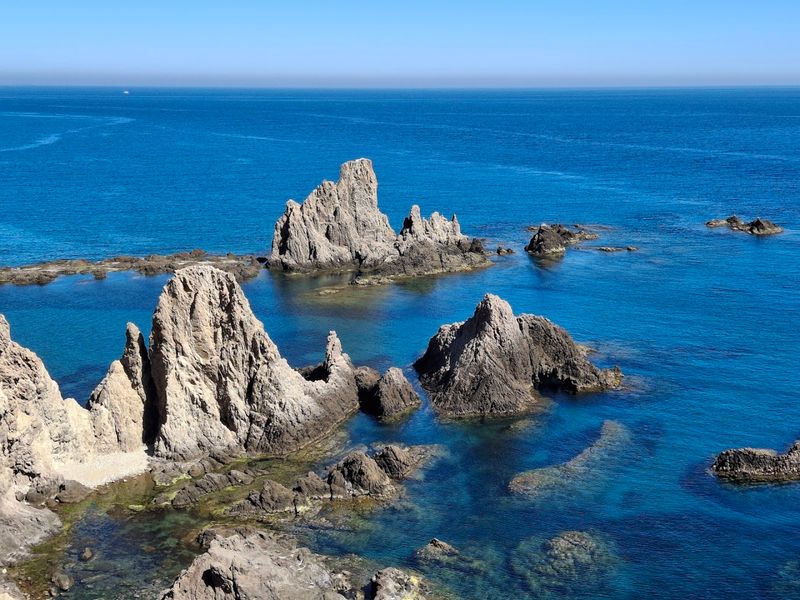
Most people think of Andalusia and picture flamenco, tapas, and packed beach resorts. Cabo de Gata is here to completely rewire that assumption.
This natural park in Almería is one of the driest corners of Europe, and its coastline is genuinely wild: volcanic cliffs, hidden coves, clear water, and zero high-rise hotels in sight.
The contrast between the desert-like interior and the turquoise sea is striking. White villages like San José and Las Negras dot the park, offering simple accommodation, good seafood, and that rare feeling of a place that has not been aggressively packaged for tourists.
Some beaches have seasonal access restrictions to protect wildlife, so checking local information before you go is genuinely useful rather than just polite advice. Early summer or late September are ideal timing windows.
The water is warm, the crowds are thin, and you get all of Andalusia’s sunshine without any of the chaos.
Bardenas Reales, Navarre
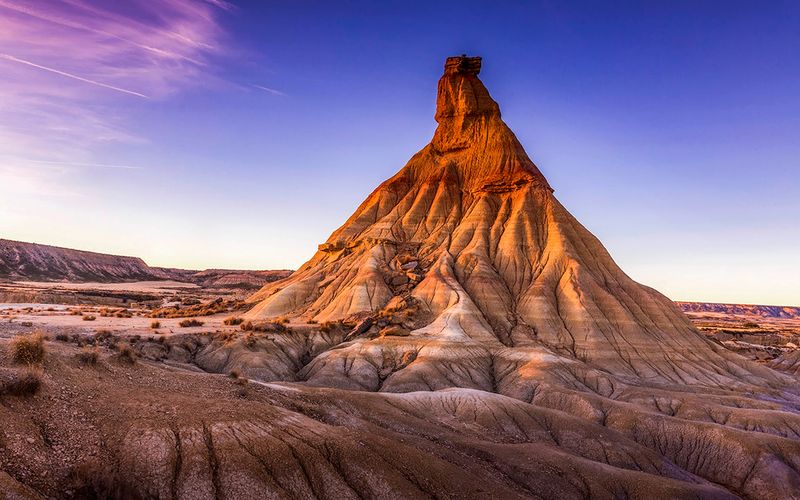
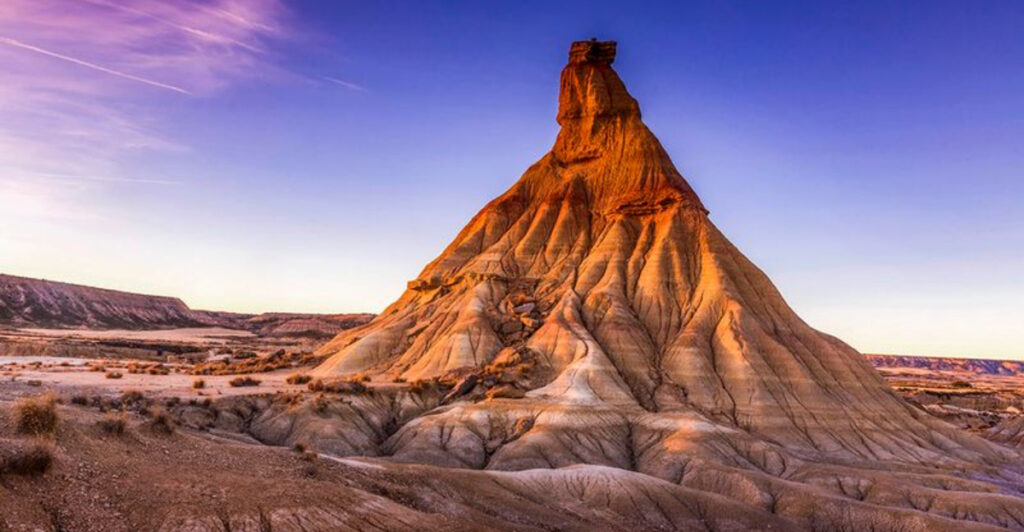
Bardenas Reales looks like someone airlifted a chunk of New Mexico into northern Spain and forgot to tell anyone. This semi-desert natural park in Navarre is full of sculpted clay formations, eroded gullies, flat-topped mesas, and a silence so complete it feels almost loud.
It is a Biosphere Reserve, which gives it official protection and unofficial bragging rights.
Because Bardenas sits inland in Navarre rather than on any obvious tourist circuit, it attracts far fewer visitors than its extraordinary scenery deserves. The formations called cabezos, those distinctive clay mushroom towers, are the park’s most photographed feature and genuinely worth the trip on their own.
Sunrise and late afternoon are the best times to visit, both for the cooler temperatures and the warm light that turns the clay landscape golden. Cycling routes run through the park, and guided 4×4 trips are available for those who want deeper access.
Bring water. Shade is not a feature here.
Ribeira Sacra, Galicia
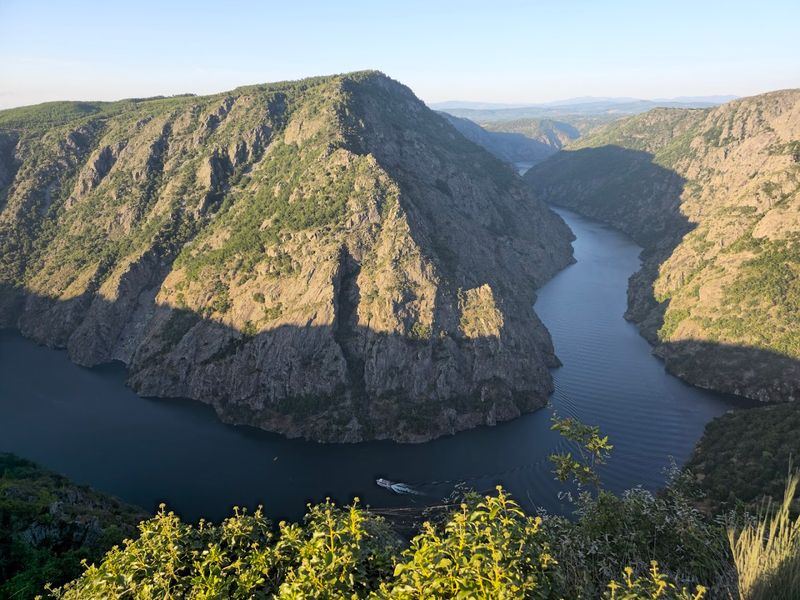
Wine grown on vertical cliffs should not work, but Ribeira Sacra proves that terraced vineyards on near-vertical canyon walls produce some of Spain’s most interesting bottles. The Sil Canyon cuts through this region of Galicia with serious geological drama, and the viewpoints overlooking it are among the most spectacular in the entire country.
Beyond the scenery, Ribeira Sacra is full of Romanesque monasteries, quiet river villages, and walking trails that feel genuinely off the beaten path. Boat trips along the Sil River offer a completely different perspective on the canyon, looking up at those improbable vineyards from the water below.
I visited on a grey October day and found the whole region wrapped in mist and autumn color. It was honestly one of the most atmospheric places I have ever been in Spain.
This is the kind of destination that slow travelers dream about: beautiful, uncrowded, and deeply, quietly satisfying.
Aínsa, Aragón
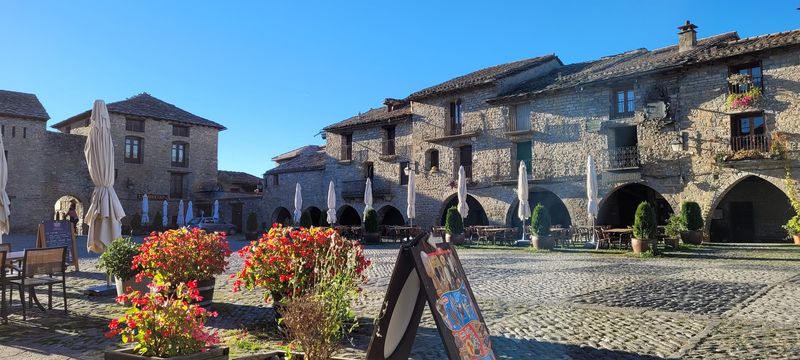
Aínsa has one of the finest medieval squares in Spain, and somehow it still manages to feel like a real village rather than a theme park. The honey-colored stone buildings, the Romanesque church, and the old castle ruins all sit together on a hilltop in the Aragonese Pyrenees with mountain views stretching out in every direction.
It is ridiculously photogenic without even trying.
The town is also a smart base for exploring the Sobrarbe region, which includes Ordesa y Monte Perdido National Park just up the road. Hikers, cyclists, and anyone who gets excited about dramatic mountain scenery will find plenty to keep them busy for several days.
What makes Aínsa special beyond the looks is its atmosphere. The village has restaurants, small shops, and a genuinely relaxed pace that feels lived-in rather than curated for visitors.
It is the kind of place where you plan to stop for lunch and end up staying three nights.
Frías, Castilla y León
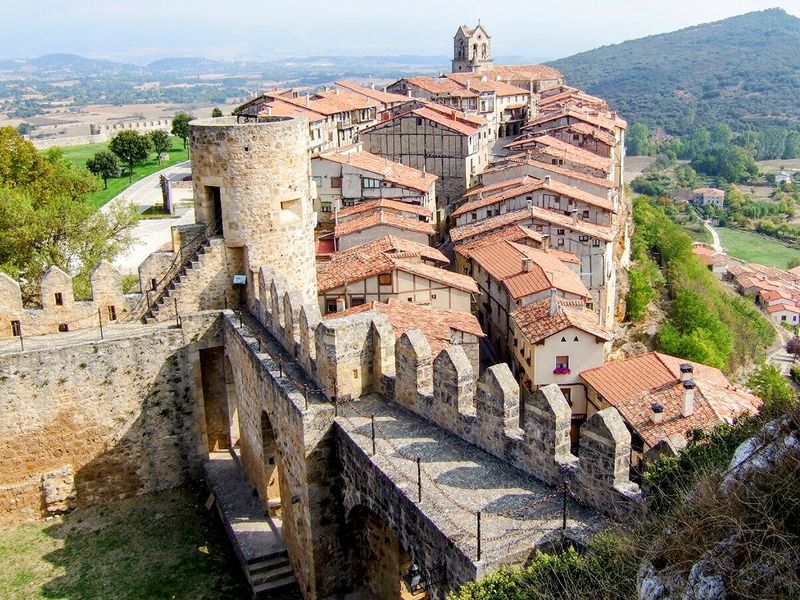
Frías clings to its rocky hilltop like it has absolutely no intention of coming down, and honestly, good for it. Officially one of Spain’s smallest cities, this tiny settlement in Burgos province punches well above its weight in the drama department.
A medieval castle crowns the highest point, and below it, houses literally hang over the cliff edge above the Ebro valley.
The hanging houses are the town’s signature feature, and they look even more precarious in person than in photos. Walking through the medieval streets feels like stepping into a film set, except nobody has cleaned it up or added gift shops on every corner.
Frías is ideal for a slow afternoon of wandering, photography, and mild bewilderment at how such a spectacular place stays so quiet. Pack a picnic, climb to the castle, and spend an hour just looking at the view.
The Ebro valley spreading below you is a genuinely excellent reward.
Garajonay National Park, La Gomera
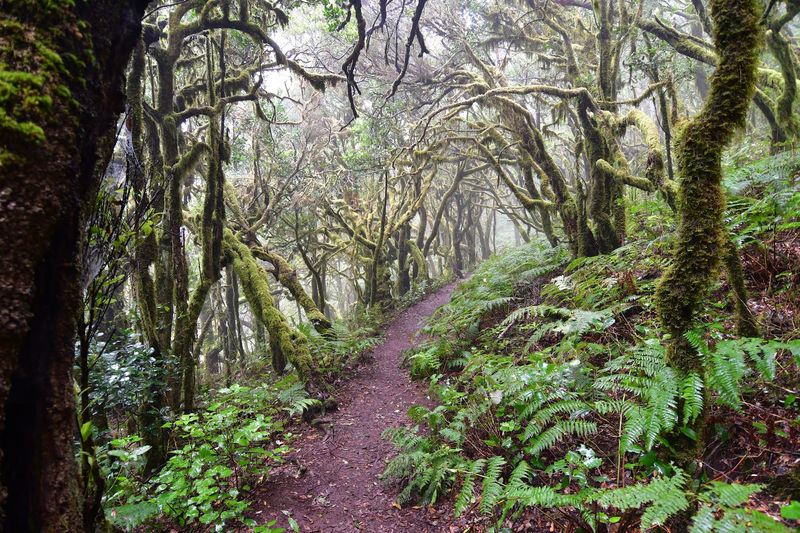
While everyone else is arguing over sun loungers in Tenerife, La Gomera is quietly sitting nearby with one of the most ancient forests on the planet. Garajonay National Park covers much of the island’s central highlands and protects a laurel forest that has survived since before the last ice age.
That is not a typo. It is genuinely prehistoric.
The trails through Garajonay wind through moss-covered trees with twisted trunks, past ravines thick with ferns, and along ridgelines that disappear into low cloud. It feels nothing like the Canary Islands most visitors experience, which is precisely the point.
La Gomera receives a fraction of the tourist traffic that hits Gran Canaria or Lanzarote.
The island is reachable by ferry from Tenerife in about 50 minutes. Bring a light waterproof jacket because the forest creates its own microclimate, and it can be misty and cool even in summer.
That mist, though, is exactly what makes it magical.
Cabrera Archipelago National Park, Balearic Islands
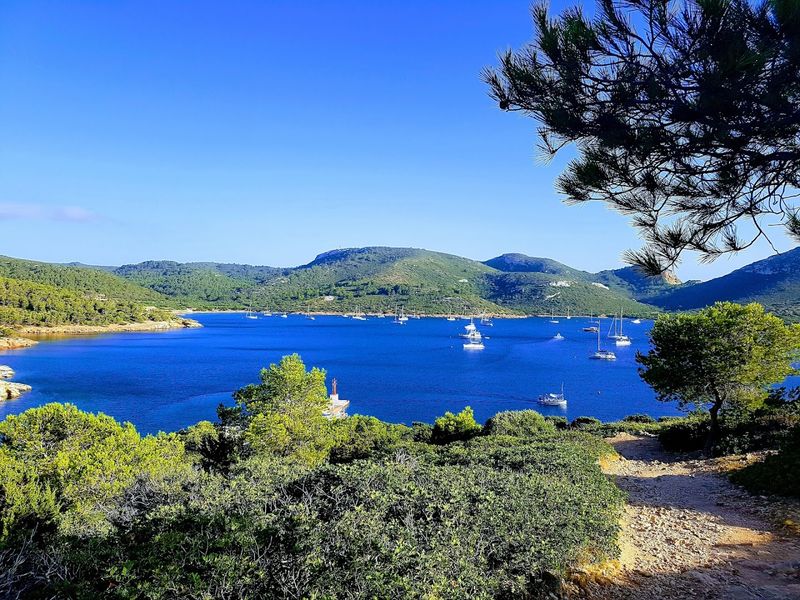
Getting to Cabrera requires a boat from Mallorca and, for private vessels, prior government permission. That sounds like a hassle, and it is, but it is also exactly why Cabrera remains one of the most unspoiled corners of the Balearic Islands.
The national park protects an archipelago of rocky islets, clear water, marine life, and a silence that the rest of Mallorca sold off decades ago.
Day trips run from the port of Colònia de Sant Jordi and are the easiest way to visit. The water around Cabrera is some of the clearest in the Mediterranean, and the small bay near the island’s castle is a genuinely beautiful spot for swimming.
A 14th-century castle overlooks the main harbor and adds a satisfying historical layer to what would already be a compelling natural destination. Cabrera is proof that the Balearics still have wild, unhurried corners if you know where to look and are willing to make a small effort to reach them.
Tabernas Desert, Andalusia
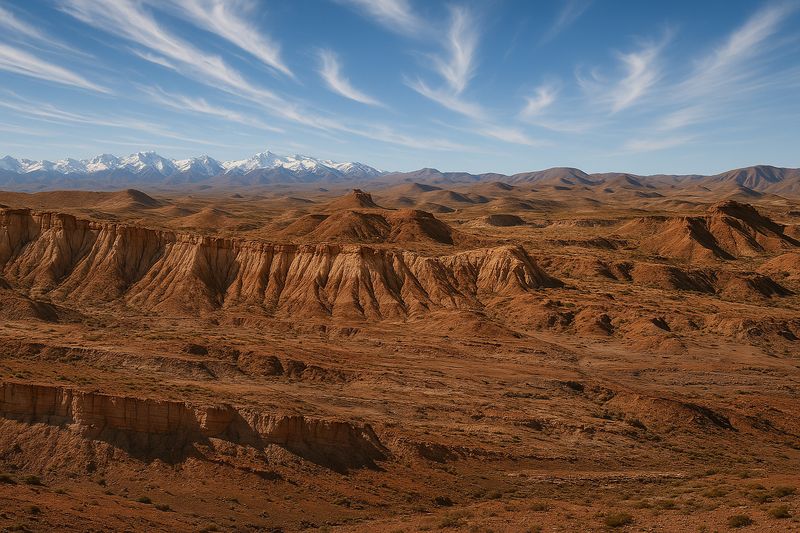
Spain has a desert. A real one.
The Tabernas Desert in Almería is the only true desert in continental Europe, and it looks nothing like anything else you will find in the country. Dry gullies, eroded badlands, rocky ridges, and a dusty silence that stretches for miles make it feel more like Arizona than Andalusia.
Film directors noticed this a long time ago. Dozens of spaghetti westerns were shot here in the 1960s and 1970s, and a couple of old film sets still operate as tourist attractions nearby.
Even without the movie history angle, the landscape itself is worth the trip just for how completely different it feels from the rest of Spain.
Guided jeep tours are a popular way to explore the terrain, especially for those who want to reach the more remote areas. The best light for photography is early morning or late afternoon.
Summer temperatures are extreme, so spring and autumn visits are much more comfortable and enjoyable.
Luarca, Asturias
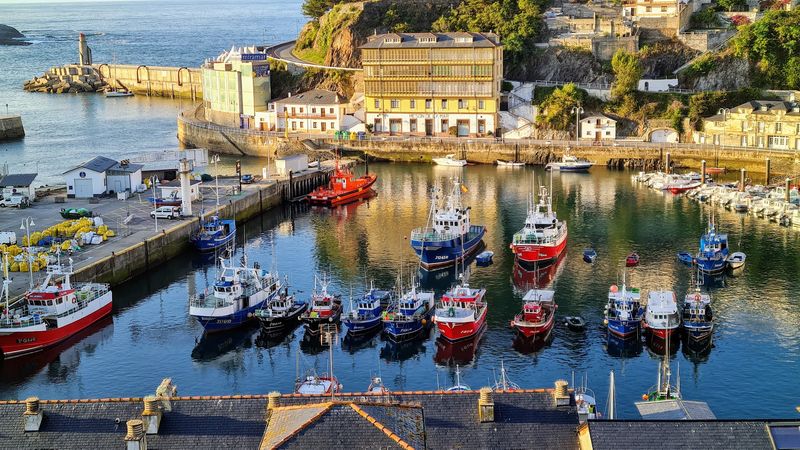
Luarca is the kind of seaside town that reminds you why slow travel was invented. Tucked into a natural inlet on Asturias’s Atlantic coast, it has a harbor full of fishing boats, white houses climbing green hills, a lighthouse on a dramatic headland, and a general atmosphere of unhurried local life that feels completely authentic.
The seafood here deserves serious attention. Asturias has a strong culinary tradition, and Luarca’s harbor-front restaurants serve some of the freshest fish on Spain’s northern coast.
Octopus, percebes, and grilled fish are staples worth exploring, especially paired with local cider.
Luarca also has a connection to Jules Verne, who reputedly used the town as inspiration for his novel “Twenty Thousand Leagues Under the Sea.” Whether that story is entirely true is debatable, but it adds a pleasing literary footnote to an already appealing destination. Visit in late spring or early autumn for the best combination of mild weather and minimal crowds.
Mura, Catalonia
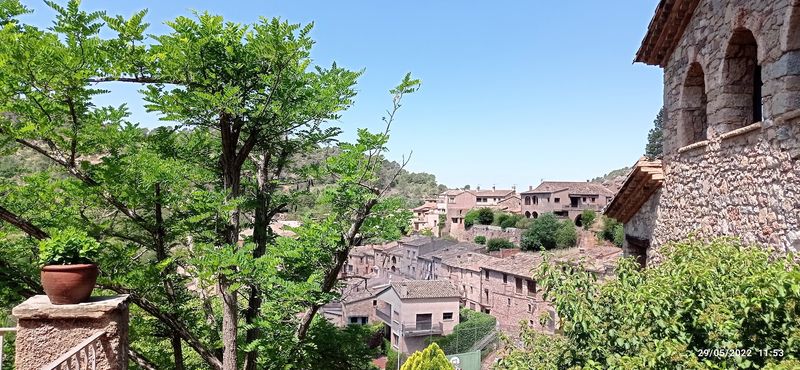
Mura is the answer to a question most Barcelona visitors never think to ask: what if I just drove an hour north and found a medieval village with stone lanes, a Romanesque church, mountain air, and absolutely nobody trying to sell me a sangria bucket hat? The village sits inside the Sant Llorenç del Munt natural park in Catalonia, and the surrounding landscape is full of hiking trails and rocky ridges.
The contrast with Barcelona is total and completely deliberate if you choose it. Mura has maybe a few hundred residents, no traffic noise, and a pace of life that makes a Sunday afternoon feel genuinely restorative rather than productive.
It works brilliantly as a day trip from Barcelona or Terrassa, and it also rewards an overnight stay for those who want to hike the park trails at dawn before the day-trippers arrive. Small, quiet, and genuinely lovely, Mura is Catalonia showing off a very different side of itself.
Setenil de las Bodegas, Andalusia
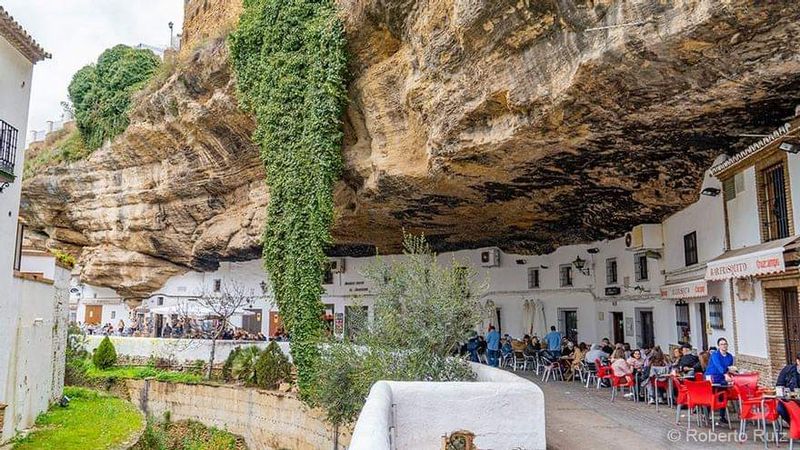
Setenil de las Bodegas broke the housing rulebook and never looked back. This Andalusian village built its houses directly under enormous rock overhangs, so entire streets have a cliff face as their ceiling.
Residents essentially live inside the rock, which makes walking through town one of the most architecturally bizarre and delightful experiences in Spain.
The village has been getting more attention online in recent years, and rightly so. But it still feels far calmer than Ronda, Seville, or Granada on a typical tourist day.
Arriving mid-morning on a weekday outside July and August gives you the best chance of exploring without fighting through crowds.
The local bars and restaurants tucked under those rock overhangs are genuinely atmospheric places to eat. Order a coffee or a glass of local wine and sit for a while looking at the absurdity of your surroundings.
Setenil rewards lingering. The rock is not going anywhere, and neither should you be in a hurry.
Share this story