 Unearth The Voyage
Some buildings are impressive, and then there are the ones that make your brain pause like it has misplaced the scale. Across centuries of empire, pilgrimage, urban growth, and ambitious patronage, these churches and cathedrals turned stone, tile, and concrete into public memory on a giant stage.
You are not just looking at unusual architecture here – you are seeing how cities advertised power, faith, craft, and identity long before skyscrapers and social media handled the job. Keep reading, and you will get the history behind the visual shock, plus the details that make each place feel stranger, smarter, and more human in person.
1. Sagrada Família – Barcelona, Spain
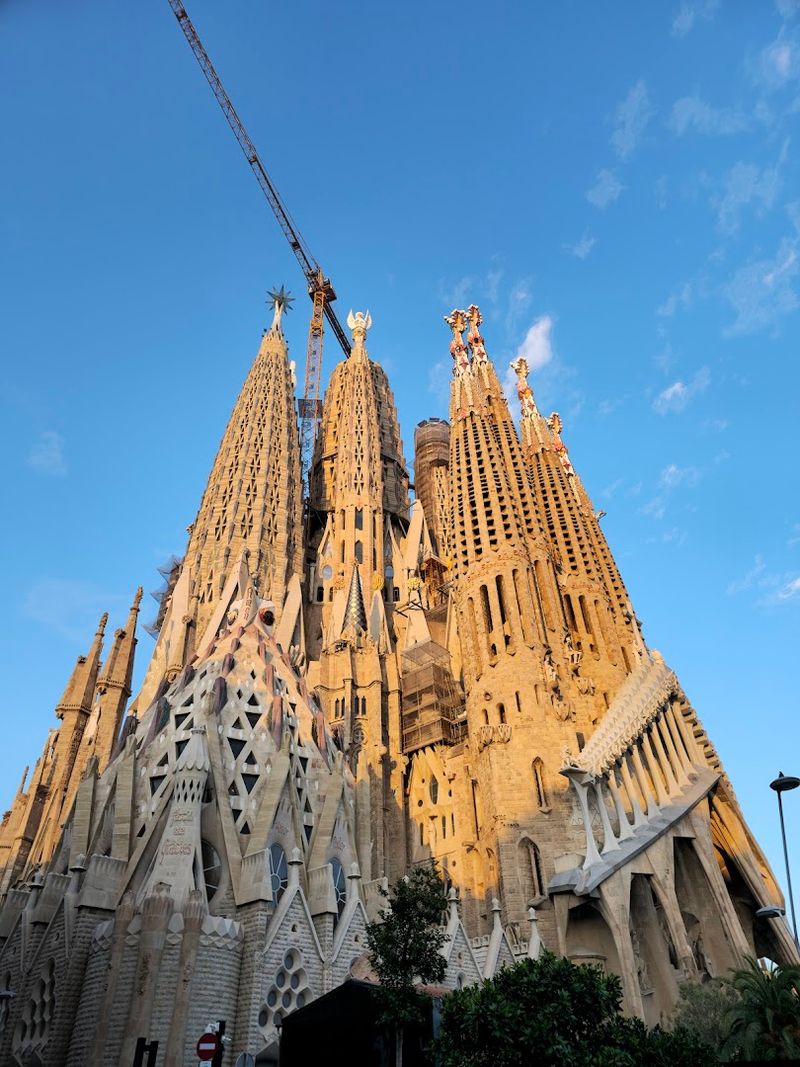
Your sense of scale starts losing the argument almost immediately at Sagrada Família. Antoni Gaudí took over the project in 1883, redirected it from conventional Gothic Revival habits, and turned it into a highly personal architectural language shaped by geometry, nature studies, and Catholic symbolism.
Construction has stretched across generations, which makes the building a rare record of changing tools, funding models, and craftsmanship. Private donations supported it for decades, the Spanish Civil War interrupted progress, and modern digital modeling later helped builders translate Gaudí’s complex ideas into buildable forms.
What looks unreal up close is not just the height, but the density of decisions packed into every facade and tower. The Nativity facade carries elaborate biblical imagery, the Passion facade turns stark and angular, and the planned completion around 2026 gives this nineteenth-century project an unusually public second life.
2. Hallgrímskirkja – Reykjavík, Iceland
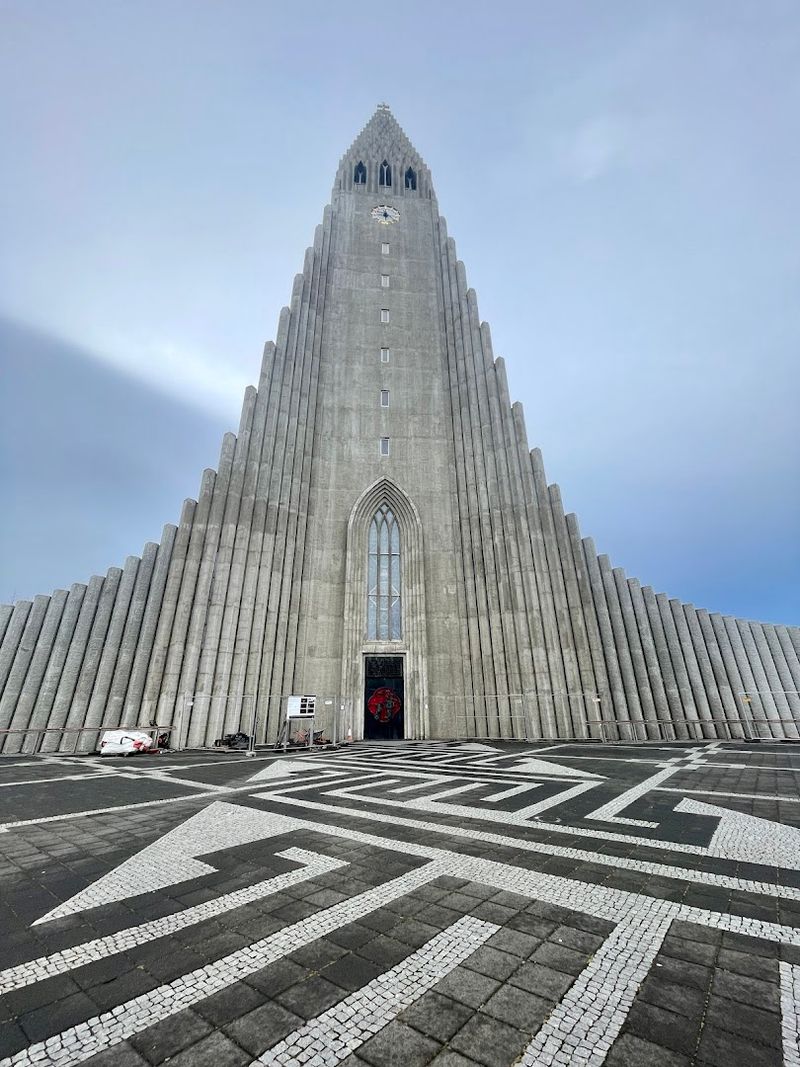
If a church could double as a geology lesson, Hallgrímskirkja would be the overachiever in the class. Designed by Guðjón Samúelsson in 1937 and completed in 1986, it drew inspiration from Iceland’s basalt formations, giving Reykjavík a landmark that looks both ancient and startlingly modern.
The building is named after Hallgrímur Pétursson, a seventeenth-century poet and clergyman whose hymns remain important in Icelandic religious culture. Its Lutheran identity shows in the relatively restrained ornament, but the sheer vertical force of the facade gives it a civic presence that reaches beyond church life.
Inside, the design stays spare, which makes the architecture feel even more deliberate rather than decorative. At 74.5 meters tall, it became one of Iceland’s most recognizable structures, and its long construction period quietly mirrors the country’s twentieth-century shift from a small island capital into a confident modern city.
3. Las Lajas Sanctuary – Colombia
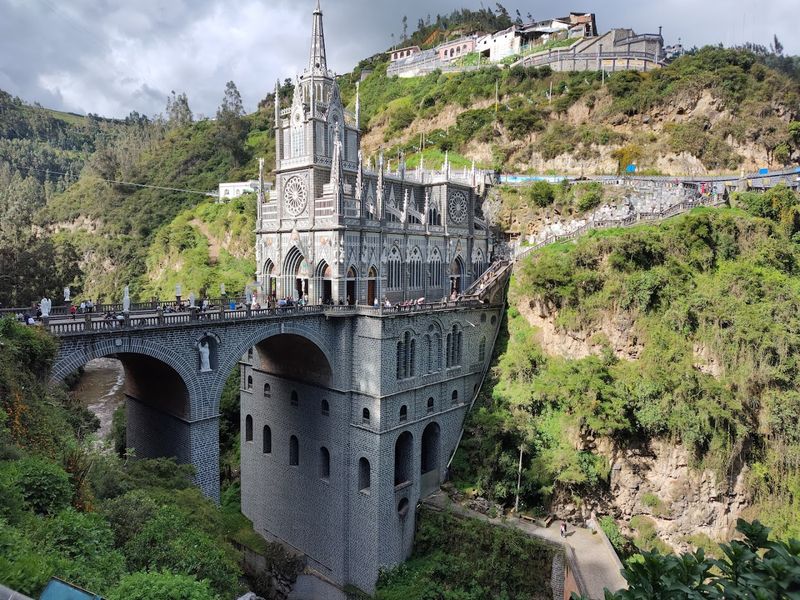
Very few churches commit this hard to making an entrance. Las Lajas Sanctuary rises from the Guáitara River canyon in southern Colombia, with a bridge leading directly to the church, creating the peculiar impression that the whole structure has been suspended between engineering and devotion.
The site became important after a reported Marian apparition in the eighteenth century, and devotion there grew steadily among local communities. The current Gothic Revival sanctuary was built mainly between 1916 and 1949, replacing earlier chapels and transforming a regional pilgrimage site into one of Colombia’s most unusual religious landmarks.
Its unreal quality comes from the way geography and architecture refuse to behave like separate categories. The church does not simply occupy the canyon, it uses the canyon as part of its identity, and that choice reflects a long Catholic tradition of attaching sacred meaning to specific places rather than treating every church parcel like interchangeable real estate.
4. St. Basil’s Cathedral – Moscow, Russia
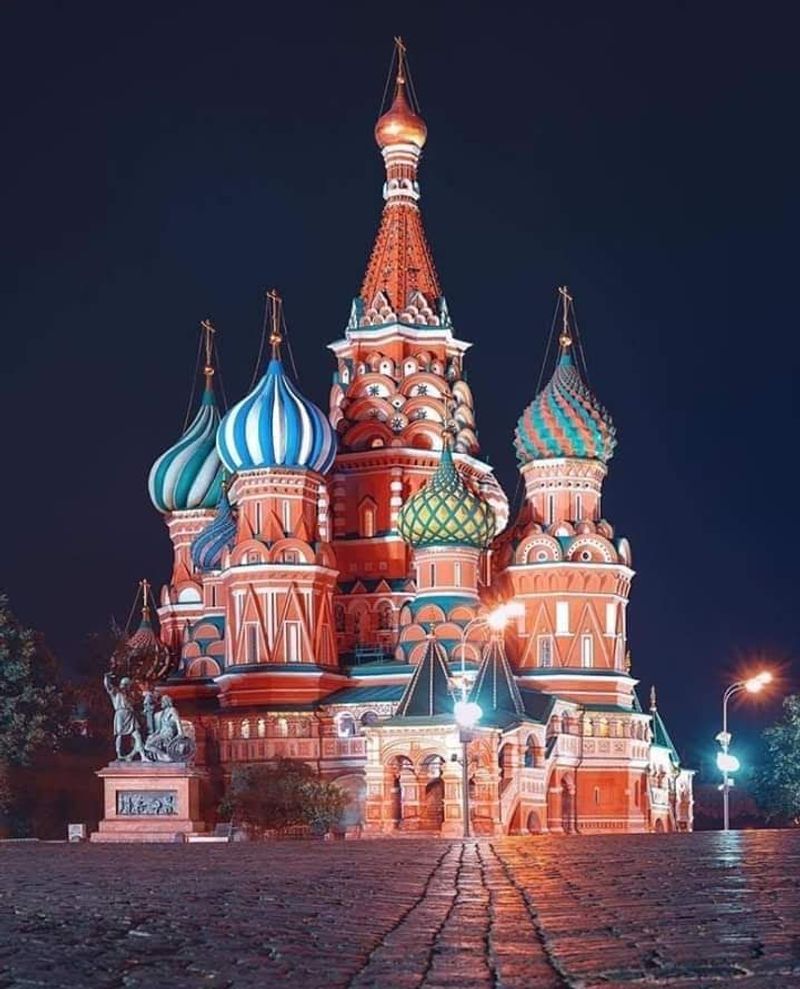
Nothing about St. Basil’s Cathedral seems interested in behaving modestly. Commissioned by Ivan IV and built from 1555 to 1561 on Moscow’s Red Square, it combined multiple chapel towers around a central core, producing a silhouette that still confuses anyone expecting a standard cathedral plan.
Its official name is the Cathedral of the Intercession of the Most Holy Theotokos on the Moat, which is a fine example of history refusing brevity. The nickname honors Saint Basil the Blessed, a revered holy figure in Moscow, and over time his association eclipsed the longer formal title in everyday speech.
The domes most visitors remember were enhanced with vivid color and patterning in later centuries, reinforcing the building’s almost illustrated appearance. Yet the structure also records Muscovite state ambition, Orthodox devotion, and sixteenth-century ceremonial culture, making its fanciful look surprisingly tied to practical public messaging about authority, faith, and capital-city identity.
5. Milan Cathedral (Duomo di Milano) – Italy
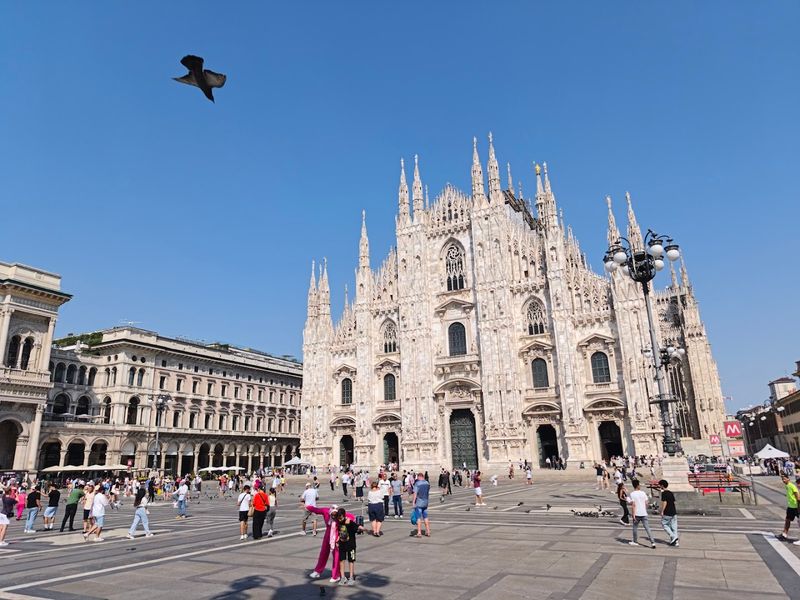
At first glance, Milan Cathedral seems less constructed than multiplied. Work began in 1386 under Gian Galeazzo Visconti, and the project continued across centuries, absorbing late Gothic traditions, regional politics, shifting patronage, and later restoration campaigns into one enormous marble statement at the center of Milan.
The cathedral’s vast facade and roofline are crowded with pinnacles, tracery, and thousands of statues, turning decorative detail into a kind of urban policy. When Napoleon entered Milan, he pushed for the facade’s completion before his coronation as King of Italy in 1805, proving that rulers understood exactly how useful a spectacular church could be.
What makes the Duomo seem unreal in person is the persistence of ornament at every scale. Even after photography, air travel, and modern towers changed how cities present themselves, this cathedral still dominates attention the old-fashioned way, by being stubbornly intricate, visibly expensive, and impossible to take in during one casual walk across the piazza.
6. Church of the Savior on Spilled Blood – St. Petersburg, Russia
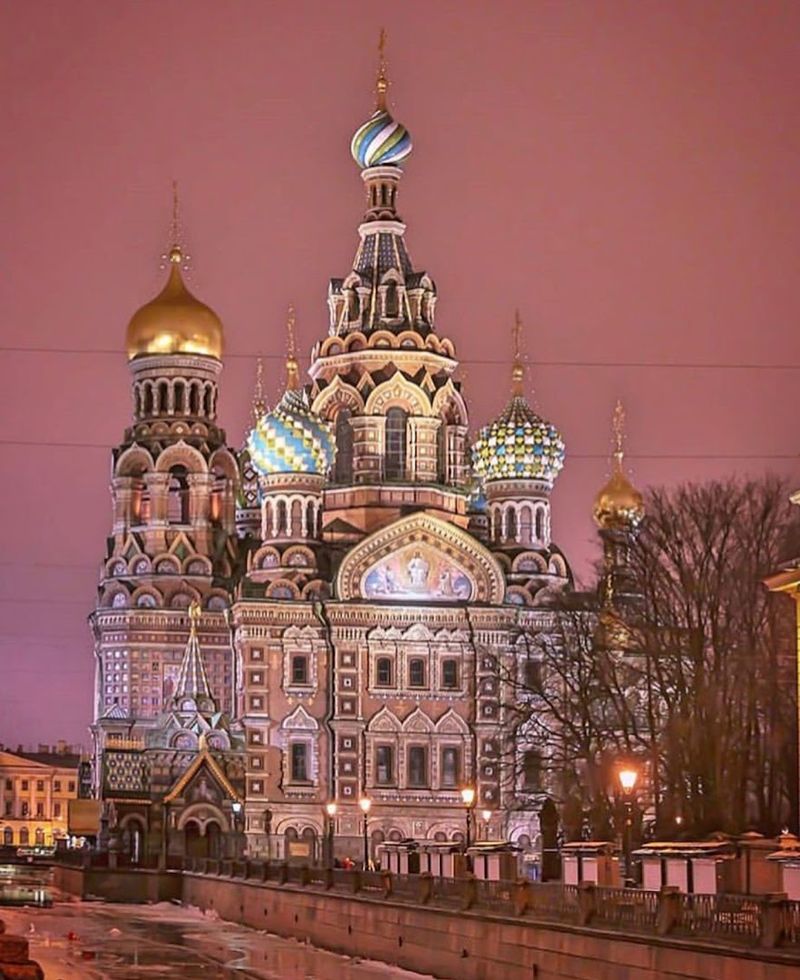
Some buildings seem determined to ignore the design memo of their entire neighborhood. The Church of the Savior on Spilled Blood was built between 1883 and 1907 on the site where Emperor Alexander II was fatally wounded, and its exuberant Russian Revival style sharply contrasts with St. Petersburg’s more classical city plan.
Commissioned by Alexander III and completed under Nicholas II, the church looked backward on purpose. Rather than copying the city’s Western-influenced imperial architecture, it drew from medieval Russian forms, patterned domes, and extensive mosaics, turning a memorial site into a visual argument about national identity.
The interior is almost entirely covered with mosaic work, which gives the building an unusually dense decorative program. During the Soviet period it was closed and repurposed, but later restoration returned it to public admiration, and today its astonishing surfaces tell a story not only about religion, but about how architecture can become shorthand for memory, dynasty, and cultural positioning.
7. Cologne Cathedral – Germany
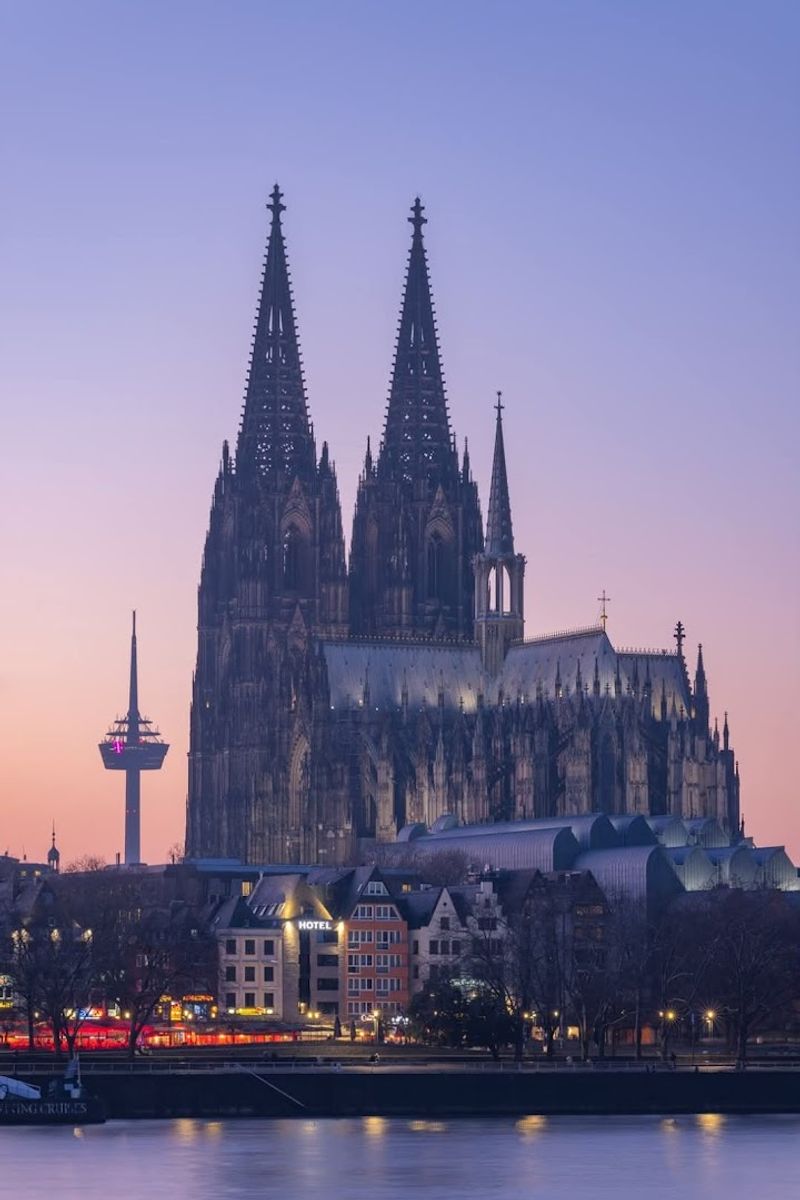
Cologne Cathedral looks like a medieval project manager simply refused to accept deadlines. Construction began in 1248 to house the Shrine of the Three Kings, then stalled for centuries, leaving parts unfinished until a nineteenth-century revival completed the design in 1880 using surviving medieval plans.
That unusual timeline makes the cathedral a bridge between eras rather than a pure medieval survival. Gothic architecture had become a symbol of German cultural heritage by the nineteenth century, so finishing Cologne’s long-paused giant carried national meaning as well as religious and civic importance.
Its twin spires dominate the skyline with remarkable confidence, especially given how much modern infrastructure surrounds them. The building also endured wartime damage and extensive restoration work, which reminds you that what seems impossibly old is often carefully maintained, documented, and argued over by generations of conservators who know a cathedral this ambitious never truly becomes a completed, solved, and settled object.
8. St. Peter’s Basilica – Vatican City
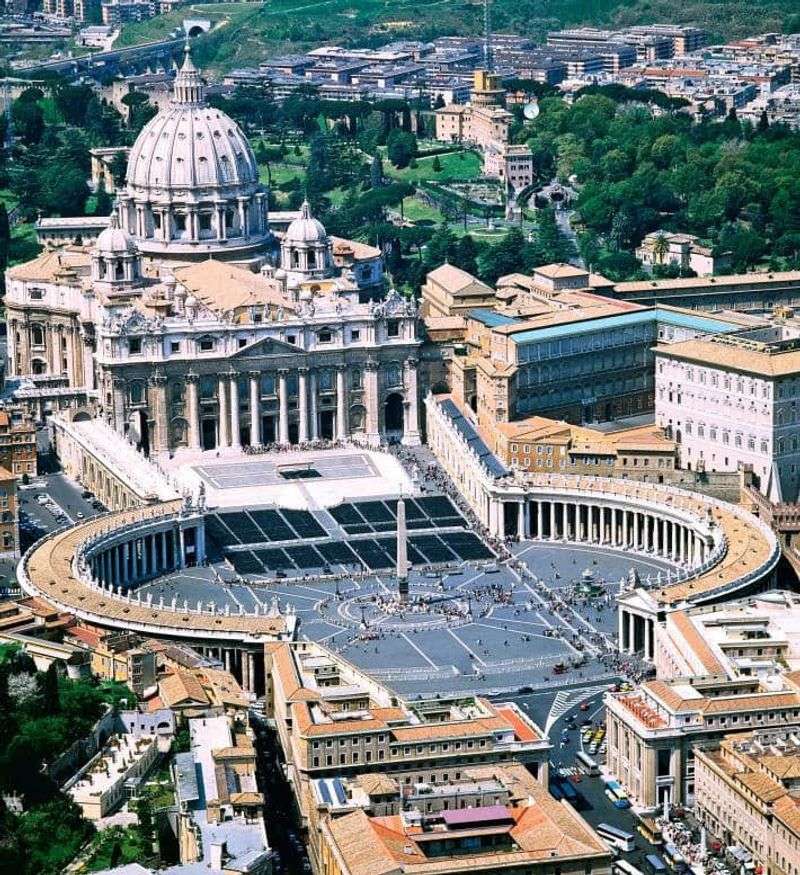
Scale stops being a useful concept somewhere around the approach to St. Peter’s Basilica. The current church rose largely between the early sixteenth and early seventeenth centuries over the traditional burial site of Saint Peter, with Bramante, Michelangelo, Carlo Maderno, and Bernini all shaping its final form.
Few buildings better show how architecture can become institutional branding before modern corporations perfected the craft. The Renaissance papacy used the basilica to project authority, continuity, and artistic leadership, while the Counter-Reformation era reinforced its role as a powerful visual center of global Catholic identity.
Michelangelo’s dome became one of the most copied features in architectural history, yet the full experience depends on more than one famous element. The piazza, facade, interior scale, and ceremonial planning all work together, making the basilica feel less like a single building and more like a carefully coordinated system for movement, ritual, hierarchy, and the public display of confidence on a continental scale.
9. Church of the Good Shepherd – Lake Tekapo, New Zealand
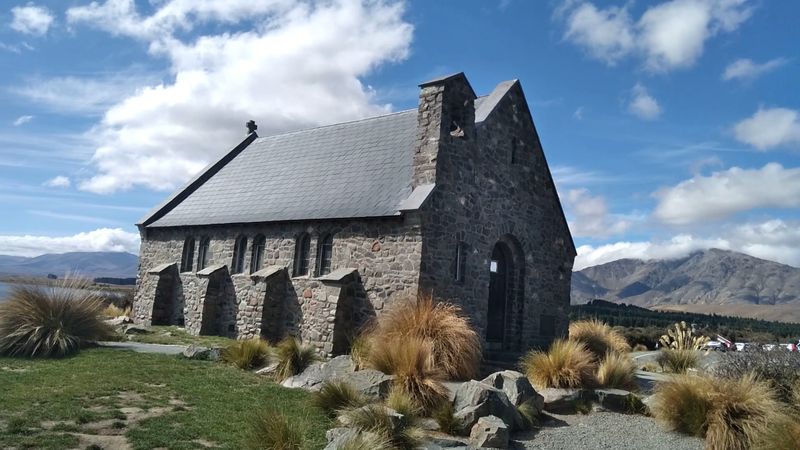
Proof that size is not the whole story arrives quietly at Lake Tekapo. The Church of the Good Shepherd was completed in 1935 as a memorial to the pioneers of the Mackenzie Country, and its small stone form has become one of New Zealand’s most photographed churches.
The building belongs to a later chapter of church history than many grand cathedrals on this list, which is part of its appeal. It reflects settler memory, interdenominational use, and twentieth-century ideas about simplicity in sacred architecture, while its famous window behind the altar frames the lake and mountains as part of the experience.
What feels unreal in person is the contrast between modest construction and outsized reputation. There is no forest of spires or encyclopedic facade program here, yet the church has entered global travel culture because it compresses landscape, local history, and national image into one small structure that somehow keeps outpacing buildings with far larger budgets and much louder architectural egos.
10. Notre-Dame Basilica – Montreal, Canada
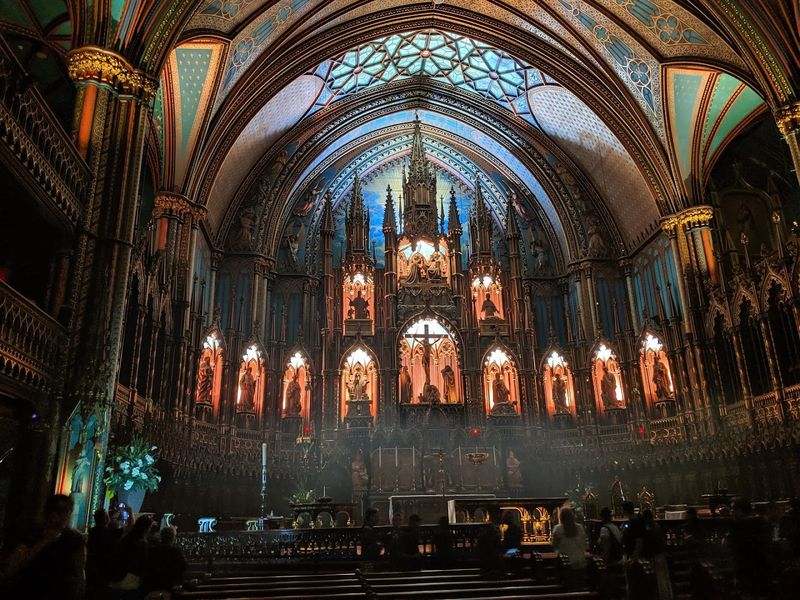
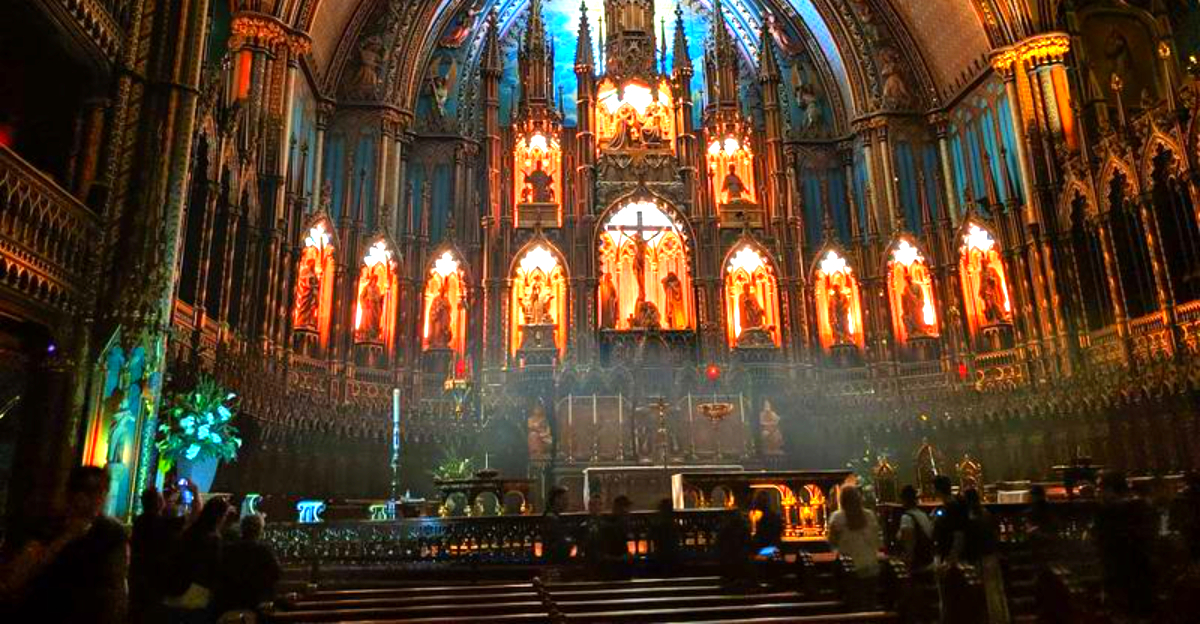
Then the ceiling shows up and suddenly modest expectations are no longer invited. Montreal’s Notre-Dame Basilica was built between 1824 and 1829 in the Gothic Revival style, designed by James O’Donnell, an Irish American Protestant architect who ended up requesting burial in the crypt.
The church replaced an earlier parish building and grew alongside Montreal’s rise as a major North American commercial and cultural center. Its interior decoration expanded later in the nineteenth century, and the dramatic blue and gold scheme helped distinguish it from more restrained ecclesiastical spaces elsewhere in Canada.
That visual intensity matters because the basilica also reflects the confidence of French Catholic identity in a rapidly changing city. Rather than blending quietly into urban development, it announced presence through scale, decoration, and ceremonial use, and today its popularity owes as much to nineteenth-century civic ambition and craftsmanship as to the often repeated fact that yes, the inside really does look almost implausibly theatrical.
11. St. John the Divine – New York City, USA
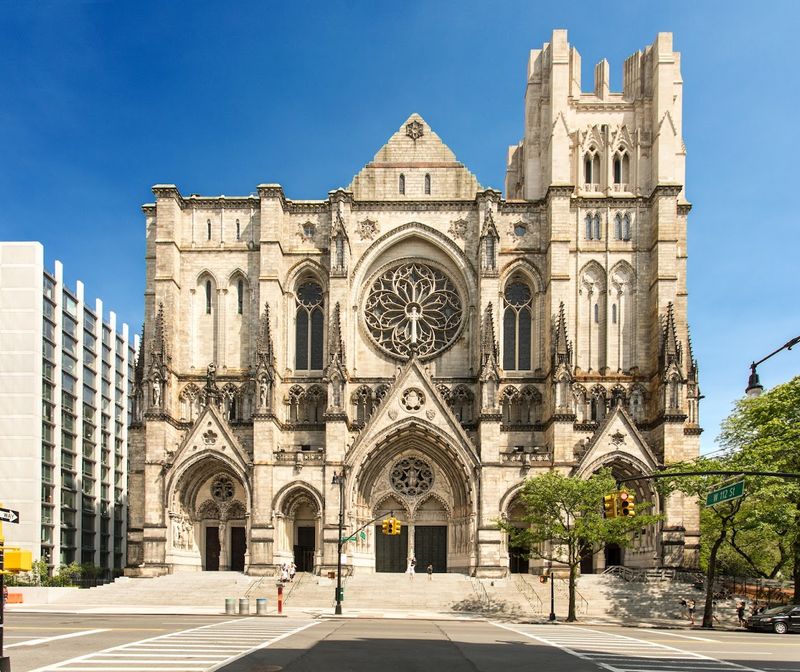
Ambition reached New York and apparently decided ordinary dimensions were boring. The Cathedral of St. John the Divine, begun in 1892 in Manhattan, was conceived as one of the world’s largest cathedrals, and its long, unfinished history gives it a layered identity rare even among major churches.
Early plans leaned Byzantine and Romanesque, but later redesigns moved toward Gothic forms, producing a building that documents changing tastes rather than hiding them. Construction delays, funding challenges, and shifting institutional priorities stretched the work across generations, which means the cathedral tells a very New York story about vision colliding with reality.
Its interior scale is what unsettles first-time visitors most, because the vast nave and crossing seem to keep extending past what you expected to be the limit. Yet the cathedral is not only a spectacle of size, it is also an active center for civic events, arts programming, and public life, making monumentality feel unusually woven into the daily business of the city.
12. Basilica of Our Lady of Peace – Yamoussoukro, Ivory Coast
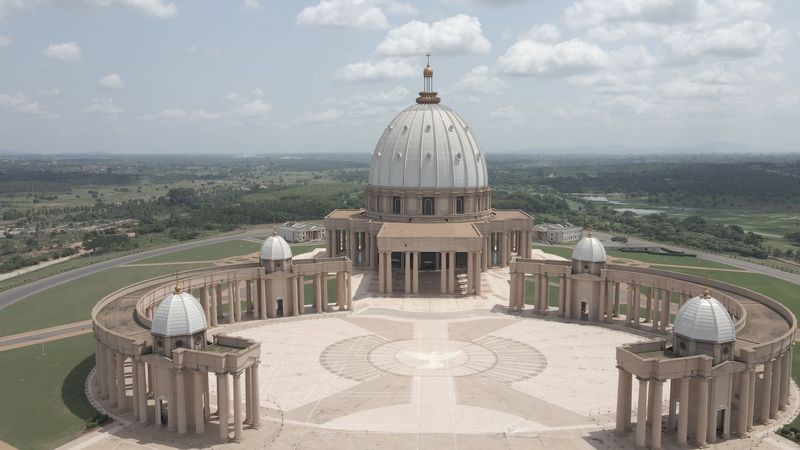
When a basilica decides to compete with global superlatives, subtlety usually leaves the room first. The Basilica of Our Lady of Peace in Yamoussoukro was completed in 1989 under President Félix Houphouët-Boigny, and its immense scale quickly made it one of the largest churches in the world.
The design openly references St. Peter’s Basilica, but it also reflects the politics of postcolonial nation-building and prestige architecture. Building such a monumental church in Côte d’Ivoire’s political capital was a statement about visibility, leadership, and international recognition, not merely a matter of liturgical need.
What feels unreal on arrival is how the building’s size seems to outpace assumptions about its setting. Its vast dome, broad forecourt, and expansive glass create a public image of confidence that remains debated, admired, and analyzed, which is exactly what large symbolic buildings often do best: they force conversation about identity, resources, memory, and the ambitions a nation chooses to make visible in concrete and stone.
13. Alexander Nevsky Cathedral – Sofia, Bulgaria
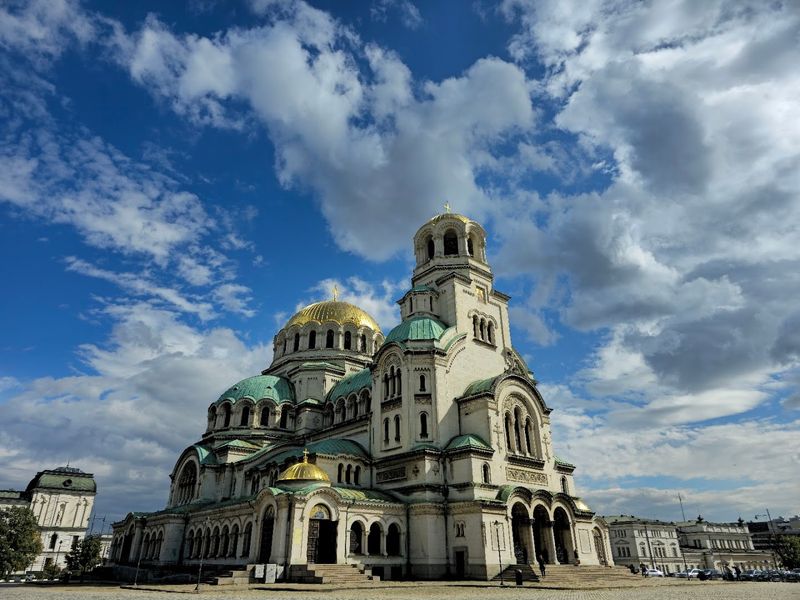
Gold domes have a talent for ending debates about where to look first. Sofia’s Alexander Nevsky Cathedral was built mainly between 1882 and 1912 as a memorial connected to Bulgaria’s liberation from Ottoman rule, and it remains one of the defining landmarks of the Bulgarian capital.
Designed in a Neo-Byzantine style, the cathedral ties national memory to Orthodox identity in unusually direct fashion. It was named after Saint Alexander Nevsky, a Russian prince, reflecting the historical connection between Bulgaria and Russia during the liberation period, though the building’s meaning has been interpreted differently across later decades.
Its large central dome, broad arches, and commanding mass make it feel unreal less because of fantasy and more because of concentration. So much national symbolism has been packed into one church that the architecture seems to operate as public history, civic backdrop, and place of worship at once, which is why even a casual visit quickly turns into a lesson on how nations use monumental design to define themselves.
14. Chapel of St. Gildas – Brittany, France
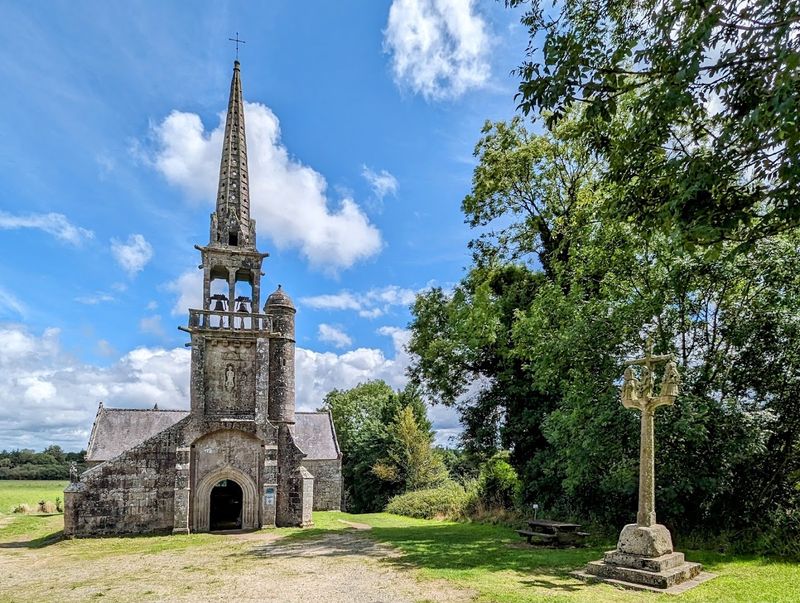
Every list of gigantic cathedrals needs one tiny rule-breaker with excellent placement. The Chapel of St. Gildas in Brittany gains its almost unreal reputation from its position between rocky cliffs, where a small religious structure appears improbably fitted into a landscape that looks larger than the building’s entire biography.
Unlike the headline-making basilicas of capitals and pilgrimage hubs, chapels like this speak to local devotion, regional saints, and the persistence of small sacred sites in rural Europe. St. Gildas was a sixth-century monk associated with Brittany and the wider Celtic Christian world, and places bearing his name often preserve layers of regional identity that larger monuments can flatten.
The chapel’s power comes from compression rather than monumentality. You see a modest structure, but it carries centuries of coastal religious practice, vernacular building habits, and community memory, all without needing giant domes or royal patronage, which is a useful reminder that unreal-looking places do not always win by being enormous, they sometimes win by being exactly where history decided to stay put.



