Europe has a reputation for being a walker’s paradise, and plenty of its cities genuinely earn that title. But not every European destination is as easy to explore on foot as the travel posters suggest.
Some cities are sprawling, hilly, car-heavy, or simply built in ways that make walking from place to place more of a workout than a pleasure. Before you lace up your sneakers and assume you can ditch the transit map entirely, take a look at these 14 cities that might surprise you with just how hard they are to cover on foot.
Milton Keynes, England
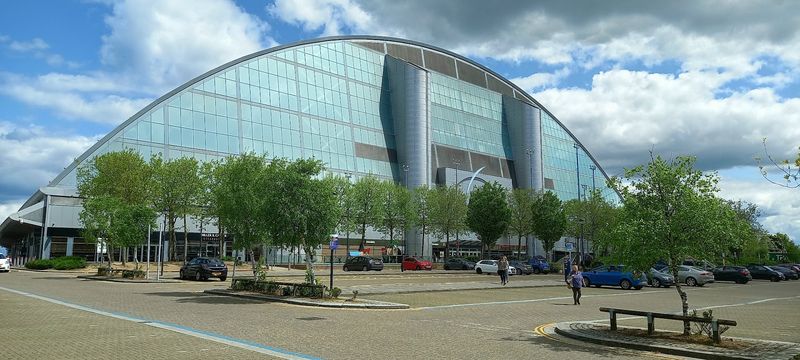
Milton Keynes is the city that planners built around the car, and it shows in almost every direction you look. Unlike the compact historic towns most people picture when they think of England, Milton Keynes was designed from scratch in the 1960s with a grid of fast roads cutting across the landscape.
The result is a city where destinations feel far apart and crossings feel inconvenient.
The city’s own transport strategy openly describes it as a car-based city, citing its physical layout, high car ownership rates, and fast road network as defining features. That is not a criticism so much as a description of how the place actually functions.
For visitors arriving with the idea of strolling between landmarks, the reality can feel disorienting. There are paths and parks, but the urban form works against casual walking in a way that few other English cities match as clearly.
Manchester, England

Manchester has serious energy. The city center buzzes with music venues, markets, and football culture that draws visitors from across the world.
But the moment you step beyond that central core, the picture changes quickly.
Centre for Cities research found that only about 20% of Manchester’s population can reach the city center by public transport within 30 minutes. Compare that with Hamburg, where the figure sits closer to 44%, and the gap becomes hard to ignore.
A city where most residents need a car or long transit ride to reach the center is a city that was not built for walking.
That sprawling urban form affects visitors too. If you are staying outside the immediate center, getting around can mean longer, less pleasant journeys on foot than you might expect.
Manchester rewards exploration, but it works best when you plan your transport rather than assuming your legs will carry you everywhere comfortably.
Birmingham, England
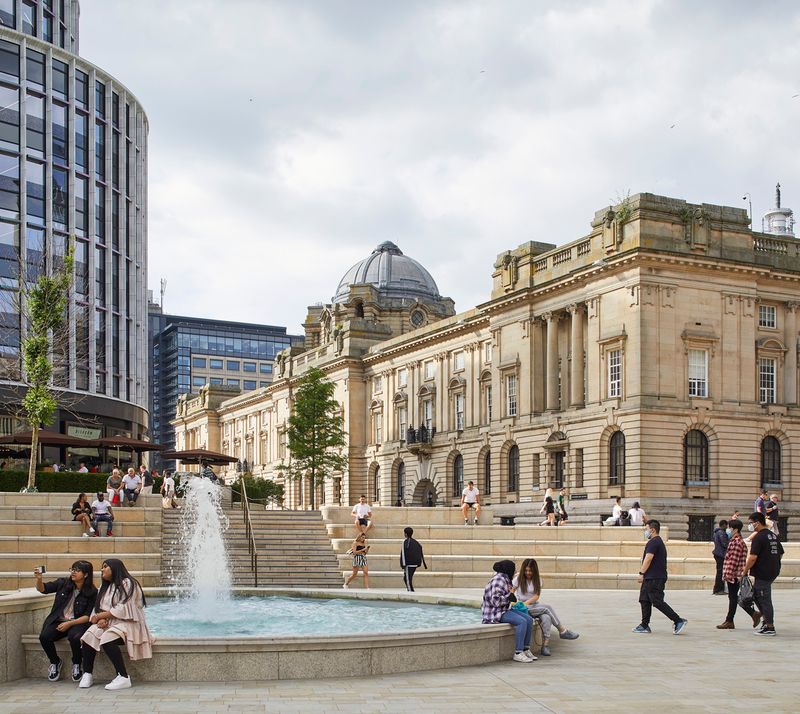
Birmingham is putting real effort into improving how people move around the city. New cycling infrastructure, pedestrian-friendly streets, and ambitious transport plans are all part of the conversation right now.
But effort and completion are two different things, and Birmingham still has a long way to go.
Centre for Cities found that only around 40% of residents in large British urban areas can reach their city center within 30 minutes by public transport. Across comparable large European cities, that figure jumps to 66%.
Birmingham sits squarely in that underperforming group.
The city’s own transport plan focuses on reducing car dependency and reconnecting communities, which is telling in itself. A city actively trying to move away from car-first planning is, by definition, still fairly car-first right now.
Birmingham is worth visiting and genuinely interesting to explore, but managing your expectations about how far your feet alone will take you is a smart move before arriving.
Leeds, England

Leeds punches above its weight in a lot of ways. It has a strong city center, great food, independent shops, and a cultural scene that keeps growing.
What it has not fully cracked is the kind of transit coverage that makes a city feel naturally connected without needing a car.
Research from Centre for Cities found that only about one-third of people in Leeds could reach the city center within 30 minutes by public transport. That figure puts Leeds in the same bracket as Birmingham and Sheffield, two other large English cities that have struggled with the same structural challenge for years.
For walkers, this matters because it signals how neighborhoods relate to each other. In cities where transit is strong, walking feels like one natural option among several.
In Leeds, the gaps between districts can make on-foot travel feel more effortful than it looks on a map. The center is enjoyable, but the wider city asks more of your legs.
Sheffield, England
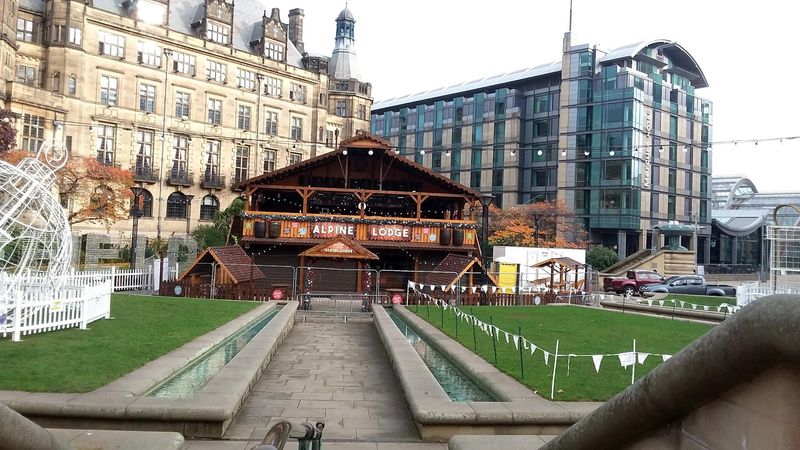
Sheffield has a genuine claim to being one of England’s most interesting mid-sized cities. It has green space, a strong arts scene, and a distinct character shaped by its industrial past.
It also has hills. A lot of them.
The terrain alone is enough to make casual walking more demanding than in flatter cities, and the gradient can catch visitors off guard when they are moving between neighborhoods. Add in the same public transport accessibility gap that affects Leeds and Birmingham, and Sheffield becomes a city where walking requires planning rather than spontaneity.
Centre for Cities research grouped Sheffield with those cities in finding that only about one-third of residents can reach the center within 30 minutes by public transport. That disconnection shapes how the city feels on the ground.
Sheffield is full of character and worth exploring properly, but covering it mostly on foot means being ready for slopes, distance, and the occasional moment where a tram or bus would have been a better choice.
Liverpool, England

Liverpool’s center is genuinely enjoyable on foot. The waterfront area, Bold Street, and the Georgian Quarter offer the kind of compact, interesting streetscape that makes walking feel like a pleasure rather than a chore.
That experience can make the wider city easy to underestimate.
Centre for Cities compared Liverpool with Turin, two urban areas of similar size, and found that around 381,000 fewer people in Liverpool can reach the city center within 30 minutes by public transport. That is a significant gap, and it reflects how much of Liverpool’s population lives in areas that are not naturally tied into the center.
For visitors who stick to the tourist core, none of this may matter much. But anyone planning to explore beyond the waterfront and central neighborhoods will quickly notice how quickly the city spreads out and how much more effort it takes to connect the dots.
Liverpool is worth the visit, but it is not as uniformly walkable as its compact center suggests.
Palermo, Italy

Few cities in Europe match Palermo for atmosphere. The street markets, baroque churches, crumbling palazzos, and layered history make it one of Sicily’s most compelling places to spend time.
But walking here is a different kind of experience than strolling through, say, Bologna or Florence.
Academic research on Palermo identifies it as one of Southern Europe’s clearest examples of car-dependent urban mobility. The barriers are multiple: public transport access is limited, street quality is inconsistent, and the distribution of amenities across the city reflects decades of car-first planning.
Narrow streets that feel charming can also feel stressful when shared with fast-moving traffic and parked vehicles blocking the path.
The historic center rewards patient walkers who are comfortable with a little chaos. But covering Palermo on foot across multiple neighborhoods takes real stamina and a tolerance for uneven pavements, unexpected detours, and traffic that does not always yield.
It is beautiful, but it is not relaxing in the way that some Italian cities manage to be.
Rome, Italy
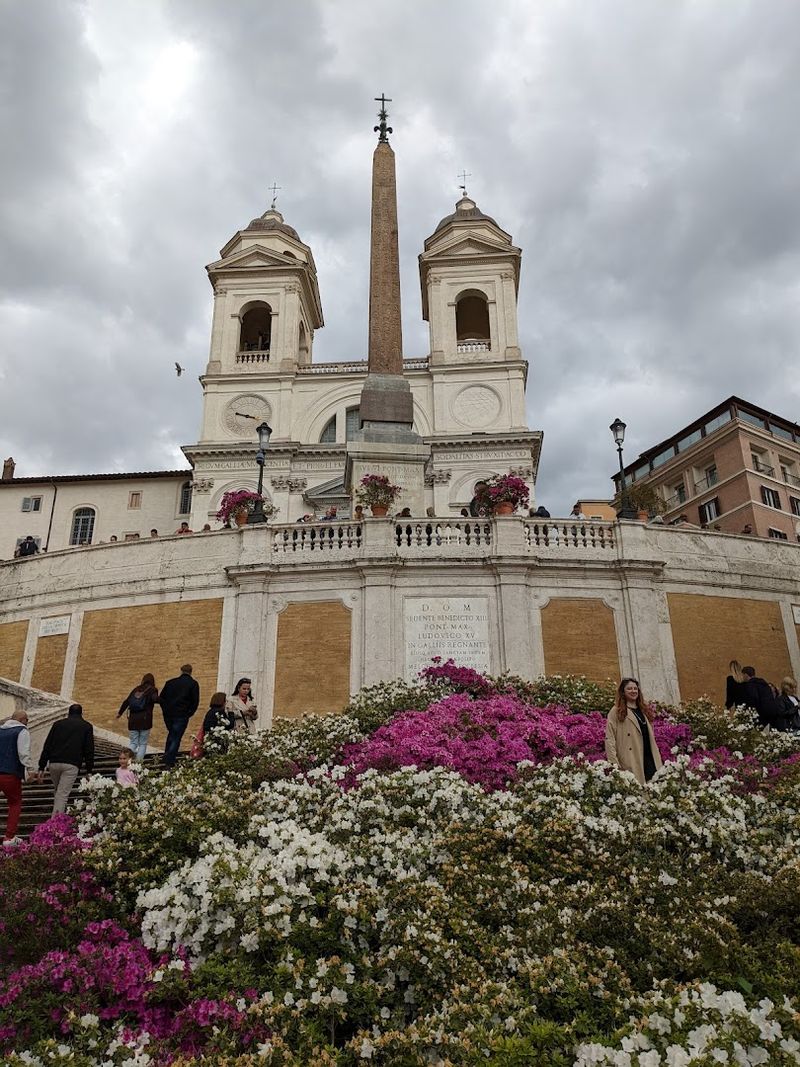
Rome inside the ancient center is one of the great walking experiences on the planet. The density of history, the piazzas, the unexpected alleyways, the fountains at every turn, it adds up to something genuinely extraordinary for anyone moving through it slowly on foot.
Step outside that zone and the city changes character fast. Mobility researchers have flagged Rome’s high motorization rates and low shares of active mobility and public transport as serious structural problems.
A car dependency study used Rome as a case study for modeling how metro expansion could reduce the number of commuting vehicles, which signals just how car-shaped the city remains beyond the tourist core.
Broken pavements, heavy traffic, long distances between neighborhoods, and sprawling outer districts make walking outside central Rome much less appealing. The city rewards walkers who stay within the classic sightseeing zone, but anyone trying to explore broadly on foot will find Rome much more demanding than its romantic reputation implies.
Athens, Greece
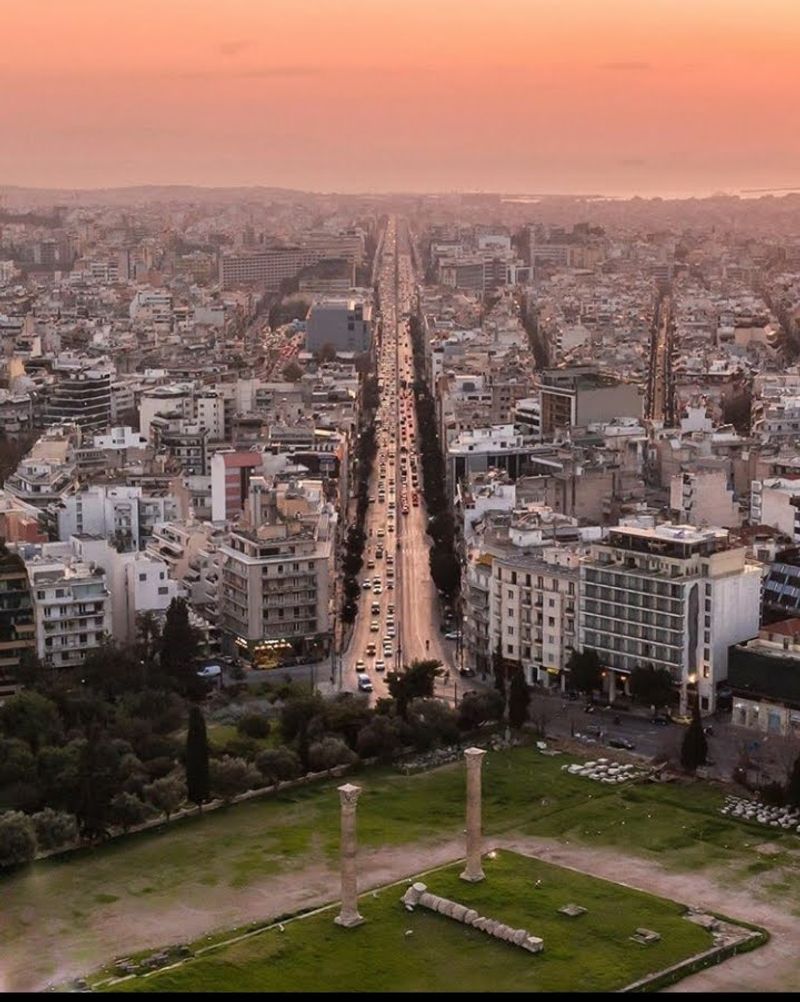
Athens is one of those cities where the walking experience and the walking infrastructure tell very different stories. The city has ancient monuments, lively neighborhoods, and a street culture that makes exploring on foot feel appealing in theory.
In practice, pedestrians regularly deal with sidewalks that are blocked, broken, narrow, or simply missing. Le Monde reported that only 37% of Athens sidewalks met legal width requirements for wheelchair users and visually impaired pedestrians.
The Guardian has described widespread accessibility challenges and noted that car ownership in Athens is among the highest in Europe.
Motorbikes parked across pavements, café furniture spilling into walkways, utility poles planted in the middle of footpaths, and uneven surfaces combine to make walking in Athens an exercise in constant attention. The city is fascinating and the neighborhoods around Monastiraki, Psiri, and Koukaki are genuinely rewarding.
But calling Athens an easy walking city would be overstating how smoothly the pedestrian experience actually works on the ground.
Marseille, France
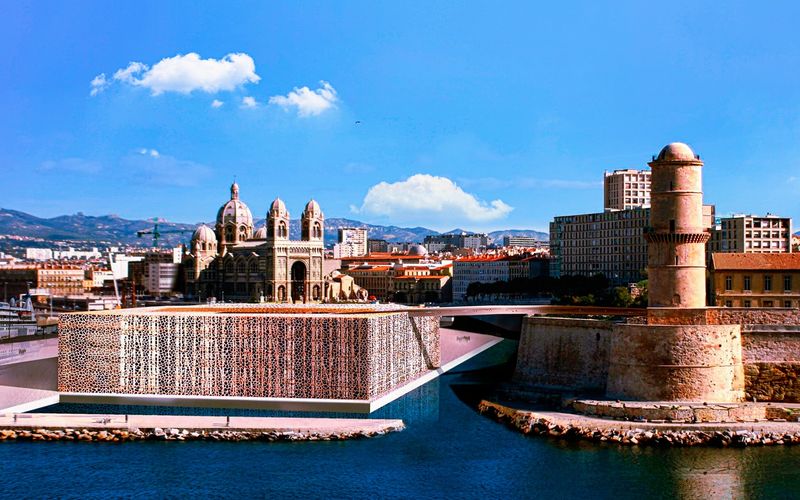
Marseille has a dramatic setting, a raw personality, and a coastal character that sets it apart from every other major French city. It is also a city that has consistently lagged behind Paris, Lyon, and Bordeaux when it comes to the kind of transit network that supports easy, car-free movement.
One mobility policy overview noted that Marseille was behind other major French cities in transit development, pointing specifically to its limited metro and tram network for a city of its size. The wider Aix-Marseille-Provence metropolitan area has been described as heavily dependent on private vehicles, with congestion shaping daily movement in ways that public transport has not yet resolved.
The terrain adds another layer of difficulty. Marseille’s neighborhoods are spread across hills and valleys, and the distances between areas of interest can be longer than they appear on a map.
Visitors who stick to the Vieux-Port area will find a manageable and enjoyable experience, but covering the city broadly on foot takes more planning than most travel guides acknowledge.
Lisbon, Portugal
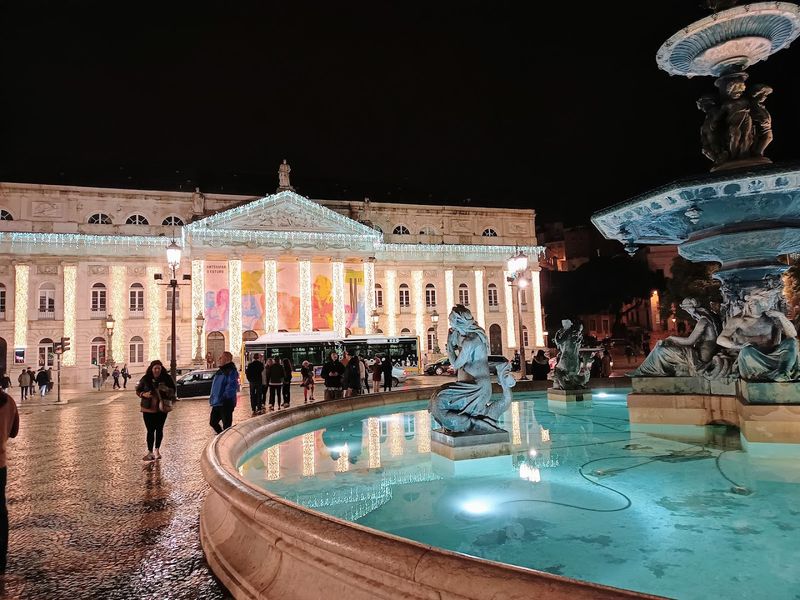
Lisbon has an almost unfair amount of charm. The pastel buildings, the tiled facades, the miradouros with their sweeping views, and the old trams threading through narrow streets create a visual experience that makes you want to wander for hours.
The terrain, however, has other ideas.
The city is built across seven hills, and walking between neighborhoods often means steep climbs over cobblestones, long stairways, and uneven surfaces that can be genuinely difficult for anyone with limited mobility or tired legs. Several visitor guides describe Lisbon as conditionally walkable, meaning it rewards exploration but with real physical effort attached.
Covering multiple neighborhoods in a single day on foot is possible but tiring in a way that flat cities simply are not. The historic areas of Alfama, Bairro Alto, and Mouraria are beautiful but demanding.
Lisbon is absolutely worth visiting and exploring slowly, but treating it as an effortless walking city sets visitors up for a harder day than they anticipated.
Istanbul, Turkey

Istanbul is a city that operates at a scale most European visitors are not prepared for. The European side alone contains more people than many entire countries, and the city’s geography, spread across hills and divided by water, adds physical complexity to an already enormous urban area.
WRI research on Istanbul notes that even though walking has a relatively high modal share, pedestrian infrastructure is often insufficient or unsafe. Car-oriented planning has left many streets with narrow or missing sidewalks, and congestion shapes movement across the city in ways that make casual walking feel more stressful than freeing.
Research on sustainable mobility in Istanbul identifies chronic traffic congestion, sprawl, fragmented governance, and car-based planning as persistent challenges. The historic districts of Sultanahmet and Beyoglu are wonderful on foot and genuinely manageable.
But treating Istanbul as a city you can cover mostly by walking, the way you might approach Amsterdam or Prague, is a plan that will quickly run into the city’s real scale and complexity.
Bucharest, Romania

Bucharest’s center has areas that are genuinely pleasant to walk through. Calea Victoriei, the old town, and the neighborhoods around Universitate have enough density and interest to reward a slow afternoon on foot.
The challenge is that the center represents a relatively small portion of a large and car-shaped city.
Mobility research on Bucharest focuses on private vehicle trends, congestion, transport infrastructure quality, and the need for serious public transit reform. Local urban planning discussions have raised a pessimistic future scenario in which Bucharest remains captive to the private car, with traffic-dependent residential zones pushing further out from the center.
For visitors, the practical experience matches that picture. The walkable core is real and enjoyable, but venturing into outer districts reveals a city that was built and expanded with the car in mind.
Wide roads, long blocks, and limited pedestrian crossings in residential areas make Bucharest a city of two very different walking realities depending on where you are standing.
Sofia, Bulgaria
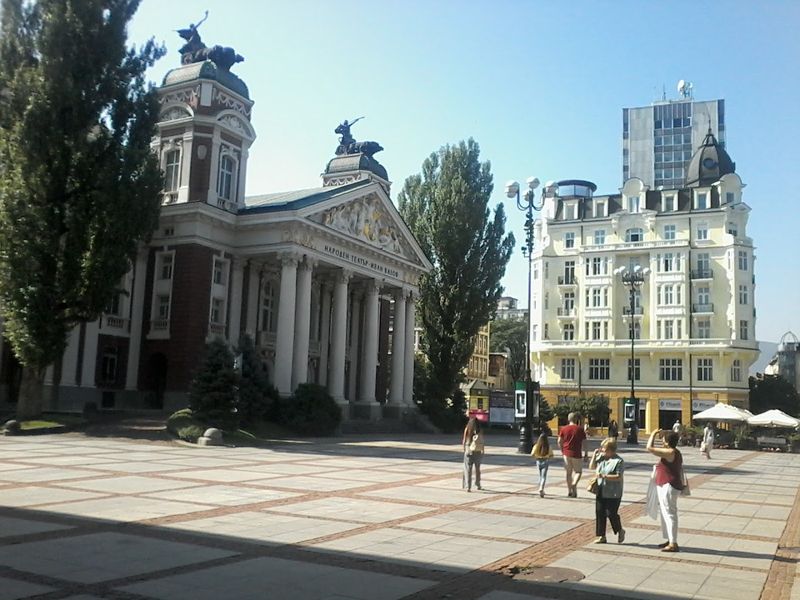
Sofia has a compact and walkable historic center that can give visitors a misleadingly smooth first impression. The area around Vitosha Boulevard, the National Palace of Culture, and the old mineral baths is genuinely enjoyable on foot, with enough sights clustered together to fill a comfortable day of walking.
Move further out and the picture shifts. A 2025 study on Sofia’s walkability identified a significant gap in assessing pedestrian accessibility at the neighborhood level, reflecting how uneven the experience is across the city.
Cars parked on sidewalks, missing or broken pavement surfaces, and outer residential zones designed around vehicle access create real obstacles for pedestrians in many parts of the city.
Sofia is actively working toward more sustainable urban mobility, and the interest in improving conditions is genuine. But for now, the city’s walkability varies dramatically from one district to the next.
Visitors who stay central will find Sofia manageable and affordable. Those who wander further should be prepared for a noticeably different experience underfoot.
Share this story