Some of the most beloved foods in the world were never supposed to exist. A distracted cook, a forgotten ingredient, or a happy accident in the kitchen led to creations that billions of people now enjoy every single day.
It is a little funny to think that your favorite snack might have been born from someone messing up a recipe. From a frustrated chef in a Texas restaurant to a curious pharmacist mixing up a syrup, these stories prove that mistakes can sometimes turn out better than the original plan.
The next time something goes wrong in the kitchen, maybe think twice before tossing it out. You could be one spilled ingredient away from something legendary.
Here are 14 famous foods that started with a mistake, and the surprisingly entertaining stories behind how each one came to be.
Chocolate Chip Cookies
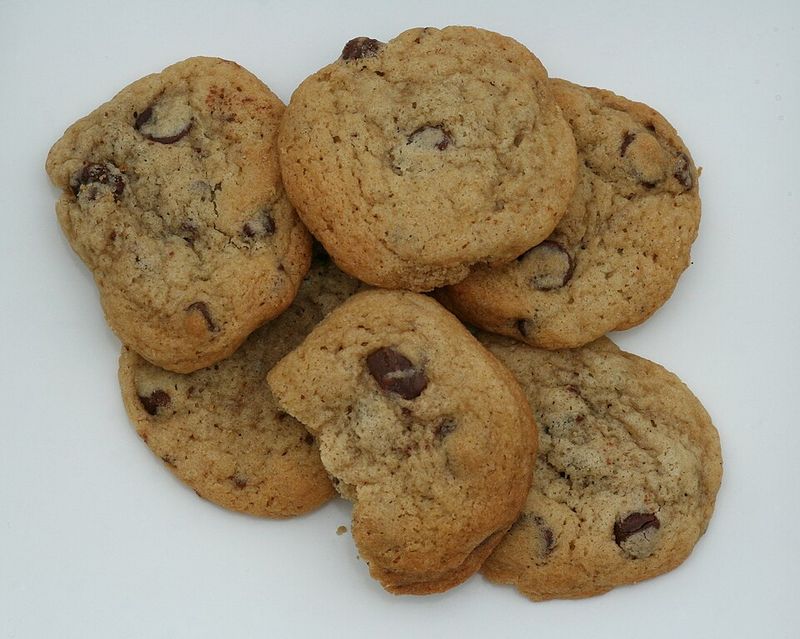
Back in 1938, Ruth Wakefield was baking at her Toll House Inn in Massachusetts when she ran out of baker’s chocolate. She broke a Nestle semi-sweet chocolate bar into small pieces and stirred them into the dough, expecting the chocolate to melt completely and blend in.
It did not. Instead, the chunks held their shape and created something entirely new.
Wakefield had accidentally invented the chocolate chip cookie, and it spread fast. She later sold the recipe rights to Nestle in exchange for a lifetime supply of chocolate, which is one of the more creative business deals in food history.
Today, chocolate chip cookies are the most popular homemade cookie in the United States. Nestle still prints a version of her original recipe on every bag of chocolate chips.
One wrong ingredient swap changed baking forever, and most people would agree it changed it for the better.
Potato Chips
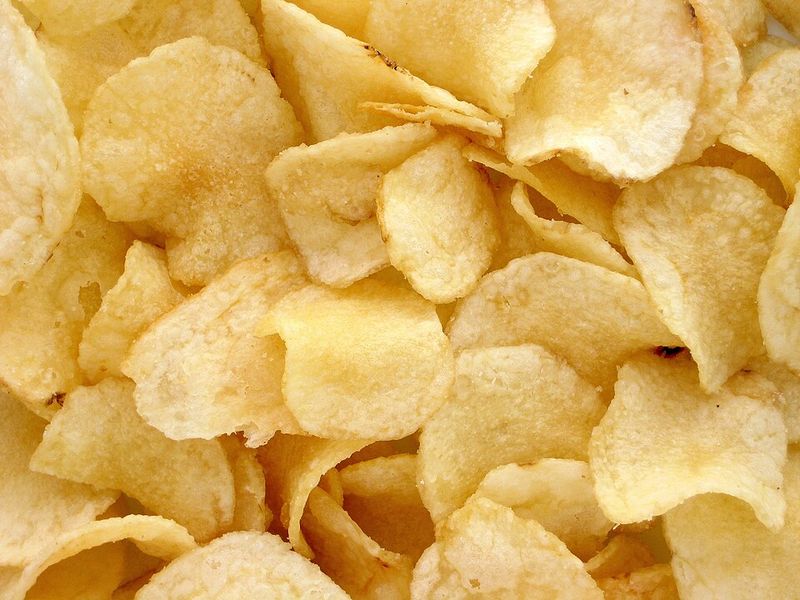
The potato chip has a pretty dramatic origin story. In 1853, a chef named George Crum was working at Moon’s Lake House in Saratoga Springs, New York, when a customer kept sending back his fried potatoes, complaining they were too thick and too soft.
Crum, reportedly frustrated, sliced the potatoes paper-thin and fried them until they were crispy and hard to eat with a fork. He expected the customer to be annoyed.
Instead, the customer loved them, and other diners started requesting the same thing.
Those thin, crunchy slices became known as Saratoga Chips and eventually spread across the country. Today, potato chips are a multi-billion dollar snack industry.
The flavors have expanded into hundreds of varieties worldwide, but that original thin, salted crunch remains the standard. A moment of kitchen frustration turned into one of the most consumed snacks on the planet.
Popsicles
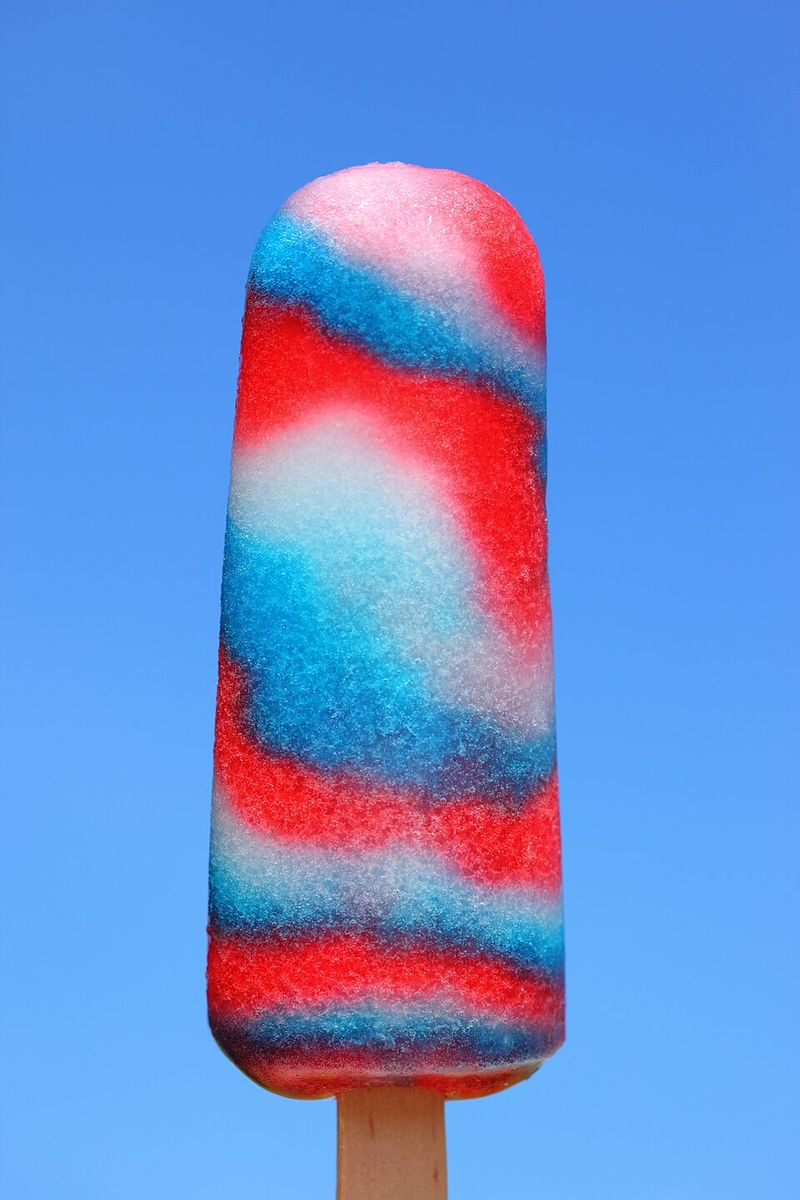
Frank Epperson was just 11 years old in 1905 when he accidentally created one of summer’s most iconic treats. He had mixed a powdered soda drink with water and left it outside overnight on his porch in San Francisco.
The temperature dropped, and the stirring stick froze right along with the liquid inside the cup.
The next morning, he pulled it out and tasted his frozen creation. He called it the Epsicle, and for years it was just a neighborhood curiosity.
Nearly two decades later, in 1923, Epperson applied for a patent and started selling them at an amusement park. His kids called them Pop’s sicles, which eventually became the name everyone knows.
The Popsicle brand was later sold to a larger company, but the concept never changed. A forgotten cup on a cold night, left by a child who simply walked away, became a frozen treat sold in nearly every country today.
Corn Flakes
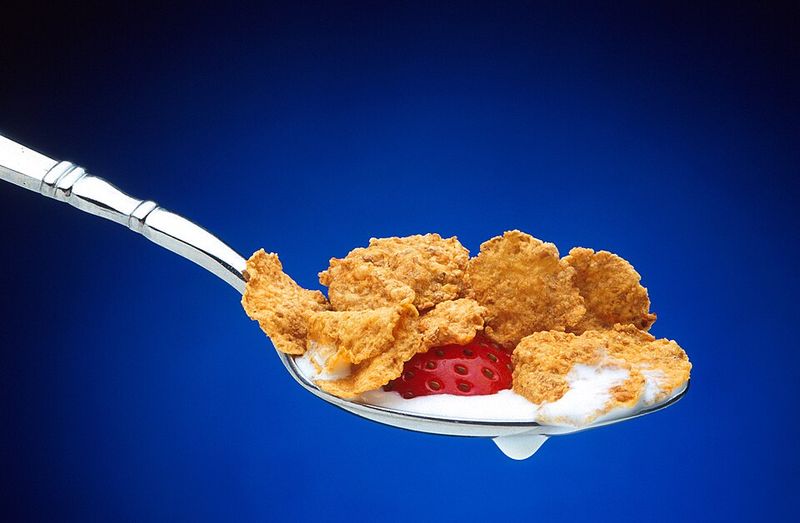
Corn Flakes were born from a batch of wheat that sat too long. In 1894, Dr. John Harvey Kellogg and his brother Will Keith Kellogg were working at a health sanitarium in Battle Creek, Michigan.
They were experimenting with grain-based foods for their patients when they accidentally left a batch of boiled wheat out overnight.
When they tried to roll it the next morning, the stale grain broke into thin, dry flakes instead of forming a flat sheet. They baked them anyway, and their patients actually enjoyed the crispy result.
The brothers eventually switched to corn, which produced a lighter and more appealing flake.
Will Keith Kellogg added sugar to the recipe later, which his brother strongly opposed, and the two had a falling out over it. Will went on to commercialize the product, and the Kellogg Company became one of the most recognized breakfast brands in the world.
A forgotten pot of grain started it all.
Ice Cream Cones
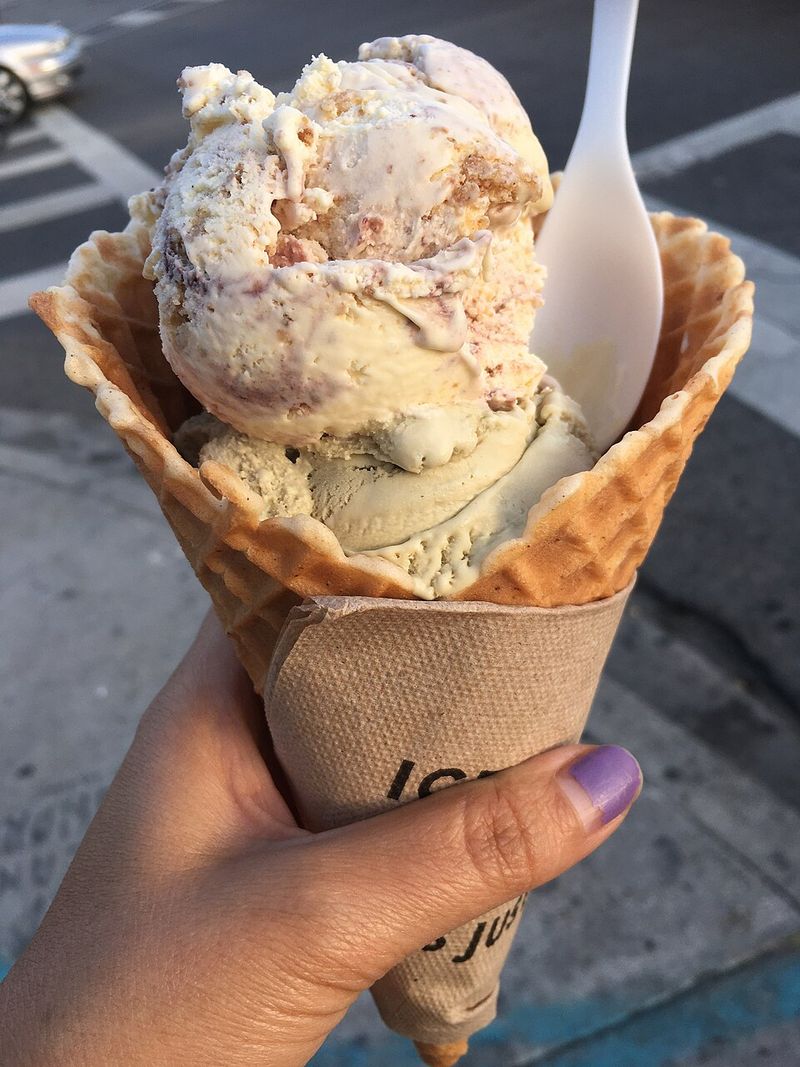
The ice cream cone was invented out of necessity at the 1904 World’s Fair in St. Louis, Missouri. An ice cream vendor named Arnold Fornachou ran out of cups and had no way to serve his customers.
A nearby waffle vendor named Ernest Hamwi saw the problem and rolled one of his thin waffles into a cone shape.
Fornachou placed a scoop of ice cream on top, and the combination worked perfectly. Fairgoers loved it, and the idea spread quickly through the event and beyond.
There is some debate about which vendor at the fair deserves full credit, as several people claimed to have had the same idea that day.
Regardless of who rolled the first waffle, the cone transformed how people eat ice cream. It made the treat portable, reduced waste, and turned a simple dessert into something you could walk around with.
A supply shortage at a busy fair changed the ice cream industry permanently.
Tarte Tatin
This famous French dessert came from a hotel kitchen mishap in the 1880s. Stephanie Tatin was running the Hotel Tatin in Lamotte-Beuvron, France, alongside her sister Caroline.
One busy day, Stephanie was making a traditional apple tart when she left the apples cooking in butter and sugar for too long on the stove.
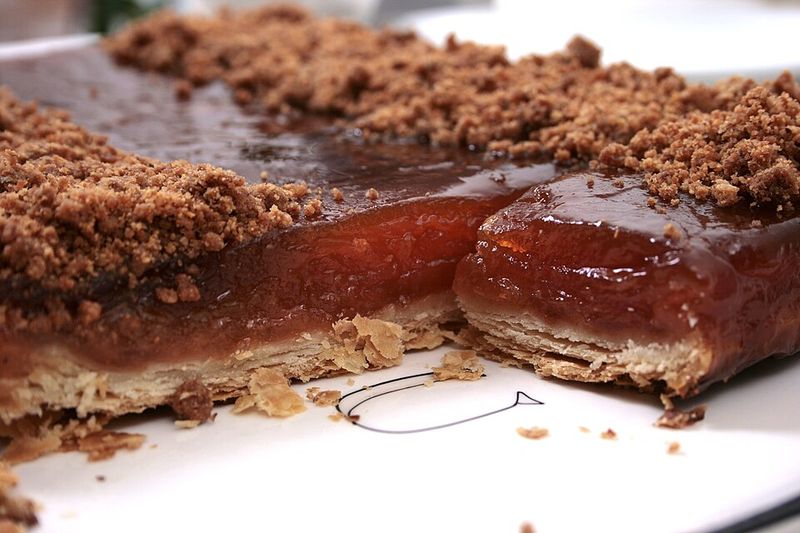
Rather than start over, she placed the pastry dough directly on top of the overcooked apples in the pan and slid the whole thing into the oven. When she flipped it out, the caramelized apples ended up on top, golden and rich.
Guests loved the upside-down result.
The tarte Tatin became the hotel’s signature dish and eventually one of the most recognized French desserts in the world. It is still served upside-down today, with the caramelized fruit on top and the pastry underneath.
The name honors the Tatin sisters, who turned a stovetop mistake into a lasting culinary classic.
Worcestershire Sauce
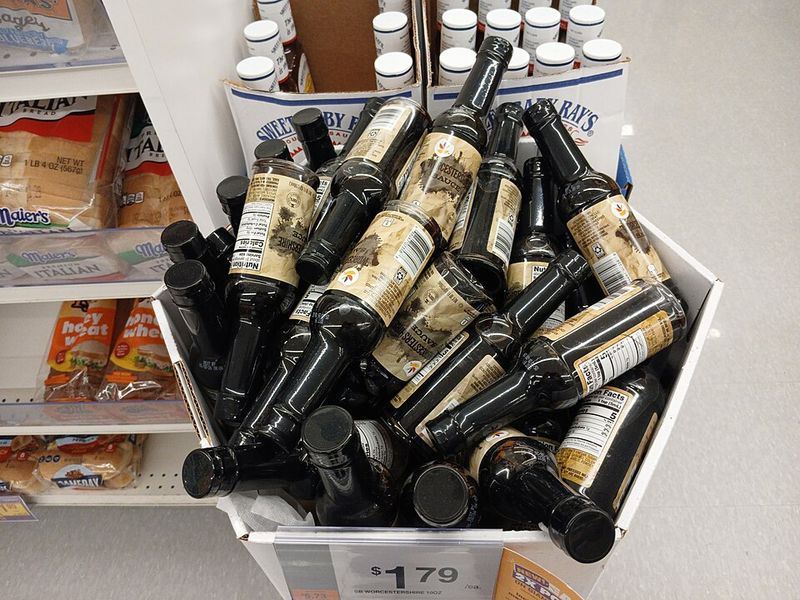
In the 1830s, a barrel of fermented fish-based sauce sat forgotten in the basement of a pharmacy in Worcester, England. Chemists John Wheeley Lea and William Perrins had been commissioned to recreate a sauce recipe brought back from India by Lord Marcus Sandys.
Their first attempt smelled terrible and was considered a failure, so they sealed the barrel and left it alone.
About two years later, they rediscovered the barrel and decided to taste it before throwing it away. The flavor had transformed during fermentation into something complex, tangy, and deeply savory.
They bottled it and began selling it commercially, and it took off quickly.
Lea and Perrins Worcestershire Sauce is still produced today and remains one of the most widely used condiments in British and American cooking. It appears in cocktails, marinades, and sauces around the world.
That forgotten barrel in a pharmacy basement became a condiment staple that has lasted nearly two centuries.
Cheese Puffs
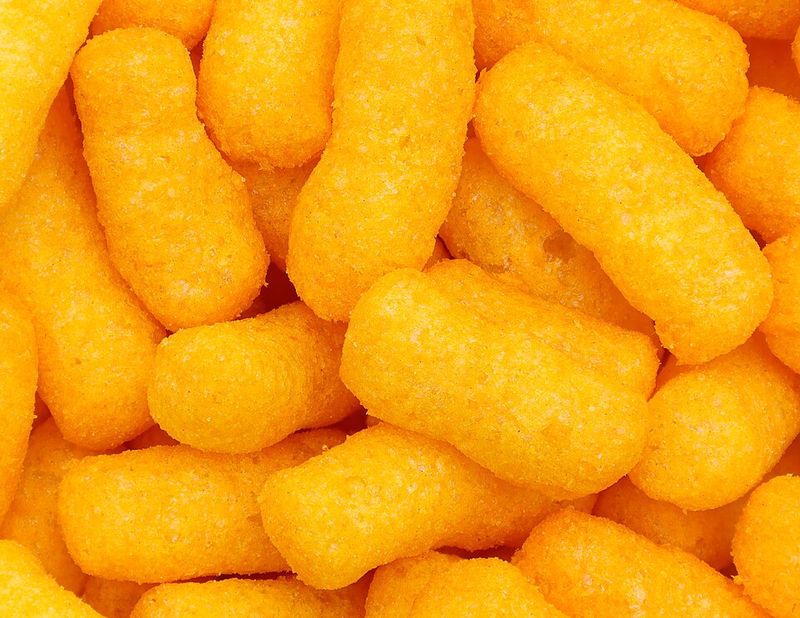
Cheese puffs were discovered by accident in the 1930s at a Wisconsin animal feed company called Flakall Corporation. Workers noticed that when moistened corn grits were fed through the machine to reduce dust, the heat caused the corn to puff up as it came out the other end.
The extruded shapes cooled into light, airy curls.
An employee named Edward Wilson reportedly took some of these corn puffs home, seasoned them, and realized they had real potential as a snack. The company began selling them under the name Korn Kurls, and other companies quickly followed with their own versions.
Frito-Lay introduced Cheetos in 1948, and the brand became the most recognized cheese puff product in the world. The accidental extrusion process that started in a farm equipment factory is now used to produce millions of bags of cheese puffs every year.
One curious employee with a bag of corn curls changed the snack aisle forever.
Nachos
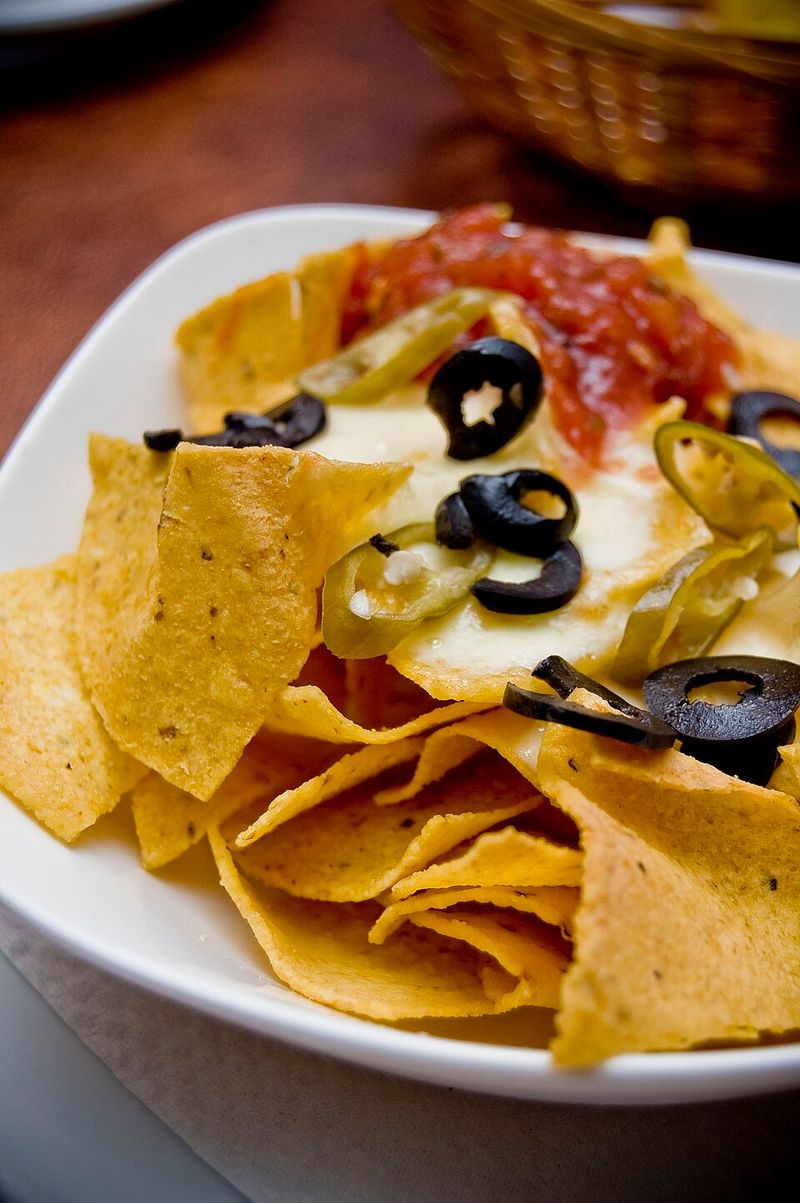
Nachos were created in 1943 in Piedras Negras, Mexico, just across the border from Eagle Pass, Texas. A group of U.S. military wives arrived at a restaurant called the Victory Club after it had already closed for the evening.
The maitre d’, Ignacio Anaya, wanted to feed them but had almost nothing in the kitchen.
He grabbed some tortilla chips, covered them with shredded cheese, added sliced jalapenos, and put the whole thing under the broiler. He served the improvised snack and the women loved it.
Anaya named the dish after himself, as Nacho is a common nickname for Ignacio.
The dish spread through Texas restaurants and eventually across the entire country. Nachos became a stadium staple in the 1970s after being introduced at a Texas Rangers baseball game.
Today they are one of the most popular snack foods in North America. A nearly empty kitchen and a few hungry guests created an international phenomenon.
Champagne
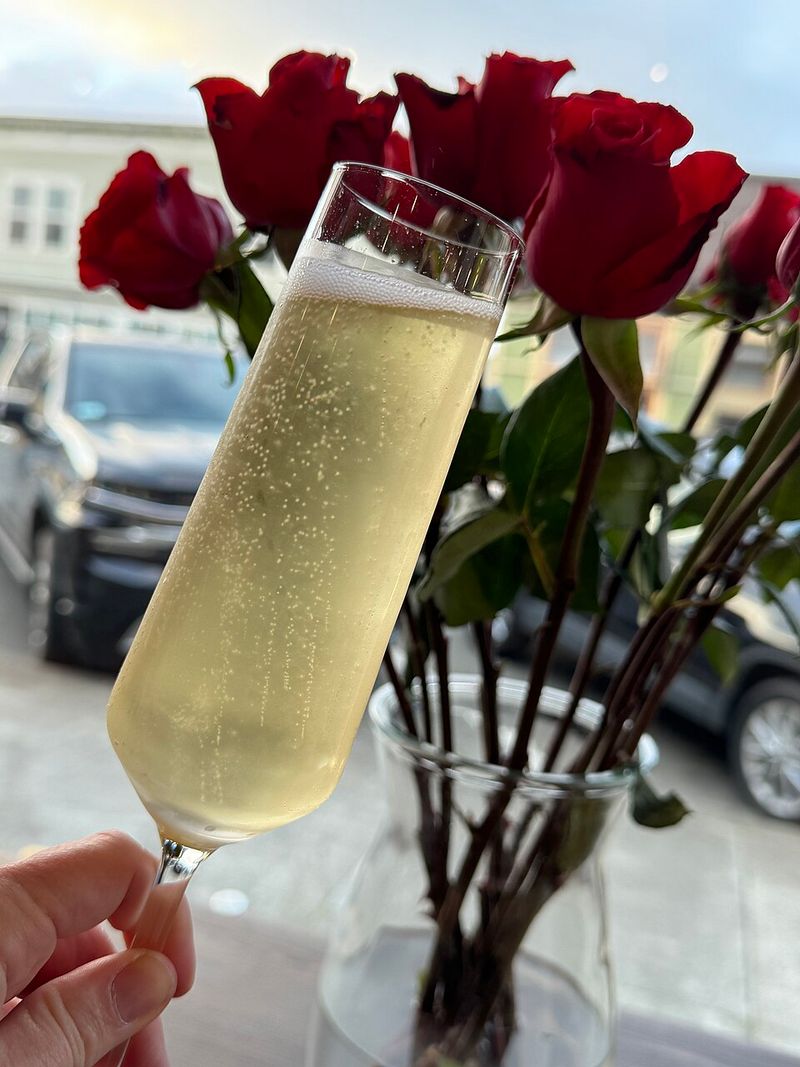
For a long time, bubbles in wine were considered a flaw. Winemakers in the Champagne region of France during the 17th century were frustrated when their bottled wine developed carbonation during cold winter months.
The secondary fermentation happening inside sealed bottles caused pressure to build, and bottles would sometimes burst in storage.
Dom Perignon, a Benedictine monk and cellar master at the Abbey of Hautvillers, is often credited with figuring out how to manage and enhance this process, though he likely worked alongside others to refine the technique. By using stronger English glass bottles and cork stoppers instead of oil-soaked rags, the bubbles could be contained safely.
What had been considered a production defect became the defining characteristic of one of the world’s most celebrated drinks. The Champagne region of France still produces sparkling wine under strict regulations, and the name remains one of the most recognized in the entire beverage world.
A persistent flaw became a symbol of celebration.
Coca-Cola
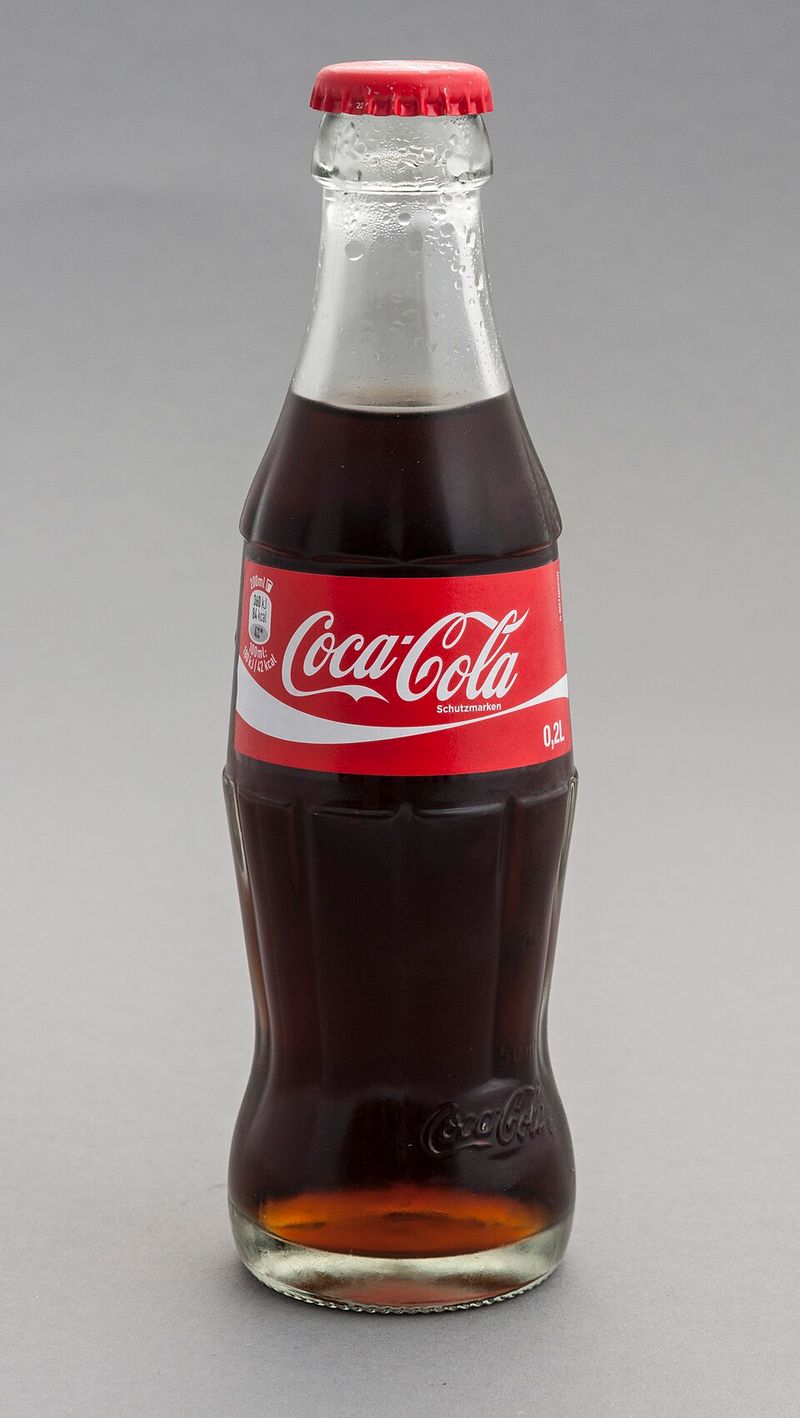
Coca-Cola started as a medicinal syrup. In 1886, pharmacist John Stith Pemberton in Atlanta, Georgia, was trying to create a remedy for headaches and fatigue.
His original formula contained coca leaves and kola nuts, and it was meant to be mixed with plain water and sold at pharmacy counters.
At some point, a pharmacy employee mixed the syrup with carbonated water by accident instead of still water. Customers who tried the fizzy version preferred it, and the carbonated formula became the standard.
Pemberton sold the rights to the formula for a relatively small amount before the drink became a global product.
The Coca-Cola Company was officially formed in 1892, and the drink grew into one of the most consumed beverages on earth. It is sold in more than 200 countries today.
A simple mix-up at a soda fountain counter in Atlanta set off a chain of events that created one of the most recognized brands in history.
Sandwich
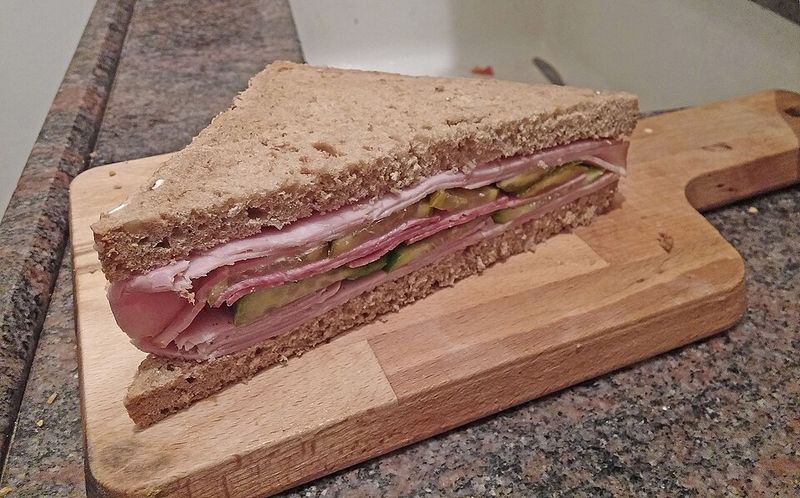
The sandwich as a concept might seem obvious now, but it took a particular moment in 18th-century England to give it a name. John Montagu, the 4th Earl of Sandwich, was reportedly so committed to a card game in 1762 that he refused to leave the table to eat a proper meal.
He asked his servants to bring him sliced meat tucked between two pieces of bread.
The idea was not entirely new, as people had been wrapping food in bread for centuries. But the Earl’s habit made it fashionable.
Other players at the table began ordering the same thing, and the meal became associated with his name and title.
Whether the story is entirely accurate is debated by historians, but the name stuck. The sandwich became a foundational meal format across the world.
From bagged lunches to gourmet restaurants, it remains one of the most versatile and universally eaten food concepts ever accidentally popularized by a nobleman who just really wanted to keep playing cards.
Pavlova
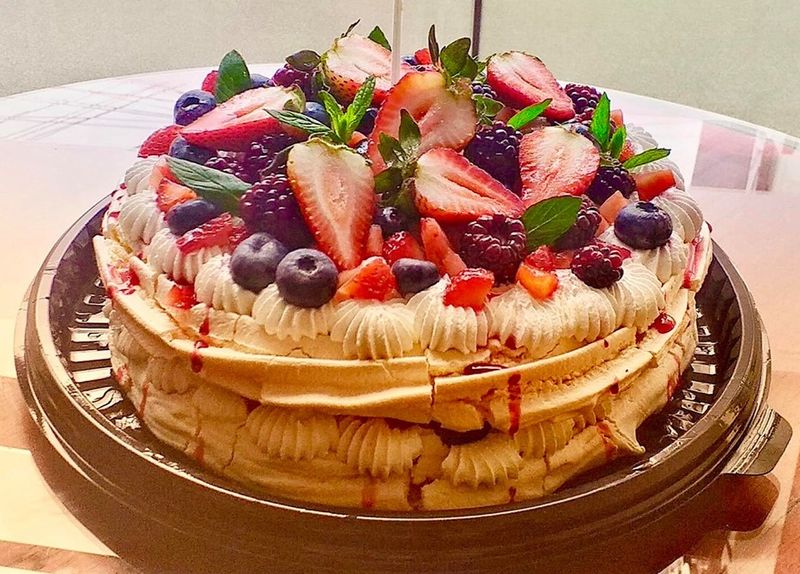
Pavlova is a meringue-based dessert named after Russian ballerina Anna Pavlova, who toured Australia and New Zealand in the 1920s. The exact origin of the dessert is one of the most hotly contested food debates between the two countries, with both claiming to have created it first in her honor.
The story most often told involves a hotel chef who was experimenting with meringue and either over-whipped it, added too much cornstarch, or miscalculated the baking time. The result was a meringue that was crispy on the outside but soft and marshmallow-like on the inside, which was not what a traditional meringue is supposed to be.
That accidental texture became the defining feature of the pavlova. It is now topped with whipped cream and fresh fruit and served as a centerpiece dessert at celebrations across both countries.
A baking error that produced the wrong texture ended up creating one of the Southern Hemisphere’s most beloved national desserts.
Pink Lemonade
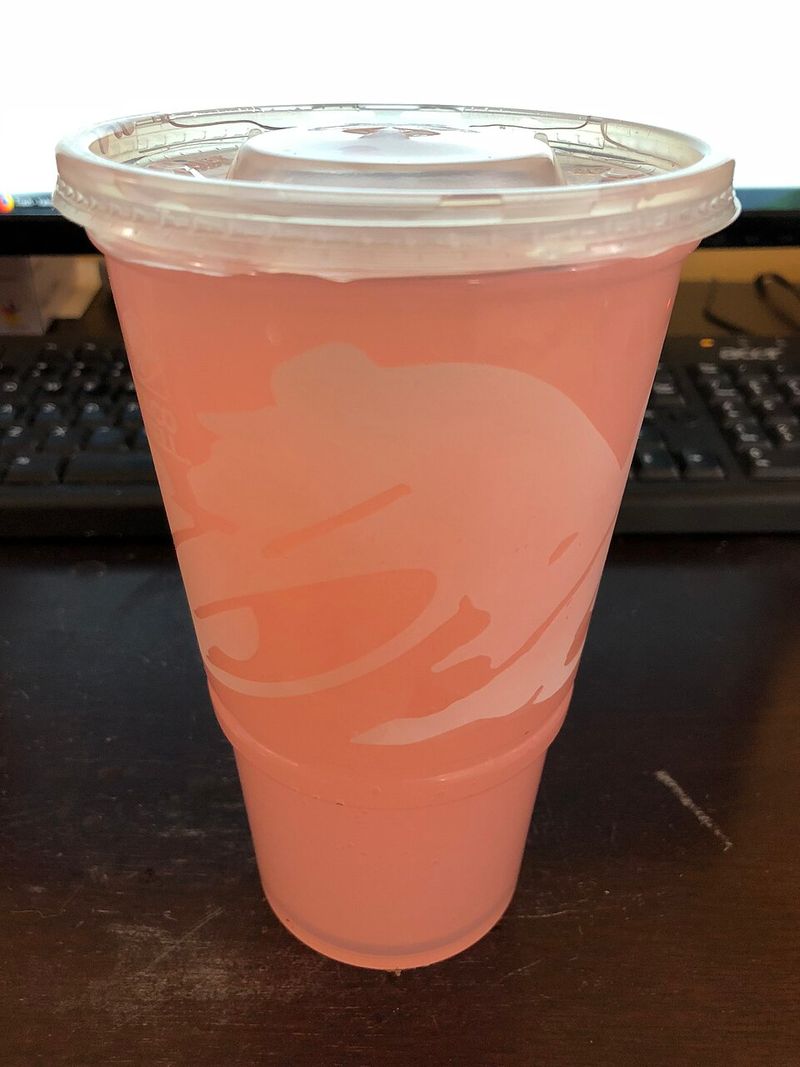
Pink lemonade has a few competing origin stories, and none of them are particularly glamorous. One popular account traces it to a circus in 1857, where a performer named Pete Conklin ran out of water to make lemonade.
He reportedly grabbed a tub of water that a performer had just used to rinse out her pink tights, stirred in the lemons and sugar, and sold it anyway.
Another version credits Henry Allott, a circus worker who accidentally dropped cinnamon candies into a barrel of lemonade, turning it pink. Both stories involve a degree of improvisation that most people would prefer not to think about too closely.
Whatever the actual origin, the pink color made the drink stand out at concession stands and it sold well. Circus vendors realized the visual appeal drove sales, and the color stuck long after the questionable origins faded from memory.
Today, pink lemonade is a staple at summer gatherings, grocery stores, and restaurant menus across the country, its origins largely forgotten.
Share this story