 Unearth The Voyage
Churches have shaped skylines, inspired artists, and witnessed history for centuries. From towering Gothic spires to colorful Byzantine domes, these sacred spaces offer more than just religious significance—they’re masterpieces of human creativity and engineering.
Whether you’re a history buff, architecture enthusiast, or simply someone who appreciates beauty, these stunning churches around the world deserve a spot on your travel list.
St. Peter’s Basilica — Vatican City, Italy
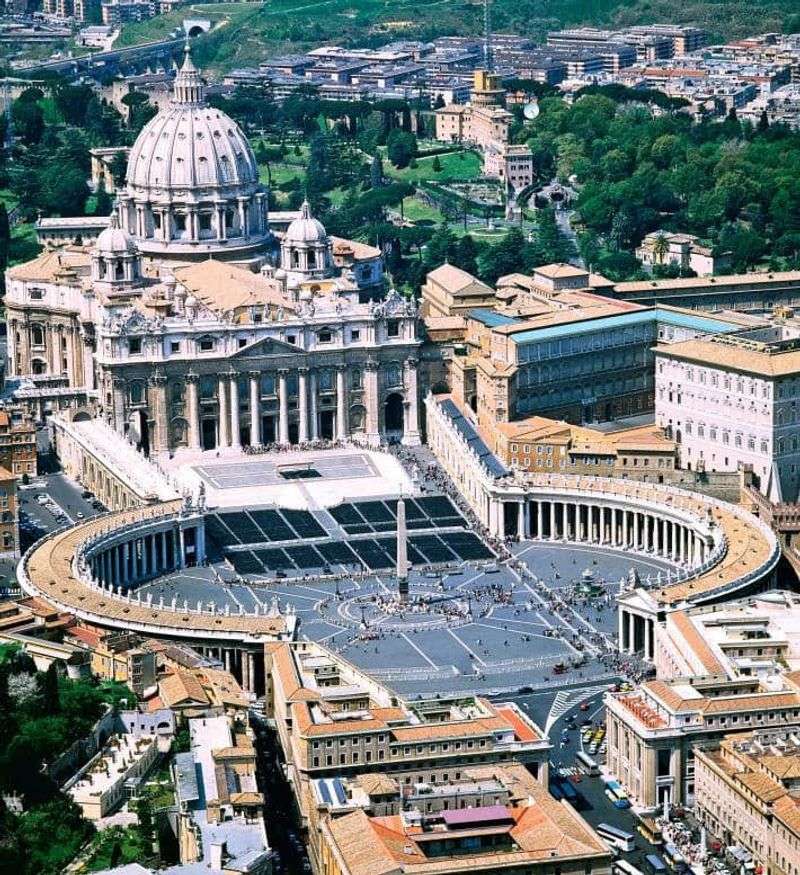
Standing beneath the massive dome of St. Peter’s Basilica feels like stepping into a dream where art and faith collide spectacularly. This Renaissance wonder took over a century to complete and involved some of history’s greatest artists, including Michelangelo, Bernini, and Bramante.
The result? A building so grand it can hold 60,000 people inside.
Walking through the entrance, you’re immediately greeted by Michelangelo’s Pietà, a marble sculpture so delicate it’s hard to believe it was carved from stone. The basilica’s interior sparkles with gold, intricate mosaics, and towering columns that seem to reach the heavens.
Climbing to the top of the dome rewards you with breathtaking views of Rome and the Vatican Gardens below.
St. Peter’s isn’t just a church—it’s the spiritual headquarters of over a billion Catholics worldwide. Pilgrims travel from every corner of the globe to attend Mass here, especially when the Pope makes an appearance.
Whether you’re religious or not, the sheer scale and beauty of this place will leave you speechless. It’s a bucket-list experience that combines history, art, and awe in one unforgettable visit.
Notre-Dame Cathedral — Paris, France
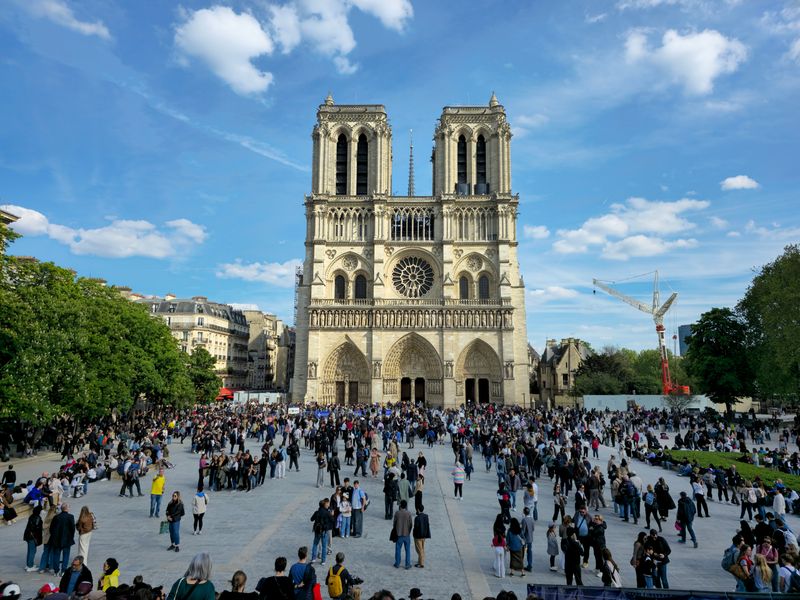
Few buildings have captured hearts quite like Notre-Dame Cathedral, perched majestically on Île de la Cité in the heart of Paris. Built between 1163 and 1345, this Gothic masterpiece has witnessed coronations, revolutions, and countless love stories along the Seine.
Its flying buttresses and intricate façade tell centuries of French history through stone and stained glass.
The 2019 fire shocked the world as flames consumed the spire and roof, but Notre-Dame’s spirit remained unbroken. Restoration efforts are underway, with plans to reopen the cathedral to visitors in the coming years.
Even in its current state, the building commands respect and admiration from everyone who passes by.
What makes Notre-Dame truly special are the details: gargoyles that seem to watch over the city, three magnificent rose windows that paint the interior with colored light, and bells that have rung out over Paris for generations. Victor Hugo’s famous novel brought international attention to the cathedral, helping save it from demolition in the 1800s.
Today, it stands as a symbol of resilience and beauty, reminding us that even after tragedy, great things can be rebuilt and cherished once more.
Sagrada Família — Barcelona, Spain
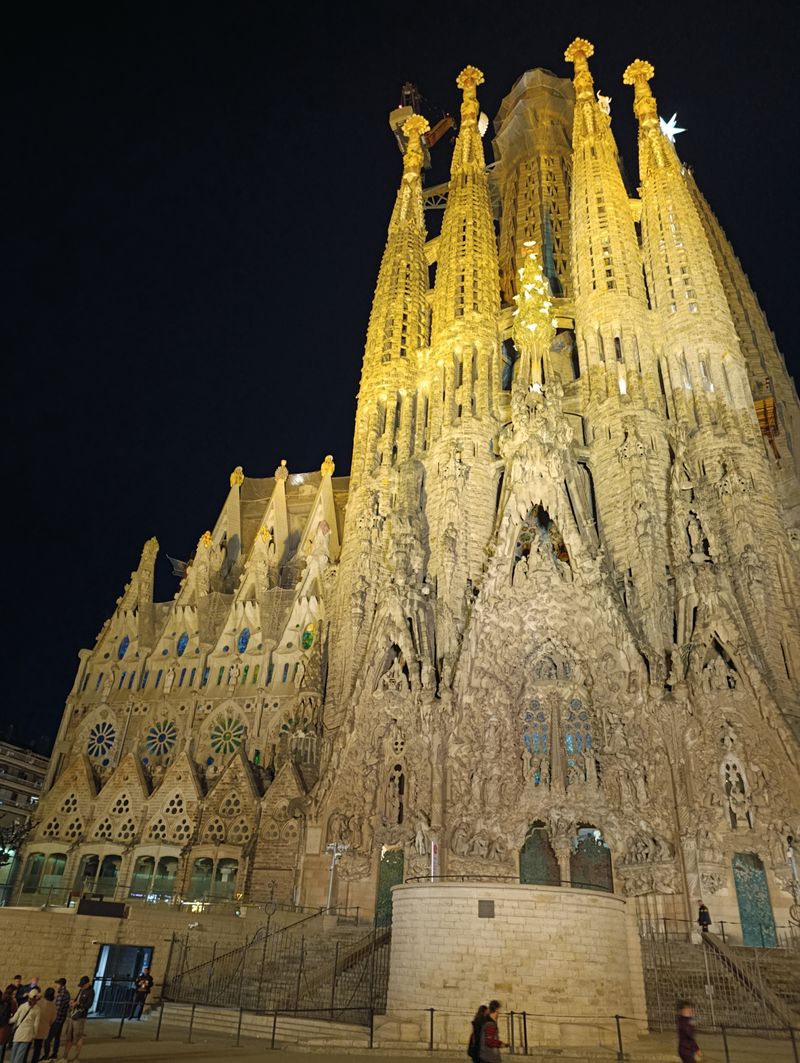
Imagine a church so ambitious that it’s been under construction for over 140 years and still isn’t finished. That’s Sagrada Família, Antoni Gaudí’s wild, wonderful vision that defies every rule of traditional church design.
With spires that twist toward the sky like melting candles and façades covered in biblical scenes, this basilica looks like something from a fantasy novel.
Gaudí devoted the last 15 years of his life entirely to this project, even living in a workshop on-site. Tragically, he was struck by a tram in 1926 and died before seeing his masterpiece completed.
Construction continues today using his original plans and modern technology, with completion expected around 2026—the centenary of Gaudí’s death.
Step inside and you’ll feel like you’ve entered an enchanted forest. Columns branch out like trees, and light pours through stained glass windows in every color imaginable, creating a kaleidoscope effect on the floors.
Each façade tells a different story: the Nativity celebrates birth, the Passion depicts suffering, and the Glory represents eternal life. Sagrada Família isn’t just a church—it’s a living work of art that evolves with each passing year, making every visit unique.
Hagia Sophia — Istanbul, Turkey
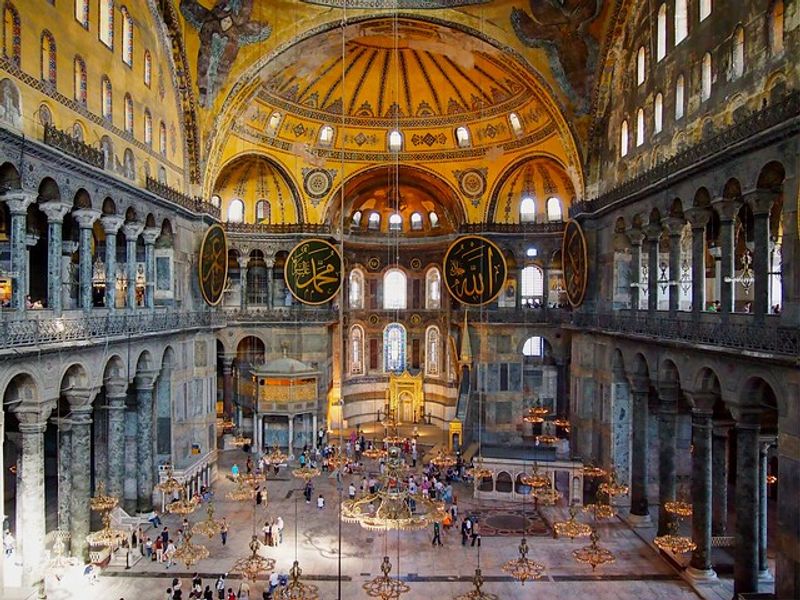
Built nearly 1,500 years ago, Hagia Sophia has lived more lives than most buildings could dream of. Emperor Justinian commissioned this Byzantine marvel in 537 AD, creating a cathedral so grand that legend says he exclaimed, “Solomon, I have surpassed you!” upon its completion.
The massive dome seemed to float impossibly above the sanctuary, a feat of engineering that baffled observers for centuries.
When the Ottoman Empire conquered Constantinople in 1453, Hagia Sophia transformed into a mosque, with minarets added to its exterior and Islamic calligraphy adorning its walls. In 1935, it became a museum, and most recently in 2020, it returned to functioning as a mosque.
This layered history makes Hagia Sophia a living timeline of cultural and religious evolution.
The interior still dazzles with golden mosaics depicting Christian saints alongside Islamic medallions bearing the names of Allah and Muhammad. Marble columns imported from ancient temples support archways that soar overhead.
Standing in the center, you can feel the weight of history pressing down—emperors were crowned here, empires rose and fell, and millions of prayers echoed through these halls. It’s a place where East meets West, past meets present, and architecture transcends time itself.
St. Basil’s Cathedral — Moscow, Russia
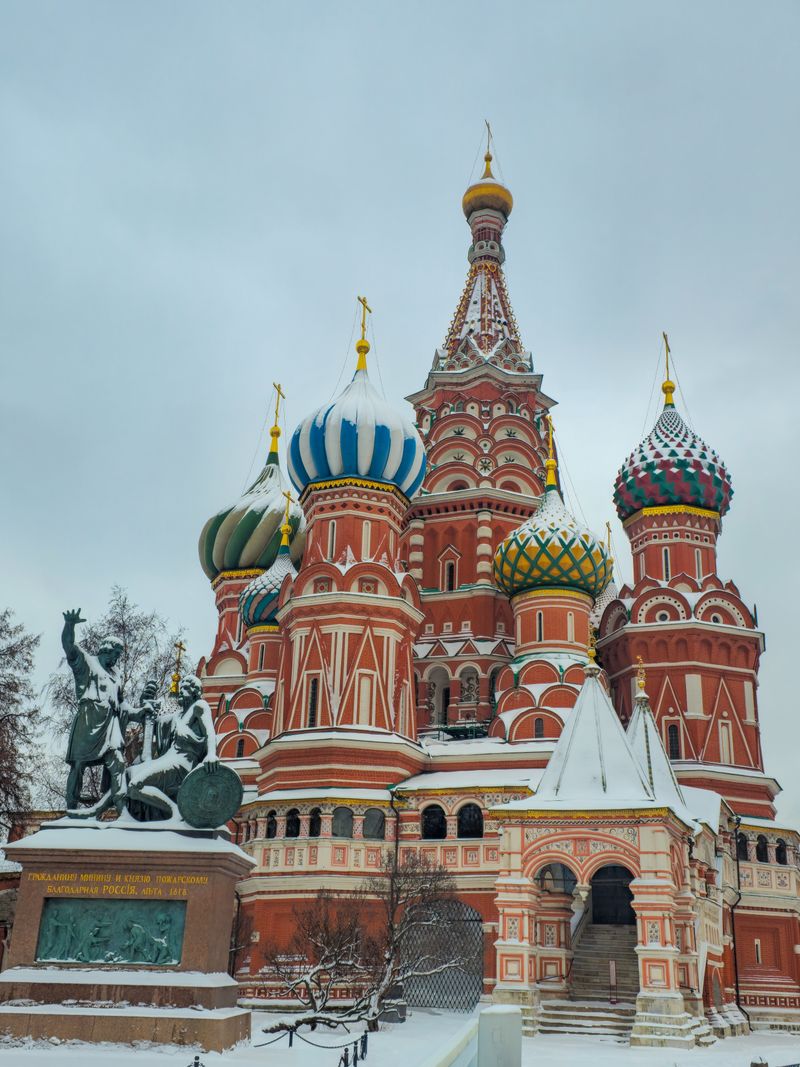
Nothing prepares you for the explosion of color that is St. Basil’s Cathedral. Sitting proudly in Moscow’s Red Square, this 16th-century wonder looks like a collection of giant candy-colored swirls topped with onion domes.
Ivan the Terrible commissioned it to celebrate military victories, and according to legend, he had the architect blinded afterward so he could never create anything more beautiful. Whether that story’s true or not, one thing’s certain: St. Basil’s is absolutely one-of-a-kind.
Each of the nine chapels has its own unique design and color scheme, creating a visual feast that changes depending on where you stand. The patterns, spirals, and intricate details covering every surface make it look more like a fairy-tale castle than a traditional church.
During winter, when snow blankets Red Square, the colorful domes pop even more dramatically against the white landscape.
Inside, narrow corridors connect the chapels, which are filled with religious icons and frescoes. The layout is maze-like and intimate, a stark contrast to the cathedral’s flamboyant exterior.
St. Basil’s has survived fires, Napoleon’s invasion, and Soviet-era demolition plans. Today, it stands as Russia’s most recognizable symbol, proving that sometimes the boldest designs become the most enduring.
Cologne Cathedral — Cologne, Germany
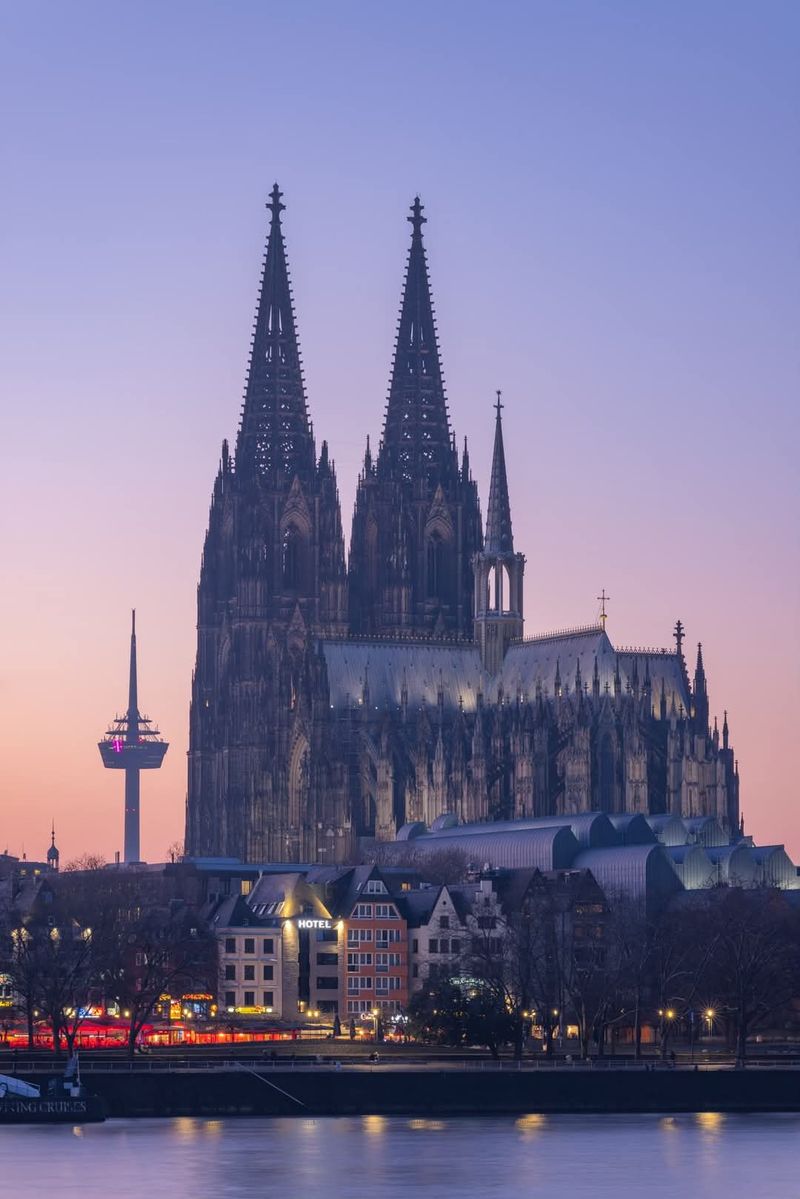
When construction began on Cologne Cathedral in 1248, nobody imagined it would take more than 600 years to finish. This Gothic giant dominates the Cologne skyline with twin spires reaching 515 feet into the sky, making it Germany’s most visited landmark.
The cathedral survived World War II bombings that destroyed most of the surrounding city—a near-miracle that locals attribute to divine protection.
The façade is a masterclass in Gothic architecture, with thousands of intricate carvings, pointed arches, and flying buttresses working together to create an effect of upward movement. It’s as if the entire building is straining to touch heaven.
Inside, the Shrine of the Three Kings supposedly holds the relics of the Magi who visited baby Jesus, making it one of Christianity’s most important pilgrimage sites.
The stained glass windows are showstoppers, particularly the modern window by artist Gerhard Richter, which features 11,500 squares of colored glass arranged in a pixelated pattern. Climbing the 533 steps to the south tower’s viewing platform is exhausting but worth it—the panoramic views of Cologne and the Rhine River are spectacular.
Cologne Cathedral proves that patience pays off; sometimes the best things really do take centuries to create.
St. Paul’s Cathedral — London, England
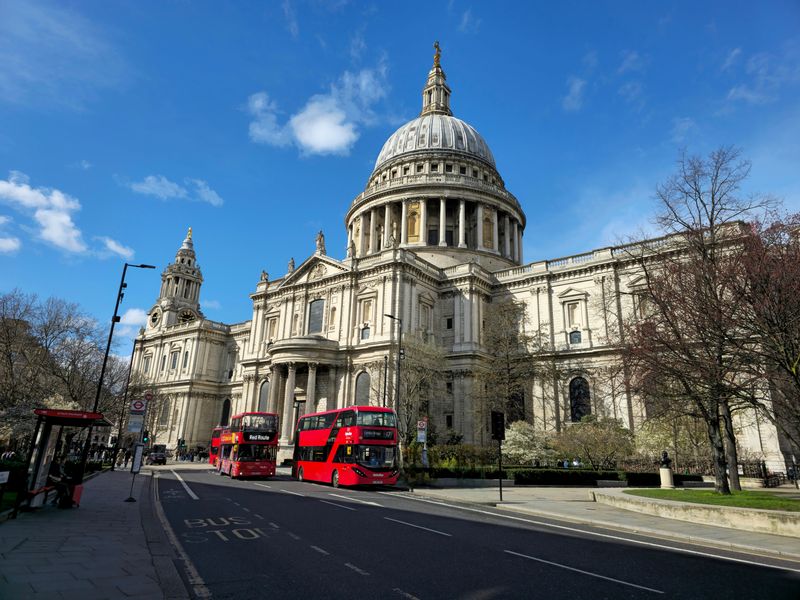
Sir Christopher Wren’s crowning achievement sits atop Ludgate Hill, where a cathedral has stood for over 1,400 years. The current St. Paul’s Cathedral, completed in 1710, replaced a medieval church destroyed in the Great Fire of London.
Its massive dome has defined London’s skyline ever since, surviving the Blitz during World War II when surrounding buildings crumbled around it.
The dome itself is an engineering marvel—actually three domes nested inside each other, creating both structural stability and breathtaking interior views. The Whispering Gallery, located inside the dome, has incredible acoustics; whisper against the wall and someone on the opposite side can hear you clearly 112 feet away.
It’s a fun trick that delights visitors of all ages.
St. Paul’s has hosted some of Britain’s most significant events, including the funerals of Lord Nelson and Winston Churchill, and the wedding of Prince Charles and Princess Diana. The cathedral’s interior gleams with mosaics, monuments, and memorials to national heroes.
Climbing to the Golden Gallery at the top of the dome offers stunning 360-degree views of London. St. Paul’s represents British resilience and grandeur, standing as a testament to the power of rebuilding after disaster and creating something even more magnificent than before.
Cathedral of Santa Maria del Fiore (Duomo) — Florence, Italy
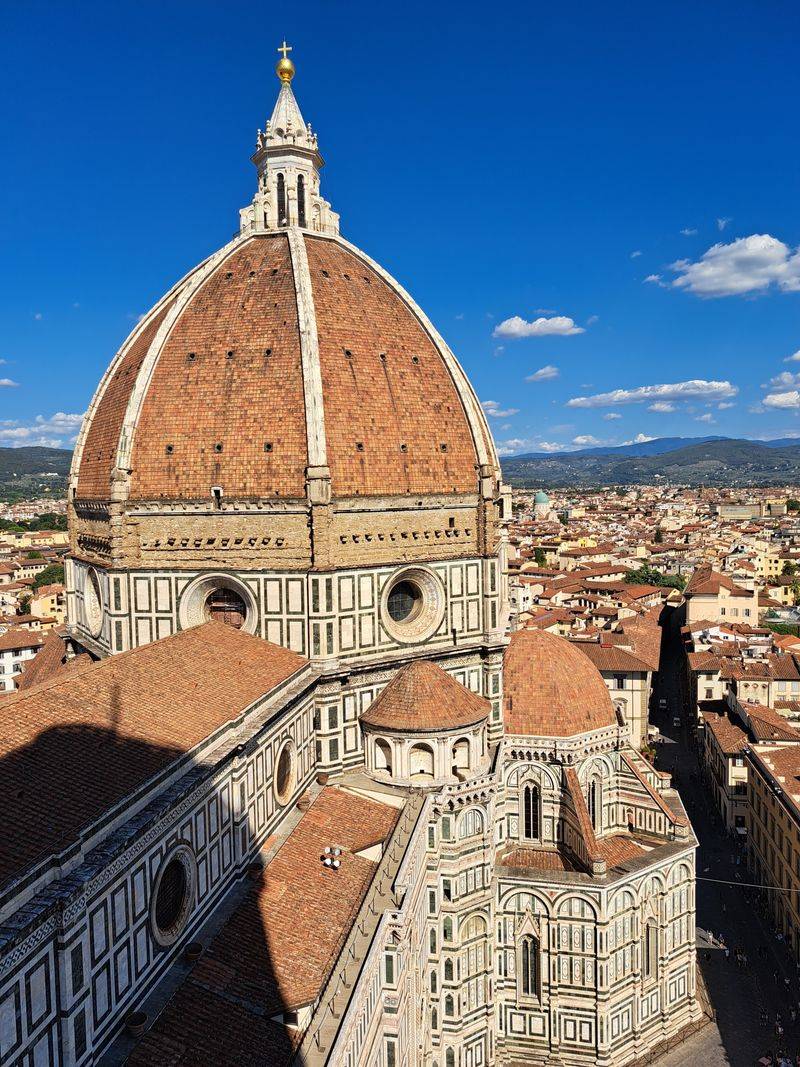
Brunelleschi’s dome crowning Florence’s cathedral is the kind of achievement that makes you wonder how humans accomplished such things without modern technology. When completed in 1436, it was the largest dome in the world, and engineers still study its innovative double-shell design today.
The cathedral itself took 140 years to build, but that dome—that’s what steals the show.
The exterior is a geometric dream, covered in pink, white, and green marble panels that create striking patterns across the façade. Giotto’s bell tower stands alongside, adding vertical drama to an already impressive structure.
Together, they dominate Florence’s historic center, visible from nearly every viewpoint in the city.
Inside, the dome’s interior is painted with frescoes depicting the Last Judgment—over 3,600 square meters of biblical scenes that took artist Giorgio Vasari and his team years to complete. Climbing the 463 steps to the top is a workout, with narrow staircases winding between the dome’s two shells.
The views from the top are worth every step: Florence spreads out below like a Renaissance painting come to life. The Duomo represents the pinnacle of Renaissance achievement, where art, engineering, and faith combined to create something that still inspires awe nearly 600 years later.
Westminster Abbey — London, England
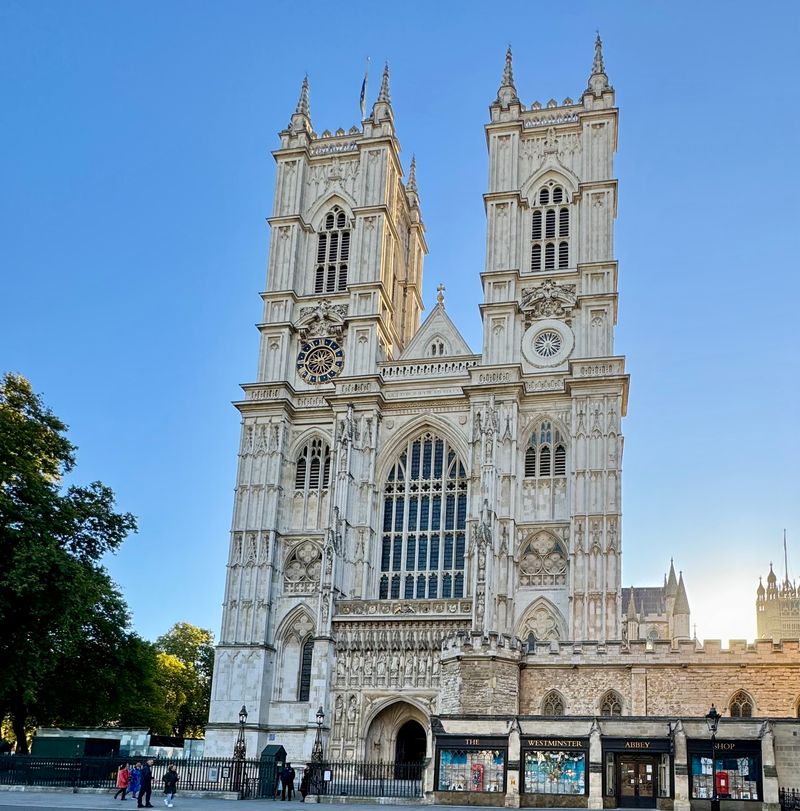
Every British monarch since 1066 has been crowned in Westminster Abbey, making it the stage for nearly a thousand years of royal history. While technically an abbey rather than a cathedral, its importance to British culture and history is impossible to overstate.
Walk through its doors and you’re literally walking through centuries of the nation’s story.
The abbey serves as the final resting place for over 3,000 people, including seventeen monarchs, poets, scientists, and statesmen. Poets’ Corner honors literary giants like Chaucer, Dickens, and Tennyson.
Isaac Newton and Charles Darwin are buried here too. It’s like a who’s who of British achievement, all gathered under one magnificent Gothic roof.
The architecture is stunning, with fan-vaulted ceilings, medieval stained glass, and the elaborate Cosmati pavement near the high altar, which is over 700 years old. Recent royal weddings, including Prince William and Catherine Middleton’s in 2011, have introduced the abbey to new generations worldwide.
The abbey’s daily services maintain a tradition of worship that stretches back centuries. Visiting Westminster Abbey isn’t just sightseeing—it’s experiencing living history, where the past and present exist side by side, and every corner reveals another fascinating story waiting to be discovered.
St. Mark’s Basilica — Venice, Italy
Gold. Everywhere gold.
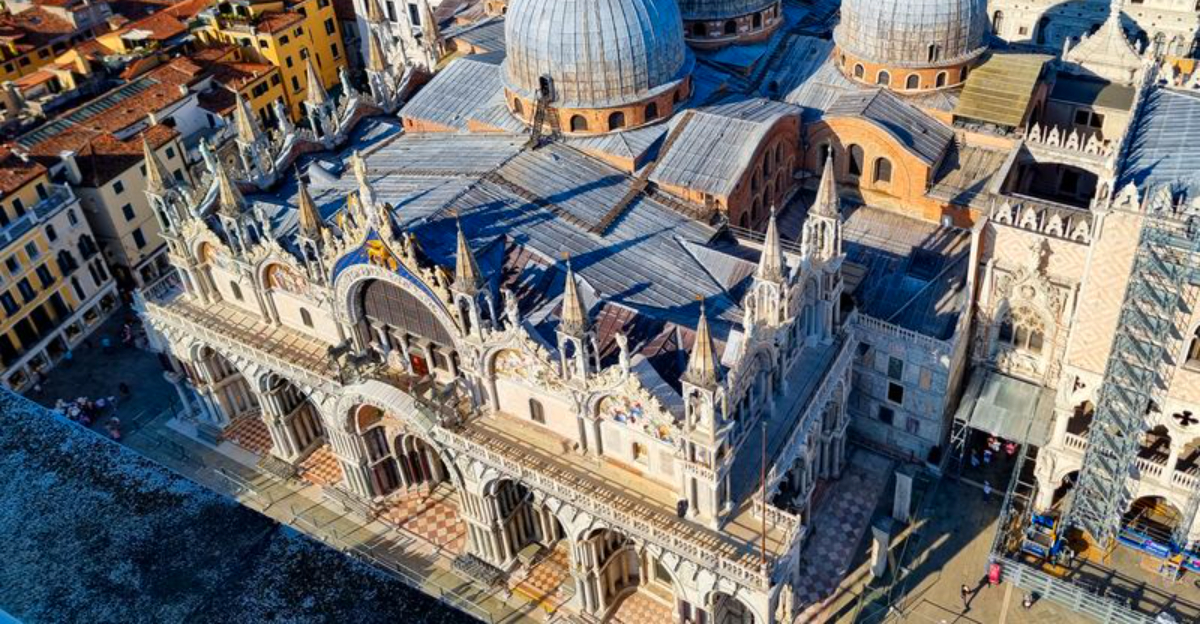
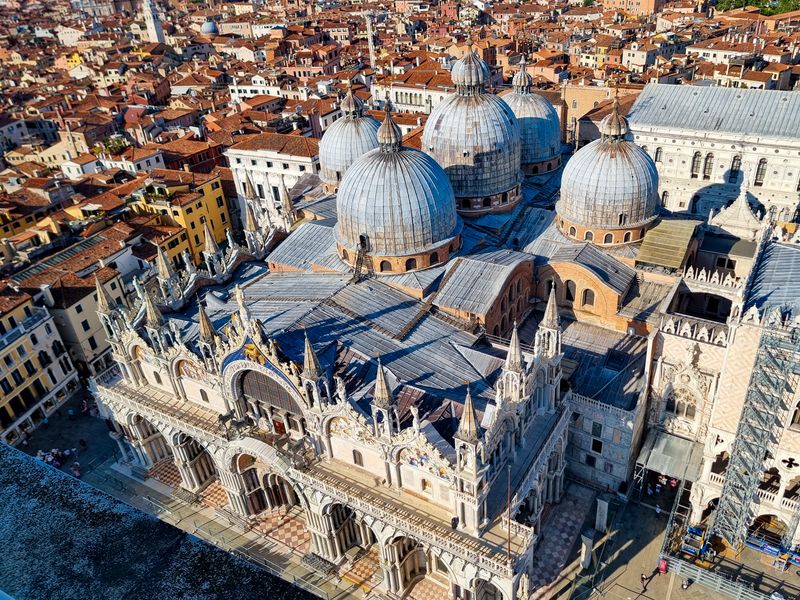
St. Mark’s Basilica glitters like a jewel box sitting at the edge of Venice’s famous piazza. Over 8,000 square meters of golden mosaics cover the interior, earning it the nickname “Church of Gold.” Built in the 11th century to house the remains of St. Mark the Evangelist, this Byzantine masterpiece reflects Venice’s historic connections to Constantinople and the East.
The basilica’s five domes and intricate façade create an exotic profile that sets it apart from Western European churches. Horses stolen from Constantinople during the Fourth Crusade once stood above the entrance—the originals are now protected inside, with replicas taking their place outside.
The floor features stunning marble patterns that undulate slightly due to Venice’s shifting foundations, adding to the dreamlike atmosphere.
Inside, biblical scenes unfold across the walls and ceilings in glittering mosaic tiles that catch and reflect light in mesmerizing ways. The Pala d’Oro, a golden altarpiece encrusted with precious gems, is one of the most valuable religious artworks in existence.
Climbing the steep stairs to the museum level gives you a closer look at the mosaics and a perfect view over St. Mark’s Square. This basilica captures Venice’s unique spirit—part Eastern, part Western, entirely magical, and utterly unforgettable.
York Minster — York, England
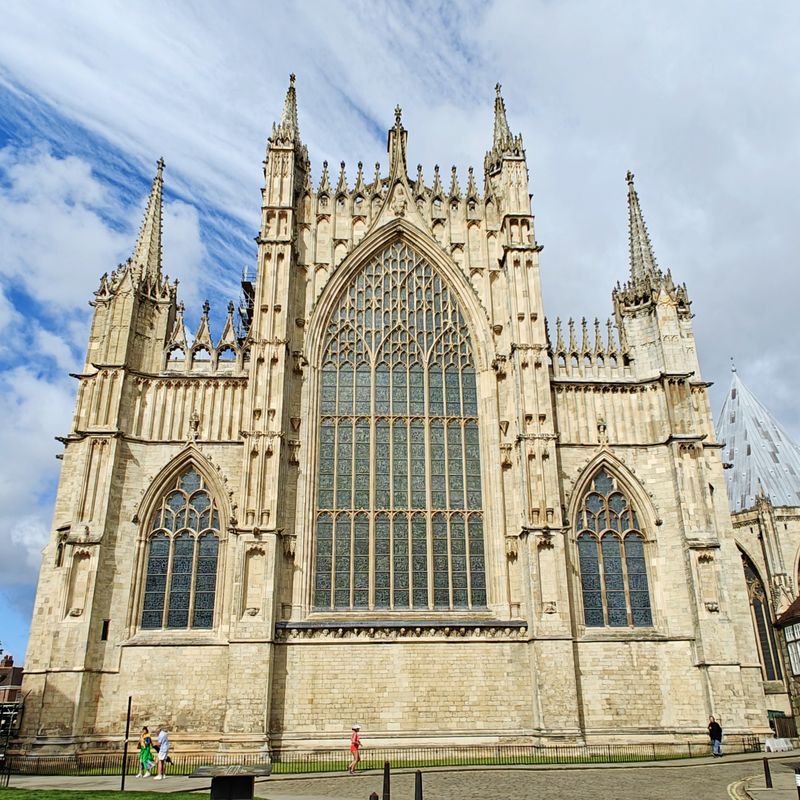
York Minster holds more medieval stained glass than any other church in England, including the Great East Window—the size of a tennis court and featuring intricate scenes from the Bible. This Gothic cathedral took 250 years to build, from 1220 to 1472, and the result is one of Northern Europe’s most impressive religious buildings.
Its sheer scale dominates York’s historic streets, visible from miles around.
The central tower rises 235 feet high, and climbing its 275 steps rewards you with spectacular views across Yorkshire. Below ground, the cathedral’s foundations reveal Roman and Norman remains, taking visitors on a journey through 2,000 years of history.
Archaeological excavations have uncovered everything from Roman barracks to Saxon churches that once occupied this sacred site.
The Chapter House, an octagonal room with a wooden ceiling unsupported by a central column, showcases medieval engineering brilliance. Stone carvings throughout the minster depict everything from biblical figures to cheeky medieval humor—look for the monkey funeral procession among the decorative details.
York Minster has survived fires, wars, and the passage of centuries while remaining an active place of worship. It’s a living monument where ancient craftsmanship meets continued spiritual practice, proving that great architecture never goes out of style.
Basilica of the National Vow — Quito, Ecuador
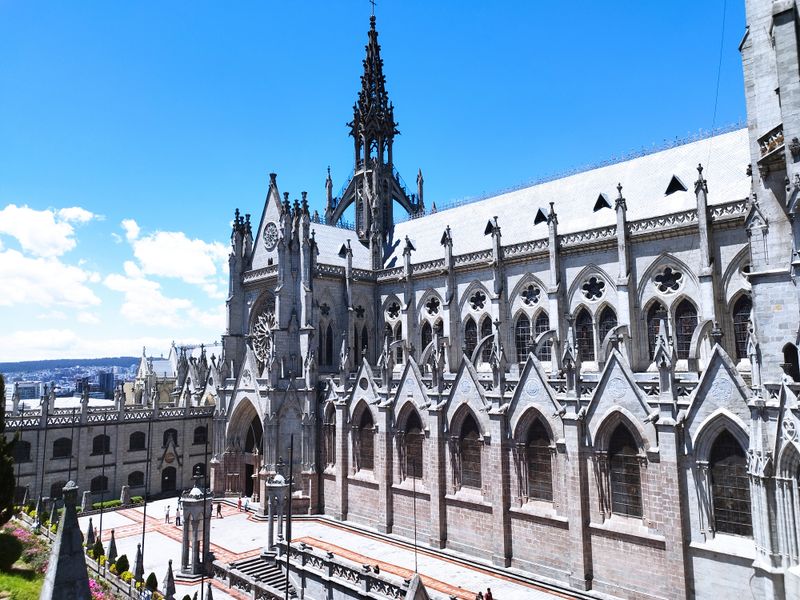
Perched high in the Andes, the Basilica of the National Vow is the largest neo-Gothic church in the Americas, and it comes with a twist—instead of traditional gargoyles, local animals like iguanas, tortoises, and Galápagos penguins guard its walls. This quirky detail gives the basilica a distinctly Ecuadorian personality while maintaining its European-inspired Gothic grandeur.
Construction began in 1892 but technically remains unfinished, based on a legend that says when the basilica is completed, the end of the world will come. Whether you believe that or not, the unfinished status hasn’t stopped it from becoming Quito’s most recognizable landmark.
The spires soar 377 feet above sea level, making them visible throughout the city’s historic center.
The real adventure comes from climbing the church’s towers. Narrow ladders and precarious walkways take you higher and higher, eventually leading outside onto the spires themselves.
The views from the top are absolutely worth the slightly terrifying climb—Quito spreads out below, surrounded by volcanic peaks and endless sky. The basilica’s interior features beautiful stained glass windows and intricate stonework.
For those seeking something off the beaten path, this Ecuadorian treasure offers Gothic grandeur with a South American soul and an unforgettable climbing experience you won’t find in European cathedrals.
Church of Our Lady — Bruges, Belgium
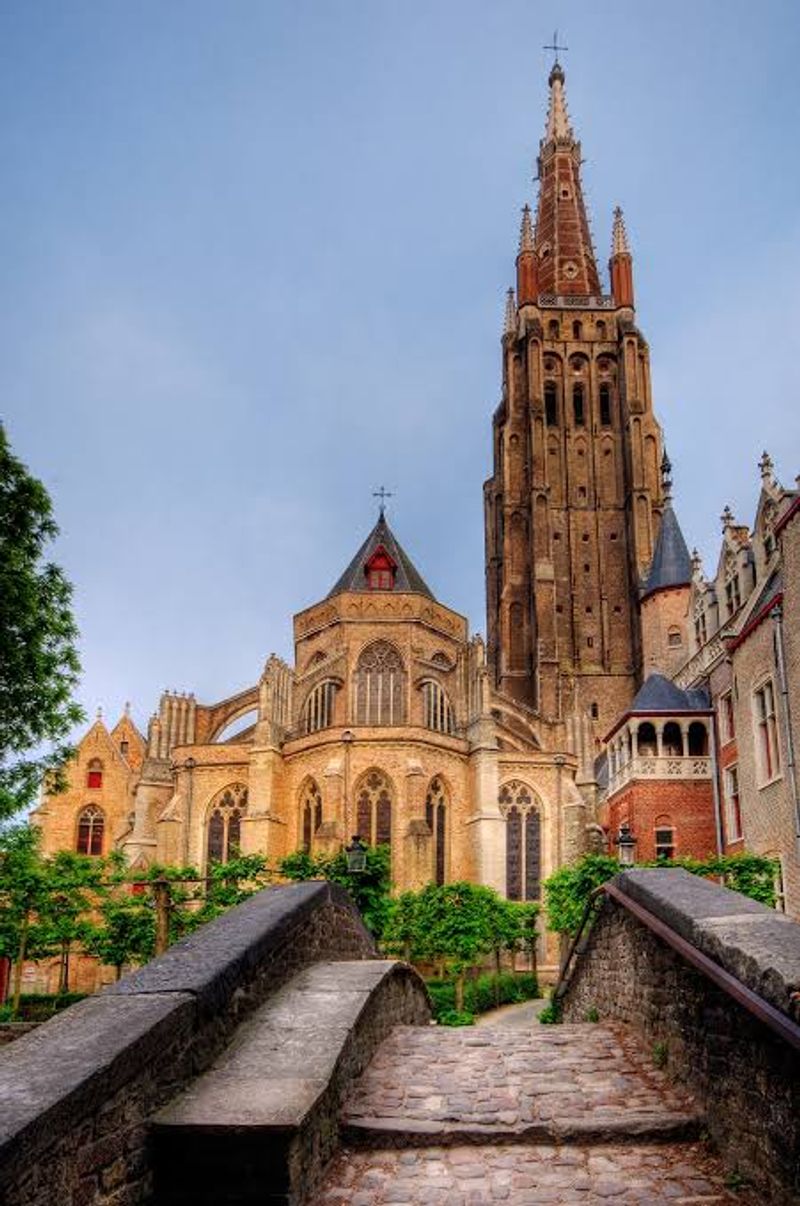
At 401 feet, the brick tower of the Church of Our Lady is one of the tallest of its kind in the world, acting as a medieval skyscraper that’s guided travelers to Bruges for centuries. Built primarily between the 13th and 15th centuries, this Gothic church perfectly captures the architectural ambitions of medieval Flanders, when Bruges was one of Europe’s wealthiest cities.
The church’s greatest treasure is Michelangelo’s Madonna and Child, one of the few sculptures by the master to leave Italy during his lifetime. It was purchased by a wealthy Bruges merchant and has remained here ever since, making this one of the rare places outside Italy where you can see an authentic Michelangelo sculpture.
The white marble glows against the darker church interior, drawing visitors from around the world.
Inside, elaborate tombs of Charles the Bold and his daughter Mary of Burgundy showcase the finest medieval craftsmanship. The church’s collection of paintings and religious artifacts provides a window into medieval religious life and art.
Bruges itself feels frozen in time, and the Church of Our Lady fits perfectly into the city’s fairy-tale atmosphere. Wandering through its quiet chapels and admiring the artwork offers a peaceful contrast to the bustling tourist streets outside, making it a perfect spot for reflection amid your Belgian adventures.
Basilica of the Sacred Heart — Brussels, Belgium
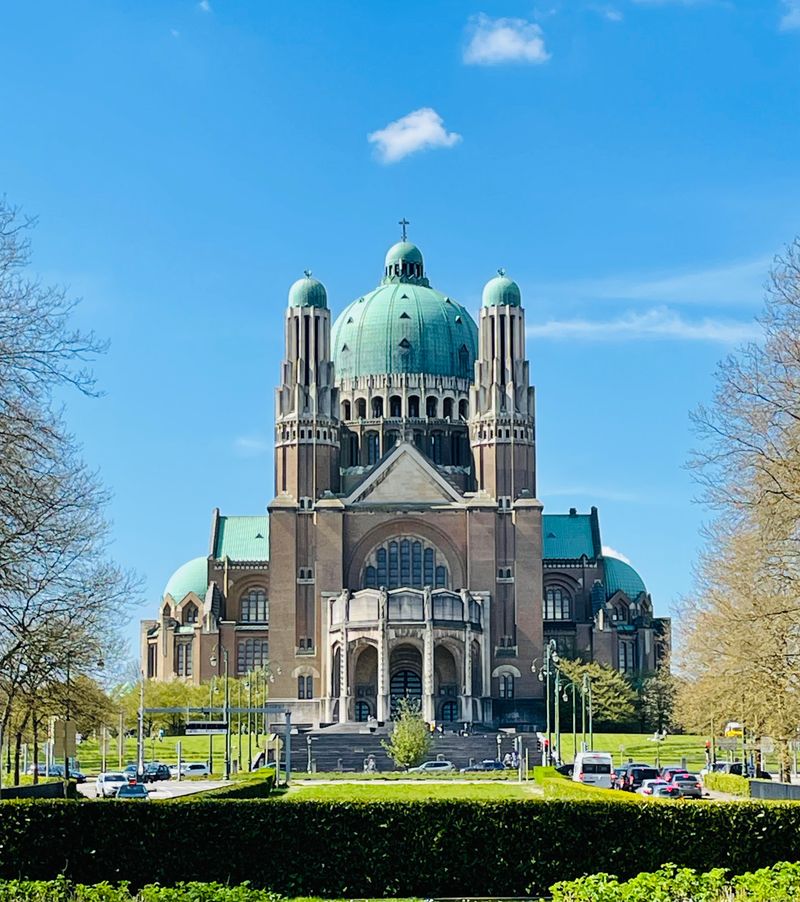
Rising above Brussels like a green-domed giant, the Basilica of the Sacred Heart—also called Koekelberg Basilica—is one of the world’s largest churches by area and one of its most unusual. Completed in 1970 after decades of construction, it blends Art Deco styling with neo-Byzantine elements, creating an architectural style that’s uniquely 20th-century.
The result is striking and somewhat controversial, dividing opinion between those who love its boldness and those who find it too modern.
The basilica’s copper dome, which has turned green over time, spans 108 feet in diameter and can be seen from across Brussels. Inside, the vast space feels more like a concert hall than a traditional church, with clean lines and minimal decoration compared to older European cathedrals.
The basilica regularly hosts exhibitions, concerts, and cultural events, making it a living community space rather than just a tourist attraction.
Take the elevator or climb to the dome’s viewing platform for panoramic views stretching across Brussels and beyond on clear days. The basilica’s museum showcases religious art and explains the building’s fascinating construction history.
While it may lack the ancient pedigree of Europe’s medieval churches, the Basilica of the Sacred Heart represents modern faith and ambition, proving that each era adds its own architectural voice to the story of sacred spaces.



