Some streets are just streets. But in Italy, even a short afternoon walk can turn into a full-on history lesson, a foodie adventure, or a moment you end up telling people about for years.
From Rome’s ancient cobblestones to Venice’s impossibly narrow alleys, the country has a gift for making every step feel worthwhile. These 14 Italian streets prove that the best travel memories sometimes happen when you are just wandering around with no real plan.
Via Appia Antica, Rome
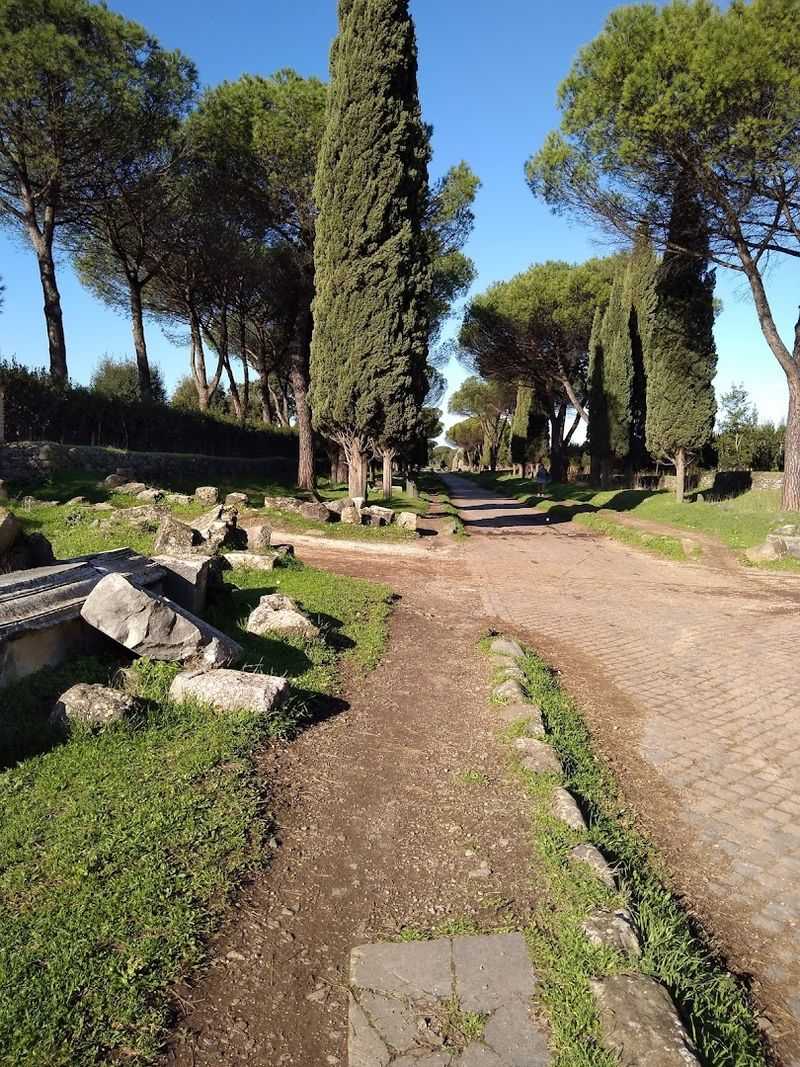
Built starting in 312 BCE, Via Appia Antica is one of the oldest roads still walkable in the world. That alone should earn it a spot on every Rome itinerary.
Stretching over 800 kilometers total, the section near Rome is the most scenic and easiest to explore on foot or by bike.
You will pass catacombs, crumbling tombs, and umbrella pines that look like they were placed there by a film director. The paving stones are original.
Yes, you are literally walking on ancient Rome.
This is a great escape from the crowds of central Rome. Instead of elbowing past tourists near the Trevi Fountain, you get open air, archaeology, and a genuine sense of history.
Sunday mornings are especially good, as the road closes to traffic and becomes even more peaceful. Rent a bike nearby for the full experience.
Via Margutta, Rome
Federico Fellini lived here. Gregory Peck’s character in Roman Holiday called it home too.
Via Margutta has that kind of quiet, artistic cool that most tourists walk right past on their way to the Spanish Steps next door.
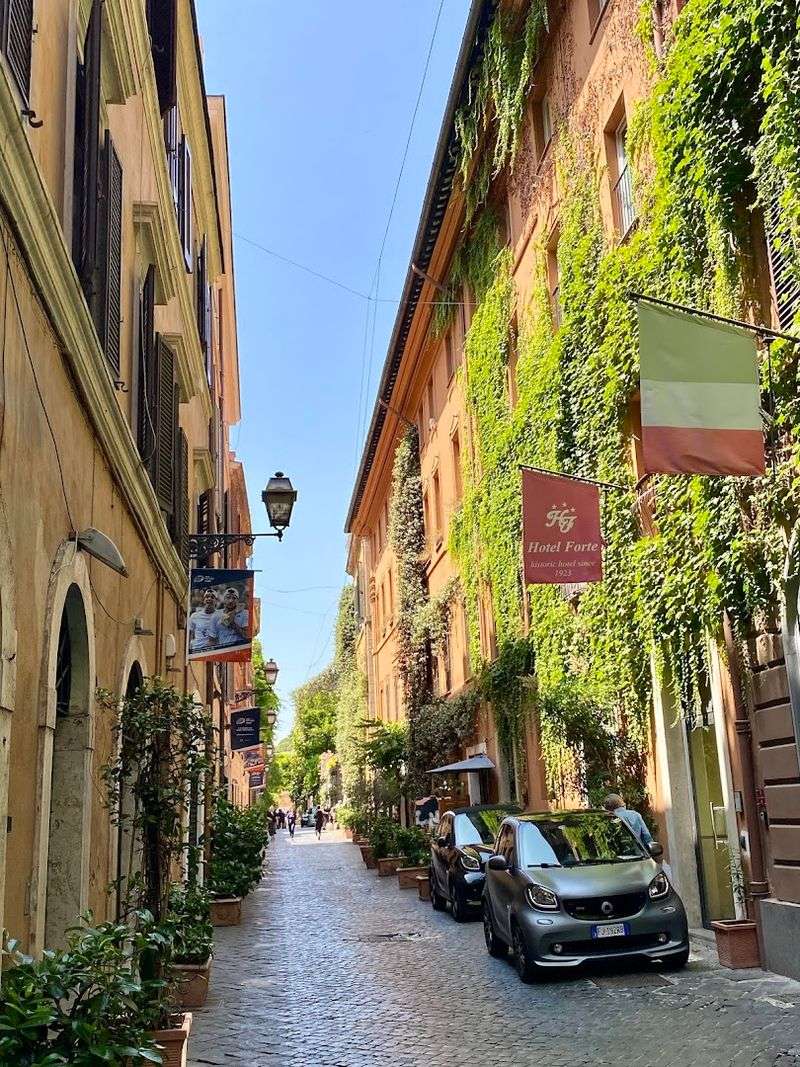
The street is tucked just off the main tourist drag, but it feels like a completely different Rome. Ivy climbs the walls, courtyards peek through old doorways, and small galleries display paintings year-round.
Every October and May, the street hosts its famous “100 Pittori” event, turning the whole lane into an open-air art gallery.
Walk slowly here. There is no rush, and rushing would miss the point entirely.
Check the doorways, look up at the balconies, and take your time reading the plaques on the buildings. Via Margutta rewards the kind of traveler who is happy to wander without a strict agenda.
It is Rome at its most charming and unhurried.
Via dei Coronari, Rome
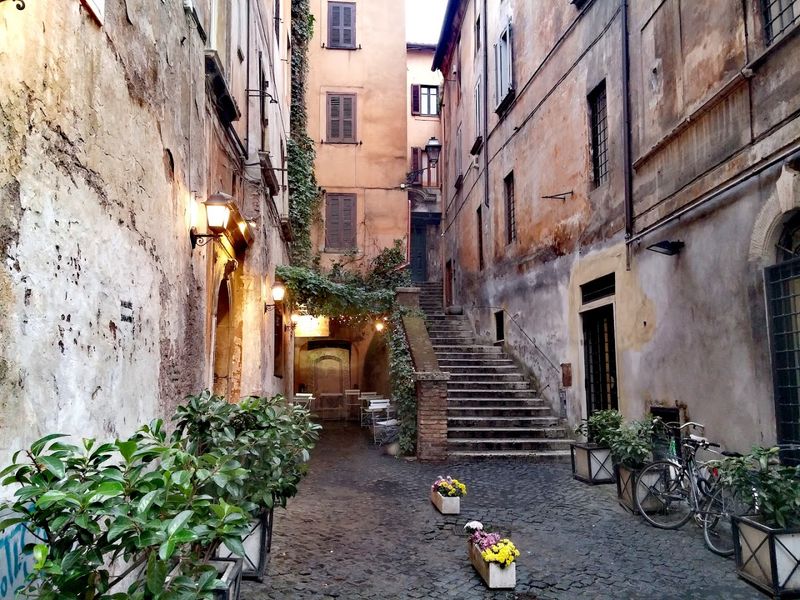
Not many streets make you feel like you have accidentally walked onto a film set, but Via dei Coronari comes close. Connecting the area near Piazza Navona to the river, this old lane is lined with antique shops, carved stone doorways, and facades that have barely changed in centuries.
The name comes from the “coronari,” the wreath-sellers who once worked here selling religious garlands to pilgrims heading to St. Peter’s. Today the street trades in antiques and atmosphere instead of wreaths, but the historic vibe is very much intact.
Walk it in the late afternoon when the light hits the old stone just right and the shops are still open. It is not as crowded as the nearby piazza, which makes it feel like a small discovery.
Pair it with a stroll along the Tiber embankment for a genuinely lovely Roman afternoon that costs nothing but time.
Via San Gregorio Armeno, Naples
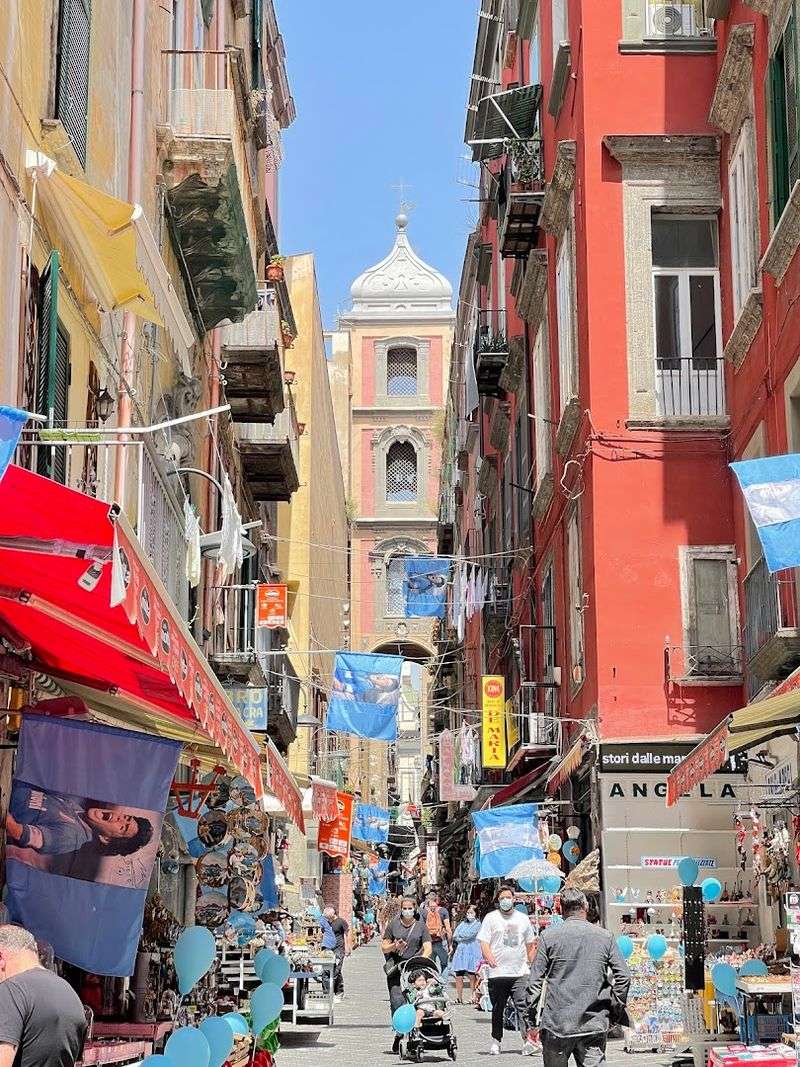
This street smells like sawdust, paint, and holiday magic all year long. Via San Gregorio Armeno is Naples’ famous nativity street, where family-run workshops have been crafting presepe figurines for generations.
But calling it a Christmas destination would seriously undersell what is happening here.
The craftspeople do not just make shepherds and angels. Stroll through and you will spot politicians, soccer stars, and pop culture figures rendered in terracotta with impressive detail and a healthy dose of Neapolitan humor.
It is part craft tradition, part social commentary, and entirely entertaining.
The workshops run year-round, so there is no need to time your Naples trip around the holidays to enjoy this street. It connects two ancient routes in the historic center and is short enough to walk in minutes, but the stops you make along the way can stretch it into a proper adventure.
Budget time to browse and chat with the artisans if you can.
Spaccanapoli, Naples
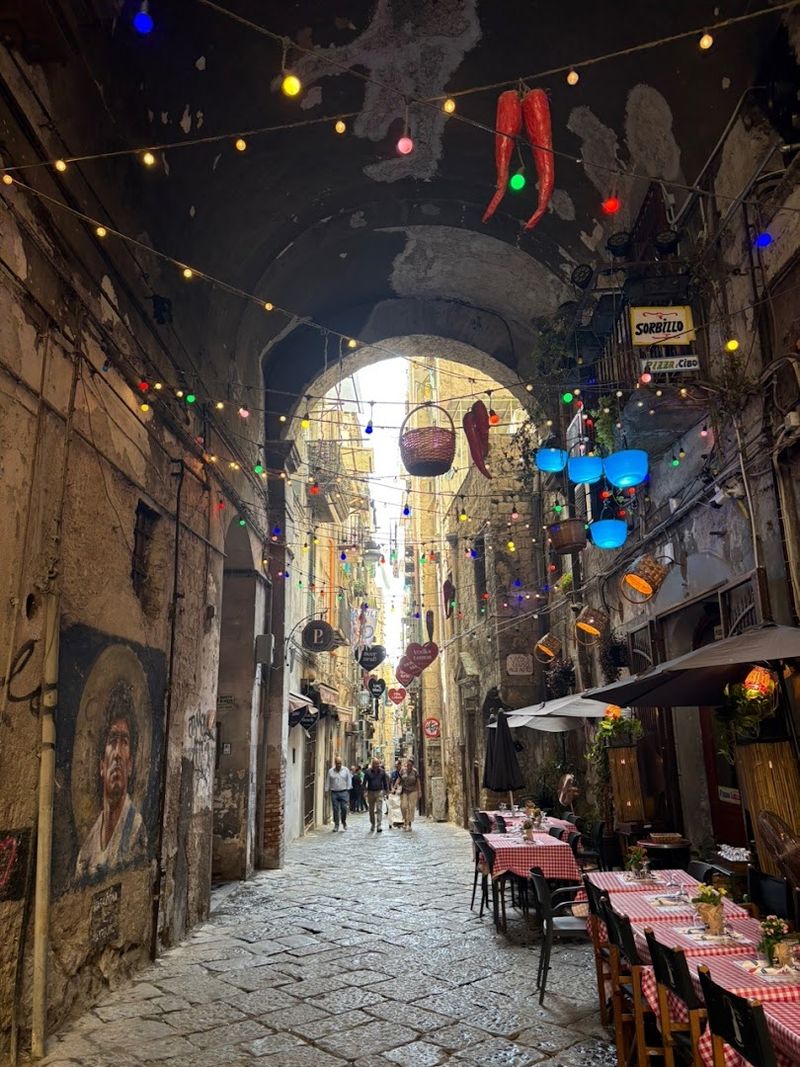
The name means “Naples splitter,” and that is exactly what it does. Spaccanapoli cuts straight through the heart of Naples’ historic center like a ruler drawn across an old map, and walking it is one of the most full-on urban experiences in Italy.
Churches appear every few blocks. Street food vendors sell fried snacks from tiny counters.
Balconies overflow with laundry. Scooters weave through pedestrians with alarming confidence.
It is loud, chaotic, and completely alive in a way that more polished cities simply cannot replicate.
Spaccanapoli is not actually one official street name but a series of connected roads that locals and visitors treat as a single route. It runs through the UNESCO-listed historic center, so the chaos comes with serious cultural credentials.
Go with comfortable shoes, a light bag, and a willingness to stop often. Rushing through it would be like skipping the middle chapters of a very good book.
Via Toledo, Naples
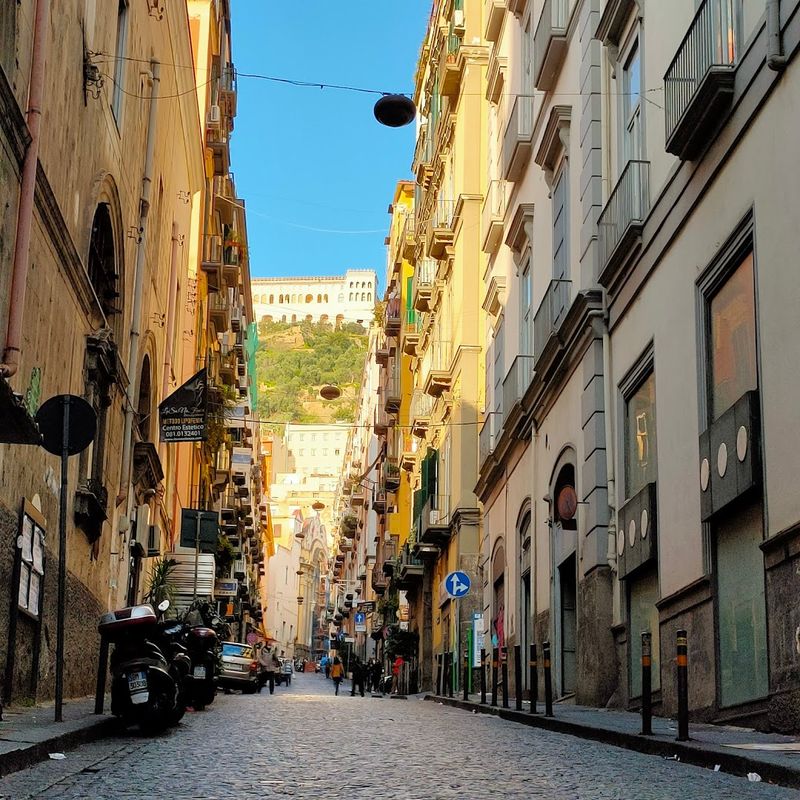
Dating back to 1536, Via Toledo is one of Naples’ grand old streets and proof that a city boulevard can have genuine personality. It runs through the heart of the city and mixes centuries-old architecture with everyday Neapolitan energy in a way that feels totally natural.
One of the best surprises along the route is the Toledo metro station, which opened in 2012 and features stunning mosaic artwork that transforms a subway stop into an actual attraction. It regularly appears on lists of the most beautiful metro stations in the world.
Worth a quick detour underground just to look.
Above ground, Via Toledo works as both a practical route and a destination in itself. Use it to connect different parts of central Naples, pop into side streets for local bars and shops, or simply enjoy the evening passeggiata atmosphere when the whole city seems to be out strolling.
It is Naples doing what Naples does best.
Via de’ Tornabuoni, Florence
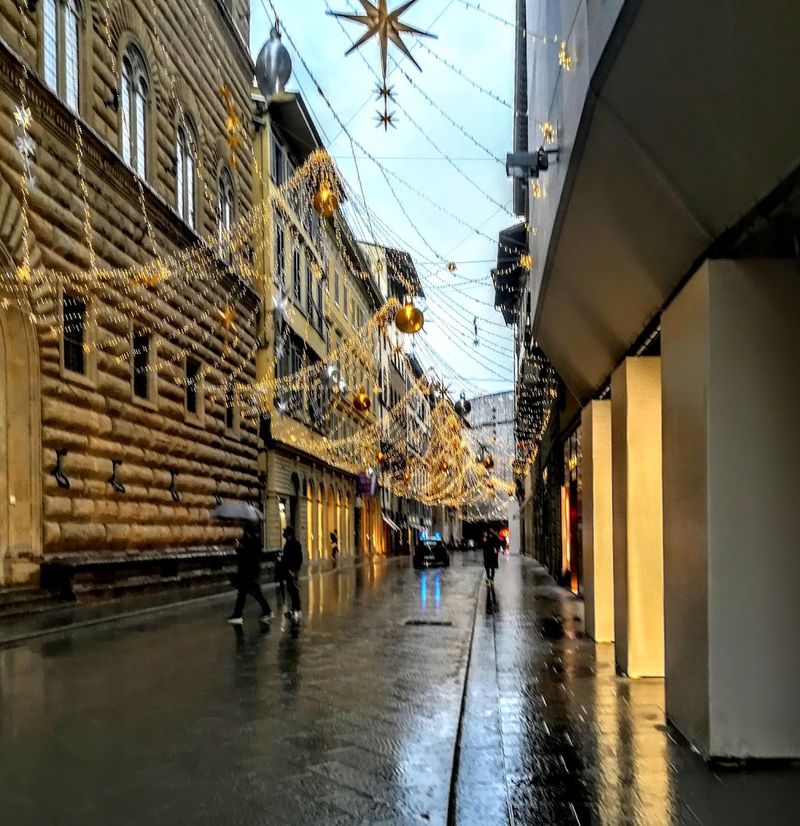
Florence has plenty of beautiful streets, but Via de’ Tornabuoni is the one that makes you stand up a little straighter just by walking down it. It runs from Ponte Santa Trinita to Piazza degli Antinori and has been the city’s most prestigious address since the 14th century.
The architecture does most of the heavy lifting here. Palazzo Strozzi, Palazzo Antinori, and Palazzo Spini-Feroni line the route with their serious Renaissance stonework and impressive scale.
Today the ground floors host high-end boutiques, but even window-shopping feels elevated when the building above the shop is 600 years old.
Go in the hour before sunset when the stone glows warm and the crowds thin out slightly. Even if fashion is not your thing, the street is absolutely worth walking for the architecture alone.
It is Florence at its most polished, and a reminder that the city has been setting style standards for a very long time.
Ponte Vecchio, Florence
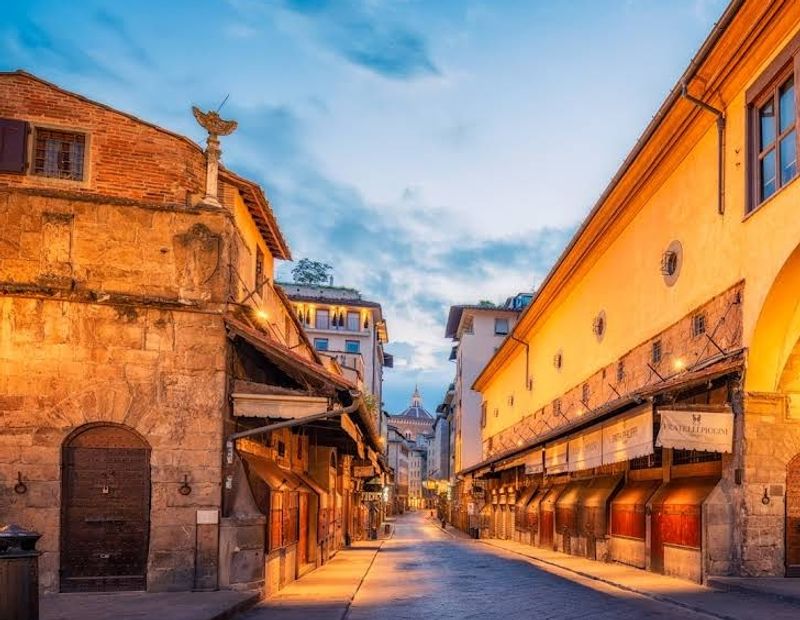
Technically a bridge, practically a street, and undeniably one of Florence’s most iconic spots. Ponte Vecchio has been standing since 1345 and survived World War II intact, reportedly because Hitler ordered it specifically preserved.
That is quite a survival story for a structure lined with jewelry shops.
The Vasari Corridor runs secretly above it, connecting the Uffizi to Palazzo Pitti. After years of restoration, that elevated passageway has reopened to visitors, adding another layer to an already layered landmark.
Below, the Arno offers some of Florence’s best views from either end of the bridge.
Ponte Vecchio gets very busy during peak hours, and the crowds can make the experience feel rushed. Go early in the morning before the tour groups arrive, or return in the evening when the light over the Arno turns genuinely beautiful.
It is popular for very good reason, and timing your visit right makes all the difference between a quick photo stop and a proper moment.
Via Garibaldi, Genoa
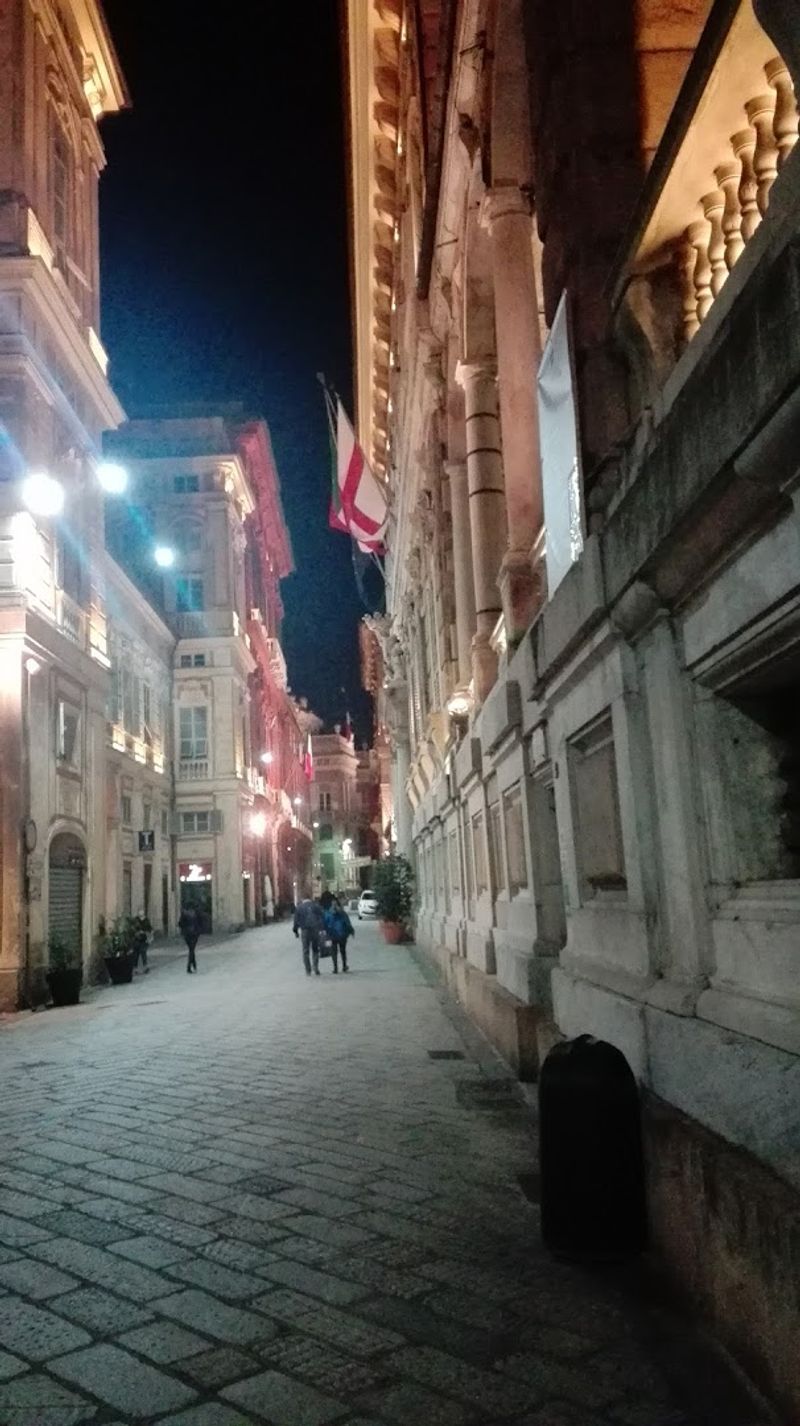
Genoa is one of Italy’s most underrated cities, and Via Garibaldi might be the best argument for visiting. In 2006, UNESCO recognized the street and its surrounding Strade Nuove as a World Heritage Site under the official name of the Palazzi dei Rolli system.
That is a very official way of saying the palaces here are extraordinarily impressive.
Built during the late 16th and early 17th centuries when Genoa was a financial powerhouse, these palaces were used to host visiting royalty and dignitaries on a rotation system. Several are now museums open to the public, including Palazzo Rosso and Palazzo Bianco, which hold serious art collections at surprisingly reasonable entry prices.
Walking Via Garibaldi feels grand without feeling overcrowded. Genoa gets skipped by travelers rushing between Milan and Cinque Terre, which means you often have this spectacular street almost to yourself.
That is a genuinely rare thing in Italy, and absolutely worth making the stop for.
The Porticoes of Bologna
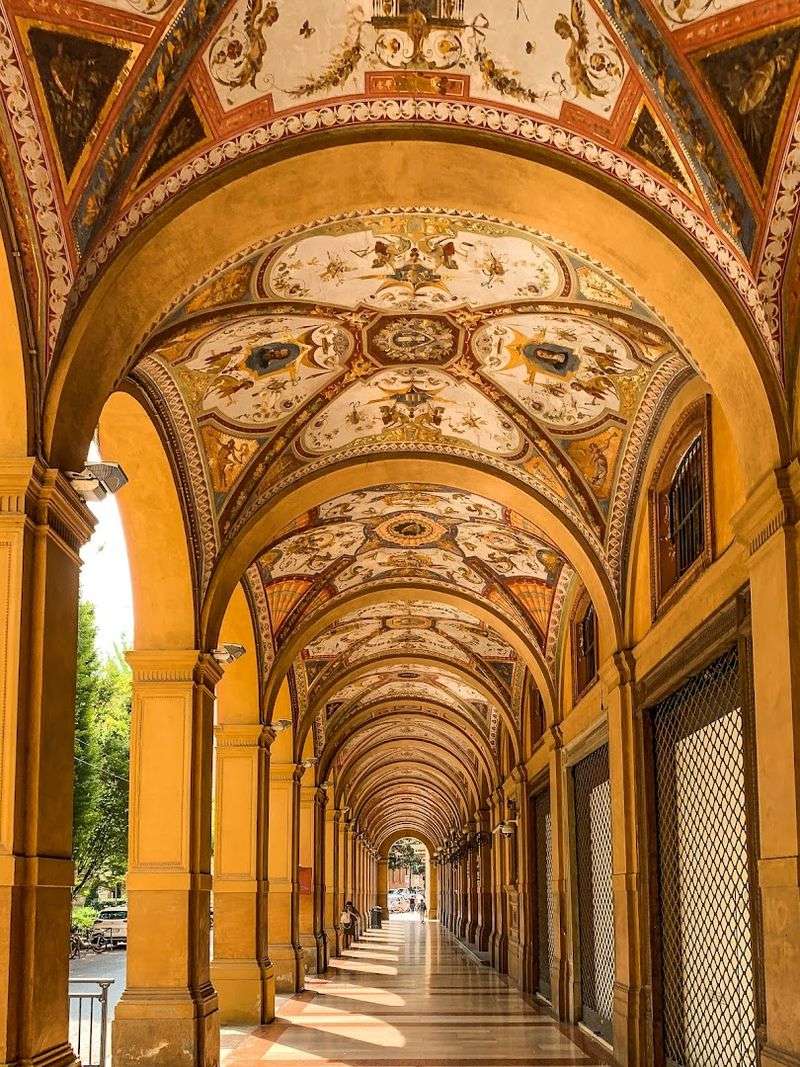
Bologna has 40 kilometers of porticoes running through the city, and in 2021, UNESCO added them to the World Heritage List. That is a lot of covered walking, and it is one of the most practical forms of architectural genius in any Italian city.
The route toward the Sanctuary of Madonna di San Luca is the showstopper. The portico stretches nearly four kilometers uphill, making it the longest continuous portico in the world.
It shelters you from rain in winter and shade in summer, which sounds simple but feels almost miraculous when the weather turns.
This walk is deeply local. Bolognese residents use the porticoes daily, not just for sightseeing but for everyday life.
Joining that rhythm feels different from the typical tourist trail. Start from the Porta Saragozza area, take your time on the uphill sections, and reward yourself at the top with the view over the city that Bologna has been hiding from lazier visitors all along.
Via dell’Amore, Cinque Terre
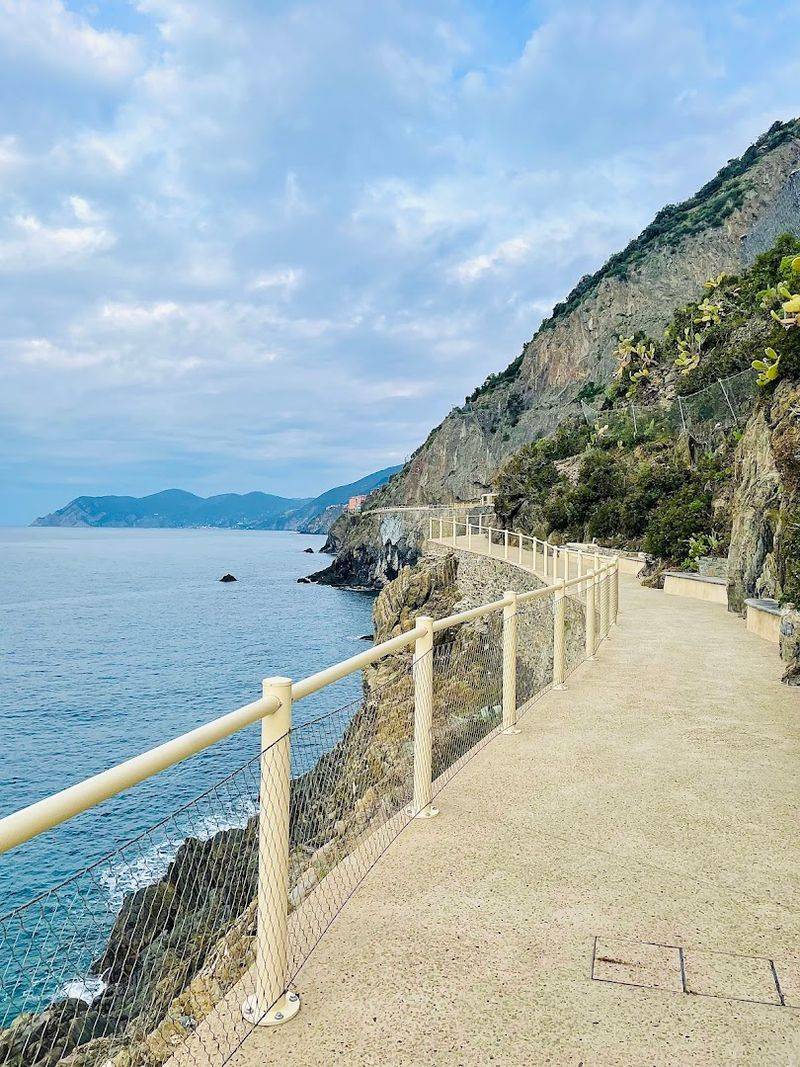
At just 900 meters long, Via dell’Amore punches well above its weight in terms of drama. Carved into the cliffs between Riomaggiore and Manarola, this coastal path delivers the kind of scenery that makes people stop mid-step just to stare at the sea below.
The path closed for years due to rockfall damage and only recently reopened with controlled access. Today you need a reservation and a timed entry slot, with a maximum of 30 minutes on the path.
That might sound strict, but it keeps the experience from becoming a shuffling queue of frustrated tourists.
Book ahead before you go, because the rules can change and availability fills up fast, especially in summer. The Cinque Terre National Park manages access directly, so check their official site for current ticketing.
Thirty minutes on this path is genuinely enough time to appreciate why it earned its nickname. The views do not need long to make their point.
Calle Varisco, Venice
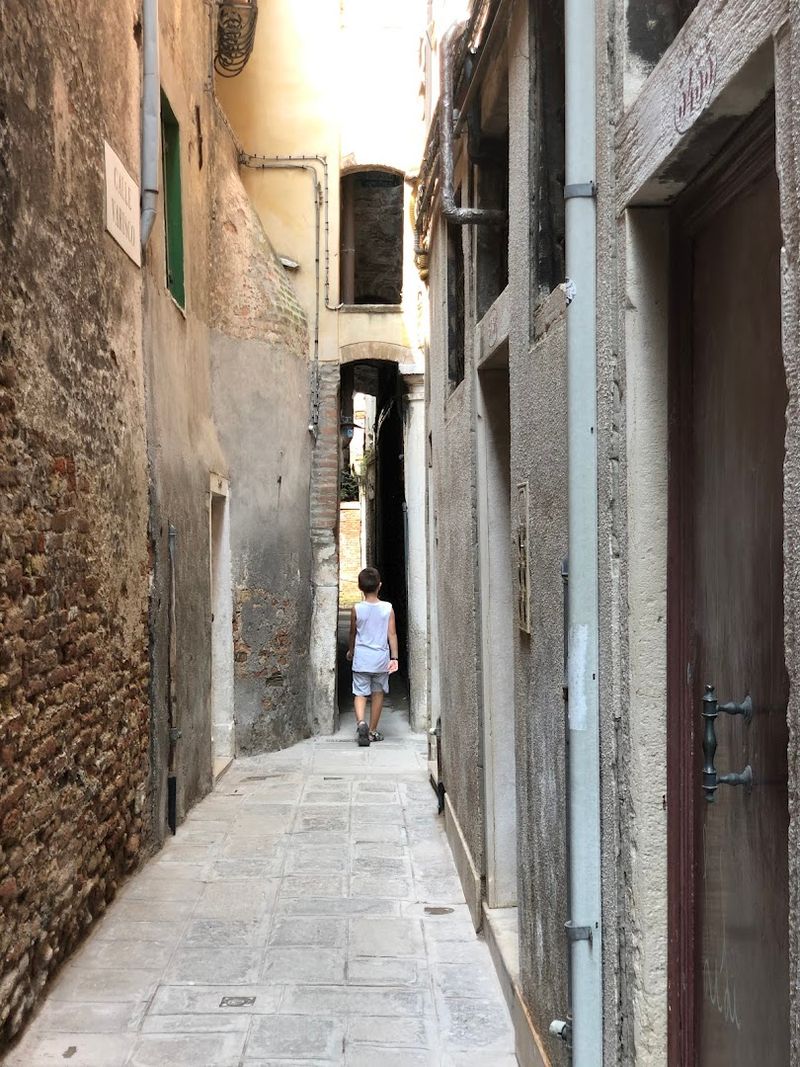
At roughly 53 centimeters wide at its narrowest point, Calle Varisco is the kind of street that makes you suck in your stomach just in case. Located in the Cannaregio district, it holds the unofficial title of Venice’s narrowest alley, which is saying something in a city full of impractically thin passages.
There is no grand monument here, no ticket required, and no queue. It is simply a sliver of stone between two buildings that somehow became a minor pilgrimage site for curious travelers who like their sightseeing served with a side of absurdity.
Finding it is half the fun. Wander into Cannaregio without a strict map agenda and let the neighborhood reveal itself.
Cannaregio is one of Venice’s more residential areas, which makes it a nice contrast to the tourist intensity around San Marco. Calle Varisco is the quirky punctuation mark at the end of a very pleasant neighborhood walk.
Narrow, weird, and absolutely worth squeezing into your itinerary.
Via Mazzini, Verona
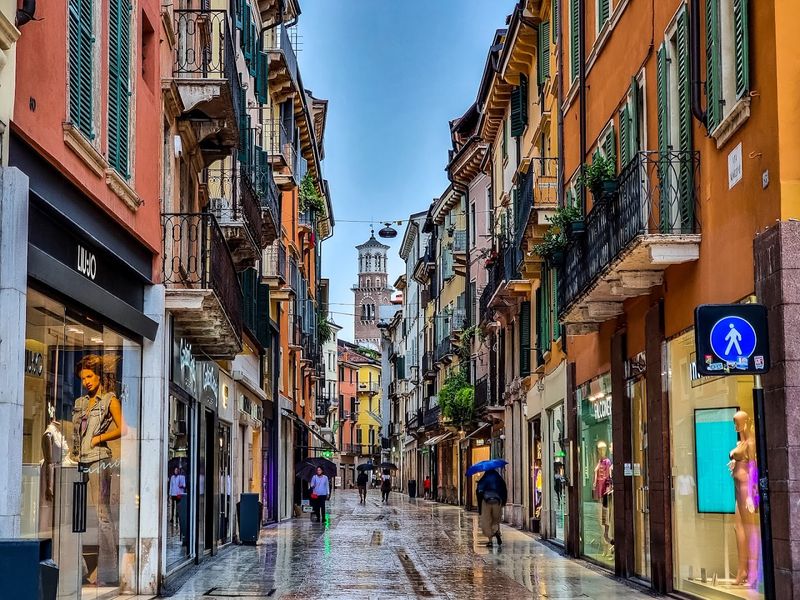
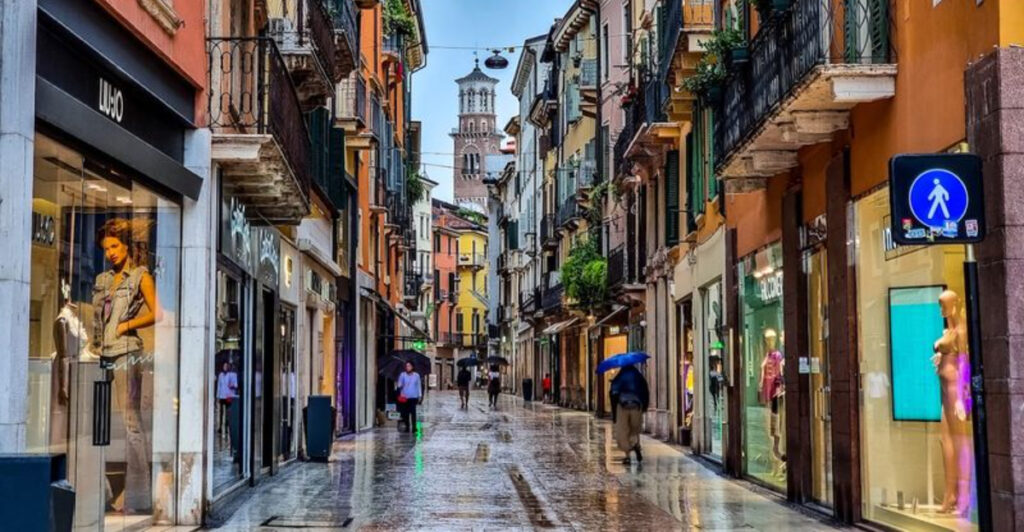
Verona’s most walked street connects two of the city’s best piazzas: the Arena-fronted Piazza Bra and the market-square energy of Piazza delle Erbe. Via Mazzini links them in a straight, polished line that has been a main thoroughfare since Roman times, following the old decumanus route through the ancient city grid.
The street is pedestrian-only, which makes strolling genuinely pleasant rather than an exercise in dodging traffic. Boutiques, cafes, and gelato spots line the route, and the stone paving underfoot is smooth enough to make even a slow walk feel elegant.
Verona often gets reduced to a Romeo and Juliet stop, which is a shame given how much else the city offers. Via Mazzini gives you a clean route through the historic center while letting the city’s Roman bones show through.
Walk it in both directions at different times of day. The morning light and the evening crowd create two completely different versions of the same street.
Via Madonna delle Virtu, Matera
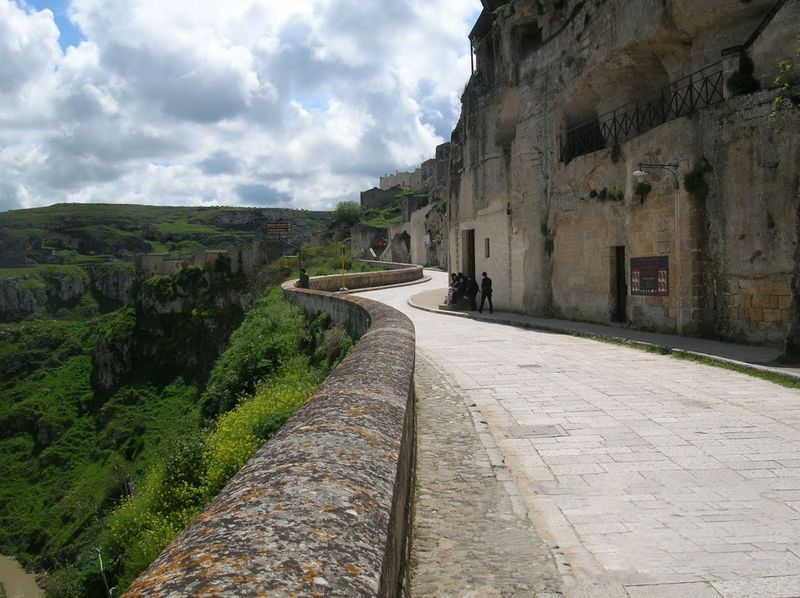
Matera is one of the oldest continuously inhabited cities in the world, and Via Madonna delle Virtu runs through the heart of its most ancient districts. The route connects the two Sassi areas through a series of linked streets carved into pale limestone, with views dropping down toward the Murgia Materana ravine on one side.
Near the path sits the Madonna delle Virtu rupestrian complex, a rock-cut church site arranged across three levels directly in the cliff face. It is the kind of thing that stops you completely because nothing quite prepares you for how old and raw it feels in person.
This is not Florence or Rome polish. Matera is rugged, ancient, and dramatic in a way that feels genuinely different from most Italian destinations.
Late afternoon is the best time to walk this route, when the limestone glows pale gold and the ravine fills with long shadows. Pack good shoes because the stone paths are uneven and absolutely worth every careful step.
Share this story