 Unearth The Voyage
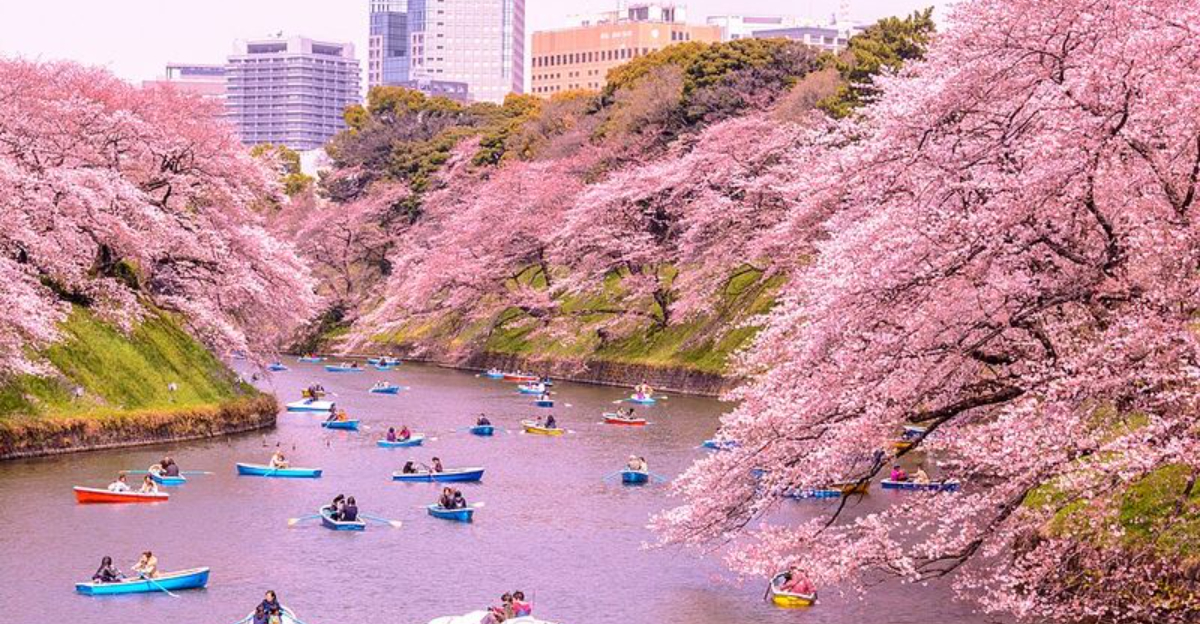
Every spring, something quietly spectacular happens across the globe. Trees burst into clouds of pink and white, turning ordinary parks, streets, and lakesides into scenes that stop people mid-stride.
Cherry blossom season is short, sweet, and absolutely worth planning your travels around. From Japan to Germany to your own backyard, these 14 destinations prove that flowers really can change everything.
Washington, D.C., USA
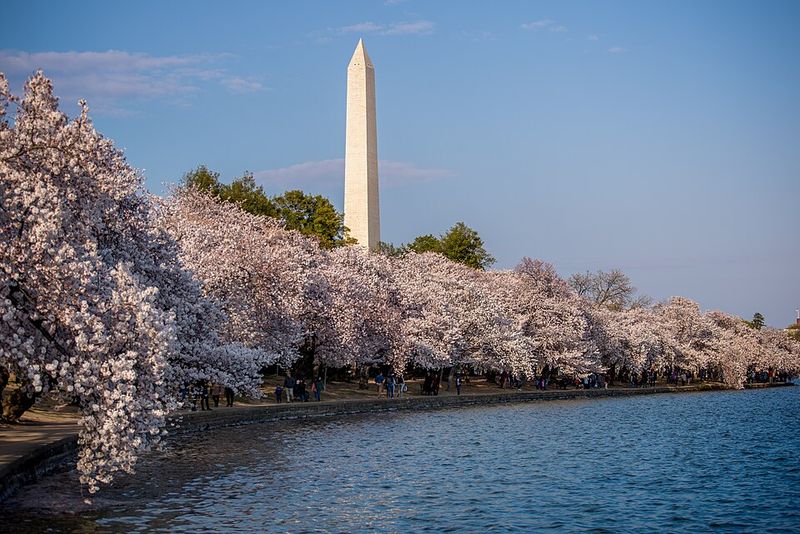
The Tidal Basin does not mess around when cherry blossom season arrives. Nearly 3,000 trees ring the water, turning a regular morning jog into something that belongs on a postcard.
The Jefferson Memorial looms behind the blossoms like nature planned the whole thing.
I visited on a Tuesday, thinking I had outsmarted the weekend crowds. I had not.
Thousands of people had the exact same brilliant idea.
The good news is that the National Park Service tracks bloom stages in real time on their website. You can check whether trees are at peak, pre-peak, or past prime before booking your train ticket.
Timing is everything here. Aim for the “peak bloom” window, which typically lasts four to seven days.
Early mornings and weekday visits give you the best chance of breathing room.
Bring comfortable shoes, because you will walk more than you expect.
Seattle, Washington, USA
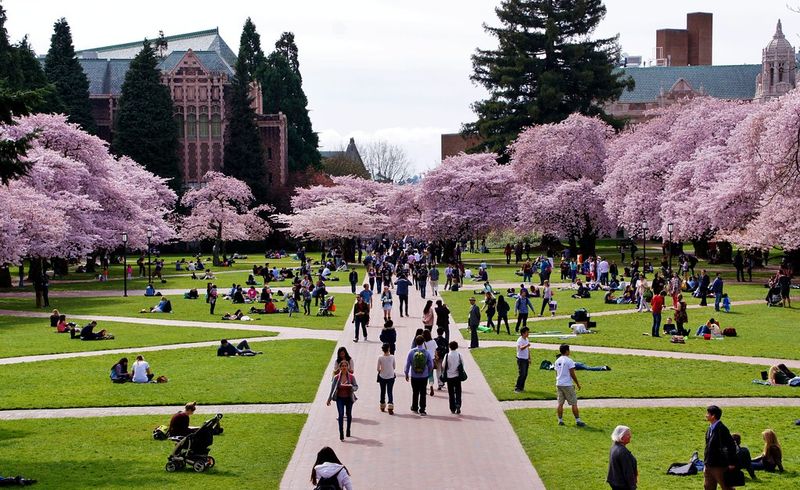
The University of Washington’s Quad pulls off a trick every spring that honestly feels unfair to every other campus in America. About 30 Yoshino cherry trees arch over the brick pathways, forming a tunnel of pale pink blossoms that lasts roughly two weeks.
Students studying under those trees during finals season either have incredible focus or zero focus. Probably both.
The UW shares background on the trees and their history as a campus tradition, so there is actually context behind the beauty. Seattle’s famously grey skies sometimes part just enough to let spring light through the canopy, making the whole scene glow.
Crowds gather fast once bloom photos hit social media, so go early in the morning for elbow room. The Quad is free to visit and open to the public.
Pair the trip with a walk around the surrounding campus for a full spring afternoon well spent.
Brooklyn, New York, USA
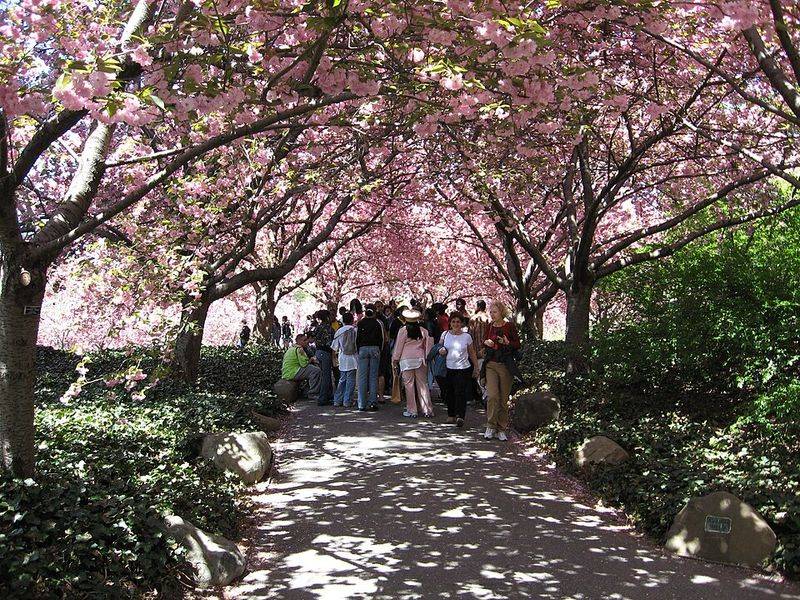
Brooklyn Botanic Garden takes cherry blossoms seriously enough to dedicate an entire collection to them. Over 200 cherry trees of multiple varieties bloom in sequence across the garden, meaning the show stretches over several weeks rather than one frantic weekend.
There is even a Japanese Hill-and-Pond Garden that makes the whole experience feel like you teleported somewhere far from the Brooklyn streets outside.
The garden provides guidance on where to find blossoms and how to follow bloom status online, which is genuinely helpful when you are trying to plan a trip from out of town. Tickets sell out fast during peak bloom, so booking in advance is a smart move.
The annual Sakura Matsuri festival also happens on the grounds, bringing Japanese cultural performances alongside the flowers.
It is one of the most organized blossom experiences in the country, which is oddly very on-brand for New York.
Vancouver, B.C., Canada
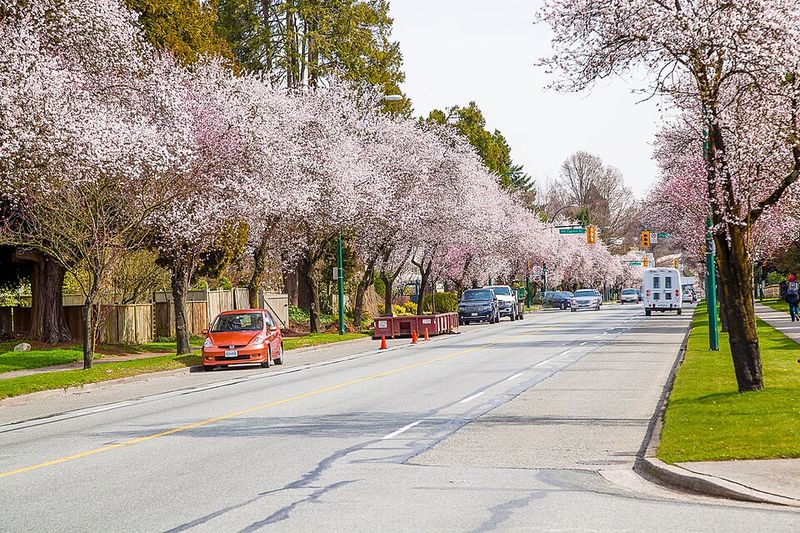
Vancouver has roughly 40,000 cherry trees scattered across parks, streets, and neighborhoods, which makes the whole city feel like it is showing off every April. Few cities on earth do street-level cherry blossoms quite like this one.
Queen Elizabeth Park is a reliable highlight, offering elevated views over the city with blossoms framing the skyline in the background. It is the kind of view that makes people reconsider their zip code.
Local guides consistently point visitors toward the best viewing areas, and the Vancouver Cherry Blossom Festival runs events and guided tours during peak season. The festival even has a tree map so you can track blossoms by neighborhood.
Strathcona and the West End are fan favorites for street-level canopy walks. Vancouver’s mild climate means bloom season can start as early as late February for some varieties.
Pack a light jacket and a fully charged phone, because you will take more photos than you planned.
Paris Region, France
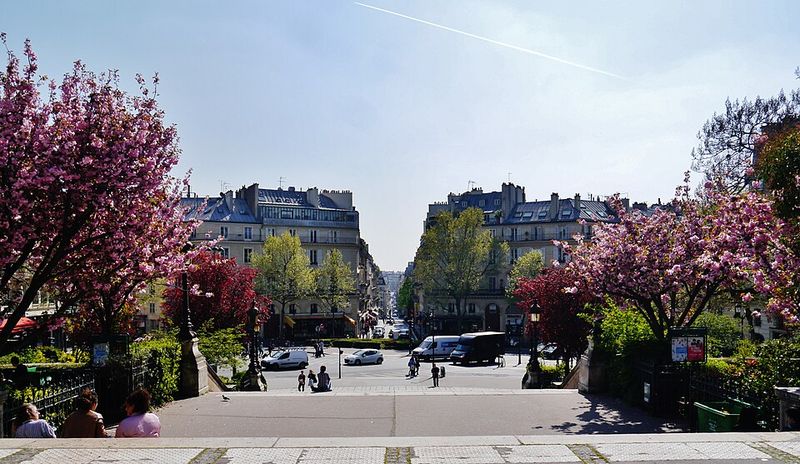
Parc de Sceaux sits about 10 kilometers south of central Paris, and every spring it quietly steals the spotlight from the Eiffel Tower. The park’s long allees of cherry trees create symmetrical corridors of pink that feel almost too perfect to be real.
The City of Paris officially highlights Parc de Sceaux in its guide to blossom-viewing locations, which is basically a government endorsement of going outside and having a great time.
French picnickers show up in full force during peak bloom, spreading out blankets and wine beneath the trees in a way that looks effortlessly stylish. The park is reachable by RER B train from central Paris in about 30 minutes.
Bloom typically happens in late March to early April, depending on the year. Weekends fill up quickly, so a mid-week visit is worth the scheduling effort.
Combine it with a stroll through the formal gardens for a full afternoon of very Parisian outdoor leisure.
Stockholm, Sweden
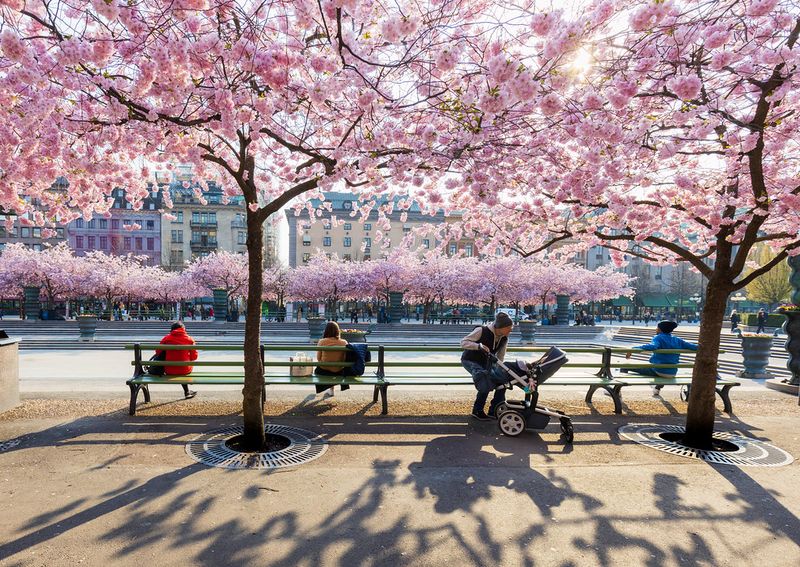
Stockholm’s Kungstradgarden, which translates to King’s Garden, turns into the city’s most beloved spring gathering spot the moment its cherry trees decide to bloom. The park sits right in the heart of the city, making it absurdly easy to visit between other sightseeing stops.
Swedes, who have survived another long winter, show up in force. There is something deeply joyful about watching an entire city collectively exhale when the blossoms appear.
The rows of cherry trees line the park’s central walkway, and the contrast of pink blossoms against Stockholm’s classic architecture is genuinely striking. Bloom season here runs later than in Japan, typically landing in late April to early May.
The park hosts spring events and markets during blossom season, adding extra reasons to linger. Entry is free, which is a refreshing surprise in one of Europe’s pricier capitals.
Grab a warm drink from a nearby cafe and enjoy the show at a proper Nordic pace.
Bonn, Germany
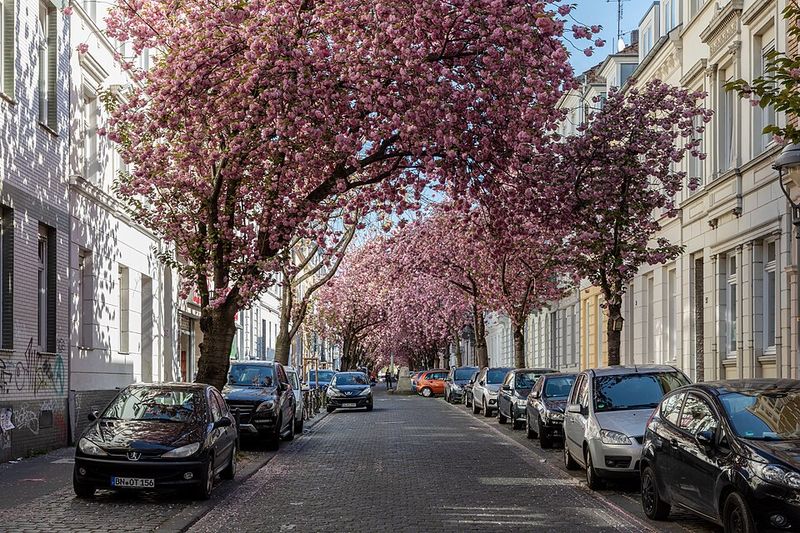
Bonn’s Heerstrasse pulls off something that photographers have been chasing for decades: a full street-level tunnel of cherry blossoms so dense it blocks out the sky. The residential street is lined with trees on both sides, and when they bloom simultaneously, the effect is genuinely jaw-dropping.
It has become one of Europe’s most photographed cherry blossom scenes, which means you will absolutely be sharing the tunnel with a crowd of people holding cameras at various angles.
The tunnel effect peaks for only a few days, so local bloom forecasts are worth checking before you book travel. Bonn is easily reachable by train from Cologne, making it a manageable day trip.
Morning visits mean softer light and thinner crowds, both of which are worth the early alarm. The street is in a quiet neighborhood, so keep noise down out of respect for residents.
It is a fleeting, magical thing, and 100% worth the effort.
Tokyo, Japan
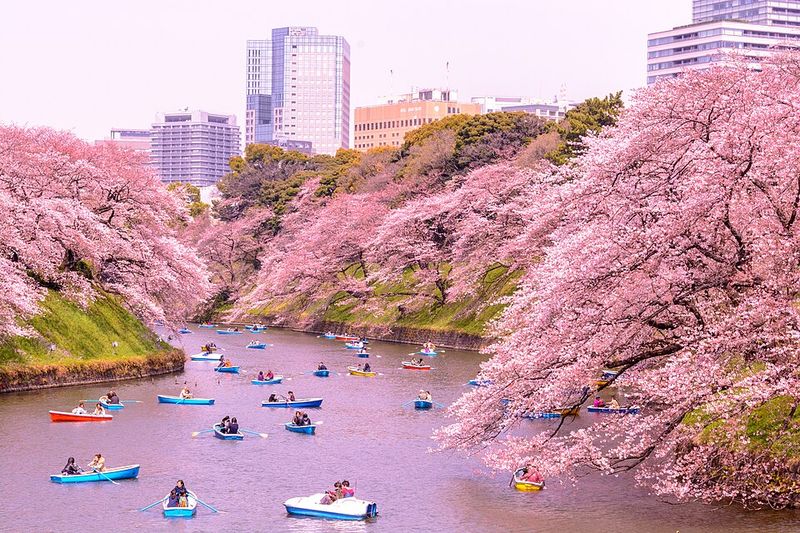
Chidorigafuchi is the kind of place that ruins all other spring scenery for you permanently. The moat runs along the northwest edge of the Imperial Palace, and cherry trees lean out over the water from both banks, dropping petals onto rowboats drifting below.
Hanami, the Japanese tradition of flower-viewing, reaches full intensity here. People plan trips months in advance just to be in this spot during peak bloom.
The National Museum of the Imperial Collections sits nearby, so you can combine cultural depth with blossom beauty in one visit. Tokyo’s bloom window typically falls in late March to early April, but it shifts slightly each year based on winter temperatures.
The Japan Meteorological Corporation releases annual forecasts that are worth bookmarking. Evening illuminations along the moat extend the experience well past sunset.
Arrive early, pack a snack, and plan to stay longer than you originally intended.
You will not regret it.
Kyoto, Japan
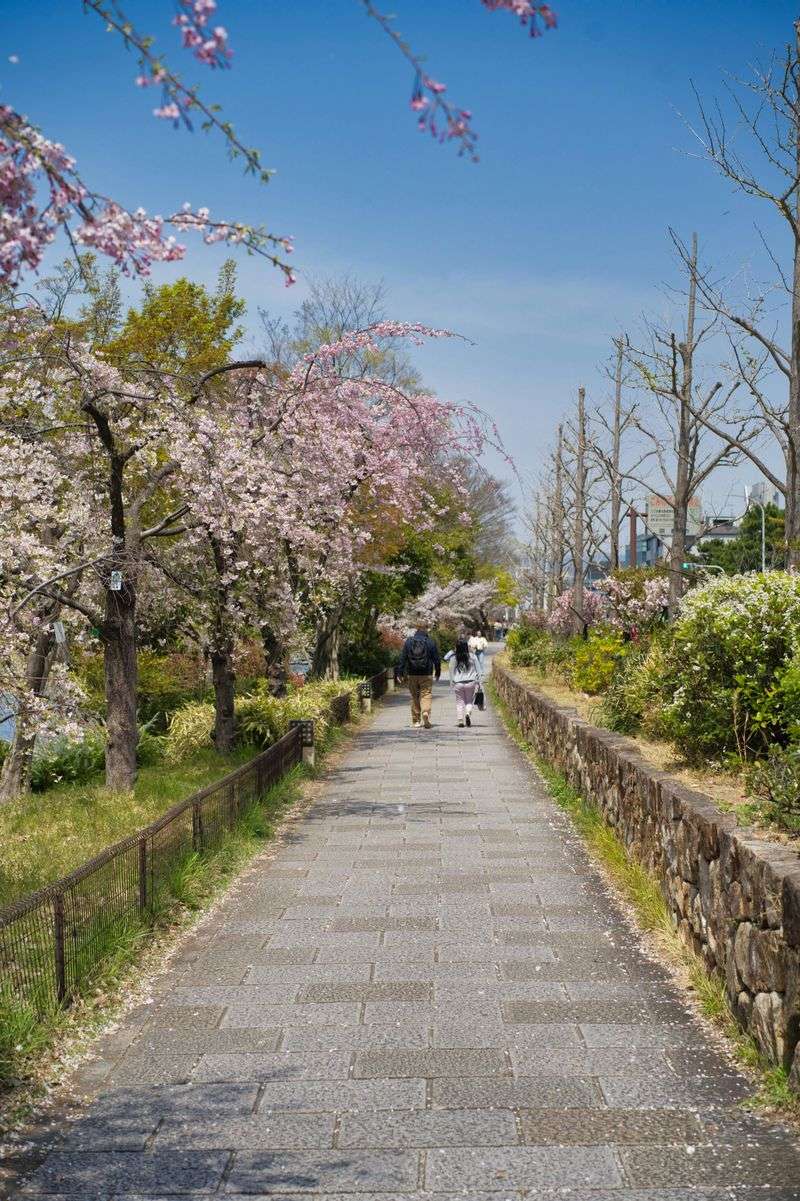
The Philosopher’s Path in Kyoto is named after a professor who walked it daily while deep in thought, which makes it the most intellectually ambitious 2-kilometer stroll in Japan. Cherry trees line the canal the entire way, forming a soft pink canopy overhead during bloom season.
It appears in nearly every Kyoto hanami guide, and for good reason. The path connects several temples and shrines, so the blossoms come with actual historical context built right in.
Nishida Kitaro, the philosopher behind the name, would probably not recognize the crowds that show up in spring these days. Still, early morning walks before 8 a.m. offer something close to the quiet he likely enjoyed.
Nearby Heian Shrine and Nanzenji Temple make excellent additions to a full day of exploring. Kyoto’s blossom season aligns closely with Tokyo’s, usually late March to early April.
Rent a bicycle for a faster, breezier way to cover the neighborhood.
Nara Prefecture, Japan
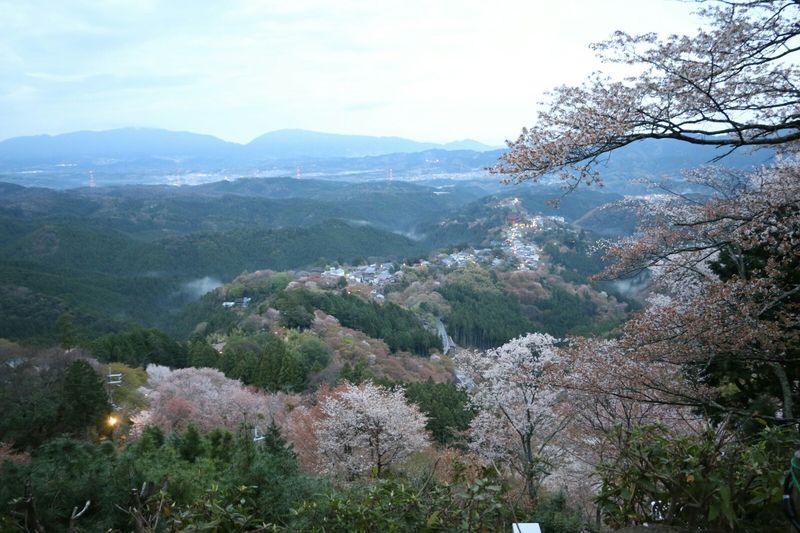
Mount Yoshino has been celebrated for its cherry blossoms for over 1,300 years, which puts every other spot on this list in respectful perspective. The hillside holds approximately 30,000 cherry trees spread across four zones that bloom at different elevations and different times.
That staggered bloom means the mountain stays colorful for weeks rather than days. Local tradition says the trees were planted as sacred offerings, so there is genuine history woven into every branch.
Yoshino-cho, the small town at the mountain’s base, fills with visitors during peak season, and the narrow streets lined with traditional shops add charm to the whole experience. The mountain is accessible by train and cable car from Osaka and Nara.
Higher elevation zones bloom later, so checking which zone is peaking before you visit helps you catch the best display.
It is one of Japan’s most celebrated sakura landscapes, and standing there, you will understand exactly why.
Osaka, Japan
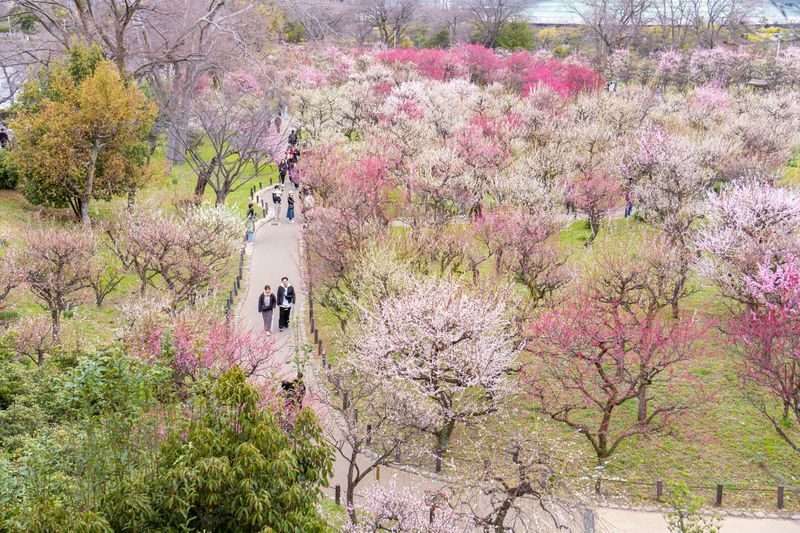
Osaka Castle and cherry blossoms are a combination so visually dramatic it almost feels like a historical painting come to life. The castle grounds hold over 600 cherry trees, and when they bloom, the contrast between the white and green castle tower and the sea of pink below is flat-out spectacular.
The castle itself has been around since 1583, which means these grounds have hosted centuries of spring celebrations. Osaka knows how to throw a good hanami party.
The park surrounding the castle is spacious enough to absorb large crowds without feeling suffocating, which is a genuine relief during peak season. Food stalls set up along the paths, so snacking your way through the blossoms is not only acceptable but practically expected.
Evening illuminations light up both the castle and the trees after dark, creating a completely different atmosphere worth staying for.
Bloom season typically mirrors Tokyo’s, landing in late March to early April most years.
Aomori, Japan
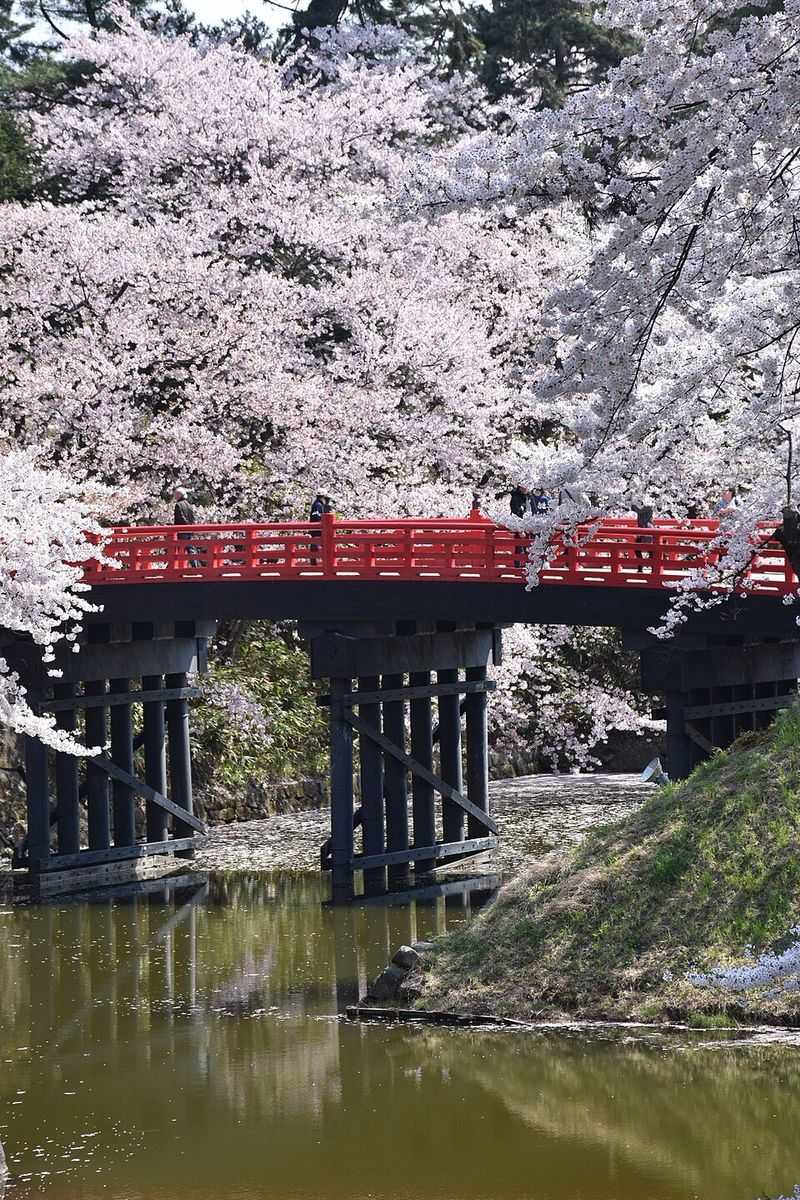
Hirosaki Park in Aomori is the kind of cherry blossom destination that makes seasoned Japan travelers go quiet for a moment. The park holds about 2,600 cherry trees surrounding a historic castle, and the moat fills with fallen petals during the final days of bloom in a phenomenon locals call “hanaikada,” or flower raft.
That floating carpet of pink petals on the water is genuinely one of the most striking natural displays you will ever see. Local tourism sources have been highlighting this park’s blossom tradition for generations.
Hirosaki’s bloom season runs slightly later than Tokyo’s, typically landing in late April, which makes it a good follow-up destination if you are planning a multi-city Japan spring trip. The city is reachable by Shinkansen from Tokyo in about three hours.
The park also hosts one of Japan’s longest-running cherry blossom festivals, complete with food stalls, lanterns, and evening light-ups.
Plan at least a full day here.
Jinhae, South Korea
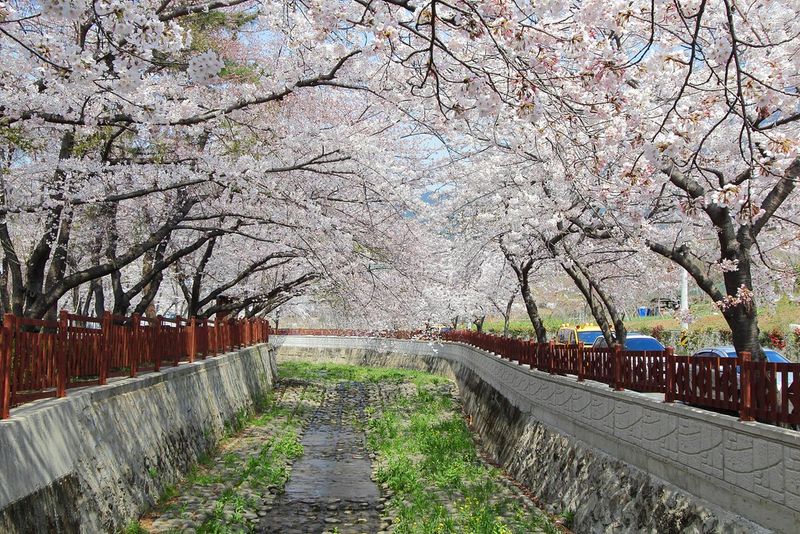
Jinhae does not quietly host cherry blossom season. It goes all in.
The city is widely considered South Korea’s biggest cherry blossom destination, drawing around two million visitors over roughly ten days each spring. That is not a typo.
Yeojwacheon Stream is the star of the show, with cherry trees lining both banks and their reflections shimmering in the water below. Gyeonghwa Station is another must-see, where trains pass through a tunnel of blossoms that looks almost too cinematic to be real.
The Jinhae Gunhangje Festival runs during peak bloom and fills the streets with performances, food, and crowds wearing their best spring outfits. Getting there early in the festival or on a weekday keeps the experience manageable.
Jinhae is accessible from Busan by bus or taxi in about an hour. South Korea’s bloom season typically runs late March to early April.
Budget extra time, because leaving is harder than it sounds.
Seoul, South Korea
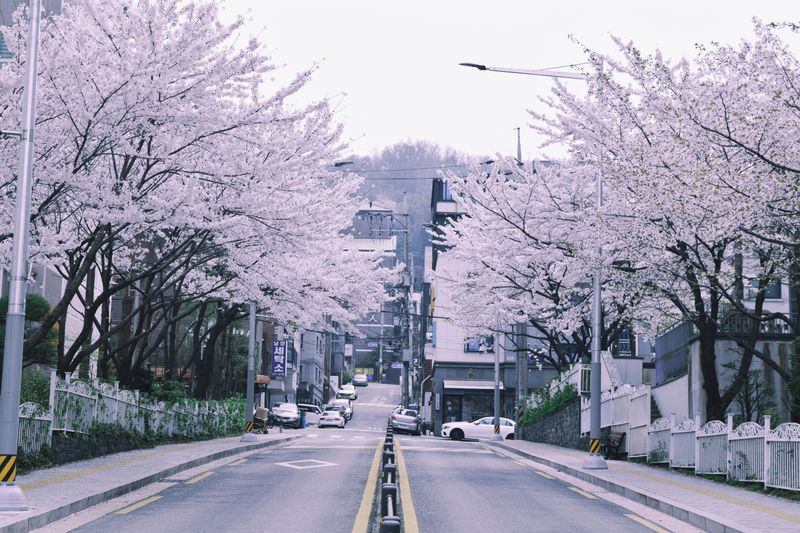
Seokchon Lake in Seoul turns into one of the city’s biggest spring celebrations the moment the cherry trees hit peak bloom. The lake sits right next to Lotte World Tower, giving you the slightly surreal experience of watching pink petals drift past one of the world’s tallest buildings.
Korea’s official tourism site highlights the annual festival and peak viewing period, and the crowds that show up prove the hype is fully earned. The 2.5-kilometer path circling the lake makes for a leisurely walk with blossoms at eye level the whole way.
Nearby Jamsil neighborhood adds food, cafes, and shopping to the mix, so a full day here is easy to fill. Bloom season in Seoul typically lands in late March to early April, closely tracking Japan’s schedule.
Evening visits are popular because of the light reflections on the water.
Arrive with a snack, stay for sunset, and let Seoul do the rest.



