 Unearth The Voyage
Some paintings are worth more than entire countries could ever imagine spending. Over the centuries, certain works of art have become so rare, so historically significant, and so visually stunning that collectors and museums have paid jaw-dropping sums to own them.
From mysterious Renaissance masterpieces to bold modern abstracts, these 14 paintings represent the very peak of the art world’s most record-breaking sales. Get ready to explore the stories, the artists, and the incredible prices behind the most expensive paintings ever sold.
1. Salvator Mundi
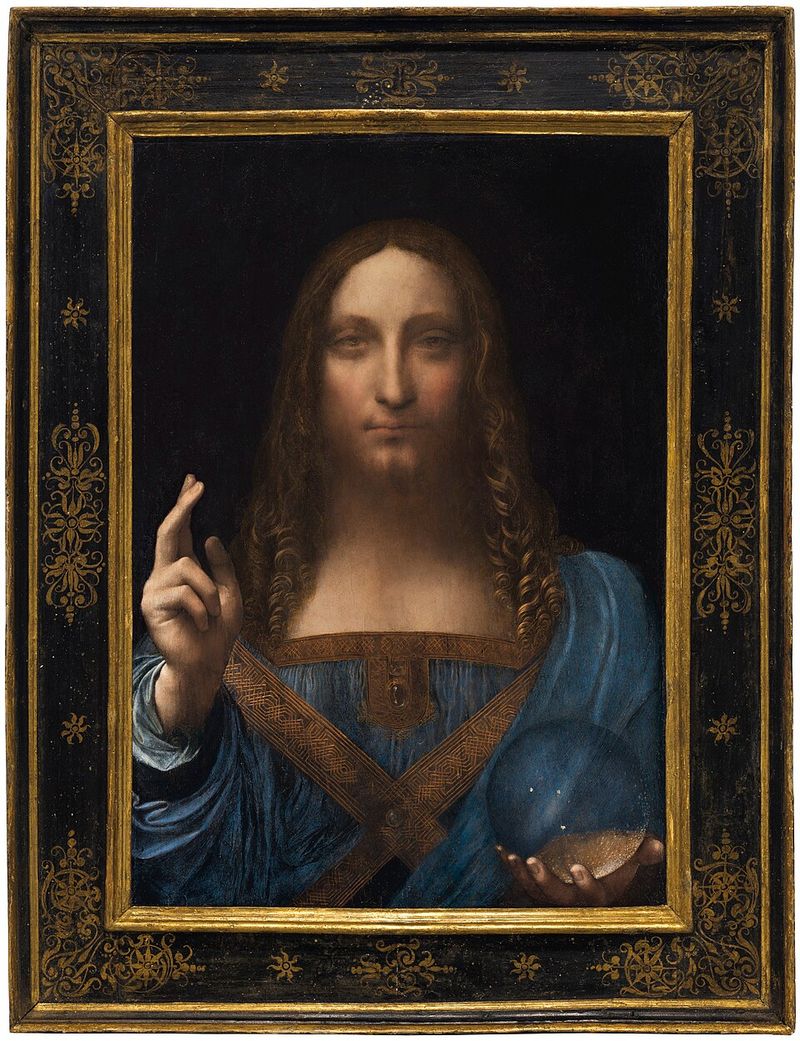
At $450.3 million, Salvator Mundi shattered every auction record in history when it sold at Christie’s New York in November 2017. Painted around 1500, the work depicts Jesus Christ as the “Savior of the World,” holding a crystal orb and raising his right hand in blessing.
Most art historians attribute the painting to Leonardo da Vinci, though the attribution has sparked debate among scholars for years. The painting spent decades in obscurity, was once sold for just $45, and later restored before its true identity was recognized.
Saudi Crown Prince Mohammed bin Salman is widely believed to be the buyer. The mysterious orb Christ holds has fascinated scientists and art lovers alike, since Leonardo painted it without the light distortions a real glass sphere would cause.
It remains one of art history’s greatest conversations.
2. Interchange
Willem de Kooning painted Interchange in 1955, and it became one of abstract expressionism’s defining works. The painting bursts with energy, color, and emotion, blending fragmented human forms with vivid urban shapes in a way that feels almost chaotic yet deeply intentional.
In 2015, hedge fund billionaire Kenneth Griffin purchased it privately for $300 million, making it the most expensive painting ever sold at that time by a living artist’s estate. De Kooning was already in his late 40s when he created this piece, and it reflected his shift from figurative to increasingly abstract work.
What makes Interchange so captivating is the tension between order and chaos on the canvas. Every brushstroke feels deliberate yet free.
Art critics have long praised de Kooning’s ability to make a viewer feel movement and emotion without depicting anything entirely recognizable.
3. The Card Players
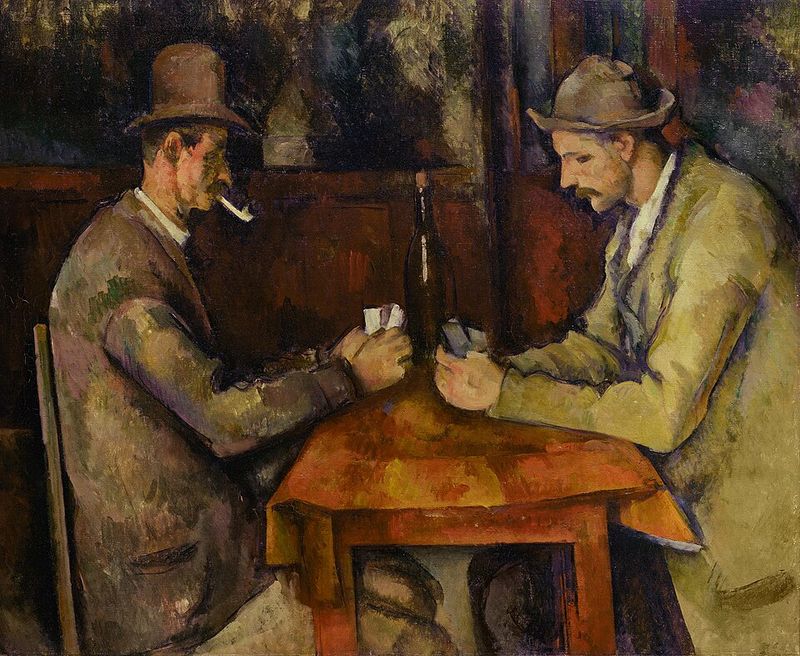
Paul Cezanne painted a series of Card Players between 1890 and 1895, and one version sold to the royal family of Qatar for an estimated $250 to $300 million around 2011. The painting shows two men absorbed in a quiet card game, radiating stillness and concentration.
Cezanne was fascinated by everyday rural life in southern France, and this series is considered his most mature and powerful achievement. The composition is deceptively simple, yet every element, from the folded jacket to the tilted table, is placed with extraordinary precision.
Art historians credit The Card Players as a bridge between 19th-century realism and the abstract movements that followed in the 20th century. Picasso and Matisse both cited Cezanne as a major influence.
Owning one of these versions places Qatar among the world’s most serious art collectors.
4. Nafea Faa Ipoipo (When Will You Marry?)
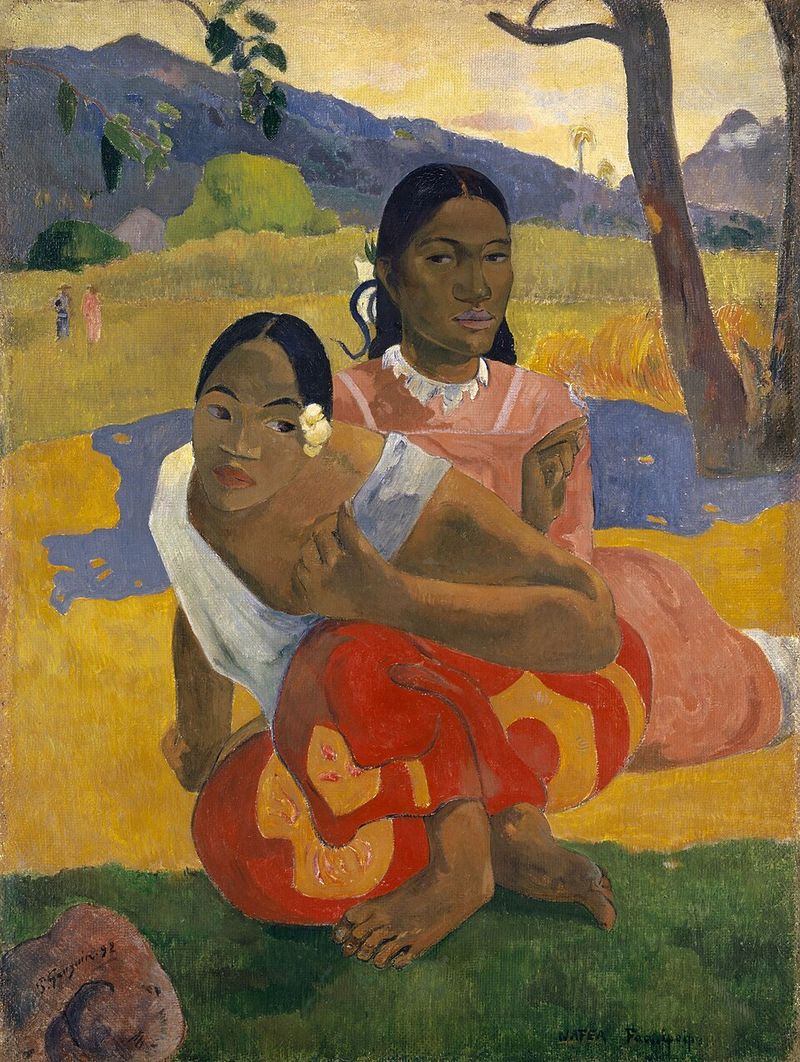
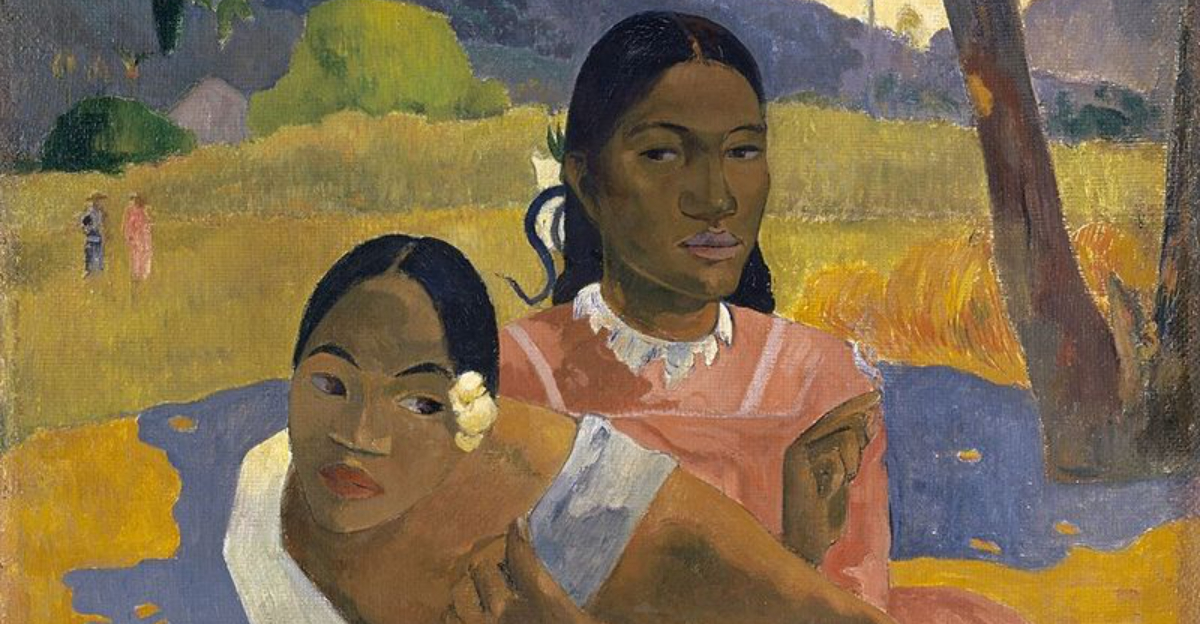
Paul Gauguin painted Nafea Faa Ipoipo, which translates to “When Will You Marry?”, in 1892 during his time in Tahiti. The painting shows two young Tahitian women in a richly colored tropical setting, full of warmth and quiet mystery.
In 2015, a Swiss collector sold the work to Qatar for approximately $210 million, making it one of the highest private sale prices ever recorded at that time. Gauguin had left France seeking a simpler, more spiritual life in the Pacific, and this painting captures that longing beautifully.
The woman in the foreground wears a white dress and a flower in her hair, a symbol of her unmarried status in Tahitian culture. Gauguin’s bold use of color and flat forms influenced countless artists who came after him.
This painting remains one of his most recognized and beloved works worldwide.
5. Number 17A
Jackson Pollock’s Number 17A sold privately for around $200 million in 2015, the same transaction that included de Kooning’s Interchange, both purchased by Kenneth Griffin. Pollock created this work in 1948 using his signature drip technique, pouring and splashing paint directly onto a canvas laid flat on the floor.
At first glance, the painting might look random, but Pollock’s process was deeply physical and intentional. He moved around the canvas like a dancer, controlling every drip with remarkable precision.
The result is a web of layered lines and splatters that feels alive and restless.
Pollock was a central figure in the New York abstract expressionist movement, and Number 17A helped cement his legacy as one of America’s most influential painters. His unconventional method challenged what people believed painting could be, opening doors for generations of experimental artists who followed.
6. Shot Sage Blue Marilyn
Andy Warhol’s Shot Sage Blue Marilyn sold for $195 million at Christie’s New York in May 2022, becoming the most expensive 20th-century artwork ever auctioned at that point. Based on a publicity photo of Marilyn Monroe from the 1953 film Niagara, Warhol created this silkscreen print in 1964.
The painting belongs to a series of five Marilyn portraits, each with a different background color. The “Shot” in the title refers to a strange 1967 incident when a woman named Dorothy Podber walked into Warhol’s studio and shot a gun through a stack of the canvases.
Despite the damage, the paintings were restored and became even more legendary because of the story. Warhol’s ability to turn celebrity into art and art into cultural commentary made him one of the most iconic figures of the 20th century.
This painting is proof of that lasting impact.
7. Wasserschlangen II (Water Serpents II)
Gustav Klimt’s Wasserschlangen II, or Water Serpents II, was painted between 1904 and 1907 and sold privately for an estimated $183 million in 2013. The painting shows two intertwined female figures floating in a luminous, dreamlike underwater world filled with Klimt’s signature decorative detail.
Klimt was a master of blending the human figure with ornamental patterns, and this painting is a perfect example of his unique style. The golden tones, mosaic-like textures, and soft flowing lines create a sense of beauty that feels both ancient and modern at the same time.
The painting has a complicated history, having been confiscated by the Nazis during World War II and later returned to the heirs of its original Jewish owner. Its journey from theft to record-breaking sale adds a powerful layer of historical weight to an already extraordinary work of art.
8. Pendant Portraits of Maerten Soolmans and Oopjen Coppit
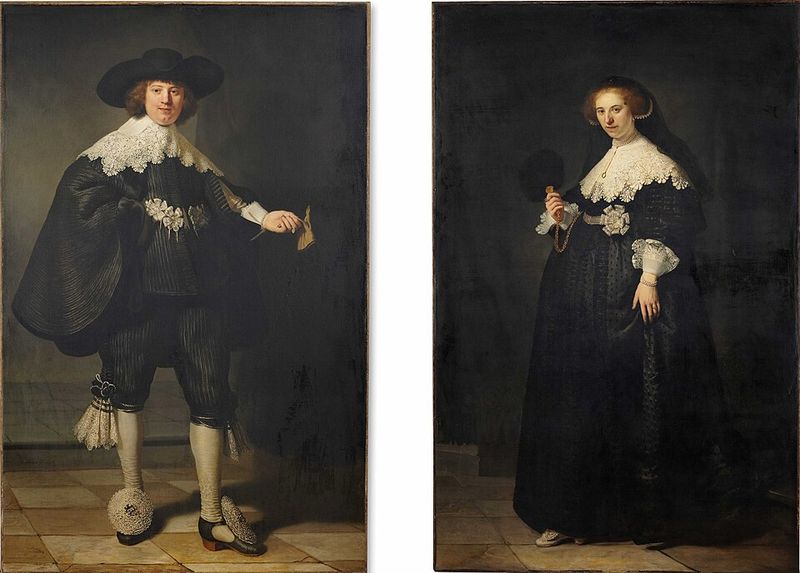
Rembrandt painted these companion portraits in 1634 as wedding gifts for a wealthy Amsterdam couple, Maerten Soolmans and Oopjen Coppit. The two paintings were sold jointly in 2015 for around $180 million, purchased together by the Louvre in Paris and the Rijksmuseum in Amsterdam.
Because neither museum could afford the pair alone, they made history by sharing ownership in an unprecedented cultural agreement. The portraits show the newlyweds in stunning full-length detail, dressed in elaborate black attire with intricate white lace, reflecting the height of Dutch Golden Age fashion.
Rembrandt’s skill in capturing fabric texture, light, and human expression is on full display here. These are among the very few full-length portraits he ever painted.
The joint purchase means the paintings travel between the two museums, giving visitors in both countries a chance to see them in person.
9. Les Femmes d’Alger (Version O)
Pablo Picasso painted Les Femmes d’Alger (Version O) in 1955 as the final piece in a series of 15 works inspired by Eugene Delacroix’s 1834 painting of the same name. The bold, fragmented female figures and vibrant colors reflect Picasso at his most energetically Cubist.
In May 2015, the painting sold at Christie’s New York for $179.4 million, setting a world auction record for Picasso at the time. The buyer was never officially identified, though reports linked the sale to a Qatari collector.
Picasso created the series as a tribute to his friend and fellow artist Henri Matisse, who had recently passed away. The painting crackles with energy, movement, and wit.
Art lovers and historians consider it one of the most important examples of late-period Picasso, showing that even in his 70s, he was still pushing boundaries and reinventing his own style.
10. Nu Couché
Amedeo Modigliani painted Nu Couche, or Reclining Nude, in 1917 as part of a series of nudes that scandalized Paris when they were first exhibited. The painting sold at Christie’s New York in November 2015 for $170.4 million, making it one of the most valuable Modigliani works ever sold.
Modigliani’s style is instantly recognizable: elongated figures, smooth skin, almond-shaped eyes, and a dreamlike simplicity that sets him apart from every other artist of his era. His nudes were so controversial that the police shut down his first solo exhibition after just one day.
Despite his short life, Modigliani died at age 35, his influence on modern art is enormous. Nu Couche captures both sensuality and vulnerability in a way that feels timeless.
The warm, earthy tones and relaxed pose give the painting an intimacy that continues to captivate viewers more than a century later.
11. Masterpiece
Roy Lichtenstein painted Masterpiece in 1962 during the height of the American pop art movement, and the title itself feels like a wink at the art world. The painting shows a comic book-style blonde woman telling a man, “Why, Brad darling, this painting is a masterpiece!
My, soon you’ll have all of New York clamoring for your work!”
In January 2017, the painting sold privately for $165 million to the Agnes Gund Foundation. Lichtenstein’s signature Ben-Day dots, bold outlines, and flat primary colors made him one of the most recognizable artists of the 20th century.
What makes Masterpiece especially clever is its self-referential humor. It comments on fame, value, and the art market all at once.
Lichtenstein borrowed the visual language of cheap comic books and turned it into high art, challenging what belonged in a museum and who got to decide.
12. Meules
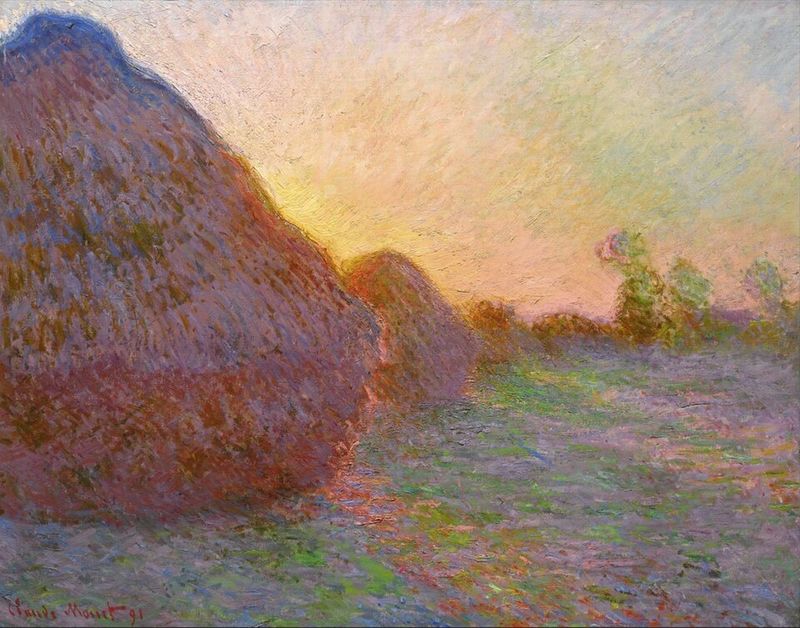
Claude Monet painted his famous Haystacks series, known in French as Meules, between 1890 and 1891 to capture how light changed the same subject across different times of day and seasons. One version of Meules sold at Sotheby’s New York in May 2019 for $110.7 million, setting a new record for the artist at auction.
The painting shows massive golden haystacks bathed in warm evening light, with soft, shimmering brushstrokes that feel almost like a dream. Monet was obsessed with the effects of natural light, and this series was one of the first times he systematically explored a single subject repeatedly.
The Haystacks series is credited with inspiring Wassily Kandinsky to pursue abstract art after he saw one of the paintings in Moscow. That ripple effect through art history makes Meules far more than a beautiful landscape.
It is a painting that quietly changed the direction of modern art forever.
13. L’Homme au doigt (Pointing Man)
Alberto Giacometti’s L’Homme au doigt, or Pointing Man, is technically a sculpture, but it sold at Christie’s New York in May 2015 for $141.3 million, placing it firmly among the world’s most expensive works of art. Created in 1947, the elongated bronze figure stretches dramatically upward with one arm extended and a single finger pointing outward.
Giacometti made the sculpture in one night from memory, reportedly afraid it would not survive until morning. The result is one of the most emotionally powerful figures in 20th-century art.
The thinness of the body reflects the psychological weight of post-World War II Europe, a world stripped of certainty and comfort.
Pointing Man feels urgent, almost desperate, as though the figure is reaching toward something just out of reach. Giacometti’s sculptures influenced existentialist thinkers like Jean-Paul Sartre, who wrote about them extensively.
This work carries both beauty and a deep, lingering sadness that is hard to forget.
14. The Standard Bearer
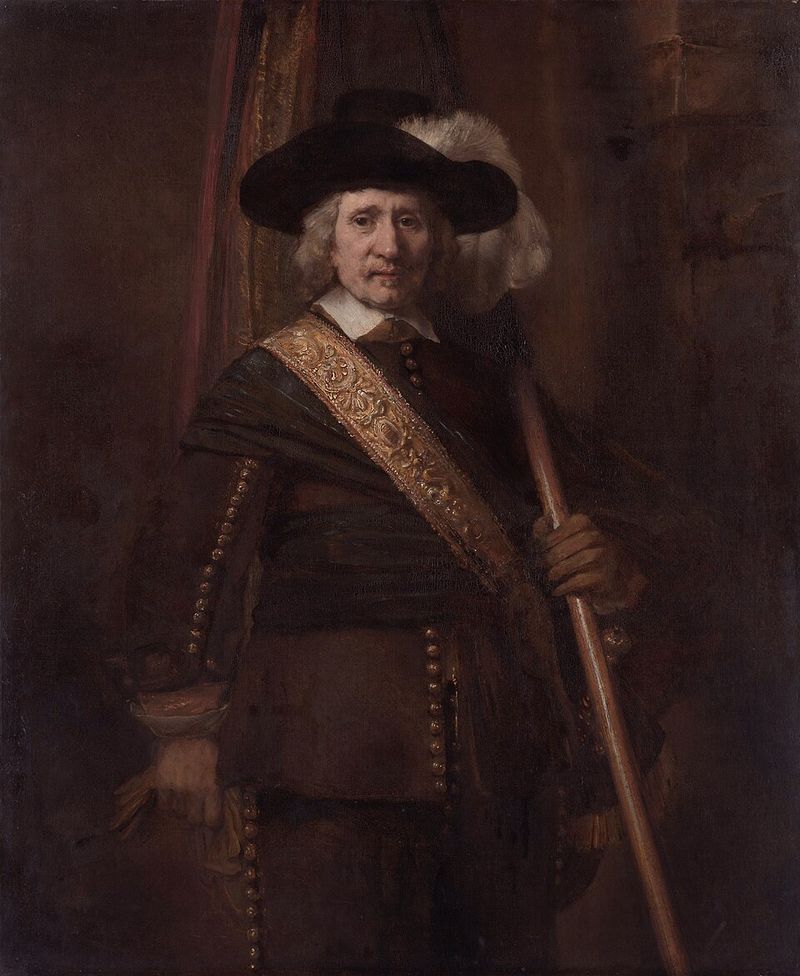
Rembrandt’s The Standard Bearer, painted in 1636, sold to the Dutch government for 175 million euros, roughly $186 million, in 2021, making it one of the most expensive Old Masters paintings ever acquired. The painting shows a confident soldier in elaborate dress, holding a large, brilliantly lit flag with an air of quiet pride.
The Dutch government purchased it to keep the masterpiece in the Netherlands, where it now hangs permanently in the Rijksmuseum in Amsterdam. It had been in private hands for decades, and there was real concern it might leave the country forever.
Rembrandt painted this during the peak of his career, and his mastery of light, texture, and human expression is breathtaking. The way the fabric of the flag catches the light feels almost photographic.
For Dutch citizens, keeping The Standard Bearer home was more than a purchase. It was a matter of national pride and cultural identity.



