Some places on Earth look so unreal that people genuinely accuse photographers of heavy editing. No filters needed here.
From rainbow-colored springs to glowing caves and floating sandstone towers, these natural wonders are the real deal. Buckle up, because your travel bucket list is about to get a serious upgrade.
Grand Prismatic Spring, USA
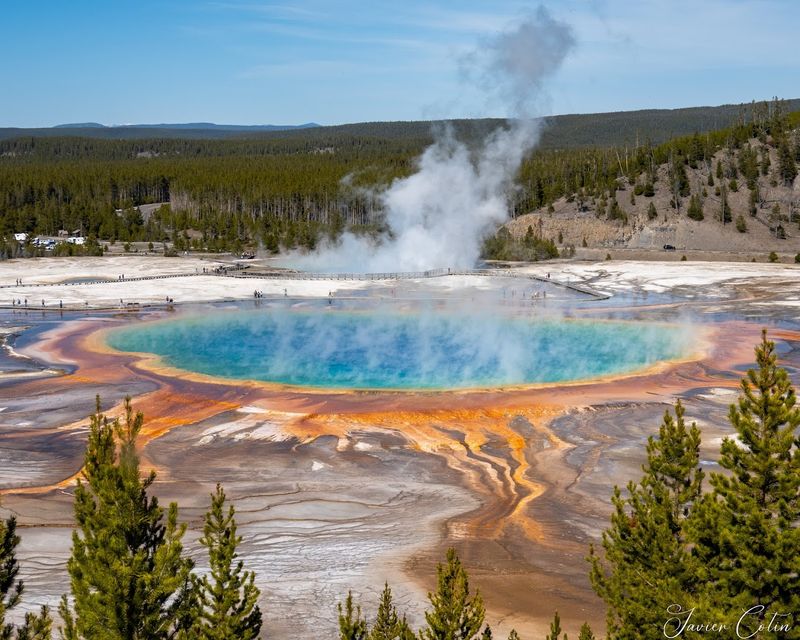
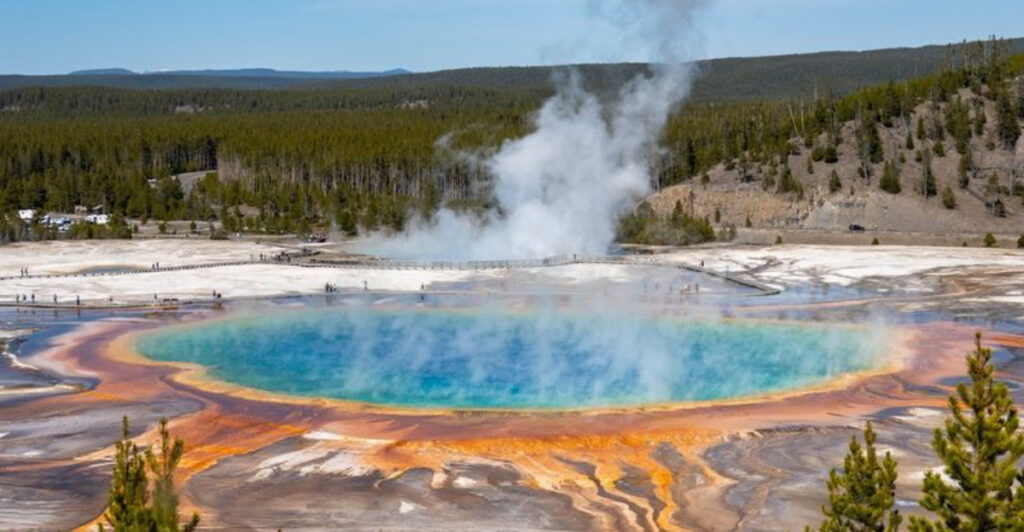
Yellowstone’s Grand Prismatic Spring is basically a giant mood ring that never lies. The vivid rings of orange, yellow, green, and deep blue are caused by heat-loving bacteria living around the edges.
The hotter the water, the fewer bacteria survive, which is why the center stays a striking, almost electric blue.
At roughly 370 feet wide, it is the largest hot spring in the United States. Standing at the overlook trail, I genuinely thought someone had Photoshopped the whole thing into the landscape.
Spoiler: they had not.
Yellowstone is open year-round with seasonal service changes, so plan ahead before visiting. The best aerial views come from the Grand Prismatic Overlook Trail, which is a short but rewarding hike.
Go early in the morning to catch the steam rising dramatically over the colors before the crowds arrive.
Salar de Uyuni, Bolivia
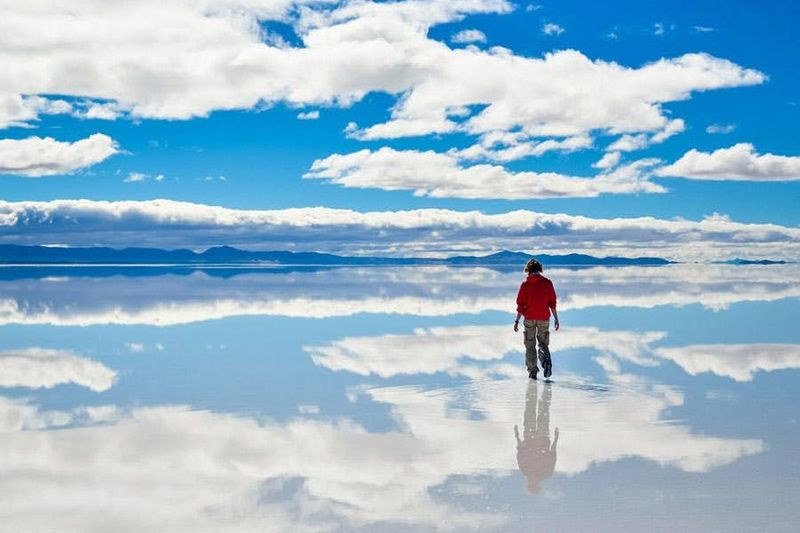
The world’s largest salt flat pulls off a trick that no magician could top. During the wet season, a thin layer of water turns the entire 4,000-square-mile surface into a flawless mirror.
The sky and ground merge so perfectly that the horizon simply disappears.
Standing on it feels genuinely disorienting in the best possible way. Tour groups flock here between November and March specifically for that mirror effect, and the photos look so surreal that every single one gets accused of being AI-generated.
They are not, I promise.
Getting here usually involves flying into Uyuni town in southwestern Bolivia and joining a guided tour. Four-wheel-drive vehicles are a must during the wet season.
Sunrise and sunset visits reward you with colors that shift from gold to pink to deep violet across that endless reflective surface, making every shot look like a painting.
Zhangjiajie National Forest Park, China
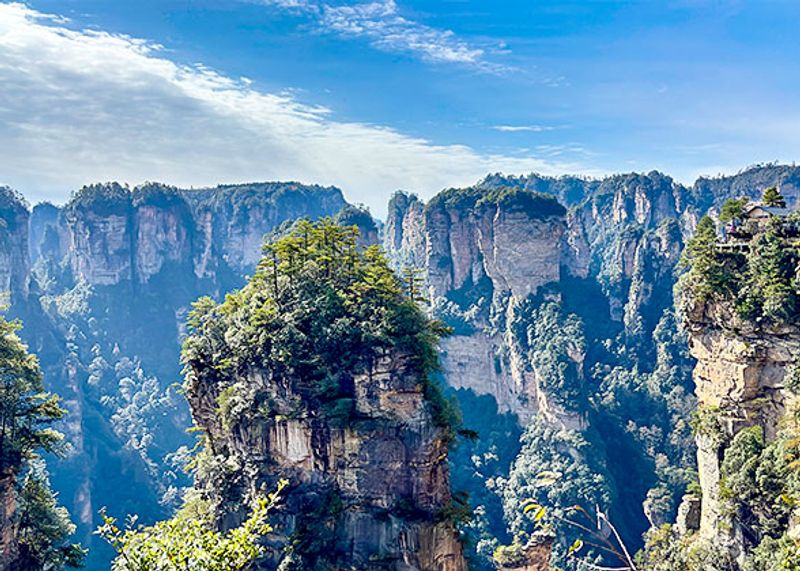
Yes, those floating mountains from Avatar were inspired by a real place. Zhangjiajie’s Wulingyuan area is packed with more than 3,000 towering sandstone pillars that shoot straight up through the clouds.
UNESCO recognized the area for its geological uniqueness, and once you see it, you understand why.
The pillars are draped in green vegetation and often wrapped in mist, which makes the whole scene look like a fantasy novel illustration. I kept expecting a dragon to fly past.
No dragons showed up, but the scenery more than compensated.
The park is open to visitors in 2026 with multiple entrance points and cable car options. The Bailong Elevator, one of the tallest outdoor lifts in the world, takes you up the cliffside for views that are worth every second of the slightly nerve-wracking ride.
Book tickets ahead during peak seasons to avoid long queues.
Pamukkale, Türkiye
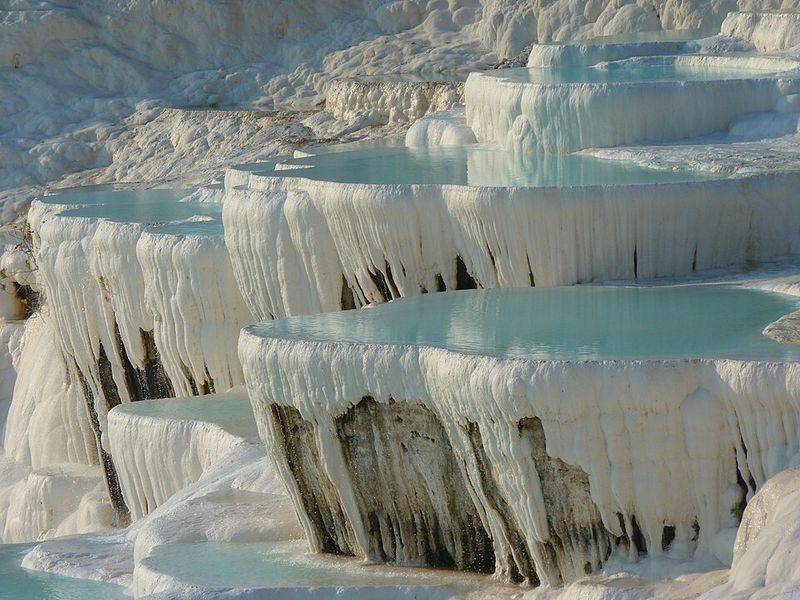
Pamukkale literally translates to “cotton castle” in Turkish, and honestly, the name is spot on. The hillside is blanketed in snow-white travertine terraces formed by calcium-rich thermal water flowing down the slope over thousands of years.
The result looks like a frozen waterfall made entirely of white chocolate.
The terraces are very real, despite every photo looking like a heavily edited fantasy. Warm thermal water still fills the pools, and yes, visitors are allowed to walk barefoot through certain sections.
It is one of the few places where you can paddle in a geological wonder.
The Hierapolis-Pamukkale site is open every single day, combining the stunning terraces with ancient Roman ruins at the top of the hill. Go in the late afternoon for golden-hour lighting that turns the white terraces a warm peachy pink.
Bring a bag for your shoes since barefoot walking is required on the terraces.
Plitvice Lakes National Park, Croatia
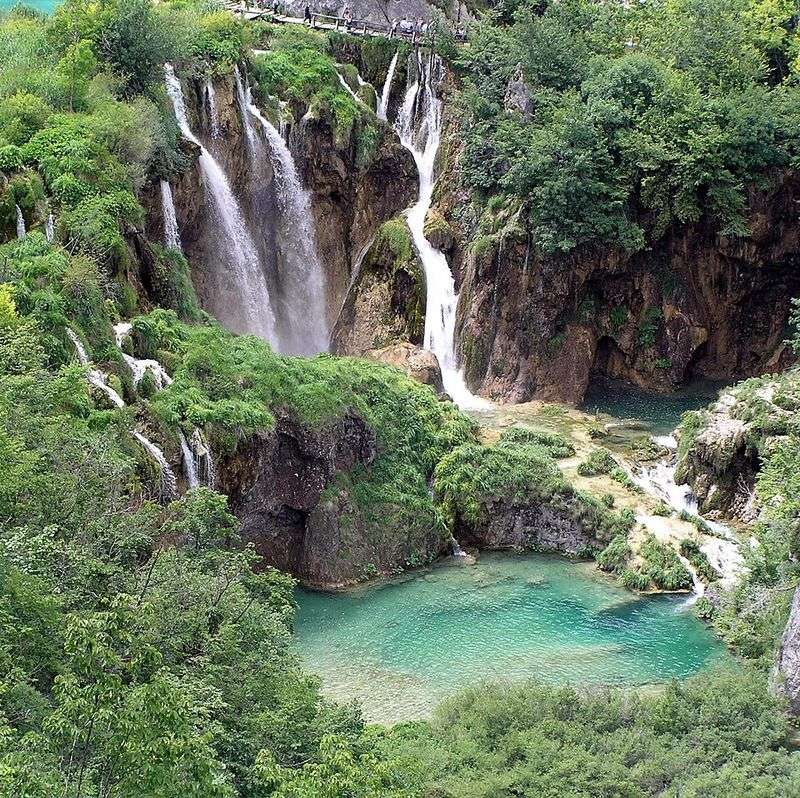
Croatia is hiding something extraordinary behind its coastline, and it has nothing to do with the Adriatic Sea. Plitvice Lakes National Park is a chain of 16 terraced lakes connected by waterfalls, all glowing in shades of turquoise, emerald, and deep blue.
The colors shift depending on the minerals, organisms, and light angle on any given day.
Wooden boardwalks weave right over and around the water, putting you inches above the action. The sound of cascading water follows you everywhere, and the forest surrounding the lakes keeps everything cool and atmospheric.
It feels like walking through a nature documentary set.
This UNESCO World Heritage Site remains one of Europe’s most striking natural landscapes. Timed entry tickets are required, and it is worth booking well in advance, especially for summer visits.
Lower lakes are generally more accessible and dramatic, while upper lakes offer quieter trails and wider forest views for those willing to walk further.
Iguazu Falls, Argentina and Brazil
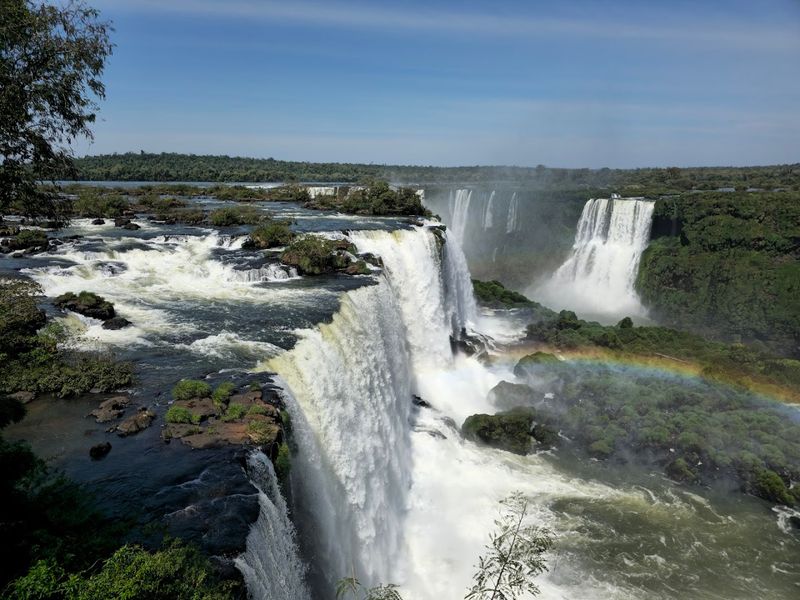
Iguazu Falls makes Niagara look like a garden hose. Straddling the border of Argentina and Brazil, the falls stretch nearly two miles wide and include around 275 individual cascades.
The centerpiece, Devil’s Throat, sends so much water over the edge that a permanent cloud of mist hangs in the air above it.
Eleanor Roosevelt reportedly said “Poor Niagara” upon seeing Iguazu for the first time. Whether that story is accurate or not, the sentiment is completely understandable.
Both the Argentine and Brazilian sides offer dramatically different perspectives, and visiting both is worth the extra border crossing effort.
The official Argentina-side site provides current visitor planning info, and the falls are open now. Pack a rain poncho because the spray from the cataracts will absolutely soak you.
The walkway at Devil’s Throat puts you right at the edge, offering a front-row seat to one of the most powerful water spectacles on the planet.
Moraine Lake, Canada
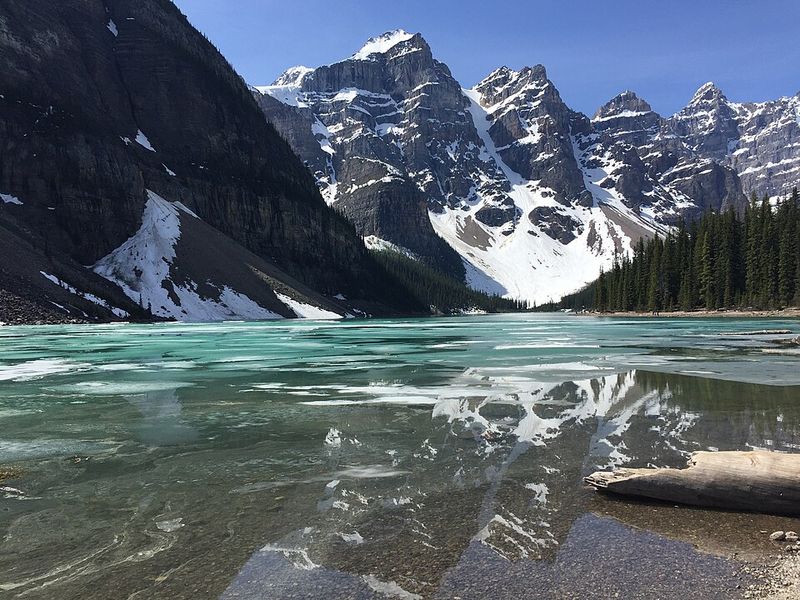
Moraine Lake once appeared on the back of the Canadian twenty-dollar bill, which is arguably the highest honor a body of water can receive. The lake sits in Banff National Park and glows a surreal shade of turquoise thanks to rock flour, which is finely ground glacial sediment suspended in the water.
No filters. No editing.
Just geology doing its thing.
The color peaks in June and July when glacial meltwater is at its highest. Getting there requires a bit of planning since the access road no longer allows private vehicles during peak season.
Parks Canada runs shuttles from Banff and Lake Louise, so book those early.
From the Rockpile Trail, a short scramble up a boulder pile rewards you with the classic postcard view of the lake backed by the Valley of the Ten Peaks. Arrive at sunrise if you want the reflection shot and a quieter experience before the day-trippers show up.
Antelope Canyon, USA
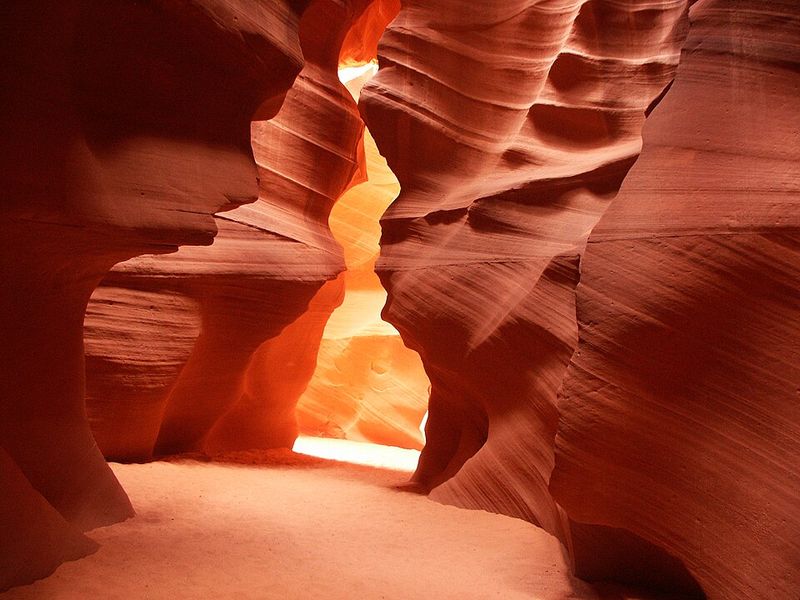
Antelope Canyon is essentially a sculpture carved by water and time. Located on Navajo land near Page, Arizona, this slot canyon was formed by centuries of flash flooding and wind erosion working on the red Navajo sandstone.
The result is a series of flowing, wave-like walls in deep amber, burgundy, and gold.
The light beams that shoot down from narrow openings above are the star attraction, and they appear most dramatically around midday from late spring through summer. Every photo taken inside looks like it belongs in a museum.
Honestly, it might be the most photogenic corridor in North America.
Access is exclusively through Navajo-guided tours, which is both the rule and the right approach since guides know exactly where to stand for the best shots. Upper Antelope Canyon is more accessible, while Lower Antelope Canyon involves ladder descents for a more adventurous experience.
Book tours well ahead, especially for the popular light-beam season.
Waitomo Glowworm Caves, New Zealand
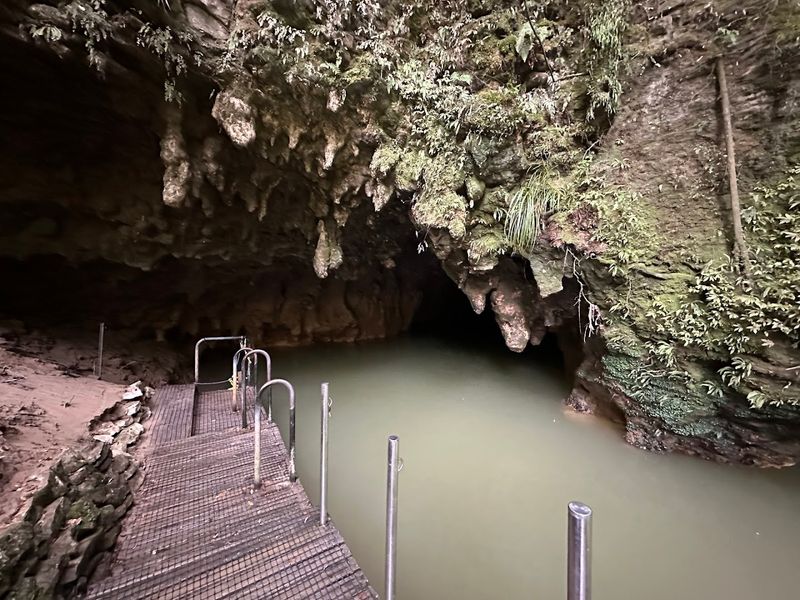
There is a cave in New Zealand where the ceiling looks exactly like a starry night sky, except the stars are alive. Waitomo’s glowworm caves are home to Arachnocampa luminosa, a species of glowworm found only in New Zealand.
These tiny creatures produce a blue-green bioluminescent glow to attract prey in the darkness.
Floating silently on a boat through the cave while thousands of glowing dots cover the ceiling above you is one of those experiences that genuinely short-circuits your brain. Is it nature?
Is it magic? Technically it is bioluminescent larvae, but that feels like an anticlimactic explanation for something so stunning.
Waitomo is fully operating with guided cave and glowworm experiences available now. Multiple tour options exist, from standard walking tours to black-water rafting for the adventurous crowd.
The guided boat ride through the glowworm grotto is the classic choice and remains one of the most memorable thirty minutes you can spend anywhere in New Zealand.
Great Barrier Reef, Australia
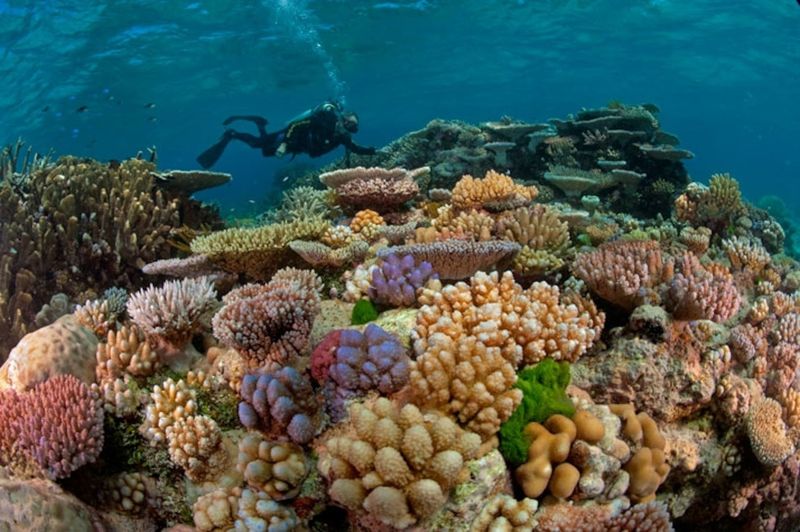
The Great Barrier Reef is so large it can be seen from space, which is either deeply impressive or a sign that Earth has been showing off for billions of years. Stretching over 1,400 miles along the Queensland coast, it is the world’s largest coral reef system and home to an extraordinary range of marine life.
Snorkeling here for the first time genuinely made me forget I was a human with legs and responsibilities. The colors underwater are that vivid and that distracting.
Coral formations in every shape and fish in colors that seem impractical for survival make every underwater photo look like digital art.
The Great Barrier Reef Marine Park supports a wide range of regulated visitor activities, from snorkeling and scuba diving to glass-bottom boat tours for those who prefer to stay dry. Cairns and the Whitsundays are the main gateway towns.
Choosing reef-safe sunscreen and certified tour operators helps protect the ecosystem for future visitors.
Giant’s Causeway, Northern Ireland
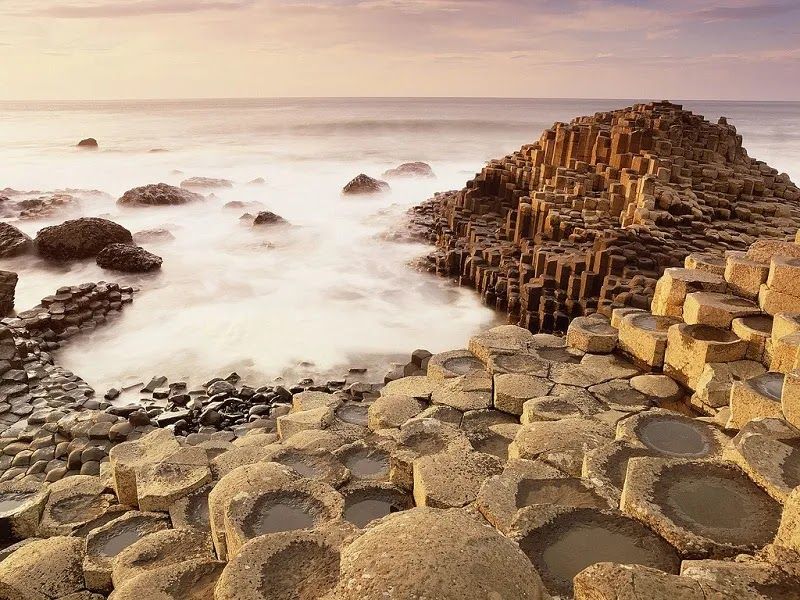
About 40,000 interlocking hexagonal basalt columns line the coast of Northern Ireland, and science says a volcanic eruption created them around 50 to 60 million years ago. Local legend, however, insists that the giant Finn McCool built the causeway to walk to Scotland.
Both explanations are entertaining, but only one involves a giant.
The columns fit together so precisely that they look hand-placed by an architect with an obsession for geometry. Walking across them feels oddly satisfying, like stepping on the world’s most dramatic tile floor.
The Atlantic waves crashing around the edges complete the dramatic effect.
The Giant’s Causeway is open to visitors with pedestrian access to the stones still available. The visitor centre offers context on both the geology and the mythology, which makes the whole experience richer.
Go on a weekday morning during shoulder season if you want the columns largely to yourself, because this spot draws serious crowds in summer.
Lençóis Maranhenses, Brazil
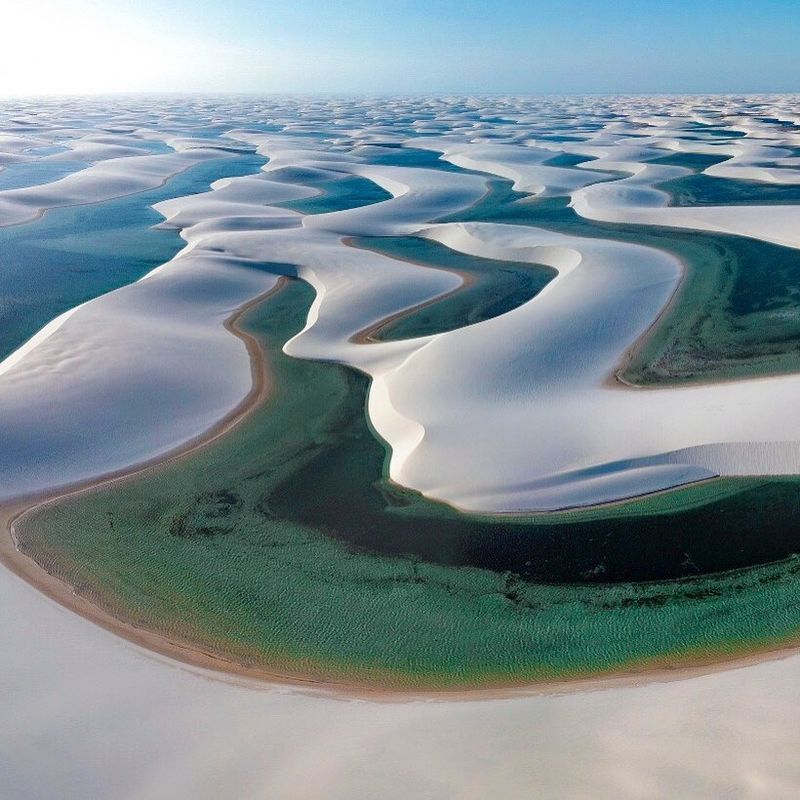
White sand dunes filled with crystal-clear blue lagoons should not exist in the middle of a tropical region, and yet Lençóis Maranhenses in northeastern Brazil does exactly that. Between January and June, seasonal rains collect in the valleys between the dunes, creating hundreds of freshwater lagoons that look like someone scattered sapphires across a desert.
The lagoons are not permanent, which makes visiting them feel like catching something rare. The water is clean enough to swim in, and locals sometimes fish in the larger ones.
Every aerial photo taken here gets accused of being digitally manipulated. It never is.
The national park requires guide-based access, which helps protect the fragile ecosystem. The best time to visit is between May and September when the lagoons are at their fullest.
Barreirinhas is the main gateway town. Getting here takes some effort, but that is exactly what keeps the crowds manageable and the landscape pristine.
Torres del Paine National Park, Chile
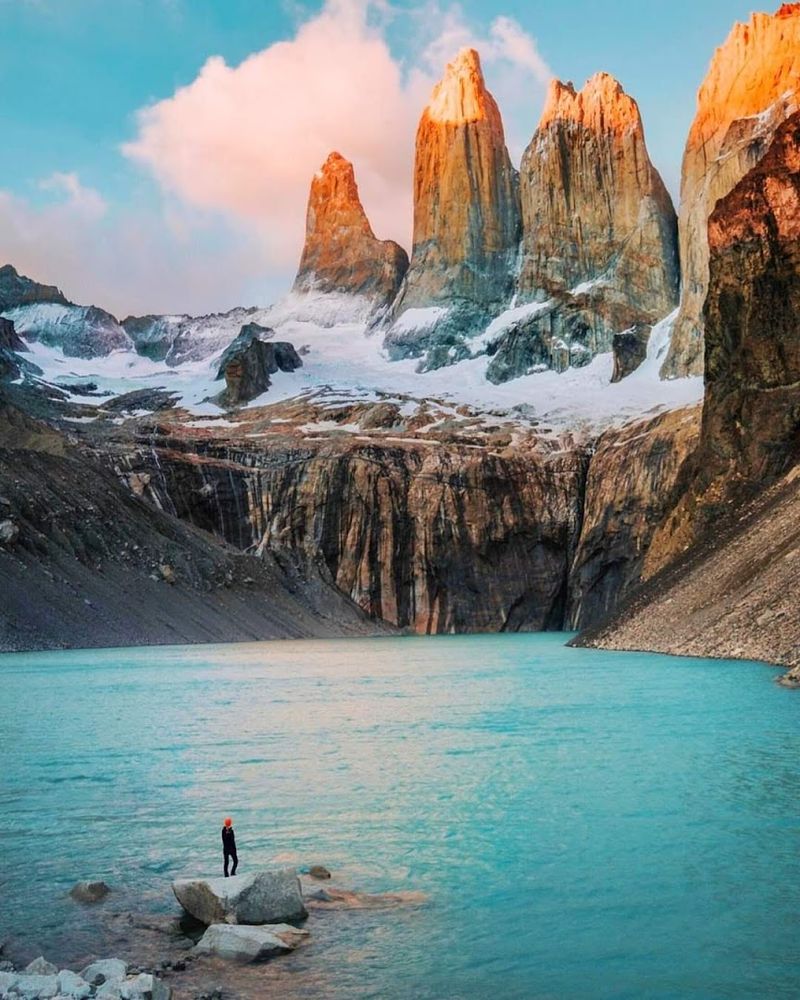
At the southern tip of South America, three granite towers rise so sharply from the Patagonian steppe that they look like they were placed there by someone with a flair for the dramatic. Torres del Paine is Chile’s crown jewel of national parks, combining jagged peaks, glaciers, turquoise lakes, and roaming guanacos into one relentlessly photogenic package.
The famous W Trek covers the park’s greatest highlights in four to five days, passing through landscapes that shift from windswept grassland to ancient forest to glacial blue. Weather in Patagonia changes fast, and wind here is not a suggestion; it is a lifestyle.
The park operates with digital park passes and route-based ticketing, so planning ahead is essential. Book accommodation and campsites months in advance, especially for the October-to-March high season.
The classic sunrise view of the towers reflected in Laguna Torres is the reward for a 3 a.m. wake-up call that most trekkers call completely worth it.
Wadi Rum, Jordan
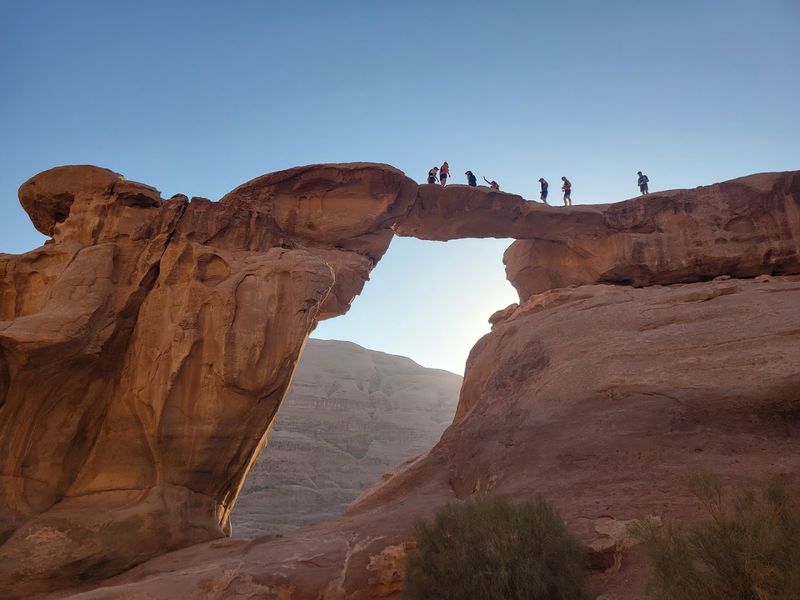
Wadi Rum has been used as a film location for Mars so many times that it practically deserves its own IMDB page. The rust-red sandstone cliffs, sweeping desert valleys, and alien rock formations have stood in for the red planet in The Martian, Dune, and several others.
The real place is somehow more impressive than any film set.
Bedouin communities have called this desert home for thousands of years, and the best way to experience Wadi Rum is through their guided jeep or camel tours. Staying overnight in a traditional Bedouin camp under the stars is one of those experiences that sounds like a cliche until you actually do it.
Jordan’s tourism board actively promotes Wadi Rum as a major visitor destination with current entrance fees and planning resources available online. The protected area covers over 280 square miles.
Sunset is the golden hour here, literally, as the red rock catches the fading light and the whole valley turns a deep, burning amber.
Share this story