 Unearth The Voyage
New Jersey gets a bad rap, and honestly, that’s just fine by those of us who know its secrets. Behind the turnpike jokes and airport chaos lies a state packed with jaw-dropping scenery, hidden waterfalls, and landscapes that belong on a postcard.
I grew up thinking the Garden State was all diners and traffic, until one weekend road trip completely changed my mind. Pack your camera and maybe a humble apology to New Jersey, because these 14 spots are absolutely stunning.
Manasquan Reservoir, Howell
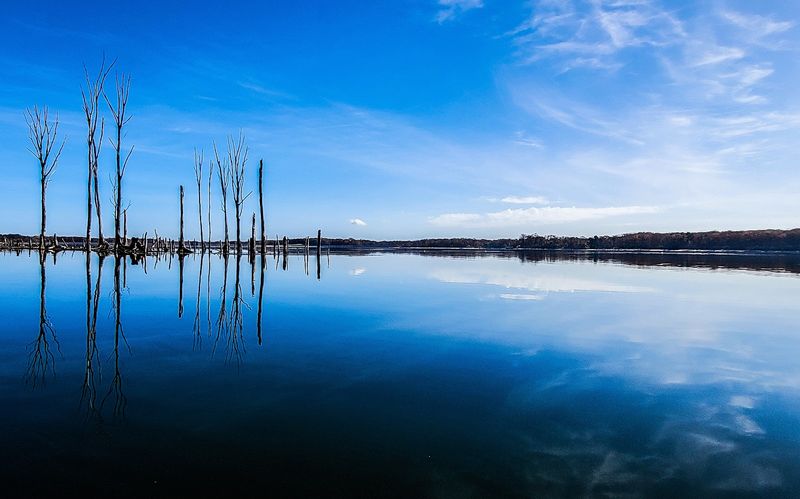
Five miles of peaceful shoreline and zero attitude. That’s the deal at Manasquan Reservoir, a surprisingly scenic gem tucked into Monmouth County that most people drive right past on the way to the Shore.
The 770-acre reservoir is ringed by a flat, paved trail that’s perfect for walkers, joggers, and cyclists who want views without the elevation drama. Herons stalk the shallows, ospreys hover overhead, and the water catches the afternoon light in a way that makes your phone camera work overtime.
Spring and fall are the sweet spots here. Wildflowers bloom along the path in May, and the surrounding trees go full golden in October.
There’s a boat launch for non-motorized craft, so kayakers and canoeists show up regularly to enjoy the glassy water. Parking is easy, the vibe is relaxed, and the whole loop takes about two hours.
This is the kind of place that sneaks up on you.
Buttermilk Falls, Delaware Water Gap National Recreation Area
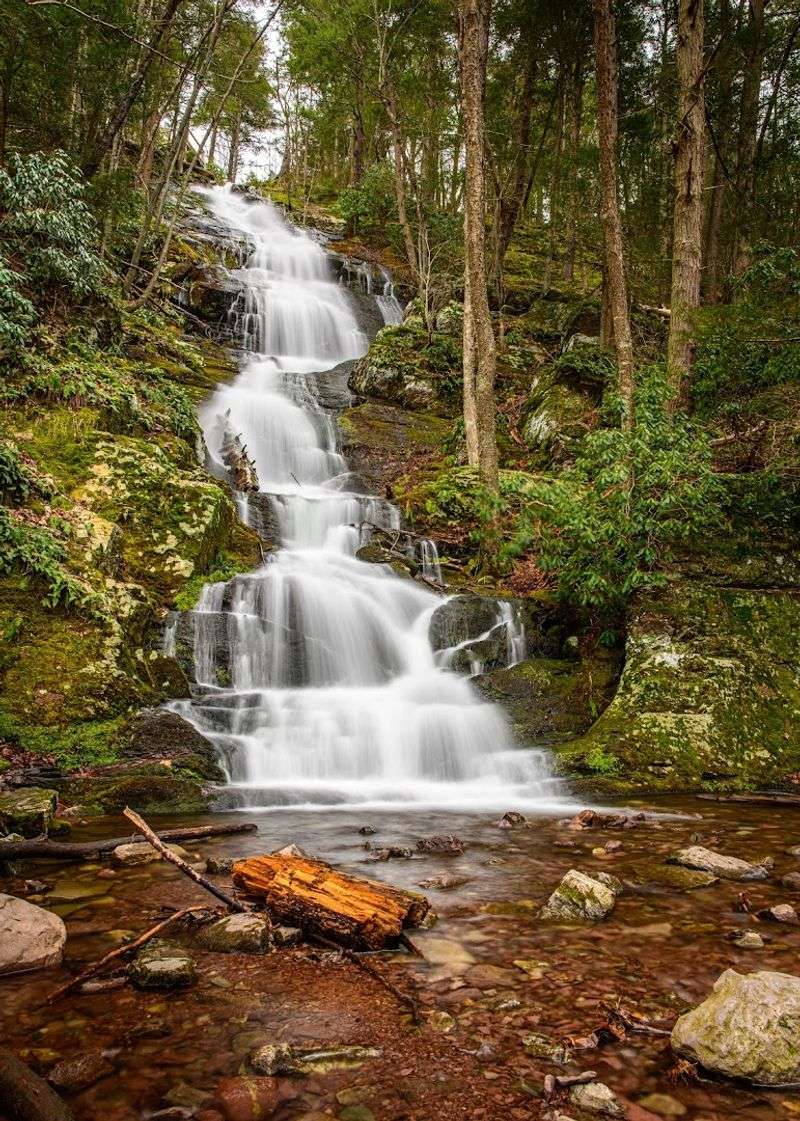
New Jersey has a waterfall taller than Niagara Falls, and almost nobody talks about it. Buttermilk Falls drops roughly 200 feet in a series of cascades through the Delaware Water Gap, making it the tallest waterfall in the state and genuinely one of the most beautiful spots on the entire East Coast.
The hike to reach it is short but can be slippery, especially after rain when the rocks get coated in mist. Wear shoes with actual grip.
The payoff is absolutely worth the muddy knees.
The surrounding forest feels ancient and untouched, with mossy boulders and ferns filling every gap between the trees. Fall is peak season when the foliage frames the falls in orange and red.
Early morning visits mean fewer crowds and better light for photos. It’s tucked off Millbrook Road, so bring a map or a fully charged phone.
Getting a little lost here is honestly part of the fun.
Wharton State Forest
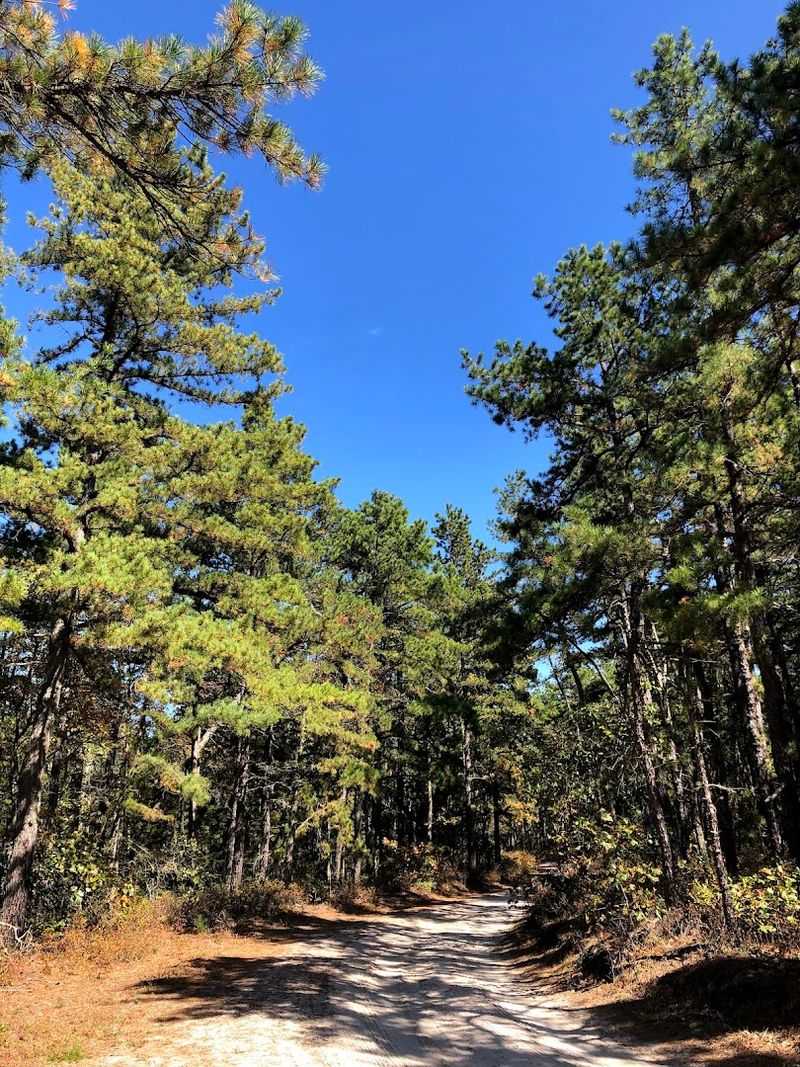
Welcome to the Pine Barrens, New Jersey’s most misunderstood wilderness. Wharton State Forest covers over 115,000 acres, making it the largest single tract of land in the state park system and a genuinely wild place that surprises first-time visitors every single time.
The cedar-stained rivers here run the color of dark tea, which sounds unappealing but is actually stunning. Batsto River and Mullica River are favorites for canoe and kayak trips through corridors of white cedar.
The water is clean, cold, and oddly beautiful in that amber-tinted way.
Batsto Village, a preserved 19th-century iron and glass-making town, sits right inside the forest and is free to explore. Stargazing here rivals anything in the western US because there’s almost no light pollution for miles.
Camping, hiking, and mountain biking round out the options. Wharton is proof that New Jersey’s wild side doesn’t need a publicist.
It just needs more visitors willing to look.
High Point State Park
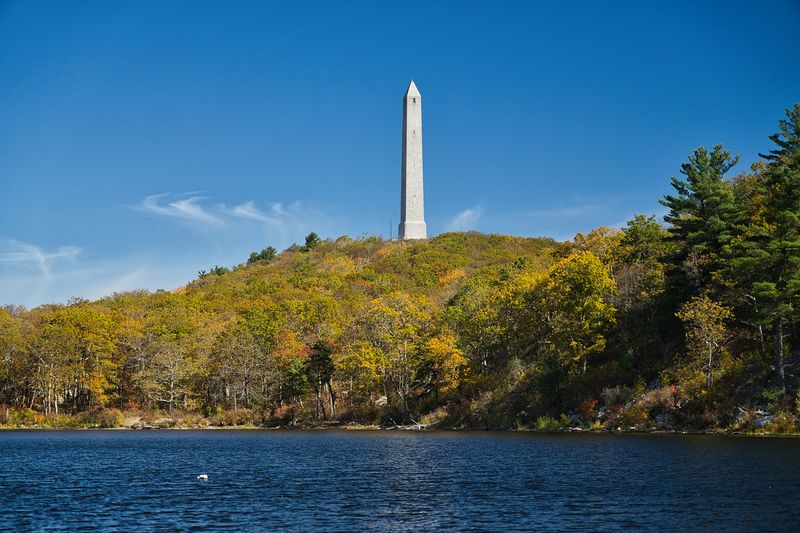
At 1,803 feet above sea level, High Point State Park sits at the literal top of New Jersey, and the views from up there are genuinely hard to believe. On a clear day, you can see into three states: New York, Pennsylvania, and New Jersey itself spread out below like a green quilt.
The park takes its name seriously. A 220-foot stone monument marks the summit, and climbing to its base gives you a 360-degree view that makes the drive up Route 23 completely worth it.
The monument itself was built in 1930 as a memorial to New Jersey war veterans.
Beyond the summit, the park has over 50 miles of hiking trails, a lake for swimming, and some of the best cross-country skiing in the state during winter. Sunrise visits in fall are next-level.
The mist rolls through the valleys below while the treetops glow orange and red.
Honestly, this spot belongs on every New Jersey bucket list.
Speedwell Lake, Morristown
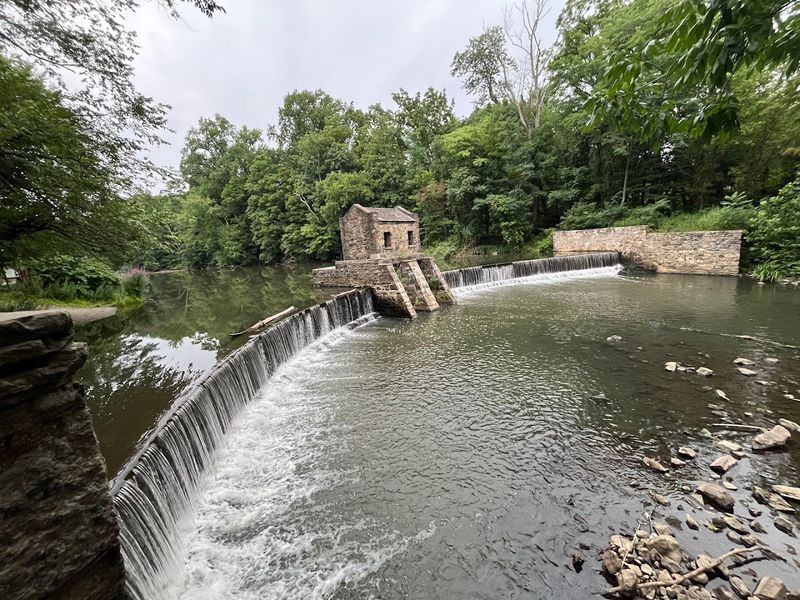
Morristown is famous for George Washington’s winter camp, but Speedwell Lake is the town’s quieter, prettier secret. Tucked inside Morristown’s Morris County Park system, this 176-acre lake is the kind of place locals fiercely protect from too much attention.
The paved path around the lake is flat and family-friendly, making it a go-to for strollers, leashed dogs, and anyone who wants a genuine nature break without leaving Morris County. Ducks, geese, and the occasional great blue heron make regular appearances near the water’s edge.
Fall transforms the whole scene into something almost theatrical. The maples and oaks surrounding the lake light up in deep reds and burnt oranges, and their reflections double the color on the water’s surface.
There’s a historic site nearby called Speedwell Historic Site where Samuel Morse first demonstrated the telegraph in 1838. So the lake comes with a side of actual American history.
Not bad for a Tuesday afternoon walk.
Barnegat Lighthouse State Park, Barnegat Light
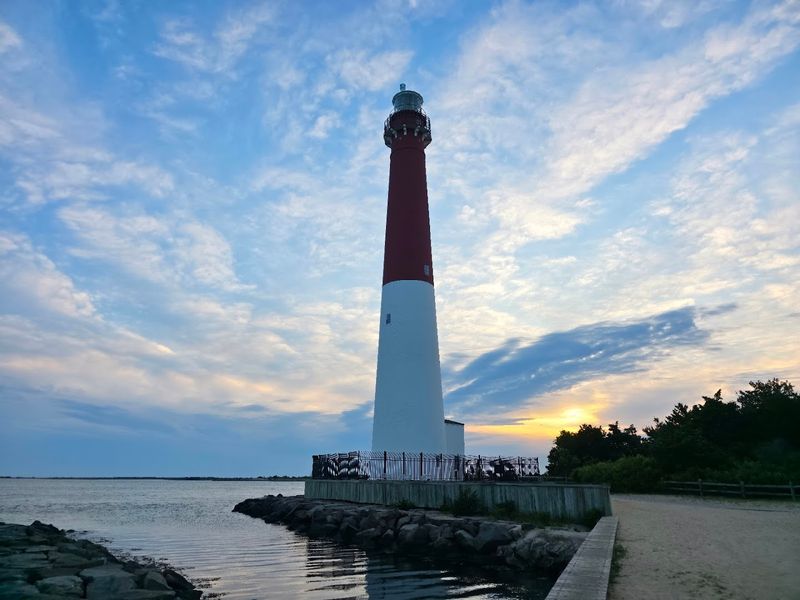
Old Barney has been standing at the northern tip of Long Beach Island since 1859, and the lighthouse hasn’t lost a single bit of its charm. At 172 feet tall, Barnegat Lighthouse is one of the most photographed spots in New Jersey, and for very good reason.
Climbing all 217 steps to the top rewards you with an unobstructed view of Barnegat Inlet, Island Beach State Park across the water, and the open Atlantic stretching to the horizon. It’s the kind of view that makes you go quiet for a minute, which is saying something.
The surrounding state park has a short nature trail through maritime forest and a jetty walk that’s popular with anglers and sunset-chasers. The park is open year-round, and off-season visits in late fall or winter mean almost no crowds and dramatic moody skies.
Admission is affordable, parking is manageable outside of summer, and the lighthouse itself is a genuine icon of the Jersey Shore.
Red Mill, Clinton
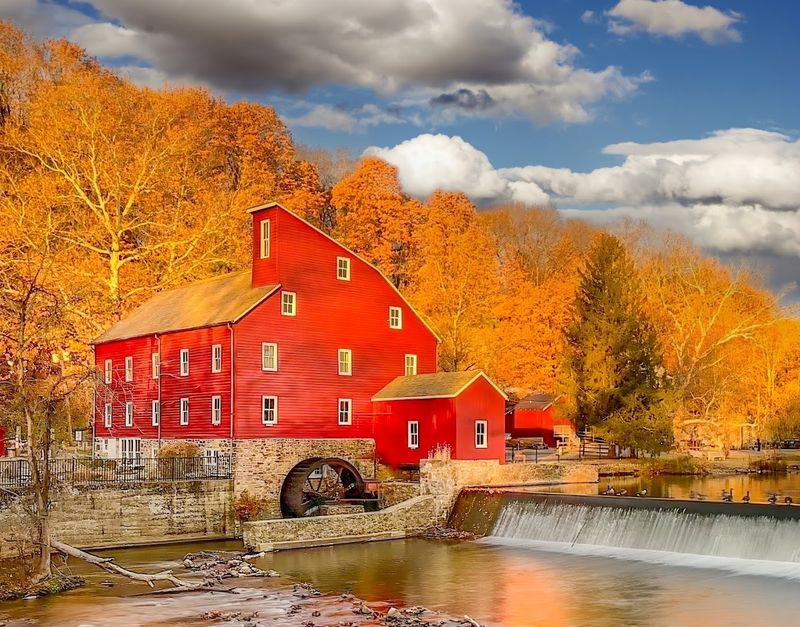
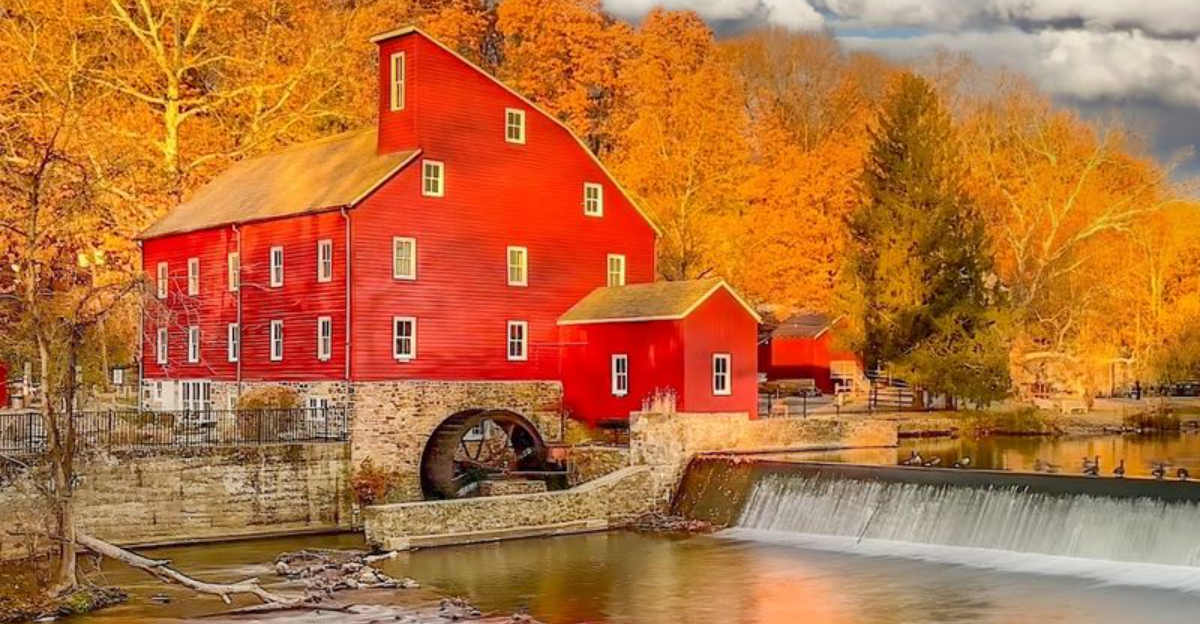
Few buildings in New Jersey are as immediately photogenic as the Red Mill in Clinton. The vivid crimson structure sits right beside a roaring waterfall on the South Branch of the Raritan River, and it looks almost too perfect to be real.
Spoiler: it’s very real and very worth visiting.
Built in 1810, the mill operated for over a century grinding grain, then limestone, before becoming a museum. Today it houses the Hunterdon Art Museum and the Red Mill Museum Village, with over 40,000 artifacts across multiple historic buildings on the property.
The waterfall beside the mill is the real show-stopper. It rushes year-round, but after heavy rain it absolutely roars.
The stone bridge nearby is a classic photo spot, and the surrounding town of Clinton is adorable with good coffee shops and local boutiques. Fall foliage turns this scene into pure magic.
I drove out of my way specifically to see it, and I’d do it again without hesitation.
Stephens State Park, Hackettstown
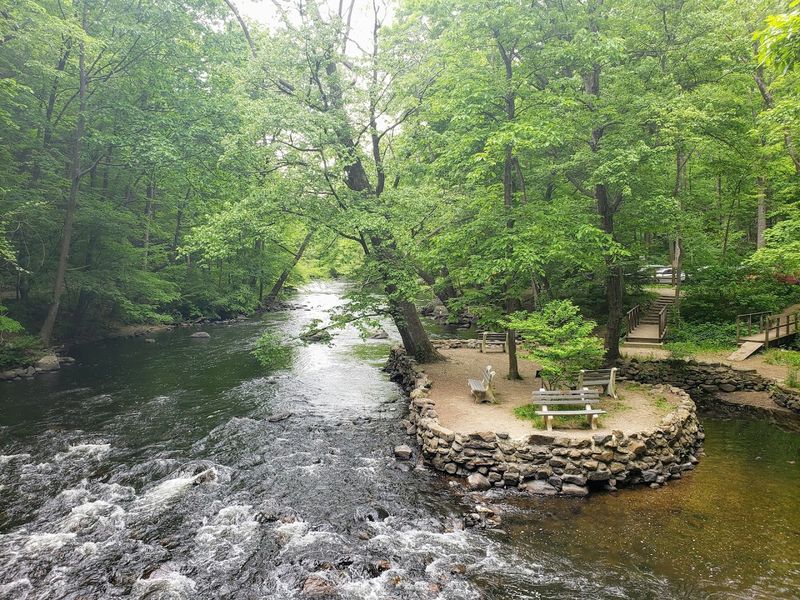
Not every stunning New Jersey park makes the travel blogs, and Stephens State Park is proof of that oversight. Sitting along the Musconetcong River in Warren County, this underrated gem offers rocky river views, forested trails, and a genuinely peaceful atmosphere that feels miles from suburban New Jersey.
The Musconetcong is a designated Wild and Scenic River, which means the water quality and surrounding habitat are federally protected. Trout fishing here is serious business, and fly fishermen wade the shallows on weekday mornings like it’s a full-time job.
Hiking trails wind through the gorge and up into the surrounding hills, offering elevated views of the river valley below. The park connects to the Highlands Trail, opening up longer routes for more ambitious hikers.
Camping is available, and the sites near the river are especially popular in summer.
Crowds stay thin here because most people don’t know it exists, which is exactly why you should go before that changes.
Sunset Beach, Cape May
Cape May is already New Jersey’s most charming beach town, but Sunset Beach takes things to a whole different level. Every evening, a crowd gathers here to watch the sun drop behind the Delaware Bay, and the ritual includes a flag-lowering ceremony that’s genuinely moving the first time you witness it.
The beach is famous for Cape May Diamonds, small quartz pebbles polished smooth by the surf that wash up along the shoreline. Kids and adults alike spend hours hunting for them, and finding a good one feels like a tiny treasure hunt victory.
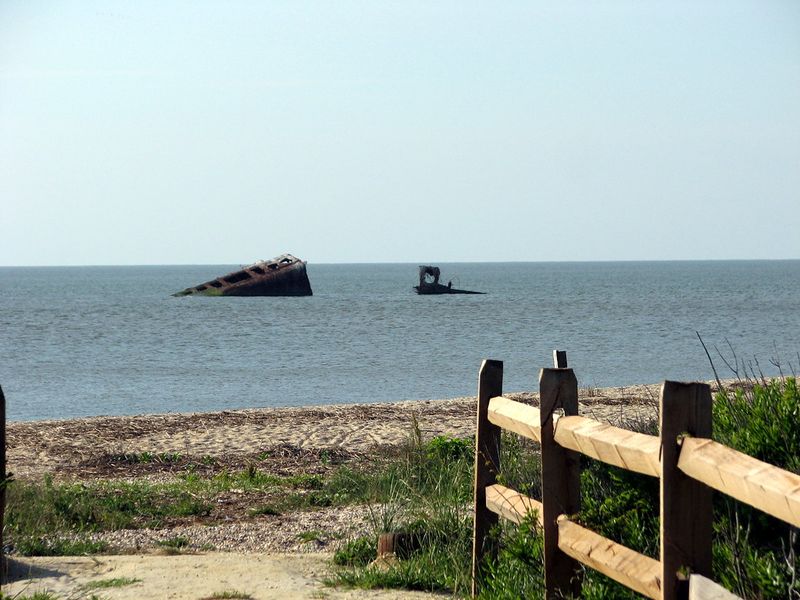
Out in the water, you can spot the wreck of the SS Atlantus, a concrete ship from World War I that ran aground in 1926 and never moved again. It’s been slowly sinking ever since, which sounds sad but is actually fascinating.
The beach has a snack bar, a gift shop, and some of the most reliably spectacular evening skies on the entire East Coast.
Mount Tammany, Knowlton Township
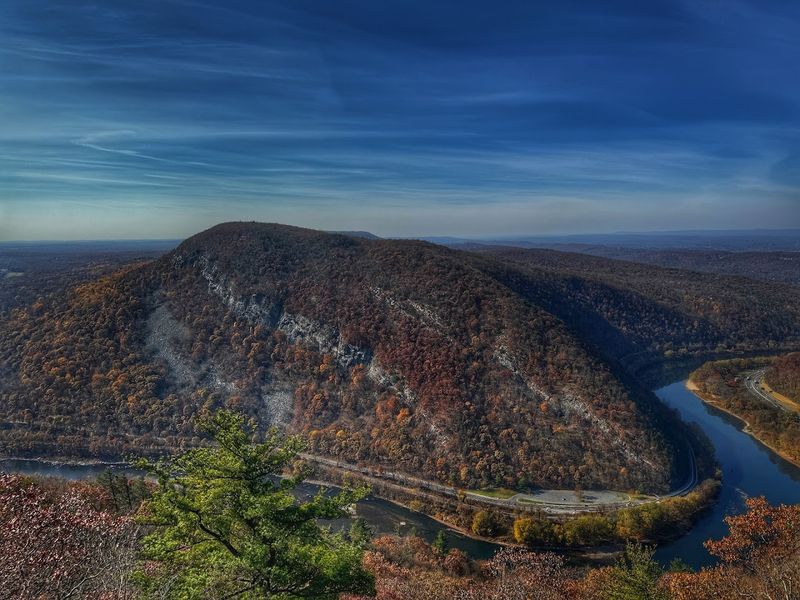
Mount Tammany is the hike that made me stop underestimating New Jersey. The red trail to the summit is steep, rocky, and absolutely not a casual stroll, but the view from the top of the Delaware Water Gap is one of the finest in the entire Mid-Atlantic region.
Standing at roughly 1,527 feet, the summit overlooks the Delaware River as it cuts through the gap between New Jersey and Pennsylvania. The contrast between the forested ridgelines and the silver ribbon of river below is genuinely breathtaking.
Fall color here is on another level entirely.
The most popular route is a loop combining the Red Dot Trail up and the Blue Dot Trail down. Plan for about three to four hours and bring more water than you think you need.
The upper section involves real scrambling over exposed rock, so trekking poles help. Weekends in October get crowded, so arrive early.
The payoff at the top makes every sweaty, breathless step completely justified.
Liberty State Park, Jersey City
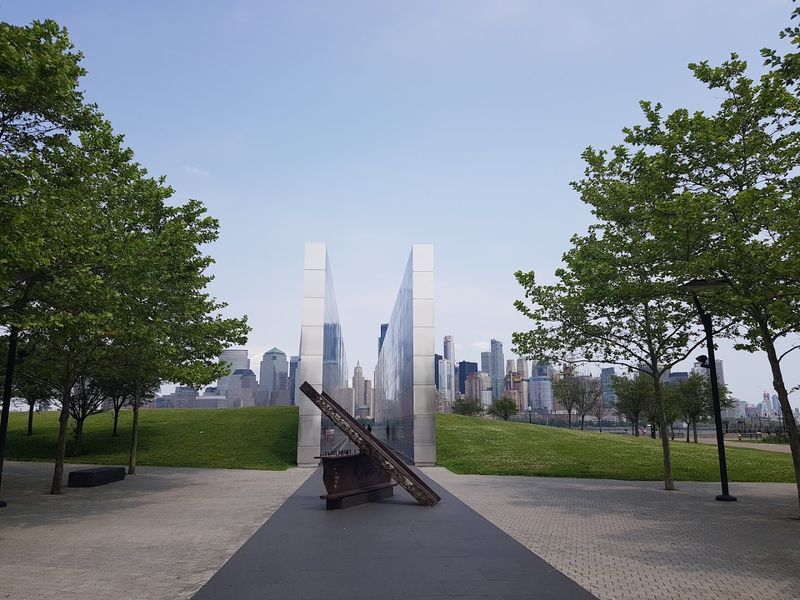
Most people visit Liberty State Park to catch the ferry to the Statue of Liberty. What they don’t expect is how stunning the park itself is, especially the view looking back at the Manhattan skyline across the Hudson River.
It’s arguably one of the best city views in America.
The restored Central Railroad of New Jersey Terminal stands inside the park as a hauntingly beautiful relic. Millions of immigrants passed through this building in the early 1900s, and walking through the empty waiting room today gives you a real sense of that history.
The park’s waterfront promenade stretches for miles and is ideal for cycling, walking, or just sitting on a bench watching container ships glide past. Sunrise here is absolutely spectacular, with the Manhattan skyline catching the early light while the harbor stays calm.
Admission to the park is free, which makes it one of the best deals in the entire state.
Liberty State Park consistently outperforms expectations.
Duke Farms, Hillsborough
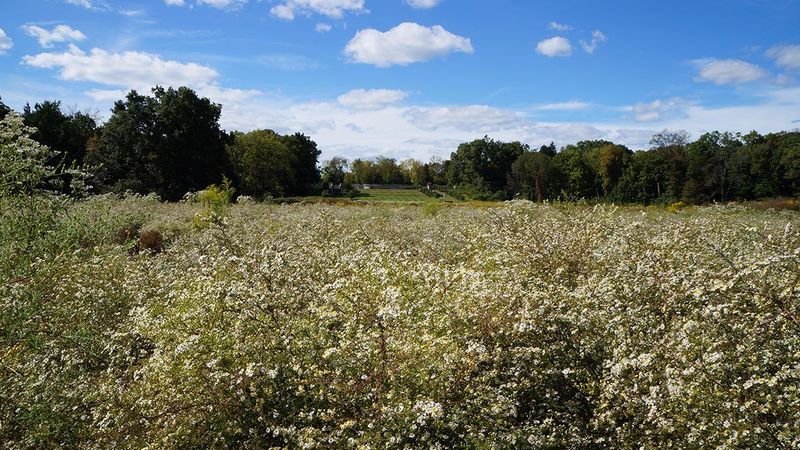
Duke Farms is what happens when a tobacco heiress with extremely good taste and a passion for conservation decides to go all in on a New Jersey property. The 2,740-acre estate in Hillsborough is now open to the public, and it is absolutely magnificent.
Paved and unpaved trails wind through meadows, forests, and past a series of ornamental lakes that were designed in the early 1900s. The landscape feels like a cross between a European estate and a working nature preserve, because that’s essentially what it is.
The Farm Barn is a solar-powered visitor center built inside a restored 19th-century hay barn, and it regularly hosts educational programs, markets, and events. Wildlife sightings are common, with deer, foxes, and over 200 bird species recorded on the property.
No cars are allowed beyond the parking area, so the whole place stays blissfully quiet.
Duke Farms is free to visit and genuinely one of New Jersey’s most underappreciated treasures.
Great Falls, Paterson
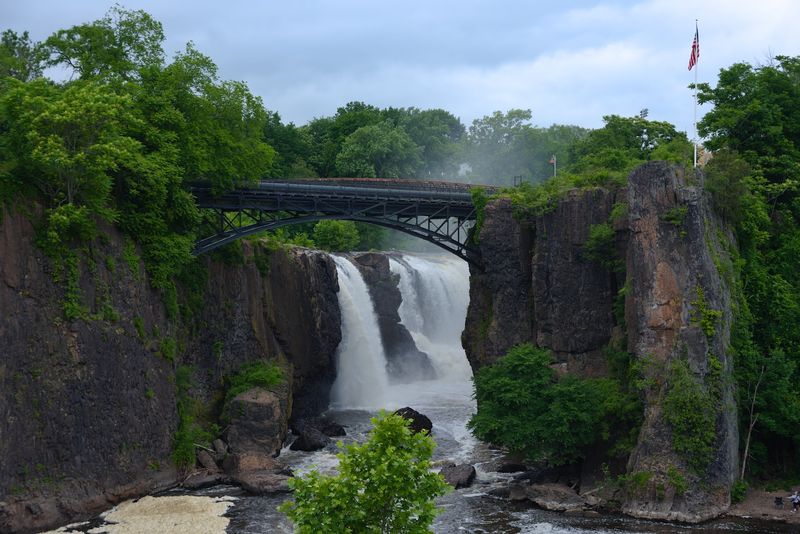
Paterson’s Great Falls drops 77 feet over ancient basalt cliffs, making it the second-largest waterfall by volume east of the Mississippi River. That’s not a New Jersey brag.
That’s just a fact that most people find genuinely shocking.
Alexander Hamilton was so impressed by the falls in 1778 that he later convinced Congress to establish Paterson as America’s first planned industrial city, powered by the Passaic River. The falls became the engine of American manufacturing, and the surrounding historic district is now a National Historical Park.
The viewing platforms give you close-up access to the full force of the falls, especially during spring when snowmelt turns the flow into something thunderous. The surrounding Paterson Great Falls National Historical Park connects to a network of historic mill buildings and raceway channels that once powered the city’s silk and locomotive industries.
The combination of raw natural power and layered American history makes this one of the most genuinely fascinating stops in the entire state.
Goshen Pond, Shamong
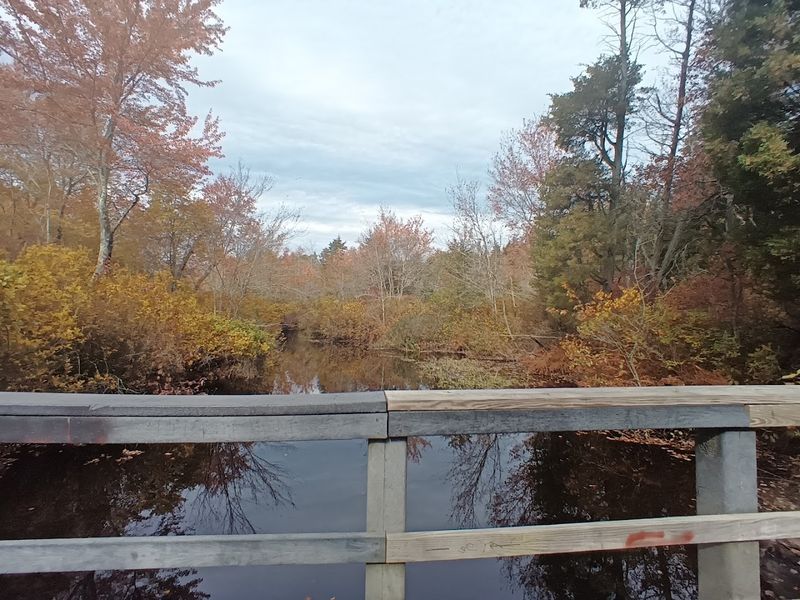
Goshen Pond is the Pine Barrens at its most quietly spectacular. Tucked inside Wharton State Forest near Shamong, this small, dark-water pond sits surrounded by pitch pines and Atlantic white cedars in a landscape that looks like it belongs in a fairy tale with a slightly eerie edge.
The water is naturally stained dark amber from tannins released by the surrounding vegetation, which gives the pond an almost mirror-like quality when the surface is calm. Early morning visits are best, when mist hovers just above the water and the only sound is birdsong.
Getting there requires a short drive down a sandy unpaved road, which is part of the charm. A kayak or canoe makes the experience even richer, letting you drift silently across the surface while the forest closes in around you.
There are no crowds, no fees, and no cell service.
Goshen Pond is genuinely off the beaten path, and that’s precisely why it belongs on this list.



