Slovenia may be small, but it packs an incredible punch—think alpine meadows, crystal-clear rivers, medieval towns, and a laid-back vibe that’s hard to find anywhere else in Europe. It consistently ranks among the continent’s safest countries, with low crime rates and a strong sense of community that makes travelers feel genuinely welcome.
While Lake Bled and Ljubljana steal most of the spotlight, huge swaths of Slovenia remain blissfully undiscovered. These 14 off-the-radar destinations prove that the country’s best surprises are still waiting to be found.
Velika Planina
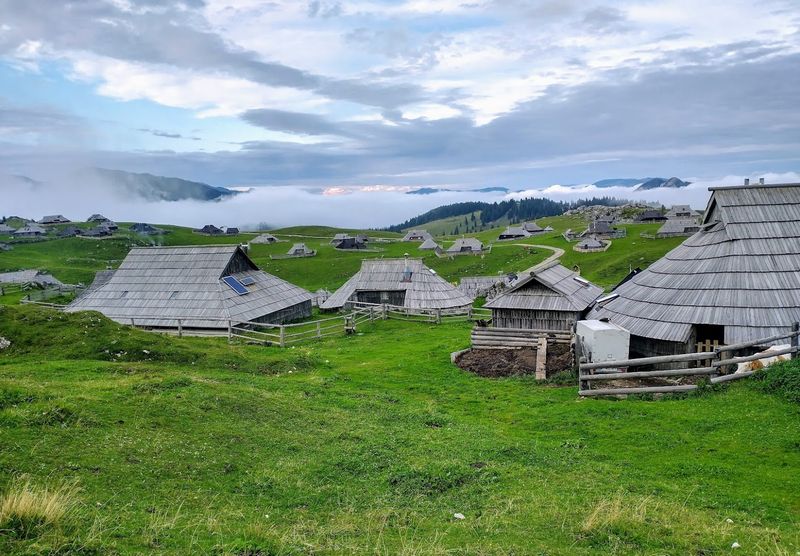
Perched nearly 1,500 meters above sea level, Velika Planina feels like a secret the Alps have been keeping to themselves. The plateau is scattered with quirky, mushroom-shaped wooden shepherd huts that look straight out of a storybook—and somehow, they’re the real deal.
Shepherds have grazed cattle up here for centuries, and the tradition is very much alive today.
In summer, the pastures explode with wildflowers, cowbells echo across the hills, and the air is so clean you’ll want to bottle it. A gondola from Kamnik makes the ascent easy, so you don’t need serious hiking gear just to get up there.
Once on top, walking trails fan out in every direction.
Despite being genuinely spectacular, Velika Planina draws a fraction of the crowds you’d expect. Stop at one of the small huts serving warm milk and local cheese—it’s the kind of simple pleasure that sticks with you long after the trip ends.
Sunrise here, when mist rolls through the valleys below, is quietly unforgettable.
Kobarid
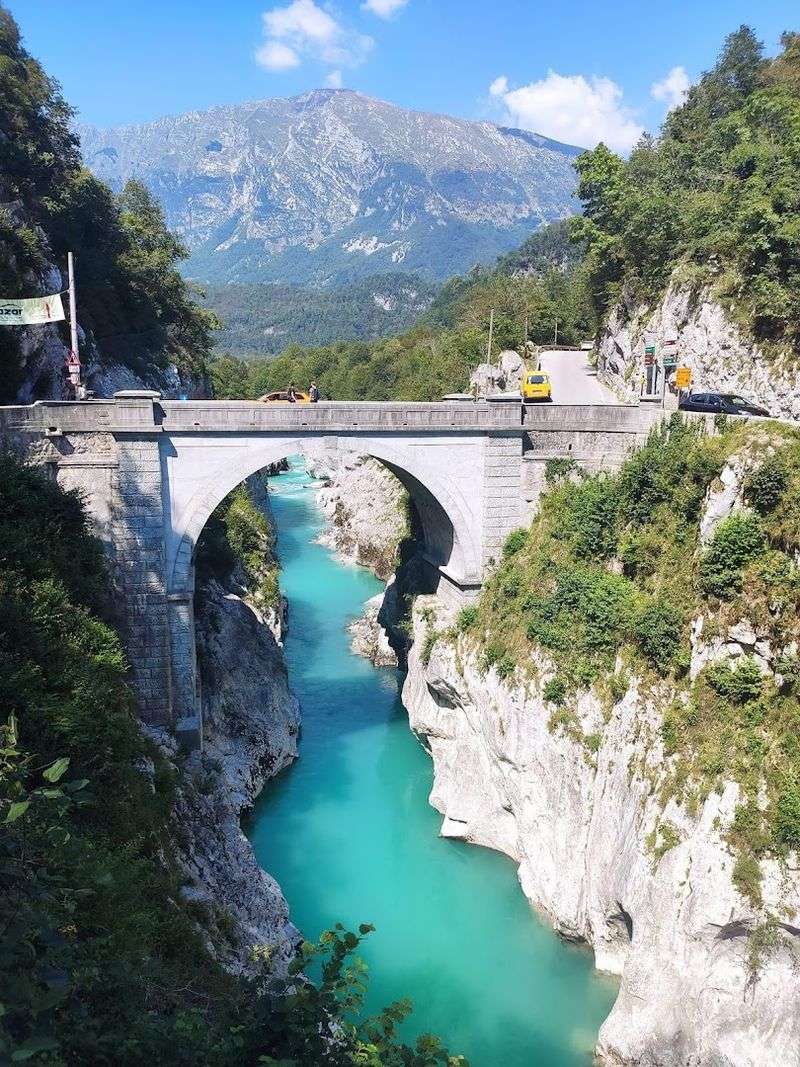
The Soča River runs through Kobarid like liquid jade—its color is so vivid that first-time visitors often stop mid-sentence just to stare at it. The water stays that electric shade of turquoise year-round, fed by glacial springs deep in the Julian Alps.
It’s the kind of natural spectacle that no filter can improve.
Kobarid earned its place in history during World War I, when some of the fiercest fighting on the Italian Front took place in these valleys. The town’s excellent WWI museum—winner of the Council of Europe Museum Prize—tells that story with remarkable honesty and depth.
Ernest Hemingway’s “A Farewell to Arms” was partly inspired by events here, which gives the place an added literary weight.
Beyond history, the outdoor options are outstanding. White-water kayaking, fly-fishing, and canyon hiking are all popular along the Soča.
The town itself is tiny and relaxed, with good restaurants serving locally sourced food. Kobarid is the kind of place that converts casual visitors into devoted fans who return season after season.
Škofja Loka
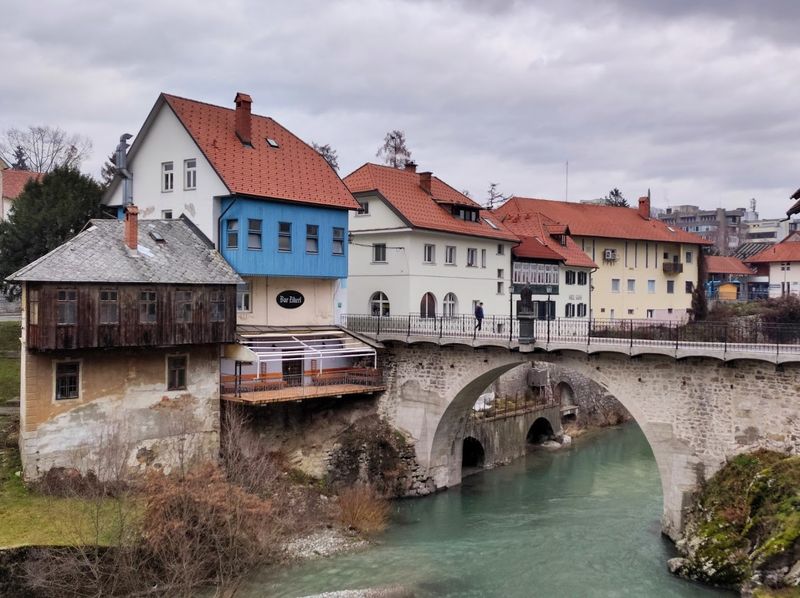
Walking into Škofja Loka’s old town feels like stumbling onto a film set—except everything here is genuinely centuries old. The town received its market rights in 973 AD, making it one of the oldest settlements in Slovenia, and the historic core has been remarkably well preserved ever since.
Colorful facades line the main square in shades of ochre, terracotta, and pale yellow.
The hilltop castle looms over everything, and it’s worth the short climb for the views alone. Inside, a regional museum covers local history, art, and folklore in an engaging way that doesn’t feel like homework.
The castle courtyard occasionally hosts concerts and cultural events during summer months.
Cobblestone lanes wind between old merchant houses, and the Selška Sora River adds a picturesque border to the town’s edge. Despite being only 26 kilometers from Ljubljana, Škofja Loka sees surprisingly light tourist traffic.
That’s actually part of its charm—you can wander the streets at your own pace without being jostled by tour groups. Local bakeries here make a walnut pastry called “Loka cake” that’s absolutely worth tracking down.
Logar Valley (Logarska Dolina)
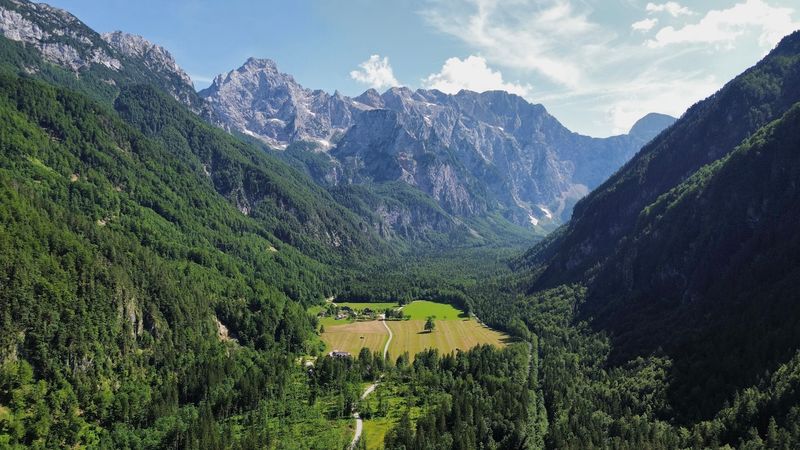
Tucked into the northern corner of Slovenia near the Austrian border, Logar Valley is the kind of place that makes you question why you ever bothered going anywhere else. The valley stretches about 7.5 kilometers, hemmed in by the Kamnik-Savinja Alps on all sides, creating a natural amphitheater of staggering beauty.
Waterfalls drop from sheer rock faces, and meadows stay impossibly green well into autumn.
The Rinka Waterfall at the valley’s head is the star attraction—a 90-meter cascade that thunders down in spring and flows gracefully through summer. A short, easy trail leads right to its base, making it accessible for most visitors.
The surrounding landscape is protected as a regional park, which keeps development minimal and the atmosphere peaceful.
Traditional farmhouses called “planšarije” dot the valley floor, some of which offer accommodation and homemade food. Staying overnight here means waking up to mountain silence broken only by birdsong—an experience that feels increasingly rare.
Cyclists love the valley road, and in winter, cross-country skiing trails open up across the meadows. Logar Valley rewards slow travel above all else.
Piran
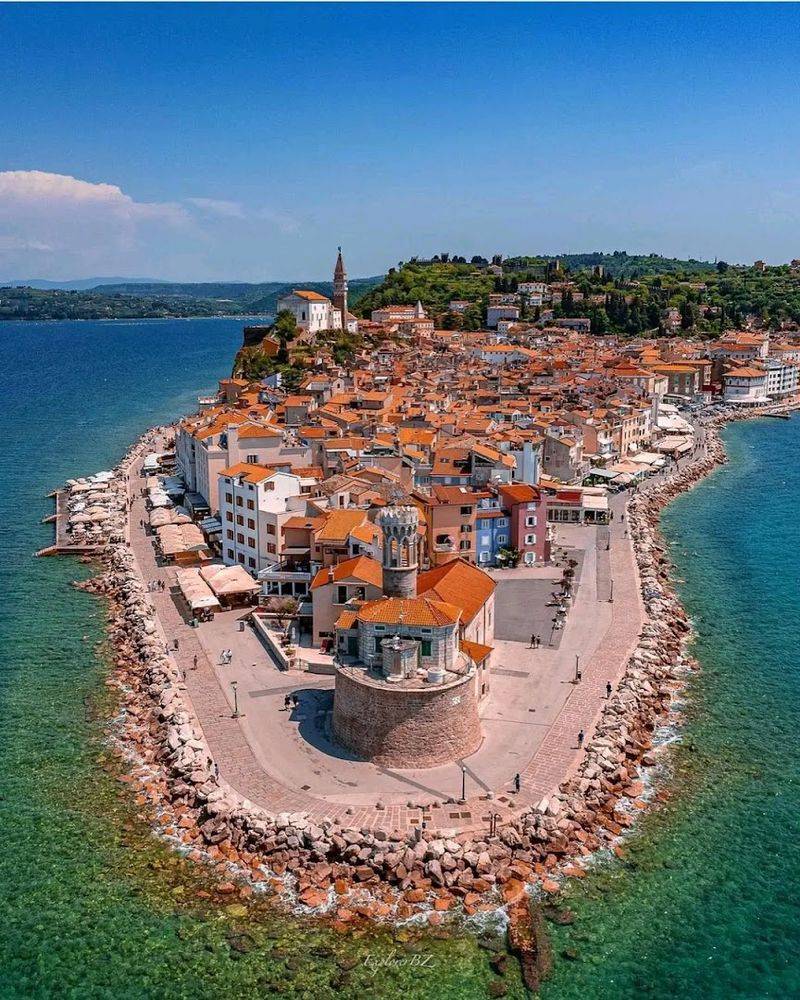
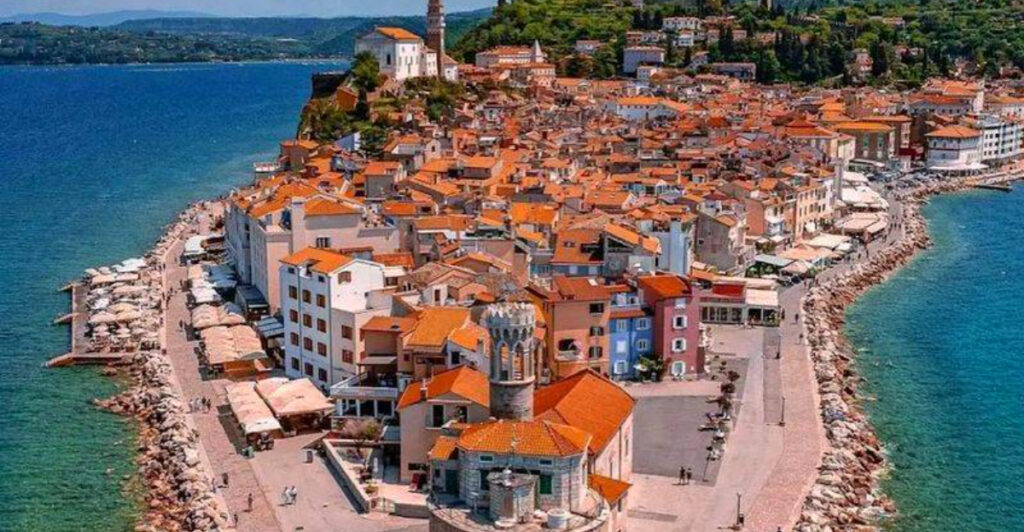
Squeeze into Piran’s narrow lanes on a quiet morning and you could easily convince yourself you’re somewhere in Venice—minus the gondolas and the queues. The town sits on a narrow peninsula jutting into the Adriatic, and its Venetian Gothic architecture is the real thing, built during the centuries when this coastline fell under the Republic of Venice.
The main square, Tartinijev trg, is named after the famous violinist Giuseppe Tartini, who was born here in 1692.
The seafront is lined with restaurants serving fresh Adriatic fish, and the local salt—harvested from the nearby Sečovlje salt pans—is considered among the finest in Europe. Foodies make pilgrimages here specifically for that salt, which has a protected designation of origin.
It’s delicate, flaky, and tastes nothing like the table salt you’re used to.
Unlike Dubrovnik or Venice, Piran hasn’t been overwhelmed by mass tourism—yet. The town limits car access, so the atmosphere stays calm and walkable.
Climb to the Church of St. George for panoramic views over the terracotta rooftops and the glittering sea below. Sunset from that hilltop is genuinely one of Slovenia’s finest moments.
Idrija
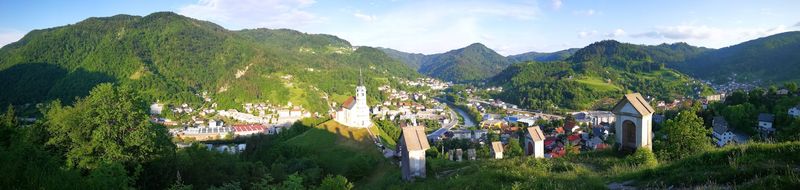
For 500 years, Idrija was home to one of the world’s largest mercury mines—a fact that shaped everything from its architecture to its cuisine. The mine is now a UNESCO World Heritage Site, and guided tours take visitors deep underground through illuminated tunnels that still carry a faint metallic chill.
It’s genuinely atmospheric, not the sanitized museum experience you might expect.
The town developed a remarkable tradition alongside its mining history: lace-making. Idrija bobbin lace is so intricate and technically demanding that it’s recognized on UNESCO’s Intangible Cultural Heritage list.
Local women still practice the craft, and the lace school has been running continuously since the 18th century. The lace museum is one of the best small museums in the country.
Idrija’s food scene has its own personality, too. “Žlikrofi”—small, stuffed pasta parcels filled with potato, onion, and herbs—originated here and hold protected geographical status in the EU. You’ll find them on almost every menu in town, served simply with butter and breadcrumbs.
The surrounding countryside is laced with forest trails perfect for half-day hikes. Idrija rewards curious travelers who like their history layered and their pasta handmade.
Goriška Brda
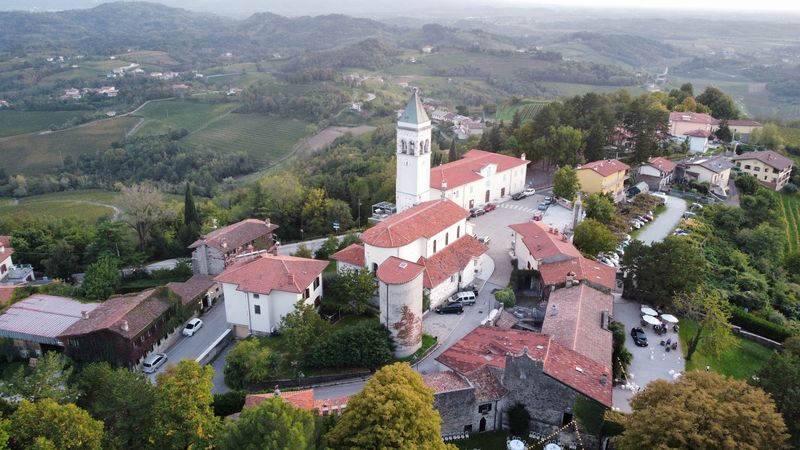
Every spring, the hills of Goriška Brda turn pink and white with cherry blossoms, transforming the landscape into something that belongs on a postcard rack. The region sits on the western edge of Slovenia, sharing a border with Italy’s Friuli wine country, and the terrain is virtually identical on both sides—rolling hills, red soil, and endless rows of vines.
The wine, however, is distinctly Slovenian.
Rebula is the local grape variety to know. It produces a golden, mineral-driven white wine that pairs beautifully with the region’s olive oils and aged cheeses.
Small family wineries outnumber large commercial operations here, and many welcome visitors for tastings without requiring reservations. That kind of relaxed hospitality is rare in famous wine regions.
The hilltop village of Šmartno is the area’s most photogenic spot, with medieval walls, a church tower, and sweeping views over the vineyards. Stone farmhouses have been converted into charming guesthouses where you can wake up to vineyard views and a breakfast featuring local prosciutto and honey.
International tourists have barely discovered this corner of Slovenia, which means prices stay reasonable and the experience stays genuine. Go before the secret gets out.
Bohinj (Beyond the Main Lake)
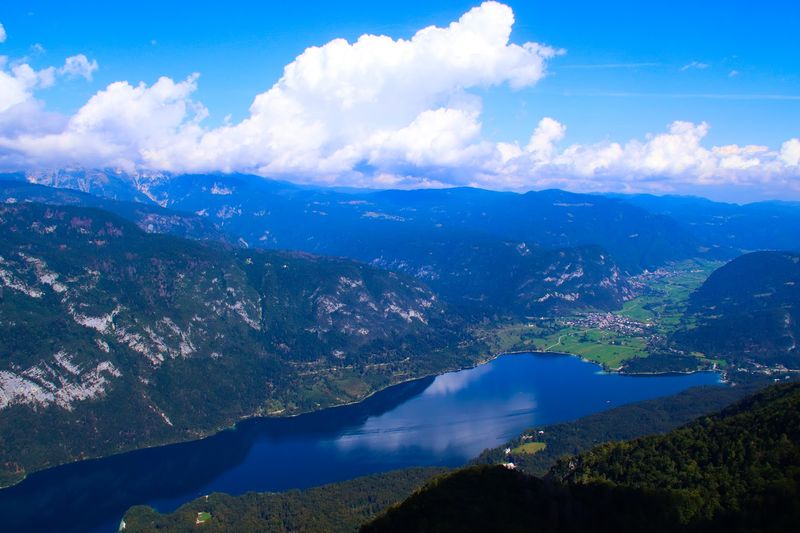
Most visitors to Bohinj snap their photos at the lake’s edge and head back to Bled—which means the surrounding villages remain wonderfully, stubbornly quiet. The Bohinj Valley is actually a broad, forested basin dotted with small settlements like Stara Fužina, Studor, and Srednja vas, each with its own character and unhurried pace.
These communities feel like they belong to a different, slower century.
Studor is famous for its double-rack haystacks, called “toplarji,” which are protected as cultural monuments. They look like rustic wooden sculptures scattered across the meadows, and locals still use them during the hay harvest each summer.
Watching that process—if your timing is right—is one of those rare travel moments that feels completely unplanned and completely perfect.
The valley’s hiking options extend far beyond the lake trail. Paths climb toward alpine huts, hidden waterfalls, and high ridges with views that stretch into Austria and Italy on clear days.
The Savica Waterfall, about a 20-minute walk from the lake’s western end, is spectacular and often less crowded than you’d expect. Staying in a village guesthouse rather than a lakeside hotel transforms the whole Bohinj experience into something genuinely memorable.
Ptuj
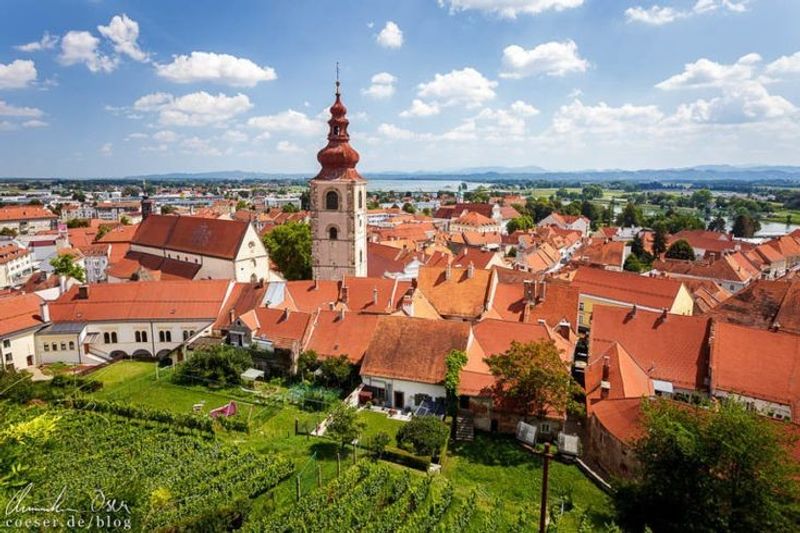
Slovenia’s oldest town doesn’t shout about its age—it just quietly gets on with being 2,000 years old. Ptuj sits above the Drava River on a gentle hill topped by a castle that has been watching over the town since the Middle Ages.
Roman legions camped here, medieval merchants built fortunes here, and the town’s layered history is visible in nearly every street and building.
The Ptuj Castle is now a museum with one of the richest collections of musical instruments, armor, and local artifacts in Slovenia. The views from its ramparts over the river and surrounding wine country are genuinely impressive.
Below, the old town’s compact streets are lined with Roman tombstones repurposed as building materials—an only-in-Ptuj detail that sums up the place perfectly.
February brings Kurentovanje, one of Europe’s most distinctive carnival festivals, centered on the Kurent—a shaggy, bell-wearing figure meant to chase away winter. It’s loud, colorful, and deeply rooted in pre-Christian Slavic tradition.
The festival draws visitors from across the continent, but Ptuj still manages to feel local rather than touristy. Wine lovers should note that the surrounding Haloze region produces excellent whites worth seeking out at local taverns.
Rakov Škocjan
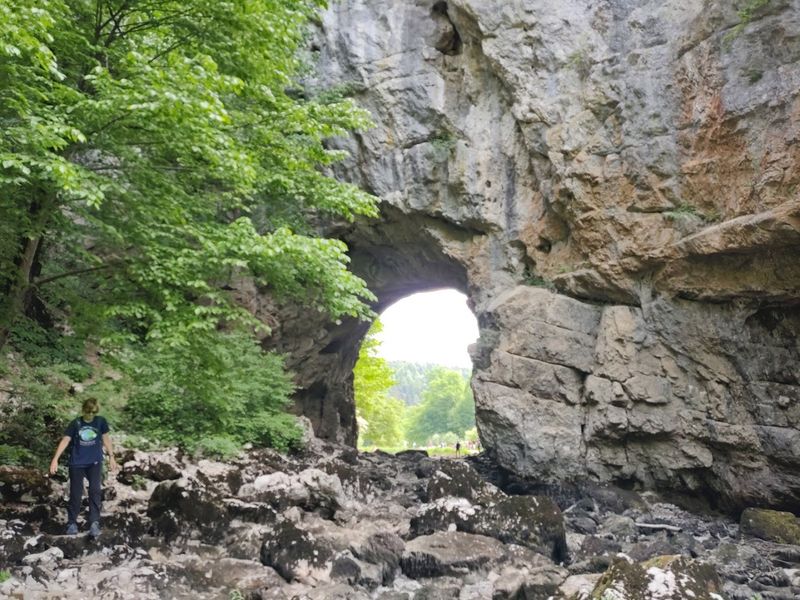
Rakov Škocjan is the kind of place that makes geologists visibly excited and everyone else quietly amazed. The small natural park near Cerknica features two massive natural stone bridges—the Great Natural Bridge and the Small Natural Bridge—carved by the Rak River over thousands of years of karst erosion.
These aren’t modest formations; the larger bridge spans nearly 30 meters and soars high above the riverbed.
The Rak River itself behaves oddly, as karst rivers do—it disappears underground, reappears, and feeds into the famous Cerknica Lake nearby, which is itself one of Europe’s largest intermittent lakes. During wet seasons, the lake fills dramatically; in dry months, it shrinks to reveal a meadow.
The whole system is an underground hydrological puzzle that scientists are still mapping.
Walking through Rakov Škocjan takes only a couple of hours, making it an ideal half-day excursion. The trail is easy and well-marked, passing through beech forest, alongside the river, and under the natural bridges.
Almost no one is here. Unlike Škocjan Caves—its famous namesake further south—this park charges no entry fee and sees a fraction of the visitor numbers.
Pack a picnic and take your time; rushing would be a genuine shame.
Kostanjevica na Krki
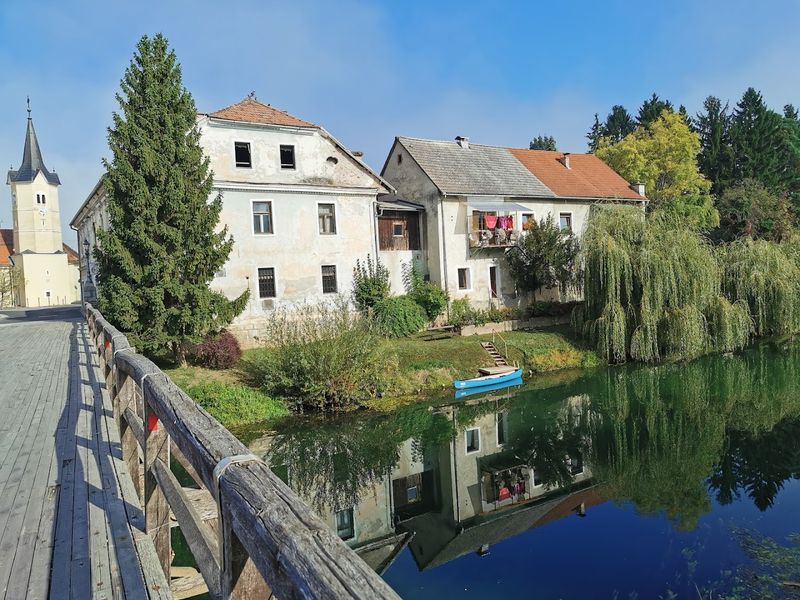
Imagine an entire town fitting on a river island so small you can walk its full perimeter in under ten minutes—that’s Kostanjevica na Krki, Slovenia’s tiniest town and arguably its most charming. The Krka River wraps around the old settlement like a moat, and two bridges connect the island to the surrounding countryside.
The effect is quietly magical, especially at dusk when the water turns golden.
The town’s former Cistercian monastery, founded in the 13th century, now houses the Božidar Jakac Art Gallery—one of Slovenia’s most significant collections of modern and contemporary art, displayed in a beautifully restored baroque complex. It’s a genuinely surprising find in such a small place, and the monastery’s courtyard alone is worth the visit.
Art lovers who stumble upon it tend to linger far longer than planned.
Kostanjevica Cave, just outside town, offers a short underground tour through stalactite chambers that most Slovenian cave visitors never hear about. The surrounding Krka Valley is excellent cycling country, with flat riverside paths connecting several villages.
Local restaurants serve freshwater fish caught directly from the Krka—the pike and trout dishes are simple, fresh, and exactly right. This is the Slovenia that tourism brochures haven’t quite caught up to yet.
Solčava
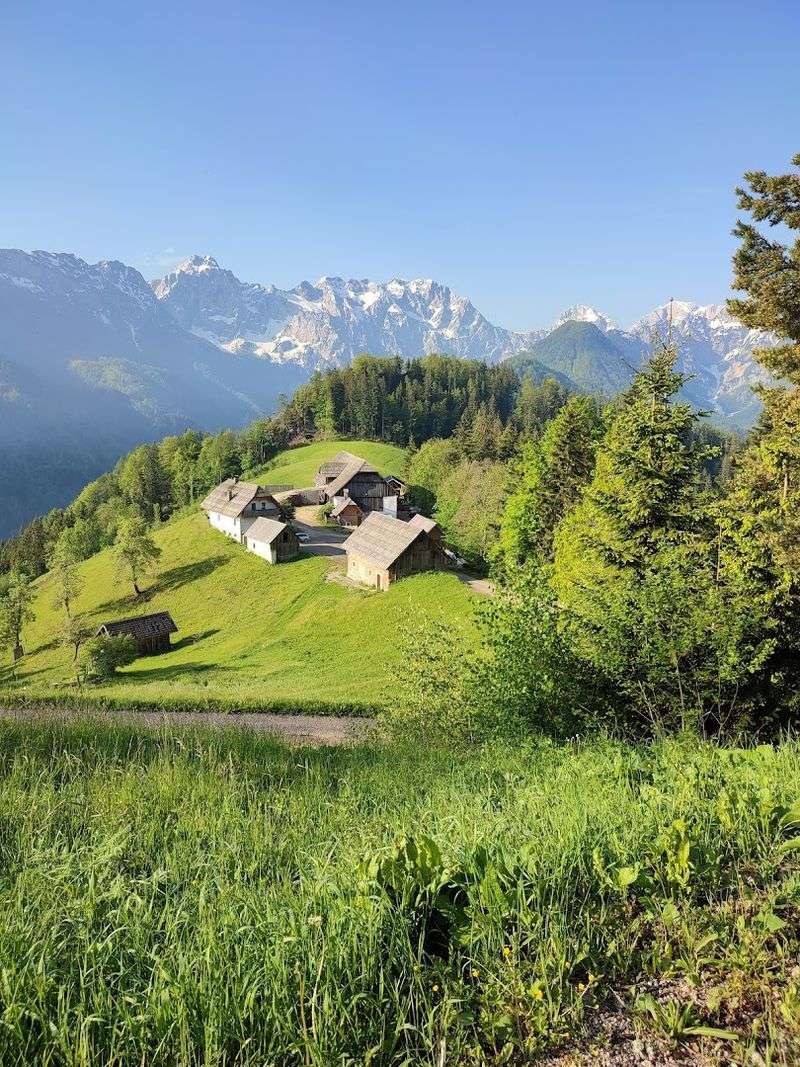
Finding Solčava requires commitment—it sits at the end of a winding mountain road in the upper Savinja Valley, and that remoteness is precisely the point. The village has fewer than 500 residents, surrounded by some of the most dramatic alpine terrain in Slovenia.
Limestone peaks, dense spruce forests, and roaring mountain streams define the landscape in every direction.
The Solčava Panoramic Road loops through the area, passing traditional farms, viewpoints, and small chapels perched on hillsides. Many of the farms along this route operate as “tourist farms,” offering accommodation and meals made almost entirely from what they produce themselves.
Breakfasts featuring homemade bread, local honey, cured meats, and farm eggs set the tone for the whole stay.
The nearby Logarska Dolina valley (listed separately here) is the main draw for hikers, but Solčava itself serves as the perfect base for exploring the broader region. In winter, the area transforms into a quiet cross-country skiing destination with almost no lift queues or après-ski crowds.
Bear and lynx populations live in these forests—you’re unlikely to see them, but knowing they’re there adds a certain wild edge to every walk. Solčava is Slovenia at its most unfiltered.
Snežnik Castle
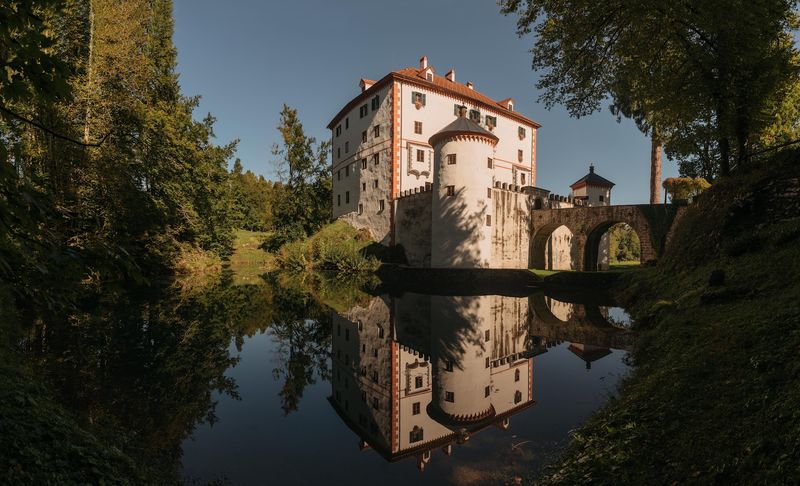
Standing alone in a forest clearing with no village, no gift shop strip, and no tour bus parking lot in sight, Snežnik Castle delivers a fairytale atmosphere that feels almost absurdly cinematic. The white Renaissance castle, complete with round towers and a surrounding moat, was used as a hunting retreat by the Habsburg aristocracy in the 19th century—and its interiors have barely changed since then.
Original furniture, hunting trophies, and period decorations fill the rooms in a way that feels lived-in rather than staged.
Getting here is half the experience. The castle sits within a large forest reserve near Loška Dolina, accessible only by a single road through dense woodland.
Lynx, deer, and wild boar roam the surrounding forest, which is one of the largest continuous woodland areas in Slovenia. The silence around the castle is deep and genuine.
Guided tours run from spring through autumn and last about an hour, covering the castle’s history and its eccentric Habsburg owners. The surrounding forest trails are open year-round and offer easy walking through old-growth woodland.
Very few international tourists know this place exists, which means you might have the entire castle grounds to yourself on a quiet weekday. That kind of solitude is increasingly hard to find in Europe.
Bela Krajina
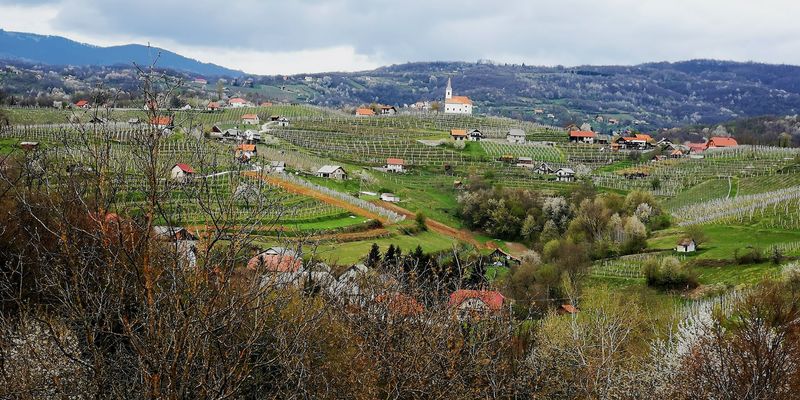
Named for the white birch forests that give the region its name—”Bela” means white—Bela Krajina occupies Slovenia’s southeastern corner along the Croatian border and operates on its own unhurried frequency. The landscape is gentler here than in the alpine north: rolling hills, river meadows, orchards, and vineyards replace dramatic peaks.
The Kolpa River forms the border with Croatia and doubles as one of the warmest, cleanest rivers in the country for summer swimming.
The region has a strong folk tradition that sets it apart from the rest of Slovenia. The “Jurjevanje” festival in Bela Krajina celebrates the arrival of spring with ancient Slavic rituals involving green-clad figures, songs, and ceremonial processions through the villages.
It’s one of the most authentic folk events in the country and draws curious visitors from across Slovenia each May.
Local wine production centers on the Metlika and Črnomelj areas, with indigenous grape varieties producing wines you simply won’t find anywhere else. The town of Metlika has a compact old quarter and a wine festival each spring that locals treat as a serious annual event.
Cycling routes connect the main villages through countryside that sees almost no tourist traffic. Bela Krajina is the Slovenia that hasn’t been packaged yet—and that’s its greatest asset.
Share this story