 Unearth The Voyage
Hungry for proof that tradition still rises to the occasion in a world of shortcuts and trends I got you. Across the country, a handful of family-owned bakeries are quietly running circles around time with recipes that outlast gadgets and buzzwords.
You will meet places where original ovens still fire, hand-rolled dough sets the pace, and the regulars know exactly when the first tray hits the counter. Keep reading and you will walk away with specific orders to try, a sense of each shop’s rhythm, and a shortlist for your next pastry-laced road trip.
1. Trefzger’s Bakery – Peoria Heights, IL (Since 1861)
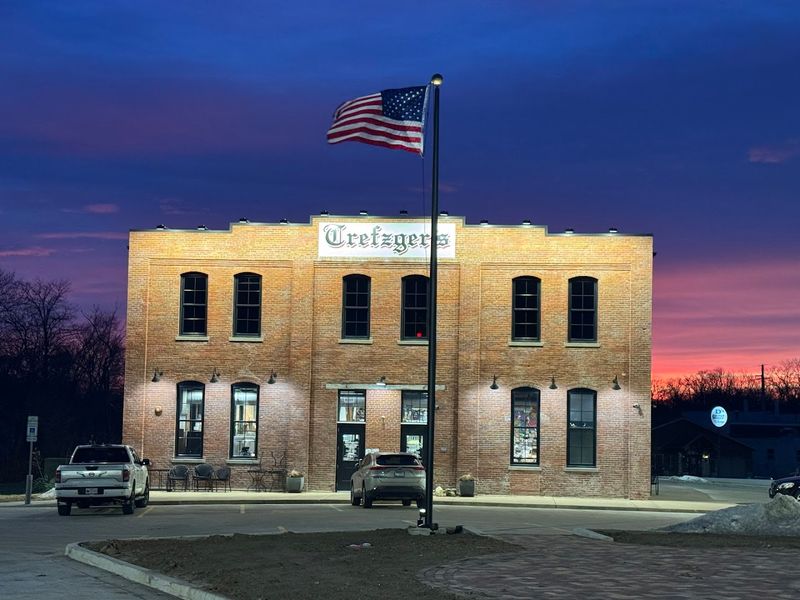
Age is not the headline here, consistency is. Founded by Simon Trefzger, this bakery bridges Civil War-era formulas to a modern production floor that still favors slow fermentation and precise scaling.
Artisan loaves share space with German staples like kuchen and pretzels, all labeled with bake times and ingredient notes you can actually use. The staff rattles off hydration percentages and starter schedules the way others recite sports stats.
Cakes run from buttercream classics to wedding towers finished with tight piping instead of trendy overload. A separate room handles custom orders, where decorators map tiers on graph paper, then cross-check dowel placements.
Grab a slice of streusel-topped coffee cake and watch the bread racks rotate through cooling intervals. The routine feels programmed without being stiff, right down to the morning crew’s bench-scraper choreography.
Regulars recommend the rye and a box of assorted cookies for road trips. Labels list allergens clearly, and the counter team offers straight talk on what travels well across the Midwest’s seasons.s.
2. Julius Sturgis Pretzel Bakery – Lititz, PA (Since 1861)
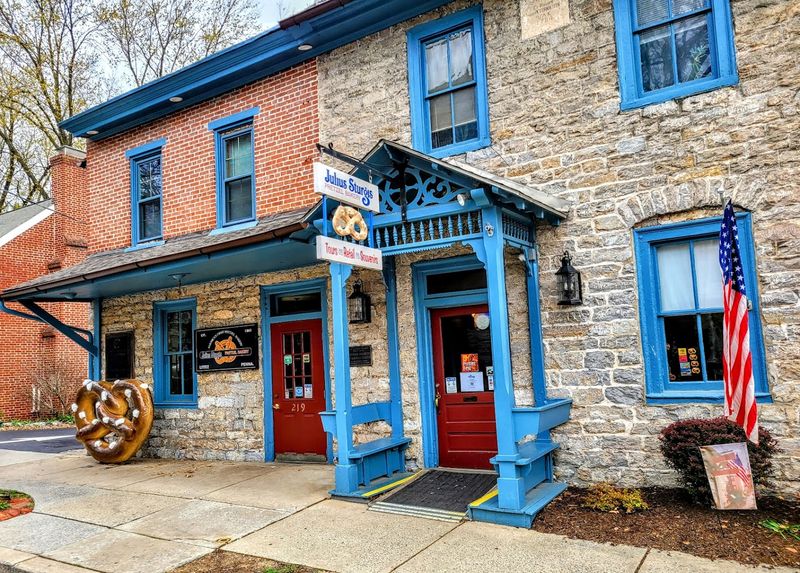
Tour first, snack second makes perfect sense at the nation’s first commercial pretzel bakery. The 1784 building hosts hands-on lessons where you learn the classic twist, a move that clicks fast with a short checklist of steps.
Exhibits explain lye dipping, drying, and controlled baking that creates the signature snap without guesswork. Guides trace the Sturgis line through successive generations, then point to tools that outlived multiple owners.
Hard pretzels dominate, packed in tins with airtight seals and clear best-by dates. There is also a softer option nearby in the family network, but the flagship leans crisp by design.
Merch shelves carry measuring boards that teach uniform rope length and thickness, which helps avoid gaps in the twist. Kids leave comparing knot tightness like it is a sport.
For souvenirs, pick up a factory tour ticket stub and a tin that actually fits in carry-ons. The team encourages questions about alkalinity, bake temperatures, and the difference between modern static ovens and earlier iron setups.
3. Holtermann’s Bakery – Staten Island, NY (Since 1878)
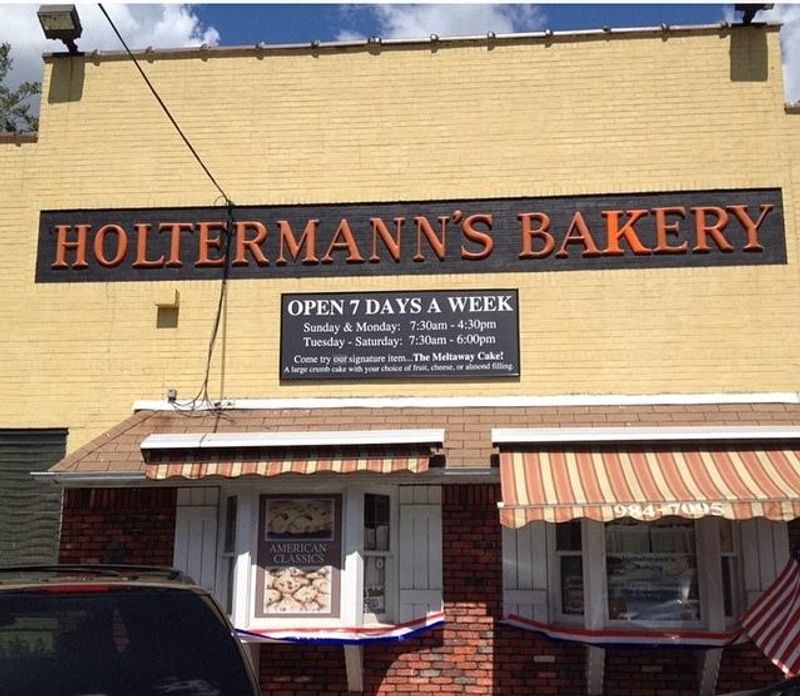
Local status here is not honorary, it is earned daily with racks of rye and old-world cookies. Holtermann’s holds the title of Staten Island’s oldest family business, and the operations run with steady, lived-in confidence.
The German rye carries a tight crumb and uniform scoring, a nod to immigrant roots and calibrated proofing boxes. Butter cookies stack in metal trays with handwritten name cards that regulars no longer need to read.
Cakes favor clean layers and balanced frosting, with black forest circulating on weekends by tradition. A laminated menu board lists recurring specials, though staff will quietly mention an extra tray if you ask.
Line flow starts left, order mid, pay right, and it works even on holiday mornings. The team keeps boxes, twine, and parchment squares stocked like clockwork, so assembly never slows the counter.
You will see multigenerational orders where grandparents lead and kids point at sprinkle-heavy picks. Prices are straightforward, and bulk cookie boxes are common for school events and office coffee breaks.
4. Roeser’s Bakery – Chicago, IL (Since 1911)
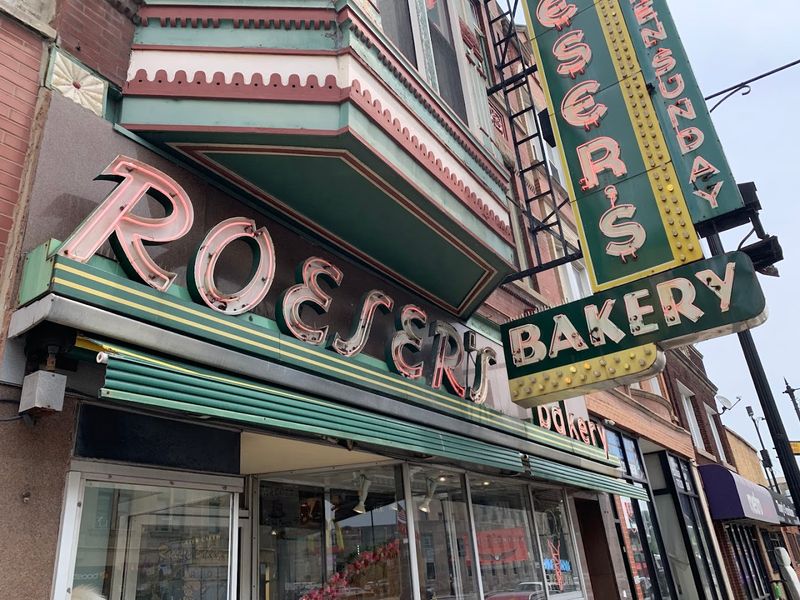
In a city of deep traditions, paczki season here looks like a logistics drill. Roeser’s has stood in the same spot since 1911, weaving Ukrainian and Scandinavian influences into a catalog that regulars know by heart.
Paczki come in classic flavors with real fillings, not airy shortcuts, and the boxes leave stacked like bricks. Eastern European pastries share space with American standards, and custom cakes still get buttercream that holds a clean edge.
Decorators work fast with turntables, offset spatulas, and measured piping that reads legible on camera. A chart by the workstation maps lead times and pick-up windows through holidays to prevent last-minute chaos.
The front counter runs two lines when it gets busy, one for paczki and one for everything else. You will hear precise questions about fillings and cut-off times, followed by quick yes or no answers.
Prices make sense for a fourth-generation shop that trains in-house and keeps recipes close. Ask about the original mixers and you will get a nod toward a back room that hums without theatrics.
5. Dutch Maid Bakery – Tracy City, TN (Since 1902)
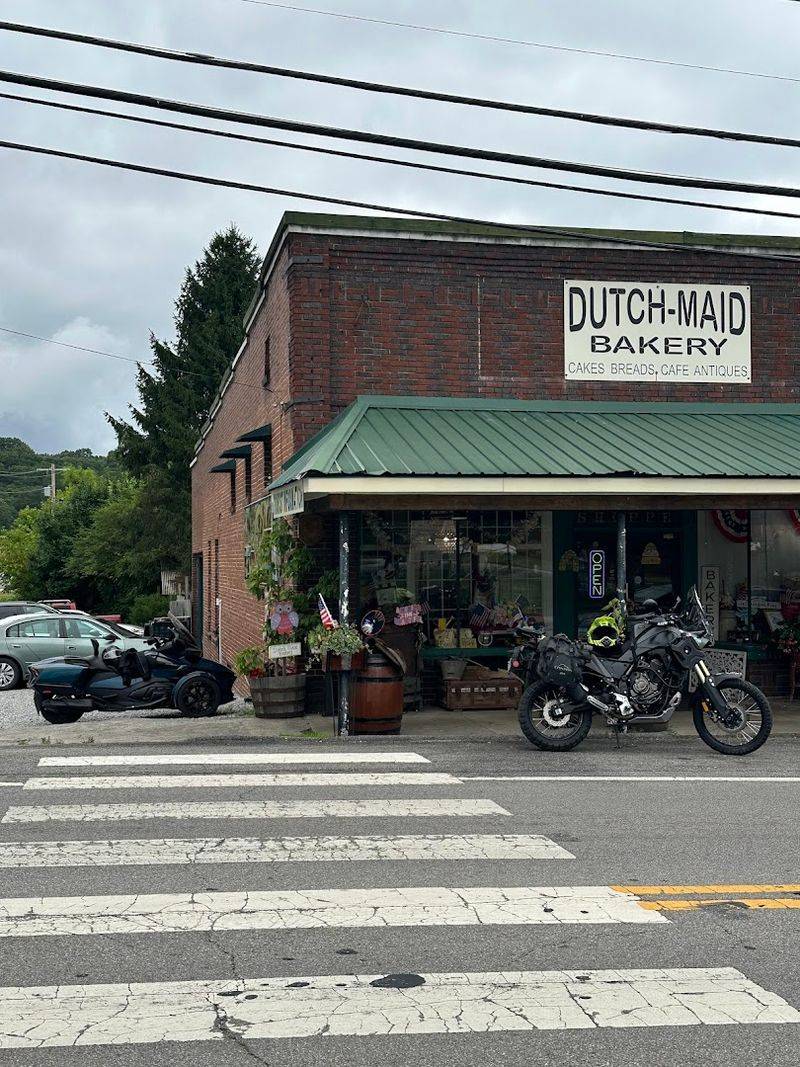
Tennessee’s oldest family-operated bakery proves utility never goes out of style. Dutch Maid keeps Swiss immigrant recipes in rotation, with salt-rising bread as the calling card and a roster of pies that disappear early.
The bread program lists times for preferments and controlled warmth that creates distinctive lift. Loaves cool on racks behind glass, then move quickly to slicing and bagging without flashy packaging.
Customers order whole pies for church suppers and grab single slices for highway breaks. The counter runs on first-come timing, and the staff calls out remaining counts when trays dip low.
Cookies and bars carry straightforward names and predictable sizes, which makes ordering painless. A chalkboard shares weekly specials and notes when a batch rests, so nobody guesses about availability.
Ask about the original owners and someone will point to a wall of sepia photos and recipe cards. The throughline is simple: fewer ingredients, longer rests, and no shortcuts that undermine structure.
6. Winkler Bakery – Winston-Salem, NC (Since 1807)
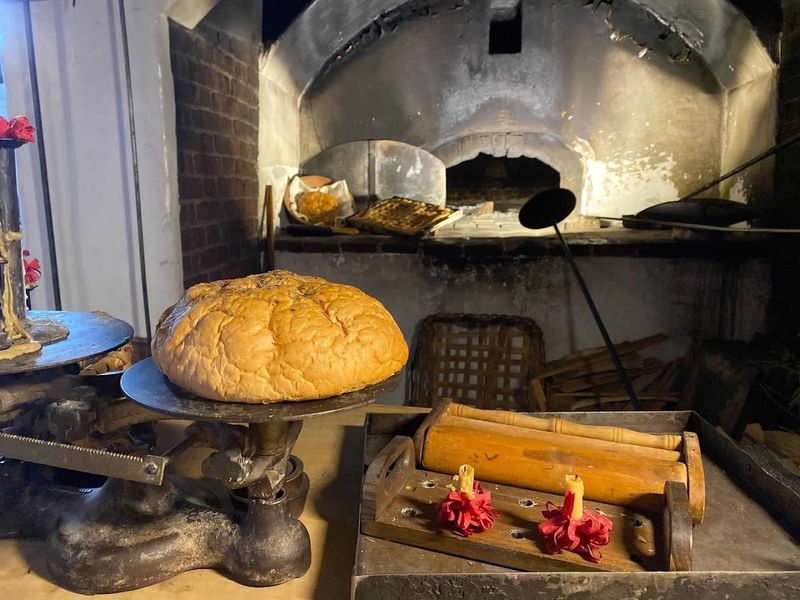
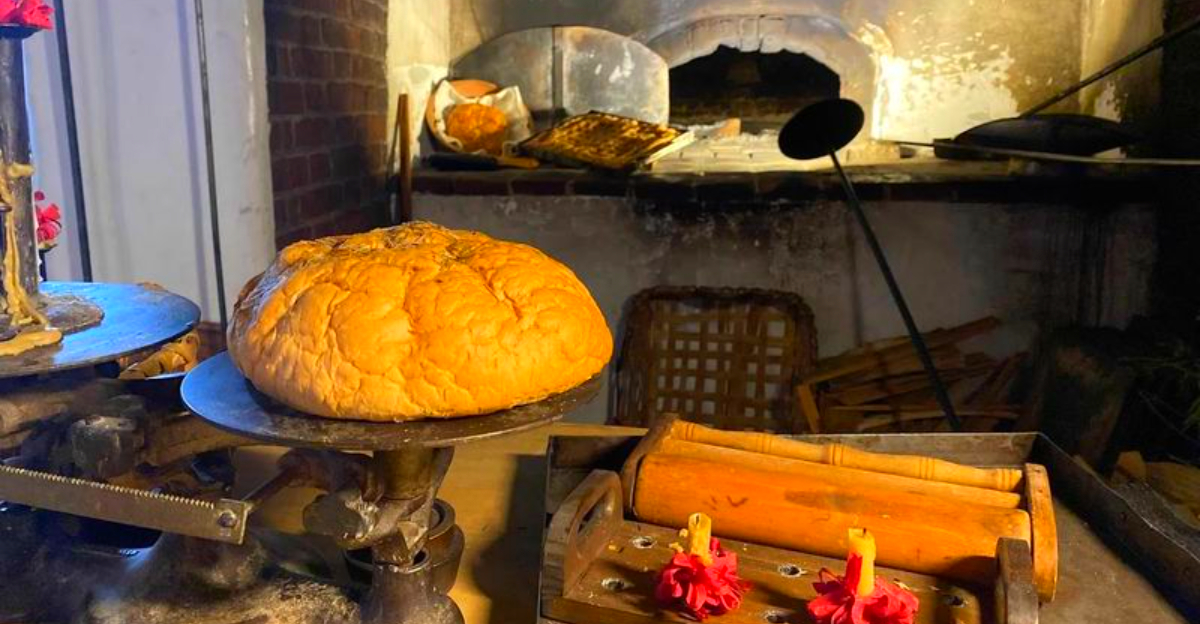
Two centuries in, the original wood-fired brick oven still sets the schedule here. The bakery traces to Christian Winkler and a Moravian community that organized workdays, recipes, and record keeping with near ledgers’ precision.
Visitors line up for crisp Moravian cookies rolled whisper-thin and stamped uniformly, plus gingerbread and sugar cake scored in squares. Demonstrations run on a predictable cadence, so you can watch dough mixing by hand, loading peels, and timed rotations without modern conveyors.
The layout feels like a working museum with retail cases, a demonstration hearth, and shelves of tins for travel. Staff share details on ash management, preferred wood lengths, and how the radiant heat shapes the cookie’s flat profile.
Orders lean toward sampler tins, boxes of sugar cake, and seasonal twists that still honor the base formulas. Gift packaging stays minimal and old-school, leaning on labels that explain origin and storage rather than flashy graphics.
7. Magnolia Bakeshop – Magnolia, AR (Since 1928)
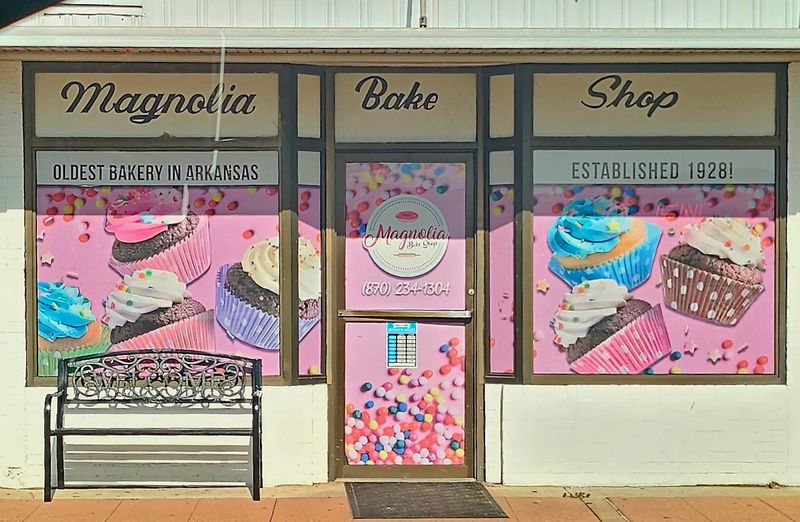
The pecan pie here does not need a marketing team, it has a calendar. Magnolia Bakeshop runs on scratch methods passed through the Stroope family, and the schedule favors pies, gingerbread, and classic cakes.
Cases show even slices and tidy lattices, with labels that call out nuts, dairy, and storage tips. Occasion cakes stick to buttercreams that travel well, and designs look sharp without tipping into novelty overload.
Gingerbread squares come in steady sizes with edges trimmed to keep boxes neat. A simple ordering desk handles custom requests, using order forms that prioritize serving counts and delivery windows.
Locals pop in for a single bar or a family pie, then pass on the advice to order earlier next time. You will quickly learn that the pies sell in waves triggered by holidays and school events.
Prices lean fair, and packaging relies on sturdy white boxes tied with string. Staff keep a friendly but efficient tempo, moving between racks and a small finishing table.
8. Ferrara Bakery – New York, NY (Since 1892)
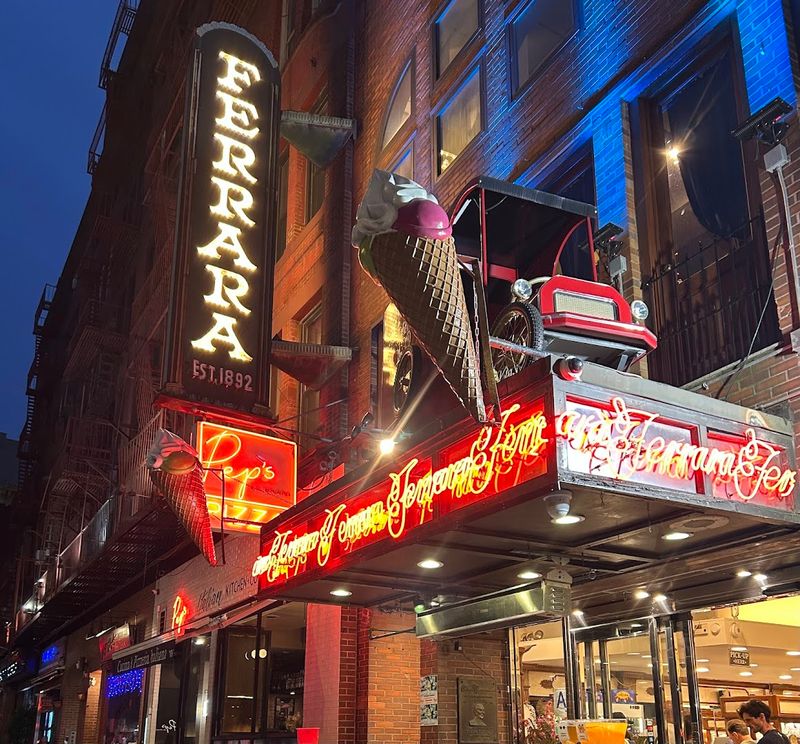
Lines move with purpose at this Little Italy stalwart. Ferrara balances tourist curiosity with local routine, channeling 130-year-old recipes into a pastry lineup that clicks like a metronome.
Cannoli get filled to order for structure, using shells that maintain crunch and ricotta whipped for body. Lobster tails stand tall with visible layers that speak to practiced lamination and measured bakes.
The espresso bar keeps the pace steady, while the pastry cases run double-depth to keep options visible. Staff know their inventory down to the tray and redirect you fast when a flavor rotates out.
Seating is compact, so quick orders win. A printed menu lists classic Italian cookies by weight, and boxes are built to hold shape on subway rides.
Holiday seasons bring pre-order forms for panettone and elaborate cakes that slide onto pickup shelves in timed blocks. The family influence shows in the way managers float between stations and jump on bottlenecks.
9. Termini Brothers – Philadelphia, PA (Since 1921)
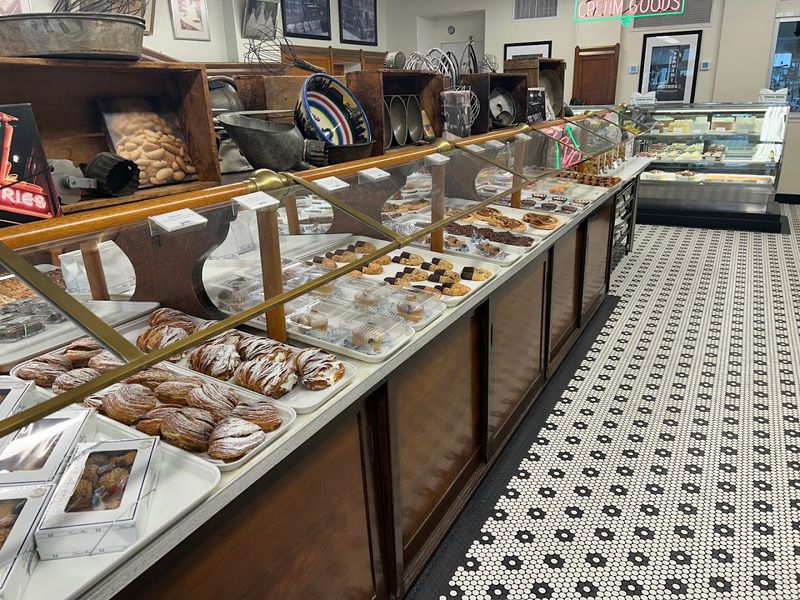
Box string moves fast here, the team ties like pros. Termini Brothers keeps the focus on cream-filled sfogliatelle, biscotti, and classic Italian cakes, all built with old-world ratios.
Sfogliatelle show crisp layers and measured filling, portioned with scoops that ensure uniform weight. Biscotti varieties stack in rows with simple tags and clear nut markers for quick scanning.
Decorating happens within sight, so you can catch finishing touches on cassata or layered sponge cakes. Managers pace the line and redirect questions to the right counter, which trims waiting time neatly.
Holiday boxes line the walls in labeled cubes with color codes. Pickup stations activate on schedule, and the back hallway turns into a choreography of taped floor lines and dolly runs.
Regulars call out exact quantities, not vague orders, because the menu rewards specificity. Staff respond with quick confirmations and honest timelines if something sold through earlier.
10. Schat’s Bakery – Bishop, CA (Since 1938)
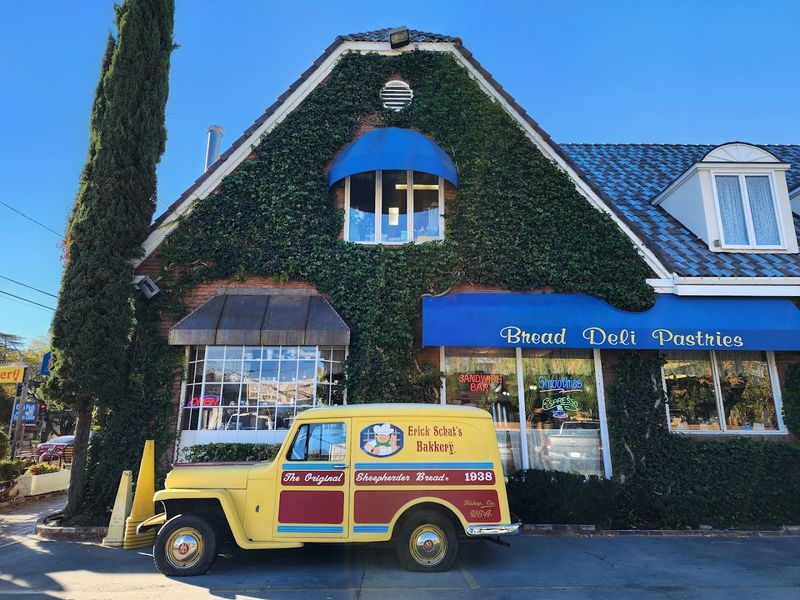
Highway travelers know the drill here. Schat’s turns out hearty loaves and oversized pastries that draw lines even on off-days, with sheepherder bread as the signature.
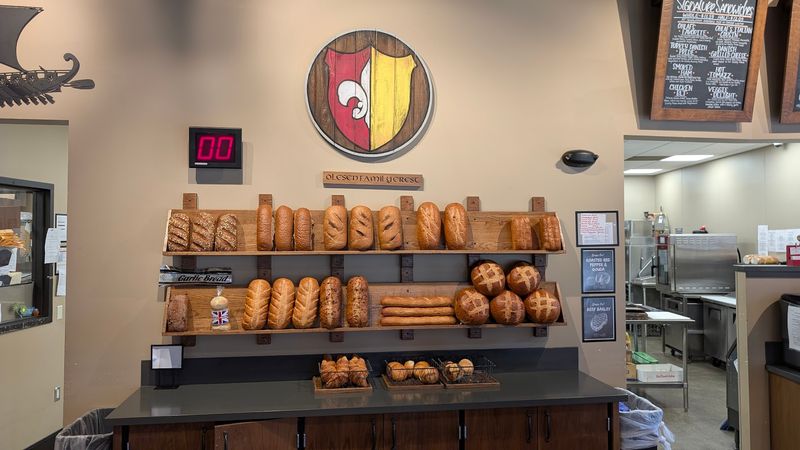
Sourdough sits beside multigrain and specialty rounds, each tagged with bake times and slice options. The counter handles sandwich builds with a separate ticket, so bread buyers are not stuck behind lunch decisions.
Pastries go big on portion, but the production remains disciplined. Bench workers shape at speed, and racks rotate smoothly from bake to cool to pack.
Tourists snap photos of the bread wall and then commit to loaves for the road. Staff suggest slicing on site for convenience, then bagging in sturdy sleeves that resist road-trip chaos.
Pricing feels fair for a destination stop that still bakes like a neighborhood shop. The family presence shows in managers roaming, answering questions, and keeping bottlenecks brief.
11. O&H Danish Bakery – Racine, WI (Since 1949)
Kringles ship coast to coast from this operation, but the heartbeat remains local. O&H has grown carefully while keeping the family name front and center on every box.
Production scales with multiple flavors in rotation, each mixed, laminated, and proofed to a repeatable standard. The packing line runs like a small warehouse, yet the retail counter feels neighborly.
Visitors pick flavors by a mix of tradition and novelty, then grab coffee and watch boxes stack. A chart near the register compares serving sizes and freeze-thaw advice for planners.
Seasonal flavors roll out on a set calendar, and sold-out signs post early and firmly. Staff handle shipping questions quickly, with clear cutoff times and straightforward rates.
In-store, you can add Danish pastries, coffee cakes, and cookies without slowing the line. The labels are legible, ingredients listed cleanly, and pricing is transparent.
12. Boudin Bakery – San Francisco, CA (Since 1849)
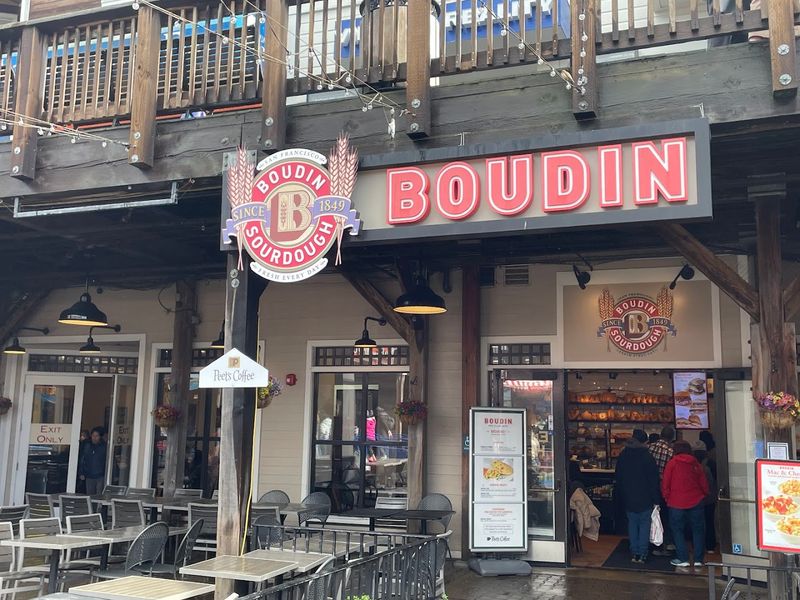
Age plus a guarded mother dough anchors this San Francisco heavyweight. Boudin’s sourdough leans on a culture maintained since 1849, which the team treats like a daily contract.
Production centers on deck ovens and precise scaling that keeps crumb and crust consistent across shapes. Animal loaves draw cameras, but standard boules and batards stay the core order.
Displays explain the mother starter’s maintenance schedule with refresh ratios and temperature notes. Staff answer culture questions with quick, factual replies that satisfy both tourists and home bakers.
Lines can stretch during peak hours, so a separate line handles grab-and-go. Packaging lists storage guidance and reheating instructions that actually preserve texture.
Prices reflect the location, but the bread delivers with reliability. The shop’s timeline posts daily bake batches, and restocks hit on the minute.
13. LeJeune’s Bakery – Jeanerette, LA (Since 1884)
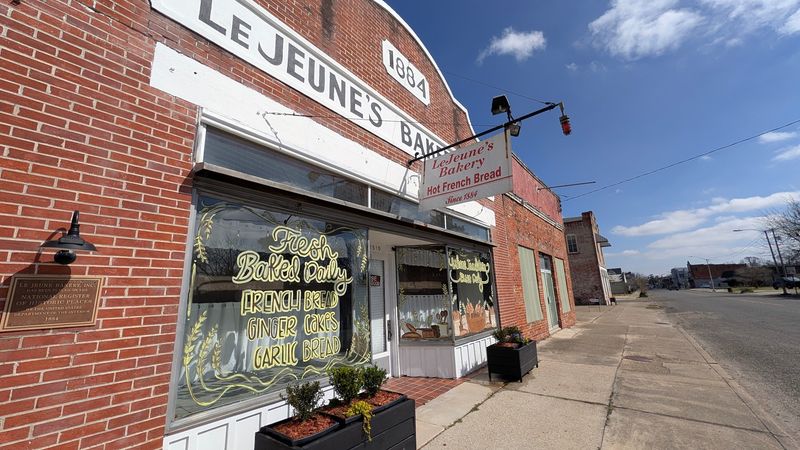
A short menu and a long legacy keep this place focused. LeJeune’s turns out French bread, pistolettes, buns, and a ginger cake that locals schedule into weekly routines.
The National Register listing is not decoration, it records a continuity of practice you can track. Bakers manage proof boxes and bake times with calm repetition that produces even crust and a steady crumb.
French bread leaves in armfuls for family tables and po’boy builds. Ginger cake squares stack in carry-ready boxes, and the counter wraps orders with the speed of a newsroom.
There is no sprawling pastry case, and that restraint makes the output sharper. The staff knows the exact minute a batch turns, and they tell you plainly what is next.
Prices read modest, which suits the straightforward menu. Regulars pay, nod, and exit in a loop that looks choreographed by habit.
14. Lehmann’s Bakery – Peoria, IL (Since 1916)
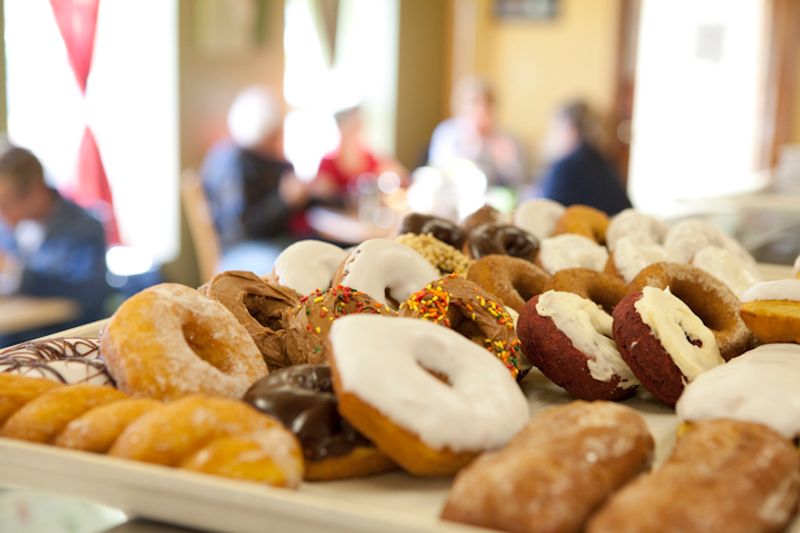
Morning regulars treat this place like a standing appointment. Lehmann’s keeps a neighborhood cadence with donuts, cookies, and yeast-raised loaves that trade flash for reliability.
Donut racks roll from fryer to glaze table on a steady loop, and sizes stay consistent across varieties. Cookies land in neat rows with price cards that make quick math simple.
Bread slices evenly for sandwiches, which explains the parade of brown bags at opening. Staff call customers by name and remember usual orders, making the line feel shorter than it looks.
Decoration is minimal and the focus is on turnover, not display theatrics. A small whiteboard tracks sellouts and estimated restocks, and nobody argues with the clock.
Grab a dozen mixed donuts and a loaf of sandwich bread. Add a few cookies for the desk, since they keep well in tins without losing structure.
The charm is not hushed or curated. It is a family rhythm that favors early starts, accurate scaling, and recipes that handle daily life without drama.



