 Unearth The Voyage
Not every great trip involves a beach resort or a famous city skyline. Some of the best adventures happen at places so weird, so wonderfully odd, that you end up telling the story for years.
The U.S. is packed with bizarre, creative, and totally unexpected spots that turn an ordinary road trip into something unforgettable. Here are 14 quirky places worth adding to your travel bucket list right now.
House on the Rock, Spring Green, Wisconsin
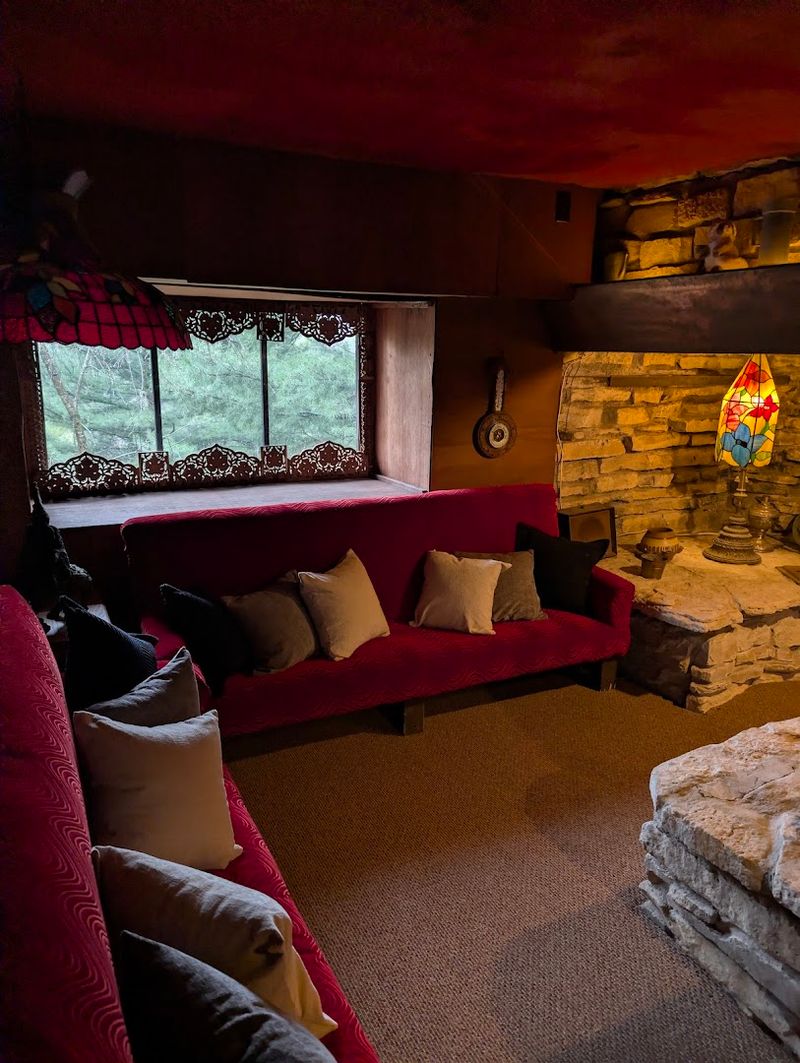
Nobody warned me that visiting the House on the Rock would feel like walking through someone’s fever dream, and honestly, I’m grateful for that surprise. Built by Alex Jordan Jr. starting in the 1940s, this place is less a house and more a labyrinth of bizarre collections.
Think endless rooms stuffed with antique carousels, suits of armor, and mechanical orchestras that play themselves.
The famous Infinity Room stretches 218 feet over a valley below, and yes, your legs will shake a little. The collections inside are so massive and random that you genuinely lose track of time.
Jordan never explained why he collected what he did, which somehow makes it more fascinating.
Plan for at least three hours here. Wear comfortable shoes because the walk is long.
This spot is not just quirky, it is a full commitment to weirdness, and that deserves serious respect.
International Car Forest of the Last Church, Goldfield, Nevada
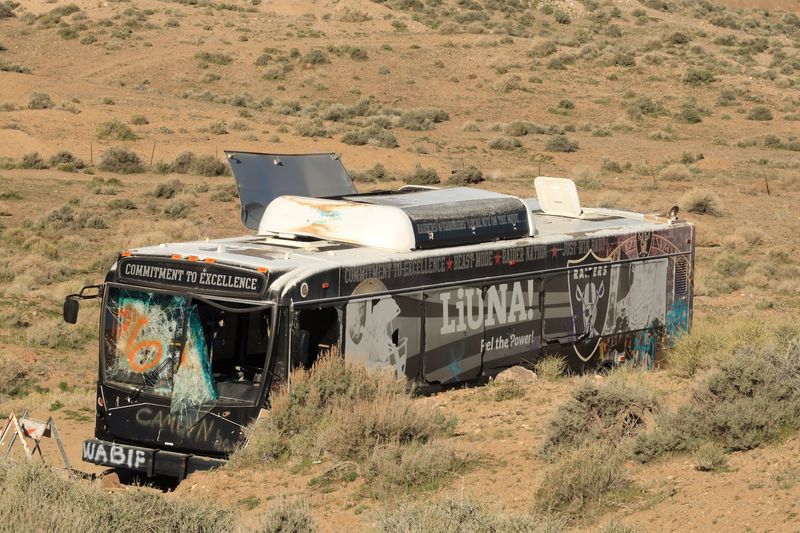
Someone looked at a perfectly good car and thought, what if I buried it hood-first in the desert? That someone was Chad Sorg, and the result is the International Car Forest of the Last Church in Goldfield, Nevada.
It opened in 2011 and features over 40 vehicles planted upright in the dry desert ground like bizarre metal crops.
Each car is covered in layers of spray-painted graffiti, which visitors are actually encouraged to add to. Bringing your own spray paint is practically a rite of passage here.
The whole setup sits against a massive desert sky that makes the scene look almost surreal in photos.
Goldfield itself is a tiny former gold rush town with less than 300 residents, so the car forest is a genuine destination, not a side attraction. Go at golden hour for the best photos.
It is strange, it is free, and it is absolutely worth the detour.
Cathedral Gorge State Park, Panaca, Nevada
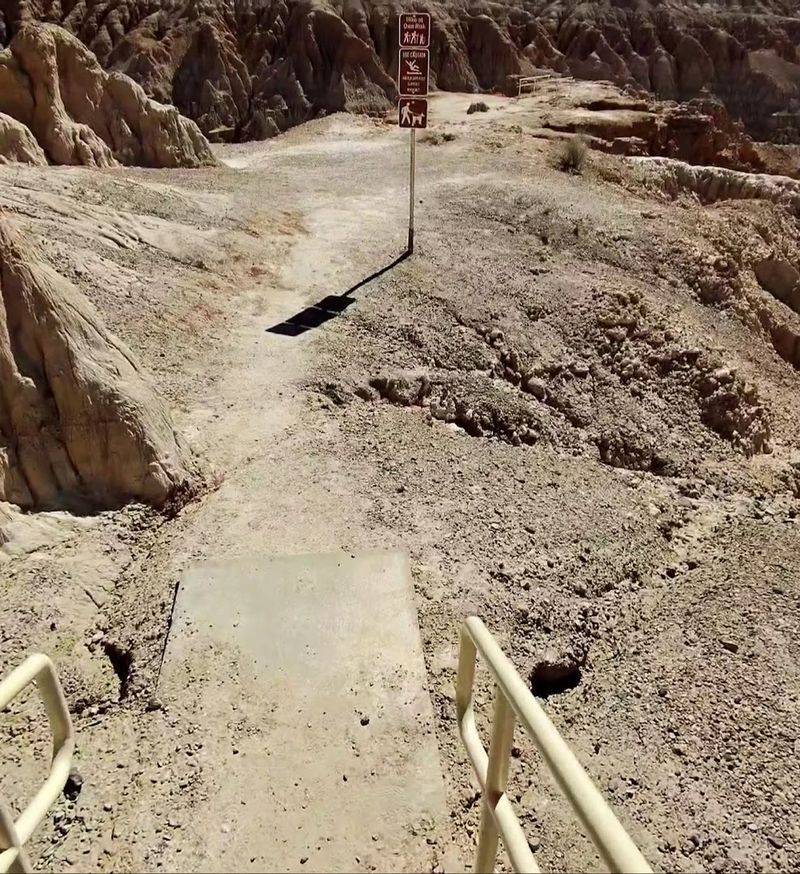
Cathedral Gorge looks like nature decided to build its own city out of clay and forgot to add the rooftops. Located near Panaca, Nevada, this state park features dramatic eroded bentonite clay formations that tower above the valley floor like gothic spires.
It took millions of years of water erosion to carve this place, and the result is jaw-dropping.
Narrow slot canyons wind through the formations, and you can actually squeeze through many of them on foot. Kids especially go wild for the crawling and climbing opportunities.
The park stays relatively uncrowded compared to Nevada’s flashier attractions, which means you can actually enjoy it without fighting for a parking spot.
Camping here is affordable and the night skies are spectacular because of the low light pollution. Bring water, wear sturdy shoes, and go early in the morning when the light hits the clay walls just right.
Nevada has more tricks up its sleeve than just casinos.
Carhenge, Alliance, Nebraska
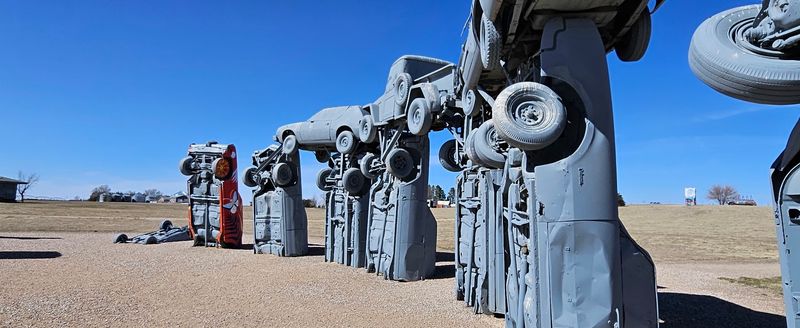
Stonehenge is cool, but have you seen it made entirely out of old American cars? Carhenge in Alliance, Nebraska is a full-scale replica of the famous English monument, built in 1987 by Jim Reinders as a tribute to his late father.
The 38 vehicles are all painted uniform gray to match the stone look, and the alignment actually mirrors the original Stonehenge layout.
Standing inside the car circle feels genuinely eerie in the best possible way. The flat Nebraska landscape stretching out in every direction adds to the strange, almost cinematic atmosphere.
Reinders built it as a family project during a reunion, which is honestly the most wholesome origin story for something this wonderfully absurd.
Admission is free, and the surrounding Car Art Reserve features additional car sculptures worth checking out. It is one of those places that sounds ridiculous until you are standing there, slightly speechless, trying to explain to yourself why it actually works so well.
Coral Castle, Homestead, Florida
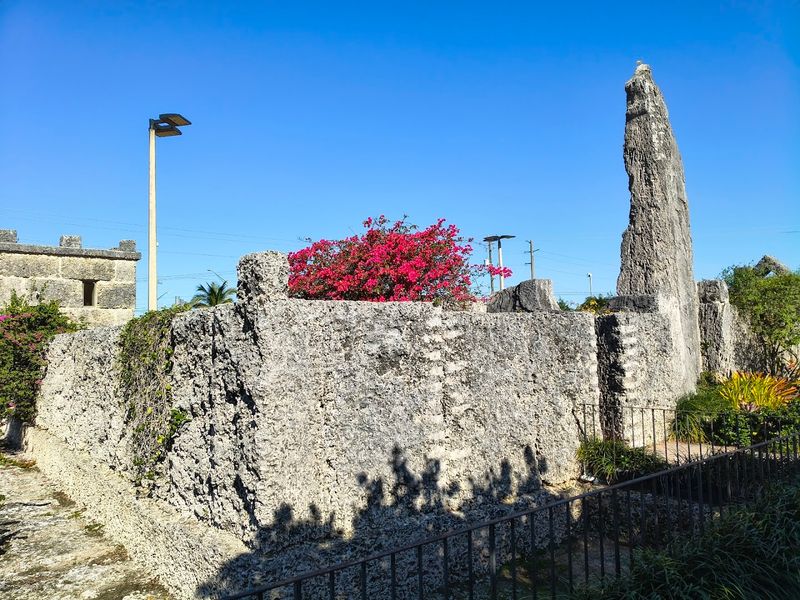
One man, working mostly alone and at night, carved and moved over 1,100 tons of coral rock to build Coral Castle in Homestead, Florida. Edward Leedskalnin started construction around 1923, reportedly after being jilted by his teenage fiancee back in Latvia.
He never revealed exactly how he moved the massive stones, and that mystery still drives people absolutely nuts today.
The site includes a functioning coral rocking chair, a 9-ton gate that once moved with a single finger push, and a telescope aligned with the North Star. Engineers and historians have studied the place for decades without fully cracking the code on his methods.
Leedskalnin himself once said he understood the secrets of the ancient pyramid builders.
Tours run regularly and guides do a great job explaining the history without oversimplifying the mystery. The whole place feels more like a puzzle than a tourist attraction.
Bring your best theories and prepare to leave with even more questions than you arrived with.
Salvation Mountain, Niland, California
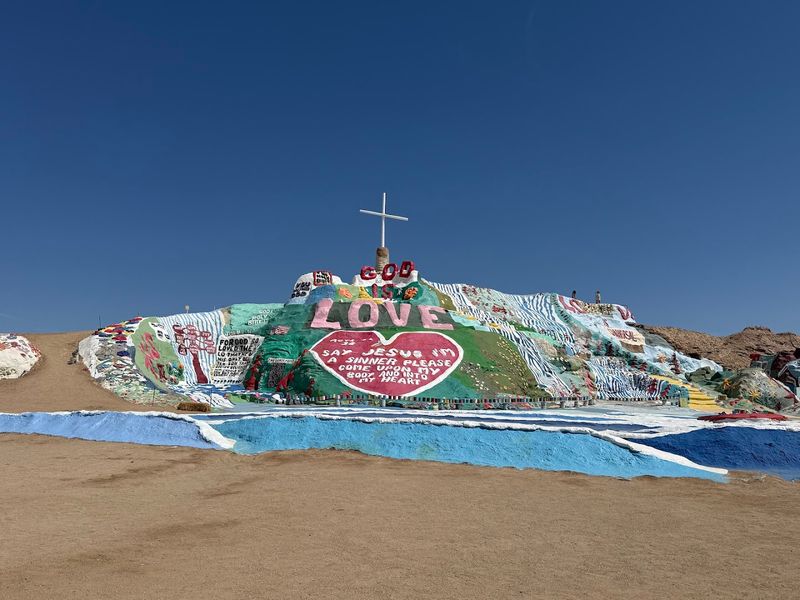
Leonard Knight spent over 28 years painting a mountain in the California desert, and the result is one of the most colorful things in the entire American Southwest. Salvation Mountain near Niland is a folk art installation built from adobe, straw, and thousands of gallons of donated paint.
Knight started the project in 1984 after a hot air balloon project failed, which is honestly a fantastic pivot.
The mountain is covered in bright reds, yellows, and blues, with religious messages woven throughout the painted landscape. Trees, flowers, and waterfalls made entirely from paint and found materials surround the base.
Knight passed away in 2014, but a nonprofit now maintains the site to preserve his life’s work.
Getting there requires driving through some seriously remote Sonoran Desert terrain, so check your gas gauge before heading out. Entry is free, though donations help with upkeep.
Few places in the country feel this genuinely personal and heartfelt, which makes the long drive completely worthwhile.
The Enchanted Highway, Regent, North Dakota
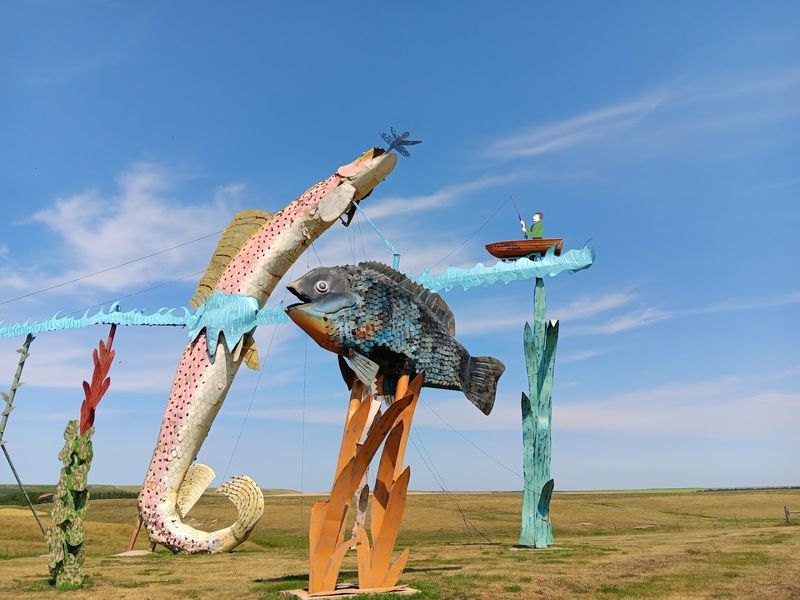
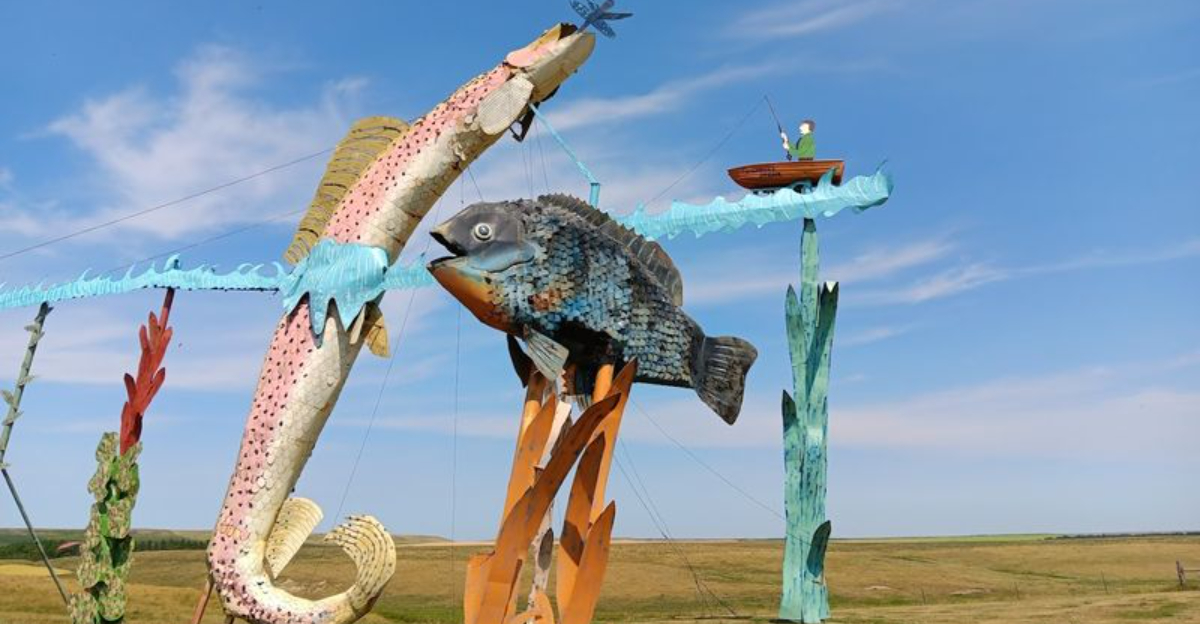
A 32-mile stretch of North Dakota highway is home to the world’s largest collection of scrap metal sculptures, and that sentence should be enough to make you pull up a map right now. The Enchanted Highway runs between Gladstone and Regent, featuring enormous roadside sculptures built by local artist Gary Greff starting in 1991.
The goal was to bring tourists to a shrinking rural community, and it worked beautifully.
The sculptures include a 110-foot-tall set of geese, giant grasshoppers, pheasants, and a massive family of deer. Each piece is visible from a long distance on the flat prairie, which makes the approach as dramatic as the arrival.
Greff reportedly built most of them himself using welding skills and sheer determination.
The highway is free to drive and the sculptures are accessible year-round. Regent itself has a small inn and a gift shop if you want to make a proper overnight trip of it.
This is what happens when one person refuses to let their community disappear quietly.
City Museum, St. Louis, Missouri
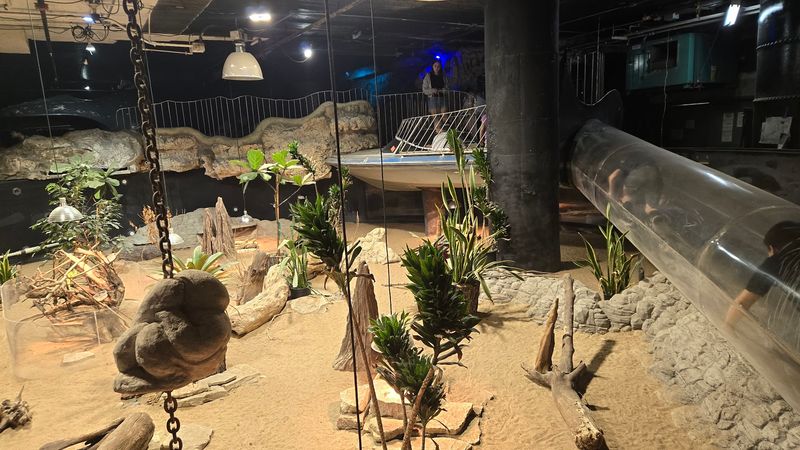
City Museum in St. Louis is the kind of place that makes adults briefly forget they have bad knees. Built inside a 10-story former shoe factory, it is part art installation, part jungle gym, and part full sensory chaos, all in the best possible way.
Artist Bob Cassilly and a team of craftsmen spent years turning salvaged industrial materials into something that defies any normal category.
Tunnels wind through the building, some barely wide enough for a single person. The rooftop has a Ferris wheel and a school bus hanging off the edge of the building.
There is a working circus, a 10-story slide, and cave systems built from reclaimed rebar and concrete. I once spent four hours there and still missed entire sections.
Tickets are around $20 for adults and worth every cent. The museum runs late on weekends, which is smart because you genuinely need the extra time.
Come hungry for adventure and leave with bruised shins and a massive smile.
Lucy the Elephant, Margate City, New Jersey
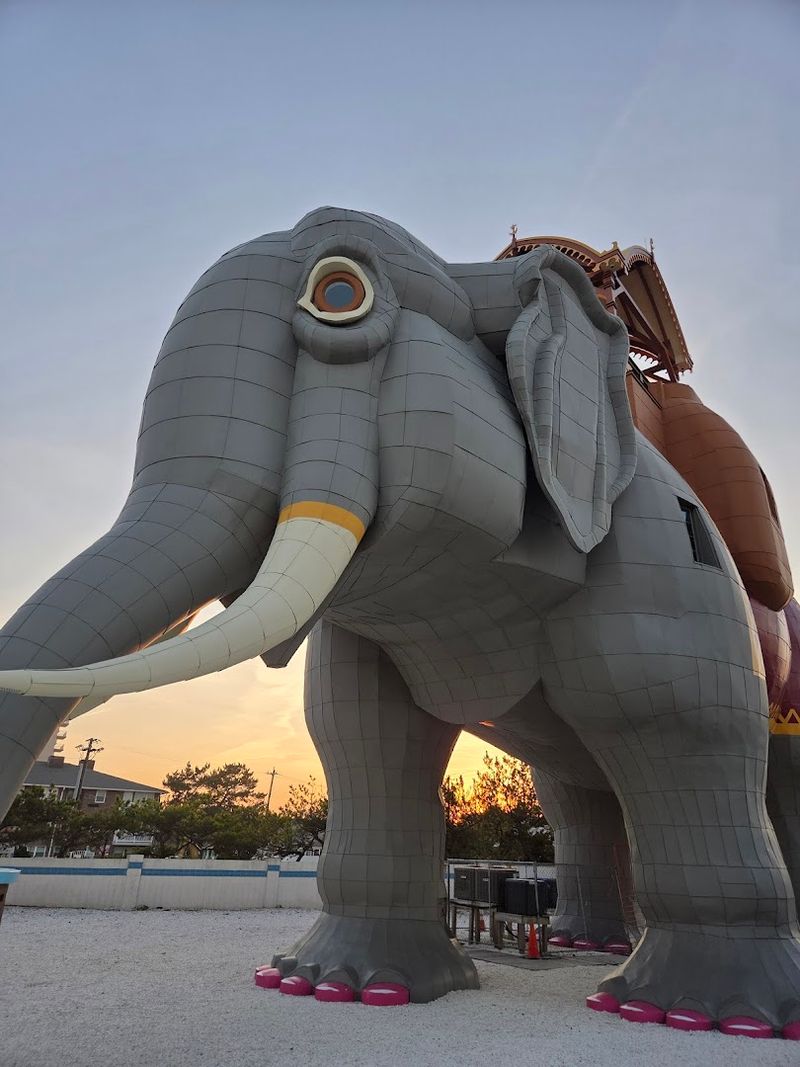
Lucy the Elephant is a six-story wooden elephant that has survived hurricanes, neglect, and over 140 years of New Jersey shore life, which honestly makes her tougher than most of us. Built in 1881 by James Lafferty as a real estate marketing gimmick, she stands 65 feet tall and was originally used to sell land in what is now Margate City.
She has also served as a tavern and a summer cottage at various points in her long career.
Visitors can climb through Lucy’s legs into her belly and then up to a howdah on her back for a view of the Atlantic Ocean. The interior tour covers her fascinating history and multiple rescue efforts by local preservationists.
She was designated a National Historic Landmark in 1976, making her one of the oldest roadside attractions in the country.
Tours run from May through October. The gift shop inside sells Lucy-themed souvenirs that are genuinely charming.
She is ridiculous, historic, and completely beloved, which is a combination very few buildings ever achieve.
Bubblegum Alley, San Luis Obispo, California
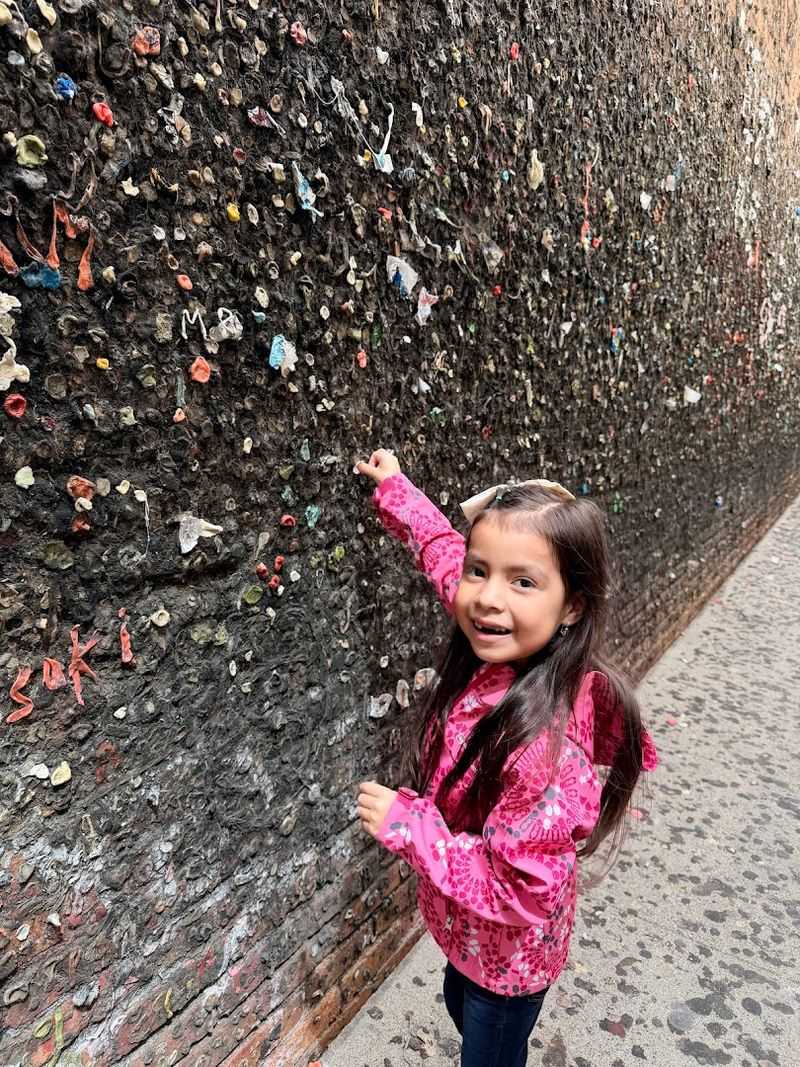
Bubblegum Alley is exactly what it sounds like, and somehow that makes it both disgusting and completely irresistible. Located in downtown San Luis Obispo, California, this narrow alley has walls covered floor to ceiling in chewed gum contributions from visitors going back to the 1950s.
The origin is disputed, but the result is undeniably one of the stickiest tourist attractions in the country.
People press their gum into names, shapes, and messages, creating a constantly evolving mosaic of questionable material. Health officials have periodically pushed to have it cleaned, but locals keep defending it with fierce loyalty.
It has been cleared twice in its history, and both times visitors simply started it all over again.
Bringing your own gum to add is basically mandatory. The alley sits between Higuera and Garden Streets and takes about five minutes to walk through, though you will spend longer than that photographing the more creative contributions.
It is gross, it is oddly artistic, and it smells exactly like you expect it to.
The Neon Museum, Las Vegas, Nevada
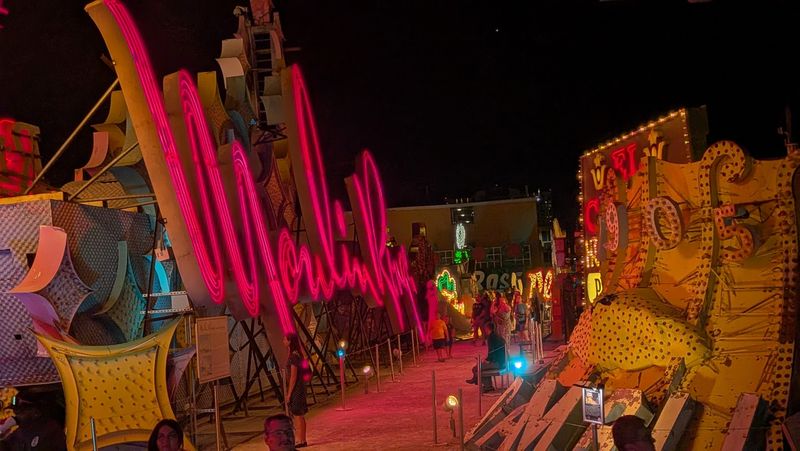
Las Vegas has always known how to make an entrance, and the Neon Museum is where the city’s most glamorous old signs go to retire. Located just north of downtown, the museum collects and preserves neon signs from classic Las Vegas hotels and casinos that no longer exist.
The outdoor Neon Boneyard features over 200 signs in various states of restoration, and the effect at dusk is genuinely stunning.
Signs from the Stardust, the Moulin Rouge, and Caesars Palace are among the highlights. Many have been restored to working condition and light up during guided evening tours.
The museum opened in 2012 and has become one of the city’s most photographed non-casino destinations.
Daytime self-guided tours are available, but the nighttime guided tour is the real experience. Book tickets in advance because the evening tours sell out regularly.
Seeing these old signs lit up against the dark sky is a surprisingly emotional reminder of how much Las Vegas history has quietly slipped away.
Abita Mystery House, Abita Springs, Louisiana
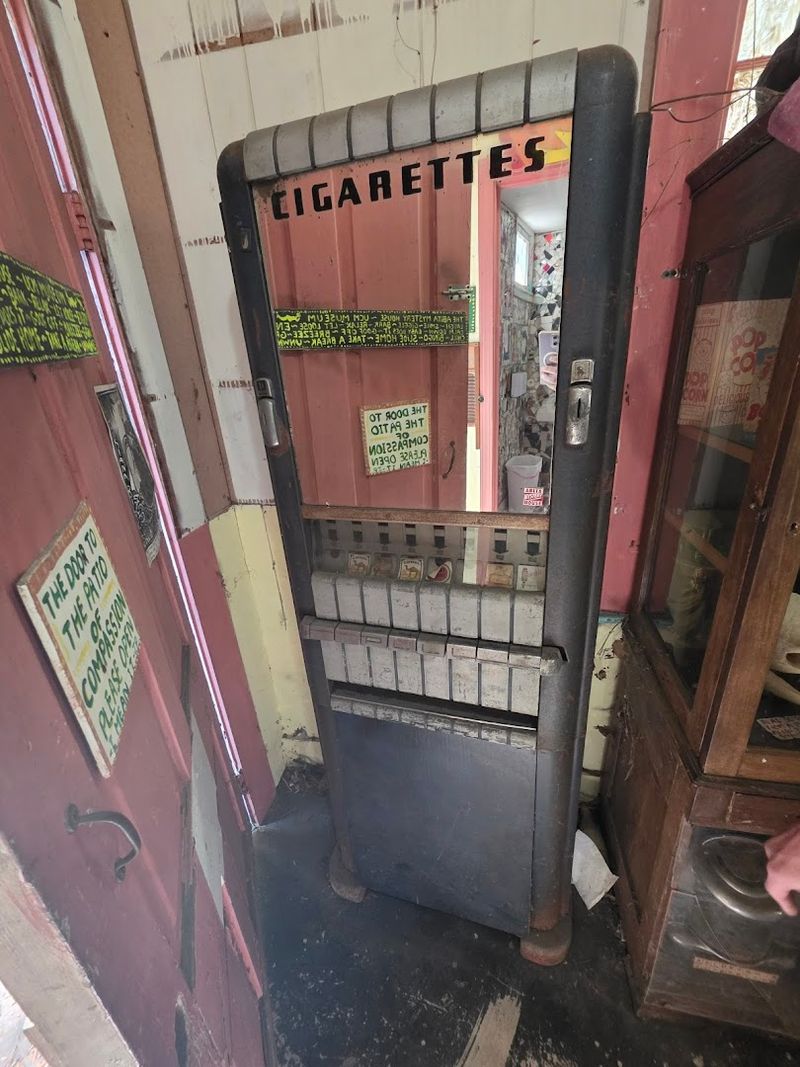
The Abita Mystery House near New Orleans is the kind of place that makes you question every life choice that led you to not visit it sooner. Also called UCM Museum, it was created by artist John Preble and opened in 1998 as a tribute to roadside America and folk art weirdness.
The building itself looks like a quirky gas station, which is fitting because it used to be one.
Inside, you will find dioramas of bizarre fictional towns, a half-man half-bass creature called the Bassigator, vintage pinball machines, and handmade curiosity displays that defy simple description. Everything has a handcrafted, slightly off-kilter charm that big budget museums could never replicate.
Preble built most of it himself over years, adding new weirdness whenever inspiration struck.
Admission is cheap and the gift shop sells folk art prints and local oddities worth taking home. Abita Springs itself is a charming small town with a famous craft brewery nearby.
Plan to spend at least two hours here, because every corner hides something new and delightfully strange.
Cadillac Ranch, Amarillo, Texas
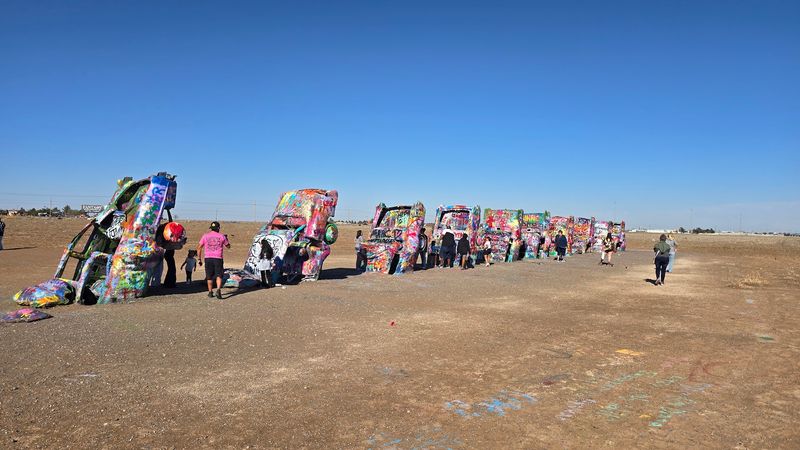
Ten Cadillacs buried nose-first in a Texas wheat field at equal angles is either the most American art installation ever created or absolute proof that the 1970s were a wild time. Cadillac Ranch was built in 1974 by the art group Ant Farm, funded by eccentric millionaire Stanley Marsh 3.
The cars are half-buried at an angle matching the Great Pyramid of Giza, which nobody talks about enough.
Visitors are not just allowed to spray paint the cars, they are practically expected to. The paint layers have built up so thick over the decades that the cars have actually gained measurable weight from it.
New layers appear daily, meaning the installation looks different every single time you visit.
Bring your own spray paint because there is usually some on the ground, but fresh cans make better results. Admission is completely free and the site sits right off Route 66, making it a perfect road trip stop.
It is loud, colorful, and gloriously pointless in the best artistic tradition.
Museum of Jurassic Technology, Culver City, California
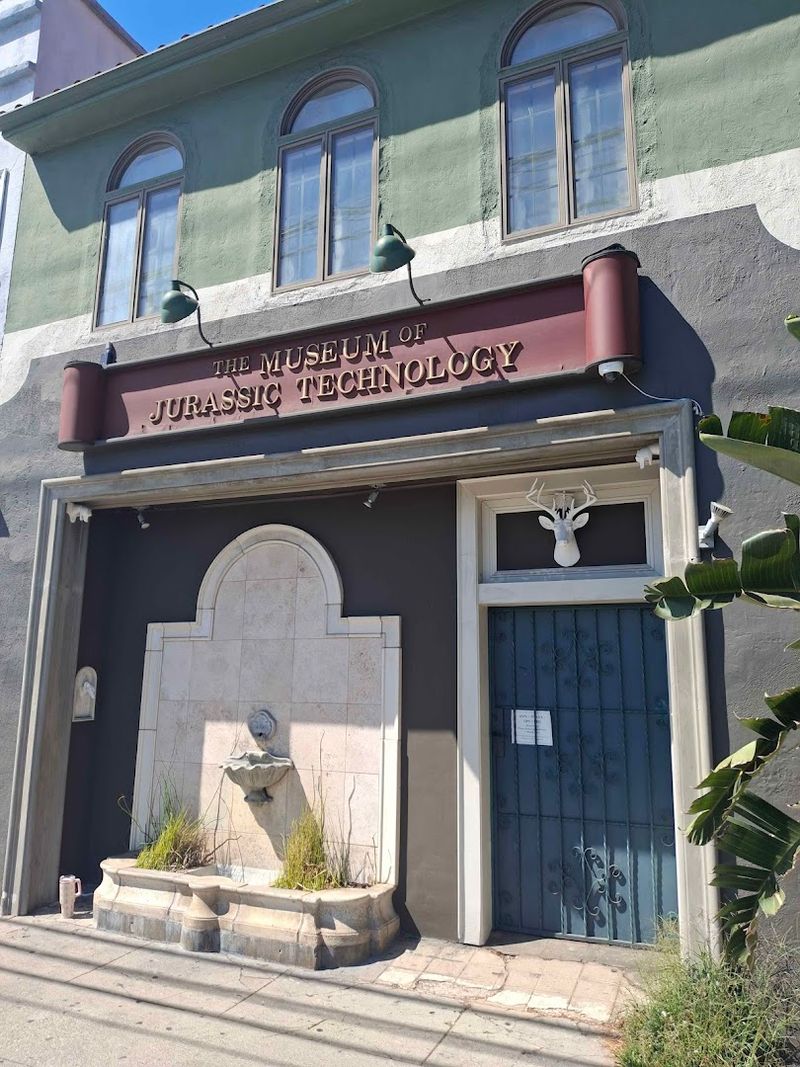
The Museum of Jurassic Technology in Culver City has no dinosaurs, very little to do with the Jurassic period, and absolutely no obligation to explain itself to you. Founded by David Hildebrand Wilson and Diana Drake Wilson in 1988, it presents completely fabricated exhibits with the serious, deadpan tone of a prestigious natural history museum.
The result is one of the most brilliantly disorienting experiences in American art.
Exhibits include the life history of a fictional bat that flies through walls, a collection of miniature sculptures inside the eyes of needles, and detailed plaques about things that may or may not exist. The museum won a MacArthur Genius Grant, which is the most perfectly confusing outcome possible.
Regular visitors debate endlessly about what is real and what is invented.
The museum is small and admission is affordable. Go without reading too much about it beforehand because the confusion is half the experience.
It is the rare place that makes you feel smarter and completely baffled at the exact same moment.



