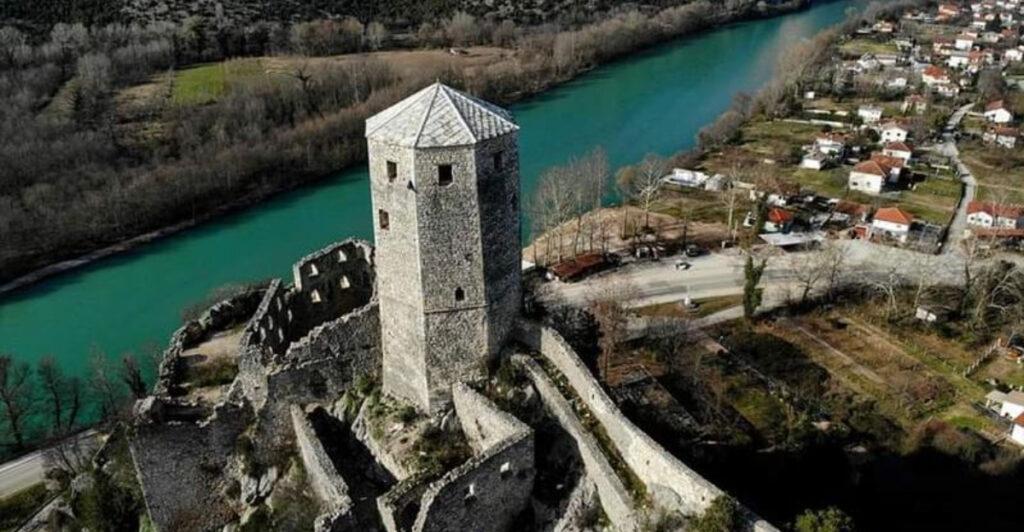
Bosnia and Herzegovina has a way of stopping you in your tracks, and more often than not, a river or a bridge is the reason why. From UNESCO-listed stone arches to hidden waterfalls tucked inside national parks, the country’s waterways are practically showing off.
Whether you are a history buff, a casual wanderer, or someone who just really likes a good photo, these views deliver. Here are 14 river and bridge scenes that travelers keep talking about long after they have packed their bags.
Stari Most Over the Neretva River in Mostar
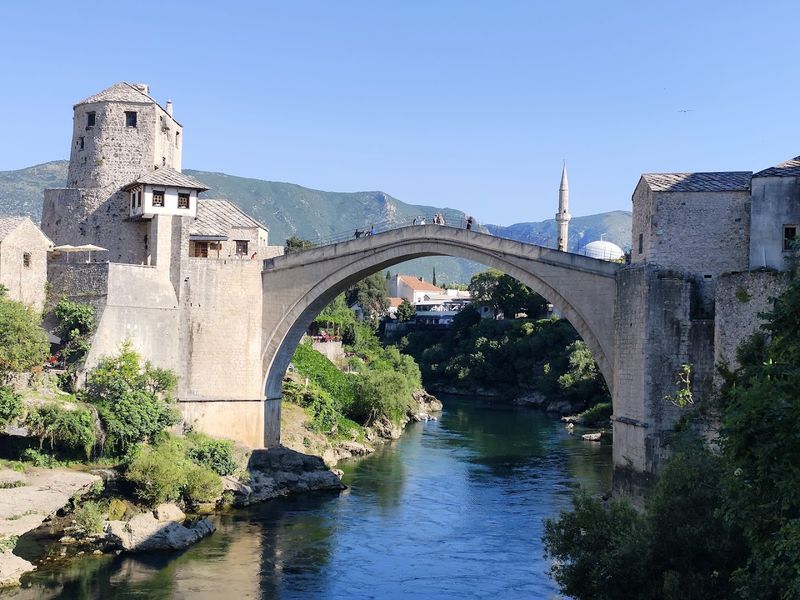
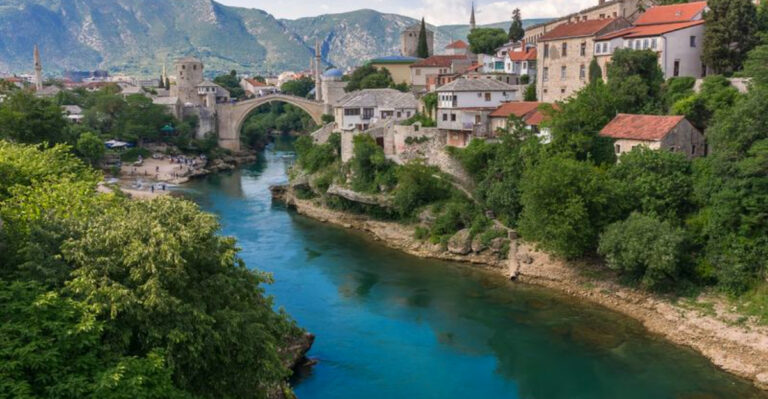
There are famous bridges, and then there is Stari Most, which has the audacity to be both a postcard and a UNESCO World Heritage Site at the same time. The pale stone arch rises over a Neretva River so turquoise it looks digitally enhanced.
Spoiler: it is not.
Standing on the bridge is the obvious move, but the real reward comes from walking down to the riverbank and looking back up. Everything lines up perfectly: the arch, the old towers, the minarets, the steep banks, the riverside houses.
It is one of those rare spots where every angle works.
I made the mistake of only shooting from the bridge on my first visit. The view from below absolutely wrecked me in the best way.
Go down to the water. Seriously.
The Neretva’s color alone is worth the detour, and the whole scene from river level is something you carry home in your chest.
Mehmed Pasa Sokolovic Bridge Over the Drina in Visegrad
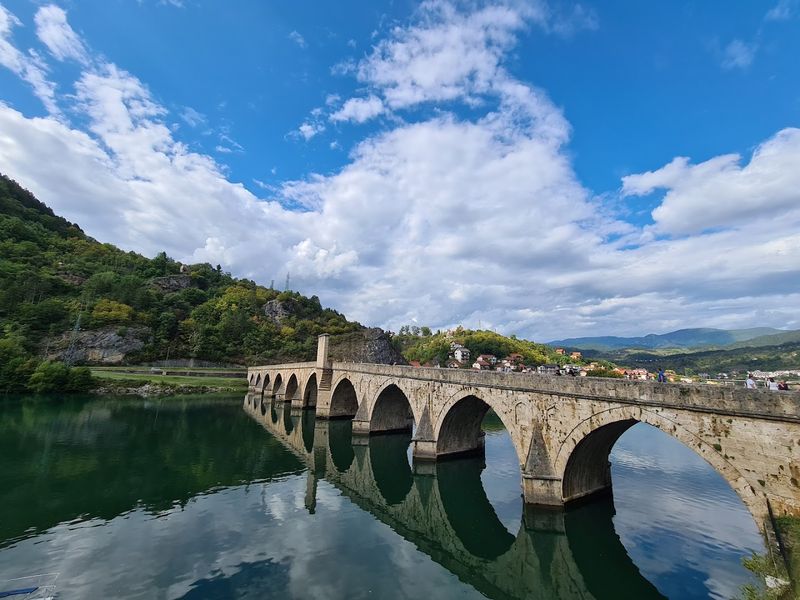
Built at the end of the 16th century, the Mehmed Pasa Sokolovic Bridge stretches 179.5 meters across the Drina River and does not rush anyone. It has been standing for over four centuries, so it clearly has patience figured out.
UNESCO describes it as a major work of Ottoman monumental architecture and civil engineering. Eleven masonry arches carry the bridge across the wide Drina, with forested hills rising behind Visegrad in the background.
The whole scene is quieter and more meditative than Mostar.
This is not a bridge you sprint across for a selfie. The Drina spreads generously around the stone arches, and the pace of the place invites you to slow down and actually look.
My favorite moment there was watching the light shift across the water in the afternoon. No crowds, no noise, just one very old bridge doing what it has always done.
Konjic Old Stone Bridge Over the Neretva
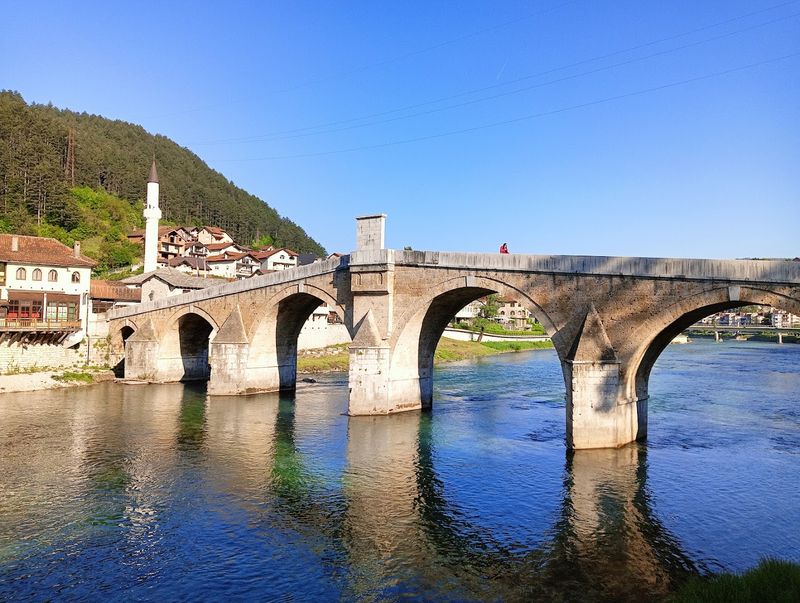
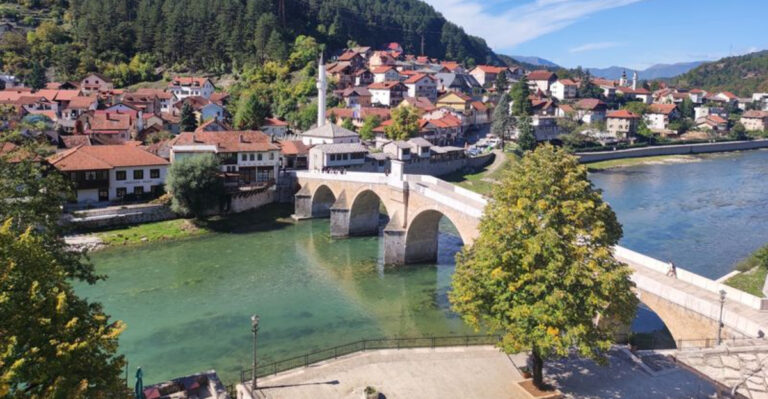
Konjic’s Old Stone Bridge was originally built in 1682 and officially opened in 1683, which means it has been calmly arching over the Neretva for well over 300 years without making a big fuss about it.
The view here is softer than Mostar, and that is precisely the point. The bridge sits low and elegant over the river, and the mountains surrounding Konjic give the whole scene a calm, gateway-to-Herzegovina feeling.
It is the kind of view that does not shout for attention but earns it anyway.
Konjic often gets skipped by travelers rushing between Sarajevo and Mostar, which is a genuine shame. The old town around the bridge has charm to spare, and the river here is clean, fast-moving, and beautiful.
Stop for coffee on the bank and give yourself at least an hour. The bridge is listed as a National Monument of Bosnia and Herzegovina for very good reason.
Latin Bridge Over the Miljacka in Sarajevo
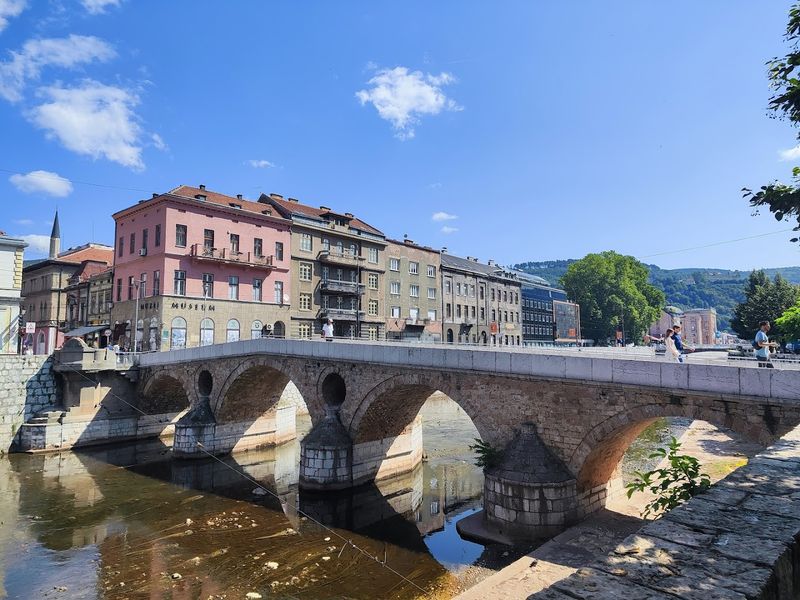
The Latin Bridge is not the most dramatic river crossing in Bosnia, but it carries more historical weight per square meter than almost any other bridge on the continent. Built in 1798 after a flood destroyed its predecessor, it sits over the shallow Miljacka River in the heart of Sarajevo.
The bridge got its name from the left-bank neighborhood where Sarajevo’s Catholics once lived. Today, it is most associated with June 1914 and an event that changed the world.
That history makes even a quiet stroll across it feel surprisingly loaded.
What keeps this view in travelers’ memories is not a waterfall or a canyon. It is the way the bridge connects Sarajevo’s history, its river, its old streets, and its daily city life into one compact, walkable scene.
Pair it with the nearby Sarajevo Museum and you will leave with a lot more than just a photograph.
Kozija Cuprija, Goat Bridge, Along the Miljacka
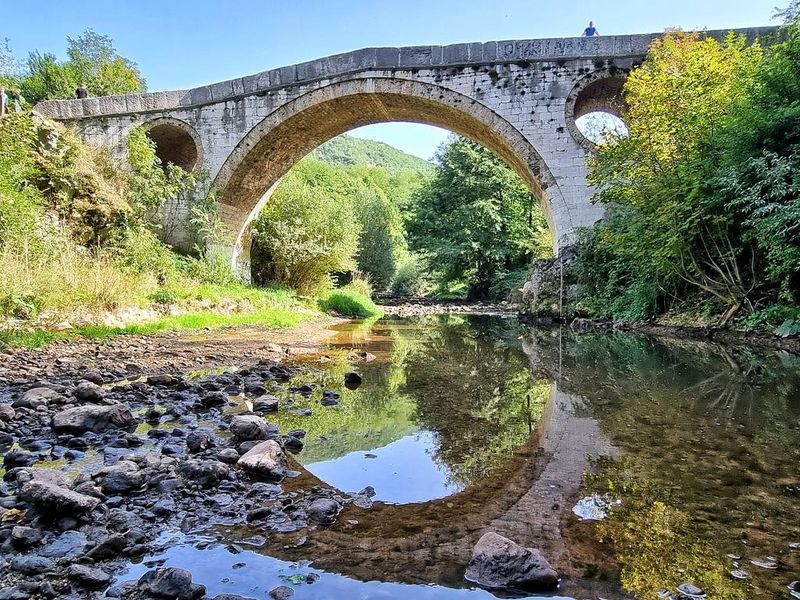
Goat Bridge has one of the best names in Balkan geography, and it absolutely lives up to the intrigue. Kozija Cuprija is the only fully preserved Ottoman-period bridge still spanning the Miljacka River, built in the 16th century on the old road that once connected Sarajevo to Istanbul.
Getting there requires a bit of a walk, which most travelers consider a feature rather than a flaw. The Miljacka here feels narrower and wilder than it does in the city center.
The old stone bridge rises over the gorge with a quiet confidence that central Sarajevo’s busier spots simply cannot match.
This is genuinely a hidden gem, though I hate that phrase. It is just a great bridge that rewards people who enjoy walking more than they enjoy tour buses.
Pack water, wear comfortable shoes, and follow the river path out of the city. The payoff is a bridge view that feels almost entirely your own.
Arslanagic Bridge Over the Trebisnjica in Trebinje
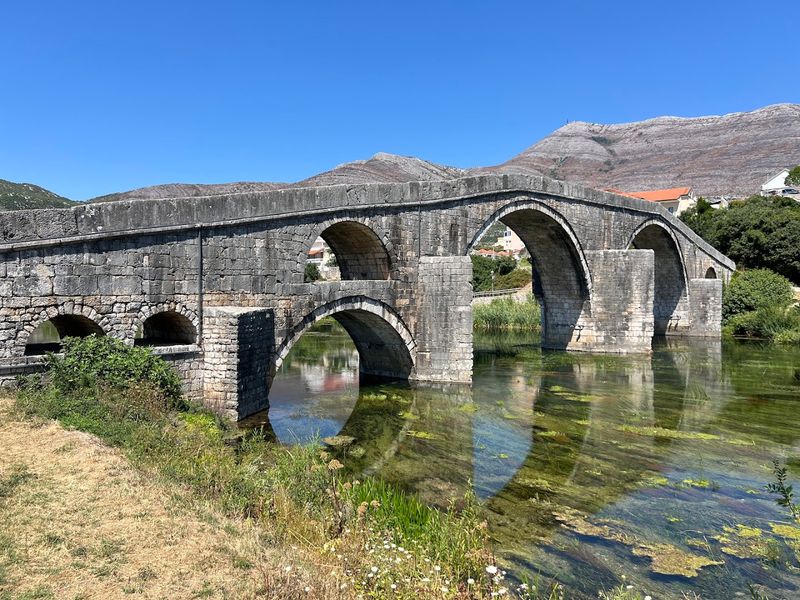
Trebinje is Herzegovina’s most underrated city, and the Arslanagic Bridge is one of the main reasons to go there. Built in 1574 by Mehmed-Pasha Sokolovic, the bridge later took its popular name from Arslan-aga, who collected crossing fees there.
That is a very practical kind of legacy.
The Trebisnjica River gives this view a completely different mood from the Neretva or the Drina. It feels warmer, slower, and distinctly Mediterranean.
The water here has an almost glassy quality in the evenings, and the stone arches reflect beautifully in calm conditions.
Trebinje itself is worth a full day, with its old walled town, outdoor cafes, and relaxed southern atmosphere. The bridge fits perfectly into a slow evening walk along the riverbank.
If you are driving through Herzegovina and have an extra hour, point the car toward Trebinje. The bridge alone justifies the detour, and the town will keep you longer than you planned.
Pliva Waterfall in Jajce
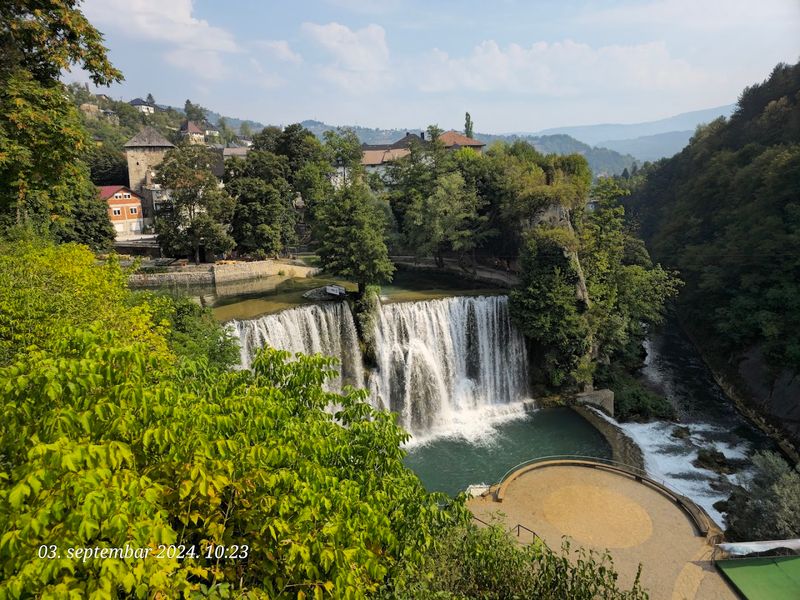
A waterfall inside a historic town center sounds like something a tourism board made up, but Jajce actually has one. The Pliva Waterfall drops right beside the old walled city where the Pliva River meets the Vrbas, and the combination of medieval history and falling water is genuinely hard to process at first.
The view stays with travelers because it defies expectations. Waterfalls belong in forests or gorges, not steps away from fortresses and old town walls.
Jajce ignores that convention entirely and is better for it.
The best angle is from the bridge over the Vrbas, where you can see the waterfall with the town rising behind it. Early morning visits are quieter and the light is softer.
Jajce is often treated as a quick stop on the way to somewhere else, which is a mistake. Give it at least half a day.
The waterfall alone earns that, and the old town adds everything else.
Pliva Lakes and Watermills Near Jajce
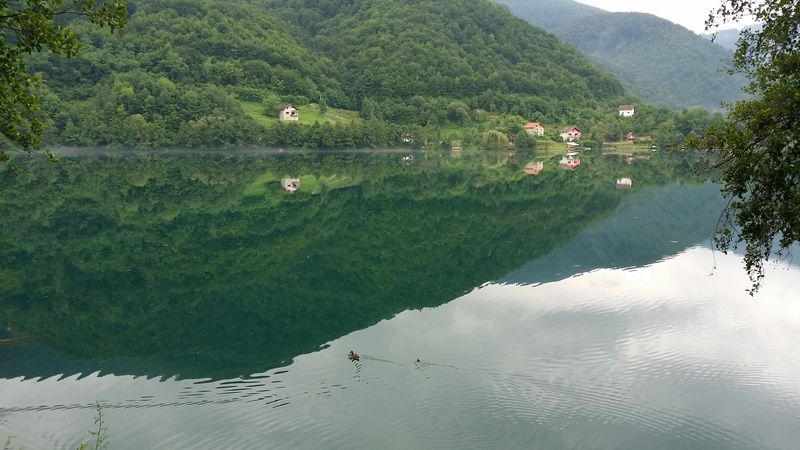
A few kilometers from Jajce’s dramatic waterfall, the Pliva Lakes offer something completely different: actual peace and quiet. The Pliva Lakes are the largest natural lakes in Bosnia and Herzegovina, and the area around them has restaurants, camping spots, and accommodation for travelers who want to stay longer than a quick look.
The little wooden watermills near the lakes are the real visual hook. They sit right at the water’s edge, small and slightly crooked, and they look like they belong in a fairy tale.
Nobody is grinding flour in them anymore, but they are beautifully preserved and endlessly photogenic.
This stop works well for travelers who want a slower pace after the crowds of Jajce’s town center. The lake reflects the surrounding forest on calm days, and the whole area has a stillness that is easy to appreciate.
Bring a picnic, stay for an hour, and let the watermills do all the heavy lifting, visually speaking.
Kravica Waterfall on the Trebizat River
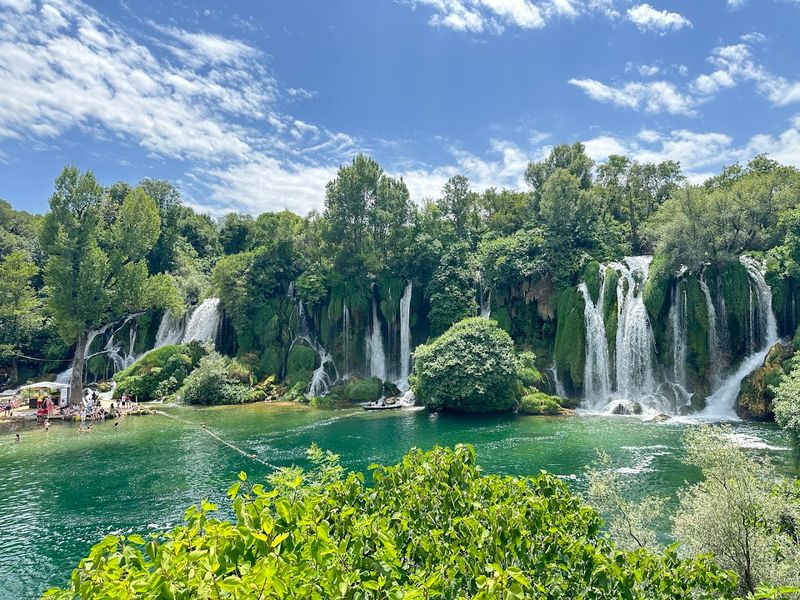
Kravica Waterfall is the kind of place that makes people stop mid-sentence and just stare. The wide horseshoe arc of falling water on the Trebizat River near Ljubuski is one of the most popular natural water views in all of Herzegovina, and the crowds it draws in summer are entirely justified.
The turquoise pool at the base, the green surroundings, and the sheer volume of falling water give Kravica a lush, almost theatrical quality. It looks cinematic because it genuinely is.
Warm months are the best time to visit, though travelers should check current swimming rules and seasonal access before planning the whole day around a swim.
Getting there is straightforward, parking is available, and entrance fees apply. The official visitor page lists up-to-date details.
One practical note: arrive early in summer. By midday, Kravica gets busy.
The waterfall is just as beautiful at 9am, and you will have more of it to yourself than you expect.
Blagaj Tekke and the Buna Spring
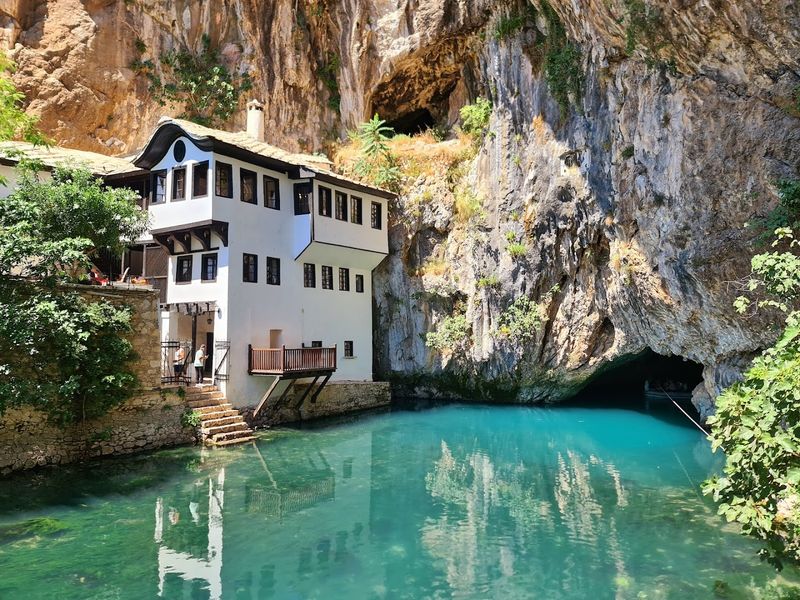
Blagaj has the structural confidence of a place that knows it looks incredible and has decided not to tone it down. About 15 kilometers south of Mostar, the Buna River emerges from a cave at the base of a tall cliff, right beside a 16th-century Ottoman dervish house called the Tekke.
The combination of rushing spring water, vertical rock, and historic architecture in one tight frame is what makes Blagaj a genuine standout. It is not just a pretty spring.
It is a spring with a building attached to a cliff, which is a completely different category of view.
Restaurants line the riverbank and serve fresh trout, so lunch here is both scenic and practical. The site gets busy in peak season, especially midday.
A morning visit rewards you with better light and fewer tour groups. Walk along the river path past the Tekke for angles that most visitors miss entirely.
The view from further upstream is quietly stunning.
Strbacki Buk in Una National Park
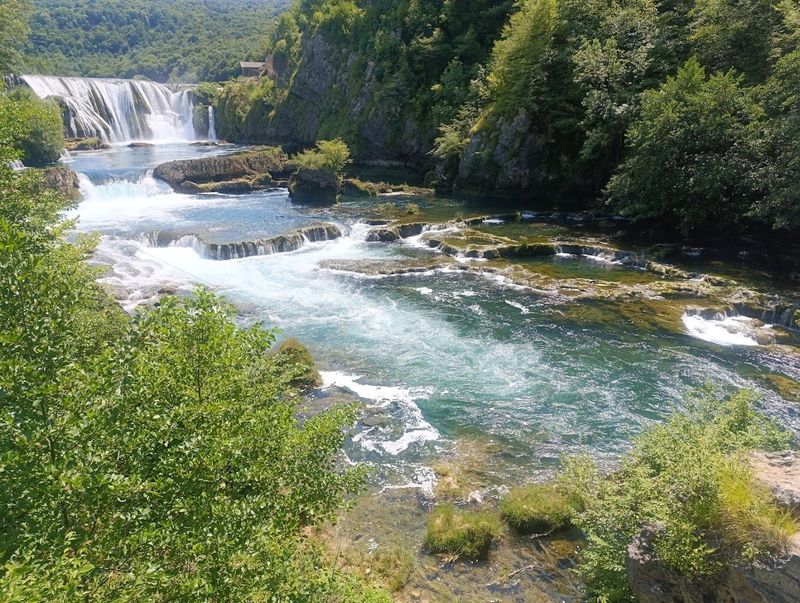
Una National Park’s star attraction has a name that sounds like a sneeze and a view that makes you forget your own name entirely. Strbacki Buk is the park’s highest and most spectacular waterfall, dropping 24.5 meters and spreading across the Una River in a wide, powerful cascade.
The park’s official site calls it the jewel of the park, which is accurate but undersells the sheer force of the thing. Wooden paths and viewing platforms put you close enough to feel the mist and appreciate why the Una River has the reputation it does among kayakers and rafters.
Northwestern Bosnia does not always make it onto travelers’ itineraries, which is a navigational error worth correcting. Strbacki Buk alone justifies the drive from Bihac or even Sarajevo.
The national park around it offers hiking, river activities, and some genuinely wild scenery. This is not a gentle afternoon stroll.
It is a full-volume, no-apologies river experience.
Vrbas River Canyon South of Banja Luka
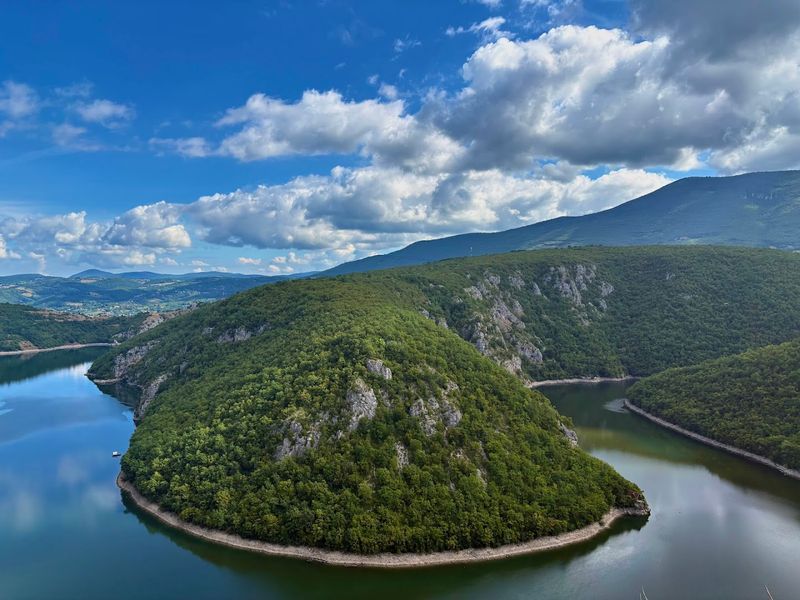
The Vrbas River south of Banja Luka does not mess around. The canyon it has carved through the limestone over thousands of years features rapids, waterfalls, cascades, beaches, and sheer rock walls, all stacked along one river road that feels like it was designed specifically to make drivers forget to watch the actual road.
The Tourist Organization of Republika Srpska describes the Vrbas as the main river flow of Banja Luka, which is technically accurate but misses the canyon’s personality entirely. This is rafting country.
Outfitters operate along the river, and the rapids attract paddlers from across the region.
Unlike most entries on this list, the Vrbas canyon is not about one single viewpoint. It is about following the river and letting the landscape change around you.
Drive slowly, stop often, and pull over when the canyon walls close in. The full stretch south of the city is one of the most rewarding river roads in the entire country.
Pocitelj Above the Neretva River
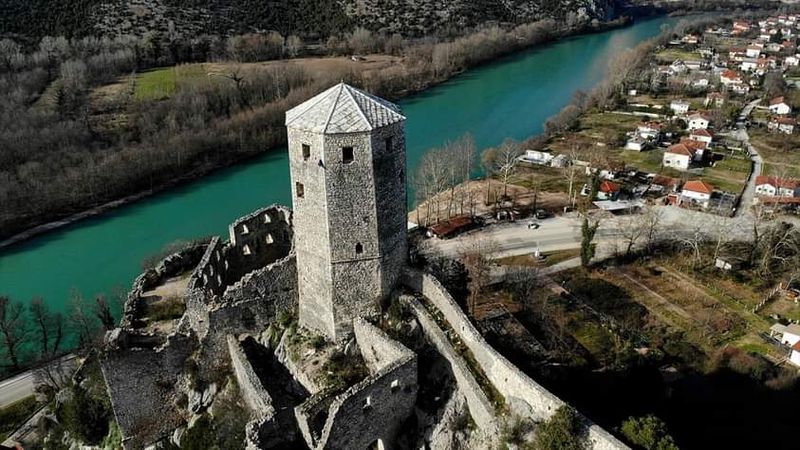
Pocitelj is the kind of place that architectural historians write dissertations about and everyone else just photographs obsessively. The historic walled village sits on the left bank of the Neretva River south of Mostar, layered up a steep hillside like someone stacked history by hand.
The view from the lower parts of the village is already strong: stone houses, a mosque, old walls, and the river below. But the real payoff comes from climbing higher.
From the fortress at the top, the Neretva bends through the valley beneath you, and the stone rooftops, cypress trees, and fortress remains create one of Herzegovina’s most layered and beautiful panoramas.
Pocitelj is a protected National Monument and is described as an open-air museum, which it genuinely resembles. Wear shoes with grip because the stone paths get slippery.
Visit in the morning for the best light on the river. The climb takes about 15 minutes and earns one of the finest elevated river views in the whole country.
Trebizat River at Kocusa Waterfall
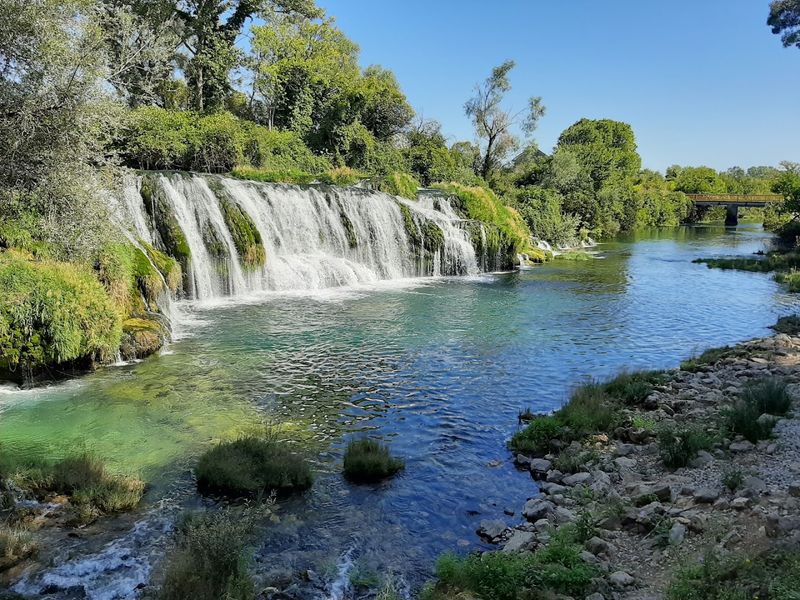
Kocusa Waterfall rarely gets top billing in Herzegovina travel guides, and that oversight works entirely in your favor. Paired with Kravica for travelers exploring the Ljubuski area, Kocusa offers a completely different atmosphere: quieter, greener, and far less crowded than its more famous neighbor.
The official Kravica visitor page notes that the Kravica ticket can include access to Kocusa, which makes combining both stops both practical and economical. Old mills sit along the riverbank beside the waterfall, adding a layer of history to what would already be a lovely water view.
Kocusa is the kind of place that locals love and tourists walk past while chasing bigger names. The Trebizat River here is clear and calm, the surrounding vegetation is lush, and the whole scene feels genuinely unhurried.
If you are already at Kravica and have an extra hour, following the road to Kocusa is one of the better spontaneous decisions you can make in Herzegovina.
Share this story