 Unearth The Voyage
Some of the best moments on a road trip happen when you pull off the main highway and discover something unexpected. The USA is packed with stops that can flip a boring drive into a full-blown adventure.
From ancient underground caves to neon desert art, these detours are the ones people talk about for years. Pack snacks, charge your phone, and get ready to reroute.
Mammoth Cave National Park, Kentucky
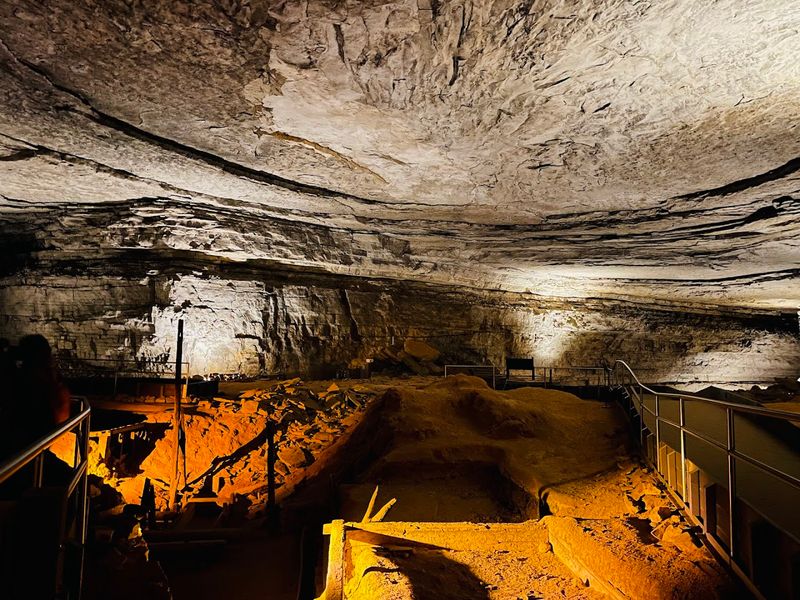
The world’s longest known cave system sits right under Kentucky, and most people drive past it without a second thought. That is a serious mistake.
Mammoth Cave has over 400 miles of explored passages, and scientists believe there are still more waiting to be mapped.
Book a ranger-led tour before you arrive, because they fill up fast, especially in summer. The Historic Tour is a crowd favorite, taking you through massive chambers with names like Rotunda and Gothic Avenue.
It sounds dramatic because it genuinely is.
Bring a light jacket, because the cave stays around 54 degrees year-round no matter how hot it is outside. The park above ground is also beautiful, with hiking trails and the Green River running through it.
Most visitors skip the surface entirely, which means the trails are refreshingly uncrowded. Go underground, stay a while, and try not to feel like a tiny speck in a very old world.
Kuwohi Observation Tower, Great Smoky Mountains
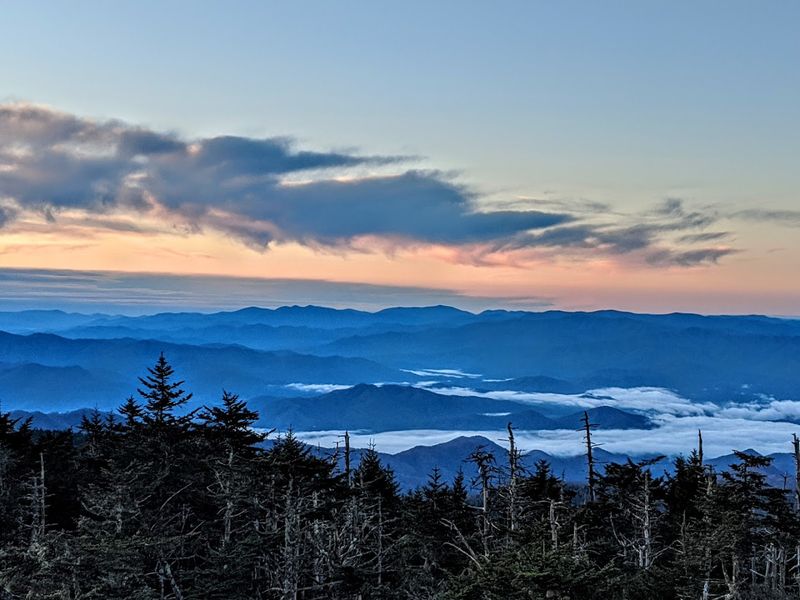
Standing at 6,643 feet, Kuwohi is the highest point in Great Smoky Mountains National Park, and the observation tower at the top earns its reputation fast. On a clear day, the 360-degree view stretches across layers of blue-green ridgelines that seem to go on forever.
The road to the top is paved, which sounds easy until you meet the steep grades and tight curves. A standard car handles it fine, but check the road status before heading up since it closes in bad weather.
Timing matters here. Weekday mornings tend to be quieter, and the light is spectacular in early morning.
The name Kuwohi comes from the Cherokee language, meaning “mulberry place,” and the mountain holds deep cultural significance for the Cherokee Nation. That context adds real weight to the visit.
This is not just a scenic overlook. It is a place with a long, layered story worth knowing before you go.
Blue Ridge Parkway, Virginia and North Carolina
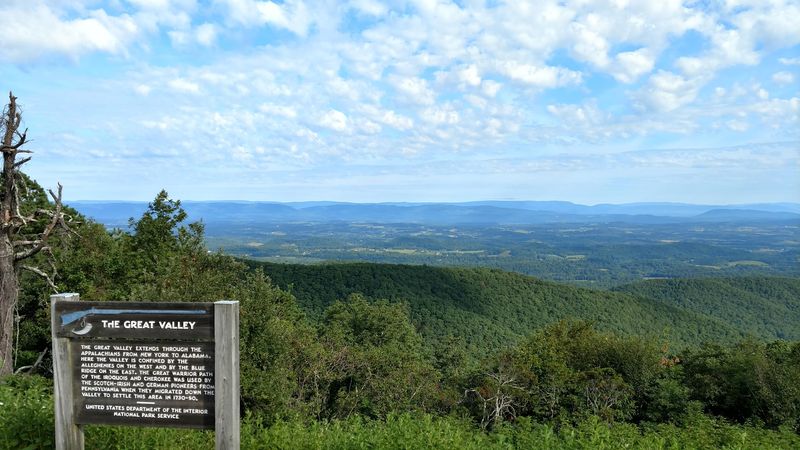
At 469 miles long, the Blue Ridge Parkway is not a road you rush. No commercial trucks, no traffic lights, no billboards.
Just mountains, overlooks, and the occasional black bear crossing the road like it owns the place (because it does).
You do not need to drive the whole thing to get the full effect. Even a 30-mile stretch near Asheville or Roanoke gives you enough overlooks, trailheads, and roadside meadows to call it a proper detour.
Fall is peak season for a reason: the foliage is absolutely ridiculous in the best way.
Speed limits top out at 45 mph, which sounds slow until you realize the views demand it. Pull over often.
The parkway has dozens of named overlooks, and some of the best ones are not on any top-ten list. Mabry Mill, near Meadows of Dan, Virginia, is a personal favorite worth adding to any itinerary.
Bring cash for the small vendors along the way.
Multnomah Falls, Oregon
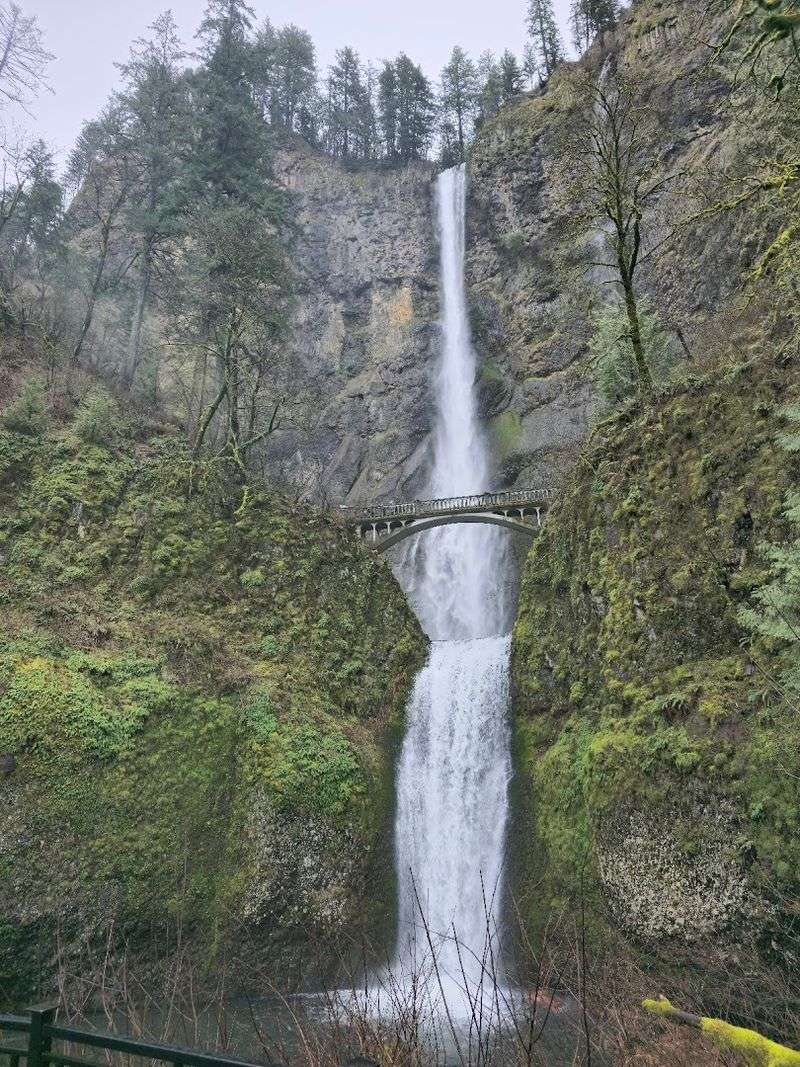
Multnomah Falls drops 620 feet in two tiers and sits about two minutes off Interstate 84. That ratio of effort to payoff is basically unmatched on any road trip in the country.
The historic lodge at the base was built in 1925 and still serves food, which is a solid bonus when you need to refuel. A short, moderately steep trail leads up to the bridge between the two tiers, and the view from there is worth every step.
Plan for crowds, especially on summer weekends. The site now requires a timed-entry permit during peak season, so check the recreation.gov site before you show up expecting to walk right in.
I stopped here on a rainy October morning and had the misty lower viewpoint nearly to myself. Wet weather actually makes the falls look more dramatic, so do not let a little drizzle put you off.
Come prepared with layers and solid shoes. The path gets slippery fast.
Going-to-the-Sun Road, Glacier National Park, Montana
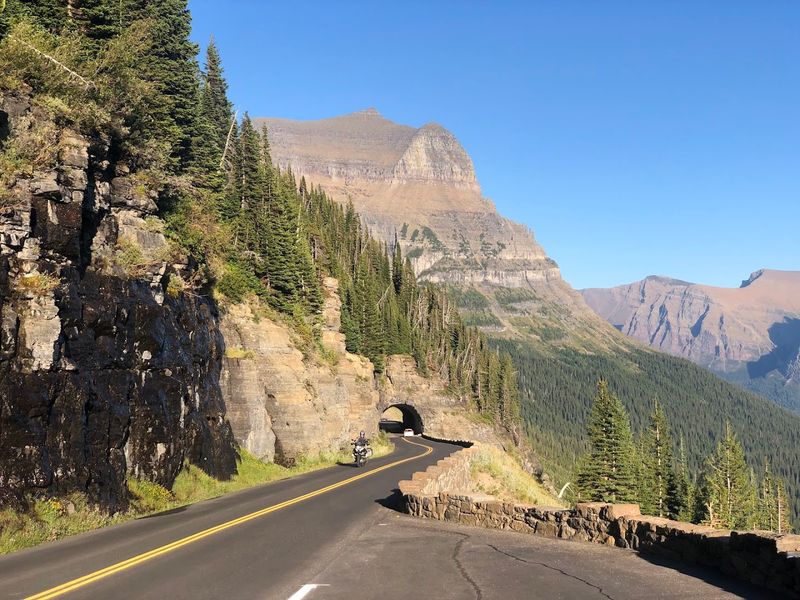
Fifty miles of road. Zero boring moments.
Going-to-the-Sun Road cuts through the heart of Glacier National Park and is widely considered one of the most spectacular drives in the entire United States. That reputation is fully earned.
The road crosses the Continental Divide at Logan Pass, elevation 6,646 feet, where mountain goats hang around the parking lot like they are waiting for tips. Wildflowers carpet the alpine meadows in July, and waterfalls pour off cliffsides right next to the road.
It is genuinely hard to keep your eyes on the pavement.
Here is the critical detail: the road is only fully open from roughly late June to mid-October, depending on snowpack. Vehicle size restrictions also apply on certain sections, so larger RVs need to check the park’s current rules before pulling up.
Reserve your entry pass early through the park’s ticketing system. Glacier fills up fast, and showing up without a plan is a recipe for a long, disappointed drive back.
Devils Tower National Monument, Wyoming
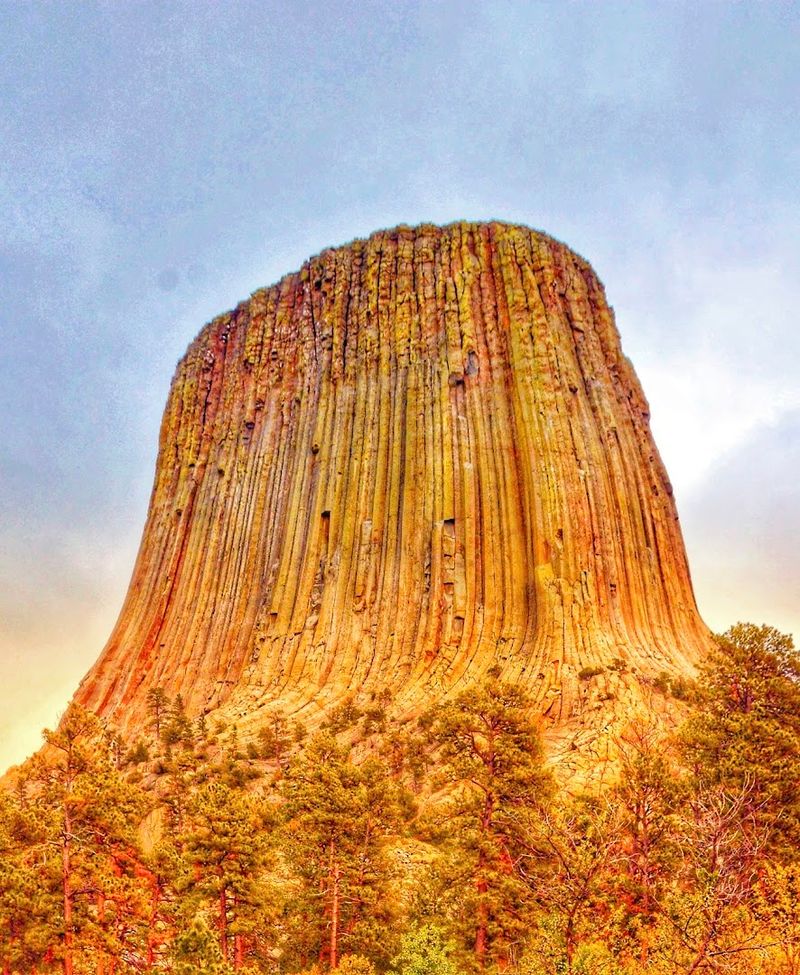
Devils Tower shoots 867 feet straight up out of the Wyoming plains and looks so out of place that your brain takes a second to accept it as real. It is real.
Geologists believe it formed from magma that cooled underground and was gradually exposed as the surrounding rock eroded away over millions of years.
The monument is sacred to more than 20 Indigenous tribes, including the Lakota, who call it Bear Lodge. Voluntary climbing closures are in place during June out of respect for those traditions.
Worth knowing before you plan a climbing trip.
The 1.3-mile Tower Trail loop around the base is accessible to most hikers and gives you a full look at the stunning columnar rock formations up close. Prairie dogs live in a town near the parking area and are absolutely worth a few minutes of your time.
Devils Tower also has a small campground if you want to wake up to that view. Highly recommended move.
Wall Drug, South Dakota
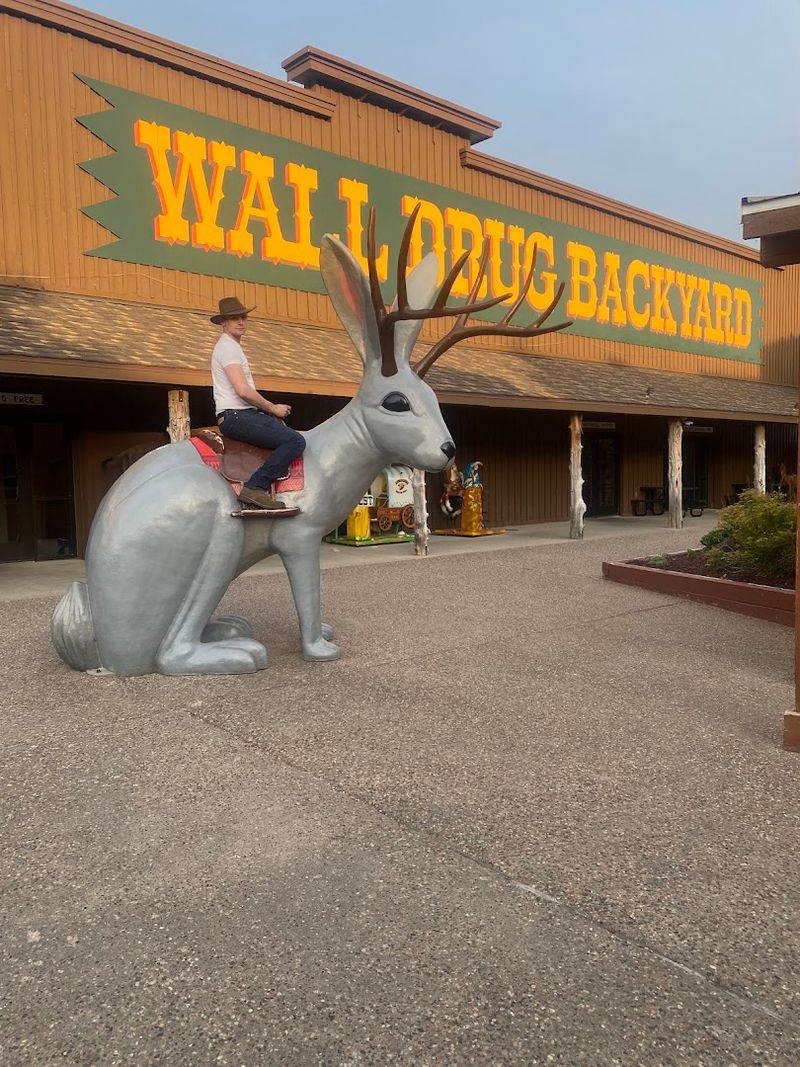
Wall Drug started in 1931 as a struggling pharmacy in the middle of nowhere, South Dakota. The owners put up signs offering free ice water to travelers on the highway.
Those signs eventually spread across the country, and the rest is gloriously weird American history.
Today, Wall Drug is part souvenir shop, part diner, part Western-themed spectacle, and entirely worth the stop. There are animatronic dinosaurs, a jackalope photo op, homemade donuts, and enough bumper stickers to wallpaper a small house.
It is not trying to be subtle, and that honesty is refreshing.
The Badlands are just 10 miles east, so Wall Drug works perfectly as a pit stop before or after exploring the park. Coffee is cheap, the seating area is massive, and the people-watching is free.
Some travelers roll their eyes at tourist traps, but Wall Drug leans into its own ridiculousness with such commitment that it becomes genuinely fun. Grab a donut.
You earned it.
New River Gorge Bridge, West Virginia
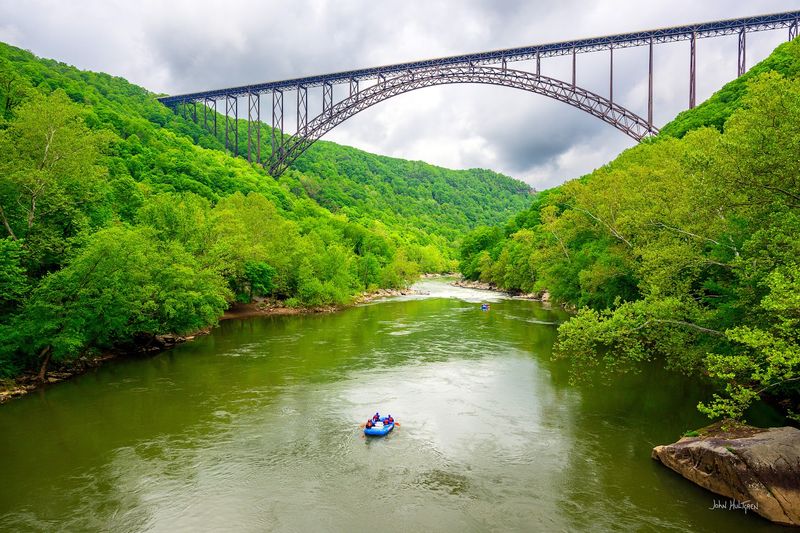
When the New River Gorge Bridge opened in 1977, it was the longest steel arch bridge in the world. It held that title for 26 years.
Even now, pulling up to an overlook and seeing that structure stretch across the gorge is a full stop, jaw-drop moment.
Canyon Rim Visitor Center on the north side has the best free views and a short boardwalk trail that leads to an overlook directly above the bridge. The drive down into the gorge to see it from below is equally worth doing, and the contrast in perspective is striking.
Every October, Bridge Day turns the structure into a festival site where BASE jumpers leap off the side and rappellers descend the cables. It is one of the wildest free events in the country.
New River Gorge became a National Park in 2020, which means infrastructure is still catching up. Go now while it is still relatively crowd-free compared to more established parks.
The gorge rewards the curious traveler.
Garden of the Gods, Colorado Springs, Colorado
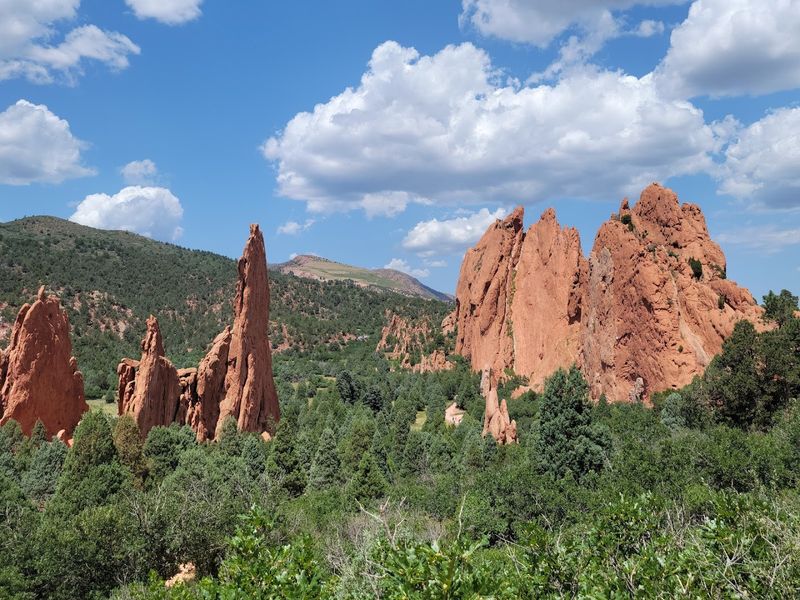
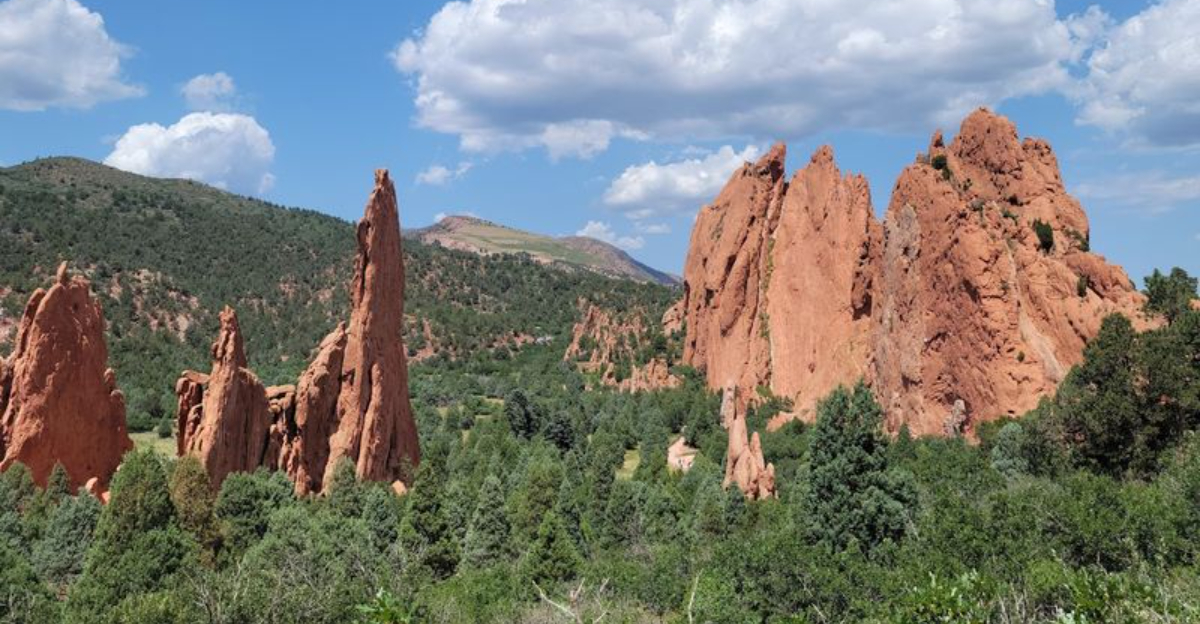
Three hundred acres of dramatic red sandstone formations, Pikes Peak framed in the background, and zero entry fee. Garden of the Gods is one of those places that should cost something but somehow does not, and that generosity feels almost suspicious given how spectacular it is.
The park is owned by the city of Colorado Springs, which has kept it free and open since 1909 per the wishes of the donor who left it to the city. The visitor center has a good free museum explaining the geology, which is surprisingly fascinating.
These rocks are around 290 million years old.
Paved roads wind through the park, so you can see the main formations by car if hiking is not on the agenda. Balanced Rock, Kissing Camels, and Siamese Twins are the crowd favorites.
Rock climbing is allowed with a permit. Sunrise and late afternoon light turn the sandstone a deep orange-red that photographers lose their minds over.
Arrive early on summer weekends to snag parking without the headache.
White Sands National Park, New Mexico
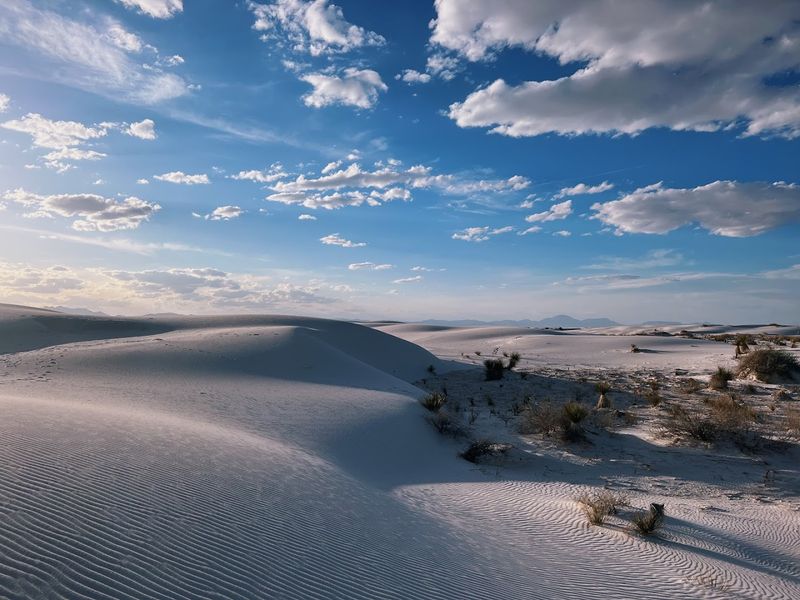
White Sands protects the largest gypsum dunefield on Earth, covering about 275 square miles of blinding white sand in southern New Mexico. Gypsum is the same mineral found in drywall, which makes it a strange fun fact to drop on unsuspecting travel companions.
The dunes are cool to the touch even in summer heat, because gypsum does not absorb heat the way quartz sand does. That detail alone makes the science nerds happy.
Sunrise and sunset turn the white dunes pink and gold, and those are genuinely the best times to visit for both light and temperature.
Rent a plastic sled from the gift shop and slide down the dunes. Yes, this is a real activity.
Yes, adults do it too. The Interdunes Boardwalk is an easy flat trail that explains the ecosystem, and the longer backcountry loop rewards hikers with serious solitude.
One note: the park occasionally closes for missile testing from the adjacent range. Check the park website before heading out.
Cadillac Ranch, Amarillo, Texas
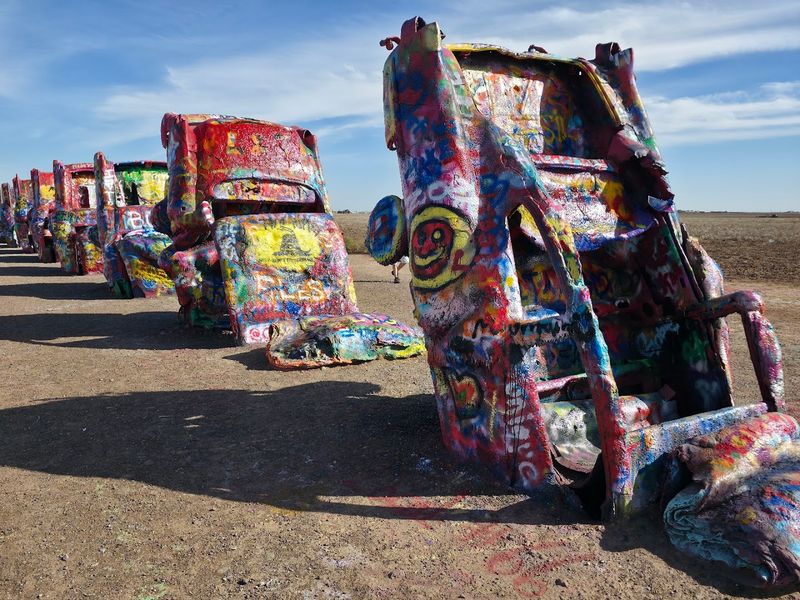
Ten Cadillacs buried hood-first in a Texas panhandle field, angled at the same degree as the Great Pyramid of Giza. That sentence is real, and so is the installation.
Cadillac Ranch was created in 1974 by an art group called Ant Farm, commissioned by eccentric millionaire Stanley Marsh 3.
The cars span model years 1949 through 1963, and every inch of them has been repainted so many times that the layers of spray paint are basically structural at this point. Visitors are encouraged to add their own layer.
Cans of paint are often left on-site by previous visitors, but bringing your own is part of the ritual.
Access is free, the field is open year-round, and parking is right off Route 66 and Interstate 40. It takes maybe 20 minutes, which is exactly the right amount of time for something this wonderfully absurd.
Wear shoes you do not mind getting muddy. The ground around the cars gets surprisingly messy after rain.
Carhenge, Alliance, Nebraska
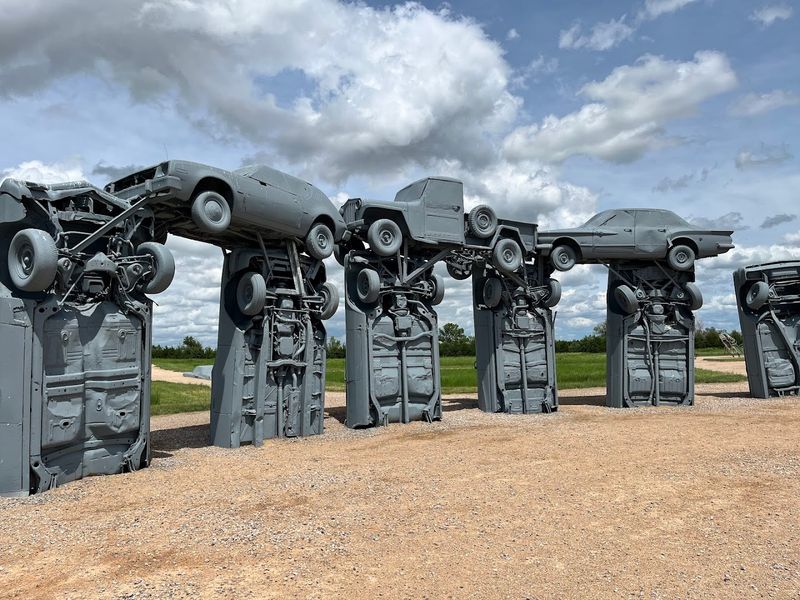
Someone looked at Stonehenge and thought, what if we did that but with 1960s American cars? That person was Jim Reinders, and in 1987 he built Carhenge in the Nebraska Sandhills as a memorial to his father.
The result is one of the most committed pieces of roadside art in the country.
Thirty-eight vehicles are used in the installation, all painted grey to match the look of the original Stonehenge stones. The alignment mirrors the real thing, oriented to the summer solstice sunrise.
That level of dedication earns serious respect. The surrounding grounds include a small sculpture garden made from more salvaged car parts, which extends the weird and wonderful atmosphere.
Admission is free, and the site is open year-round during daylight hours. Alliance is not exactly on the way to anywhere obvious, which is exactly the point of a detour.
The town itself is friendly and small. A visit to Carhenge takes about 30 minutes and leaves a lasting impression that is genuinely hard to explain to people who have not been.
Seven Magic Mountains, near Las Vegas, Nevada
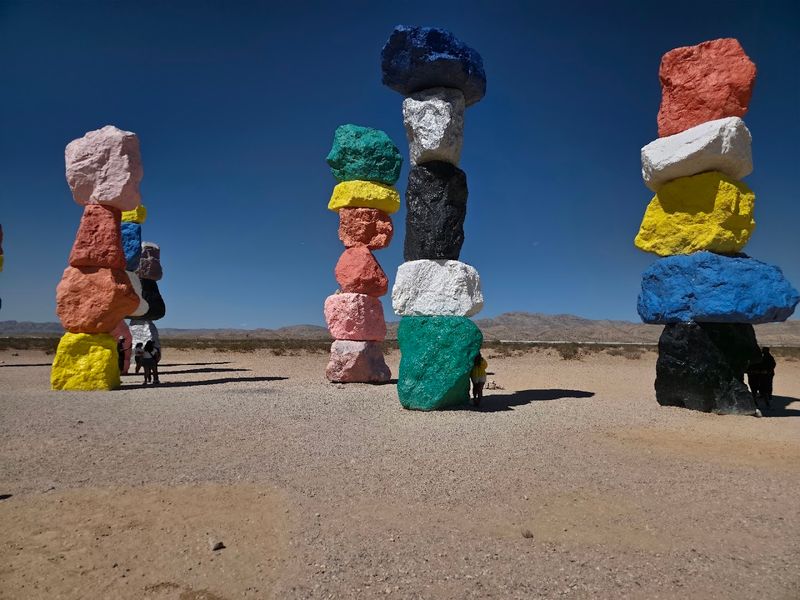
About 10 miles south of Las Vegas on I-15, seven towers of neon-painted boulders rise out of the Mojave Desert like a fever dream someone forgot to clean up. Swiss artist Ugo Rondinone created Seven Magic Mountains in 2016, and what started as a temporary installation has stuck around thanks to overwhelming public love.
Each tower stands up to 35 feet tall and is made from locally sourced limestone boulders painted in fluorescent colors. The contrast between the muted desert landscape and the screaming neon is startling in the best way.
Morning light is ideal for photography, and the site gets busy on weekends.
Parking is free, admission is free, and the whole stop takes about 20 to 30 minutes. It is an easy add-on when driving between Las Vegas and Los Angeles, or a quick solo detour from the Strip.
The art asks a simple question about nature versus human creativity. Standing in front of it, the answer feels less important than the view.
Horseshoe Bend, near Page, Arizona
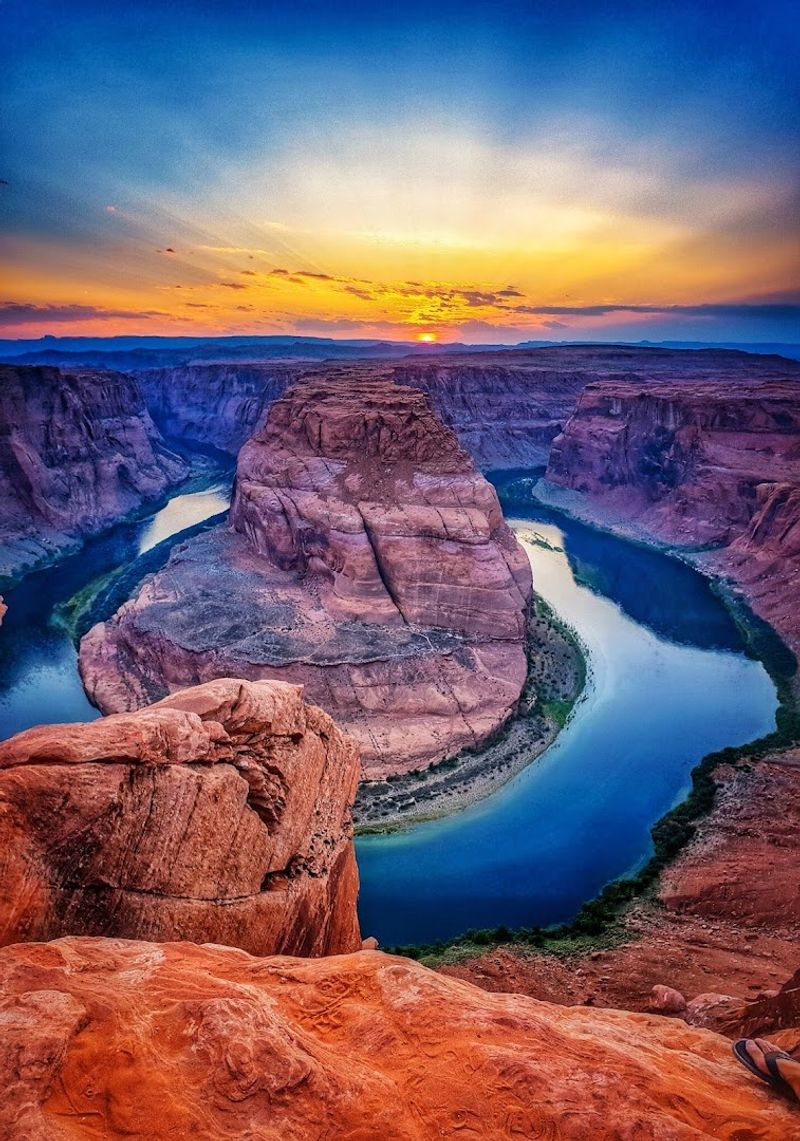
The Colorado River makes a nearly perfect horseshoe curve around a sandstone butte near Page, Arizona, and the overlook above it is one of the most photographed spots in the American Southwest. The view hits differently in person.
Photos simply cannot capture the scale.
The hike from the parking area is 1.5 miles round trip with about 200 feet of elevation gain on the way back. It is not difficult, but the desert heat is serious business from May through September.
Bring more water than you think you need, and start early to beat both the heat and the crowds.
Horseshoe Bend now charges a small parking fee, and the new paved trail and expanded overlook platform have made the experience safer and more accessible than in earlier years. Sunrise and sunset both produce extraordinary light on the canyon walls.
Sunset is more popular, but sunrise means fewer people and cooler temps. Glen Canyon Dam and Lake Powell are just a few miles away, making this a natural anchor stop for the area.



