 Unearth The Voyage
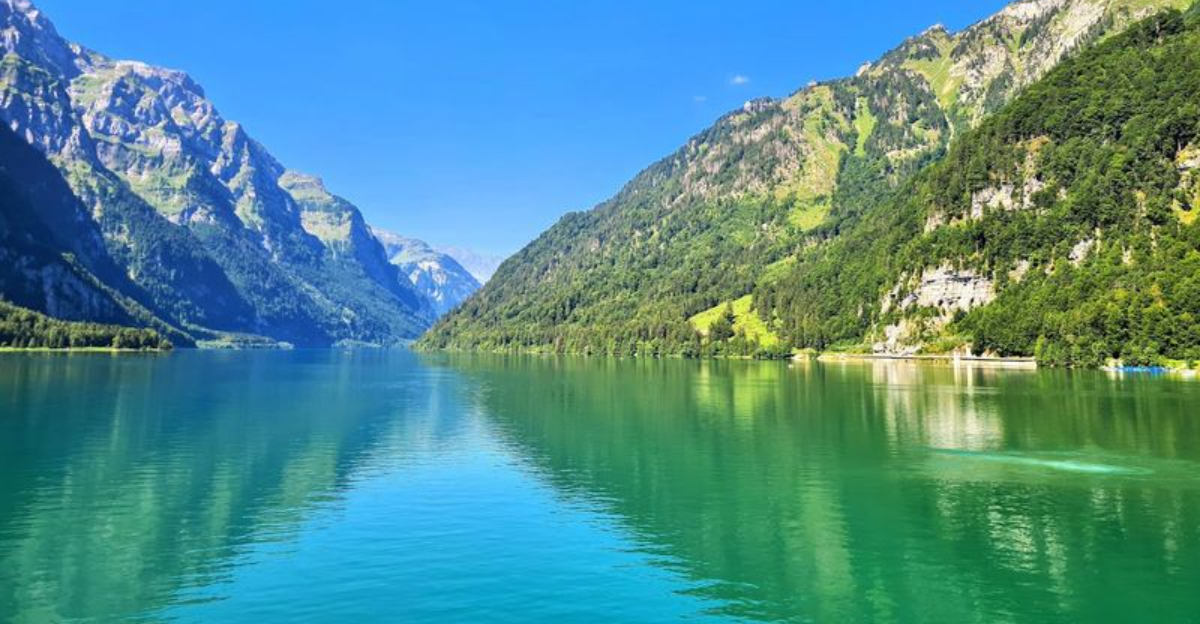
Switzerland has no shortage of jaw-dropping lakes, but most travelers snap a photo from the road and keep driving. That is a genuine shame, because some of the most rewarding experiences the country offers are hiding right at the water’s edge.
From high alpine bowls you reach by cable car to forest-wrapped turquoise pools that barely show up on tourist maps, these lakes reward the traveler who actually stops. I learned this the hard way after rushing past Blausee on my first Swiss trip and kicking myself about it for years.
Oeschinensee
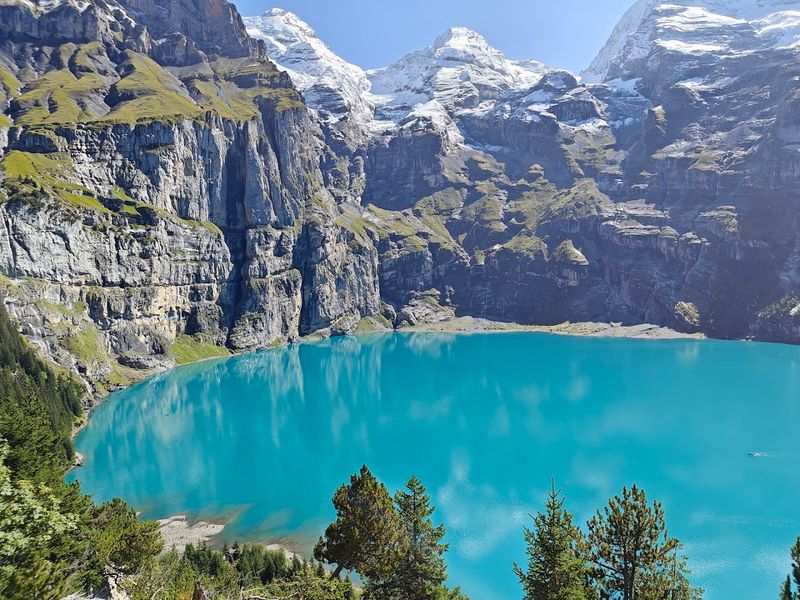
Some lakes have the audacity to look better in real life than in photos, and Oeschinensee is one of them. Sitting above Kandersteg in the Bernese Oberland, this glacial lake is framed by sheer limestone walls and fed by waterfalls that tumble down from every direction.
You reach it by gondola and a short walk, which already sets the tone for a proper outing rather than a quick pit stop.
The hiking trails here range from easy shoreline strolls to more ambitious ridge routes with views that make your legs forget they are tired. Families tend to linger at the picnic areas near the water, and the rowboat rental situation is genuinely excellent.
There is also a restaurant if you need fuel before tackling the trails.
Oeschinensee is a UNESCO World Heritage site, which means it has official recognition for being extraordinary. Plan at least half a day.
You will not regret it.
Blausee
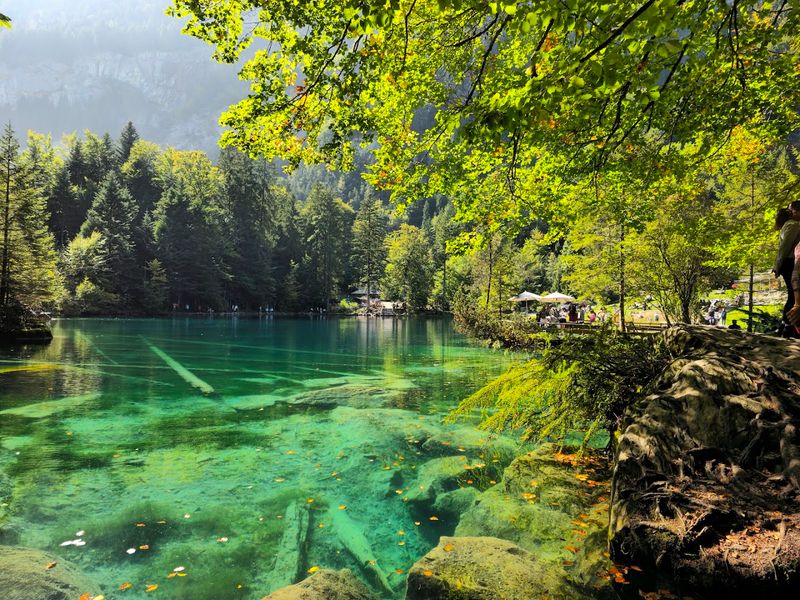
Blausee is proof that size has nothing to do with impact. This small nature-park lake in the Kander Valley earns its name honestly: the water is an almost unreal shade of blue that stops people mid-sentence.
The clarity is so remarkable that you can watch trout hanging in the water below you like living ornaments.
The park around the lake has well-maintained walking paths, shaded picnic spots, and a calm atmosphere that feels deliberately unhurried. It is the kind of place where you sit down for ten minutes and suddenly an hour has passed.
That is not a complaint.
There is a small entry fee to enter the nature park, which helps keep the crowds manageable and the environment pristine. A lakeside restaurant serves Swiss classics if you want to stretch the visit into a proper meal.
I once skipped Blausee entirely on a road trip. That mistake has never been repeated.
Lake Cauma
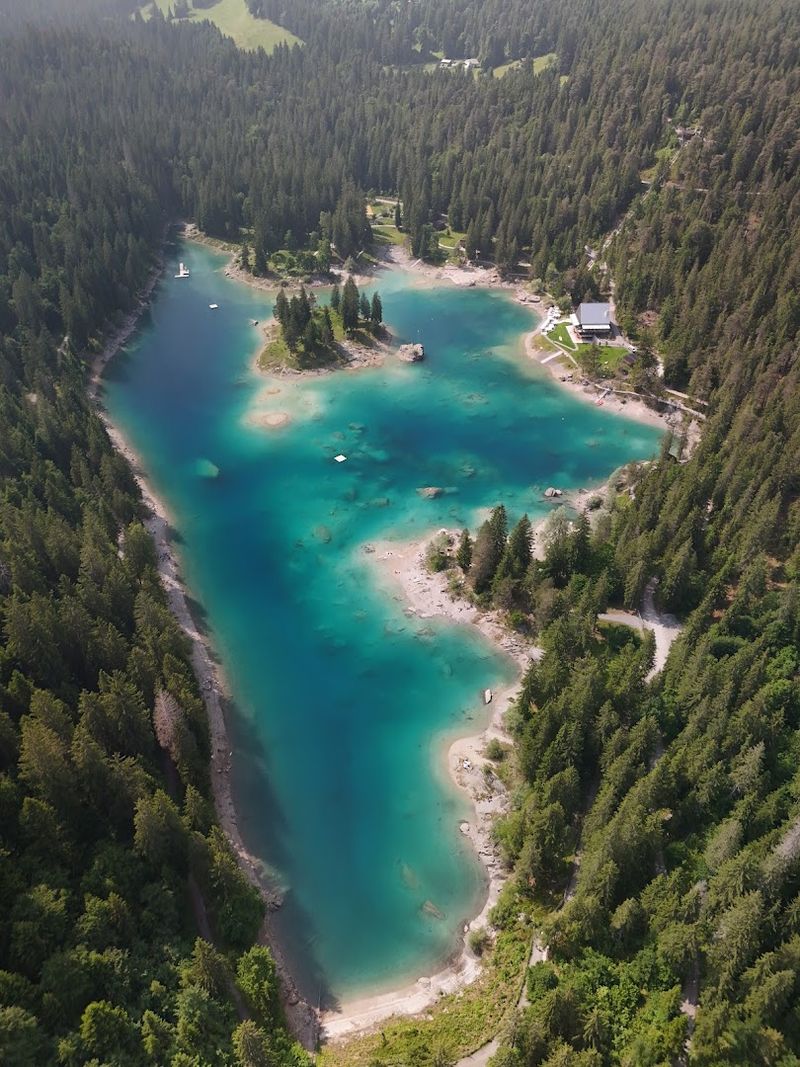
Tucked into the forest just outside Flims, Lake Cauma looks like someone accidentally left a piece of the Caribbean in the Swiss Alps. The turquoise color is shockingly vivid, and unlike many alpine lakes, the water actually warms up enough for swimming in summer.
That detail alone changes the entire calculus of a visit.
The sheltered forest setting keeps wind off the water, which means the surface stays mirror-calm on most days. A wooden deck and grassy areas around the lake give swimmers and sunbathers plenty of room to spread out.
Getting there involves a short forest walk that is pleasant enough to be part of the experience rather than a chore.
Lake Cauma is popular with locals from Flims and Laax, so weekends in July and August can get busy. A weekday morning visit rewards you with almost meditative quiet.
The Grisons Alps have many beautiful corners, but this one has a particularly strong case for being the most photogenic.
Lake Sils (Silsersee)
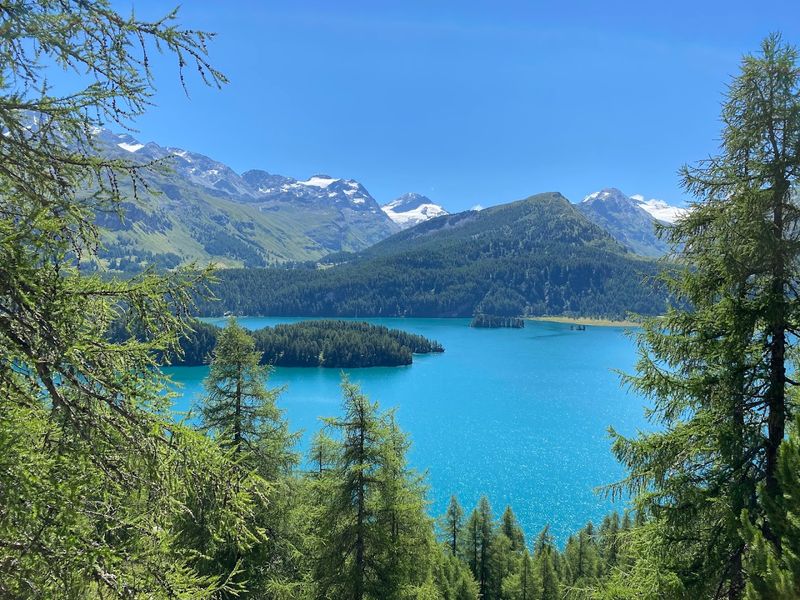
Lake Sils sits in the Upper Engadin at nearly 1,800 meters and carries a mood that is hard to pin down but impossible to ignore. It is broader and more atmospheric than most Swiss lake coverage lets on, with shifting light that turns the water from steel-grey to deep blue depending on the hour.
Friedrich Nietzsche spent multiple summers nearby and reportedly did some of his best thinking here. Make of that what you will.
What makes Lake Sils genuinely special for visitors is that it has scheduled passenger boats running in summer, the only mountain lake in Switzerland to offer this service. Taking the boat between Sils Maria and Maloja gives you a perspective that shoreline hiking simply cannot replicate.
The surrounding trails are excellent too, particularly toward the Forno Glacier.
The village of Sils Maria has good cafes and a small Nietzsche museum for those who want more than just a walk. Autumn is particularly rewarding here when the larch trees turn gold.
Walensee
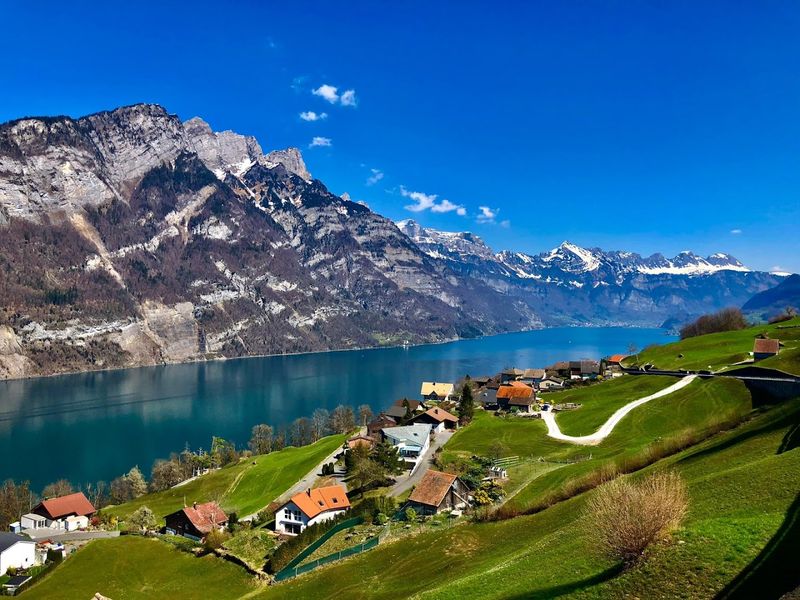
Walensee has one of the most dramatic settings of any lake in Switzerland, and that is saying something in a country that does not exactly lack competition. The Churfirsten mountains rise almost vertically from the northern shore, creating a wall of rock that makes the lake look like it was carved out by something very determined.
The scale is genuinely impressive.
Boat trips connect the small villages along the shore, including Quinten, a car-free settlement that can only be reached by water or on foot. Quinten has a microclimate so mild that fig trees grow there, which feels like a geographical joke but is completely true.
The lake cruise alone justifies the detour.
Switzerland Tourism actively promotes Walensee for outdoor activities including cycling, swimming, and paragliding from the cliffs above. The lake sits conveniently between Zurich and Chur, making it a logical stop rather than a dedicated trip.
Stop here long enough to actually feel the scale of those mountains above you.
Lake Klöntal (Klöntalersee)
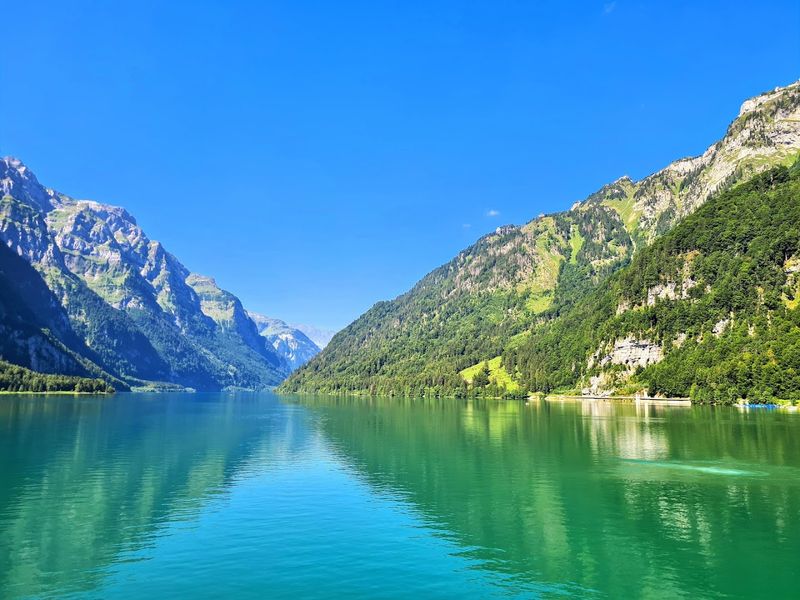
Lake Klöntal has a fjord-like quality that feels slightly out of place in landlocked Switzerland, and that is exactly what makes it so compelling. The steep forested slopes crowd close to the water on both sides, creating a narrow, dramatic corridor that changes character completely as you move along the shore.
It is the kind of landscape that makes you slow the car down without consciously deciding to.
Official tourism sources for the Glarus Alps highlight it as one of the region’s standout mountain lakes, with hiking, picnicking, and watersports all available around the shoreline. The road along the lake is quiet enough that cycling it feels genuinely pleasant rather than stressful.
A few small farms and alpine huts break up the scenery in the best possible way.
Lake Klöntal is about 30 minutes from the town of Glarus, which keeps it accessible without making it overrun. Early mornings here are particularly still and worth the early alarm.
Bannalpsee
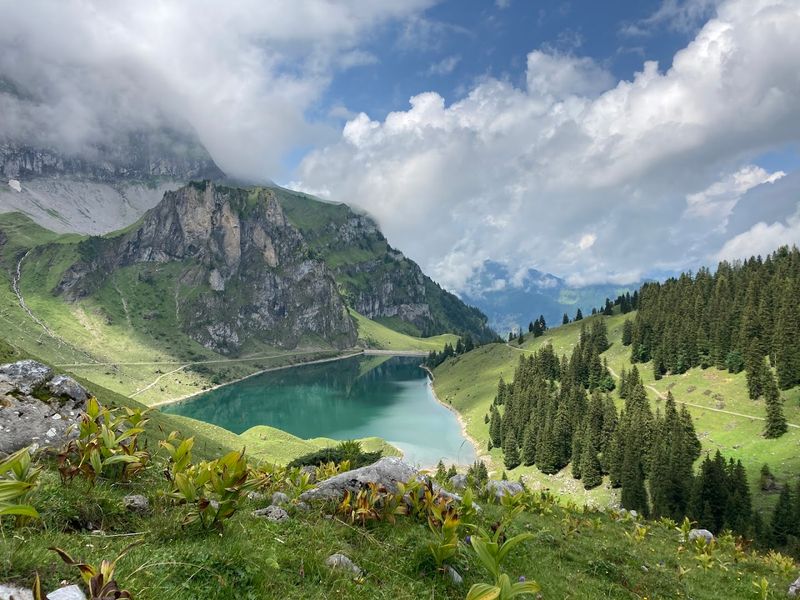
Not every great lake requires a grueling approach, and Bannalpsee makes that point with style. Sitting in a high valley above the Engelberg region, it is reached by cable car from Oberrickenbach, which means you go from valley road to serious alpine scenery in a matter of minutes.
The contrast is almost theatrical.
The lake itself sits in a wide open bowl with peaks rising on multiple sides and a tranquility that feels earned even though the cable car did most of the work. Hiking routes fan out from the lake toward higher ridges and neighboring valleys, giving you options whether you want a gentle shoreline stroll or something more ambitious.
The alpine flower situation in early summer is genuinely excellent.
Bannalpsee does not have the international name recognition of some Swiss lakes, which works entirely in your favor. Fewer crowds, more space, and a sense of discovery that the famous spots cannot offer.
Pack lunch and take your time.
Arnensee
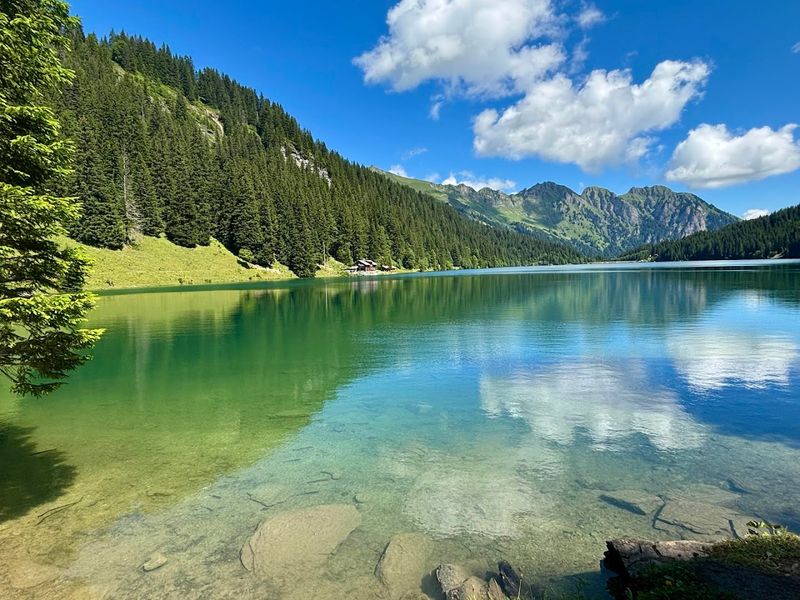
Finding a genuinely calm and uncrowded lake in Switzerland can feel like a competitive sport, but Arnensee makes it easy. Tucked away near Zweisimmen in the Bernese Oberland, this lake has the kind of quiet that actually sticks around rather than disappearing the moment a tour bus arrives.
Switzerland Tourism lists swimming, fishing, hiking, picnic spots, and boat rentals here, which is a pretty compelling itinerary for a single location.
The surrounding landscape is soft and green rather than dramatically jagged, which gives Arnensee a different personality from the more famous alpine lakes. It feels approachable and genuinely relaxing rather than performatively scenic.
That distinction matters more than it sounds when you are actually trying to unwind.
Boat rentals here are a low-key highlight. Paddling around a quiet alpine lake with no agenda is one of those simple pleasures that sounds ordinary until you are actually doing it.
Build a half-day around Arnensee and you will leave wondering why it does not get more attention.
Schwarzsee
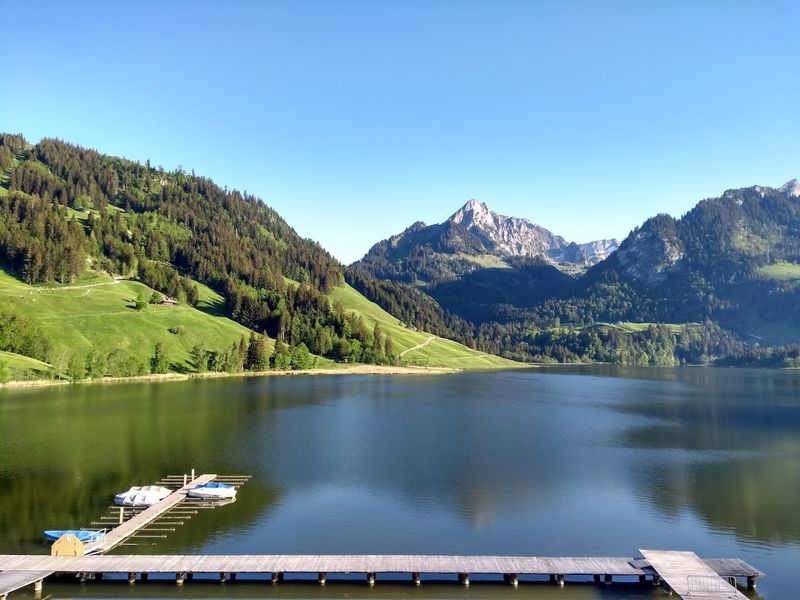
Schwarzsee works hard for its reputation and earns every bit of it. Located in the Pre-Alps above Fribourg, this lake offers hiking, swimming, cycling, and plain old sitting-around in equal measure, which makes it one of the most genuinely versatile lake destinations in the country.
The circular walking trail around the lake is flat enough to be manageable and scenic enough to stay interesting the whole way round.
The water warms up nicely in summer, and the lake has proper swimming infrastructure including changing facilities and a beach area. That combination of practicality and scenery is rarer than you might think.
A cable car from the valley below makes access easy even if you are not starting from the lakeside.
In winter, Schwarzsee transforms into a small ski area, which means the infrastructure around the lake is better than you would expect for its size. The village has good food options and accommodation if you want to stay overnight.
This lake rewards unhurried visits at any time of year.
Gelmersee
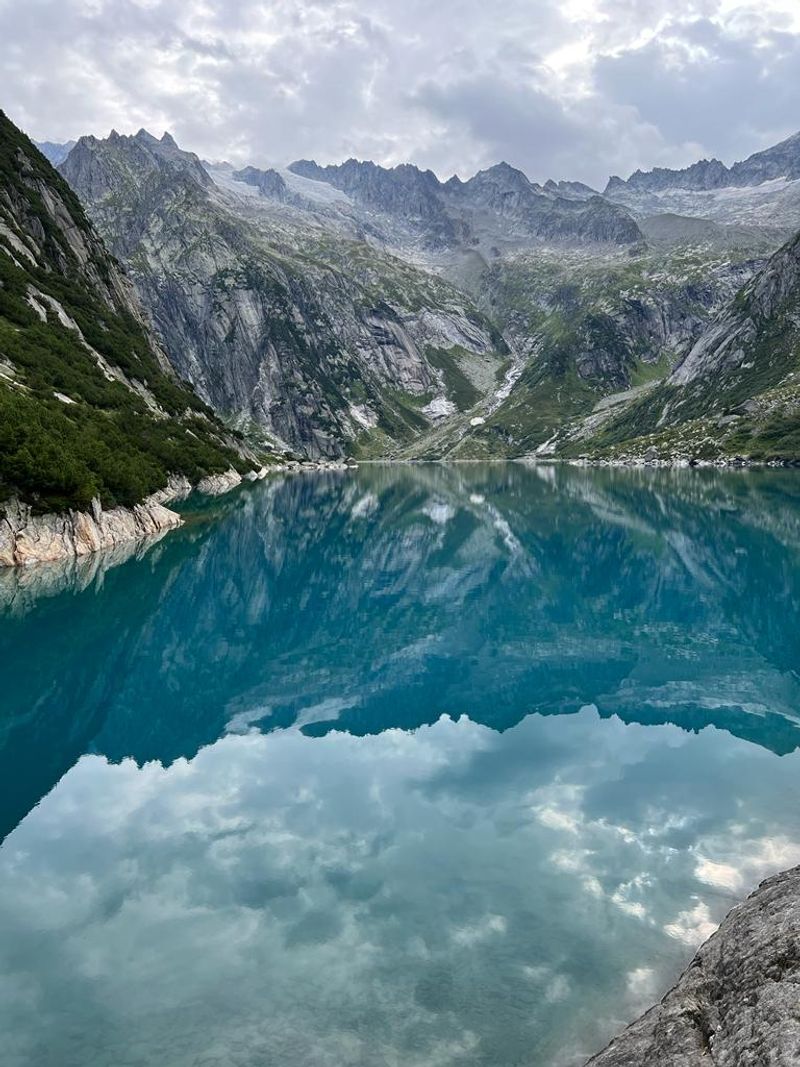
Gelmersee has a secret weapon that most Swiss lakes cannot claim: the approach is half the adventure. The Gelmerbahn funicular climbs to the lake at a gradient steep enough to make your palms sweat, with open carriages that give you unobstructed views of the valley dropping away below.
It holds the record as one of the steepest open-air funiculars in the world, which is a fact worth knowing before you board.
At the top, the lake itself is a vivid turquoise color set against the stark rocky landscape of the Haslital. The contrast between the intense water color and the surrounding grey granite is genuinely striking.
A trail runs along the dam wall and around part of the lake, with a picnic area that Switzerland Tourism specifically calls out as a highlight.
The Gelmerbahn operates seasonally and tickets sell out quickly in summer, so booking ahead is not optional. Pair the funicular ride with a lakeside picnic and a short hike for a full and memorable half-day.
Lai da Palpuogna
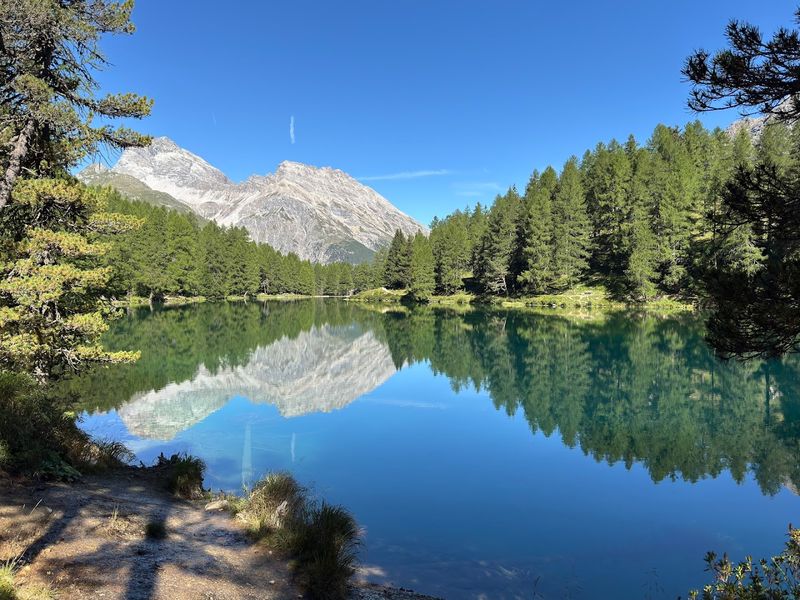
Lai da Palpuogna regularly shows up in lists of the most photographed lakes in Switzerland, and once you see it, the reason is obvious. The blue-green water has a clarity and color intensity that photographers chase for hours without fully capturing.
Located near Preda in the Grisons, it sits at around 1,900 meters and is surrounded by larch forest that turns spectacular gold in autumn.
What earns it a place on this particular list is that it is genuinely easy to linger here. Picnic areas are well placed around the lake, the terrain is accessible, and the mountain setting is peaceful rather than overwhelmingly busy.
The Albula Pass road nearby makes it reachable without a serious hiking commitment, though trails do extend further into the mountains for those who want more.
Autumn timing is worth planning around specifically. When the larches turn, Lai da Palpuogna becomes one of those places that makes you stop mid-bite of your sandwich and just stare.
Bring more snacks than you think you need.
Lägh da Cavloc
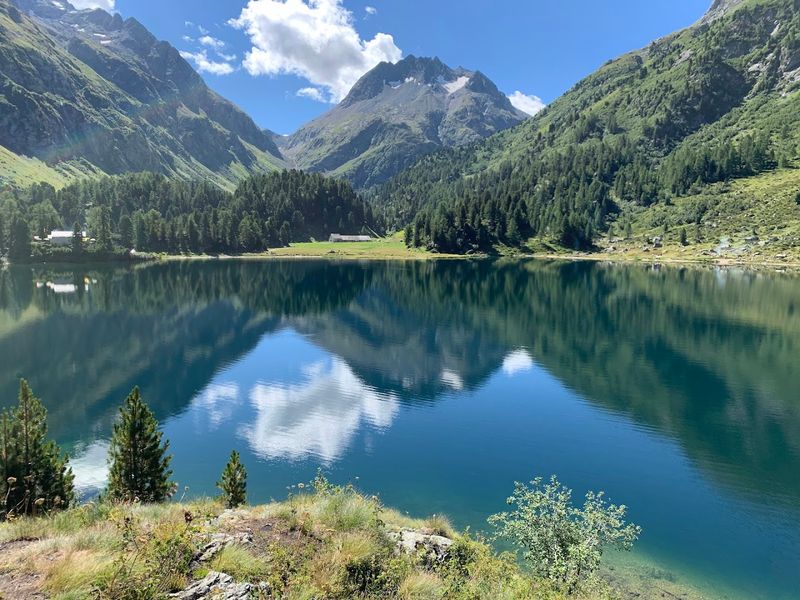
Near the village of Maloja at the western end of the Engadin Valley, Lägh da Cavloc punches well above its size. It is not the biggest or the most famous lake in the region, but it has something the famous ones sometimes lack: a genuine sense of ease.
Swimming, grilling, short excursions, and a small lakeside restaurant are all right there, which means you can build a full and satisfying afternoon without planning anything complicated.
The forest surrounding the lake keeps things shaded and cool even in high summer, and the trail to the lake from Maloja is pleasant enough to double as a warm-up walk. Engadin tourism sources specifically highlight it as a place for a relaxed outing rather than a rushed tick-box stop.
That framing is accurate.
The lakeside restaurant is small and informal, which is exactly right for the setting. It is the kind of place where you order something simple and end up staying for dessert.
Lägh da Cavloc rewards travelers who are not in a hurry.
Lagh da Saoseo
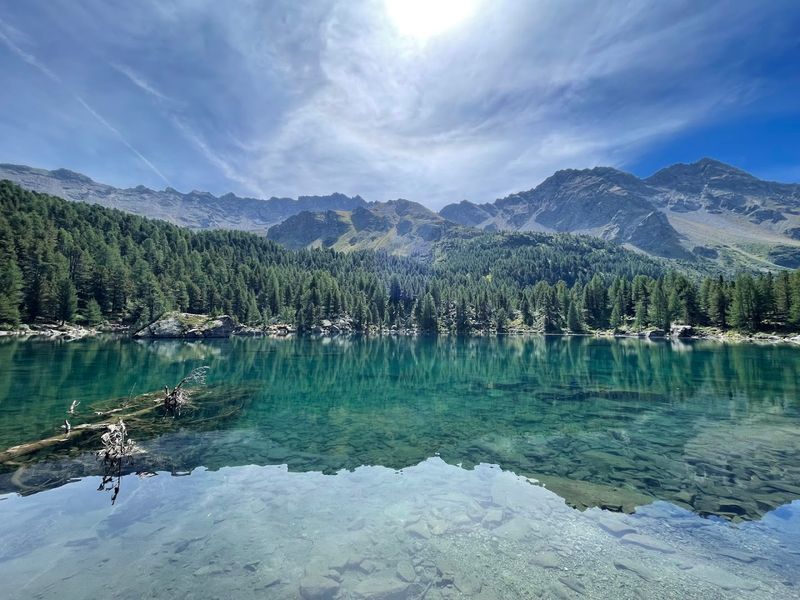
Regional tourism sources do not exaggerate when they call Lagh da Saoseo one of the most beautiful mountain lakes in the Alps. Located in Val da Camp in the Poschiavo district, this lake sits in a remote rocky basin with water so clear that the bottom looks close enough to touch even where it is not.
The color shifts between turquoise and deep green depending on the light and the angle, and neither version is disappointing.
What sets it apart from a pure scenery stop is the broader hiking context. Nearby alpine lakes and high mountain trails extend the experience well beyond a single viewpoint, making it a genuine destination for a full hiking day.
The effort required to reach it on foot keeps the crowds thinner than the scenery deserves.
Starting early from Poschiavo gives you the best light and the best chance of having the lake to yourself for at least part of the morning. Pack proper hiking boots.
The terrain earns its mountain-lake status completely.
Lago di Poschiavo
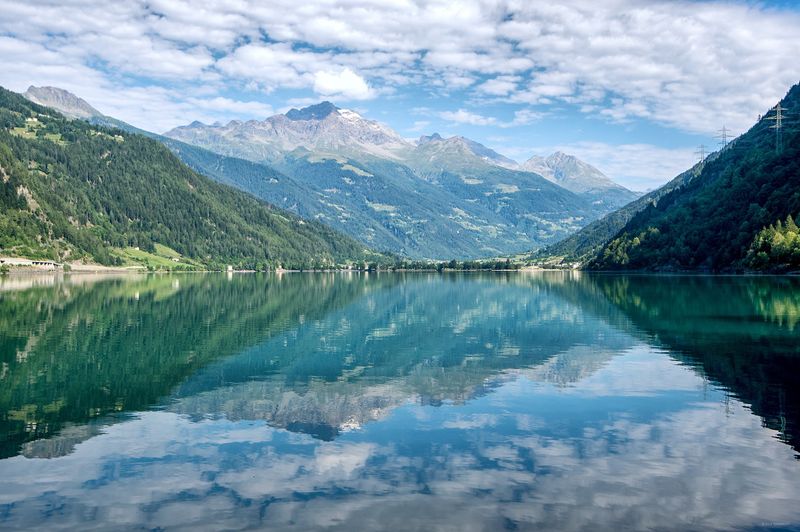
Lago di Poschiavo is the quietly confident one at the end of the list. While the more famous Swiss lakes compete for Instagram real estate, this lake in the southern Grisons sits in the Poschiavo Valley doing its thing without needing the validation.
The water is calm and reflective, the mountain backdrop is elegant rather than theatrical, and the overall atmosphere is one of genuine relaxation.
Switzerland Tourism highlights it as particularly appealing in spring and autumn, when the light is lower and the crowds have thinned out considerably. The Rhaetian Railway, a UNESCO World Heritage line, runs right through the valley, which means you can arrive by one of the world’s most scenic train routes and step straight into this peaceful lakeside setting.
The town of Poschiavo beside the lake has Italian-influenced architecture and food that reflects the valley’s position just north of the Italian border. Lunch here after a morning lakeside walk is a very good decision.
This lake does not shout, but it absolutely delivers.



