Most people know the sweeping staircase, the grand dining room, and those iconic front doors from the television screen. But the real castle behind the Downton Abbey story has been quietly collecting extraordinary secrets for over a thousand years. Long before any film crew arrived, the estate had already survived medieval bishops, Victorian architects, wartime hospitals, and one of history’s greatest archaeological discoveries. The family who lives there today still calls it home, and the history packed inside its walls makes the fictional drama look almost tame by comparison.
From a genuine Egyptian museum buried beneath the floorboards to a portrait of a king painted by one of the most celebrated artists of the 17th century, this castle has layers that most visitors never get to see. Here are 14 of the most fascinating secrets hidden inside the real Downton Abbey.
1. A Real Egyptian Museum Lies Beneath the Castle
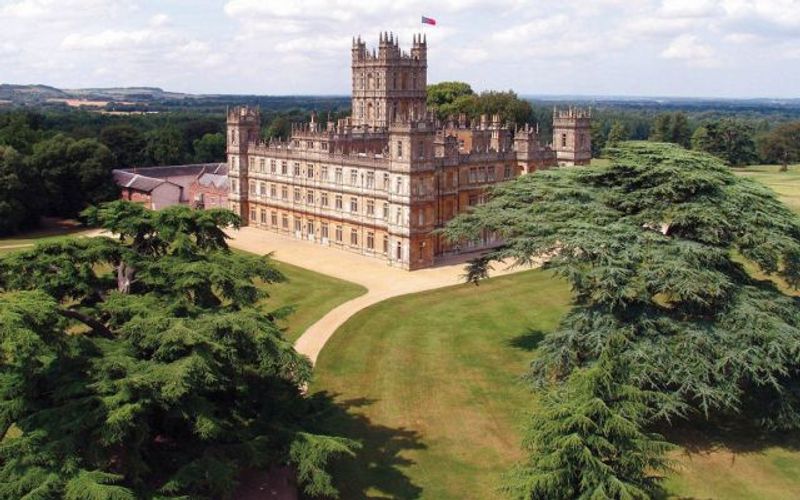
Nobody warns you that a trip to a Victorian country house might end with you face-to-face with a replica of Tutankhamun’s golden sarcophagus, but that is exactly what happens at this castle.
The Egyptian Exhibition is tucked into the old cellars and former staff quarters beneath the main floors. It tells the story of the 5th Earl of Carnarvon, who financed Howard Carter’s legendary excavation that uncovered the tomb of Tutankhamun in November 1922.
The exhibition spans six rooms and features original artifacts from the Earl’s personal collection, excavation photographs, and detailed documents. Reproductions of the Shrine, the Middle Coffin, the Mummy, and the iconic Death Mask are also on display.
Visitors reach the exhibition by descending the original servants’ staircase, which creates a genuinely striking shift from Victorian grandeur to ancient Egyptian history.
2. Thousands of Rare Books Fill the Castle Library
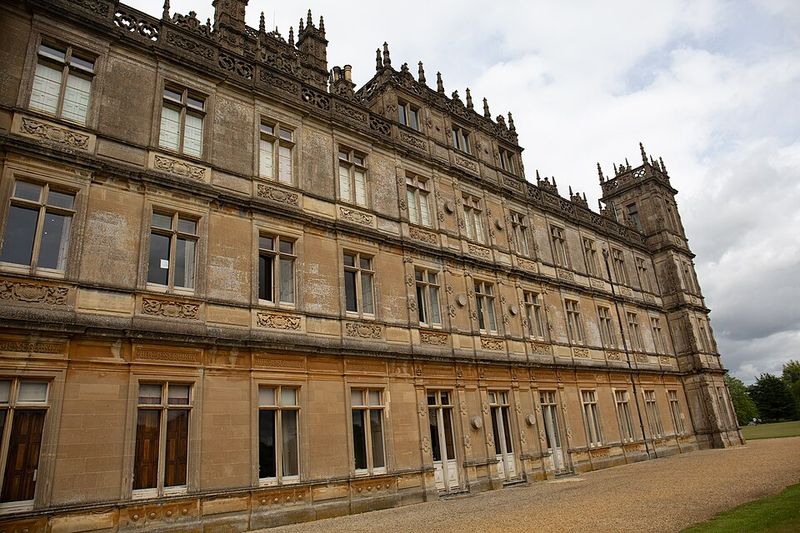
A room that appears in Downton Abbey more times than most viewers can count turns out to be hiding something even grander than its on-screen reputation suggests.
The North Library at Highclere Castle contains over 5,650 books, many of which date back to the 16th century. The collection was assembled over generations by the Carnarvon family and covers subjects ranging from history and politics to poetry, religion, and travel.
Tall mahogany shelves line the walls and stretch almost to the ceiling, creating one of England’s finest surviving private libraries. The room is actually a double library, meaning it connects to a second book-lined space beyond.
The current Earl and Countess still use the library regularly, which means these shelves hold living history rather than simply preserved relics behind a velvet rope.
3. The Great Hall Barely Changed for Downton Abbey
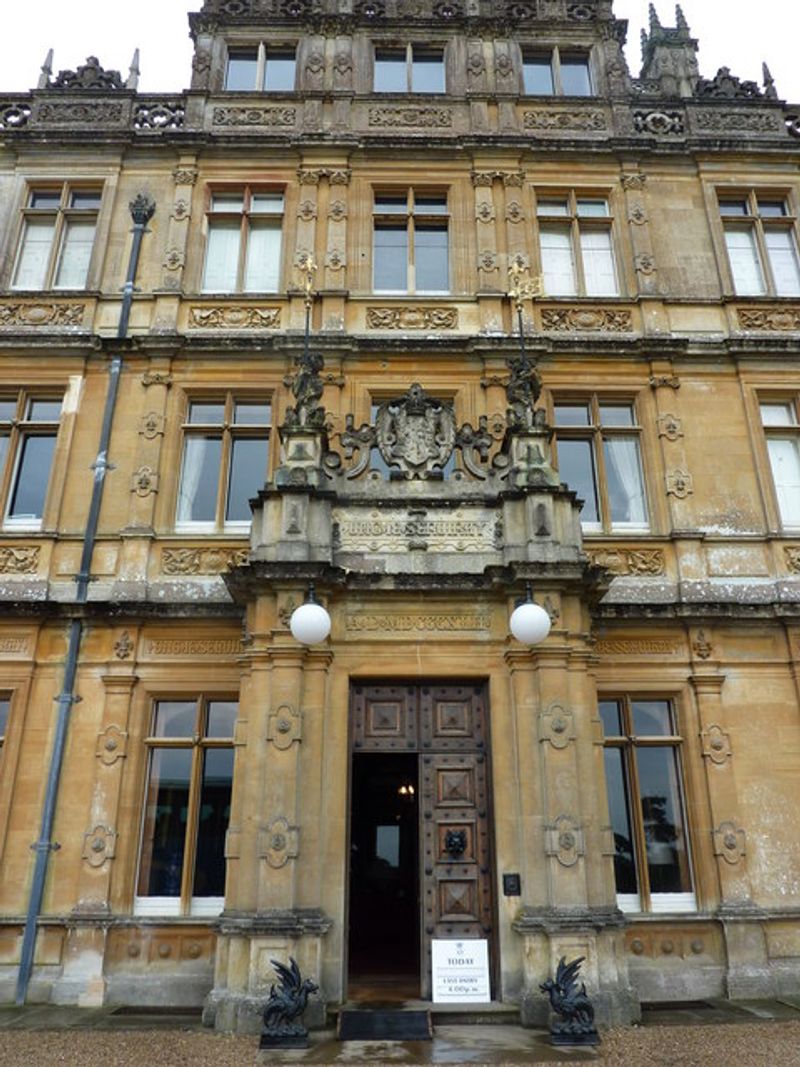
Very few television locations survive close inspection in real life, but Highclere’s Great Hall is the rare exception that actually looks better in person.
The production team behind Downton Abbey required surprisingly little alteration to the space before cameras started rolling. The soaring Gothic stone arches, the carved oak staircase, the ornate fireplaces, and the family portraits that line the walls are all genuine historic features rather than constructed props.
The Gothic styling of the hall, including its stone vaulting and clustered columns, dates from the 1860s and was designed to create exactly the kind of dramatic first impression that translates perfectly to a wide camera lens.
Visitors consistently report that standing in the hall feels uncanny, as if the set never got packed away and the Crawley family simply stepped out for a moment.
4. The Same Architect Designed Britain’s Most Famous Parliament
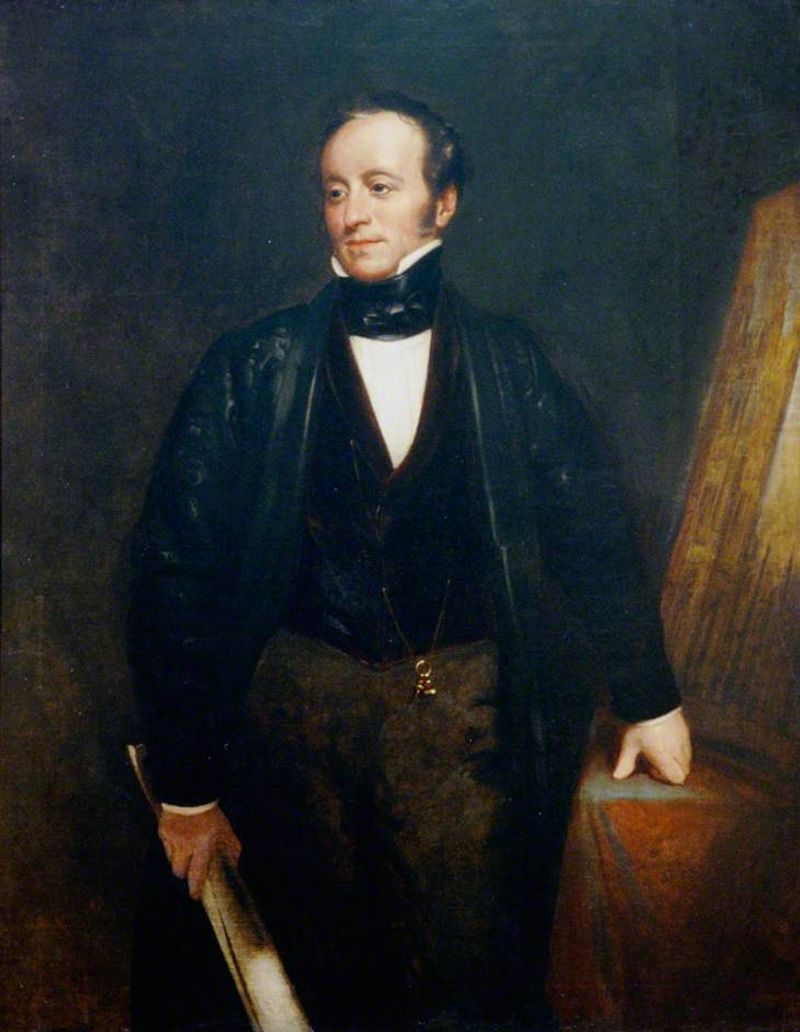
The man responsible for one of London’s most recognizable skylines also shaped the silhouette of the castle that would one day become Downton Abbey.
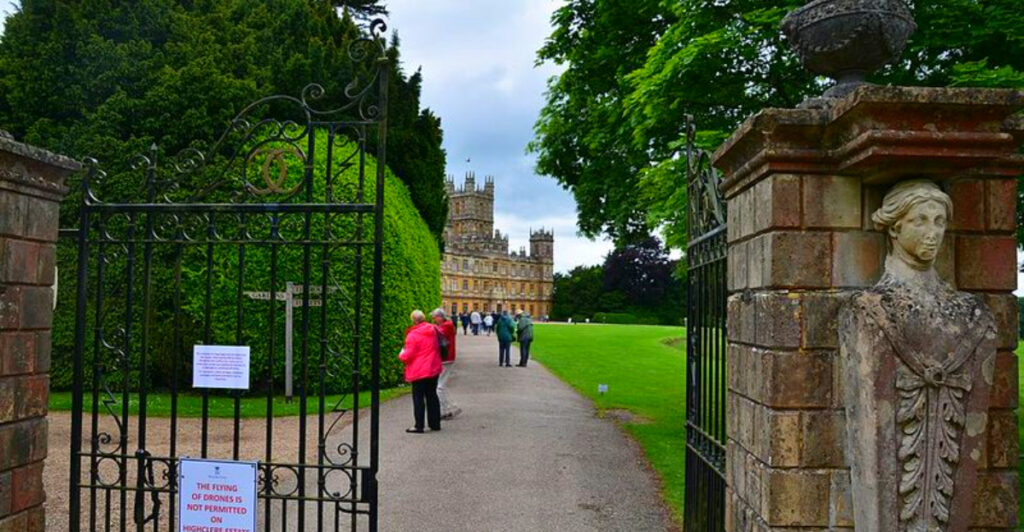
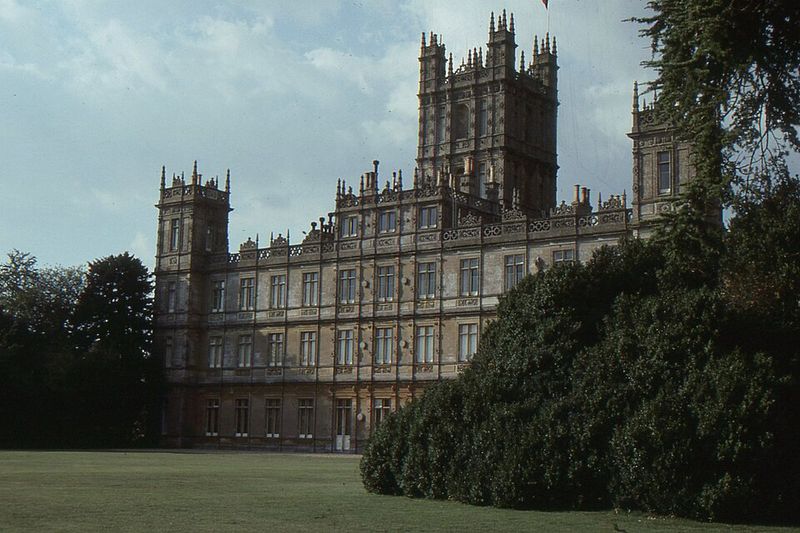
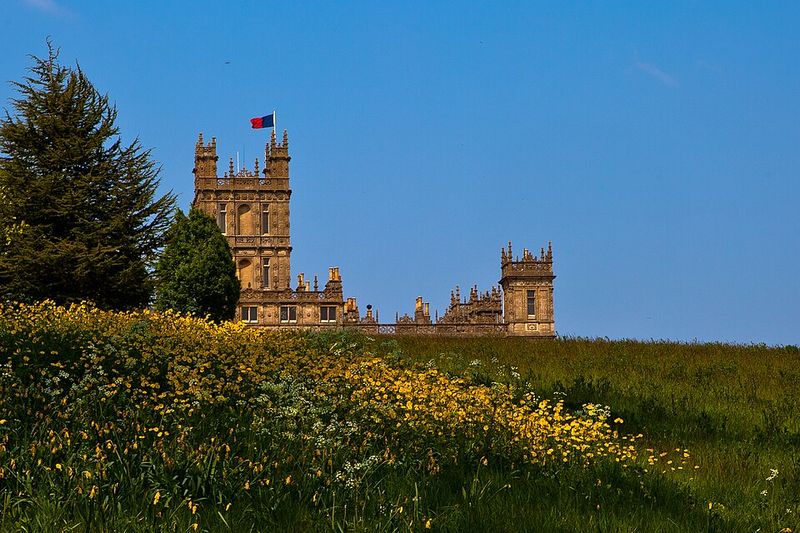
Sir Charles Barry redesigned Highclere between 1842 and 1849, during the same years he was overseeing the construction of the Palace of Westminster. Barry described his approach as Anglo-Italian, blending Jacobethan and Italianate influences into a design featuring towers, pinnacles, and elaborately carved stonework.
The entire exterior was faced in Bath stone, which gives the castle its distinctive warm, pale tone that photographs so well in English countryside light.
Barry’s two projects share a certain theatrical confidence. Both buildings were designed to impress at first glance, and both have spent the following centuries doing exactly that, one as the seat of British democracy, the other as the seat of one remarkable aristocratic family.
5. A Military Hospital Once Filled the State Rooms
Before the fictional Crawley family ever nursed a single wounded soldier on screen, the real castle had already done exactly that, and with considerably more medical precision.
During the First World War, Lady Almina Carnarvon, the 5th Countess, transformed Highclere into a fully operational surgical hospital specializing in orthopaedics. Funding came largely from her father, Alfred Rothschild, and she personally hired 30 nurses and a doctor to staff the facility.
The Arundel bedroom, which Downton Abbey fans will recognize as Lady Edith’s room, served as the operating theatre. Wounded soldiers were treated as house guests, sleeping in the castle’s own bedrooms with linen sheets and quality care rather than standard military conditions.
Lady Almina’s wartime chapter at Highclere is one of the most remarkable real stories the castle holds, and it directly inspired the hospital storyline that became central to the television series.
6. The Saloon Is the Castle’s Most Spectacular Interior
Many visitors assume the library or dining room is the crown jewel of Highclere’s interior, but the room that genuinely stops people in their tracks is the Saloon.
Rising several stories beneath an elaborately decorated ceiling, the Saloon serves as the architectural centerpiece of the entire castle. It was designed by Thomas Allom and completed in the 1860s, featuring carved stone arches and richly ornamented walls.
One of the most extraordinary details is the wall covering itself. The panels are made from 17th-century embossed and gilded leather from Cordoba, Spain, brought back by the 3rd Earl in 1631 and installed in the Saloon in 1862. That is centuries-old Spanish craftsmanship displayed inside a Victorian English castle.
The room also features impressive family portraits, creating a layered effect where centuries of history compete for attention from every direction.
7. Original Family Portraits Still Fill the Walls
Every portrait hanging in the rooms at Highclere is the real thing, which is a detail that separates this castle from many historic houses that swap originals for reproductions.
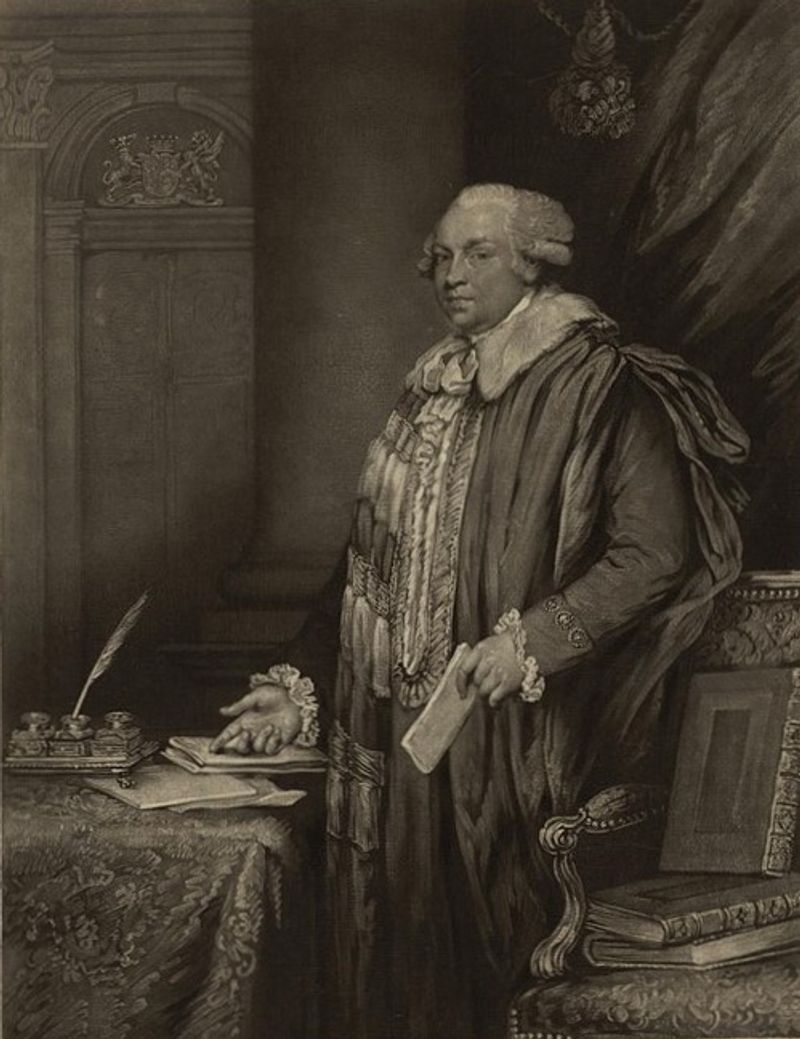
Generations of the Herbert family, who have held the title of Earl of Carnarvon since the estate came into their possession in 1679, look down from walls throughout the castle. These paintings have occupied their current positions for decades, in some cases far longer.
The portraits function as a visual timeline of the family’s history, capturing figures who shaped British politics, explored Egypt, and managed one of England’s great estates through wars, renovations, and changing fortunes.
Visitors who take time to look closely will notice that many rooms feel genuinely inhabited rather than curated, because the artwork was never chosen to impress tourists but simply to honor the people who built and lived in this extraordinary house.
8. Hidden Below Stairs Is the Original Servants’ Route
The upstairs-downstairs divide that Downton Abbey dramatized so effectively was not invented for television. The physical evidence of it still exists beneath the public rooms at Highclere.
A network of service corridors and staircases allowed household staff to move through the castle without crossing paths with guests or family members in the main rooms. These passages were a deliberate architectural feature, built to maintain the smooth, invisible operation of a large Victorian household.
Today, visitors heading to the Egyptian Exhibition follow part of this original route, descending the old servants’ staircase into the cellars below. The contrast between the grandeur above and the functional simplicity of these lower passages is immediately noticeable.
What makes this detail particularly interesting is that the staircase was never restored for tourist purposes. It survives largely as it was, offering a genuinely unvarnished look at the working infrastructure of the estate.
9. The Castle Still Functions as a Family Home
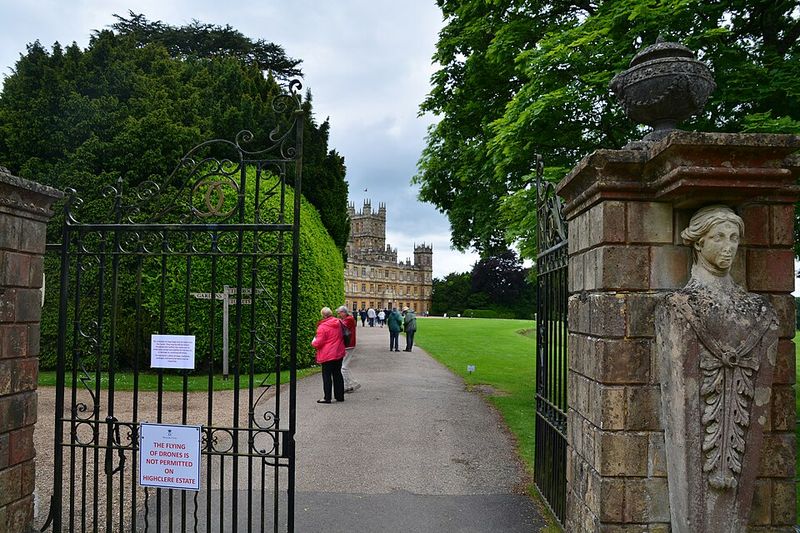
Despite attracting visitors from dozens of countries every year, Highclere has never been handed over to a heritage organization or converted into a full-time tourist attraction.
The 8th Earl and Countess of Carnarvon continue to live on the estate, keeping the castle in private family hands just as their predecessors have since 1679. Public access is limited to roughly 90 days per year, and when the castle opens to visitors, the family typically moves to a cottage on the grounds.
This arrangement means the rooms visitors see are genuinely lived-in spaces, not reconstructed period displays. Personal books, fresh plants, and family photographs appear alongside centuries-old furniture and artwork.
Multiple visitor reviews specifically mention the warm, homely atmosphere as what sets Highclere apart from other grand estates, and that quality is not an accident. It is the direct result of a family that has never stopped treating the castle as their actual home.
10. A Hidden Canadian Connection Lives Inside the House
Egypt gets most of the international attention at Highclere, but there is a second global story hidden inside the castle that Canada’s history books know very well.
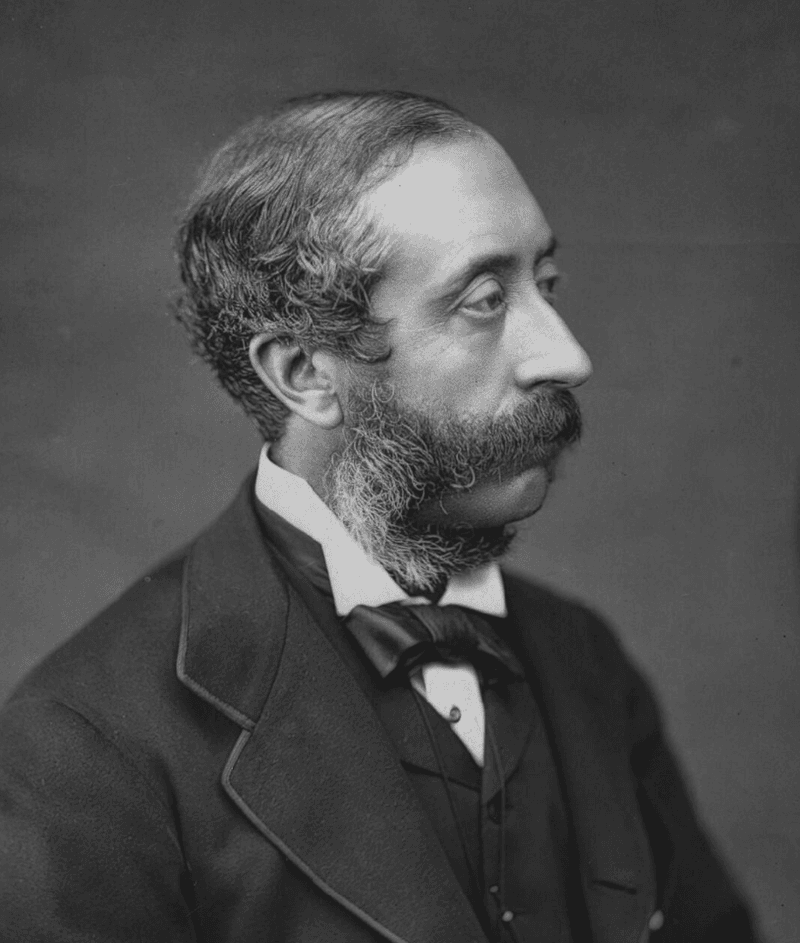
Henry Herbert, the 4th Earl of Carnarvon, served as Secretary of State for the Colonies during the 1860s. In that role, he worked closely with Sir John A. Macdonald, Canada’s first Prime Minister, to help shape the framework for Canadian Confederation.
The drafting of the British North America Act, which created modern Canada, was directly connected to Carnarvon’s work. He presented the finished act to Parliament in February 1867.
Documents and correspondence related to this period remain part of the castle’s historical record, adding a remarkable transatlantic chapter to an estate already associated with Egyptology and Victorian architecture. It is the kind of detail that surprises visitors who arrive expecting only Downton Abbey connections.
11. The Dining Room Features Royal Portraiture
Dinner conversation at Highclere has always had an impressive audience. Dominating the formal Dining Room is a portrait of King Charles I, painted by Sir Anthony van Dyck around 1633.
Van Dyck was one of the most celebrated portrait painters of the 17th century, and his depiction of the king on horseback is among the most recognizable images of English royal history. The painting has remained part of the Carnarvon family collection for generations.
What makes the room particularly interesting is the way the portrait is displayed. Rather than being positioned behind a barrier or treated as a museum centerpiece, it functions as a backdrop for a room that still hosts formal dinners and events.
Visitors who recognize the painting from art history books often do a visible double take when they realize they are standing a few feet away from the genuine article.
12. Hundreds of Rooms Remain Beyond the Tourist Route
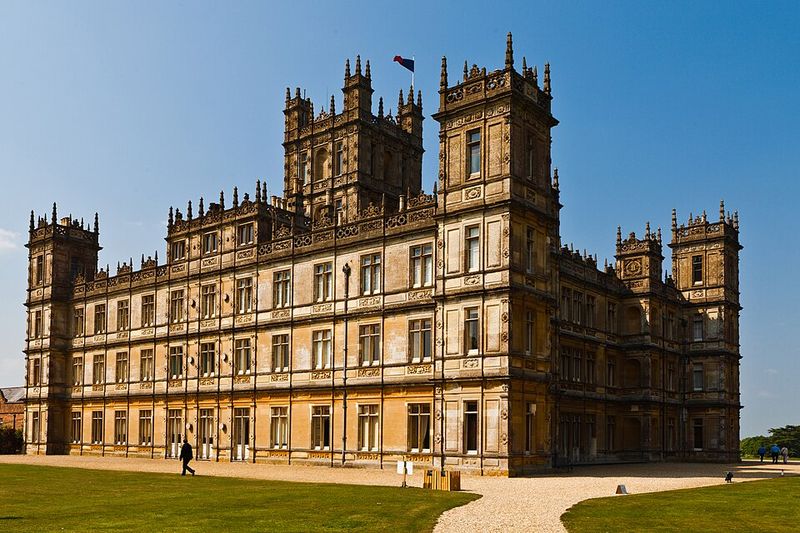
The rooms on the standard tour are genuinely impressive, but they represent only a fraction of what this building actually contains.
Highclere Castle holds somewhere between 250 and 300 rooms in total. The exact number is reportedly uncertain even to the current Countess, as various spaces have been converted into offices, used for storage, or simply closed off over the decades.
Standard visitor tours cover the main State Rooms on the ground floor and the Egyptian Exhibition in the cellars. Private bedrooms, upper floors, service areas, and family quarters remain inaccessible to the public, preserving the castle’s role as a working private residence.
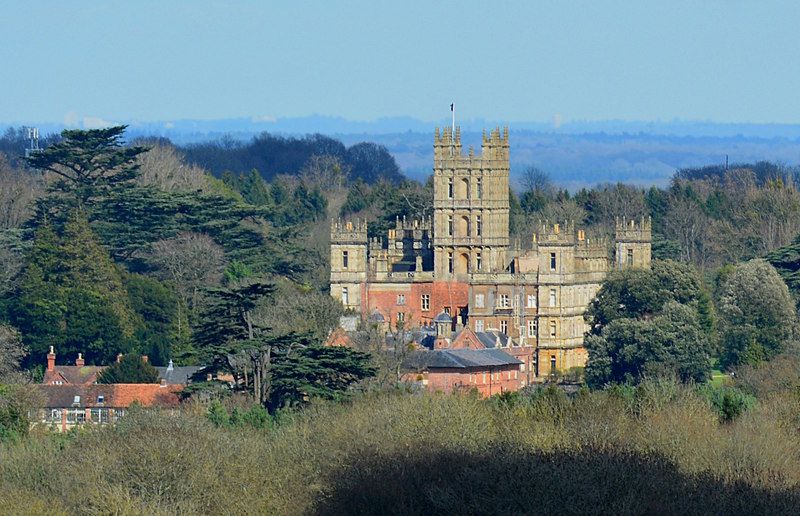
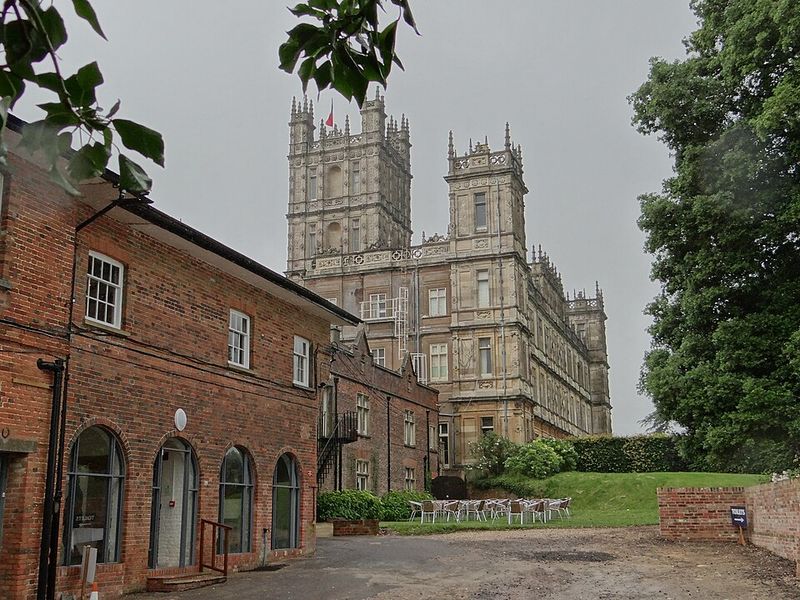
The sheer scale of the building becomes more apparent when viewed from the grounds. The towers, wings, and rows of windows hint at the enormous amount of space that exists beyond the carefully managed visitor route, most of it carrying its own untold history.
13. Wartime Memories Still Survive on the Estate
The First World War is the conflict most closely associated with Highclere’s wartime history, but the Second World War left its own mark on the estate as well.
During the conflict, Highclere opened its doors to children evacuated from London, providing refuge on the estate’s extensive grounds and in its buildings. The castle became part of the national effort to protect civilians from the dangers of wartime cities.
Parts of Allied aircraft that crashed on the estate were also preserved, serving as physical reminders of a conflict that reached even the most rural corners of England.
These wartime chapters rarely appear in the glossy Downton Abbey promotional material, but they represent some of the most human and historically significant moments in the castle’s long story. The estate did not simply observe national events from a distance. It participated in them directly, more than once.
14. Downton Abbey Helped Save the Castle
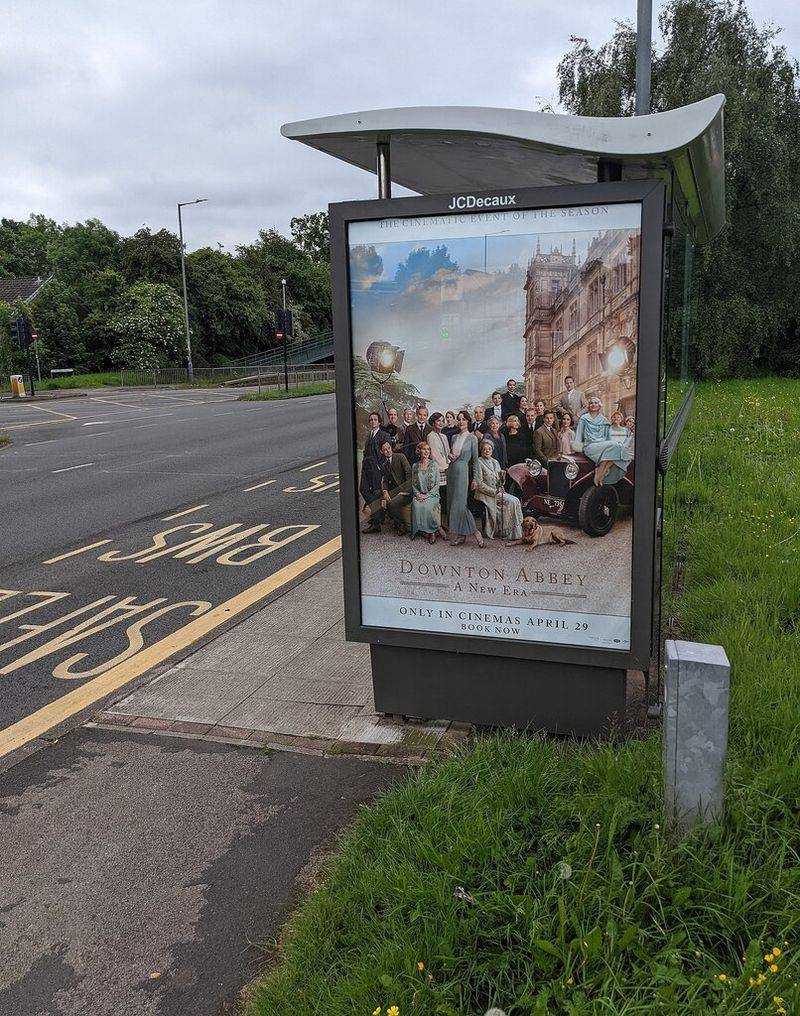
The relationship between Highclere Castle and Downton Abbey turned out to be more than just a filming arrangement. For the building itself, it may have been genuinely transformative.
Before the television series began, the castle faced serious and expensive structural challenges. Reports suggested that approximately 12 million pounds was needed for restoration work, with around 1.8 million required urgently for the castle structure alone. Roof repairs and deteriorating stonework were among the most pressing concerns.
The enormous increase in visitor numbers generated by Downton Abbey’s global success provided a reliable new income stream that helped fund major conservation projects. Without that boost, the timeline for essential repairs would likely have been very different.
The result is that one of Britain’s finest Victorian country houses now stands in considerably better condition than it did before the cameras arrived. Sometimes a television crew is the best thing that can happen to a 19th-century roof.
Share this story