Florence is one of those cities that stops you in your tracks. Every street corner seems to hold a story, every piazza feels like a scene from a painting, and every museum could take up an entire afternoon on its own.
Whether you are visiting for the first time or returning after years away, this city in the heart of Tuscany has a way of making you feel like you are seeing something truly rare. This list covers 14 of the most worthwhile experiences Florence has to offer, from world-famous art collections to open-air markets and hilltop viewpoints.
Some of these are iconic landmarks you have probably already heard of. Others might surprise you.
All of them are worth your time, and together they paint a picture of why Florence continues to draw millions of visitors from around the world every single year.
Uffizi Gallery
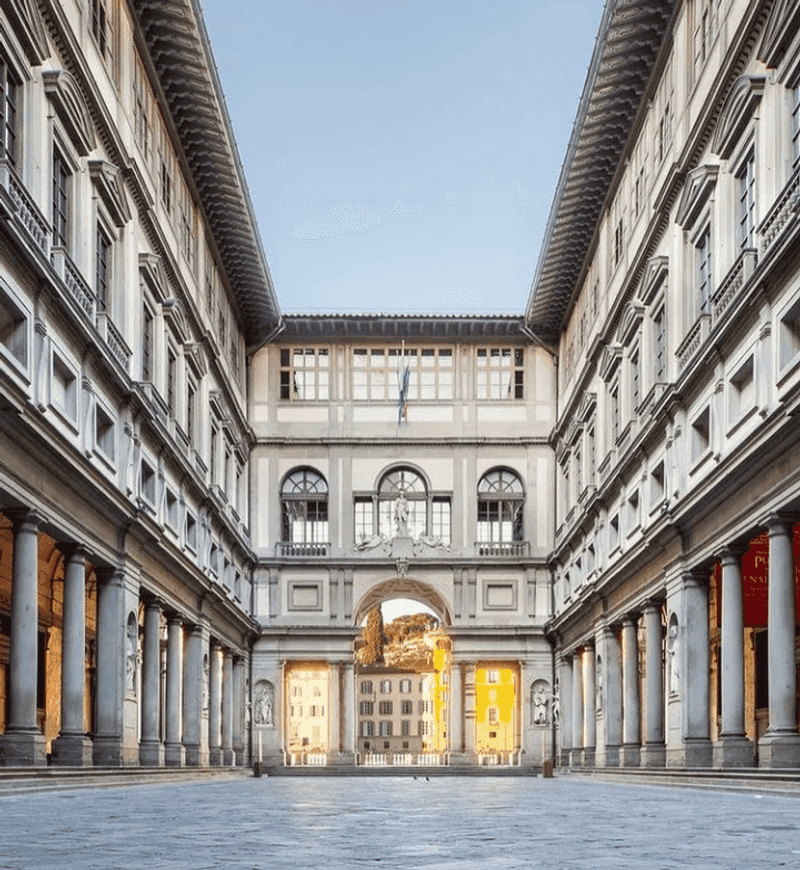
Few art museums in the world carry the weight that the Uffizi does. Housed in a 16th-century building originally designed by Giorgio Vasari for the Medici family, the gallery holds one of the most important collections of Renaissance paintings anywhere on the planet.
Botticelli’s “The Birth of Venus” and “Primavera” are the two works most visitors come specifically to see, and they genuinely live up to their reputation. The gallery also holds major works by Leonardo da Vinci, Michelangelo, Raphael, Caravaggio, and Titian, among many others.
Booking tickets in advance is strongly recommended, especially between April and October when lines can stretch for hours without a reservation. The museum is closed on Mondays.
Plan for at least two to three hours if you want to move through the collection without feeling rushed. The upper floors offer some of the best views over the Arno River as a bonus.
Galleria dell’Accademia
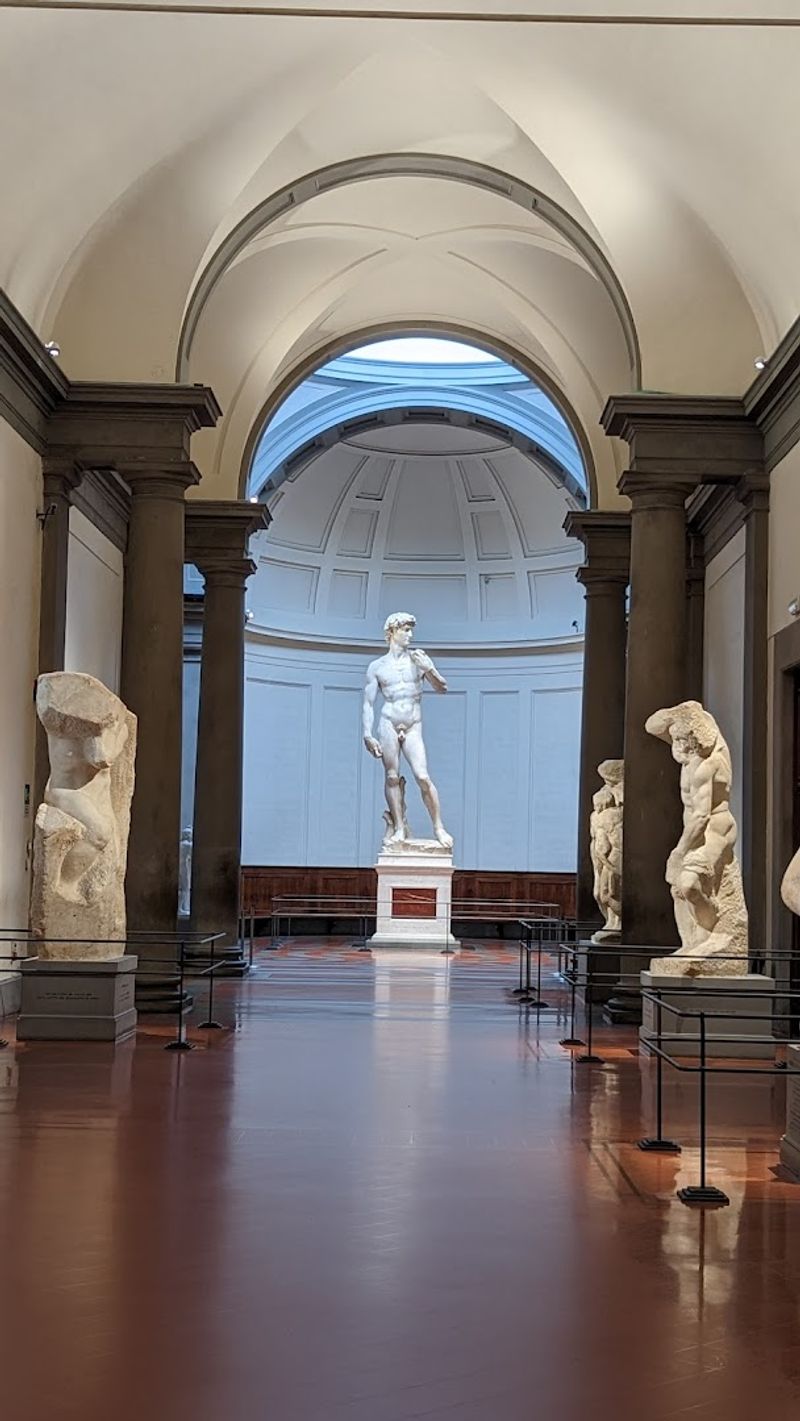
Michelangelo’s David stands 17 feet tall and was carved from a single block of marble between 1501 and 1504. Seeing it in person at the Galleria dell’Accademia is a different experience entirely from seeing photographs of it, because the scale and detail of the sculpture are genuinely hard to process until you are standing in front of it.
The museum was founded in 1784 and is one of the oldest art schools in Europe. Beyond David, the collection includes Michelangelo’s unfinished “Prisoners” series, which lines the hallway leading to the main tribune and offers a fascinating look at his working process.
The gallery also holds a collection of Florentine paintings from the 13th through 16th centuries, as well as a musical instruments section that often goes overlooked. Tickets sell out frequently during peak season, so booking ahead is practical rather than optional.
The museum is located just a short walk from the Florence Cathedral.
Florence Cathedral
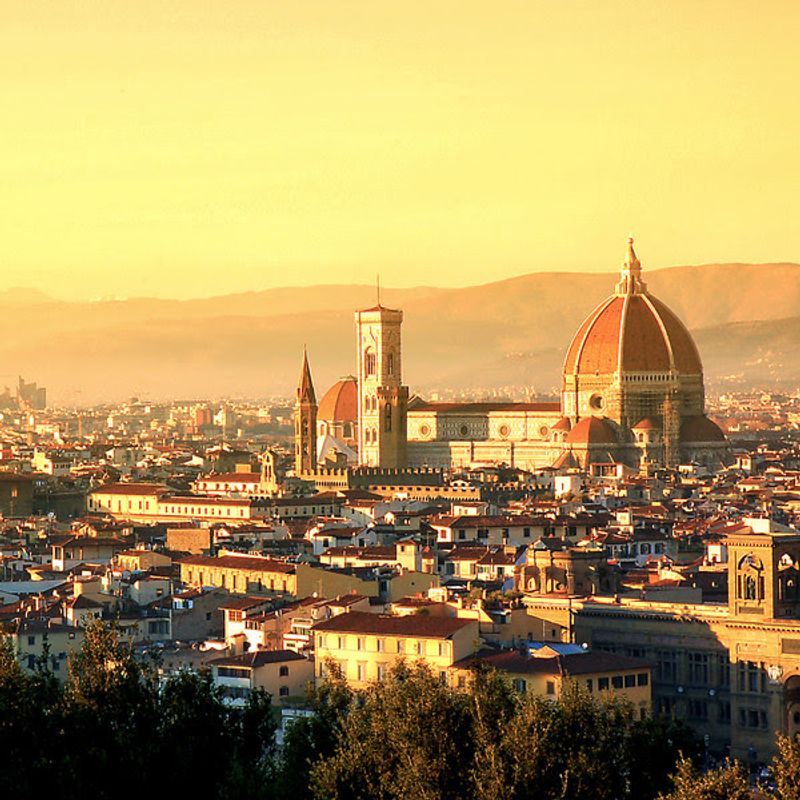
The Florence Cathedral, formally known as the Cattedrale di Santa Maria del Fiore, is the fourth largest Christian church in the world by interior volume. Its polychrome marble facade in shades of green, white, and pink is one of the most recognized architectural images in all of Italy.
Construction began in 1296 and the cathedral was consecrated in 1436, making it a project that spanned well over a century. The interior is quieter and more austere than the exterior suggests, which surprises many first-time visitors.
The floor features intricate geometric patterns, and the dome’s interior fresco by Giorgio Vasari and Federico Zuccari depicts the Last Judgment across a massive surface area.
Admission to the cathedral itself is free, though access to the dome, bell tower, crypt, and museum requires a combined ticket. The cathedral is located in the heart of the city and is visible from many points across Florence, making it an easy landmark to orient yourself around.
Brunelleschi’s Dome
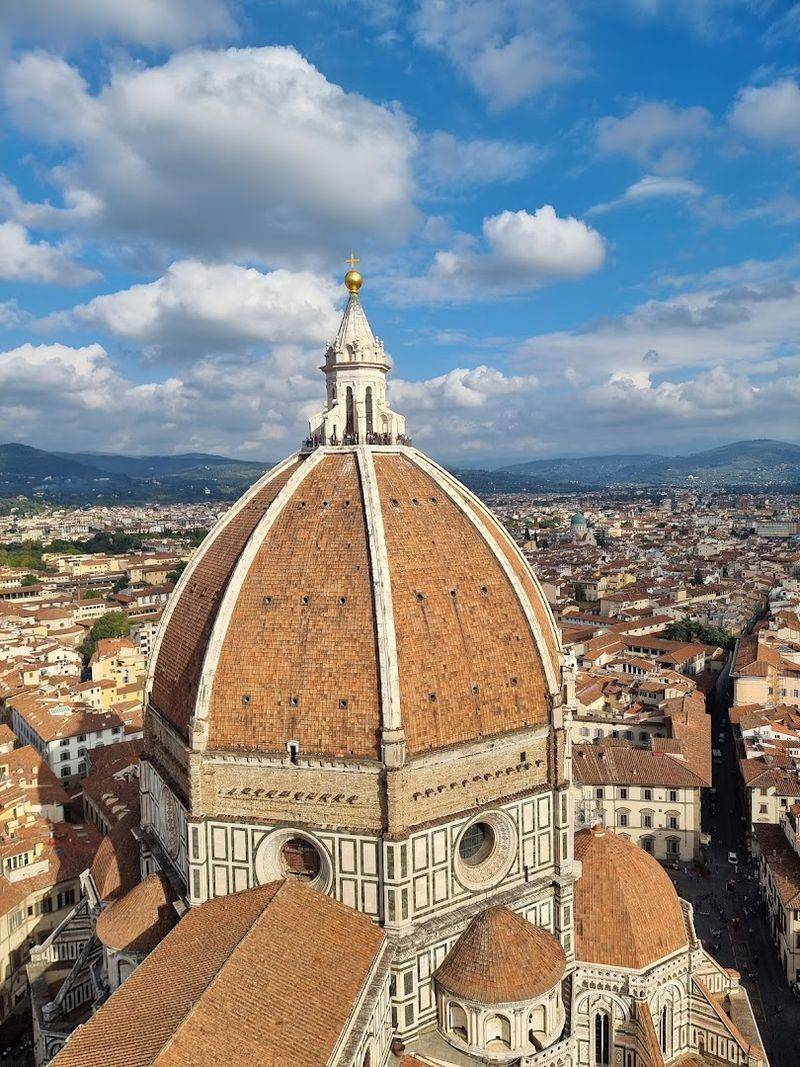
Filippo Brunelleschi completed this dome in 1436 without using a supporting wooden framework, which was considered an engineering impossibility at the time. It remains the largest masonry dome ever built, and the method he used to construct it has never been fully replicated.
Climbing to the top requires ascending 463 steps through a narrow double-shell structure that gives you a close look at the brickwork from the inside. Along the way, you pass the interior fresco at close range, which offers a perspective on the painting that you simply cannot get from the cathedral floor below.
The view from the top of the dome over the Florence rooftops and surrounding hills is one of the most rewarding panoramas in the city. The climb is not suitable for visitors with claustrophobia due to the tight passages.
A combined ticket covers the dome, cathedral, baptistery, bell tower, crypt, and the Opera del Duomo Museum, which makes the overall value quite strong.
Baptistery of San Giovanni
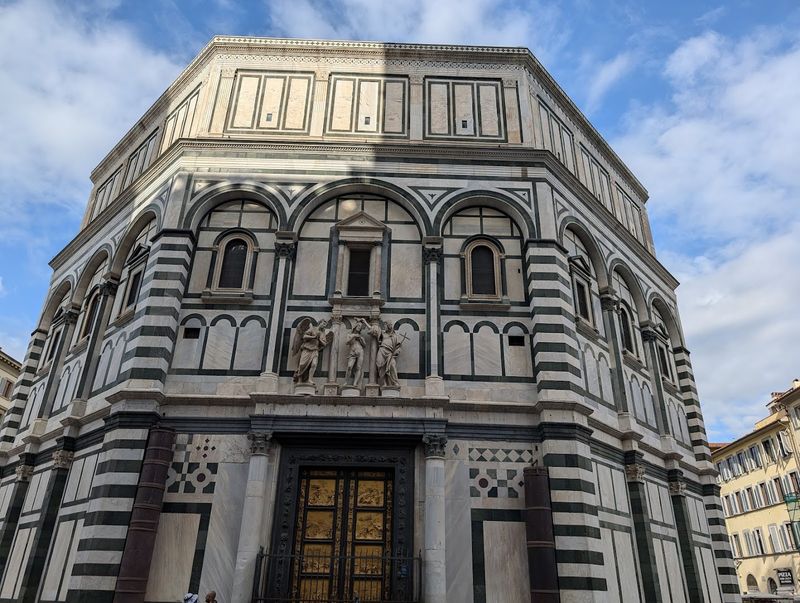
The Baptistery of San Giovanni is one of the oldest buildings in Florence, with origins that historians trace back to at least the 4th or 5th century, though the current Romanesque structure dates to around the 11th and 12th centuries. It sits directly in front of the Florence Cathedral and is hard to miss.
What draws most visitors here are the bronze doors. Lorenzo Ghiberti’s East Doors, known as the Gates of Paradise, were called that by Michelangelo himself and depict ten scenes from the Old Testament in remarkable gilded relief.
The doors currently on the building are high-quality replicas; the originals are preserved inside the Opera del Duomo Museum nearby.
The interior of the baptistery features a stunning 13th-century Byzantine-style mosaic ceiling depicting scenes from the Bible and the Last Judgment. The level of detail in the ceiling mosaics is extraordinary and often more impressive to visitors than they expected.
Entry is included in the combined Duomo complex ticket.
Giotto’s Bell Tower
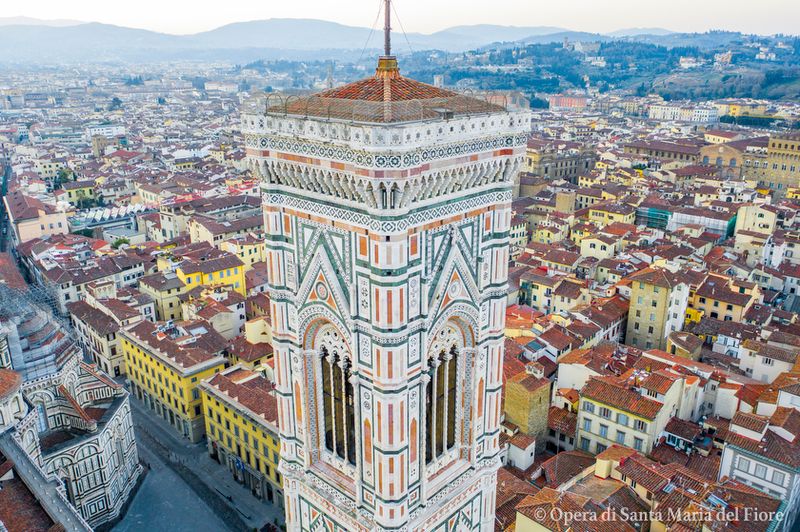
Giotto’s Bell Tower, or Campanile di Giotto, rises 277 feet beside the Florence Cathedral and offers one of the city’s best elevated views without the crowds that the dome climb typically draws. The tower was begun by the painter Giotto di Bondone in 1334, though he passed before it was finished.
Francesco Talenti completed it in 1359.
The climb involves 414 steps and no elevator, but the open-air belfry at the top allows for unobstructed views in every direction, including a close-up look at Brunelleschi’s Dome from the outside. That particular angle is one of the most photographed in the city.
The exterior panels on the lower levels are replicas of original relief carvings by Andrea Pisano and Luca della Robbia, which depicted the arts, sciences, and human industry. The originals are housed in the Opera del Duomo Museum.
The tower is included in the combined Duomo complex ticket and is open daily except for certain religious holidays.
Opera del Duomo Museum
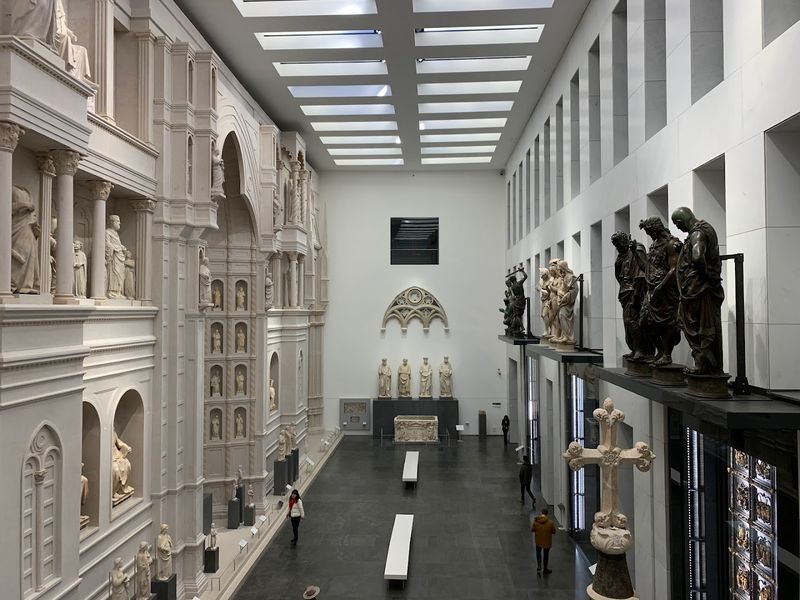
The Opera del Duomo Museum is one of the most underrated stops in the entire city. It holds the original sculptures, reliefs, and decorative elements that were removed from the Florence Cathedral complex for preservation, replaced by replicas on the buildings outside.
Among the highlights are Ghiberti’s original Gates of Paradise doors, Donatello’s wooden sculpture of Mary Magdalene, and Michelangelo’s Bandini Pieta, which he carved late in his life and reportedly attempted to destroy. The museum also holds Donatello’s cantoria, or singing gallery, alongside another by Luca della Robbia.
The building was redesigned and expanded in 2015 and now includes a large atrium where a full-scale reproduction of the cathedral’s original medieval facade is displayed, giving visitors a sense of what the building looked like before it was demolished in the 16th century. Entry is included with the combined Duomo ticket.
The museum is located steps from the cathedral on the Via dell’Opera del Duomo.
Ponte Vecchio
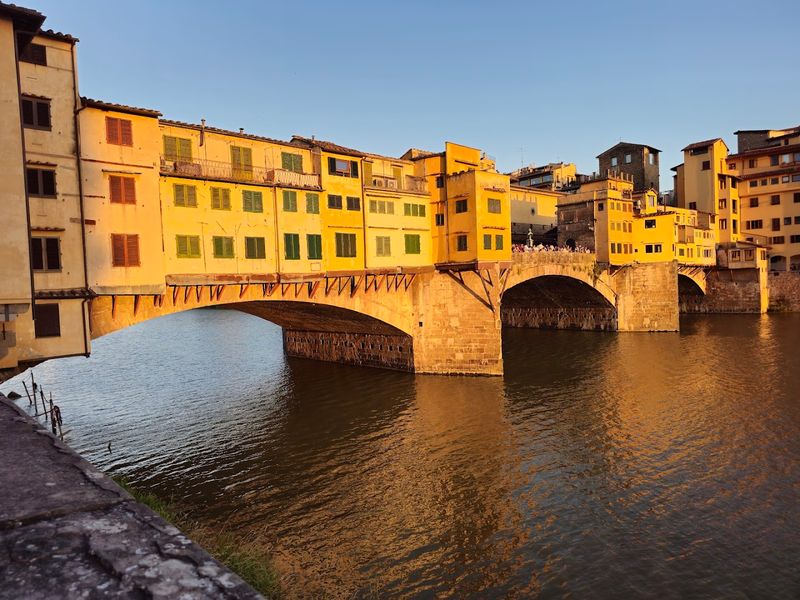
Ponte Vecchio is the oldest bridge in Florence, with the current structure dating to 1345 after a flood destroyed the previous one. It is one of the few bridges in Europe that still has shops built along its full length, a feature that was common in medieval times but has largely disappeared elsewhere.
Today those shops are almost entirely occupied by jewelers and goldsmiths, which has been the case since 1593 when Ferdinando I de’ Medici ordered butchers and other tradespeople off the bridge in favor of more refined merchants. The Vasari Corridor, a private elevated passageway built for the Medici family, runs along the upper level of the bridge.
Walking across the Ponte Vecchio is free and takes only a few minutes, but most visitors linger considerably longer. The view of the bridge from the nearby Ponte Santa Trinita or from the riverbank is one of the most photographed scenes in all of Florence.
The bridge is busiest in the late afternoon when the light over the Arno is particularly clear.
Palazzo Vecchio
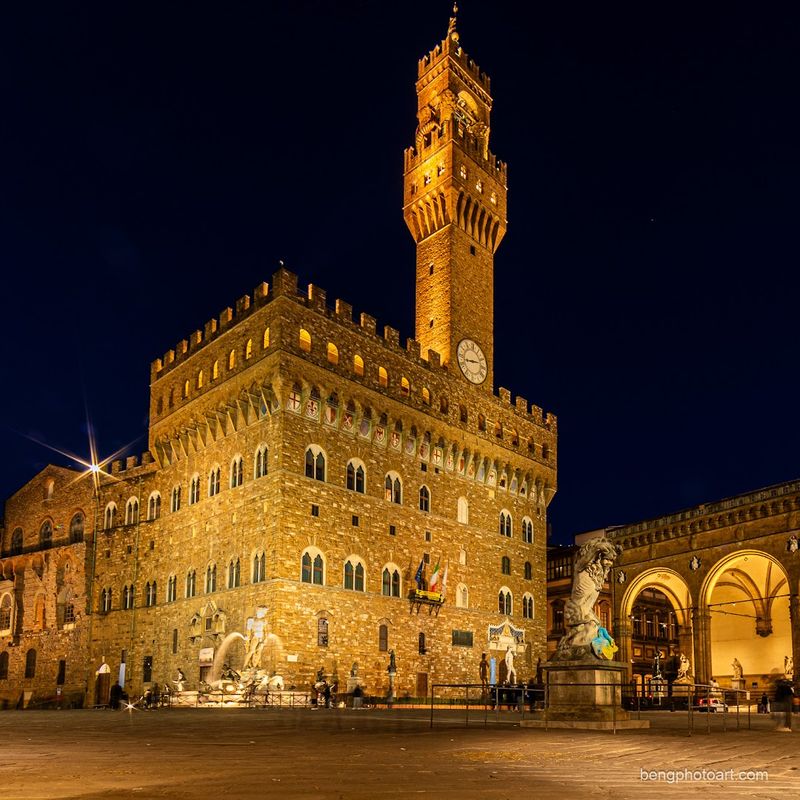
Palazzo Vecchio has served as Florence’s town hall for over 700 years. The building was completed in 1322 and its distinctive crenellated tower, rising 308 feet above Piazza della Signoria, remains one of the defining features of the Florence skyline.
Inside, the Salone dei Cinquecento is the most impressive room, a massive hall built in 1494 that was later expanded and decorated under Cosimo I de’ Medici. Giorgio Vasari covered the walls and ceiling with large-scale paintings depicting Florentine military victories.
There is also a small hidden room in the building called the Studiolo of Francesco I, decorated floor to ceiling with paintings and bronzes, that feels remarkably different from the grand halls surrounding it.
The palace offers guided tours, a family-friendly children’s museum section, and access to the tower for a panoramic view. A copy of Michelangelo’s David stands at the entrance to the palace, marking the spot where the original stood from 1504 until 1873.
Admission fees apply for the interior.
Piazza della Signoria
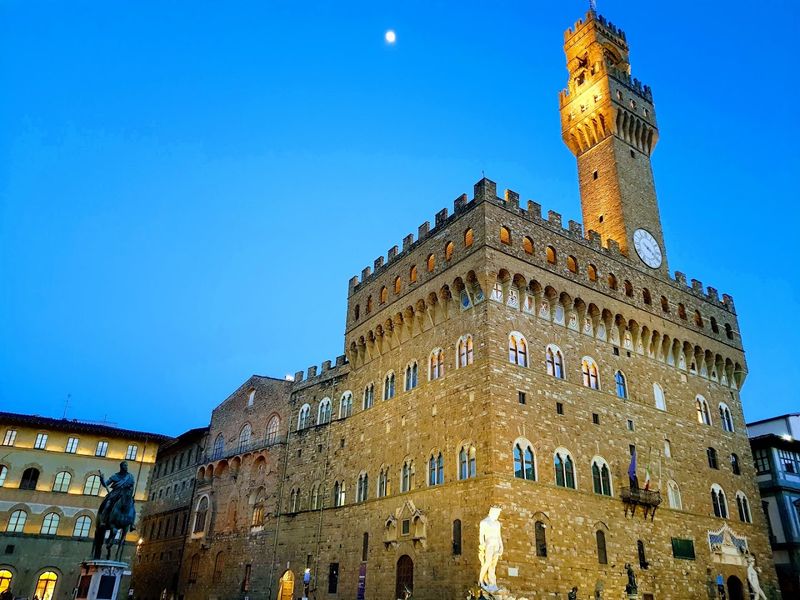
Piazza della Signoria is the political and civic heart of Florence and has been for centuries. The square sits in front of Palazzo Vecchio and serves as an open-air sculpture gallery that is free to walk through at any time of day or night.
The Loggia dei Lanzi, an open arched gallery on one side of the square, holds a collection of large-scale sculptures including Benvenuto Cellini’s “Perseus with the Head of Medusa” and Giambologna’s “Rape of the Sabine Women,” both of which are originals. The Neptune Fountain by Bartolomeo Ammannati stands at one end of the square and has been a gathering point for centuries.
The piazza is also where significant historical events in Florentine history played out, including the execution of Girolamo Savonarola in 1498. There is a small bronze disk embedded in the pavement marking the spot.
Cafes and restaurants ring the square, and it connects naturally to the Uffizi Gallery just steps away on the south side.
Palazzo Pitti
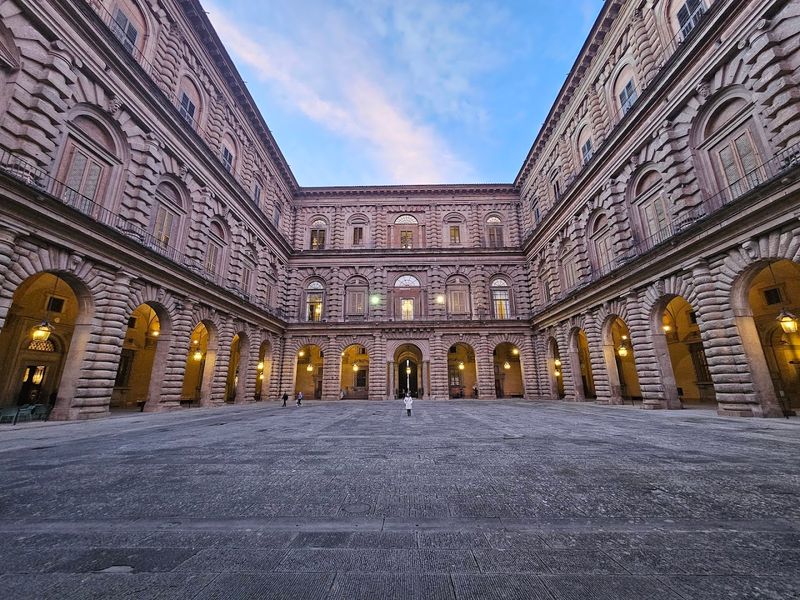
Palazzo Pitti is the largest palace in Florence and was originally built for the merchant Luca Pitti in the 15th century. The Medici family purchased it in 1549 and used it as their primary residence for nearly three centuries.
Today it houses multiple museums across its many wings and floors.
The Palatine Gallery on the first floor contains an outstanding collection of Renaissance and Baroque paintings, including major works by Raphael, Titian, Rubens, and Caravaggio, displayed in ornately decorated rooms that still carry the feel of a royal residence. The Royal Apartments, Treasury of the Grand Dukes, Gallery of Modern Art, and Costume Gallery are all housed within the same complex.
Each section requires a separate or combined ticket, so checking the current ticketing options before your visit helps avoid confusion at the entrance. The palace sits just across the Ponte Vecchio on the Oltrarno side of the Arno River and connects directly to the Boboli Gardens at the rear.
It is a full-day destination on its own if you visit every section.
Boboli Gardens
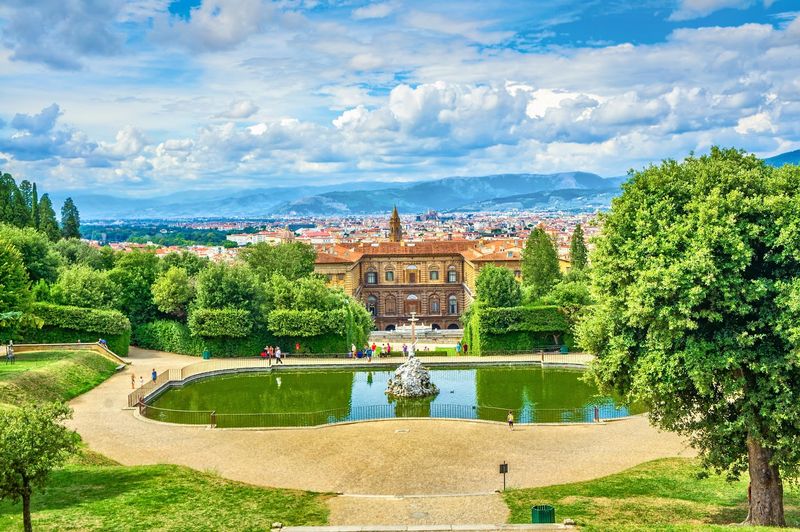
The Boboli Gardens stretch across the hill behind Palazzo Pitti and cover roughly 111 acres of formal Italian garden landscape. The Medici family began developing the gardens in the mid-16th century, and they have been open to the public since 1766, making them one of the earliest public gardens in Europe.
The layout features terraced levels connected by long pathways lined with statues, grottos, fountains, and hedgerows shaped into geometric forms. The Viottolone, a long cypress-lined avenue, leads toward an oval amphitheater at the top of the garden that offers a broad view over the surrounding hills.
Among the notable features is the Grotta Grande, a 16th-century artificial cave decorated with frescoes, stalactite-like formations, and sculptures, including casts of Michelangelo’s unfinished Prisoners. The gardens also hold a collection of Roman and Renaissance sculptures placed throughout the grounds.
Admission is paid and is included in some combined Palazzo Pitti tickets. The gardens are especially worth visiting in spring when the plantings are at their most active.
Basilica of Santa Croce
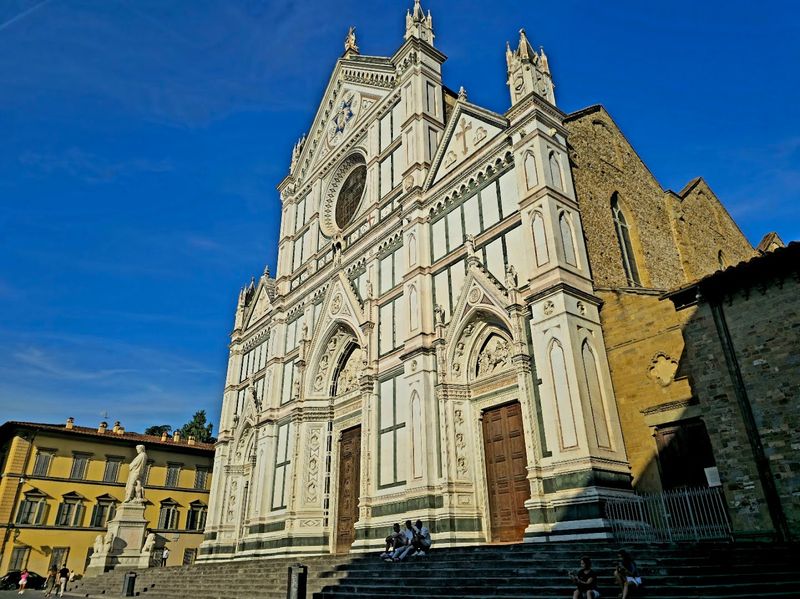
The Basilica of Santa Croce is the largest Franciscan church in the world and serves as the burial place of some of the most important figures in Italian history. Michelangelo, Galileo Galilei, Niccolo Machiavelli, and composer Gioachino Rossini are among those interred here, which is why the basilica is sometimes called the Temple of the Italian Glories.
The church was begun in 1294 and the Gothic interior features chapels decorated by Giotto and his school, including the famous Bardi and Peruzzi Chapels with their cycle of fresco paintings. The floor of the nave is paved with the tombstones of hundreds of notable Florentines.
The complex also includes a leather school that has operated since the 1950s, where visitors can watch craftspeople at work and purchase handmade leather goods. The museum attached to the basilica holds Cimabue’s painted crucifix, which was severely damaged in the 1966 Florence flood and subsequently restored.
Admission to the basilica requires a ticket, though the square outside is free to enjoy.
Santa Maria Novella
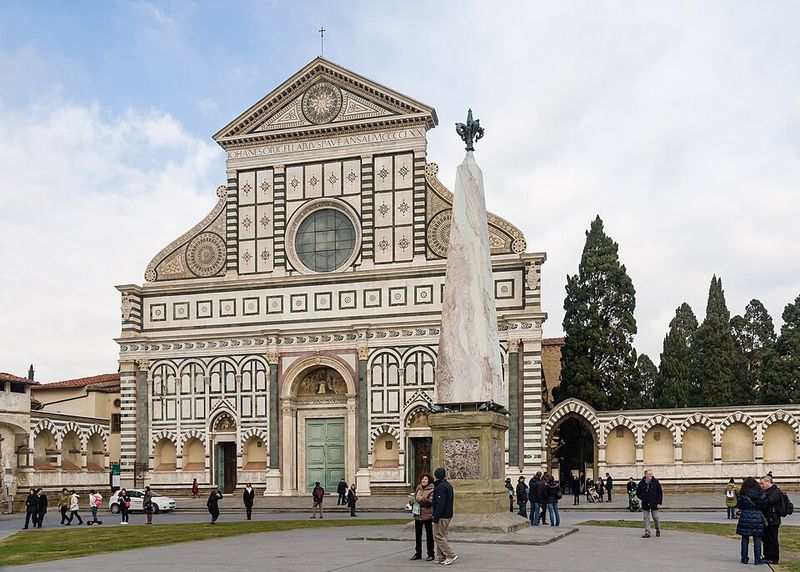
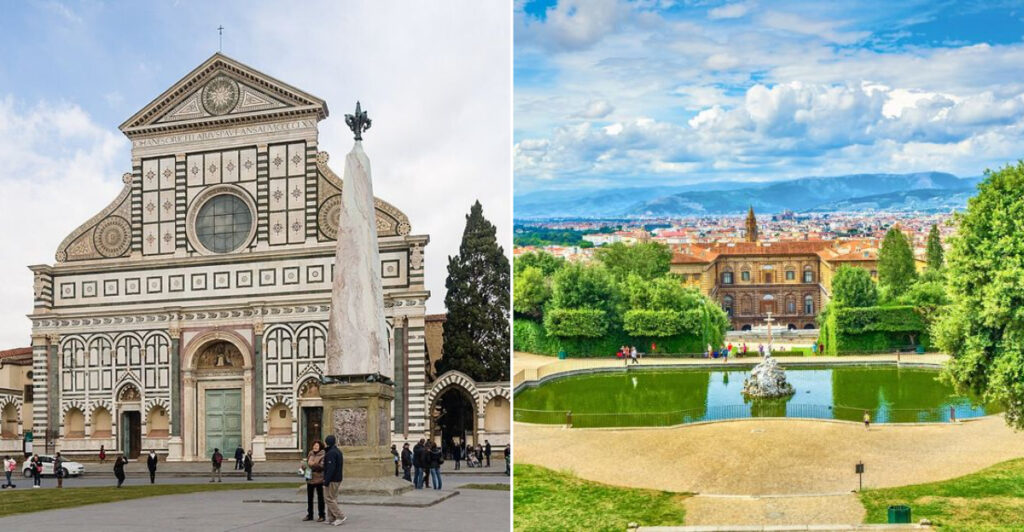
Santa Maria Novella was the first great basilica built in Florence and remains one of the most architecturally significant churches in the city. The Dominican order began construction in 1246, and the facade was completed in 1470 by Leon Battista Alberti, whose Renaissance design is considered a landmark in the history of Western architecture.
Inside, the church holds an extraordinary collection of art spread across its chapels and nave. Masaccio’s fresco of the Trinity, painted around 1427, is one of the earliest uses of mathematical perspective in Western painting and is displayed on the left wall of the nave.
Filippino Lippi, Ghirlandaio, and Brunelleschi all contributed works to the church’s interior.
The adjoining museum complex includes two cloisters and the Spanish Chapel, which contains an elaborate 14th-century fresco program by Andrea di Bonaiuto. The church sits at the Piazza Santa Maria Novella, near the main train station, making it a practical first or last stop during a visit to Florence.
Admission to the museum complex requires a ticket.
Share this story