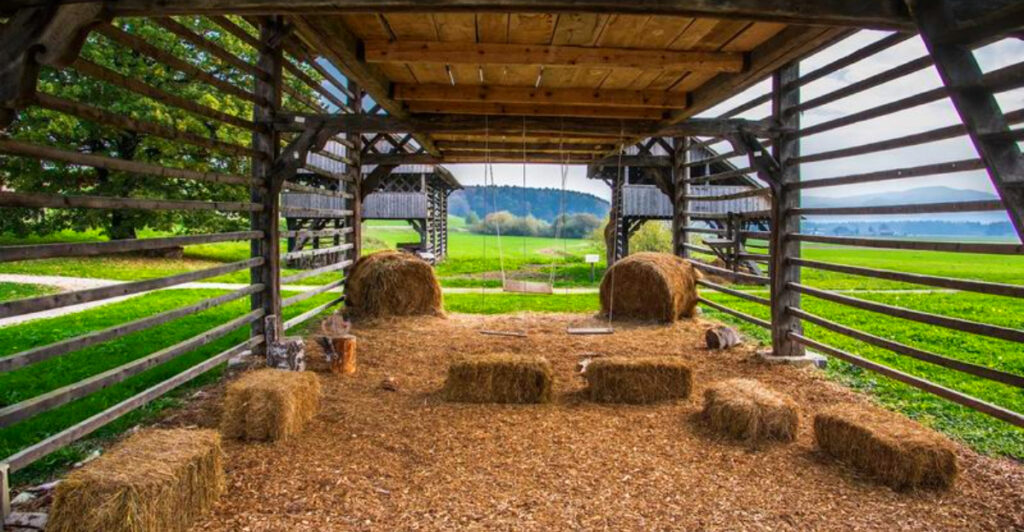
Every summer, a quiet but spectacular transformation takes place across the Slovenian countryside. Thousands of traditional wooden hay racks, known locally as kozolci, rise up across meadows, farms, and valley floors, turning rural landscapes into something that looks almost too picturesque to be real. These structures have been part of Slovenian farming life for centuries, helping farmers dry freshly cut hay before winter arrives. What makes them extraordinary is not just their function but their sheer number and variety.
In certain villages, you can count hundreds of them stretching across the fields in long, elegant rows. Slovenia is actually the only country in the world where this type of wooden drying rack developed into such a rich and diverse architectural tradition. Whether you are a history enthusiast, a photography fan, or simply someone who appreciates a countryside that tells a real story, these 14 villages are worth every kilometer of the drive.
1. Mirna, Dolenjska Region, Slovenia
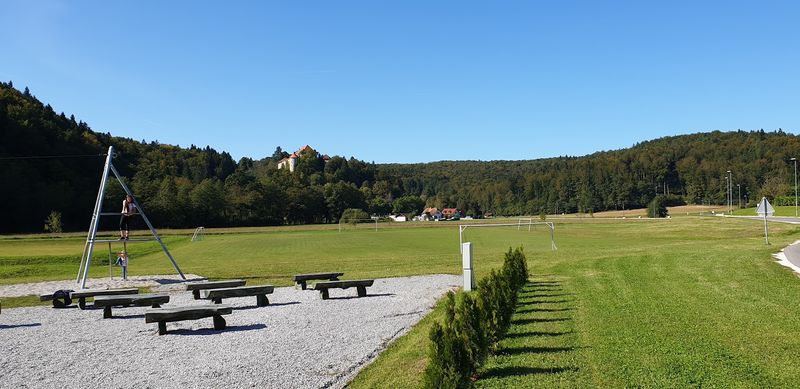
The Mirna Valley did not become one of Slovenia’s most celebrated agricultural landscapes by accident. Generations of farming families in and around Mirna have maintained their double hay racks, called toplarji, with a level of dedication that borders on architectural pride.
These tall, elegant wooden structures line country roads throughout the area, creating a visual rhythm that feels unlike anything you would find in a typical European village. Many of the toplarji here have been in continuous family use for well over a hundred years.
During summer, the racks are put to practical work, holding freshly cut grass as it dries in the open air before being stored for winter livestock feed. The whole process unfolds at a pace that feels refreshingly deliberate compared to modern farming methods.
Combining Mirna with a visit to nearby Šentrupert makes for an ideal half-day route through a region where traditional craftsmanship and everyday farming life have managed to coexist beautifully.
2. Saanen, Canton of Bern, Switzerland
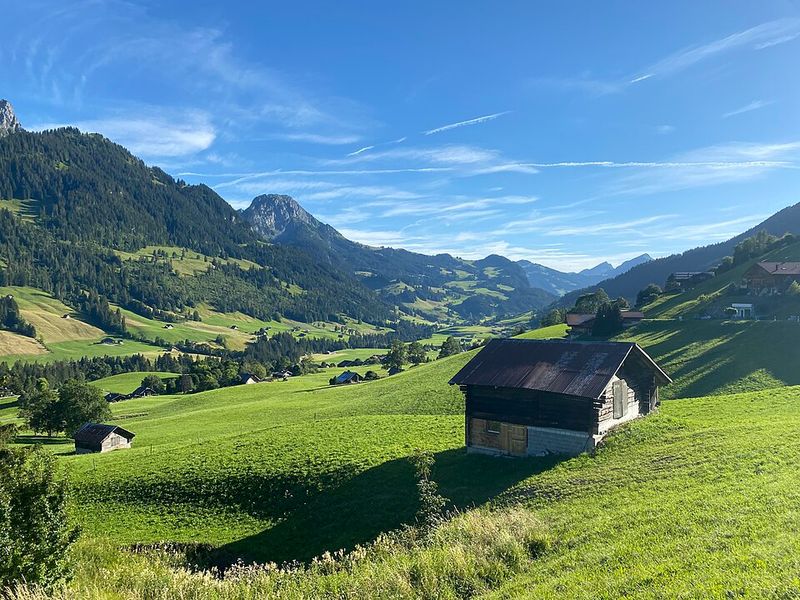
Located just beyond the luxury resorts of Gstaad, Saanen offers a very different view of the Bernese Oberland. Family farms continue producing hay using traditional techniques, and wooden drying racks remain a familiar sight throughout the surrounding countryside during the warmer months. The combination of historic chalets, green alpine pastures, and seasonal haymaking gives the valley a timeless atmosphere. Summer visitors often find that the working farms are every bit as memorable as the famous mountain scenery.
3. Mokronog, Dolenjska Region, Slovenia
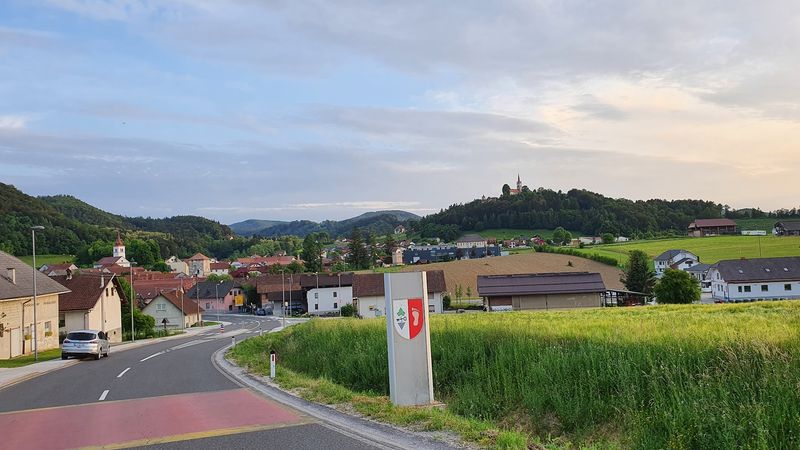
Hidden along the road connecting Mirna and Mokronog stands the most elaborately decorated hay rack in all of Slovenia. The Simončič toplar holds the rare distinction of being the only hay rack in the country officially protected as a cultural monument of national significance, a status it has held since 2001.
Its intricately carved gable, covered in detailed plant motifs, faces the road directly, making it impossible to miss if you know to look for it. The structure is also recognized as the largest ornamented hay rack in Slovenia, which adds another layer of prestige to an already remarkable piece of rural craftsmanship.
Beyond this famous landmark, Mokronog’s surrounding farmland is scattered with more traditional racks that continue to serve their original purpose each summer. The peaceful rolling landscape around the village makes it easy to spend a couple of hours simply driving through country lanes and stopping wherever something catches your eye.
4. Heiligenblut am Großglockner, Carinthia, Austria
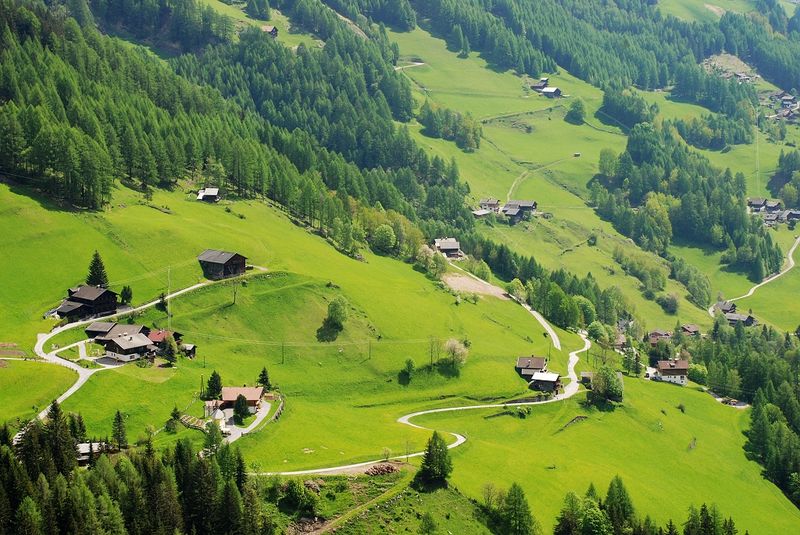
Towering beneath Austria’s highest mountain, Heiligenblut is famous for its dramatic alpine scenery, but summer also reveals a quieter tradition that has shaped the valley for generations. As farmers harvest steep mountain meadows, wooden hay racks and traditional drying frames appear across the surrounding pastures, helping preserve fodder before the long alpine winter arrives. The combination of flower-filled fields, grazing cattle, and weathered wooden structures creates a landscape that feels remarkably unchanged. Driving through the valley in July or August offers countless opportunities to spot these working reminders of traditional mountain farming.
5. Trebnje, Dolenjska Region, Slovenia
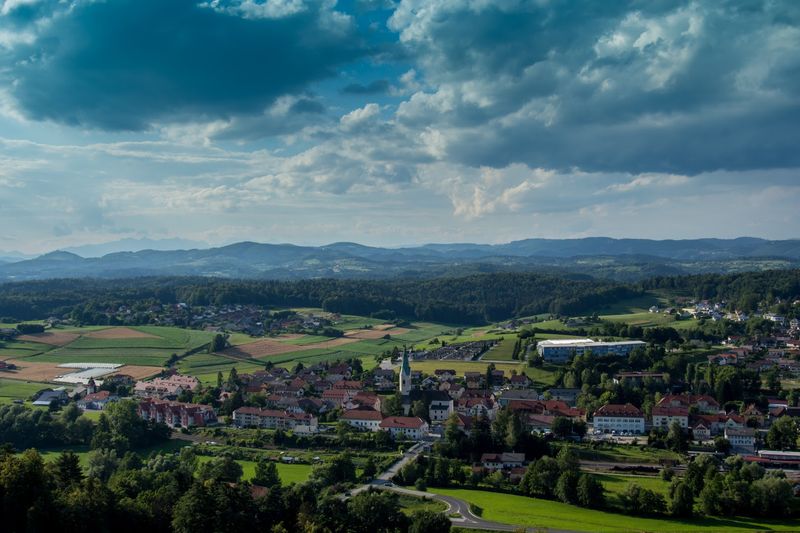
Trebnje works well as a starting point for anyone planning a hay rack road trip through the Dolenjska countryside. The town itself has practical amenities, but the real draw begins the moment you head out along the rural roads that branch into the surrounding farmland.
Working farms here display well-maintained wooden structures built from thick oak posts, a construction style that reflects the traditional approach used across the Dolenjska region for centuries. These are not decorative replicas placed for tourists but actual drying racks that farmers load with hay each summer.
The narrow protective roofing built into each rack is a clever design detail, angled specifically to let air circulate while keeping rain off the drying crop below. That combination of simplicity and function is part of what makes these structures so enduring.
Trebnje also connects easily with the other villages on this list, so using it as a base gives you convenient access to some of the best hay rack scenery in the entire region.
6. Žužemberk, Dolenjska Region, Slovenia
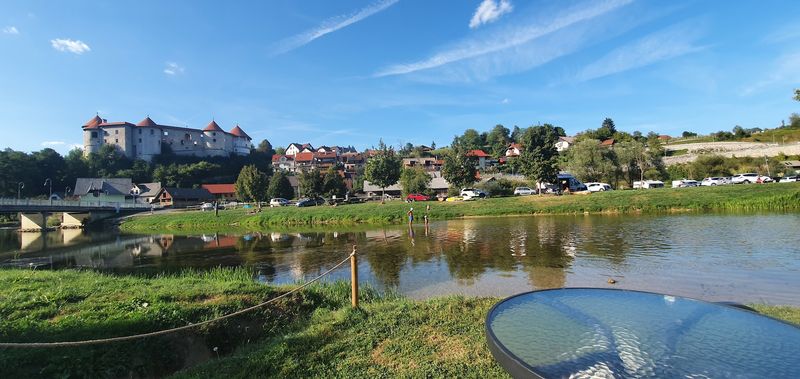
Most visitors come to Žužemberk for its imposing medieval castle, which towers over the Krka River with the kind of confidence that only centuries of history can provide. What they often discover once they arrive is that the agricultural landscape surrounding the town is just as compelling.
Scenic roads into the village pass working farms where traditional hay racks stand as a matter of course, not as heritage attractions but as practical tools still used every summer. The contrast between the grand stone castle and the humble wooden drying frames creates an interesting visual tension that photographers tend to appreciate immediately.
The hay racks in this area reflect the broader Dolenjska style, characterized by sturdy vertical posts and horizontal rails that allow maximum airflow across the drying crop. Farmers here continue to rely on them because they work, and a technique that works rarely gets abandoned.
Pairing the castle visit with a short drive through the surrounding countryside turns a single attraction into a genuinely layered cultural experience worth dedicating a full afternoon to.
7. Bohinjska Češnjica, Bohinj, Upper Carniola, Slovenia
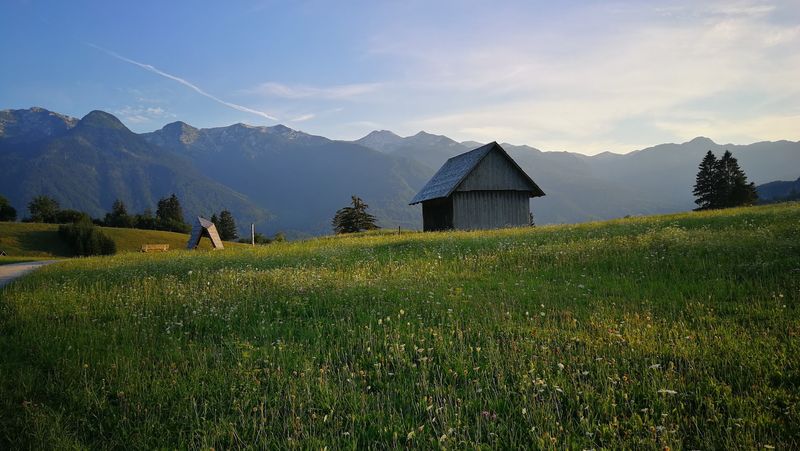
There is something almost theatrical about the combination of massive alpine peaks and the modest wooden hay racks standing in the fields below them. Bohinjska Češnjica delivers exactly that contrast, and it does so without any artificial staging.
The village sits within the Bohinj region, where double hay racks known locally as toplarji have been part of the farming landscape for generations. During summer, many of these structures stand loaded with drying hay, creating a scene that has changed very little since the earliest photographs of the area were taken.
The Julian Alps provide a dramatic backdrop that makes even a casual snapshot from the roadside look like a professional composition. That said, the racks here are working agricultural tools, not props, and watching farmers use them during the July and August harvest season adds a layer of authenticity that no museum exhibit can replicate.
Bohinjska Češnjica is a short drive from the main Bohinj lake area, making it an easy addition to any itinerary already centered on the Upper Carniola region.
8. Šentrupert, Dolenjska Region, Slovenia
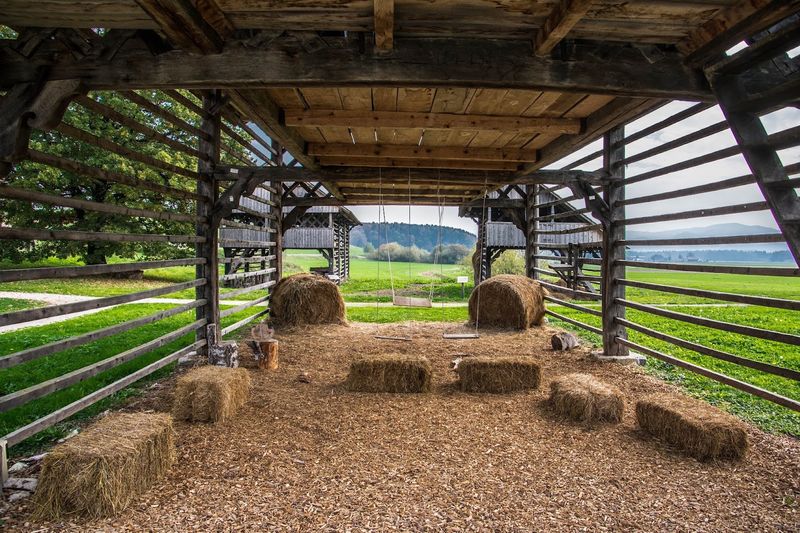
No village on earth takes hay racks more seriously than this one. Šentrupert is home to the Land of Hayracks, the world’s only open-air museum dedicated entirely to kozolci, and it earns that title without any exaggeration.
Visitors can walk among 19 different drying structures gathered primarily from the surrounding Mirna Valley. The oldest exhibit, a double hay rack known as Luka’s toplar, dates back to 1795 and still stands in remarkable condition.
The museum covers all six known types of Slovenian hay racks, giving visitors a clear picture of how these structures evolved across different regions and farming needs. Beyond the museum grounds, the wider Mirna Valley holds over 650 active hay racks that fill with hay each summer.
That combination of preserved history and living agricultural practice makes Šentrupert genuinely unique. Travelers who visit once tend to leave with a completely new appreciation for what a wooden drying frame can represent in a culture.
9. Chochołów, Lesser Poland Voivodeship, Poland
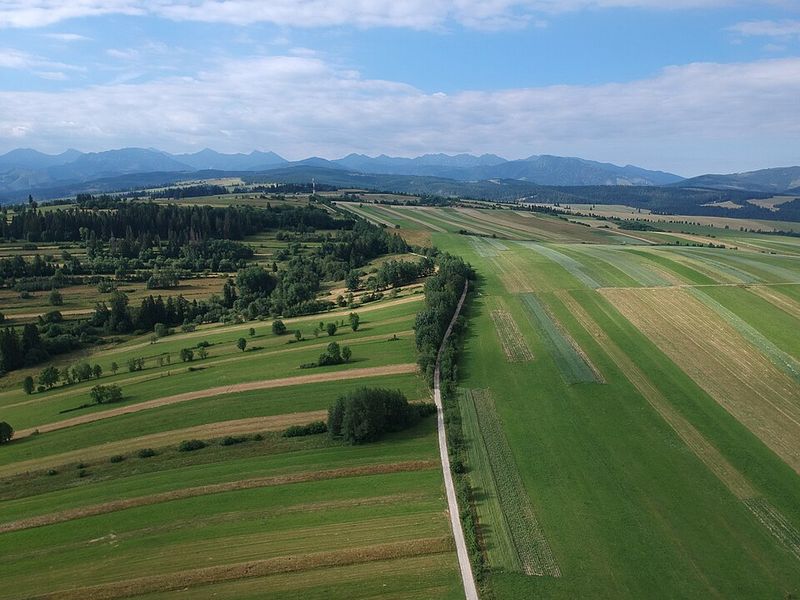
Chochołów is celebrated for its beautifully preserved wooden houses, but the surrounding Podhale countryside offers another glimpse into traditional rural life. During summer, local meadows fill with wooden hay racks and drying structures as farmers prepare feed for livestock grazing beneath the Tatra Mountains. The combination of handcrafted timber architecture and centuries-old farming practices creates one of Poland’s most authentic alpine landscapes. Visitors arriving during hay season experience a village where agricultural traditions remain an everyday reality.
10. Studor v Bohinju, Upper Carniola, Slovenia
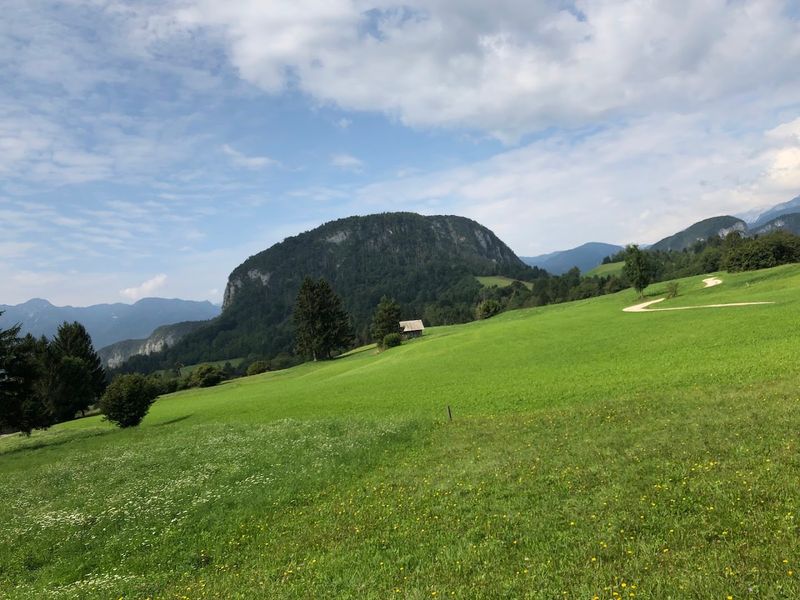
Studor v Bohinju has a reputation that travels well ahead of it. This small village is arguably the most photographed hay rack location in all of Slovenia, and once you see the cluster of double racks surrounding its traditional farmhouses, the reason becomes immediately obvious.
The collection of stogi here, which is the local Bohinj term for these double hay rack structures, has been officially recognized as an architectural monument, giving the village a cultural status that matches its visual appeal. The racks frame views of the surrounding alpine peaks in a way that feels almost deliberately composed.
A walk through the village takes no more than twenty minutes, but most visitors end up spending considerably longer because there is always another angle worth exploring. The craftsmanship visible in the older racks, with their precise joinery and balanced proportions, reflects a level of skill that was once common across the region.
Studor is small, quiet, and entirely focused on being exactly what it is, which is a rare quality in any destination.
11. Stara Fužina, Bohinj, Upper Carniola, Slovenia
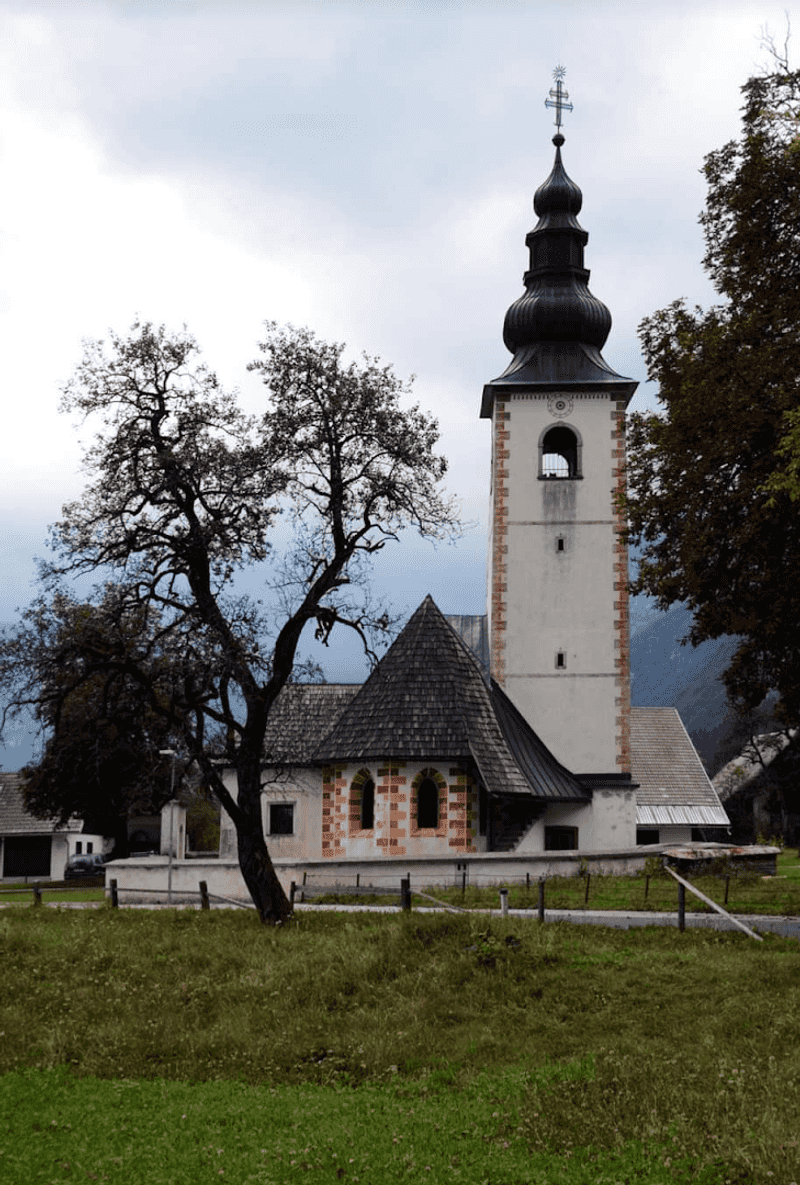
Stara Fužina has two identities that coexist without conflict. To lake visitors, it is a quiet village on the eastern shore of Lake Bohinj. To agricultural historians, it is a community where dairy farming and traditional hay drying practices have remained genuinely intact.
Hay racks appear throughout the village and across the meadows that stretch toward the surrounding hills, particularly active during the summer months when the grass grows fast and the drying season is short. The farmers here depend on these structures to cure enough hay to sustain their herds through the long alpine winter.
The village name translates to old forge, a reference to an iron-working past that has long since faded. Today, the dominant industry is farming, and the hay racks scattered across the landscape are its most visible symbol.
Visitors who combine a morning at the lake with an afternoon walk through Stara Fužina get a genuinely well-rounded picture of what the Bohinj region offers beyond its famous water.
12. Srednja Vas v Bohinju, Upper Carniola, Slovenia
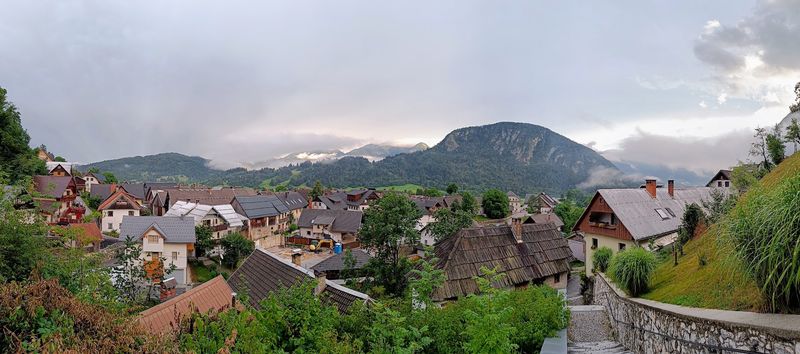
The name means Middle Village in Bohinj, and while that sounds modest, Srednja Vas v Bohinju delivers one of the most concentrated and well-preserved displays of traditional hay racks in the entire region. The fields surrounding the village hold some of the finest examples of kozolci craftsmanship found anywhere in the Bohinj valley.
What sets this place apart is the consistency of its agricultural character. Many smaller farms here still carry out the annual hay harvest using traditional methods, which means the racks are not just standing as decoration but actively participating in the seasonal farming cycle.
The architecture of the village itself adds to the appeal. Traditional farmhouses built with stone ground floors and wooden upper storeys line the roads, and hay racks stand beside them as natural extensions of the same building philosophy. Everything here was designed to work together.
Slow travelers and photographers tend to discover Srednja Vas v Bohinju by word of mouth, and most agree that it rewards the slight detour required to reach it.
13. Koprivnik v Bohinju, Upper Carniola, Slovenia
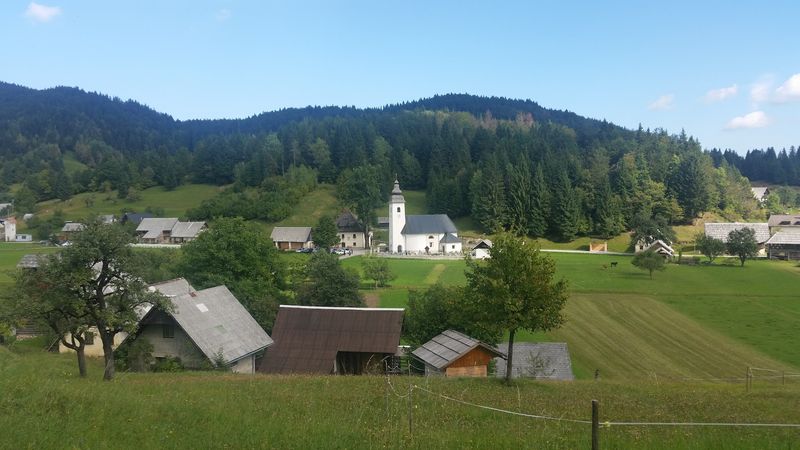
Getting to Koprivnik v Bohinju requires a short uphill drive from the valley floor, but the reward waiting at the top makes the climb entirely worthwhile. The village sits at an elevation that opens up wide views across the Bohinj Valley, with hay racks dotting the foreground like punctuation marks in a very green sentence.
At this altitude, the summer hay harvest has its own particular urgency. Farmers have a narrower window of dry weather to work with compared to lower valley communities, which is exactly why the hay racks here remain so essential rather than optional.
The village receives far fewer visitors than the lake area below, which means you can walk through it at your own pace without navigating crowds. That relative solitude is increasingly rare in a region that draws significant summer tourism.
Koprivnik v Bohinju feels like the kind of place that rewards curiosity, the sort of village you stumble upon while exploring back roads and immediately add to your list of places worth returning to.
14. Motnik, Kamnik Municipality, Slovenia
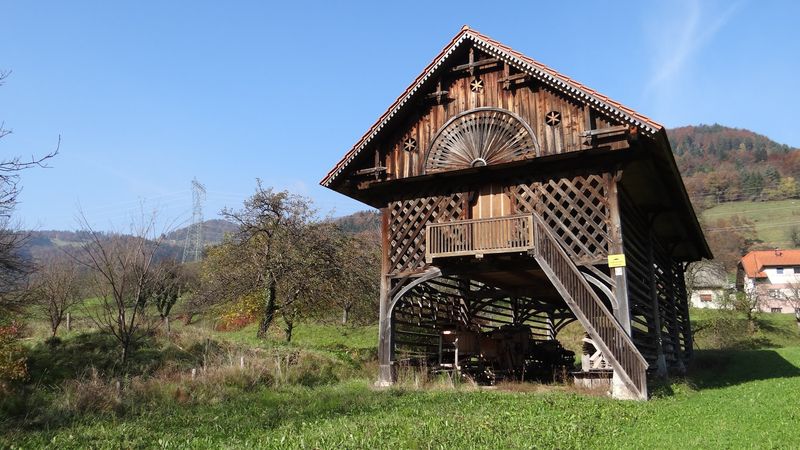
Central Slovenia does not always get the same hay rack attention as the Bohinj or Dolenjska regions, but Motnik makes a strong case for being added to the conversation. The village preserves a collection of traditional kozolci that reflect the particular architectural style of the Kamnik area, which differs subtly from the designs found further south or west.
Summer is the best time to visit, when many of the racks are put back into active use and the surrounding countryside turns the deep green that comes with a productive growing season. Watching a freshly loaded rack standing in an open field gives you an immediate sense of why these structures were considered worth building and maintaining for centuries.
Motnik sits within easy reach of the Kamnik-Savinja Alps, making it a practical stop for travelers already exploring that part of Slovenia. The village is small and unhurried, with the kind of atmosphere that encourages you to park the car and walk rather than simply drive through.
For anyone genuinely interested in rural craftsmanship, Motnik offers a quieter and less visited alternative that still delivers the real thing.
Share this story