 Unearth The Voyage
Canada and the United States share a border, a language, and plenty of pop culture, but when it comes to food, the two countries are surprisingly different. Many Canadians grow up eating snacks, dishes, and desserts that leave Americans completely puzzled.
From chip flavors that sound like a dare to meat pies served at Christmas, Canadian cuisine has its own unique personality. If you have ever wondered what your Canadian neighbors are actually eating, this list is your guide.
1. Poutine

Ask any Canadian what their national comfort food is, and the answer will almost always be poutine. This Quebec-born dish stacks golden french fries, squeaky fresh cheese curds, and thick brown gravy into one messy, glorious pile.
It sounds simple, but the combination creates something surprisingly satisfying.
The cheese curds are the key detail Americans often miss. They need to be fresh so they squeak when you bite them and soften slightly under the warm gravy without fully melting.
Substituting regular shredded cheese completely changes the texture and flavor.
Poutine first appeared in rural Quebec in the late 1950s and has since spread across every province. Today you can find it at fast food chains, food trucks, and fancy restaurants with gourmet toppings.
Americans who try it for the first time usually become instant fans.
2. Butter Tarts
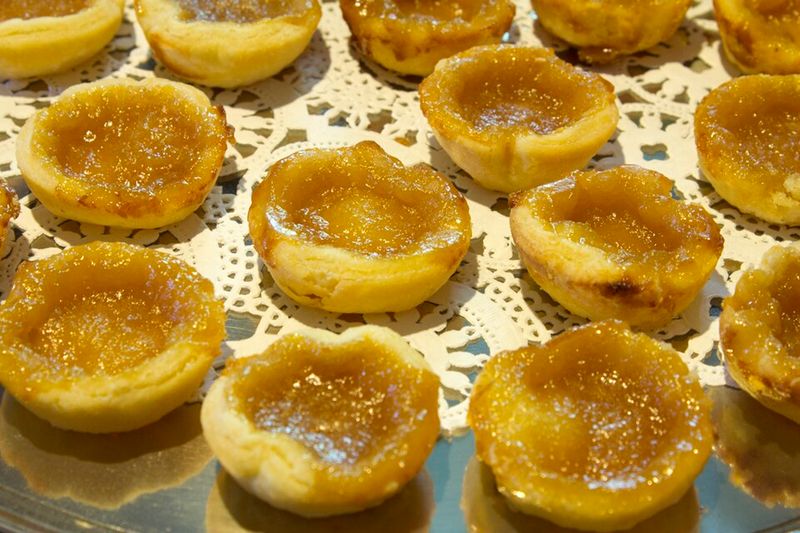
Butter tarts are one of Canada’s most beloved baked treats, and they are almost impossible to find south of the border. Each tart is a small pastry shell filled with a warm, gooey mixture of butter, sugar, eggs, and syrup that sets just enough to hold its shape when you bite in.
The great Canadian debate surrounding butter tarts is whether raisins belong inside. Raisin fans argue they add chewiness and balance the sweetness, while the anti-raisin camp insists the filling should be pure and uninterrupted.
Pecans are a popular middle-ground addition in some regions.
Recipes for butter tarts date back to an Ontario cookbook from 1900, making them one of the oldest documented Canadian recipes. They show up at every bake sale, holiday gathering, and family kitchen across the country.
Americans who taste one often describe it as a pecan pie without the pecans.
3. Ketchup Chips
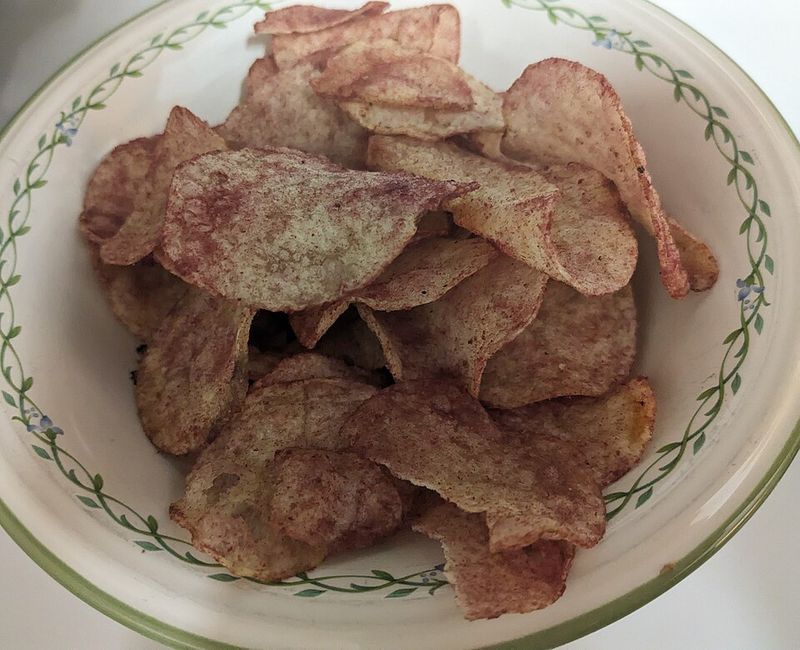
Bright red, boldly flavored, and completely normal in Canada, ketchup chips are one of the first things Canadians miss when they move to the United States. The flavor is tangy, slightly sweet, and unmistakably reminiscent of the condiment everyone puts on their fries anyway.
Americans tend to react to ketchup chips with a mix of confusion and skepticism, but most come around after the first handful. The flavor is bolder than plain salted chips but less sharp than salt and vinegar.
It hits a surprisingly enjoyable middle ground that keeps you reaching back into the bag.
Lay’s and Hostess both sell ketchup chips widely across Canada, and they have been a staple since the 1970s. Canadians traveling to the U.S. sometimes pack extra bags just to share with curious American friends.
Finding them in American stores is rare, though some specialty shops do carry them.
4. All-Dressed Chips
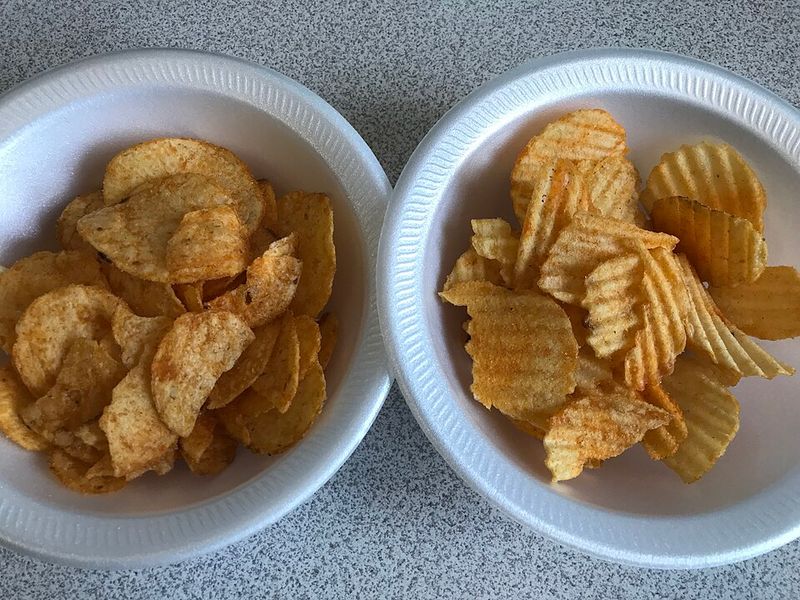
Imagine taking every chip flavor you love and combining them into one. That is exactly what all-dressed chips do.
This uniquely Canadian flavor blends BBQ, salt and vinegar, ketchup, and sour cream and onion into a single seasoning that somehow works perfectly.
The result is a chip that keeps your taste buds guessing with every bite. You might catch a hint of smokiness, then a tang, then a creamy finish.
It is complex in the best possible way, and once you start eating them, stopping becomes a real challenge.
All-dressed chips have been a Canadian grocery store staple for decades, sold by brands like Ruffles and Old Dutch. When Ruffles briefly introduced them to the U.S. market as a limited edition, they sold out almost immediately.
Americans who discover them often wonder why this flavor has not been available to them all along.
5. Hawkins Cheezies

Do not make the mistake of calling Hawkins Cheezies a Cheeto knockoff. Canadians will correct you immediately, and honestly, they have a point.
Cheezies are crunchier, denser, and carry a sharper, more intense real-cheese flavor that feels less artificial than their American cousin.
Made by a small Ontario company that has been around since 1949, Cheezies are one of Canada’s oldest surviving snack brands. The recipe has barely changed over the decades, and that consistency is a big part of their loyal following.
They leave your fingers seriously orange, which Canadians seem to consider a badge of honor.
The texture is the real difference maker. Where Cheetos are airy and melt-in-your-mouth, Cheezies offer a satisfying crunch that requires actual chewing.
Snack fans who appreciate bold, no-nonsense cheese flavor tend to rank Cheezies above most other cheese puff options once they have tried both side by side.
6. Tourtiere
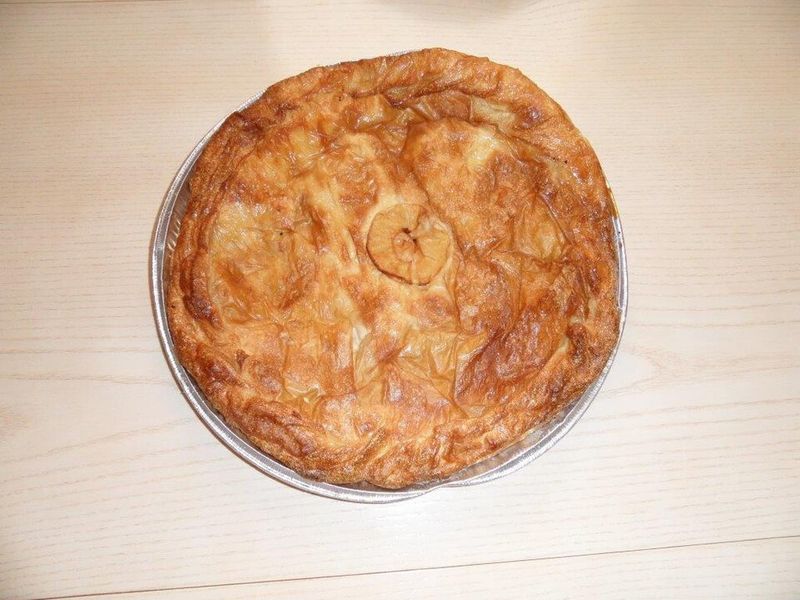
Every Quebec family has their own version of tourtiere, and every family believes theirs is the best. This traditional meat pie has been a Christmas Eve staple in French-Canadian homes for centuries, and the aroma of it baking is pure holiday nostalgia for millions of Canadians.
The filling is typically made with ground pork, beef, or a combination, seasoned with warming spices like cloves, cinnamon, and allspice. That spice blend is what surprises most Americans, who expect a savory pie to taste purely savory.
The subtle sweetness of those spices makes tourtiere taste unlike any other meat pie you have tried.
Tourtiere is closely tied to the Catholic tradition of Reveillon, the feast held after midnight mass on Christmas Eve. Recipes are passed down through generations and are considered deeply personal.
Some families add potatoes or wild game to their version, making each tourtiere a small piece of family history.
7. Peameal Bacon
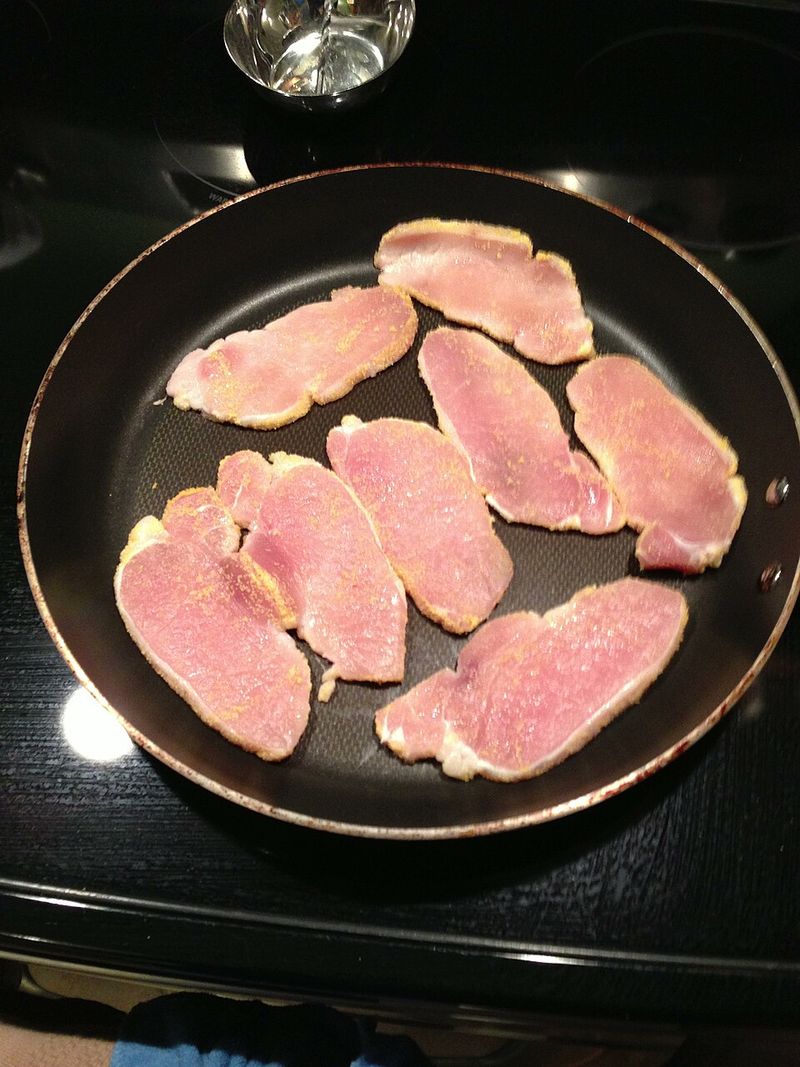
Here is where things get confusing for Americans. When Canadians talk about Canadian bacon, they are usually picturing something very different from what Americans call by that name.
Peameal bacon is a wet-cured pork loin rolled in golden cornmeal, and it bears only a passing resemblance to the round ham slices Americans put on their Egg McMuffins.
The cornmeal coating creates a slightly crisp exterior when the bacon is pan-fried, while the inside stays juicy and tender. It is leaner than traditional American bacon, which makes it a popular choice for people who want that salty, savory breakfast flavor without as much fat.
Toronto’s St. Lawrence Market is famous for its peameal bacon sandwiches, which draw long lines of locals and tourists alike. The sandwich is simple: a thick slice of peameal bacon on a fresh kaiser roll.
That straightforward combination has earned it a devoted following and unofficial landmark status in the city.
8. Nanaimo Bars
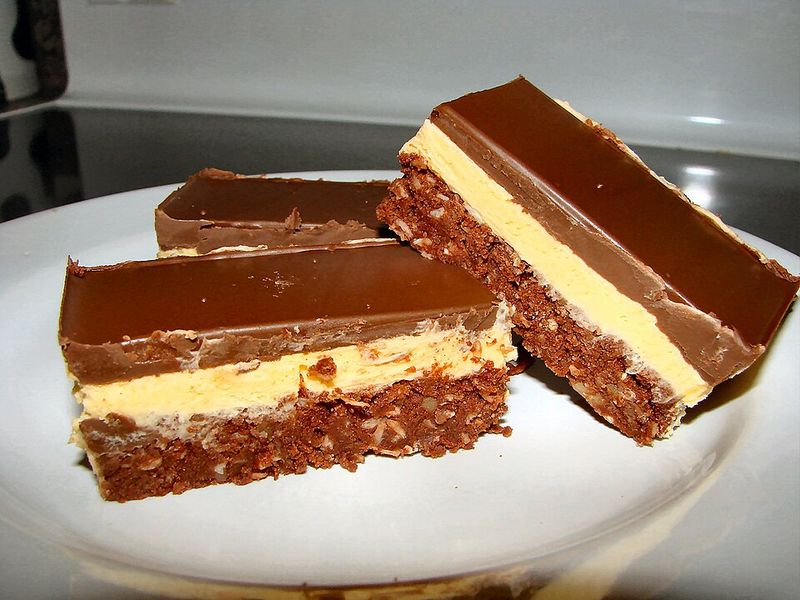
No baking required, no oven needed, and somehow still one of the most indulgent desserts Canada has ever produced. Nanaimo bars are a three-layered no-bake treat that originated in Nanaimo, British Columbia, and they have been a staple at Canadian potlucks and bake sales for decades.
The bottom layer is a dense, chocolatey base made from graham cracker crumbs, coconut, cocoa, and butter. The middle layer is a smooth, pale yellow custard buttercream that adds a creamy contrast.
On top sits a firm layer of dark chocolate ganache that snaps cleanly when you bite through it.
The city of Nanaimo takes serious pride in this creation. In 1986, the city held a contest to find the definitive official recipe.
The winning version is still posted on the city’s website today. Americans who encounter Nanaimo bars at Canadian bakeries or holiday tables are almost always asking for the recipe before they finish their first square.
9. Caesars (Cocktail)
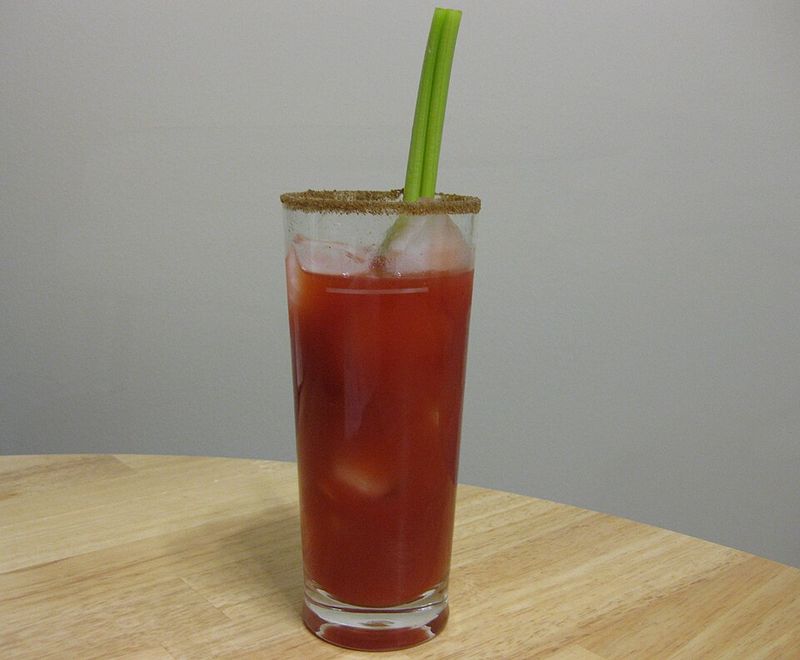
Walk into any bar in Canada on a Sunday morning and you will see Caesars being ordered by the round. This is Canada’s answer to the Bloody Mary, but Canadians will tell you it is a significant upgrade.
The key difference is Clamato, a blend of tomato juice and clam broth that gives the Caesar its distinctive savory depth.
A standard Caesar includes vodka, Clamato, hot sauce, Worcestershire sauce, and is served in a glass rimmed with celery salt. The garnish situation has evolved dramatically over the years.
Modern Caesars in Canadian restaurants sometimes arrive with bacon strips, sliders, shrimp, or even an entire grilled cheese sandwich balanced on top.
Walter Chell invented the Caesar in Calgary in 1969 to celebrate the opening of a new Italian restaurant. It quickly spread across the country and has never looked back.
Canadians drink roughly 350 million Caesars every year, making it the country’s most popular cocktail by a wide margin.
10. BeaverTails
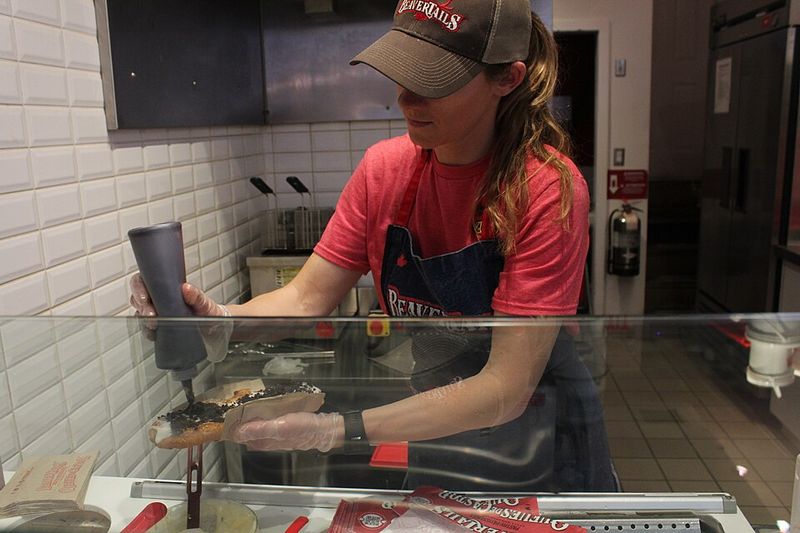
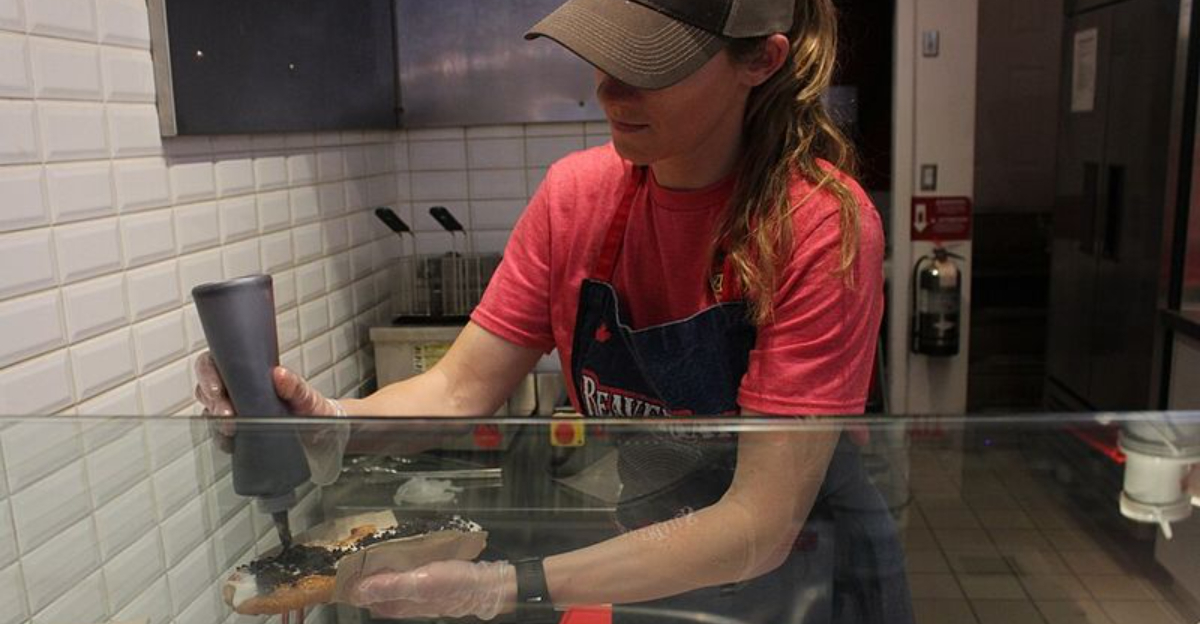
The name alone stops Americans in their tracks. BeaverTails are not made from actual beavers, but the fried dough pastry is stretched and shaped to resemble a flat beaver tail, which is admittedly a very Canadian design choice.
They are crispy on the outside, chewy in the middle, and served piping hot.
Once fried, a BeaverTail gets loaded with toppings. The classic version is simply cinnamon and sugar, but popular options include Nutella with banana, lemon and sugar, or peanut butter and chocolate.
They are the kind of treat that tastes best eaten outside in cold weather, which fits perfectly with their origins at Canadian winter festivals.
BeaverTails got a major boost in popularity when U.S. President Barack Obama visited Ottawa in 2009 and reportedly ordered one.
The company has grown from a single stall in Ottawa’s ByWard Market in 1978 into a chain with locations across Canada and internationally. They remain a quintessential Canadian street food experience.
11. Flipper Pie
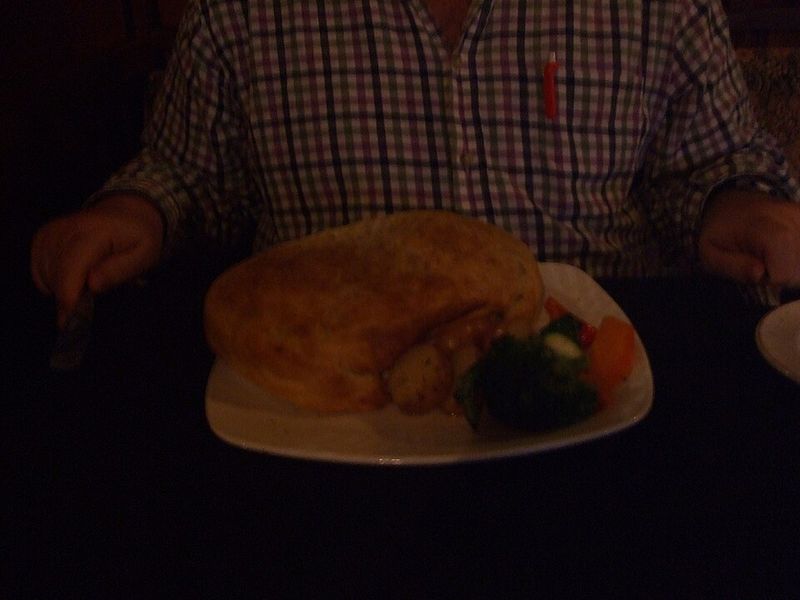
Flipper pie is one of the most controversial foods on this list, and it is rarely served outside of Newfoundland. Made from the flippers of harp seals, this traditional dish has been eaten in coastal Newfoundland communities for generations, tied closely to the province’s sealing industry and survival heritage.
The flipper meat is braised low and slow before being encased in a pastry shell. The flavor is described as rich, dark, and deeply gamey, with a texture similar to well-cooked organ meat.
It is not a subtle dish, and it is absolutely not for everyone, even among Newfoundlanders today.
International controversy surrounding the Canadian seal hunt has made flipper pie increasingly rare and politically charged. Many restaurants that once served it have quietly removed it from their menus.
For older generations in Newfoundland, it remains a meaningful cultural memory tied to community resilience. For most Americans, it sits firmly in the category of foods they will never encounter or seek out.
12. Jellied Moose Nose

Few dishes on this list will raise more eyebrows than jellied moose nose, and the name gives you the full picture without any softening. This is exactly what it sounds like: a moose nose that has been boiled, cleaned, and set in a savory gelatin to create a cold, sliceable dish.
The preparation is rooted in Indigenous and northern Canadian traditions where wasting any part of a harvested animal was not an option. The nose yields two types of meat: the white bulb portion and the darker, muzzle meat.
When sliced, the contrast creates an unusual but visually distinct presentation.
Flavored with onions, spices, and vinegar, the finished dish reportedly tastes milder than its appearance suggests, with a texture similar to head cheese or other charcuterie-style preparations. It is considered a delicacy in parts of northern Canada and Alaska.
For most Americans, this dish represents the outer edge of culinary adventurousness, but it reflects genuine resourcefulness and cultural heritage.
13. Maple Taffy on Snow
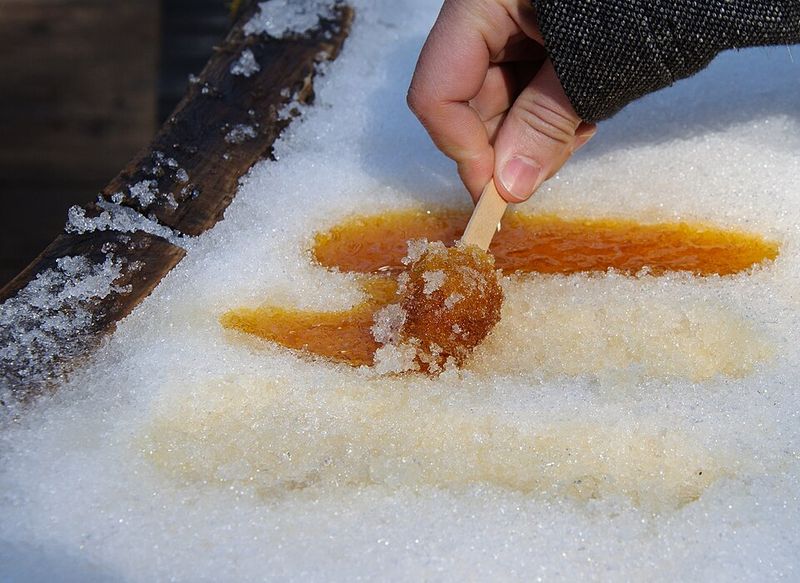
Every spring in Quebec, sugar shacks open their doors and maple taffy season officially begins. The process is beautifully simple: fresh maple syrup is boiled to the soft-ball candy stage, then poured in ribbons over clean, packed snow.
Within seconds, the cold snow cools the syrup into a chewy, stretchy taffy that gets rolled onto a wooden stick.
The result is pure maple candy with a texture somewhere between caramel and soft toffee. Eating it outside in the cold, fresh air while it is still warm is part of the experience.
Sugar shack visits, called cabane a sucre outings in French, are a beloved Quebec springtime tradition enjoyed by families and school groups alike.
Americans who have only ever had maple syrup on pancakes are usually unprepared for how intensely and purely maple taffy tastes. There is nothing else in it, no added flavoring or sweetener, just maple syrup transformed by temperature and snow into something genuinely magical and deeply Canadian.
14. Kraft Dinner (KD)
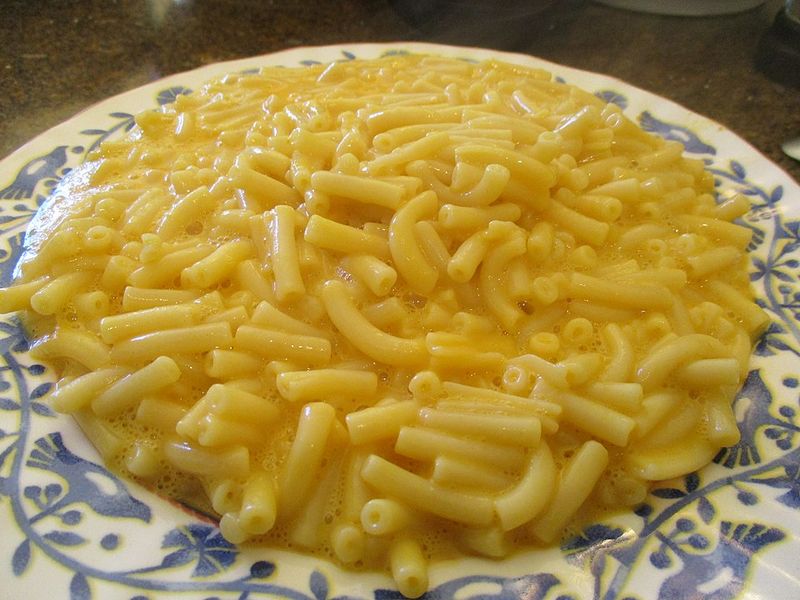
Kraft Dinner, known simply as KD, is more than just a box of mac and cheese in Canada. It is a cultural institution.
Canadians eat more Kraft Dinner per capita than any other country in the world, including the United States where the same product exists. Something about the KD relationship in Canada runs deeper than simple convenience food loyalty.
The neon-orange cheese sauce is not exactly gourmet, and Canadians know that perfectly well. That is almost beside the point.
KD is the meal you make at midnight, the dish you eat after a tough day, and the first thing many Canadian kids learn to cook on their own. It carries genuine emotional weight.
When a federal politician suggested in 2015 that families struggling financially could simply buy fresh ingredients instead of KD, the backlash was swift and enormous. Canadians from every background defended their beloved blue box with remarkable passion.
Americans have mac and cheese too, but they do not have KD, and Canadians will tell you that the difference matters.



