Indiana might not be the first state that comes to mind when you think about a getaway, but it has a surprising amount to offer without draining your wallet. From towering sand dunes along Lake Michigan to ancient fossil beds, quiet forest trails, and quirky museums that most people have never heard of, the Hoosier State packs a lot into a small price tag.
Whether you are planning a weekend road trip, a family outing, or just a solo escape from the usual routine, there are places here worth making the drive for. This list covers 15 real, affordable options across Indiana that give you the feeling of a proper trip away, even if you are back home by Sunday night.
Indiana Dunes National Park, Porter, Indiana
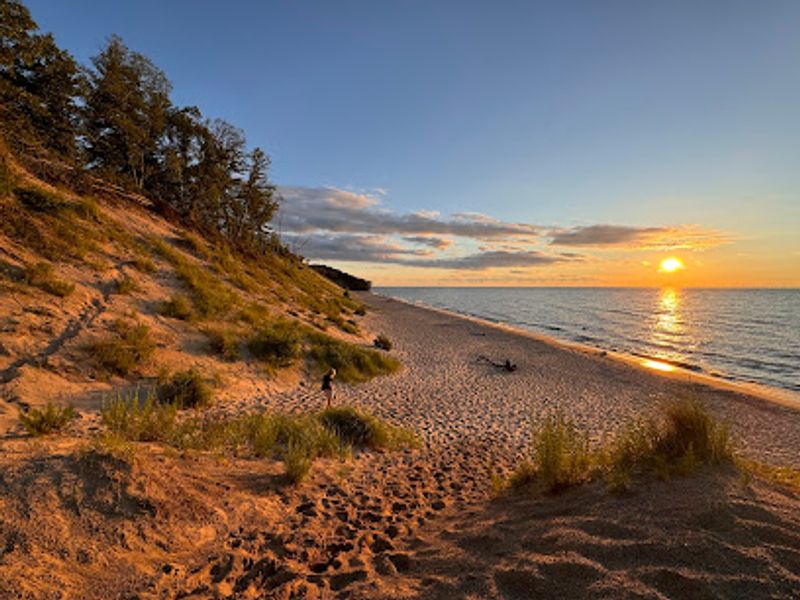
Indiana Dunes National Park sits along 15 miles of Lake Michigan shoreline and is one of the most biodiverse national parks in the entire country. That surprises a lot of people, but the park contains over 350 bird species and more than 1,100 plant species packed into its dunes, wetlands, and forests.
The park is free to enter with a National Parks pass, and even without one, fees are modest. Mount Baldy is one of the most popular spots, a large moving dune that offers a view of the lake from the top.
Trails range from easy beach walks to more challenging woodland routes.
Families, hikers, birders, and beachgoers all find reasons to come here. The park operates year-round, and each season brings a different look to the landscape.
It is one of the most accessible national parks in the Midwest and genuinely worth the trip.
Turkey Run State Park, Marshall, Indiana
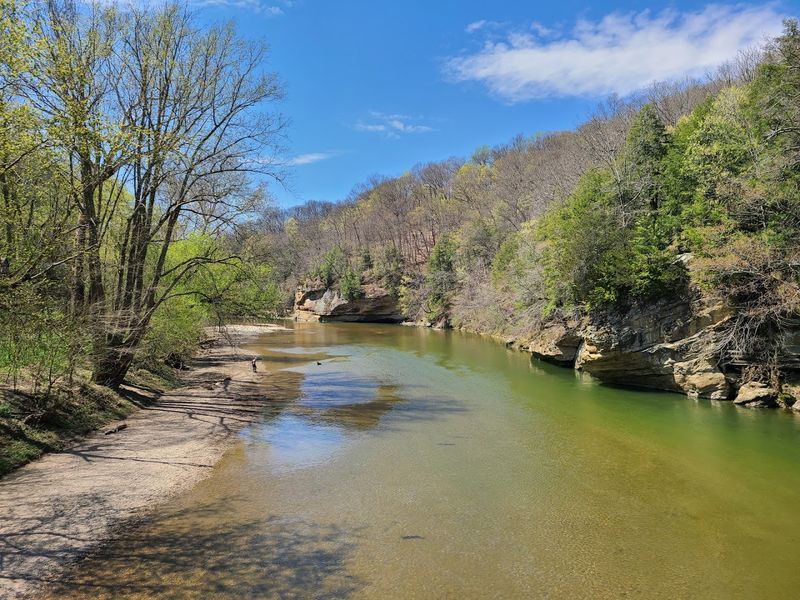
Turkey Run State Park is one of Indiana’s most dramatic natural landscapes, built around a series of deep, narrow sandstone canyons carved by Sugar Creek over thousands of years. The gorges are unlike anything else in the state, with canyon walls rising sharply on both sides of the trail.
Trail 3 is the most popular route and takes hikers through tight canyon passages where you sometimes have to squeeze between rock walls. It is not a long trail, but it is genuinely memorable.
The park also offers horseback riding, canoeing on Sugar Creek, and a historic inn on the grounds.
Admission is affordable with Indiana’s state park entrance fee, and the scenery rewards every dollar spent. Fall is an especially good time to visit when the trees above the canyon walls turn orange and gold.
Spring brings rushing water and green moss that covers the canyon floors.
Clifty Falls State Park, Madison, Indiana
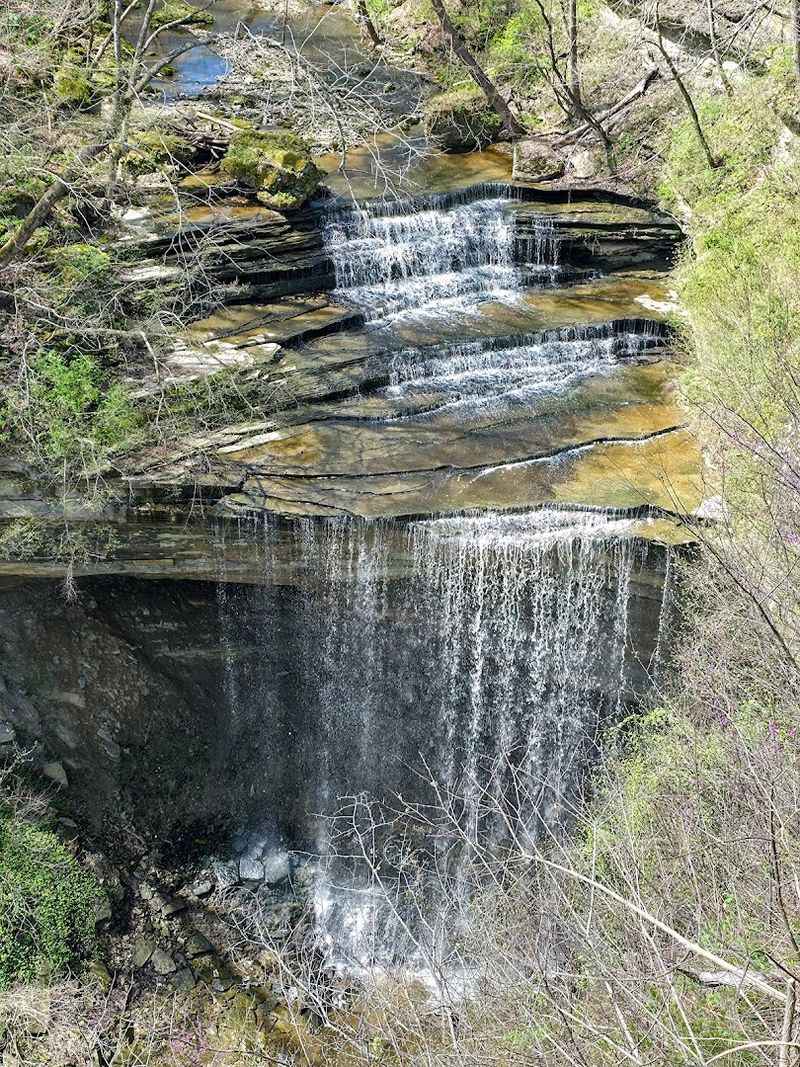
Clifty Falls State Park sits just outside the charming river town of Madison and is home to some of the most striking waterfalls in Indiana. The park is named after the multiple falls that drop through a rugged canyon carved by Clifty Creek before it meets the Ohio River.
The tallest waterfall in the park stands around 60 feet, and after a good rain, the flow is genuinely impressive. There are several trails of varying difficulty that wind through the canyon, offering different vantage points of the falls and the surrounding limestone cliffs.
Beyond the waterfalls, the park has an outdoor pool, a campground, and an inn if you want to turn the visit into an overnight stay. The town of Madison below is one of Indiana’s best-preserved 19th-century river towns, making a combined visit here feel like a full day of discovery.
Admission follows standard Indiana state park pricing.
Falls of the Ohio State Park, Clarksville, Indiana
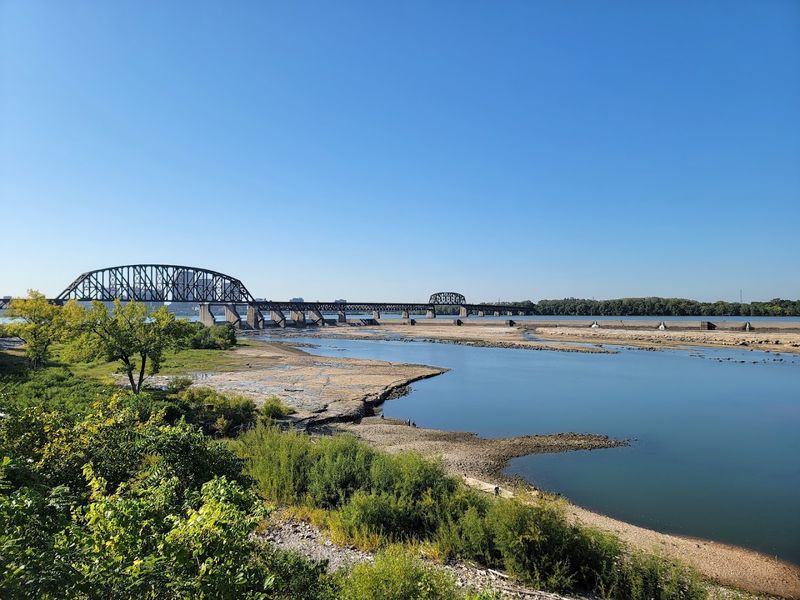
The Falls of the Ohio is one of the largest exposed Devonian fossil beds in the world, and it sits right along the Ohio River in Clarksville. The fossils here are roughly 386 million years old, and at low water levels, you can walk directly on the fossil beds and see coral formations up close.
The interpretive center on site does a solid job of explaining the geological history of the area and what the ancient sea looked like when these organisms were alive. Admission to the center is low-cost, and access to the fossil beds themselves is free.
This is a place that genuinely earns the reaction of surprise from first-time visitors. Most people do not expect to find a world-class fossil site wedged between Clarksville and Louisville, Kentucky.
Bring comfortable shoes if you plan to walk the rocky riverbank, and check water levels before visiting since high river conditions can limit access to the beds.
Brown County State Park, Nashville, Indiana
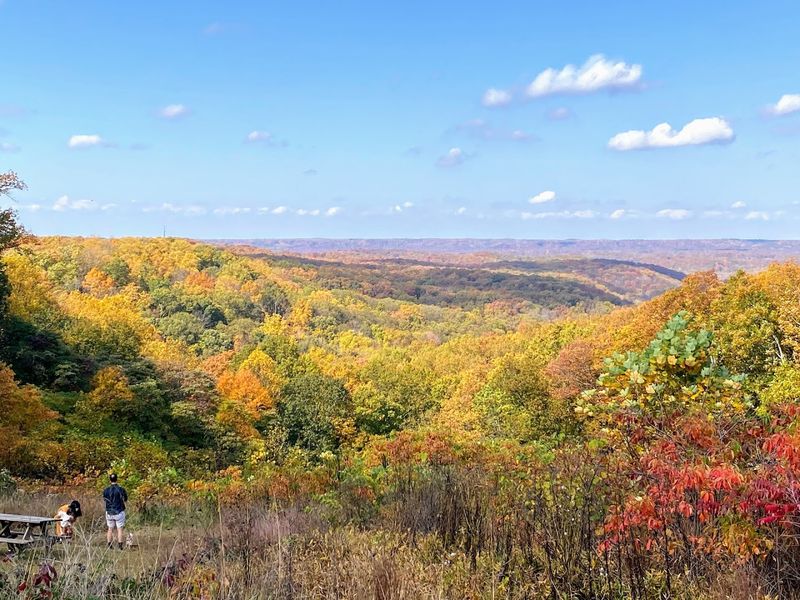
Brown County State Park is the largest state park in Indiana and one of the most popular fall destinations in the entire Midwest. The hills here turn into a wall of orange, red, and yellow each October, drawing visitors from multiple states just to see the color change from the park’s scenic overlooks.
Ober Saddle Lake and Ogle Lake sit inside the park and offer fishing, paddleboats, and a peaceful setting that feels far removed from city life. There are miles of trails for hikers and a separate trail system for horseback riders.
The park also has a saddle barn where you can rent horses for guided rides.
The nearby town of Nashville, Indiana is a small arts community with galleries, shops, and restaurants that round out a full day trip. The park itself operates year-round, and the campground fills up fast in October.
Booking ahead during fall color season is a practical necessity, not just a suggestion.
Mounds State Park, Anderson, Indiana
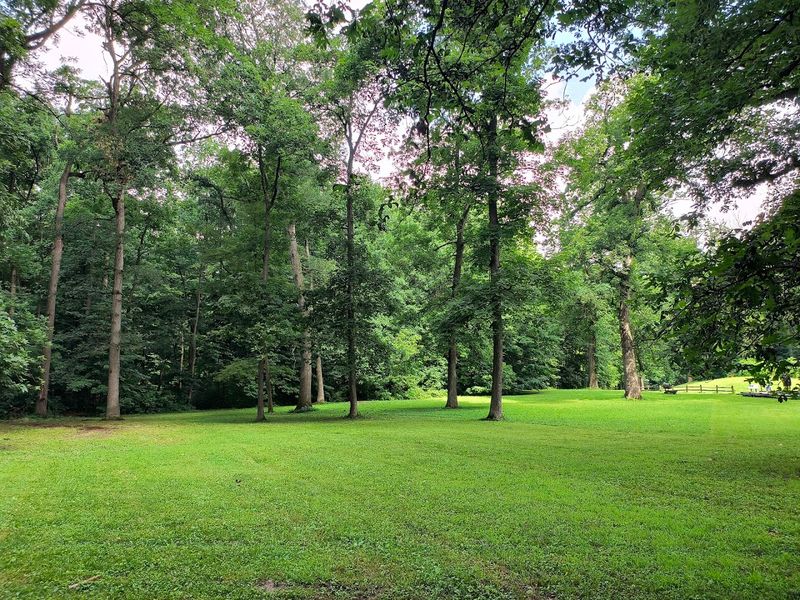
Mounds State Park in Anderson preserves a collection of prehistoric earthworks built by the Adena and Hopewell cultures over 2,000 years ago. The largest mound in the park measures about 9 feet tall and 384 feet in diameter, which gives you a sense of the scale of effort these ancient builders put into the landscape.
Walking through the park feels like stepping into a quieter, older version of Indiana. The mounds are spread across a wooded property along the White River, and the trail system connects them in a way that makes for a natural and easy walk.
The park also offers access to the river for fishing and a campground for overnight stays. Admission is affordable through the standard Indiana state park fee.
What makes this place stand out is the combination of genuine historical significance and a peaceful natural setting that does not feel overly developed or crowded outside of peak summer weekends.
Spring Mill State Park, Mitchell, Indiana
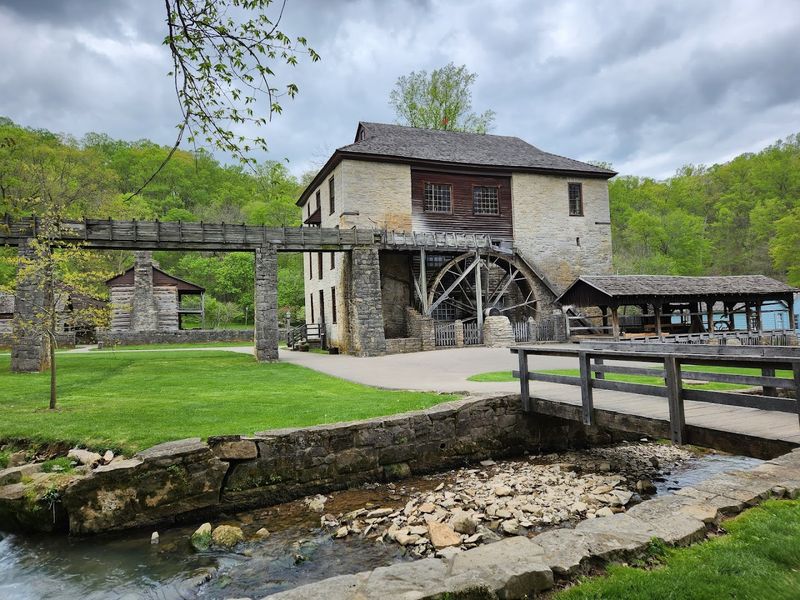
Spring Mill State Park is built around a restored pioneer village from the early 1800s, complete with a working grist mill, a distillery, a tavern, and several other historic structures. The mill uses water from an underground stream that surfaces inside the park, which is unusual enough to make the whole setting feel a little otherworldly.
Visitors can tour the village, watch the mill operate, and explore the surrounding woodland trails. The park also has a cave system called Twin Caves that offers boat tours through an underground waterway.
That particular feature alone makes Spring Mill worth putting on your list.
There is also a monument and museum inside the park dedicated to Virgil Gus Grissom, one of the original Mercury Seven astronauts, who grew up in Mitchell. The combination of pioneer history, cave exploration, and space history in one state park is genuinely unexpected.
Standard Indiana state park admission applies, and the cave tours have a separate small fee.
Pokagon State Park, Angola, Indiana
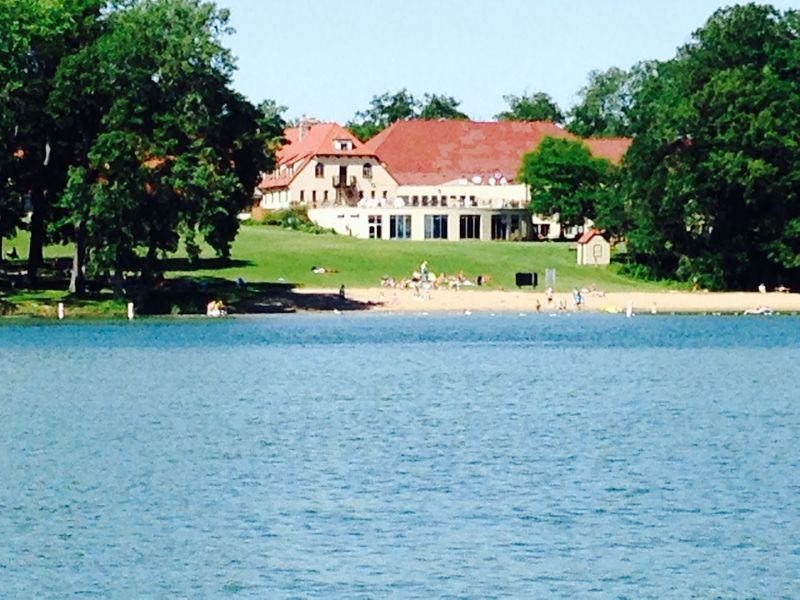
Pokagon State Park sits in the lake country of northeastern Indiana and borders two lakes, Lake James and Snow Lake, which together give the park a resort-like atmosphere that you do not always expect from a state park. The setting is genuinely relaxing, with forested shorelines and clean water that draws swimmers, boaters, and anglers throughout the summer.
In winter, the park becomes one of the most active cold-weather destinations in Indiana. The toboggan run here is refrigerated and operates from late November through mid-February, drawing families who want a winter outing that is actually fun and affordable.
Rides are fast and the run is long enough to be worth the wait.
The Potawatomi Inn on the property offers lodging and dining right inside the park, which makes an overnight stay easy to plan without booking a separate hotel. Pokagon is one of the more complete state park experiences in Indiana regardless of which season you visit.
Cataract Falls State Recreation Area, Spencer, Indiana
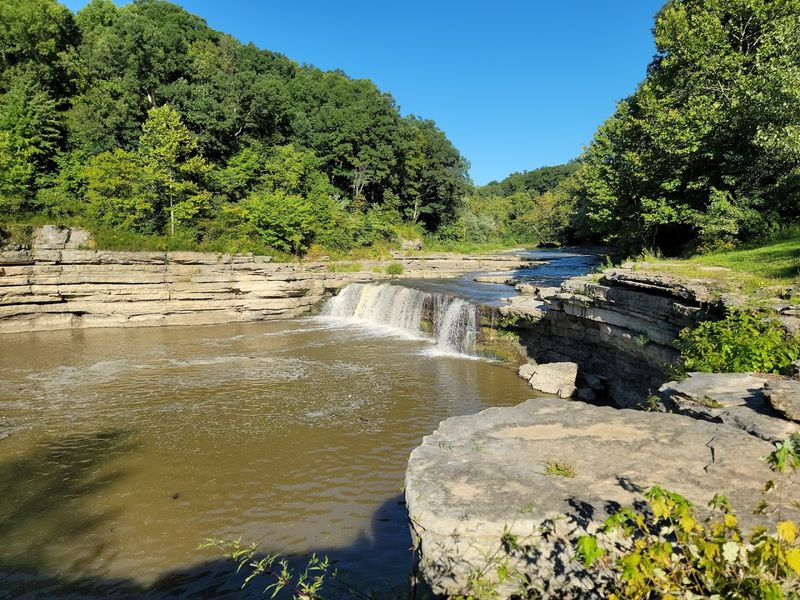
Cataract Falls is home to the largest waterfall by volume in Indiana, and it is the kind of place that earns a second visit. The falls are divided into an upper and lower section, both accessible by trail, and the sheer amount of water moving over the limestone ledges is impressive even during drier months.
The upper falls measure about 18 feet high and nearly 86 feet wide, which makes them feel more like a river pouring over a ledge than a typical waterfall. The lower falls are smaller but offer a more intimate setting surrounded by trees and rocky banks.
The recreation area is part of the Lieber State Recreation Area system and sits along Cataract Lake, which adds fishing, swimming, and camping to the list of activities. This is not a well-known spot outside of Indiana, which keeps the crowds manageable on most weekends.
Parking is free and the trails are easy to navigate without a guide.
George Rogers Clark National Historical Park, Vincennes, Indiana
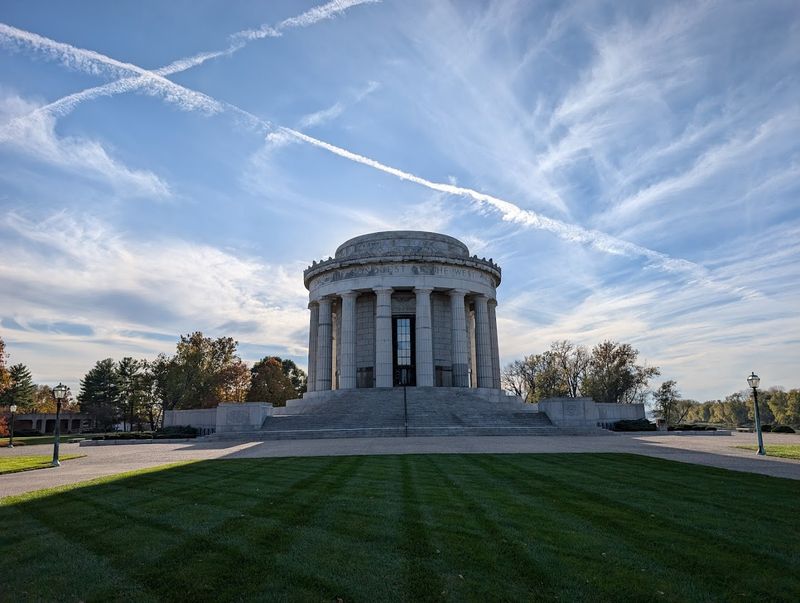
George Rogers Clark National Historical Park in Vincennes commemorates one of the most important military campaigns of the American Revolutionary War. Clark led a small force of frontiersmen through flooded plains in the winter of 1779 to capture Fort Sackville from British forces, a move that helped secure the Northwest Territory for the new nation.
The memorial building itself is an impressive circular granite structure with a large rotunda and murals depicting Clark’s campaign. It is one of the more stately and undervisited national historical sites in the Midwest.
Admission is free, which makes it an easy add to any Vincennes visit.
Vincennes is also Indiana’s oldest city, and the surrounding area has additional historic sites including the Indiana Territory Capitol and the Grouseland mansion, home of William Henry Harrison. Spending a half day here gives you a clear picture of how the American frontier actually developed.
The park is open year-round and managed by the National Park Service.
Indianapolis Cultural Trail, Indianapolis, Indiana
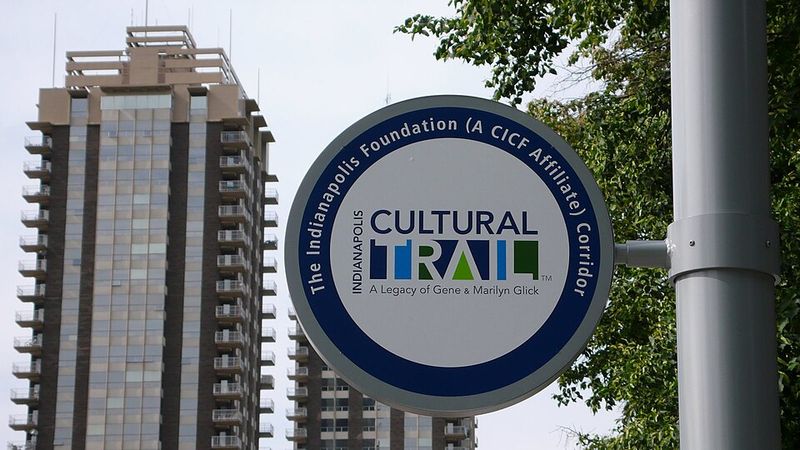
The Indianapolis Cultural Trail is an 8-mile urban bike and pedestrian path that connects six of Indianapolis’s cultural districts, including Fountain Square, Mass Ave, and the Indiana Avenue Jazz District. It is a completely free way to see a large and interesting portion of the city at your own pace.
The trail is well-maintained and lined with public art installations, murals, and sculptures that change and grow over time. It passes near dozens of restaurants, shops, galleries, and music venues, so it is easy to stop and explore along the way.
Bike rentals are available through the city’s BCycle bike-share program at multiple stations along the route.
For visitors who want to understand Indianapolis beyond the Speedway and the convention center, the Cultural Trail is one of the best introductions available. It shows the neighborhoods, the public spaces, and the creative energy that the city has been building for years.
No car required, no admission, no schedule to follow.
Indiana State Police Museum, Indianapolis, Indiana
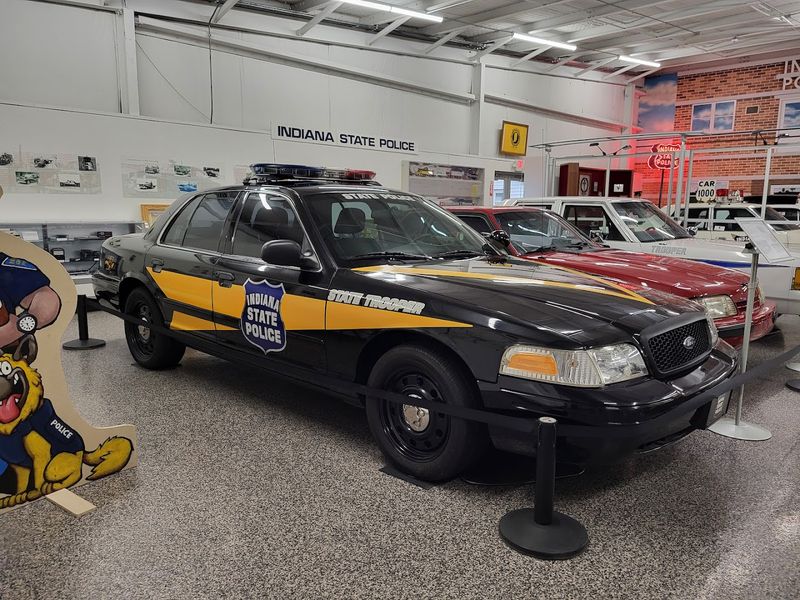
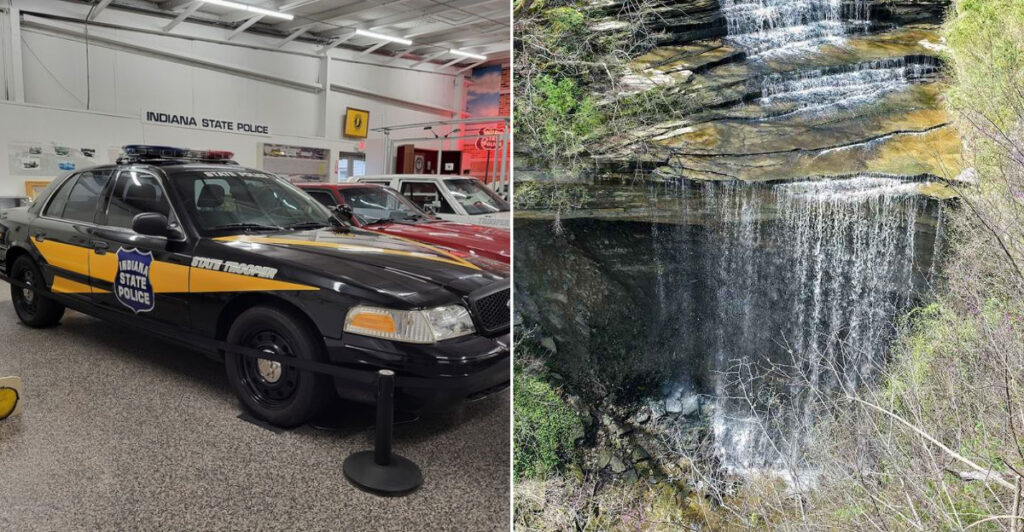
The Indiana State Police Museum is one of those places that catches people off guard in the best way. Located at the Indiana State Police headquarters in Indianapolis, the museum traces the history of law enforcement in Indiana from the early 1900s to the present day.
Exhibits include vintage patrol vehicles, historic uniforms, equipment used across different eras, and displays covering notable cases and the evolution of police technology over the decades. There is also a memorial section honoring officers who lost their lives in service, which gives the museum a tone that goes beyond simple nostalgia.
Admission is free, and the museum is open to the public during regular weekday hours. It is a compact but well-organized space that works well for a shorter visit or as part of a broader Indianapolis day trip.
History enthusiasts, true crime readers, and families with kids interested in law enforcement tend to find it genuinely engaging. Parking on site is available at no cost.
DePauw Nature Park, Greencastle, Indiana
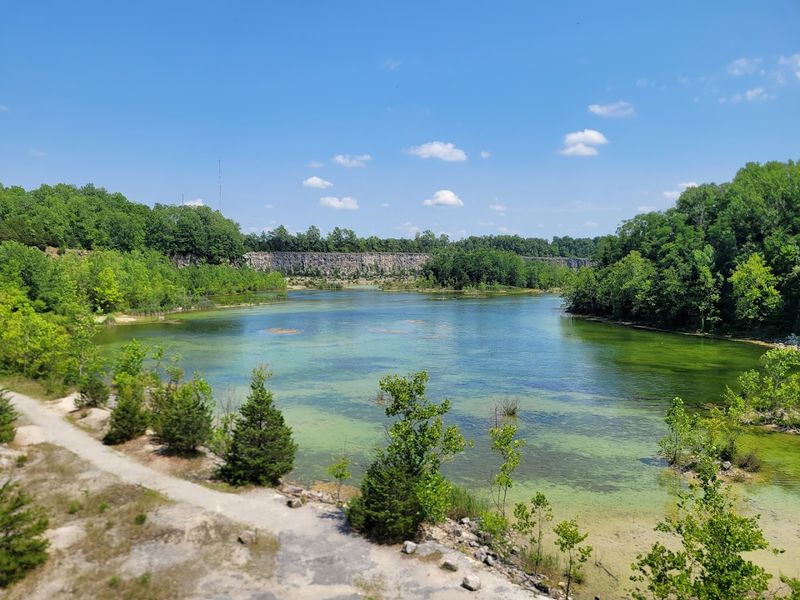
DePauw Nature Park covers about 520 acres of forest, meadows, and wetlands just outside of Greencastle, managed by DePauw University as a natural area for research and public recreation. Despite being connected to a university, the park is open to everyone and free to visit.
The trail system runs through a variety of habitats, from upland woods to floodplain forest along Deer Run Creek. Birdwatchers in particular find the park rewarding, since the mix of habitat types supports a wide range of species across the seasons.
Wildflower blooms in spring are especially notable along the creek corridors.
The park does not have flashy amenities or visitor center programming, which is part of its appeal. It is a quiet, well-maintained natural area where you can spend a couple of hours walking without distraction.
Greencastle itself is a small college town with a few good spots to eat before or after your visit. Parking is free and the trailheads are easy to find.
Richmond Rose Garden, Richmond, Indiana
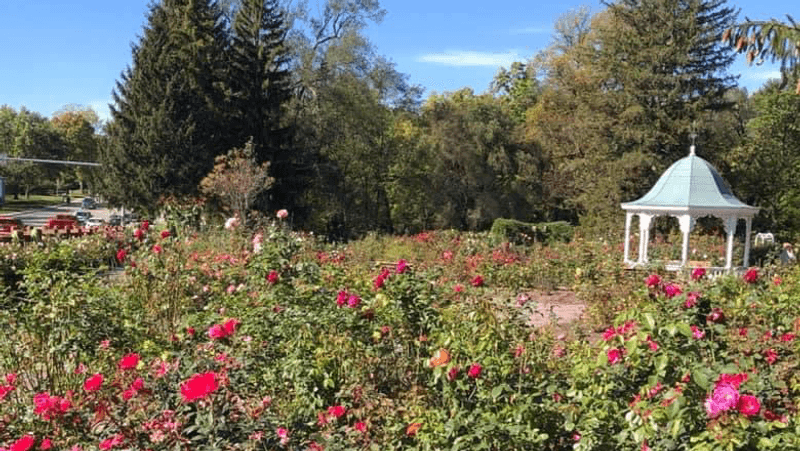
Richmond has a long history with roses going back to the early 20th century, when the city became a major center for commercial rose growing. The Richmond Rose Garden in Glen Miller Park carries that tradition forward with over 1,900 rose bushes representing more than 40 varieties, all maintained in a formal garden setting that peaks in late spring and early summer.
The garden is completely free to visit and is part of the larger Glen Miller Park, which also offers picnic areas, a playground, a disc golf course, and a small zoo called the Joseph Moore Museum of Natural History on the nearby Earlham College campus.
Peak bloom typically falls in June, when the variety of colors across the garden is at its fullest. The garden is well-maintained and clearly labeled, so visitors can identify the different rose cultivars as they walk through.
It is a genuinely pleasant stop that requires no more than 30 to 45 minutes and costs nothing to enjoy.
Studebaker National Museum, South Bend, Indiana
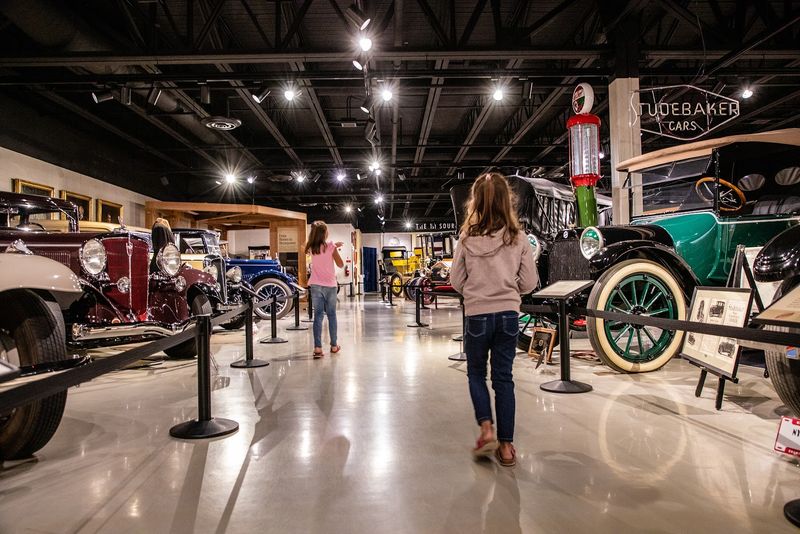
The Studebaker National Museum in South Bend tells the story of one of America’s most fascinating vehicle manufacturers, a company that started making wagons in 1852 and eventually became one of the most innovative automakers of the 20th century before closing in 1966. The collection spans that entire arc.
The museum houses one of the finest collections of presidential carriages in the country, including the carriage used by Abraham Lincoln on the night of his assassination and a carriage used by Ulysses S. Grant.
The automobile collection covers Studebaker’s full production history, from early horseless carriages to the sleek Avanti models of the 1960s.
Admission is reasonably priced and the museum is well-organized, with enough depth to keep car enthusiasts busy for several hours while remaining accessible to visitors who are simply curious about American manufacturing history. South Bend itself has a growing food and arts scene, making it a solid base for a weekend trip in northern Indiana.
Share this story