Modern airports are no longer just transit points—they’re high-tech travel hubs designed for comfort, efficiency, and experience. The world’s best airports are ranked using millions of passenger reviews, evaluating everything from cleanliness and security to dining, shopping, and overall convenience.
In 2026, Asian and European airports continue to dominate global rankings, setting new standards with smart technology, seamless connections, and world-class amenities. Here are 15 airports that define what great global travel should look like.
Singapore Changi Airport, Singapore

No airport on Earth has a 40-meter indoor waterfall—but Singapore Changi does, and it’s only the beginning. Changi has claimed the title of world’s best airport so many times, it practically owns the trophy.
With five terminals, over 280 shops, and a rooftop swimming pool, it redefines what waiting for a flight can feel like.
Jewel Changi, the crown jewel of the complex, is a glass-and-steel dome that houses gardens, a hedge maze, and restaurants that make you forget you’re in an airport. Layover anxiety?
That’s not a thing here. Passengers often arrive early on purpose just to explore.
Cleanliness is almost aggressive—staff are constantly maintaining every corner. Security lines move quickly, and the signage is so clear that even first-time travelers navigate with ease.
Free city tours are available for passengers with long layovers, adding genuine local flavor. Changi isn’t just an airport; it’s a destination that happens to have runways attached to it.
Incheon International Airport, South Korea

Walk through Incheon International Airport and you might stumble upon a live traditional Korean performance happening right in the terminal. That’s the kind of unexpected delight that makes this airport one of Asia’s most beloved travel hubs.
Cultural experiences are woven right into the passenger journey.
Beyond the performances, Incheon offers a spa, an ice skating rink, a golf course, and even a Korean Cultural Street where travelers can try on traditional hanbok outfits. It’s practical and playful at the same time—a rare combination in the world of aviation.
Families especially appreciate the dedicated kids’ zones and stroller-friendly layouts throughout the terminals.
Transit efficiency is another strong suit. Incheon consistently scores near the top for fast security processing and smooth baggage handling.
The airport connects to Seoul via a high-speed rail link, making the city feel like a natural extension of the terminal. Free transit hotel rooms are available for long-haul passengers, which is a genuinely thoughtful touch.
Incheon treats every traveler like a guest, not just a boarding pass number.
Tokyo Haneda Airport, Japan
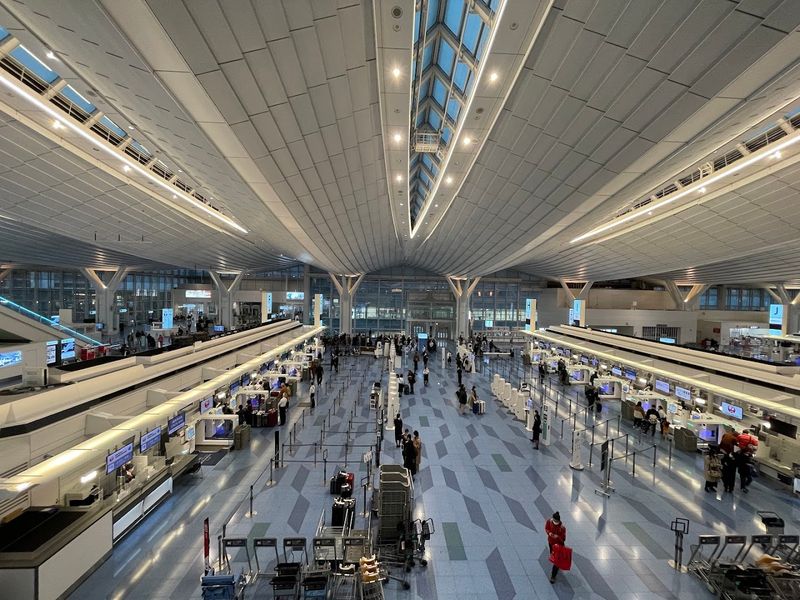
Spotless floors, trains that run to the second, and staff who bow as you approach the counter—Haneda Airport captures everything remarkable about Japanese hospitality in one compact, highly functional space. It’s the kind of airport that makes you feel like the whole system was designed specifically for you.
Located just 14 kilometers from central Tokyo, Haneda is refreshingly close to the city, cutting travel time significantly compared to many international airports. The convenience factor alone puts it ahead of the pack.
Add in its reputation for zero-tolerance cleanliness and you’ve got a passenger experience that feels almost effortless.
The food scene here is no afterthought. Haneda’s dining options include everything from authentic ramen counters to sushi bars sourcing fish from Tokyo’s famous markets.
A rooftop observation deck lets travelers watch planes take off while enjoying city views—a simple pleasure that never gets old. Shopping floors feature Japanese crafts, electronics, and snacks that make excellent souvenirs.
Haneda proves that an airport doesn’t need to be flashy to be phenomenal; precision and care go a very long way.
Hong Kong International Airport
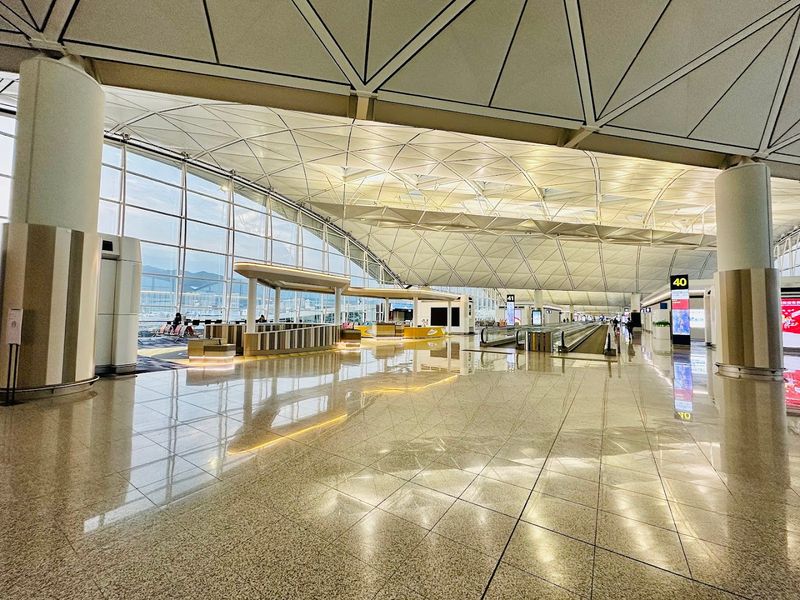
Built on a man-made island off the coast of Lantau, Hong Kong International Airport is an engineering marvel before you even step inside. The airport handles over 70 million passengers a year, yet somehow keeps things moving with impressive speed and calm.
That’s no small feat for one of the world’s busiest aviation hubs.
Security here is among the fastest in Asia—a point passengers repeatedly highlight in reviews. The layout is intuitive, with clear signage guiding travelers through a terminal that manages to feel organized despite its enormous scale.
Shopping options rival those of any luxury mall, featuring international brands alongside local Hong Kong specialties.
Connectivity is where Hong Kong truly shines. The airport links to over 180 destinations across the globe and offers a high-speed Airport Express train that reaches downtown in just 24 minutes.
In-town check-in at Hong Kong Station is a genuinely brilliant service—passengers can drop their luggage in the city and board the train unburdened. The SkyPier ferry service even connects directly to mainland China and Macau.
Practical, polished, and powerfully connected, this airport earns every bit of its global reputation.
Tokyo Narita Airport, Japan
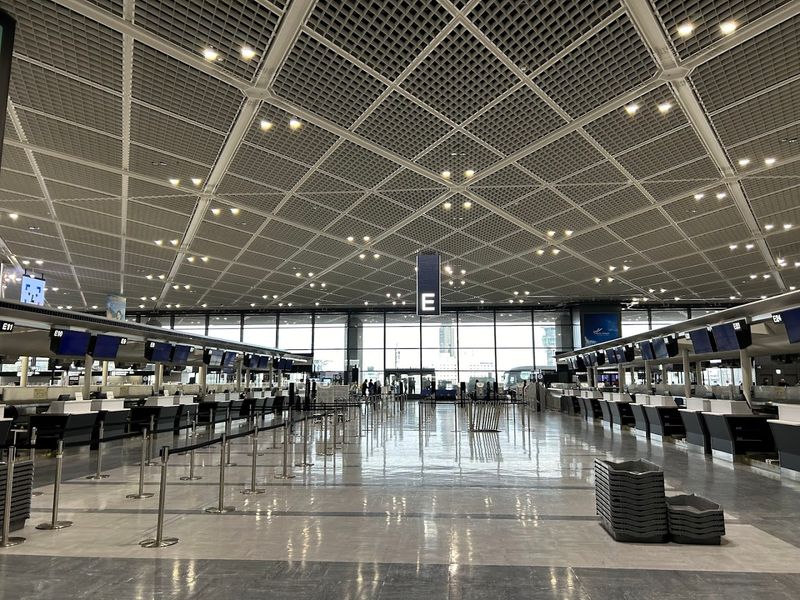
Ask any frequent flyer about their best long-haul airport experience in Asia, and Narita’s name comes up more often than you’d expect. While it lacks the glamour of some newer airports, Narita more than compensates with flawlessly organized operations and staff who treat customer service as a genuine art form.
Narita sits about 60 kilometers from central Tokyo, which sounds far—and honestly, it is. But the airport compensates with excellent transport links, including the Narita Express train that connects smoothly to Shinjuku and other major Tokyo hubs.
The journey is comfortable and punctual, which softens the distance considerably.
Inside the terminals, everything is where you expect it to be. Lounges are well-maintained, dining options cover everything from quick bites to full sit-down Japanese meals, and the duty-free shopping is extensive.
Narita also handles massive passenger volumes during peak travel seasons without visibly buckling under pressure. Staff are known for their patience and helpfulness—language barriers rarely become real barriers here.
For international travelers making long-distance connections, Narita’s calm efficiency and reliable services make it a genuinely reassuring place to pass through.
Paris Charles de Gaulle Airport, France
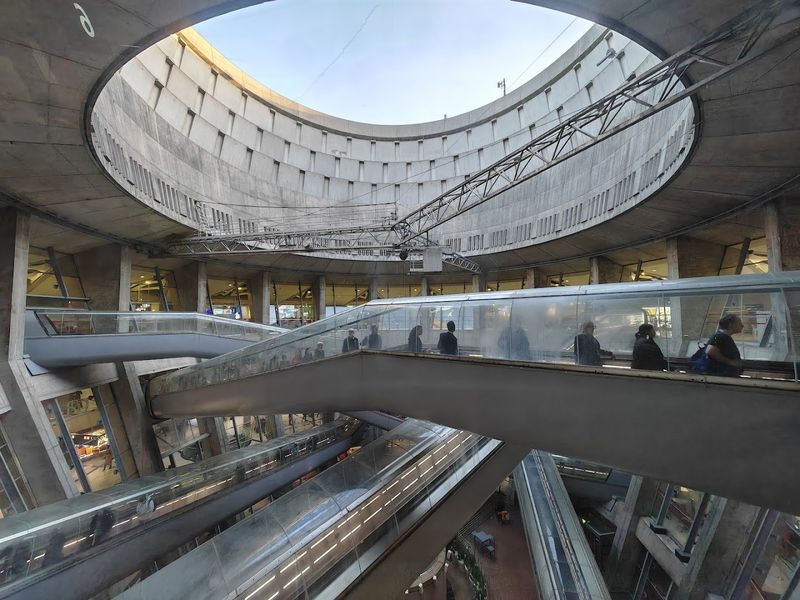
CDG has a reputation that divides travelers—some find it labyrinthine, others find it thrillingly Parisian in its confident complexity. But in 2026, ongoing upgrades have transformed the experience significantly, earning it the top spot among European airports.
The French, it turns out, are very serious about their transit infrastructure.
The airport’s iconic Terminal 1, with its cylindrical design and tubular walkways, remains one of the most architecturally distinctive airport structures anywhere in the world. It’s the kind of place where even the ceiling is worth looking at.
Renovations across other terminals have brought modern lounges, better wayfinding, and improved passenger flow.
CDG connects to over 350 destinations globally, making it one of the most powerful aviation hubs on the planet. The RER B train links the airport to central Paris in about 35 minutes—affordable, frequent, and reliable.
Food options have improved dramatically, with proper French cuisine available beyond the usual airport shortcuts. Croissants that actually taste like croissants are now a genuine feature, not a fantasy.
For travelers passing through Europe, CDG offers scale, style, and increasingly, the smooth experience to match its global ambitions.
Rome Fiumicino Airport, Italy
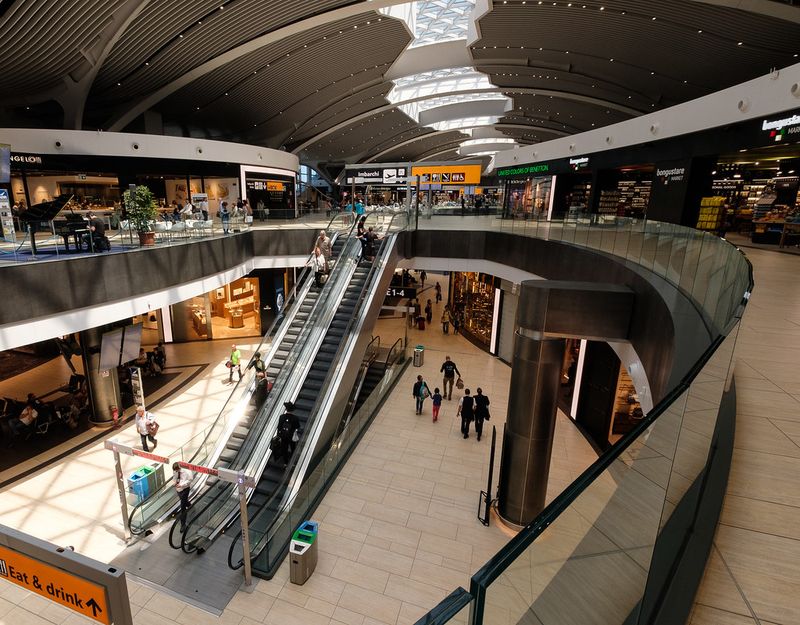
Rome Fiumicino used to be the airport travelers quietly dreaded—long queues, confusing layouts, and a general sense of organized chaos. Not anymore.
A sweeping series of renovations has turned Leonardo da Vinci International into one of Europe’s most genuinely improved airport experiences, and the travel community has noticed.
The new Terminal 1 expansion brought wider concourses, better lighting, and a dramatically improved retail and dining scene. Italian airports taking Italian food seriously feels like a natural fit, and Fiumicino delivers—proper espresso, fresh pasta, and regional wines are all available before you board.
It’s one of the few airports where eating before a flight is actually enjoyable.
Passenger satisfaction scores have climbed steadily over the past few years, reflecting real improvements in cleanliness, staff responsiveness, and transit efficiency. The airport connects Rome to over 200 global destinations and serves as Alitalia’s—now ITA Airways’—main hub.
The express train to Rome Termini takes about 32 minutes and runs frequently throughout the day. Fiumicino’s transformation is a reminder that airports can genuinely reinvent themselves.
When a city as beautiful as Rome finally has an airport worthy of it, everyone wins.
Istanbul Airport, Türkiye
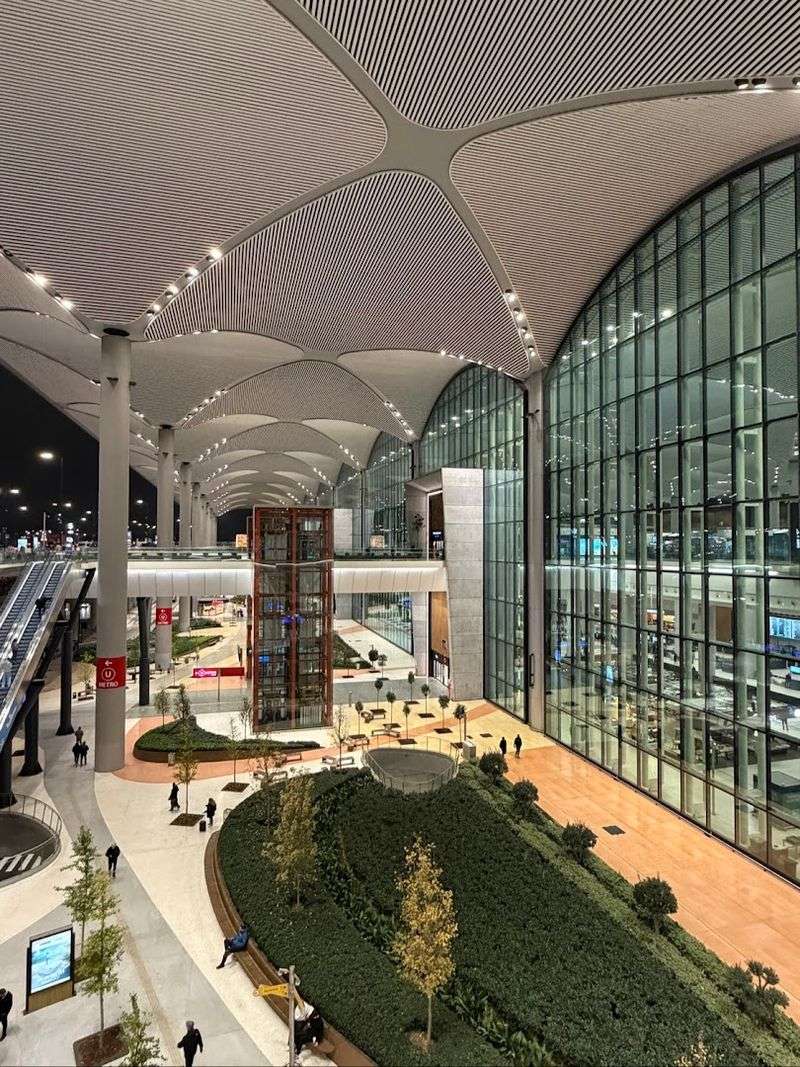
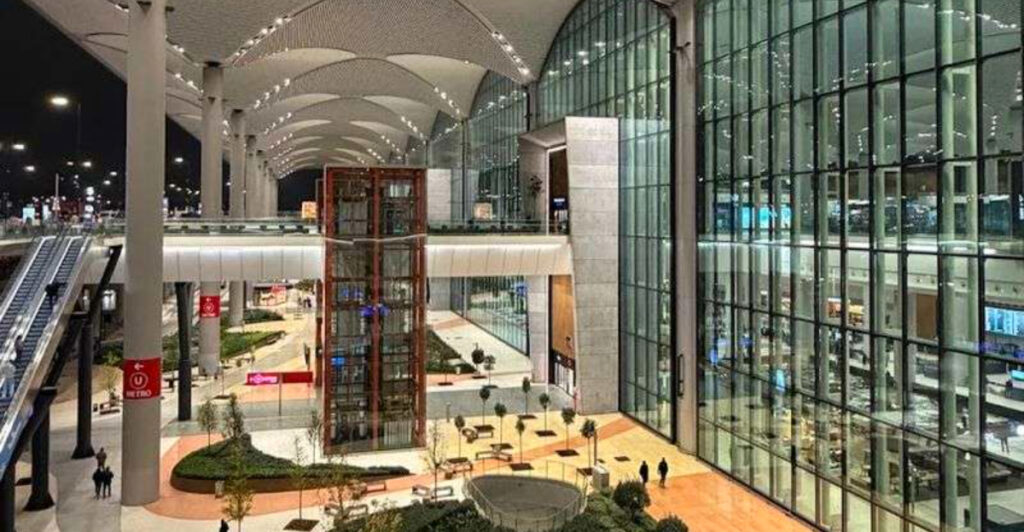
Istanbul Airport opened in 2018 and immediately announced itself as one of the most ambitious airport projects in modern history. Designed to eventually handle 200 million passengers annually, it is a statement in steel, glass, and Turkish architectural pride.
Walking through its main terminal feels less like catching a flight and more like exploring a small city.
The airport’s strategic location between Europe, Asia, Africa, and the Middle East makes it one of the most geographically powerful hubs on Earth. Turkish Airlines operates flights to more countries than any other airline in the world, and Istanbul is the beating heart of that network.
Over 300 destinations are reachable directly from here.
Inside, the passenger experience matches the ambition of the building. Retail options are extensive, lounges are spacious and well-equipped, and the Turkish Airlines Business Lounge is frequently cited as one of the best in the world—complete with a Turkish bath, cinema, and golf simulator.
Dining options lean heavily into Turkish cuisine, with mezes, grilled meats, and baklava available at multiple points across the terminal. Istanbul Airport isn’t just passing through—it’s an experience worth building a layover around.
Munich Airport, Germany
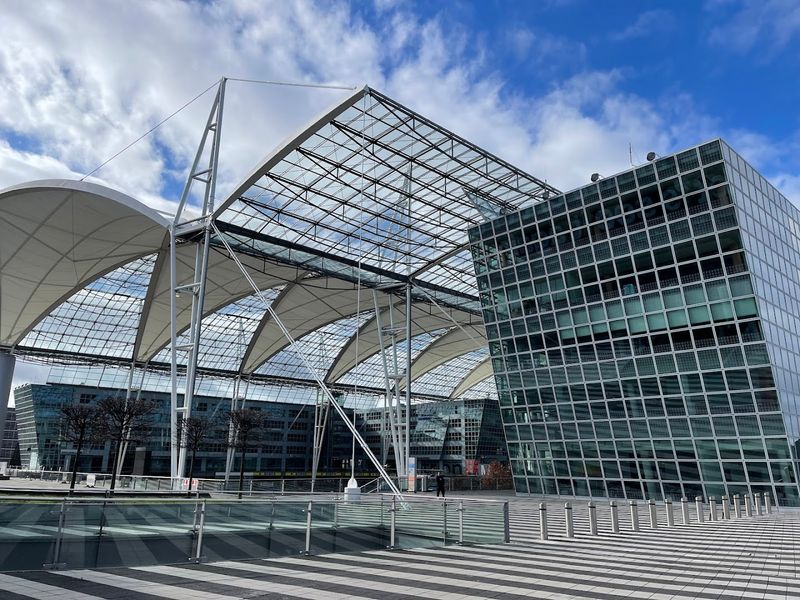
Munich Airport has an indoor park with real trees, benches, and natural light filtering through a glass roof—and somehow that detail perfectly captures everything that makes this airport special. It’s efficient, yes, but it also genuinely cares about making travelers feel human.
That combination is rarer than it should be.
Consistently ranking among Europe’s top three airports, Munich blends German precision with unexpected warmth. Security lines are fast, gates are easy to find, and the terminal design minimizes the kind of pointless walking that makes other airports exhausting.
Everything here feels intentional and well thought out.
The airport is also home to Airbrau, a working microbrewery located right in the terminal—a uniquely Bavarian touch that delights passengers on layovers. Fresh pretzels, local beers, and Bavarian sausages are available around the clock.
Shopping covers both high-end brands and practical travel needs. The S-Bahn rail link connects Munich Airport to the city center in about 40 minutes, running reliably throughout the day.
For travelers who appreciate an airport that sweats the details—from transit speed to the quality of the pretzel—Munich consistently delivers the full package.
Vancouver International Airport, Canada
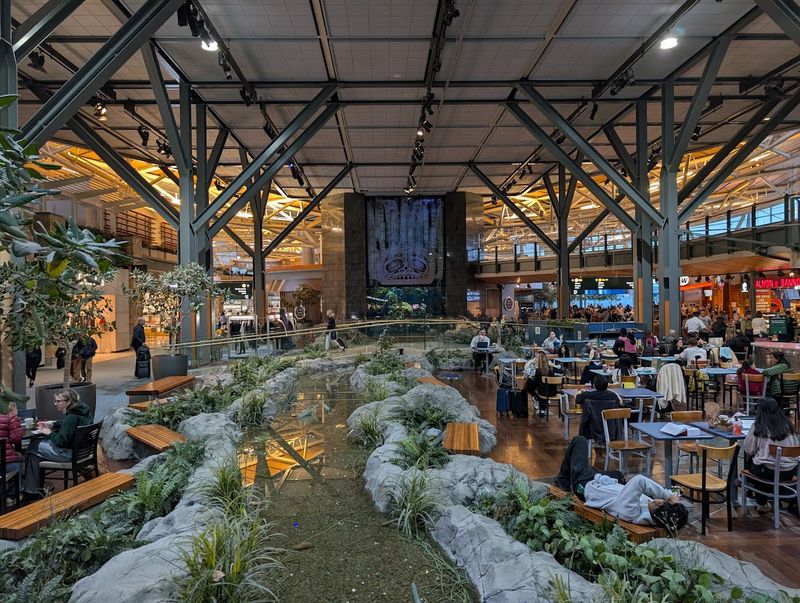
There’s a 5.5-meter bronze sculpture of a killer whale leaping through the ceiling of Vancouver International Airport, and it sets the tone immediately. This is not a generic airport.
From the moment you arrive, YVR wraps you in Pacific Northwest culture through stunning Indigenous artwork, cedar panels, and natural materials that make the space feel genuinely rooted in place.
Vancouver holds the title of best airport in North America year after year, and the reasons go beyond the art. Staff are famously friendly, queues move efficiently, and the overall atmosphere is calm rather than chaotic—a tone that’s surprisingly hard to achieve in a major international hub.
Travelers consistently describe the experience as stress-free.
The airport’s aquarium-style tank near the domestic terminal is a quirky highlight that kids absolutely love, making YVR particularly popular with families. Dining options showcase local British Columbia flavors—fresh Pacific salmon, craft beers, and farm-to-table concepts that reflect the region’s food culture.
The Canada Line SkyTrain connects the airport to downtown Vancouver in just 26 minutes at a very reasonable fare. YVR proves that an airport can have genuine character without sacrificing the efficiency that travelers actually need.
Dubai International Airport, UAE
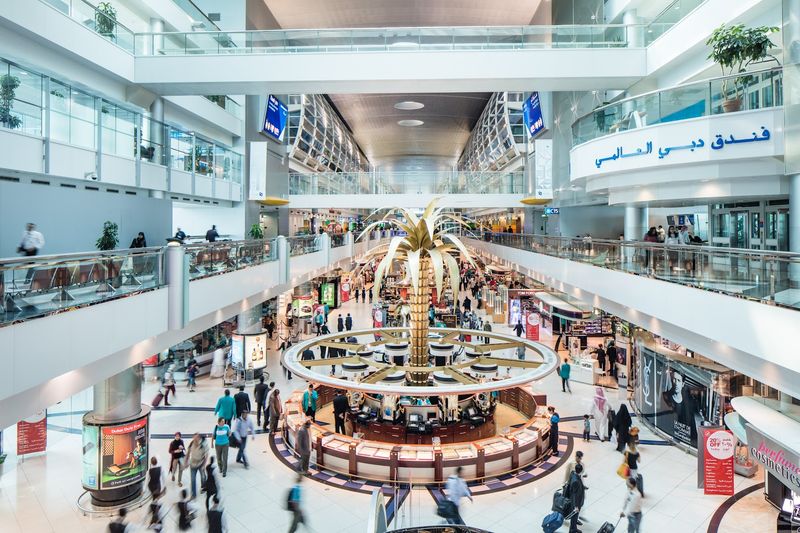
Dubai International Airport is the world’s busiest international airport by passenger numbers—a staggering fact when you consider it serves a city of just over three million people. The answer, of course, is geography: Dubai sits at the center of a circle that reaches two-thirds of the world’s population within eight hours of flight time.
Emirates Airlines built an empire around that fact.
Technology is where DXB genuinely pushes boundaries. Biometric Smart Gates allow passengers to pass through immigration using just a face scan—no passport fumbling, no queues.
The system processes travelers in seconds and is being rolled out across more touchpoints throughout the airport. It’s the kind of friction-free transit that makes frequent flyers genuinely happy.
The duty-free shopping at Dubai is legendary—gold, electronics, perfumes, and luxury goods are available at prices that justify a dedicated luggage allowance. Terminal 3, exclusively operated by Emirates, is the largest airport terminal in the world by floor space.
Lounges here are extraordinary, particularly the Emirates First Class Lounge with its spa, fine dining, and shower suites. Dubai International isn’t subtle about its ambitions, and for the most part, it absolutely delivers on them.
Helsinki-Vantaa Airport, Finland
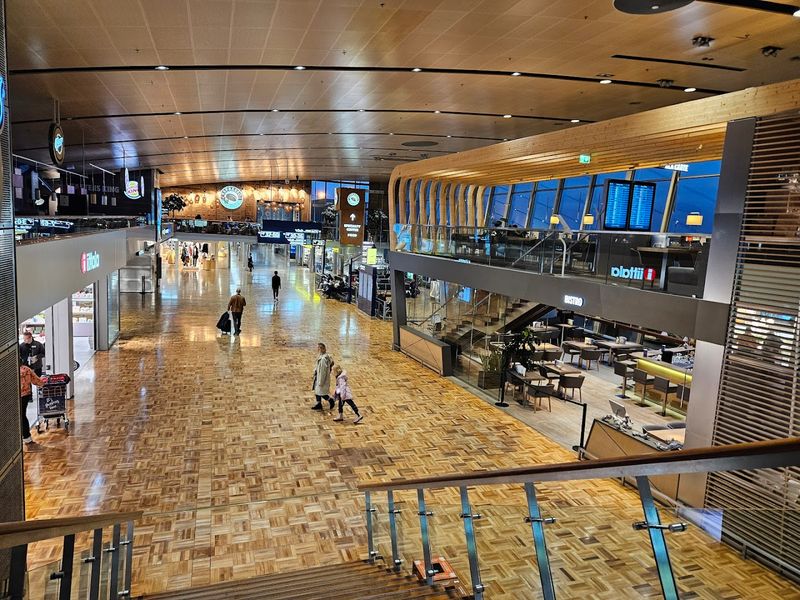
Finland has a cultural concept called ‘sisu’—a kind of quiet, determined resilience—and Helsinki-Vantaa Airport embodies it completely. Nothing here shouts for attention, but everything works exactly as it should.
The Scandinavian minimalism extends from the architecture to the operational efficiency, creating an experience that feels calm, clean, and completely stress-free.
Helsinki’s real strategic superpower is its location. Sitting at the top of Europe, it offers some of the shortest flight routes between Europe and Asia—particularly Japan, China, and South Korea.
Finnair has built its entire long-haul strategy around this geographic advantage, making Helsinki a surprisingly efficient connection point for transcontinental travelers.
The airport is compact enough to navigate quickly, which is a genuine advantage when making tight connections. Security is fast, gates are close together, and the terminal never feels overwhelming.
Local design influences show up in the materials—birch wood, stone, and muted Nordic colors give the space a distinctly Finnish identity. Food options include Fazer chocolate, Finnish rye bread, and reindeer dishes that offer a real taste of local culture.
For travelers who value smooth, no-nonsense transit with genuine personality, Helsinki-Vantaa is an underrated gem.
Zurich Airport, Switzerland
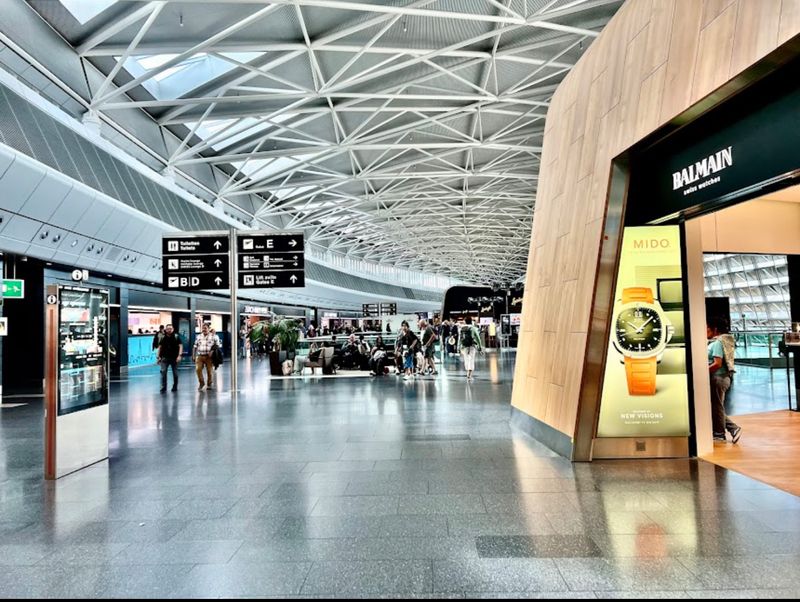
Switzerland makes watches, chocolate, and apparently airports with the same obsessive precision. Zurich Airport runs with the kind of clockwork reliability that makes delays feel almost personally offensive to the staff.
Passengers consistently rate it among the top airports in Europe for organization, cleanliness, and overall satisfaction—and the reviews don’t exaggerate.
The airport’s compact design is one of its greatest strengths. Unlike sprawling mega-airports where gates feel miles apart, Zurich keeps everything reachable without a marathon walk.
The underground Airside Center connects the two main terminal piers and houses a dense concentration of shops, restaurants, and lounges in a space that feels curated rather than cluttered.
Swiss precision shows up in the details: baggage claim is fast, announcements are clear and multilingual, and the information desks are staffed by people who actually know the answers. Zurich’s duty-free selection leans heavily into Swiss specialties—watches, knives, and chocolate that make excellent gifts.
The rail connection to Zurich’s central station takes just 10 minutes and runs every few minutes throughout the day. For business travelers especially, this reliability is priceless.
Zurich Airport doesn’t dazzle with spectacle—it earns loyalty through quiet, consistent excellence.
Amsterdam Schiphol Airport, Netherlands
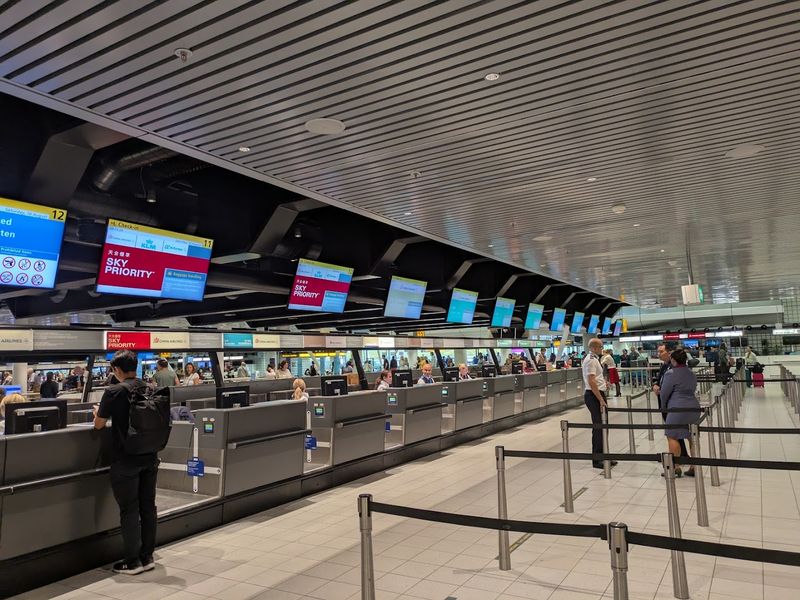
Schiphol is one of very few major international airports that operates as a single terminal—a design decision made decades ago that continues to pay dividends in passenger convenience today. No inter-terminal transfers, no shuttle buses, no confusion about which building you’re in.
You land, you walk, you connect. Simple.
There’s a branch of the Rijksmuseum inside the airport, displaying genuine Dutch Golden Age paintings between the gates. It’s the kind of detail that transforms a layover into something unexpectedly cultural.
Schiphol understands that travelers are people, not just boarding pass numbers, and it designs accordingly.
KLM’s main hub handles connections to over 320 destinations worldwide, making it one of Europe’s most powerful transit points. The airport’s layout is genuinely logical—retail, dining, and gate areas flow in a way that reduces stress rather than amplifying it.
Cheese shops, stroopwafel stalls, and Dutch gin bars give the terminal a distinctly local flavor. The Schiphol rail station sits directly beneath the terminal, offering trains to Amsterdam Centraal every few minutes.
Schiphol has been doing this for decades and it shows—the experience carries the quiet confidence of an airport that knows exactly what it’s doing.
London Heathrow Airport, United Kingdom
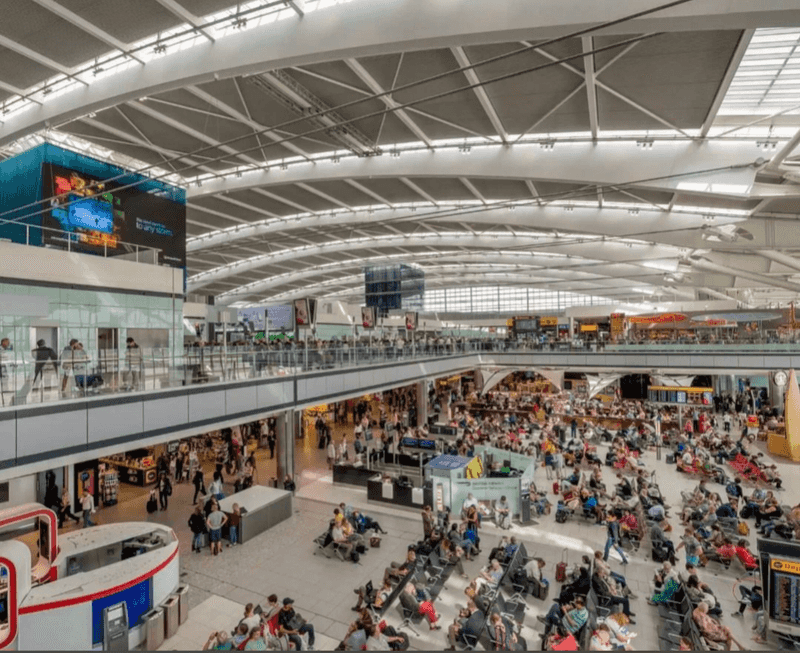
Love it or loathe it, Heathrow is undeniably one of the most important airports ever built. Serving over 200 destinations across more than 80 countries, it functions as the backbone of British aviation and one of the world’s most critical long-haul hubs.
British Airways calls it home, and the airport’s global reach reflects that partnership powerfully.
Terminal 5, opened in 2008 and exclusively used by British Airways, is widely considered the crown of the Heathrow complex. Its soaring glass roof, efficient layout, and premium lounge facilities—including the legendary Concorde Room for First Class passengers—give it a standard that the older terminals are steadily working to match through ongoing renovation programs.
Heathrow’s sheer scale can be intimidating, but wayfinding has improved considerably in recent years. Automated passport gates speed up entry for eligible travelers, and the transit experience between terminals has become smoother.
The Elizabeth Line, added to London’s transport network, now connects Heathrow to central London in about 40 minutes—faster and more comfortable than ever before. Shopping at Heathrow is world-class, with luxury brands, British heritage stores, and proper food options that go well beyond the usual airport fare.
For global connectivity, few airports come close.
Share this story