 Unearth The Voyage
America is packed with famous landmarks like the Statue of Liberty and the Grand Canyon, but countless other incredible sites rarely make it onto postcards or travel bucket lists. These hidden treasures tell fascinating stories about ancient cultures, dramatic landscapes, and pivotal moments in history.
From mysterious earthworks built thousands of years ago to remote wilderness areas that feel like stepping onto another planet, these overlooked landmarks offer unforgettable experiences without the massive crowds.
1. Effigy Mounds National Monument (Iowa)
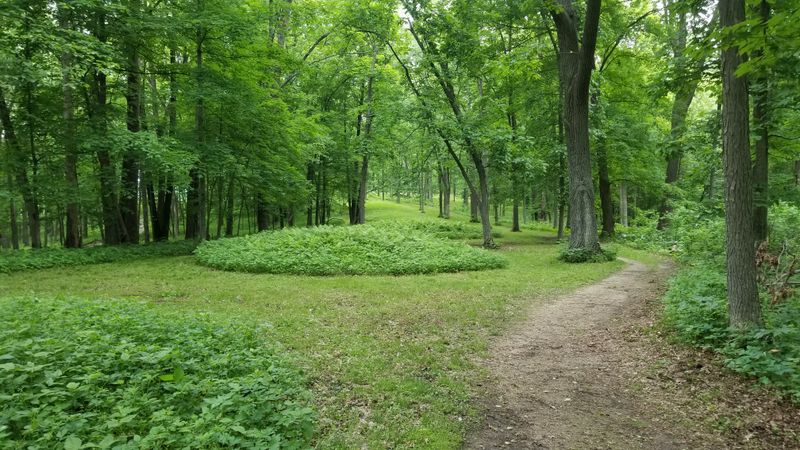
Ancient Native Americans built over 200 earthen mounds along the bluffs overlooking the Mississippi River more than 1,000 years ago. Many of these mounds were shaped like animals, including bears, birds, and other creatures important to their spiritual beliefs.
Walking among these massive earthworks, some stretching over 100 feet long, gives you an incredible connection to the people who shaped this land centuries before European settlers arrived.
The monument protects 2,526 acres of northeastern Iowa landscape, where hardwood forests meet river valleys. Hiking trails wind through the property, leading visitors past conical, linear, and the famous effigy mounds.
Spring wildflowers carpet the forest floor while autumn brings brilliant foliage that makes the ancient structures even more dramatic.
Unlike more famous monuments out West, Effigy Mounds receives relatively few visitors each year. This means you can often have entire trails to yourself, making the experience feel almost sacred.
The visitor center offers excellent exhibits explaining the Woodland culture that created these structures, helping you understand their significance beyond just the physical mounds themselves. Watching the sunrise from Fire Point, with mounds silhouetted against the Mississippi River valley below, creates memories that rival any crowded tourist destination.
2. Poverty Point National Monument (Louisiana)
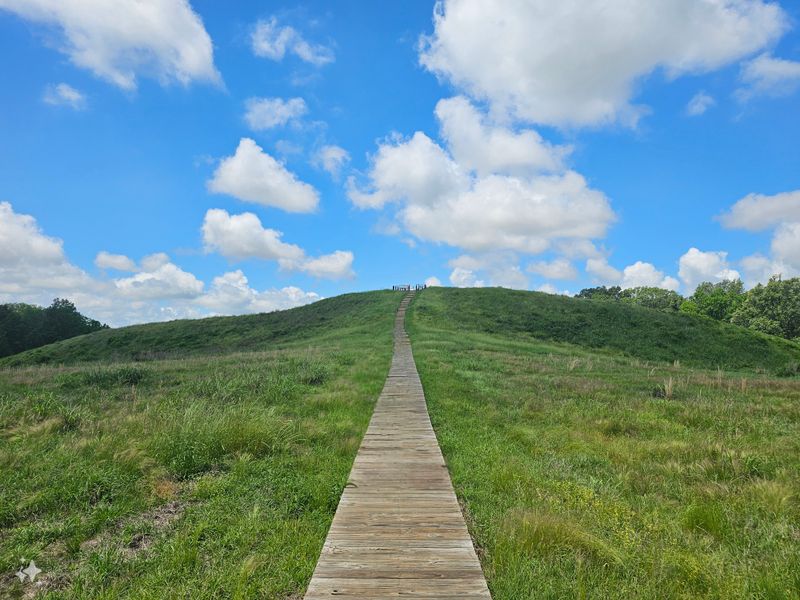
Around 3,400 years ago, a sophisticated society built one of North America’s most impressive prehistoric sites in what is now northeastern Louisiana. Poverty Point features massive earthen ridges arranged in six concentric semicircles, spanning three-quarters of a mile across.
The people who lived here developed complex trade networks that brought materials from as far as 1,000 miles away, proving they were far more advanced than most history books suggest.
Archaeologists have uncovered millions of artifacts at this site, including unique clay cooking balls used before pottery became common. The centerpiece is Mound A, a bird-shaped earthwork rising 72 feet high and requiring an estimated 30 million basket-loads of soil to construct.
Imagine the organization and dedication needed to move that much earth without modern machinery or even wheeled vehicles.
Visiting Poverty Point feels like discovering a secret that mainstream tourism forgot. The monument offers tram tours that explain the site’s mysteries while taking you across the ancient landscape.
Interactive exhibits at the visitor center let you handle replica artifacts and try your hand at ancient technologies. Standing atop the massive mounds, looking across the geometric ridges below, you realize these ancestors possessed engineering skills and social organization that deserve far more recognition than they typically receive.
3. Serpent Mound State Memorial (Ohio)
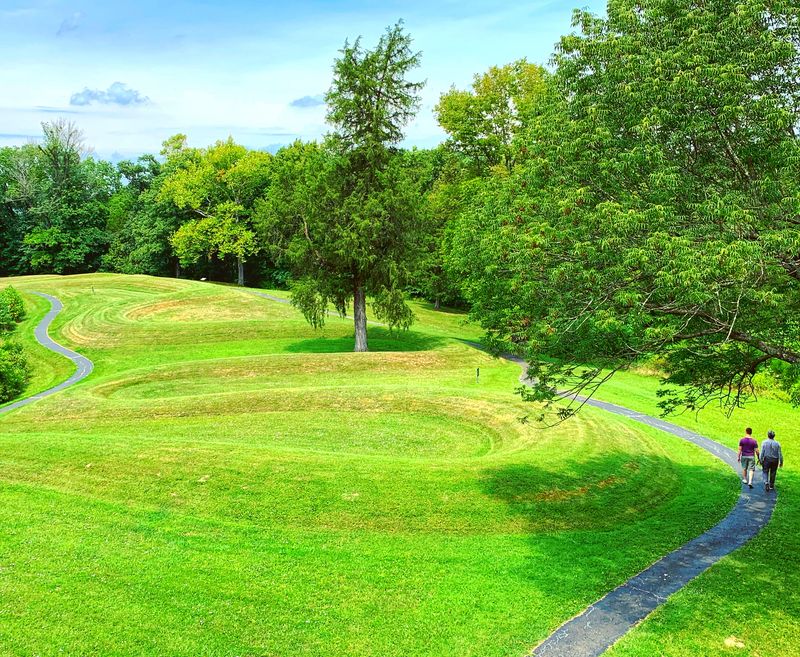
Winding across a plateau in southern Ohio, a quarter-mile-long earthwork shaped like an undulating serpent has mystified visitors for generations. This effigy mound, created by indigenous peoples possibly over 1,000 years ago, appears to be swallowing an egg or holding it in its mouth.
From ground level, the serpent shape is hard to grasp, but viewing platforms let you appreciate the incredible precision these ancient builders achieved without aerial perspectives.
The site sits on a meteor impact crater, which some researchers believe influenced why builders chose this specific location. The serpent aligns with astronomical events like the summer solstice sunset, suggesting it served ceremonial or calendrical purposes.
Each curve and coil was deliberately planned, demonstrating mathematical and surveying knowledge that challenges assumptions about prehistoric capabilities.
Most people know about Stonehenge or the Egyptian pyramids, but Serpent Mound represents an equally remarkable achievement that rarely appears in popular culture. The surrounding park offers peaceful trails through Ohio woodlands where you can contemplate the mysteries this structure still holds.
A small museum provides context about the Fort Ancient culture and other possible builders. Visiting during sunset, when shadows emphasize the serpent’s curves, creates an almost supernatural atmosphere.
This monument proves that America’s indigenous peoples created artistic and engineering marvels that deserve celebration alongside any ancient wonder worldwide.
4. Montezuma Castle National Monument (Arizona)
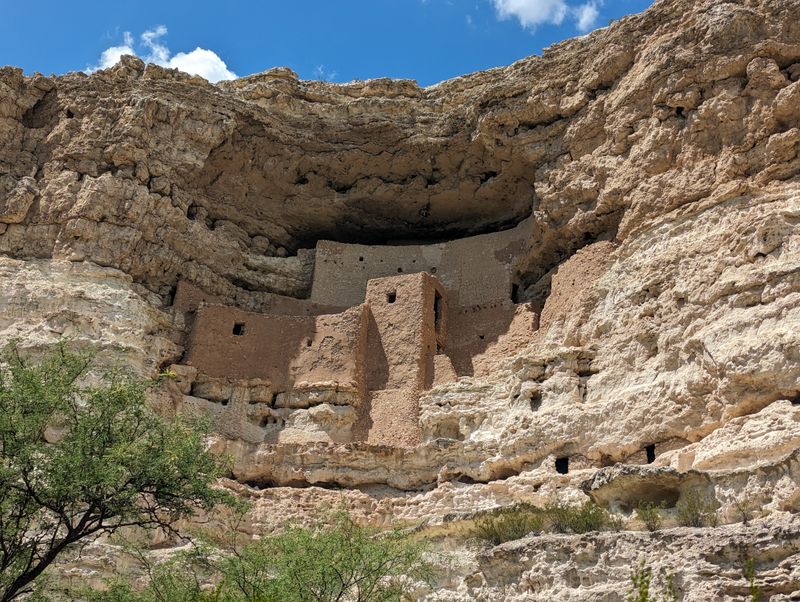
Tucked into a limestone cliff 100 feet above the ground, a remarkably preserved five-story dwelling has survived over 600 years of Arizona weather. The Sinagua people built this 20-room structure around 1100 AD, using ingenuity and construction skills that still impress modern engineers.
Despite its name, the castle has nothing to do with the Aztec emperor Montezuma, but early European-American settlers incorrectly assumed such impressive architecture must be connected to Mexico’s famous civilizations.
The dwelling’s position high in the cliff face provided natural protection from floods and potential enemies while keeping inhabitants cool during scorching summers. Original wooden beams and sycamore logs still support the structure, preserved by Arizona’s dry climate.
Archaeologists believe about 35 people lived in this vertical village, accessing their homes via ladders that could be pulled up for security.
Unlike Mesa Verde in Colorado, which draws huge crowds, Montezuma Castle offers an intimate experience where you can actually see the details without fighting through tour groups. The monument also includes Montezuma Well, a limestone sink filled with warm water that supported ancient irrigation systems.
A paved trail makes the castle accessible to almost everyone, with interpretive signs explaining daily life in this cliff dwelling. The contrast between the pale limestone cliff, green cottonwood trees along Beaver Creek, and deep blue Arizona sky creates stunning photographs that capture the Southwest’s timeless beauty.
5. Chiricahua National Monument (Arizona)
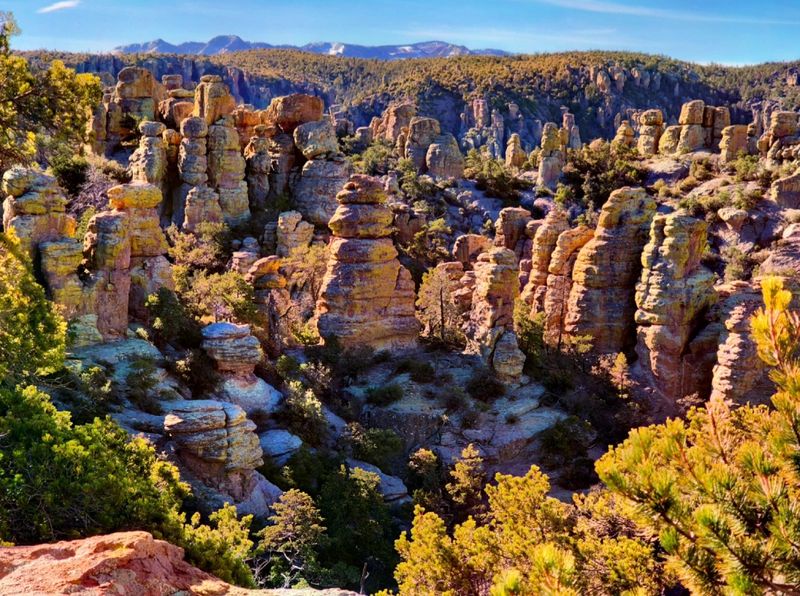
Volcanic eruptions 27 million years ago created the raw material for one of nature’s most bizarre sculpture gardens. Over time, erosion carved the volcanic rock into towering pinnacles, balanced rocks, and narrow canyons that seem to defy gravity and logic.
Apache people called this area the Land of Standing-Up Rocks, and once you see columns rising hundreds of feet toward the sky, you understand why they found this landscape so spiritually significant.
The monument contains miles of hiking trails that wind through rock formations with names like Big Balanced Rock, Duck on a Rock, and Totem Pole. Some hikes lead through narrow passages where you can barely squeeze between towering stone walls.
Others climb to viewpoints where thousands of rock spires stretch to the horizon like a stone forest.
Chiricahua sits in southeastern Arizona, far from major cities and Interstate highways, which explains why it remains relatively unknown despite being absolutely spectacular. Wildlife thrives here, including coatimundis, black bears, and over 170 bird species.
The monument also preserves the history of the Chiricahua Apache and the Faraway Ranch, a homestead that tells stories of pioneer life. Sunset transforms the rocks into glowing orange and red sculptures, creating scenes that rival any famous national park.
If you appreciate bizarre geology and want solitude while exploring, Chiricahua delivers experiences that crowded destinations simply cannot match.
6. El Morro National Monument (New Mexico)
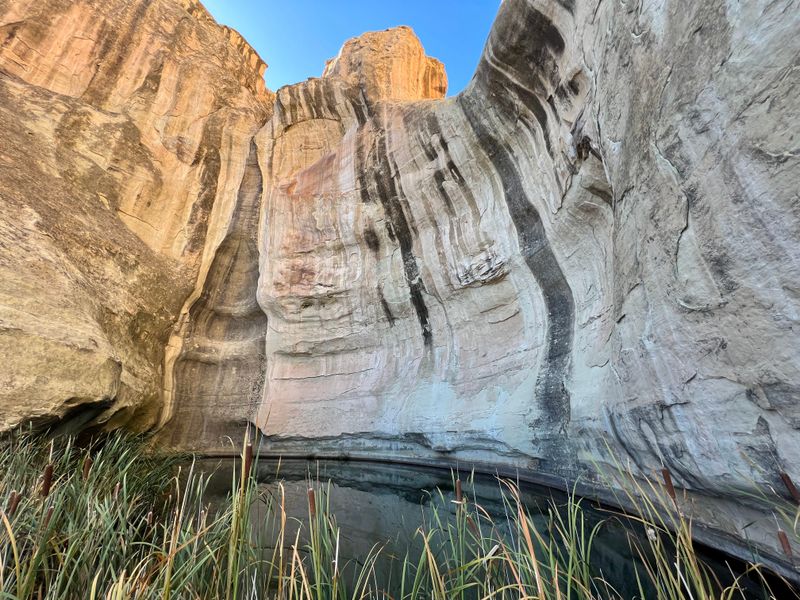
A massive sandstone bluff rising 200 feet above the desert floor served as a travelers’ guestbook for over 700 years. El Morro, meaning the headland, features a reliable waterhole at its base that attracted everyone from ancient Puebloan peoples to Spanish conquistadors to American soldiers.
Thousands of inscriptions carved into the soft sandstone create a timeline of Southwestern history you can literally read on the rock face.
The oldest carvings date back centuries, created by Ancestral Puebloans who lived atop the mesa. Spanish explorers passing through in 1605 left the first European inscription, starting a tradition that continued for nearly 300 years.
You can see signatures from Juan de Onate, the colonizer of New Mexico, alongside messages from U.S. Army soldiers and pioneers traveling westward during the 1800s.
A paved half-mile trail leads past the most significant inscriptions, with signs explaining their historical context. Another trail climbs to the mesa top where pueblo ruins overlook the surrounding landscape for miles.
The combination of natural beauty, ancient dwellings, and historical graffiti makes El Morro unique among American monuments. Photography enthusiasts love how afternoon light brings out details in the carved signatures and petroglyphs.
Rangers offer programs that bring the inscriptions to life, sharing stories of the people who stopped here seeking water and rest. This monument proves that sometimes the most fascinating history is written directly on the landscape itself.
7. Aztec Ruins National Monument (New Mexico)
Despite its misleading name, this massive pueblo has nothing to do with the Aztec civilization of central Mexico. Early Anglo settlers saw the sophisticated masonry and assumed only the famous Aztecs could have built something so impressive, completely overlooking the incredible achievements of Ancestral Puebloan peoples.
The 900-year-old structure contains over 400 rooms arranged around a central plaza, representing one of the largest buildings of its era in the American Southwest.
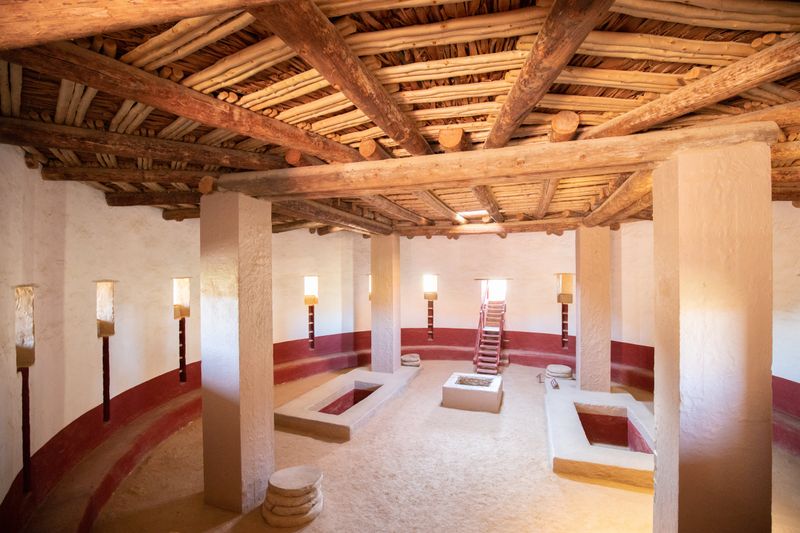
The monument’s highlight is the reconstructed Great Kiva, a circular ceremonial chamber 48 feet in diameter. Stepping inside this massive underground room, you can almost hear the echoes of ancient ceremonies and community gatherings.
Original wooden beams, stone masonry, and architectural details throughout the site showcase building techniques that kept structures standing for nearly a millennium.
Aztec Ruins sits in a quiet New Mexico town, overshadowed by more famous Mesa Verde just 40 miles away in Colorado. This means you can explore the pueblo at your own pace without crowds rushing you along.
Self-guided trails wind through the ruins with excellent interpretive signs explaining construction methods, daily life, and the pueblo’s connection to the Chaco Canyon culture. The monument also displays artifacts excavated from the site, including pottery, tools, and jewelry that reveal the sophistication of the people who called this home.
Visiting here provides a more personal, contemplative experience than you will find at busier archaeological sites.
8. Fort Union National Monument (New Mexico)
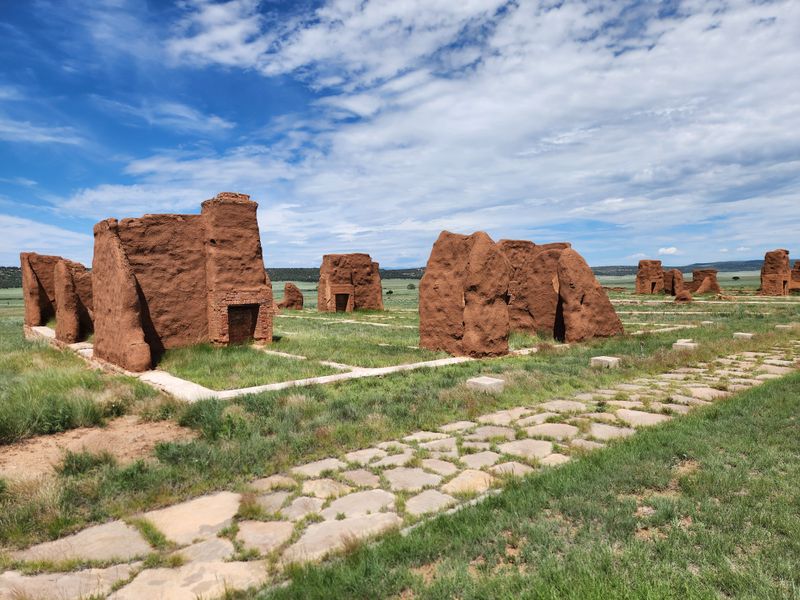
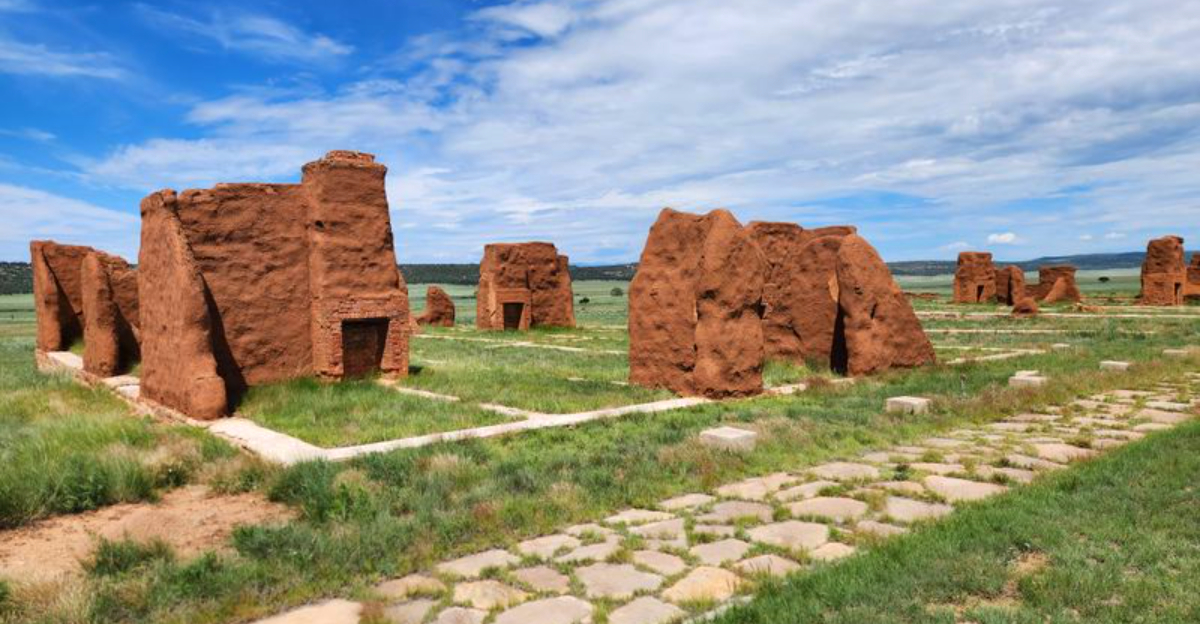
Crumbling adobe walls and chimneys standing like lonely sentinels mark where the largest 19th-century military fort in the Southwest once protected the Santa Fe Trail. Fort Union served as a critical supply depot, military post, and territorial arsenal from 1851 to 1891, playing a vital role in westward expansion and conflicts with Native American tribes.
Walking among the ruins, you can trace the fort’s layout and imagine the soldiers, traders, and travelers who passed through these gates.
The fort went through three different construction phases, each visible in the ruins today. Brick foundations outline officers’ quarters, barracks, warehouses, and the hospital.
Wagon ruts from the Santa Fe Trail are still visible nearby, worn into the earth by thousands of wagons carrying goods between Missouri and New Mexico. Interpretive trails with audio stops help you understand what each building was and how fort life functioned.
Unlike restored forts where modern construction obscures history, Fort Union remains authentically ruined, which gives it a haunting, contemplative atmosphere. The high plains setting, with views stretching to distant mountains, emphasizes the isolation soldiers experienced here.
Sunrise and sunset paint the adobe walls in warm colors while thunderstorms rolling across the plains create dramatic backdrops. The monument hosts living history events where costumed interpreters demonstrate military drills and period crafts.
For anyone interested in Western history beyond Hollywood myths, Fort Union provides genuine insights into frontier military life and the complex history of American expansion.
9. Tallgrass Prairie National Preserve (Kansas)
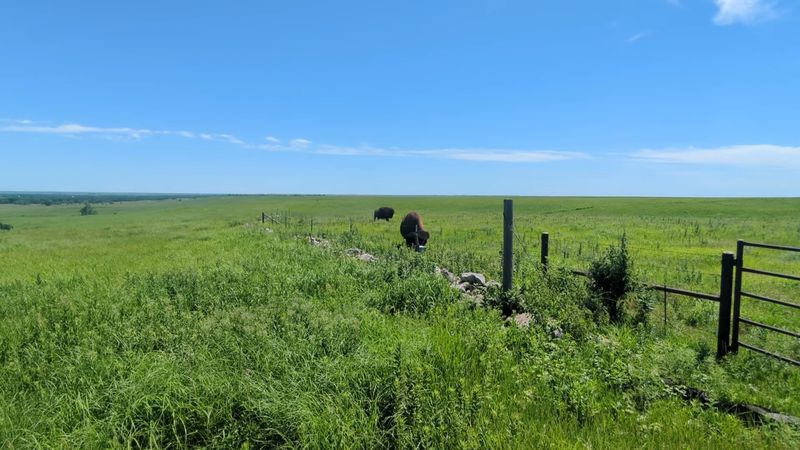
Before settlers plowed the Great Plains, tallgrass prairie stretched across 170 million acres of North America, creating an ocean of grass that reached higher than a person’s head. Today, less than four percent of that ecosystem remains, making this Kansas preserve one of the last places to experience what early explorers saw.
The preserve protects nearly 11,000 acres where big bluestem, Indian grass, and switchgrass still wave in the wind like they have for thousands of years.
Spring transforms the prairie into a wildflower wonderland with purple coneflowers, yellow sunflowers, and dozens of other species creating a constantly changing palette. Summer brings the grasses to their full height, sometimes reaching over eight feet tall.
Bison, reintroduced to the preserve, graze the hills just as millions once did across the plains.
Most Americans have never seen a real prairie, having only encountered the plowed farmland that replaced this ecosystem. The preserve offers hiking trails that let you walk through shoulder-high grass while meadowlarks sing overhead.
The historic limestone buildings of the Z-Bar/Spring Hill Ranch tell stories of ranching families who worked this land. Sunset over the rolling prairie, with grasses glowing golden and the sky stretching endlessly above, provides a glimpse of the landscape that shaped American history and culture.
This preserve reminds us what we lost when we converted prairies into cropland, and why protecting the remaining fragments matters so much for biodiversity and cultural memory.
10. City of Rocks National Reserve (Idaho)
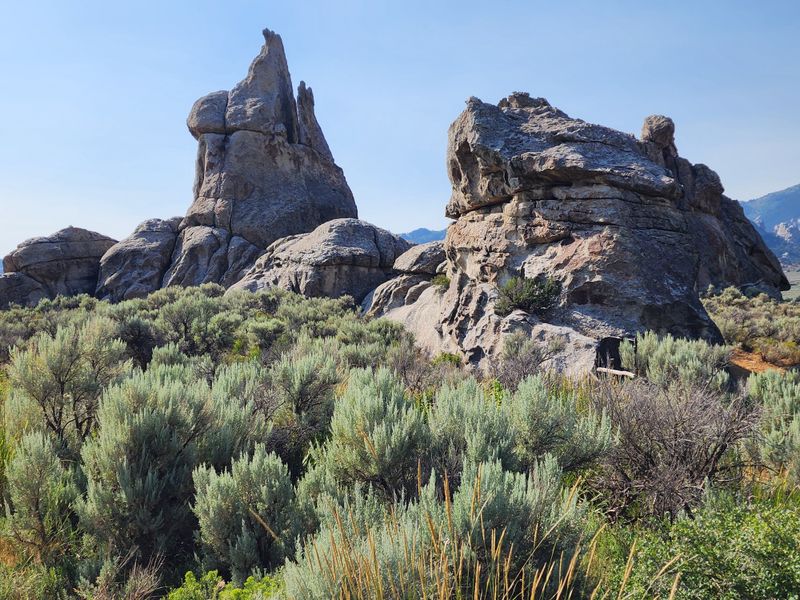
Granite spires and domes rise dramatically from the Idaho sagebrush like a stone city built by giants. These formations, some towering 600 feet high, were created over 28 million years when molten rock cooled underground, then erosion exposed and sculpted the granite into fantastic shapes.
Pioneers traveling the California Trail in the 1840s and 1850s nicknamed this area the Silent City of Rocks because the formations resembled buildings and towers from a distance.
Rock climbers consider this one of America’s premier destinations, with over 1,000 climbing routes ranging from beginner to expert difficulty. The granite’s unique texture provides excellent friction, while the variety of formations offers endless challenges.
Even if you do not climb, watching skilled climbers scale these massive rocks is entertaining and impressive.
The reserve protects 14,400 acres of high desert landscape where you can still see wagon ruts and pioneer signatures carved into Register Rock. Camping among the formations under Idaho’s incredibly dark skies offers stargazing that rivals any location in the Lower 48.
Hiking trails wind between the rock formations, leading to overlooks and hidden valleys. Wildlife including golden eagles, mule deer, and pronghorn thrive in this protected area.
Unlike crowded Joshua Tree or Yosemite, City of Rocks maintains a peaceful atmosphere where nature and history blend seamlessly. The combination of geological wonder, pioneer history, and recreational opportunities makes this reserve a hidden gem that deserves far more recognition than it receives.
11. Craters of the Moon National Monument & Preserve (Idaho)
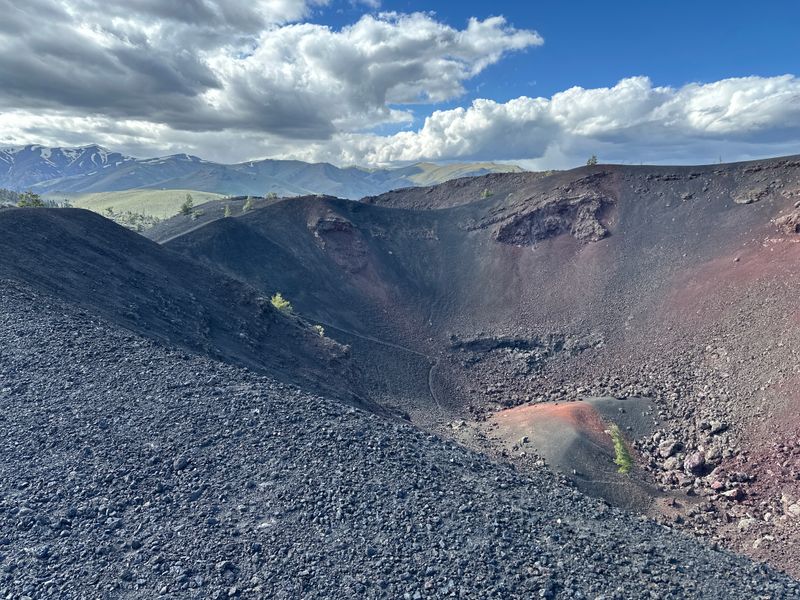
Stepping onto this landscape feels like teleporting to an alien planet where jagged black lava flows, cinder cones, and volcanic caves dominate the scenery. Between 15,000 and 2,000 years ago, a series of volcanic eruptions covered 618 square miles of southern Idaho with lava, creating one of the best-preserved basaltic flood landscapes on Earth.
NASA even trained astronauts here before the Apollo missions because the terrain so closely resembles the lunar surface.
The monument offers several ways to explore this volcanic wonderland. A seven-mile loop road passes major features including Inferno Cone, which you can climb for panoramic views across the lava fields.
Hiking trails lead across crunchy aa lava and smooth pahoehoe flows, with signs explaining the different volcanic features. Cave trails descend into lava tubes where ice persists year-round, creating an eerie underground world.
Wildflowers somehow find purchase in the harsh volcanic rock, creating surprising splashes of color against the black landscape during spring and early summer. Wildlife including mule deer, bobcats, and hundreds of bird species thrive here despite the seemingly inhospitable environment.
The monument’s remote location in south-central Idaho means it receives a fraction of the visitors that Yellowstone gets, despite being equally fascinating. Sunrise and sunset transform the black lava into warm browns and reds while emphasizing the textures and shapes of the volcanic features.
For geology enthusiasts or anyone who appreciates landscapes that challenge expectations, Craters of the Moon delivers unforgettable otherworldly experiences.
12. Organ Pipe Cactus National Monument (Arizona)
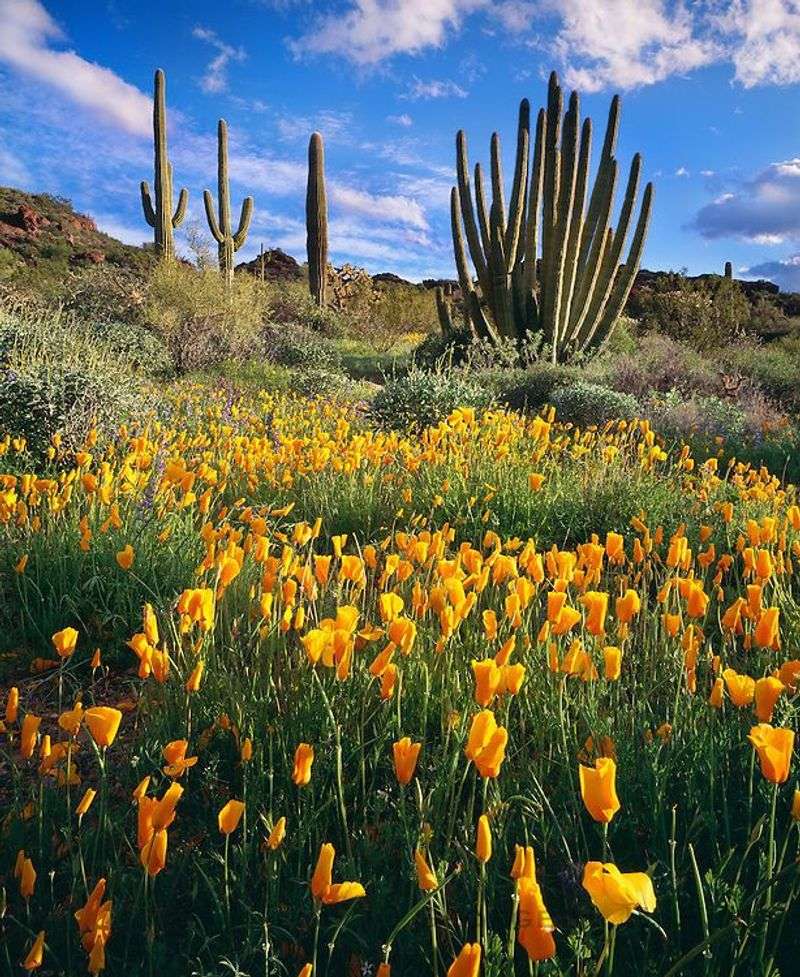
Named for a cactus found nowhere else in the United States, this Sonoran Desert preserve showcases biodiversity that most people never associate with American landscapes. Organ pipe cacti grow in clusters of vertical stems that resemble the pipes of a church organ, some reaching 20 feet tall and living over 150 years.
The monument protects the northernmost population of these distinctive plants along with 27 other cactus species and incredibly diverse desert wildlife.
The 330,000-acre monument sits along the Mexican border in southwestern Arizona, an isolated location that keeps visitor numbers low. Two scenic drives wind through different desert environments, from rocky hillsides covered with saguaros and organ pipes to sandy valleys dominated by creosote and ocotillo.
Spring transforms the desert into a wildflower paradise when winter rains have been adequate, with poppies, lupines, and desert marigolds painting the landscape in vibrant colors.
Hiking trails range from short nature walks to challenging backcountry routes that immerse you in pristine desert wilderness. Night skies here rank among the darkest in the country, making stargazing absolutely spectacular.
The monument also preserves evidence of human history stretching back 16,000 years, including Hohokam archaeological sites and historic mining operations. Summer temperatures can exceed 110 degrees, making winter through early spring the ideal visiting season.
Watching sunset paint the organ pipe cacti and surrounding mountains in shades of orange and purple creates moments of desert beauty that rival anything found in more famous parks.
13. Dry Tortugas National Park (Florida)
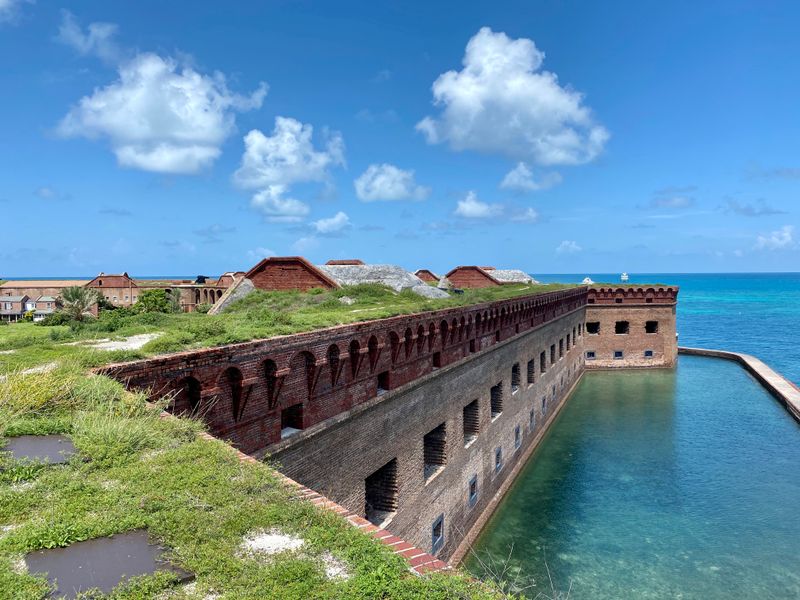
Seventy miles west of Key West, seven small islands surrounded by crystal-clear turquoise water create one of America’s most remote and beautiful national parks. The centerpiece is Fort Jefferson, a massive 19th-century fortress that covers most of Garden Key despite never being completed.
This hexagonal brick structure, built to control navigation in the Gulf of Mexico and Florida Straits, contains over 16 million bricks, making it one of the largest masonry structures in the Western Hemisphere.
Getting here requires either a two-hour ferry ride or a seaplane flight, which explains why Dry Tortugas receives only about 80,000 visitors annually compared to millions at mainland Florida parks. The journey is absolutely worth the effort because the park offers world-class snorkeling and diving around pristine coral reefs teeming with tropical fish, sea turtles, and other marine life.
The incredibly clear water provides visibility often exceeding 100 feet.
Garden Key allows camping right on the beach, where you fall asleep to gentle waves and wake to spectacular sunrises. The fort itself is fascinating to explore, with rangers offering tours that explain its history as a military prison where Dr. Samuel Mudd was held after treating John Wilkes Booth.
Birding is exceptional here, especially during spring migration when exhausted birds use the islands as a rest stop. Watching sunset from the fort walls, with nothing but ocean stretching to the horizon, creates a sense of isolation and beauty that few American landmarks can match.
14. Okefenokee National Wildlife Refuge (Georgia)
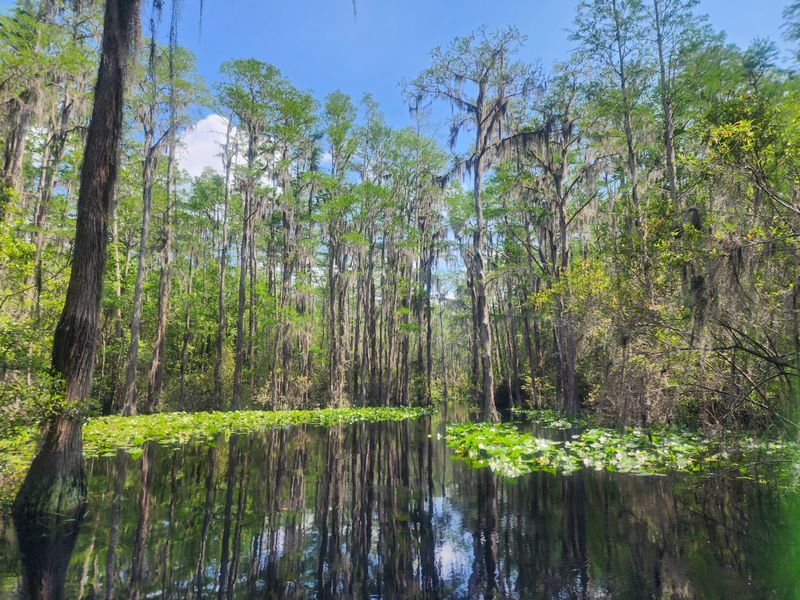
One of North America’s largest intact freshwater ecosystems remains remarkably wild despite being located in southern Georgia and northern Florida. The Okefenokee Swamp covers 438,000 acres of blackwater wetlands, cypress forests, and floating peat islands called hammocks.
Creek Indians named it Okefenokee, meaning trembling earth, because walking on the peat causes nearby vegetation to shake and wobble.
This ancient swamp serves as home to alligators, black bears, over 230 bird species, and the rare and beautiful swallow-tailed kite. Paddling the refuge’s water trails takes you through narrow channels overhung with Spanish moss, past cypress trees reflected in tea-colored water, and into open prairies covered with water lilies.
The refuge maintains several canoe trails ranging from short day trips to multi-day wilderness adventures with overnight platforms.
Unlike the Everglades, which attracts massive crowds, Okefenokee offers a more intimate swamp experience where you might paddle for hours without seeing another person. Three entrance points provide different perspectives on the swamp’s diverse habitats.
The Chesser Island Homestead preserves a pioneer family’s farmstead, showing how people carved out lives in this challenging environment. Sunrise in the swamp, with mist rising from dark water and bird songs echoing through cypress forests, creates an almost prehistoric atmosphere.
The refuge protects wilderness that has remained largely unchanged for thousands of years, offering a glimpse of the vast wetlands that once covered much of the coastal Southeast before development drained them away.
15. Katahdin Woods and Waters National Monument (Maine)
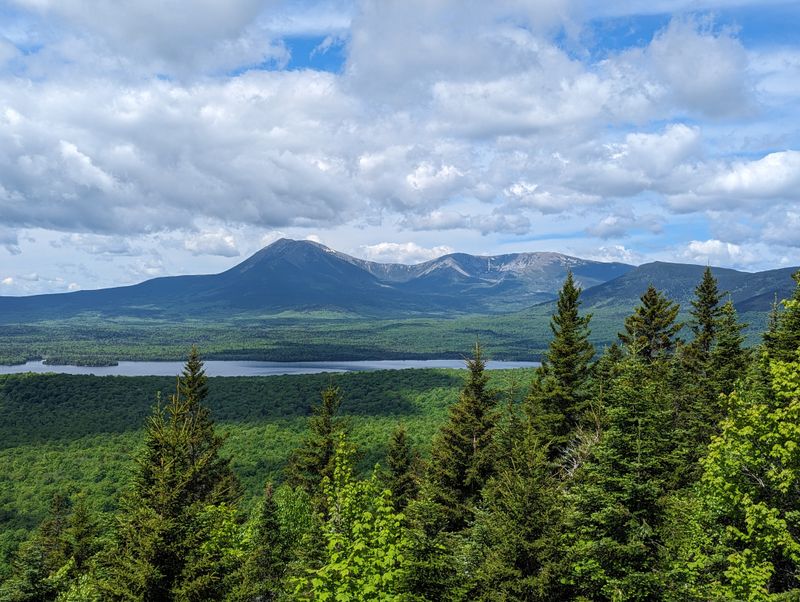
America’s newest national monument protects 87,500 acres of northern Maine wilderness where forests, mountains, and rivers create landscapes that feel wonderfully remote and untamed. Designated in 2016, this monument preserves land donated by Roxanne Quimby and her son Lucas St. Clair, who wanted to protect the region’s natural beauty and provide economic opportunities through outdoor recreation.
The monument borders Baxter State Park, home to Mount Katahdin, the northern terminus of the Appalachian Trail.
The East Branch of the Penobscot River flows through the monument, offering excellent paddling through forests that explode with color each autumn. Moose, black bears, Canada lynx, and other wildlife thrive in these woods, making wildlife watching a highlight of any visit.
The monument includes the former site of logging operations, and old roads now serve as hiking and biking trails that explore the recovering forest.
Unlike crowded Acadia National Park on the Maine coast, Katahdin Woods and Waters receives relatively few visitors, providing genuine solitude in beautiful wilderness. The monument is still developing its infrastructure and trails, giving early visitors a chance to explore a national monument before it becomes well-known.
Camping under the stars here, with northern lights sometimes dancing overhead and loon calls echoing across lakes, offers quintessential Maine wilderness experiences. The monument also honors the Penobscot Nation’s deep connections to this land, recognizing indigenous history and ongoing relationships with these forests and waters.
For anyone seeking undiscovered natural beauty in the Northeast, this monument delivers stunning landscapes without the crowds.



