The United States is home to some of the most jaw-dropping places on the planet, and many of them carry a UNESCO World Heritage designation to prove it. From ancient cliff dwellings to roaring geysers, these sites protect stories that go back millions of years.
Some are natural wonders that make you feel wonderfully small, while others are historic landmarks that shaped an entire nation. Whether you are a road tripper, a history buff, or just someone who loves a good adventure, this list has something that will make you want to pack a bag.
Grand Canyon National Park, Arizona
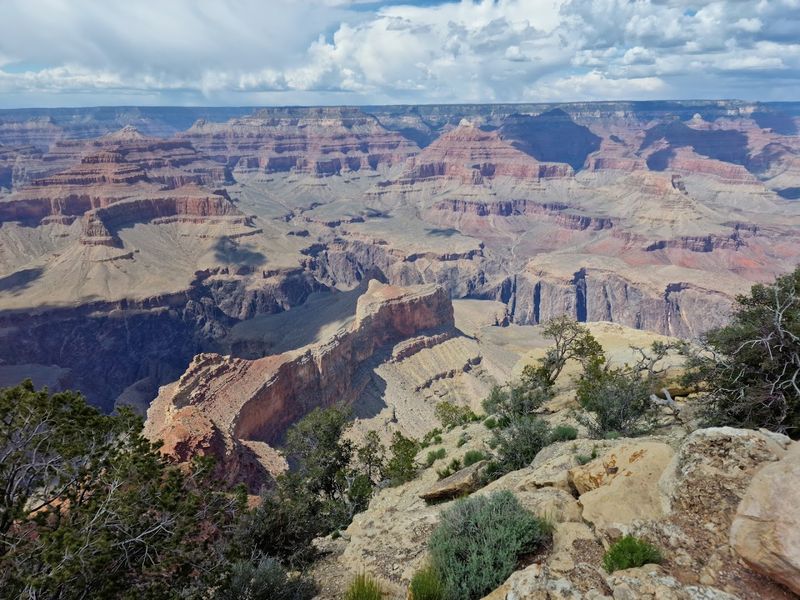
Two billion years of Earth history are just sitting there, stacked in colorful layers like the world’s most dramatic birthday cake. The Grand Canyon is one of those rare places that genuinely earns every superlative thrown at it.
Standing on the South Rim for the first time, I completely forgot what I was about to say mid-sentence. That kind of speechlessness is the whole point.
The Colorado River carved this 277-mile-long canyon over millions of years, and the result is a geological timeline you can actually see with your own eyes. Hiking trails range from easy rim walks to multi-day descents into the canyon floor.
The Bright Angel Trail is popular and well-marked, making it a solid first hike for most visitors.
Sunrise and sunset here are not just pretty moments. They completely transform the colors of the rock walls, turning orange cliffs into deep purple and gold.
Plan to stay more than a day.
Yellowstone National Park, Wyoming, Montana, and Idaho
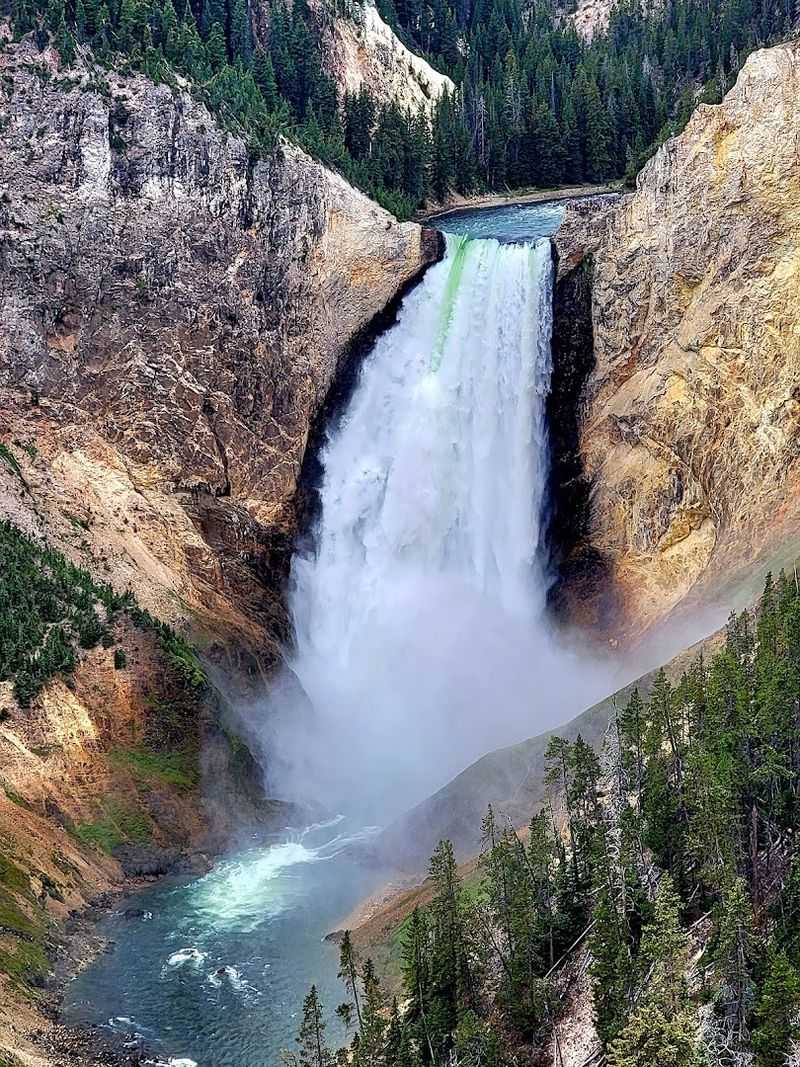
Yellowstone sits on top of a supervolcano, which is either the coolest or most terrifying fun fact depending on your perspective. Either way, it makes the park feel like a living, breathing geological experiment that never stops.
Established in 1872 as the world’s first national park, Yellowstone set the gold standard for protected landscapes everywhere.
Old Faithful is the headline act, erupting roughly every 90 minutes like clockwork. But the Grand Prismatic Spring, with its surreal rainbow colors, might actually steal the show.
Bison wander the valleys like they own the place, which, to be fair, they kind of do.
Wildlife watching here is genuinely world-class. Wolves, elk, bears, and pronghorn all share this massive landscape spanning three states.
The park covers over two million acres, so bringing a good map and a full tank of gas is non-negotiable. Give yourself at least three days to scratch the surface.
Yosemite National Park, California
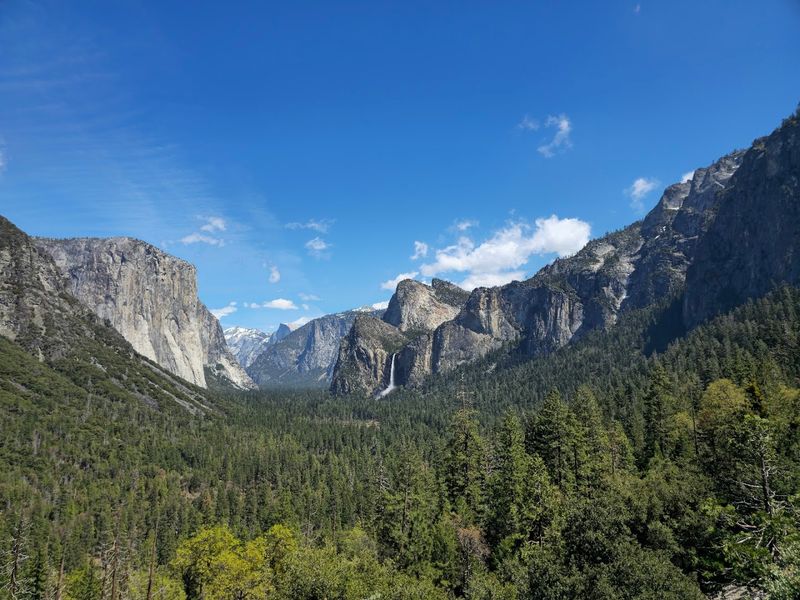
El Capitan is so impossibly tall that the first time you see it from the valley floor, your brain briefly refuses to process the scale. Yosemite Valley is framed by granite walls so sheer and smooth they look like they were polished by a giant.
Glaciers did most of the heavy lifting here, carving this valley into one of the most photographed places in America.
Half Dome, Bridalveil Fall, and the giant sequoias of Mariposa Grove are all worth your time. The valley gets crowded in summer, so booking a campsite or hotel months in advance is genuinely necessary, not just a suggestion.
Spring is spectacular for waterfall flow, and the crowds are noticeably smaller.
John Muir spent years here and called it the grandest of all the special temples of Nature. That quote aged extremely well.
Yosemite earned its UNESCO status in 1984, and every return visit makes the honor feel more deserved.
Statue of Liberty, New York
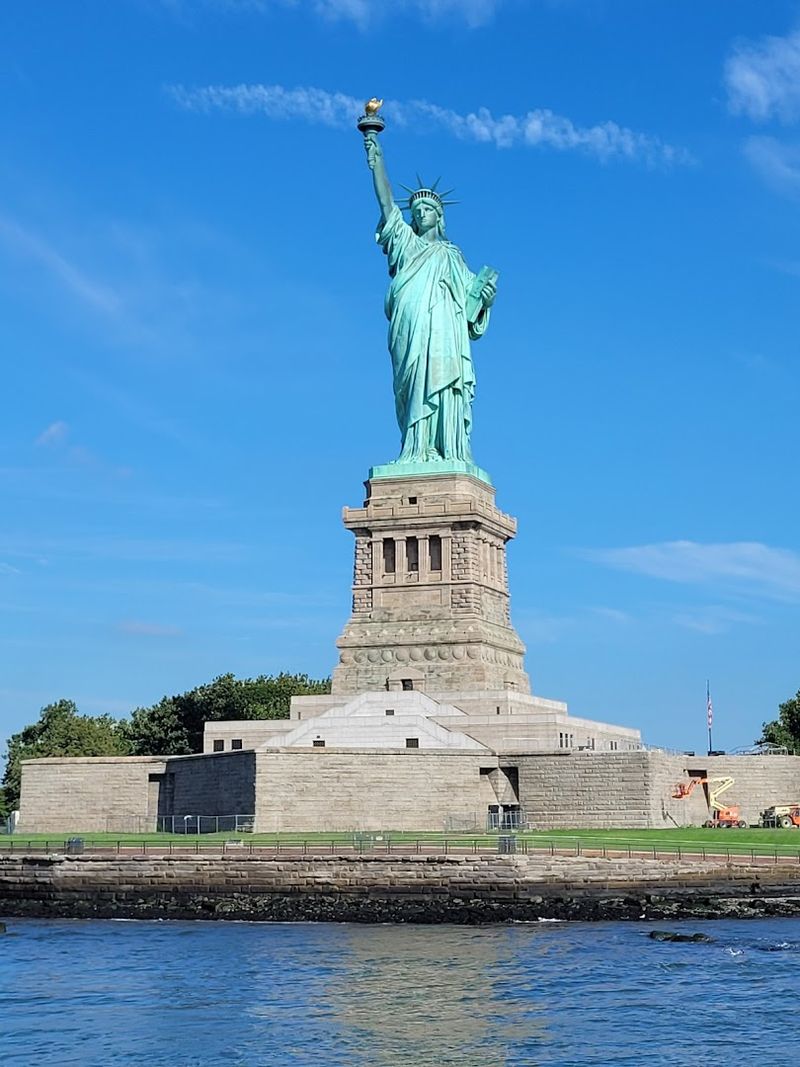
She has been standing in New York Harbor since 1886, holding her torch up through rain, fog, and more than a few dramatic Hollywood disaster movies. The Statue of Liberty is arguably the most recognizable monument in the entire world.
France gifted her to the United States as a symbol of shared democratic values, and the gesture has aged remarkably well.
Taking the ferry from Lower Manhattan is half the fun. The views of the skyline on the way over are genuinely stunning.
Once on Liberty Island, the scale of the statue up close hits very differently than any photo prepares you for. Lady Liberty stands 305 feet tall from ground to torch tip.
The crown requires a separate timed ticket booked well in advance, and spots sell out fast. The museum inside the pedestal is surprisingly thorough and worth the extra time.
This is one UNESCO site where the history lesson is impossible to skip, even accidentally.
Great Smoky Mountains National Park, Tennessee and North Carolina
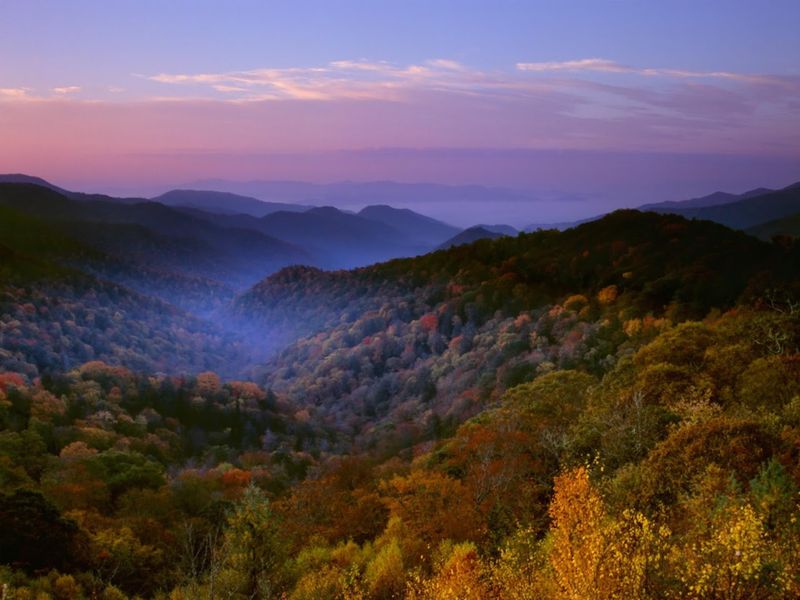
The Great Smoky Mountains are the most visited national park in the entire country, pulling in over 12 million visitors a year. No entry fee, stunning scenery, and a road system that makes the park accessible to almost everyone.
That combination is pretty hard to argue with.
The name comes from the natural fog that rolls through the valleys and ridges, giving the mountains their signature blue-grey haze. Cades Cove is a highlight, offering open meadows, historic cabins, and reliable wildlife sightings including deer, black bears, and wild turkeys.
Clingmans Dome, the highest point in the park, rewards the hike with panoramic views that stretch for miles.
The park also preserves some of the oldest mountain communities in Appalachia, with grist mills, churches, and homesteads still standing in the forest. Fall foliage season here is legitimately spectacular, and the color display usually peaks in mid-October.
Pack layers because mountain weather changes fast.
Everglades National Park, Florida
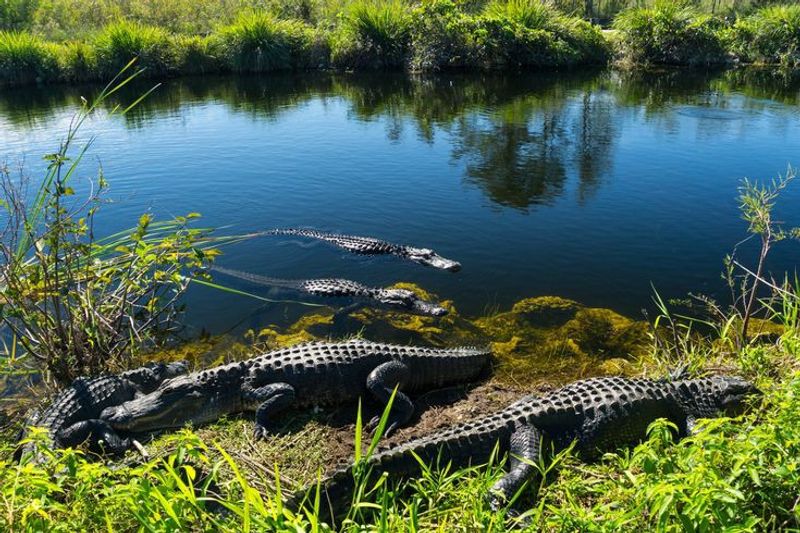
The Everglades operates on its own logic. Water moves so slowly through this vast subtropical wilderness that the whole ecosystem functions like one enormous, very unhurried river.
It is nicknamed the River of Grass, and once you see the endless sawgrass marshes stretching to the horizon, the name clicks immediately.
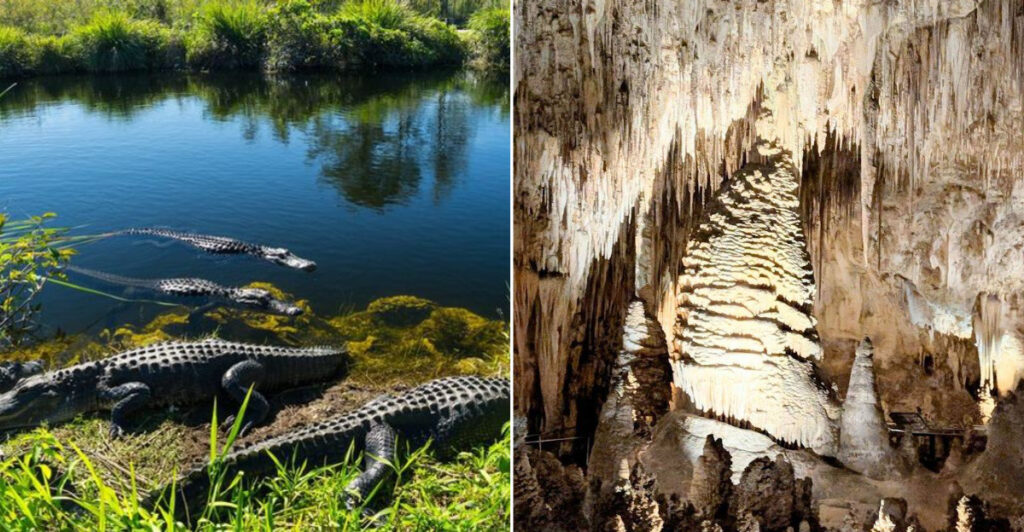
Alligators and American crocodiles both live here, making the Everglades one of the only places in the world where the two species coexist. Manatees, roseate spoonbills, and Florida panthers round out a wildlife list that sounds almost too good to be real.
Airboat tours are a popular way to cover ground, though kayaking through the mangroves offers a quieter and arguably more rewarding experience.
The park faces real conservation challenges from water management issues and invasive species, particularly Burmese pythons. Despite those pressures, it remains a UNESCO World Heritage Site, a Ramsar Wetland, and a Biosphere Reserve.
Few places carry that many international conservation designations at once.
Hawaiʻi Volcanoes National Park, Hawaii
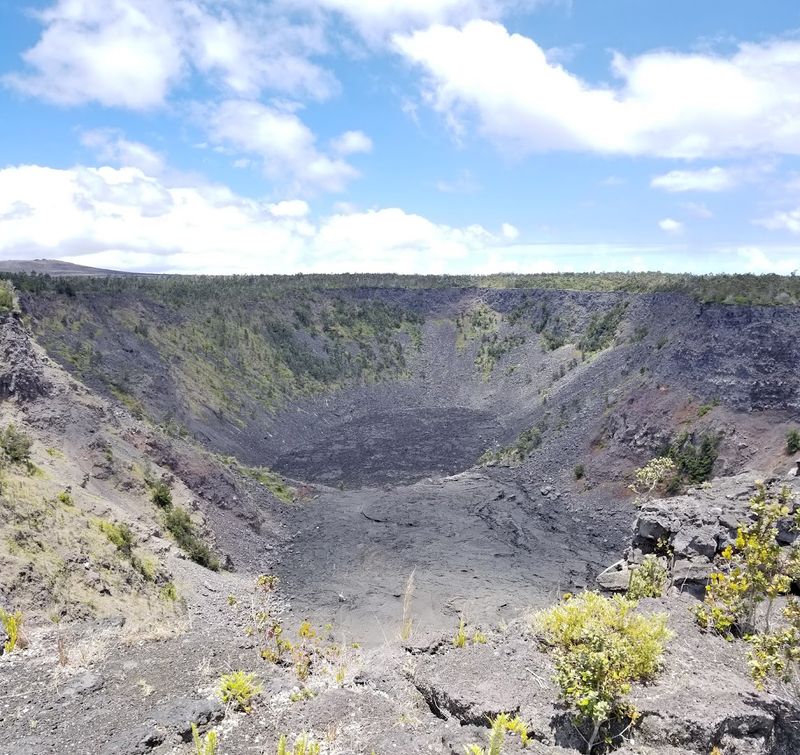
Watching lava reshape the landscape in real time is one of those experiences that completely resets your sense of geological scale. Hawaiʻi Volcanoes National Park protects Kilauea and Mauna Loa, two of the most continuously active volcanoes on Earth.
Kilauea has been erupting in various forms for decades, making this park one of the few places where you can witness island-building in progress.
The Crater Rim Drive offers access to overlooks, lava tube hikes, and steam vents that rise dramatically from cracks in the earth. The Thurston Lava Tube is a highlight, a cathedral-sized tunnel formed when lava drained from a hardened outer shell.
It feels both ancient and freshly made at the same time.
Eruption activity changes frequently, so checking the park website before your visit is a smart move. Some access areas open and close based on volcanic conditions.
Rangers are excellent resources and genuinely enthusiastic about sharing what the volcano is currently doing. This park never gives the same visit twice.
Mesa Verde National Park, Colorado
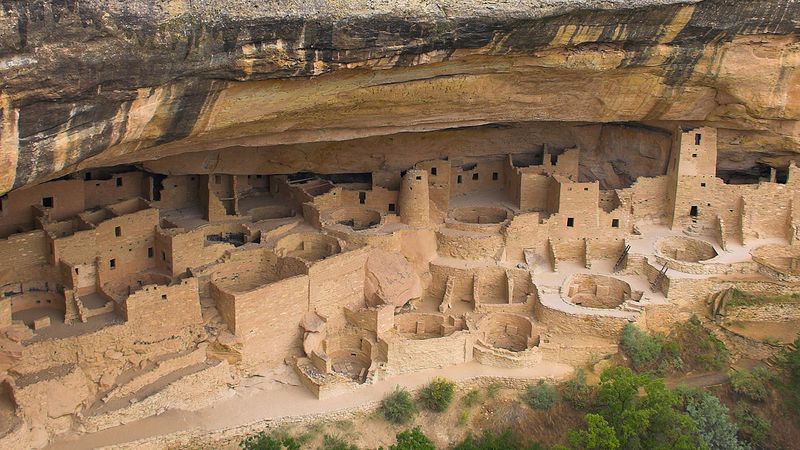
Tucked into the sandstone cliffs of southwestern Colorado, Cliff Palace is one of the most extraordinary architectural achievements in North American history. Ancestral Pueblo people built these multi-story stone dwellings directly into the cliff faces around 700 years ago, and the craftsmanship still holds up impressively well.
Mesa Verde became a UNESCO World Heritage Site in 1978, one of the first in the United States.
The park protects over 5,000 archaeological sites and more than 600 cliff dwellings. Balcony House is another fan favorite, requiring visitors to climb ladders and squeeze through narrow tunnels to access it.
That slight adventure factor makes the tour genuinely memorable rather than just educational.
Ranger-led tours are required for the major sites, which keeps visitor numbers manageable and adds real historical depth to the experience. The mesa-top villages are less dramatic visually but offer important context for understanding how the community lived and farmed.
Go in shoulder season to avoid summer crowds.
Mammoth Cave National Park, Kentucky
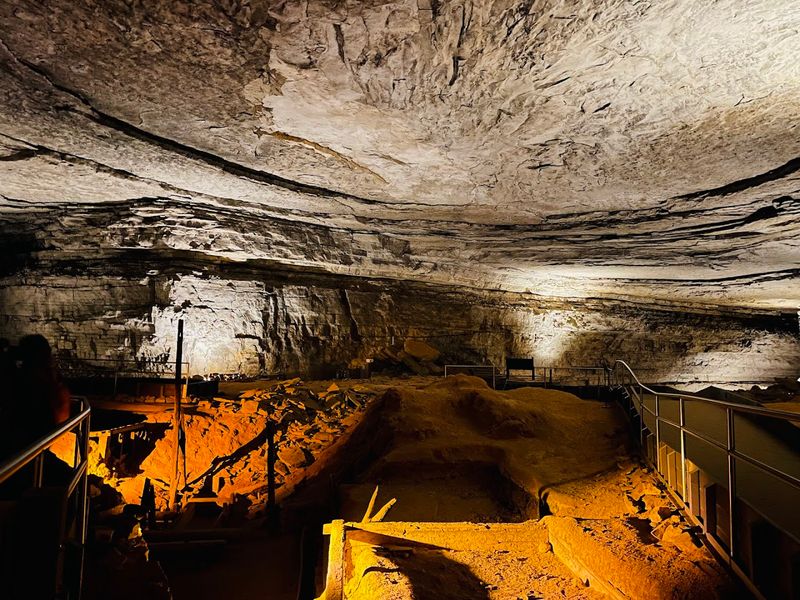
The longest known cave system on Earth is hiding under the rolling hills of central Kentucky, and most people drive right past it without a second thought. Mammoth Cave stretches over 400 mapped miles underground, with new passages still being discovered.
That number alone earns it a permanent spot on any serious traveler’s list.
The cave tours range from easy walking routes to wild caving adventures where headlamps and crawling are required. Historic Tour is great for first-timers, covering the main passages with plenty of geological and human history included.
The cave was used by Indigenous people thousands of years ago and later mined for saltpeter during the War of 1812.
Above ground, the park offers over 70 miles of trails through forests and along the Green River. The ecosystem above and below ground is remarkably rich.
Eyeless cave fish and cave crickets have adapted to life in permanent darkness, which is either fascinating or unsettling depending on your comfort level with bugs.
Independence Hall, Pennsylvania
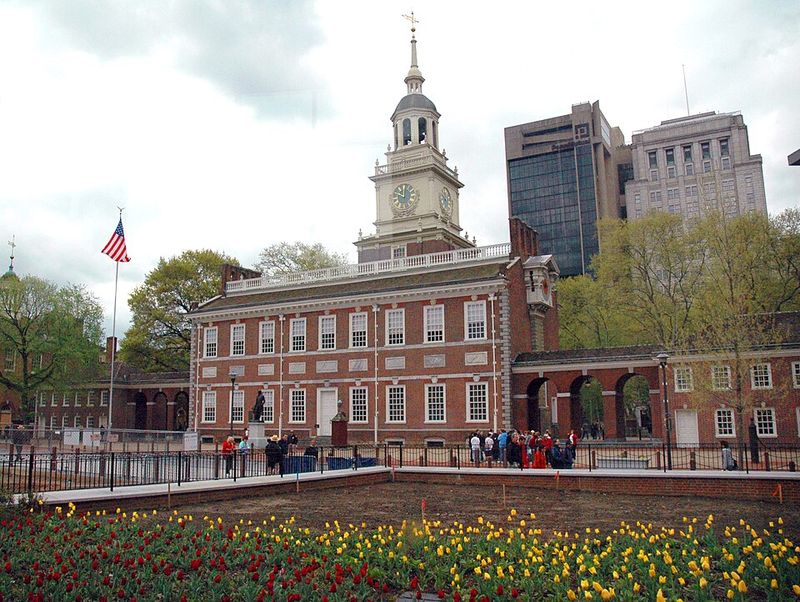
Every democracy class in America eventually gets around to mentioning Independence Hall, but standing inside the actual room where the Declaration of Independence and the U.S. Constitution were debated hits on a completely different level.
The building is surprisingly modest for something that changed the course of world history. Red brick, white trim, and a clock tower that has become one of the most iconic silhouettes in American architecture.
The room where the Founders argued, compromised, and signed those foundational documents has been carefully preserved. The furniture and layout reflect the summer of 1776 and the Constitutional Convention of 1787.
Admission is free, but timed tickets are required during peak season and go fast.
The Liberty Bell Center is right next door and makes for a natural companion visit. Philadelphia’s historic district packs an enormous amount of American founding history into a walkable few blocks.
For anyone who paid attention in history class, this neighborhood is basically the whole textbook made real.
San Antonio Missions, Texas
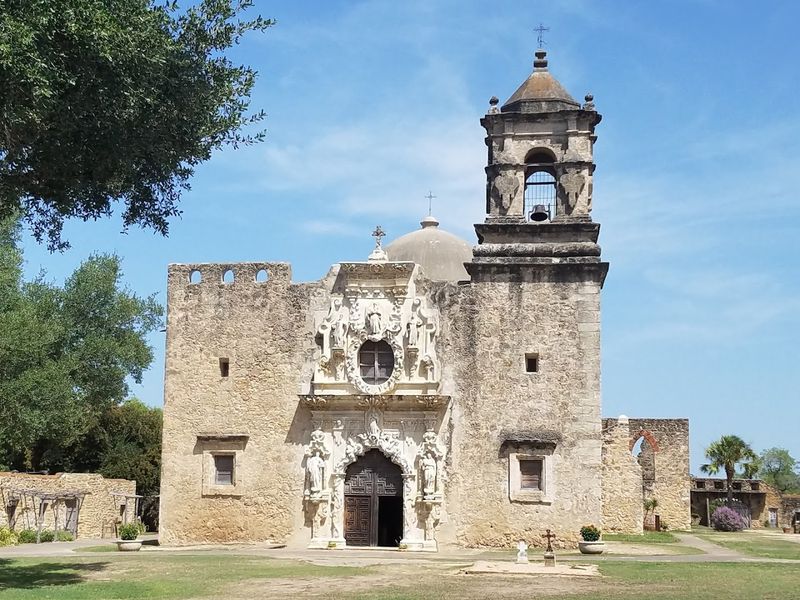
Texas has exactly one UNESCO World Heritage Site, and it delivers in a big way. The San Antonio Missions stretch along the San Antonio River, connecting five historic Spanish colonial missions that date back to the early 1700s.
Together they tell one of the most layered cultural stories in the American Southwest, involving Indigenous communities, Spanish colonizers, and Mexican settlers all sharing one complicated geography.
Mission San Jose is often called the Queen of the Missions, and the carved stone facade of its church is genuinely breathtaking. Mission Concepcion is the best-preserved unrestored stone church in North America.
The Alamo, while the most famous, is technically one of five missions in the system and benefits from being understood in that broader context.
The missions are connected by a trail that runs along the river, making it possible to visit all five in a single day by bike or on foot. The surrounding neighborhoods are full of good food, murals, and local history.
San Antonio rewards slow exploration.
Taos Pueblo, New Mexico
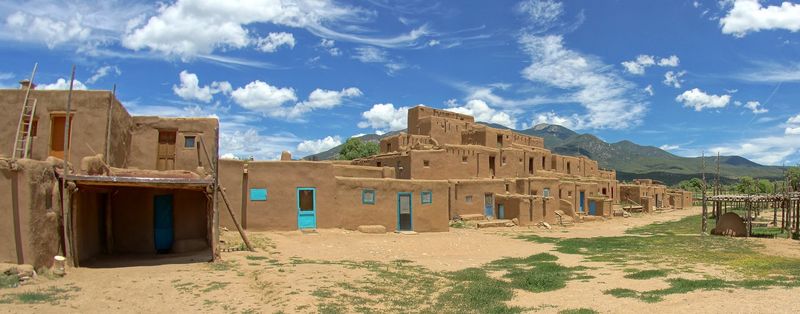
Taos Pueblo has been continuously inhabited for over a thousand years, which quietly makes it one of the oldest living communities in North America. The multi-story adobe buildings rise in terraced layers, built without nails or modern fasteners, using earth, water, and straw.
People still live in these structures today, which is what makes this site genuinely extraordinary rather than just historic.
The Pueblo is a sovereign Tiwa-speaking community, and visits are allowed during designated hours with respect for posted rules. Photography restrictions apply in certain areas, and some parts of the Pueblo are closed to visitors entirely during ceremonies and private events.
Those boundaries exist for good reason and should be followed without question.
Guided tours are available and highly recommended for understanding the history, architecture, and ongoing cultural life of the community. Small shops sell handmade pottery, jewelry, and traditional bread baked in outdoor ovens called hornos.
Taos Pueblo received UNESCO status in 1992, recognizing both its architectural and cultural significance to living heritage.
Monticello and the University of Virginia, Virginia
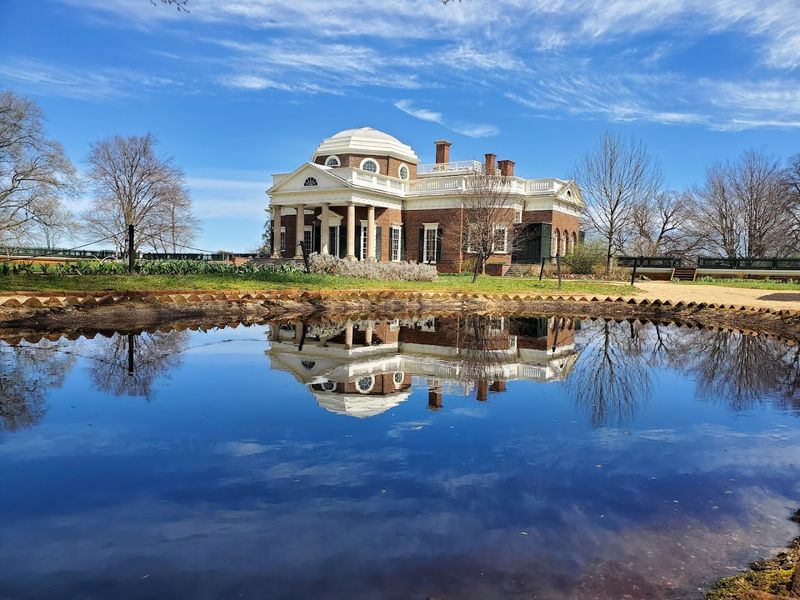
Thomas Jefferson designed both Monticello and the University of Virginia, and his architectural ambition is immediately obvious in both places. Monticello, his hilltop home near Charlottesville, is one of the most recognized buildings in America and appears on the back of the nickel.
The house reflects Jefferson’s obsession with neoclassical design, natural light, and clever space-saving gadgets he picked up during his time in Europe.
Modern tours of Monticello have significantly expanded their focus on the enslaved people who built, maintained, and operated the plantation. That shift in storytelling makes visits more honest and ultimately more meaningful.
The lives of people like Sally Hemings and the Hemings family are now central to how the site presents its history.
The University of Virginia’s Academical Village, also designed by Jefferson, is a short drive away and still functions as an active campus. The Rotunda at its center remains one of the finest examples of American neoclassical architecture.
Both sites together earned UNESCO status in 1987.
Carlsbad Caverns National Park, New Mexico
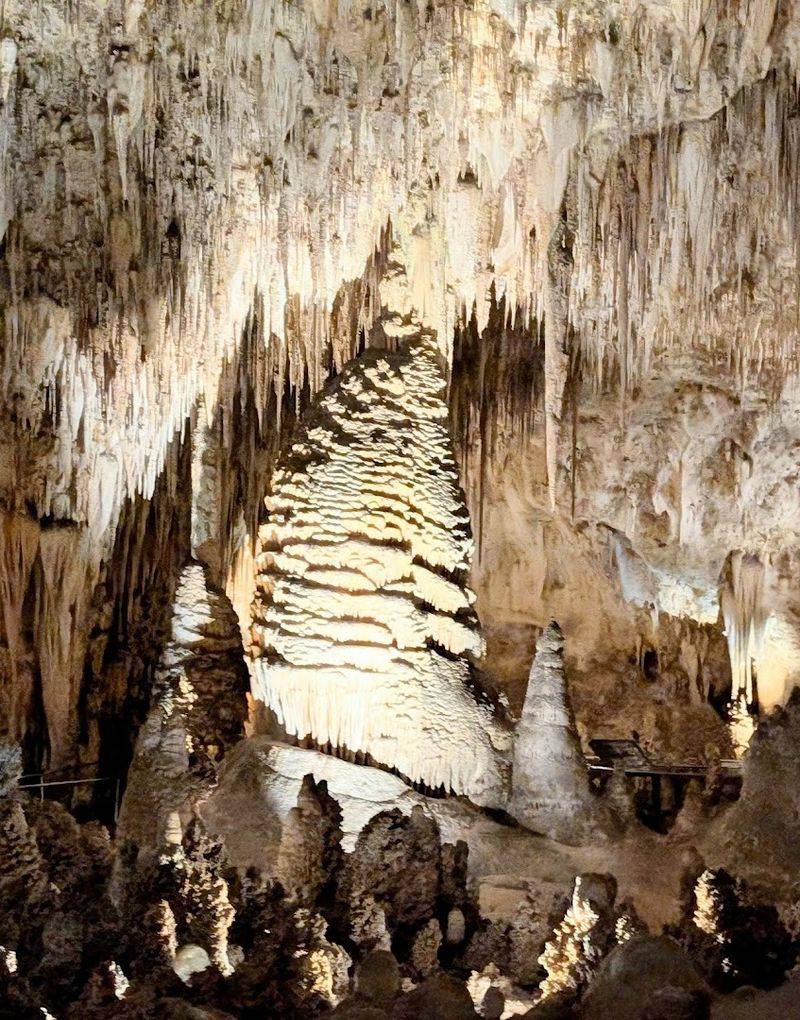
Carlsbad Caverns holds one of the largest underground chambers in North America, and walking into it feels like entering a cathedral that geology spent 250 million years decorating. The Big Room covers 8.2 acres and reaches 255 feet at its highest point.
Numbers like that are hard to process until you are actually standing inside looking up at stalactites the size of small cars.
The natural entrance trail spirals down into the cave through a massive opening where over 400,000 Brazilian free-tailed bats roost from spring through fall. The evening bat flight, when millions of bats spiral out of the cave at sunset, is one of the most spectacular wildlife events in the country.
It is completely free to watch from the amphitheater above the entrance.
Timed entry tickets for the cave are required and should be booked ahead online, especially during summer. The caverns stay at a cool 56 degrees year-round, so a light jacket is genuinely useful even in July.
The drive through the Chihuahuan Desert to reach the park is surprisingly beautiful too.
Olympic National Park, Washington
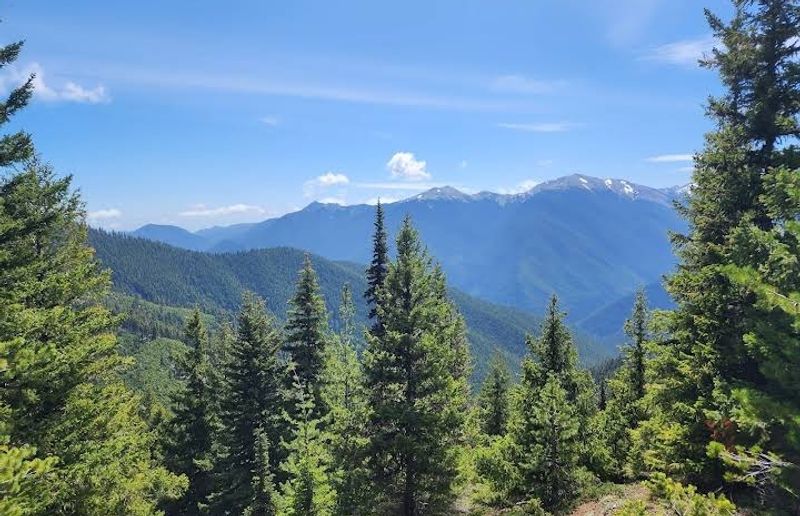
Olympic National Park is basically three parks disguised as one, and the variety is almost unfair compared to other destinations. Within a single park boundary, you get rugged Pacific coastline with sea stacks and tide pools, glacier-capped mountains topping out above 7,000 feet, and one of the only temperate rainforests in the entire country.
The Hoh Rain Forest receives up to 14 feet of rain per year and looks like something from a fantasy novel.
Hurricane Ridge offers mountain views and wildflower meadows that peak in midsummer. The coastal strip, accessible at places like Rialto Beach and Ruby Beach, features dramatic driftwood piles and offshore rock formations that photographers absolutely love.
Sea otters, harbor seals, and orca pods can sometimes be spotted from shore.
The park has no road that loops through it, which means most visitors only experience one or two ecosystems per trip. That is actually a great excuse to return multiple times.
Olympic earned its UNESCO designation in 1981 and has been quietly outperforming expectations ever since.
Share this story