 Unearth The Voyage

For most of history, people explained the world with the best ideas available to them. Some of those ideas were thoughtful attempts to make sense of nature, but later evidence showed they were wrong.
Modern science did not erase the past so much as test it, refine it, and replace myth with measurable explanations. Here are 15 ancient beliefs that once seemed convincing and what science says instead.
Earth Is the Center of the Universe

For centuries, many scholars believed Earth stood motionless at the center of the universe. That idea matched everyday experience, because the Sun, Moon, planets, and stars all seemed to move across the sky while the ground beneath you felt still.
Ancient Greek thinkers such as Ptolemy built detailed geocentric models that could even predict planetary positions fairly well.
Modern astronomy gradually overturned that picture through observation and mathematics. Copernicus proposed a Sun centered system, and later evidence from Galileo, Kepler, and Newton showed that Earth is one planet orbiting the Sun, not the cosmic hub.
Today, we know the Sun itself is just one star in the Milky Way, and our galaxy is only one among billions, which makes the old geocentric view historically important but scientifically incorrect.
Earth Is Flat
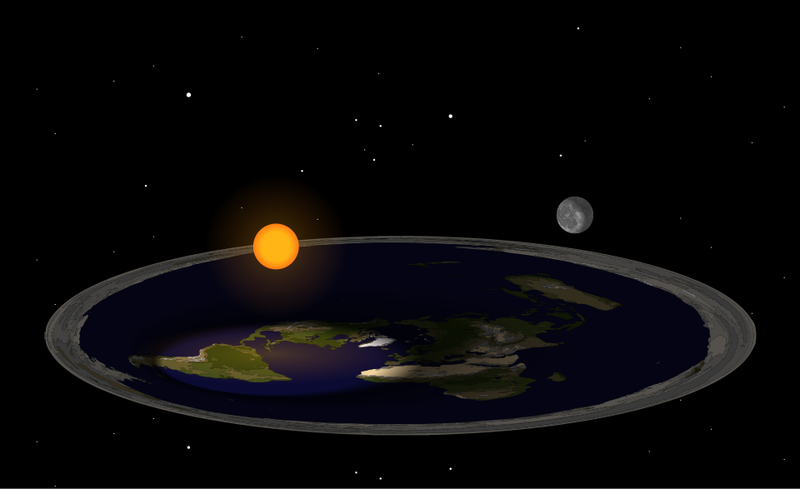
In several ancient cultures, people imagined Earth as a flat surface stretching outward under the sky. The idea made intuitive sense if you judged only by what you could see, since landscapes often look level and the horizon appears straight when viewed from the ground.
Myths, maps, and cosmologies sometimes described oceans at the edges or a firm boundary holding everything in place.
Science replaced that belief through geometry, travel, and eventually direct imaging. Greek scholars measured Earth’s circumference with surprising accuracy, sailors noticed ships disappearing hull first over the horizon, and modern satellites now provide constant visual confirmation that Earth is an oblate sphere.
If you have ever seen a globe, a space photograph, or flight paths curving across continents, you are already looking at evidence that the flat Earth idea does not match reality.
Illness Is Caused by Evil Spirits

Many ancient societies explained sickness as the work of evil spirits, curses, or divine punishment. When disease struck without an obvious cause, supernatural explanations offered a way to make sense of pain, fever, seizures, or sudden death.
Rituals, prayers, charms, and exorcisms often became the main forms of treatment because people lacked a visible biological explanation.
Modern medicine transformed that understanding by identifying physical causes of disease. Germ theory showed that bacteria, viruses, fungi, and parasites can invade the body, while research also revealed genetic disorders, immune problems, nutritional deficiencies, and environmental exposures.
You can still see how powerful old beliefs were in historical medical texts, but vaccines, antibiotics, sanitation, and laboratory testing have repeatedly shown that illness is usually rooted in biology rather than hostile spirits.
The Sun Revolves Around Earth

The belief that the Sun revolved around Earth was once central to astronomy, religion, and daily thought. It seemed obvious, because sunrise and sunset create the strong impression that the Sun travels around a stationary world while Earth does not move at all.
Ancient and medieval scholars therefore built complex geocentric systems to explain planetary motions, seasons, and celestial cycles.
That picture changed when astronomers began comparing predictions with careful observations. Copernicus argued that Earth and the other planets orbit the Sun, Kepler described elliptical orbits, and Galileo’s telescope revealed evidence that not everything circles Earth.
Later physics explained why planetary motion works the way it does, making heliocentrism the far more accurate model. Today, the Sun’s apparent movement across the sky is understood as the result of Earth’s rotation, not the Sun circling our planet.
Lightning Is a Weapon of the Gods

Lightning has long inspired fear, so it is not surprising that many ancient cultures treated it as a weapon of the gods. A sudden bolt from a dark sky could kill people, split trees, and start fires in seconds, making divine anger seem like a reasonable explanation before physics existed.
Myths from Greece, Scandinavia, and many other traditions gave powerful deities control over thunder and lightning.
Science now explains lightning as a massive electrical discharge caused by charge separation within storm clouds and between clouds and the ground. When the electric field becomes strong enough, air ionizes and a rapid flow of electricity produces the flash, heat, and thunder we experience.
You do not need mythology to understand its power, because meteorology, atmospheric physics, and high speed imaging have shown exactly how lightning forms and why it follows predictable natural laws.
Earth Is Only a Few Thousand Years Old

Some ancient and later traditional chronologies suggested that Earth was only a few thousand years old. Those estimates usually came from mythic histories, royal records, or genealogies rather than from direct measurements of rocks, fossils, or planetary materials.
In a world without geology, deep time was difficult to imagine because mountains, rivers, and continents seemed permanent within a human lifetime.
Modern science reveals a much older planet through several independent methods. Radiometric dating of rocks and meteorites, studies of Earth’s layers, fossil sequences, and evidence from plate tectonics all point to an age of about 4.54 billion years.
That timescale allows enough time for continents to shift, life to evolve, and landscapes to change dramatically. Once you look at the evidence, the idea of a very young Earth no longer fits what geology, astronomy, and biology consistently show.
Eclipses Are Supernatural Omens

Ancient people often treated eclipses as supernatural warnings because they were dramatic and unsettling events. The sudden darkening of the Sun or the dimming of the Moon seemed to interrupt the normal order of the heavens, so many societies linked eclipses to divine anger, political danger, or approaching disaster.
Rulers sometimes consulted priests or astrologers when an eclipse appeared, hoping to interpret its meaning.
Astronomy replaced those fears with a clear physical explanation. Solar eclipses occur when the Moon passes between Earth and the Sun, while lunar eclipses happen when Earth casts its shadow on the Moon.
These alignments can be predicted far in advance with remarkable precision, which is why scientists can announce exact eclipse paths years before they happen. What once looked like an omen is now understood as a regular celestial event governed by orbital mechanics and geometry.
The Sky Is a Solid Dome

In some ancient cosmologies, the sky was imagined as a solid dome arching over Earth. This concept fit a world where the heavens looked smooth, enclosed, and fixed, especially before people understood atmospheric layers, gravity, or the scale of space beyond visible stars.
Stars could be imagined as lights attached to that dome, while rain might be pictured as water released from above it.
Modern science shows that no solid ceiling surrounds the planet. Earth is wrapped in an atmosphere made of gases, and beyond that atmosphere lies outer space, a vast region containing planets, stars, galaxies, and interstellar matter.
High altitude balloons, aircraft, rockets, and satellites have directly explored the transition from air to space, leaving no room for a physical dome. If you picture the sky today, it is better understood as an open view through atmosphere into the universe.
Comets Predict Disaster

For much of history, comets were seen as warnings of war, plague, famine, or royal death. Their sudden appearance and unusual tails made them look unpredictable and foreign compared with the steadier motions of stars and planets, so many people interpreted them as messages from the heavens.
Historical chronicles often connected comets to disasters that happened nearby in time, reinforcing the omen tradition.
Science now explains comets as icy bodies left over from the early solar system. As they approach the Sun, heat causes frozen material to vaporize and release dust, creating the glowing coma and tail that make them so striking in the night sky.
Their paths can be calculated, their chemistry can be studied, and spacecraft have even visited them directly. Once understood as natural objects following orbital rules, comets stopped being credible predictors of human catastrophe.
Earth Rests on Animals or Giants
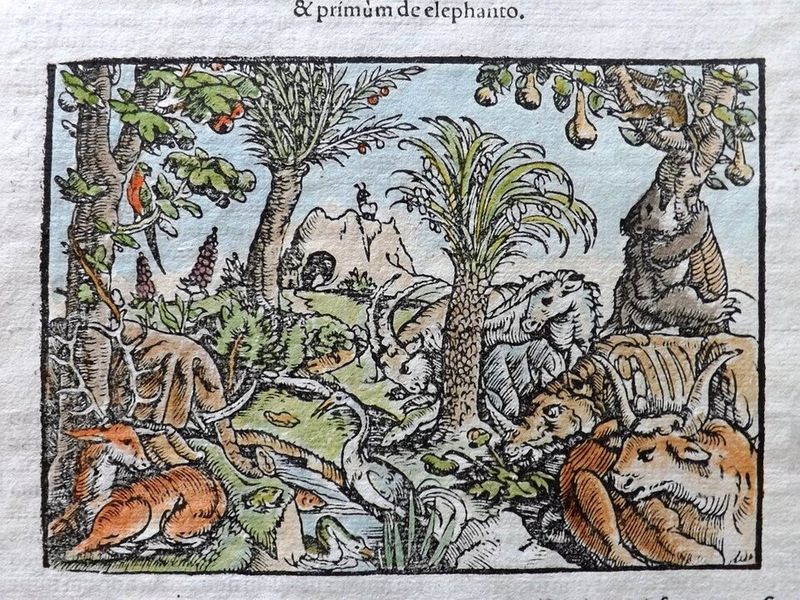
Many mythologies explained Earth’s stability by placing it on the backs of animals, giants, or other powerful beings. These stories helped people visualize support in a world where gravity was not yet understood, and they often carried symbolic meaning about strength, order, and cosmic balance.
Images of turtles, elephants, serpents, or titanic figures appeared in traditions across different regions and time periods.
Planetary science offers a very different explanation. Earth does not need a creature or giant foundation because gravity shapes matter into planets and keeps them in stable orbits through the mutual attraction of mass.
Research into planetary formation shows that Earth formed from material in the early solar system, later differentiating into core, mantle, and crust through heat and collision processes. The mythic images remain culturally rich, but they are not needed to explain how a planet exists in space.
Volcanoes Are Caused by Angry Gods

Volcanoes were terrifying to ancient communities, so many cultures linked eruptions to angry gods or offended supernatural forces. Fire, ash, lava, and sudden explosions seemed too violent to be ordinary natural events, especially when towns could be buried or skies darkened for days.
Rituals and offerings were sometimes used in hopes of calming whatever power was believed to live inside the mountain.
Geology now explains volcanoes through heat within Earth and the movement of tectonic plates. Magma forms and rises under certain conditions, pressure builds, and eruptions occur when molten rock, gas, and ash escape through vents in the crust.
Scientists monitor seismic activity, gas emissions, and ground deformation to assess volcanic risk, which shows that eruptions follow physical processes rather than divine moods. The danger is still very real, but its cause is geological, not supernatural.
Stars Are Fixed Lights in the Sky
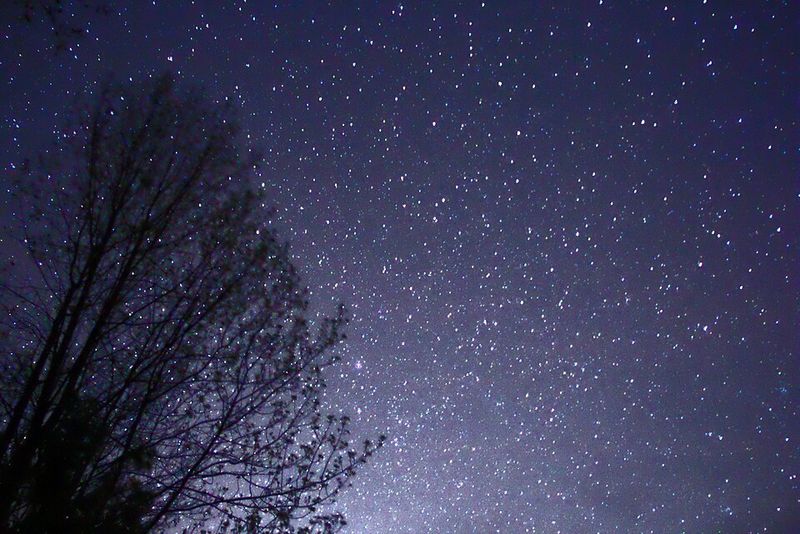
To ancient observers, stars appeared fixed in place on a stable celestial backdrop. Night after night, the constellations seemed to return with only slow seasonal changes, which encouraged the idea that stars were permanent lights attached to the heavens rather than distant suns moving through space.
This impression was understandable because stellar motion is subtle over a single human lifetime without precise instruments.
Modern astronomy shows that stars are dynamic objects with life cycles, motion, and immense variety. They form from gas clouds, shine through nuclear fusion, move within galaxies, and eventually change into red giants, white dwarfs, neutron stars, or black holes depending on their mass.
Improved telescopes and measurements of proper motion reveal that stars do not sit still at all. They only looked fixed because they are so far away and because human perception is limited on cosmic timescales.
Mental Illness Is Possession
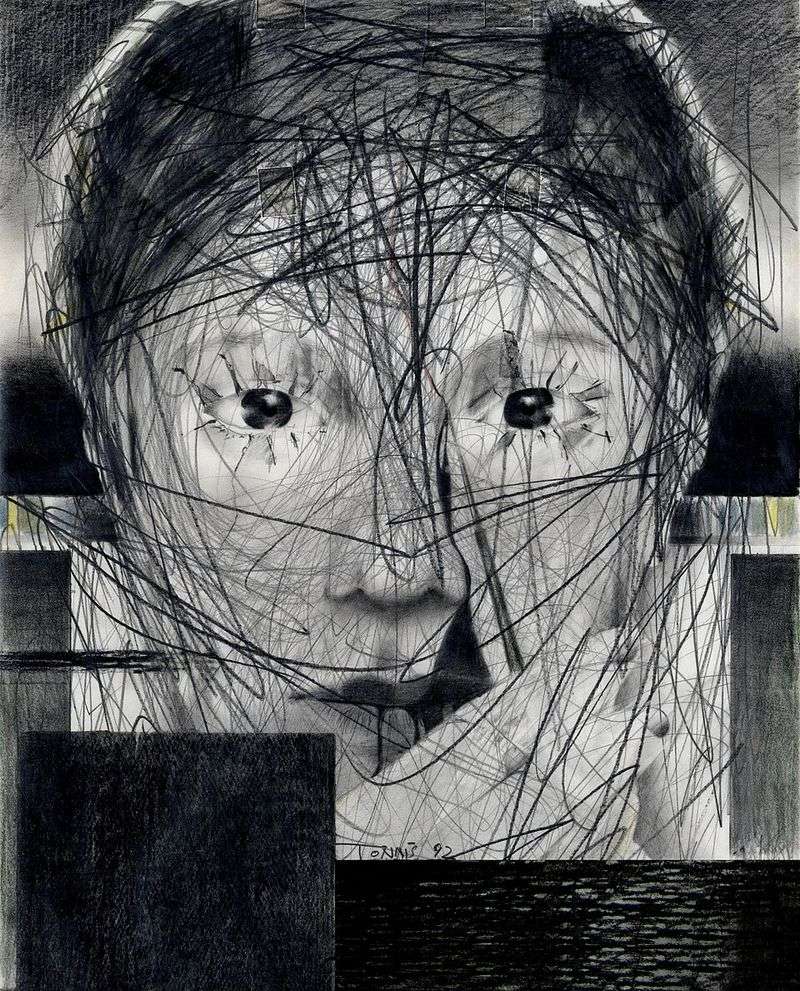
In many early societies, unusual thoughts, behaviors, or emotional states were explained as spirit possession or supernatural interference. Conditions such as severe depression, psychosis, epilepsy, and anxiety could appear mysterious or frightening without medical knowledge, so communities often interpreted them through religion, fear, or ritual.
Treatments ranged from prayer and isolation to exorcism, and they often misunderstood the person who was suffering.
Psychology, psychiatry, and neuroscience now provide evidence based explanations for mental illness. Research points to complex interactions among brain chemistry, genetics, trauma, stress, development, and social environment, while modern care includes therapy, medication, supportive services, and crisis intervention.
That does not mean every question is settled, but it does mean possession is not a scientific explanation. If you look at current evidence, mental disorders are health conditions that deserve treatment, understanding, and dignity rather than supernatural blame.
Rain Is Sent Directly by Deities

Rain was often seen as a gift or punishment delivered directly by deities who controlled the sky. That belief made sense in agricultural societies, where a season of drought or heavy storms could determine whether crops survived and whether communities had enough food.
Ceremonies, sacrifices, and prayers were therefore closely tied to weather, especially in regions where rainfall was unpredictable.
Meteorology explains rain through the water cycle and atmospheric conditions rather than divine decision. Water evaporates from oceans, lakes, and land, rises into the atmosphere, condenses into clouds, and falls as precipitation when droplets or ice crystals grow heavy enough.
Temperature, pressure, wind, and topography all influence when and where rain forms. Forecasting is not perfect, but radar, satellites, and climate science have shown that rainfall follows physical patterns that can be studied, modeled, and often predicted without appealing to supernatural control.
The Milky Way Is Divine Smoke or Mythical Substance

Different cultures created striking myths to explain the pale band of light stretching across the night sky. It was described as divine smoke, spilled milk, a heavenly river, a road for souls, or other sacred substance because its appearance was too diffuse and expansive to fit ordinary experience.
Without telescopes, the Milky Way looked like a mysterious glowing cloud laid across the darkness.
Modern astronomy shows that the Milky Way is our home galaxy viewed from within. When telescopes resolved that hazy band into countless stars, it became clear that the glow comes from the combined light of hundreds of billions of stars, along with gas and dust arranged in a vast spiral system.
Our solar system sits inside one of its arms, orbiting the galactic center over immense timescales. The myths remain beautiful, but the galaxy itself is a real physical structure, not celestial smoke.



