 Unearth The Voyage
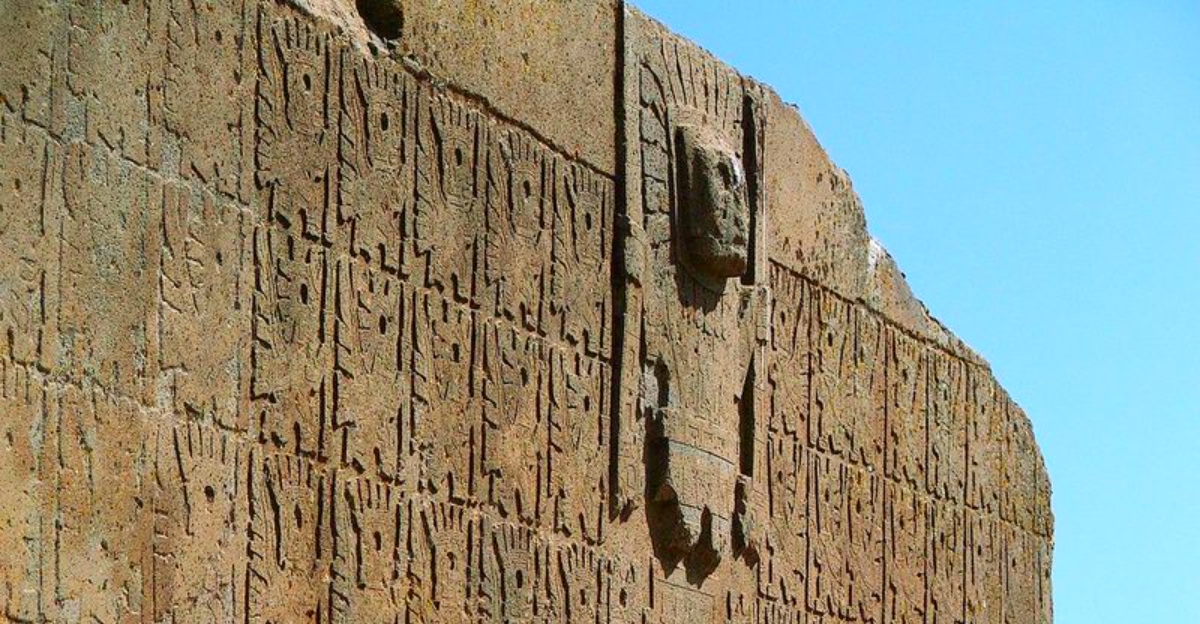
Scattered across the globe are ancient structures that continue to puzzle even the most brilliant archaeologists and historians. These ruins whisper stories from civilizations long gone, yet many of their secrets remain locked away, defying modern understanding.
From massive stone monuments built before farming existed to underwater cities and desert drawings visible only from the sky, these places challenge what we think we know about our ancestors and their capabilities.
Göbekli Tepe — Turkey’s Prehistoric Puzzle
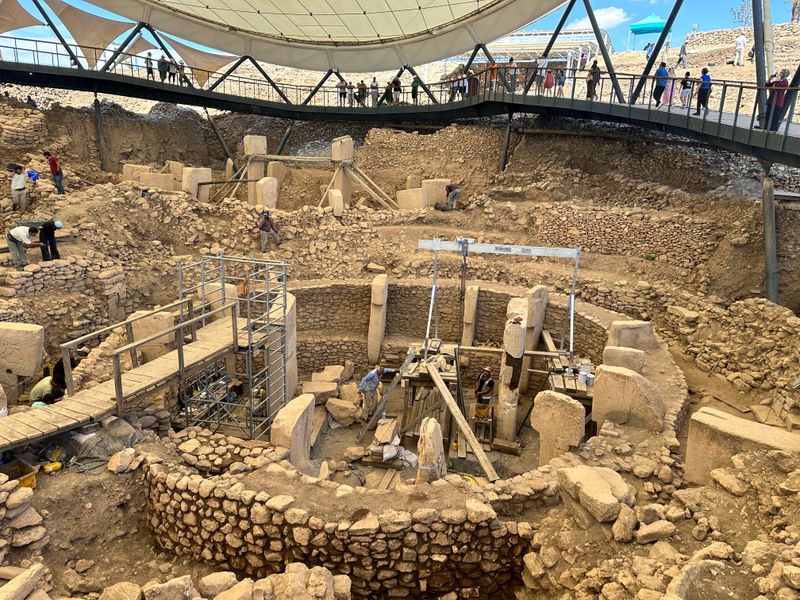
Göbekli Tepe in southeastern Turkey rewrote what we thought we knew about human history. This massive complex of carved stone pillars dates back to around 9600 BC, centuries before agriculture or settled life was assumed to exist.
Its intricately carved T-shaped pillars are arranged in circles, yet archaeologists still debate who built it and why. Building something this elaborate before farming began seems almost impossible.
The site challenges the traditional timeline that says agriculture came first, then complex societies, then monumental architecture. Göbekli Tepe flips that order completely on its head.
Was it a ritual site, a proto-temple, or something entirely unknown? The carvings depict animals like foxes, lions, and scorpions, suggesting symbolic or spiritual significance.
With only a fraction excavated and much yet buried beneath the earth, its purpose and cultural significance remain among archaeology’s biggest questions. Every new discovery at this site raises more questions than answers, making it endlessly fascinating to researchers worldwide.
Stonehenge — England’s Megalithic Silence
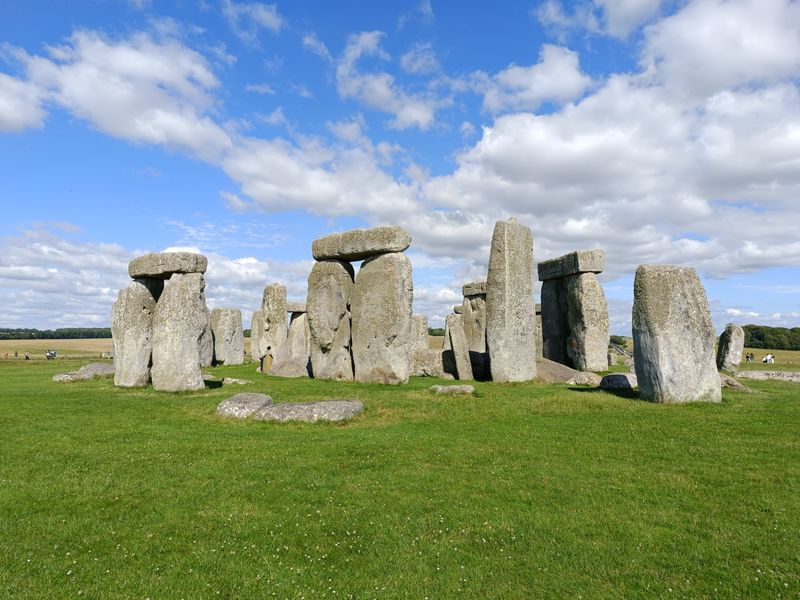
Standing silent on England’s Salisbury Plain, this prehistoric stone circle has fascinated explorers for generations. Built between roughly 3000 BC and 2000 BC, its colossal sarsen stones were transported from miles away.
How ancient people moved these multi-ton rocks without modern machinery remains a hotly debated topic. The precision of Stonehenge’s astronomical alignment is equally impressive.
During the summer solstice, the sun rises directly over the Heel Stone, creating a spectacular visual effect. This suggests the builders possessed sophisticated knowledge of celestial movements and seasonal cycles.
Was it a ceremonial burial ground, an astronomical observatory, a pilgrimage site, or all the above? Human remains discovered at the site indicate it served as a burial place for elite members of society.
Despite decades of study and countless theories, its true social, spiritual, and technological context remains partly elusive. The monument continues to draw thousands of visitors annually, all hoping to connect with its ancient mystery.
Machu Picchu — The Enigmatic Inca City
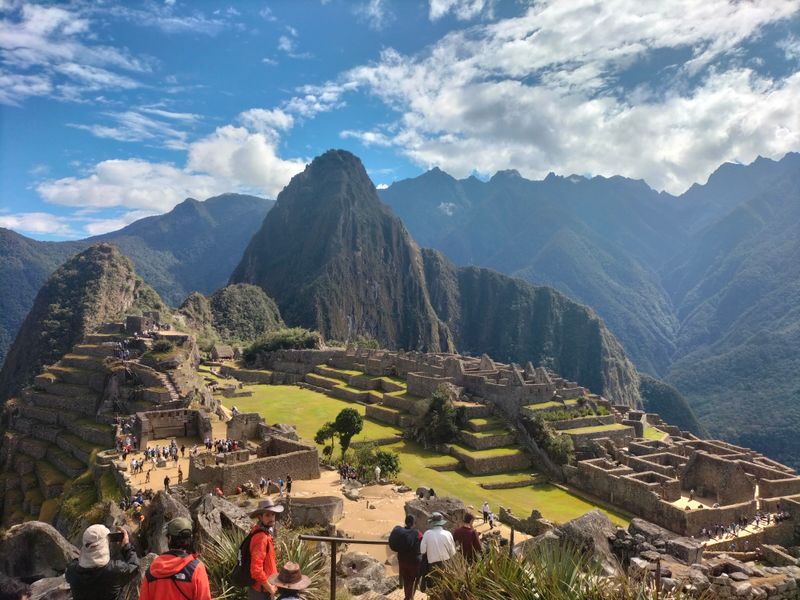
Perched above the Andes in Peru, Machu Picchu is one of the most iconic ancient sites in the world. Yet many questions endure about this breathtaking mountaintop city.
Built in the 15th century by the Inca, scholars still debate its original purpose and who actually lived there. Was it a royal estate, religious center, astronomical observatory, or all of these?
Some researchers believe it served as a sacred retreat for Inca nobility. Others point to its agricultural terraces and water systems as evidence of a thriving community that supported itself through advanced farming techniques.
The sophistication of its stonework is truly remarkable. Massive stones fit together so precisely that not even a knife blade can slip between them, all without mortar.
This level of engineering raises enduring questions about Inca ingenuity and planning, especially given the rugged terrain and lack of wheeled vehicles. How they transported huge stones up steep mountain paths remains a construction mystery that continues to amaze engineers today.
Puma Punku — Bolivia’s Precise Megaliths
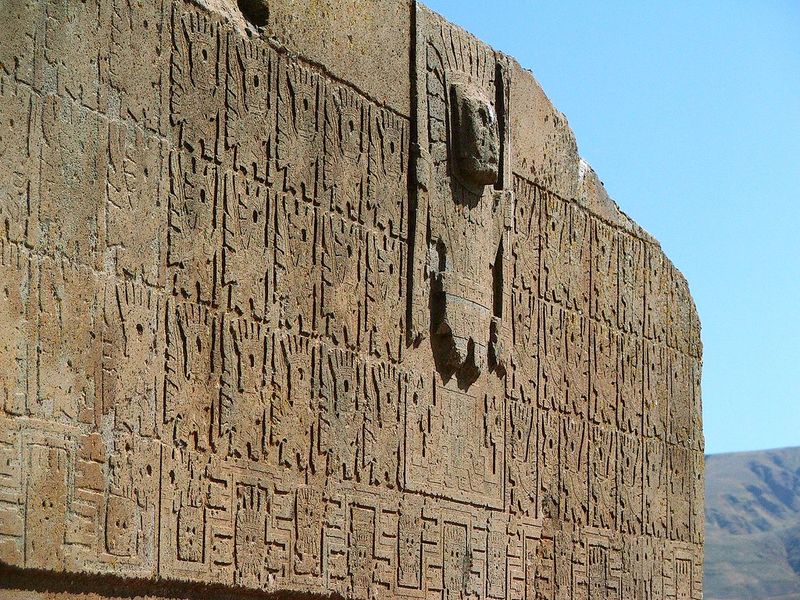
Part of the greater Tiwanaku archaeological complex near Lake Titicaca, Puma Punku in Bolivia is famed for its precisely cut and massive stone blocks. The engineering behind these intricate shapes and tight fitting joints seems too advanced for its time, according to some researchers.
The tools used to achieve such precision remain unclear and hotly contested. Some stones feature complex notches, grooves, and perfectly flat surfaces that look almost machine-made.
The H-shaped blocks interlock in ways that suggest modular construction techniques. This level of standardization is unusual for ancient architecture and hints at sophisticated planning and execution.
Scholars also debate its exact function within Tiwanaku society. Was it a temple, a gateway, or part of a larger ceremonial complex?
The site’s original layout has been disrupted over centuries, making reconstruction difficult. What remains are scattered stone blocks that hint at a once-magnificent structure, making it one of the Andes’ most compelling mysteries that continues to inspire both scientific research and alternative theories about ancient capabilities.
Baalbek — Lebanon’s Giant Megalith Mystery
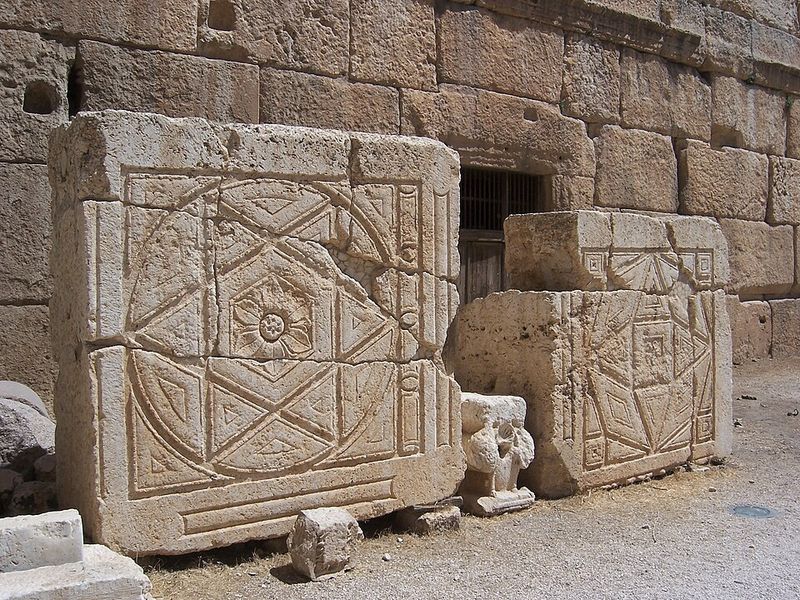
In the Bekaa Valley, Baalbek’s Temple of Jupiter showcases some of the largest stone blocks ever used in ancient construction. Three enormous megaliths weighing up to 800 tons each form part of the temple’s foundation.
These stones, called the Trilithon, are among the heaviest objects ever moved by humans in ancient times. The methods employed to quarry, transport, and raise these stones remain an engineering enigma, even to modern researchers.
Moving such weight would challenge today’s construction equipment, let alone ancient technology. The quarry where these blocks originated sits about a mile away, raising questions about how they were transported across that distance.
Questions also linger about the temple’s original design phases and precise religious functions across empires. The site was used by Phoenicians, Greeks, Romans, and later civilizations, each adding their own layers.
Some researchers even suggest pre-Roman megalithic construction at the foundation level. The sheer scale of Baalbek continues to inspire awe and debate among archaeologists, engineers, and visitors who stand dwarfed by these colossal stones.
Rujm el-Hiri — The Golan Heights’ Stone Wheel
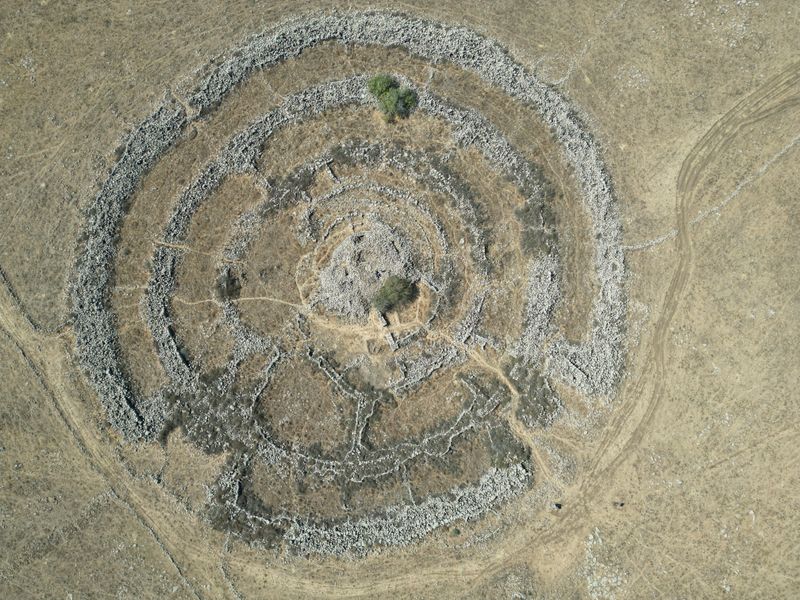
Rujm el-Hiri, also known as Gilgal Refaim, sits in the Israeli-controlled Golan Heights as a concentric ringed megalithic monument of basalt rocks with a central mound. Older than many other ancient structures, it dates back roughly 5,000 years.
From the air, it resembles a giant wheel or target etched into the landscape. Its purpose is unresolved and continues to puzzle researchers.
Theories range from ritual center to celestial calendar, yet no conclusive evidence confirms any single interpretation. Some suggest the central mound was added later as a burial chamber, but that doesn’t explain the original rings.
Its unique layout has no clear parallel in the Near East, fueling scholarly debate. The monument consists of over 42,000 basalt rocks arranged in circles, with the outer ring measuring about 500 feet across.
Some researchers note astronomical alignments during certain times of year. Who built it, what culture they belonged to, and what ceremonies took place there remain open questions that make Rujm el-Hiri one of the region’s most enigmatic ancient sites.
Pavlopetri — Greece’s Submerged City Plan
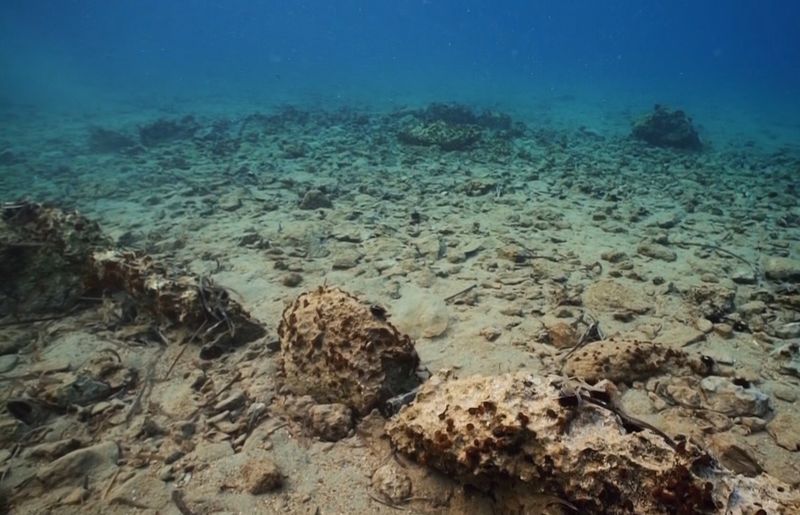
Off the coast of southern Greece lies Pavlopetri, the oldest submerged city known in the world at about 5,000 years old. Its nearly complete layout of streets, buildings, and tombs predates many classical civilizations.
Discovered in 1967, the site remains remarkably intact beneath the waves of Vatika Bay. The city’s existence beneath the sea raises unanswered questions.
How and why it was submerged remains a topic of research and speculation. Was it an earthquake, gradual sea level rise, or sudden geological event that sent this Bronze Age settlement underwater?
What social functions its neighborhoods served and what deeper secrets remain buried under the waves continue to intrigue archaeologists. The site includes what appears to be a central courtyard, residential areas, and even grave sites.
Pottery and other artifacts suggest trade connections with Minoan Crete. Unlike many underwater ruins that are mere remnants, Pavlopetri offers an almost complete urban plan frozen in time.
Its preservation provides a rare window into ancient town planning and daily life from an era we rarely see so clearly.
Chanquillo — Peru’s Solar Observatory-Like Ruins
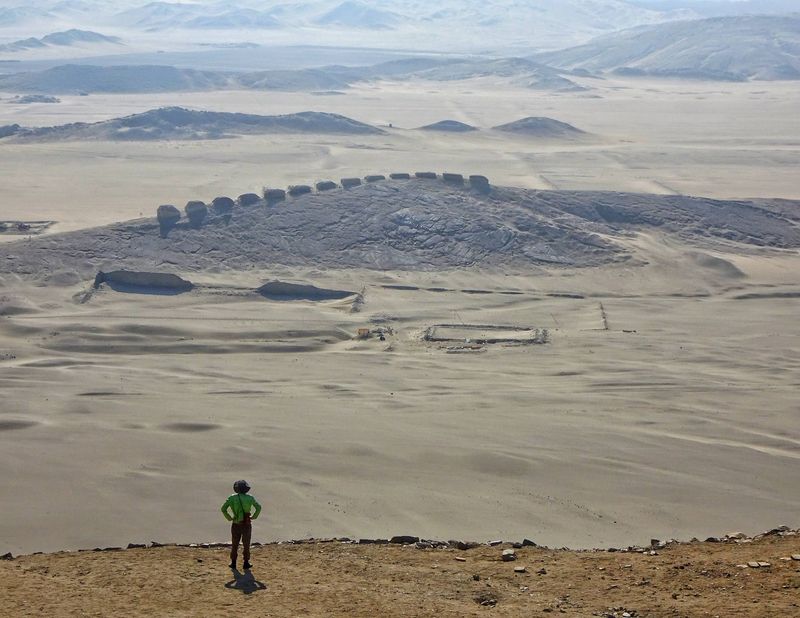
The Chanquillo complex in Peru includes a series of thirteen towers believed to align with solar events, suggesting astronomical purposes. Spread along a low ridge, these towers mark the sun’s position on the horizon throughout the year.
When viewed from specific observation points, the towers create a solar calendar accurate to just a few days. Yet the exact cultural context and full significance of the site remain under discussion.
While it’s widely interpreted as an early solar observatory dating to around 250 BC, many questions persist. How its builders integrated astronomy with everyday life remains partially unclear.
What rituals or calendars they followed around its construction continues to fascinate researchers. The site also includes a fortified temple and plaza, suggesting ceremonial importance beyond simple timekeeping.
Was it used for agricultural planning, religious festivals, or both? The precision of the solar alignments indicates sophisticated astronomical knowledge.
Chanquillo represents one of the oldest known solar observatories in the Americas, yet its full story remains tantalizingly incomplete, waiting for future discoveries to fill in the gaps.
Nazca Lines — Peru’s Giant Desert Canvas
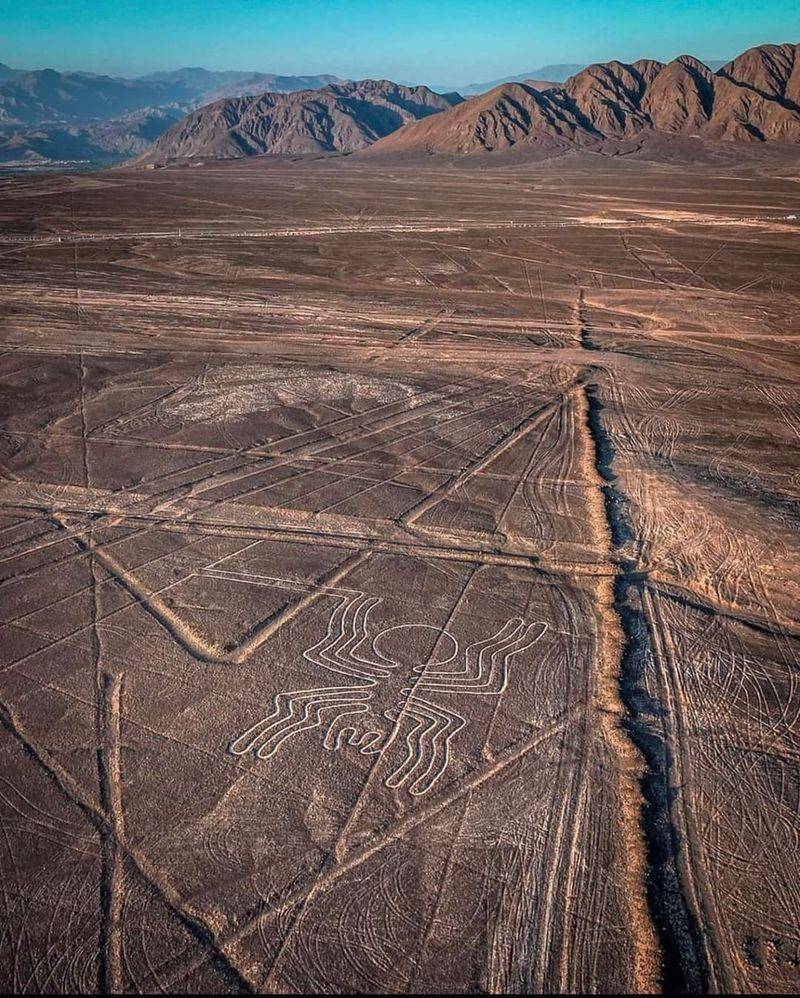
The Nazca Lines are enormous geoglyphs etched into the Peruvian desert depicting animals, shapes, and lines visible only from the air. Created between 500 BC and 500 AD by the Nazca culture, these massive designs cover an area of nearly 200 square miles.
Figures include a hummingbird, spider, monkey, and various geometric patterns. How these massive designs were laid out so precisely and what message they conveyed remains an open question.
The lines were made by removing the reddish surface pebbles to reveal lighter ground beneath. Their scale and accuracy are impressive considering the creators couldn’t view them from above.
Researchers theorize astronomical, spiritual, or water-related purposes, but no consensus exists. Some believe they served as pathways for religious processions or offerings to sky gods.
Others suggest they marked underground water sources in this arid region. Many figures remain unexplained and continue to generate new theories.
The dry climate has preserved these fragile designs for centuries, but they face threats from development and climate change, making their study increasingly urgent before they’re lost forever.
Giza Pyramid Complex — Egypt’s Solar Legacy
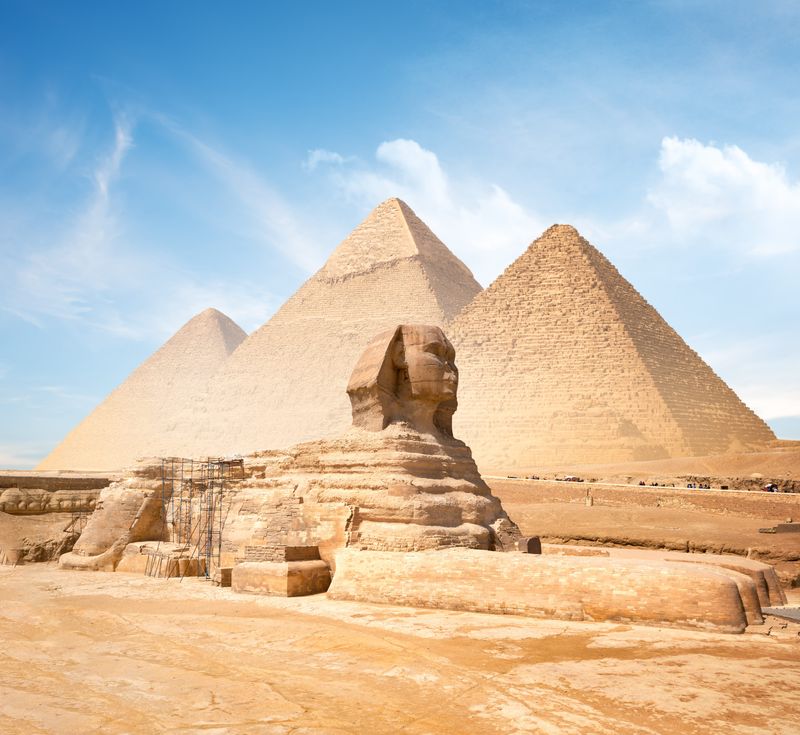
While much is known about the Great Pyramid of Giza, questions linger about the full extent of its construction techniques, internal chambers, and precise symbolic purpose beyond tomb theory. Built around 2560 BC for Pharaoh Khufu, it remained the tallest human-made structure for over 3,800 years.
Its construction required an estimated 2.3 million stone blocks. The larger Giza complex includes the Sphinx and subsidiary pyramids, continuing to spark debate.
How workers quarried, transported, and lifted massive stones with Bronze Age technology remains partially mysterious. Recent discoveries of internal voids using cosmic ray imaging suggest unexplored chambers may still exist.
Debates continue about architectural knowledge, labor organization, and celestial alignment in ancient Egypt. The pyramids align remarkably with true north and certain star constellations, suggesting astronomical significance.
Was the complex purely a burial site, or did it serve other ceremonial or astronomical functions? The precision of construction and mathematical relationships encoded in the pyramid’s dimensions continue fascinating researchers, engineers, and mathematicians who find new patterns and purposes with each generation of study.
Teotihuacan — Mexico’s Urban Enigma
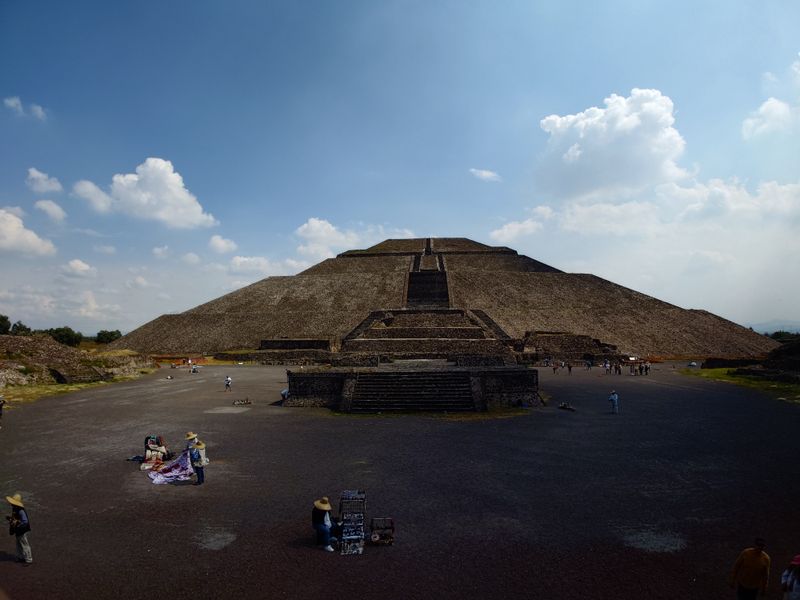
Teotihuacan near Mexico City was one of the largest cities in the ancient world, dominated by monumental pyramids like the Pyramid of the Sun and the Moon. At its peak around 450 AD, it housed over 100,000 people, making it larger than most European cities of that era.
Its influence spread throughout Mesoamerica. Despite extensive study, the identity of its rulers, reasons for its decline, and full cultural significance remain uncertain.
Unlike the Maya or Aztecs, Teotihuacan’s builders left no deciphered written records about themselves. We don’t even know what they called their city or what language they spoke.
The city’s axial layout and precise urban planning raise compelling questions about governance and ritual life. The Avenue of the Dead stretches over a mile, connecting major ceremonial structures with mathematical precision.
Residential compounds show evidence of multi-ethnic neighborhoods, suggesting a cosmopolitan population. What caused this great city’s sudden collapse around 550 AD remains debated, with theories ranging from internal revolt to environmental degradation.
The mystery of who built Teotihuacan and why they abandoned it continues to captivate archaeologists.
Mohenjo-Daro — Indus Valley Urban Plan Mystery
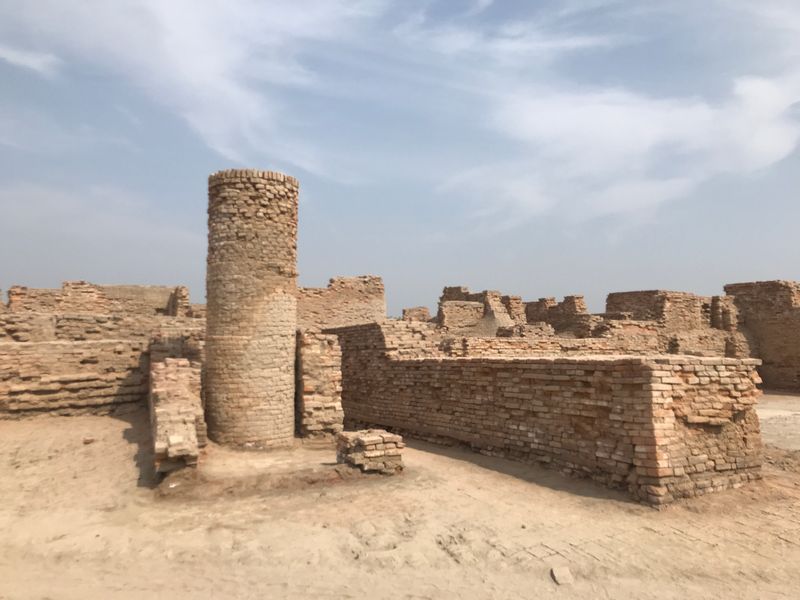
Mohenjo-Daro, one of the principal cities of the Indus Valley Civilization, showcases a highly organized grid layout and advanced urban sanitation. Built around 2500 BC in what is now Pakistan, it featured sophisticated drainage systems, public baths, and standardized brick construction.
The Great Bath suggests ritual bathing practices. Yet it lacks deciphered written records, creating a major obstacle to understanding.
The Indus script remains one of archaeology’s great unsolved puzzles. Without readable texts, we can’t know the city’s name, its rulers, or the stories its people told.
Because its script remains undeciphered and burial practices are not fully understood, key social and religious aspects remain enigmatic to researchers. Unlike Egyptian or Mesopotamian cities, Mohenjo-Daro shows no evidence of palaces or temples, raising questions about social organization.
Were they egalitarian, or did power manifest differently? What caused the civilization’s decline around 1900 BC also puzzles scholars.
The city’s remarkably advanced urban planning seems ahead of its time, making Mohenjo-Daro a fascinating window into a sophisticated but mysterious ancient culture that thrived millennia ago.
Easter Island Moai — Silent Sentinels
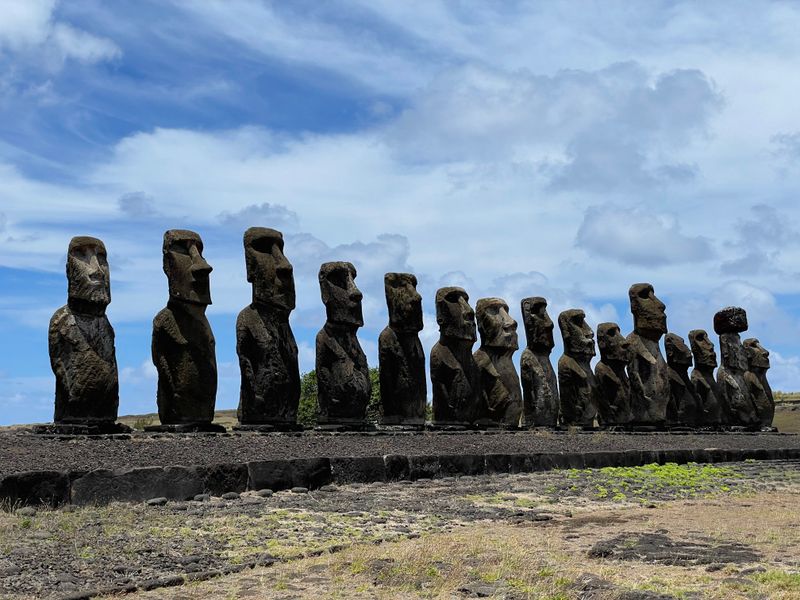
The Moai statues of Easter Island stand as massive stone heads carved by the Rapa Nui people. Actually, they’re not just heads—most have full bodies buried underground.
Carved from volcanic tuff between 1400 and 1650 AD, nearly 900 statues dot the island, some standing over 30 feet tall. While we know who built them, mysteries persist around how they were transported across the island.
The quarry at Rano Raraku sits miles from coastal sites where many statues stand. Theories range from log rollers to upright walking techniques using ropes, but the exact method remains debated.
What precise rituals surrounded their erection, and what deeper meaning the varied styles conveyed socially and spiritually continue to puzzle researchers. Each statue likely represented an ancestor, but why some wear red stone topknots while others don’t remains unclear.
What caused the sudden halt in production, leaving many statues incomplete in the quarry? The island’s deforestation and societal collapse add layers to this mystery.
These silent sentinels continue watching over the island, guardians of secrets their creators took to their graves centuries ago.
Chichén Itzá — Maya’s Astronomical Alignments
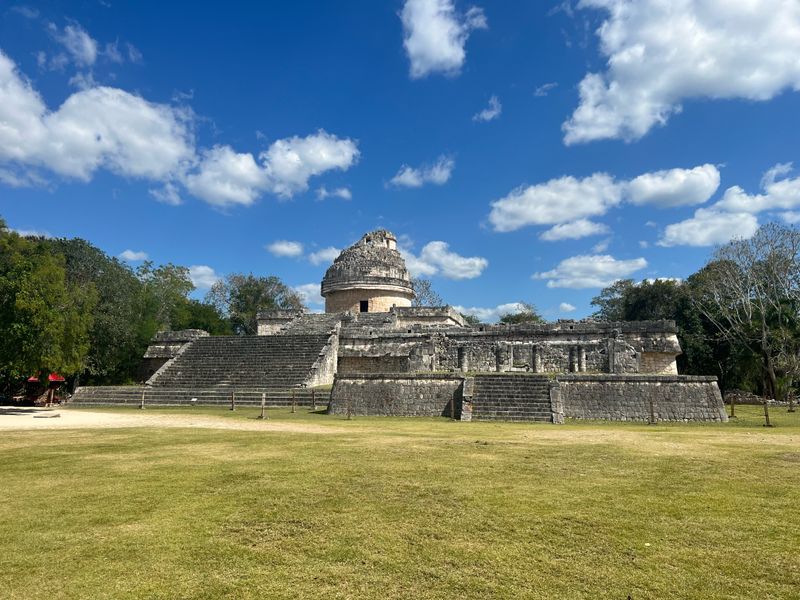
At Chichén Itzá in Mexico, structures like El Castillo align with celestial events, casting serpent-shaped shadows during equinoxes. This spectacular light-and-shadow effect draws thousands of visitors twice yearly.
The pyramid’s design incorporates the Maya calendar, with 91 steps on each of four sides totaling 364, plus the top platform making 365. The full range of astronomical, religious, and political functions these structures played in Maya culture continues to be studied and debated.
The site includes a massive ball court, sacred cenote, and observatory called El Caracol. Each structure seems to encode astronomical or mathematical knowledge.
Built between the 9th and 12th centuries, Chichén Itzá became a powerful regional capital. Why it was eventually abandoned remains unclear, though drought and political upheaval are suspected.
The site shows influences from multiple cultures, suggesting it was a cosmopolitan center. How the Maya achieved such precise astronomical alignments without modern instruments continues to impress researchers.
Chichén Itzá represents one of the most intriguing ancient ruins in the Americas, where architecture, astronomy, and spirituality merged into breathtaking stone monuments.
Ancient Jericho’s Tower — Oldest Stone Monument?
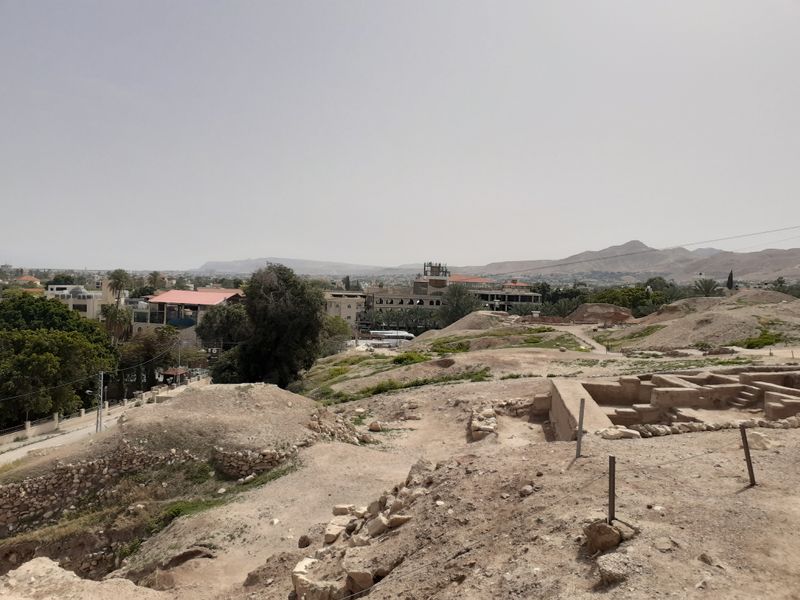
At Tell es-Sultan near Jericho stands a stone tower from around 8000 BC, one of the oldest monumental stone structures known. This circular tower reaches about 28 feet high and includes an internal staircase.
Its age places it firmly in the Pre-Pottery Neolithic period, when humans were just beginning to settle into permanent communities. Scholars still debate its function and what it reveals about early human society.
Whether defensive, astronomical, or social remains unclear. Some researchers suggest it aligned with the summer solstice, serving as an early calendar or ritual marker.
Others believe it defended against floods or enemies. How it reflects the early development of human communal life in the Neolithic era fascinates archaeologists.
Building such a structure required organized labor, planning, and social cooperation beyond simple survival needs. What motivated these early settlers to invest such effort?
The tower’s existence challenges assumptions about when humans began creating monumental architecture. It stands as a testament to the ingenuity and ambition of our ancestors, who were accomplishing remarkable feats thousands of years before writing, bronze tools, or the wheel existed.



