Spain is famous for its beaches, tapas, and big cities like Barcelona and Madrid. But beyond the well-worn tourist trails, there is a whole other Spain waiting to be discovered.
From medieval hilltop villages to volcanic islands and ancient Roman landscapes, the country is packed with stunning spots that most travelers simply walk right past. If you are ready to go off the beaten path, these 15 lesser-known places will make your Spain trip truly unforgettable.
Albarracín, Aragon
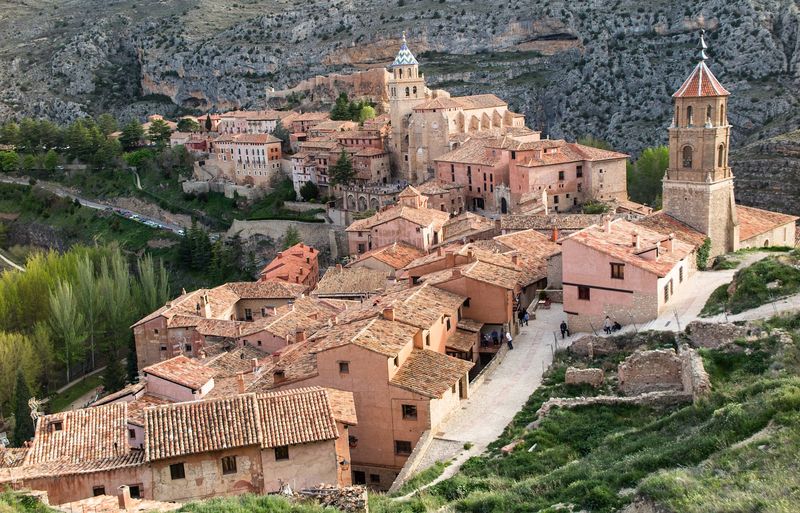
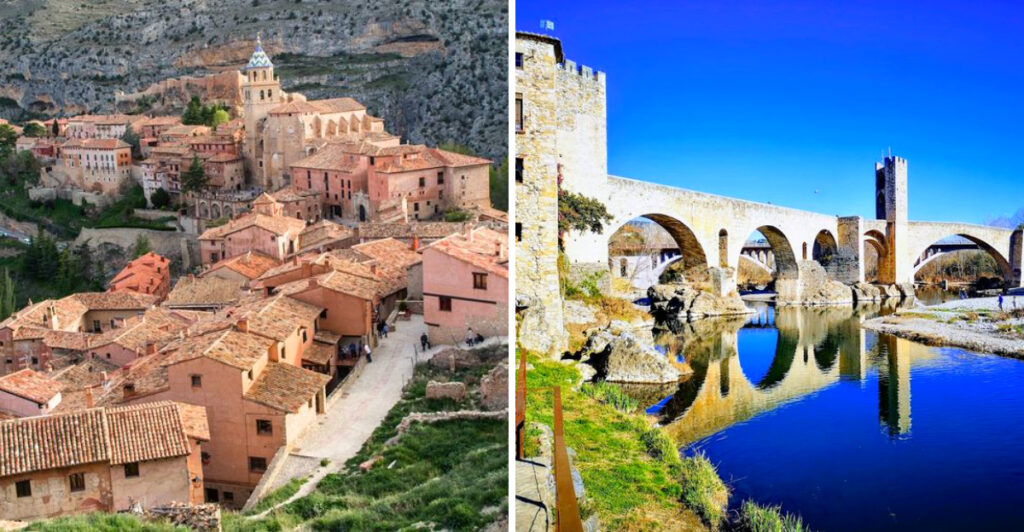
Somehow, Albarracín has managed to stay one of Spain’s best-kept secrets despite being drop-dead gorgeous. This medieval village in Aragon wraps around a rocky bend in the Guadalaviar River, its pink and terracotta buildings stacked like a colorful puzzle against the cliffs.
Wandering its narrow cobbled lanes feels like the whole world hit the pause button somewhere around the 12th century.
The village walls, partially restored and still standing tall, stretch across the surrounding hills and are great for a casual hike with spectacular views as your reward. Wooden balconies hang over alleyways so narrow you could almost shake hands with someone across the street.
Albarracín has won multiple awards for being one of Spain’s most beautiful villages, and honestly, no one is arguing.
Nearby, the Albarracín Mountains offer rock climbing, cycling, and ancient cave paintings that date back thousands of years. The area is also known for excellent trout fishing in the river below.
Accommodation options range from charming rural guesthouses to small boutique hotels tucked inside historic buildings. Visit in spring or autumn for the best weather and the smallest crowds.
This is the kind of place that stays in your memory long after you have left.
Cudillero, Asturias
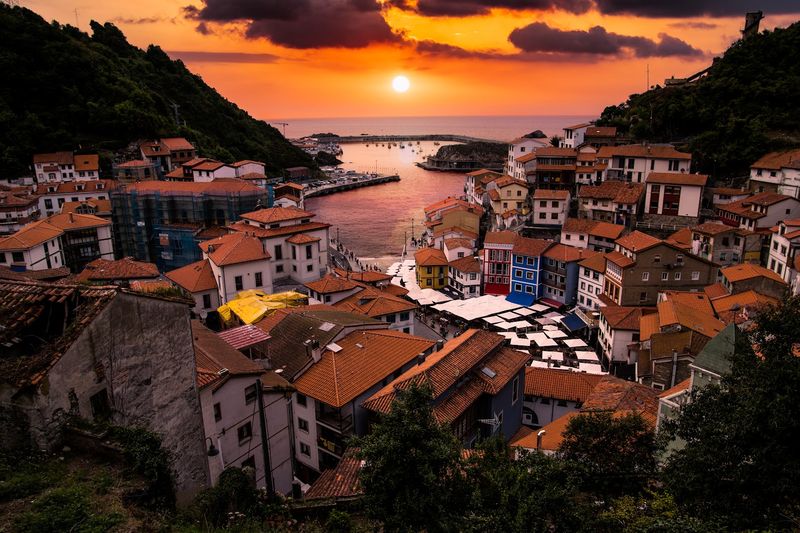
Cudillero looks like someone took a handful of paint and tossed it down a hillside. This tiny fishing village on Spain’s northern coast is a riot of yellow, blue, green, and red houses that tumble steeply toward a sheltered harbor where fishing boats bob gently on the water.
It is one of those places that makes you reach for your camera before you have even stepped out of the car.
The village is built into such a dramatic slope that locals have developed seriously strong calves just from daily life. Narrow staircases and winding paths connect the different levels, making exploration feel like a fun puzzle.
The harbor area fills up with locals in the evenings, especially around the tapas bars that serve freshly caught seafood straight from the boats outside.
Asturian cuisine is one of Spain’s most underrated food traditions, and Cudillero is a great place to try classics like fabada, a hearty bean stew, or grilled octopus with local cider poured from a great height. The surrounding coastline has dramatic cliffs, green meadows, and hidden beaches that are far less crowded than those further south.
Visit between June and September for the warmest weather, but bring a light jacket because the Atlantic breeze is real.
Besalú, Catalonia
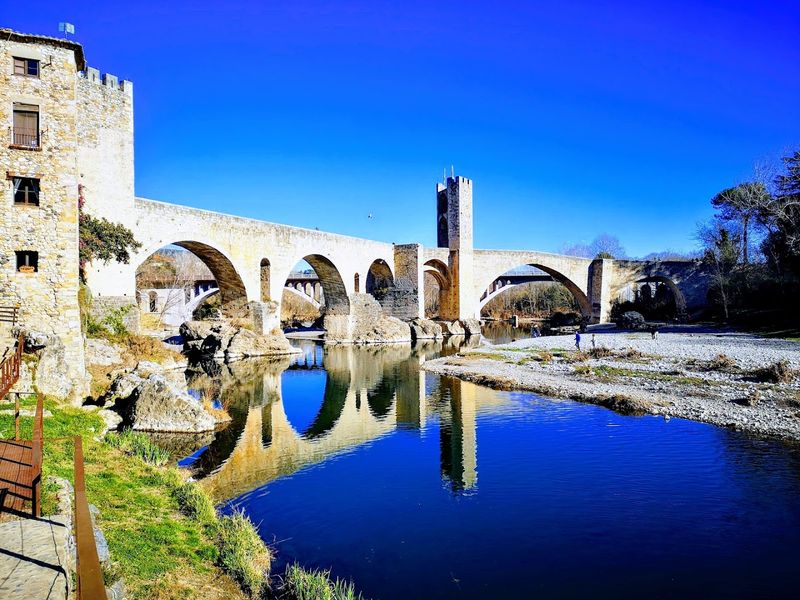
Few towns in Spain make an entrance quite like Besalú. The moment you cross its ancient Romanesque bridge, a multi-arched stone structure built in the 11th century, you feel genuinely transported.
The bridge is so photogenic that it has appeared on countless travel lists, yet the town itself remains refreshingly quiet compared to more famous Catalan destinations.
Inside the old town, the streets are paved with worn stone and lined with buildings that have barely changed in hundreds of years. The Jewish quarter, or Call, is one of the best-preserved in all of Catalonia, complete with a rare medieval mikveh, a ritual Jewish bath, that was only rediscovered in the 1960s.
Guided tours of the historic center are available and well worth the small fee.
Besalú sits in the Garrotxa region, which means you are never far from volcanic landscapes, hiking trails through beech forests, and excellent local food markets. The town itself has a handful of quality restaurants serving traditional Catalan dishes, and the weekly Sunday market brings in fresh produce from surrounding farms.
It is a comfortable day trip from Girona or Barcelona, but staying overnight lets you experience the magical atmosphere once the day visitors have gone home.
Setenil de las Bodegas, Andalusia
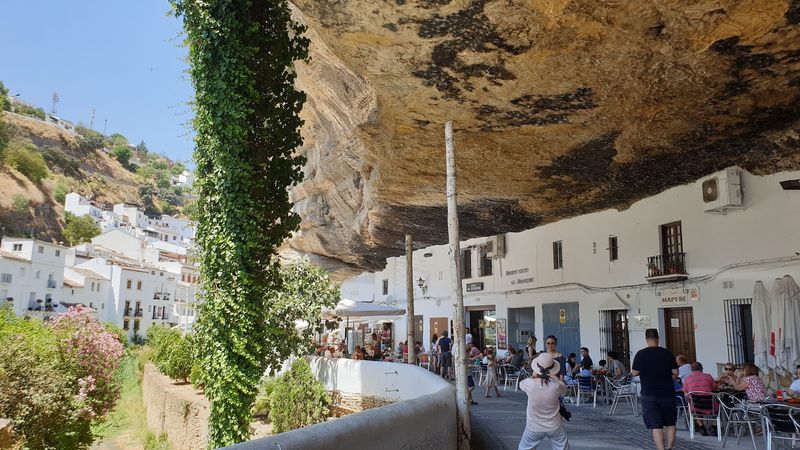
Setenil de las Bodegas might be the only town in Spain where the roof of your restaurant is a solid rock cliff. Built into the walls of a narrow gorge carved by the Trejo River, this extraordinary Andalusian village has houses, shops, and bars tucked directly beneath enormous overhanging rock formations.
The effect is surreal, like a town that grew up inside a cave without quite committing to the idea.
People have actually been living in these rock shelters since prehistoric times, which makes Setenil one of Spain’s most continuously inhabited spots. The overhanging rocks naturally regulate temperature, keeping buildings cool in summer and warmer in winter, which is basically ancient air conditioning.
Two main streets, Cuevas del Sol and Cuevas de la Sombra, meaning Caves of the Sun and Caves of the Shade, run through the gorge and are lined with cafes serving local specialties.
The village sits in the Ronda highlands, making it easy to combine with a visit to nearby Ronda or the white villages of Andalusia. Try the local pork products, especially the cured meats, which are considered among the best in the region.
The best views of the rock formations are from the castle ruins at the top of the village, which are free to visit and completely worth the climb.
Aínsa, Aragon
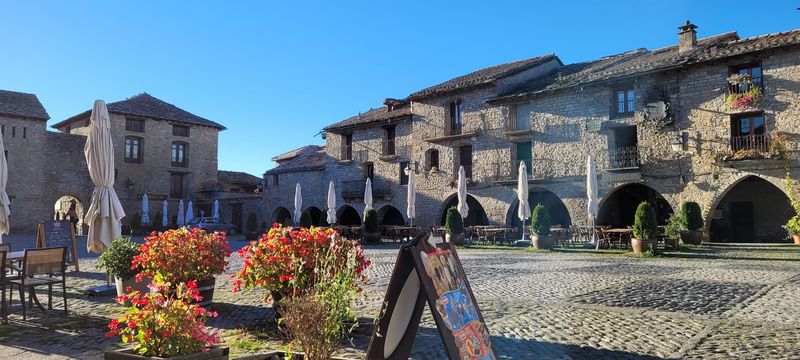
Perched on a rocky promontory where two rivers meet, Aínsa has one of the most dramatic settings of any medieval town in Spain. The upper village is a perfectly preserved ensemble of honey-colored stone buildings, a Romanesque church, and a castle that dates back to the 11th century.
Standing on the main square and looking out toward the snow-capped Pyrenees is the kind of view that makes you feel very small in the best possible way.
The Plaza Mayor is one of Aragon’s finest, framed by stone arcades and old buildings that have been home to artisan shops, wine bars, and small restaurants for generations. Local specialties include lamb from the Pyrenean highlands and wines from the nearby Somontano region, which is one of Spain’s rising wine destinations.
Aínsa hosts several medieval festivals throughout the year, complete with costumes, jousting, and market stalls that fill the square with noise and color.
Adventure lovers are especially well catered for here. The surrounding Pyrenean foothills offer world-class whitewater rafting on the Ara River, canyoning, hiking, and mountain biking.
The Ordesa and Monte Perdido National Park is just a short drive away and is one of Spain’s most spectacular natural areas. Aínsa works as both a cultural stop and a base for outdoor exploration in equal measure.
Frigiliana, Andalusia
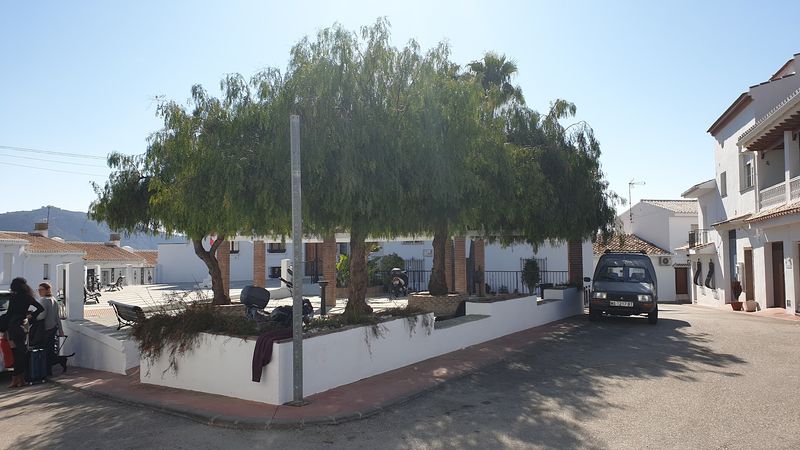
Frigiliana has been voted Spain’s prettiest white village more than once, and one look at its flower-draped streets makes it very easy to see why. Clinging to a hillside above the Costa del Sol near Nerja, this Moorish-influenced village is a maze of whitewashed walls, terracotta pots overflowing with geraniums, and hand-painted ceramic tiles that tell the story of local history on nearly every corner.
It is as photogenic as places get.
The upper barrio, or neighborhood, is the oldest part and retains the most authentic Moorish street layout, with paths so narrow that two people with backpacks would have to negotiate passage. Despite its beauty, Frigiliana sees far fewer visitors than the coastal resorts below, which means you can genuinely enjoy a coffee in the main square without fighting for a seat.
The views down toward the Mediterranean coast from the upper village are absolutely stunning on a clear day.
Local food is a highlight here. Look for honey from the surrounding countryside, locally produced sweet wine called vino de naranja, and fresh produce from the weekly market.
The village also has a small sugar cane factory, one of the last in mainland Europe, that still operates using traditional methods. Frigiliana is just a short drive or a steep but rewarding walk up from Nerja, making it an easy and excellent half-day addition to any Costa del Sol trip.
Ribeira Sacra, Galicia
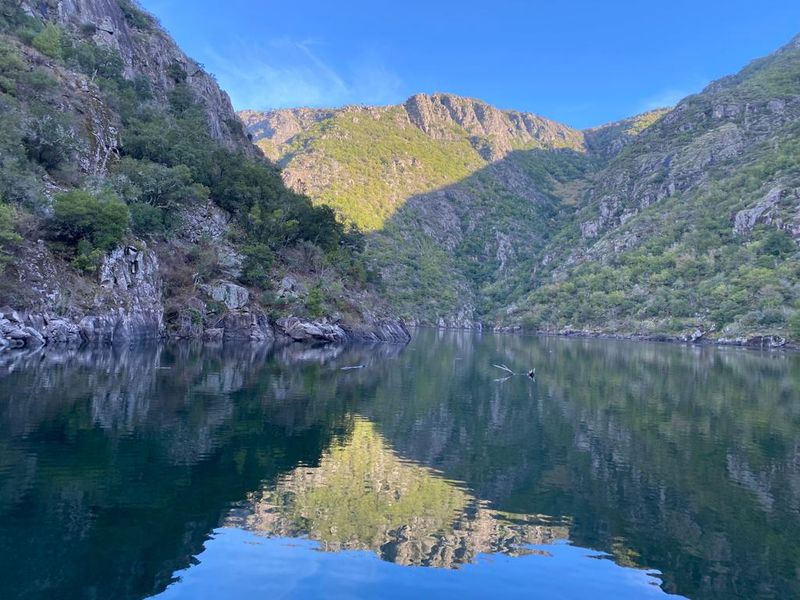
Ribeira Sacra translates roughly as Sacred Shore, and once you see the Sil River canyon carved through layers of ancient rock with vineyards clinging vertically to its walls, the name starts to make complete sense. This region in inland Galicia is one of Spain’s most dramatic and least visited wine regions, where grapes are grown on terraces so steep that harvesting them is still done almost entirely by hand.
The result is wine with a story built right into every bottle.
River cruises along the Sil and Minho canyons are the best way to experience the full drama of the landscape. Boats glide silently past sheer canyon walls, ancient Romanesque monasteries perched on clifftops, and tiny villages that look unchanged for centuries.
Several monasteries in the region are open to visitors and offer a fascinating glimpse into medieval monastic life in Galicia.
The dominant grape variety here is Mencia, which produces red wines that are earthy, aromatic, and increasingly popular with wine enthusiasts worldwide. Many local wineries offer tastings and tours, often in settings so beautiful it barely matters what is in the glass.
Hiking trails follow the canyon rims with views that stop you mid-stride. Autumn is the best time to visit, when the vineyards turn gold and the harvest is in full swing across the entire region.
Cíes Islands, Galicia
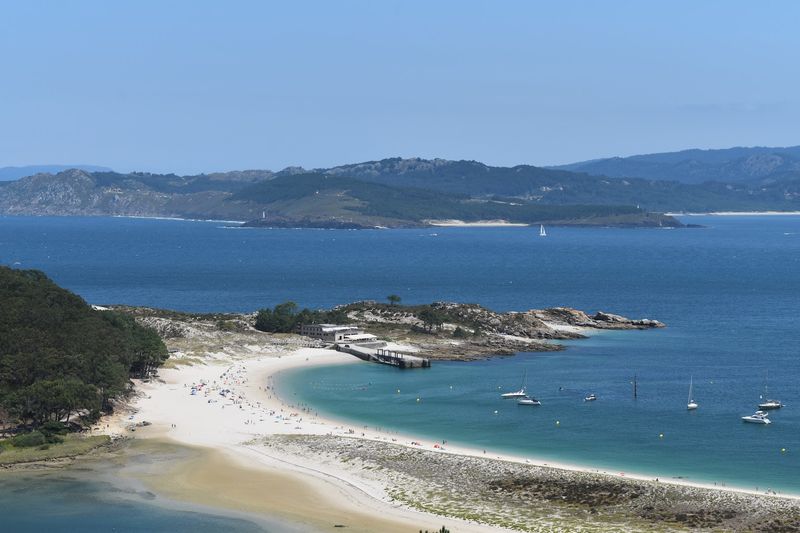
Voted one of the best beaches in the world by The Guardian newspaper back in 2007, the Cíes Islands sit at the mouth of the Vigo estuary in Galicia and look more like the Caribbean than northern Spain. The water is a startling shade of turquoise, the sand is white and powder-fine, and the pine-covered hills rising behind the beaches give the whole place an almost cinematic quality.
The catch? Only 2,200 visitors are allowed per day, so booking in advance is essential.
The strict visitor limits are actually what make the Cíes Islands so special. There are no cars, no resorts, and no neon signs.
The islands are part of the Atlantic Islands of Galicia National Park, and conservation is taken seriously. Wildlife thrives here, including one of Europe’s largest seagull colonies, as well as cormorants, seals, and dolphins spotted regularly in the surrounding waters.
Getting there requires a ferry from Vigo, Baiona, or Cangas, and the journey itself is part of the experience. Camping is the only overnight option on the islands, and permits are limited and in high demand, so plan well ahead if you want to stay.
Day-trippers have access to hiking trails, snorkeling spots, and a lighthouse walk with panoramic Atlantic views. May and June offer good weather before the summer crowds arrive.
Patones de Arriba, near Madrid
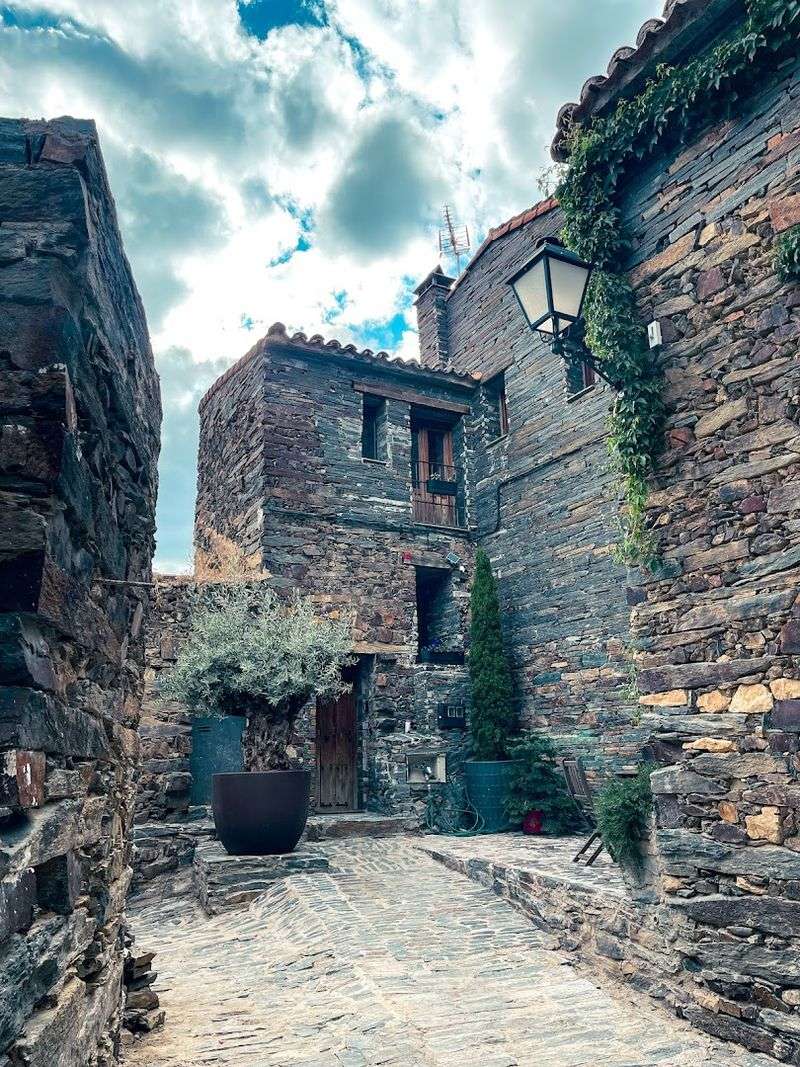
Just 60 kilometers from the center of Madrid, Patones de Arriba feels like it exists in a completely different century. Built entirely from dark slate stone, this tiny village clings to a hillside in the Sierra Norte natural park and has a population that hovers around just 70 people.
The absence of modern architecture, street signs, and tourist infrastructure is not an accident. Locals have worked hard to keep Patones exactly as it has always been.
The village was reportedly never conquered by the Moors or the French during their respective invasions of Spain, which is a claim that locals are understandably proud of. It even had its own independent king for a period during the 18th century, which is the kind of historical footnote that belongs in a quirky travel trivia book.
Today the main square has a couple of excellent restaurants specializing in traditional Madrilian mountain food.
Patones de Arriba is best visited as a day trip from Madrid, ideally during the week when weekend visitors thin out and the village returns to its natural quiet. The surrounding hills have well-marked hiking routes through oak and pine forests, and the nearby Atazar reservoir adds a scenic backdrop to the landscape.
Go in spring when wildflowers cover the hillsides and the air smells genuinely fresh, a welcome change from city life just an hour away.
Las Médulas, Castile and León
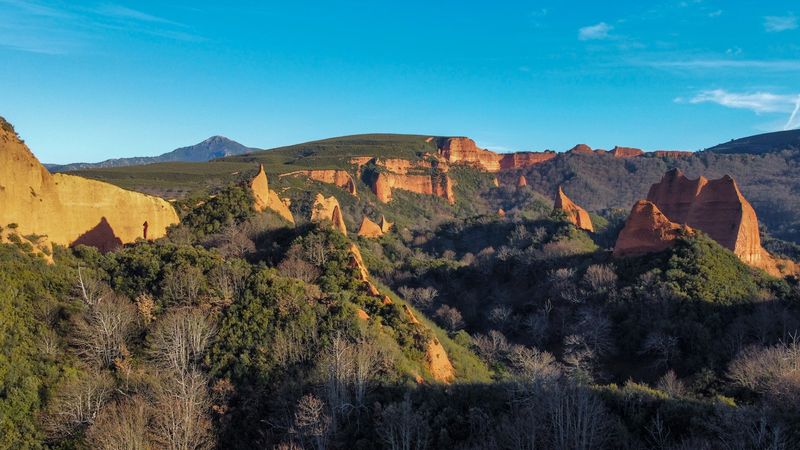
Las Médulas looks like it was lifted straight from another planet and dropped into the Spanish countryside of Castile and León. The landscape is a surreal tangle of rust-red rock towers, gaping caverns, and lush chestnut forests that seem completely at odds with each other until you learn the backstory.
The Romans created this extraordinary scenery by using a hydraulic mining technique called ruina montium, essentially collapsing entire mountains with water to extract the gold hidden inside. They extracted around 1,500 tons of gold over two centuries, which makes Las Médulas one of the largest gold mines in the ancient world.
Today the site is a UNESCO World Heritage Site and one of the most visually striking landscapes in all of Spain. Walking trails wind through the red formations, and several viewpoints offer sweeping panoramas across the fractured terrain.
The most popular viewpoint is at Orellán, reached by a short uphill walk that rewards you with one of the most unusual vistas in the entire country.
The nearby town of Ponferrada makes a good base, and the local wine region of Bierzo produces excellent red wines from the Mencia grape. Autumn is a particularly magical time to visit when the chestnut trees turn golden and the contrast with the red rock formations becomes even more dramatic.
Entrance to the site is free, which makes it one of Spain’s best-value spectacular experiences.
Calella de Palafrugell, Catalonia
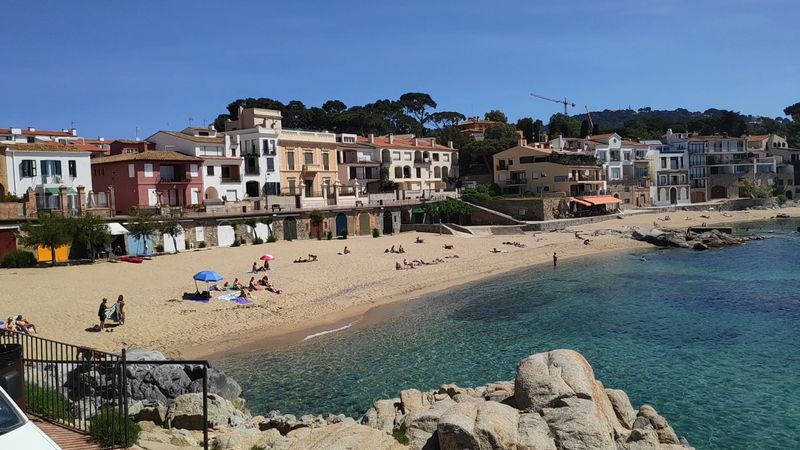
There is something wonderfully unhurried about Calella de Palafrugell that the bigger Costa Brava resorts lost somewhere along the way. This small fishing village on the Costa Brava coast has a collection of whitewashed houses, a handful of sandy coves, and a waterfront promenade that connects several small beaches without ever feeling crowded or commercial.
It is exactly what the Mediterranean used to look like before the hotel towers arrived.
The village has several small beaches separated by rocky headlands, including Platja del Canadell and Platja Port Bo, each with its own character and a different angle on the turquoise water. Kayaking between the coves is a popular activity, and the water clarity makes snorkeling genuinely worthwhile.
The famous Habaneres music festival takes place here every July, celebrating the sea shanty tradition brought back by Catalan sailors from Cuba in the 19th century.
Restaurants in Calella de Palafrugell focus on fresh fish and Catalan coastal cooking, with suquet de peix, a rich fisherman’s stew, being a local staple worth ordering at least once. The surrounding area includes the beautiful Cap de Creus natural park and the charming towns of Palafrugell and Begur, both within easy driving distance.
Visiting in June or September gives you warm water, good weather, and far fewer crowds than the peak July and August season brings.
Ronda, Andalusia
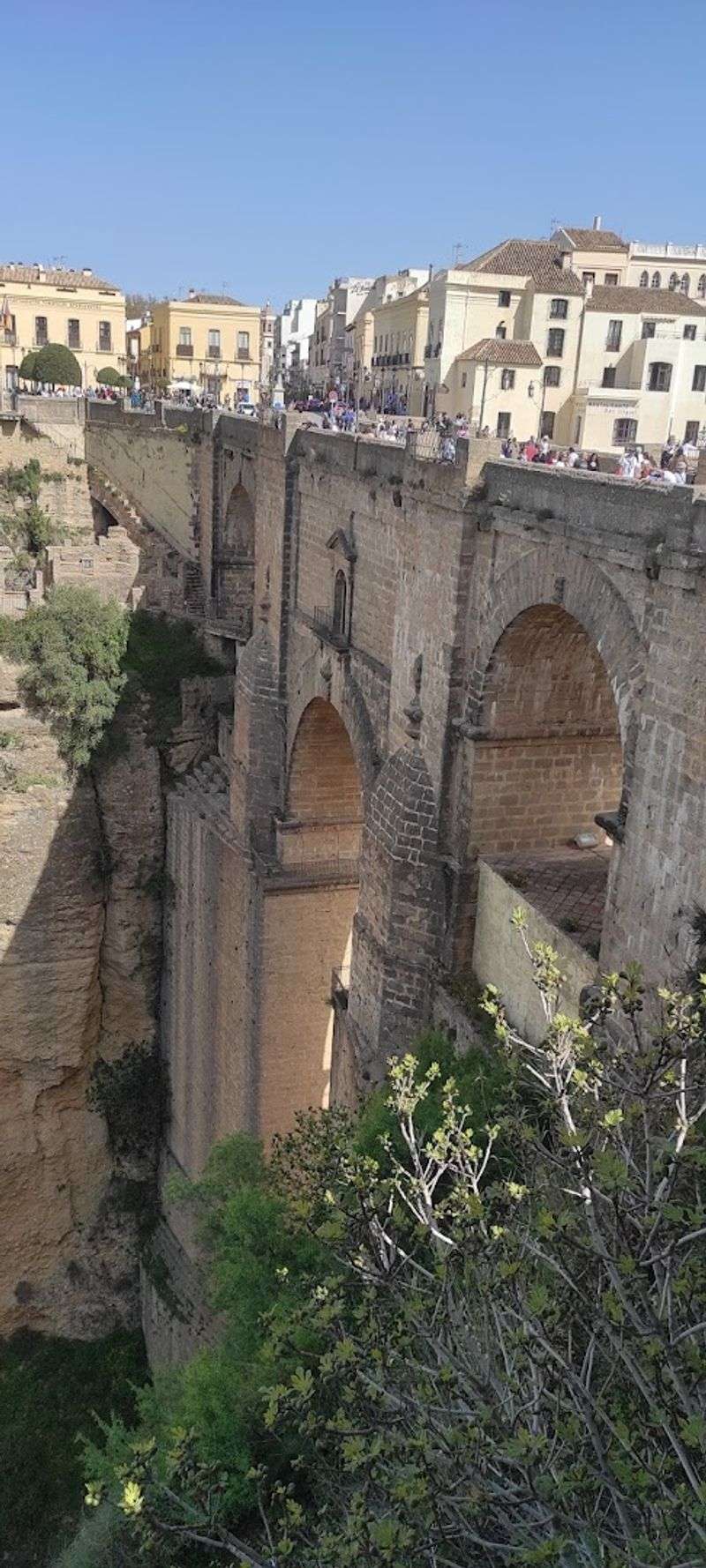
Ronda sits on the edge of a cliff so dramatically that the first-time visitor tends to just stop and stare for a good few minutes before doing anything else. The town is split in two by the El Tajo gorge, a sheer drop of around 120 meters, and connected by the Puente Nuevo, a bridge whose construction took 42 years and claimed the lives of 50 workers.
That backstory adds a certain weight to crossing it.
While Ronda appears on many itineraries, it is still overshadowed by Seville and Granada in terms of visitor numbers, which means you can explore its old town, bullring, and clifftop gardens without feeling like you are navigating a theme park. The Plaza de Toros is one of the oldest and most beautiful bullrings in Spain, and the attached museum covers the history of bullfighting in impressive detail regardless of your feelings on the sport itself.
The surrounding Serrania de Ronda mountains are spectacular for hiking and mountain biking, with routes ranging from gentle valley walks to serious multi-day treks. The town also has a strong food scene anchored in traditional Andalusian cooking, with excellent local cheeses, wild mushrooms, and game dishes on many menus.
Stay at least two nights to properly absorb the atmosphere, especially in the evenings when the day visitors leave and the gorge views turn golden in the fading light.
Acebuchal, Andalusia
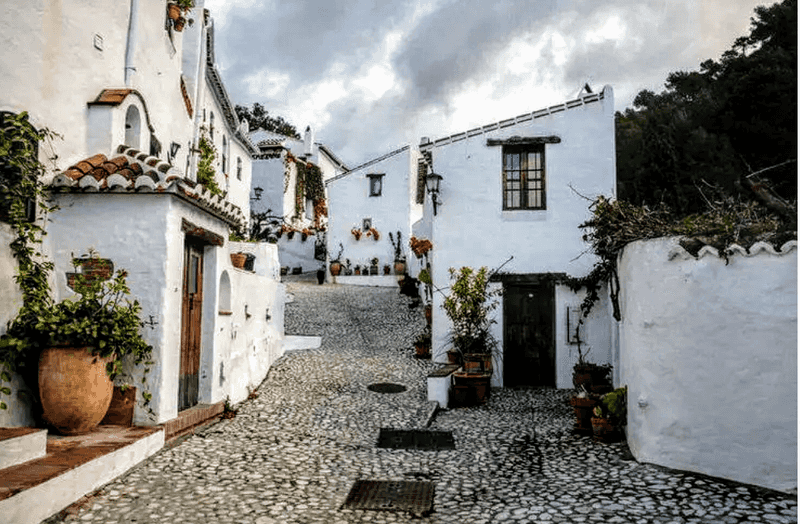
Acebuchal has one of the more remarkable backstories of any village in Spain. During the Spanish Civil War and its aftermath, the entire population was forced to abandon the village, and it sat completely empty and crumbling in the mountains above Frigiliana for decades.
Then, in 2004, one determined family began the slow process of rebuilding it stone by stone, and today Acebuchal has been lovingly restored into one of Andalusia’s most atmospheric hidden corners.
The village now has around a dozen restored houses, a small restaurant that has developed a serious reputation for its traditional Andalusian cooking, and a peaceful mountain setting that feels genuinely remote despite being only about 12 kilometers from the coast. Walking the dirt track up from Frigiliana takes roughly two hours and passes through beautiful mountain scenery, though most visitors arrive by car along a narrow mountain road.
The restaurant, El Acebuchal, serves dishes made largely from local and seasonal ingredients, including goat stew, wild herbs, and homemade bread baked in a traditional oven. Tables outside overlook the surrounding hills, and the silence is the kind you can actually hear.
The whole village can be explored in an hour, but most people end up staying much longer than planned simply because leaving feels unnecessary. It is one of those rare places where time genuinely seems to slow down.
Zaragoza, Aragon
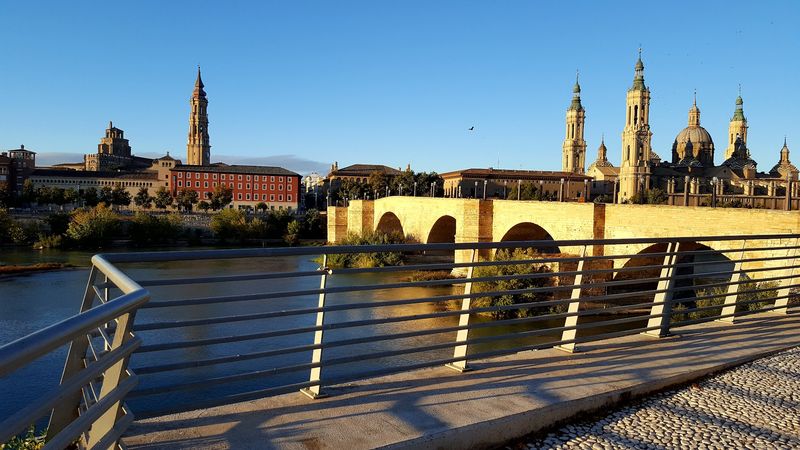
Spain’s fifth-largest city punches well above its weight in terms of history, architecture, and food, yet it rarely makes the top of anyone’s travel list. Zaragoza has been occupied by Romans, Moors, and Christians, and each left their mark so visibly that the city reads like a layered timeline of Spanish civilization.
The Roman ruins, the Moorish palace, and the baroque basilica all sit within comfortable walking distance of each other in the old city center.
The Basilica de Nuestra Señora del Pilar is the undisputed centerpiece of the city, a massive baroque church with 11 tiled domes that sits directly on the bank of the Ebro River and looks extraordinary at any time of day. The Aljaferia Palace, a fortified Islamic palace from the 11th century, is one of the finest examples of Moorish architecture outside of Andalusia and is genuinely underappreciated by visitors who flock further south.
Both are free or very affordable to enter.
Zaragoza’s food scene is anchored in the tapas culture of Aragon, and the El Tubo neighborhood, a tight grid of streets in the old town, is packed with bars serving pintxos and local wine at prices that feel almost too reasonable. The city hosts the massive Fiestas del Pilar every October, a week-long celebration with concerts, fireworks, and parades that draws visitors from across Spain.
Outside festival time, the city is refreshingly calm and very easy to navigate on foot.
Costa de la Luz, Andalusia
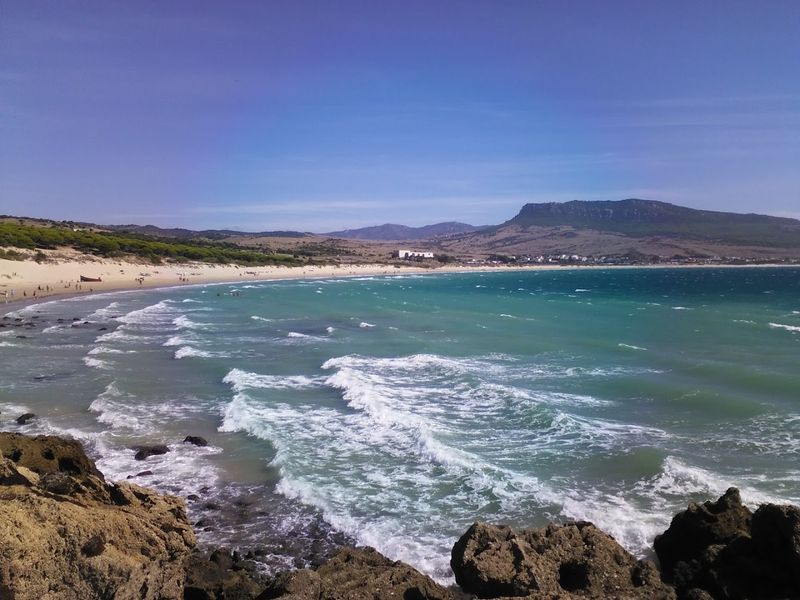
The Costa de la Luz, or Coast of Light, gets its name from the particular quality of the Atlantic sunlight that bounces off its wide, pale beaches in a way that is genuinely different from anywhere else in Spain. Stretching from the Portuguese border down to Tarifa at the southern tip of Europe, this coastline has largely resisted the mass tourism development that transformed the Costa del Sol, and the result is long stretches of undeveloped beach backed by pine forests and sand dunes.
Tarifa is the windsurfing and kite-surfing capital of Europe, and the beaches around it are famous for the Levante wind that sweeps across the Strait of Gibraltar with impressive consistency. Zahara de los Atunes, Bolonia, and Los Caños de Meca are among the most beautiful and uncrowded beaches on the entire coast, each with a different character and a shared commitment to staying low-key.
The ruins of the ancient Roman city of Baelo Claudia sit right behind Bolonia beach, which is a combination you will not find many other places.
Accommodation ranges from simple beach hostels to boutique rural hotels in the whitewashed towns of the interior. The local food speciality is atun rojo, or bluefin tuna, caught during the annual almadraba trap fishing season in late spring, and it is served in restaurants throughout the region in ways that will permanently change your opinion of tuna.
May, June, and September are the sweet spots for visiting before the summer wind kicks into full gear.
Share this story