 Unearth The Voyage
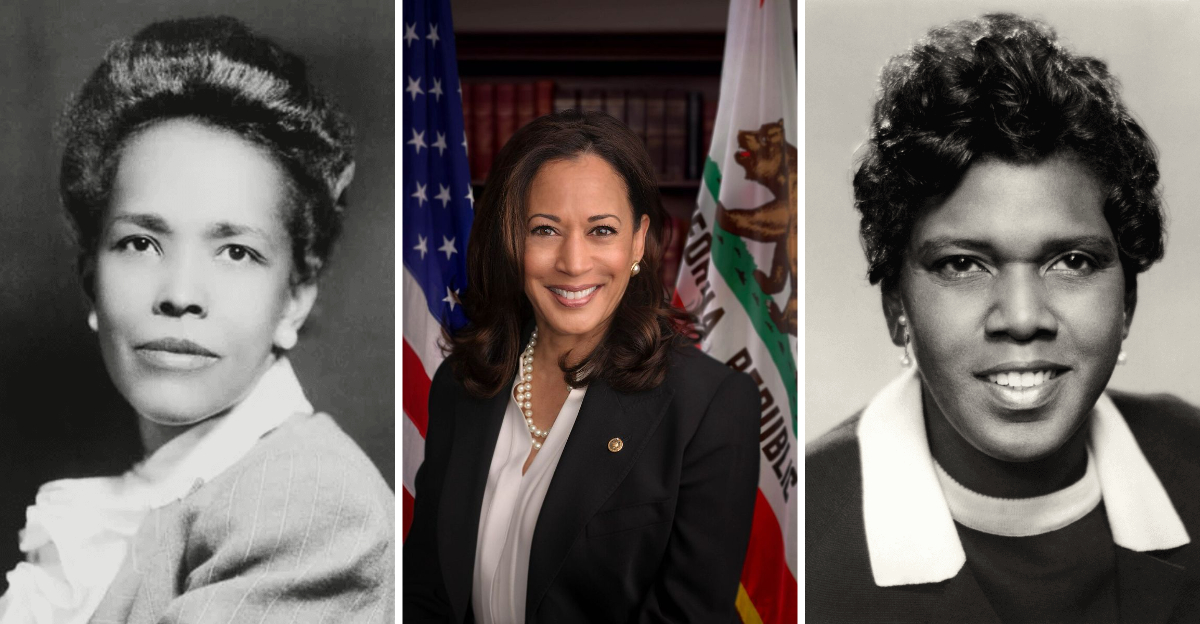
Across two centuries, Black women have moved American politics forward with courage, strategy, and staying power. Their work spans abolition, voting rights, civil rights, and today’s fights over democracy and representation.
You will see how organizers, lawmakers, and movement builders reshaped the rules and opened doors that once seemed sealed. This clear, factual guide spotlights 15 leaders whose impact still guides the nation’s political life.
1. Sojourner Truth
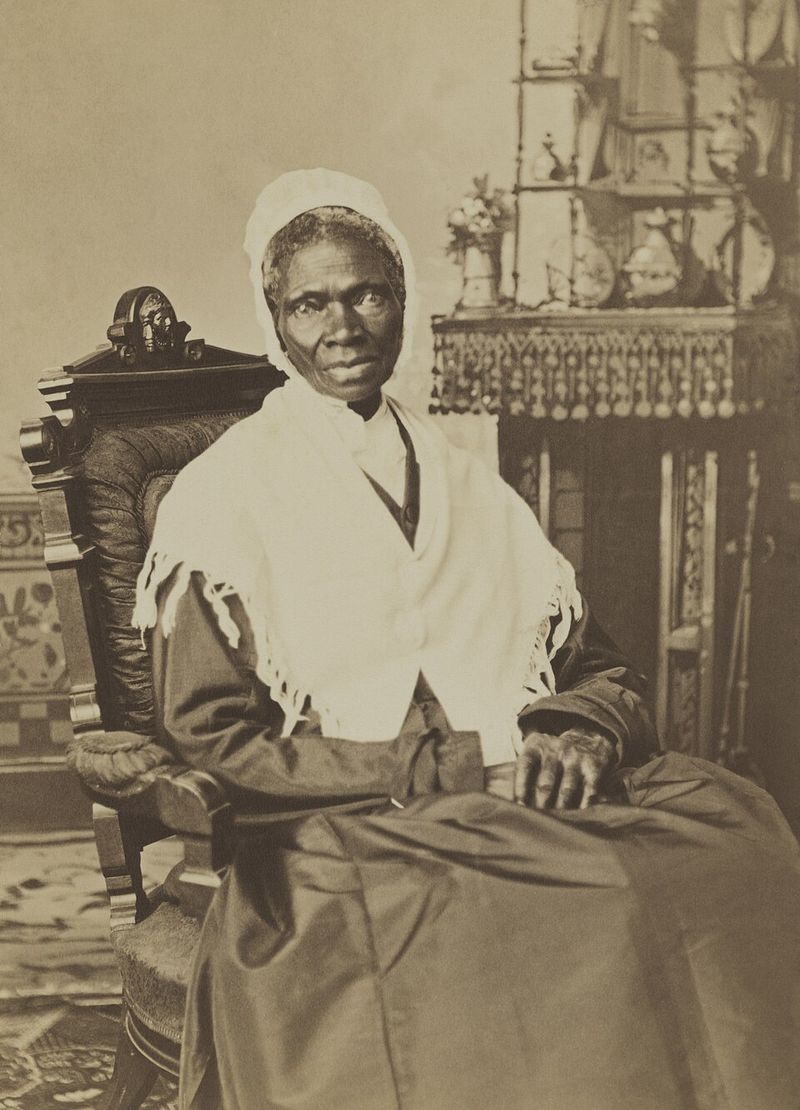
Sojourner Truth helped set the political terms of equality long before the modern civil rights era. Born into slavery and later emancipated, she traveled the country speaking forcefully about abolition and women’s rights, linking freedom to dignity and law.
Her famed Ain’t I a Woman speech challenged policy makers and citizens to confront contradictions in American democracy.
Truth organized through churches, reform societies, and public lectures, persuading audiences that emancipation and suffrage were moral and political imperatives. She met presidents, petitioned for land grants for formerly enslaved people, and advocated prison reform.
Her activism pushed beyond rhetoric toward measures that would reshape citizenship and labor.
By blending faith, personal testimony, and strategic advocacy, Truth helped move abolition from conscience to policy. She influenced early suffrage networks, proving that political voice begins in public assembly and ends in legislative change.
Her legacy lives in the insistence that rights must be universal, measurable, and protected by law.
2. Ida B. Wells
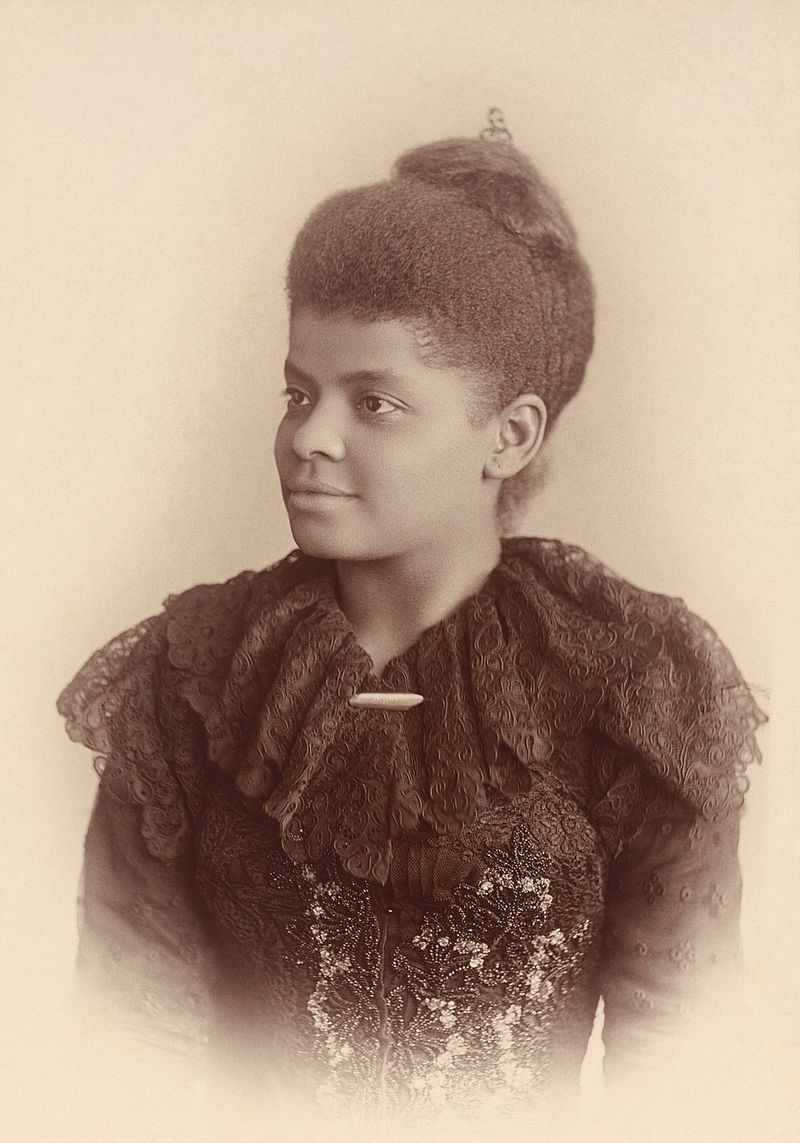
Ida B. Wells transformed journalism into a political instrument against racial terror.
As an editor and investigator, she documented lynching with names, dates, and motives, exposing false narratives and demanding federal action. Her pamphlets and speaking tours built pressure for anti lynching legislation and shifted national opinion.
Wells co founded organizations that fused reporting with organizing, including the NAACP’s early circles, while also clashing when principles required independence. She registered voters, ran civics trainings, and challenged segregation in the courts decades before broader reforms.
Her stance was both investigative and legislative, tying evidence to policy proposals.
By proving that data and narrative could mobilize lawmakers, Wells set standards for evidence driven advocacy. Her courage under threats made freedom of the press a civil rights frontline.
Today’s accountability reporting and rights campaigns trace methods to her meticulous files, relentless travel, and insistence that law must confront violence.
3. Mary Church Terrell
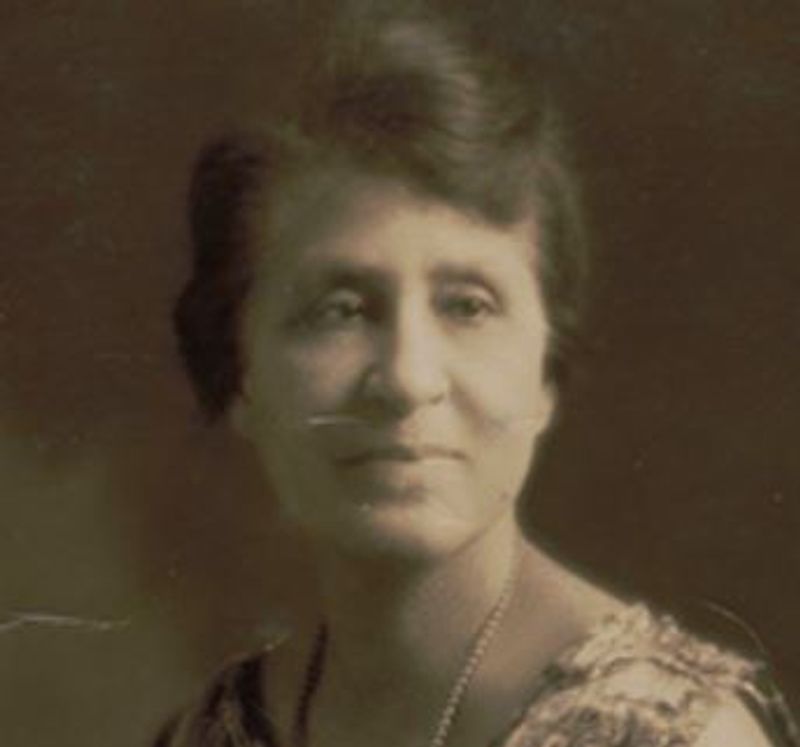
Mary Church Terrell bridged the suffrage and civil rights movements with disciplined advocacy. A founder of the National Association of Colored Women, she argued that political power required both the ballot and equal access to education and employment.
Her speeches and essays pressed for federal action against discrimination.
Terrell campaigned for school desegregation and teacher equity, framing municipal policy as a lever for national change. She later joined legal challenges that culminated in rulings against segregated public spaces in Washington, D.C.
Her method paired respectability politics with courtroom strategy, sharpening public persuasion into enforceable rights.
By mentoring younger activists, Terrell sustained a pipeline of organizers who carried voting and civil rights into mid century battles. Her calm but firm style showed how coalition building, litigation, and local governance could reinforce one another.
Terrell’s legacy is visible in today’s fights for equal access, where civic participation depends on fair schools, fair work, and fair laws.
4. Fannie Lou Hamer
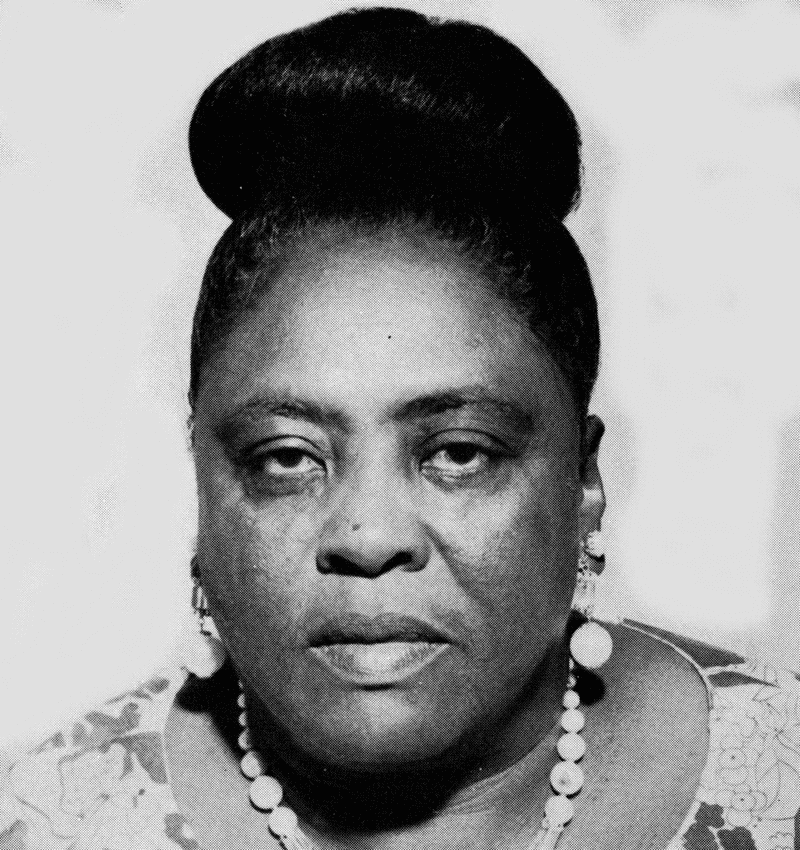
Fannie Lou Hamer’s plain spoken testimony made voting rights a national moral crisis. Beaten and jailed for attempting to register, she co founded the Mississippi Freedom Democratic Party to challenge the state’s segregated delegation at the 1964 convention.
Her televised statement confronted America with the cost of disenfranchisement.
Hamer organized freedom schools, community co ops, and voter registration drives that linked political power to everyday survival. She argued that ballots without economic security left communities vulnerable, and she raised funds to support families facing retaliation.
Her grassroots work broadened the definition of representation.
Congress passed transformative voting legislation as momentum built, and Hamer’s organizing continued to press for enforcement. She modeled how local leadership can change national outcomes through persistence, witness, and coalition pressure.
Her refrain, I am sick and tired of being sick and tired, still captures the urgency behind expanding access to the vote.
5. Ella Baker
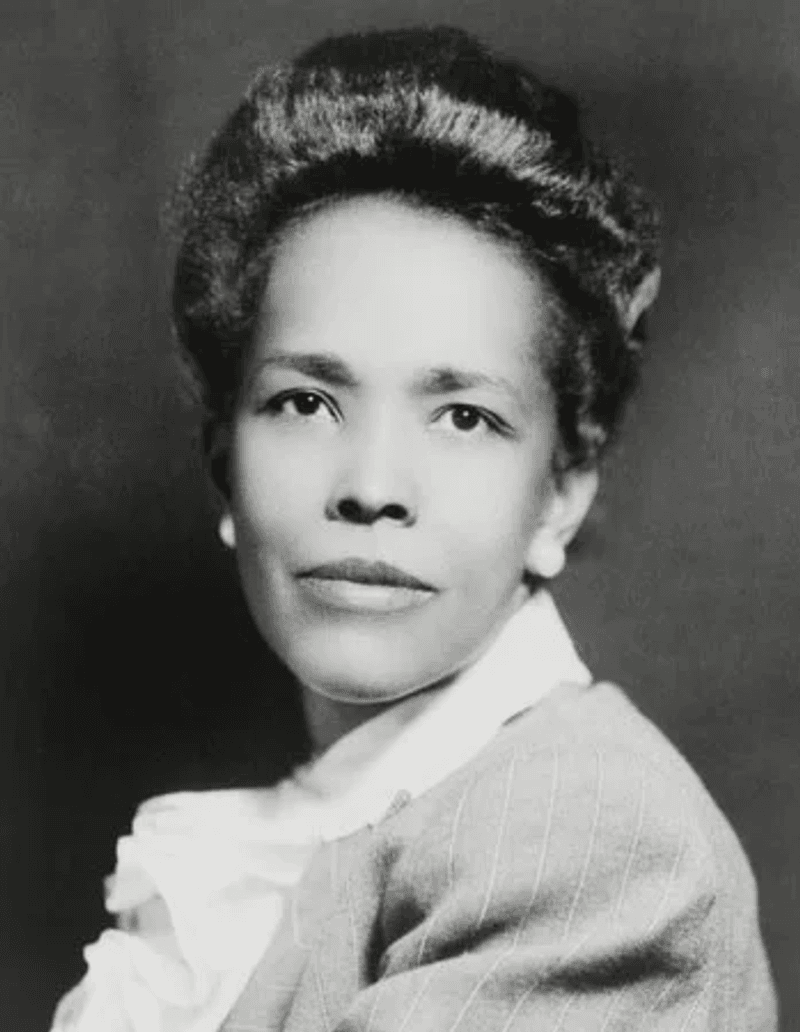
Ella Baker was the strategist behind the scenes who strengthened movements through decentralized leadership. At the NAACP, SCLC, and most famously with SNCC, she trained organizers to build local power rather than chase headlines.
Her philosophy, strong people do not need strong leaders, shaped participatory democracy.
Baker convened the student meeting that launched SNCC after the sit ins, insisting that young activists control their own structure. She emphasized voter registration, community councils, and sustained campaigns over single events.
By prioritizing relationships and training, she made victories more durable.
Her approach influenced later movements that balance national visibility with neighborhood rooted strategy. Baker’s legacy is the infrastructure of organizing, from canvassing to mass meetings to consensus decision making.
When modern campaigns stress listening first and elevating local voices, they echo Baker’s disciplined, inclusive model.
6. Diane Nash
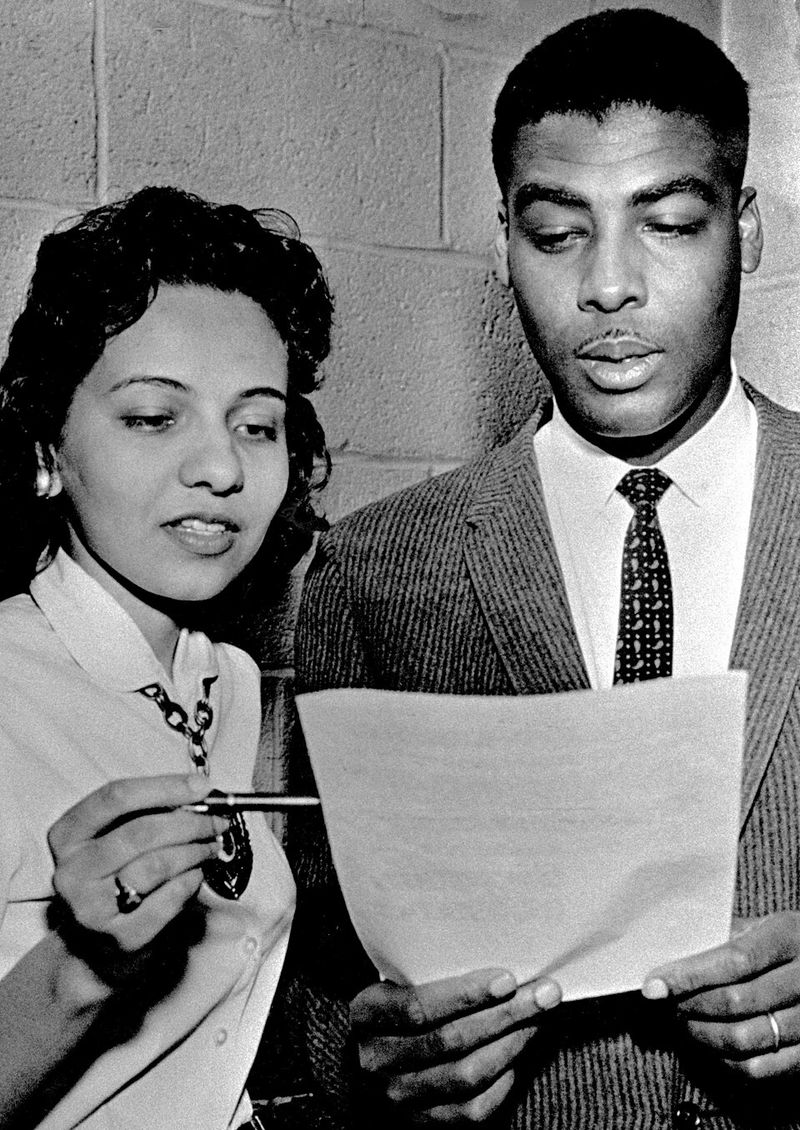
Diane Nash helped turn courageous protest into enforceable policy. A leader of the Nashville Student Movement, she co led sit ins that desegregated lunch counters and then coordinated the continuation of the Freedom Rides after brutal attacks.
Her calm decision making under threat forced federal engagement with interstate travel laws.
Nash worked closely with SNCC and SCLC, bridging tactical differences to keep campaigns disciplined. She advanced voter registration efforts that later supported the Selma campaigns and the Voting Rights Act.
Her talent was strategic sequencing, moving from direct action to negotiations and legal change.
By centering nonviolence as both ethic and tactic, Nash trained volunteers to withstand intimidation while staying focused on objectives. She showed that logistics, communications, and timing are as vital as courage.
Many modern voter protection and protest strategies trace their backbone to her planning.
7. Septima Poinsette Clark
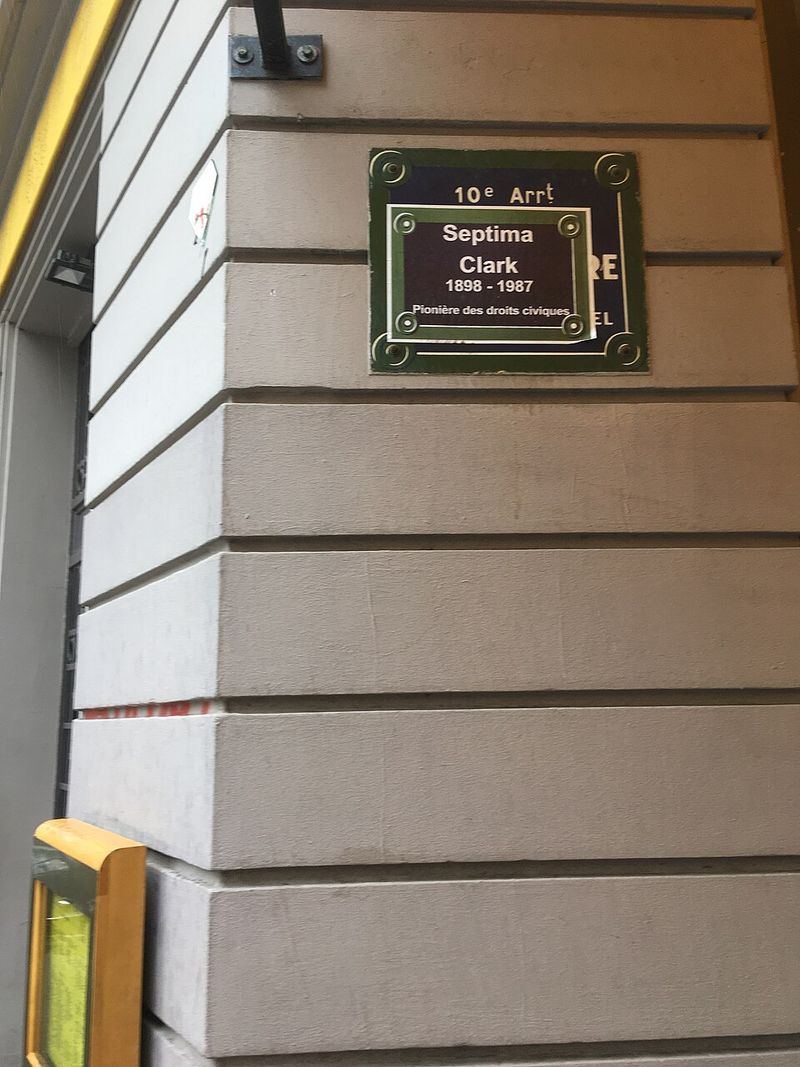
Septima Poinsette Clark built the citizenship school model that connected literacy to the ballot. Working with the Highlander Folk School and later SCLC, she trained teachers to help adults pass discriminatory literacy tests and understand civic procedures.
Her program quietly expanded Black voter participation across the South.
Clark believed that political empowerment begins with knowledge and confidence. She developed curricula on reading, budgeting, and rights so students could navigate registration offices and protect themselves legally.
Her graduates became organizers, multiplying impact through peer instruction.
Though often overlooked, Clark’s method supplied the human infrastructure behind landmark legislation. She demonstrated that mass registration requires classrooms, materials, and trust built over time.
Today’s civic education programs and rights clinics mirror her insight that democracy strengthens when citizens can read the rules and use them.
8. Shirley Chisholm
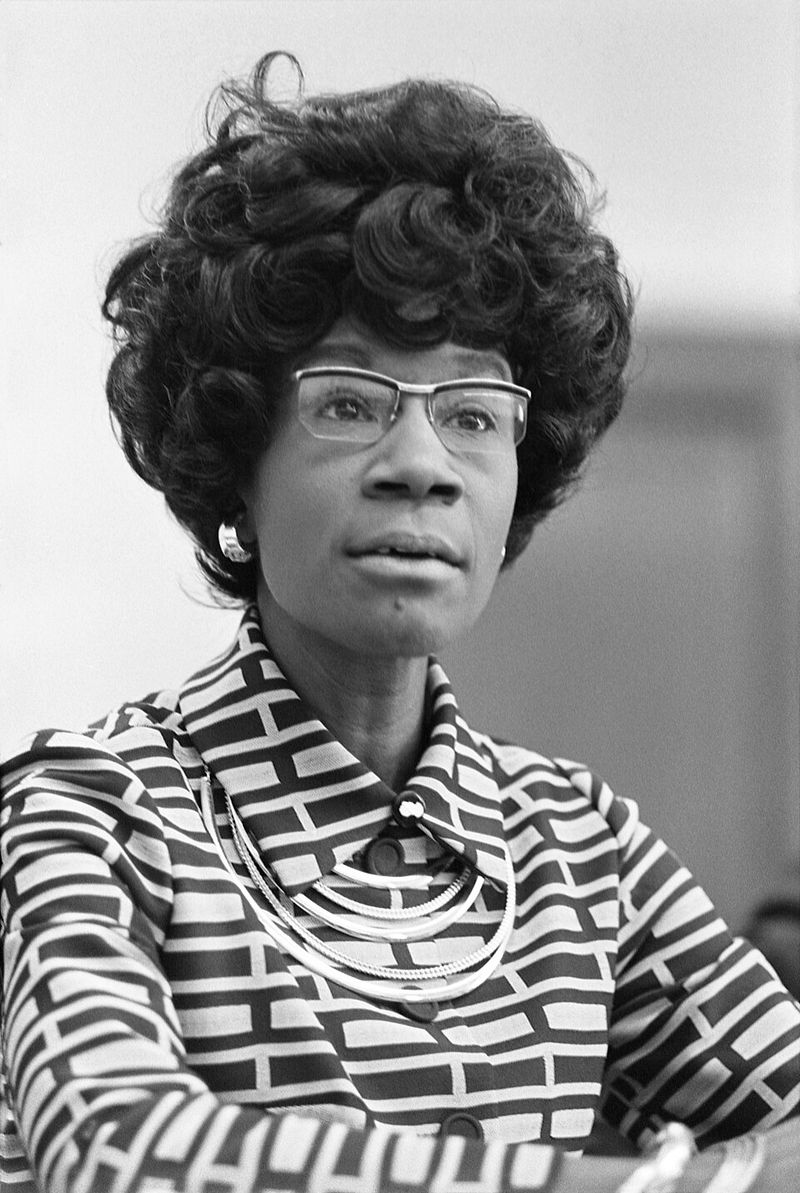
Shirley Chisholm rewrote expectations for representation and executive ambition. As the first Black woman elected to Congress, she built a legislative record on education, nutrition, and workers’ rights.
In 1972 she ran for president in a major party, demanding debates on equity, childcare, and political reform.
Chisholm’s motto, Unbought and Unbossed, signaled independence from party machines and special interests. She hired diverse staff, opened district offices accessible to constituents, and crafted pragmatic bills that could pass.
Her campaigns made coalitions among women, youth, and multiracial urban voters.
By entering the presidential field, she forced rules changes on delegate selection and media access. Her example encouraged future bids that test barriers while pushing policy into the mainstream.
Many current conversations about inclusive leadership stand on Chisholm’s clear promise that government should mirror the people it serves.
9. Barbara Jordan
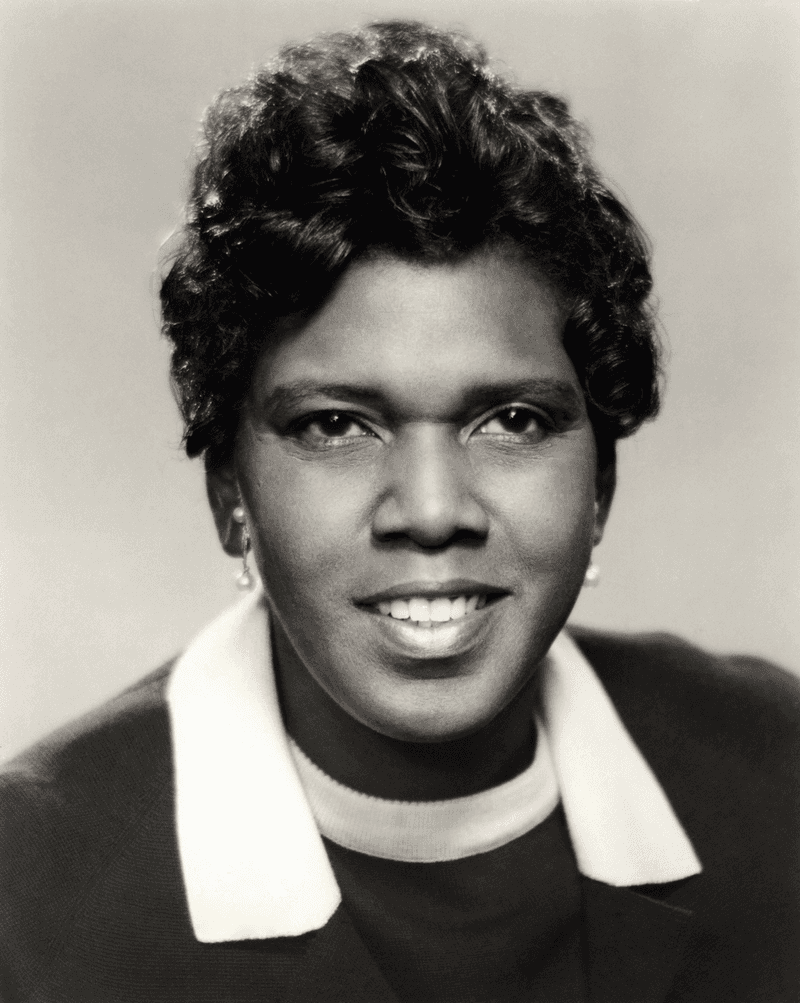
Barbara Jordan brought constitutional clarity to a national crisis. As the first Black woman elected to Congress from the South, she rose to prominence during the Watergate era with speeches that framed impeachment as a duty to the Constitution.
Her measured tone and precise arguments built bipartisan respect.
Jordan pursued civil rights enforcement, voting protections, and ethics reforms while serving on key committees. She used hearings to hold agencies accountable and pressed for accessible public services.
Her public addresses modeled civic education, explaining rights and responsibilities without grandstanding.
By pairing legal rigor with moral steadiness, Jordan raised expectations for congressional oversight. She demonstrated how careful language can cool overheated politics and guide fair outcomes.
Her legacy endures in lawmakers who value process, evidence, and the constitutional oath as anchors for political debate.
10. Carol Moseley Braun
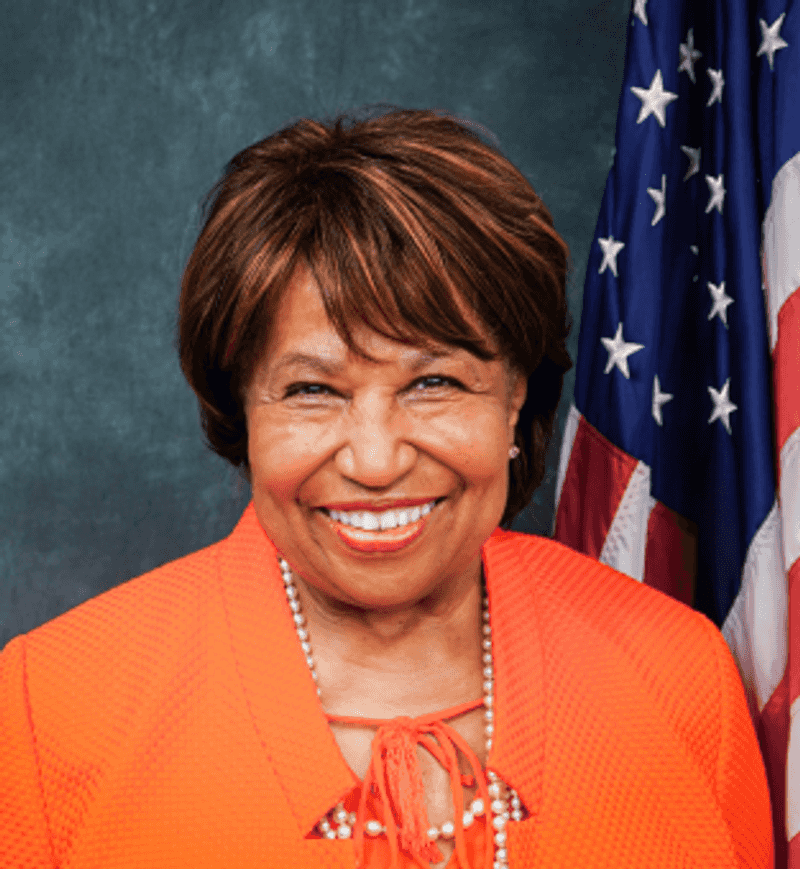
Carol Moseley Braun broke a barrier as the first Black woman elected to the United States Senate. Her 1992 victory expanded the Year of the Woman narrative and changed expectations for statewide viability.
In office, she worked on education, judicial fairness, and civil rights enforcement.
Moseley Braun challenged symbols that normalized exclusion, successfully opposing renewal of a Confederate trademark within the Senate chamber debate. She later served as ambassador and pursued public finance and environmental initiatives at local levels.
Her career showed how national breakthroughs can translate into broader public service.
By winning statewide office, she opened fundraising and recruiting pathways for women of color. Her campaigns demonstrated the importance of field operations, coalition endorsements, and direct constituent engagement.
Many candidates cite her precedent when building multiracial statewide strategies that link policy to everyday life.
11. Maxine Waters
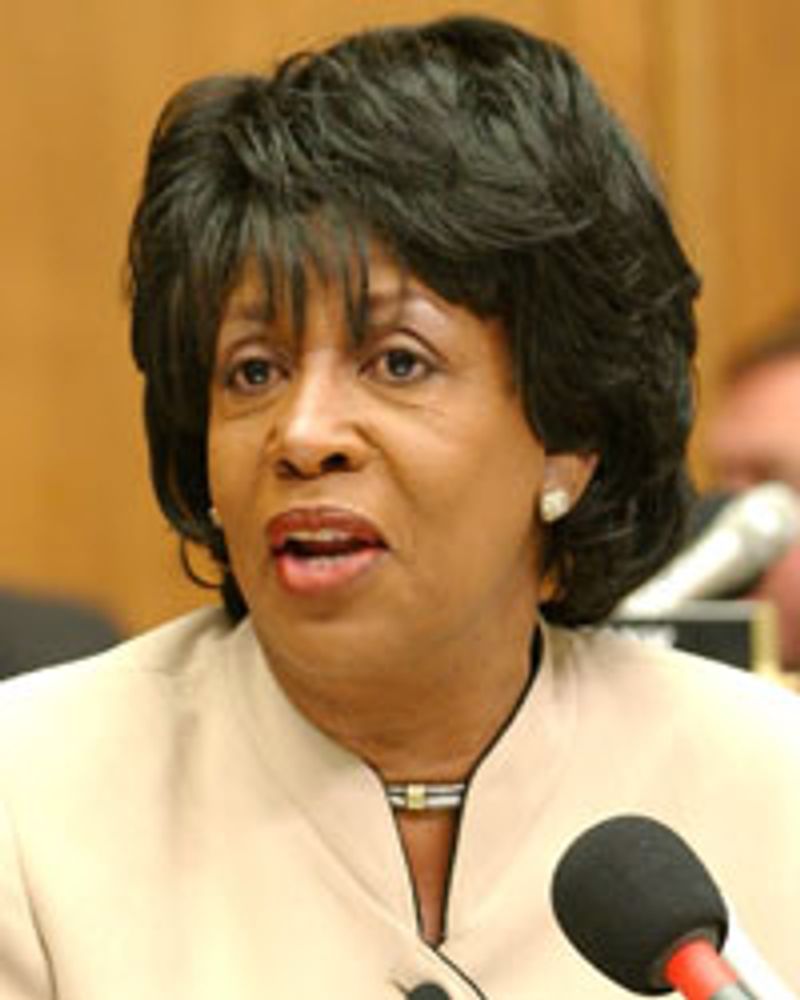
Maxine Waters has shaped national debates through persistent oversight and constituent focused advocacy. Representing Los Angeles since the early 1990s, she built influence on financial services, housing, and disaster recovery.
Her committee leadership pressed for consumer protections and accountability in banking.
Waters is known for direct questioning that demands clear answers from corporate and government officials. She pairs that style with district services, especially on housing stability and small business support.
Her legislative work often elevates community voices into formal policymaking.
By maintaining a visible watchdog role, Waters helped keep financial rules and civil rights enforcement on the agenda. She shows how long term incumbency can deliver both resources and scrutiny.
Her career underlines a key lesson in politics: representation is effective when oversight, appropriations, and local problem solving reinforce each other.
12. Stacey Abrams
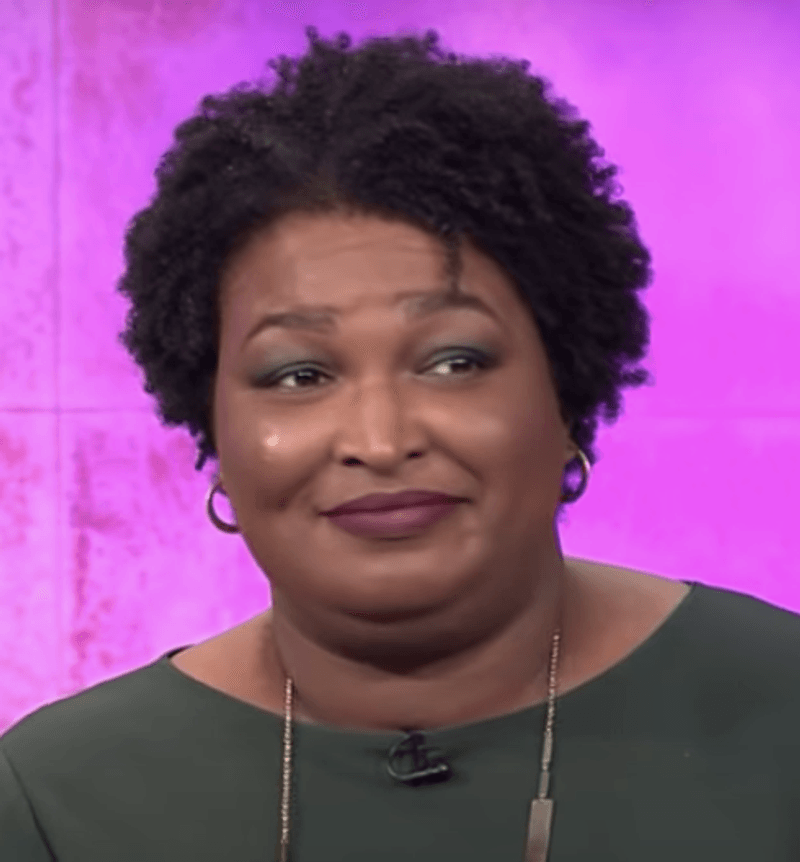
Stacey Abrams modernized turnout politics with data, organizing, and year round outreach. After a close Georgia gubernatorial race, she built infrastructure that registered voters, fought purges, and expanded absentee and early voting participation.
Her organizations trained volunteers and litigated barriers across multiple states.
Abrams emphasized that persuasion and mobilization work best when combined with community partnerships. She invested in multilingual materials, rural canvassing, and digital tools that kept voters engaged between elections.
This approach reframed campaigns as continuous civic engagement rather than seasonal events.
Her efforts contributed to record participation and competitive statewide results, demonstrating that strategy can change the electorate. Abrams also published policy plans on healthcare, education, and economic mobility, linking access to the ballot with outcomes after the vote.
Many campaigns now adopt similar models that treat voter protection as core field work.
13. Kamala Harris
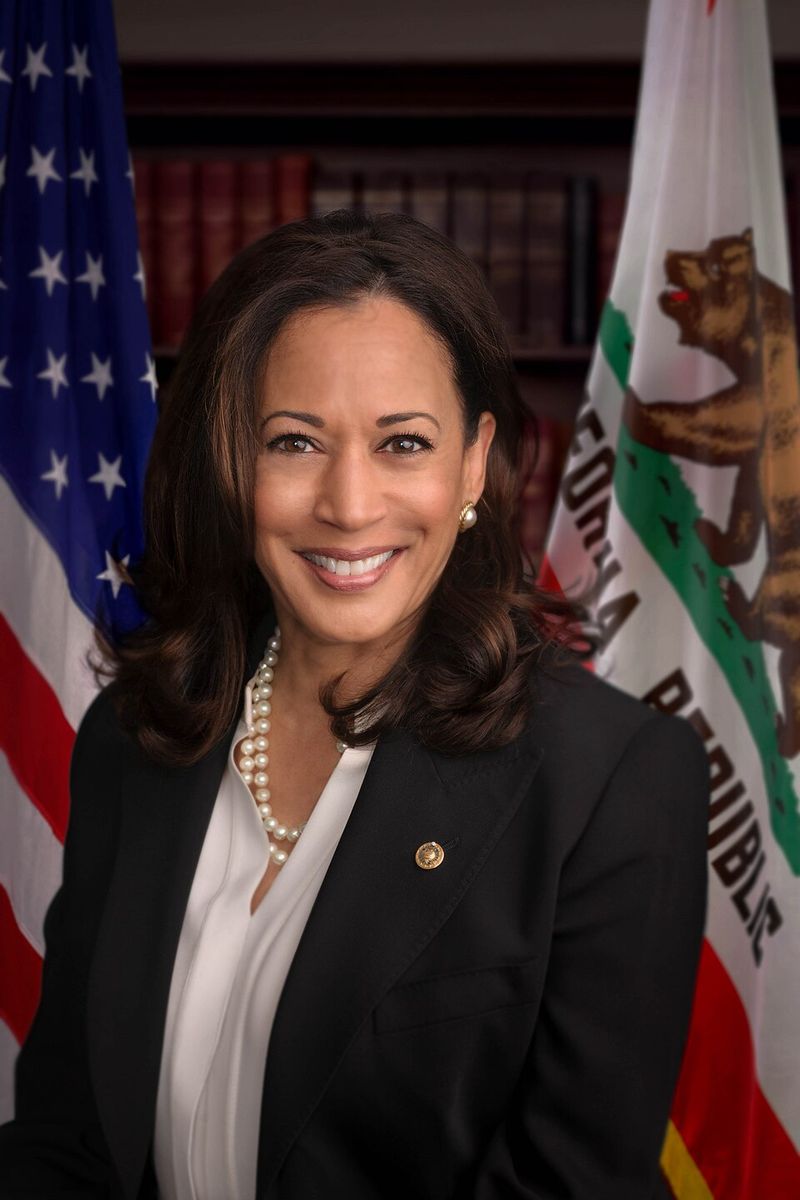
Kamala Harris became the first Black woman Vice President of the United States, also the first woman and first South Asian American to hold the office. Her election marked a milestone in representation at the highest executive level.
Previously, she served as U.S. senator and California attorney general, focusing on consumer protection and criminal justice issues.
As vice president, Harris has led efforts on voting rights advocacy, judicial confirmations, and international engagement. She has traveled to highlight infrastructure, small business support, and reproductive healthcare access.
Her role includes tie breaking votes in the Senate, shaping legislative outcomes.
Harris’s career demonstrates how prosecutorial, legislative, and executive experiences can combine in national leadership. Her presence in the White House signals to future candidates that the path is open, though demanding.
The office’s visibility also influences policy conversations, public appointments, and diplomatic priorities.
14. Mia Love
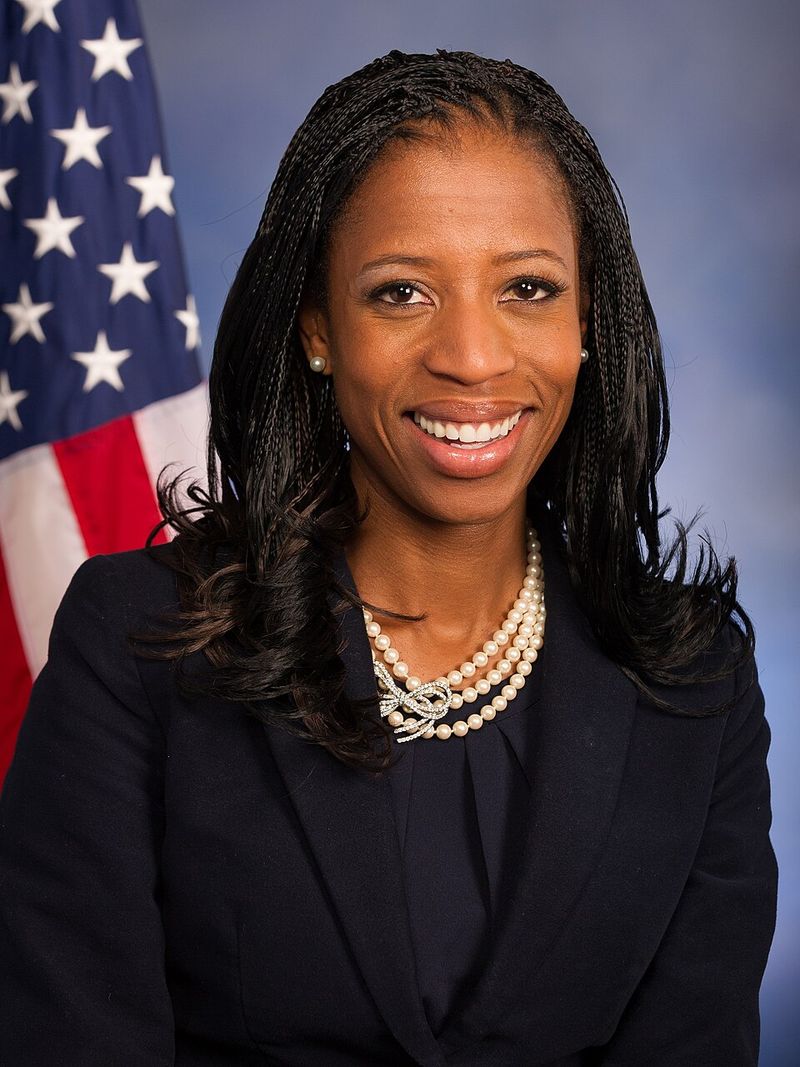
Mia Love became the first Black Republican woman elected to the U.S. House, representing Utah.
Her win broadened discussions about ideology, identity, and regional representation. In Congress, she focused on fiscal policy, economic opportunity, and federal efficiency while maintaining a constituent service profile.
Love’s campaigns highlighted immigration reform perspectives shaped by her Haitian American background and emphasized local problem solving. She worked on committees overseeing financial issues and pushed for deregulation measures she argued would help small businesses.
Her tenure signaled that electoral breakthroughs cross party lines.
By breaking a partisan barrier, Love expanded recruitment horizons for candidates of color within conservative spaces. She illustrated that community engagement, strong fundraising, and message discipline can win in places not seen as diverse.
Her career continues to influence debates over big tent strategies and representation across ideological divides.
15. Alicia Garza
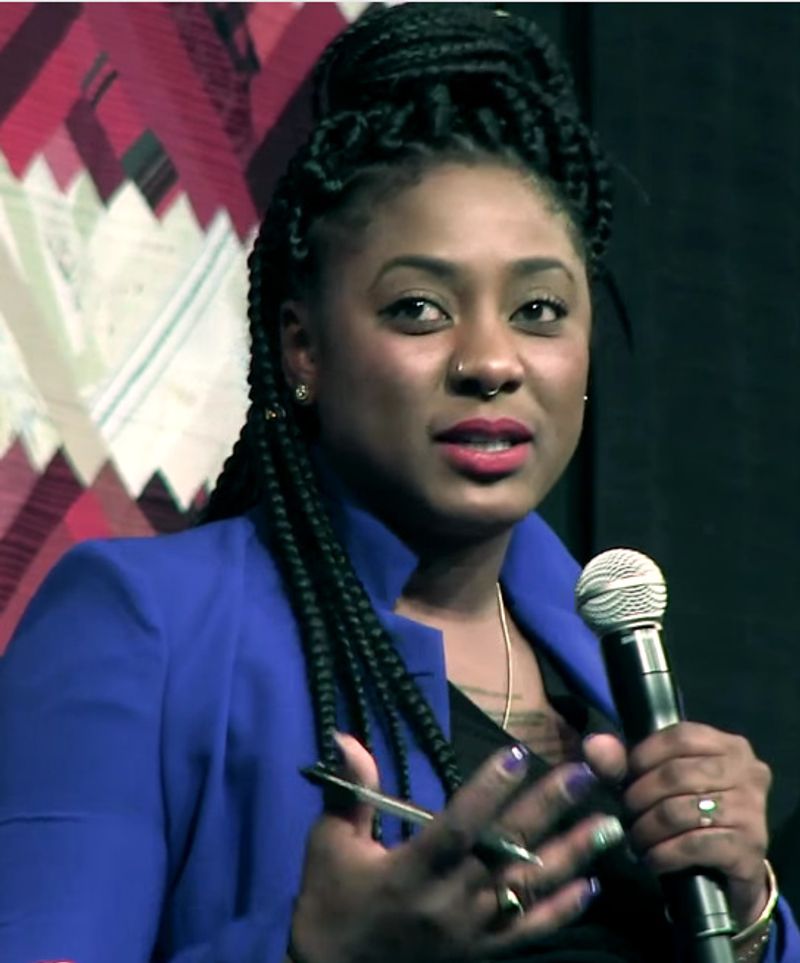
Alicia Garza co founded Black Lives Matter and helped translate mass protest into sustained civic power. Through the Black Futures Lab and allied projects, she developed tools for policy agendas, candidate accountability, and voter engagement.
Her work stresses data, coalition building, and year round organizing.
Garza’s approach links local campaigns to national narratives about safety, equity, and democratic participation. She supports training that prepares volunteers to lobby, testify, and run for office.
By centering community surveys and research, she ensures platforms reflect lived experiences.
The movement’s visibility has influenced policing debates, ballot initiatives, and candidate platforms across cities and states. Garza shows that digital mobilization gains durability when paired with door to door organizing and legislative strategy.
Her role underscores a modern lesson: movements must convert attention into policy, elections, and institutional change.



