Kansas is full of surprises. Beyond its reputation for open roads and farmland, the state offers underground salt mines, towering chalk formations, historic landmarks, and some of the most beautiful prairie landscapes in the country.
Better yet, many of these destinations are easy and affordable to visit in a single day. From quirky small towns to scenic nature preserves, these 15 day trips showcase the variety and charm that make Kansas worth exploring.
Whether you’re interested in history, outdoor adventures, or simply a change of scenery, there’s a destination here that’s well worth the drive.
1. Strataca, Hutchinson, Kansas
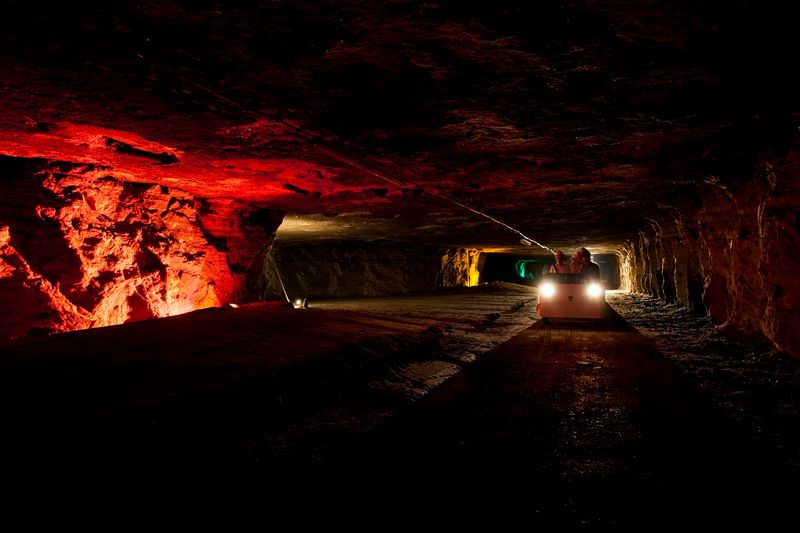
Six hundred and fifty feet below the Kansas prairie, there is an entire world that most people have no idea exists. Strataca, the Kansas Underground Salt Museum in Hutchinson, takes visitors on a guided tram ride through the tunnels of an active salt mine that has been operating since 1923.
The underground temperature stays around 68 degrees year-round, which makes it a welcome break on a hot summer day. The tram tour covers different sections of the mine, showing how salt is extracted and giving a real sense of how vast the operation is below ground.
Admission is reasonable for families, and the experience is genuinely unlike anything else in the state. Kids tend to love the novelty of riding a tram underground, and adults appreciate that this is actual history and science, not just a theme park recreation.
It earns every bit of the drive.
2. Tallgrass Prairie National Preserve, Strong City, Kansas
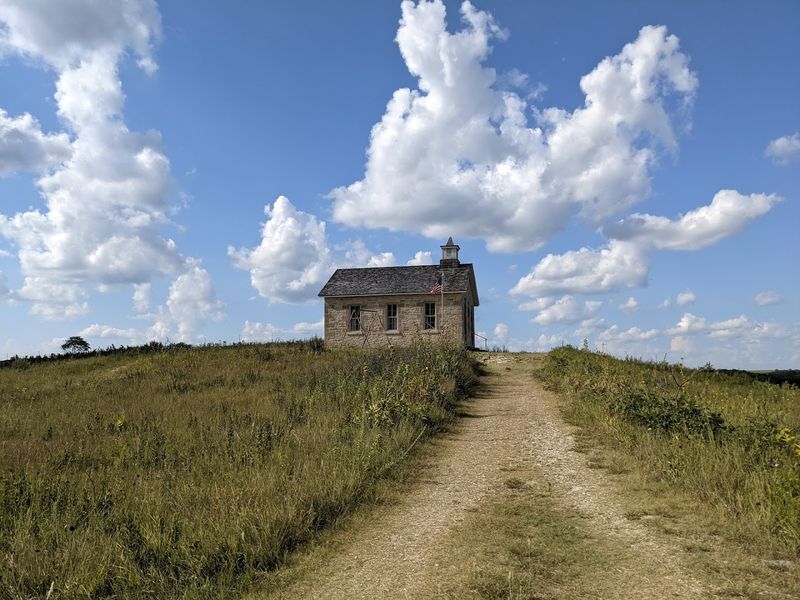
There are very few places in the country where you can stand in the middle of a working tallgrass prairie and feel the full weight of open space around you. The Tallgrass Prairie National Preserve near Strong City protects one of the last remaining tracts of this ecosystem, which once covered 170 million acres across North America.
Entry is free, which immediately makes it one of the best value day trips in the state. Trails range from short walks to longer loops through the rolling Flint Hills, and the historic Spring Hill Ranch buildings give the preserve a layered, lived-in character that goes beyond a typical nature walk.
Bison roam parts of the preserve, and spotting one from the trail is a genuine highlight. The wide skies and unbroken horizon have a way of making everything feel quieter and more spacious than usual.
3. Coronado Heights, Lindsborg, Kansas
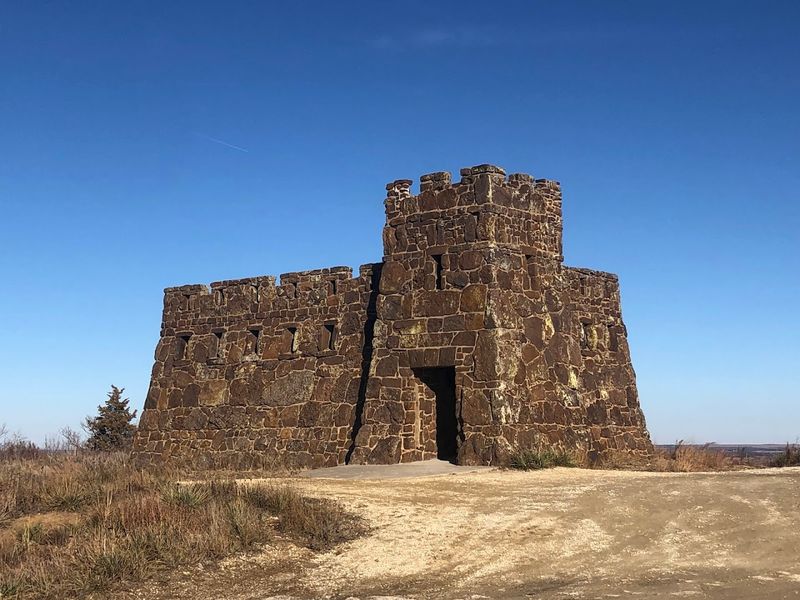
A small hill in central Kansas should not feel this dramatic, but Coronado Heights has a way of making a strong impression. The stone shelter at the top was built by the Civilian Conservation Corps in the 1930s, and it looks like a miniature castle perched above the Smoky Valley.
The view from the top covers miles of farmland and rolling terrain, and it costs nothing to visit. Most people spend about an hour here, walking up the short path, exploring the shelter, and taking in the panorama before heading into nearby Lindsborg for coffee and a look around the Swedish-influenced main street.
4. Monument Rocks Natural Landmark, Oakley, Kansas
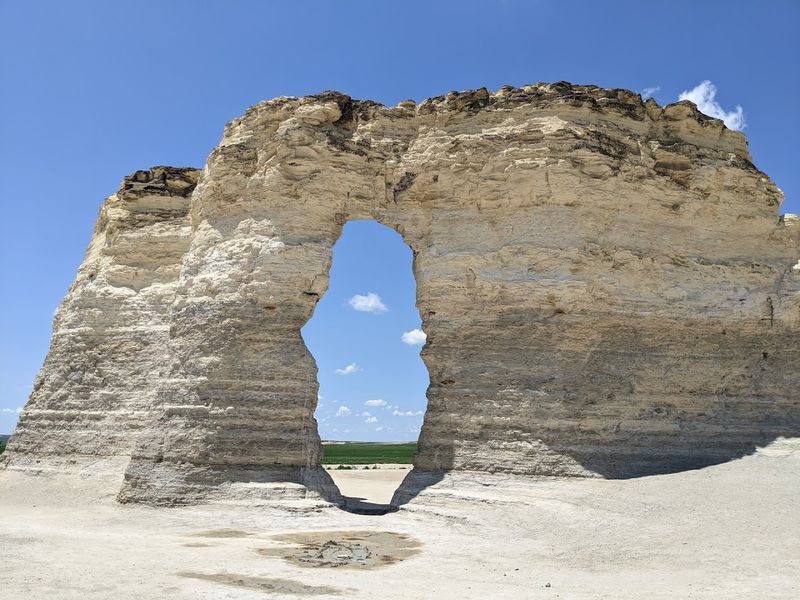
Eighty million years ago, an inland sea covered western Kansas, and Monument Rocks is what it left behind. These chalk formations rise up to 70 feet from the surrounding flatland, and they look genuinely out of place in the best possible way.
The site is completely free to visit and sits on private land with public access, so there are no gates or entry booths. Early morning visits are especially photogenic since the light hits the pale chalk at a low angle, but the formations are worth seeing at any time of day.
5. Little Jerusalem Badlands State Park, Oakley, Kansas
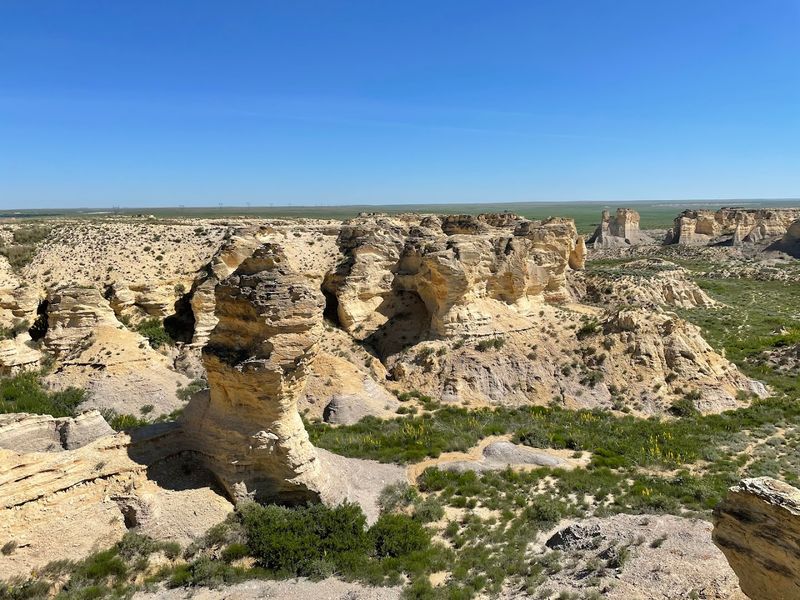
Kansas’s newest state park opened in 2019 and immediately gave the state one of its most visually striking landscapes. Little Jerusalem Badlands sits just a short drive from Monument Rocks, making it easy to combine both stops into a single western Kansas road trip day.
The chalk formations here are dense and layered, creating a ridgeline of pale spires that stretch across the horizon. A short interpretive trail runs along the rim, offering clear views down into the formations without requiring any serious hiking experience or gear.
The park takes its name from the way the jagged chalk peaks resemble the old city skyline of Jerusalem, which is one of those comparisons that sounds exaggerated until you actually see it. Admission is covered by a standard Kansas state park vehicle pass, making it an affordable stop.
6. Mushroom Rock State Park, Marquette, Kansas
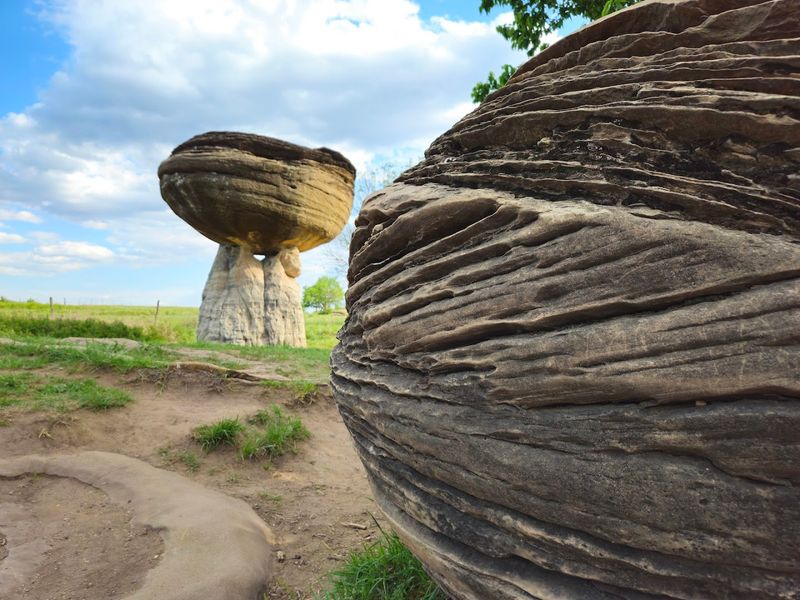
At just five acres, Mushroom Rock State Park holds the title of Kansas’s smallest state park, but its sandstone formations punch well above their weight. The rocks have been shaped by centuries of wind and water erosion into wide, flat-topped boulders balanced on narrower bases, giving them the unmistakable silhouette that inspired the name.
The site was once used as a landmark and meeting point by travelers along the old Coronado Trail, and later by Santa Fe Trail wagon trains. That history adds a layer of context that makes the rocks feel like more than just a geological curiosity.
There is no admission fee, and the park is easy to walk through in under an hour.
7. Botanica, The Wichita Gardens, Wichita, Kansas
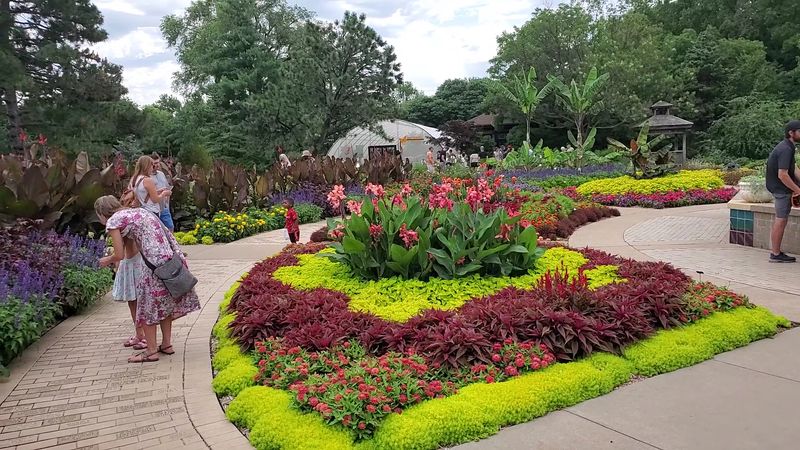
Wichita’s Botanica manages to feel like a resort garden without the resort price tag. The 17.5-acre botanical garden features more than 25 themed areas, ranging from a butterfly garden and a Shakespeare garden to a sensory garden and a children’s garden with interactive features.
Admission is affordable, with discounts available for children, seniors, and military families. The garden is open year-round and changes significantly with the seasons, which means repeat visits always offer something new.
Spring brings tulips and flowering trees, while summer fills the beds with bold color across nearly every section.
Wichita Zoo is nearby for families who want to extend the day, but Botanica alone offers enough variety to fill a comfortable afternoon. The shaded paths make it manageable even on warm days, and the layout is intuitive enough that you can wander without a map and still cover the highlights without getting turned around.
8. Cosmosphere, Hutchinson, Kansas
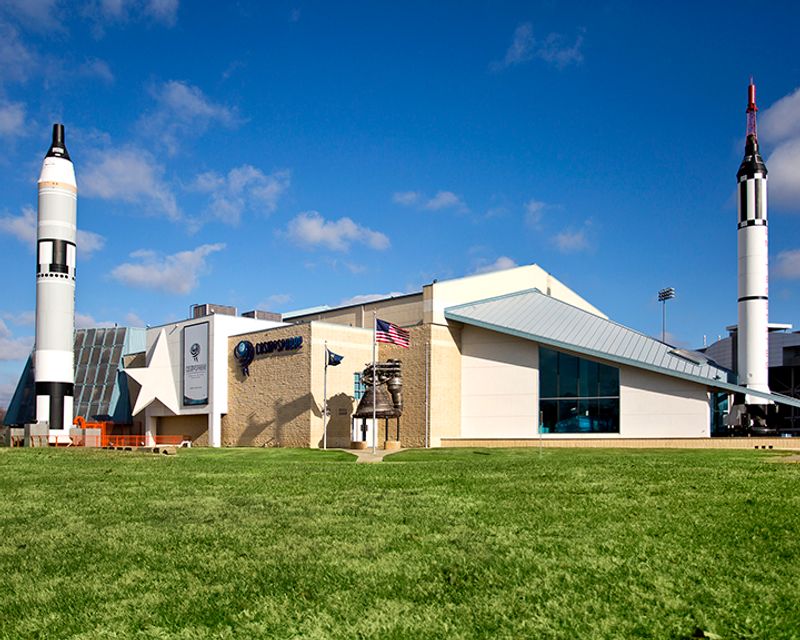
Hutchinson is already worth visiting for Strataca, but the Cosmosphere gives the city a second reason to make the drive. This accredited space history museum holds one of the largest collections of American and Soviet space artifacts outside of Washington D.C., which is a genuinely surprising fact for a mid-sized Kansas city.
The collection includes actual spacecraft, spacesuits, and mission hardware from the Mercury, Gemini, and Apollo programs. The Liberty Bell 7 capsule, recovered from the ocean floor in 1999, is on permanent display here and is one of the most historically significant objects in the entire museum.
Admission is reasonable, and the museum offers an IMAX dome theater for an additional fee. The exhibits are well-organized and informative for all ages, though families with kids who have any interest in space tend to spend significantly longer than they planned.
Budget at least two hours to do it properly.
9. Konza Prairie Nature Trail, Manhattan, Kansas
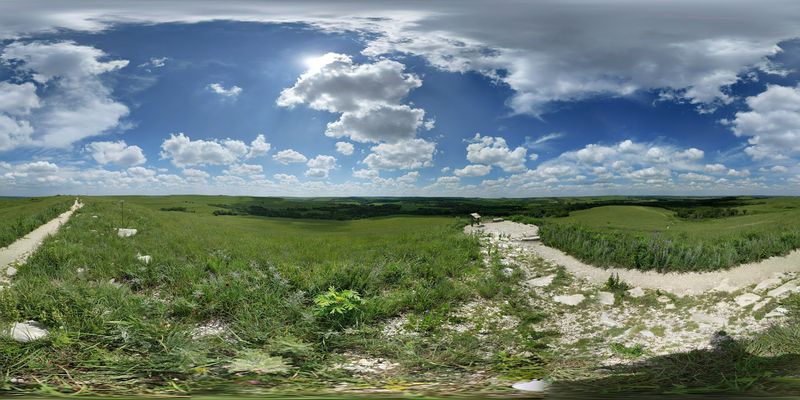
Just south of Manhattan, the Konza Prairie Biological Station opens its trails to the public for free, offering one of the most authentic tallgrass prairie hiking experiences in Kansas. The trail system includes three loop options ranging from about 2.5 to 6 miles, giving visitors a choice based on time and energy level.
The prairie is managed through controlled burns, which means the landscape shifts noticeably throughout the year. Late spring and early summer bring the tallest grasses and the most active wildlife, including deer, wild turkeys, and a surprising variety of bird species.
The trail starts from a small parking area with basic facilities, and no special gear is needed beyond comfortable walking shoes and sunscreen. Manhattan itself has a solid selection of cafes and restaurants for a post-hike meal, making the full day feel balanced and satisfying without requiring any complicated planning or a big budget.
10. Eisenhower Presidential Library, Museum And Boyhood Home, Abilene, Kansas
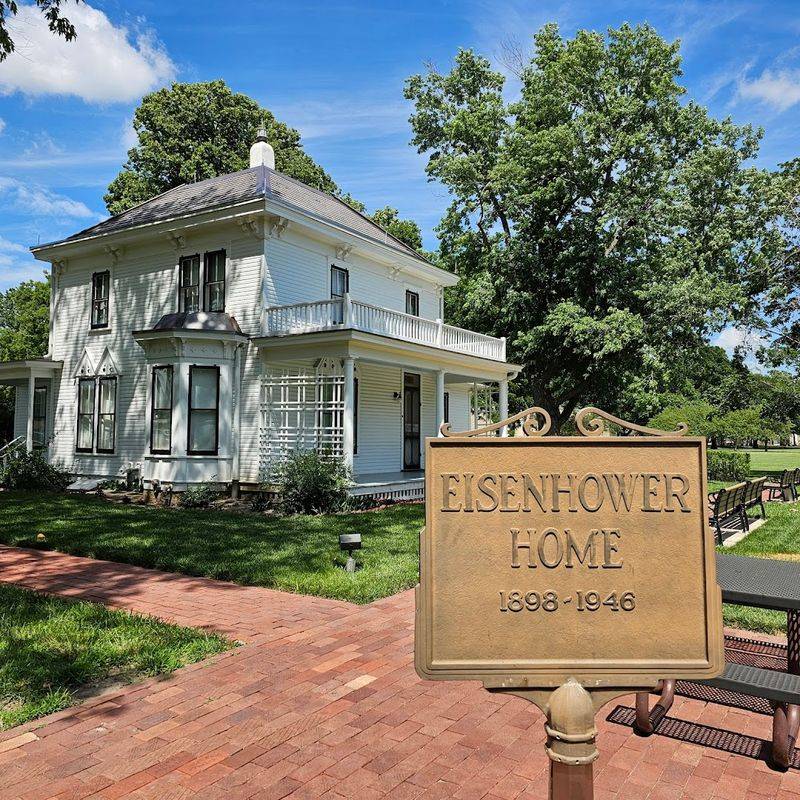
Abilene’s Eisenhower campus is one of those places that manages to be both historically significant and genuinely enjoyable to visit. The complex includes the presidential library, a full museum, the boyhood home where Dwight Eisenhower grew up, and a memorial chapel, all spread across well-maintained grounds in the center of town.
Admission covers all buildings on the campus, and the price is fair considering how much is included. The museum traces Eisenhower’s life from his Kansas childhood through his military career and two terms as president, with artifacts, photographs, and interactive displays that work well for both history enthusiasts and casual visitors.
The boyhood home is a particular highlight since it has been preserved with original furnishings and gives a clear picture of what modest Midwest life looked like in the early 1900s. Abilene’s small downtown is walkable and has good options for lunch before or after the visit.
11. Fort Scott National Historic Site, Fort Scott, Kansas
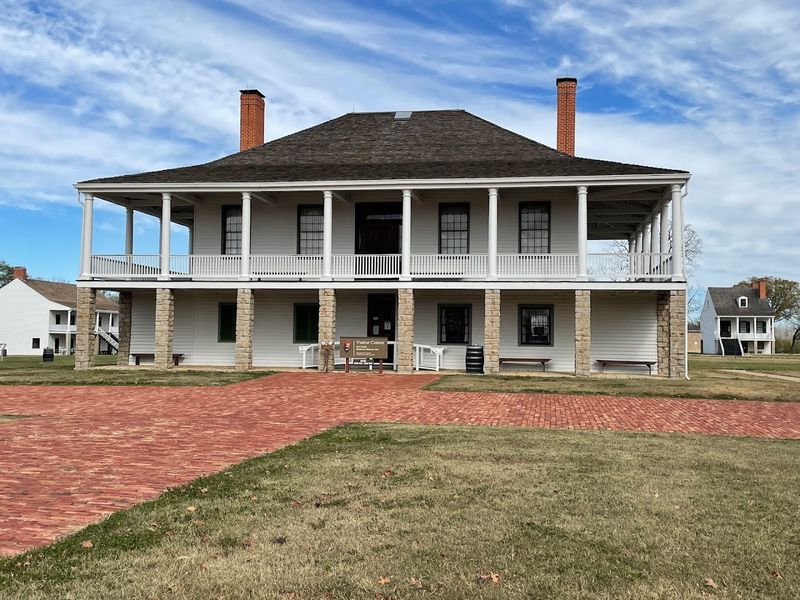
Fort Scott was established in 1842 as a military post along the Military Road, and the National Historic Site preserves 20 of the original structures in remarkable condition. The fort played a role in the Kansas-Missouri border conflicts of the 1850s and served as a Union Army post during the Civil War, giving it a layered and complex history.
Admission is free for children under 15, and adult fees are minimal compared to most historic sites of this scale. Rangers lead guided tours on a regular schedule, and self-guided audio tours are also available for visitors who prefer to move at their own pace.
The surrounding town of Fort Scott adds to the experience with Victorian-era homes, local shops, and Gunn Park, which is reportedly the largest municipal park in Kansas. A full day here covers the historic site, a town walk, and a park visit without straining the budget in any direction.
12. Little House On The Prairie Museum, Independence, Kansas
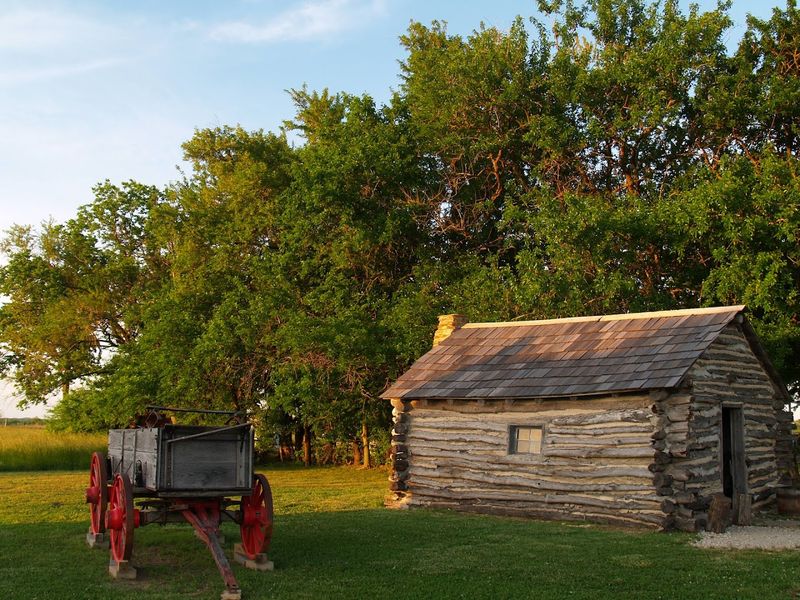
Laura Ingalls Wilder fans have been making the pilgrimage to this spot outside Independence for decades, and the museum delivers exactly the kind of quiet, storybook experience the name promises. The property includes a replica cabin built near the site where the Ingalls family lived in 1869 and 1870, along with a one-room schoolhouse, post office, and barn.
Admission is low-cost, and the open prairie setting around the buildings adds to the atmosphere without relying on any theatrical presentation. The exhibits inside the cabin and schoolhouse include period-accurate furnishings and details pulled from Wilder’s own writings.
The museum also features a working well and a small gift shop with books and keepsakes.
13. OZ Museum, Wamego, Kansas
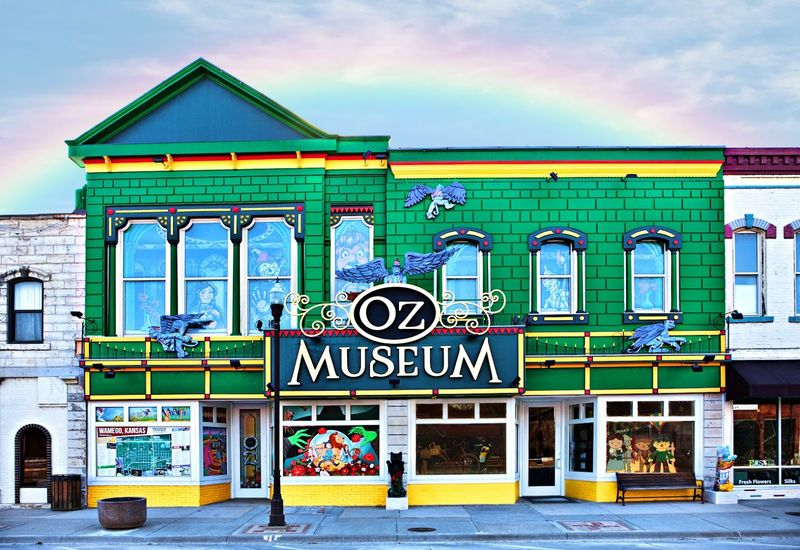
Wamego is a small town with a big personality, and the OZ Museum is the main reason for that reputation. The museum houses one of the largest private collections of Wizard of Oz memorabilia in the world, with artifacts spanning the original 1939 film, stage productions, and decades of merchandise and fan culture.
Admission is around ten dollars for adults and less for children, making it one of the more affordable ticketed attractions on this list. The collection includes original props, costumes, posters, and a life-sized recreation of Dorothy’s farmhouse that is a reliable hit with younger visitors.
After the museum, Wamego’s compact downtown is easy to explore on foot, with local shops and a Dutch windmill in the town park that adds an unexpected bit of old-world character.
14. Garden Of Eden, Lucas, Kansas
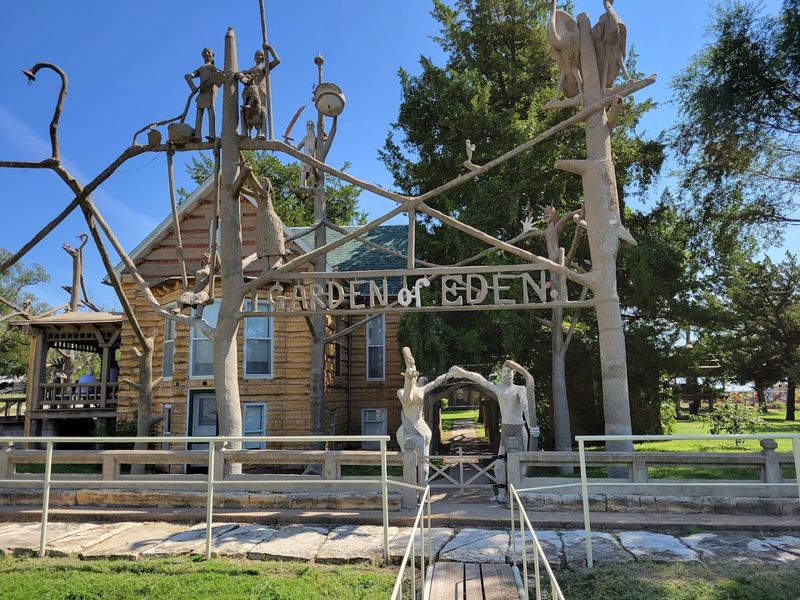
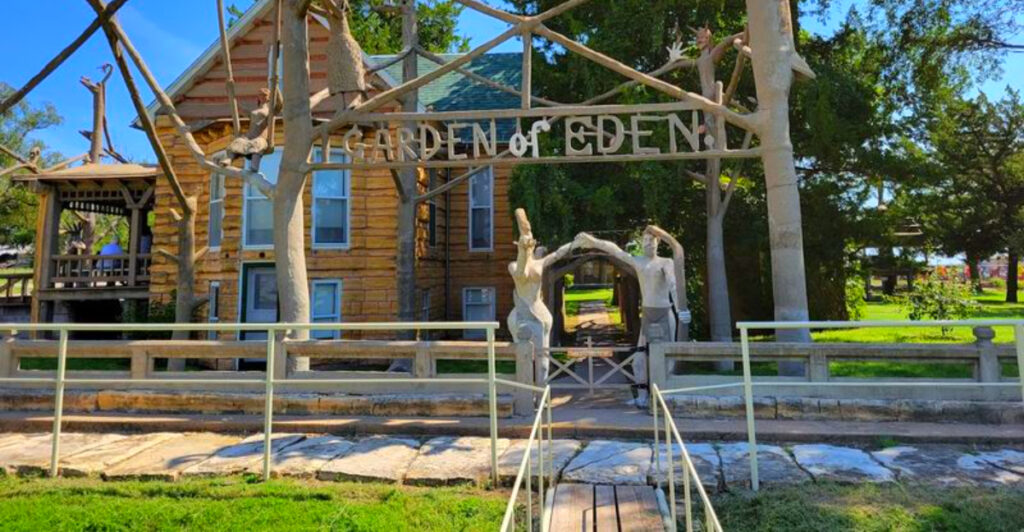
Samuel Perry Dinsmoor spent 22 years building his concrete vision of the world in his front yard in Lucas, and the result is one of the most genuinely strange and fascinating art environments in the United States. The Garden of Eden features more than 150 cement figures depicting biblical scenes, political commentary, and Dinsmoor’s personal philosophy, all arranged across a small urban lot.
Tours of the property are affordable, and the ticket includes access to the interior of the original log cabin house that Dinsmoor built. The site is a Smithsonian-recognized folk art landmark, which gives it a credibility that matches its considerable visual impact.
15. Council Grove Historic District, Council Grove, Kansas
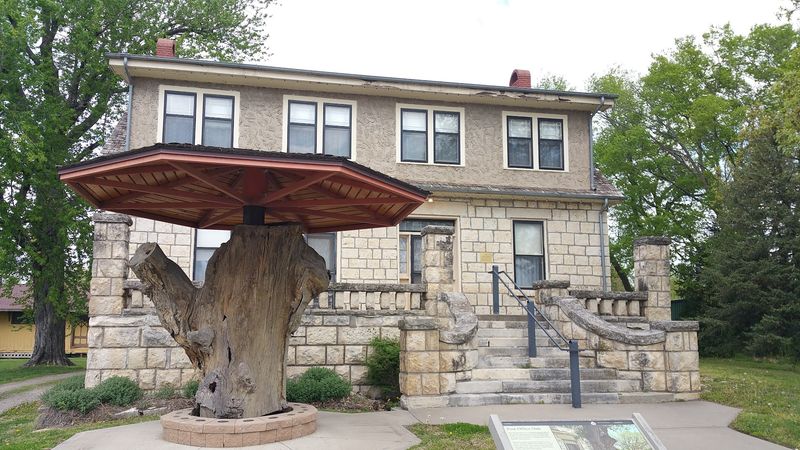
Council Grove served as the last major supply point on the Santa Fe Trail before traders headed into the open territory of the Southwest, and that history is still visible throughout the town today. The historic district contains more than two dozen sites listed on the National Register of Historic Places, including trail markers, stone buildings, and a 400-year-old burr oak tree known as the Last Chance Store Oak.
Walking the downtown area is free, and the Council Grove Lake just south of town adds a scenic outdoor option for picnicking or a short trail walk. Local shops and a handful of cafes make it easy to spend a full day without feeling rushed.
The Kaw Methodist Mission, now a state historic site, offers low-cost admission and covers the town’s history as a mission school and trading hub.
Share this story