 Unearth The Voyage
Castles have captured imaginations for centuries, standing as powerful reminders of medieval glory, royal intrigue, and architectural brilliance. Today, these stone fortresses serve as some of the world’s most beloved travel destinations, drawing millions of visitors who come to photograph their towers, turrets, and breathtaking backdrops.
From fairytale palaces perched on Alpine cliffs to island fortresses surrounded by shimmering waters, these fifteen castles have earned their place as the most photographed in the world.
Neuschwanstein Castle — Bavaria, Germany
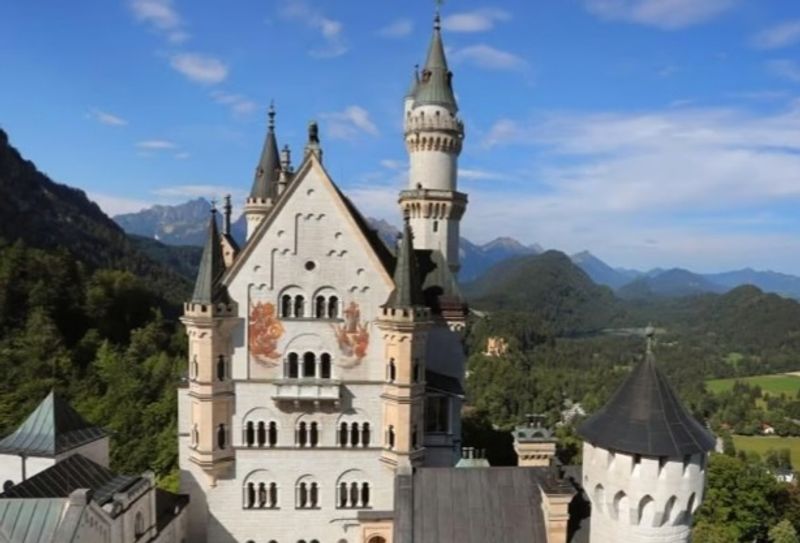
King Ludwig II commissioned this architectural marvel in 1869, creating what would become the ultimate fantasy fortress. Its white limestone walls and soaring towers look like something straight out of a storybook, which makes perfect sense since Walt Disney himself used it as inspiration for Sleeping Beauty’s castle.
Photographers flock here year-round to capture the castle from Marienbrücke, a bridge that offers jaw-dropping views across the gorge. Winter blankets the peaks in snow, creating magical white backdrops, while autumn paints the surrounding forests in brilliant oranges and reds.
Morning mist often wraps around the towers, adding an ethereal quality to photos.
Despite being unfinished when Ludwig died mysteriously in 1886, the castle opened to tourists just weeks later. Today, over 1.4 million visitors photograph its exterior annually, though only a fraction of the 200 planned rooms were ever completed.
The castle’s dramatic setting atop a rugged hill makes every angle Instagram-worthy, explaining why it remains Germany’s most visited castle.
Prague Castle — Prague, Czech Republic
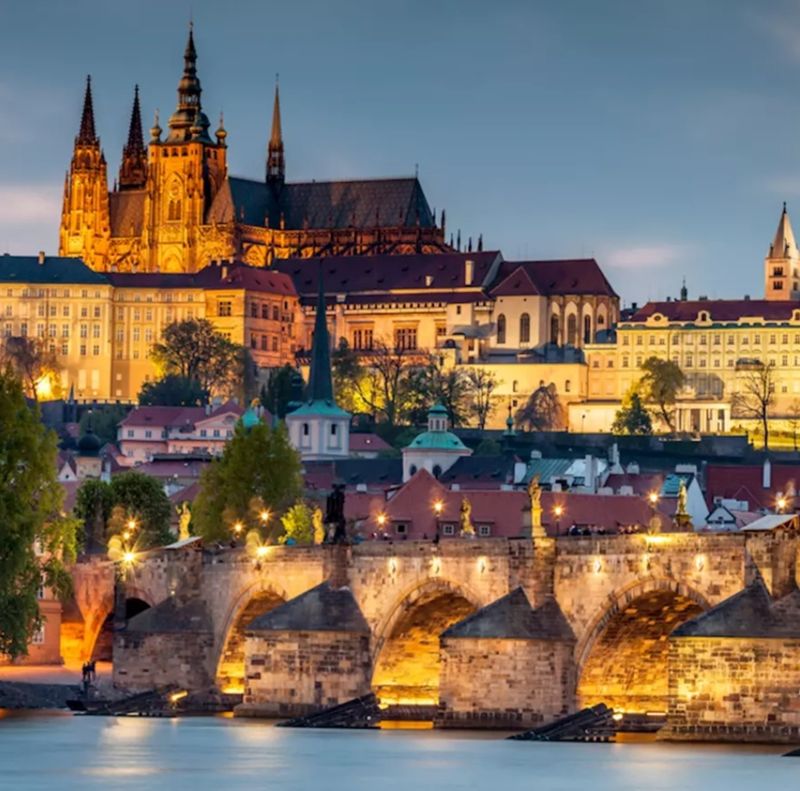
Sprawling across 70,000 square meters, this isn’t just a castle—it’s an entire fortified complex that holds the Guinness World Record for largest ancient castle. Founded around 880 AD, it has served as the seat of power for Czech rulers, emperors, and presidents for over a thousand years.
St. Vitus Cathedral dominates the skyline with its Gothic spires piercing the clouds, while colorful buildings line Golden Lane where medieval alchemists once worked. Photographers love capturing the castle at sunset when golden light bathes its walls, or at night when illumination transforms it into a glowing crown above the city.
The view from Charles Bridge offers classic compositions with the Vltava River in the foreground.
Social media analytics consistently rank Prague Castle among the world’s most hashtagged landmarks. Visitors can spend hours exploring courtyards, gardens, and museums within its walls.
The changing of the guard ceremony at noon provides dynamic photo opportunities with costumed soldiers performing choreographed routines.
Windsor Castle — England, UK
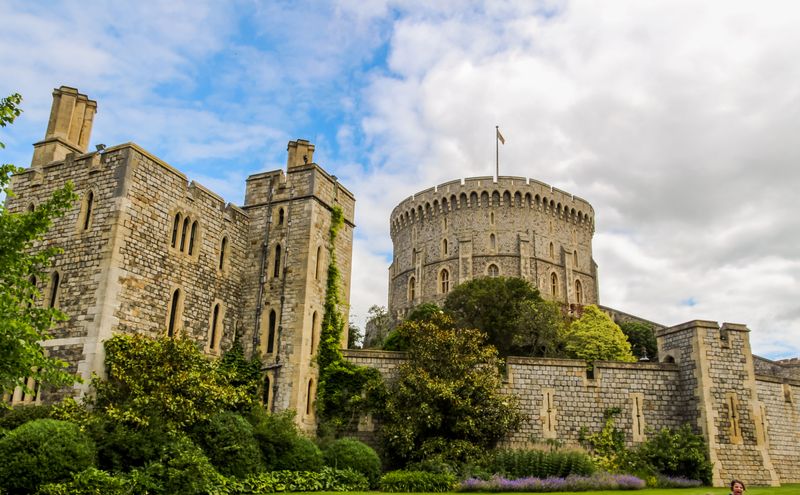
William the Conqueror chose this strategic spot overlooking the Thames River in the 11th century, and British monarchs have occupied it ever since. At nearly 1,000 years old, Windsor Castle has witnessed more royal history than perhaps any other building on Earth, serving as both fortress and family home through 39 reigns.
The Round Tower dominates photographs, rising 80 feet above the castle’s artificial mound and visible for miles across the Berkshire countryside. When the Royal Standard flag flies, it signals the Queen is in residence, adding extra excitement for photographers hoping to capture a working royal palace.
St. George’s Chapel, where Prince Harry married Meghan Markle, offers stunning Gothic architecture within the castle grounds.
Covering 13 acres, Windsor remains the world’s largest occupied castle, with over 1,000 rooms still in use. The State Apartments showcase priceless artworks and ornate decorations that dazzle visitors.
Long Walk, a tree-lined avenue stretching from the castle, provides photographers with perfect symmetrical compositions framing the castle’s silhouette.
Edinburgh Castle — Scotland, UK
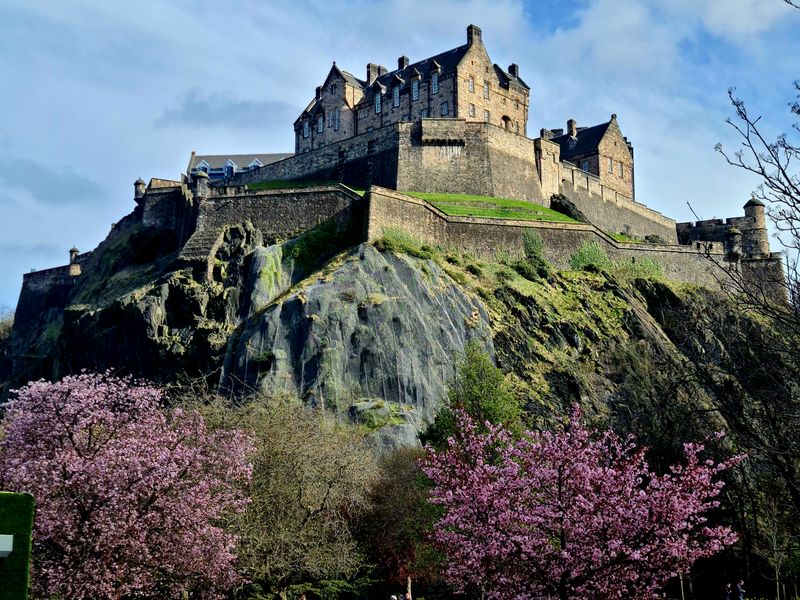
Volcanic eruptions 350 million years ago created Castle Rock, the dramatic crag that gives Edinburgh Castle its commanding presence. Standing 443 feet above sea level, the fortress has dominated Scotland’s capital since the 12th century, surviving countless sieges and battles that shaped British history.
The One O’Clock Gun fires daily except Sundays, startling unsuspecting tourists and providing dramatic action shots for prepared photographers. From Princes Street Gardens below, the castle appears to grow organically from the cliff face, its weathered stones blending with ancient rock.
The Royal Mile stretches downhill from the castle entrance, offering countless angles to capture its imposing walls.
During August’s Edinburgh Festival, the castle becomes the backdrop for the spectacular Military Tattoo, with performers, lights, and fireworks creating unforgettable photo opportunities. Inside, the Scottish Crown Jewels and Stone of Destiny attract history enthusiasts.
Sunset photographers gather at Calton Hill to capture the castle silhouetted against colorful skies, while nighttime illumination transforms it into a glowing beacon visible across the city.
Eilean Donan Castle — Scotland, UK
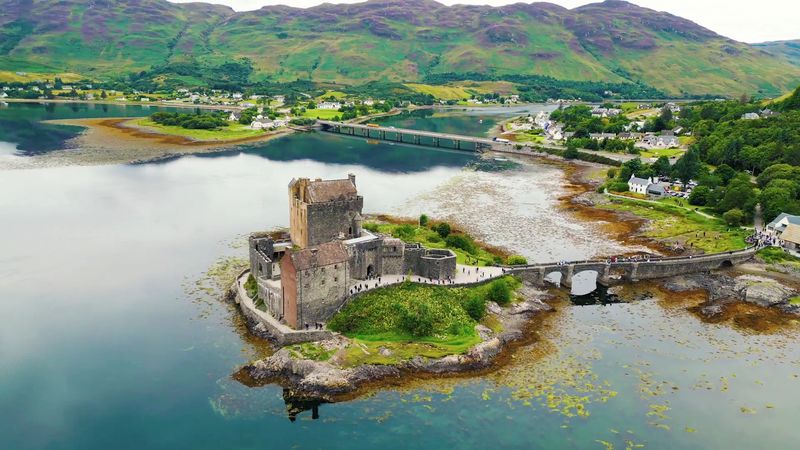
Three sea lochs converge at this tiny tidal island, creating a natural moat that has protected Eilean Donan since the 13th century. The iconic arched stone bridge connecting the castle to shore wasn’t built until 1932 during restoration, but it’s now the most photographed feature, appearing in countless films including Highlander and James Bond’s The World Is Not Enough.
Originally built to defend against Viking invasions, the castle was destroyed in 1719 during a Jacobite uprising and lay in ruins for 200 years. Lieutenant Colonel John MacRae-Gilstrap purchased the ruins and spent 20 years lovingly rebuilding the castle based on historical plans.
Today, his vision draws photographers from around the globe.
Low tide reveals rocky shores perfect for foreground interest, while high tide makes the castle appear to float on water. Photographers arrive before dawn to catch the castle reflected in glassy waters with mountains silhouetted behind.
The surrounding Highlands provide ever-changing weather conditions—misty mornings, dramatic storm clouds, and occasional rainbows—that make every visit photographically unique.
Château de Chambord — Loire Valley, France
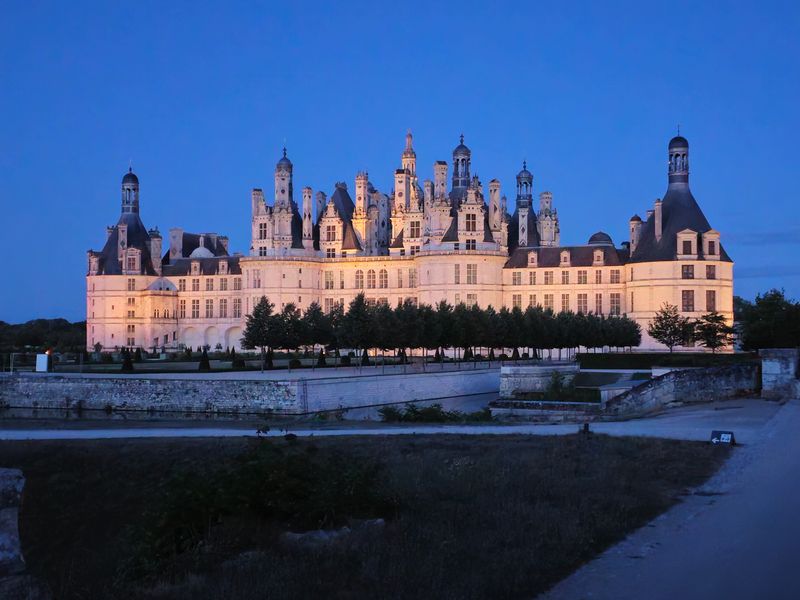
François I created this Renaissance masterpiece as a hunting lodge, though calling it a lodge seems absurd given its 440 rooms, 282 fireplaces, and 84 staircases. Construction began in 1519 and continued for decades, creating what many consider the most recognizable château in France with its distinctive French Renaissance architecture blending medieval fortress elements with classical Italian design.
Leonardo da Vinci may have influenced the design of the famous double-helix staircase, where two spirals intertwine so people ascending and descending can see each other but never meet. Photographers climb the rooftop terraces to capture the forest of chimneys, turrets, and cupolas that create a fantastical skyline.
The château’s perfect symmetry makes it endlessly photogenic from every angle.
Surrounded by France’s largest enclosed forest park, Chambord sits within 13,000 acres of hunting grounds enclosed by a 20-mile wall. Morning fog rolling across the expansive lawns creates atmospheric shots, while autumn colors frame the white limestone façade beautifully.
The château’s reflection in the formal gardens’ water features doubles its visual impact.
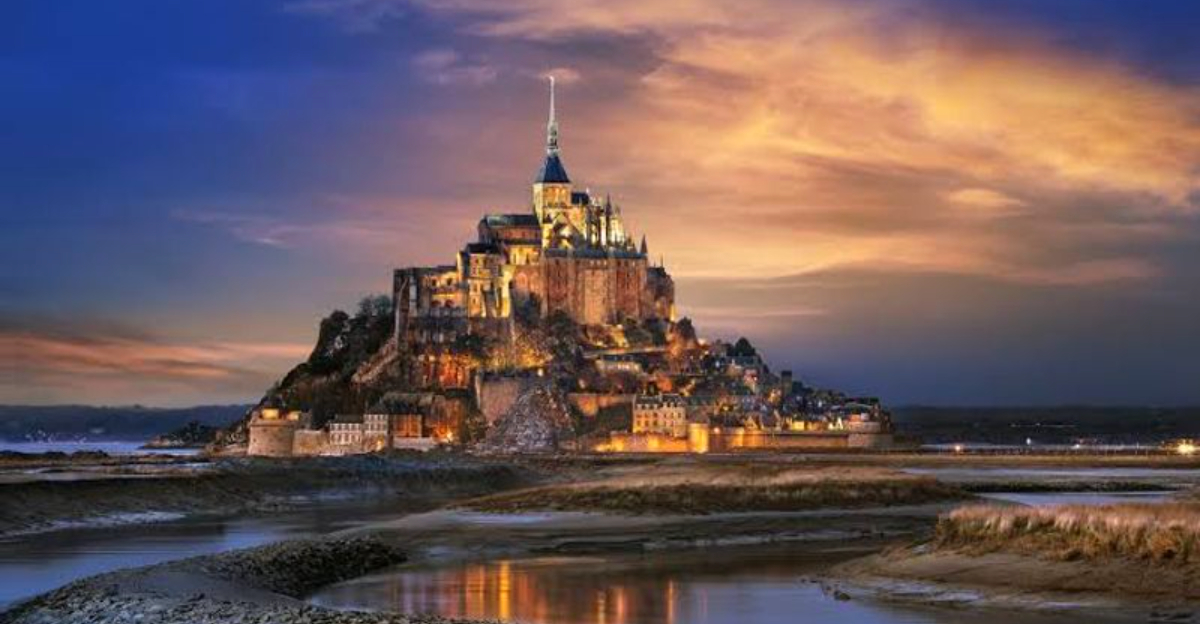
Mont-Saint-Michel — Normandy, France
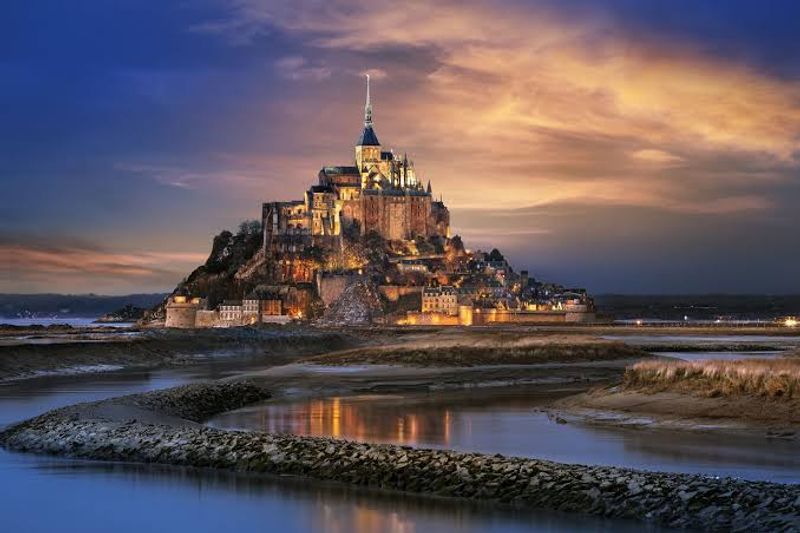
Tides here rank among Europe’s most dramatic, with water retreating up to nine miles from shore and returning faster than a galloping horse. This natural phenomenon transforms Mont-Saint-Michel from an island to a hill surrounded by mudflats twice daily, creating constantly changing photographic conditions that have fascinated visitors since medieval pilgrims first arrived.
The abbey crowning the summit took nearly 500 years to build, with construction beginning in 966 AD. Its Gothic spire topped with a golden statue of Archangel Michael reaches 560 feet above sea level, visible for miles across the flat Norman coastline.
Narrow medieval streets wind upward past shops and restaurants, their half-timbered buildings clinging to the rocky slopes.
Photographers position themselves on the causeway or distant shores to capture the mount’s iconic silhouette reflected in tidal pools. Sunrise and sunset paint the sky in brilliant colors behind the abbey’s spire.
During spring tides, water completely surrounds the island, while extreme low tides reveal vast rippled sandflats. UNESCO World Heritage status protects this architectural wonder that receives over three million visitors annually.
Himeji Castle — Himeji, Japan
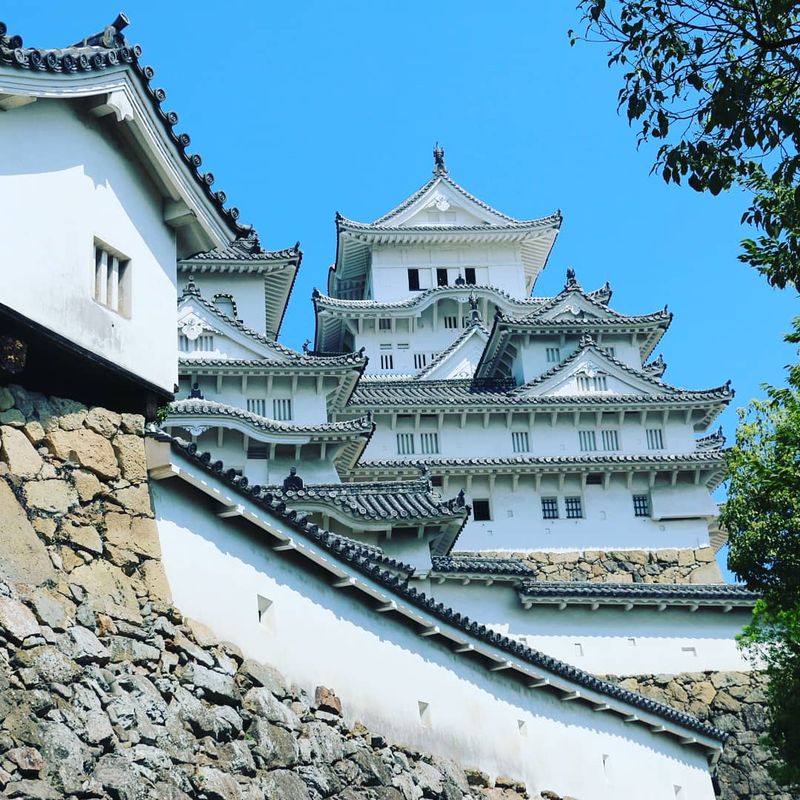
Brilliant white plaster covers the castle’s exterior, earning it the nickname Shirasagi-jo or White Heron Castle for its elegant appearance resembling a bird taking flight. Built in 1333 and extensively remodeled in 1609, Himeji survived World War II bombing raids that destroyed much of the surrounding city, emerging as Japan’s finest surviving example of feudal-era castle architecture.
The castle’s defensive design includes maze-like paths, hidden gates, and strategic holes for dropping stones or pouring boiling oil on attackers. Despite these martial features, its aesthetic beauty captivates photographers, especially during cherry blossom season when 1,000 sakura trees explode in pink blooms around the castle grounds.
The contrast between delicate flowers and imposing fortifications creates magical compositions.
A five-year restoration completed in 2015 returned the castle to its original brilliant white appearance, making it even more photogenic. The main keep rises six stories externally but contains seven interior floors connected by steep wooden staircases.
Photographers capture the castle from Sanomaru Square for classic frontal views, or climb nearby hills for elevated perspectives showing all five structures and connecting corridors.
Alhambra — Granada, Spain
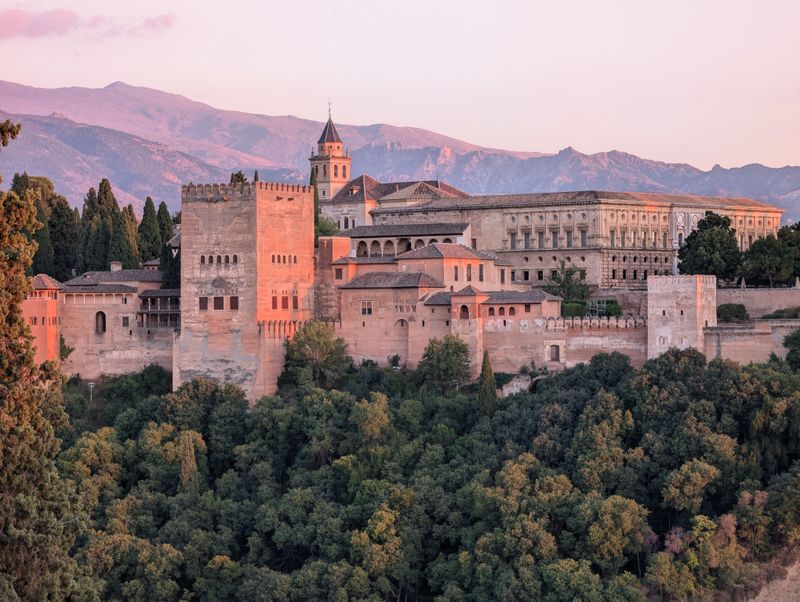
Nasrid sultans built this palace-fortress complex on a plateau overlooking Granada in the 13th and 14th centuries, creating one of the finest examples of Islamic architecture in Europe. Intricate geometric tile work, delicate stucco carvings, and Arabic calligraphy cover nearly every surface, while fountains and reflecting pools bring cooling water throughout the complex.
The Court of the Lions features twelve marble lions supporting a central fountain, surrounded by 124 slender columns that create a forest of stone. Photographers wait for specific times when sunlight streams through arched windows, casting dramatic shadows across ornate walls.
The Generalife gardens cascade down the hillside with terraced plantings, water channels, and pavilions offering endless compositions.
From the Mirador de San Nicolás in the Albaicín neighborhood, photographers capture the Alhambra’s ochre walls against the snow-capped Sierra Nevada mountains. Sunset bathes the fortress in golden light, explaining why this viewpoint stays crowded until dark.
Washington Irving’s 1832 book Tales of the Alhambra romanticized the palace for Western audiences, beginning tourism that continues today with over 2.7 million annual visitors making advance reservations essential.
Bran Castle — Transylvania, Romania
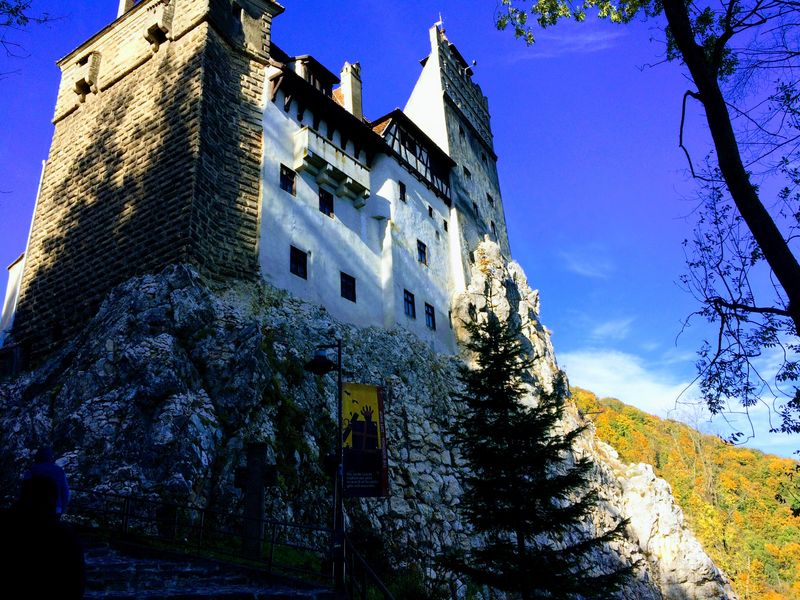
Marketing genius transformed this 14th-century fortress into Dracula’s Castle, though Vlad the Impaler—the historical inspiration for Bram Stoker’s vampire—likely only passed through briefly if at all. The connection remains tenuous, but the Gothic atmosphere, mountain setting, and mysterious history make the Dracula association feel perfectly appropriate.
Perched on a rocky outcrop between forested mountains, Bran Castle’s red-roofed towers and narrow windows create an undeniably eerie silhouette. Interior passages wind through multiple levels, connecting 60 rooms filled with medieval furniture, weapons, and armor.
Secret staircases and hidden passages fuel vampire legends, delighting tourists seeking spooky photo backdrops.
The castle’s strategic location guarded a mountain pass between Transylvania and Wallachia for centuries. Queen Marie of Romania transformed it into a royal residence in the 1920s, adding romantic touches that soften its medieval austerity.
Photographers capture the castle from the valley below, where its white walls and red roofs contrast sharply with dark pine forests. Autumn fog swirling around the towers enhances the mysterious atmosphere that keeps Bran Castle firmly planted in popular imagination.
Chateau de Chillon — Veytaux, Switzerland
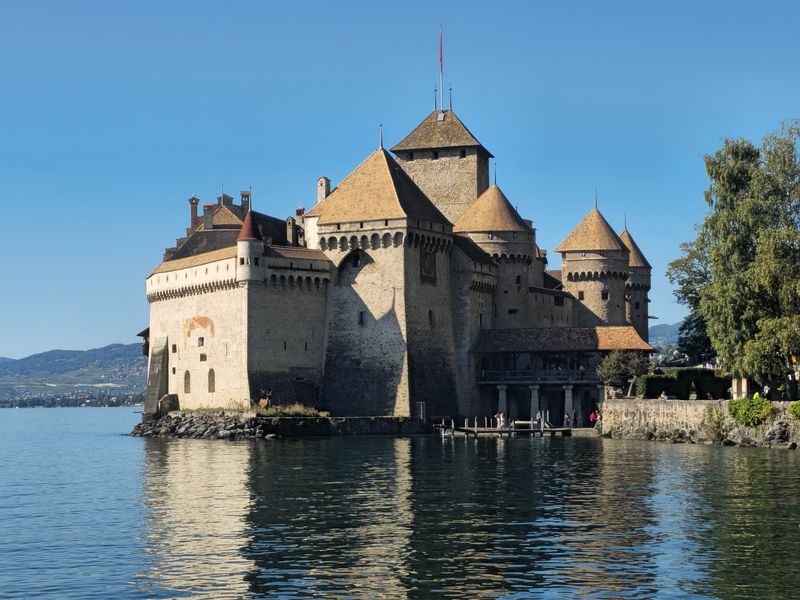
Rocky island foundations give Chillon Castle the appearance of growing directly from Lake Geneva’s crystal-clear waters. First recorded in 1150, the castle served as a strategic fortress controlling the narrow passage between lake and mountains, though Roman-era remains suggest even earlier fortifications occupied this naturally defensive position.
Lord Byron visited in 1816 and immortalized the castle in his poem The Prisoner of Chillon, carving his name into a dungeon pillar where it remains visible today. The castle’s 25 buildings contain courtyards, towers, and over 100 rooms connected by passages carved through living rock.
Great halls feature medieval frescoes and wooden beam ceilings, while dungeons extend below the waterline.
Photographers capture the castle from lakeside promenades where its reflection doubles in still waters, with the Swiss Alps rising dramatically behind. Boat tours provide mobile platforms for shooting from different angles, emphasizing how the castle occupies its entire island.
Sunset paints the white walls pink and gold, while the mountains turn purple in fading light. The castle’s exceptional preservation and romantic setting make it Switzerland’s most visited historic monument, welcoming over 400,000 visitors annually.
Corvin Castle — Hunedoara, Romania
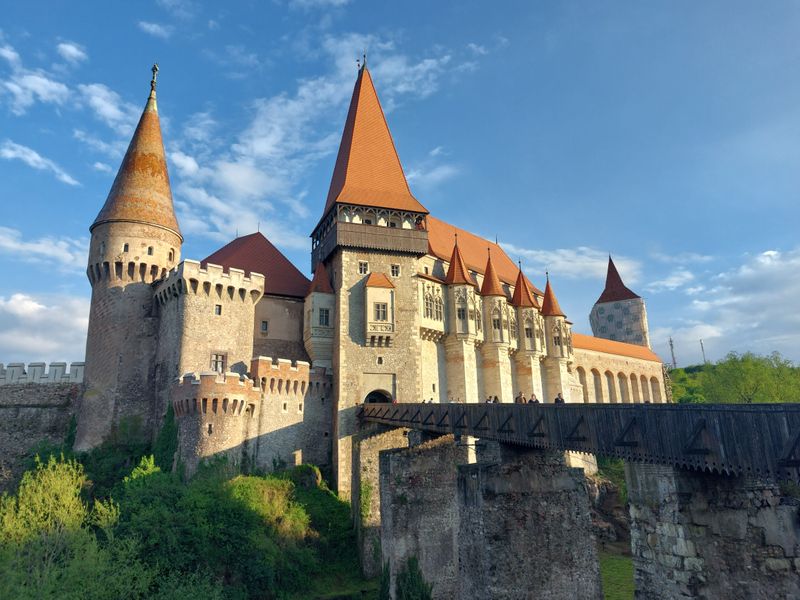
John Hunyadi received this fortress as a reward for defeating Ottoman forces in the 15th century, then transformed it into one of Europe’s most impressive Gothic-Renaissance castles. Its dramatic towers, imposing bridge, and fortress-like appearance have made it a favorite filming location for movies requiring authentic medieval atmosphere without the touristy polish of Western European castles.
The Knights’ Hall features soaring vaulted ceilings and tall Gothic windows that flood the space with light, while the Council Hall’s ornate stone carvings showcase Renaissance craftsmanship. A wooden bridge spans the moat, leading to the main gate flanked by massive towers.
Legend claims Vlad the Impaler was imprisoned here for seven years, adding dark mystique to the castle’s already formidable presence.
Restoration work continues to preserve Corvin Castle’s architectural details, though some weathered stones and crumbling sections enhance its authenticity. Photographers appreciate the castle’s untamed quality—less manicured than Western castles but more atmospheric.
The surrounding industrial city of Hunedoara creates stark contrast, making the medieval fortress seem even more like a time portal. Its fairy-tale appearance despite military origins makes every angle worth photographing.
Pfalzgrafenstein Castle — Rhine, Germany
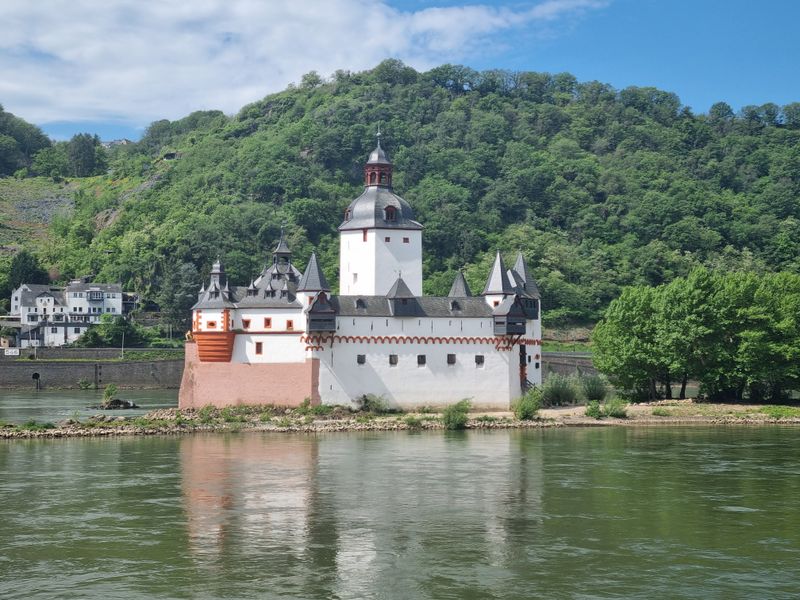
Built in 1326 on a narrow island mid-river, Pfalzgrafenstein Castle collected tolls from passing ships for over 500 years. Its unique ship-shaped design with a hexagonal stone base resembling a vessel’s hull helped it withstand powerful Rhine currents and ice flows.
A pentagonal tower rises from the center, creating one of Germany’s most unusual and photogenic fortifications.
No bridge connects the castle to shore, so visitors must take a ferry from the riverside town of Kaub to explore its interior. This isolation preserved the castle through centuries of wars that destroyed countless Rhine fortifications.
The white-painted walls with black trim create striking contrast against gray river waters and green hillside vineyards.
Photographers shoot from elevated positions along both riverbanks, capturing the castle surrounded by water with river traffic providing scale and movement. Morning mist often rises from the Rhine, partially obscuring the castle in atmospheric haze.
The castle appears on countless Rhine River cruise itineraries, making it one of Germany’s most recognized landmarks despite its small size. Combined with nearby Gutenfels Castle perched on the hillside above Kaub, the scene epitomizes romantic Rhine Valley imagery.
Książ Castle — Wałbrzych, Poland
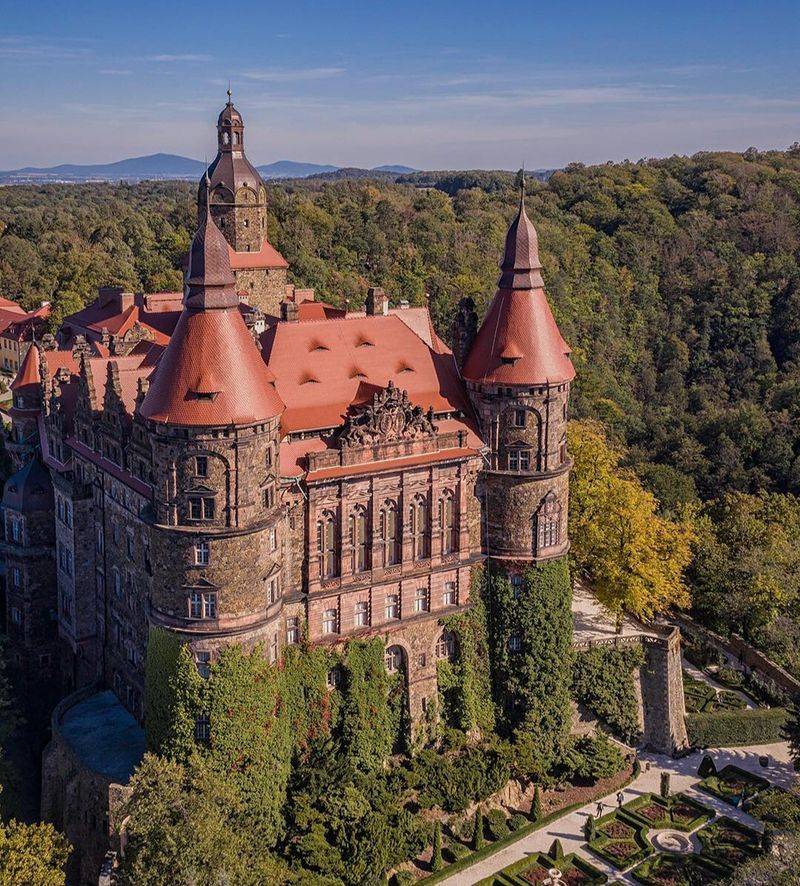
Perched 395 feet above the Pełcznica River gorge, Książ Castle ranks as Poland’s third-largest castle and one of its most photographed landmarks. Construction began in 1288, with successive owners adding layers of architectural styles—Gothic foundations support Baroque additions topped with Neo-Renaissance flourishes, creating a visually complex structure that rewards detailed examination.
Nazi forces seized the castle during World War II, excavating mysterious tunnels beneath it as part of Project Riese, a network of underground complexes whose purpose remains debated. These tunnels now attract curious visitors, adding intrigue to the castle’s already compelling history.
The Nazis also began converting the castle into Hitler’s headquarters, leaving unfinished construction visible today.
Terraced gardens cascade down the steep hillside, featuring exotic plants, fountains, and walking paths with dramatic gorge views. The castle’s massive scale becomes apparent from the valley floor, where its multiple wings stretch across the cliff face.
Photographers capture the castle from the forest trails opposite, where autumn colors frame the structure beautifully. Interior rooms feature ornate decoration, though wartime damage and post-war neglect left scars that ongoing restoration gradually addresses.
Hohensalzburg Fortress — Salzburg, Austria
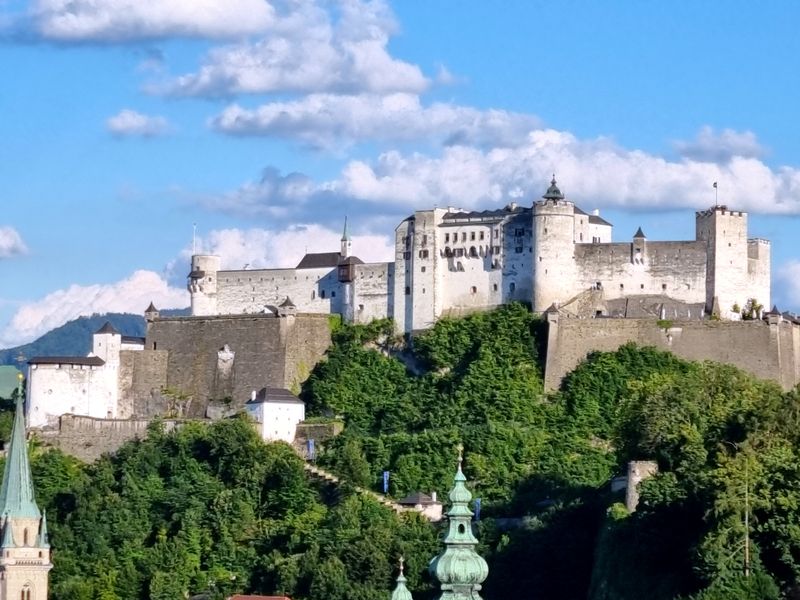
Archbishop Gebhard commissioned this fortress in 1077, beginning construction that continued for 600 years until the massive complex stretched 820 feet long and 490 feet wide. It ranks among Europe’s largest and best-preserved medieval castles, never successfully besieged despite numerous attempts throughout its 900-year history.
A funicular railway built in 1892 whisks visitors from Salzburg’s old town up the steep Festungsberg hill, though hiking paths offer more scenic routes. The fortress dominates views of Salzburg from every direction, its white walls and towers rising above red-roofed buildings with the Alps stretching beyond.
Mozart’s birthplace lies in the shadow of the fortress, adding musical history to military heritage.
The Golden Hall features intricate late-Gothic wood carvings and gold leaf decoration, while the fortress museum displays medieval weapons, torture instruments, and historical artifacts. Photographers gather on the fortress ramparts for sunset shots of Salzburg’s UNESCO-listed old town, the Salzach River winding through, and mountain peaks turning pink in fading light.
The Sound of Music tours inevitably include the fortress, cementing its place in popular culture alongside its historical significance as one of Austria’s most iconic landmarks.



