 Unearth The Voyage
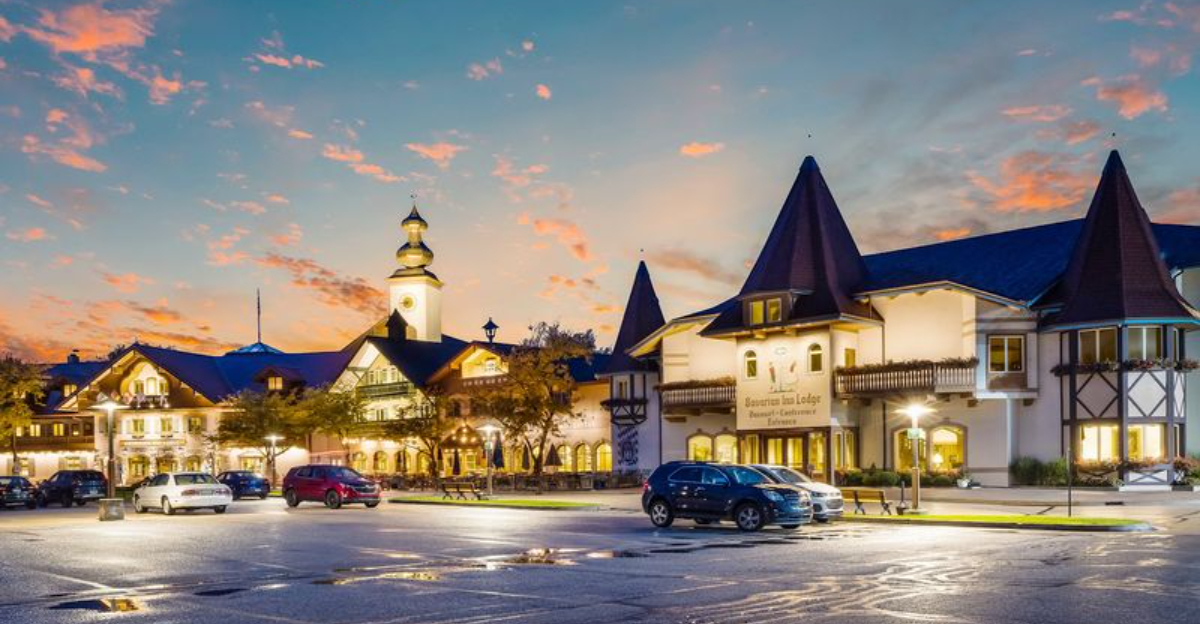
Some American towns feel like they belong on a postcard from across the Atlantic. From windmill-dotted streets to cobblestone lanes and half-timbered buildings, these places carry genuine Old-World European charm right here in the U.S.
Whether you are a history buff, a foodie, or just someone craving a passport-free escape, these towns deliver something truly special. Pack your curiosity and get ready to explore some of America’s most surprisingly European corners.
Solvang, California — Little Denmark in the Santa Ynez Valley
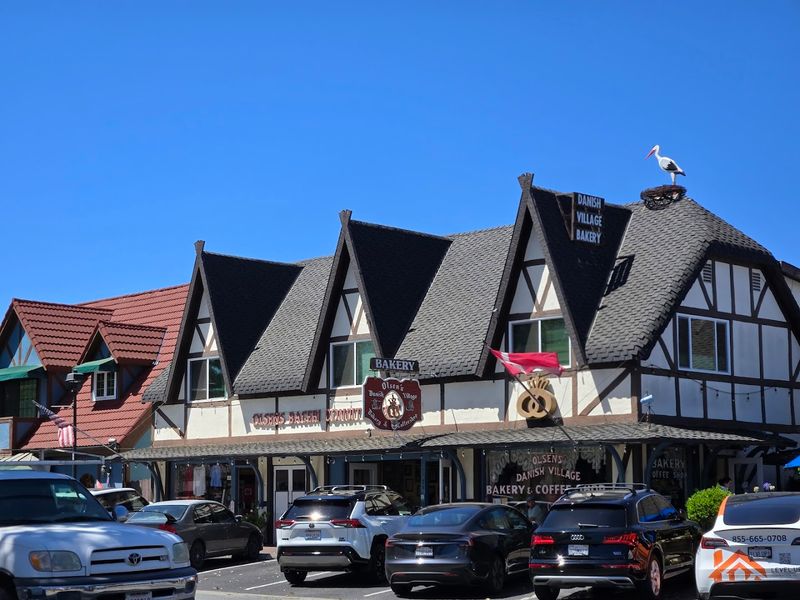
Step onto Solvang’s streets and the smell of warm aebleskivers drifting from a nearby bakery hits you before you even see the windmills. Founded in 1911 by Danish immigrants from the American Midwest, this Santa Ynez Valley gem was built with a very specific vision: to preserve Danish culture on California soil.
That vision stuck, and it stuck hard.
Today, Solvang is a full-on sensory experience. Half-timbered facades painted in cheerful pastels line the main streets, and decorative storks perch atop rooftops as a nod to Danish folklore.
The town’s four windmills are impossible to miss, serving as the perfect backdrop for photos that will confuse your friends into thinking you flew to Copenhagen.
Bakeries sell buttery Danish cookies and fresh pastries that taste genuinely homemade. Seasonal festivals, including Danish Days each September, bring folk dancing, traditional costumes and live music to the streets.
Boutique shops carry Scandinavian gifts, clogs and hand-painted ceramics. Nearby wineries add a California twist to the European experience.
Whether you visit for a weekend or just an afternoon, Solvang rewards every curious traveler with warmth, flavor and a whole lot of hygge.
Leavenworth, Washington — Bavarian Village in the Cascades
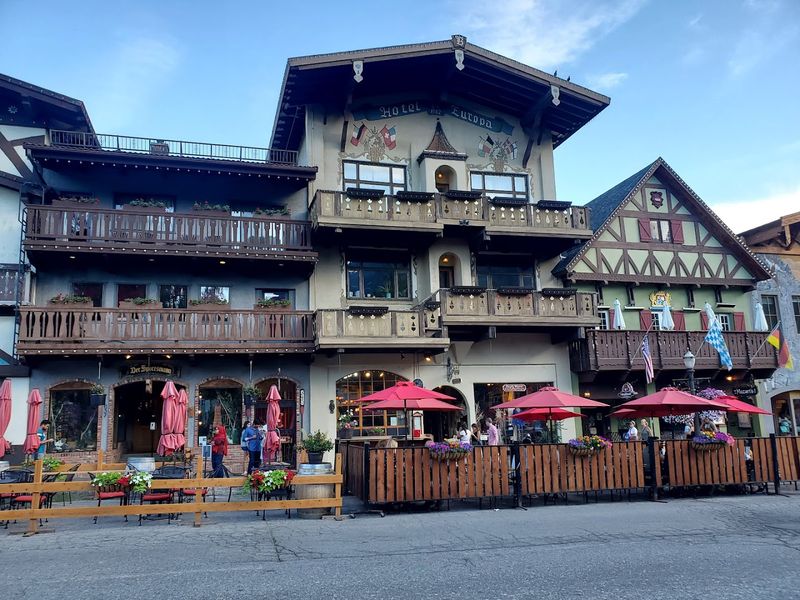
Picture a Bavarian mountain village dropped right into the heart of the Washington Cascades — that is exactly what Leavenworth looks like, and it is not an accident. In the 1960s, this struggling logging town faced serious economic decline and decided to reinvent itself completely.
Local leaders visited Bavaria, took careful notes, and came home ready to build something extraordinary.
The transformation worked beyond anyone’s expectations. Today, every building downtown follows strict Bavarian architectural guidelines, complete with hand-painted murals, carved wooden balconies and flower boxes overflowing with blooms.
The surrounding Cascades provide a mountain backdrop that honestly makes the whole scene look even more German than Germany sometimes does.
Oktoberfest here is a legendary event, drawing thousands of visitors who come for the authentic beer, pretzels, lederhosen and live oompah bands. The Christmas Lighting Festival is equally beloved, turning the entire town into a glowing winter wonderland that sells out accommodation months in advance.
Local beer gardens serve German lagers year-round, and chalet-style restaurants offer schnitzel and bratwurst alongside Pacific Northwest favorites. Leavenworth is proof that reinvention, done with genuine commitment and a little Bavarian flair, can create something genuinely magical.
New Glarus, Wisconsin — America’s Little Switzerland
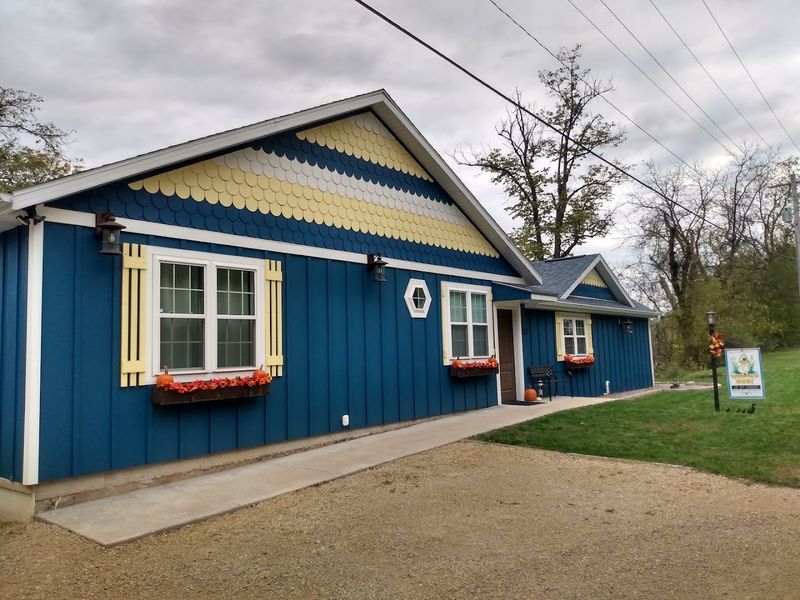
Swiss flags outnumber American ones on certain streets in New Glarus, and nobody minds one bit. This small Wisconsin town was founded in 1845 by immigrants from the Glarus canton of Switzerland, and the community has guarded its heritage with remarkable dedication ever since.
Walking through downtown genuinely feels like flipping through a Swiss travel magazine.
Chalet-style architecture dominates the streetscape, with carved wooden details, steep rooflines and window boxes bursting with geraniums. The New Glarus Brewing Company — a beloved craft brewery known for its Spotted Cow ale — draws beer lovers from across the Midwest, celebrating Swiss brewing traditions in a very Wisconsin way.
Cheese shops nearby offer a range of Swiss varieties that would satisfy even the most discerning fromage enthusiast.
The Wilhelm Tell Festival, held every Labor Day weekend, is a theatrical highlight of the year. Townspeople perform Friedrich Schiller’s classic play in both German and English, complete with traditional costumes and dramatic crossbow scenes.
Yodeling performances and folk dancing add to the festive atmosphere. Visitors can also browse galleries featuring Swiss folk art and hand-carved wooden pieces.
New Glarus is small in size but enormous in cultural heart, making every visit feel like a genuine European adventure.
Helen, Georgia — Southern Bavaria in the Blue Ridge
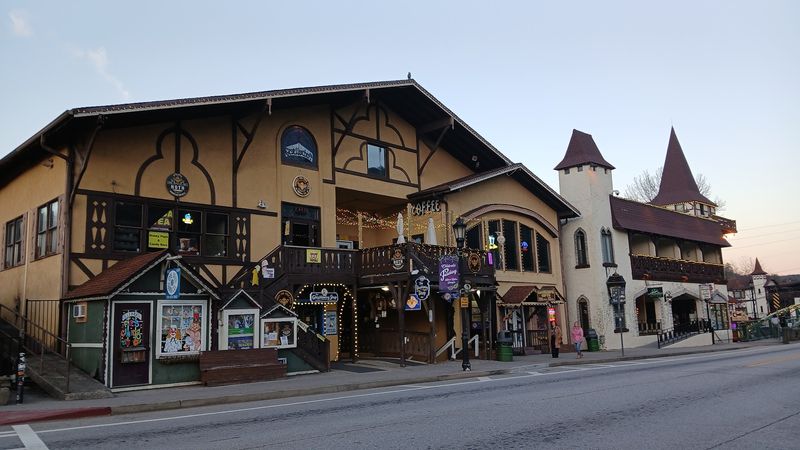
Nobody expects to find Bavaria tucked inside the Blue Ridge Mountains of north Georgia, which is exactly what makes Helen such a delightful surprise. Before 1969, Helen was a fairly ordinary Southern lumber town dealing with economic hardship.
Then a local artist sketched a vision of an Alpine village, and the town took a collective leap of faith that changed everything.
The makeover was thorough and theatrical. Buildings were refaced with half-timbered facades, cobblestone paths replaced plain sidewalks, and German-language signs appeared above storefronts selling cuckoo clocks, imported chocolates and Alpine souvenirs.
The Chattahoochee River running through town adds a scenic natural element that feels almost Swiss in its beauty.
Helen’s Oktoberfest is one of the longest-running in the United States, stretching from mid-September through early November. Beer tents, polka bands and authentic German food keep the festival energy high for weeks on end.
Tubing down the Chattahoochee is a summertime favorite that locals and visitors enjoy equally. German restaurants serve hearty plates of sauerbraten and spaetzle alongside Georgia peach desserts.
Helen manages to be both convincingly European and proudly Southern at the same time, which is a combination you will not find anywhere else on earth.
Frankenmuth, Michigan — Little Bavaria USA
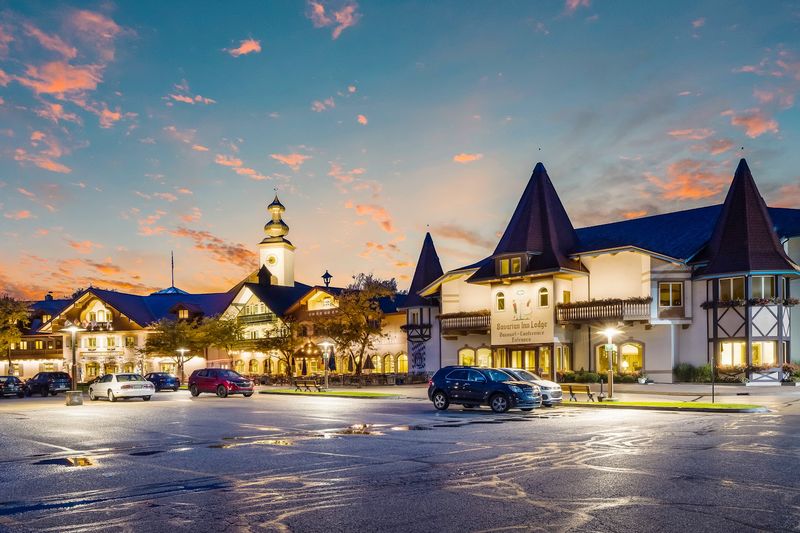
Frankenmuth smells like chicken dinners, gingerbread and fresh-cut wood, and that combination alone tells you something special is happening here. Founded in 1845 by Bavarian Lutheran missionaries from the Franconia region of Germany, this Michigan town has spent nearly 180 years perfecting its European identity without ever losing its warm Midwestern soul.
The architecture is unapologetically Bavarian. Ornate timbered facades, hand-carved details and decorative painted signs line the main streets, making Frankenmuth one of Michigan’s top tourist destinations year after year.
Bronner’s Christmas Wonderland — the world’s largest Christmas store, sprawling across 27 acres — draws over two million visitors annually and is a spectacle that defies easy description.
Zehnder’s and the Bavarian Inn Restaurant are legendary dining institutions, famous for their all-you-can-eat family-style chicken dinners that have been served here for generations. German-style beer, pretzels and bratwurst round out the culinary experience.
The Frankenmuth Oktoberfest and Bavarian Festival bring folk music, dancing and traditional costumes to the streets each year. The Cass River running through town adds a peaceful natural contrast to all the festivity.
Frankenmuth earns its nickname honestly — this is as close to Bavaria as Michigan gets, and Michigan is better for it.
Hermann, Missouri — German Heritage on the Missouri River
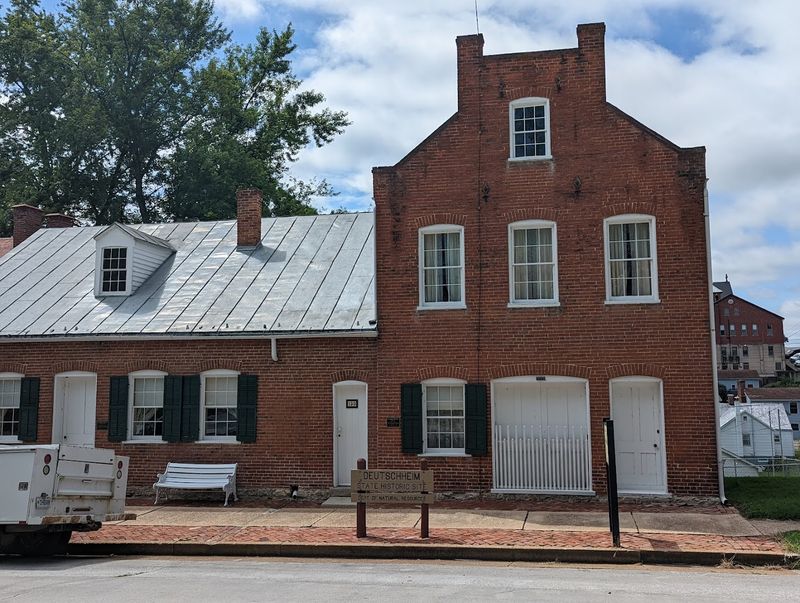
Perched on bluffs above the Missouri River with vineyards rolling across the hillsides, Hermann looks like it wandered out of the Rhine Valley and never found its way back. German immigrants settled here in the 1830s with a deliberate mission: to build a community so thoroughly German that their culture would survive on American soil.
Judging by what remains today, the mission succeeded spectacularly.
Historic brick buildings fill the downtown, many dating to the mid-1800s and preserved with impressive care. The town’s layout mirrors a traditional German village, with a central square flanked by churches, inns and storefronts.
Timbered facades and arched doorways add to the European aesthetic at every turn.
Wine is central to Hermann’s identity. The area’s limestone bluffs and river climate create ideal grape-growing conditions, and local wineries have been producing award-winning varietals for over a century.
Maifest in May and Oktoberfest in October draw visitors from across the region for German music, folk dancing, hearty food and excellent wine. The Historic Hermann Museum traces the town’s immigrant roots with artifacts, photographs and period furnishings.
Hermann is the kind of place where history feels lived-in rather than preserved behind glass, and that makes all the difference.
Fredericksburg, Texas — German Roots & Wine Country
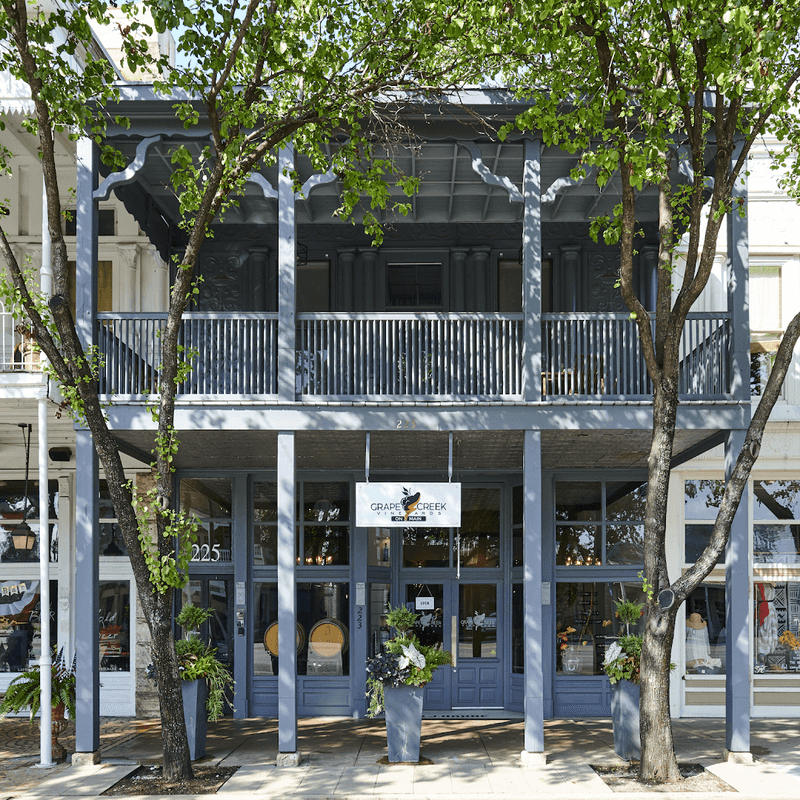
Fredericksburg is what happens when German engineering meets Texas stubbornness, and the result is one of the most charming towns in the Lone Star State. Founded in 1846 by German immigrants led by Prince Carl of Solms-Braunfels, the town was laid out with the same meticulous planning you would expect from central European settlers who took town design very seriously indeed.
Limestone buildings dominate the historic downtown, many constructed in the 1800s using local stone quarried from the surrounding Hill Country. These sturdy structures now house biergartens, German bakeries, antique shops and boutique wine tasting rooms that reflect the area’s growing reputation as a world-class wine destination.
Over 50 wineries operate within a short drive of downtown Fredericksburg.
The National Museum of the Pacific War, located right in town, adds a powerful historical dimension beyond the European heritage angle. German-inspired eateries serve schnitzel, bratwurst and Black Forest cake alongside Texas BBQ, creating a menu that perfectly mirrors the town’s dual identity.
Oktoberfest celebrations bring lederhosen-wearing locals and visitors together each fall for music and merriment. Fredericksburg proves that Old World roots and Texas-sized hospitality are not just compatible — they are an absolutely winning combination worth traveling for.
Holland, Michigan — Dutch Tulip Traditions
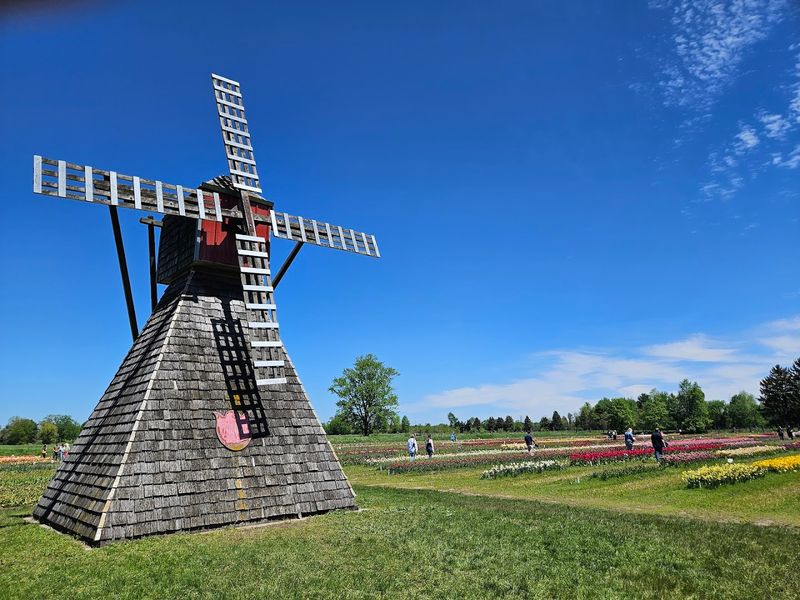
Every May, Holland, Michigan erupts into a riot of color so vivid it barely looks real. Over five million tulips bloom across the city during the annual Tulip Time Festival, transforming streets, parks and medians into something that looks pulled directly from a Dutch tourism poster.
And that is very much the point.
Dutch immigrants settled Holland in 1847, and the community has maintained its Netherlands heritage with genuine pride. Windmill Island Gardens is the crown jewel of the experience, home to De Zwaan — a 250-year-old authentic Dutch windmill imported from the Netherlands in 1964 and still in working order today.
Watching its massive wooden blades turn against a blue Michigan sky is quietly breathtaking.
Dutch-style architecture appears throughout the downtown, and local shops sell Delft pottery, wooden clogs and Dutch chocolates that make excellent souvenirs. The Tulip Time Festival features street scrubbing ceremonies, Dutch folk dancing in traditional costumes and a parade that draws hundreds of thousands of visitors annually.
Local Dutch bakeries offer stroopwafels and poffertjes that disappear quickly. Holland also sits on the shores of Lake Michigan, meaning beach days are conveniently available between all the cultural activities.
It is a genuinely lovely town that earns every bit of its Dutch reputation.
Lindsborg, Kansas — Little Sweden, USA
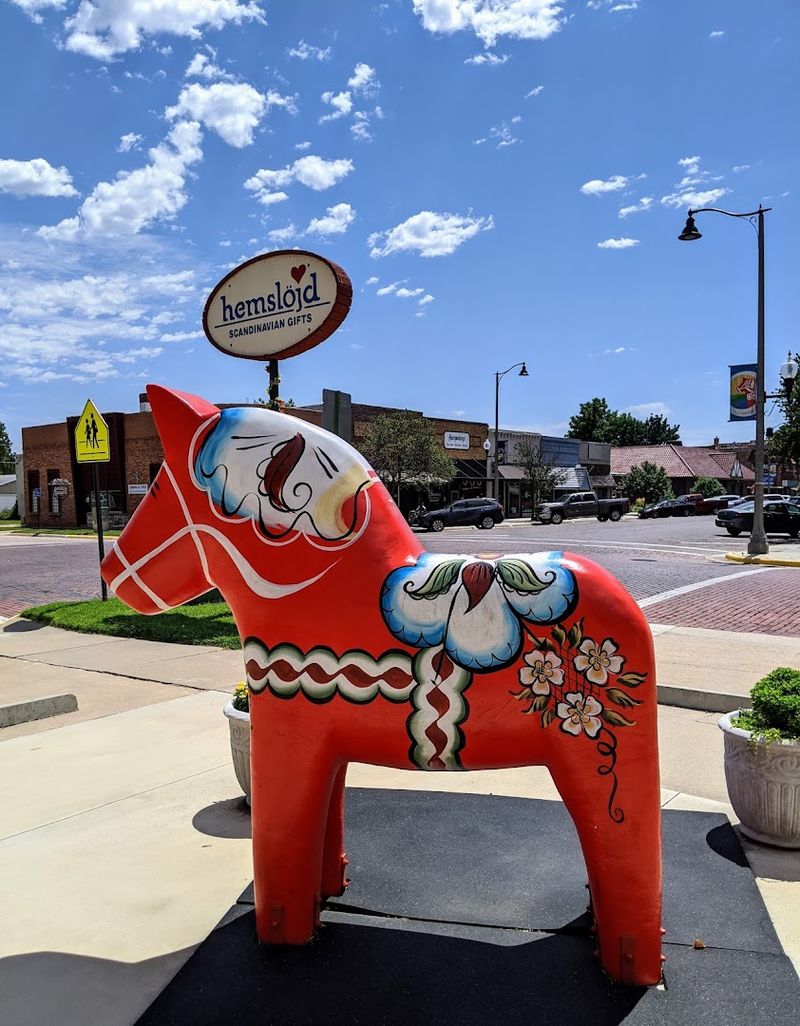
Bright red Dala horses stand on street corners throughout Lindsborg, Kansas, grinning cheerfully at passersby who may not have expected Scandinavian folk art in the middle of the Great Plains. Yet here it is, and it has been here since Swedish immigrants arrived in the 1860s to farm the rich Kansas prairie and build a community rooted in Nordic tradition.
Bethany College, founded in 1881 by Swedish Lutherans, anchors the cultural life of the town and hosts the nationally recognized Messiah Festival of the Arts each Easter — a tradition dating back to 1882 that draws performers and audiences from across the country. The campus architecture adds a dignified, European academic feel to the streetscape.
Downtown Lindsborg is lined with shops selling Swedish imports, hand-painted folk art, Viking-themed novelties and homemade Scandinavian treats. The Smoky Valley Roller Mill, a 19th-century landmark, and the Birger Sandzen Memorial Gallery — dedicated to a celebrated Swedish-American painter — offer cultural depth beyond the souvenir shops.
Midsummer festivals bring folk dancing and traditional music to the streets each June. Lindsborg may sit in the geographic heart of America, but its spirit leans firmly and joyfully toward the northern shores of Scandinavia.
Galena, Illinois — Brick Streets & Historic Elegance
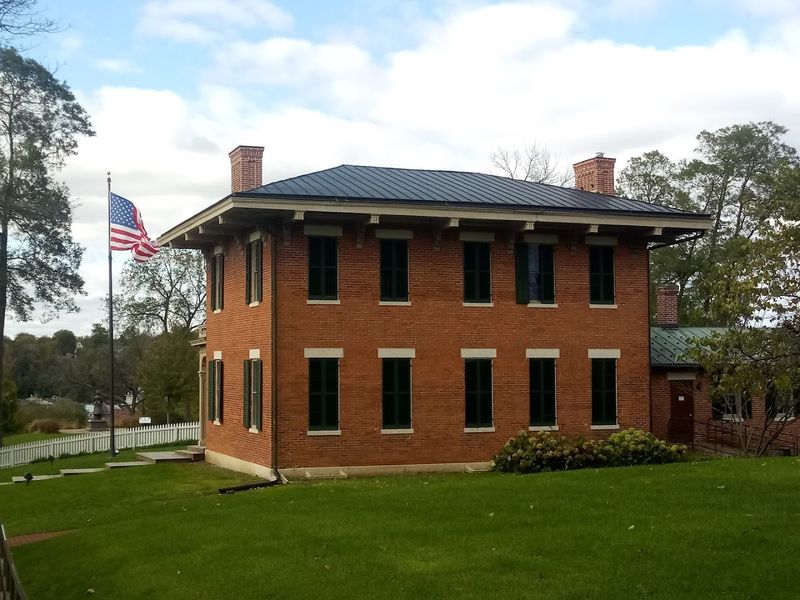
Walking down Galena’s Main Street feels like the 21st century forgot to show up, and honestly, that is a gift. This northwestern Illinois town is one of the most remarkably preserved 19th-century communities in the entire country, with over 85 percent of its buildings listed on the National Register of Historic Places.
That is not a small number — that is a whole town frozen in beautiful amber.
Brick-lined streets slope gently between rows of Italianate, Federal and Greek Revival buildings that now house antique galleries, independent boutiques and cozy wine bars. The effect is unmistakably European — the kind of layered, unhurried elegance you associate with market towns in England or France rather than the American Midwest.
Even the surrounding rolling hills feel vaguely pastoral and continental.
Galena was once the most important city in Illinois, outpacing Chicago in population and commerce during the 1840s lead mining boom. Ulysses S.
Grant lived here before and after the Civil War, and his preserved home is a popular historical landmark. Fall foliage season transforms the surrounding countryside into a painter’s palette of gold and crimson.
Galena rewards slow exploration — the kind where you wander without a map, stumble into a great café and decide to stay just one more night.
Camden, Maine — Seaside Village With Old-World Poise
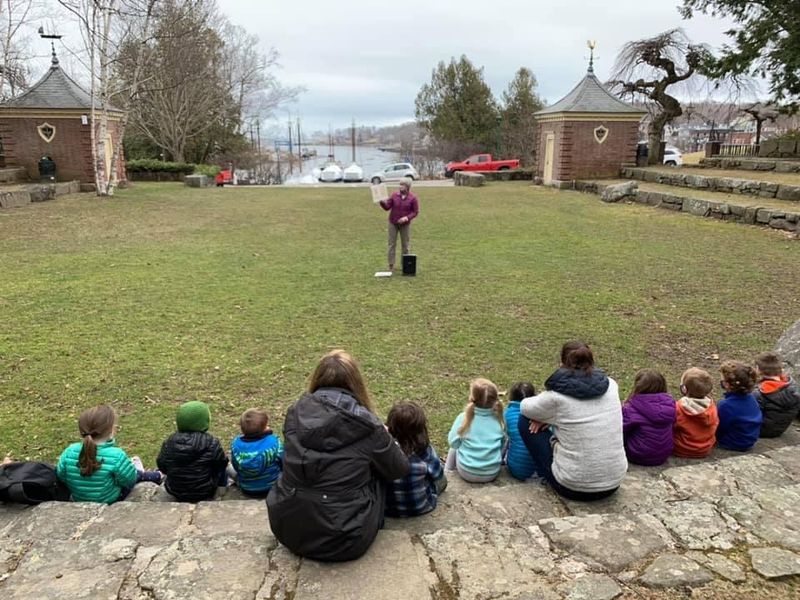
Camden, Maine has the kind of harbor view that makes people stop mid-sentence and just stare. Tall-masted windjammers sit quietly in the protected harbor, framed by Camden Hills rising directly behind town — a backdrop so cinematic it has appeared in films and novels more times than locals can count.
The scenery alone would be enough, but Camden offers considerably more than scenery.
The town’s architecture carries a dignified European coastal elegance, with Victorian homes, Federal-style buildings and carefully maintained storefronts lining streets shaded by mature elms and maples. It echoes the seaside towns of Cornwall, Brittany or the Norwegian coast — places where prosperity and natural beauty built something lasting and graceful over generations.
Camden is a sailor’s town at heart. Windjammer cruises depart regularly, offering multi-day sailing adventures along the Maine coast that feel genuinely old-fashioned in the best possible way.
The Penobscot Bay area surrounding Camden is celebrated for lobster, fresh seafood and farm-to-table restaurants that take local ingredients seriously. Camden Hills State Park sits just minutes from downtown, offering hiking trails with panoramic coastal views.
Independent bookshops, art galleries and a beloved opera house round out a cultural scene that punches well above its small-town weight. Camden earns its reputation effortlessly.
Poulsbo, Washington — Scandinavian Waterfront Town
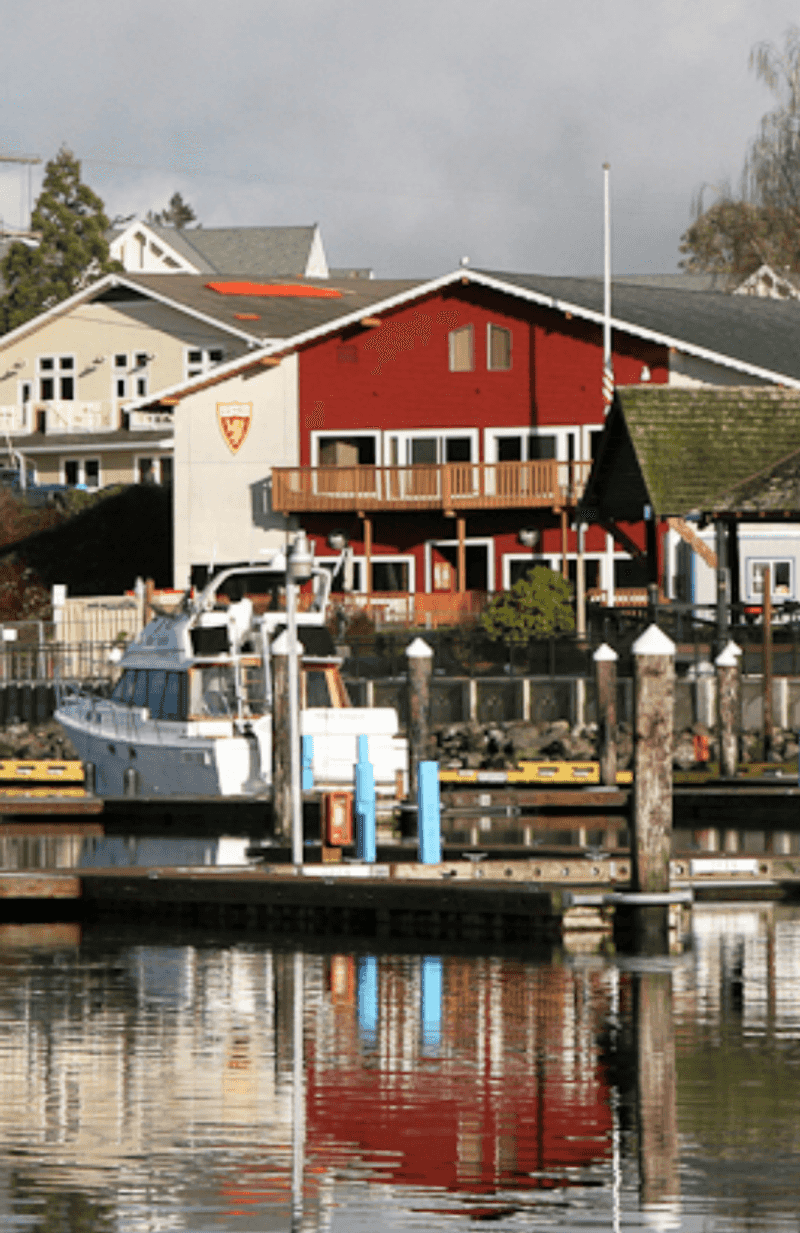
Rosemaling — the flowing, colorful floral folk art of Norway — decorates shop windows and building facades throughout Poulsbo, Washington, giving the waterfront town a distinctly Nordic personality that surprises first-time visitors in the best possible way. Settled by Norwegian fishermen and farmers in the 1880s, Poulsbo found that Liberty Bay offered conditions that felt reassuringly familiar to people who grew up near Norwegian fjords.
The town embraces its “Little Norway” nickname with genuine enthusiasm rather than tourist-trap gimmickry. Waterfront architecture features painted wooden facades, carved details and Scandinavian color palettes of red, blue and white that look especially striking against the gray-green waters of Puget Sound.
The Olympic Mountains visible across the water complete a panorama that is legitimately breathtaking.
Sluy’s Poulsbo Bakery is a local institution, famous for its Poulsbo bread — a hearty, slightly sweet Scandinavian-style loaf that locals have been buying for decades. Viking Fest each May celebrates Norse heritage with a parade, folk music and traditional food that draws visitors from across the Pacific Northwest.
The town’s walkable waterfront promenade connects boutique shops, galleries and cafés in a relaxed, unhurried loop. Poulsbo is small enough to explore in an afternoon but interesting enough to make you want to return every season.
Montpelier, Vermont — French-Inspired Capital Charm
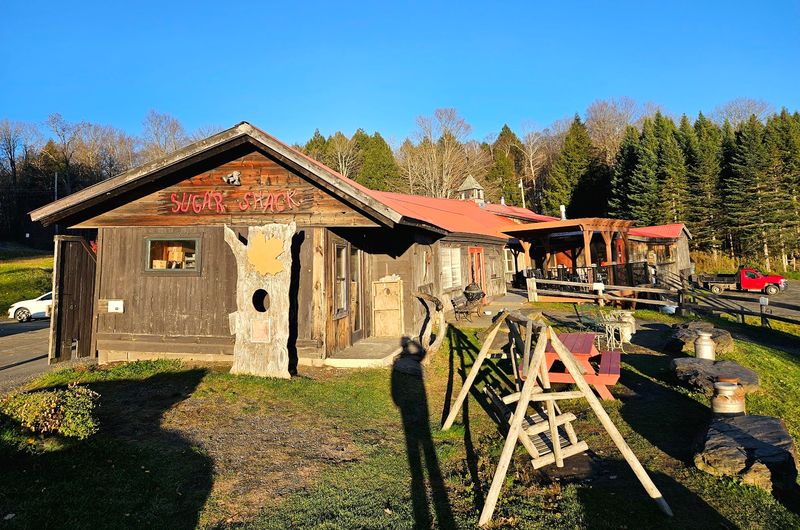
Montpelier holds the title of smallest state capital in the United States, and it wears that distinction like a badge of honor rather than an apology. With a population of just under 8,000 people, this Vermont city manages to pack in more culture, cuisine and civic energy per square foot than places ten times its size.
The gold dome of the State House gleaming above the Winooski River is a genuinely lovely sight.
There is something undeniably French provincial about Montpelier’s rhythm. Tree-lined streets, independent booksellers, artisan cheese counters, a thriving farmers market and a local restaurant scene that takes food seriously all contribute to an atmosphere that feels more like a small French city than a typical American state capital.
People actually walk here, which already sets it apart.
The New England Culinary Institute has long called Montpelier home, ensuring that the dining scene maintains unusually high standards for a city this size. Independent coffee shops, local breweries and a genuine arts community add layers of interest beyond the political.
Autumn in Montpelier is spectacular — the surrounding hills turn amber, crimson and gold in a display that draws leaf-peepers from across the country. Montpelier rewards visitors who prefer depth over spectacle and conversation over crowds.
St. Augustine, Florida — Spanish Colonial Sophistication
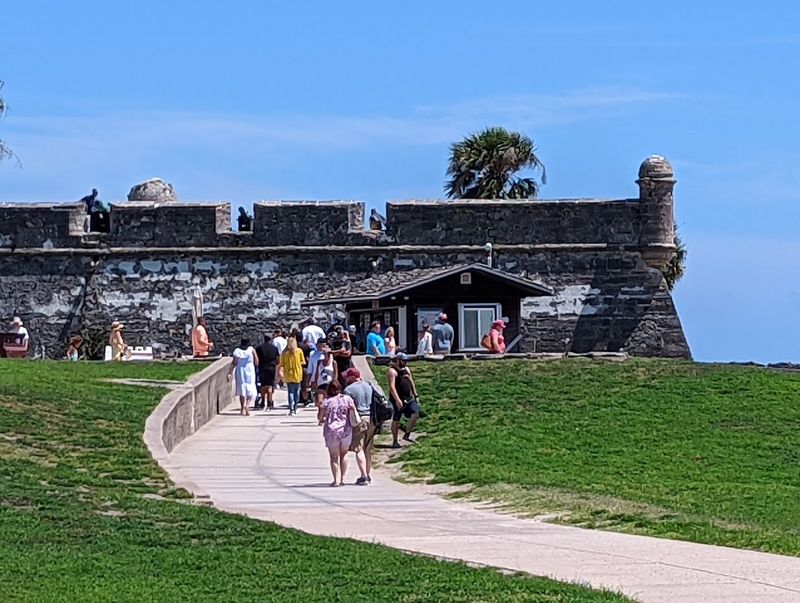
Founded in 1565, St. Augustine is the oldest continuously occupied European-established city in the entire United States — a fact that becomes impossible to ignore the moment you walk through the city gate onto St. George Street. The stones beneath your feet have been here for centuries, and the buildings lining the narrow lanes carry that weight with quiet dignity and considerable style.
Spanish colonial architecture defines the historic district in ways that feel genuinely Mediterranean. Coquina stone walls, wrought-iron balconies, shaded interior courtyards and terracotta roof tiles create a visual language borrowed directly from Seville or Cartagena.
The Castillo de San Marcos — a 17th-century Spanish fort built from coquina — stands as one of the most impressive historic military structures in North America and anchors the waterfront with commanding presence.
The Plaza de la Constitución, one of the oldest public squares in the country, remains a living gathering space where locals and visitors mingle beneath ancient oaks draped in Spanish moss. Restaurants serve fresh Florida seafood alongside Spanish-inspired dishes in settings that feel authentically Old World.
Ghost tours, carriage rides and walking history programs bring the colonial past to life after dark. St. Augustine does not just preserve history — it actively inhabits it every single day.
Pella, Iowa — Dutch Canal & Tulip Traditions
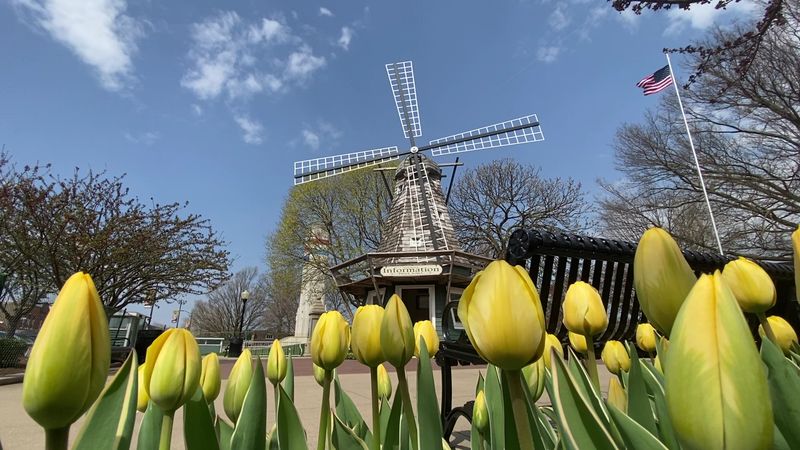
Pella, Iowa has a working windmill called the Vermeer Mill that stands eight stories tall and actually grinds grain — not as a museum piece, but as a functioning mill producing flour sold in local shops today. That commitment to keeping Dutch heritage genuinely alive rather than merely decorative says everything you need to know about this Marion County community of around 10,000 people.
Dutch immigrants fleeing religious persecution arrived in Pella in 1847, led by Hendrik Peter Scholte, and they built their new home with unmistakable Dutch character. Canals, traditional brick architecture and carefully maintained streetscapes reflect the Netherlands with a sincerity that goes beyond surface-level theming.
The town square, anchored by a clock tower and canal, is the kind of public space that invites lingering.
The Tulip Time Festival held each May is the town’s biggest celebration, drawing over 100,000 visitors for three days of Dutch folk dancing, street scrubbing ceremonies, parades and spectacular floral displays. Local bakeries produce Dutch letters — flaky, almond-filled pastries shaped into the letter S — that are dangerously addictive and available year-round.
The Pella Historical Village preserves 21 historic buildings including Scholte’s original home. Pella is the kind of town that makes you genuinely happy such places still exist in America.



