 Unearth The Voyage
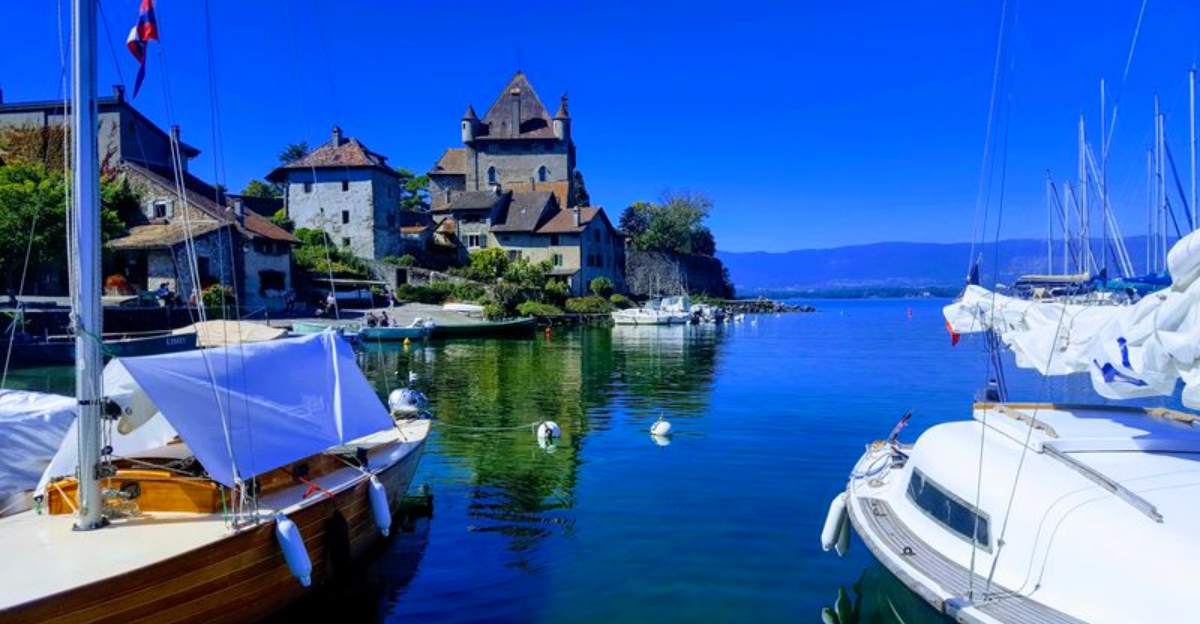
France is famous for its grand cities, but its true soul lives in the countryside. Tucked between vineyards, cliffsides, and lavender fields are villages so beautiful they look like they were painted by hand.
From colorful Alsatian streets to hilltop bastides in Occitanie, these places offer something rare — a genuine glimpse into everyday French life. Pack your curiosity and comfortable shoes, because this journey through 15 of France’s most charming villages is one you won’t forget.
Eguisheim, Alsace
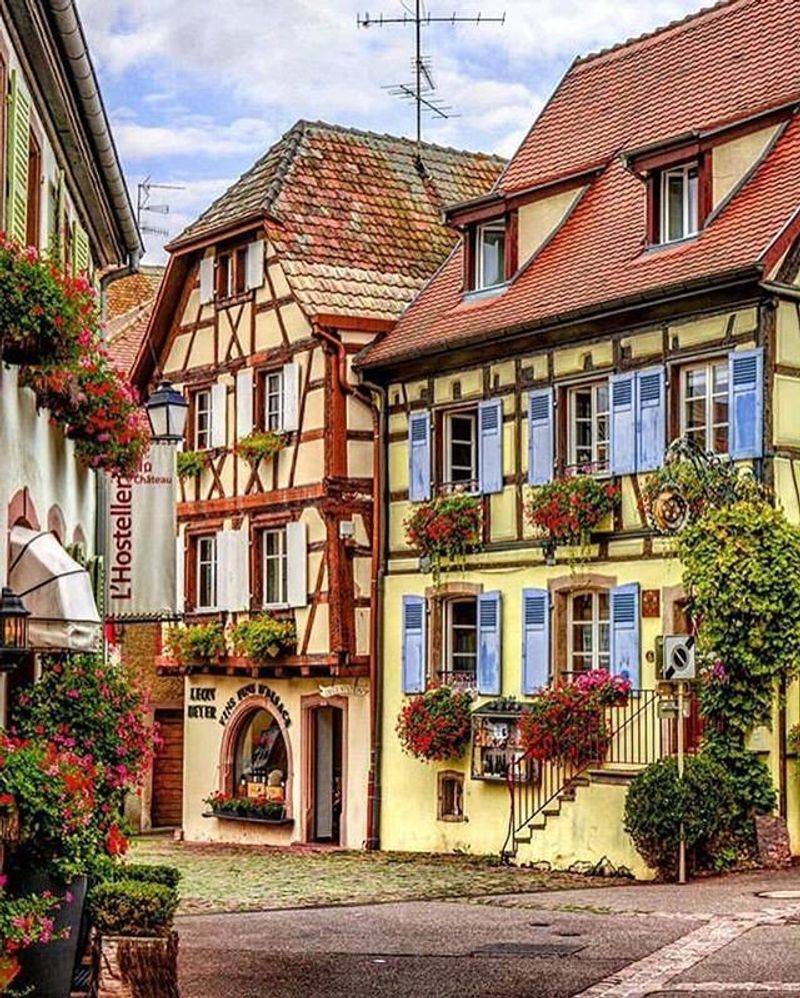
Imagine walking in a perfect circle and ending up exactly where you started — that’s the magic of Eguisheim. This tiny village in Alsace is built in concentric rings, and every step reveals another row of candy-colored half-timbered houses bursting with window boxes full of geraniums.
It feels almost too pretty to be real, yet people actually live and work here.
Eguisheim sits proudly along the famous Alsace Wine Route, so wine cellars are never far away. Local vignerons pour glasses of Riesling and Gewurztraminer with the kind of pride that only comes from generations of craft.
The village earned the title of France’s Favorite Village in 2013, and one stroll through its lanes makes it obvious why.
Cars are mostly kept outside the village center, which means the streets belong to wanderers, cyclists, and curious cats. Fountains bubble at intersections, locals chat outside boulangeries, and the smell of tarte flambée drifts from nearby restaurants.
Eguisheim doesn’t perform for tourists — it simply lives its life beautifully, and visitors are welcome to watch.
Gordes, Provence
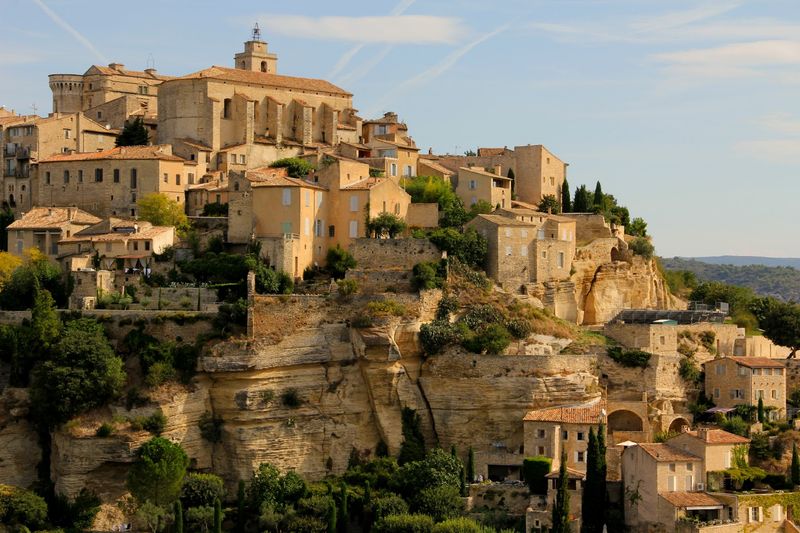
Perched like a crown above the Luberon Valley, Gordes has earned its reputation as one of the most photographed villages in France — and the camera never lies. Its honey-colored stone houses stack up the hillside in a way that looks almost architectural in its perfection, glowing golden in the afternoon sun.
Spring and summer bring an extra layer of drama, when lavender fields ripple purple across the surrounding landscape and local markets overflow with olives, cheeses, and sun-dried tomatoes. Despite drawing visitors from across the world, Gordes hasn’t lost its local heartbeat.
Residents still gather at the same small cafés, artisans still sell handmade goods from centuries-old workshops, and Sunday mornings still smell like fresh bread.
The village also sits close to the Sénanque Abbey, where monks have been growing lavender since the 12th century — a humbling reminder that some traditions outlast trends by about a thousand years. Whether you arrive at dawn to beat the crowds or linger at dusk when the stone walls turn rose-gold, Gordes rewards every kind of traveler with something genuinely unforgettable.
Roussillon, Provence
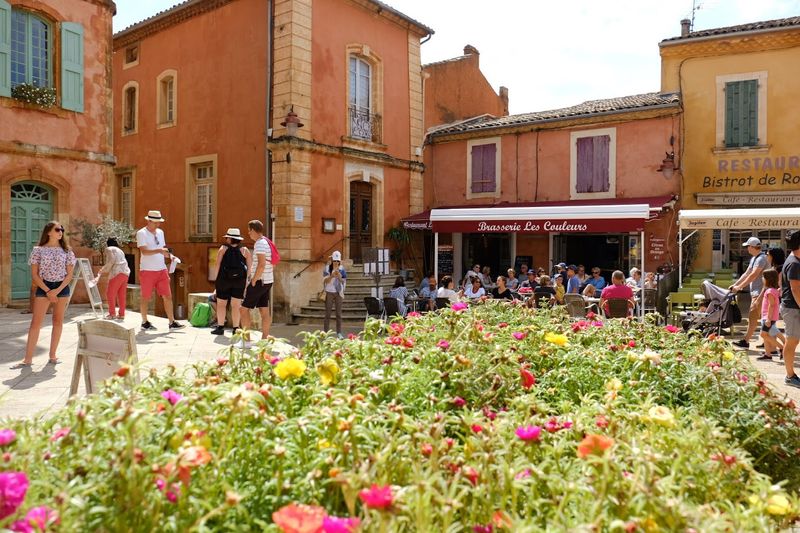
Nobody warned you that a whole village could look like it was built from sunset. Roussillon’s buildings range from deep terracotta red to blazing orange and soft golden yellow, all pulled directly from the ochre cliffs that surround the town.
The color isn’t paint — it’s geology, and it makes Roussillon unlike anywhere else in France.
The village sits above one of the largest ochre deposits in the world, and you can hike the Sentier des Ocres trail to see the cliffs up close. The path winds through formations that look like something from another planet, yet you’re still firmly in Provence, just minutes from a good rosé.
Local life here moves at a relaxed pace, with small galleries, weekly markets, and cafés that seem to exist purely for the purpose of long conversations.
Craftspeople and artists have been drawn to Roussillon for decades, attracted by its extraordinary light and color. Their work fills tiny boutiques along the main street, offering everything from hand-painted ceramics to ochre-infused cosmetics.
If you leave without a little rust-colored dust on your shoes, you probably didn’t explore enough.
Saint-Cirq-Lapopie, Occitanie
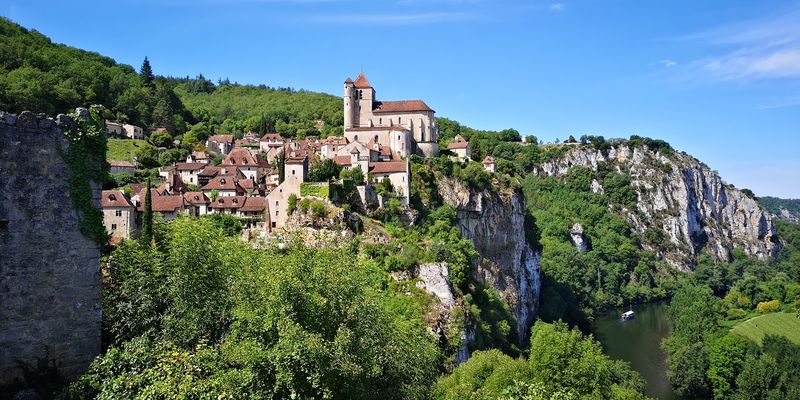
Clinging to a 100-meter cliff above the Lot River, Saint-Cirq-Lapopie has a flair for the dramatic that most villages can only dream of. Medieval stone houses grip the rockface like they’ve been there forever — because many of them have, dating back to the 13th and 14th centuries.
The views from the top, where a ruined fortress overlooks the river valley, are the kind that make you forget what you were thinking about.
André Breton, the surrealist writer, fell so hard for this village that he declared he could no longer imagine being anywhere else. That kind of devotion makes sense once you’re here.
Artists and craftspeople have followed in his footsteps, setting up workshops and studios in the same stone buildings where tanners and woodworkers once traded their goods.
Despite its fairytale looks, Saint-Cirq-Lapopie doesn’t feel like a museum piece. Locals still live here, shop at the small market, and keep the cultural spirit genuinely alive.
Hiking trails along the Lot River offer a different perspective on the village — and spotting it from the water, rising dramatically above the trees, is a moment that sticks with you long after you’ve left.
Rocamadour, Occitanie
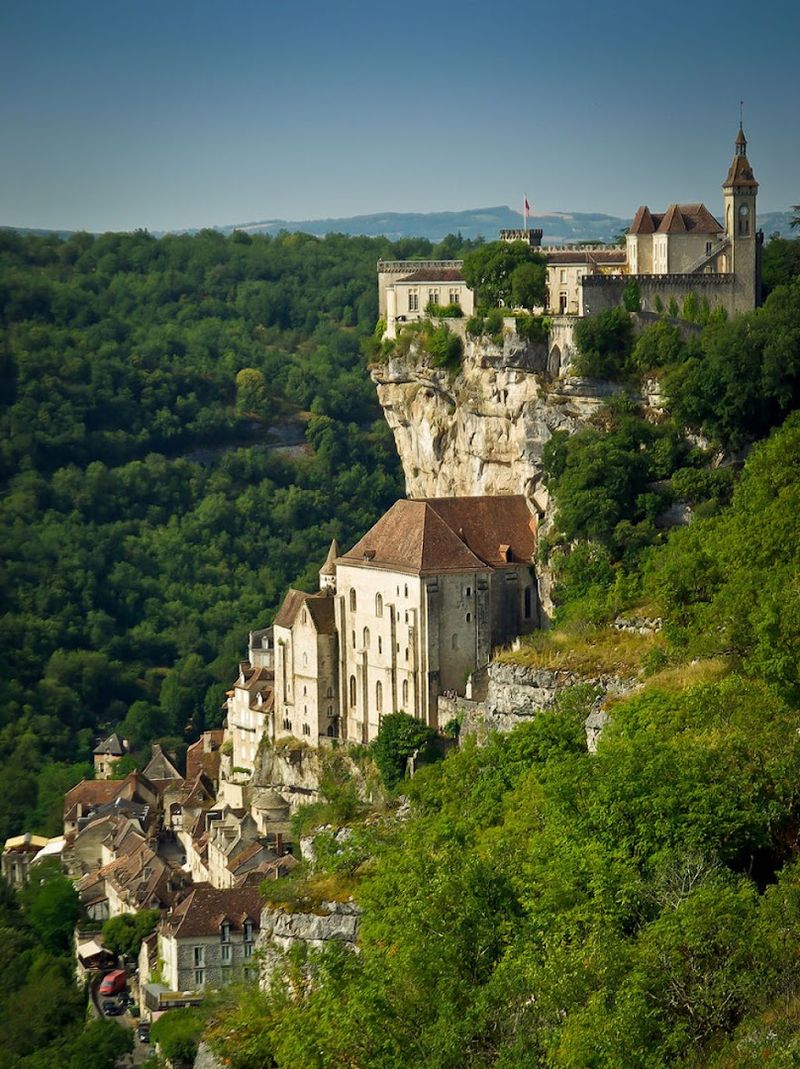
Gravity seems optional in Rocamadour. Built directly into a sheer cliff face above a canyon, this extraordinary village stacks churches, chapels, and stone houses in vertical tiers, connected by staircases that pilgrims once climbed on their knees as acts of devotion.
It’s one of those places that makes you stop, stare, and quietly wonder how anyone thought to build here in the first place.
For over a thousand years, Rocamadour has been one of France’s most important pilgrimage sites, drawing the faithful to its famous Black Madonna chapel carved into the rock. Kings, saints, and ordinary travelers have all made the climb.
That spiritual weight still lingers in the air, giving the village a sense of purpose and quiet reverence that few places can match.
Beyond its religious history, Rocamadour is also famous for its cheese — a small, round goat’s cheese called Rocamadour AOC that locals have been making for centuries. You’ll find it at every market stall and restaurant in the area, usually served warm on a salad or simply with a drizzle of honey.
History, architecture, and cheese: Rocamadour covers all the important bases.
Colmar, Alsace
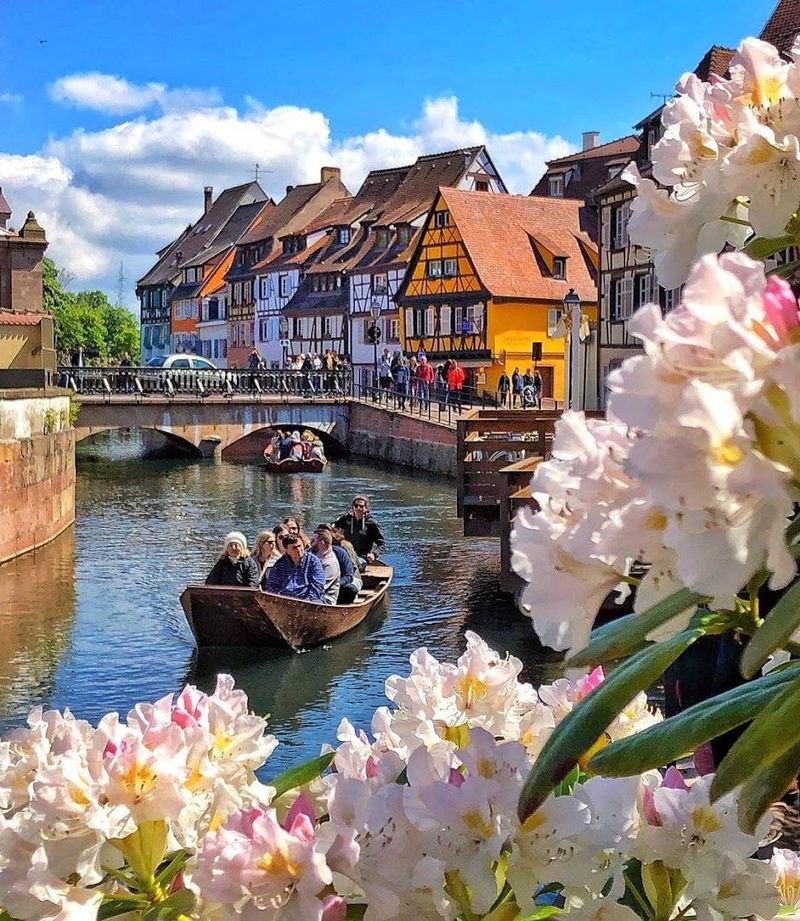
Colmar is the kind of place that makes first-time visitors reach for their camera before they’ve even finished parking. Its famous Little Venice district — a network of canals lined with brightly painted half-timbered houses — looks like a fairy tale that somehow became a real neighborhood.
The colors are genuinely that vivid: bubblegum pink, sunflower yellow, sage green.
Straddling the cultural line between France and Germany, Colmar has a personality that’s entirely its own. The food reflects both traditions beautifully, with choucroute garnie and baeckeoffe appearing alongside tarte flambée and Alsatian Riesling on every menu.
The Unterlinden Museum houses one of the most important altarpieces in European art history, the Isenheim Altarpiece, which is worth a visit even if you think you’re not a museum person.
Christmas transforms Colmar into something even more spectacular. The village hosts one of France’s oldest and most beloved Christmas markets, filling its medieval squares with wooden stalls, mulled wine, and the scent of cinnamon.
But honestly, Colmar earns its charm in every season — spring tulips, summer canal boat rides, autumn harvest festivals. It’s a village that genuinely delivers year-round.
Les Baux-de-Provence, Provence
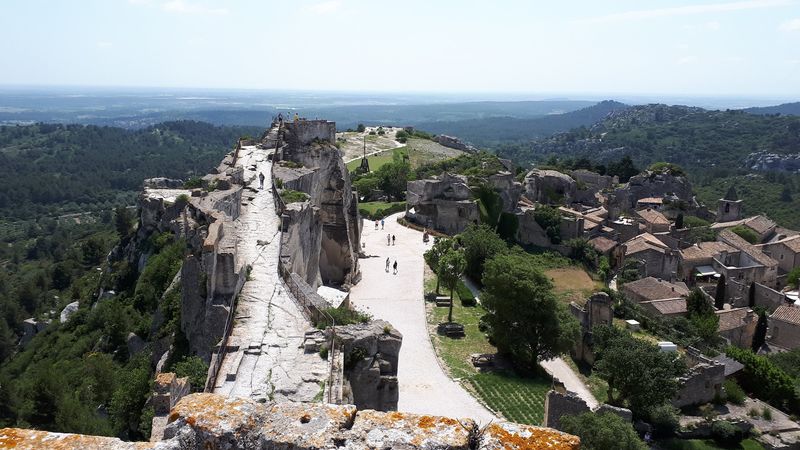
Les Baux-de-Provence sits on a rocky limestone ridge like a fortress that refused to surrender to time — because, in many ways, it didn’t. The village has been inhabited since ancient times, and the ruins of its medieval citadel still crown the hilltop, offering views across the Alpilles mountains that stretch for miles in every direction on a clear day.
The lower village is very much alive, filled with galleries, artisan shops, and restaurants serving the bold flavors of Provençal cooking. Olive oil produced in the valley below Les Baux carries its own AOC designation, meaning it’s officially recognized as one of France’s finest.
Tasting it fresh from the mill, poured over warm bread, is a simple pleasure that somehow feels like a luxury.
One of the village’s modern claims to fame is the Carrières de Lumières, a stunning immersive art show projected onto the walls of a former limestone quarry just outside the village. Massive artworks by masters like Van Gogh and Klimt fill the cave-like space with color and sound, making it one of the most unusual cultural experiences in France.
Old ruins and cutting-edge art — Les Baux plays both roles with equal confidence.
Kaysersberg, Alsace
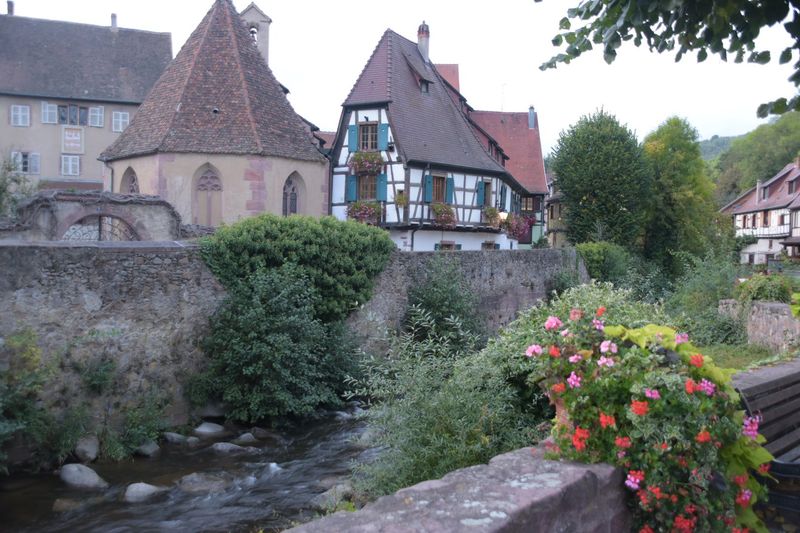
Albert Schweitzer, the Nobel Peace Prize-winning doctor and philosopher, was born in Kaysersberg in 1875 — and if you spend an afternoon wandering its streets, you’ll understand why he spent his whole life carrying a piece of this place with him. The village is simply that good.
Steep vineyard slopes frame the town on one side, while the Weiss River cuts through the center, spanned by a fortified medieval bridge you can still walk across today.
Kaysersberg has been voted France’s favorite village more than once, and locals take that honor seriously without letting it go to their heads. Wine is central to life here — the Grand Cru vineyards surrounding the town produce some of Alsace’s most celebrated whites, and tasting rooms welcome visitors with genuine warmth rather than a sales pitch.
The weekly market brings farmers, bakers, and cheesemakers together in the main square every Saturday morning.
During the Christmas season, Kaysersberg transforms into what many visitors describe as the most magical market in Alsace, with the medieval backdrop providing the kind of atmosphere no shopping mall could ever replicate. But summer in Kaysersberg, with roses climbing the stone walls and café tables spilling onto cobblestones, runs it a very close second.
Collonges-la-Rouge, Corrèze
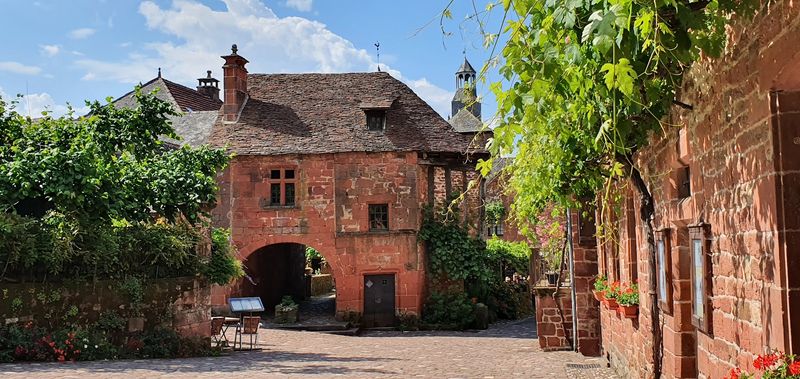
There’s exactly one color that defines Collonges-la-Rouge, and the name gives it away entirely. Every building in this extraordinary village in the Corrèze is constructed from the same deep red sandstone, giving the whole place a warm, glowing appearance that shifts from burgundy to copper depending on the light.
At sunset, the village looks like it’s on fire in the best possible way.
Founded in the 8th century and reaching its peak during the 15th and 16th centuries, Collonges-la-Rouge was once an important stopping point on the pilgrimage route to Santiago de Compostela. The Romanesque church at its center, also built from red stone, has been welcoming travelers for nearly a thousand years.
History here isn’t a backdrop — it’s the main event.
Narrow lanes wind between turrets, manor houses, and ancient doorways carved with family crests, each one hinting at the noble families who once competed for status in this small community. Walnut trees shade the paths, and local producers sell walnut oil, preserves, and foie gras from small shops tucked into the red walls.
Collonges-la-Rouge was also the founding village of the famous Les Plus Beaux Villages de France association — the original beautiful village, you could say.
Yvoire, Haute-Savoie
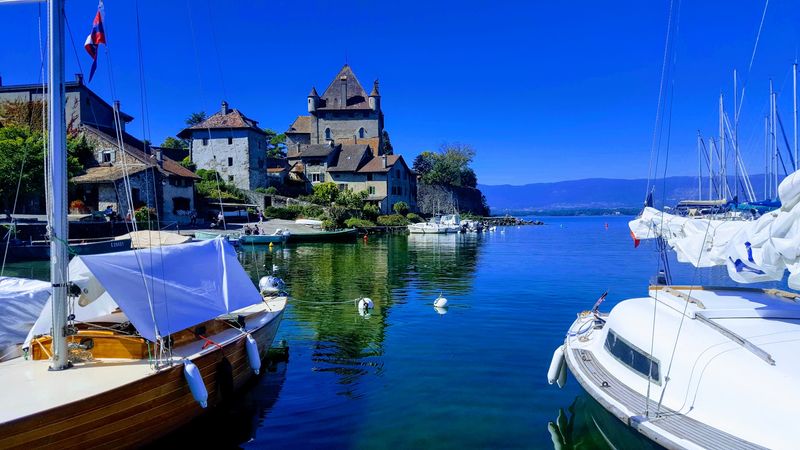
Yvoire has been winning flower competitions for decades, and one look at its streets explains why. Every wall, window, and doorway in this medieval lakeside village is draped in cascading blooms — roses, petunias, geraniums — creating a riot of color against the grey stone fortifications that have stood since the 14th century.
It’s one of the most flower-decorated villages in all of France, officially.
Sitting right on the southern shore of Lake Geneva, Yvoire enjoys a microclimate that’s unusually mild for the Alps, which explains both the flowers and the exceptional freshwater fish on every restaurant menu. Perch filets, lightly breaded and served with lemon, are the local specialty — pulled from the same lake that shimmers just beyond the village walls.
Ferry boats connect Yvoire to the Swiss shore, making it a naturally international little place.
The Garden of Five Senses, a medieval-inspired garden inside the village walls, is one of Yvoire’s hidden treasures. Designed around touch, smell, taste, sight, and hearing, it’s a surprisingly immersive experience that slows everything down and reminds you to actually pay attention to where you are.
In a village this beautiful, that’s not a hard instruction to follow.
Pérouges, Auvergne-Rhône-Alpes
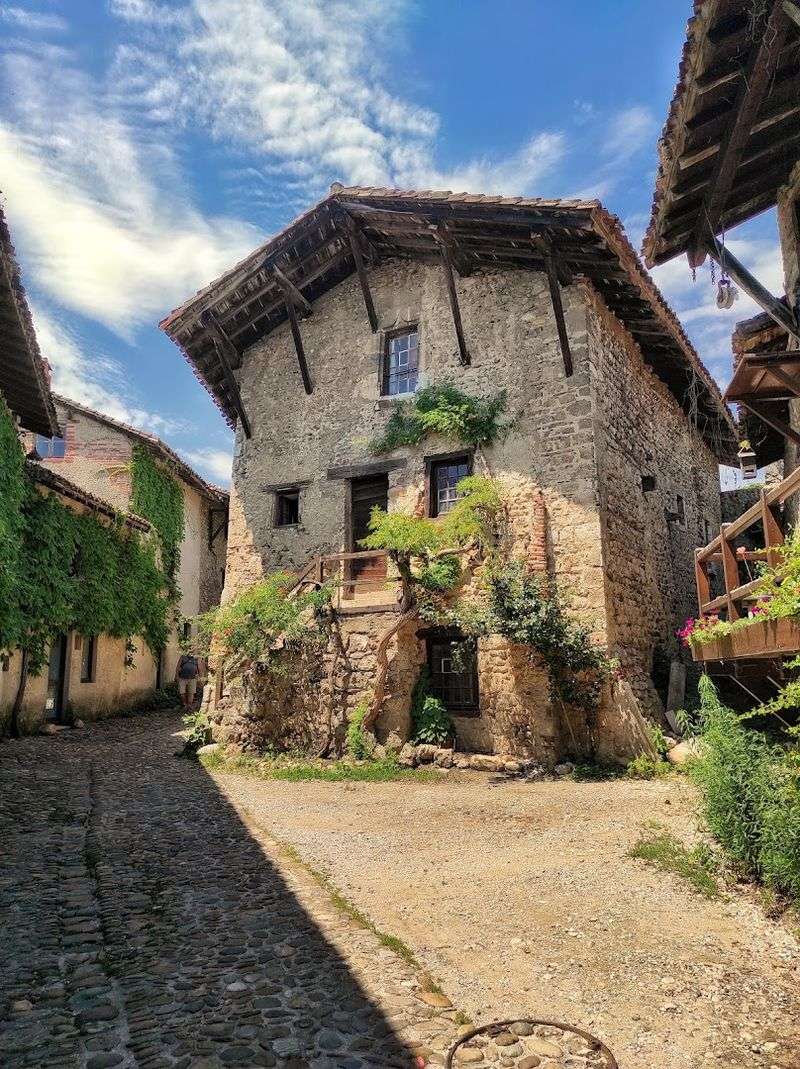
Pérouges is so well-preserved that it has doubled as a medieval film set more than once — and unlike most movie sets, it’s the real thing. This hilltop village near Lyon has barely changed since the 15th century, with its rounded cobblestone streets, fortified double walls, and half-timbered stone houses creating a setting that genuinely transports you backward in time.
It’s the kind of place that makes history feel personal rather than distant.
The village was nearly demolished in the early 20th century when its population dwindled to just a handful of families. A passionate restoration effort saved it, and today Pérouges is recognized as one of France’s most beautifully preserved medieval villages.
That near-miss makes the experience of walking its lanes feel even more meaningful — someone fought to keep this alive for you.
At the center of the village, a centuries-old linden tree shades the main square, where a small restaurant serves the local specialty: galette de Pérouges, a flat, sugary pastry made with butter and lemon that has been baked here for generations. It’s simple, slightly addictive, and goes perfectly with a glass of local wine.
Sometimes the best things in life really are that straightforward.
Domme, Dordogne
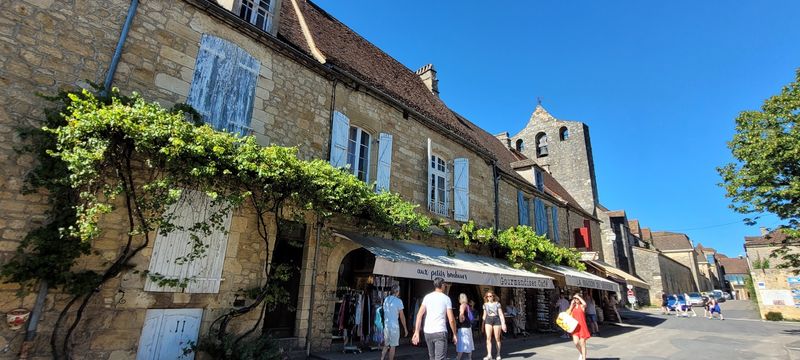
Standing at the edge of Domme’s cliff-top esplanade, looking down at the Dordogne River as it curves lazily through a valley of green and gold, is one of those travel moments that makes everything else feel worth it. This bastide village — a planned medieval town built for both commerce and defense — sits 150 meters above the valley floor, commanding views that have been making jaws drop since the 13th century.
Domme was founded in 1283 by the French king Philip III, and its grid-like street plan, fortified gates, and central market square are all still intact. The covered market hall in the main square sits above a network of natural caves that were used as shelter during the Hundred Years War — you can tour them today and see the carved inscriptions left by Knights Templar who were imprisoned here.
History has layers in Domme, quite literally.
The market on Thursday mornings fills the square with farmers selling walnuts, foie gras, strawberries, and black truffles depending on the season. The Dordogne region is one of France’s great food destinations, and Domme sits right at its heart.
Come hungry, leave with a bag full of things you’ll be thinking about for months.
Lauzerte, Occitanie
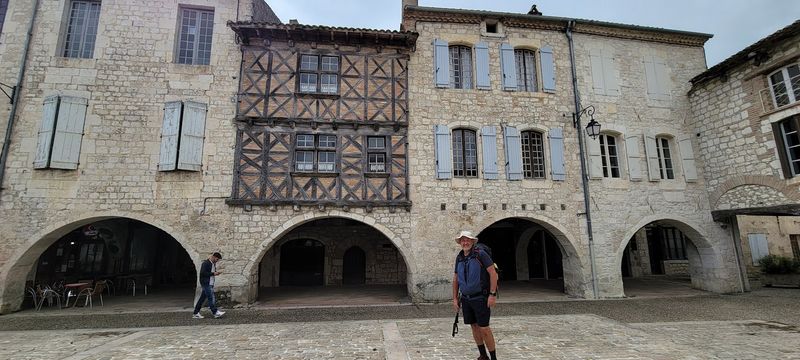
Nicknamed the “white Quercy” for the pale limestone that defines its landscape, the area around Lauzerte has a quiet, sunbaked beauty that feels completely removed from the modern world. The village itself crowns a steep hill, and the climb to the top — past old stone walls and wild herbs growing between the paving stones — rewards you with views that stretch across rolling farmland in every direction.
Worth every step.
Founded in 1241 by the Count of Toulouse, Lauzerte is a classic bastide village with an arcaded central square that has hosted markets for nearly eight centuries. It also sits on the Via Podiensis, one of the major pilgrimage routes to Santiago de Compostela in Spain, which means a steady stream of walkers with walking sticks and dusty boots pass through, adding a sense of timeless purpose to the village’s atmosphere.
Local life here is refreshingly unhurried. A handful of restaurants serve hearty Quercy cooking — duck confit, cassoulet, prune-based desserts — and small artisan shops sell pottery and local produce without any tourist-trap pressure.
Lauzerte made the Les Plus Beaux Villages de France list for good reason: it’s the kind of beautiful that doesn’t need to announce itself.
Château-Chalon, Jura
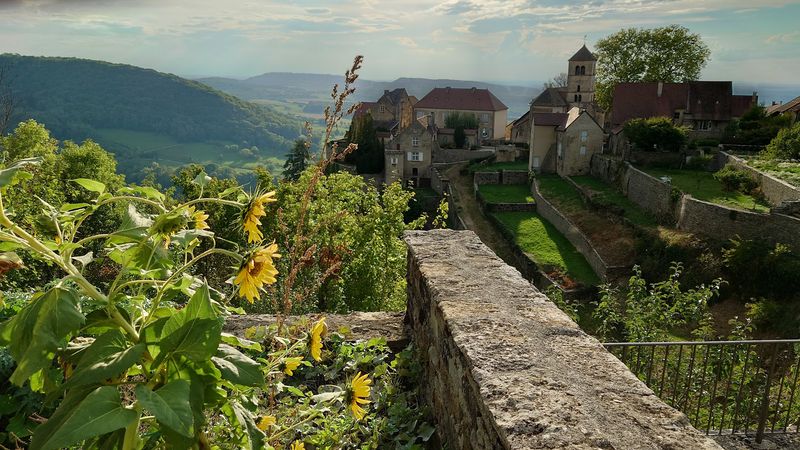
Wine lovers, take note: Château-Chalon produces what many consider to be the greatest wine in the Jura — a rare, nutty, oxidative white called Vin Jaune that ages in barrels for over six years before release. The village that bears its name sits on a dramatic cliff above the very vineyards that produce it, and the connection between the landscape, the people, and the wine here is as tight as anywhere in France.
This is a place where terroir isn’t just a word — it’s a way of life.
The village itself is tiny, home to only a few hundred residents, but its history runs deep. A powerful Benedictine abbey once controlled the entire plateau, and the ruins of its watchtower still stand above the houses, offering a view that monks and medieval lords would both recognize.
The Romanesque church, rebuilt in the 12th century, anchors the village with a quiet, stone-carved dignity.
Walking the paths between the vineyards in autumn, when the leaves turn amber and the harvest is underway, is one of the most genuinely peaceful experiences rural France offers. There are no crowds, no noise, just the sound of wind through the vines and the faint smell of fermentation drifting from the cellars below.
Château-Chalon earns its beauty quietly.
Lautrec, Occitanie
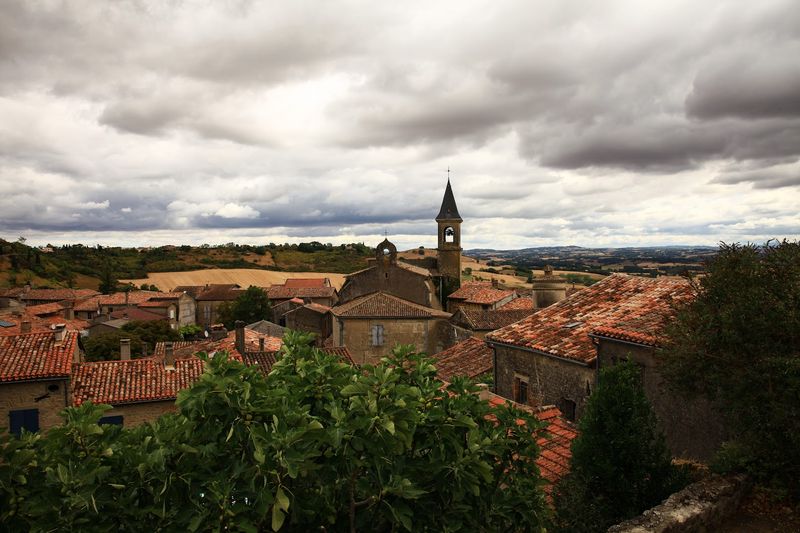
Lautrec has a secret weapon, and it smells faintly of garlic. The village is the proud home of the Lautrec pink garlic, a variety so prized that it holds its own Label Rouge certification — France’s official mark of exceptional quality.
Every August, the village throws a garlic festival that draws thousands of visitors to celebrate what is, without question, the most glamorous allium in France. Yes, garlic can be glamorous.
Beyond its famous crop, Lautrec is a beautifully preserved hilltop village with roots going back to the early Middle Ages. Its windmill, restored and still occasionally operational, stands at the village’s highest point and has become a beloved local symbol.
The arcaded central square, framed by medieval half-timbered buildings, hosts a lively Friday market where locals buy and sell everything from fresh vegetables to handmade lace.
The village also has a notable artistic connection — the painter Henri de Toulouse-Lautrec, whose famous posters defined 1890s Paris, took his family name from this very place. Walking Lautrec’s quiet streets with that knowledge gives the whole village an extra layer of character.
It’s a place where farming traditions, medieval architecture, and art history all coexist in a space small enough to explore entirely on foot in a single afternoon.



