 Unearth The Voyage
What if your paycheck could stretch twice as far just by changing your zip code to somewhere overseas? Millions of Americans are discovering that a comfortable, even luxurious lifestyle is completely within reach in cities around the world.
From cobblestone European streets to tropical Asian coastlines, the options are surprisingly varied. Whether you are retired, working remotely, or simply ready for a change, these 15 cities prove that living well does not have to cost a fortune.
Lisbon, Portugal

Wander down a sun-drenched street in Alfama and you will quickly understand why Americans keep choosing Lisbon over almost every other European city. The neighborhood’s pastel-colored buildings, narrow cobblestone alleys, and sweeping river views create an atmosphere that feels straight out of a travel magazine.
Yet somehow, it all costs a fraction of what you would spend back home.
A couple can live comfortably here on roughly €2,500 to €3,200 per month. That budget covers a decent apartment, regular meals out at local restaurants, and weekend day trips to nearby beaches.
Groceries and public transportation are particularly wallet-friendly, making daily life surprisingly manageable.
Lisbon also has a well-established expat community, which makes the transition much smoother for newcomers. English is widely spoken in most neighborhoods, so the language barrier is rarely a serious obstacle.
Healthcare quality is high, and the city consistently ranks among Europe’s safest capitals. Add in over 300 days of sunshine per year, and it becomes pretty clear why so many Americans have decided to make Lisbon their permanent home away from home.
Valencia, Spain
Ranked repeatedly as one of the world’s best cities for expats, Valencia has a quiet confidence about it that bigger Spanish cities sometimes lack. It does not shout for attention the way Barcelona does, yet it consistently outperforms in quality of life surveys.
Locals call it home for a reason, and more Americans are catching on every year.
Rent for a well-located one-bedroom apartment typically runs between €700 and €1,100 per month, well below what you would pay in Madrid. Fresh produce at the central market is incredibly cheap, and eating out at local spots rarely feels like a splurge.
The Mediterranean climate keeps heating and cooling bills low throughout much of the year.
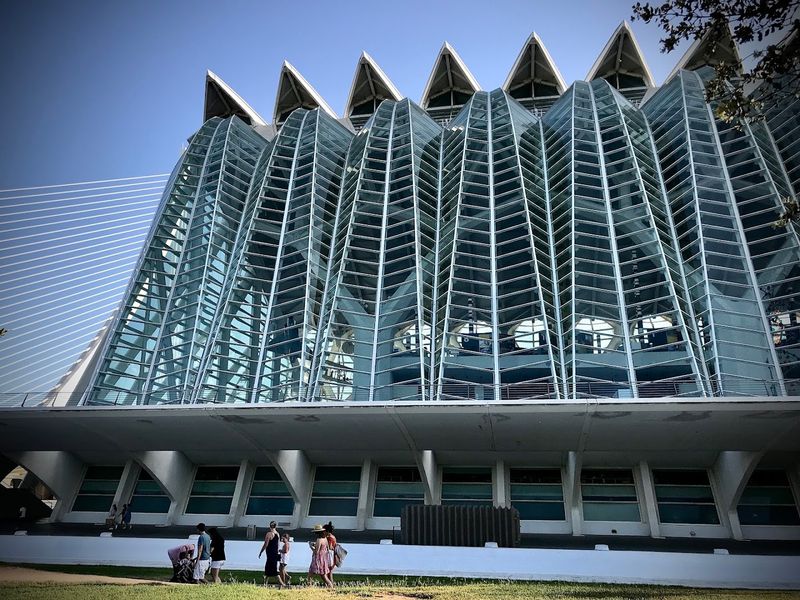
Valencia is also the birthplace of paella, so food culture here is taken very seriously. Beyond the plate, the city offers stunning modernist architecture at the City of Arts and Sciences, miles of sandy beach, and excellent cycling infrastructure.
The pace of life is relaxed without feeling sleepy. For Americans who want European living without European price tags, Valencia delivers on nearly every count while throwing in plenty of sunshine as a bonus.
Medellín, Colombia

Once famously avoided, Medellín has pulled off one of the most remarkable urban transformations in modern history. Today it is celebrated as an innovation hub, a cultural hotspot, and one of South America’s most livable cities.
The nickname “City of Eternal Spring” is no marketing gimmick either — the temperature genuinely hovers around a pleasant 72°F year-round.
A single person can live comfortably here on $1,200 to $1,800 per month, including rent in a modern apartment in neighborhoods like El Poblado or Laureles. Restaurants are fantastic and astonishingly affordable.
A full meal at a local spot can cost less than $5, while upscale dining rarely exceeds $20 per person.
The city has invested heavily in public transportation, parks, and cultural spaces over the past two decades. Museums, galleries, and street art are woven into everyday life.
The expat community has grown rapidly, particularly among remote workers and entrepreneurs drawn by fast internet, coworking spaces, and low overhead costs. Spanish is the primary language, so picking up basic conversational skills goes a long way.
For adventurous Americans open to Latin American living, Medellín is genuinely hard to beat on value.
Chiang Mai, Thailand

There is a reason Chiang Mai has topped digital nomad rankings for over a decade — the city just works. Fast internet, great food, low costs, and a welcoming community make it almost suspiciously easy to settle into.
Toss in mountain scenery and hundreds of ancient temples, and you have a lifestyle that genuinely feels like a reward.
Monthly expenses for a comfortable lifestyle typically fall between $800 and $1,500. A furnished one-bedroom apartment in a popular neighborhood like Nimman runs around $300 to $600 per month.
Street food is exceptional and costs almost nothing, while sit-down restaurants offer generous portions at prices that will make your American wallet very happy.
Chiang Mai hosts a massive international community, with meetups, coworking spaces, and social groups catering to every interest. Healthcare is modern and affordable, with internationally accredited hospitals charging a fraction of U.S. rates.
The city sits in northern Thailand surrounded by forested hills, making weekend hiking and cycling genuinely accessible. Visa options have improved in recent years, including the Thailand Long-Term Resident Visa.
For retirees and remote workers alike, Chiang Mai consistently delivers one of the best value-to-lifestyle ratios anywhere in the world.
Mexico City, Mexico
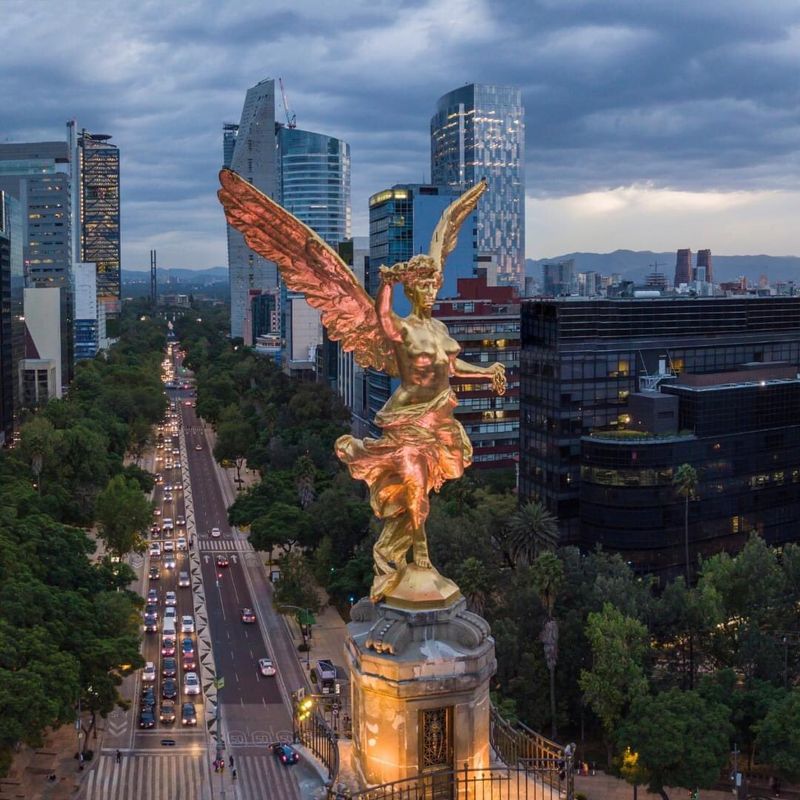
Few cities on Earth pack as much culture, food, and energy into one place as Mexico City does. The sheer variety is staggering — world-class museums sit next to taco stands that have been perfecting their recipe for generations.
For Americans, the added bonus is a three-hour flight from most major U.S. cities, making family visits refreshingly painless.
Neighborhoods like Roma Norte and Condesa have become expat favorites, offering tree-lined streets, excellent coffee shops, and a buzzing restaurant scene. Rent for a comfortable one-bedroom in these areas typically ranges from $800 to $1,400 per month.
Groceries, transportation, and dining out are substantially cheaper than in comparable U.S. urban neighborhoods.
The city’s cultural calendar never really stops. Free museum days, outdoor concerts, and neighborhood festivals fill weekends without touching your budget.
Spanish fluency helps significantly here, though English is spoken in many expat-heavy areas. Air quality and traffic can be challenging in certain parts of the city, so choosing your neighborhood wisely matters.
Still, for Americans who want big-city energy, extraordinary food, and proximity to home, Mexico City offers a compelling combination that is genuinely difficult to match elsewhere in the world.
Budapest, Hungary

Budapest at night looks like someone turned a fairy tale into a city. The illuminated Parliament building, the Chain Bridge glowing over the Danube, and the castle perched on Buda Hill all combine into a skyline that somehow never gets old.
The best part? You can enjoy all of it while spending considerably less than you would in Paris or Amsterdam.
Monthly living costs for a comfortable lifestyle typically range from €1,400 to €2,200. Apartment rentals have risen in recent years but remain more affordable than most Western European capitals.
The city’s thermal bath culture is a unique perk — dozens of historic bathhouses offer entry for just a few euros, turning relaxation into a daily ritual rather than a luxury.
Budapest has a thriving arts and nightlife scene, with ruin bars built inside abandoned buildings becoming a cultural institution all their own. Public transportation is excellent and very cheap, covering the entire city efficiently.
The food scene blends traditional Hungarian comfort food with a growing international restaurant culture. Healthcare is accessible and reasonably priced.
For Americans who want authentic European charm with a genuine cost advantage, Budapest punches well above its weight and rarely disappoints those who choose to call it home.
Porto, Portugal

Porto is what happens when a city decides to be genuinely itself rather than trying to compete with anyone. Smaller and quieter than Lisbon, it trades the capital’s buzz for something warmer and more intimate.
The Douro River winds through the city past stacked wine cellars and colorful tiled facades, creating a backdrop that locals take entirely for granted and visitors never stop photographing.
Housing costs in Porto are notably lower than Lisbon, with decent one-bedroom apartments available for €700 to €1,000 per month in many neighborhoods. Dining out is excellent value, particularly at traditional tascas serving hearty Portuguese meals for under €12.
The famous port wine caves in Vila Nova de Gaia, just across the river, offer tastings for just a few euros.
Porto has been attracting a growing number of remote workers and retirees who want European quality of life without the premium price tag. The city has invested in fiber internet infrastructure, making it increasingly practical for those working online.
Beaches are accessible by metro, and the historic center is a UNESCO World Heritage Site. Winters are mild but can be rainy.
Overall, Porto delivers a richly satisfying lifestyle at a price point that still surprises most Americans when they first arrive.
Kuala Lumpur, Malaysia

Standing beneath the Petronas Twin Towers for the first time is a genuine jaw-dropper, but what really surprises most Americans about Kuala Lumpur is how far their money goes in one of Southeast Asia’s most modern cities. World-class infrastructure, excellent hospitals, and a diverse food culture combine with living costs that are dramatically lower than anything comparable in the United States.
A comfortable expat lifestyle in KL typically costs between $1,500 and $2,500 per month, including rent in a modern high-rise apartment with a pool and gym. Healthcare is a particular standout, with internationally accredited private hospitals offering high-quality care at a fraction of U.S. costs.
Many American retirees specifically choose Malaysia for this reason.
Malaysia’s MM2H (Malaysia My Second Home) visa program has historically been popular with long-term expats, though requirements have shifted in recent years. The city’s food scene is extraordinary, blending Malay, Chinese, Indian, and international cuisines at every price point.
English is widely spoken throughout the city, making daily life remarkably accessible for Americans. Traffic can be heavy, so choosing a neighborhood with good transit access matters.
For those prioritizing modern amenities and healthcare at low cost, Kuala Lumpur is a consistently strong choice.
Prague, Czech Republic

Prague looks like it was designed by someone who had read every fairy tale ever written and decided to build them all at once. Cobblestone squares, Gothic towers, and Baroque palaces crowd every corner of the historic center, yet somehow the city manages to feel lived-in and real rather than like an open-air museum.
It is one of Europe’s most beautiful cities, and it still costs noticeably less than its Western counterparts.
Monthly living costs for a comfortable expat lifestyle typically run between €1,500 and €2,500. Rent for a one-bedroom apartment in central Prague averages €800 to €1,400, while outer neighborhoods offer solid options at lower prices.
The public transportation system is superb — clean, punctual, and cheap enough that many expats never bother with a car.
Prague’s cultural offerings are genuinely world-class, with opera, classical concerts, and gallery exhibitions available at ticket prices that feel almost too affordable. The food scene has evolved significantly, moving well beyond traditional Czech cuisine into a diverse international restaurant landscape.
Beer culture is a local institution, and Czech pilsner is often the cheapest drink on any menu. While prices have risen over the past decade, Prague remains a compelling value for Americans seeking European urban living without the Western European price shock.
Panama City, Panama

Panama City has a skyline that could fool you into thinking you are looking at Miami, but with ocean breezes, lower price tags, and a retirement incentive program that makes many Americans do a genuine double-take. The Pensionado visa offers retirees discounts on everything from restaurant meals to medical procedures, making it one of the most financially attractive residency programs in the entire Western Hemisphere.
A comfortable couple can live well in Panama City on $2,500 to $3,500 per month, depending on neighborhood and lifestyle. Areas like Miraflores and El Cangrejo offer modern apartments with strong expat communities.
The U.S. dollar is the official currency, which eliminates any confusion or currency risk for Americans managing their finances from abroad.
The tropical climate means warm weather year-round, though the rainy season from May to November brings regular afternoon showers. Panama City has excellent private hospitals, a growing number of international schools, and reliable high-speed internet.
Access to both the Pacific and Atlantic coasts within a short drive is a genuine lifestyle perk. The country is also politically stable with strong ties to the United States.
For retirees especially, Panama City represents one of the most practical and rewarding relocation options available anywhere in the Americas.
Athens, Greece

Every morning in Athens, you can look up from your breakfast coffee and see the Acropolis sitting on its rocky hill like it has been doing for 2,500 years. That kind of daily backdrop is priceless, yet the cost of actually living in Athens is among the most affordable of any major European capital.
The city has emerged from difficult economic years with a renewed energy that expats are finding genuinely exciting.
Monthly living costs for a comfortable lifestyle typically range from €1,200 to €2,000. Rent for a one-bedroom in desirable central neighborhoods like Koukaki or Pagrati runs roughly €600 to €950.
Dining out at local tavernas is wonderfully affordable, with generous plates of grilled fish, mezze, and fresh salads rarely costing more than €12 to €15 per person.
Greece’s Golden Visa program has attracted investors and long-term residents, though requirements have changed in recent years. The city’s public transportation is functional, and many central neighborhoods are very walkable.
Day trips to nearby islands like Aegina or Hydra are easy and inexpensive. Warm Mediterranean weather dominates from spring through autumn.
Athens also offers a surprisingly vibrant contemporary arts and food scene that has grown considerably over the past decade, making it far more than just a history trip destination.
Da Nang, Vietnam

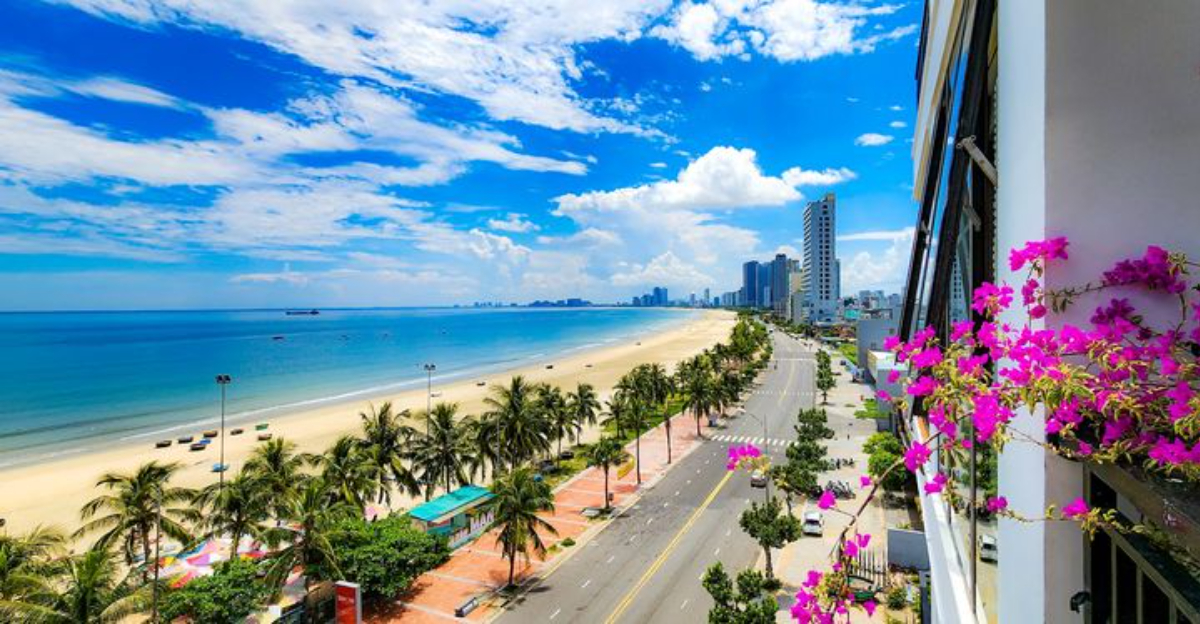
Stretching along one of Asia’s most beautiful coastlines, Da Nang is the kind of city that makes you wonder why it took so long to show up on expat radar. Miles of clean sandy beach, a modern city center, and some of the lowest daily living costs in Southeast Asia have turned it into one of Vietnam’s fastest-growing destinations for foreign residents.
The food scene alone is worth the flight.
A single person can live comfortably in Da Nang on $700 to $1,200 per month. Rent for a furnished one-bedroom near the beach typically runs $300 to $600.
Street food is extraordinary and costs almost nothing, while sit-down restaurants serving fresh seafood dishes rarely exceed $8 to $10 per meal. Daily expenses here are genuinely low by any international standard.
The city has invested heavily in infrastructure over the past decade, with good roads, improving internet connectivity, and a growing number of international-standard medical facilities. Da Nang sits conveniently between Hoi An, one of Vietnam’s most charming historic towns, and Hue, the former imperial capital.
Weekend excursions practically plan themselves. The weather is warm most of the year, though typhoon season from September to November requires some preparation.
For budget-conscious expats who refuse to sacrifice lifestyle, Da Nang is a genuinely outstanding option.
Kraków, Poland
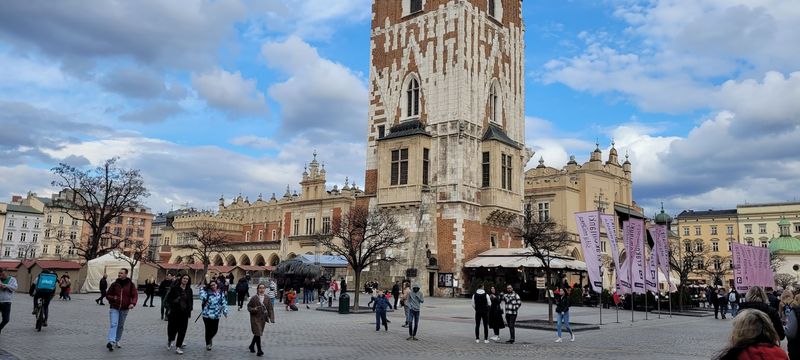
Step into Krakow’s Main Market Square on a clear evening and you might briefly question whether you have accidentally walked onto a film set. The medieval architecture is that well-preserved.
Poland’s former royal capital escaped major wartime destruction, leaving behind one of Central Europe’s most intact historic city centers — and one of its most affordable places for expats to call home.
Monthly living costs in Krakow typically range from €1,000 to €1,800. Rent for a comfortable one-bedroom apartment in a central location runs roughly €500 to €900.
Dining out is excellent value, with traditional Polish restaurants serving hearty meals for €5 to €10. The café culture is strong, and the city’s university population keeps the social scene young and energetic.
Krakow has a well-developed expat community, particularly among English teachers, tech workers, and remote professionals drawn by the low cost of living and high quality of urban life. Public transportation covers the city efficiently, and the historic center is compact enough to explore entirely on foot.
Day trips to the Tatra Mountains and the sobering but important Auschwitz-Birkenau memorial site are both within easy reach. For Americans who appreciate history, architecture, and smart budgeting in equal measure, Krakow is a city that rewards those who choose it.
Buenos Aires, Argentina

Buenos Aires has a personality problem — it simply has too much of one. Tango spilling out of milonga halls, steakhouses perfecting their craft over wood-fired grills, bookshops that look like ornate theaters, and a café culture so serious that sitting for three hours over one coffee is considered perfectly normal.
For Americans, this city delivers a European-flavored lifestyle in South America at prices that frequently cause disbelief.
Argentina’s economic situation has historically produced currency dynamics that work significantly in favor of foreigners holding U.S. dollars. While the financial environment can shift, American expats have often found their purchasing power stretches remarkably far here.
A comfortable monthly lifestyle, including rent, dining, and entertainment, can frequently be managed on $1,200 to $2,000 depending on the current exchange environment.
Neighborhoods like Palermo, San Telmo, and Recoleta each offer distinct personalities ranging from hipster coffee shops to grand Belle Epoque architecture. The restaurant scene is world-class, with Argentine beef widely considered among the finest on the planet.
Healthcare is accessible and generally affordable. Buenos Aires has strong arts institutions, a lively live music scene, and one of South America’s most sophisticated cultural calendars.
For Americans craving big-city culture at a fraction of the usual price, Buenos Aires remains a genuinely thrilling option.
Bali (Denpasar or Ubud), Indonesia

Waking up in Ubud to the sound of a gamelan ceremony drifting through your villa window while a rooster argues with the neighborhood is the kind of morning that makes you question why you ever owned an alarm clock. Bali has carved out a global reputation as a paradise for remote workers, retirees, and lifestyle seekers who want beauty, warmth, and affordability all wrapped into one tropical package.
Monthly living costs in Bali range widely based on lifestyle, but many expats live comfortably on $1,000 to $2,000 per month. A private villa with a pool can rent for as little as $500 to $900 in areas outside the tourist hotspots.
Food is extraordinary and cheap, with fresh local meals available for under $3 at warungs — small family-run restaurants found on virtually every street.
Wellness culture is deeply embedded in Bali’s identity. Yoga studios, spa treatments, and meditation retreats are priced so affordably that they become part of regular weekly life rather than special occasions.
The island’s infrastructure has improved considerably, with reliable fiber internet now available in most expat-heavy areas. Visa regulations have evolved, with Indonesia introducing a new digital nomad visa option.
The biggest challenge is often simply choosing between Canggu’s surf-and-coffee scene and Ubud’s spiritual, artistic atmosphere — both are genuinely wonderful.



