Some cities have skylines so striking that just one glance tells you exactly where you are. From towering skyscrapers to historic landmarks, these urban horizons have become symbols of human creativity and ambition.
Around the world, certain cities have shaped how we think about architecture, design, and what a modern city can look like. Here are 15 cities with the most iconic skylines on the planet.
1. New York City, USA
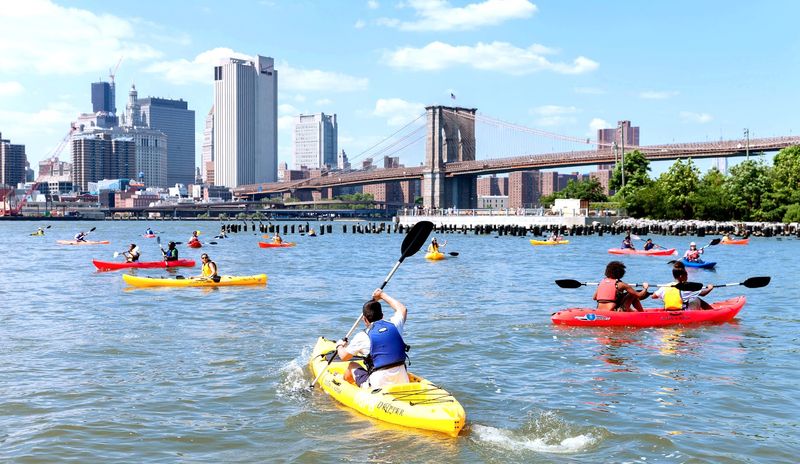
Manhattan’s skyline is the one that shows up in movies, on postcards, and in people’s dreams. The Empire State Building stood as the world’s tallest structure for over 40 years, and it still commands the horizon today.
Few views in the world carry that same electric energy.
One World Trade Center, completed in 2014, added a powerful symbol of resilience to the mix. At 1,776 feet, its height is a direct nod to the year of American independence.
Alongside the Chrysler Building and Rockefeller Center, New York offers layers of architectural history stacked in one place.
Central Park creates a surprising green rectangle in the middle of all that steel and glass. Looking south from the park’s edge, the city towers frame the sky in a way that never gets old.
New York’s skyline is simply in a class of its own.
2. Hong Kong, China
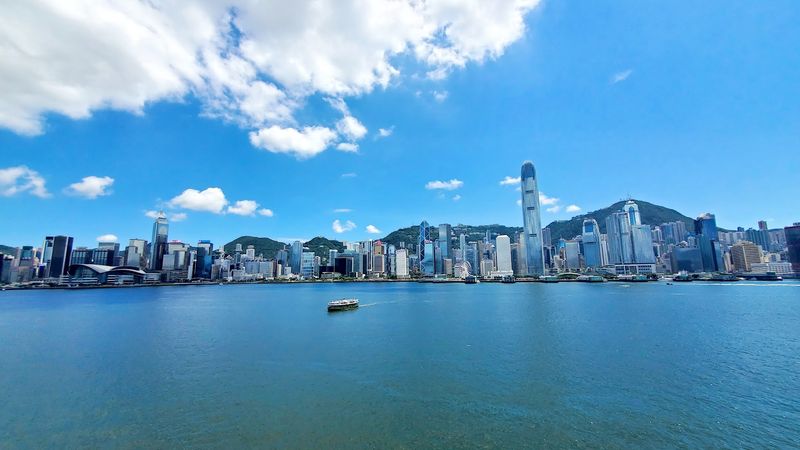
Standing at Victoria Peak and looking down at Hong Kong’s skyline is one of the most breathtaking experiences a traveler can have. The sheer density of skyscrapers packed along Victoria Harbour, with mountains rising behind them, creates a composition that feels almost impossible.
It looks like a city designed by an artist rather than city planners.
Hong Kong has more skyscrapers than any other city on Earth, with over 550 buildings taller than 150 meters. That number alone says something remarkable about this compact, vertical metropolis.
The International Commerce Centre and Two International Finance Centre anchor the skyline with unmistakable presence.
Every night, a light show called A Symphony of Lights illuminates the buildings along the harbour. It holds a Guinness World Record as the largest permanent light and sound show on Earth.
Hong Kong’s skyline is not just a view; it is a full performance.
3. Dubai, United Arab Emirates
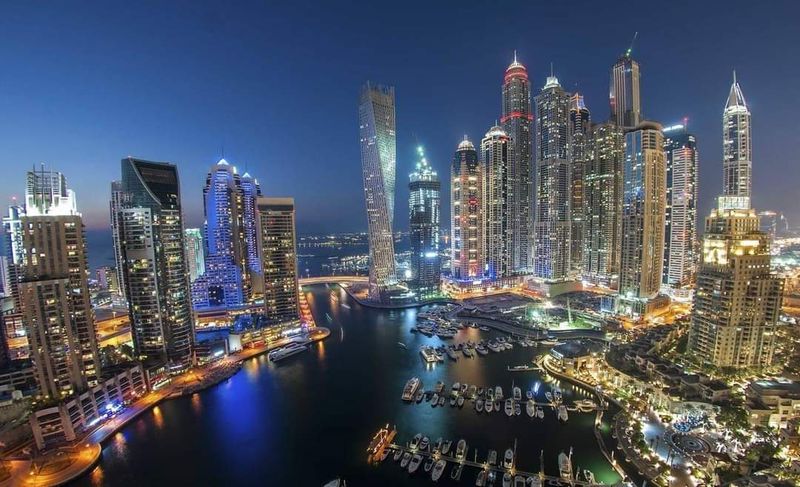
Just a few decades ago, Dubai was mostly desert. Today, it holds one of the most futuristic skylines on the planet, built at a speed that still astonishes architects and urban planners worldwide.
The transformation is genuinely hard to wrap your head around.
The Burj Khalifa, standing at 2,717 feet, is the tallest building ever constructed. It pierces the sky so dramatically that it can be seen from 95 kilometers away on a clear day.
Surrounding it are dozens of other supertall towers, luxury hotels, and structures shaped like sails, spirals, and diamonds.
Dubai’s skyline also benefits from its desert setting. The contrast between golden sand dunes and gleaming glass towers creates a visual drama that no other city quite matches.
With projects like the Museum of the Future and the Frame already reshaping the horizon, Dubai shows no signs of slowing down.
4. Shanghai, China
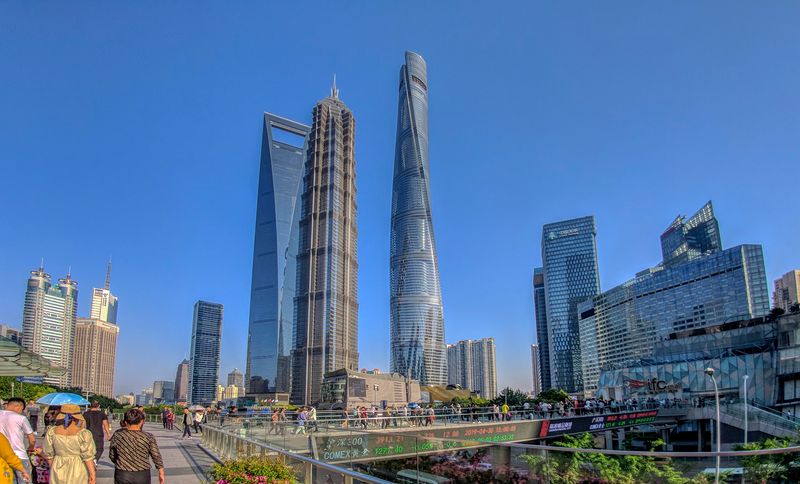
The Pudong district of Shanghai is one of the greatest urban transformation stories of the 20th century. In 1990, it was mostly farmland.
By 2000, it had become one of the world’s most dramatic skylines. That kind of change in just one decade is extraordinary.
The Oriental Pearl Tower, with its distinctive pink spheres stacked along a central spine, became Shanghai’s first true skyline icon after opening in 1994. Since then, the Shanghai Tower, the Jin Mao Tower, and the Shanghai World Financial Center have joined it to form a cluster of supertalls that rivals any city on Earth.
What makes Shanghai’s skyline especially compelling is its contrast. Across the Huangpu River sits the Bund, a row of elegant colonial-era buildings from the early 1900s.
Looking from one bank to the other, you see two completely different centuries facing each other. That visual tension makes Shanghai unforgettable.
5. Chicago, USA

Chicago did not just build skyscrapers; it invented them. After the Great Chicago Fire of 1871 destroyed much of the city, architects used the rebuilding process as a laboratory for bold new ideas.
The result was the birth of modern high-rise architecture, and the world has never looked the same since.
Willis Tower, formerly known as the Sears Tower, held the title of world’s tallest building for 25 years after its completion in 1973. The John Hancock Center, with its distinctive X-shaped exterior bracing, remains one of the most visually striking towers anywhere.
Chicago’s skyline is essentially a living textbook of architectural innovation.
The city’s location along Lake Michigan adds a natural grandeur to the scene. Viewed from the lake on a clear day, the skyline appears to float above the water like a mirage.
For anyone serious about architecture and urban design, Chicago is required reading.
6. Singapore
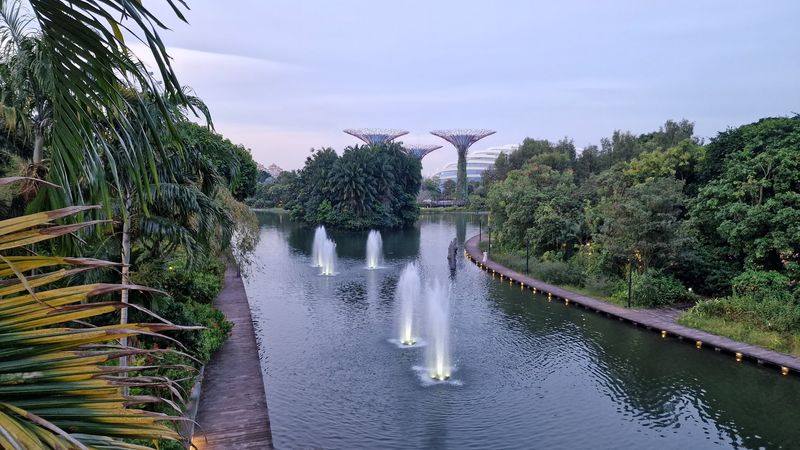
Singapore packs an extraordinary amount of architectural ambition into a very small island nation. The Marina Bay area, in particular, reads like a showcase of what 21st-century city planning can achieve when creativity and resources come together without compromise.
Every building seems to have been designed to make a statement.
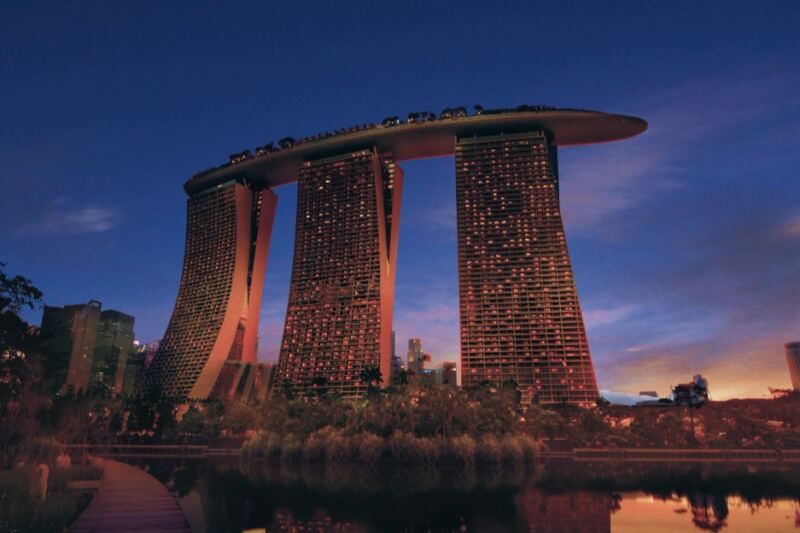
Marina Bay Sands is arguably the most photographed building in Singapore. Its three towers topped by a massive sky park and infinity pool create a silhouette unlike anything else in the world.
The nearby Gardens by the Bay, with its towering Supertree structures, adds a surreal, almost sci-fi quality to the waterfront.
Singapore’s skyline also benefits from meticulous urban planning and greenery woven throughout the city. Rooftop gardens, vertical forests, and waterfront promenades make it feel polished and livable at the same time.
It is a city that proves sustainability and stunning design can absolutely coexist.
7. Tokyo, Japan
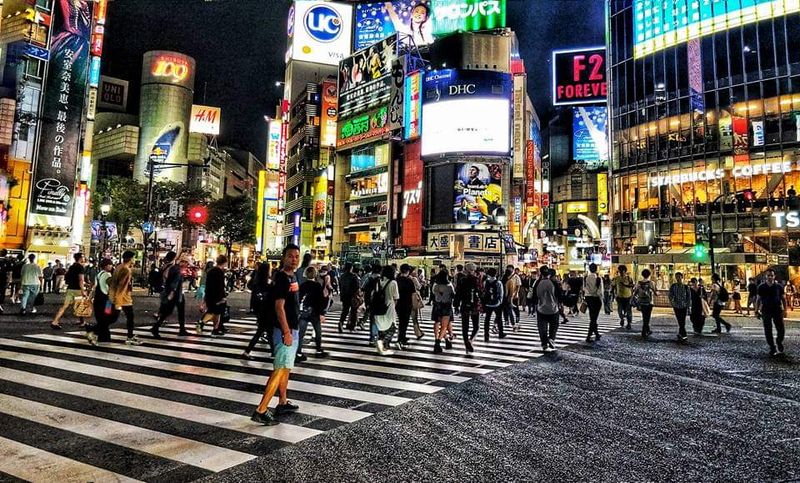
Tokyo is one of the largest cities in the world, and its skyline reflects that scale in a way that is almost overwhelming. Unlike cities where a few signature towers define the horizon, Tokyo sprawls endlessly in every direction, with skyscrapers, mid-rises, and neon-lit commercial buildings blending into one massive urban tapestry.
It is a skyline that rewards exploration rather than a single viewpoint.
Tokyo Skytree, completed in 2012, stands at 2,080 feet and is the tallest tower in Japan and the second tallest structure in the world. The older Tokyo Tower, modeled after the Eiffel Tower and painted in white and orange, still holds its own as a beloved landmark.
Together, they anchor a skyline that is constantly evolving.
On clear winter days, Mount Fuji appears faintly on the horizon behind the city, adding a layer of natural drama to the urban scene. That combination of ancient natural beauty and modern density is distinctly Tokyo.
8. Sydney, Australia
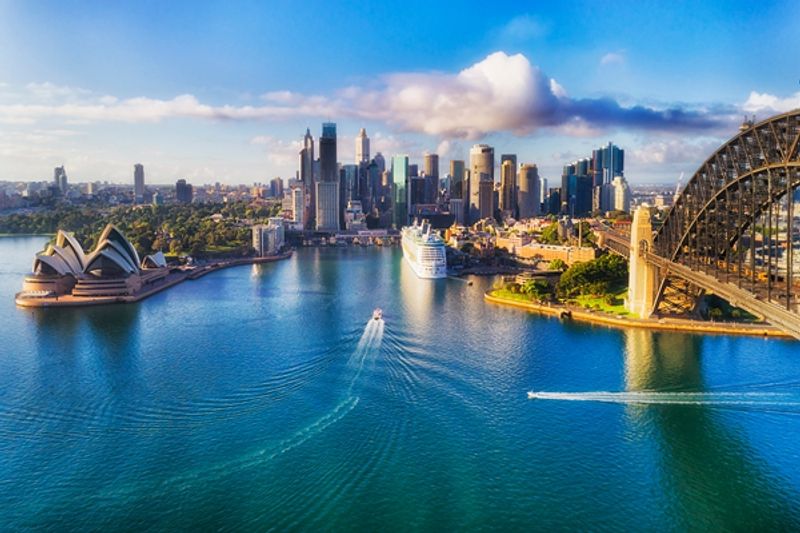
Sydney’s skyline works differently from most cities on this list. Rather than competing on height or density, it wins on sheer visual drama created by its natural setting and two world-class landmarks.
The Sydney Opera House and the Sydney Harbour Bridge together form one of the most photographed scenes on Earth.
The Opera House, designed by Danish architect Jorn Utzon and completed in 1973, features a series of interlocking shell-shaped roof structures that look stunning from every angle. It was declared a UNESCO World Heritage Site in 2007, one of the few buildings in the world to receive that recognition during the lifetime of its architect.
The Harbour Bridge, nicknamed The Coathanger for its distinctive arch shape, connects the city’s north and south shores while framing the skyline beautifully. Ferries, sailboats, and water taxis moving across the harbour add life and movement to a view that already has everything.
Sydney proves that a skyline does not need to be the tallest to be the most memorable.
9. Toronto, Canada
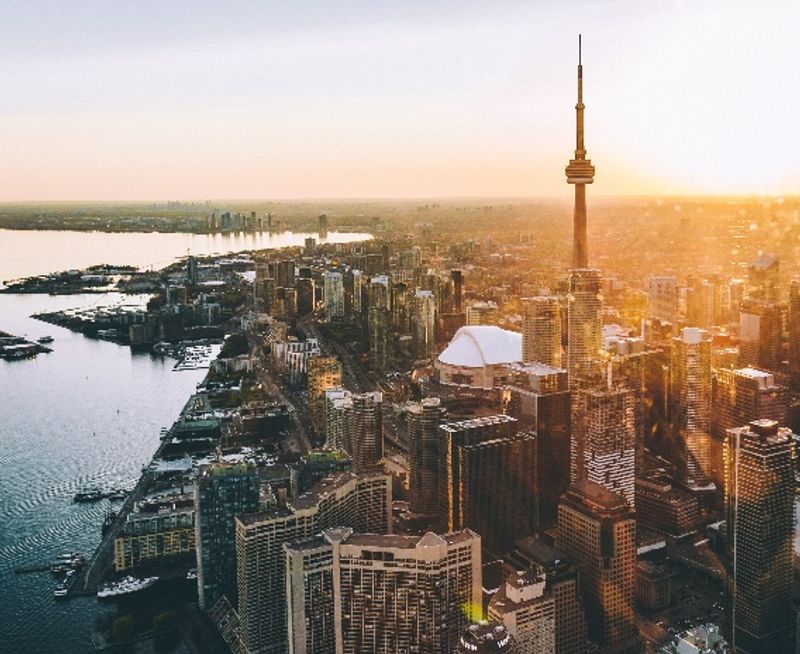
For decades, the CN Tower was the defining image of Toronto and, for a time, the entire country of Canada. Completed in 1976, it held the title of world’s tallest freestanding structure for 34 years.
Even now that other structures have surpassed it, the CN Tower remains one of the most recognizable towers anywhere on Earth.
Toronto’s skyline has grown dramatically since the early 2000s, fueled by one of North America’s most active condo construction booms. The downtown core now features a dense cluster of glass towers that stretch along the Lake Ontario waterfront, giving the city a genuinely impressive urban profile.
The Rogers Centre stadium, with its retractable dome, sits right at the CN Tower’s base and adds to the waterfront’s character.
Viewed from a ferry crossing Lake Ontario, Toronto’s skyline has a clean, confident look that reflects the city’s growth and ambition. It is a skyline that has quietly become one of the continent’s most compelling.
10. Kuala Lumpur, Malaysia
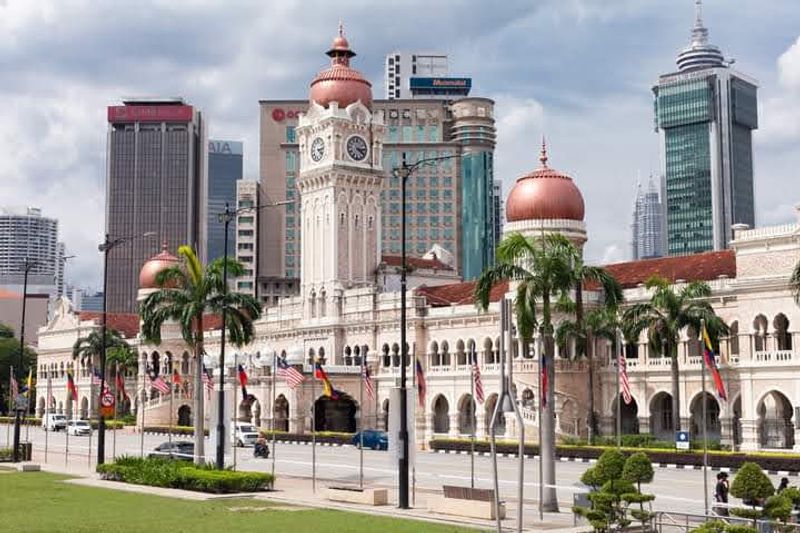
When the Petronas Twin Towers opened in 1998, they instantly put Kuala Lumpur on the global architectural map. Standing at 1,483 feet, they were the world’s tallest buildings at the time and remained the tallest twin towers ever built.
Their design, inspired by Islamic geometric patterns, reflects Malaysia’s cultural identity in a powerful and elegant way.
The skybridge connecting the two towers on the 41st and 42nd floors is one of the highest two-story bridges in the world. Visiting it offers a perspective on the city that very few buildings can match.
Below and around the towers, Kuala Lumpur’s skyline continues to grow with new supertalls and mixed-use developments reshaping the horizon.
The KL Tower, a telecommunications tower that predates the Petronas buildings, adds another distinctive silhouette to the city’s profile. Surrounded by tropical greenery and frequent dramatic thunderstorms, Kuala Lumpur’s skyline has an atmosphere all its own.
It is bold, culturally rich, and completely unforgettable.
11. London, England
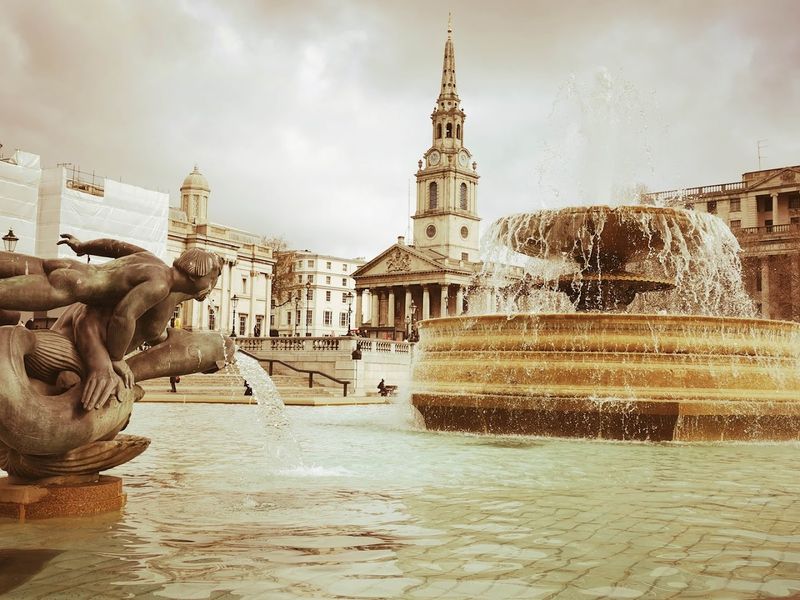
London’s skyline tells a story that spans centuries. Walk along the Thames and you will see medieval towers, Victorian domes, and 21st-century glass giants all sharing the same horizon.
That layering of time periods is what makes London’s cityscape unlike any other in the world.
The Shard, completed in 2012 and designed by architect Renzo Piano, rises to 1,016 feet and became western Europe’s tallest building. Its sharp, tapering glass form earned it the nickname it carries today.
Meanwhile, the older Gherkin, with its distinctive rounded shape and diamond-patterned glass, brought a playful energy to London’s financial district when it opened in 2003.
St. Paul’s Cathedral, designed by Sir Christopher Wren and completed in 1710, still holds its own among the modern towers. Tower Bridge, the Palace of Westminster, and Canary Wharf’s cluster of financial towers round out a skyline with remarkable variety.
London rewards anyone who takes the time to look closely.
12. Seoul, South Korea
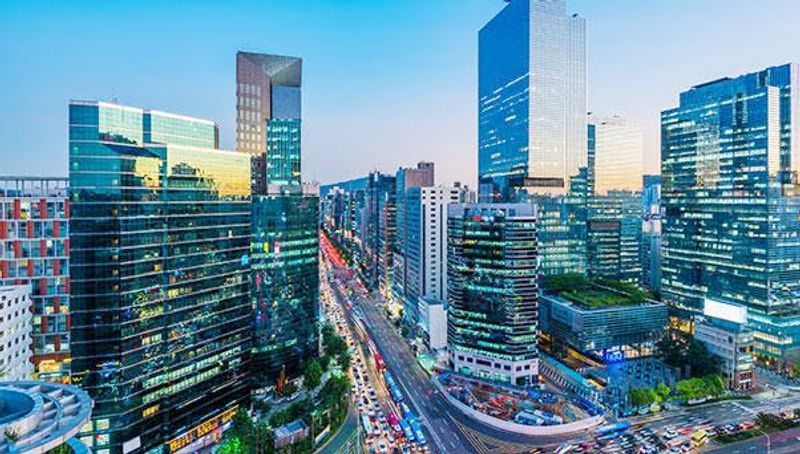
Seoul offers something most major city skylines cannot: dramatic mountains rising directly behind the urban core. The city sits in a natural basin surrounded by peaks, and that geography gives its skyline a distinctive framed quality.
No matter where you look, towers and mountains share the same view.
Lotte World Tower, completed in 2017 and standing at 1,819 feet, is the fifth tallest building in the world and Seoul’s defining skyscraper. Its slender, tapered form was inspired by traditional Korean pottery and calligraphy brushstrokes, giving a modern supertall a genuinely local identity.
The observation deck near the top offers one of the most spectacular panoramic views in Asia.
The Han River, which runs through the heart of the city, creates natural breathing room in the urban landscape and reflects the skyline beautifully at night. Seoul blends K-pop culture, ancient palaces, and cutting-edge architecture into a skyline experience that feels both global and deeply Korean.
13. San Francisco, USA
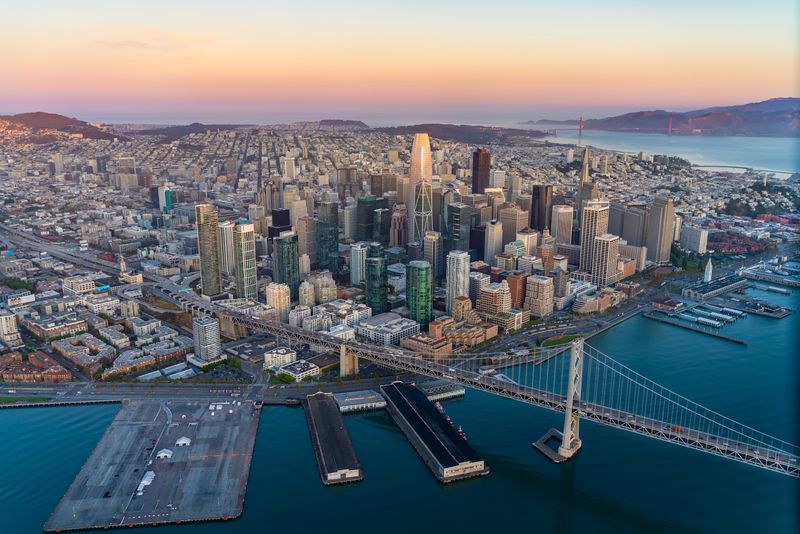
San Francisco’s skyline breaks every conventional rule and is more iconic for it. Most great skylines are built on flat land.
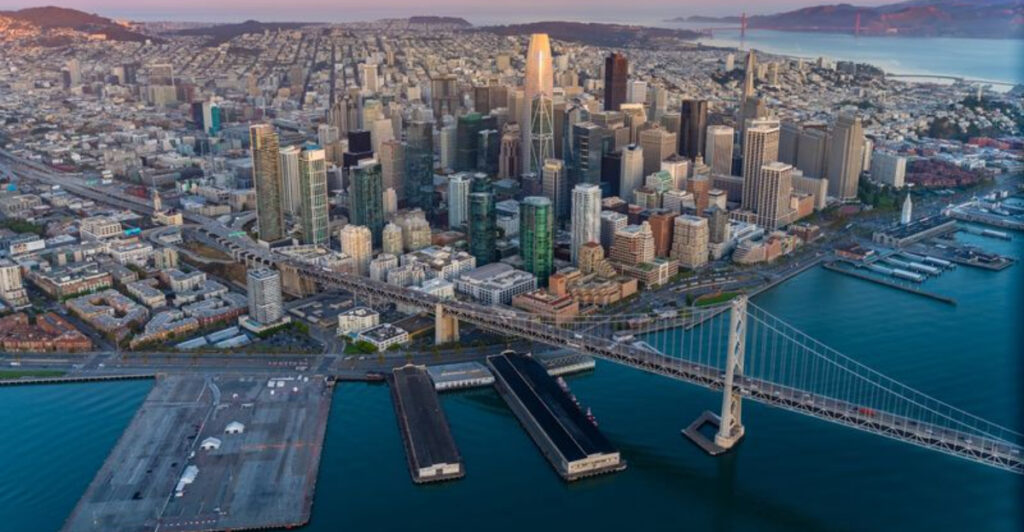
San Francisco stacks its buildings on steep hills, giving the cityscape a staggered, layered quality that feels almost theatrical. Driving or walking through the city, the skyline appears and disappears around corners in a way that keeps surprising you.
The Transamerica Pyramid, completed in 1972, remains the city’s most recognizable tower despite being far from the tallest. Its pointed top and gradually widening base make it instantly identifiable from miles away.
The Salesforce Tower, which opened in 2018, now claims the title of tallest building in San Francisco at 1,070 feet.
No discussion of San Francisco’s skyline is complete without mentioning the Golden Gate Bridge. The iconic orange-red suspension bridge, often wrapped in morning fog, frames the northern edge of the city in a way that no other bridge frames any other city.
San Francisco’s skyline is geography as much as architecture.
14. Rio de Janeiro, Brazil
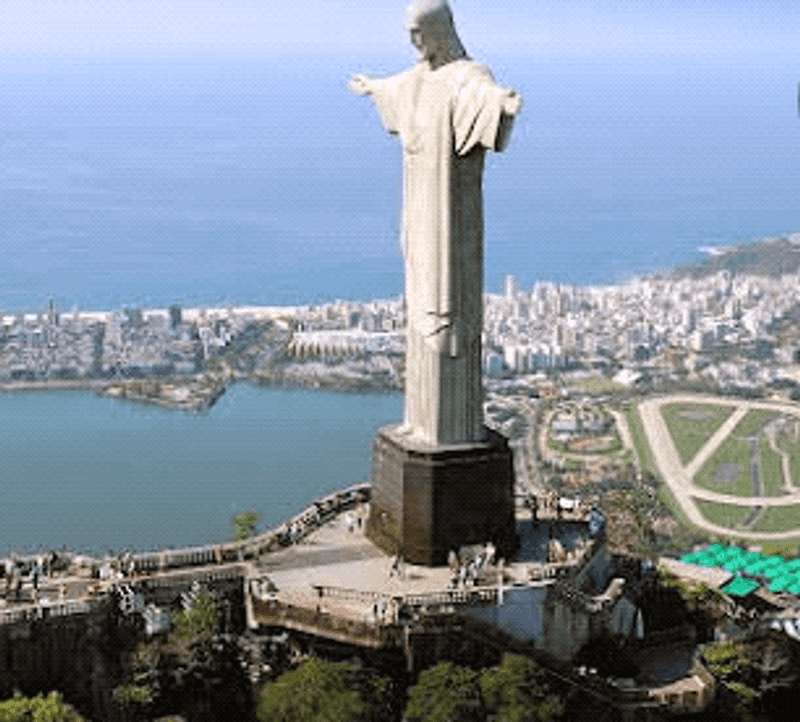
Rio de Janeiro may be the only city in the world where nature completely steals the show from the buildings. The combination of granite mountains, tropical rainforest, white-sand beaches, and a sprawling city creates a panorama that photographers and travelers have chased for generations.
No architect could have designed a backdrop this dramatic.
Christ the Redeemer, the 98-foot Art Deco statue standing atop Corcovado mountain with arms outstretched, is one of the most recognized images in the world. It watches over the city from 2,300 feet above sea level, visible from almost everywhere in Rio.
Sugarloaf Mountain, rising sharply from Guanabara Bay, adds another natural tower to a skyline that needs no man-made help.
The city’s modern skyscrapers line the beachfronts of Copacabana and Ipanema, creating a sleek urban edge against the Atlantic Ocean. Rio’s skyline is not just a collection of buildings; it is a conversation between human construction and raw, breathtaking nature.
15. Panama City, Panama
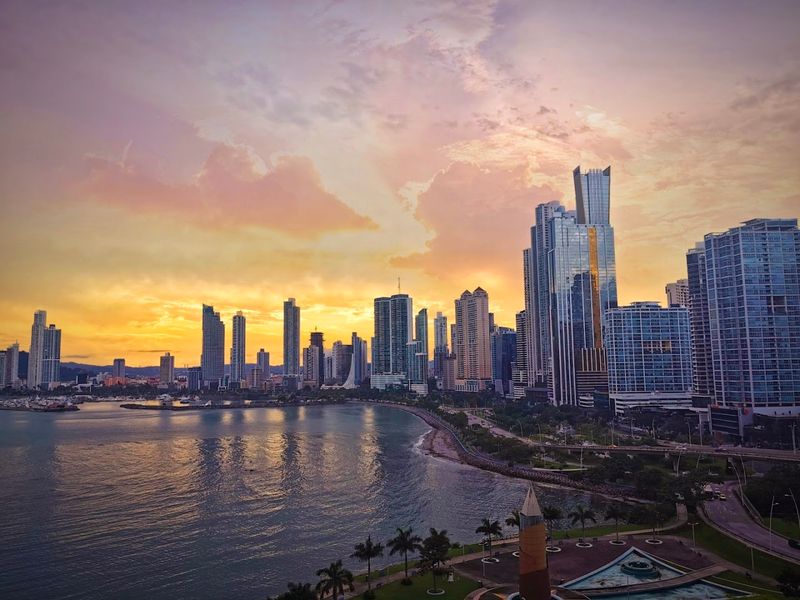
Panama City is one of the most underrated skylines in the Western Hemisphere, and travelers who stumble upon it for the first time are often genuinely stunned. The city’s Pacific coastline is lined with a dense wall of modern glass towers that rivals Miami, Toronto, and even parts of Manhattan in sheer visual impact.
For a Central American capital, that is a remarkable achievement.
The boom in skyscraper construction was driven largely by Panama’s role as a global financial and logistics hub, anchored by the Panama Canal. Wealthy investors and international businesses flocked to the city, funding a wave of high-rise development that transformed the skyline over just two decades.
Buildings like the F&F Tower, nicknamed The Tornado for its spiraling design, show that Panama City’s architects have serious creative ambition.
The historic Casco Viejo district, a UNESCO World Heritage Site, sits just a short distance from the modern towers. That contrast between colonial architecture and glass supertalls gives Panama City a layered, fascinating urban character that deserves far more attention than it typically receives.
Share this story