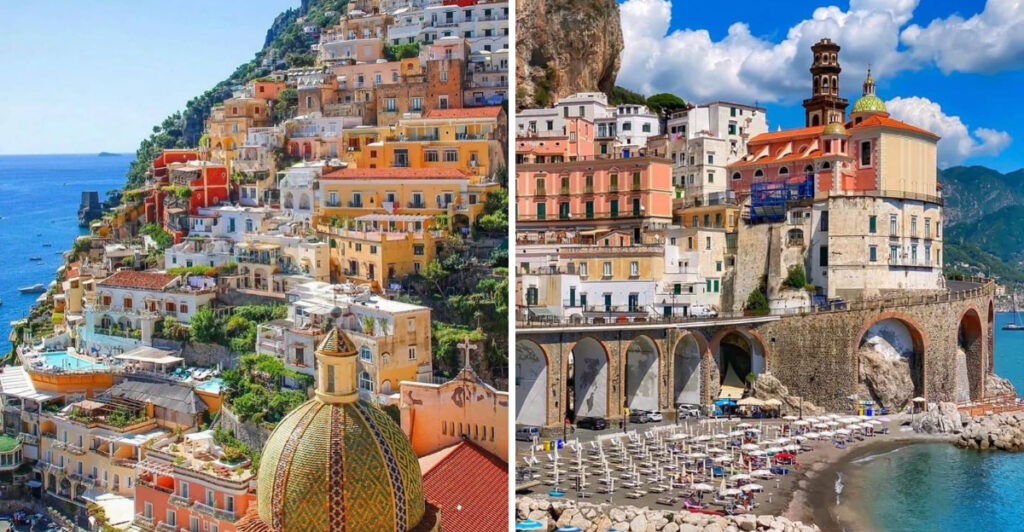
Italy’s coastline stretches for more than 4,700 miles, touching four different seas and hiding some of the most beautiful towns on Earth. From clifftop villages draped in colorful houses to quiet harbors where fishing boats rock gently in the morning light, the country’s coast is full of places that feel almost too good to be real.
Whether you love history, food, swimming, or simply wandering through old streets, Italy’s seaside towns have something special waiting for you. Pack your bags, because after reading this, you might not want to come back.
Positano, Campania
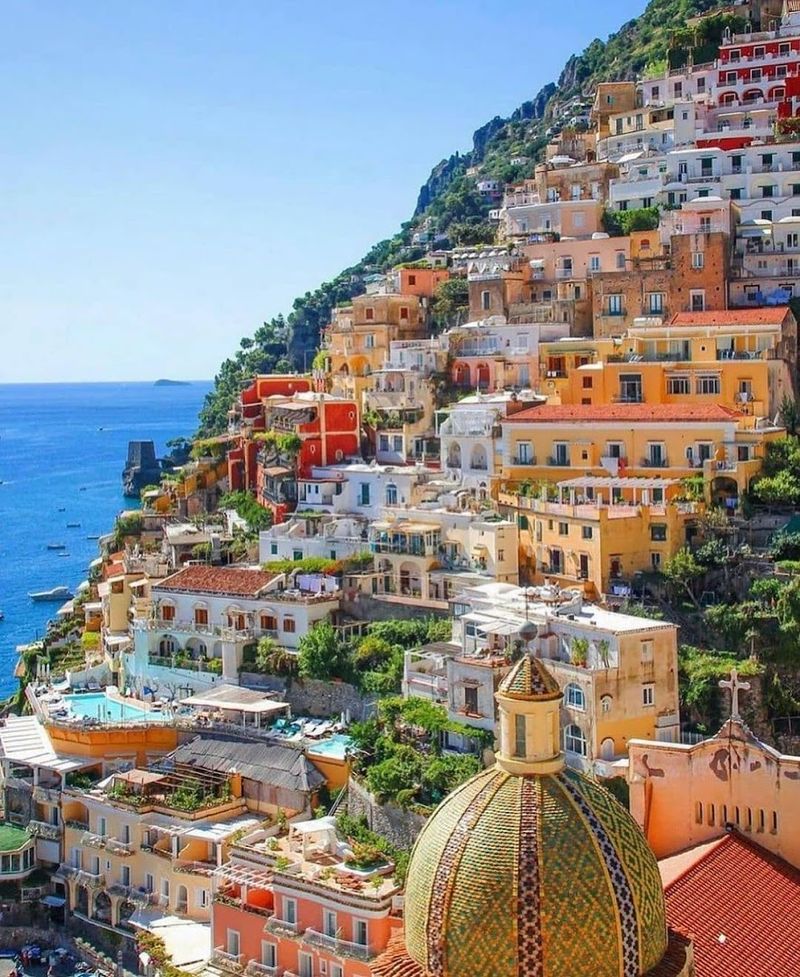
Positano practically invented the concept of looking effortlessly beautiful. Stacked along the steep cliffs of the Amalfi Coast, its pastel pink, yellow, and white buildings tumble toward the sea like a slow-motion landslide of good taste.
Every stairway leads somewhere worth photographing, and every café terrace offers a view that makes your coffee taste better than it probably is.
The beach here is small but lively, filled with colorful umbrellas and the happy noise of people who have clearly made excellent life choices. Boutique shops selling handmade sandals and ceramic tiles line the narrow lanes, giving you plenty of reasons to linger.
The local seafood is outstanding, especially the grilled catch of the day served with lemon and olive oil.
Getting around Positano means climbing stairs, and lots of them. Comfortable shoes are your best friend here.
Visiting in May or October means fewer crowds, lower prices, and weather that is still wonderfully warm. Positano has appeared in countless films and novels, and once you see it in person, you will completely understand why.
It is the kind of place that rewires your idea of what a town can look like.
Portofino, Liguria
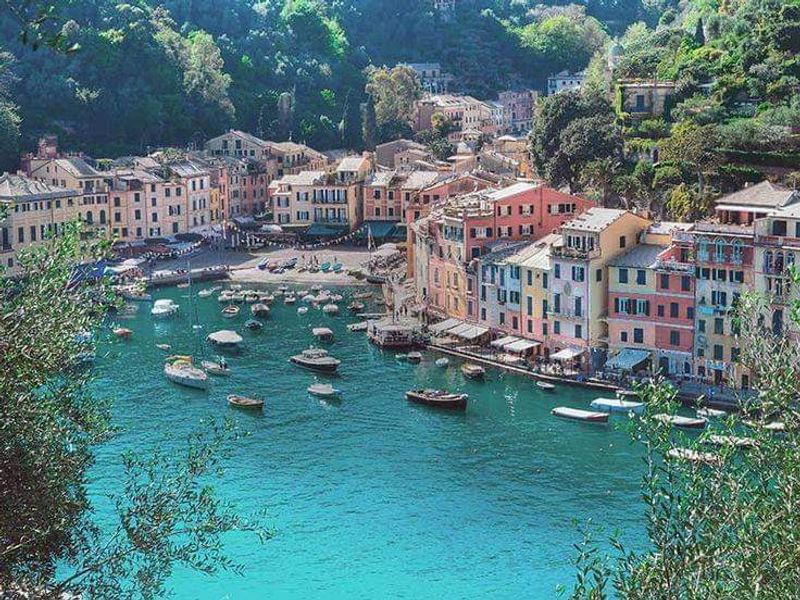
Portofino is the kind of place where even the seagulls seem to know they are living well. This tiny harbor town on the Ligurian coast has been drawing artists, writers, and the occasionally famous since the 1800s, and honestly, the appeal has never worn off.
The waterfront buildings are painted in shades of terracotta, yellow, and dusty rose, forming a backdrop so pretty it looks like a stage set.
Luxury yachts bob in the harbor alongside smaller fishing boats, creating a charming mix of glamour and grit. The surrounding hills are crisscrossed with hiking trails that reward you with jaw-dropping views of the coastline and the deep blue Ligurian Sea.
Castello Brown, a hilltop fortress with panoramic terraces, is absolutely worth the climb.
Portofino is small, which means crowds can feel intense during peak summer weeks. Early morning visits, when the light is golden and the day-trippers have not yet arrived, give you the town almost to yourself.
Restaurants here lean upscale, but lighter budgets can enjoy a focaccia from a local bakery eaten on the harbor steps. Sometimes the best meals have the best views for free.
Vernazza, Liguria
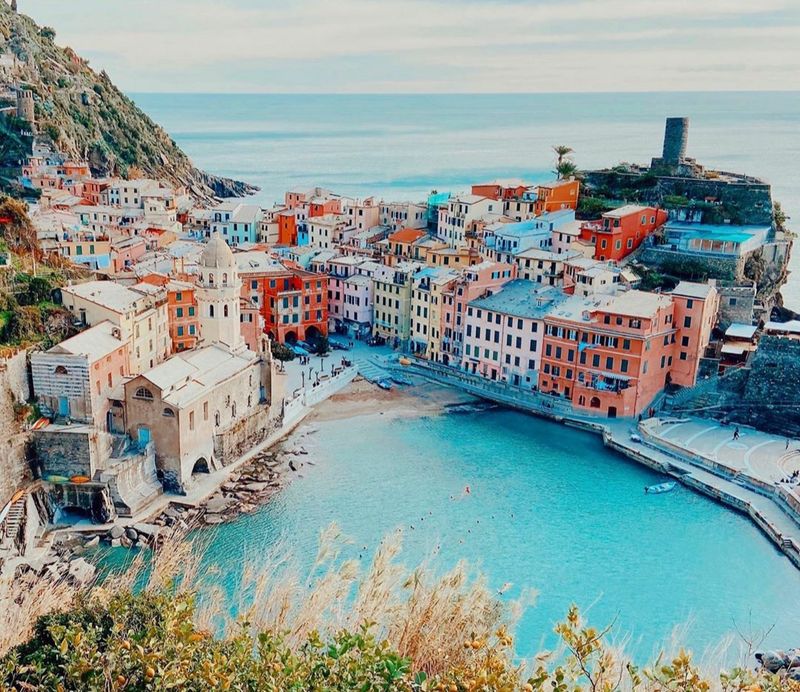
Of the five villages that make up Cinque Terre, Vernazza is the one most likely to stop you dead in your tracks. Its natural harbor, ringed by colorful buildings and anchored by a medieval watchtower, looks like it was designed by someone who had read every travel magazine ever printed.
Spoiler: it was designed by centuries of fishermen who simply knew how to live well.
The harbor piazza is the social heart of the village, where locals and visitors mix over cold drinks and plates of anchovies that were probably swimming nearby just hours before. Hiking trails connect Vernazza to its neighboring villages, offering coastal views that make every step feel worthwhile.
The trail between Vernazza and Monterosso is considered one of the most scenic walks in all of Italy.
Trains stop directly in Vernazza, making it easy to reach without a car. Arriving early in the morning before the tour groups appear is highly recommended.
The village can feel crowded by midday in July and August, so timing your visit smartly pays off. Spending a night here rather than just passing through changes everything.
When the day-trippers leave, Vernazza becomes quiet, golden, and completely magical.
Polignano a Mare, Apulia
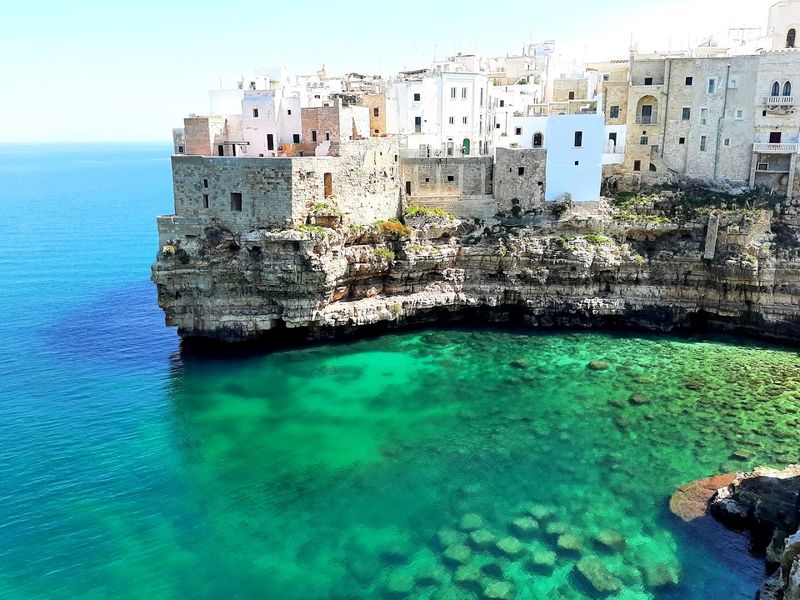
Imagine standing at the edge of a cliff, looking straight down at the clearest blue water you have ever seen, with a gelato in your hand and nowhere to be. That is Polignano a Mare in a nutshell.
This Apulian gem sits dramatically atop limestone cliffs above the Adriatic, and its whitewashed old town is a maze of narrow streets that reward anyone willing to get just a little bit lost.
The famous Lama Monachile beach is tucked between two towering cliff walls, creating a natural amphitheater that makes swimming here feel like a private event. The town also hosts one of the world’s most dramatic cliff diving competitions each year, which tells you everything you need to know about the height of those cliffs.
Watching it from a café terrace is a perfectly acceptable life choice.
Polignano a Mare is also the birthplace of singer Domenico Modugno, who wrote the iconic song Volare. There is a bronze statue of him near the sea, arms outstretched, which captures the mood of this town perfectly.
Fresh seafood is everywhere, and the local burrata is so creamy it should probably be illegal. Come hungry and leave completely satisfied.
Tropea, Calabria
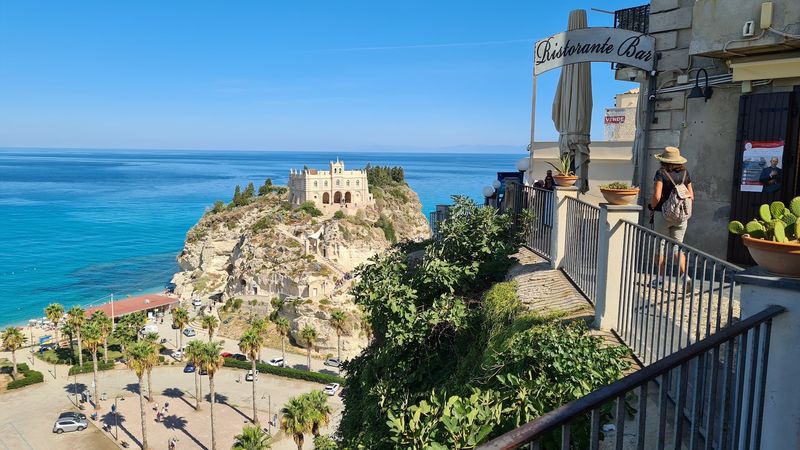
Tropea has a habit of making people cancel their plans to leave. Perched high above the Tyrrhenian Sea on a platform of ancient rock, the town looks down over beaches so clear and turquoise that first-time visitors often assume the photos must have been edited.
They have not. The water really is that color.
The old town is a genuine pleasure to explore, full of Baroque churches, lively piazzas, and shops selling Tropea’s most famous product: its sweet red onions. Yes, the onions are actually famous.
They show up in jams, sauces, and local dishes, and they are surprisingly delicious. The Santa Maria dell’Isola church, sitting on a rocky promontory above the sea, is one of the most photographed spots in southern Italy for good reason.
Tropea draws far fewer tourists than the Amalfi Coast or Sicily, which means you get all the beauty with a fraction of the crowds. July and August see the most visitors, but even then the atmosphere stays relaxed and welcoming.
The sunsets here are legendary among those who have witnessed them, painting the sky in shades of orange and deep red over the sea. Staying for at least two nights is strongly advised.
Camogli, Liguria
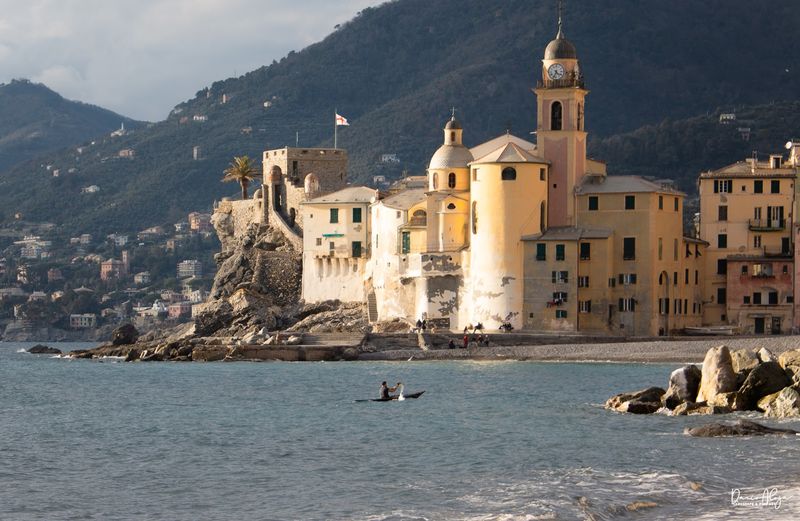
Camogli is what happens when a town decides to skip the tourist makeover and just stay wonderfully, stubbornly itself. Located just south of Genoa on the Ligurian coast, this former fishing village has some of the tallest, most elaborately painted waterfront buildings in all of Italy.
They rise five and six stories above the harbor in shades of burnt orange, dusty yellow, and faded red, their painted windows and shutters a centuries-old trick to fool sailors into thinking the town looked even grander from the sea.
The pebble beach stretches along the base of those colorful buildings, and the harbor is still active with working fishing boats that supply the local restaurants with daily catches. Camogli holds a famous fish festival every May, during which thousands of fish are fried in a massive pan.
It is as wonderfully chaotic as it sounds.
Compared to nearby Portofino, Camogli feels refreshingly unhurried. Prices are more reasonable, the locals are friendly, and the seafood pasta is some of the best on the Ligurian coast.
Day trips to the Abbey of San Fruttuoso, accessible only by boat or on foot, add an extra layer of adventure. Camogli rewards travelers who value authenticity over glamour.
Cefalu, Sicily
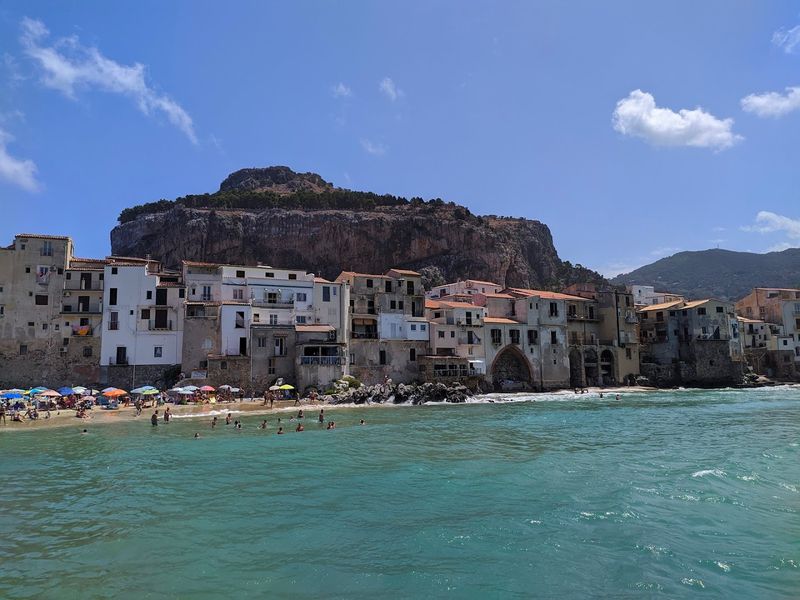
Two towers rise above Cefalu like a pair of stone sentinels, belonging to one of the finest Norman cathedrals in all of Sicily. Built in the 12th century by King Roger II, who apparently wanted to thank God for surviving a storm at sea, the cathedral is decorated with golden Byzantine mosaics that shimmer in the dim interior light.
It is genuinely breathtaking, and that is before you have even seen the beach.
The beach at Cefalu stretches along a wide, sandy bay backed by the town’s colorful buildings and the dramatic bulk of La Rocca, a massive crag that towers over everything. Climbing La Rocca takes about 45 minutes and rewards you with views stretching across the rooftops to the sea.
Medieval streets below are full of ceramic shops, bakeries selling cannoli, and trattorias serving fresh swordfish.
Cefalu sits about an hour east of Palermo by train, making it easy to include in any Sicilian itinerary. Unlike some Sicilian beach towns, it stays lively and charming even outside peak summer months.
The combination of world-class history, great food, and an outstanding beach in one compact town is almost unfair. Cefalu is proof that Sicily saves some of its best tricks for the coast.
Atrani, Campania
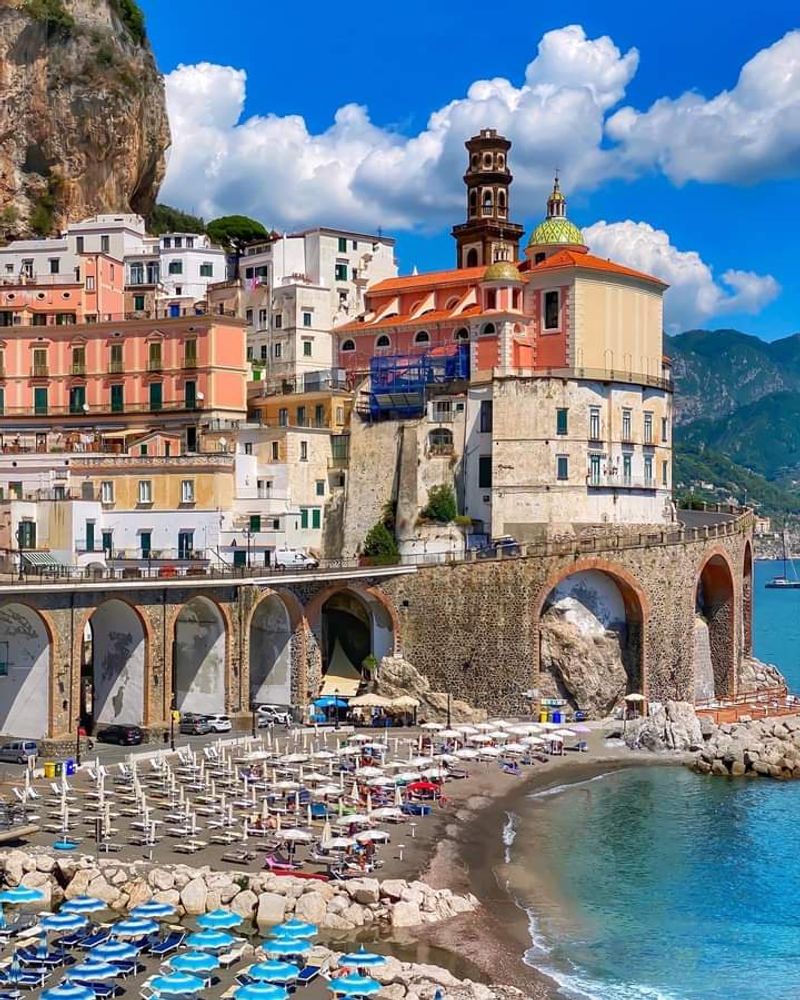
Blink and you might miss Atrani entirely, which would be a genuine shame. Tucked into a narrow gorge just around the headland from the town of Amalfi, this is one of the smallest municipalities in Italy, a place so compact you can walk from one end to the other in about three minutes.
Yet somehow it packs in a medieval church, a charming piazza, a small beach, and enough personality to fill a town ten times its size.
While neighboring Amalfi pulls in the tour buses and souvenir hunters, Atrani stays quiet and genuinely local. The central piazza, just steps from the sea, fills with residents in the evenings for the traditional passeggiata, a leisurely evening stroll that is as much about socializing as it is about fresh air.
It feels like a scene from another era, in the best possible way.
The small beach here is free to use, a rarity on the Amalfi Coast where most beaches charge for sunbeds and umbrellas. Atrani also offers some of the most affordable accommodation on this stretch of coastline.
Staying here while day-tripping to Amalfi, Ravello, and Positano is a smart strategy that more travelers are quietly catching on to. Your wallet will thank you.
Lerici, Liguria
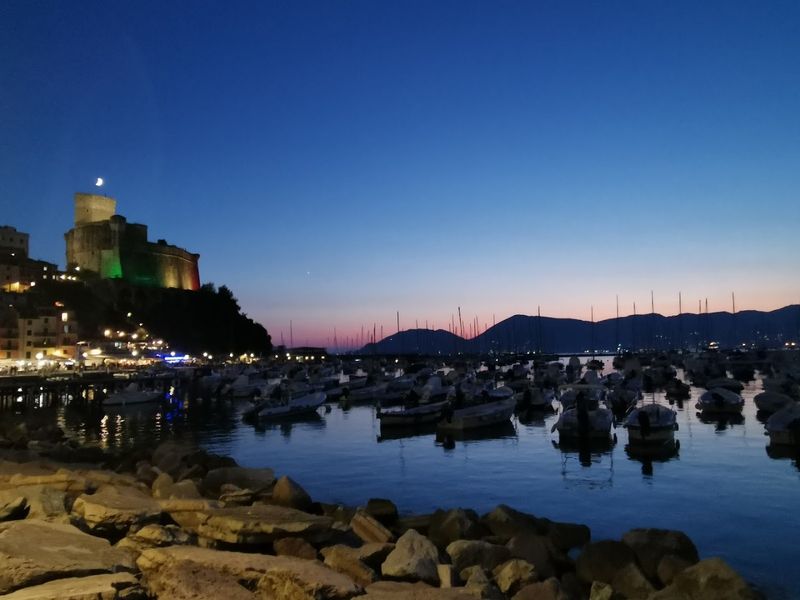
Percy Bysshe Shelley spent some of his last days near Lerici, and while that story has a tragic ending involving a sailing accident, the town itself is gloriously alive. Sitting on the Gulf of Poets, a stretch of Ligurian coastline named for the writers and artists it has long attracted, Lerici wraps around a sheltered bay backed by hills and watched over by a 13th-century castle that seems to grow directly from the rock.
The waterfront promenade is one of the most enjoyable evening strolls in Liguria, lined with gelaterie, seafood restaurants, and the kind of atmosphere that makes you slow your pace automatically. The castle houses an interesting geology museum with ancient marine fossils found in the surrounding hills.
Nearby coves, accessible by boat or on foot, offer quieter swimming spots away from the main beach.
Lerici is a favorite among Italian vacationers rather than international tourists, which keeps the atmosphere genuine and the prices reasonable. The town serves as a good base for exploring the wider Gulf of La Spezia, including the charming village of San Terenzo just around the bay.
Ferry connections to Cinque Terre make it easy to explore the broader region. Lerici is the kind of discovery that makes you feel like a smart traveler.
Otranto, Apulia
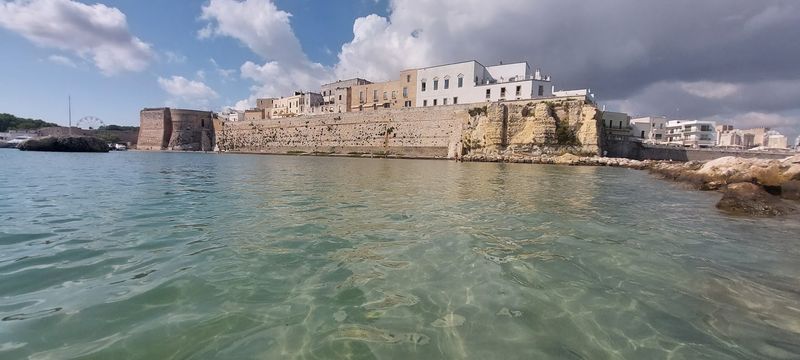
Stand on Otranto’s ancient city walls and you are looking east over the Adriatic toward Albania, which is only about 45 miles away on a clear day. This geographic fact helps explain why Otranto has been fought over, traded, and transformed by so many different civilizations over the centuries.
Greeks, Romans, Byzantines, Normans, and Turks all left their mark here, making the old town one of the most historically layered places on the Italian coast.
The cathedral is the undisputed highlight, containing a remarkable 12th-century mosaic floor that covers the entire nave. Depicting a tree of life surrounded by animals, knights, biblical scenes, and mythological figures, it is one of the most extraordinary pieces of medieval art in Europe.
The cathedral also holds a sobering memorial to 800 locals martyred by Ottoman forces in 1480.
Beyond the history, Otranto delivers some of the clearest water on the Adriatic, with beaches stretching north and south of the town in both directions. The old town’s whitewashed lanes are excellent for evening wandering, with good restaurants serving local fish, sea urchin pasta, and the distinctive wines of the Salento region.
Otranto rewards curiosity at every turn.
Maratea, Basilicata
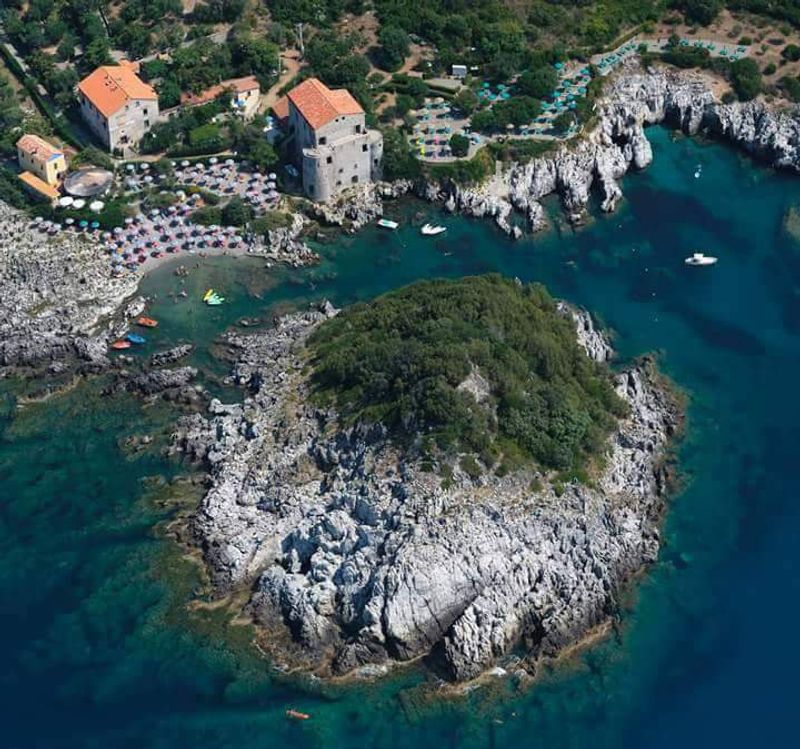
Basilicata is not a region that shows up on many tourist itineraries, which makes its coastline one of Italy’s best-kept secrets. Maratea stretches along a narrow strip of the Tyrrhenian coast, offering 32 kilometers of dramatic scenery that includes sea caves, rocky coves, sea stacks, and more than a dozen beaches ranging from sandy to pebbly to wild and entirely untouched.
Standing watch over all of it is a giant white statue of Christ the Redeemer on the hilltop above town.
The main village of Maratea sits inland on a hillside, full of medieval lanes, old churches, and quiet piazzas where time seems to move at its own relaxed pace. The marina below, called Fiumicello, is where most restaurants and beach access points cluster.
Boat trips along the coast reveal hidden grottoes and swimming spots that are impossible to reach any other way.
Because Basilicata remains off the main tourist trail, Maratea feels refreshingly uncrowded even in summer. Accommodation ranges from simple rooms above restaurants to elegant cliff-top hotels with infinity pools.
The seafood here is exceptional, caught daily and served simply with local olive oil and herbs. Maratea is the reward for travelers willing to venture just a little further south than the crowd.
Santa Margherita Ligure, Liguria
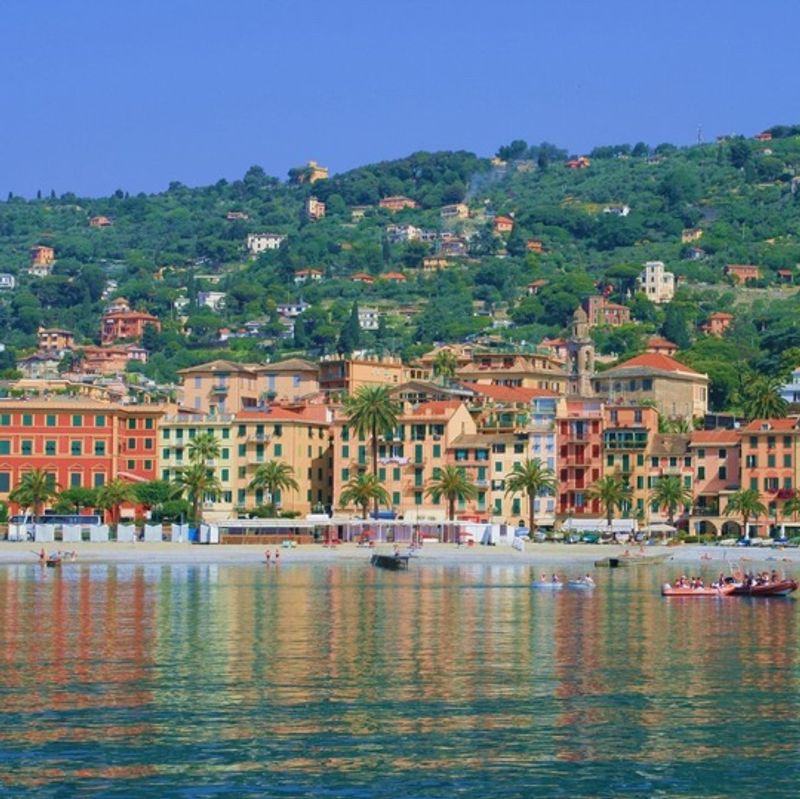
Santa Margherita Ligure has a certain old-school elegance that feels rare these days, the kind of place where people still dress for dinner and the evening passeggiata along the seafront promenade is taken seriously. Palm trees line the waterfront, colorful villas climb the surrounding hills, and the harbor hosts a cheerful mix of fishing boats and weekend sailors who clearly know a good thing when they find it.
Most visitors treat Santa Margherita as a jumping-off point for nearby Portofino, taking the ferry or bus around the headland for the day. But many end up spending more time here than planned, charmed by the town’s relaxed rhythm, excellent restaurants, and the fact that it is simply more affordable than its famous neighbor.
The basilica of Santa Margherita d’Antiochia, with its lavish gilded interior, is worth a look even if you are not particularly into churches.
Boat trips to the Abbey of San Fruttuoso, a medieval monastery accessible only by sea or on foot, depart regularly from the harbor. The surrounding hills offer hiking trails with views across the Gulf of Tigullio.
Santa Margherita is the kind of resort town that does not need to shout about its appeal. It simply delivers, quietly and consistently, every single time.
Taormina, Sicily
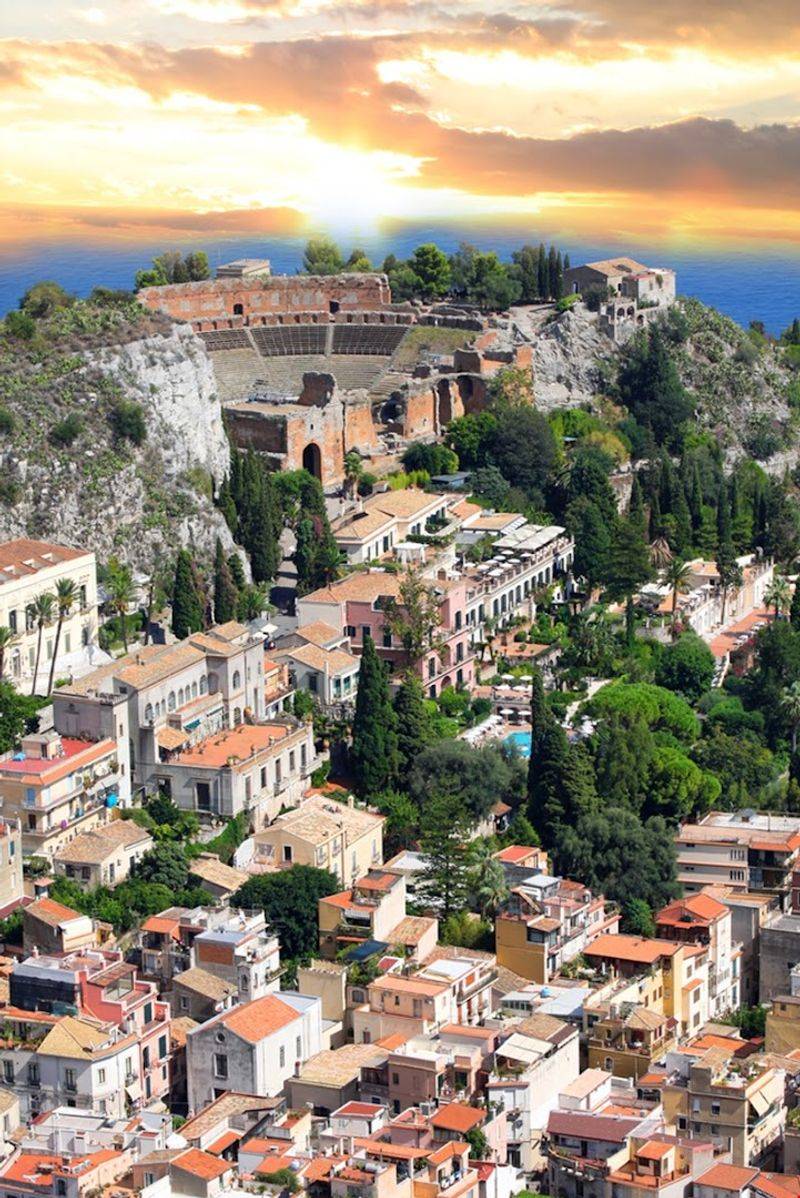
Few towns in the Mediterranean can boast a 2,300-year-old Greek theater with a working volcano as its backdrop, but Taormina is not most towns. Perched on a cliff 200 meters above the Ionian Sea, it has been seducing visitors since antiquity, and the ancient Teatro Greco still hosts concerts and performances each summer against a view that includes both Mount Etna and the sparkling sea.
Goethe visited and was stunned. You will be too.
The main street, Corso Umberto, is a long pedestrian lane lined with boutiques, cafés, and restaurants that manage to stay charming despite the heavy tourist traffic. Side streets peel off toward terraced gardens, Baroque churches, and viewpoints that seem to compete with each other for the best angle on the coastline below.
The beach at Isola Bella, a small nature reserve connected to the mainland by a narrow strip of sand, is one of Sicily’s most photographed spots.
Taormina gets very busy in July and August, so visiting in May, June, or September gives you the beauty without the full summer crush. Cable cars run down to the beaches from town, saving your legs for the evening passeggiata.
The granita here, a frozen Sicilian treat made with fresh fruit, coffee, or almonds, is among the finest in all of Sicily. Start every morning with one.
Sperlonga, Lazio
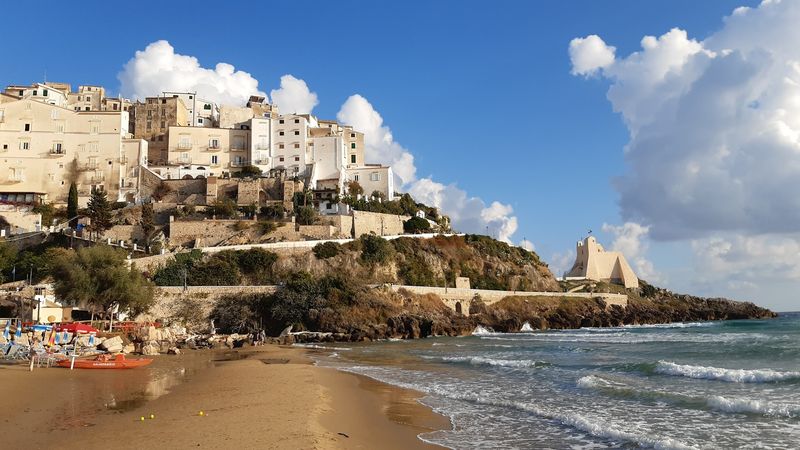
Halfway between Rome and Naples, Sperlonga rises from a rocky promontory above the Tyrrhenian Sea like a stack of white sugar cubes that someone left in the sun. The entire historic center is whitewashed, a visual style more common in Greece than in Italy, giving it an almost dreamlike quality that stands out sharply against the blue water and sky.
It is one of those towns that photographs well from every angle and every hour of the day.
The beaches stretching to the north and south of the promontory are wide, sandy, and backed by clear water that turns every shade of blue and green depending on the light. Romans have been escaping here for centuries, and the Tiberius Villa Archaeological Museum nearby holds sculptures recovered from a sea cave that the Emperor Tiberius apparently used as a private grotto.
History and beach time in one afternoon is a very good deal.
Sperlonga is popular with Italian families and Romans looking for a weekend escape, which means it fills up in August but stays pleasant and manageable outside peak season. The old town’s lanes are car-free and full of small restaurants, ceramics shops, and viewpoint terraces.
Seafood is the obvious choice at dinner, and the local clam pasta is simple, fresh, and exactly what you want after a day at the beach.
Vieste, Apulia
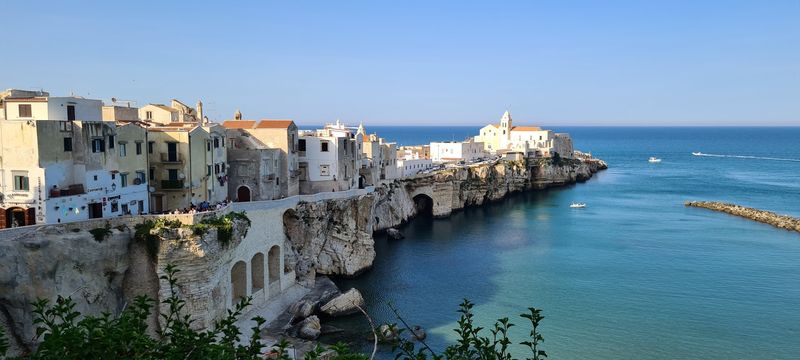
At the tip of the Gargano Peninsula, shaped like the spur on Italy’s boot, Vieste juts dramatically into the Adriatic with limestone cliffs on one side and sandy beaches on the other. The old town perches on a narrow headland between two beaches, its whitewashed lanes and flat-roofed buildings creating a silhouette that looks more North African than southern Italian.
Down on the beach stands the Pizzomunno, a 25-meter white monolith rising straight from the sand like something from a fantasy novel.
The local legend says Pizzomunno was once a young fisherman turned to stone by jealous mermaids after he refused to leave his true love. Whether you believe that or not, the rock makes for an extraordinary landmark at sunrise, when the light turns it gold and the beach is still empty.
Sea caves and grottoes carved into the surrounding cliffs are accessible by boat, and the boat tours that run from the harbor are genuinely spectacular.
Vieste serves as the main hub for the Gargano coast, with good transport connections and a wide range of accommodation options. The surrounding Gargano National Park adds hiking, forest walks, and freshwater lakes to the coastal activities.
Evening in the old town, when the narrow streets fill with the smell of grilling fish and the sound of conversation, is worth the trip alone.
Share this story