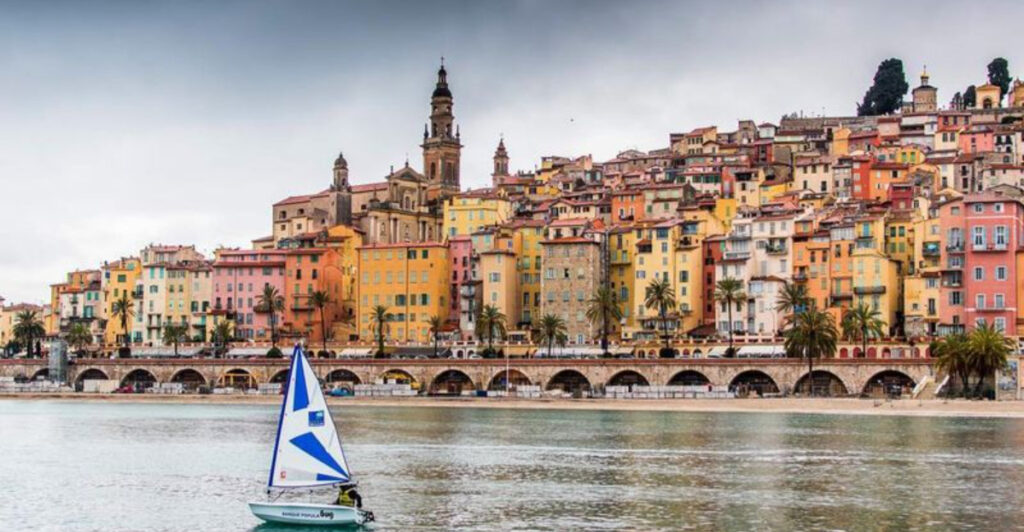
France has a habit of making reality look like a movie. Some villages are so perfectly preserved, so absurdly photogenic, that you half-expect a film crew to jump out from behind a flower box.
From cliffside medieval towns to canal-lined streets straight out of a period drama, these places exist in real life, and yes, you can actually visit them. Pack your camera, because your feed is about to get very jealous looks.
Colmar, Alsace
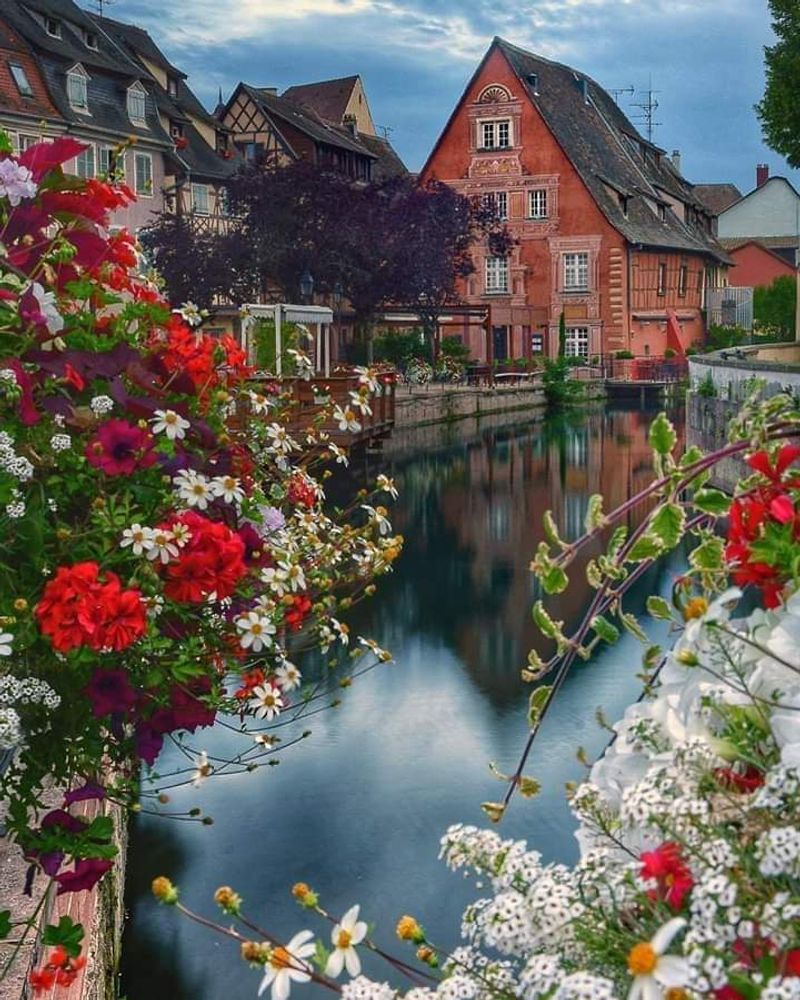
Colmar’s Petite Venise district did not get that nickname by accident. Canals wind through pastel-colored streets, flower boxes overflow from every window, and half-timbered facades reflect in the still water below.
It looks less like a real town and more like a film location that got too comfortable being beautiful.
I visited on a Tuesday morning and genuinely stopped walking for a full minute just staring. The colors are that ridiculous.
Apricot, mustard, sage green, all lined up like a paint swatch that went rogue.
France.fr flags Colmar’s canals as a must-see in Alsace, and they are not overselling it. Arrive early to beat the crowds and catch the light bouncing off the water.
The Koifhus market hall and the Unterlinden Museum are both nearby and well worth adding to your route.
Riquewihr, Alsace
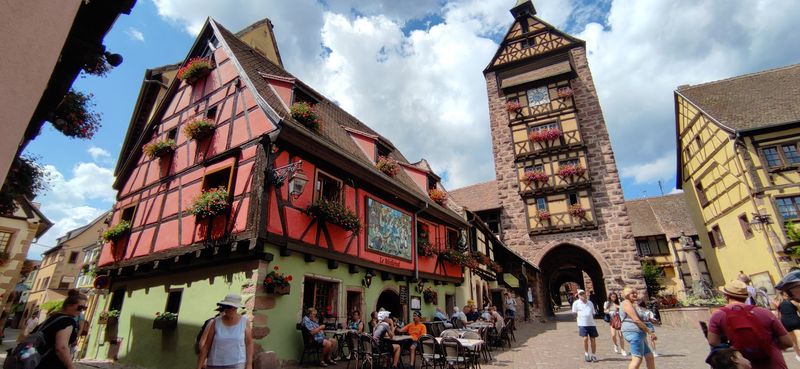
Riquewihr is the kind of place that makes you question whether town planners in the 16th century were secretly set designers. Every facade is painted in a different cheerful color, every balcony is draped in flowers, and the whole village looks like it was preserved in a glass jar just for your visit.
Located about 10 km from Colmar, it pairs perfectly with a wider Alsace trip. France.fr describes its architecture as beautifully preserved, which is a polite way of saying it looks almost too good to be real.
The main street is pedestrian-only, so you can wander without worrying about traffic. Wine tasting is practically mandatory here since Riquewihr sits right on the Alsace Wine Route.
Local producers line the street with tasting rooms that are genuinely welcoming. Come for the views, stay for the Riesling.
Nobody will judge you.
Eguisheim, Alsace
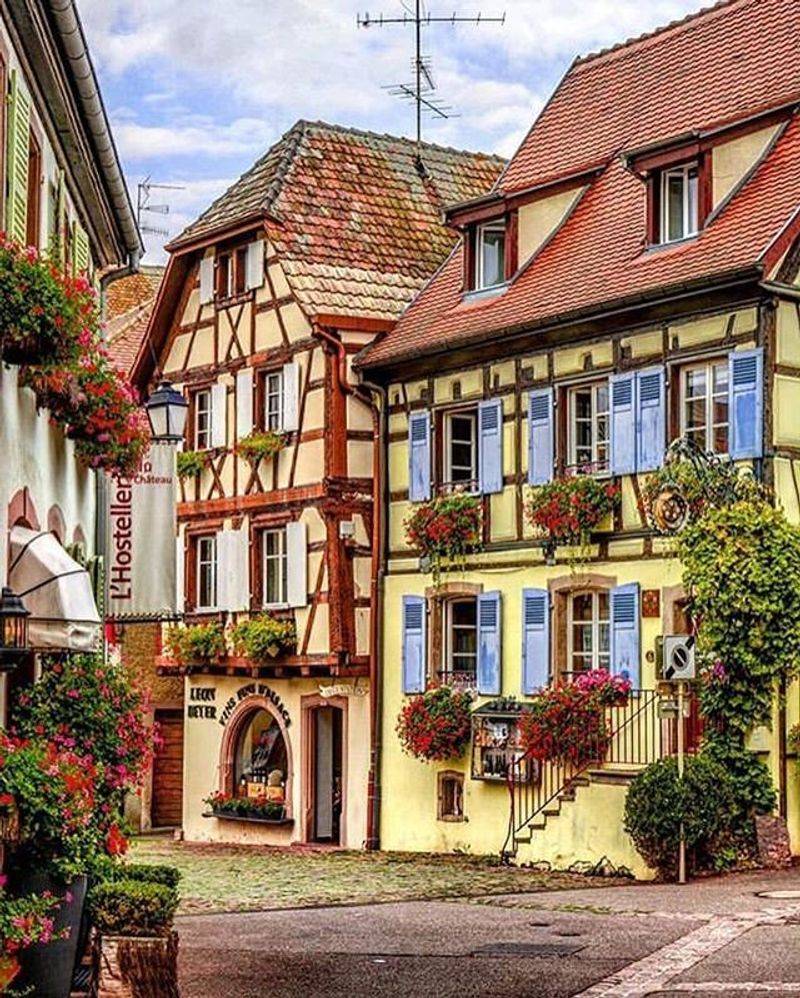
Eguisheim is laid out in concentric circles, which means no matter which direction you walk, you end up back where you started. Somehow, this is not frustrating at all.
The lanes are lined with 16th and 17th century half-timbered houses so festooned with flowers that the architecture becomes secondary to the bloom situation.
Officially listed among France’s Most Beautiful Villages, Eguisheim earns that title without breaking a sweat. The village also sits at the heart of Alsace wine country, so the scenery comes with a very reasonable excuse to stop for a glass.
The central fountain square is a reliable photo spot that never gets old. Unlike some famous villages that feel like open-air museums, Eguisheim still functions as a living community.
Locals shop, kids play, and cats sit in doorways with the confidence of tiny property owners. That lived-in quality makes the whole place feel wonderfully genuine.
Gordes, Provence
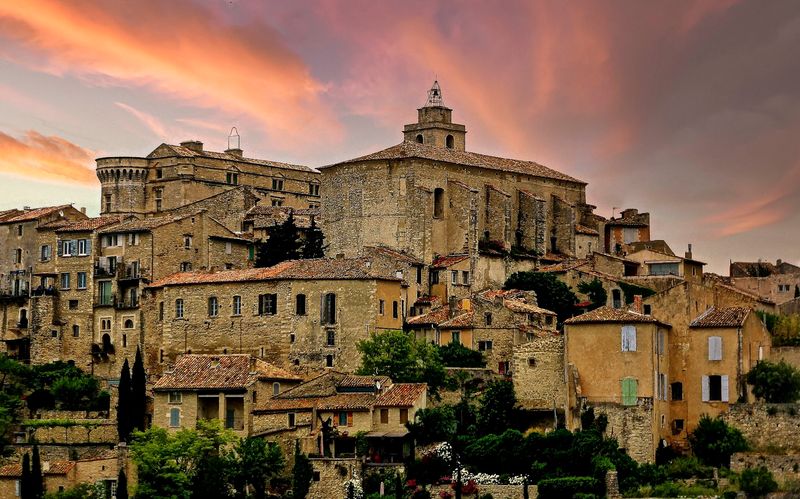
Gordes does not sit on a hill so much as it dominates one. The honey-colored stone buildings stack up the Luberon slope like nature designed a village from scratch and then forgot to stop.
From a distance, it genuinely looks like a dramatic opening shot waiting to happen.
Its official village site lists it among France’s most beautiful villages, and the tourist numbers back that up with enthusiasm. Lavender fields surround the area in summer, turning the already-cinematic landscape into something almost unfairly gorgeous.
The village itself has narrow lanes, a Renaissance chateau, and enough art galleries to keep you occupied between views. One useful tip: parking fills up fast in July and August, so arrive before 9am or use the shuttle from lower parking areas.
The Abbey of Senanque, just a short drive away, is the lavender-surrounded monastery you have definitely already seen on a French travel poster.
Rocamadour, Lot
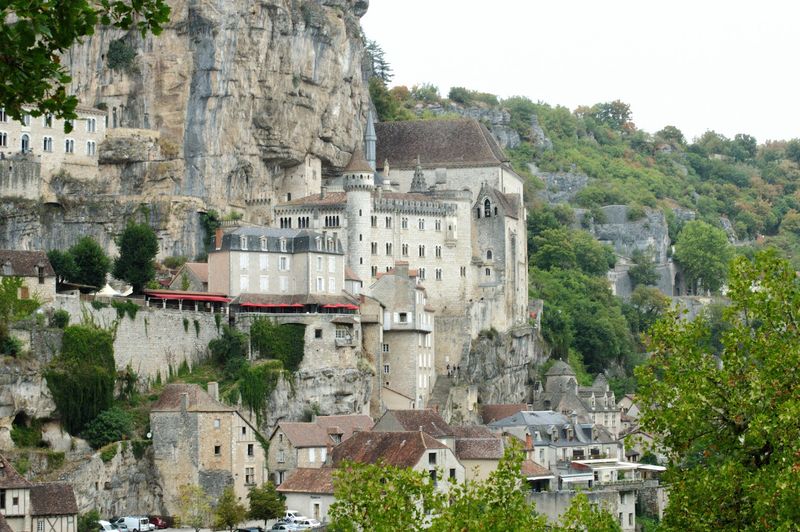
Rocamadour does not just sit near a cliff. It clings to one, with buildings stacked vertically up the rock face like someone ran out of horizontal space and just kept going upward.
The effect is dramatic enough to make your jaw drop before you have even parked the car.
Lot Tourism lists it among France’s Most Beautiful Villages, and the castle ramparts are open to visitors for valley views that stretch out impressively in every direction. The pilgrimage route up the Grand Escalier, a staircase of 216 steps, is the classic way to reach the sanctuary level.
Rocamadour has been a pilgrimage site since the Middle Ages, which explains both the religious chapels stacked into the cliff and the very enthusiastic souvenir shops at the bottom. The Black Madonna in the Chapel of Our Lady draws visitors from across Europe.
Go in spring or autumn for smaller crowds and better light.
Conques, Aveyron
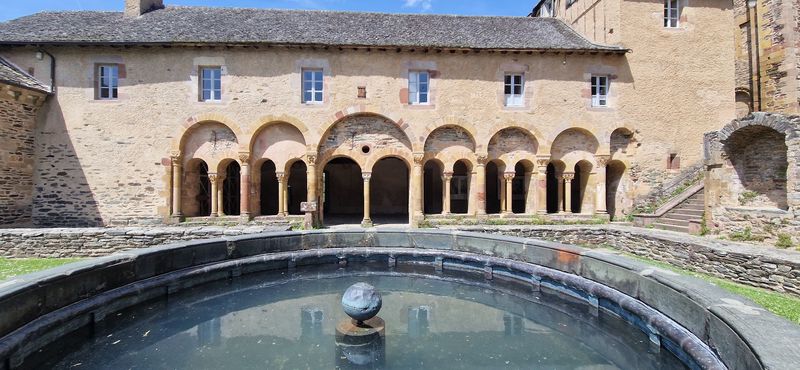
Conques feels genuinely medieval in a way that many historic villages only pretend to be. Stone lanes twist between ancient houses, the Romanesque Abbey Church of Sainte-Foy towers over the village, and the famous Last Judgment tympanum above the entrance has been staring down pilgrims since the 12th century.
The local tourist office promotes Conques as one of France’s Most Beautiful Villages on the historic route to Compostela. That pilgrimage history gives the place a quiet gravity that is hard to shake.
It feels earned rather than staged.
Contemporary artist Pierre Soulages designed the abbey’s modern stained-glass windows, and they are unexpectedly spectacular. Abstract and luminous, they work in conversation with the ancient stone rather than against it.
Conques is small enough to walk entirely in an afternoon, but the abbey treasury alone deserves a proper hour. The medieval reliquary of Sainte-Foy, studded with gems, is genuinely astonishing up close.
Saint-Cirq-Lapopie, Lot
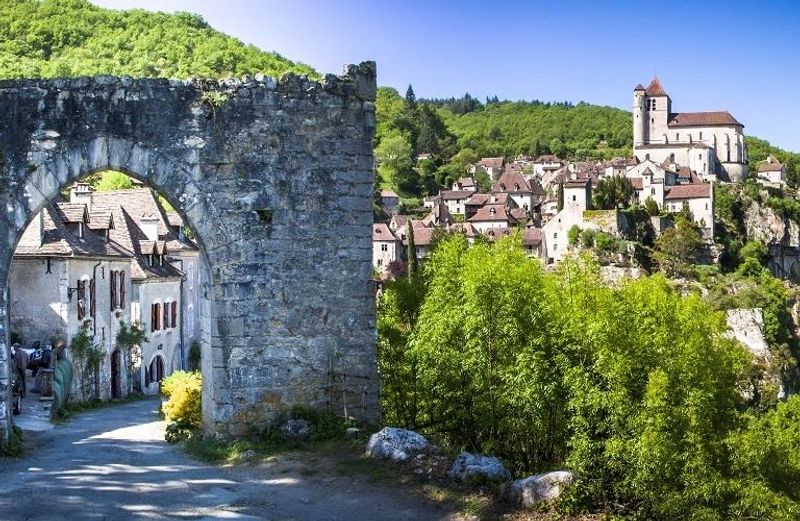
Saint-Cirq-Lapopie has the kind of location that feels almost unfair. It sits on a cliff above a bend in the Lot River, with a fortified church at the top and medieval houses cascading down the hillside below.
The view from the river looking up is the sort of thing travel photographers retire on.
The official village site describes its picturesque lanes and historic monuments in detail, and guided tours are available if you want context to go with your jaw-dropping views. Independent exploration works just as well since the village is compact and well-signed.
Writer Andre Breton called Saint-Cirq-Lapopie the most beautiful place in France, which is a bold claim from a surrealist. He lived here for years, so presumably he had time to reconsider and chose not to.
Artisan workshops and small galleries still fill many of the medieval houses, keeping the village alive rather than purely decorative. Visit on a weekday morning for the quietest experience.
Annecy, Haute-Savoie
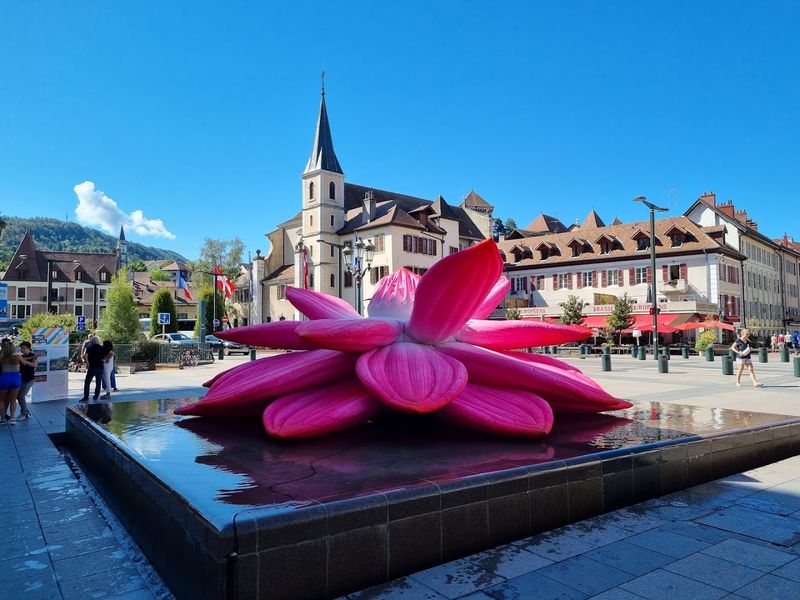
Annecy gets called the Venice of the Alps so often that the comparison has worn smooth, but it sticks because it is accurate. The old town sits where the Thiou Canal meets the lake, with arcaded streets, medieval bridges, and a prismatic alpine light that shifts constantly depending on the time of day.
The Lake Annecy Tourist Office is well-organized and helpful, with walking routes mapped out for visitors who want to cover the highlights without getting lost in the lanes. The Palais de l’Isle, a tiny castle sitting directly in the canal, is the town’s most photographed building for obvious reasons.
What surprises most first-time visitors is how genuinely clean the lake is. Lake Annecy is considered one of the purest lakes in Europe, which means the swimming is exceptional in summer.
The old town is compact enough to cover on foot in a morning, leaving the afternoon free for a lakeside kayak or a long lunch with mountain views.
Eze, French Riviera
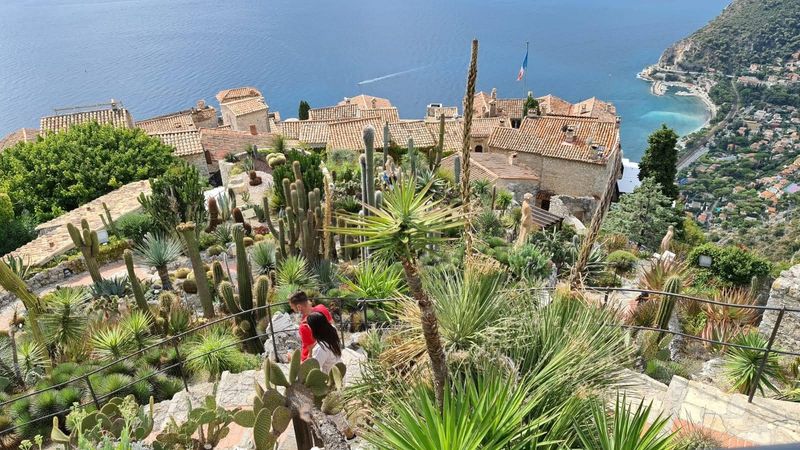
Eze sits 427 meters above the Mediterranean, which means the views are not just good, they are the kind that make you forget what you were about to say mid-sentence. The village is perched on a rocky peak between Nice and Monaco, and the approach road is dramatic enough to feel like a film intro.
France.fr calls Eze a must-visit medieval village, and the official site highlights its panoramic setting and centuries of uninterrupted charm. The ruined castle at the summit has been converted into an exotic cactus garden, which is a very Riviera solution to a ruined castle.
Nietzsche reportedly walked the steep path from the coast to Eze while working on Thus Spoke Zarathustra. The trail is still there and still steep.
Most visitors take the road instead, which is perfectly acceptable and still delivers the same views. The village has excellent artisan shops and one of the best hilltop restaurants on the entire Riviera.
Yvoire, Haute-Savoie
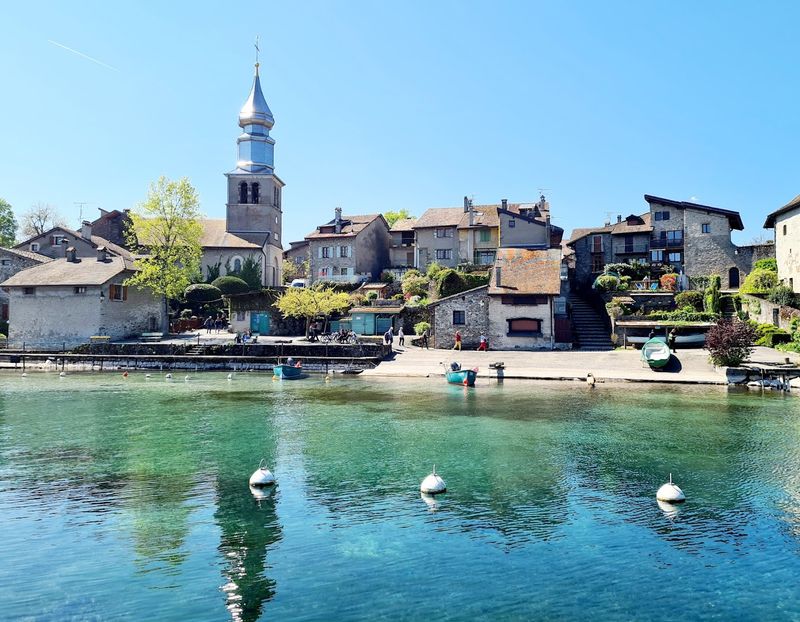
Yvoire sits on the French side of Lake Geneva with a quiet confidence that comes from 700 years of practice. Medieval gates frame flower-filled alleys, the lake glitters behind every gap in the buildings, and the Alps rise up in the background as if someone hung a very large painting on the horizon.
Listed officially among France’s Most Beautiful Villages, Yvoire earns the title with a combination of preserved medieval architecture and serious horticultural ambition. The Jardin des Cinq Sens, a medieval-themed sensory garden, is a genuine highlight and worth more than a quick look.
The village is small enough to walk in under an hour, which makes it a natural pairing with a lake cruise or a trip across to the Swiss side of Geneva. Summer weekends get busy, so a weekday visit rewards you with quieter lanes and easier access to the lakefront.
Ferry connections from Yvoire run to several other lake villages.
Locronan, Brittany
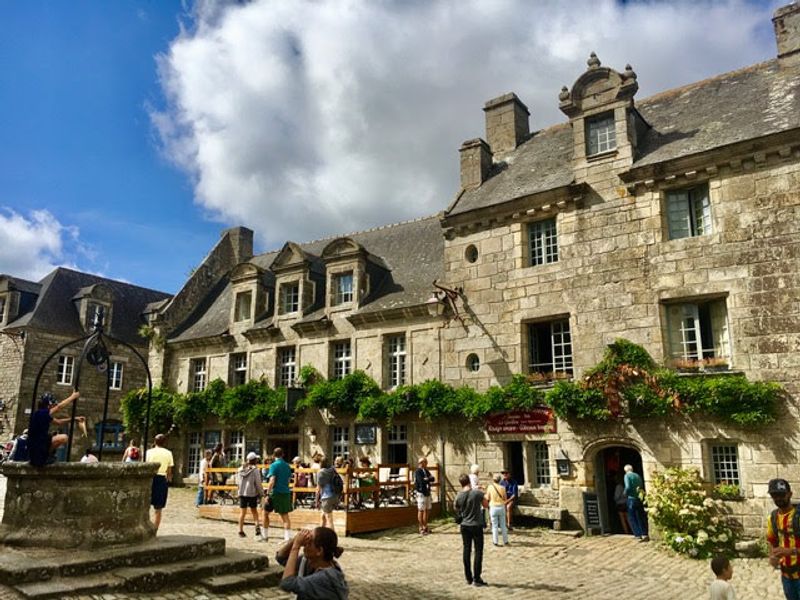
Locronan is built entirely from granite, which gives it a weight and seriousness that other pretty villages simply do not have. The central square is ringed with Renaissance stone houses so well-preserved that film directors have repeatedly shown up and said yes, this is exactly what we need.
Roman Polanski filmed scenes from Tess here. That is the level of cinematic we are talking about.
The tourist office designates Locronan a Petite Cite de Caractere and one of France’s Most Beautiful Villages. The title fits.
The Church of Saint-Ronan and the adjoining Penity Chapel anchor the square and date back to the 15th century.
Brittany’s weather gives Locronan a moody, atmospheric quality that sunnier regions cannot replicate. Overcast skies suit the granite beautifully, making the stone glow silver rather than grey.
The village has a small but excellent selection of artisan studios and craft shops. Come in late spring before peak summer crowds claim every parking spot.
Sarlat-la-Caneda, Dordogne
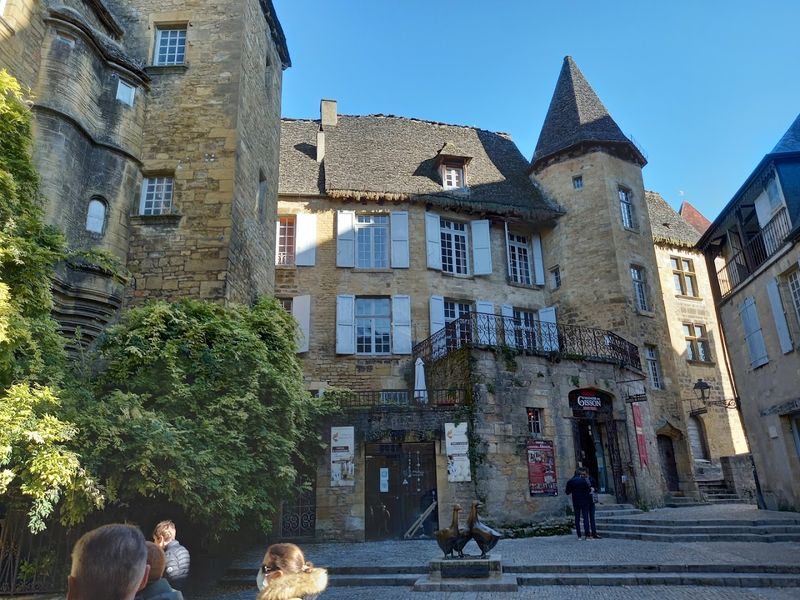
Sarlat has one of the best-preserved medieval town centers in France, which is saying something in a country that takes preservation very seriously. The golden limestone buildings glow warm in afternoon light, the market squares fill with produce stalls on Saturdays, and the cobbled lanes twist in directions that make maps feel optimistic.
Local tourism sources describe Sarlat as an essential Dordogne visit, and the pedestrian medieval core is large enough to keep you exploring for a full day without retracing your steps. The Cathedral of Saint-Sacerdos and the Lanterne des Morts are both within easy walking distance of the central square.
The Saturday market is one of the best in southwest France. Foie gras, truffles, walnuts, and local cheeses fill the stalls in quantities that make restraint nearly impossible.
Sarlat also serves as a base for exploring the Vezere Valley’s prehistoric cave sites, including Lascaux. The combination of medieval architecture and prehistoric heritage in one region is genuinely hard to beat.
Dinan, Brittany
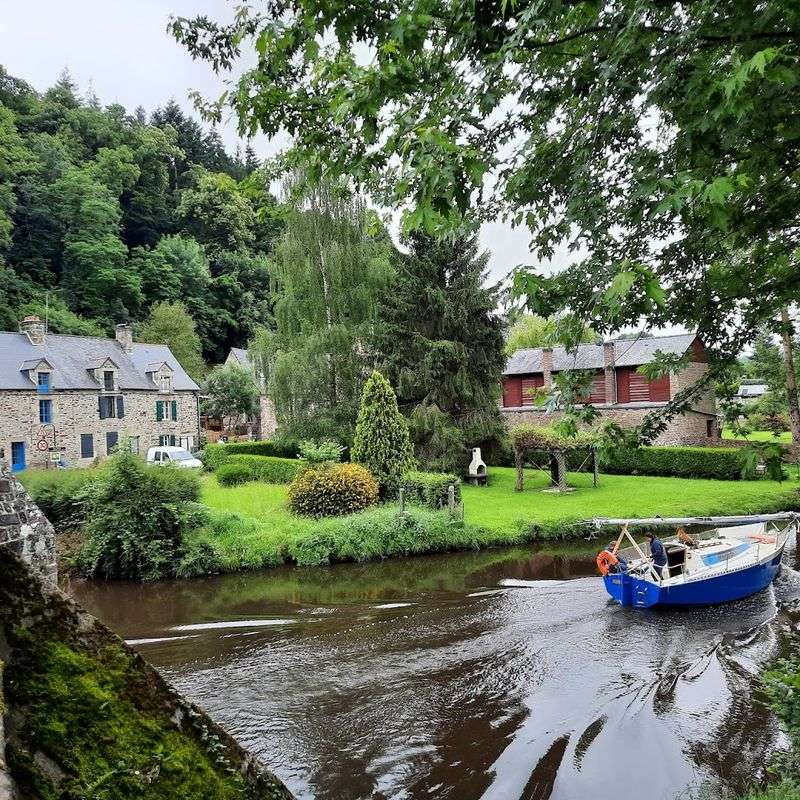
Dinan has nearly 3 km of intact medieval ramparts, which immediately puts it in a different category from most historic towns. Walking the walls gives you a full circuit of the old town with views that shift from the Rance River valley to the rooftops of half-timbered houses below.
It is a very good use of 45 minutes.
The steep Rue du Jerzual is Dinan’s most dramatic street, dropping from the upper town down to the old port in a series of medieval buildings that Brittany Tourism describes as a direct plunge into medieval atmosphere. Artisan workshops line the street, many of them in buildings that date back to the 15th century.
The 14th century castle at the top of town houses a local history museum worth a visit. Dinan also has a lively restaurant scene concentrated around the Place des Merciers, where the timber-framed buildings lean over outdoor tables at companionable angles.
Thursday morning market is the one to catch.
Honfleur, Normandy
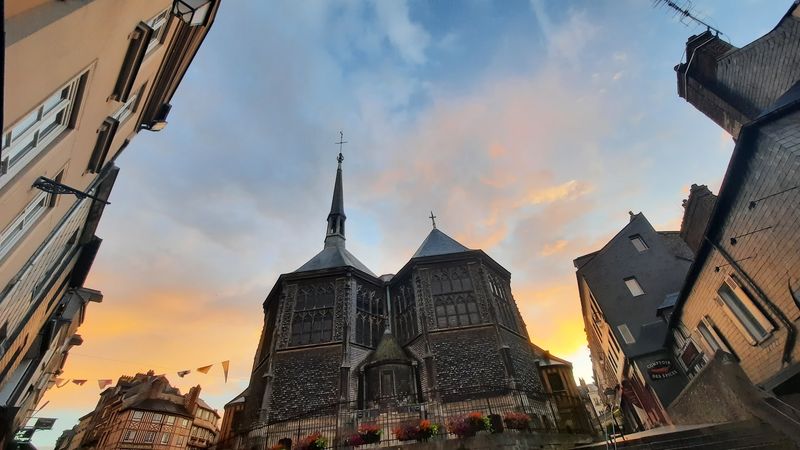
Honfleur’s Vieux Bassin is one of those harbor views that painters kept returning to for good reason. Tall, narrow buildings in every shade of grey, cream, and slate line the quay, their reflections shifting in the estuary water below.
Eugene Boudin painted it obsessively. Claude Monet came here as a student.
The light genuinely is different.
Normandy Tourism confirms Honfleur remains fully open to visitors, with only a small area under security measures as of its April 2026 update. The Sainte-Catherine Church, built entirely from wood by local shipwrights in the 15th century, is one of France’s most unusual religious buildings and sits just a short walk from the harbor.
The town has a strong restaurant culture, particularly around fresh seafood from the Normandy coast. Moules, crevettes, and sole are staples on most menus.
Honfleur is about 2 hours from Paris by road, making it a very reasonable weekend escape. The drive along the Cote Fleurie adds extra coastal scenery to the journey.
Menton, French Riviera
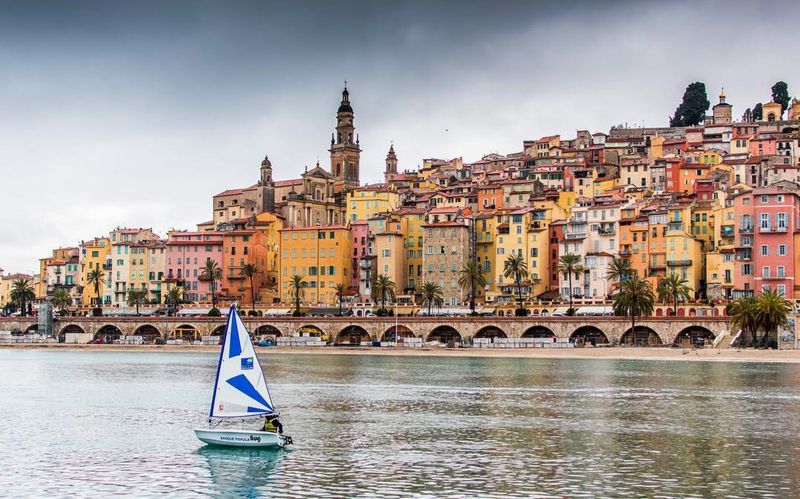
Menton sits right on the Italian border, and its old town knows it. The pastel facades climb the hillside in shades of ochre, terracotta, and warm yellow that feel more Ligurian than Provencal.
The Baroque church of Saint-Michel Archange presides over a tilted square of black and white pebble mosaic that is among the most elegant public spaces on the entire Riviera.
The official tourism page calls the historic old town a must-see, listing narrow streets, colorful facades, and views over Les Sablettes Beach and the old port as the main draws. All of that is accurate and none of it is oversold.
Menton is also the lemon capital of France, which sounds like a minor footnote until you taste the local limoncello and realize this is serious business. The annual Lemon Festival in February turns the whole town into a citrus-themed spectacle.
The climate here is one of the mildest on the French Riviera, making Menton a genuinely year-round destination.
Share this story