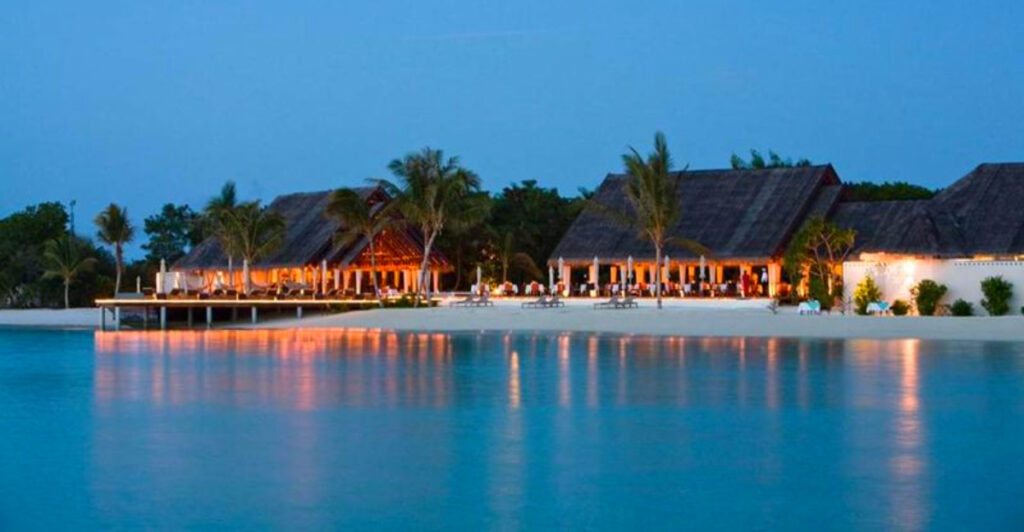
The Caribbean is famous for its crystal-clear turquoise waters, but it’s far from the only place on Earth where you’ll find that same jaw-dropping clarity. Around the world, destinations from Europe to Asia and the Pacific offer water so transparent and vividly blue that it rivals or even surpasses the Caribbean.
These locations often owe their beauty to coral reefs, mineral-rich geology, or protected ecosystems, creating visibility that can stretch for dozens of meters underwater. From tropical islands to unexpected European gems, here are 15 destinations where the water feels just as magical.
Bora Bora, French Polynesia
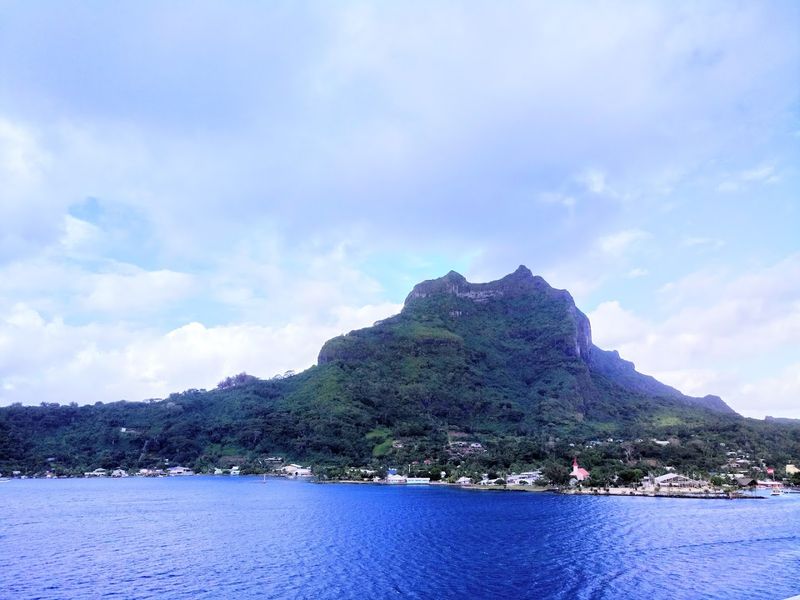
Bora Bora has a color palette that looks like someone cranked the saturation up on a photo editor and forgot to stop. The lagoon wraps around the volcanic island in shades of turquoise, jade, and electric blue that shift depending on depth and sunlight.
It’s genuinely hard to believe it’s natural until you’re standing in it.
A protective barrier reef keeps the water inside the lagoon remarkably calm and clear. That reef also supports an ecosystem packed with sharks, rays, and tropical fish that cruise just beneath the surface.
Snorkelers and paddleboarders share the water with blacktip reef sharks here, and somehow that’s completely normal.
The island sits about 230 kilometers northwest of Tahiti and is best reached by a short flight. Peak season runs from May through October when rain is minimal and visibility peaks.
French Polynesia uses the French Polynesian franc, so budget travelers should plan carefully since Bora Bora leans expensive. Still, even budget-friendly day tours from nearby islands let you experience the lagoon without booking a luxury resort.
The water alone is worth the trip.
Palawan, Philippines
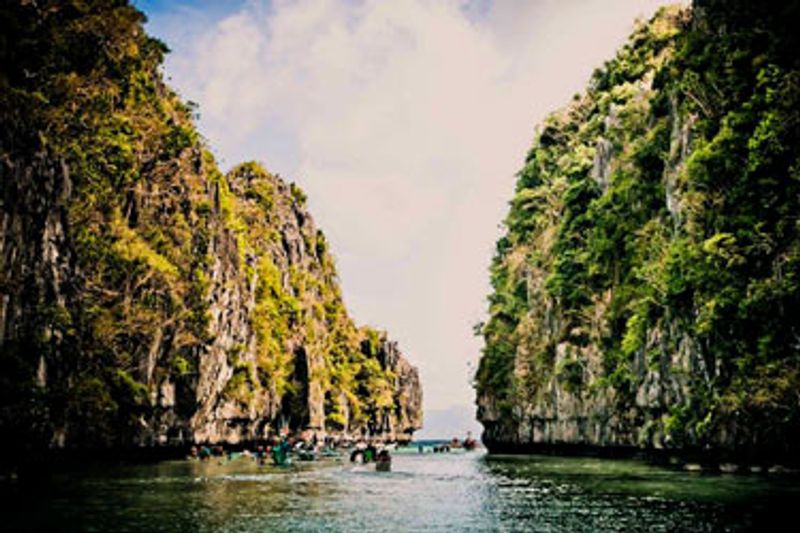
Hidden behind towering limestone cliffs, Palawan’s lagoons feel like secret rooms that the ocean forgot to lock. El Nido and Coron are the two names that come up most, and both deliver water so clear that you can read the texture of the seafloor from the surface.
The Philippines sits in the Coral Triangle, the most biodiverse marine region on the planet.
That biodiversity shows. Palawan’s reefs are home to over 500 coral species and roughly 2,000 fish species, many of which you’ll spot just snorkeling near the shore.
Coron is especially famous for its World War II shipwrecks, now covered in coral and teeming with life. Wreck diving here is considered some of the best in Asia.
Getting to Palawan usually means flying into Puerto Princesa or directly into El Nido. Island-hopping tours are the most popular way to explore, and they’re surprisingly affordable.
A full-day tour covering multiple lagoons and snorkeling spots typically costs under $20. The dry season runs from November to May, which is when water clarity peaks.
Palawan has been named the world’s best island multiple times, and honestly, the water makes a very convincing argument for why.
Maldives
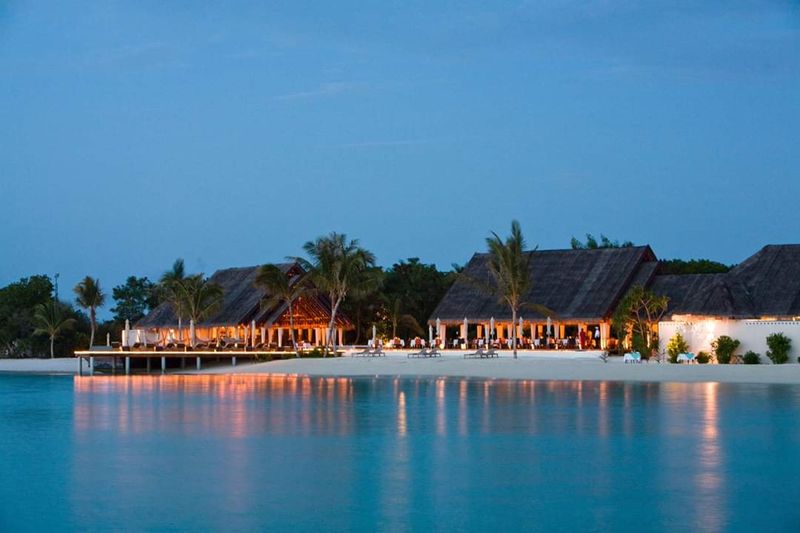
Imagine stepping off a wooden dock and looking down to see colorful fish darting beneath your feet in water so clear it barely looks real. That’s a typical Tuesday in the Maldives.
Scattered across the Indian Ocean like confetti, these 1,200 coral islands sit so low that from above, they look like emeralds floating on glass.
The shallow lagoons surrounding each atoll create warm, calm water that stays crystal-clear year-round. Because the reefs act as natural barriers, currents stay gentle and visibility regularly hits 30 meters or more.
Snorkeling here feels less like swimming and more like hovering above a living painting.
Water temperatures hover around 28°C (82°F), making it comfortable without a wetsuit. The best time to visit is between November and April when skies are clear and seas are calm.
Overwater bungalows let you literally sleep above the lagoon, so the view never really ends. Marine life here includes manta rays, whale sharks, and hundreds of reef fish species.
Few places on Earth make you feel this close to the ocean without actually being underwater.
Seychelles
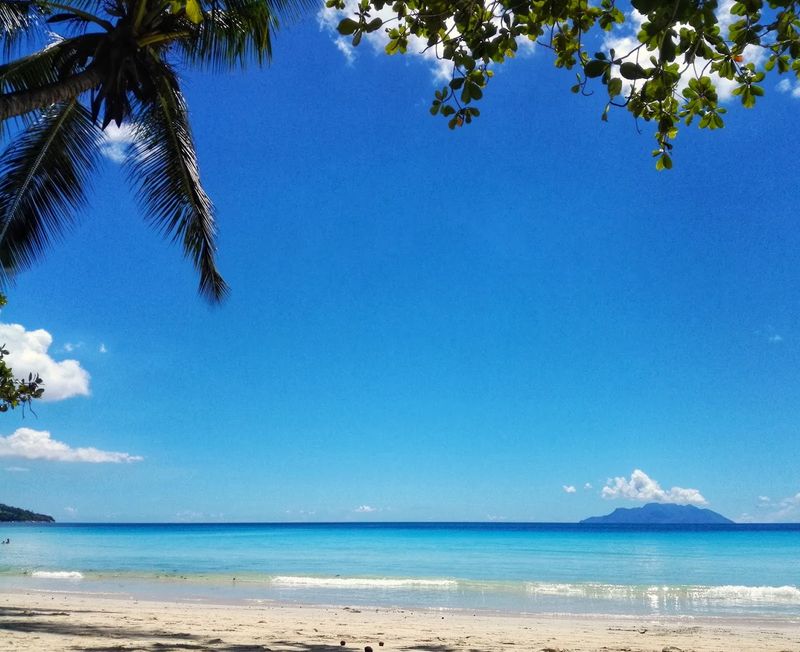
The Seychelles looks like a film set that someone accidentally made real. Giant pink granite boulders frame beaches of powder-white sand, while the Indian Ocean stretches out in shades of turquoise so bright they almost glow.
This archipelago of 115 islands sits northeast of Madagascar, and it has the kind of beauty that makes people question their life choices for not moving here sooner.
Water clarity around the inner islands, especially Praslin and La Digue, is exceptional. The coral reefs here support green sea turtles, nurse sharks, and parrotfish that crunch on coral loud enough to hear underwater.
Visibility regularly exceeds 20 meters, making snorkeling and freediving deeply satisfying even for beginners.
The Seychelles operates year-round, though April and October offer the calmest seas and best visibility. It’s a pricier destination, but guesthouses on La Digue offer a more budget-conscious experience than the private island resorts.
The island of Aldabra, a UNESCO World Heritage Site, holds the world’s largest population of giant tortoises. The Seychelles packs extraordinary natural diversity into a relatively small area, both above and below the waterline.
It’s the kind of place that earns its reputation every single day.
Zanzibar, Tanzania
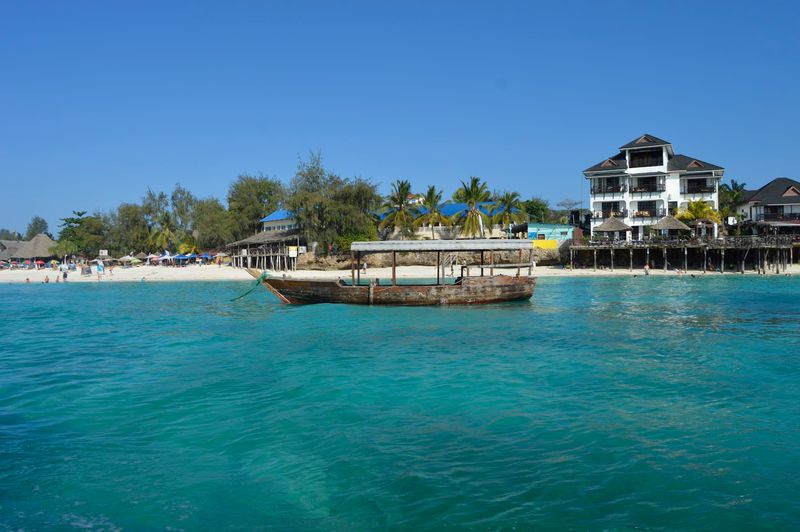
At low tide on Zanzibar’s east coast, the ocean pulls back so far that the seafloor becomes a mirror of wet sand reflecting the sky. Locals wade through ankle-deep water to harvest seaweed, and children chase crabs through pools left behind by the retreating sea.
It’s a scene that feels timeless, and the water is the main character.
Zanzibar sits off the Tanzanian coast in the Indian Ocean, and its beaches, especially Nungwi and Kendwa in the north, offer calm, clear water that stays swimmable year-round. The warm equatorial ocean keeps temperatures between 25 and 29°C.
Coral reefs just offshore support dolphins, sea turtles, and colorful reef fish that reward snorkelers generously.
Stone Town, the historic center of Zanzibar City, is a UNESCO World Heritage Site worth exploring between beach days. The island’s spice trade history adds cultural depth that purely beach destinations sometimes lack.
Ferry connections from Dar es Salaam make Zanzibar accessible and affordable compared to many Indian Ocean rivals. High season runs from June to October and December to February, when skies are clear and the water at its most inviting.
Zanzibar earns its reputation quietly but completely.
Aitutaki, Cook Islands
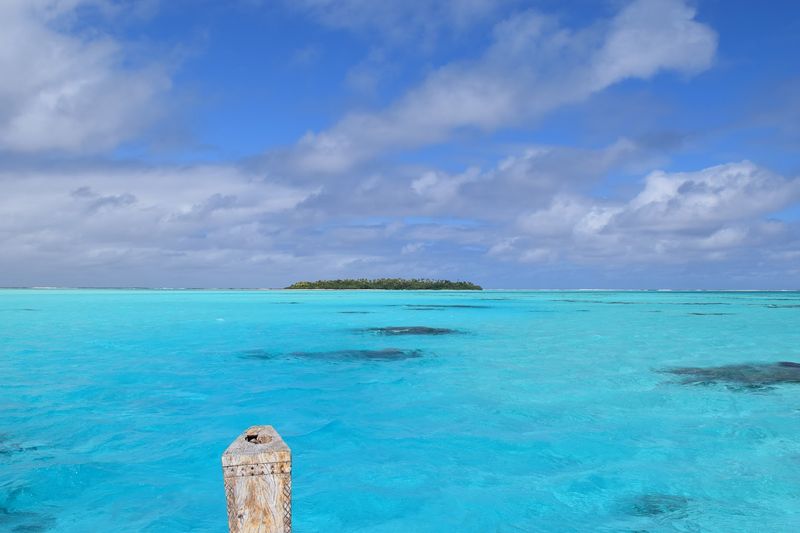
Aitutaki’s lagoon has been called the most beautiful in the world so many times that the locals have basically stopped arguing about it. Seen from above, it looks like someone spilled a palette of blues and greens across a shallow plate of coral.
The water is so clear and so shallow in places that it barely covers the sandy bottom, yet it glows with an almost electric intensity.
The lagoon stretches roughly 15 kilometers across and is ringed by a coral reef that keeps waves and currents out. Inside, the water is calm enough for kayaking, paddleboarding, and lazy floats on a tube.
Snorkeling reveals giant clams, tropical fish, and coral gardens that look like underwater flower arrangements.
Aitutaki is a short flight from Rarotonga, the Cook Islands’ main hub. Day trips from Rarotonga are popular, but staying overnight gives you the lagoon mostly to yourself at sunrise.
The Cook Islands uses the New Zealand dollar, and the pace of life here is genuinely unhurried. Boat tours to the tiny motus, or sandbar islands, inside the lagoon are a highlight.
One motu called Tapuaetai, also known as One Foot Island, offers a postcard-perfect lunch stop mid-lagoon.
Exuma, Bahamas
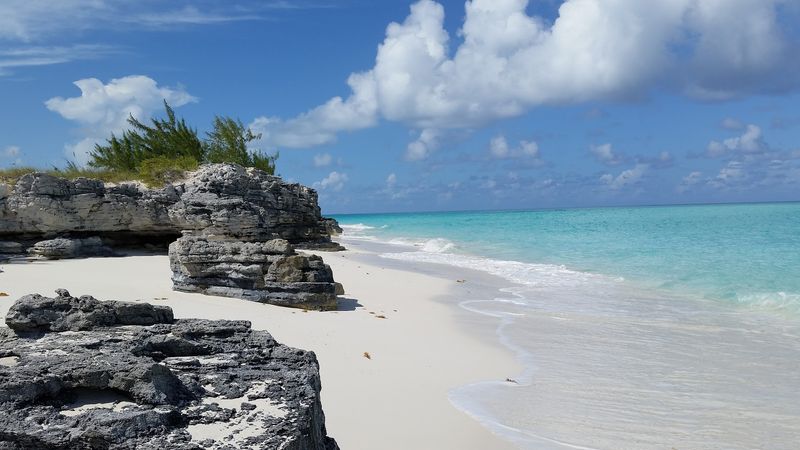
Boats in Exuma don’t look like they’re floating on water. They look like they’re floating on air.
The water here is so impossibly transparent that the shadow of a hull on the sandy bottom is often more visible than the water itself. It’s the kind of clarity that makes you double-check whether the sea is actually there.
The Exuma Cays stretch over 160 kilometers of shallow Bahamian banks where the water rarely exceeds a few meters in depth. That shallowness, combined with brilliant white sand and constant sunlight, creates the electric blue and turquoise tones that have made Exuma famous on social media.
The Exuma Cays Land and Sea Park protects a large section of the area, keeping reefs and marine life in excellent condition.
Swimming pigs at Big Major Cay are a quirky attraction that’s become surprisingly iconic. Nurse sharks and iguanas also hang around visitor spots and are completely accustomed to people.
Staniel Cay is a popular base for exploring, with boat rentals widely available. Water taxis and charter boats serve most of the cays.
Flying into George Town or Nassau with a connection to Exuma is the standard route. The water here is genuinely something you have to see to believe.
Navagio Beach, Zakynthos (Greece)
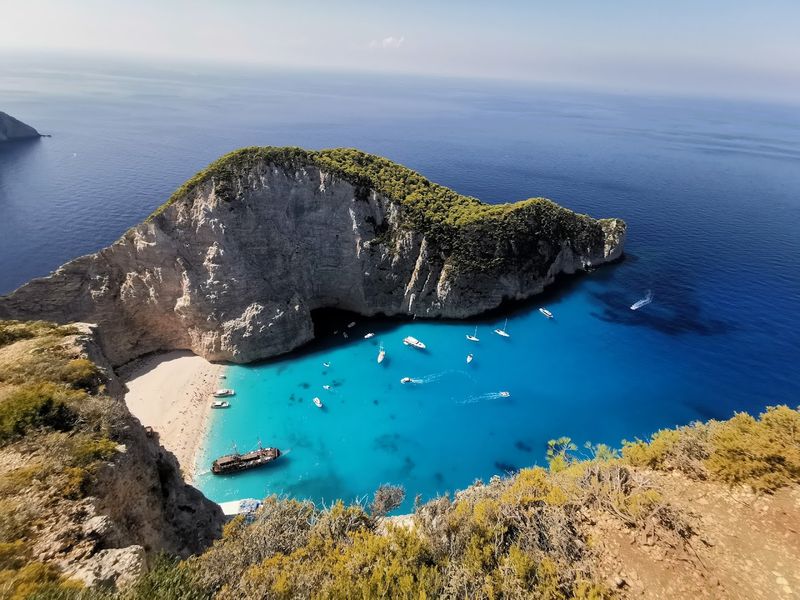
There’s a rusted shipwreck sitting on the most dramatic beach in Greece, and somehow that only makes it more beautiful. Navagio Beach, also called Shipwreck Beach, is only reachable by boat, which keeps it from getting completely overrun.
White limestone cliffs tower on three sides, and the Ionian Sea fills the cove with a shade of blue so deep and vivid it barely looks Mediterranean.
The MV Panagiotis ran aground here in 1980, allegedly while smuggling cigarettes. The wreck has since become the most photographed spot in Greece.
The water inside the cove is calm, clear, and bracingly cold even in summer, which makes swimming here feel refreshing rather than tropical. Visibility is excellent, and the contrast between the rust-orange ship and the blue water is genuinely striking.
Boat tours from Porto Vromi and Zakynthos Town run regularly during summer. The cliffs above also have a viewing platform reachable by road, offering one of the most photographed views in all of Europe.
Zakynthos itself has plenty of other beaches worth exploring, including the famous Turtle Beach at Laganas where loggerhead sea turtles nest. Greece offers a unique combination of history, food, and water that few destinations can match.
Navagio is the showstopper.
Sardinia, Italy
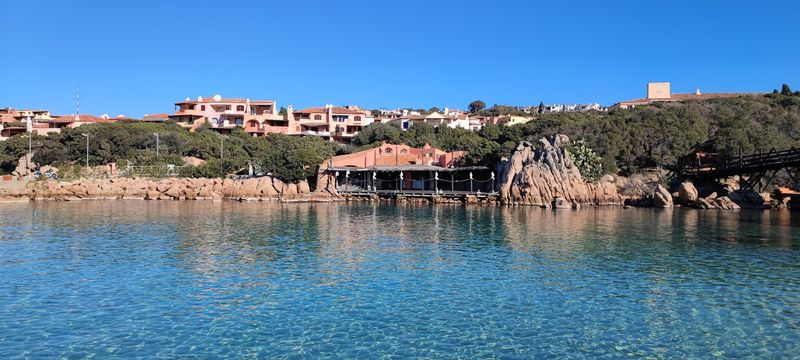
Sardinia keeps getting compared to the Caribbean, and Sardinians are getting a little tired of explaining that their island is actually better. The water along Sardinia’s coast, particularly in the La Maddalena Archipelago and along the Costa Smeralda, reaches shades of turquoise that would look at home in the Maldives.
The difference is you can pair it with pasta and local wine.
The clarity of Sardinian water comes from its rocky, sandy seafloor, low pollution levels, and the particular angle of Mediterranean sunlight. Cala Goloritzé, accessible only by boat or a long hike, is considered one of Italy’s most beautiful beaches.
Its water is so clear that the rocks on the bottom look like they’re sitting in glass.
Sardinia is Italy’s second-largest island and is served by airports in Cagliari, Olbia, and Alghero. The island offers a full range of accommodation from luxury resorts on the Costa Smeralda to affordable agriturismos inland.
June and September offer great weather without the peak-August crowds. The island also has ancient Nuragic ruins, dramatic mountain scenery, and some of Italy’s best seafood.
Sardinia is the rare destination that delivers world-class water and world-class everything else too.
Lake Salda, Turkey
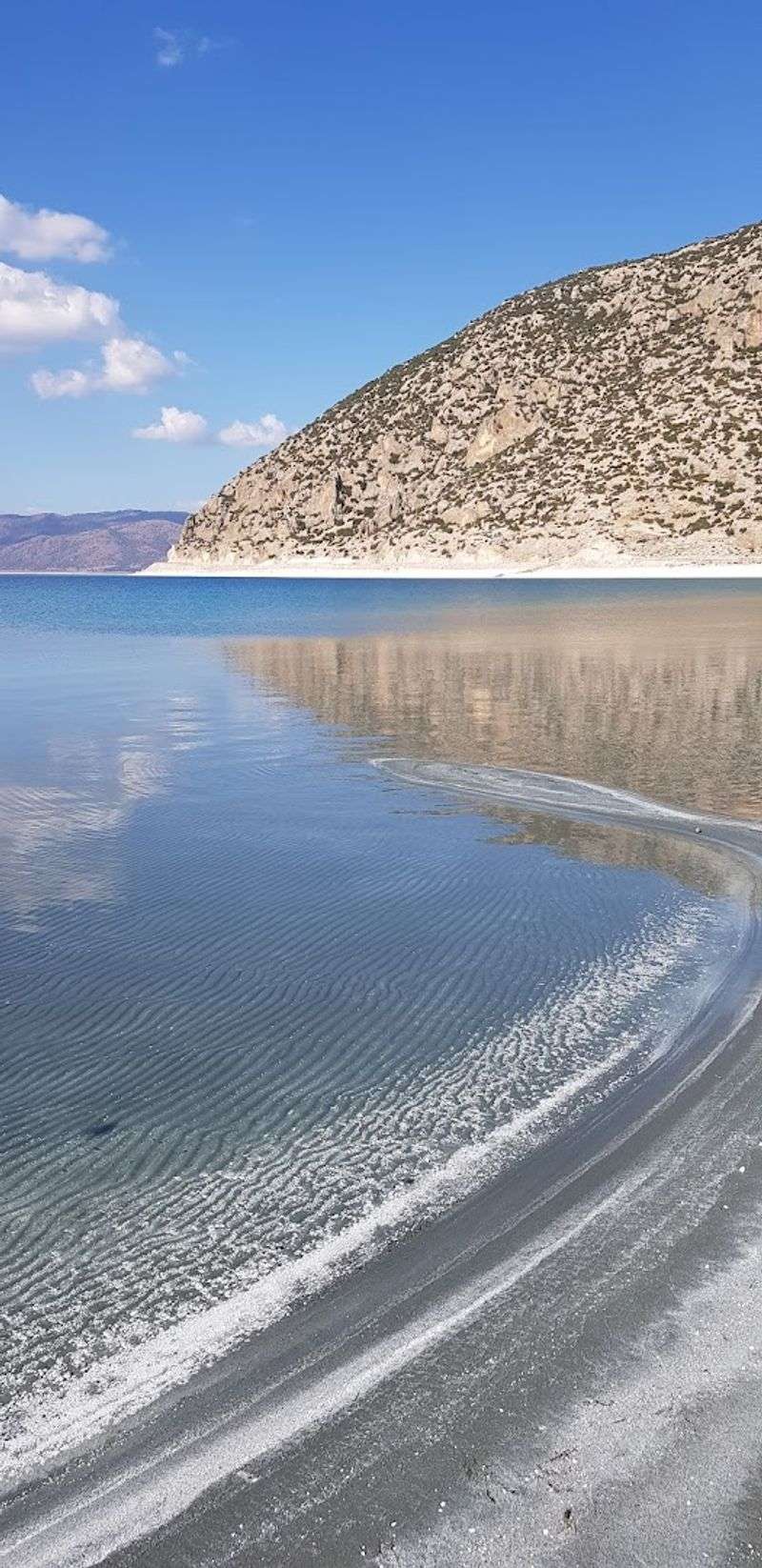
Lake Salda pulls off something genuinely unusual for a landlocked body of water in southern Turkey: it looks exactly like a tropical beach. The shoreline is white, the water is turquoise, and the contrast is so striking that the lake earned the nickname the Turkish Maldives long before anyone made it official.
NASA scientists have even studied it as a geological analog to Mars.
The white shores aren’t sand. They’re hydromagnesite, a mineral deposited by microorganisms that thrive in Salda’s highly alkaline water.
That same mineral composition scatters light in a way that creates the lake’s signature turquoise color. The water is remarkably clear, and on calm days the reflection of the surrounding pine hills creates a mirror effect that photographers love.
Lake Salda sits near the town of Yesilova in Burdur Province, about a two-hour drive from Antalya. Entry fees are modest, and the area has basic facilities including changing rooms and snack stands.
Swimming is popular, though designated swimming zones protect the fragile white shores. Visiting early in the morning before crowds arrive gives you the best experience.
The lake proves that extraordinary water clarity isn’t exclusive to tropical oceans. Sometimes a mountain lake in Turkey steals the whole show.
Maui, Hawaii (USA)
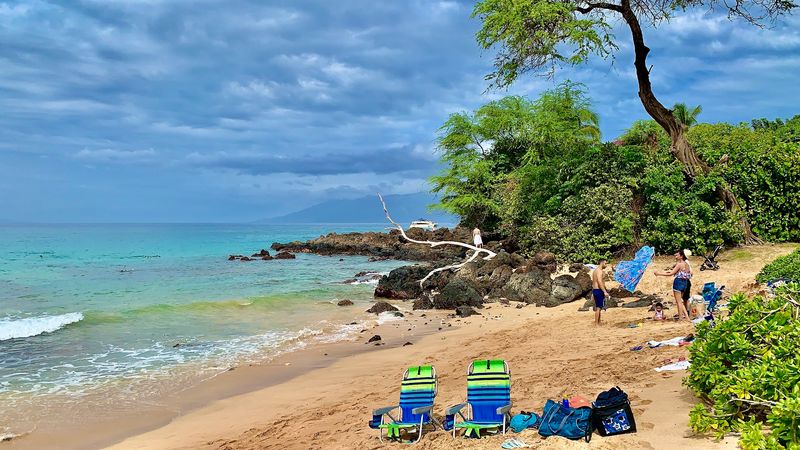
Molokini Crater sits about five kilometers off Maui’s southwest coast, a crescent-shaped volcanic remnant that creates one of the most sheltered and clearest snorkeling spots in the entire Pacific. On a calm morning, visibility inside the crater can reach 45 meters.
That’s not a typo. The water is that clear.
Maui’s coastline offers a wild variety of water experiences depending on where you go. Honolua Bay on the northwest coast is a marine preserve with coral gardens and sea turtles.
Makena Beach on the south shore is known for calm, clear conditions perfect for swimming. The island’s volcanic geology creates sandy bottoms and rocky reefs that support an incredibly diverse marine ecosystem.
Humpback whales migrate to Maui’s waters between November and May, and whale-watching tours run regularly during that season. Snorkeling with sea turtles at Turtle Town near Makena is a highlight that lives up to the hype.
Maui is served by Kahului Airport with direct flights from the US mainland. Accommodation ranges from budget guesthouses in Paia to luxury resorts in Wailea.
The Road to Hana adds a spectacular coastal drive to the experience. Maui delivers water clarity that competes with anywhere on the planet, and it does it with a side of volcanic drama.
Fiji
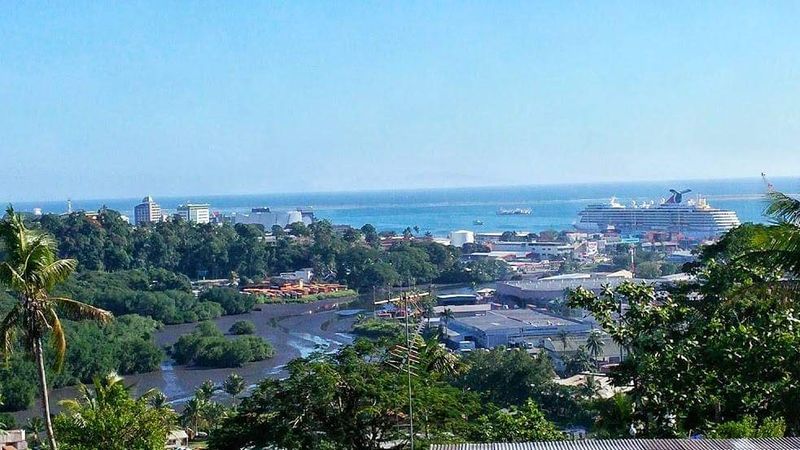
Fiji is made of 333 islands, and the ocean between them is doing something spectacular. The Koro Sea and the waters surrounding the Mamanuca and Yasawa island groups are packed with healthy coral reefs that keep the water clear, warm, and brimming with life.
This is the kind of place where you can snorkel off a beach and immediately find yourself surrounded by reef sharks and sea turtles.
The Great Astrolabe Reef in the south is one of the largest barrier reefs in the world and offers wall diving that drops dramatically into the deep blue. Beqa Lagoon is famous for shark diving experiences where bull sharks and tiger sharks cruise past in shallow water.
For non-divers, the shallow reefs around the Mamanuca Islands are stunning enough for a mask and snorkel.
Fiji’s main international airport is in Nadi on Viti Levu, with ferry and small plane connections to the outer islands. Budget travelers love the Yasawa Island backpacker trail, which offers affordable accommodation and stunning beaches.
The Fijian people are famously warm and welcoming, which adds to the appeal enormously. Water visibility typically ranges from 20 to 40 meters depending on location and season.
Fiji doesn’t just compete with the Caribbean. It raises the bar.
Turks and Caicos
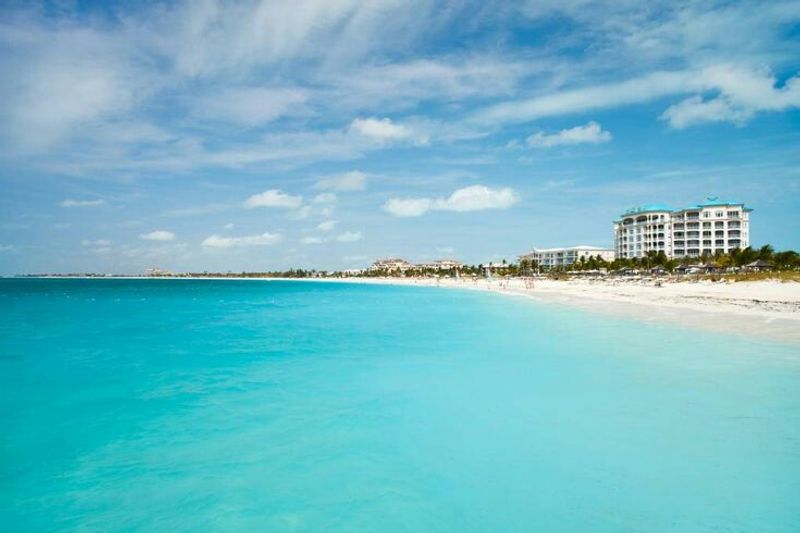
Grace Bay Beach has been ranked the world’s best beach so many times that the award committee probably just keeps the trophy on standby. The water here is shallow, warm, and so impossibly clear that it looks filtered.
Turks and Caicos sits southeast of the Bahamas on the same shallow bank system, which explains why the water shares that same electric turquoise quality.
The Caicos Bank is one of the largest shallow-water coral ecosystems in the Atlantic, and it keeps sediment low and clarity high. Visibility regularly exceeds 25 meters, and the reef just offshore from Grace Bay supports a healthy population of eagle rays, lobsters, and colorful reef fish.
The wall dive at Grace Bay drops to 2,000 meters, offering one of the most dramatic transitions in Caribbean diving.
Providenciales, locally called Provo, is the main tourist hub and has a good range of accommodation and restaurants. The island is a British Overseas Territory, so the currency is the US dollar.
Water sports rentals are widely available along Grace Bay. The island of North Caicos and Middle Caicos offer wilder, less-visited beaches for those who prefer solitude.
Turks and Caicos delivers the full Caribbean experience with water quality that consistently ranks among the best anywhere on Earth.
Crater Lake, Oregon (USA)
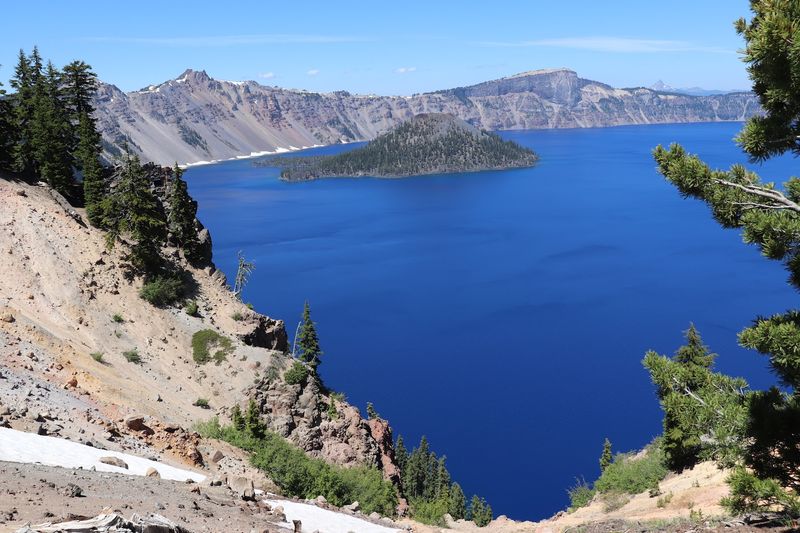
Crater Lake is the kind of blue that makes you wonder if the sky fell into it. Formed roughly 7,700 years ago when a volcano collapsed inward, this caldera lake in southern Oregon has no rivers flowing in or out.
It’s fed entirely by snow and rain, which means no sediment, no algae runoff, and almost nothing to cloud the water. The result is one of the clearest and deepest lakes on Earth.
At 592 meters deep, Crater Lake is the deepest lake in the United States. Visibility reaches up to 43 meters on calm days, which is extraordinary for any body of water anywhere.
The color is a product of depth and purity. Sunlight penetrates the water and only the deep blue wavelengths scatter back to the surface, creating that iconic, almost supernatural hue.
Crater Lake National Park surrounds the lake and is open year-round, though heavy snowfall closes most roads in winter. Summer hiking trails along the rim offer dramatic views, and boat tours to Wizard Island, a volcanic cinder cone rising from the lake, are a popular activity.
Swimming is allowed at Cleetwood Cove, the only trail that reaches the waterline. The water temperature stays cold year-round, around 13°C at the surface.
Crater Lake is proof that extraordinary clarity exists far beyond any coastline.
Azores, Portugal
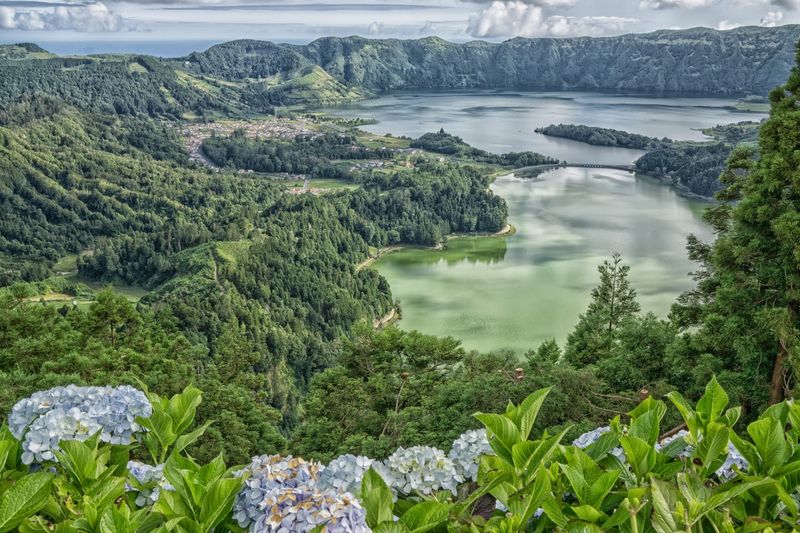
The Azores sit in the middle of the Atlantic Ocean, nine volcanic islands that feel like they belong to a different planet. The water here is clear, cold, and wildly blue, fed directly by the open Atlantic without the sediment of continental coastlines.
Natural lava rock pools along the shoreline fill with seawater at high tide and create some of the most unique swimming spots in Europe.
The island of Faial has some of the best whale-watching in the world, with sperm whales and blue whales passing through regularly. Sao Miguel, the largest island, has crater lakes filled with intensely colored water, green on one side and blue on the other thanks to different mineral compositions.
The ocean around all the islands supports healthy populations of manta rays, dolphins, and loggerhead sea turtles.
The Azores are an autonomous region of Portugal, so the euro is the currency and European standards of infrastructure apply. Flights from Lisbon take about two hours, and inter-island connections are straightforward.
The islands have a reputation for dramatic weather, so packing a light waterproof layer is smart regardless of season. Diving and snorkeling visibility regularly hits 30 meters or more in summer.
The Azores combine geological drama, Atlantic clarity, and genuine remoteness in a package that’s hard to find anywhere else.
Share this story