Wales is home to some of the most jaw-dropping castles in the entire world, and trust me, no photo does them justice. Perched on clifftops, rising from misty valleys, or looming over cobblestone towns, these stone giants have been standing for centuries.
Whether you are a history buff, a casual traveler, or someone who just really loves a good turret, Wales has a castle for you. Get ready to add a very long list of stops to your next road trip.
Caernarfon Castle – Caernarfon, Gwynedd
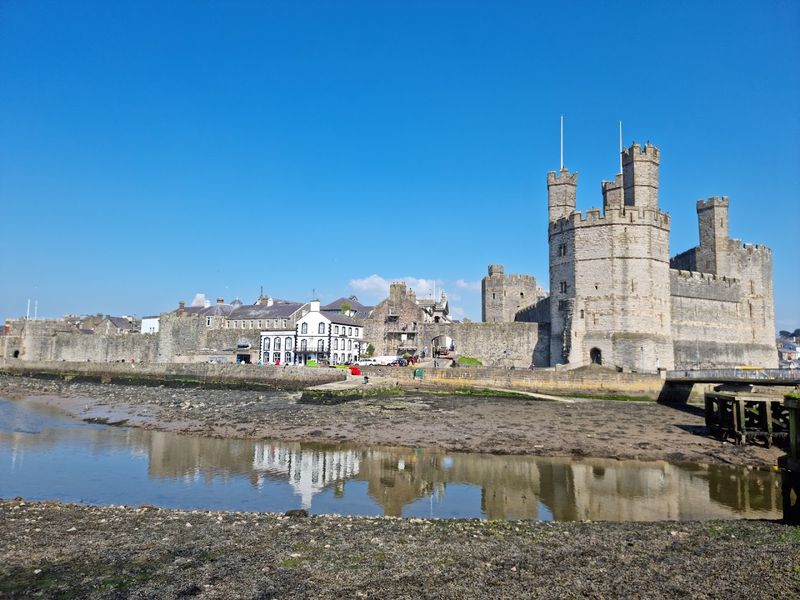
Built to send a very clear message, Caernarfon Castle is basically Edward I screaming “I am in charge now” in stone. Construction started in 1283, and honestly, the ambition shows.
The banded stonework and eagle-topped towers make it look like something straight out of a fantasy novel.
This is where Prince Charles was invested as Prince of Wales in 1969, which means it has hosted one of the most-watched ceremonies of the 20th century. The Eagle Tower alone is worth the trip.
It stands so tall and wide that you genuinely wonder how anyone built it without modern machinery.
The castle sits right on the waterfront, so the views are stunning from every angle. Audio guides are available inside, and they are actually entertaining.
Plan at least two hours here because there is more to explore than you will expect.
Conwy Castle – Conwy, Conwy County Borough
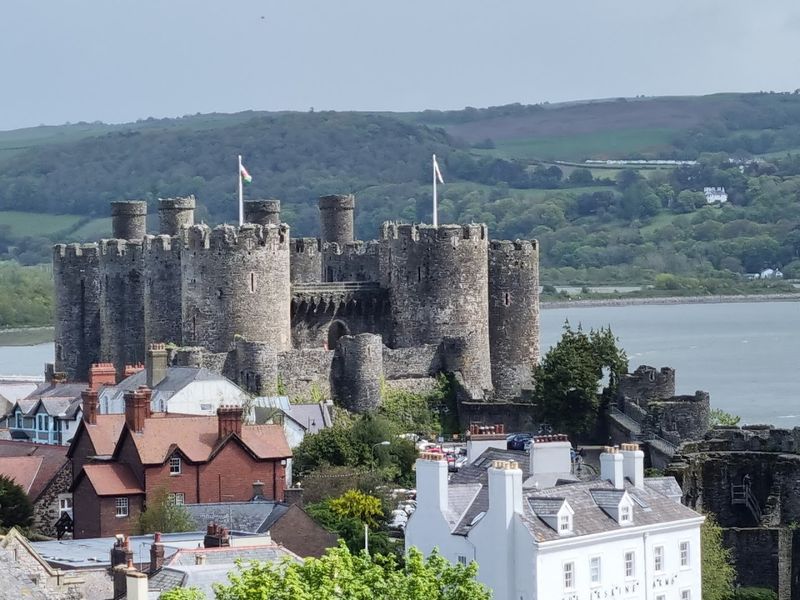
Eight towers. Eight.
Conwy Castle does not do anything halfway. Built between 1283 and 1289, it is one of the best-preserved medieval castles in all of Europe, and walking across its narrow suspension bridge feels like stepping into a different century.
The town walls are still fully intact and stretch for nearly a mile around Conwy. You can actually walk along the top of them, which gives you bird-eye views of the estuary and the mountains beyond.
I did this on a breezy afternoon and nearly lost my hat twice, but it was absolutely worth it.
Inside the castle, the great hall and royal apartments give a real sense of how medieval royalty lived, minus the central heating. The views from the towers are spectacular.
Conwy is also a charming town full of good food, so plan to spend a full day here without guilt.
Harlech Castle – Harlech, Gwynedd
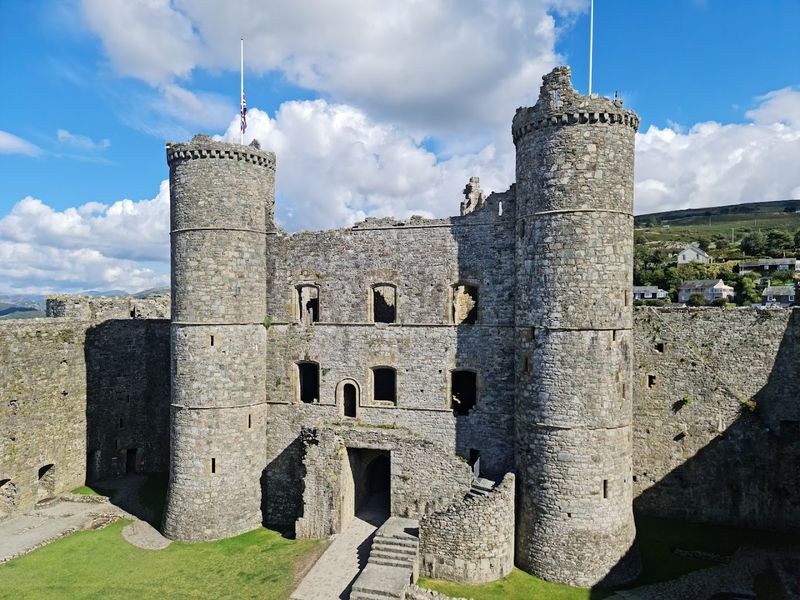
Harlech Castle sits on a rocky crag so dramatically positioned that it practically dares you to approach it. Built in the 1280s, it was designed by Master James of St. George, the rock-star architect of medieval Wales.
The location alone is enough to leave you standing with your mouth open.
During the Wars of the Roses, Harlech held out longer than any other castle in Britain, inspiring the famous song “Men of Harlech.” That is the kind of historical street cred most places can only dream of. The gatehouse is enormous and still commands serious respect after 700 years.
On a clear day, you can see Snowdonia to the north and the Llyn Peninsula stretching into the sea. The views from the battlements are genuinely breathtaking.
Harlech town itself is tiny and lovely, so grab a coffee nearby and soak it all in properly.
Beaumaris Castle – Beaumaris, Anglesey
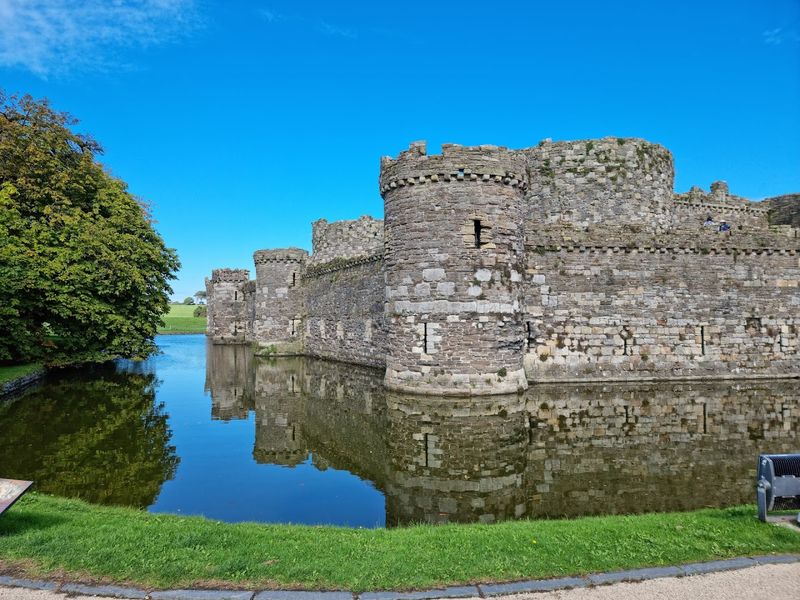
Technically unfinished, Beaumaris Castle is still considered the most perfect example of concentric castle design in Britain. That is like saying someone aced a test they never completed.
Construction began in 1295 but ran out of funding before the towers reached full height, yet the genius of the layout is undeniable.
The castle is surrounded by a water-filled moat and features a double ring of walls that would have made any attacker deeply regret their life choices. UNESCO recognized it as a World Heritage Site along with three other Welsh castles.
The symmetry is so precise it almost looks computer-generated.
Beaumaris town is one of the prettiest in Wales, full of Georgian architecture and good pubs. The castle grounds are great for a relaxed afternoon walk.
Children especially love exploring the inner and outer wards, and the moat adds a storybook charm that never gets old.
Caerphilly Castle – Caerphilly, Caerphilly County Borough
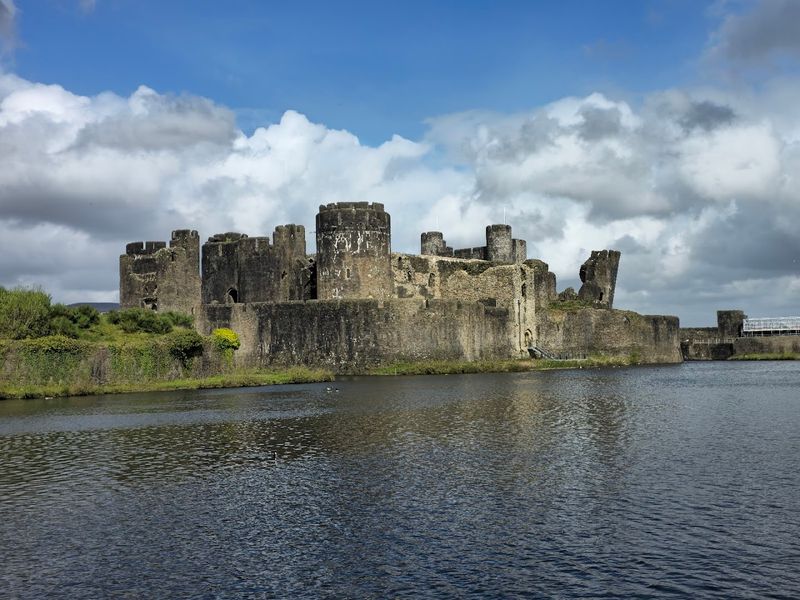
Caerphilly Castle is so big it makes other Welsh castles look like garden sheds. Covering over 30 acres, it is the largest castle in Wales and the second largest in Britain after Windsor.
Gilbert de Clare built it in the 1260s as a power move, and it worked spectacularly.
The castle is famous for its elaborate water defenses, including a series of lakes and islands that made it nearly impossible to attack. It also has a leaning tower that out-tilts the famous one in Pisa.
Nobody planned that, but it has become one of the most charming quirks of the whole site.
Caerphilly town is easy to reach from Cardiff, making this an ideal day trip. The Great Hall has been partially restored and hosts events throughout the year.
Life-size replica siege engines are scattered around the grounds, and kids absolutely lose their minds over them in the best way.
Castell Coch – Tongwynlais, Cardiff
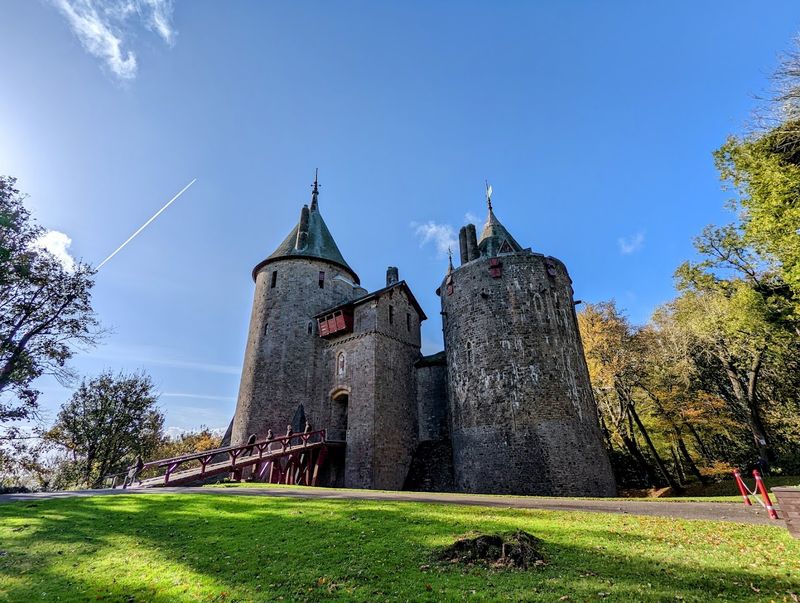
Castell Coch looks like it was plucked straight from a Brothers Grimm story and dropped into the Welsh woods just north of Cardiff. The conical towers, the drawbridge, the forest setting, it is almost too perfect.
Victorian architect William Burges designed it as a fantasy retreat for the Marquess of Bute in the 1870s.
Step inside and the Gothic interior is even more theatrical than the outside. Every room is decorated with painted murals, gilded ceilings, and carved details that took decades to complete.
The Lady’s Bedroom features a domed ceiling covered in painted birds that honestly feels like being inside a jewelry box.
The castle is nestled in woodland just outside Cardiff, making it shockingly easy to visit. It is managed by Cadw and entry is very affordable.
Combine it with a walk through Fforest Fawr for a full afternoon adventure that costs very little but delivers a lot of magic.
Chepstow Castle – Chepstow, Monmouthshire
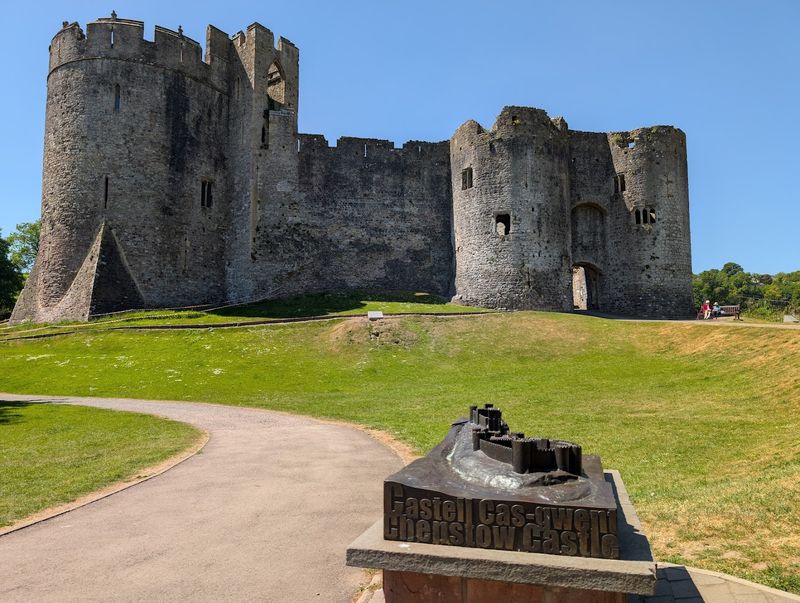
Chepstow Castle has the honor of being the oldest surviving post-Roman stone fortification in Britain. Built just after the Norman Conquest in 1067, it has been standing for nearly a thousand years.
That is older than most countries, which puts things in perspective rather quickly.
The castle stretches dramatically along a limestone cliff above the River Wye, and the views from the walls are stunning in any season. The Great Tower is one of the earliest stone keeps in the whole country.
Walking through the ruins, you pass through layers of history from Norman times all the way to the Civil War.
Chepstow itself is a lovely border town with independent shops and good places to eat. The castle is just a short walk from the town center, so there is no excuse not to stop in.
Evening light hits the ruins beautifully, so late afternoon visits are highly recommended.
Raglan Castle – Raglan, Monmouthshire
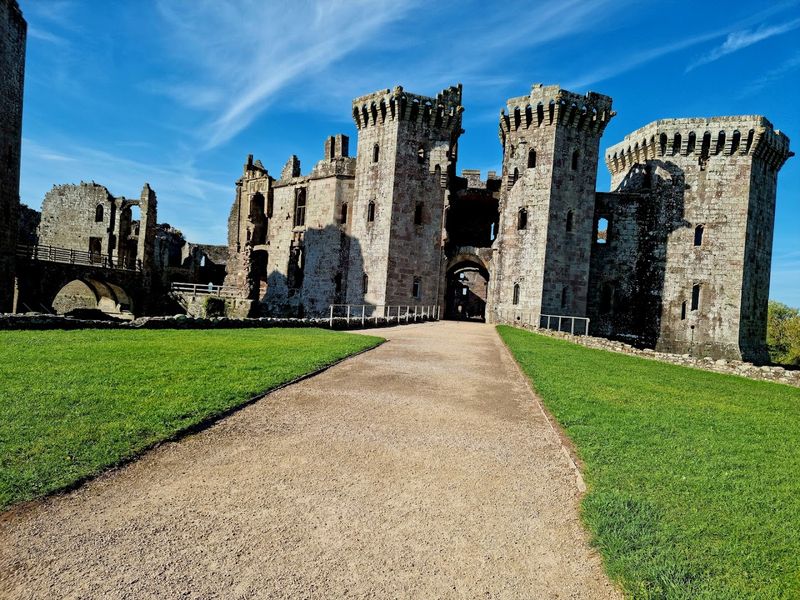
Raglan Castle is the fancy one. Built in the 15th century as a statement of wealth rather than just military muscle, it was designed to impress guests as much as to repel enemies.
The hexagonal Great Tower, known as the Yellow Tower of Gwent, still rises magnificently from its own moat.
Unlike many Welsh castles, Raglan was built during a more peaceful era, so it blends fortress and palace in a way that feels genuinely luxurious even in ruin. The great hall, the fountain court, and the elaborate gatehouses hint at a life of serious comfort and style.
It was one of the last castles in England and Wales to hold out during the English Civil War before being deliberately slighted.
The ruins are well-maintained and very photogenic at golden hour. Raglan village is quiet and charming.
Parking is easy and entry is reasonably priced, making this one of the most underrated stops on any Welsh castle tour.
Criccieth Castle – Criccieth, Gwynedd
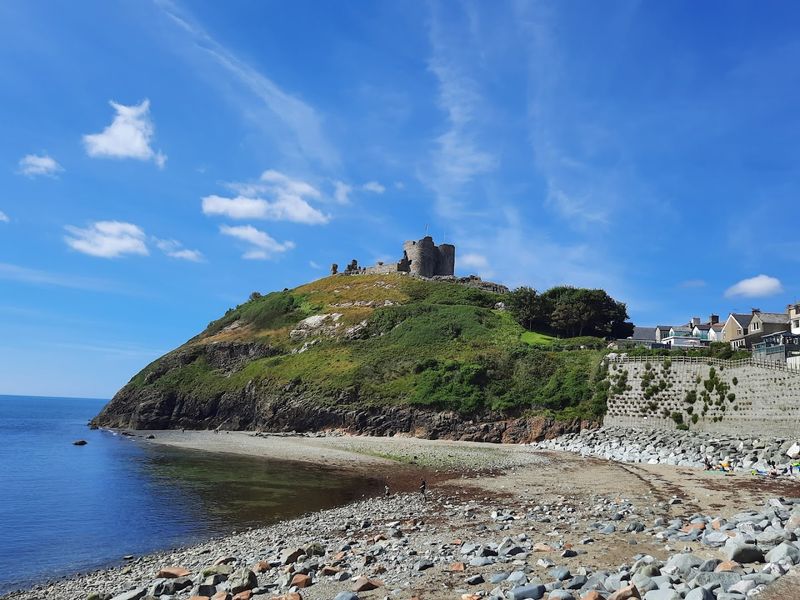
Criccieth Castle sits on a headland jutting into Cardigan Bay like it owns the place, which, for several centuries, it essentially did. Unlike most Welsh castles built by English kings, Criccieth was originally constructed by a Welsh prince, Llywelyn the Great, around 1230.
That makes it feel like a local legend rather than an imperial imposition.
The twin-towered gatehouse is the most striking feature, rising boldly above the rocky promontory. The castle changed hands between Welsh and English rulers multiple times before being burned during Owain Glyndwr’s uprising in 1404.
You can still see scorch marks on the stonework, which is a very dramatic detail.
The town of Criccieth is genuinely lovely, with a pebbly beach, ice cream shops, and a relaxed seaside atmosphere. Combine a castle visit with a walk along the beach and lunch in town.
It is one of those spots that feels like a genuine local secret.
Kidwelly Castle – Kidwelly, Carmarthenshire
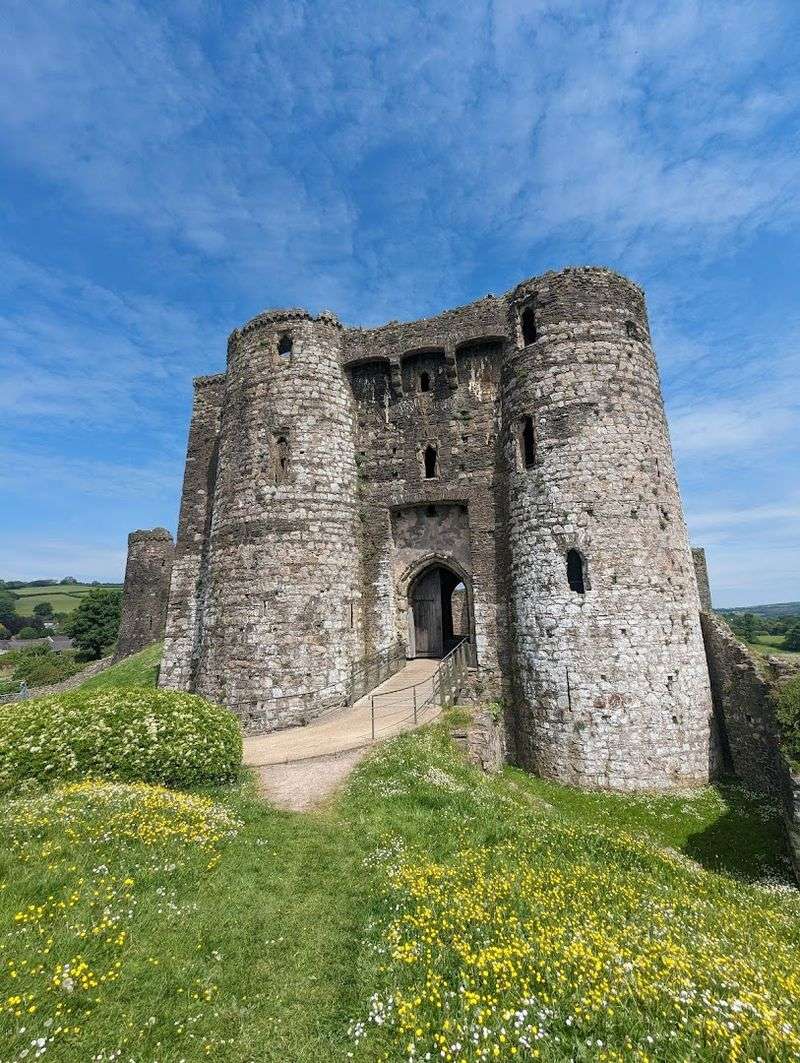
Kidwelly Castle might not be on everyone’s radar, but that is exactly what makes it a gem. Tucked away in a quiet corner of Carmarthenshire, this Norman castle dates back to the early 12th century and has survived remarkably intact.
The semicircular outer ward and the tall, imposing gatehouse make it look almost theatrical.
Film fans might recognize it from Monty Python and the Holy Grail, which was partly filmed here. Yes, that is right, Kidwelly was part of one of the greatest comedies ever made.
That alone earns it a spot on any respectable bucket list.
The castle sits beside the River Gwendraeth, and the surrounding landscape is peaceful and green. Entry is affordable and crowds are usually light, which means you can genuinely explore at your own pace.
Take your time in the towers and enjoy the fact that you have discovered somewhere most tourists completely miss.
Denbigh Castle – Denbigh, Denbighshire
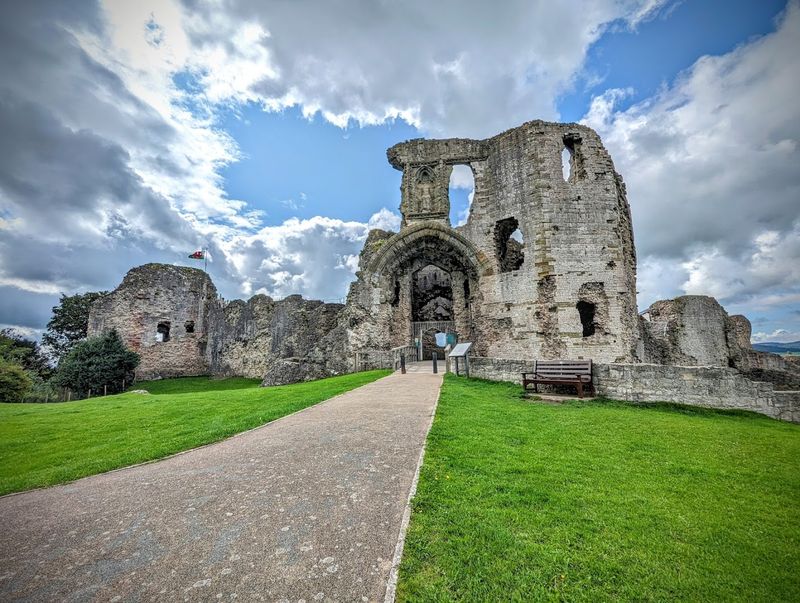
Perched high above the market town of Denbigh, this castle is one of those places where the views alone justify the uphill walk. Built by Henry de Lacy following Edward I’s conquest of Wales in 1282, the castle features one of the most impressive medieval gatehouses in the country.
Three towers, one entrance, zero mercy for attackers.
The town walls that extend from the castle are still largely standing, making the whole hilltop a fascinating walk through medieval urban planning. There is also a ruined church within the walls, started by Robert Dudley in the 16th century but never completed.
History lovers will find layers here that take a while to fully unpack.
Denbigh is a friendly, unpretentious town with a strong Welsh identity. The castle is managed by Cadw and entry is very reasonable.
Go on a weekday if you can, because you might just have the whole hilltop to yourself, which feels like a genuine privilege.
Chirk Castle – Chirk, Wrexham County Borough
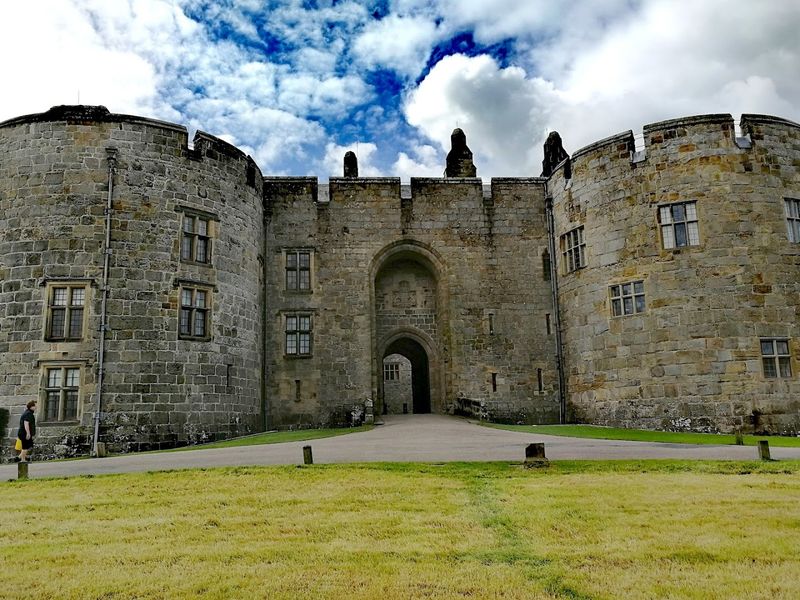
Chirk Castle has been continuously occupied since it was built in the 1290s, making it one of the oldest still-lived-in castles in Wales. That means it is not a ruin.
It is an actual home with centuries of layers, from medieval fortress to Tudor mansion to comfortable country house. The mix of styles is fascinating rather than confusing.
The formal gardens are spectacular, featuring clipped yews, herbaceous borders, and sweeping views across the Cheshire Plain. The famous wrought-iron entrance gates, made in the 18th century, are considered some of the finest examples of decorative ironwork in Britain.
They are genuinely jaw-dropping up close.
The castle is owned by the National Trust, so entry is included with membership. The interior rooms are richly decorated and tell the story of the Myddleton family who lived here for centuries.
Plan a full day to do the house, gardens, and the surrounding parkland proper justice.
Powis Castle – Welshpool, Powys
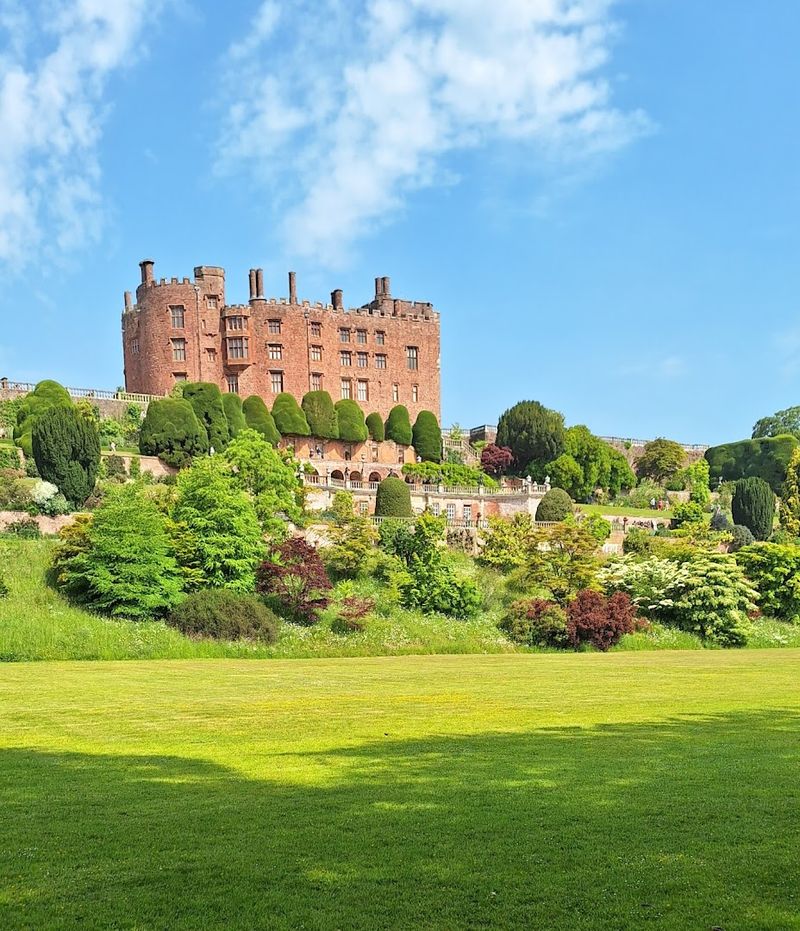
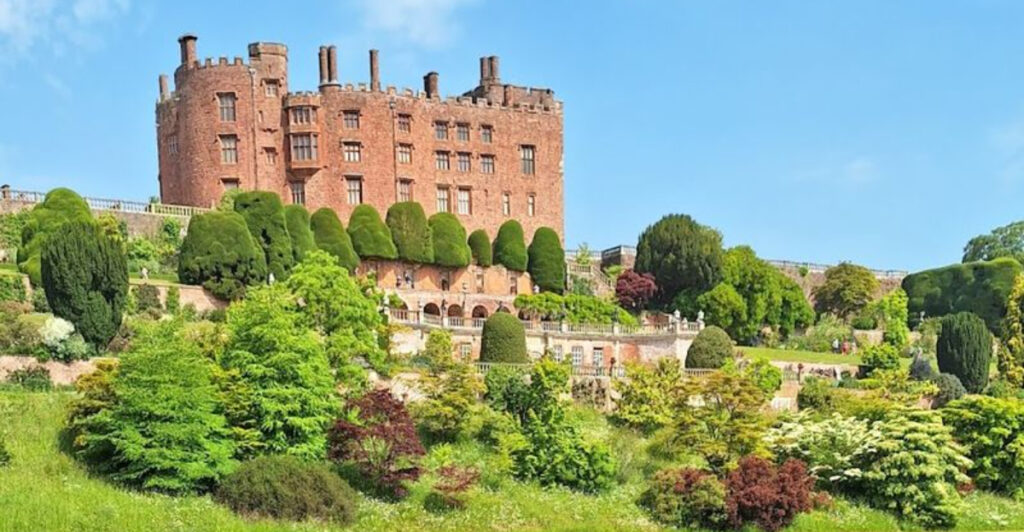
Powis Castle is the one that makes gardeners cry happy tears. The terraced gardens, carved into a steep hillside and dripping with ancient yew hedges, are considered among the finest in Europe.
The castle itself is built from deep red sandstone that glows warmly in afternoon light, giving the whole place a rich, almost theatrical quality.
Dating back to the late 13th century, Powis has been a Welsh stronghold, a Tudor residence, and an aristocratic family home. The interior is stuffed with treasures, including an extraordinary collection of Indian artifacts brought back by Clive of India.
It is like a history museum that also happens to be a working castle.
The National Trust manages the property and it is consistently rated one of the best historic houses in Wales. The combination of architecture, art, and horticulture is hard to match anywhere.
Arrive early in summer, because the gardens get busy and deservedly so.
Penrhyn Castle – Llandygai, near Bangor, Gwynedd
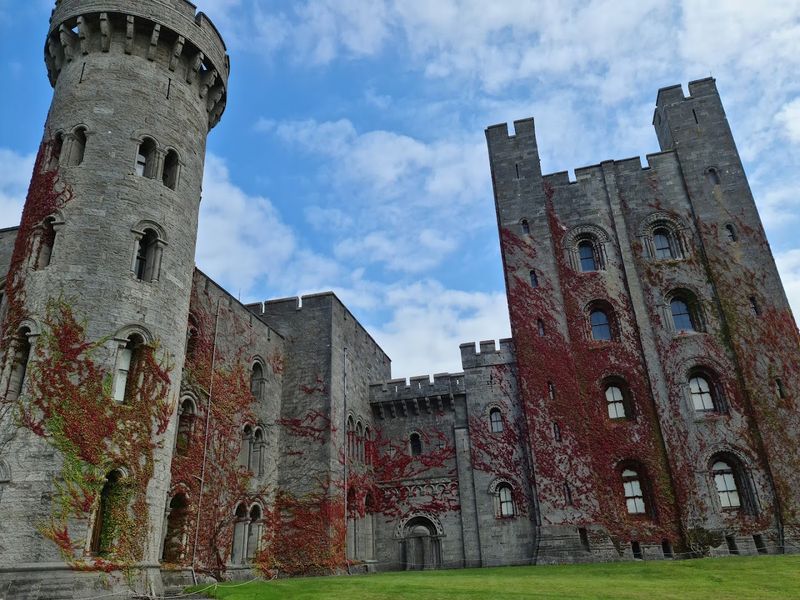
Penrhyn Castle is not your typical medieval fortress. Built in the 19th century as a Neo-Norman fantasy for a wealthy slate quarry owner, it is enormous, extravagant, and slightly bonkers in the best way.
The keep alone is four stories tall and modeled on Norman architecture with a Victorian budget behind it, which means no detail was left understated.
Inside, the rooms are filled with grand furniture, elaborate plasterwork, and one of the most famously uncomfortable beds in Britain, a one-ton slate bed made for Queen Victoria that she apparently refused to sleep in. That story alone is worth the admission fee.
The castle sits within beautiful parkland with views toward Snowdonia and the Menai Strait. The National Trust runs it, and the walled garden and grounds are lovely for a slow wander.
It is quirky, slightly absurd, and completely wonderful, exactly the kind of place that makes Wales so endlessly surprising.
Tretower Court and Castle – Tretower, Powys
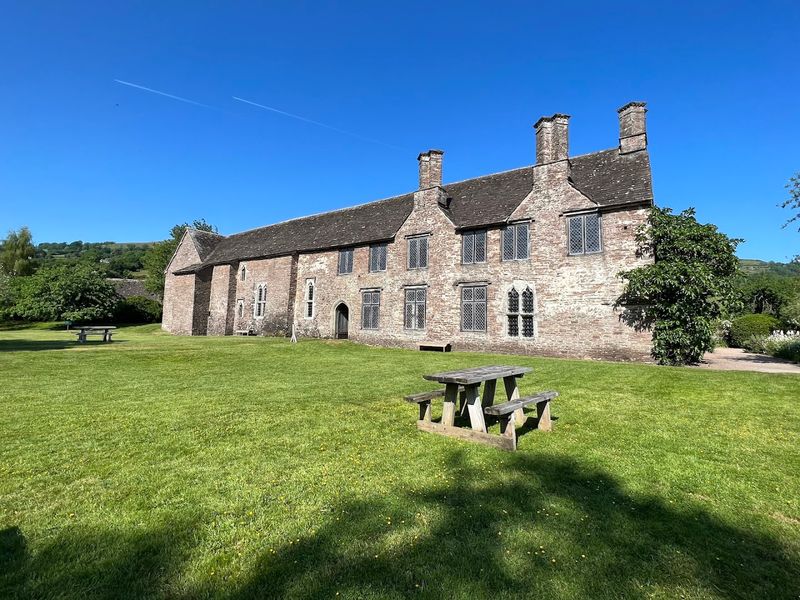
Tretower is actually two historic buildings in one, a round Norman tower castle and a beautifully preserved medieval court right next to it. That combination is rare and genuinely fascinating.
The court, built in the 14th and 15th centuries, gives one of the most complete pictures of how a wealthy Welsh household actually lived during the Middle Ages.
The timber-framed gallery that runs along the courtyard is especially striking and has been carefully restored to show what it would have looked like in its prime. Tretower was home to the family of poet Henry Vaughan, adding a literary connection to its already impressive historical credentials.
Located in the Usk Valley in Powys, the setting is quietly beautiful, with rolling hills in every direction. Crowds here are much smaller than at the more famous castles, so you can really take your time.
It is one of those hidden gems that rewards curious travelers who are willing to go slightly off the beaten path.
Share this story