Italy’s coastline stretches for over 4,700 miles, and somehow everyone ends up in the same spot. The Amalfi Coast is stunning, sure, but so is the rest of the country’s shoreline, minus the tour buses and the elbow-to-elbow sunbathing.
From the colorful fishing villages of Liguria to the rugged cliffs of Calabria, Italy is hiding dozens of coastal gems that most visitors never find. Pack your bag, skip the crowds, and get ready to meet fifteen seaside towns that deserve a spot on every Italy itinerary.
Maratea, Basilicata
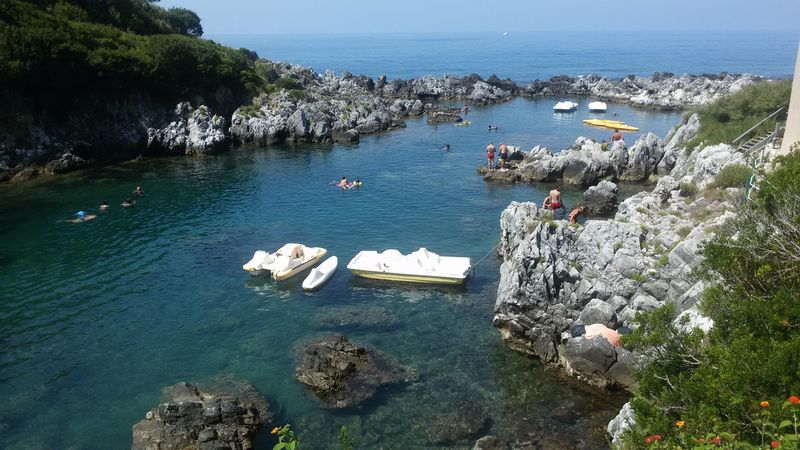
Basilicata barely gets a mention in most Italy travel guides, which is exactly why Maratea is such a rewarding find. Often called the Pearl of the Tyrrhenian Sea, this small coastal town delivers cinematic clifftop views, hidden sea caves, and crystalline water without the tour-bus traffic that chokes the Amalfi Coast every summer.
The Christ the Redeemer statue on Mount San Biagio keeps watch over the Gulf of Policastro, and it is far less crowded than its famous cousin in Rio. Forget long rows of beach clubs here.
Maratea is all about rocky coves, secret swimming spots, and the kind of quiet that actually lets you hear the waves.
The historic center sits tucked above the water, full of medieval lanes and local restaurants. I stumbled into a tiny trattoria there and had the best swordfish of my life.
No reservations, no waiting list, just great food and a sea view.
Tellaro, Liguria
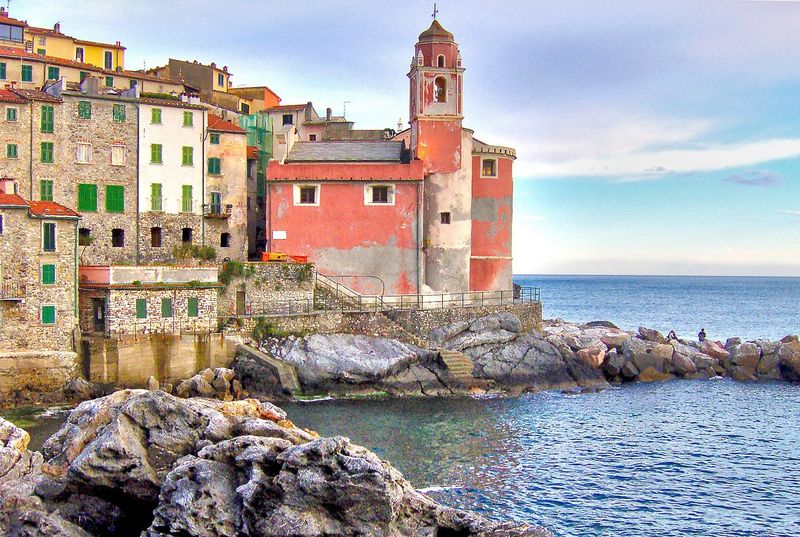
Tellaro is so small it barely shows up on most maps, but that is precisely the point. Tucked near Lerici on the Gulf of Poets, this Ligurian village has pastel houses that practically lean over the water, narrow lanes that twist into little squares, and a pace of life that feels like the rest of the world agreed to slow down here.
While nearby Cinque Terre is busy processing thousands of visitors per day, Tellaro is busy doing almost nothing at all, in the best possible way. There are rocky swimming spots, excellent seafood, and zero pressure to follow a schedule.
Lord Byron reportedly swam in these waters, which gives the whole place a pleasantly literary air. It works well as a base for exploring Lerici and La Spezia without committing to a more tourist-heavy area.
Small, quiet, and genuinely charming, Tellaro punches well above its postcard weight.
Bosa, Sardinia
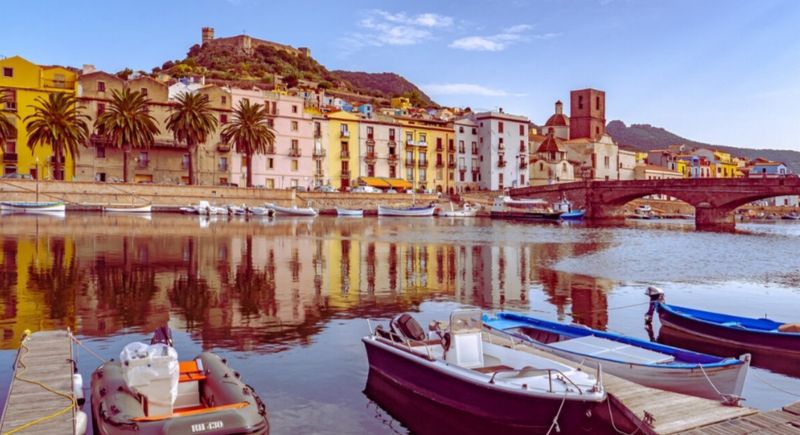
Bosa is the kind of town that makes you stop mid-walk and wonder why nobody told you about it sooner. Sitting along the Temo River on Sardinia’s west coast, it is one of the island’s most vivid towns, with houses painted in shades of pink, yellow, and orange that glow in the afternoon light.
The old quarter of Sa Costa climbs toward Serravalle Castle, offering views that reward every steep step. Down below, Bosa Marina connects the town to the beach, so you get river, sea, history, and color all in one relatively compact area.
What sets Bosa apart from Sardinia’s more polished resorts is that it still feels genuinely lived-in. Locals hang laundry from the windows, kids kick footballs in the alleys, and the restaurants serve real Sardinian food without inflated tourist prices.
It is beautiful without being performative, which is a rare thing to find anywhere in the Mediterranean.
Scilla, Calabria
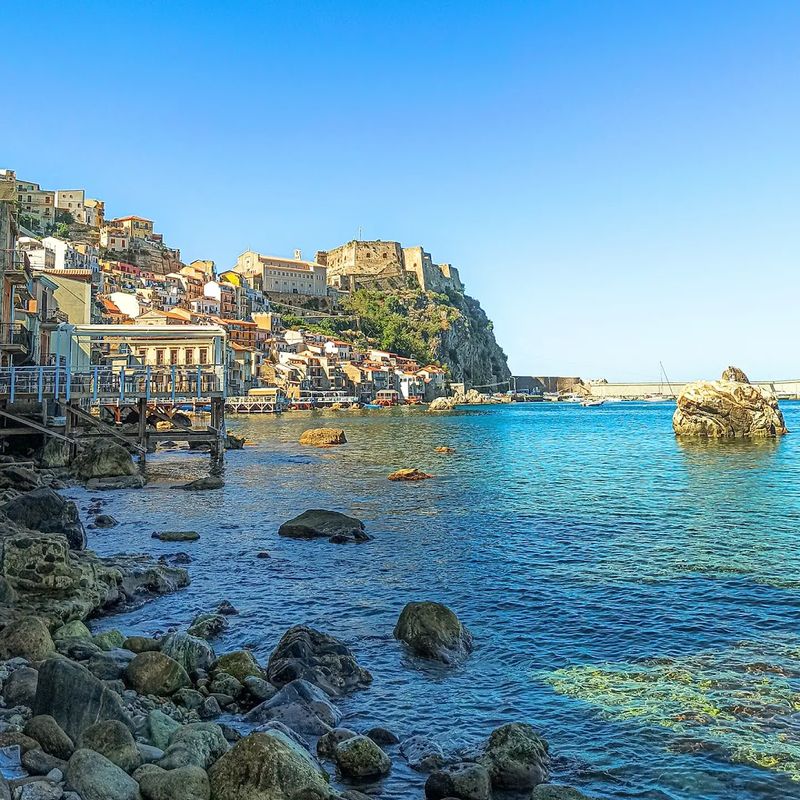
Greek mythology placed the sea monster Scylla right here, in the strait between Calabria and Sicily. The town named after that legend is considerably less terrifying and considerably more beautiful.
Scilla’s most atmospheric corner is Chianalea, an old fishing district where houses are built so close to the water that boats are moored at front doors like cars in a driveway.
The beach area of Marina Grande offers a classic southern Italian seaside scene, with clear water and views stretching toward Sicily on a clear day. Scilla is beautiful enough to feel like it should be overrun, yet it still holds onto its fishing-village soul with impressive stubbornness.
The local swordfish is legendary in these parts, caught fresh from the strait using traditional methods passed down for generations. Order it grilled with lemon and local olive oil, and you will understand why Calabria’s food scene deserves far more attention than it currently receives.
Termoli, Molise
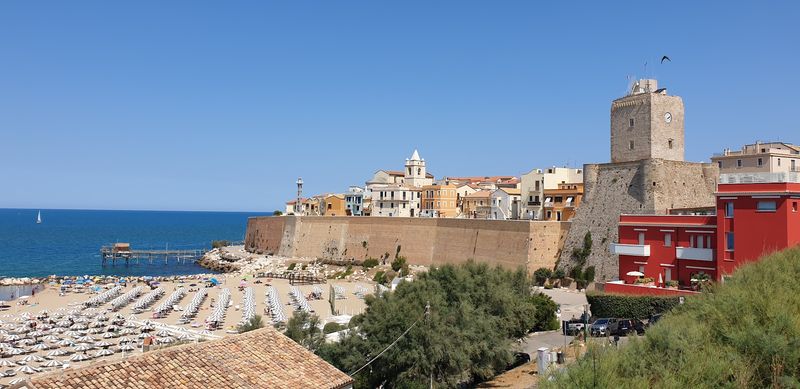
Molise is the Italian region that the internet once jokingly claimed did not exist. Termoli is proof that it very much does, and that it has been quietly holding down one of the Adriatic coast’s most underrated beach towns for centuries.
The old town sits on a rocky promontory above the sea, wrapped in medieval defensive walls and full of narrow streets that lead to a striking Norman cathedral and a solid Swabian castle. Below, sandy beaches stretch out in both directions, making the transition from history to holiday remarkably easy.
Termoli also serves as a ferry gateway to the Tremiti Islands, a small archipelago that deserves its own trip. But the town itself is worth lingering in, especially in the evening when locals take over the seafront and the restaurants fill up with people who are clearly not tourists.
Real Italy, affordable prices, and an Adriatic view that costs absolutely nothing extra.
Numana, Marche
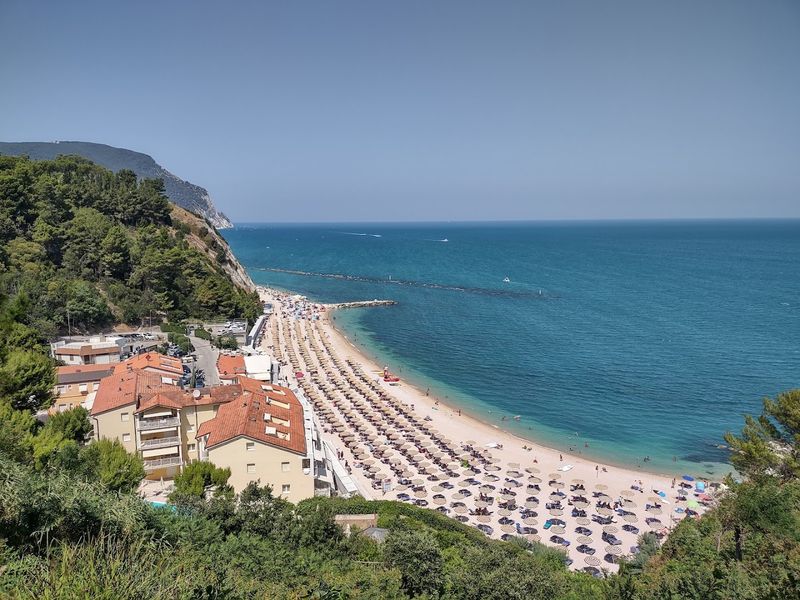
Most of the Adriatic coast is flat, sandy, and lined with beach umbrellas as far as the eye can track. Numana breaks that pattern dramatically.
Sitting on the Conero Riviera in Marche, it offers white limestone cliffs, clear water, green hills, and pebble beaches backed by protected nature rather than souvenir shops.
Monte Conero looms behind the town, giving the whole area a wilder, more dramatic character than the typical Adriatic resort. Hiking trails cut through the park and drop down to coves that are only accessible by foot or boat, which naturally filters out the lazier crowds.
Numana itself is a pleasant small town with good seafood restaurants, boat trip operators, and snorkeling spots that reward anyone willing to paddle out from shore. It is not as flashy as some of Italy’s coastal headline acts, but that restraint is exactly what makes it worth the detour.
The Adriatic, properly done.
Sperlonga, Lazio
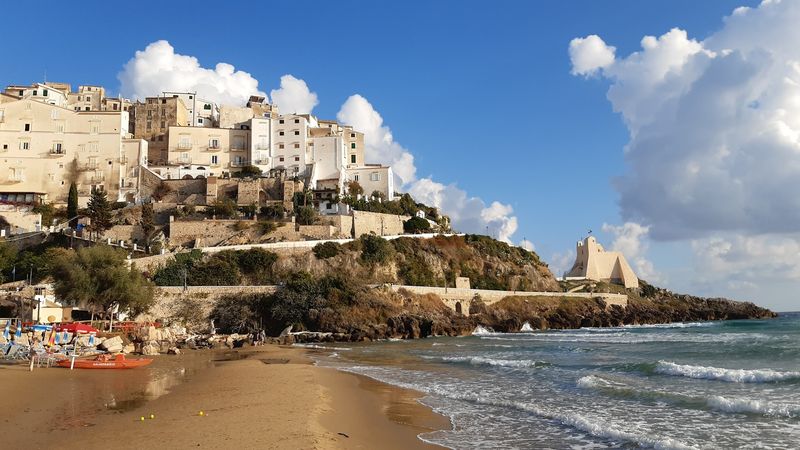
Sperlonga looks like someone took a Greek island village and relocated it to the Italian coast between Rome and Naples, which makes it both visually stunning and logistically convenient. Its old town is a maze of whitewashed lanes, arched passageways, and stairways that open onto sea views at every turn.
The beaches below are wide, sandy, and far easier to enjoy than the rocky coves of more dramatic coastal towns. Getting here from Rome takes about ninety minutes by train and bus, yet somehow Sperlonga still flies under most international radars.
Just outside town, the Villa of Tiberius archaeological site adds a genuinely fascinating layer to the visit. The Roman emperor apparently used this stretch of coast as a private retreat, which shows that excellent taste in beach locations has always been a Roman tradition.
Sperlonga is sharp, scenic, and seriously underbooked. Fix that while you still can.
Pisciotta, Campania
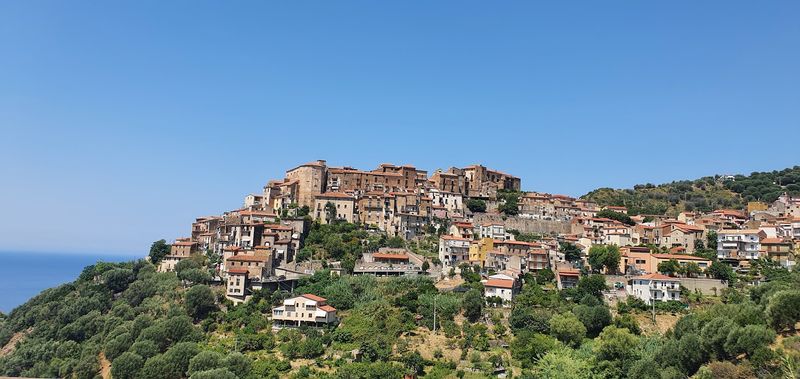
Pisciotta sits high on a hilltop in the Cilento National Park, looking down at its own beach like a king surveying the kingdom. The village is medieval, quiet, and wonderfully unhurried, which puts it in sharp contrast to the busier corners of Campania just up the coast.
Marina di Pisciotta, the beach area below, has clear water, good seafood restaurants, and a low-key atmosphere that rewards slow mornings and long lunches. The ancient Pisciottana olive trees scattered across the surrounding landscape are among the oldest in southern Italy, some estimated to be over a thousand years old.
The local anchovy, the alice di menaica, is caught using a traditional net method that has barely changed in centuries and is considered one of Campania’s great culinary treasures. A jar of those anchovies packed in local olive oil makes one of the best edible souvenirs you will find anywhere on the Italian coast.
Peschici, Puglia
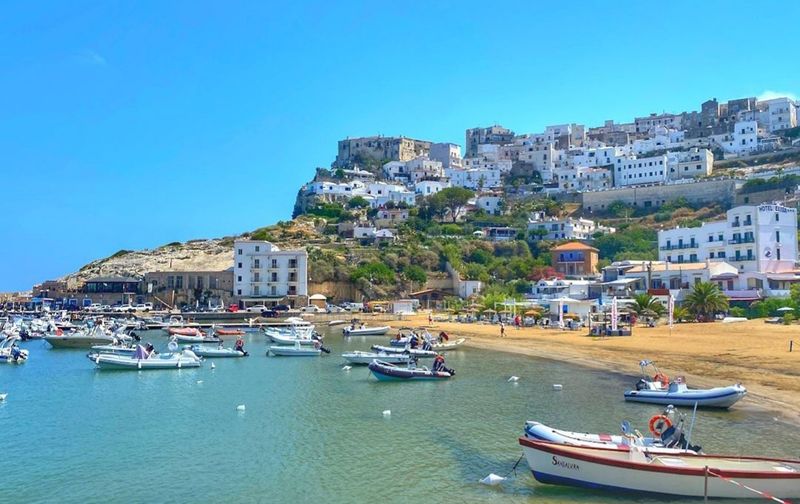
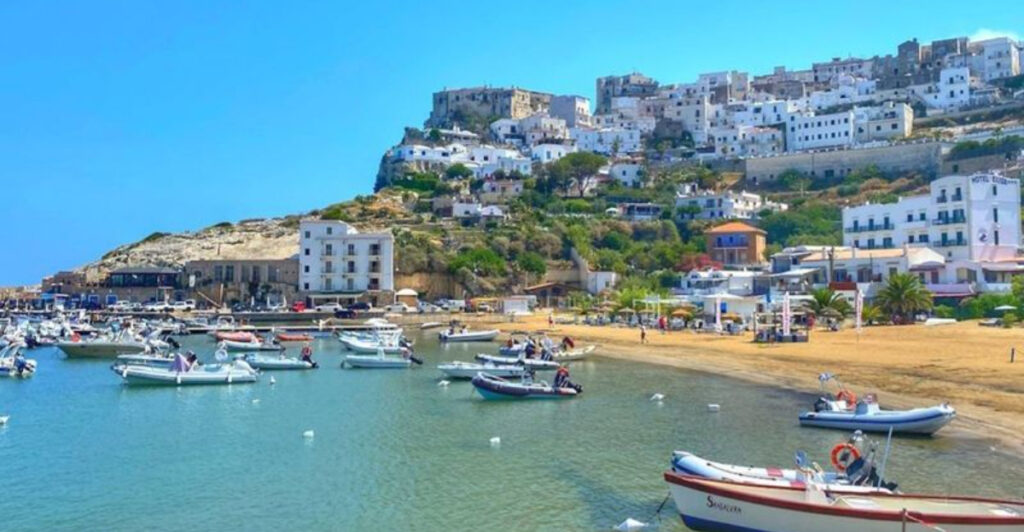
Peschici has the kind of geography that makes you wonder who decided to build a village there and whether they were showing off. Perched above the Gargano coast in northern Puglia, it balances white flat-roofed houses, medieval lanes, and sweeping Adriatic views with the casual confidence of a town that knows exactly how good it looks.
Below the village, sea caves, sandy coves, and clear water make the coastline worth exploring by boat. The Gargano National Park stretches inland, adding hiking, forest trails, and a genuinely wild landscape to the coastal mix.
Compared with Polignano a Mare or the crowded beaches of Salento, Peschici feels rougher around the edges in the most appealing sense. It has not been polished for Instagram, and that roughness is what makes it feel real.
Boat trips, beach days, medieval streets, and national park hikes, all from one small Puglian perch above the Adriatic.
Vasto, Abruzzo
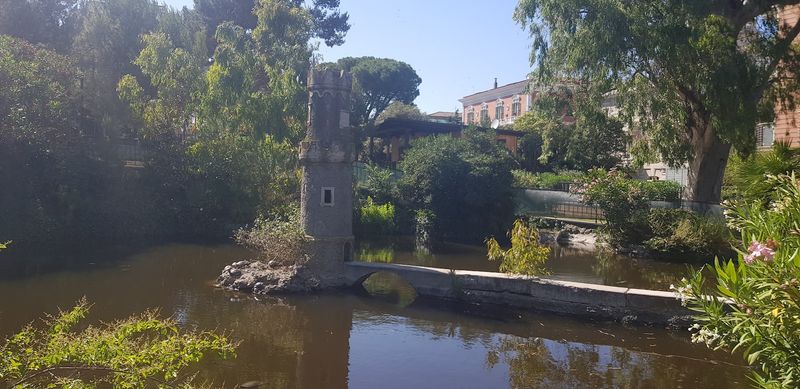
Vasto is the kind of Italian town that quietly does everything right without making a big fuss about it. The historic center sits on a hilltop above the Adriatic, full of elegant squares, a cathedral, and panoramic views that stretch down to the Costa dei Trabocchi below.
The trabocchi are the real headline here. These ancient wooden fishing platforms jut out over the sea on spindly legs, connected to the shore by rickety walkways.
Many have been converted into restaurants where you eat fresh fish directly above the water, which is either very romantic or mildly terrifying depending on how you feel about heights.
Vasto Marina handles the beach side of the trip with a long sandy shoreline and a relaxed atmosphere. The town is affordable, authentic, and genuinely interesting in ways that go well beyond a nice view.
Abruzzo deserves more credit, and Vasto is one of the best reasons to give it some.
Castro Marina, Puglia
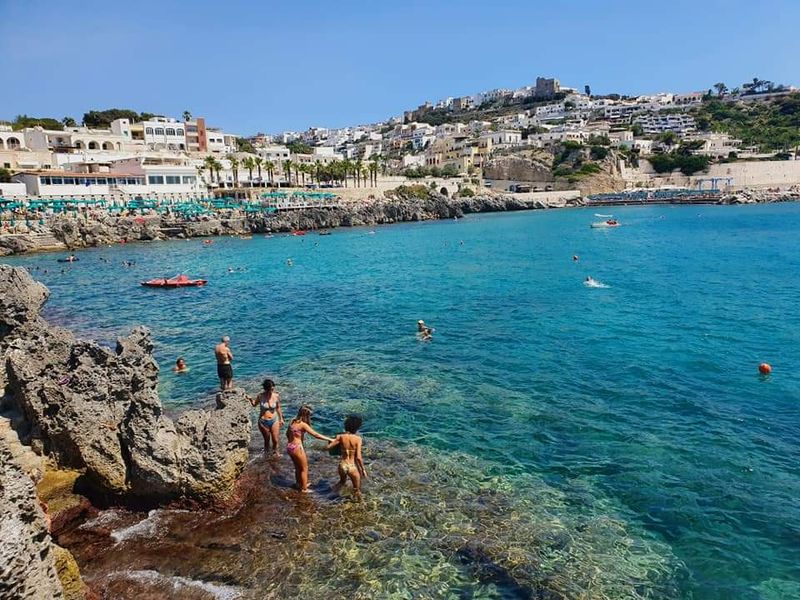
Castro Marina sits at the bottom of a dramatic rocky bay in Salento, with water so clear and blue it looks like someone color-corrected reality. The small harbor is ringed by limestone cliffs, and the swimming here is done from rocks rather than sandy beaches, which filters out anyone who needs a sunbed and a cocktail menu to enjoy the sea.
Just outside town, the Grotta Zinzulusa is one of Puglia’s most impressive sea caves, accessible by boat and filled with stalactites, stalagmites, and a small underground lake. It is genuinely spectacular and rarely as crowded as similar caves in more famous Italian destinations.
Above the marina, the hilltop town of Castro adds history to the picture with a castle, a cathedral, and archaeological layers that go back to ancient Greek settlers. Two towns for the price of one, connected by a steep road and a shared name.
Castro Marina earns its place on any Salento itinerary with zero effort.
Caorle, Veneto
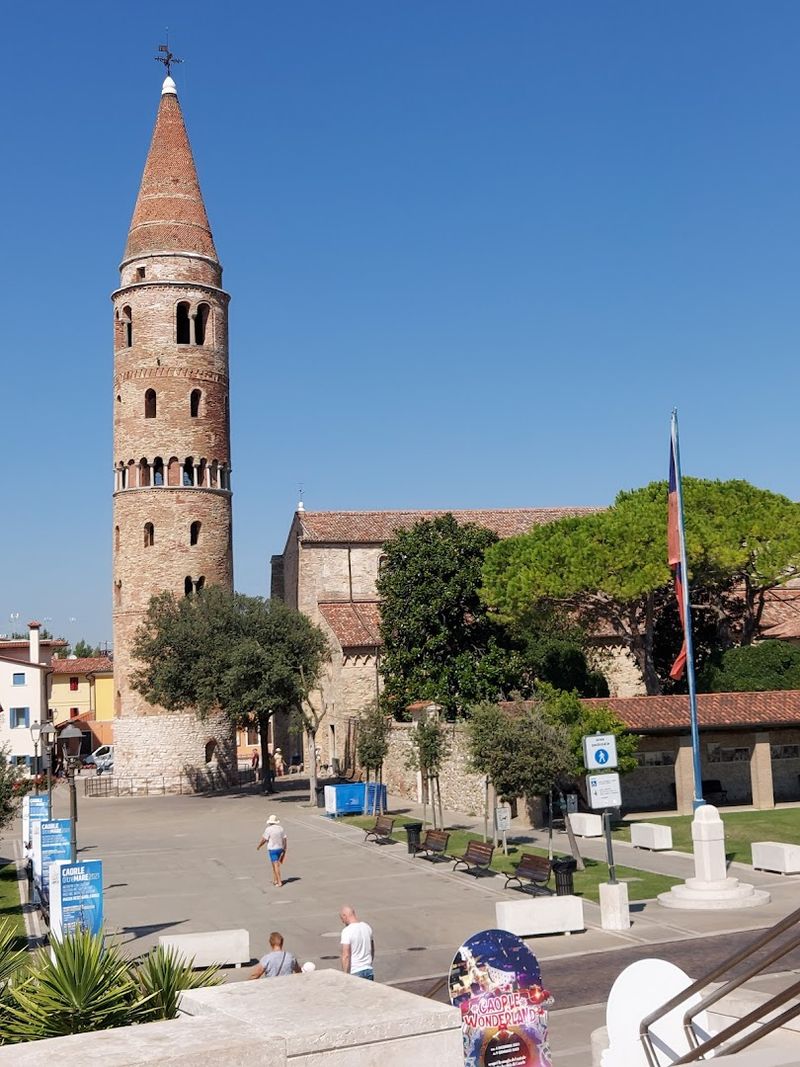
Caorle has a round cathedral bell tower that looks like it was designed by someone who wanted to make absolutely sure the church stood out from the neighborhood. Built in the eleventh century, it is just one of the quirky details that make this Venetian fishing town feel more interesting than a standard beach resort.
The town sits north of Venice on the Adriatic coast, with bright painted houses, a sandy beach, a lagoon, and a waterfront promenade that fills up with gelato-eating families every summer evening. It is hugely popular with Italian and northern European visitors but still largely unknown to travelers who fly straight to Venice and never look north.
Caorle handles beach holidays well, with calm water, good seafood, and a historic center compact enough to explore in an afternoon. It is cheerful, colorful, and completely unintimidating, which makes it an excellent choice for anyone who wants Venice’s beauty without Venice’s complexity or Venice’s prices.
Otranto, Puglia
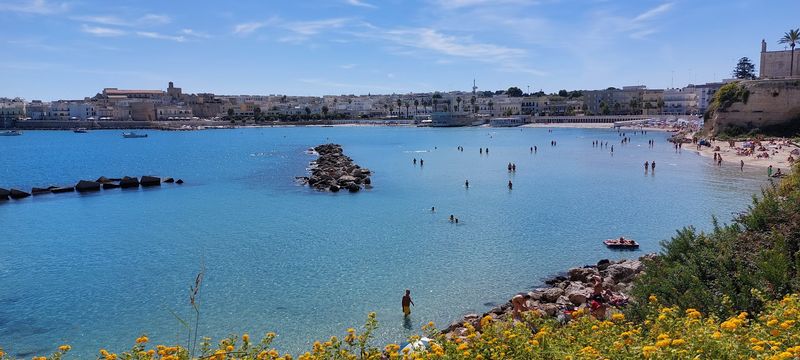
Otranto holds the distinction of being the easternmost town in Italy, which means it is technically the first place on the peninsula to catch the sunrise every morning. That alone is a solid reason to visit, but the town also has a walled medieval center, an Aragonese castle, and one of the most extraordinary cathedrals in southern Italy.
The cathedral floor is covered by a twelfth-century mosaic that depicts the entire medieval universe, from the Tree of Life to Alexander the Great riding a griffin. It is bizarre, beautiful, and completely unlike anything else you will find on an Italian beach trip.
The coastline around Otranto shifts quickly from sandy beaches to rocky coves and dramatic cliffs, making it a strong base for exploring the southern tip of Salento. It is more famous than some towns on this list, but compared with the real Puglia crowd-pullers, Otranto still feels refreshingly manageable and genuinely rewarding.
Santa Maria di Castellabate, Campania
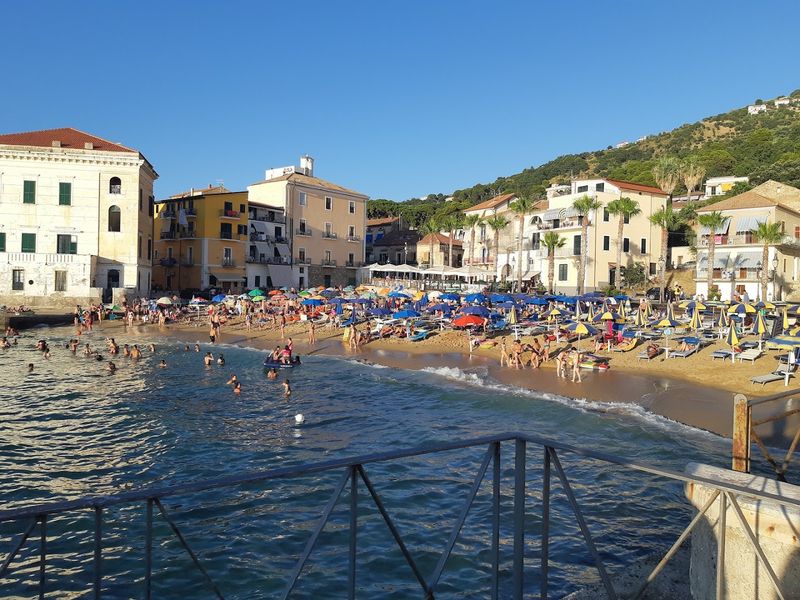
The Cilento Coast is what the Amalfi Coast might have looked like before the tour groups arrived. Santa Maria di Castellabate sits right at the heart of it, a small seafront village with clear water, sandy beaches, and a relaxed southern Italian summer mood that feels entirely unforced.
The village is part of the wider Castellabate area, which climbs up to a hilltop medieval town with panoramic views over the protected marine scenery below. The whole zone sits inside the Cilento National Park, which keeps development in check and the landscape looking the way it should.
Restaurants along the seafront serve fresh fish, local mozzarella, and Cilento olive oil with the kind of straightforward quality that does not need a Michelin star to justify itself. Prices are reasonable, the beaches are not jammed, and the pace is slow enough to actually feel like a holiday.
For anyone done with paying Amalfi Coast prices for Amalfi Coast crowds, this is the answer.
Tropea, Calabria
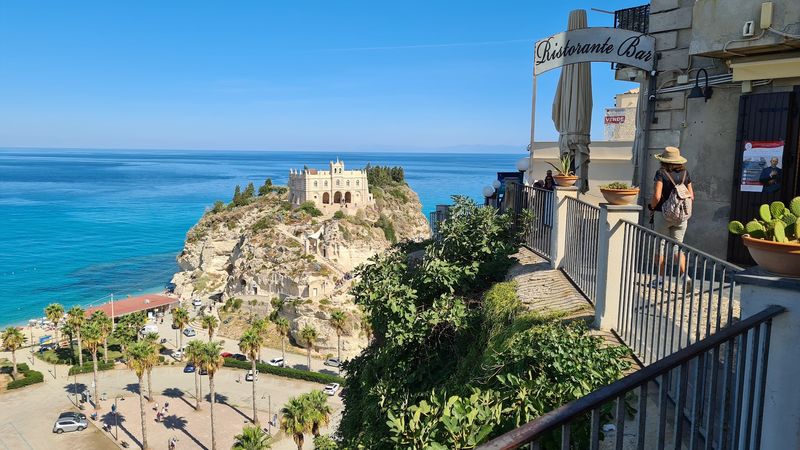
Tropea is built on a cliff above the sea like it is trying to win an argument about dramatic locations. The golden limestone rock drops straight down to one of Calabria’s most beautiful beaches, with turquoise water and a view toward the Aeolian Islands on clear days that makes the whole scene feel slightly unreal.
The historic center is full of baroque balconies, old churches, and small restaurants where the menu changes based on what came in from the sea that morning. Tropea is also famous across Italy for its sweet red onions, which are so prized locally that they appear in pasta, marmalade, and even liqueur.
It is not a hidden secret anymore, but compared with Italy’s true coastal giants, Tropea still delivers a genuine southern experience without becoming a theme park version of itself. The Calabrian warmth, the excellent food, and that ridiculous clifftop setting make it one of the most memorable towns on this entire list.
Share this story