 Unearth The Voyage
Every iconic band has a secret weapon, and often, it’s the drummer. These aren’t just musicians keeping time – they’re innovators whose rhythms defined their bands’ sound and reshaped music itself.
From explosive energy to inventive grooves, the drummers on this list didn’t just play songs -they transformed them, leaving beats that echo through the history of rock, jazz, and beyond.
1. Max Roach – His Own Groups / Jazz at Large
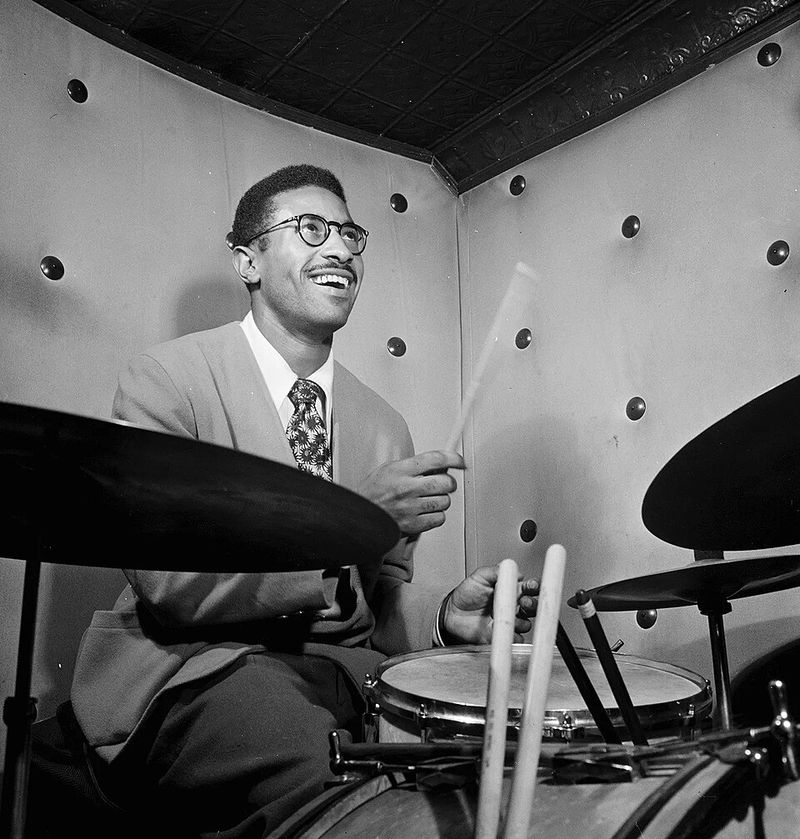
Max Roach didn’t just play drums. He made them speak.
Before him, drummers mostly stayed in the background, keeping steady time while horns and pianos took the spotlight.
Roach flipped that script completely. He turned his kit into a lead instrument, conversing with other musicians note for note.
His approach made every ensemble he joined rethink how they built their sound.
Working with Charlie Parker and Dizzy Gillespie, he helped create bebop’s lightning-fast complexity. Later, with his own groups, he pushed boundaries even further.
He used drums to tell stories, express emotions, and challenge listeners.
His polyrhythmic patterns and melodic sensibility changed jazz forever. Drummers today still study his solos, trying to unlock the secrets of his conversational style.
Max Roach proved drums could lead, not just follow.
2. Karen Carpenter – The Carpenters
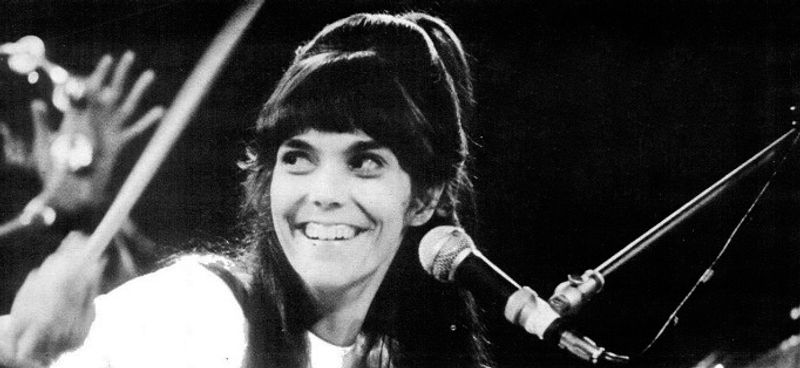
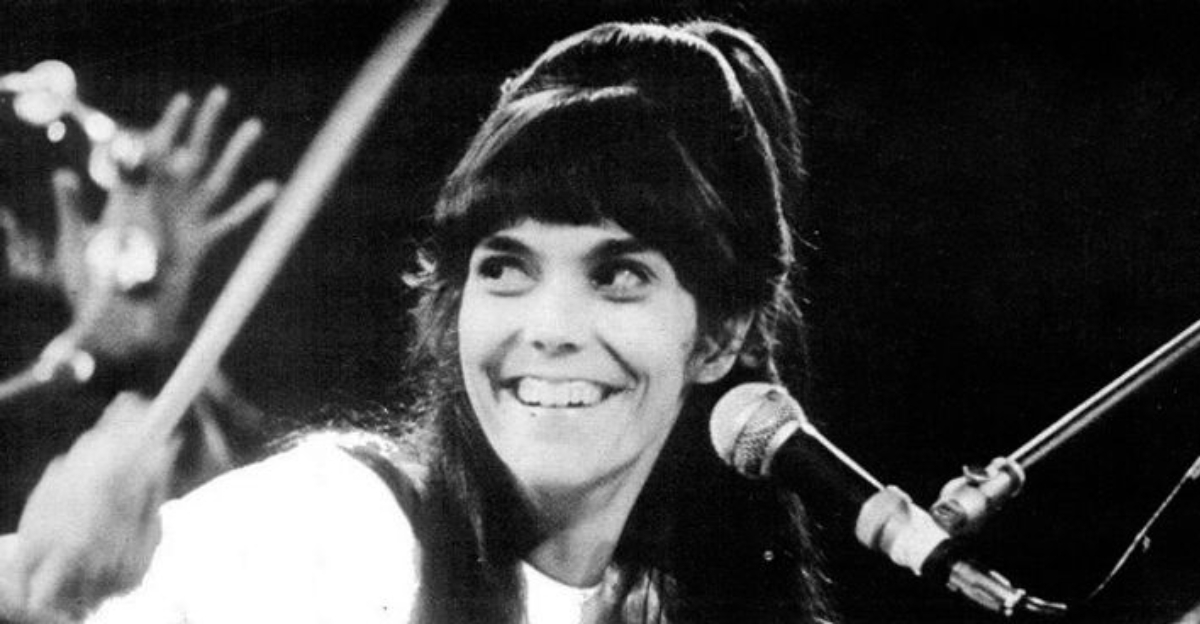
Most people remember Karen Carpenter for her golden voice. But before she stepped up to the microphone full-time, she was the drummer who gave The Carpenters their signature groove.
Her jazz-trained playing brought a sophisticated, delicate touch to soft rock. She didn’t bash or crash.
Instead, she coaxed warmth and precision from every beat, creating space for melodies to breathe.
Songs like “We’ve Only Just Begun” showcase her tasteful fills and impeccable timing. She understood dynamics better than almost anyone, knowing exactly when to push and when to pull back.
Her drumming felt intimate, like she was playing just for you.
Even after she became the band’s frontwoman, her rhythmic instincts shaped their arrangements. Karen proved that power isn’t about volume.
Sometimes the quietest player in the room makes the biggest impact.
3. Lars Ulrich – Metallica
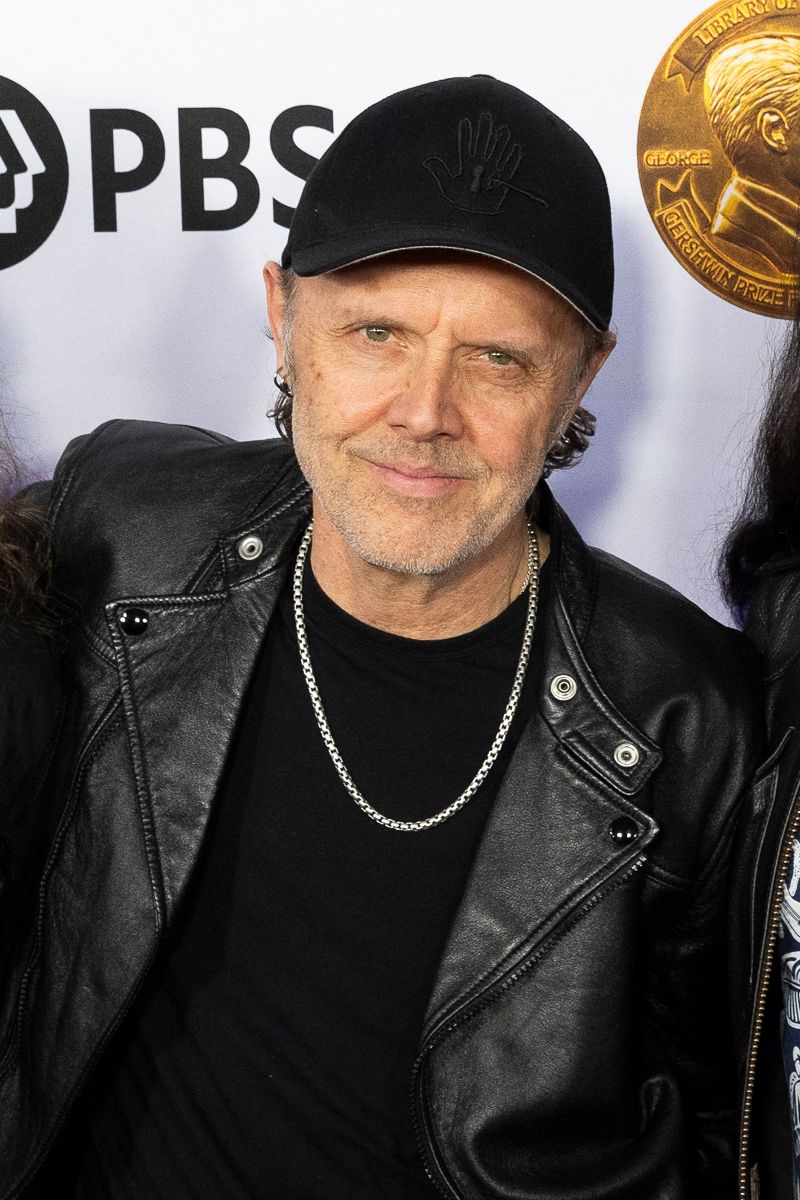
When people criticize Lars Ulrich’s technique, they miss the point entirely. His genius wasn’t about chops or speed.
It was about architecture.
Ulrich approached drumming like a songwriter, building Metallica’s tracks from the ground up. He thought in terms of song structure first, beats second.
That arrangement-first mindset gave thrash metal a sophistication it never had before.
Listen to “Master of Puppets” or “One.” The drums don’t just accompany the riffs. They define the journey, creating tension and release, guiding listeners through complex emotional landscapes.
His use of dynamics transformed metal from constant aggression into something with real depth.
He also drove the band’s creative direction, pushing them to experiment and evolve. Without his vision, Metallica might have stayed underground.
Instead, they became the biggest metal band on Earth, redefining what heavy music could achieve commercially and artistically.
4. Travis Barker – Blink-182
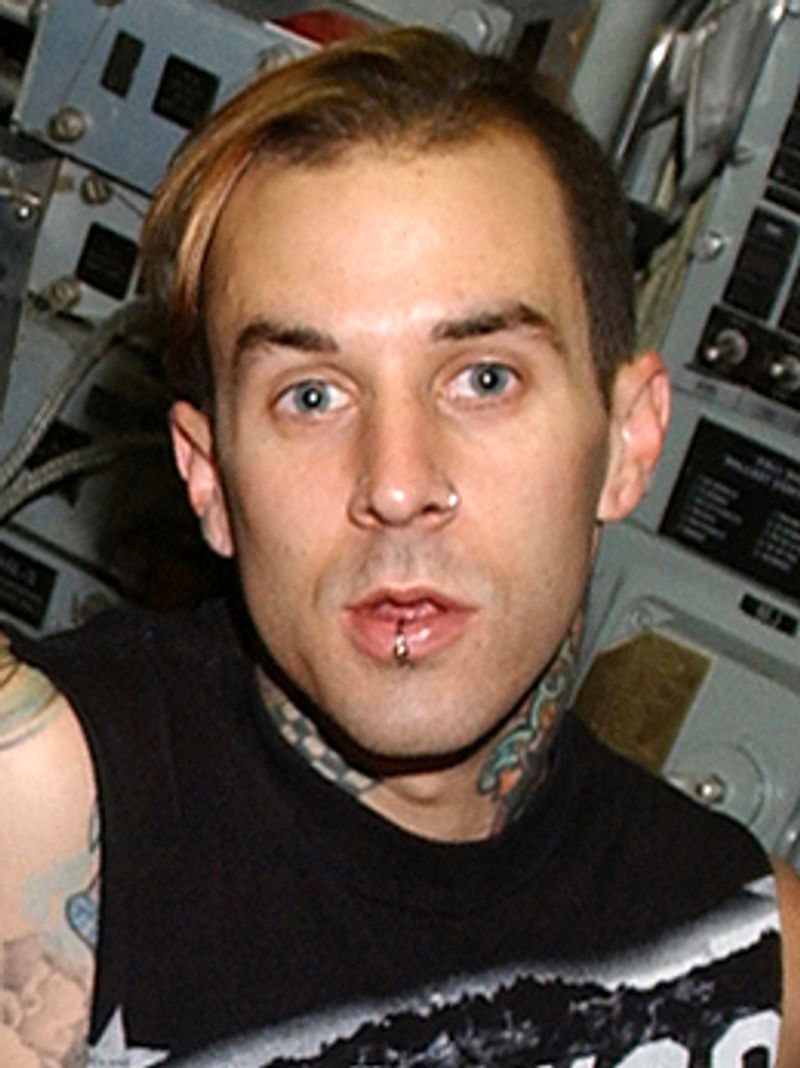
Before Travis Barker joined Blink-182, pop-punk drumming was straightforward and simple. Then he showed up and rewrote the rulebook overnight.
Barker brought legitimate technical skill to a genre that never demanded it. His lightning-fast double bass, intricate fills, and hip-hop influenced patterns elevated Blink’s sound dramatically.
Suddenly, pop-punk could be both catchy and musically impressive.
Albums like “Enema of the State” showcased his ability to add complexity without losing the fun, energetic vibe. He made difficult playing sound effortless and exciting.
Kids who grew up on his drumming wanted to play just like him.
His influence spread far beyond Blink. He collaborated across genres, from hip-hop to electronic music, proving punk drummers could hang anywhere.
Travis showed that technical mastery and punk attitude weren’t opposites. They could fuel each other, creating something entirely new and wildly popular.
5. Topper Headon – The Clash

Punk rock in the late seventies had one speed: fast and furious. Then Topper Headon joined The Clash and opened a whole world of possibilities.
His background in jazz, reggae, and funk gave him a musical vocabulary most punk drummers didn’t possess. He could play straight-ahead punk when needed, but he could also shift into dub rhythms, disco grooves, or complex rock patterns without breaking a sweat.
“London Calling” exists because of Headon’s versatility. Songs like “Train in Vain” and “The Guns of Brixton” required a drummer who understood multiple genres deeply.
He made The Clash’s ambitious experimentation actually work, grounding their wildest ideas in solid, danceable grooves.
Without his skills, The Clash might have stayed a great punk band. With him, they became something much bigger – a group that could tackle any style and make it their own.
Topper’s drumming gave them freedom to explore.
6. Mitch Mitchell – The Jimi Hendrix Experience
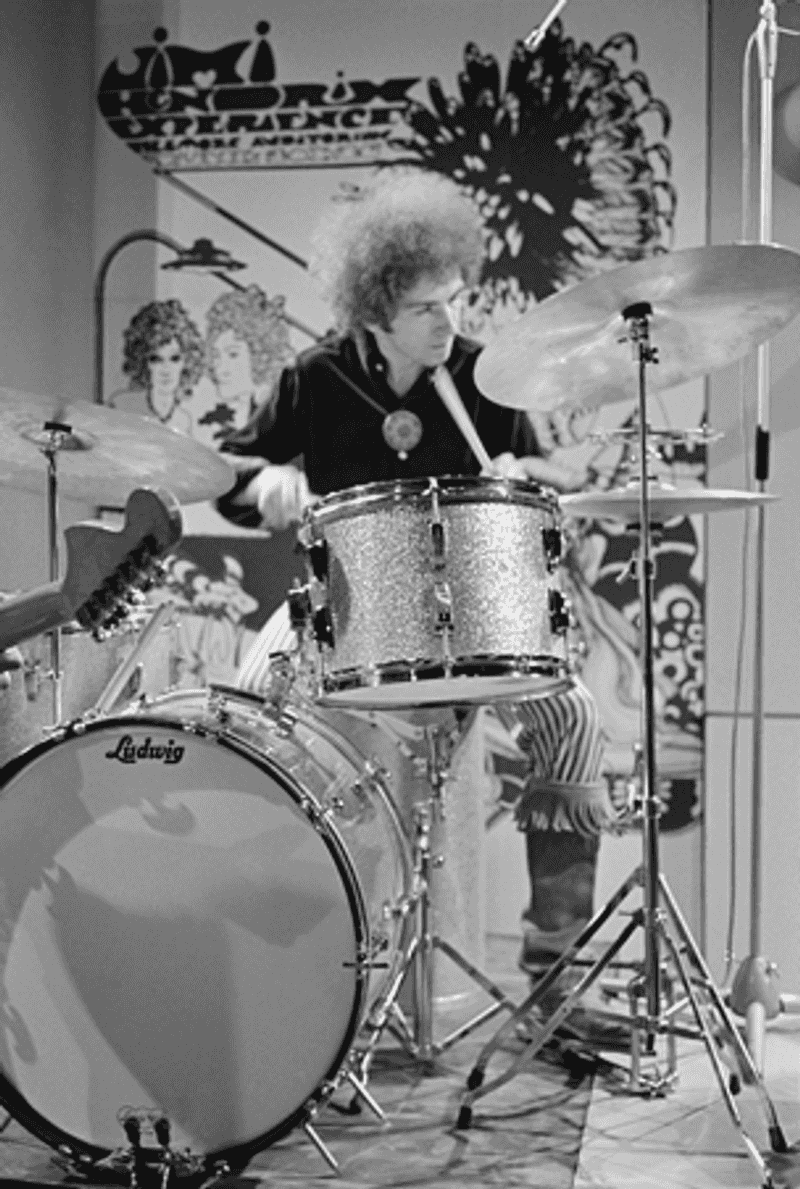
Jimi Hendrix needed a drummer who could keep up with his sonic adventures. In Mitch Mitchell, he found someone who could do even better – he found a partner who pushed him further.
Mitchell’s jazz background, particularly his love of Ellington’s drummer Sam Woodyard, gave him an improvisational edge. He didn’t just follow Hendrix’s guitar.
He responded, challenged, and created conversations mid-song. Their interplay felt spontaneous and electric.
Listen to “Fire” or “Manic Depression.” Mitchell’s rapid-fire fills and complex patterns swirl around Hendrix’s riffs like a tornado. He played with controlled chaos, giving the Experience its unpredictable energy.
Where other drummers might have simplified things, Mitchell added layers.
His approach influenced countless rock and fusion drummers who came after. He proved that rock drumming could be as sophisticated as jazz without losing its raw power.
Mitchell gave Hendrix the rhythmic freedom to truly fly.
7. Phil Collins – Genesis
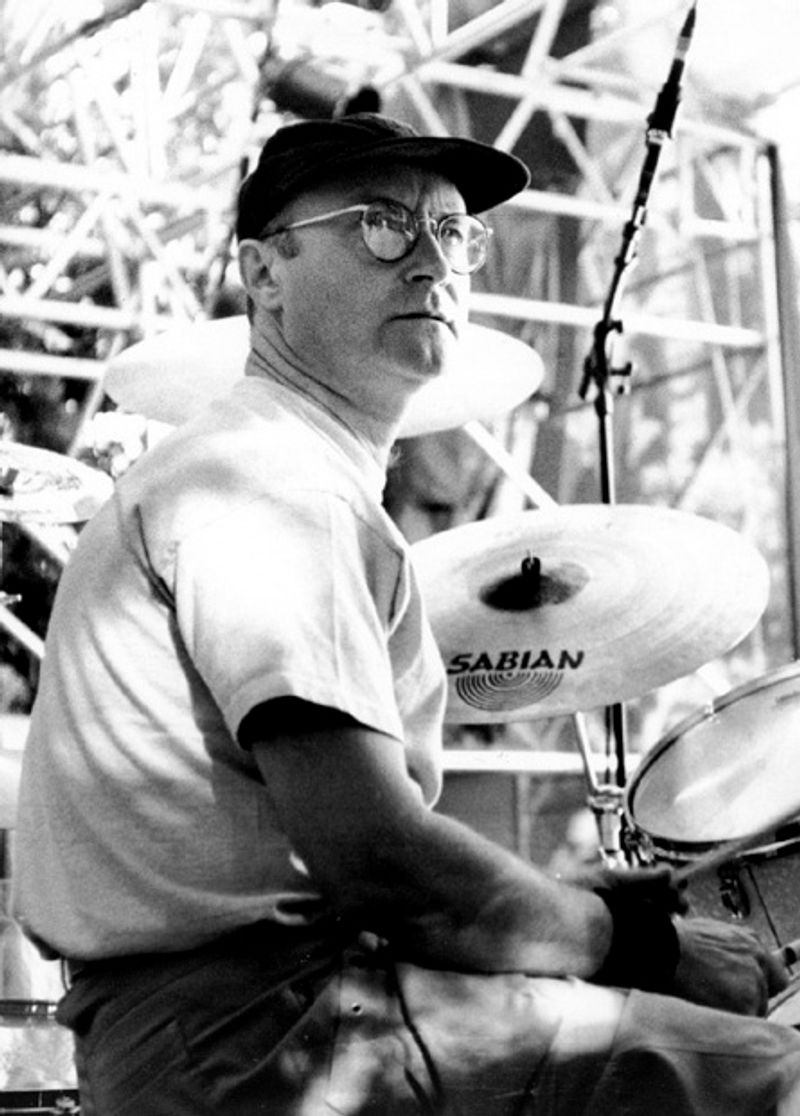
Phil Collins changed Genesis twice. First as their drummer, then as their frontman.
Both transformations were equally revolutionary.
Early Genesis needed a drummer who could handle their complex, ever-changing progressive compositions. Collins delivered with technical precision and creative flair.
His work on albums like “Selling England by the Pound” showcased intricate patterns that served the songs perfectly, never showing off unnecessarily.
Then Peter Gabriel left, and Collins reluctantly stepped up to sing. The band’s sound shifted dramatically – less theatrical, more emotional and direct.
His drumming became simpler but more powerful, with that distinctive gated reverb sound that defined eighties music.
As a singer-drummer, he brought a rhythmic sensibility to vocals that few frontmen possess. His dual role forced Genesis to evolve, eventually making them stadium-filling superstars.
Collins proved you could be both a world-class drummer and a compelling lead singer, something almost nobody had done before.
8. Charlie Watts – The Rolling Stones
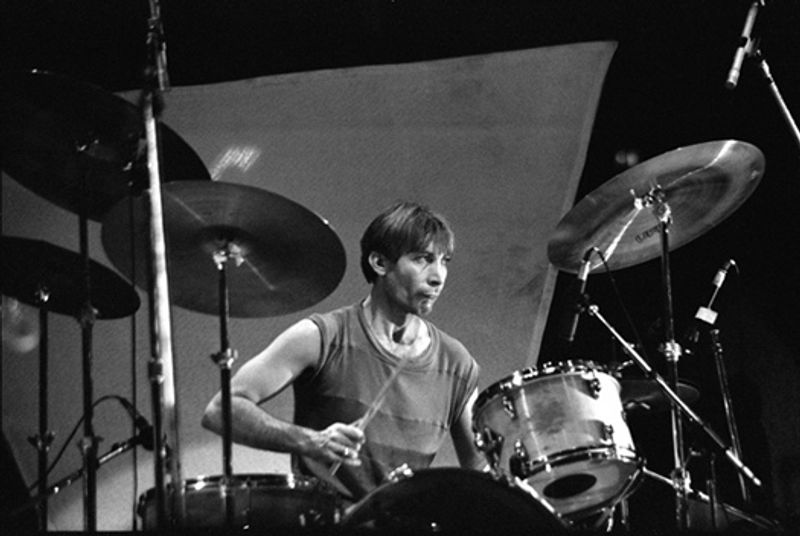
Charlie Watts never looked like a rock star. Dressed in elegant suits, calm and composed, he seemed more like a jazz cat who accidentally wandered into rock and roll.
That jazz sensibility became the Rolling Stones’ secret weapon. While other rock drummers pounded aggressively, Watts laid back slightly, creating a loose, swinging feel.
That subtle delay gave the Stones their distinctive groove – the pocket that made you move without thinking.
He never overplayed. His parts on “Gimme Shelter” or “Sympathy for the Devil” are deceptively simple, but try playing them exactly right.
His timing, his touch, his restraint – these made the difference between a good band and legends.
For nearly sixty years, Watts provided the steady heartbeat that kept the Stones alive. He proved that flash wasn’t necessary if you had feel.
His understated brilliance became the foundation for the greatest rock and roll band in the world.
9. Bill Ward – Black Sabbath
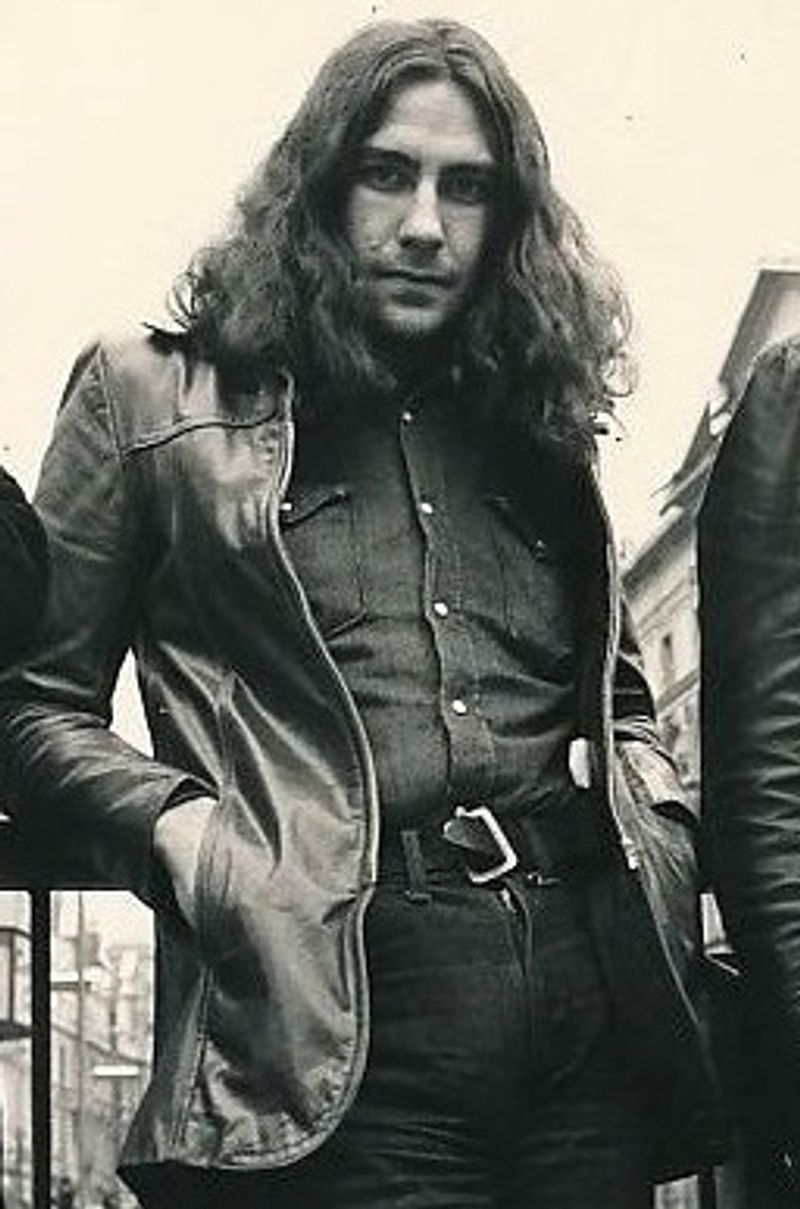
Black Sabbath invented heavy metal, but Bill Ward made sure it could actually swing. His jazz influences seem out of place in doom metal until you really listen closely.
Ward brought complexity and groove to Tony Iommi’s crushing riffs. Where a simpler drummer might have just bashed along, Ward added syncopation, swing, and unexpected accents.
His playing on “War Pigs” or “Fairies Wear Boots” dances around the heaviness, giving it movement and life.
His use of dynamics was revolutionary for heavy music. He knew when to hit hard and when to pull back, creating space and tension.
That understanding of light and shade made Sabbath’s heavy moments even more powerful by contrast.
Ward also wasn’t afraid to get weird. His drum solo on “Rat Salad” goes places most metal drummers wouldn’t dare.
He helped define metal’s core feel while keeping it musically interesting. Without his swing and sophistication, metal might have been just noise.
10. Stewart Copeland – The Police
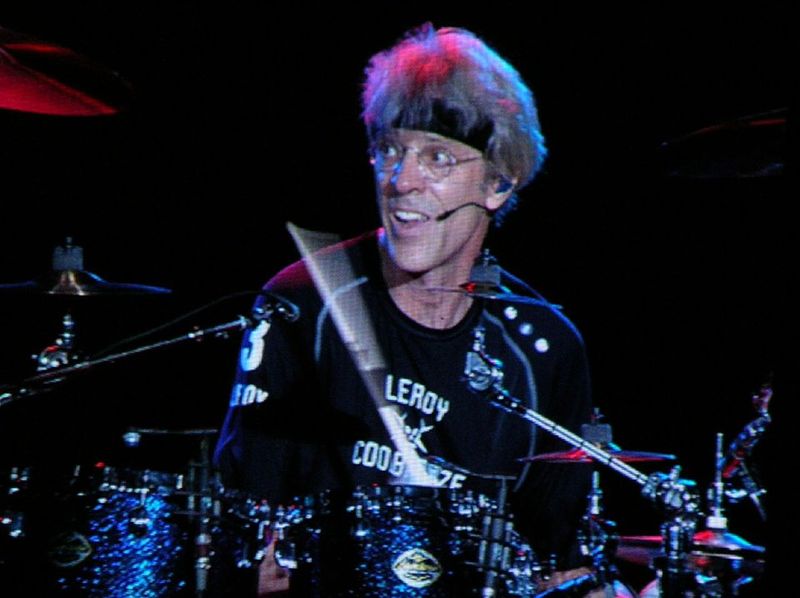
If you had to pick one element that made The Police sound like The Police, it would be Stewart Copeland’s drums. Not Sting’s voice, not the guitar – the drums.
Copeland created a completely unique style by fusing reggae’s offbeat emphasis, punk’s energy, and jazz’s complexity. His hi-hat work became legendary, driving songs with relentless, intricate patterns that felt both mechanical and organic.
Nobody else sounded remotely like him.
Songs like “Roxanne” and “Message in a Bottle” are masterclasses in creative drumming. He built grooves that were simultaneously simple and impossibly complex.
His parts were so distinctive that cover bands struggle to replicate them accurately even today.
Copeland’s aggressive, forward-pushing style created urgency and excitement in every Police track. He didn’t just support the band – he drove it, shaped it, defined it.
The Police without Copeland’s drumming would have been a completely different, far less interesting group.
11. Dave Grohl – Nirvana
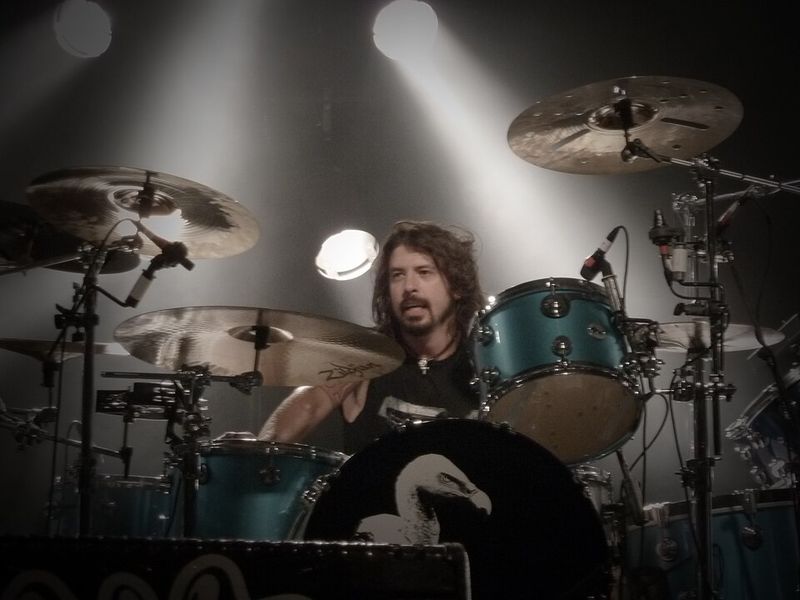
When Dave Grohl joined Nirvana, everything changed overnight. Suddenly, the band had power, precision, and unstoppable momentum.
His impact was immediate and obvious.
Grohl hit harder than any drummer Kurt Cobain had worked with before. His thunderous, relentless style turned Nirvana from an interesting indie band into a generational force.
Listen to “Smells Like Teen Spirit” – those drums don’t just accompany the song, they ARE the song’s driving fury.
He brought punk intensity and metal precision together perfectly. His playing on “Nevermind” captured grunge’s essence: raw emotion delivered with surprising technical skill.
Every hit felt meaningful, powerful, and slightly dangerous.
Grohl’s drumming gave Cobain’s songs the explosive energy they needed to break through to mainstream audiences. Without that power, Nirvana’s message might have stayed underground.
Instead, they changed popular music forever. Grohl’s drums were the earthquake that shook the world awake.
12. Neil Peart – Rush
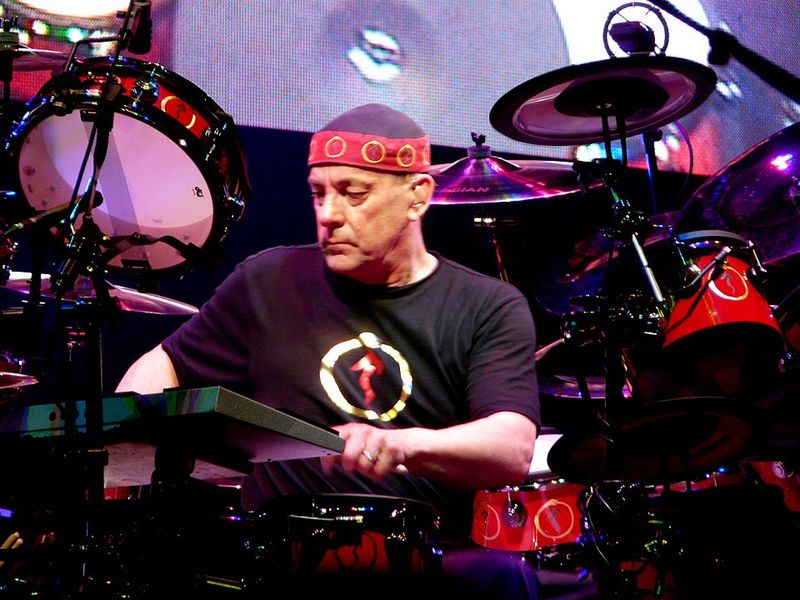
Neil Peart didn’t just play drums. He orchestrated them.
His massive kit resembled a percussion orchestra, and he used every piece with purpose and precision.
When Peart joined Rush, they were a decent hard rock trio. He transformed them into progressive rock giants through sheer ambition and skill.
His complex time signatures, extended solos, and conceptual approach elevated everything the band did.
Albums like “2112” and “Moving Pictures” showcase his incredible range. He could play straight-ahead rock powerfully, then shift into jazz fusion complexity without missing a beat.
His lyrics were equally important – he became Rush’s primary writer, adding intellectual depth to match his musical sophistication.
Peart inspired countless drummers to push boundaries and practice harder. His influence on rock drumming is immeasurable.
He proved that technical mastery and artistic vision could coexist, that drummers could be composers and poets. Rush became legendary because Peart demanded excellence in everything they touched.
13. Ringo Starr – The Beatles
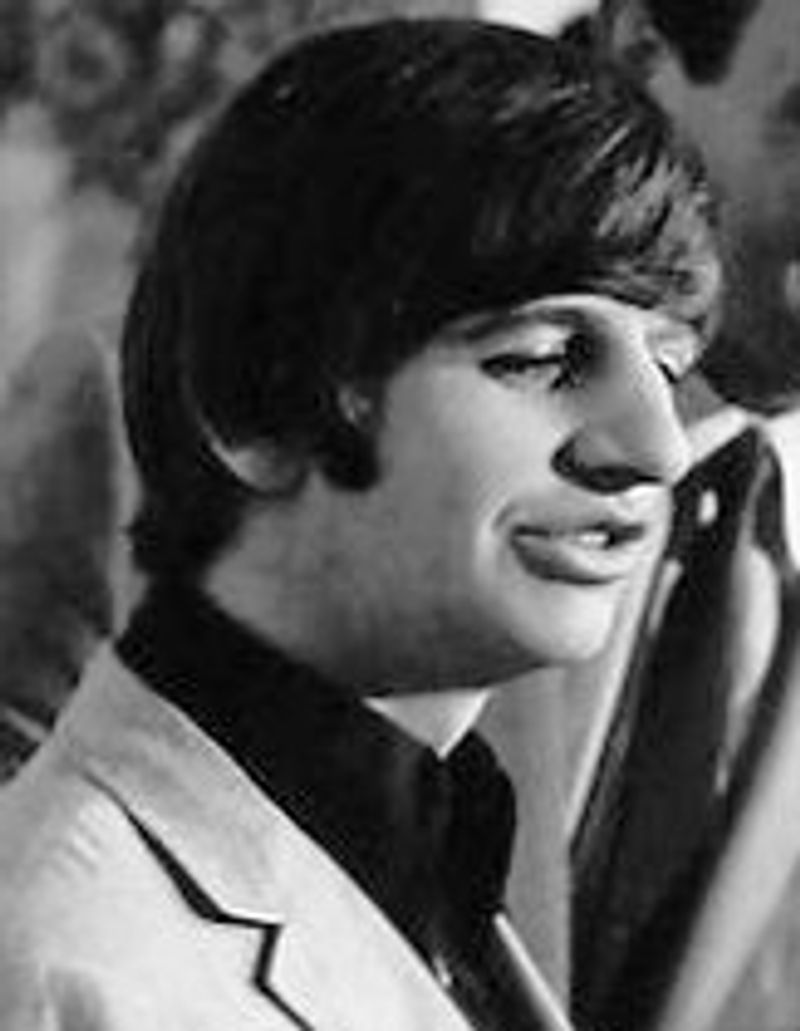
People love to underestimate Ringo Starr. They shouldn’t.
His drumming reshaped popular music more than almost anyone else on this list.
Ringo’s genius was feel over flash. He served the song perfectly every single time, creating parts that felt inevitable and right.
Try imagining different drums on “Come Together” or “A Day in the Life.” You can’t – his parts are inseparable from the songs themselves.
His left-handed setup on a right-handed kit gave him a unique sound. His fills came from unexpected places, adding character and personality.
He pioneered studio techniques, like the massive drum sound on “Tomorrow Never Knows,” that influenced recording forever.
Ringo made complex ideas sound simple and natural. That’s harder than making simple ideas sound complex.
His inventive, musical approach taught generations of drummers that taste matters more than speed. The Beatles needed exactly Ringo’s drumming – nothing more, nothing less.
He gave them their rhythmic heart.
14. Keith Moon – The Who
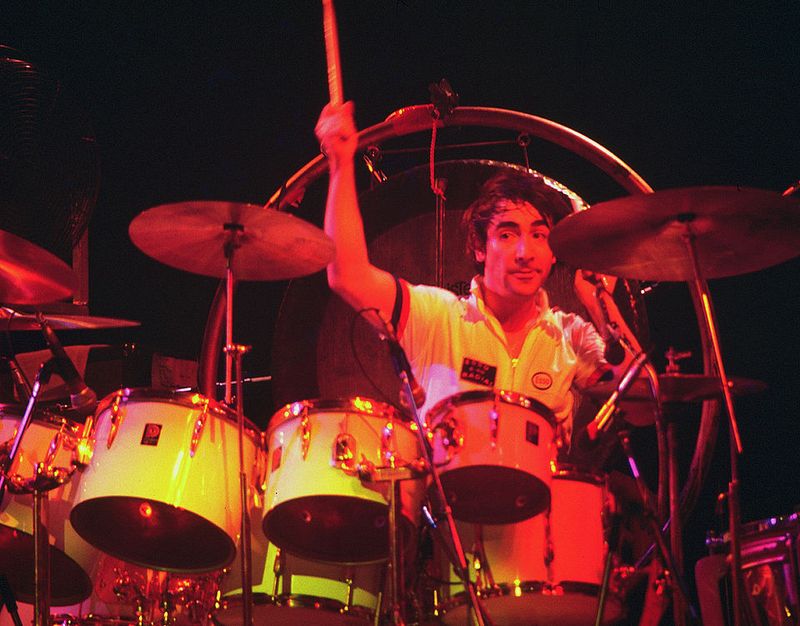
Keith Moon played drums like he was perpetually falling down a staircase – chaotic, unpredictable, and absolutely thrilling. Conventional drumming bored him, so he invented his own rules.
Moon didn’t keep time in the traditional sense. He created a rolling thunder of fills, crashes, and explosions that somehow held everything together.
His approach on songs like “My Generation” and “Won’t Get Fooled Again” forced The Who to build their sound around his controlled chaos.
He treated his kit like a melodic instrument, constantly moving around it, creating cascading patterns that felt more like lead parts than rhythm. His playing was exhausting to watch and impossible to predict.
No two performances were ever quite the same.
Moon’s wild energy and complete disregard for drumming conventions influenced punk, alternative, and experimental rock. He showed that rules were meant to be broken, that personality mattered more than precision.
The Who needed Moon’s madness to truly become The Who.
15. John Bonham – Led Zeppelin
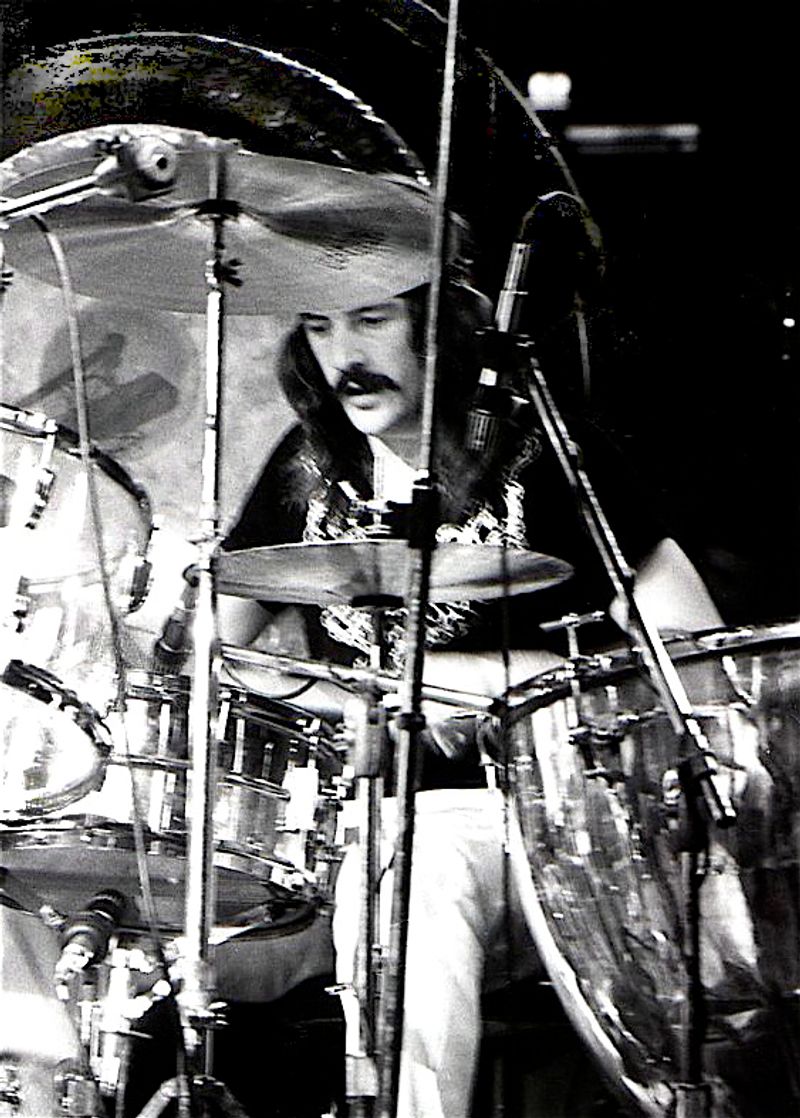
John Bonham is the reason rock drumming sounds the way it does today. Before him, things were different.
After him, everyone tried to copy his blueprint.
Bonham combined impossible power with impossible groove. His foot was faster than most people’s hands, yet he swung like a jazz drummer.
That combination had never existed before. Songs like “When the Levee Breaks” and “Kashmir” showcase his ability to create massive, earth-shaking sounds while maintaining perfect feel.
His triplet-based patterns became the foundation for hard rock and heavy metal drumming. His use of dynamics – knowing when to explode and when to whisper – gave Led Zeppelin their legendary light-and-shade approach. “Moby Dick” remains one of rock’s most famous drum solos decades later.
Bonham made it look easy, which was deceptive. Countless drummers have tried to replicate his sound and feel, but nobody quite captures his magic.
He was Led Zeppelin’s thunder, their power, their unstoppable force.



