Forests are among Earth’s most magical landscapes, sheltering countless species, regulating the climate, and offering visitors a chance to experience nature at its most peaceful and awe-inspiring. From ancient rainforests and bamboo groves to fairytale woodlands and misty mountain forests, these destinations represent some of the world’s most breathtaking natural wonders.
Whether you are an adventurous hiker, a wildlife enthusiast, or simply someone who loves a quiet walk among towering trees, these woodlands have something truly special to offer. Get ready to explore fifteen of the most enchanting forests on the planet.
Black Forest, Germany
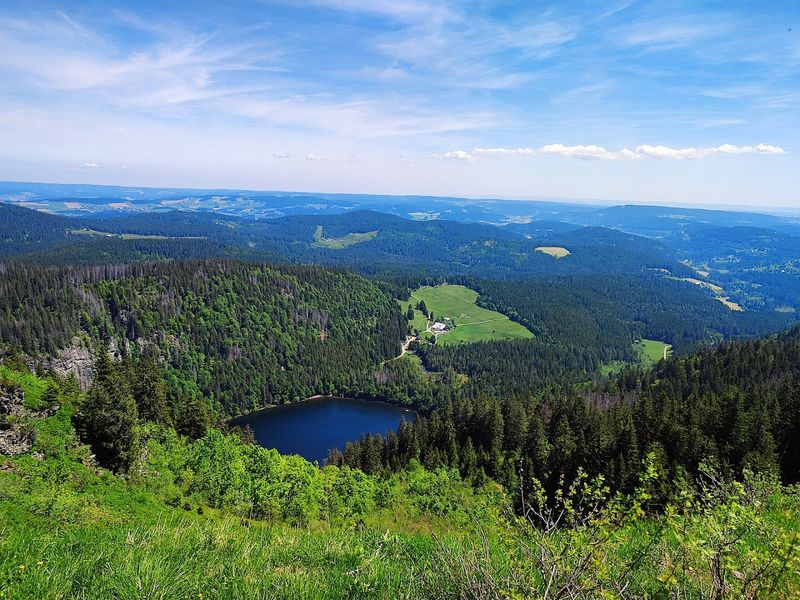
Somewhere between legend and landscape, the Black Forest sits quietly in southwestern Germany, daring you to believe every fairy tale you were ever told. The dense canopy of firs and pines filters sunlight into soft, mysterious beams that feel almost theatrical.
Wandering its trails, it is easy to understand why Brothers Grimm set so many of their stories here.
The forest stretches across roughly 6,000 square kilometers, making it one of Germany’s largest and most celebrated natural regions. Cuckoo clocks, cherry cake, and half-timbered villages are all part of the cultural charm woven into the landscape.
Visitors who explore the trails discover that the forest itself is the main attraction, not just the backdrop.
Hiking routes range from easy strolls to multi-day treks along the famous Westweg trail. Wildlife including red deer, wild boar, and black storks call this forest home.
The best time to visit is late spring through early autumn, when the trails are clear and the woodland scenery is at its most vivid and rewarding.
Hallerbos Forest, Belgium
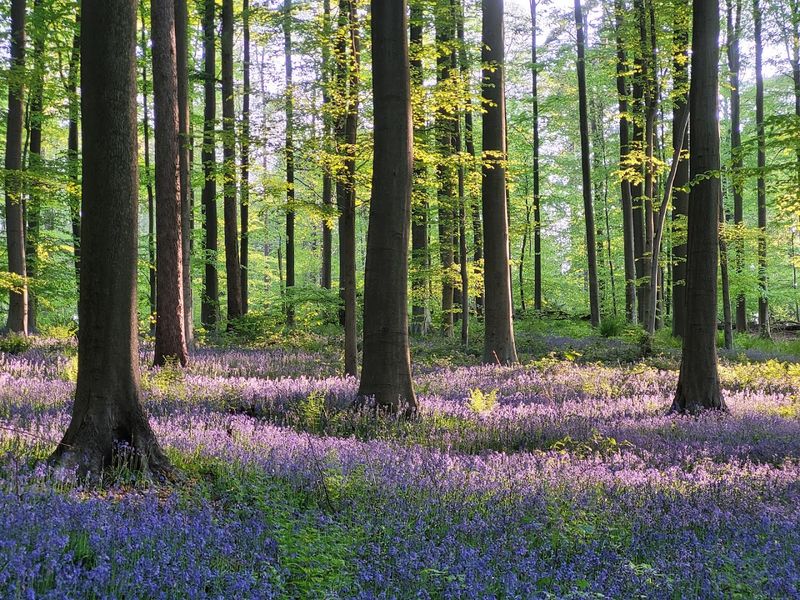
For roughly three weeks each spring, Hallerbos becomes one of the most photographed forests in the entire world, and honestly, the camera never quite does it justice. Millions of wild bluebells burst into bloom beneath a canopy of slender beech trees, turning the forest floor into a rippling sea of violet and blue.
Locals call it “Het Blauwe Woud,” which simply means “The Blue Forest.”
Located just south of Brussels, Hallerbos covers around 552 hectares and is managed to protect its extraordinary floral display. The timing of the bloom shifts slightly each year depending on temperature, so checking local updates before visiting is a smart move.
Arriving early in the morning rewards visitors with soft light and fewer crowds.
Beyond the bluebells, the forest supports a healthy population of roe deer, woodpeckers, and numerous butterfly species. Well-marked walking paths wind through the woodland, making navigation straightforward even for first-time visitors.
Hallerbos proves that sometimes nature only needs a single season to leave a permanent impression on everyone lucky enough to witness it.
Yakushima Forest, Japan
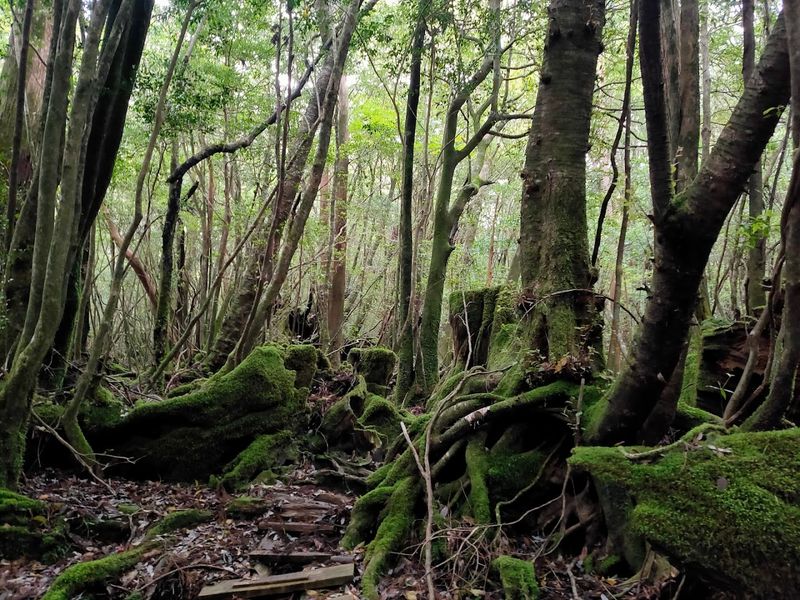
Rain falls on Yakushima Island approximately 35 days out of every month, and somehow that relentless moisture has created one of the most hauntingly beautiful forests on Earth. The ancient cedar trees, known locally as Yakusugi, can live for thousands of years, with the oldest estimated to be over 7,200 years old.
Every surface here, from boulders to branches, is blanketed in a thick velvet of moss.
Designated a UNESCO World Heritage Site in 1993, Yakushima is often described as the inspiration behind the forest scenes in Studio Ghibli’s beloved film “Princess Mononoke.” Walking through it feels like stepping inside an animated world brought to life. The sheer age and scale of the trees create a sense of deep, almost reverent calm.
Yakushima also supports a remarkable array of wildlife, including the Yakushima macaque and the Yakushima sika deer, both found only on this island. Hiking the Shiratani Unsuikyo Ravine trail is a popular way to experience the forest’s most dramatic scenery.
Waterproof gear is highly recommended, because Yakushima’s famous rainfall is not merely a rumor.
Arashiyama Bamboo Grove, Japan
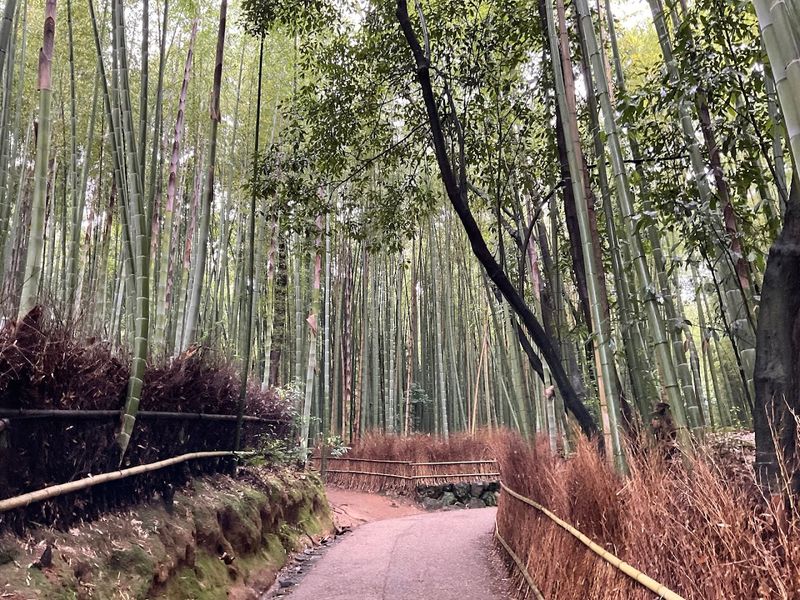
Step into the Arashiyama Bamboo Grove and the world outside simply disappears. The towering stalks rise up to 30 meters overhead, pressing together so densely that even bright midday sun becomes a soft, diffused glow.
The sound is what catches most visitors off guard, a gentle, rhythmic creaking and rustling that feels nothing like any other forest on Earth.
Located on the western outskirts of Kyoto, this iconic grove is one of Japan’s most recognized natural landmarks. The bamboo here is not just scenically impressive; it grows at a genuinely astonishing rate, sometimes up to 10 centimeters per day during peak season.
The Japanese government has officially recognized its soundscape as one of the country’s “100 Soundscapes Worth Preserving.”
The main pathway through the grove is short but unforgettable, connecting the Tenryu-ji Temple garden to the quieter northern trails. Visiting at dawn is the best strategy for experiencing the grove without the midday crowds.
Nearby attractions including the Okochi Sanso Villa garden and the scenic Togetsukyo Bridge make Arashiyama a full day of natural and cultural discovery worth planning well in advance.
Hoh Rainforest, Washington, USA
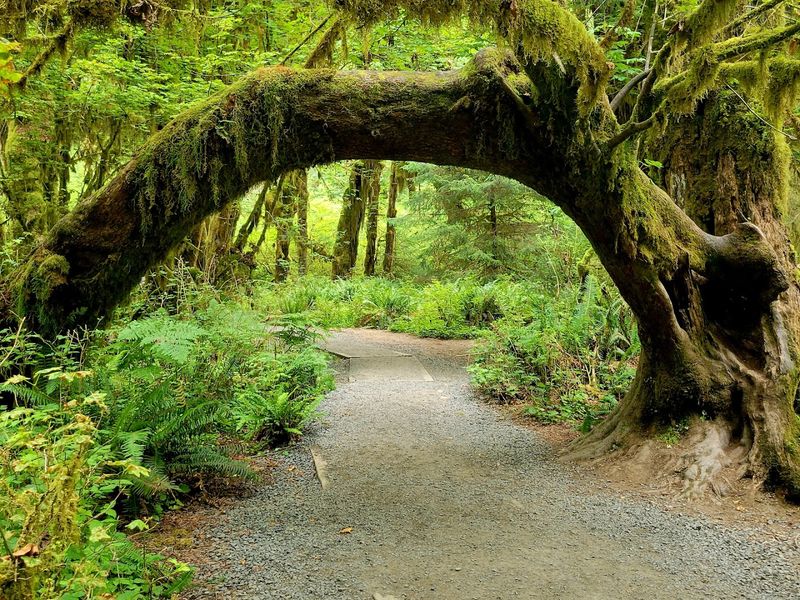
Silence is the first thing visitors notice in the Hoh Rainforest, a deep, cushioned quiet that feels almost physical. Located within Olympic National Park in Washington State, the Hoh receives between 140 and 170 inches of rainfall annually, making it one of the wettest spots in the contiguous United States.
That moisture feeds an ecosystem of staggering lushness and beauty.
Giant Sitka spruce, western red cedar, and big-leaf maple trees form a towering canopy overhead, their trunks and branches wrapped in thick coats of club moss and ferns. The forest floor is equally dramatic, layered with oxalis, sword ferns, and fallen nurse logs that sprout entire rows of seedlings along their lengths.
Everything here looks ancient and slightly untouched by modern time.
The Hall of Mosses trail is the Hoh’s most celebrated walk, a short 0.8-mile loop that feels like wandering through a living painting. Wildlife enthusiasts may spot Roosevelt elk, black bears, river otters, and over 140 bird species within the park.
The Hoh Rainforest is proof that the Pacific Northwest holds natural wonders that rival anything found anywhere else on the planet.
Amazon Rainforest, South America
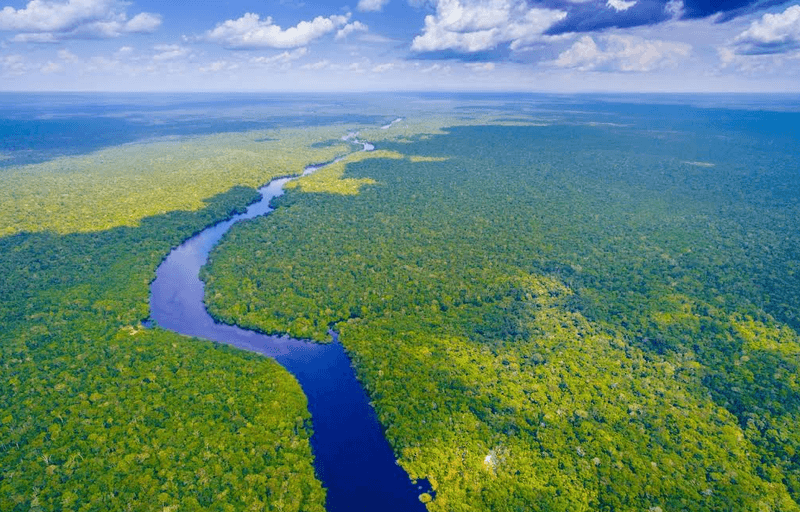
Numbers alone cannot capture the Amazon, but they certainly try. Covering over 5.5 million square kilometers across nine countries, the Amazon Rainforest produces roughly 20 percent of the world’s oxygen and houses an estimated 10 percent of all species on Earth.
It is less a forest and more a living, breathing world of its own.
The Amazon is home to over 40,000 plant species, 1,300 bird species, and more than 3,000 types of fish in its river system alone. Indigenous communities have lived within and alongside this ecosystem for thousands of years, developing deep knowledge of its plants, animals, and rhythms.
Their presence is inseparable from the forest’s cultural and ecological identity.
Visiting the Amazon is a genuinely humbling experience. Tour operators based in cities like Manaus, Brazil, and Iquitos, Peru, offer guided river and jungle expeditions that range from single-day boat trips to multi-week deep forest treks.
Spotting pink river dolphins, giant river otters, jaguars, and poison dart frogs is entirely possible with a knowledgeable local guide. The Amazon does not just showcase nature at its finest; it defines what finest actually means.
Congo Rainforest, Central Africa
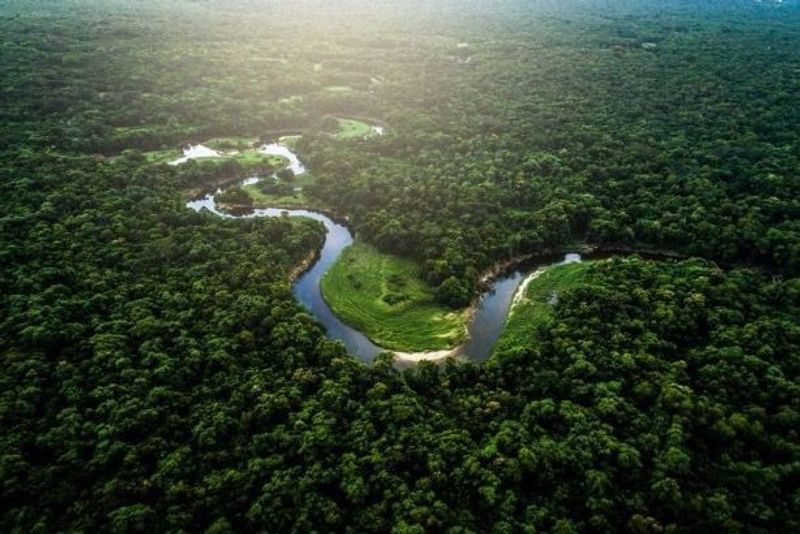
If the Amazon is the world’s most famous rainforest, the Congo is its equally extraordinary but far less celebrated sibling. Spanning over 3.3 million square kilometers across six countries, the Congo Basin is the second-largest tropical rainforest on Earth and one of the most biodiverse places on the planet.
It is also one of the least explored by outside visitors.
The forest supports extraordinary wildlife, including forest elephants, western lowland gorillas, bonobos, okapis, and over 10,000 plant species. The Congo River, which flows through the heart of this ecosystem, is the world’s deepest river and one of its most powerful.
Together, the river and forest form an ecological partnership of truly global importance.
Conservation efforts in the Congo face significant challenges from logging, mining, and agricultural expansion. Yet vast stretches of pristine forest remain, particularly in protected areas like Salonga National Park and Nouabale-Ndoki National Park.
Scientists continue to discover new species here with remarkable regularity. For those fortunate enough to visit with experienced guides, the Congo offers an unfiltered encounter with wild Africa that few other places on Earth can still provide.
Rata Forest, New Zealand
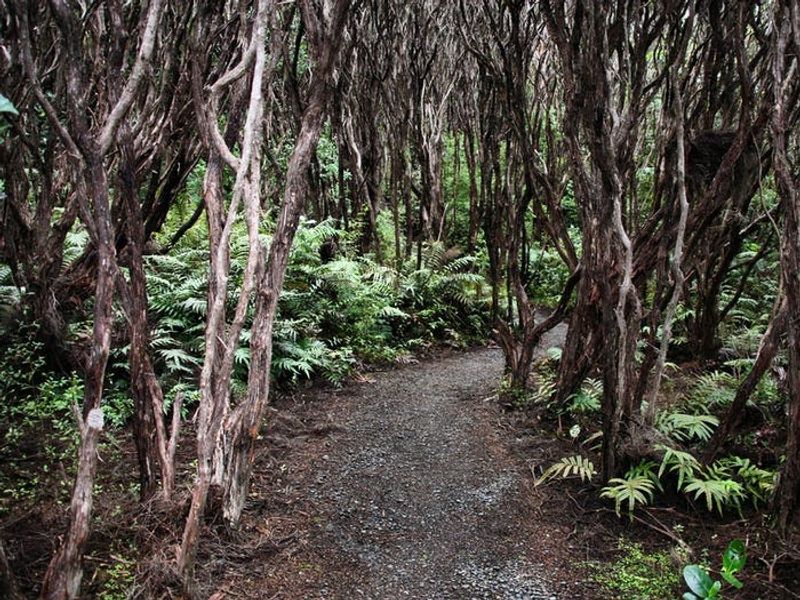
Rata trees do not grow so much as they sprawl, twisting and contorting their trunks into shapes that look more like sculpture than forestry. Found on Enderby Island in New Zealand’s subantarctic Auckland Islands group, the Rata Forest is one of the most visually surreal woodlands anywhere on the planet.
Strong ocean winds sculpt the trees into dramatic, wind-bent forms that give the forest an almost theatrical character.
The southern rata blooms in brilliant crimson during summer, setting the twisted canopy ablaze with color against the grey subantarctic sky. The island is uninhabited by humans and accessible only via expedition cruise ships, which makes visiting it a genuinely rare privilege.
That remoteness has helped preserve the ecosystem in near-pristine condition.
Enderby Island is also a critical breeding ground for New Zealand sea lions, Hooker’s sea lions, and numerous seabird species including the rare southern royal albatross. Walking among the rata trees while sea lions lounge nearby and albatrosses soar overhead is an experience that defies easy description.
The Rata Forest rewards the effort of reaching it with scenery and wildlife encounters that feel completely outside the boundaries of everyday life.
Fiordland Forests, New Zealand
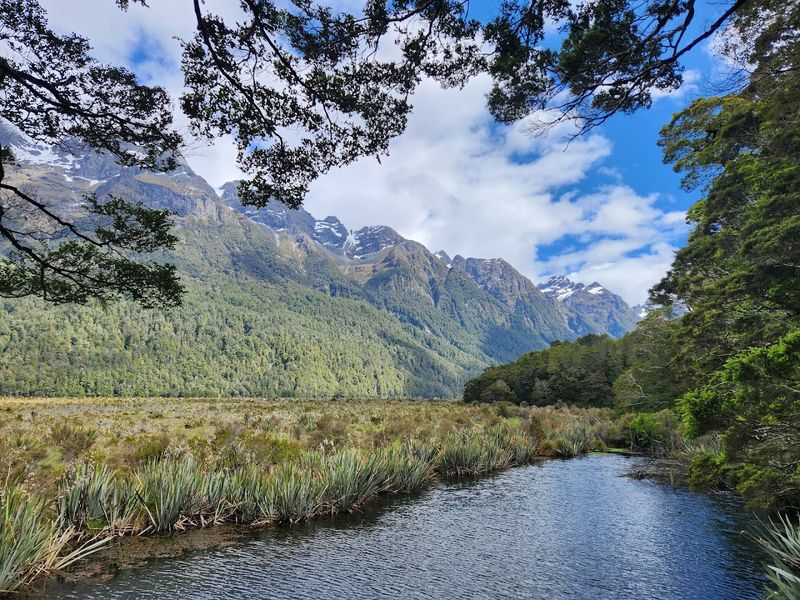
Fiordland National Park occupies the southwestern corner of New Zealand’s South Island, and it is the kind of place that makes you question whether you have accidentally walked into a film set. The forests here drape themselves over steep mountain slopes, running right down to the edges of fjords where waterfalls plunge directly into the sea.
The combination of ancient trees, dramatic geology, and constant mist creates an atmosphere of wild, primordial grandeur.
Silver beech and red beech forests dominate much of the interior, sheltering populations of kea parrots, mohua birds, and the endangered takahe. Milford Sound and Doubtful Sound are the park’s most famous fjords, drawing visitors from around the world for boat tours and kayaking adventures.
Rainfall here can exceed 7,000 millimeters per year, which explains the extraordinary lushness of every surface.
The Milford Track, often called “the finest walk in the world,” winds through 53.5 kilometers of Fiordland’s most spectacular forest and mountain scenery. Booking permits well in advance is essential, as demand far exceeds availability during the peak summer season.
Fiordland is not just a forest destination; it is a full sensory immersion in one of Earth’s last genuinely wild landscapes.
Zhangjiajie Forest, China
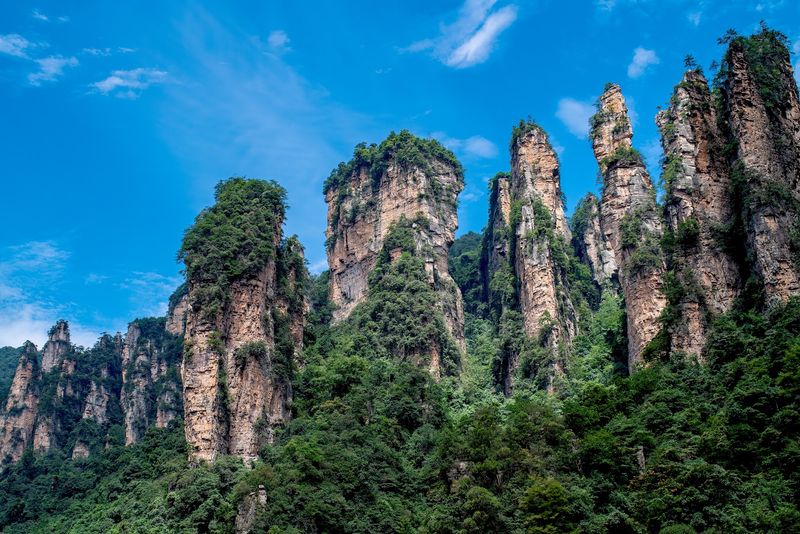
Zhangjiajie looks like someone took a fantasy novel’s illustration and accidentally made it real. The quartzite sandstone pillars rise vertically from the forest floor, some reaching over 200 meters in height, their flat tops covered in trees and shrubs that have somehow taken root in the most unlikely places imaginable.
This is the landscape that inspired the floating Hallelujah Mountains in the blockbuster film “Avatar.”
Located in Hunan Province, Zhangjiajie National Forest Park was China’s first designated national forest park, established in 1982. The forest surrounding and growing atop the pillars is a subtropical broadleaf woodland supporting over 3,000 plant species and more than 100 wildlife species.
Rare animals including the Chinese giant salamander and the Asiatic black bear inhabit the park’s more remote valleys.
Visitors can explore the park via an extensive network of trails, glass-bottomed sky bridges, and cable cars that offer vertiginous views across the pillar formations. The Bailong Elevator, built directly into the cliff face, lifts passengers 326 meters in under two minutes.
Zhangjiajie is one of those rare places where the geology and the forest work together to create scenery that no photograph, however good, fully prepares you for.
Ty Canol Wood, Wales
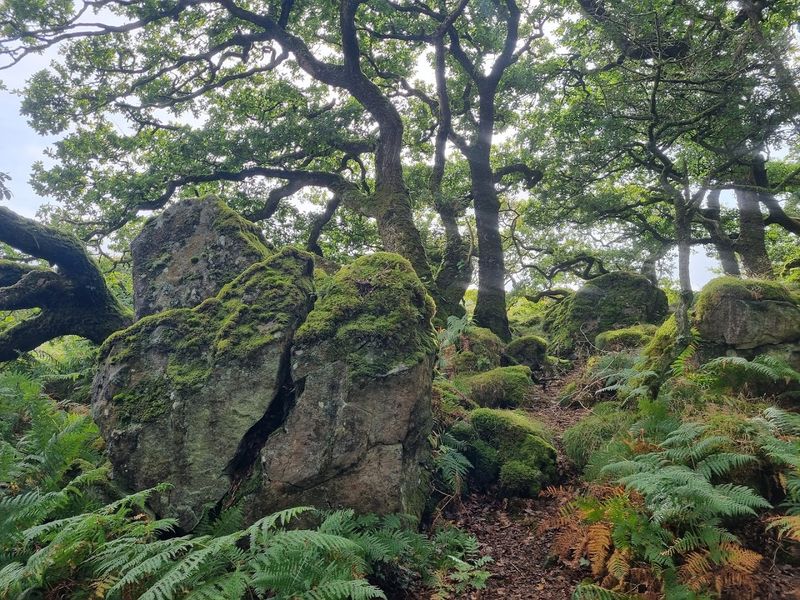
Ty Canol Wood in Pembrokeshire, Wales, is the kind of ancient woodland that makes you lower your voice without quite knowing why. The sessile oak trees here have grown for centuries, their trunks and branches so thoroughly colonized by lichens and mosses that they seem more mineral than plant.
Scientists have recorded over 200 species of lichen in this single small woodland, a figure that speaks to the extraordinary purity of the local air.
Covering just 64 hectares, Ty Canol punches far above its weight in ecological terms. It is recognized as a National Nature Reserve and is considered one of the finest examples of ancient Atlantic oakwood remaining in Britain.
The ground flora is equally impressive, with wood sorrel, bilberry, and various ferns carpeting the rocky floor beneath the twisted canopy.
The woodland sits within the Preseli Hills, a landscape already famous for its prehistoric standing stones and Iron Age hillforts. Walking through Ty Canol feels like moving through deep time, where the boundary between the natural and the mythological becomes genuinely blurry.
It is a small forest with an outsized sense of atmosphere that stays with visitors long after they have returned to the car park and driven away.
Ashdown Forest, England
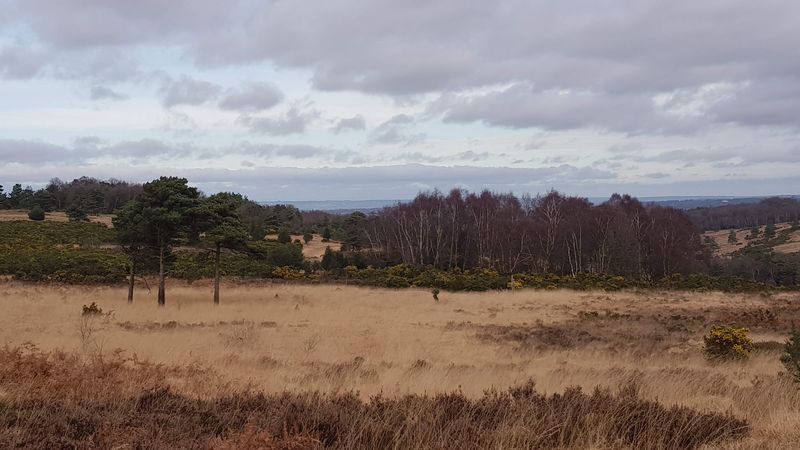
Long before it became famous as the inspiration for the Hundred Acre Wood, Ashdown Forest was already one of England’s most beloved open landscapes. A.A.
Milne lived near its edges in the 1920s and walked its heathland paths with his son Christopher Robin, whose real-life adventures with a stuffed bear quietly became one of literature’s most enduring stories. The forest has never quite shaken off that gentle, golden-afternoon quality that Milne captured so perfectly.
Covering around 6,500 acres in East Sussex, Ashdown Forest is a rare surviving fragment of the ancient Forest of Anderida, which once covered much of southeastern England. Today it is a mix of open heathland, silver birch woodland, and Scots pine stands, managed as a Site of Special Scientific Interest.
Dartford warblers, nightjars, and adders all thrive within its boundaries.
The famous Poohsticks Bridge, restored in 1999, draws visitors of all ages who come to play the game Milne invented on its planks. Beyond the literary pilgrimage, the forest offers excellent walking, cycling, and wildlife spotting opportunities throughout the year.
Ashdown Forest manages the remarkable trick of being both historically significant and completely unpretentious about it.
Forest of Compiegne, France
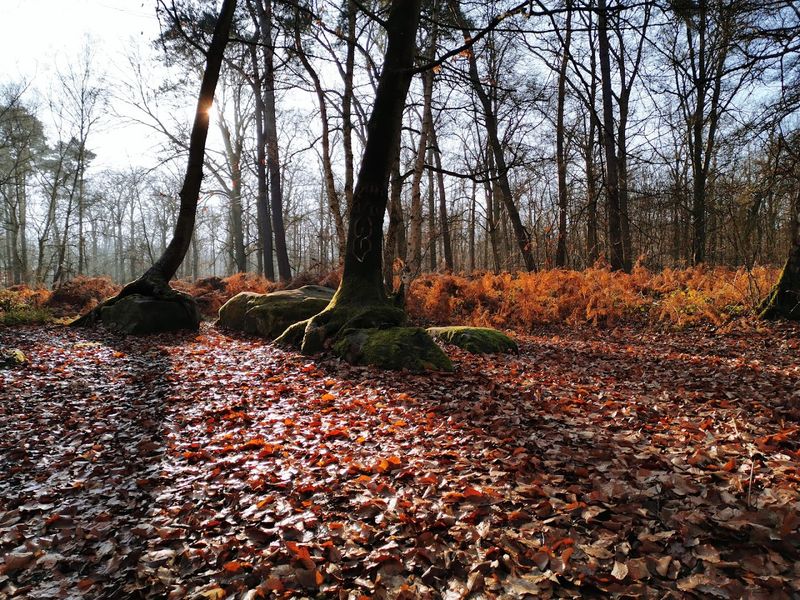
French kings hunted here for centuries, and walking the Forest of Compiegne today, it is not hard to understand the appeal. The forest spreads across 14,500 hectares north of Paris, making it one of the largest state forests in France and one of the most historically layered.
Its wide, straight rides were designed for royal hunts, and they still create dramatic vistas through the beech and oak woodland that feels both formal and wild at once.
The forest is perhaps most soberly famous as the site where the armistice ending World War One was signed in November 1918, in a railway carriage in the Clairiere de l’Armistice clearing. History and nature coexist here with unusual intimacy.
Deer, wild boar, and foxes roam freely through the same woodland corridors that once echoed with royal hunting horns.
Autumn is the Forest of Compiegne’s most spectacular season, when the beech trees turn a deep burnished gold and the forest floor becomes a carpet of copper leaves. Cycling is one of the best ways to cover the forest’s extensive network of marked trails.
The nearby town of Compiegne offers excellent dining and the beautiful Chateau de Compiegne for visitors who want to combine forest walking with a dose of French cultural history.
Miombo Woodlands, Southern Africa
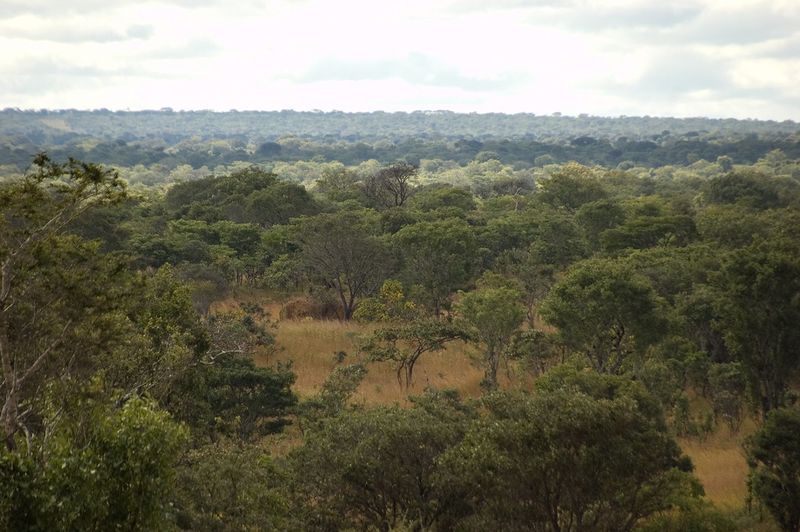
Twice a year, the Miombo Woodlands pull off a trick that stops travelers in their tracks. As the dry season transitions to wet, the brachystegia and julbernardia trees flush brilliant new leaves in shades of copper, bronze, and deep red before the rains even arrive, a phenomenon called “dry season flush” that turns the landscape into an African version of autumn.
It is one of the most underrated seasonal spectacles on the continent.
Stretching across Tanzania, Zambia, Zimbabwe, Mozambique, Angola, and the Democratic Republic of Congo, the Miombo represents the largest woodland ecosystem in Africa. It covers an estimated 2.7 million square kilometers and supports extraordinary biodiversity, including sable antelope, African wild dogs, lions, and over 300 bird species.
Many of these species are found in far lower numbers elsewhere.
Unlike the more famous savanna ecosystems, Miombo receives relatively few international visitors, which means those who do come enjoy a genuinely uncrowded wildlife experience. Zambia’s South Luangwa and Kafue National Parks offer excellent access to Miombo habitats with high-quality guiding.
The woodland’s quiet, cathedral-like atmosphere during the dry season is something that wildlife enthusiasts who have experienced it describe with genuine reverence.
Faskally Forest, Scotland
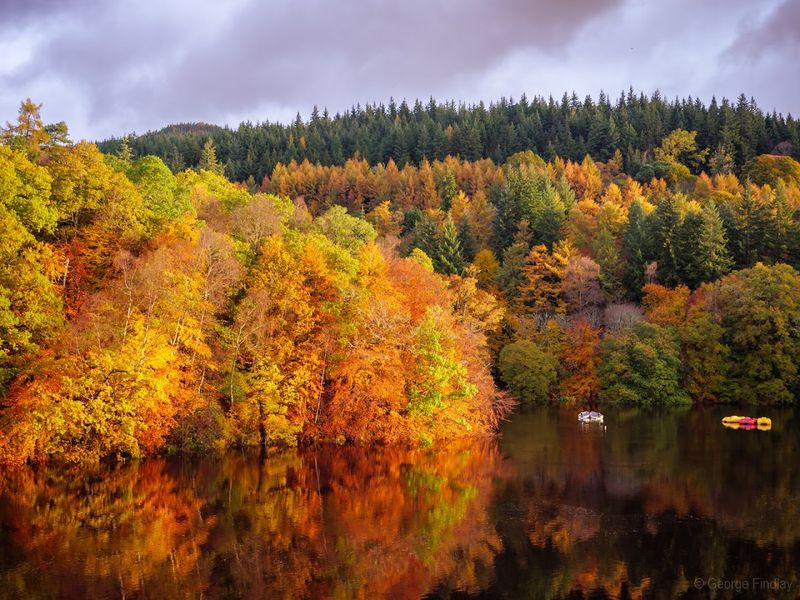
When October arrives in Perthshire, Faskally Forest earns its reputation as one of Scotland’s most spectacular autumn destinations without even trying hard. The forest wraps around the calm waters of Loch Faskally near Pitlochry, and the reflection of its blazing red, orange, and gold canopy in the still water creates a scene that photographers queue up before dawn to capture.
It is genuinely, unapologetically beautiful.
Faskally is a Forestry Commission Scotland woodland planted largely in the mid-20th century, yet it has matured into a remarkably diverse mix of Japanese larch, Norway spruce, beech, oak, and rowan. The variety of species is precisely what makes the autumn display so visually rich and layered.
Red squirrels, ospreys, and otters all inhabit the forest and loch system, adding wildlife appeal to the scenic draw.
The Enchanted Forest, a world-class outdoor light and sound show, transforms Faskally each October into something even more theatrical after dark. Thousands of visitors travel specifically for this event, which uses the forest as its stage with remarkable creative effect.
Even without the light show, Faskally is worth a detour any time of year, but autumn here is an experience that earns the word enchanting without any exaggeration whatsoever.
Share this story