Europe is filled with places so picturesque that they hardly seem real. Cobblestone lanes, colorful facades, medieval castles, and dramatic natural settings create towns that look more like carefully designed film locations than living communities.
Whether you stumble upon them by accident or plan your trip around them, these destinations will leave you wondering if you accidentally walked onto a movie set. Get ready to discover 15 European towns so stunning they almost don’t seem possible.
Hallstatt, Austria
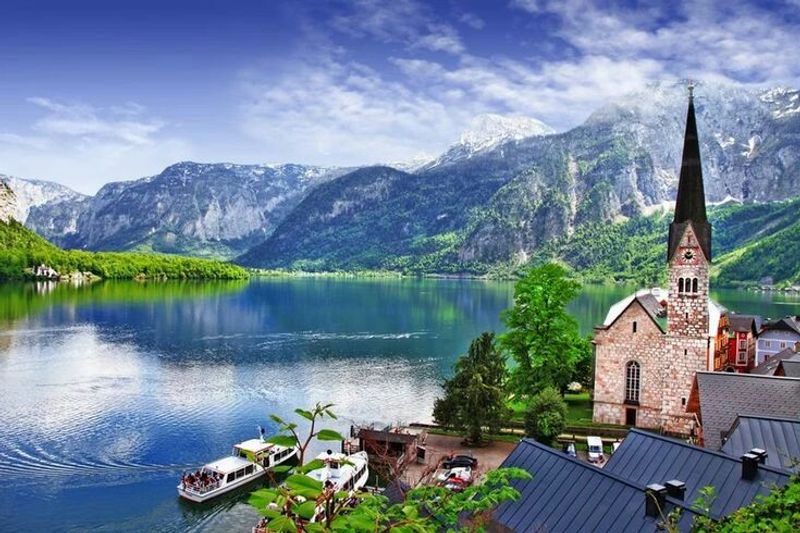
Photographers have been known to camp out before sunrise just to capture Hallstatt without a crowd in the frame. Tucked between a glassy alpine lake and towering limestone peaks, this tiny Austrian village looks like it was painted by someone who had never heard the word “realistic.” Pastel-colored houses stack neatly along the shoreline while a slender church spire points skyward above them all.
The town has existed for over 7,000 years, making it one of the oldest continuously inhabited places in Europe. Salt mining brought wealth here long before tourists ever arrived, and that history is still woven into every corner of the town.
A small but fascinating salt mine museum lets you explore the tunnels that essentially funded this village’s entire existence.
Getting here requires a short ferry ride or a narrow road that winds dramatically through the mountains, which only adds to the sense of arriving somewhere magical. Hallstatt inspired the fictional kingdom of Arendelle in the animated film Frozen, so yes, it is literally a movie-worthy place.
Visit in autumn when the surrounding peaks turn golden and the crowds thin out considerably.
Colmar, France
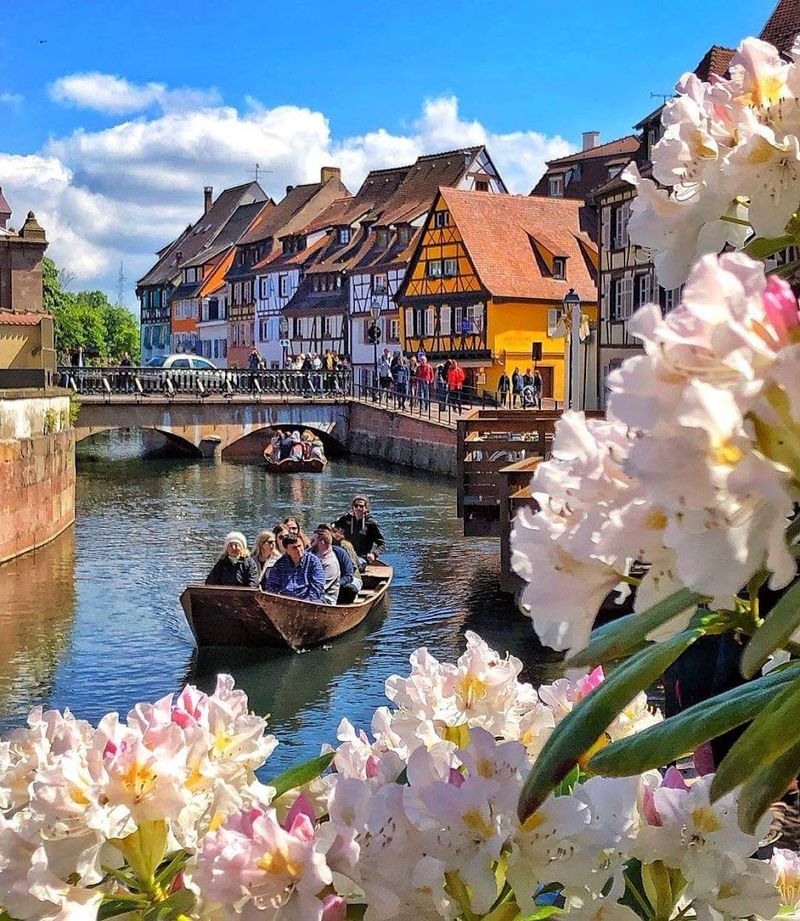
Walking through Colmar feels like someone took a fairytale book and forgot to close it. Located in France’s Alsace region, this town sits right on the border of French and German culture, and that mix shows up in every building, every dish, and every street sign.
The result is a place with a flavor entirely its own.
The neighborhood known as La Petite Venise, or Little Venice, features canals lined with medieval buildings painted in shades of terracotta, mustard yellow, and soft blue. Flower boxes overflow from nearly every window, and the reflections in the water below make every photo look professionally edited.
It is genuinely hard to take a bad picture here.
Colmar is also home to one of the most remarkable pieces of medieval art in Europe: the Isenheim Altarpiece, housed in the Unterlinden Museum. The town’s Christmas market is legendary, drawing visitors from across the continent who want to experience the holiday season in what amounts to a real-life snow globe.
Even on a grey winter day, the warm amber glow from the cafes and shop windows makes Colmar feel impossibly cozy.
Cesky Krumlov, Czech Republic
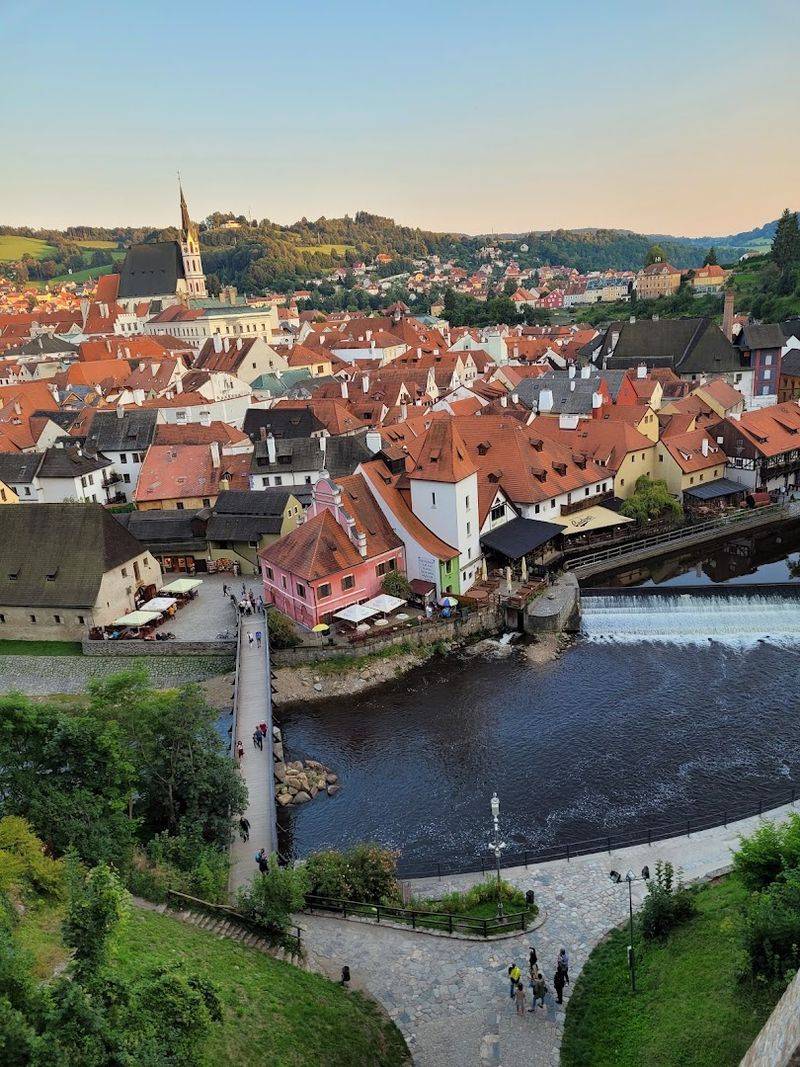
There is a moment when you first spot Cesky Krumlov from above where your brain genuinely struggles to accept that what you are seeing is real. The entire town curls inside a dramatic loop of the Vltava River, and a massive hilltop castle looms over every rooftop below it.
It looks less like a place people live and more like a diorama someone built for a history class.
The castle complex is the second largest in the Czech Republic, and it contains a beautifully preserved Baroque theater complete with original stage machinery and painted backdrops. Guided tours take you inside spaces that feel untouched by time, which can be both thrilling and slightly eerie.
The castle tower offers a panoramic view that makes the whole town look like a miniature model.
Down below, the old town is packed with small galleries, cozy restaurants, and craft shops housed in centuries-old buildings. Kayaking the river loop around the town is a popular activity that gives you a completely different and equally cinematic perspective.
Visit in spring when the surrounding hills are green and the tourist numbers are slightly more manageable than peak summer.
Rothenburg ob der Tauber, Germany
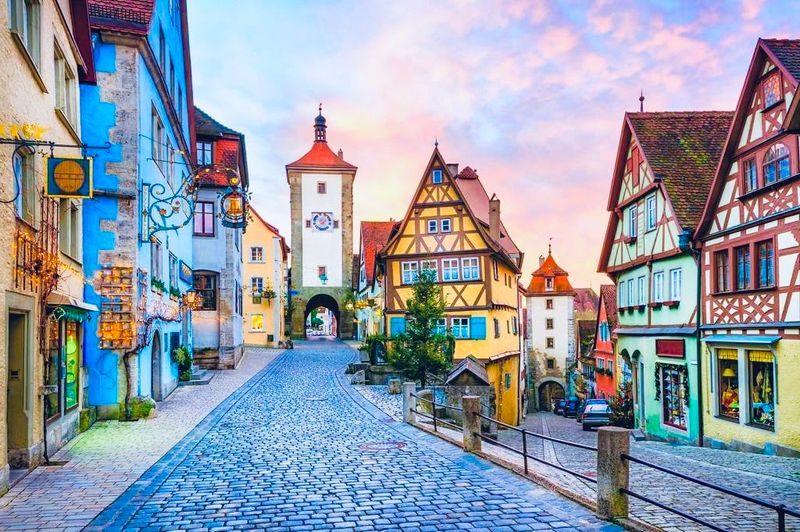
Few places in Germany stop visitors in their tracks quite like Rothenburg ob der Tauber. This walled Bavarian town survived the chaos of World War II largely intact, which means its medieval streets and half-timbered buildings are the genuine article rather than careful reconstructions.
Walking through the old gate feels like crossing a very specific line between the modern world and the 15th century.
The Plonlein, a small cobblestone junction framed by two towers and a half-timbered house, is one of the most photographed spots in all of Germany. It appears on countless postcards, travel blogs, and screensavers, and somehow it still manages to look even better in person.
The light hits the yellow-painted walls in the late afternoon in a way that no filter can fully replicate.
Rothenburg is also famous for its Christmas market, which runs for several weeks and transforms the already-gorgeous town into something that borders on overwhelming beauty. The local Schneeball, a deep-fried pastry dusted in powdered sugar, is the perfect snack while wandering the ramparts.
You can walk the entire circuit of the old town walls, which gives you elevated views over the rooftops and surrounding countryside.
Reine, Norway
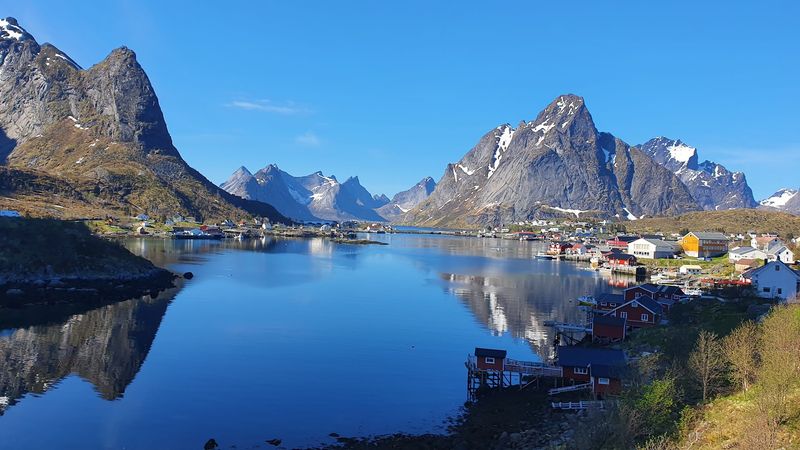
Reine sits at the end of a long, winding road through the Lofoten Islands, and every kilometer of that drive makes the destination feel more earned. When you finally arrive and see the cluster of red wooden fishing cabins mirrored perfectly in the still fjord water below razor-sharp mountain peaks, the reaction is almost always speechless.
It is the kind of view that resets your entire understanding of what scenery can look like.
The traditional red cabins, called rorbuer, were originally built for fishermen who needed temporary housing during the cod season. Today, many of them have been converted into cozy holiday rentals, meaning you can actually stay inside the very thing you came to photograph.
Waking up to that view through a cabin window is a memory most visitors describe as genuinely life-changing.
Reine is also one of the best places in Norway to witness the Northern Lights during winter months, adding yet another layer of spectacle to an already extraordinary location. The hiking trail up to Reinebringen offers a panoramic summit view that regularly appears on lists of Europe’s most dramatic landscapes.
Summer brings the Midnight Sun, which bathes the whole scene in a warm golden light that lasts well past midnight.
Bruges, Belgium
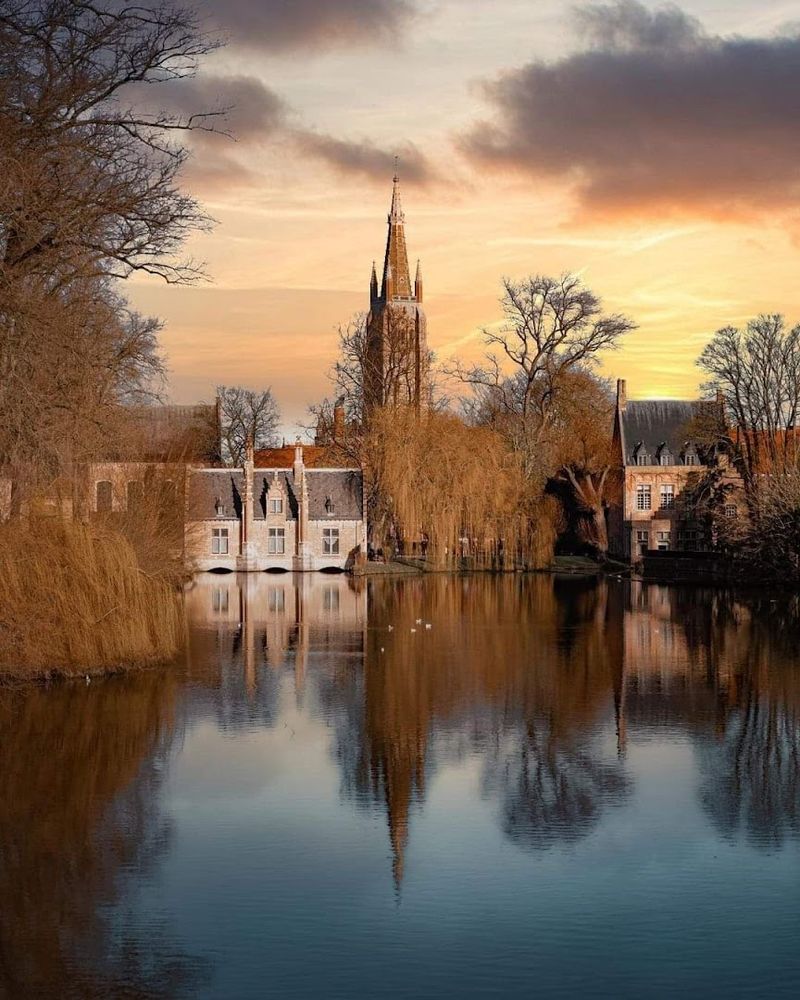
Bruges once ranked among the wealthiest cities in the entire medieval world, and the evidence is still standing on every street corner. The town’s trading days faded centuries ago, which ironically is what preserved so much of its architecture while other European cities modernized around it.
The result is a place where Gothic towers, cobbled squares, and canal bridges have barely changed in 500 years.
Horse-drawn carriages still clip-clop through the Markt, the central square dominated by a spectacular medieval belfry whose bells ring out across the city every quarter hour. The sound alone is enough to convince you that time travel is theoretically possible.
Climbing the belfry’s 366 steps rewards you with a rooftop view across a sea of terracotta tiles and church spires.
The canal network that winds through the city is best explored by boat, where low bridges and weeping willows frame every turn like a carefully composed painting. Bruges is also home to some of Belgium’s finest chocolate shops and breweries, so the sensory experience here goes well beyond just the visuals.
The whole city glows warmly in the evening when the canal lights reflect off the water below.
Giethoorn, Netherlands
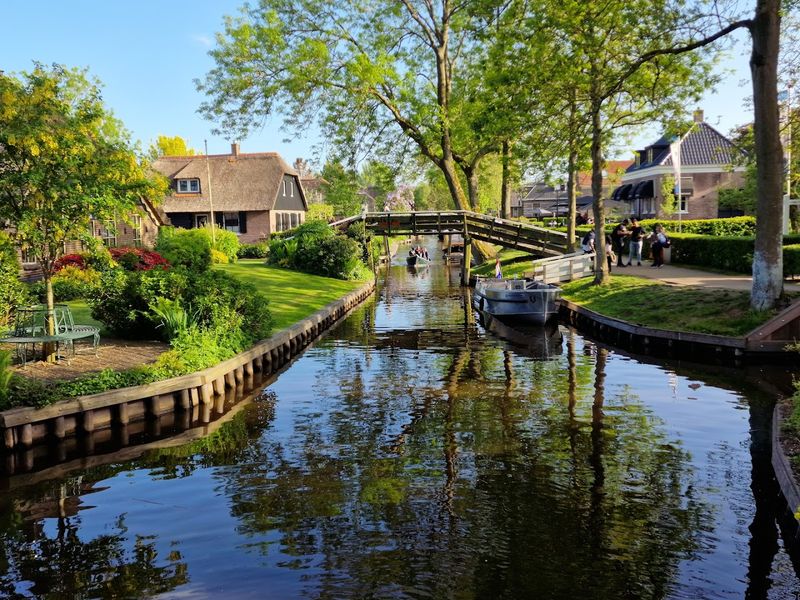
Giethoorn has no roads. That single fact alone makes it one of the most unusual villages in all of Europe, and also one of the most quietly enchanting.
Visitors arrive on foot or by bicycle, then navigate the village entirely by small wooden boat along a network of narrow canals that wind between thatched-roof cottages and arching wooden bridges. The silence here is remarkable.
The village was founded in the 13th century by a group of religious refugees who began digging peat from the swampy ground, and those excavations eventually became the canals the town is famous for today. Nobody planned for Giethoorn to look the way it does; the scenery is essentially an accidental masterpiece.
Over 170 wooden bridges connect the various islands that make up the village.
The Dutch film Fanfare, made in 1958, was filmed here and introduced the village to the wider world, giving it the nickname the Venice of the Netherlands. Renting a whisper boat, which runs on a quiet electric motor, is the most popular way to explore and lets you drift lazily past gardens and flower beds without disturbing the peace.
Spring is the best time to visit when tulips and wildflowers are in full bloom along the banks.
Riquewihr, France
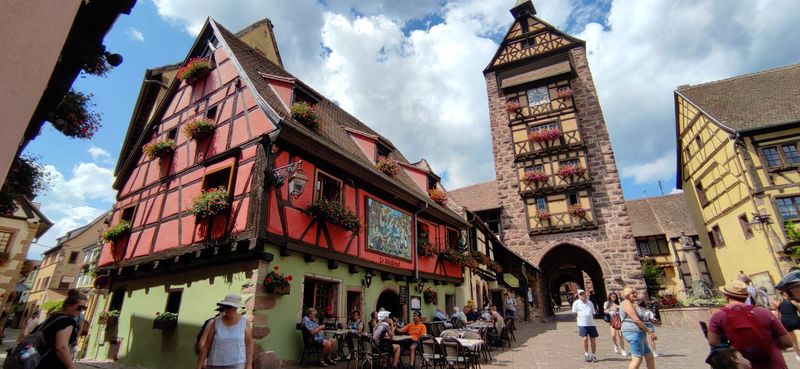
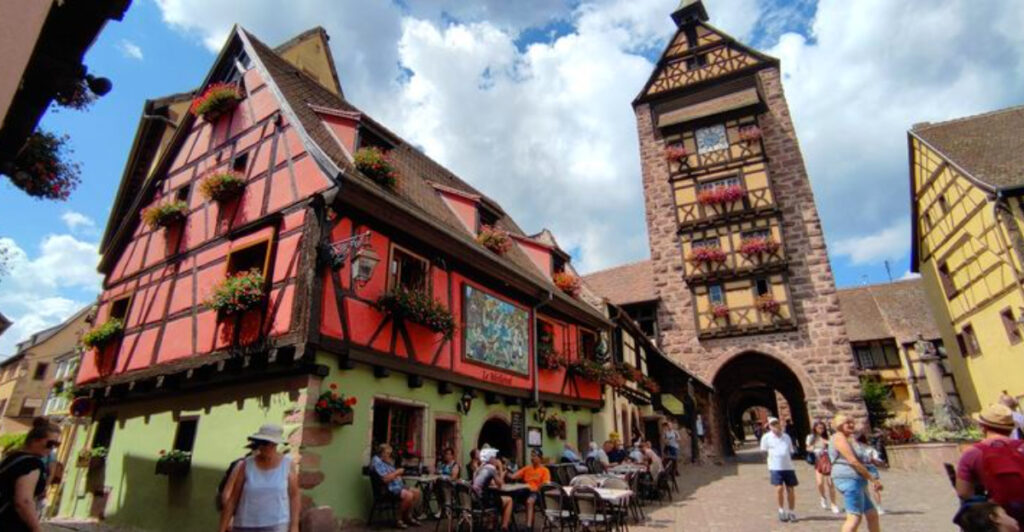
Riquewihr looks like someone took a Disney animator’s sketch of a perfect village and simply built it. Tucked among the Alsatian vineyards of northeastern France, this compact town has barely changed since the 16th century, thanks largely to the fact that it escaped significant damage during both World Wars.
Every building seems to be competing to be the most charming one on the street.
The main cobblestone lane is lined with timber-framed houses painted in vivid shades of pink, yellow, and blue, each one decorated with iron signs and cascading flower boxes. Local wine merchants have been selling their Riesling and Gewurztraminer here for centuries, and most of them welcome visitors to step inside for a tasting without any fuss.
The wine is excellent, and the tasting rooms are often as beautiful as the buildings outside.
During the Christmas market season, Riquewihr transforms into what many visitors call the most magical holiday setting they have ever experienced. Thousands of lights, handmade ornament stalls, and the smell of mulled wine fill the narrow streets from late November onward.
The town is small enough to explore in a single afternoon, but most visitors find themselves lingering long past any reasonable schedule because it is simply too lovely to leave.
Mostar, Bosnia and Herzegovina
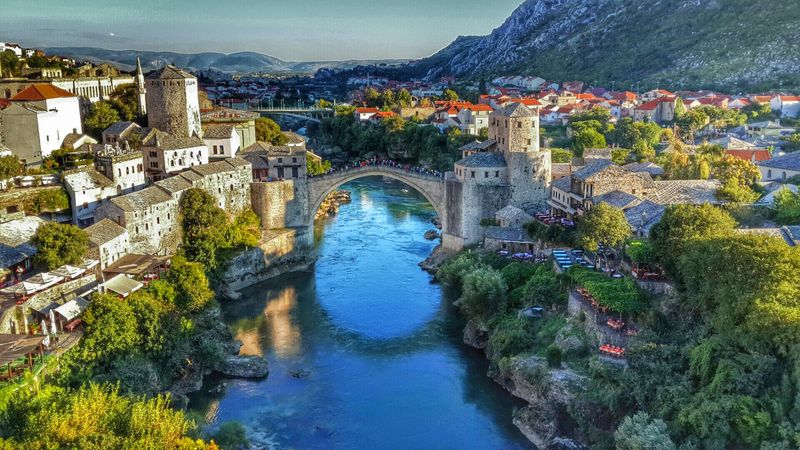
Stari Most, the old stone bridge at the heart of Mostar, is one of the most graceful structures in all of Europe. Built by the Ottomans in 1566 and painstakingly reconstructed after being destroyed during the 1990s war, the bridge arches elegantly over the brilliant emerald Neretva River in a way that makes every viewing angle look like a film still.
The town built around it is equally extraordinary.
The old bazaar district, known as Kujundziluk, is a winding lane of cobblestones and copper shops that has operated continuously for centuries. Craftsmen still hammer out traditional metalwork by hand, and the sound of their work echoes off the stone walls alongside the calls from the nearby mosque.
The mix of Ottoman, Mediterranean, and Eastern European influences gives Mostar an atmosphere unlike anywhere else on the continent.
Local divers have a tradition of leaping from the top of Stari Most into the river below, a feat that requires serious nerve given the height involved. Watching a dive from one of the riverside cafes while sipping strong Bosnian coffee is one of the great low-cost travel experiences in Europe.
Mostar is also far less crowded than many comparable European destinations, which makes exploring it feel like a genuine discovery.
Bibury, England
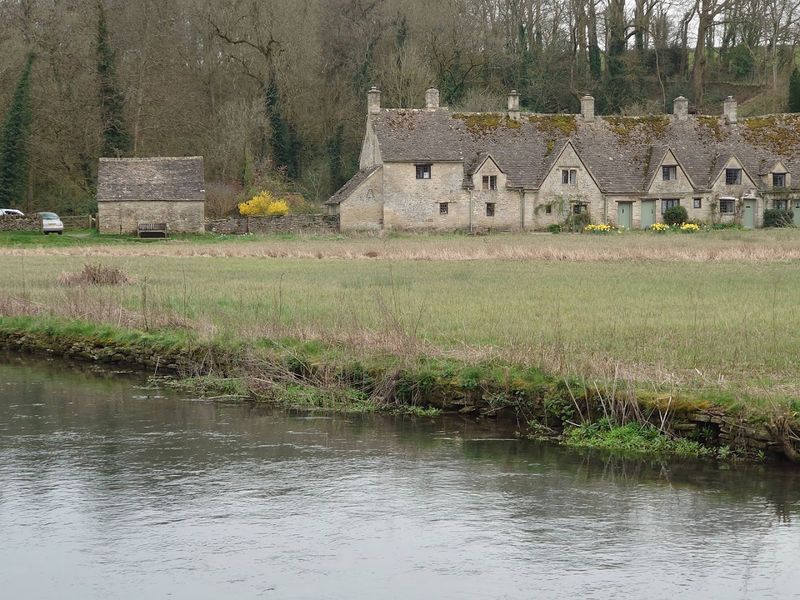
William Morris, the famous Victorian designer, called Bibury the most beautiful village in England, and that quote has been repeated so many times it has almost become a cliche. Almost.
Because the moment you actually stand in front of Arlington Row, the famous terrace of 14th-century wool weavers’ cottages built from honey-colored Cotswold stone, you understand completely why he said it. The place is genuinely that good.
The cottages sit beside a shallow trout stream called the Coln, and the combination of golden stone, clear water, and surrounding meadows creates a scene of almost absurd rural perfection. Wild brown trout swim visibly in the stream, and ducks patrol the banks with the confident air of creatures who know they live somewhere special.
The light on a clear morning turns the stone walls a warm amber that feels almost edible.
Bibury is located in the Cotswolds, a protected area of outstanding natural beauty in the English countryside, and the village makes an excellent base for exploring nearby towns like Bourton-on-the-Water and Burford. The Swan Hotel, a traditional inn beside the river, has been welcoming travelers since the 17th century.
Arriving by bicycle along the country lanes is the most rewarding way to approach the village.
Positano, Italy
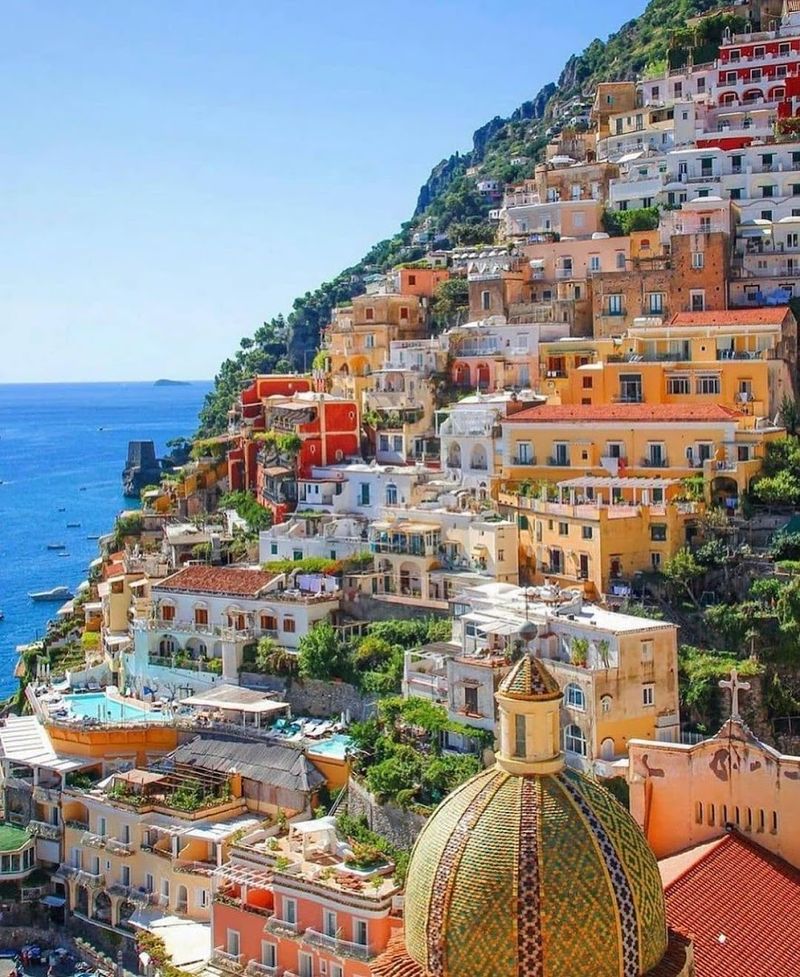
Positano defies the normal rules of town planning by stacking its entire population vertically down a near-vertical cliff face above the Mediterranean Sea. The result is a cascade of pink, white, and terracotta buildings tumbling toward a small pebble beach at the bottom, framed by lemon trees and bougainvillea.
John Steinbeck visited in 1953 and wrote that Positano bites deep, which is perhaps the most accurate thing ever said about the place.
The town has appeared in films, fashion shoots, and countless novels, and it earned its reputation honestly. The main pedestrian path, known as Via dei Mulini, winds down through the town past ceramic shops, linen boutiques, and small restaurants perched on terraces overlooking the sea.
Every turn reveals a new view that seems more dramatic than the last.
Getting around Positano means accepting that stairs are a fact of daily life, and the town’s residents are famously fit as a result. Boat trips along the Amalfi Coast from Positano offer perspectives of the cliffs and grottos that are simply impossible to appreciate from land.
The town is best visited in May or early June before the summer crowds arrive and the narrow lanes become genuinely difficult to navigate.
Setenil de las Bodegas, Spain
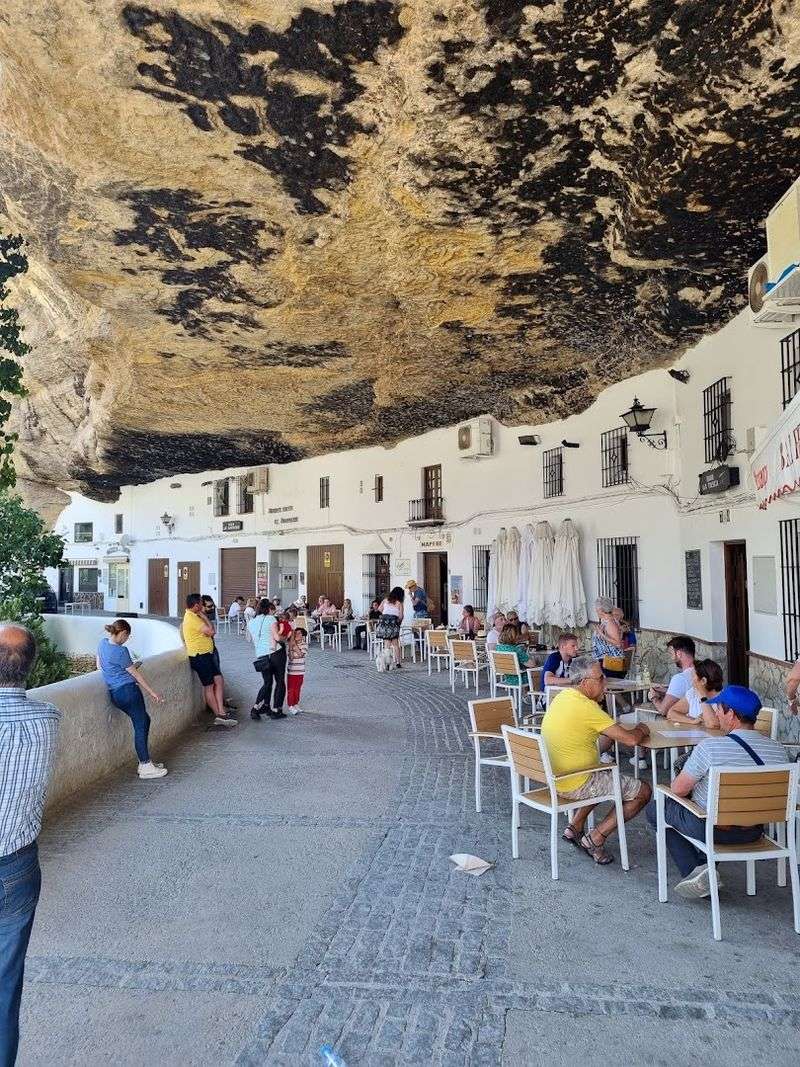
Setenil de las Bodegas does something no other town in Europe quite manages: it builds its streets directly underneath enormous overhanging rock formations, using the cliff face as both roof and wall. Residents eat breakfast, run shops, and go about their daily lives in spaces where the ceiling is a solid slab of ancient rock.
The overall effect is jaw-dropping in a way that photographs struggle to fully convey.
The town is located in the Cadiz province of Andalusia, and its unusual geology developed because the Trejo River carved through the soft rock over millions of years, leaving dramatic overhangs that early settlers were sensible enough to take advantage of. Some of the cave-like structures have been inhabited for thousands of years.
The white-washed walls contrast sharply with the dark grey rock above them, creating a visual combination that looks completely unplanned and utterly spectacular.
The local tapas bars built into the cliff face serve some of the most atmospheric meals you will find anywhere in Spain, with tables set beneath rock ceilings just a few meters overhead. Setenil is also conveniently close to the famous white village of Ronda, making it an easy addition to any Andalusian road trip.
Most visitors arrive expecting curiosity and leave having found one of their favorite places in all of Europe.
Gruyeres, Switzerland
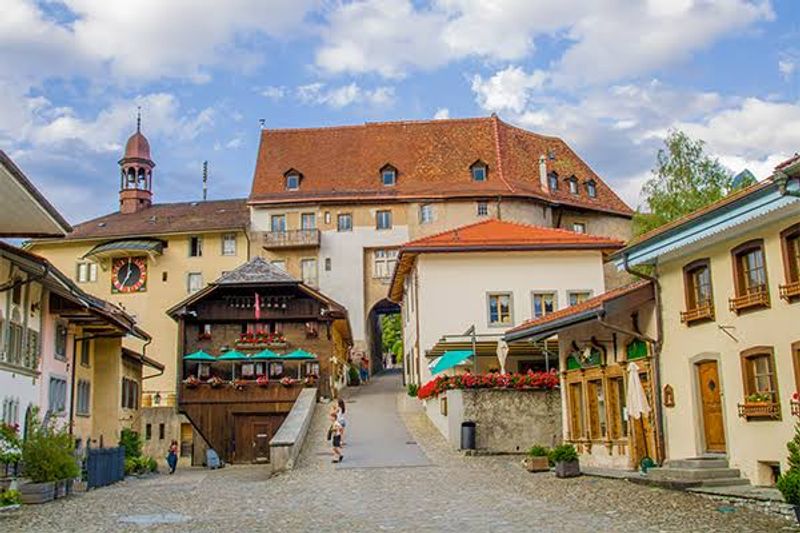
Gruyeres sits on top of a rounded hill in the Swiss pre-Alps like a crown placed on a very green head. The entire medieval village is essentially car-free, and you approach it on foot up a cobblestone path that opens onto a single main street lined with stone buildings, flower-filled terraces, and views across the surrounding valley that stretch for kilometers in every direction.
It is the kind of place that makes you slow down involuntarily.
The hilltop castle dates back to the 13th century and is one of the best-preserved medieval fortresses in Switzerland, complete with period furniture, tapestries, and a dungeon that children find simultaneously terrifying and thrilling. The castle grounds also host a surprisingly excellent HR Giger Museum, dedicated to the Swiss artist who designed the creature in the Alien film franchise, which creates a wonderfully surreal contrast with the fairy tale surroundings.
Gruyeres is of course famous for its cheese, and the nearby cheese factory offers daily demonstrations of traditional production methods that have barely changed in centuries. Fondue served in a bread bowl on a terrace overlooking the Alps is the definitive local dining experience.
The village is small enough to explore in a couple of hours, but the scenery makes it genuinely hard to leave on schedule.
Dinan, France
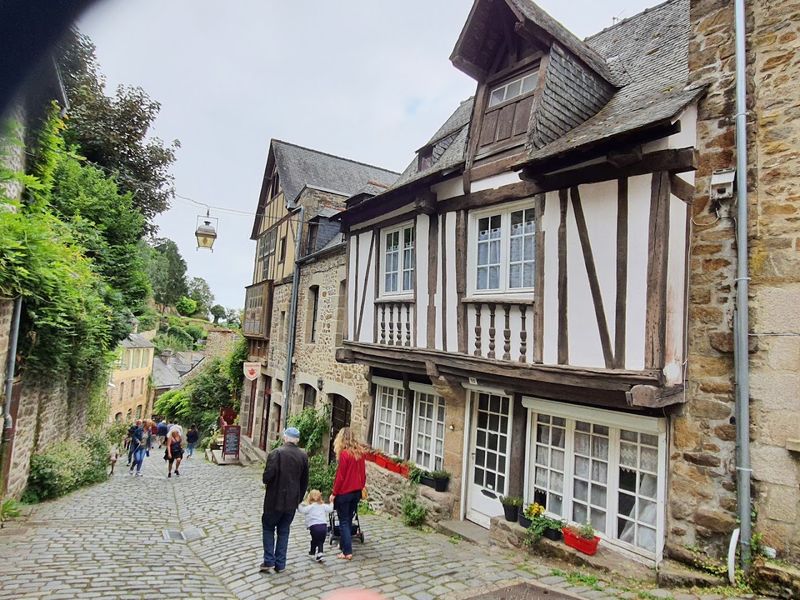
Brittany is full of atmospheric medieval towns, but Dinan manages to stand apart even in that impressive company. The town’s ancient ramparts stretch for nearly three kilometers around the hilltop old quarter, and walking along them gives you a bird’s-eye view over a jumble of slate rooftops, church towers, and the winding Rance River valley below.
The scale of the fortifications alone makes you realize this was once a seriously important place.
The old town’s main streets are lined with timber-framed houses that lean toward each other across the narrow cobblestones, creating a covered effect in some spots where the upper floors nearly touch overhead. Many of these buildings date from the 15th and 16th centuries and house independent boutiques, crêperies, and art galleries that add life to the historic setting.
The smell of buckwheat crêpes drifting from open doorways is one of the great sensory experiences of a Breton afternoon.
Bertrand du Guesclin, one of France’s most celebrated medieval knights, was born near Dinan and is commemorated throughout the town with statues and street names. The port district at the bottom of the valley, connected to the old town by a long cobbled lane, has its own relaxed atmosphere with riverside restaurants and pleasure boats.
Dinan hosts a major medieval festival every two years that turns the whole town into an open-air history lesson.
Wroclaw, Poland
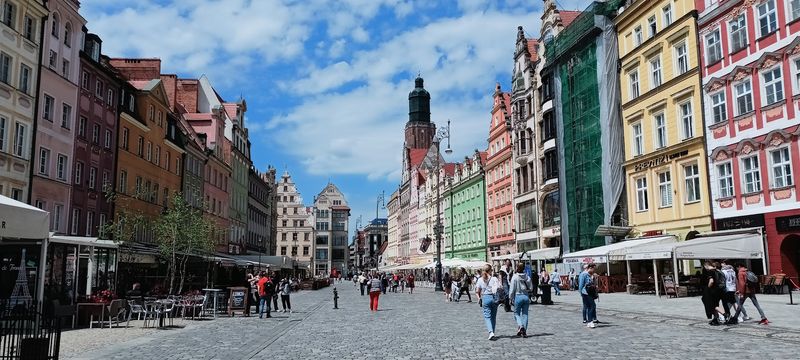
Wroclaw has been passed between countries so many times throughout history that it holds the rare distinction of being simultaneously very German, very Polish, and entirely its own thing. Built across a network of islands in the Oder River and connected by over 100 bridges, the city has a layout that rewards aimless wandering more than almost anywhere else in Central Europe.
Every bridge leads somewhere worth seeing.
The main Market Square, or Rynek, is one of the largest medieval squares in Europe and is surrounded by colorful baroque and Gothic townhouses that were meticulously rebuilt after World War II destruction. The reconstruction was so careful and detailed that the square looks genuinely historic rather than recreated.
The town hall sitting at the center is a masterpiece of Gothic architecture that took over 250 years to complete.
Wroclaw is also home to hundreds of small bronze gnome statues hidden throughout the city, a quirky tradition that started as a symbol of political protest in the 1980s and evolved into a beloved city-wide treasure hunt. There are now over 600 of them scattered across bridges, doorsteps, and street corners, and finding them is an unexpectedly delightful way to explore the city.
Wroclaw hosted the European Capital of Culture in 2016, which introduced its charms to a much wider international audience.
Share this story