History books love to spotlight the same familiar capitals, but some of the most jaw-dropping cities in human history have been quietly erased from popular memory. Long before modern capitals dominated global headlines, other cities controlled trade routes, empires, science, religion, and enormous wealth.
Many of these once-mighty urban centers later declined, were abandoned, or simply faded from influence despite shaping the course of civilization. Get ready to rediscover the cities that the world somehow forgot.
Carthage, Tunisia
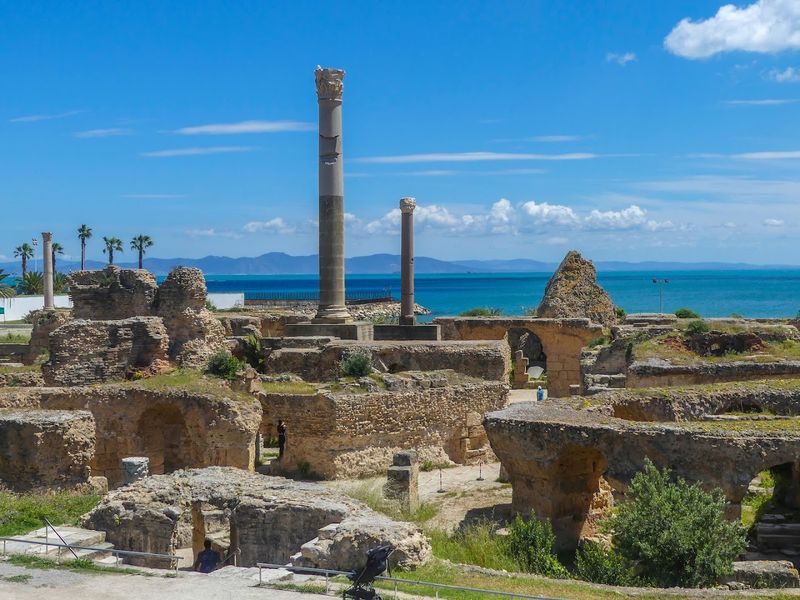
At its peak, Carthage was so powerful that Rome genuinely feared it would lose everything. Positioned along the northern coast of Africa near modern-day Tunis, this Phoenician city commanded the Mediterranean like a chess grandmaster commands a board.
Its navy was legendary, its merchants were everywhere, and its wealth was staggering.
Carthage controlled trade routes stretching from Spain to the Middle East, collecting riches from dozens of ports and colonies. The city’s general Hannibal famously marched war elephants across the Alps to attack Rome directly, a military move so audacious it still shocks historians today.
Rome did not forget that insult.
After three brutal Punic Wars, Rome destroyed Carthage in 146 BCE with ruthless efficiency. Roman forces leveled the city, enslaved the population, and erased almost every trace of its existence.
A civilization that had thrived for over six centuries was wiped from the map in a matter of weeks. Today, scattered ruins near Tunis whisper faint reminders of a city that once made the entire Mediterranean world nervous.
Petra, Jordan
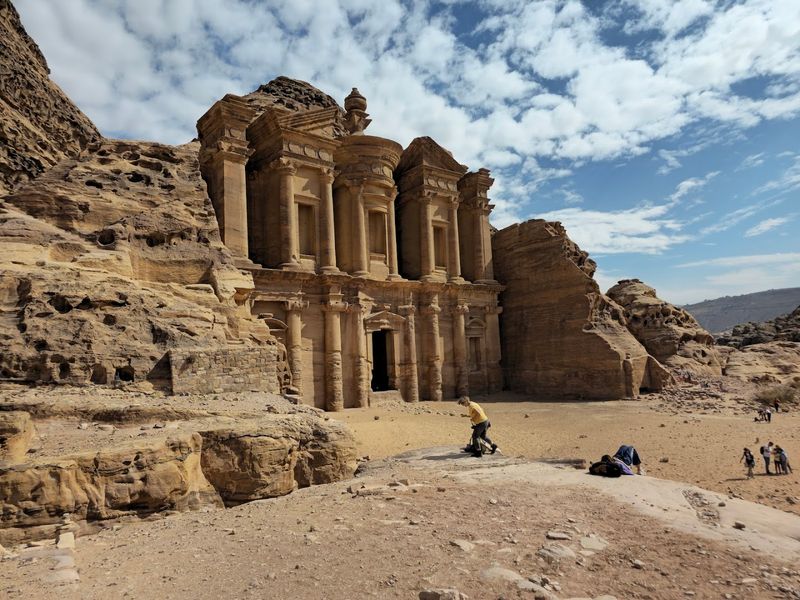
Imagine carving an entire city out of a mountain, not as decoration, but as a fully functioning capital of a powerful empire. That is exactly what the Nabataeans did in Petra, Jordan, and the result was so extraordinary that explorers who rediscovered it in 1812 could barely believe their eyes.
The city literally glows pink and orange in the afternoon sun.
Petra sat at the crossroads of ancient trade routes connecting Arabia, Egypt, and the Mediterranean world. Caravans loaded with incense, spices, silk, and precious metals passed through its narrow canyon entrance called the Siq, paying tolls that made the Nabataean Kingdom fabulously rich.
The city also mastered water engineering, collecting and storing rainwater in a desert environment with remarkable precision.
Shifting trade routes eventually bypassed Petra, and Roman annexation in 106 CE gradually drained the city of its commercial energy. Earthquakes later damaged much of the infrastructure, and the population slowly abandoned it.
For over a thousand years, Petra remained largely unknown to the outside world, hiding in plain sight among Jordan’s rocky hills until a Swiss explorer named Johann Burckhardt talked his way in disguised as a pilgrim.
Angkor, Cambodia
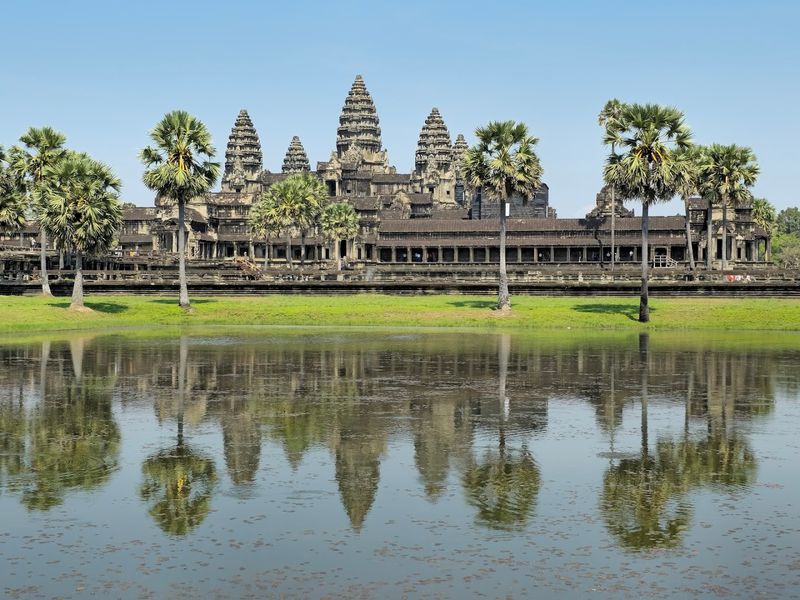
At a time when most European cities were modest medieval towns, Angkor was home to nearly one million people and covered an area larger than modern Los Angeles. The capital of the Khmer Empire stretched across hundreds of square miles in what is now northwestern Cambodia, supported by one of the most sophisticated water management systems the ancient world ever produced.
It was, by nearly every measure, the largest city on Earth during its prime.
Angkor Wat, the temple complex at its heart, required more stone than the Great Pyramid of Giza. Builders carved intricate mythological scenes across miles of gallery walls with a level of artistic detail that still leaves visitors speechless.
The city supported rice agriculture on a massive scale by controlling seasonal floods with a brilliant network of canals and reservoirs.
Environmental stress, prolonged droughts, and political instability eventually cracked Angkor’s foundation. Thai invasions in the 15th century delivered the final blow, prompting the Khmer court to relocate southward.
The jungle crept back in with alarming speed, swallowing temples and streets alike. French explorers stumbling upon the ruins in the 19th century could not initially believe a Southeast Asian civilization had built something so immense.
Ctesiphon, Iraq
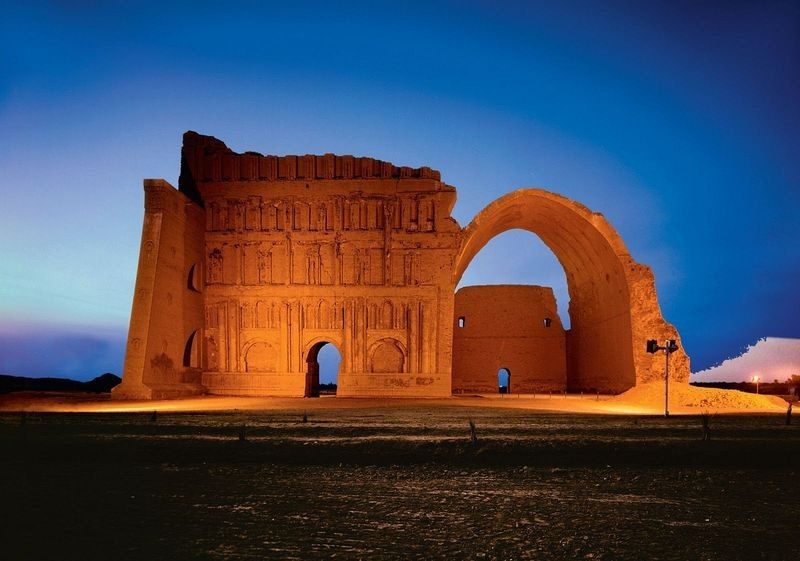
The arch of Taq Kasra still stands near Baghdad today, and it is breathtaking even in its ruined state. This enormous vaulted structure was once part of the grand palace complex of Ctesiphon, the capital of the Sasanian Empire and one of the largest cities in the ancient world.
For several centuries, this city sat at the center of global power, trade, and cultural brilliance.
Ctesiphon grew rich by sitting directly along the Tigris River on the main land trade route connecting the Roman Empire to Central Asia and China. Silk, spices, metalwork, and ideas flowed through its markets constantly.
The Sasanian rulers who governed here commanded armies capable of challenging Rome directly, and they did so repeatedly with notable success.
Arab Muslim forces conquered Ctesiphon in 637 CE, and the city’s importance evaporated almost immediately. When the new Islamic capital of Baghdad was constructed just a few miles away in 762 CE, builders reportedly stripped Ctesiphon’s palaces for construction materials.
Centuries of looting, flooding, and neglect reduced a world-class metropolis to scattered bricks and that one spectacular arch. The arch, however, remains the largest unreinforced brick vault ever constructed, an engineering achievement that still impresses structural engineers today.
Kaifeng, China
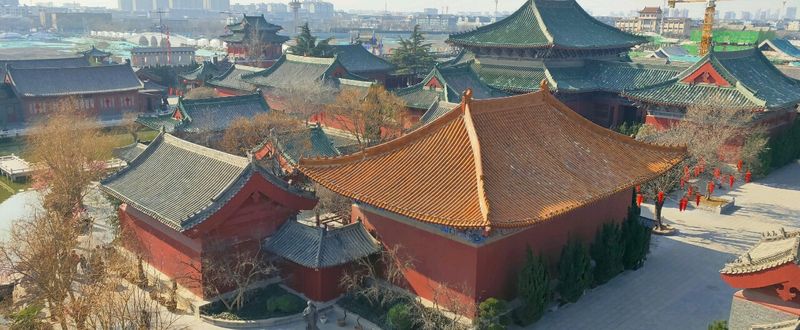
Around the year 1000 CE, if you wanted to experience the most advanced, most populated, and most commercially vibrant city on Earth, you booked a trip to Kaifeng. The Song Dynasty capital in central China had printing presses, paper money, gunpowder technology, and a restaurant culture so developed that establishments stayed open past midnight.
Europe at the same moment was still figuring out crop rotation.
Kaifeng’s position along the Grand Canal made it the commercial heart of China, funneling goods from the south to the political north with extraordinary efficiency. The city’s population may have reached one million residents, making it genuinely colossal by any era’s standards.
A famous painted scroll called Along the River During the Qingming Festival captures its lively streets in stunning detail, essentially functioning as a 12th-century documentary film on silk.
Repeated flooding from the Yellow River caused serious damage over the centuries, and the Jin Dynasty invasion in 1127 CE shattered the city’s imperial status. The Song court fled south to Hangzhou, taking the political energy with them.
Kaifeng never fully recovered its former glory, though it remained a significant regional city. Today it sits quietly in Henan Province, carrying centuries of buried history literally beneath its modern streets.
Timbuktu, Mali
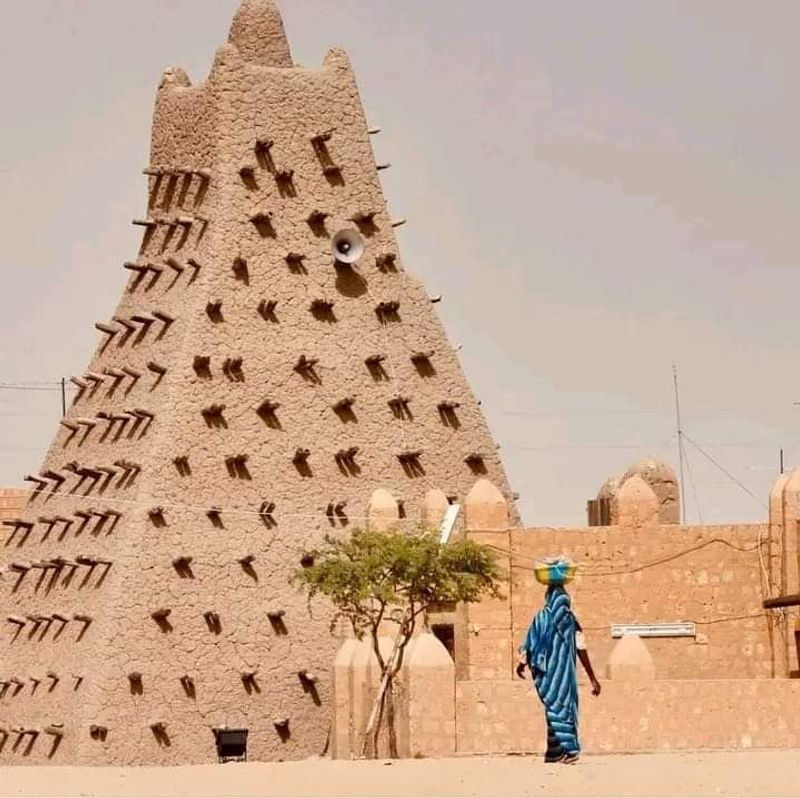
For centuries, European explorers whispered about a legendary African city so rich in gold that its buildings practically shimmered. They were not entirely wrong.
Timbuktu, located at the edge of the Sahara Desert in modern Mali, was one of the wealthiest and most intellectually active cities in the medieval world, and most Western history classes still barely mention it.
During the 14th and 15th centuries, Timbuktu served as a crossroads for gold and salt trade across West Africa while simultaneously functioning as a center of Islamic scholarship. The University of Sankore attracted scholars from across the Muslim world, and private libraries in the city held hundreds of thousands of manuscripts covering mathematics, astronomy, medicine, and philosophy.
When Mansa Musa, the Mali Empire’s ruler, passed through Cairo on a pilgrimage in 1324, he distributed so much gold that he accidentally crashed Egypt’s economy for a decade.
Moroccan invasion in 1591 disrupted the city’s political stability, and shifting trans-Saharan trade routes gradually reduced its commercial importance. European colonization in the 19th century further marginalized the city.
Many of Timbuktu’s ancient manuscripts survived hidden in private homes and are now being carefully preserved and digitized by international scholars racing against climate damage and political instability.
Mohenjo-daro, Pakistan
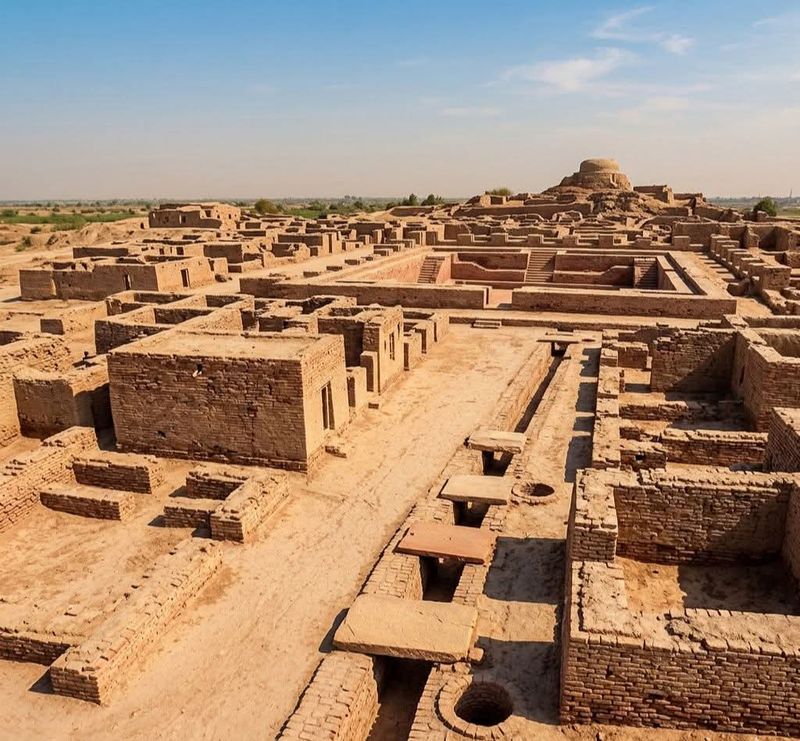
Over 4,500 years ago, while Egypt was building pyramids and Mesopotamia was writing its earliest laws, an entirely different civilization was quietly constructing one of the most organized cities ever built. Mohenjo-daro in modern Pakistan had straight grid streets, indoor plumbing, a public swimming pool called the Great Bath, and standardized brick sizes used consistently across the entire city.
Nobody elected a committee to enforce building codes, yet everyone seemed to follow the same plan.
The Indus Valley Civilization that produced Mohenjo-daro remains one of history’s great mysteries precisely because it left no deciphered written records. Archaeologists know the city was sophisticated, peaceful by ancient standards, and remarkably uniform in its urban design.
No massive palaces, no obvious royal tombs, and no huge weapons caches have been found, suggesting a society organized very differently from contemporary empires built on military dominance.
Around 1900 BCE, Mohenjo-daro began declining for reasons still debated by scholars. Climate change, river shifts, disease, or a combination of factors may have driven residents away.
The city was not dramatically destroyed but simply emptied over time. Rediscovered only in the 1920s, it permanently rewrote the history of early civilization, proving that urban sophistication was not limited to Egypt or Mesopotamia.
It was happening simultaneously in South Asia on a grand scale.
Alexandria, Egypt
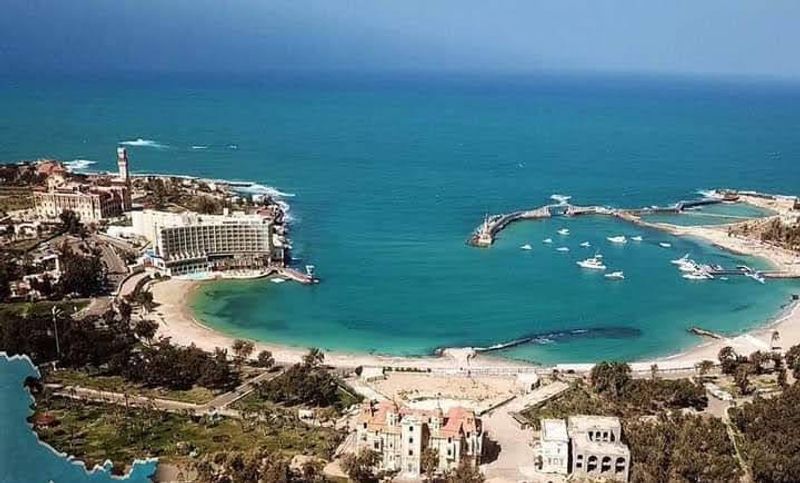
Alexander the Great founded over twenty cities named Alexandria, but only one of them changed the world. The Egyptian Alexandria, established in 331 BCE on the Mediterranean coast, became the intellectual and commercial capital of the ancient world within a single generation of its founding.
Its lighthouse was one of the Seven Wonders of the Ancient World. Its library held the largest collection of written knowledge ever assembled in antiquity.
The Library of Alexandria was not just a building full of scrolls. It was an active research institution where scholars studied astronomy, mathematics, medicine, geography, and literature under royal patronage.
Eratosthenes calculated the circumference of the Earth here with remarkable accuracy. Euclid developed foundational geometry within the city’s scholarly community.
The intellectual output of Alexandria influenced science and philosophy for centuries after the city’s political decline.
Multiple fires, political upheavals, and the rise of rival centers gradually reduced Alexandria’s dominance. The final destruction of the library is one of history’s most debated events, with no single dramatic burning moment definitively proven.
The city itself survived and remains a major Egyptian port today. But the Alexandria that housed half the world’s knowledge, attracted scholars from three continents, and made the Mediterranean world smarter simply no longer exists in any recognizable form.
Vijayanagara (Hampi), India
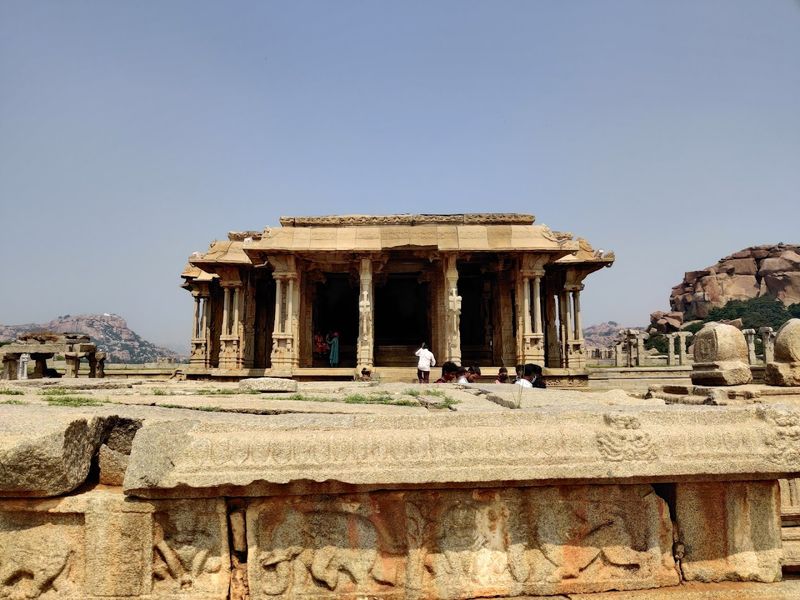
Travelers arriving in Vijayanagara during the 15th century reportedly needed several days just to walk from one end of the city to the other. The capital of the Vijayanagara Empire in southern India covered roughly 650 square kilometers, making it one of the largest cities on Earth at its peak.
Portuguese merchants who visited described it as larger and more magnificent than Rome, and they were not exaggerating for effect.
The city was an extraordinary fusion of Hindu temple architecture, military engineering, and commercial sophistication. Markets sold diamonds, horses, elephants, textiles, spices, and exotic animals from across Asia and Africa.
The Vittala Temple complex featured stone chariot wheels and musical pillars that produce distinct tones when struck, architectural achievements that continue to baffle engineers studying them today.
In 1565, a coalition of Deccan sultanates defeated the Vijayanagara army at the Battle of Talikota and then spent months systematically destroying the capital. The destruction was so thorough that the city never recovered.
Residents fled, temples were stripped, and the jungle moved in. The ruins at modern Hampi, now a UNESCO World Heritage Site, cover an enormous area and reward visitors willing to spend days exploring.
Scattered across a surreal boulder landscape, they hint at a civilization that genuinely competed with any empire on Earth.
Meroe, Sudan
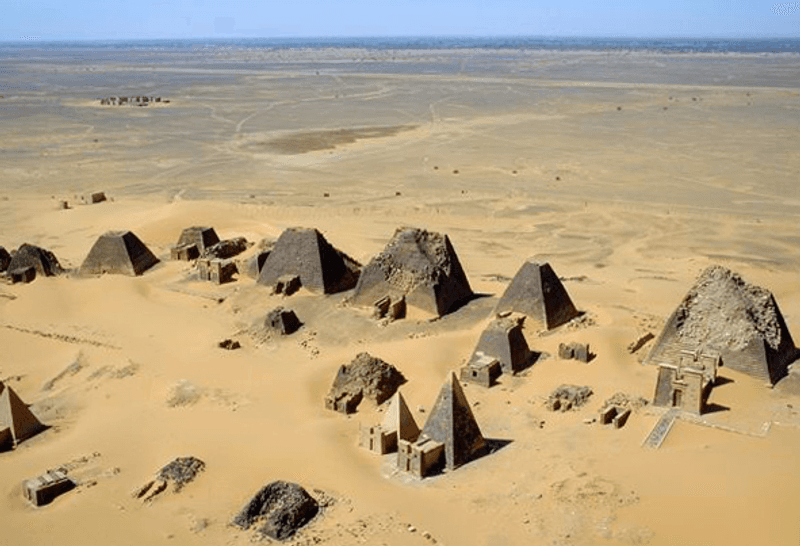
Most people can name Egypt’s pyramids without hesitation, but far fewer know that Sudan has more ancient pyramids than Egypt does. The city of Meroe, capital of the Kingdom of Kush along the Nile River in modern Sudan, was surrounded by over two hundred steep, narrow pyramids built for its royal rulers.
These structures look nothing like their Egyptian counterparts, they are tall, slim, and dramatic in a completely different way.
Meroe was not just a ceremonial city. It was an industrial powerhouse, producing iron on a scale that made it the dominant metalworking center of ancient Africa.
Enormous slag heaps left behind by ancient furnaces still surround the site today, silent evidence of a manufacturing operation that supplied tools and weapons across a wide region. Control of Nile trade routes added commercial wealth to an already formidable industrial base.
The Kingdom of Kush at Meroe lasted roughly from 300 BCE to 350 CE, an impressive run by any civilization’s standards. Aksumite forces from modern Ethiopia eventually conquered the region, and Meroe’s importance faded.
The city was largely unknown to Western scholars until the 19th century, partly because ancient Egyptian records often described Kush dismissively and partly because nobody was looking. Today, Meroe is a UNESCO World Heritage Site that receives a fraction of the tourism its Egyptian neighbors attract.
Ani, Turkiye
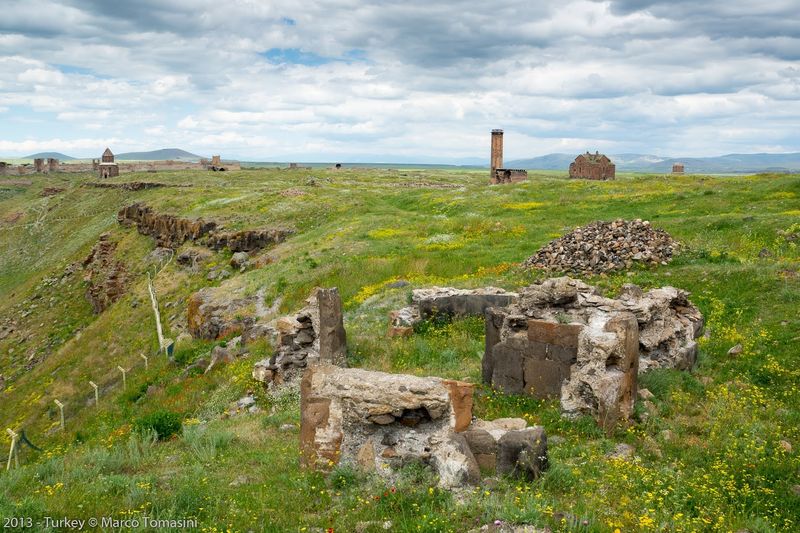
Perched on a windswept plateau in eastern Turkey right on the Armenian border, the ruins of Ani look like a stage set for an epic film that nobody made. Cathedral walls still reach impressive heights.
Defensive towers still guard the city’s perimeter. The carved stone details on surviving facades remain crisp enough to read clearly.
Yet the entire city has been essentially empty for over five hundred years.
At its peak around 1000 CE, Ani was the capital of the Bagratid Armenian Kingdom and a thriving Silk Road trading hub with a population estimated at around 100,000 people. The nickname City of 1,001 Churches was earned honestly, as religious architecture defined the skyline.
The Cathedral of Ani, completed in 1001 CE, influenced church architecture across the region for generations and is considered a masterpiece of medieval construction.
A brutal Seljuk conquest in 1064 CE killed thousands and destabilized the city permanently. Mongol raids in the 13th century added more destruction.
A catastrophic earthquake in 1319 CE collapsed much of what remained standing, and the population never returned in meaningful numbers. Ani sat largely forgotten for centuries, dismissed by history despite its extraordinary surviving architecture.
Visiting today means walking through one of the most hauntingly beautiful archaeological sites anywhere in the world.
Heracleion, Egypt
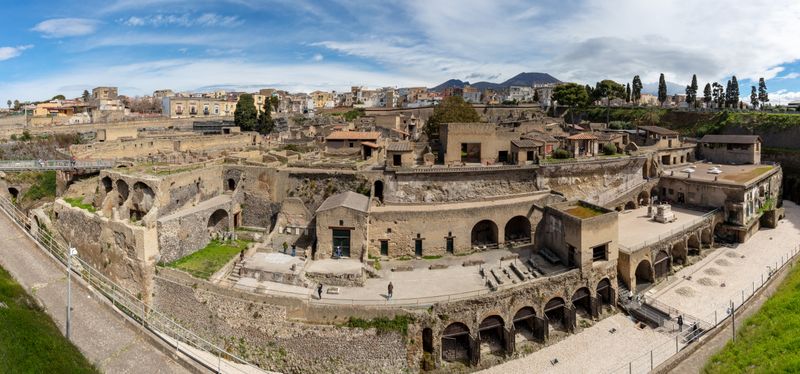
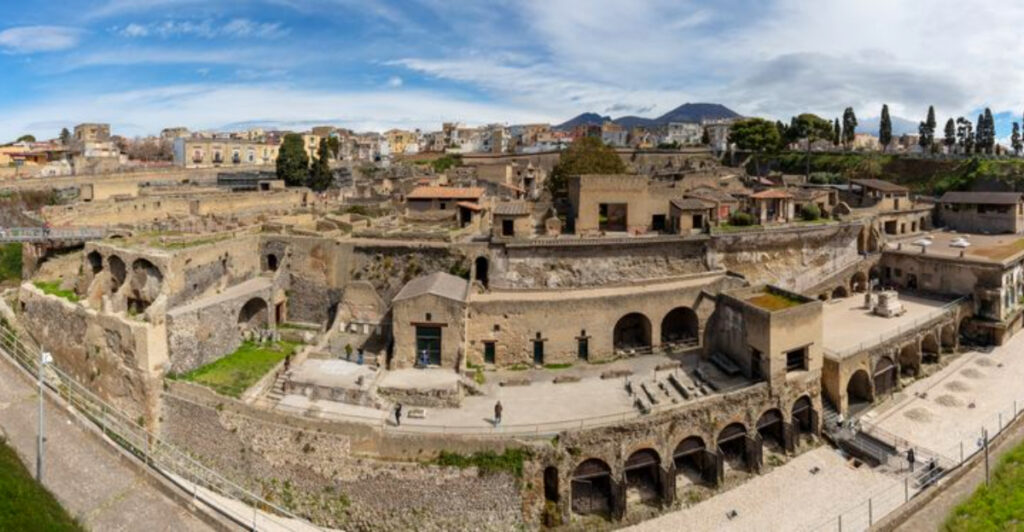
For over a thousand years, the city of Heracleion was considered a myth, mentioned in ancient texts but physically unfindable. Then in 2000 CE, a French underwater archaeologist named Franck Goddio discovered it sitting on the seafloor of Aboukir Bay near Alexandria, perfectly preserved under about 30 feet of water.
The city had not been destroyed. It had simply sunk, taking its temples, statues, and treasure chests with it.
Heracleion was Egypt’s primary Mediterranean port for centuries before Alexandria was founded, controlling virtually all trade entering and leaving the country from the sea. Greek merchants, Phoenician sailors, and Egyptian priests all moved through its busy harbor.
Enormous stone statues of pharaohs and gods stood at temple entrances, many of which still lie intact on the seafloor exactly where they toppled during the earthquakes and floods that gradually submerged the city.
Excavations at Heracleion have recovered gold coins, bronze statues, ritual objects, and ship anchors in extraordinary numbers. Researchers believe the city sank gradually over several centuries due to a combination of earthquakes, liquefaction of the sandy seabed, and rising sea levels.
The find completely rewrote the commercial history of ancient Egypt. Archaeologists estimate that only a small fraction of the submerged city has been explored so far, meaning the biggest discoveries may still be waiting underwater.
Cahokia, Illinois
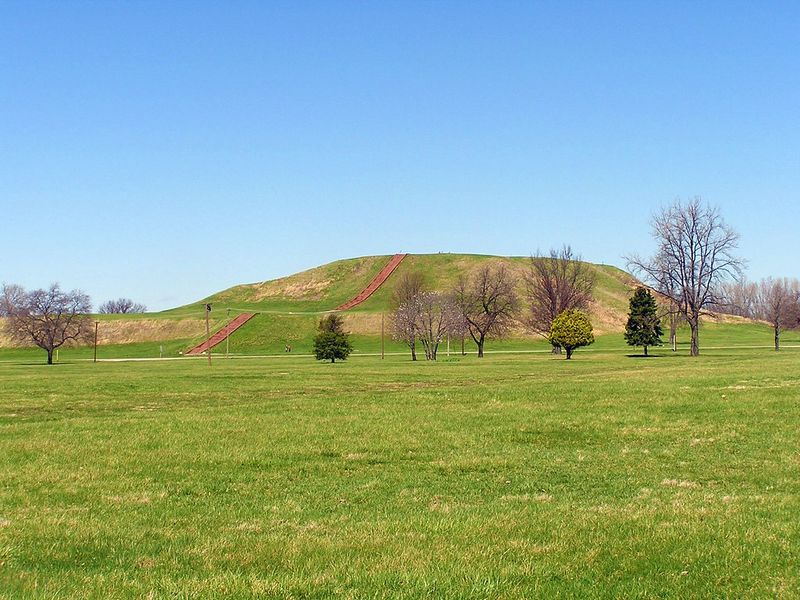
Right across the Mississippi River from modern St. Louis sits evidence of a city that most Americans have never heard of, despite it being the largest pre-Columbian urban center north of Mexico. Cahokia, occupied between roughly 700 and 1400 CE, supported a population that may have reached 20,000 people at its height, making it larger than London was at the same time.
The people who built it left no written records and are not directly connected to any surviving Native American nation.
The most dramatic feature of Cahokia is Monk’s Mound, a massive flat-topped earthen platform covering more ground at its base than the Great Pyramid of Giza. Builders moved an estimated 55 million cubic feet of soil by hand to construct the city’s mound complex, a physical achievement requiring generations of organized labor.
Surrounding plazas, wooden palisade walls, and a circle of wooden posts used to track astronomical events revealed a society with sophisticated religious and civic organization.
Cahokia declined mysteriously before European contact, leaving scholars to debate whether climate change, overhunting, political collapse, or flooding drove residents away. No single catastrophic event appears responsible.
The city simply emptied over time. Today the site is a UNESCO World Heritage Site sitting quietly in the Illinois floodplain, largely overshadowed by the gleaming modern city visible on the horizon just across the river.
Karakorum, Mongolia
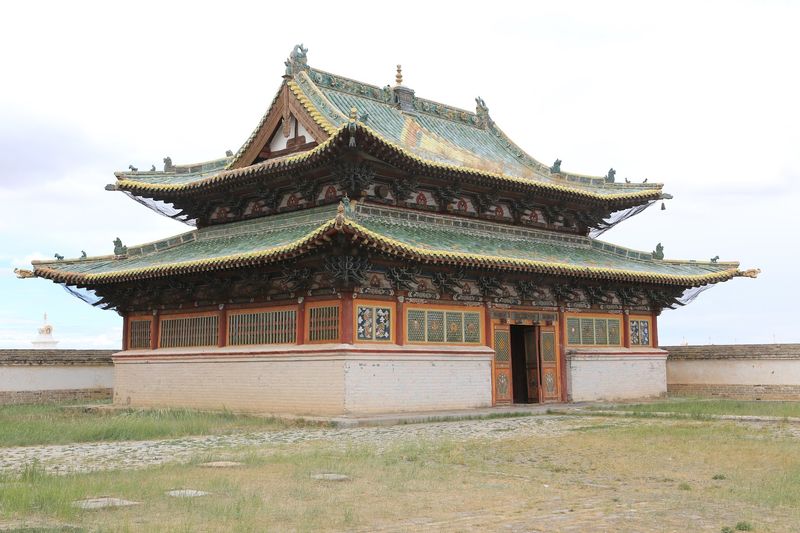
At the height of Mongol power in the 13th century, the most politically important city in the world was not Paris, not Beijing, and certainly not London. It was a city in the middle of the Mongolian steppe called Karakorum, and ambassadors from every corner of the known world traveled there to negotiate with the successors of Genghis Khan.
The city that directed the largest contiguous land empire in history was, by all contemporary accounts, surprisingly modest in size.
What Karakorum lacked in grand architecture it made up for in global connections. Craftsmen from China, Persia, France, and Hungary all worked within the city simultaneously.
A famous silver tree fountain designed by a French goldsmith named William of Rubruck stood in the palace courtyard, dispensing wine, fermented mare’s milk, and honey mead from its branches for imperial guests. The city was essentially a United Nations of the medieval world.
Kublai Khan moved the Mongol capital to Beijing in the 1260s, and Karakorum’s importance evaporated almost overnight. Ming Dynasty Chinese forces razed the city in 1388, and the stone and timber were eventually recycled into the nearby Erdene Zuu Monastery.
Archaeologists excavating the site today are slowly uncovering workshops, palaces, and artifacts that reveal a city far more cosmopolitan than its remote steppe location would ever suggest.
Taxila, Pakistan
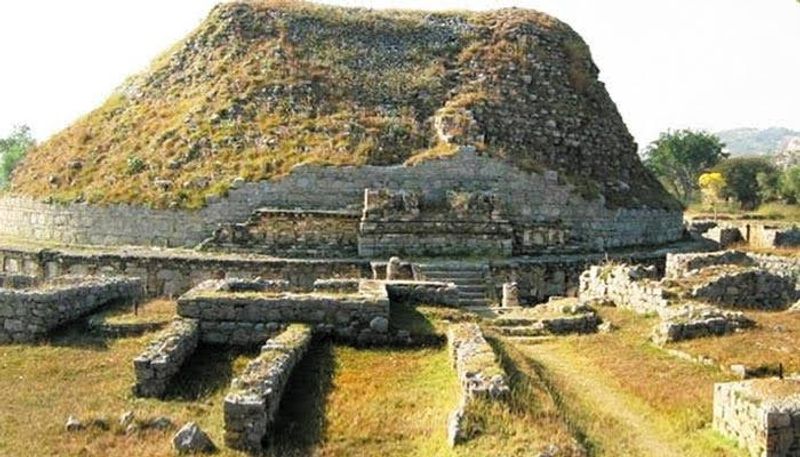
Long before Oxford or Bologna existed, students were traveling hundreds of miles across mountains and deserts to study at Taxila. Located in what is now northern Pakistan near modern Islamabad, Taxila operated as one of the ancient world’s premier centers of learning, attracting scholars, philosophers, and physicians from across South and Central Asia for nearly a thousand years.
The city was famous enough that Alexander the Great made a deliberate detour to visit it during his eastern campaign.
Taxila sat at the junction of three major ancient trade routes connecting South Asia, Central Asia, and the Middle East. That geographic advantage made it simultaneously a commercial hub and a cultural melting pot where Buddhist, Hindu, Persian, and Greek ideas mixed freely.
The city produced notable figures in medicine, grammar, and political theory, and its influence on early Buddhist art helped shape religious iconography across an enormous geographic area.
A series of invasions beginning with the White Huns in the 5th century CE progressively damaged Taxila’s infrastructure and disrupted its academic traditions. The city never fully recovered its scholarly reputation after repeated attacks destroyed monasteries and drove out resident communities.
Archaeological excavations begun in the 19th century revealed multiple overlapping city layers spanning different historical periods, each one telling a different chapter of the same long story. Today Taxila is a UNESCO World Heritage Site that rewards curious visitors willing to wander its extensive and largely uncrowded ruins.
Share this story