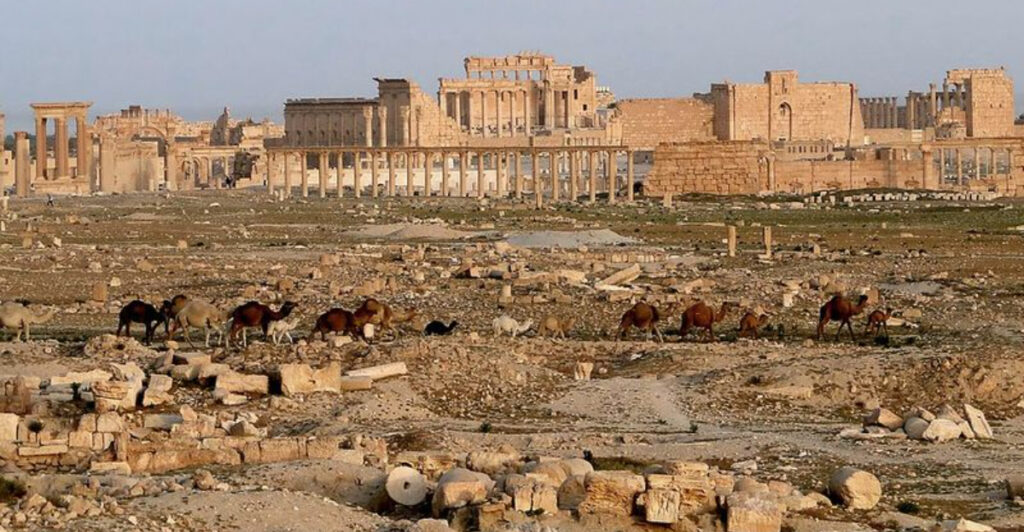
Throughout history, some of the world’s most powerful cities rose to incredible heights, only to disappear from the map entirely. These were not small towns or forgotten villages but grand capitals that ruled vast empires and shaped entire civilizations.
Wars, environmental disasters, political collapse, and the slow creep of nature all played a role in their downfall. Walking through their ruins today, it is hard to believe these places were once the beating hearts of the ancient world.
1. Babylon (Iraq)
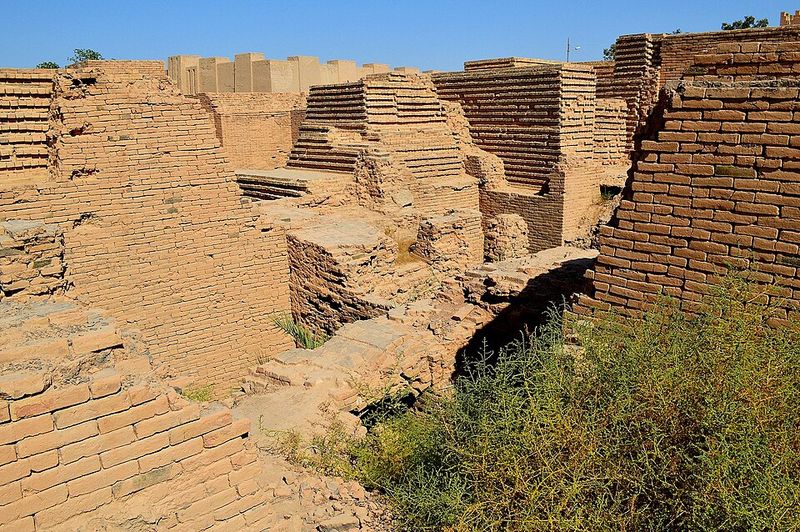
At its peak, Babylon was so magnificent that people across the ancient world spoke of it with wonder. It served as the capital of the Babylonian Empire and was home to towering walls wide enough for chariots to race along the top.
The legendary Hanging Gardens, considered one of the Seven Wonders of the Ancient World, were said to have bloomed here.
Babylon sat along the Euphrates River in what is now Iraq, and it thrived for centuries as a center of trade, law, and learning. The famous Code of Hammurabi, one of history’s earliest written law codes, was created here.
Repeated invasions by Persians, Macedonians, and others slowly drained the city of its power.
By the early centuries AD, Babylon had been largely abandoned. Sand and silence replaced the once-bustling streets.
Today, partial ruins and a rebuilt Ishtar Gate stand as reminders of its former glory.
2. Persepolis (Iran)
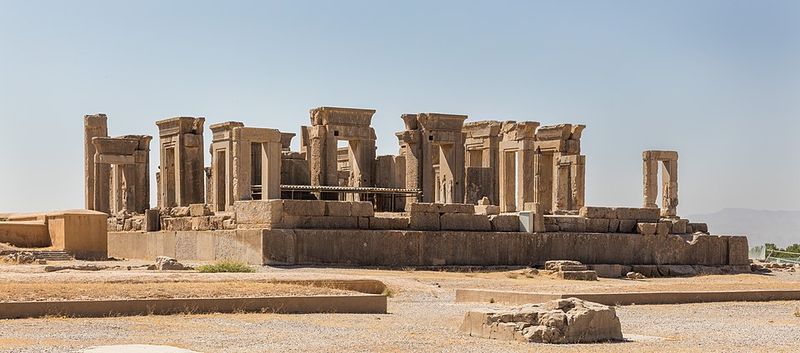
Few cities in the ancient world matched the sheer visual power of Persepolis. Built by the Persian king Darius the Great around 518 BC, it served as the ceremonial capital of the Achaemenid Empire, which stretched from Egypt to India.
Enormous stone staircases, carved reliefs of soldiers and tribute-bearers, and towering columns made it one of the most breathtaking places on Earth.
The city was not just beautiful; it was a symbol of Persian power and authority. Every spring, delegations from across the empire arrived to pay tribute and celebrate the New Year.
That tradition ended abruptly in 330 BC when Alexander the Great burned Persepolis to the ground.
Whether the fire was accidental or deliberate revenge for Persia’s earlier attack on Athens remains debated. Either way, the city never recovered.
Its stone skeletons still rise dramatically from the Iranian plateau, drawing visitors from around the world.
3. Angkor (Cambodia)
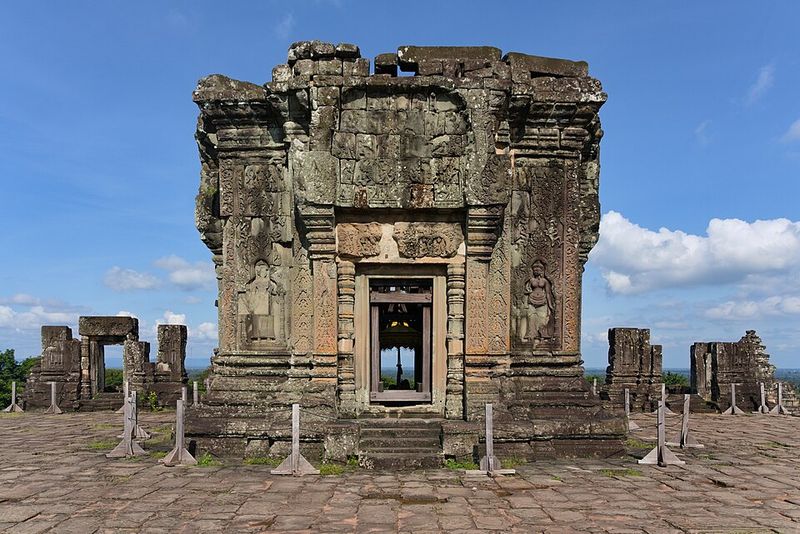
Imagine a city so large that modern satellites are still mapping its full extent. Angkor, the capital of the Khmer Empire, may have housed up to one million people at its height, making it possibly the largest pre-industrial city ever built.
At its center stood Angkor Wat, a temple so massive and intricate that it remains the world’s largest religious monument to this day.
The Khmer kings built Angkor as a reflection of the Hindu and Buddhist cosmos, with temples representing sacred mountains and moats symbolizing the ocean. For nearly 600 years, it was the cultural and political heart of Southeast Asia.
Then, a combination of prolonged droughts, flooding, and political instability weakened the kingdom from within.
By the 15th century, the population had drifted south toward the coast, and the jungle quietly reclaimed the city. French explorers rediscovered it in the 1800s, and restoration efforts continue today.
4. Tenochtitlan (Mexico)
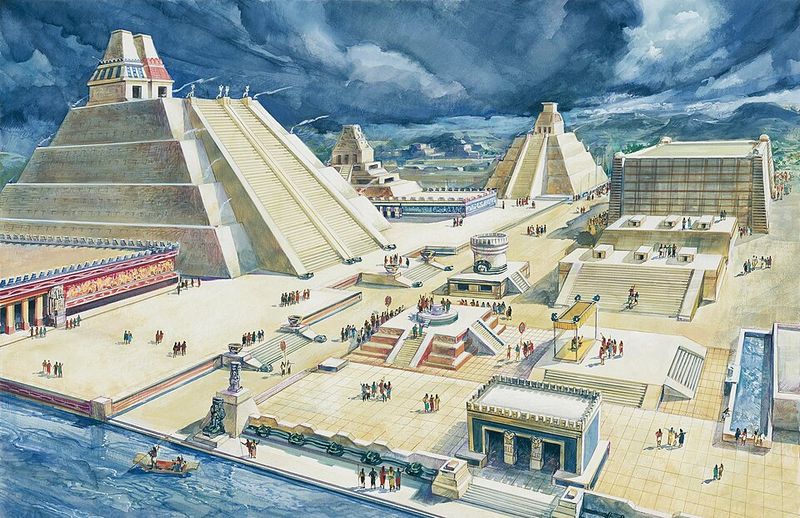
When Spanish explorer Hernán Cortés first laid eyes on Tenochtitlan in 1519, his soldiers reportedly wept at its beauty. Built on an island in the middle of Lake Texcoco, the Aztec capital was a marvel of engineering.
Massive causeways connected it to the mainland, canals served as streets, and enormous pyramid-temples rose above a population of perhaps 200,000 people.
The city had running water delivered through aqueducts, organized markets that dazzled European visitors, and a complex political system. Cortés himself wrote to the Spanish king that it was more impressive than any city in Spain.
Yet within two years, he had destroyed most of it.
The Spanish conquest of 1521 was brutal. The lake was drained, the temples torn down, and a new colonial city built directly on top.
That city became Mexico City, the modern capital of Mexico, still sitting atop Aztec foundations.
5. Carthage (Tunisia)
Carthage was not just a city; it was Rome’s greatest rival. Founded by Phoenician settlers around 814 BC on the coast of what is now Tunisia, Carthage grew into a Mediterranean superpower that controlled trade routes across North Africa, Spain, and beyond.
Its navy was feared across the ancient world, and its general Hannibal famously marched war elephants over the Alps to attack Rome.
Three brutal wars between Rome and Carthage, known as the Punic Wars, defined the era. Carthage lost the final war in 146 BC, and Rome showed no mercy.
Roman soldiers destroyed every building, salted the earth according to some ancient accounts, and sold the surviving population into slavery.
The phrase “Carthage must be destroyed” became one of history’s most chilling political slogans. A later Roman city was eventually built on the site, but the original Carthage was gone forever.
Its ruins sit quietly near modern Tunis today.
6. Cahokia (United States)
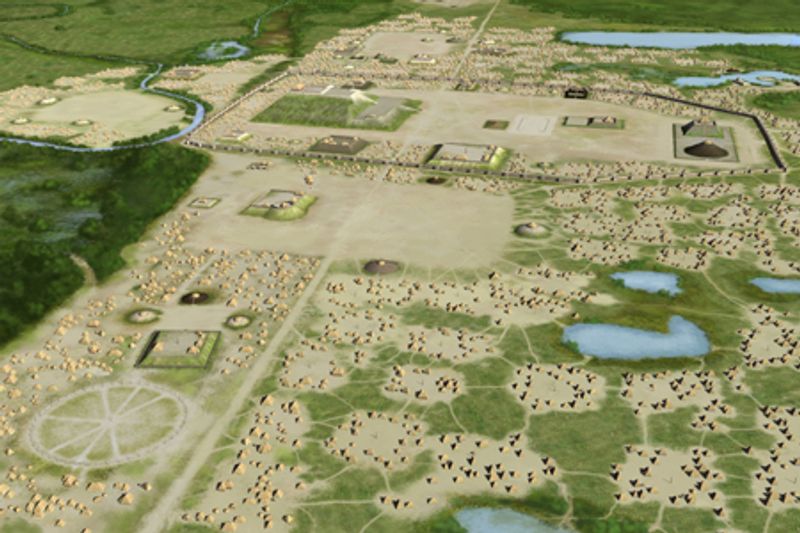
Long before European explorers arrived in North America, a remarkable city flourished near the banks of the Mississippi River. Cahokia, located near present-day St. Louis, Illinois, was the largest urban center north of Mexico before European contact.
At its peak around AD 1100, it may have housed between 10,000 and 20,000 people, making it larger than London at the same time.
The people of Cahokia built more than 120 earthen mounds, some of which were enormous. Monks Mound, the largest, covers more ground than the Great Pyramid of Giza.
The city had organized neighborhoods, plazas, and a large wooden post circle used for astronomical observations, sometimes called Woodhenge.
Mysteriously, by around 1400, Cahokia had been completely abandoned. Climate change, environmental strain, and social unrest are among the leading theories.
The site is now a UNESCO World Heritage Site, but its original inhabitants left no written records explaining their departure.
7. Ani (Turkey)
Once called the “City of 1,001 Churches,” Ani was a place of extraordinary religious and cultural energy. It served as the capital of the Bagratid Armenian Kingdom from the late 10th century and grew into a thriving metropolis of perhaps 100,000 people.
Merchants, scholars, and pilgrims filled its streets, and its skyline bristled with cathedral spires and minarets side by side.
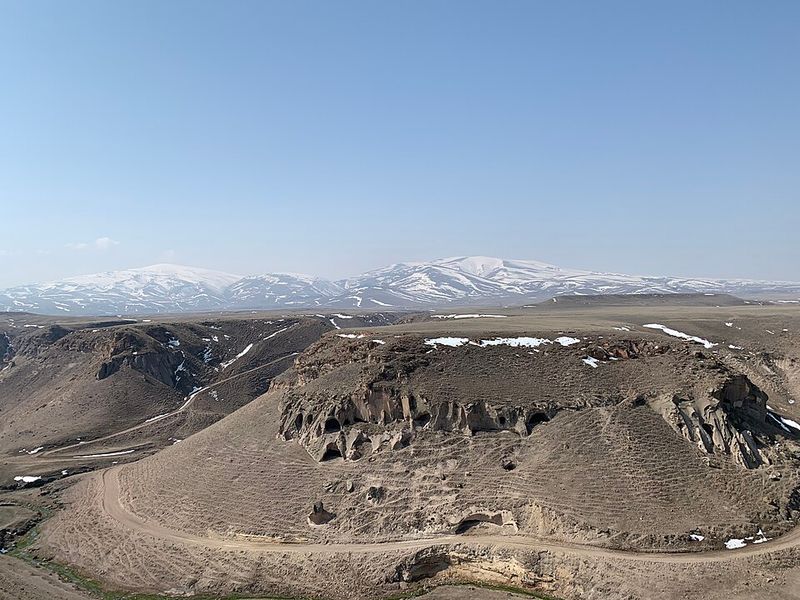
Ani sat on a dramatic plateau in what is now eastern Turkey, right on the border with Armenia. Its position made it both strategically important and dangerously exposed.
The Seljuk Turks captured it in 1064, and subsequent invasions by Mongols and Timurids added further destruction over the following centuries.
A massive earthquake in 1319 delivered the final blow to what remained. Trade routes shifted, and the population never returned.
Today, Ani’s roofless churches and broken walls stand on a windswept plain, hauntingly beautiful and almost entirely silent.
8. Great Zimbabwe (Zimbabwe)
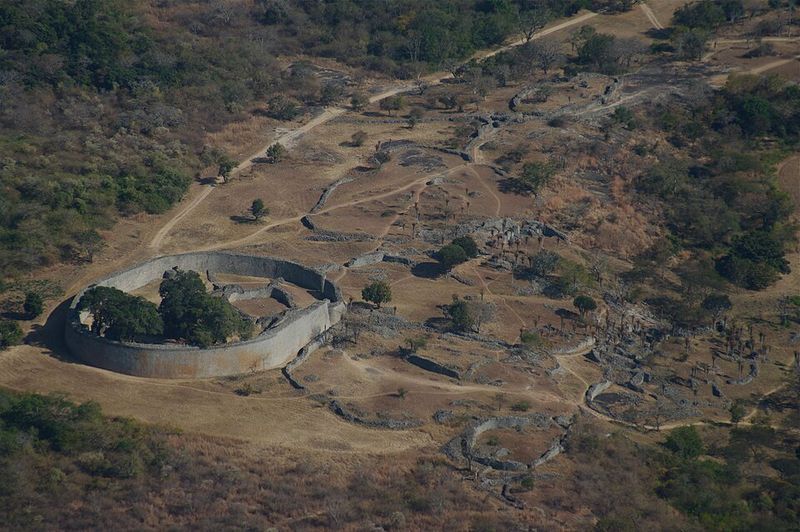
Built without a single drop of mortar, the stone walls of Great Zimbabwe still inspire awe more than 700 years after their construction. This was the capital of a powerful African kingdom that dominated trade in gold, ivory, and cattle across southern Africa from roughly the 11th to the 15th centuries.
At its height, the city may have housed up to 18,000 people.
The name Zimbabwe itself comes from a Shona phrase meaning “stone houses,” and the engineering behind those houses was remarkable. Granite blocks were carefully shaped and stacked to form walls up to 11 meters high and 5 meters thick without any binding material.
The craftsmanship rivals anything found elsewhere in the medieval world.
By the mid-1400s, the city had been abandoned, likely due to soil exhaustion and the shifting of trade routes. European colonizers later refused to believe Africans had built it, a racist denial that historians have thoroughly disproven.
9. Vijayanagara (India)
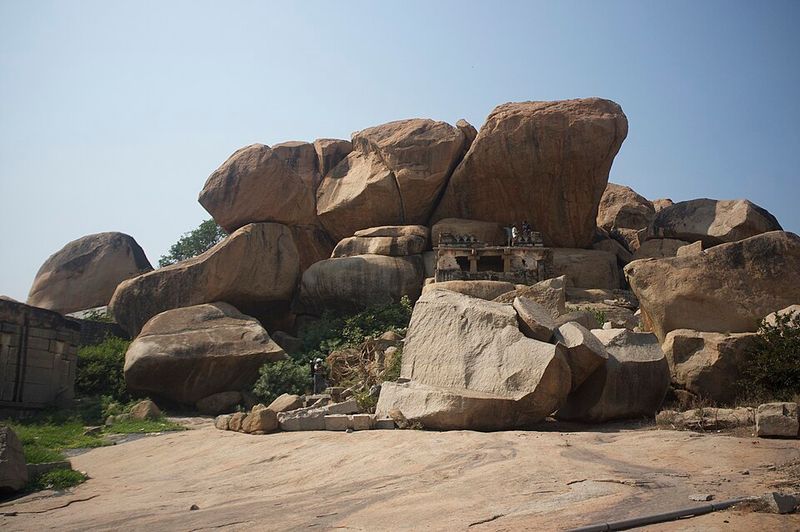
At its height in the 1500s, Vijayanagara was one of the richest cities on Earth. The capital of the Vijayanagara Empire in southern India, it dazzled foreign visitors with its elaborate temples, bustling markets overflowing with gems and spices, and a population that may have reached half a million.
Portuguese and Persian travelers wrote home in amazement about its splendor.
The city, located along the Tungabhadra River in present-day Karnataka, was built among a dramatic landscape of massive granite boulders that gave it a naturally fortified setting. Temples were carved directly into the rock, and streets were designed with military defense in mind.
Everything changed after the Battle of Talikota in 1565, when a coalition of Deccan sultanates delivered a crushing defeat to the empire’s army. The victorious forces looted and burned Vijayanagara for months.
The survivors fled and never returned. Today, the ruins at Hampi are a UNESCO World Heritage Site.
10. Memphis (Egypt)
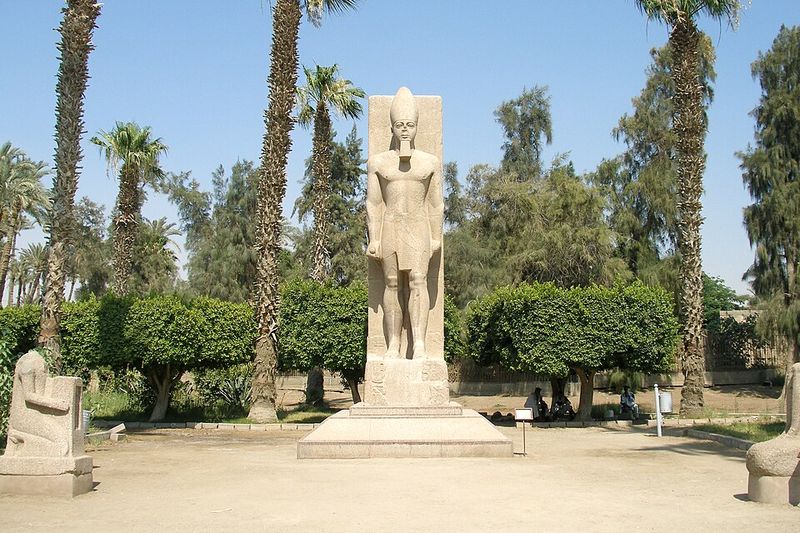
More than 5,000 years ago, a city rose near the junction of Upper and Lower Egypt that would become one of the greatest urban centers the ancient world had ever seen. Memphis, founded around 3100 BC by the pharaoh Menes, served as Egypt’s first capital and remained one of its most important cities for over 3,000 years.
At its peak, it may have housed hundreds of thousands of people.
Memphis was a hub of religion, politics, and trade. The great temple of Ptah, the god of craftsmen, stood at its heart, and nearby Saqqara holds some of Egypt’s oldest pyramids.
For millennia, it was simply the most important city in the known world.
Gradual shifts in the Nile’s course, the rise of Alexandria, and centuries of stone robbing slowly reduced Memphis to rubble. Today, only a few scattered statues and foundations remain in a quiet village near Cairo, far beneath the expectations of visitors.
11. Palmyra (Syria)
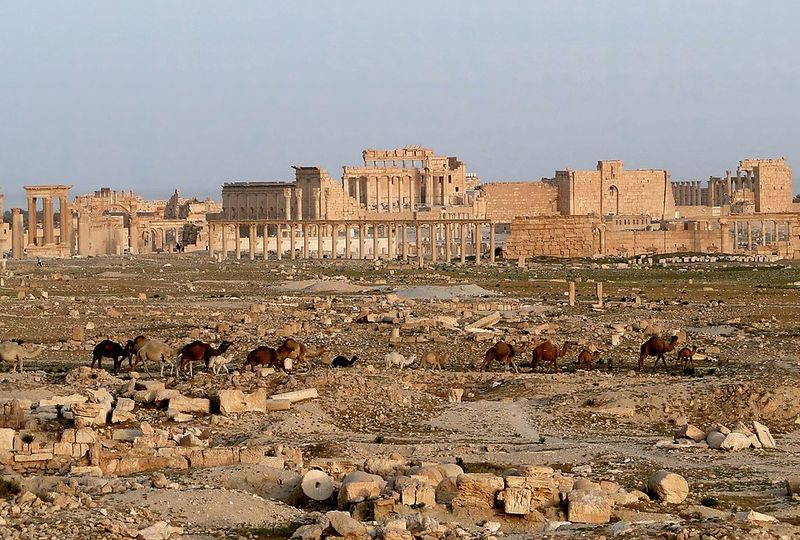
Rising from the Syrian desert like a mirage, Palmyra was one of the ancient world’s most improbable success stories. A desert oasis city that controlled the caravan routes between the Roman Empire and the Parthian East, it accumulated enormous wealth without having fertile farmland or a port.
Its merchants traded silk, spices, and perfumes across continents, and the city grew fabulously rich.
Under the warrior-queen Zenobia in the 3rd century AD, Palmyra briefly declared independence from Rome and conquered Egypt and much of the Roman East. Rome struck back, captured Zenobia, and dismantled much of the city’s power.
It never fully recovered.
The ruins that survived into modern times were stunning, with colonnaded boulevards, a grand theater, and ornate temples. Tragically, ISIS militants deliberately destroyed many of Palmyra’s most treasured monuments in 2015, adding modern devastation to ancient decline.
Restoration efforts are now slowly underway.
12. Hattusa (Turkey)
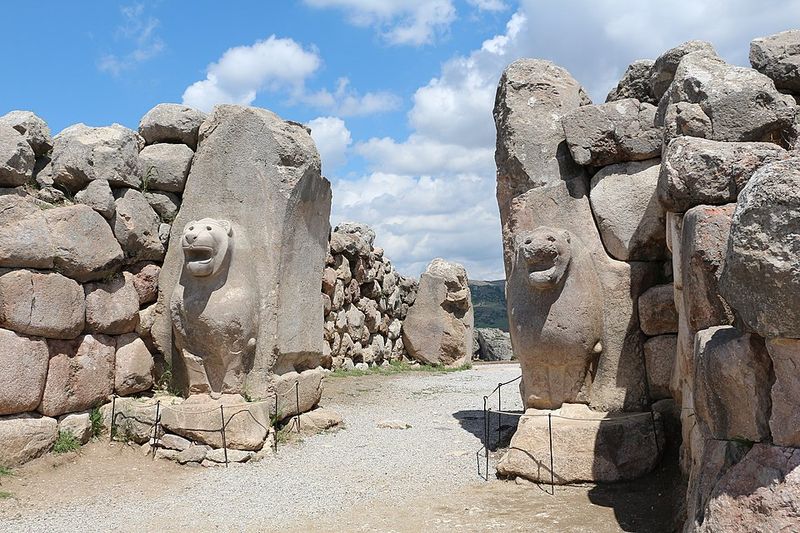
Around 1200 BC, something catastrophic swept across the entire eastern Mediterranean world. Kingdoms fell, trade networks collapsed, and cities burned in what historians call the Bronze Age Collapse.
One of the most dramatic casualties was Hattusa, the capital of the mighty Hittite Empire in what is now central Turkey.
The Hittites had been one of the great superpowers of the ancient world, trading letters as equals with Egyptian pharaohs and signing history’s first known peace treaty after the Battle of Kadesh in 1274 BC. Their capital was a fortress city of temples, storehouses, and administrative buildings spread across rocky hills.
Then, almost overnight, it was burned and abandoned.
Who destroyed it remains uncertain. Some suspect the mysterious Sea Peoples; others point to internal rebellion or drought.
The Hittite language and culture were forgotten entirely for over 3,000 years until archaeologists began excavating Hattusa in the early 20th century.
13. Mohenjo-daro (Pakistan)
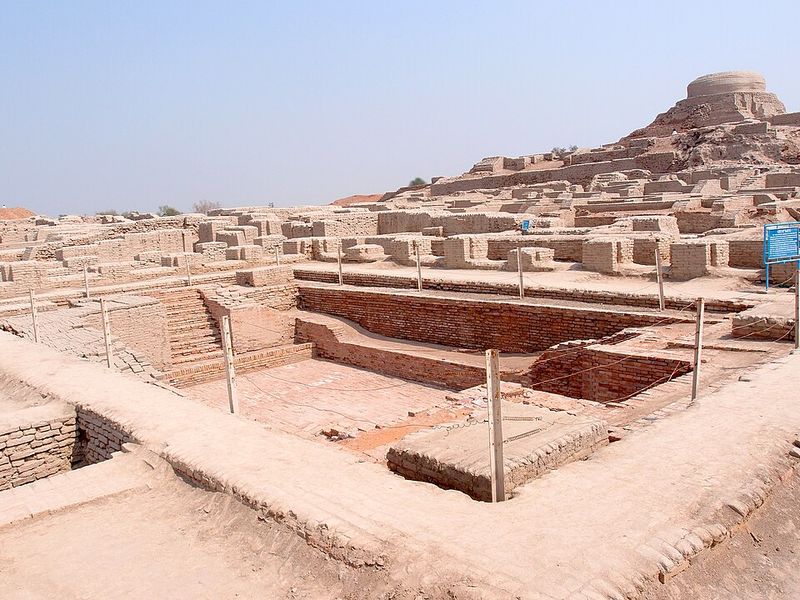
Around 2500 BC, while the Egyptians were building pyramids, an entirely different civilization was quietly thriving in the Indus Valley. Mohenjo-daro, located in present-day Pakistan, was one of the largest cities of the ancient world, home to perhaps 40,000 people who enjoyed an urban lifestyle that many later civilizations would not match for centuries.
The city had straight, grid-planned streets, a sophisticated sewage and drainage system, public baths, and multi-story brick homes. Remarkably, it showed little evidence of kings, armies, or grand temples, suggesting a society that may have been unusually egalitarian for its time.
No one has fully deciphered the Indus script, so much of what they believed and how they governed remains a mystery.
By around 1900 BC, Mohenjo-daro and the wider Indus Valley Civilization had declined, possibly due to climate shifts or river changes. The city was rediscovered by archaeologists in the 1920s and is now a UNESCO World Heritage Site.
14. Leptis Magna (Libya)
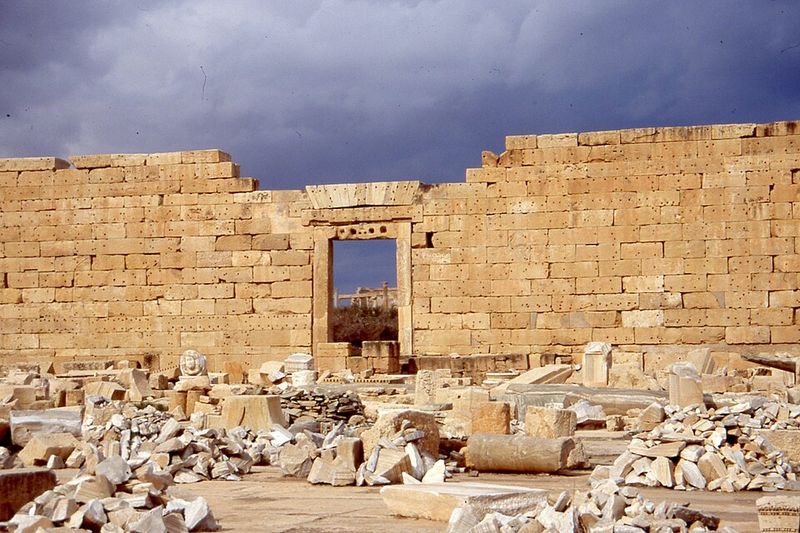
Born in Leptis Magna around AD 145, the Roman emperor Septimius Severus never forgot his hometown. When he rose to power, he lavished it with grand public buildings, marble columns, and monumental arches, transforming an already prosperous trading city into one of the most magnificent in the Roman Empire.
At its height, Leptis Magna rivaled Carthage and Alexandria for wealth and beauty.
The city had thrived for centuries as a port on the North African coast of present-day Libya, exporting olive oil, grain, and wild animals for Roman gladiatorial games. Its theater, market, and harbor were among the finest in the Roman world.
When Roman power weakened, Vandal invasions and shifting desert sands began burying the city. By the medieval period, Leptis Magna had been largely forgotten beneath sand dunes.
Centuries of natural preservation actually kept many of its structures remarkably intact, and it remains one of the best-preserved Roman cities anywhere in the world.
15. Akhetaten (Egypt)
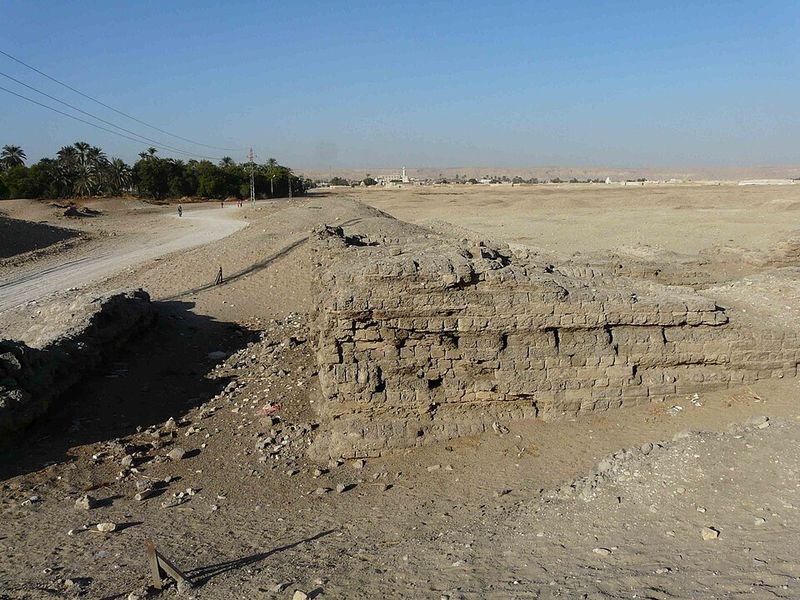
Pharaoh Akhenaten did something no Egyptian ruler had ever dared to do: he threw out the entire traditional religion and declared that only one god, the sun disk Aten, would be worshipped. To make his religious revolution permanent, he built a brand-new capital city from scratch in the desert, calling it Akhetaten, meaning “Horizon of the Aten.” Construction began around 1346 BC, and an entire royal court relocated there within a few years.
The city was planned with a royal road, temples open to the sky, and a palace complex stretching along the Nile in what is now Amarna, Egypt. It was a bold experiment in both religion and urban planning.
But when Akhenaten died around 1336 BC, his successors, including the famous Tutankhamun, quickly abandoned the city and returned to traditional religion.
Later pharaohs demolished Akhetaten’s buildings and erased Akhenaten’s name from monuments. The city vanished beneath the desert, rediscovered only in the modern era.
Share this story