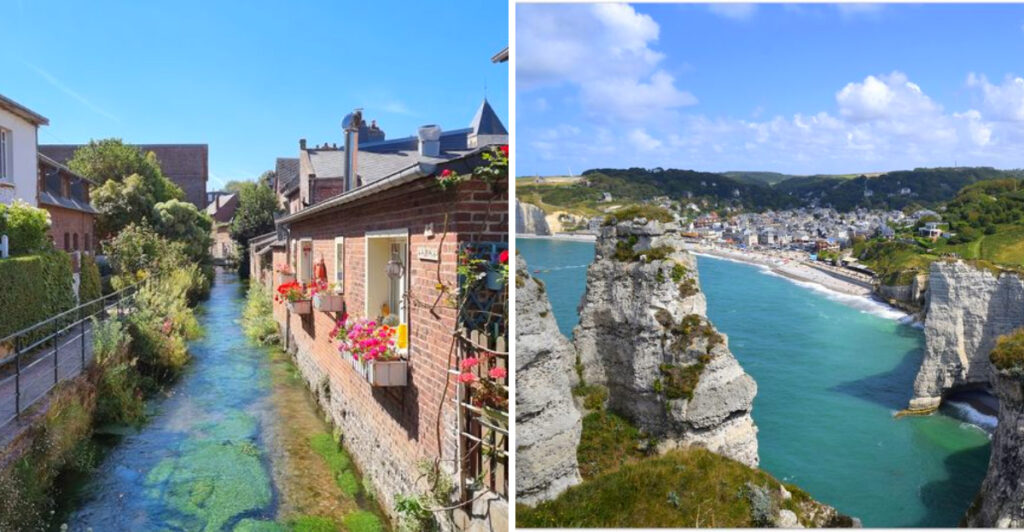
Northern France has a habit of hiding its best moments in plain sight, just beyond the famous ports, cathedrals, and postcard cliffs. If you like your getaways with cobbled lanes, salty air, quiet cafés, and the occasional sheep judging your hiking pace, you are in the right region.
These places offer charm without the elbow-to-elbow crowds, plus enough history and scenery to make your camera work overtime. Pack comfortable shoes, a light jacket, and a healthy appetite, because these hidden gems are ready to steal your weekend.
Veules-les-Roses
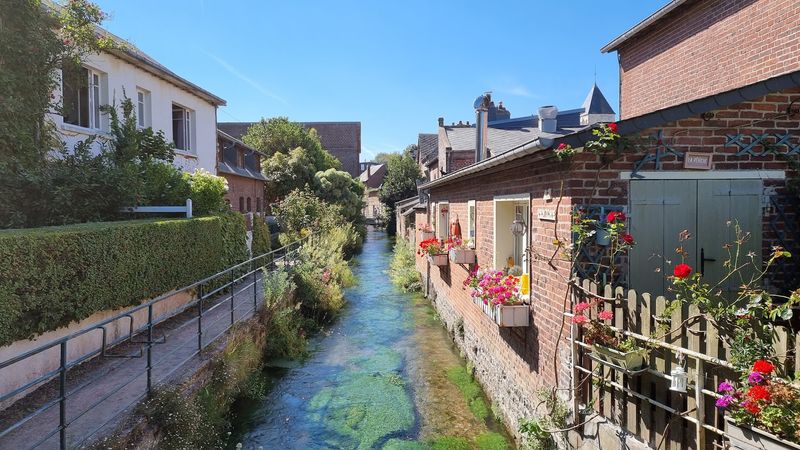
A river so tiny it feels like a local secret slips through Veules-les-Roses before meeting the sea. This Normandy village is famous for the Veules, one of France’s shortest rivers, and it makes every stroll feel delightfully unhurried.
You follow it past half-timbered houses, old mills, watercress beds, and gardens that look casually perfect.
The beach brings a salty finish to the walk, with chalky cliffs standing nearby and gulls providing the soundtrack. Unlike busier coastal towns, Veules-les-Roses keeps its voice low, which is exactly the appeal.
You can pause for seafood, linger over coffee, or simply admire how many flowers one village can fit into a lane.
Come here when you want Normandy charm without a crowd auditioning for the same photo. The village has enough history to satisfy curious wanderers, yet it never feels like an open-air museum.
It feels lived in, loved, and wonderfully calm, the kind of place where your schedule politely gives up.
Cassel
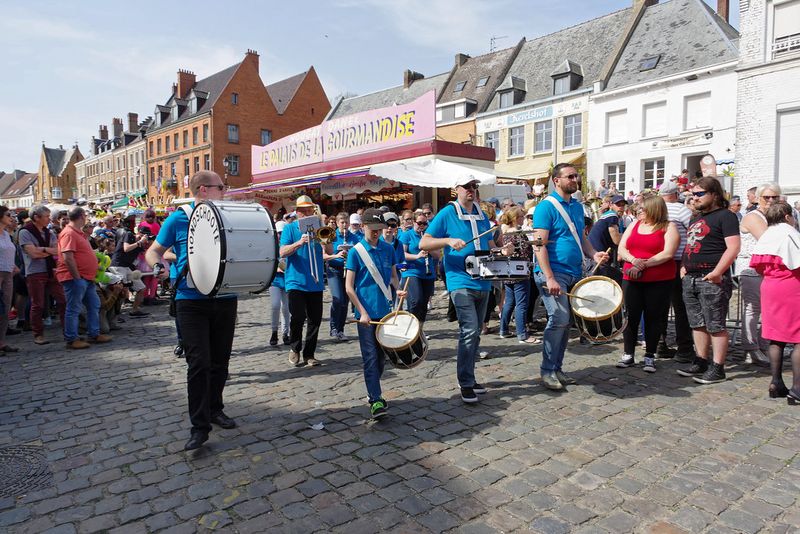
Cassel sits on its hill like it knows the view is excellent and is trying not to brag. From this French Flanders perch, you can look across wide fields, red-roofed villages, and a landscape that feels proudly northern.
The town itself is all cobbles, brick façades, cheerful cafés, and corners that reward slow wandering.
Its Flemish character gives Cassel a personality distinct from Normandy or Picardy. You will find traditional estaminets, local beer, hearty dishes, and a windmill that seems built for photographs.
The Musée de Flandre adds culture without making the day feel like homework, which is always appreciated.
Despite being officially beautiful, Cassel still escapes many international itineraries. That means you can climb, browse, snack, and admire without feeling swept along by a tour group tide.
Visit during a festival if you like color and music, or choose a quiet weekday for pure hilltop calm with a side of excellent fries.
Le Crotoy
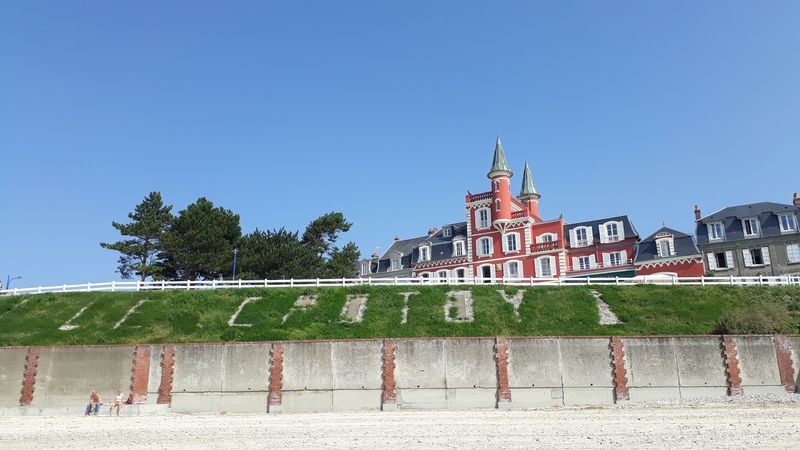
Le Crotoy has the rare northern beach that faces south, which sounds like a small detail until the light hits the bay. The town rests on the Baie de Somme, where sand, sky, and water keep shifting shapes throughout the day.
It is calm, breezy, and perfect for travelers who prefer fresh air over flashy attractions.
The waterfront invites easy walking, especially when the tide pulls back and reveals huge open spaces. You may spot seals in the bay, birds sweeping over the wetlands, and locals buying seafood with serious purpose.
The pace is gentle, but never dull, because the landscape keeps changing while you watch.
Le Crotoy works beautifully for a relaxed coastal break with a good coat and no grand plan. Sit at a terrace, order mussels, and let the bay do most of the entertaining.
For extra fun, pair it with the vintage steam train around the Somme Bay, because sometimes transport deserves applause too.
Lyons-la-Forêt
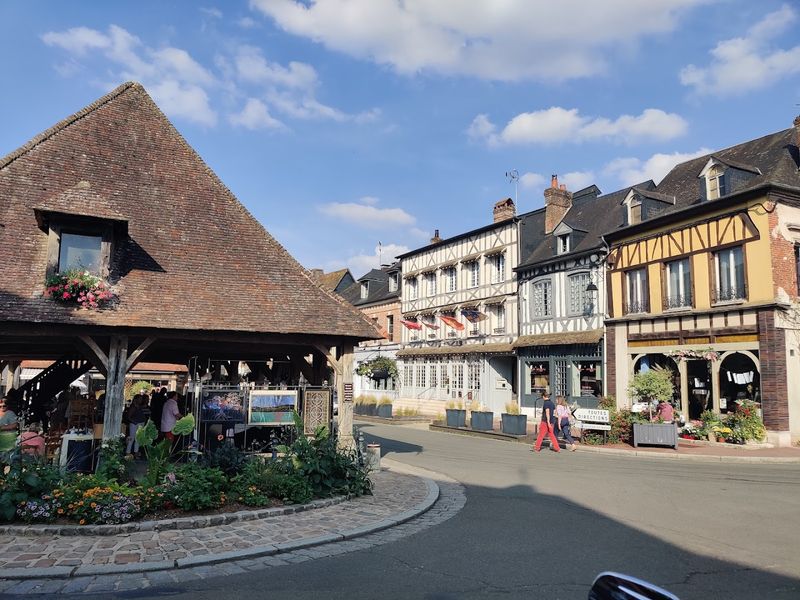
Some villages whisper fairytale, but Lyons-la-Forêt practically clears its throat and starts the story. Tucked beside one of France’s largest beech forests, it offers timber-framed houses, a graceful market square, and lanes made for aimless exploring.
Everything feels polished by time rather than staged for visitors.
The surrounding forest is the real bonus, especially if you like walks that begin with birdsong and end with cake. Trails lead through tall trees, quiet clearings, and that damp green scent only old woodland can manage.
Back in the village, cafés and antique shops make it easy to stretch a short visit into a full afternoon.
Lyons-la-Forêt is ideal when you want history, nature, and a slower rhythm in one neat package. It has literary and artistic connections, but you do not need a lecture to enjoy it.
Bring comfortable shoes, a curious mood, and enough time to do absolutely nothing quickly, which may be its greatest luxury.
Cayeux-sur-Mer
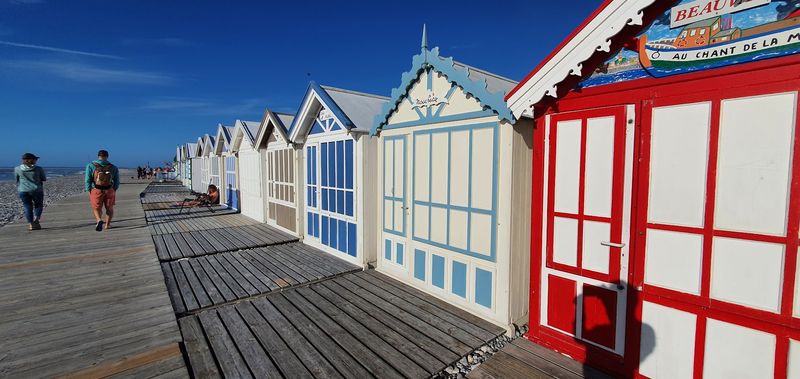
Cayeux-sur-Mer greets you with pebbles, sea air, and beach huts lined up like they are waiting for applause. This Picardy coast town feels refreshingly unfussy, with a long shoreline made for walking rather than posing.
The famous cabins add cheerful color to a landscape of shingle, sky, and shifting tides.
The boardwalk is the star, stretching along the beach and giving you space to wander without needing a destination. In summer, the town stays lively but rarely overwhelming, while cooler months bring a bracing, almost cinematic quiet.
Nearby, the Baie de Somme adds wildlife, wetlands, and wide horizons to the mix.
Cayeux-sur-Mer is not trying to be glamorous, and that is its best trick. You come for simple pleasures: a seaside stroll, fresh seafood, wind in your hair, and maybe a hot drink after the breeze wins.
If sandy beaches are not mandatory, this pebble-backed escape gives you northern coastal character in generous supply.
The Seven Valleys

The Seven Valleys sound like a fantasy map, but they are very real and wonderfully low-key. This Pas-de-Calais region unfolds in soft hills, rivers, farms, and villages where life seems pleasantly unhurried.
It is northern France for people who like green views, quiet roads, and bakeries that appear at exactly the right moment.
Cyclists and walkers get plenty to enjoy here, from gentle lanes to riverside paths and countryside loops. You can base yourself in small towns such as Hesdin or explore hamlets where church bells and tractors set the rhythm.
The area feels authentic because it is not straining to impress anyone.
That modesty makes the Seven Valleys a satisfying escape from headline destinations. Pack a picnic, follow a back road, and let the landscape surprise you in small, steady ways.
It is not about one famous monument, but about the pleasure of moving through rural France at a pace that lets you notice lunch.
Barfleur
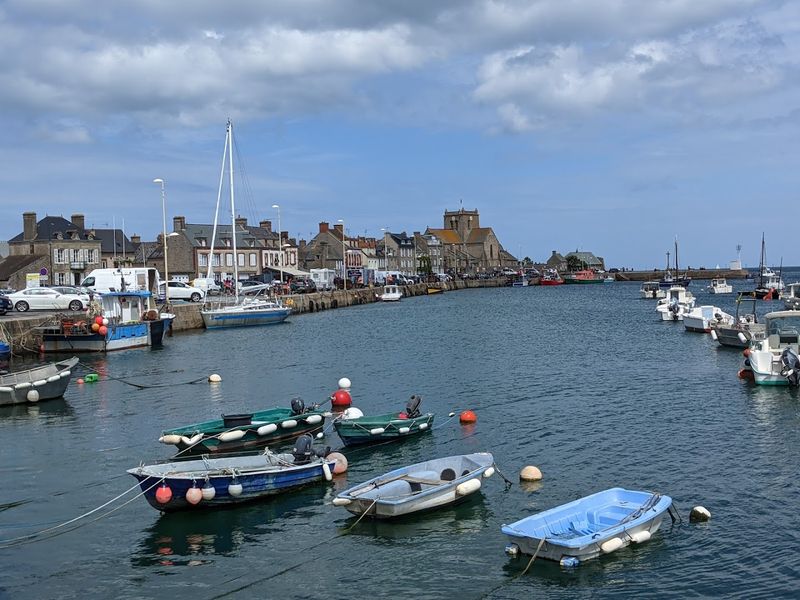
Barfleur looks like a fishing village that politely refused to become a theme park. Set on the Cotentin coast, it has sturdy granite houses, a working harbor, and boats that still look busy rather than decorative.
The result is simple, salty, and deeply appealing.
Walking here is easy and rewarding, especially around the quays where reflections ripple between stone walls and moored boats. Seafood is a major reason to stay for lunch, with local mussels, oysters, and fish doing their best persuasive work.
Nearby, the Gatteville lighthouse adds a dramatic side trip if your legs are feeling cooperative.
Barfleur’s charm comes from its restraint, not from grand attractions or glossy boutiques. You can sit by the water, watch the harbor shift through the day, and feel no pressure to achieve anything more ambitious.
For a coastal getaway with authenticity, fresh plates, and a handsome dose of Norman stone, this little port delivers beautifully.
Saint-Valery-sur-Somme
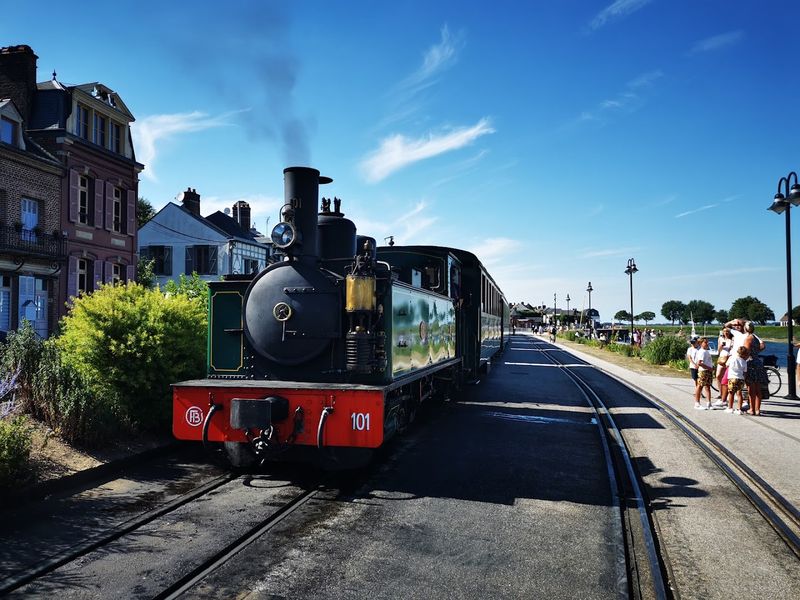
Saint-Valery-sur-Somme has medieval walls, bay views, and a steam train, which is frankly showing off. Perched above the Baie de Somme, the town blends old streets with wide coastal scenery.
You can climb through the upper town, pass stone houses and gardens, then look out over water, sand, and sky.
The old quarter is full of character, with cobbles, gates, and viewpoints that make every detour worthwhile. Down below, the harbor and promenade offer a gentler mood, especially when the light changes over the bay.
The heritage railway adds a playful touch, chugging between nearby towns with enough charm to make adults grin.
Wildlife lovers also have good reason to visit, since the bay is known for seals and birdlife. Yet Saint-Valery-sur-Somme never feels only like a nature stop or history stop.
It combines both with cafés, walks, and a relaxed rhythm, giving you a getaway that feels varied without becoming busy.
Cap Blanc-Nez & Cap Gris-Nez
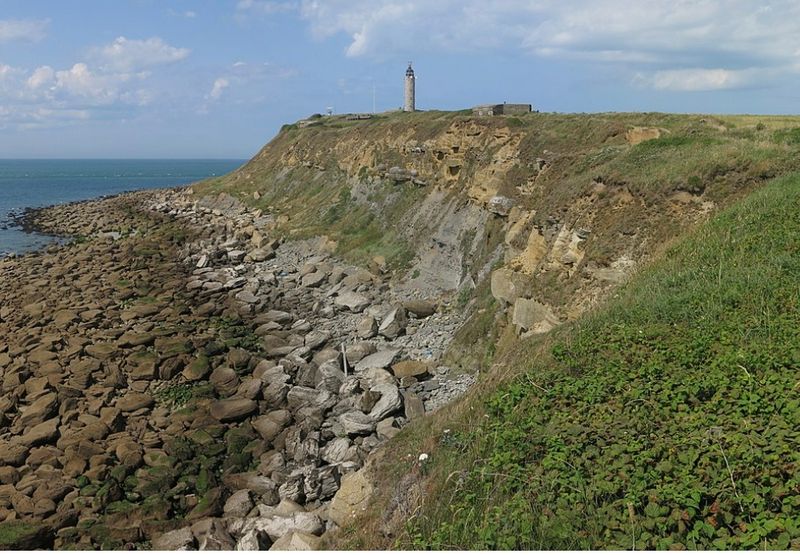
The wind at Cap Blanc-Nez and Cap Gris-Nez does not whisper, it delivers a full coastal opinion. These two headlands on the Opal Coast offer some of northern France’s most dramatic walking, with cliffs, waves, and huge skies.
On clear days, England appears across the Channel, looking close enough to start a debate.
Cap Blanc-Nez brings pale chalk cliffs and sweeping paths above the sea. Cap Gris-Nez feels darker, wilder, and more rugged, with viewpoints that make you zip your jacket without being told.
Between them, the coastline rolls through dunes, beaches, villages, and fields, creating a route that feels open and exhilarating.
This is the place to come when you want nature with bite and views that clear your head. The trails are accessible, but sensible shoes and layers are your friends.
Afterward, find a nearby village for seafood or a warming drink, then congratulate yourself for choosing cliffs over another crowded city square.
Honfleur Hidden Corners
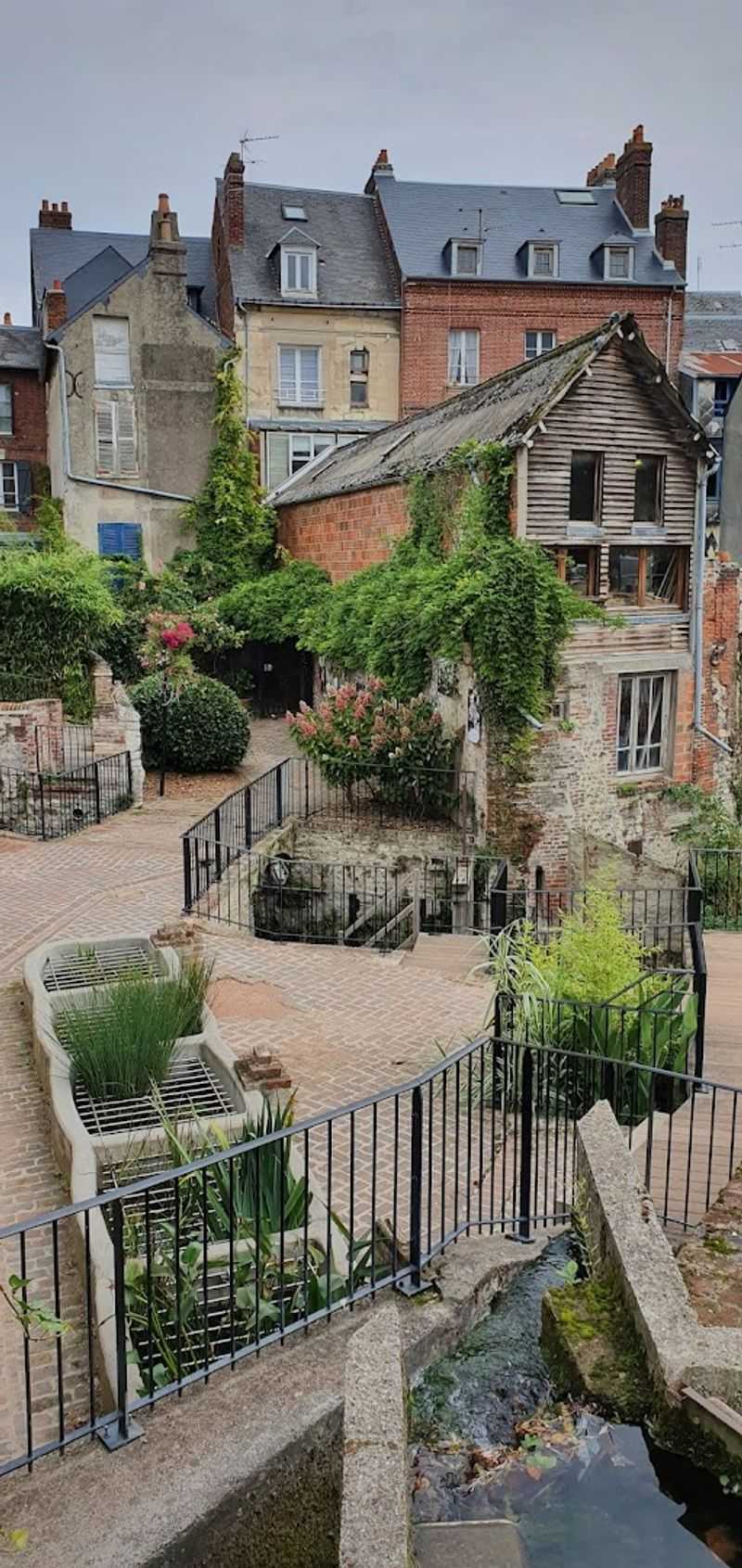
Honfleur’s harbor gets the applause, but the side streets deserve a standing ovation too. Many visitors circle the Vieux Bassin, take the classic photo, and leave before the town reveals its quieter tricks.
Step away from the water and you will find narrow lanes, tucked-away courtyards, galleries, and old houses leaning into their charm.
The Sainte-Catherine district rewards slow wandering, especially around its wooden church and surrounding streets. Small studios, discreet gardens, and peaceful stairways give Honfleur a softer personality than the busy harbor suggests.
Early morning is especially lovely, when shopkeepers open shutters and the town has not yet found its tourist voice.
This is still a famous destination, so the hidden-gem move is all about timing and curiosity. Avoid rushing, skip the obvious lunch hour crush, and follow the smaller streets when they tempt you.
Honfleur becomes far more personal once you stop treating it as one postcard and start letting it unfold corner by corner.
Amiens Floating Gardens
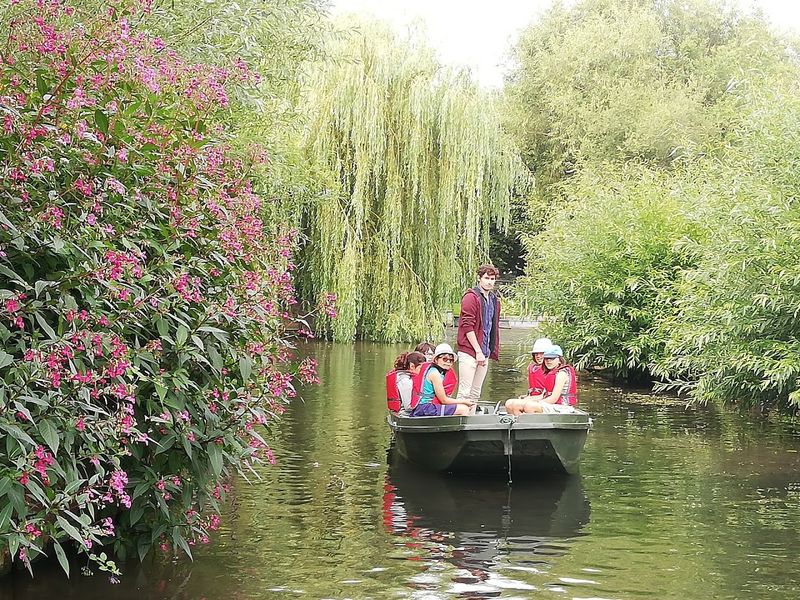
Amiens hides a watery green maze just beyond its grand cathedral, and it is a splendid surprise. The Hortillonnages are floating gardens threaded by narrow canals, where cultivated plots, trees, flowers, and reflections create a peaceful city escape.
You explore them best by traditional boat, gliding between banks that feel almost rural.
The contrast is what makes the experience so memorable. One moment you are in a northern French city, and the next you are drifting past vegetable gardens and willow branches.
Local guides often share stories about the gardeners, the waterways, and the old market traditions that kept this unusual landscape alive.
Visiting the floating gardens adds a softer side to an Amiens trip. See the cathedral, absolutely, but do not stop there or you will miss the city’s most quietly magical corner.
Go in spring or summer for lush color, bring a camera, and prepare to leave wondering why more people are not talking about it.
Boulogne-sur-Mer Old Town
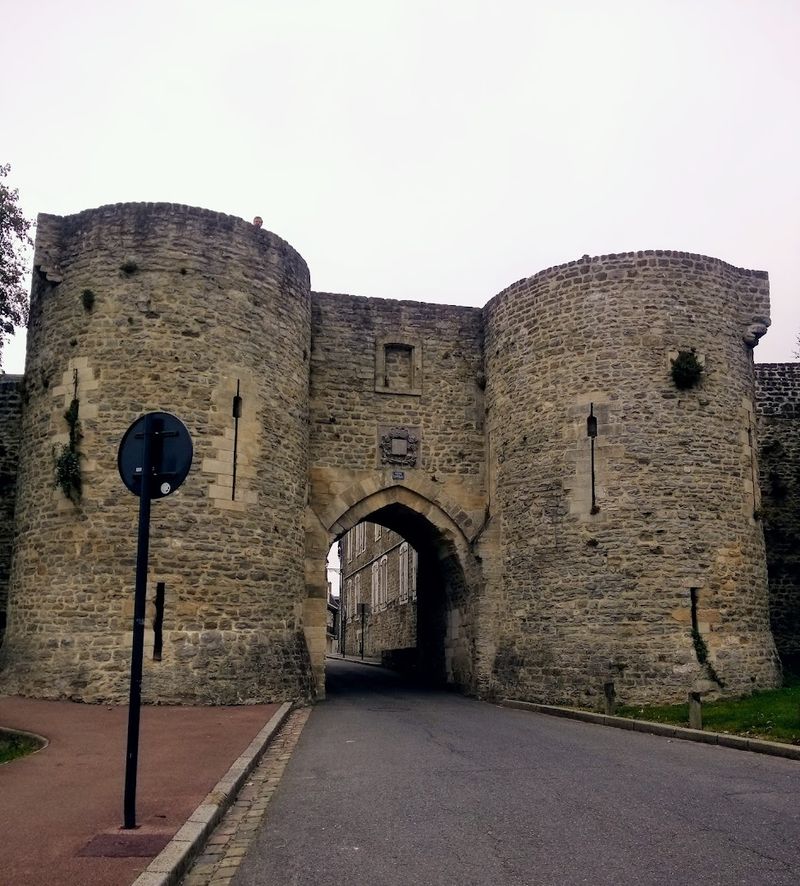
Boulogne-sur-Mer may be known for its port, but the old town is where the real charm sneaks up on you. Behind fortified walls, narrow streets climb past stone buildings, quiet squares, and views that remind you this city has layers.
It feels historic without feeling frozen.
The basilica dome dominates the skyline, while the castle museum adds culture inside thick medieval walls. Walking the ramparts is a simple pleasure, giving you a sense of the town’s shape and its long relationship with the sea.
Cafés and small restaurants make the area an easy place to linger between sightseeing stops.
What makes Boulogne’s old town special is the mix of everyday life and serious history. It is not polished into perfection, and that honesty gives it character.
Pair it with the waterfront or Nausicaá if you want a fuller day, but save unhurried time for the walled quarter, where Boulogne becomes much more than a ferry-port name.
Étretat Beyond the Cliffs
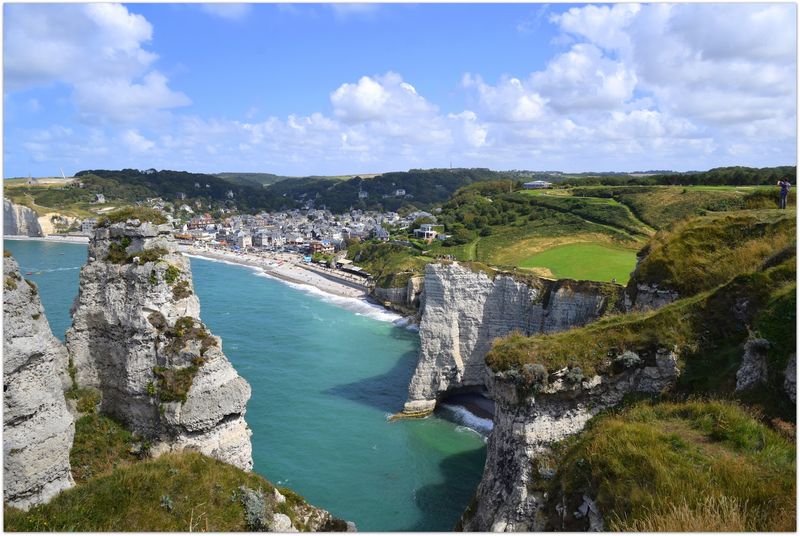
Étretat’s famous arches are not exactly hidden, but the best breathing room waits beyond the obvious viewpoints. Most visitors cluster near the beach and cliff paths closest to town, cameras raised and patience tested.
Walk farther, however, and the crowds thin while the scenery keeps delivering.
The surrounding countryside offers trails through fields, quiet lanes, and cliff-top routes with magnificent Channel views. You still get the drama of chalk cliffs and sea arches, but with more birdsong and fewer elbows.
Early morning or late afternoon brings softer light and a calmer mood, especially outside peak summer days.
This version of Étretat rewards travelers willing to add a little effort. Pack water, wear proper shoes, and give yourself time to explore beyond the main photo stops.
The town remains lovely for a meal afterward, but the quieter paths are where the coast feels grand, fresh, and surprisingly personal again.
Locronan
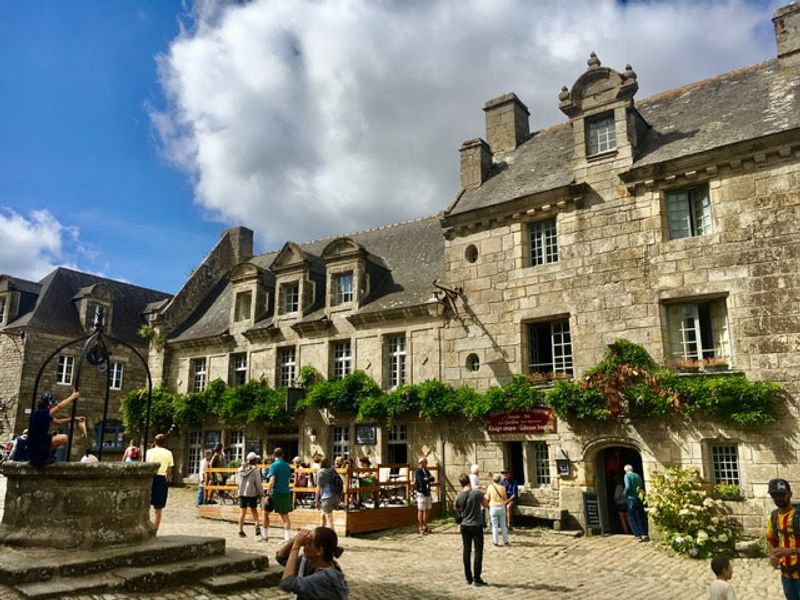
Locronan looks so well preserved that you may check whether your phone has accidentally opened a history app. This granite village near the Brittany edge has cobbled streets, handsome stone houses, and a central square that feels beautifully untouched.
Modern clutter is kept low, letting the architecture do the talking.
The village became wealthy through sailcloth production, and that prosperous past still shows in its elegant buildings. Today, you can browse craft shops, visit the church, and wander lanes where every stone seems to have a patient expression.
It is compact, but the atmosphere is rich enough to make a short visit feel satisfying.
Locronan can get busy during popular periods, so arrive early if you want the quiet magic. Even with visitors, it has a rare visual harmony that makes wandering easy and rewarding.
Stop for a crêpe, look back at the square before leaving, and you will understand why this small place makes such a lasting impression.
Montreuil-sur-Mer
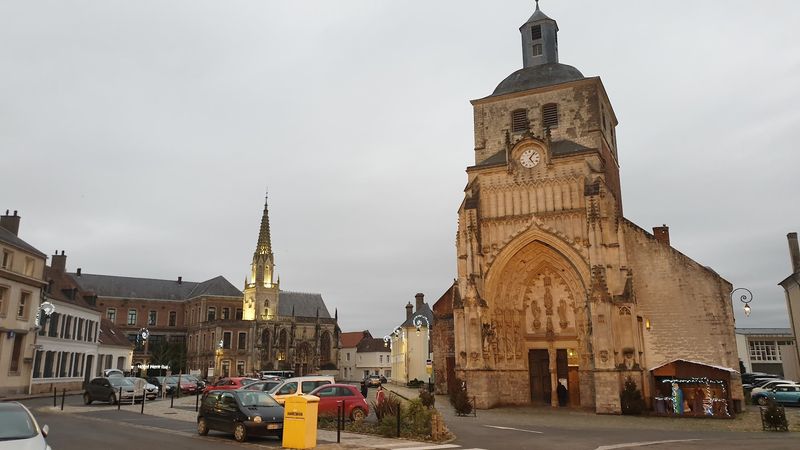
Montreuil-sur-Mer is not actually by the sea, which is a fine little joke to start your visit. This fortified town sits inland in Pas-de-Calais, wrapped in ramparts and filled with cobbled streets, old houses, and quiet elegance.
Its name comes from a time when the sea reached closer, so geography gets a historical excuse.
The rampart walk is the highlight, offering leafy views, peaceful paths, and a satisfying sense of enclosure. Inside the walls, you will find small squares, restaurants, antique shops, and corners that feel made for gentle wandering.
Literature fans may enjoy its connection to Victor Hugo, who placed part of Les Misérables here.
Montreuil-sur-Mer has enough charm for a weekend but remains wonderfully uncrowded compared with better-known towns. It is polished without being precious, historic without being sleepy, and small enough to explore at leisure.
Come for the walls, stay for dinner, and enjoy a northern French escape that quietly overdelivers.
Share this story