 Unearth The Voyage
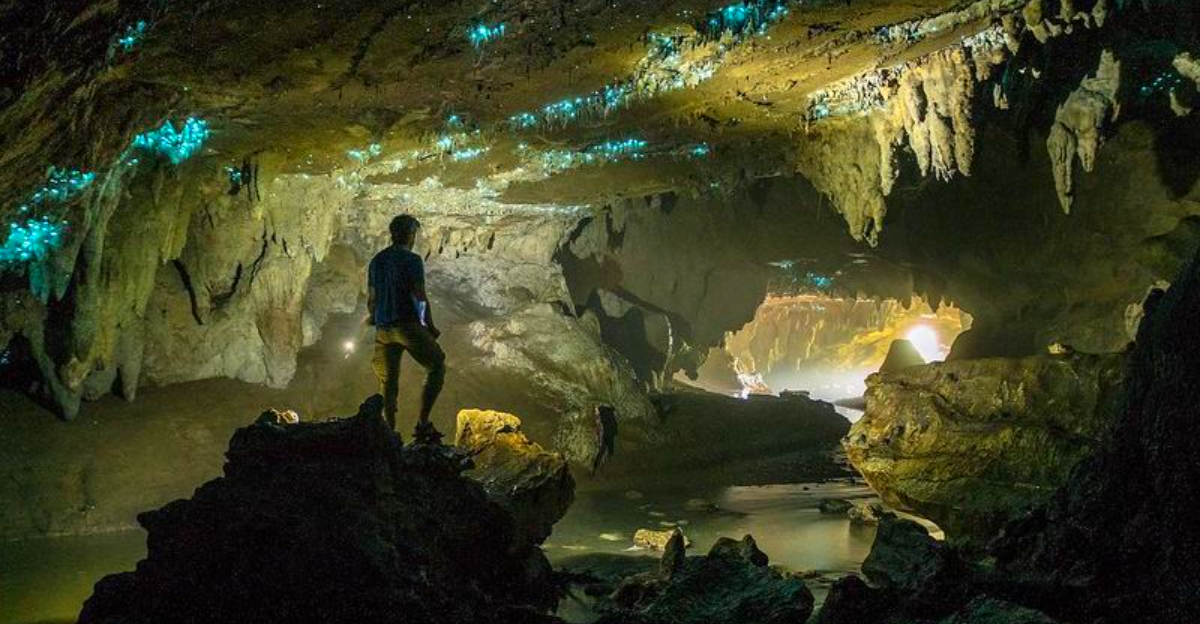
Beneath our feet lies a hidden universe filled with ancient cities, mysterious tunnels, and breathtaking underground marvels that most people never get to see. From vast networks carved by human hands thousands of years ago to natural cave systems that glow with living light, these buried treasures tell incredible stories of survival, artistry, and ingenuity.
Many of these subterranean wonders remained secret for centuries, waiting to be rediscovered and explored. Join us as we journey into the depths to uncover some of the most astonishing places hidden below the surface of our planet.
Derinkuyu Underground City — Turkey’s Subterranean Metropolis
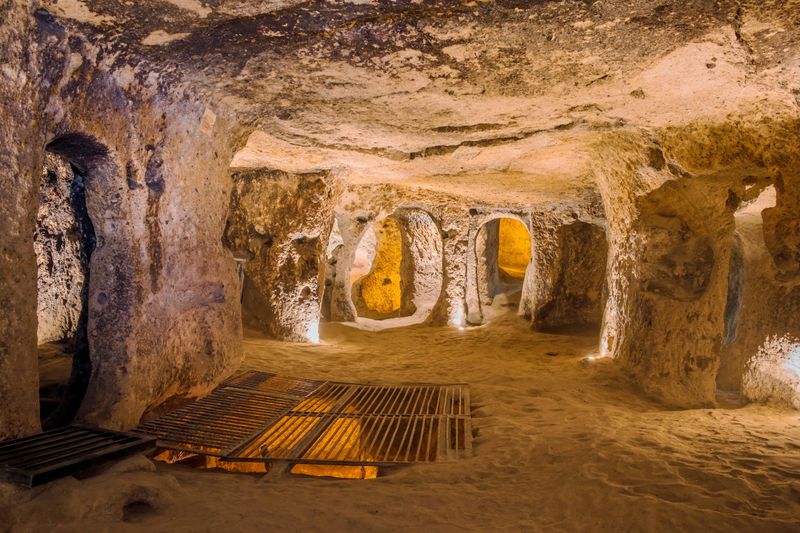
Deep beneath Turkey’s Cappadocia region, Derinkuyu Underground City is one of the most astonishing buried wonders ever discovered. Carved into soft volcanic rock, this ancient underground settlement reaches down about 85 meters and could accommodate up to 20,000 people with food stores, livestock areas, and religious spaces.
Built as early as the 8th–7th century BC, Derinkuyu served as a refuge during invasions and unrest, complete with ventilation shafts, rolling stone doors, and interconnected levels that ensured survival out of sight of the world above. Entire families would descend into the darkness, bringing their animals and supplies, knowing they could survive for months if needed.
Today, visitors can walk through its labyrinthine chambers and imagine entire communities living underground for extended periods. The ingenuity required to design such a complex system without modern tools is staggering.
Every tunnel, every air shaft, every storage room was carved with purpose and precision.
Derinkuyu stands as a testament to human resilience and creativity. It reminds us that when faced with danger, people found safety not by building walls, but by going deeper into the earth itself.
Ellora Caves — India’s Rock-Cut Temple Wonder
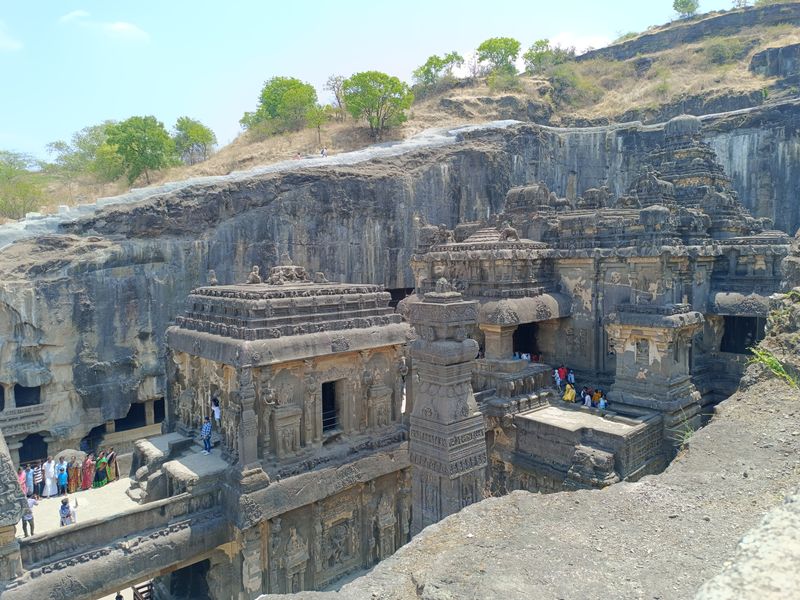
The Ellora Caves in Maharashtra, India, represent one of the most extraordinary examples of rock-cut architecture in the world. Though not entirely subterranean like a tunnel city, more than 100 temples and monasteries have been excavated directly from the basalt cliffs, forming a hidden complex of sacred spaces beneath the surface.
Dating from roughly AD 600–1000, the caves showcase Hindu, Buddhist, and Jain artistry and spiritual life in deeply carved halls and sanctuaries. Artists and monks worked together for generations, chiseling away solid rock to create places of worship and meditation.
The dedication required is almost unimaginable.
Notable among them is the Kailash Temple, the largest single monolithic rock excavation on Earth. This massive structure wasn’t built—it was carved downward from the top of a cliff, removing thousands of tons of stone.
Every pillar, every statue, every detail was once part of the mountain itself.
These subterranean temples illustrate how ancient builders transformed solid rock into vibrant spiritual worlds hidden from view. Walking through Ellora feels like stepping into another dimension where stone becomes poetry and faith becomes architecture.
Odesa Catacombs — Ukraine’s Labyrinth of Mystery
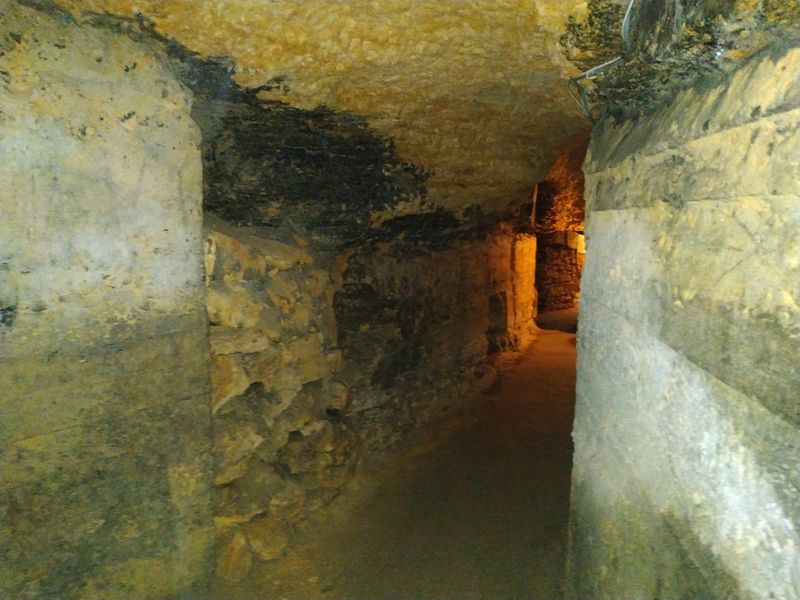
Underneath the streets of Odesa, Ukraine, lies one of the most extensive underground networks on Earth—the Odesa catacombs. Consisting of a labyrinth of tunnels originally created by limestone mining, this subterranean maze stretches up to 2,500 km beneath the city.
That’s longer than the entire country of Luxembourg is wide.
Over time these tunnels served many roles: storage, hidden passages, and even World War II air-raid shelters. Partisans hid from occupying forces in the darkness, and smugglers used the passages to move goods unseen.
The walls still bear marks from different eras of use.
Legends and folklore have grown around the catacombs, including tales of smugglers and hidden treasures. Some say people have entered and never returned, lost forever in the endless maze.
Others whisper about secret chambers filled with forgotten riches.
Today, a small section near the Museum of Partisan Glory offers glimpses into this vast underworld—a city beneath a city filled with history and mystery. Most of the catacombs remain unexplored and unmapped, holding secrets that may never be fully uncovered.
Naours Underground City — France’s Hidden Fortress
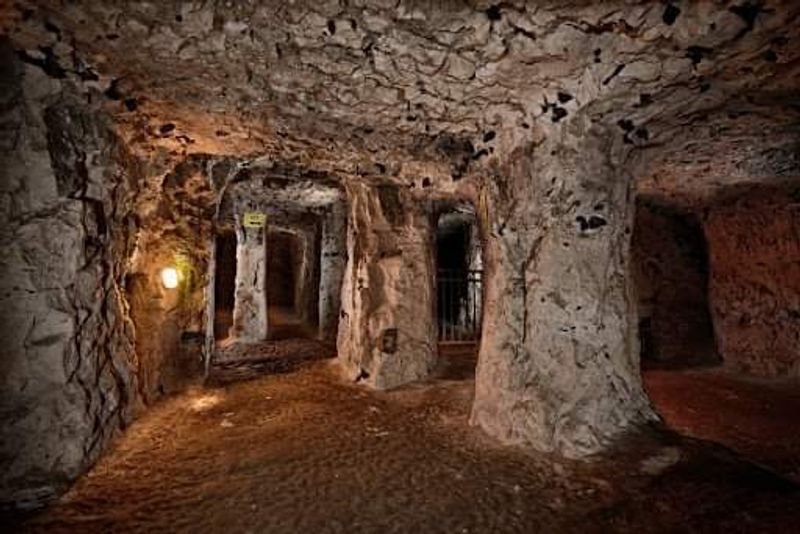
In northern France, near the town of Naours, lies a remarkable network of subterranean galleries carved deep into limestone. Known as the Naours Underground City, this hidden world was expanded over centuries to serve as shelter from invading forces, particularly during medieval wars and later conflicts.
Visitors today can explore hundreds of chambers and corridors, once used as living quarters, storage rooms, and places of refuge. Families would gather their belongings and livestock, descending underground when enemy armies approached.
The silence and coolness of the stone provided both safety and comfort.
These underground passages evoke images of entire communities seeking protection below ground, a powerful reminder of how humans adapted beneath the surface when times were perilous. Graffiti from soldiers during World War I still marks some walls, adding layers of history to the ancient stone.
Walking through Naours today feels like traveling through time. Each chamber whispers stories of fear, hope, and survival.
The limestone walls have witnessed centuries of human struggle and perseverance, standing silent guard over the memories of those who sought shelter in the earth’s embrace.
Wieliczka Salt Mine — Poland’s Subterranean Cathedral
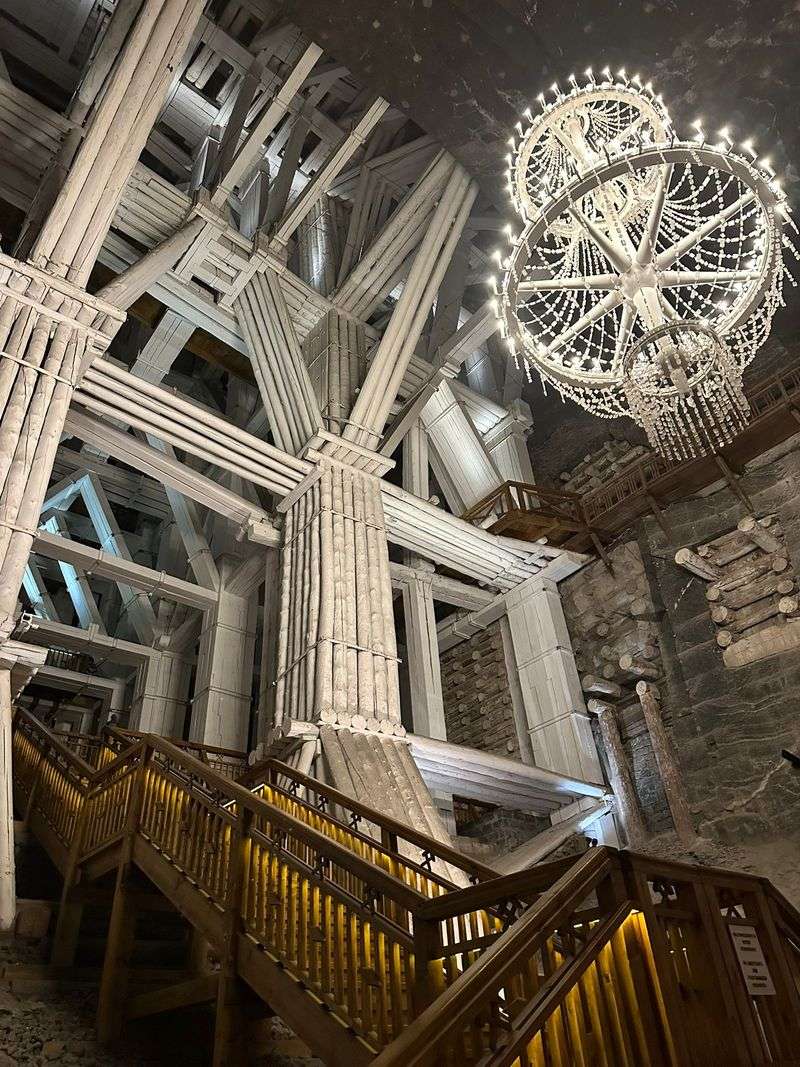
Carved thousands of feet beneath the earth near Kraków, the Wieliczka Salt Mine is one of the most unique underground wonders in the world. This monumental mine extends through a complex network of chambers, tunnels, and lakes, but its artistic legacy sets it apart: salt-carved chapels, sculptures, and even a cathedral.
Workers over centuries transformed this industrial site into a spiritual and cultural subterranean space, with ornate salt carvings that reflect both human craftsmanship and deep geological history. Miners would pray in these chapels before beginning their dangerous work, seeking protection from cave-ins and accidents.
The Chapel of St. Kinga is perhaps the most breathtaking, featuring chandeliers, altarpieces, and floor tiles all carved entirely from salt. Even the air tastes slightly salty as you descend deeper into this underground marvel.
Everything sparkles in the dim light, creating an otherworldly atmosphere.
Today, guided tours reveal a hidden world of art and architecture beneath the Polish countryside. Visitors descend hundreds of steps into the depths, discovering underground lakes that mirror the salt sculptures above.
The mine has been in continuous operation for over 700 years, making it one of the world’s oldest functioning salt mines.
Montreal Underground City — Urban Subterranean Metropolis
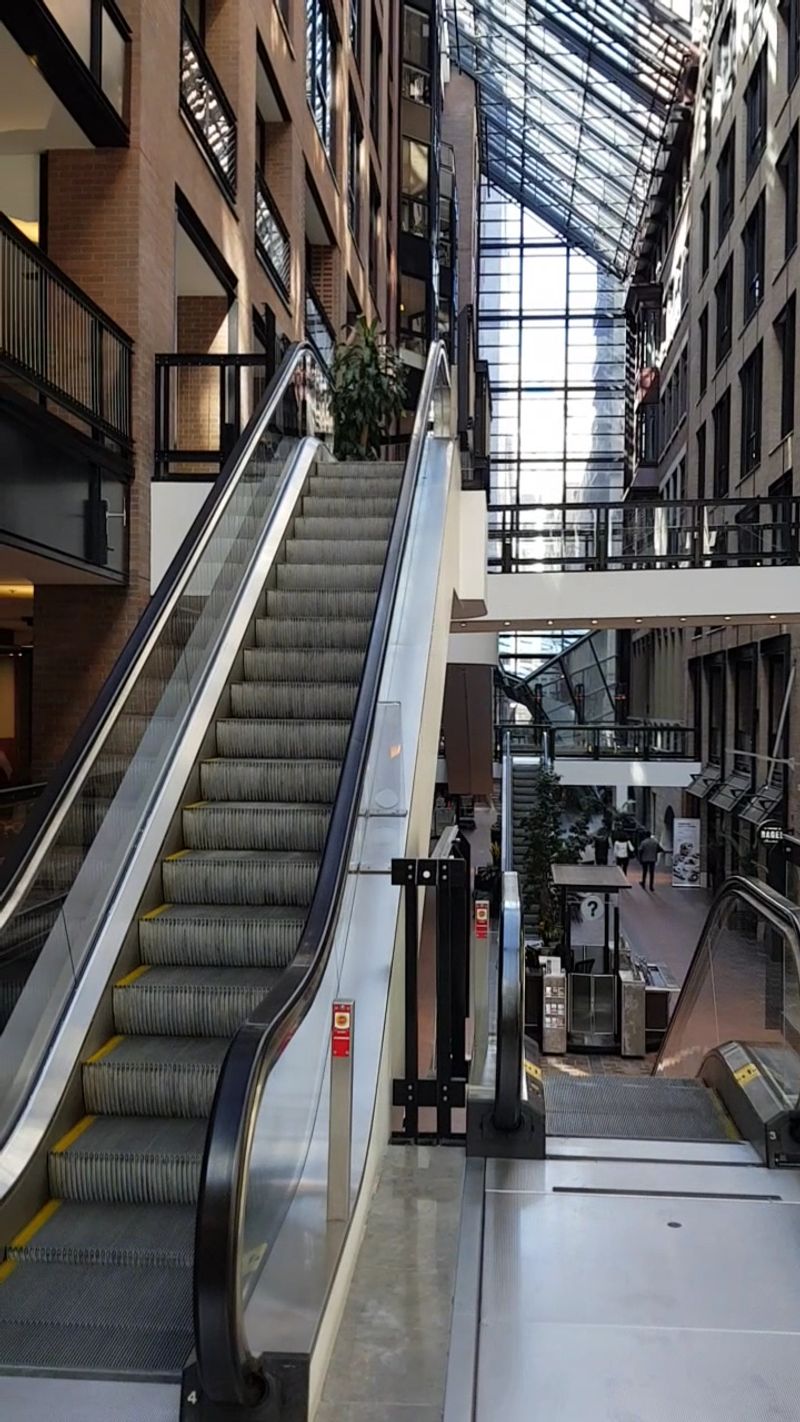
Beneath one of Canada’s largest cities is an immense underground network known simply as RESO or the Montreal Underground City. Stretching across more than 32 km of tunnels beneath Montreal’s downtown, this modern subterranean wonder connects office buildings, shopping centers, transit stations, and cultural spaces.
Unlike ancient underground ruins, RESO is a living underground city used daily by residents and visitors—especially in winter—blending utility, commerce, and urban design into a hidden world that functions just as crucially as the streets above. When temperatures plunge below freezing, thousands of people navigate their entire day without stepping outside.
You can eat breakfast, go to work, shop for groceries, catch a movie, and return home all without seeing daylight. The network includes over 120 exterior access points and connects to metro stations, making navigation surprisingly easy once you learn the system.
RESO represents a different kind of underground wonder—not built for refuge or worship, but for everyday convenience and comfort. It shows how modern cities can expand downward as well as upward, creating multiple layers of urban life that coexist in the same footprint.
Subterranean Cisterns of Istanbul — Ancient Water Worlds
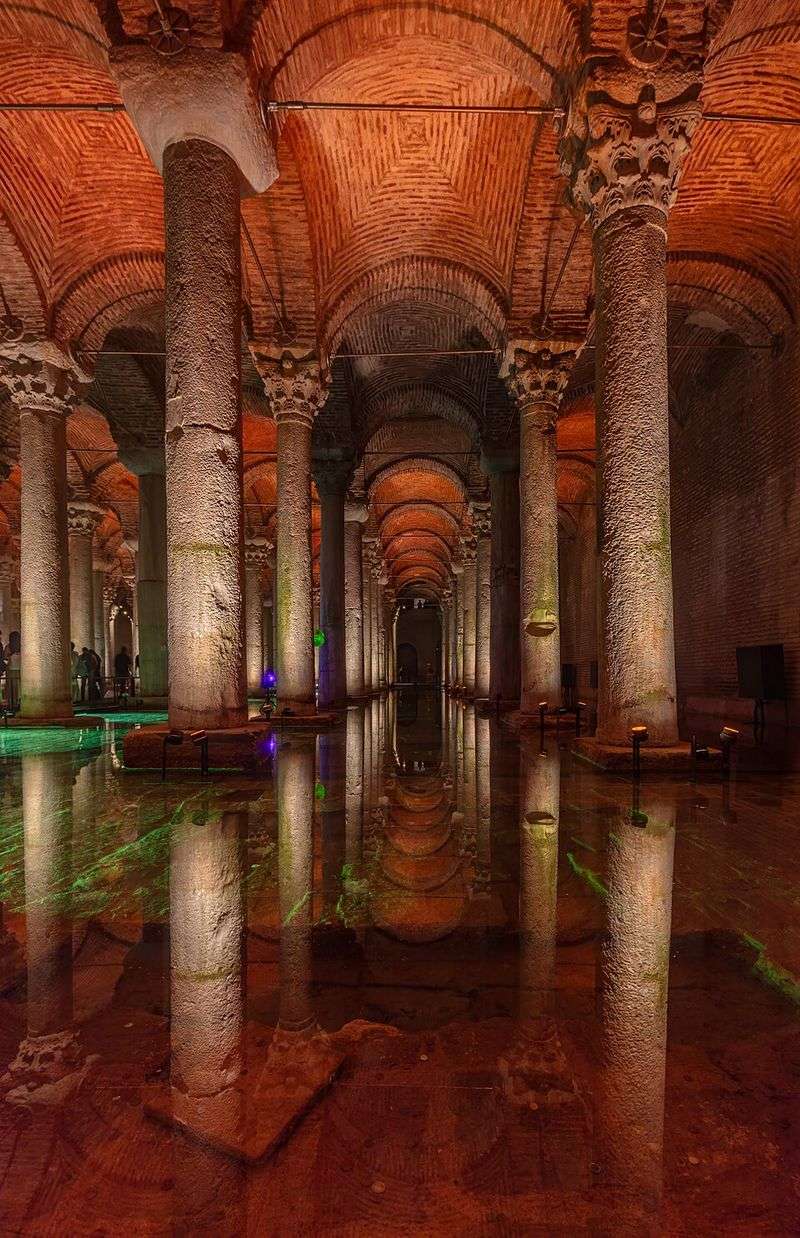
Beneath Istanbul’s modern streets lie ancient cisterns—enormous chambers built to store water for the Byzantine and Ottoman empires. The most famous, Basilica Cistern, once supported palaces and public fountains with its massive columns and vaulted ceilings hidden under the city.
Walking among these dimly lit halls feels like entering a cathedral of stone and water, where carved columns and fish-filled pools echo centuries of history. The soft sound of dripping water creates a meditative atmosphere that transports visitors back to a time when emperors ruled from Constantinople.
Two Medusa head columns sit mysteriously at odd angles—one sideways, one upside down—repurposed from earlier Roman structures. Nobody knows exactly why they were positioned this way, adding to the cistern’s enigmatic charm.
The dim lighting and reflections create an almost dreamlike environment.
These subterranean reservoirs are architectural marvels and reminders of how ancient societies engineered complex systems beneath the ground to sustain life above. Istanbul has dozens of cisterns, many still undiscovered, lying silent beneath busy streets and modern buildings.
The Basilica Cistern alone could hold 80,000 cubic meters of water, enough to supply the entire palace district during sieges.
Catacombs of Paris — Rome-Inspired Labyrinth Beneath France
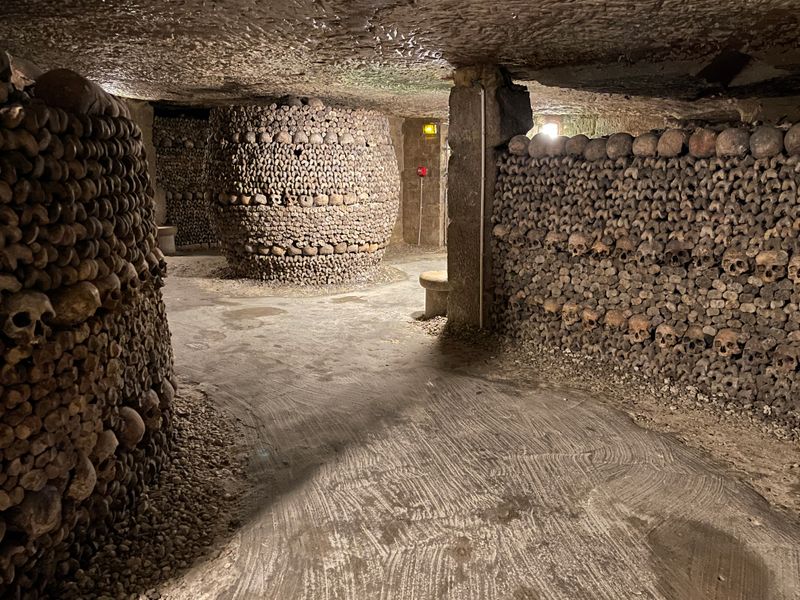
The Catacombs of Paris are a vast maze of limestone tunnels and ossuaries that stretch for miles under the French capital. Created in the late 18th century to relieve overcrowded cemeteries, they hold the skeletal remains of millions transferred from Paris’s graveyards.
These atmospheric corridors—lined with bones and historic markers—have become one of the world’s most intriguing subterranean attractions, offering a haunting look into how societies have dealt with space, death, and memory beneath bustling city streets. The bones are arranged in decorative patterns, creating macabre yet strangely beautiful displays.
Walking through the catacombs, you pass under signs bearing philosophical messages about mortality and the fleeting nature of life. “Stop! This is the empire of death,” reads one famous inscription at the entrance.
The temperature remains constant year-round, cool and slightly damp.
Beyond the official tour route, illegal cataphiles explore forbidden sections, mapping unmapped tunnels and discovering forgotten chambers. These underground explorers risk fines and arrest to experience the full extent of Paris’s hidden underworld.
The catacombs represent both a practical solution to a public health crisis and an enduring monument to millions of forgotten Parisians.
Cappadocia’s Rooftop to Underground Network — Turkey
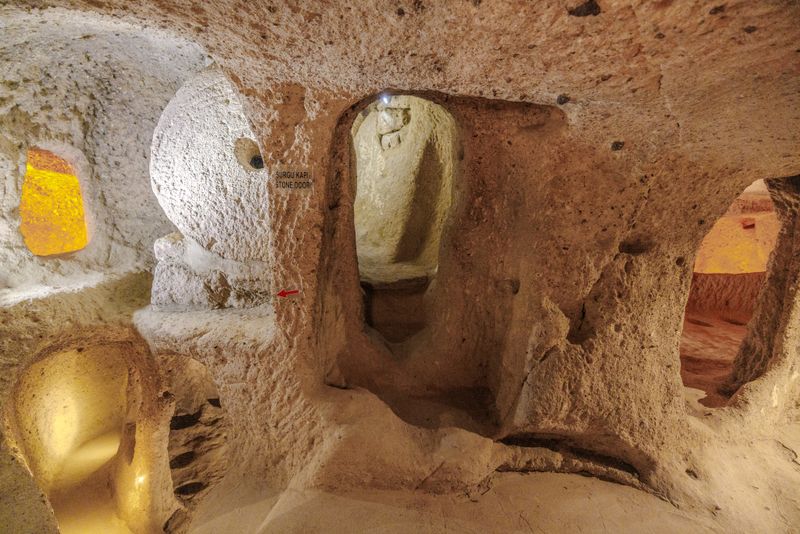
Beyond Derinkuyu, Cappadocia’s underground wonders include multiple subterranean complexes, such as Kaymakli and others scattered beneath the region’s surreal surface landscapes. These cities and tunnels were expanded over centuries as multi-level refuges, allowing entire populations to hide and live during periods of invasion or conflict.
The network’s design reflects deep strategic thinking—with interconnected cells, storage chambers, ventilation systems, and narrow escape routes—turning the earth itself into a hidden fortress and a testament to human adaptation. Some passages were intentionally made narrow to force invaders into single file, making defense easier.
Rolling stone doors weighing hundreds of kilograms could be pushed into place from inside, sealing off sections of the city. These massive circular barriers are engineering marvels, balanced so precisely that one person could move them.
Once closed, they were nearly impossible to breach from the outside.
Archaeologists continue discovering new underground cities in Cappadocia, suggesting the full extent of this subterranean network may never be completely known. The soft volcanic tuff was perfect for carving, allowing even simple tools to create elaborate spaces.
Entire generations lived their whole lives knowing these underground refuges existed beneath their homes, ready whenever danger approached.
Forestiere Underground Gardens — USA’s Subterranean Oasis
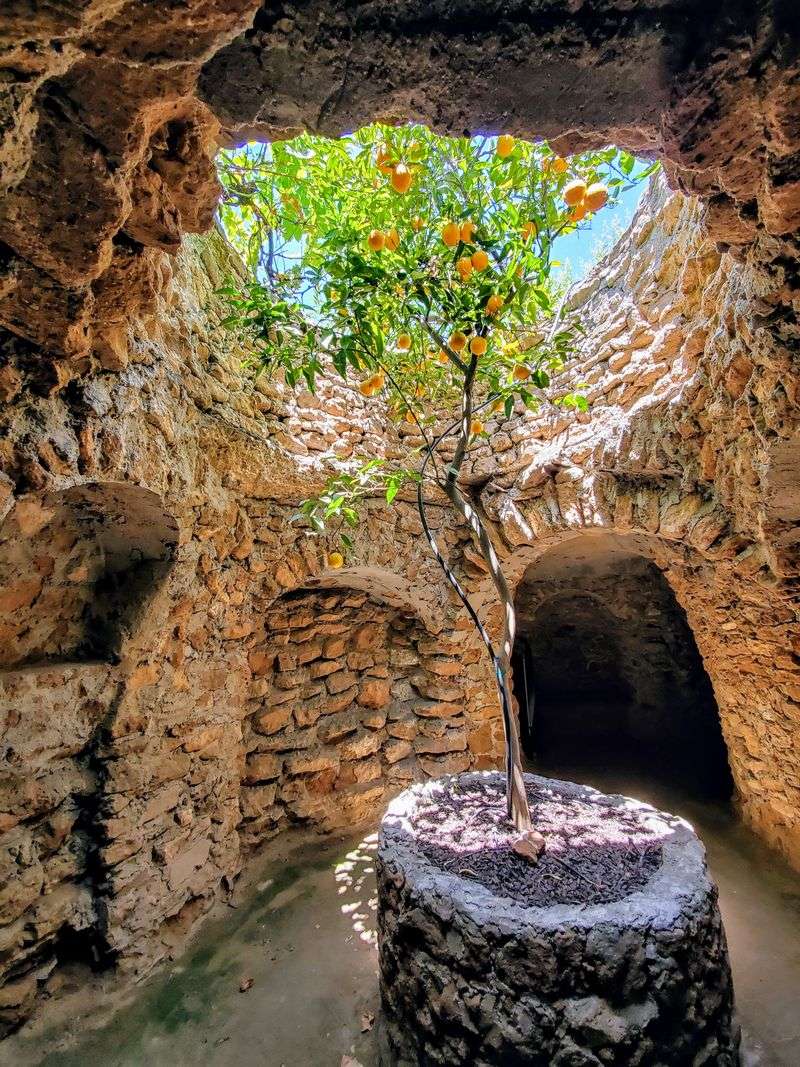
In Fresno, California, the Forestiere Underground Gardens are a surprising hidden oasis carved by hand into sun-baked soil by a Sicilian immigrant over 40 years in the early 20th century. Baldassare Forestiere arrived in California expecting mild weather, but found the Central Valley heat unbearable.
This sprawling yard features underground rooms, courtyards, and groves shaded by vines—all beneath the surface for natural cooling. Forestiere dug out over 10 acres of underground space using only hand tools, creating a network of passageways, living quarters, and growing areas.
He planted citrus trees that grew up through skylights, their roots in cool earth while their branches reached for sun.
It’s a remarkable blend of design, perseverance, and hidden artistry, showing how human creativity can transform the underground into a life-sustaining environment. Forestiere lived in his underground home year-round, enjoying comfortable temperatures while surface dwellers sweltered in summer heat.
Sadly, Forestiere died before completing his vision, but his underground gardens remain open to visitors. Walking through the cool passages on a hot California day, you understand his genius—he didn’t fight the climate, he went beneath it.
Postojna Cave — Slovenia’s Subterranean Realm
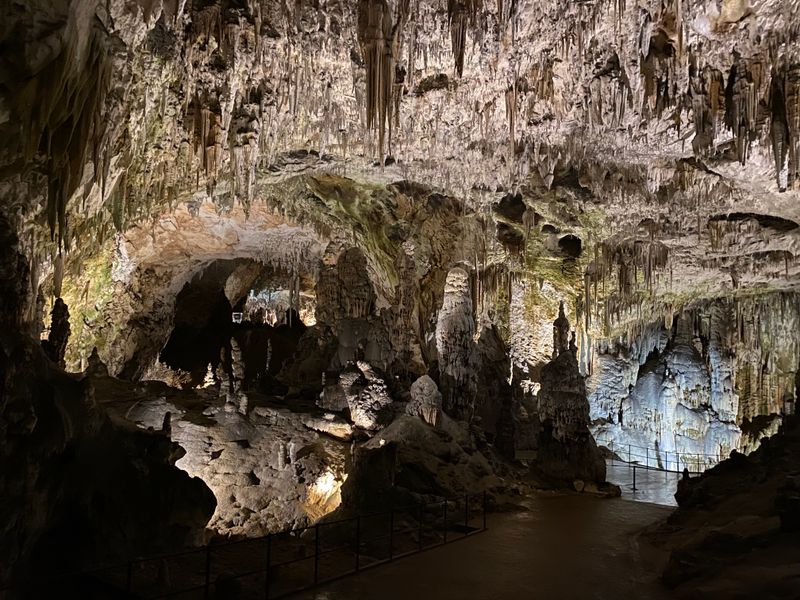
One of the world’s most spectacular cave systems, Postojna Cave opens into vast chambers, stalactites, and flowing rivers beneath Slovenia’s karst landscape. Discovered in its full extent in the 19th century, this natural wonder has been attracting visitors for over 200 years.
Visitors can explore this underground realm of stone and shadow on foot or by train, passing through tunnels that feel like a hidden world untouched by time. The miniature train carries you deep into the mountain, rushing through narrow passages before opening into cathedral-sized chambers.
The experience is both thrilling and humbling.
The cave’s natural beauty and scale invite wonder at the forces of geology that sculpted this subterranean domain. Formations with names like “Brilliant” and “Winter Tale” sparkle in carefully placed lighting, revealing colors and textures formed over millions of years.
Water continues its patient work, dripping and flowing, adding microscopic layers to already massive formations.
Postojna is also home to the olm, a rare blind salamander called the “human fish” because of its pale, skin-toned appearance. These creatures can live over 100 years in complete darkness, perfectly adapted to the cave’s eternal night.
Waitomo Glowworm Caves — Bioluminescent Underworld
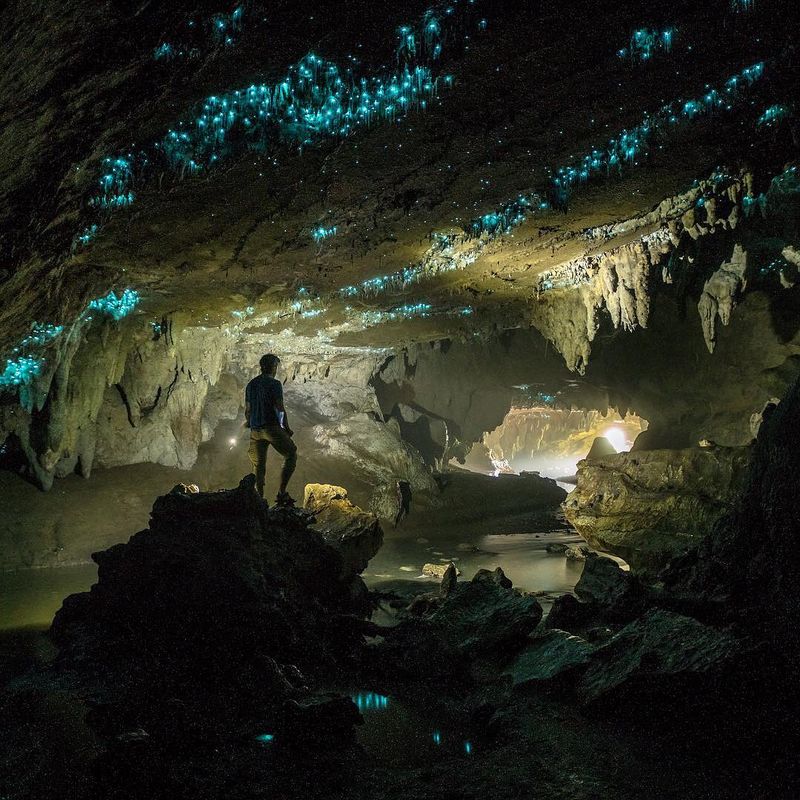
New Zealand’s Waitomo Caves are not only geological wonders but also living underground ecosystems, illuminated by thousands of glowworms that create a starry effect on cavern ceilings. These tiny creatures, actually the larvae of a fungus gnat, produce bioluminescent light to attract prey in the darkness.
Floating silently on underground rivers, visitors hear echoes of water and see twinkling bioluminescence—a magical subterranean spectacle that transforms the earth beneath into a living light show. The silence is profound, broken only by the gentle splash of paddles and occasional drip of water from limestone formations above.
Looking up at the glowworm-covered ceiling feels like gazing at the Milky Way on a clear night. Each tiny light is a living creature, patiently waiting in the darkness for insects to fly into its sticky threads.
The blue-green glow creates an ethereal atmosphere unlike anything else on Earth.
The Maori people knew of these caves for centuries before European settlers arrived. Today, guided boat tours take visitors through the most spectacular sections, but the caves extend far beyond what tourists see.
The combination of geological beauty and living bioluminescence makes Waitomo truly unique among the world’s underground wonders.
Mammoth Cave National Park — World’s Longest Cave Network
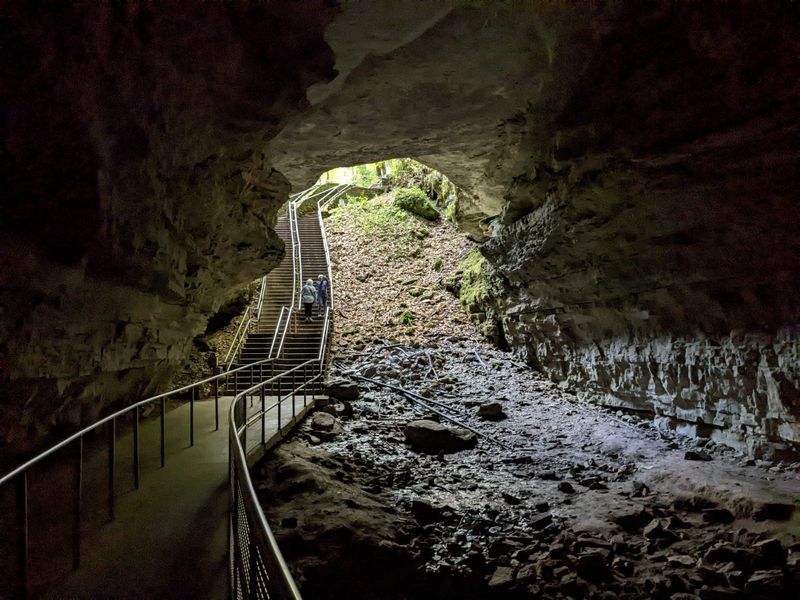
Kentucky’s Mammoth Cave holds the title of the longest known cave system on Earth, with more than 650 km of mapped passageways. And surveyors continue discovering new sections, meaning the true extent may be even greater.
The name “Mammoth” refers to its enormous size, not the prehistoric animals.
Its sprawling labyrinth under rolling American hills tells a deep geological history and offers explorers vast hidden chambers, fossils, and underground rivers. Some passages are wide enough to drive a bus through, while others require crawling on your belly through tight squeezes.
Native Americans explored Mammoth Cave thousands of years ago, leaving behind artifacts and even mummified remains preserved by the cave’s stable environment. Later, during the War of 1812, the cave was mined for saltpeter to make gunpowder.
Tour guides still point out the remains of mining equipment left behind.
Mammoth Cave remains one of the most enduring testimonies to the complexity and age of the world beneath us. Different tour routes cater to different interests—from easy walking tours to challenging wild cave expeditions.
The cave’s ecosystem includes unique blind fish and cave crickets adapted to perpetual darkness.
Lascaux Caves — Paleolithic Art Buried in Time
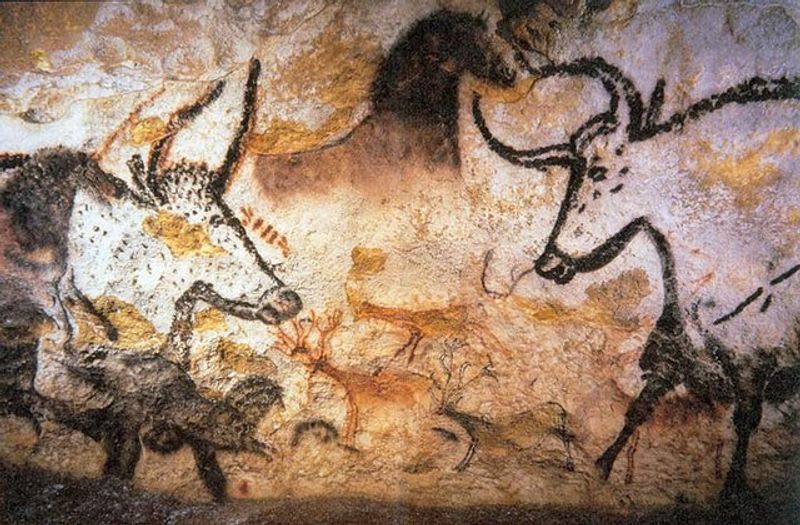
The original Lascaux Caves in France contain some of the earliest known human art, dating back more than 17,000 years. Discovered accidentally in 1940 by teenagers exploring a hole left by an uprooted tree, the caves revealed a stunning gallery of prehistoric paintings that changed our understanding of early humans.
Though closed to the public to preserve the paintings, replicas in Lascaux II allow visitors to immerse themselves in the hidden creativity of prehistoric people, reminding us that the subterranean world was a canvas for human expression long before cities existed. The original paintings began deteriorating rapidly once exposed to modern air and tourist breath.
The images depict horses, aurochs, deer, and other animals rendered with remarkable skill and artistry. Some figures seem to move in flickering torchlight, suggesting the artists understood animation principles.
Handprints and abstract symbols add mystery—were they signatures, spiritual symbols, or something else entirely?
Why did these ancient artists venture deep into dark caves to create their masterpieces? Theories range from hunting magic to spiritual ceremonies to simple artistic expression.
Whatever the reason, Lascaux proves that humans have always sought meaning in the hidden places beneath the earth.



