America’s grandest mansions tell stories of ambition, wealth, and extraordinary taste. From the rolling hills of North Carolina to the sun-kissed shores of California, these historic estates were built to impress and have never stopped doing so.
Each one reflects a unique chapter in American history, shaped by powerful families, bold architects, and boundless resources. Get ready to tour some of the most jaw-dropping homes ever built on American soil.
Biltmore Estate – Asheville, North Carolina
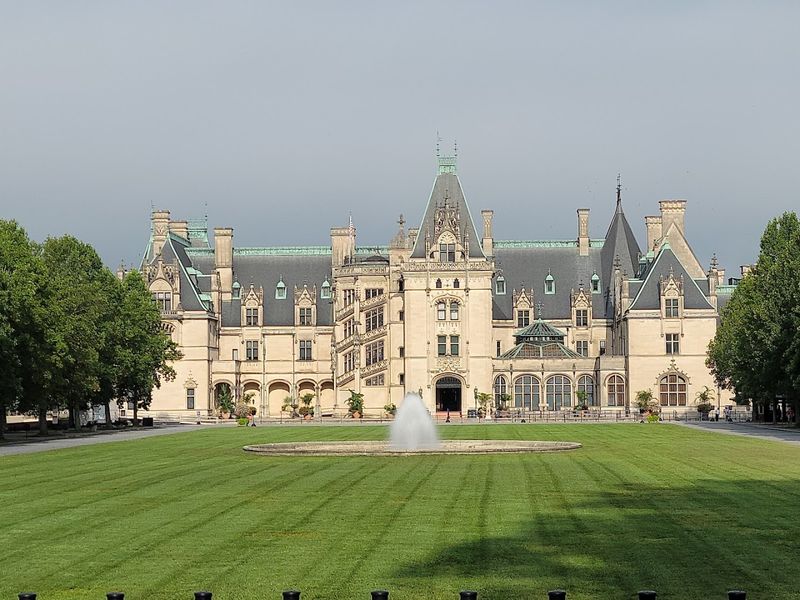
At 179,000 square feet, the Biltmore Estate does not just define luxury — it practically invented the rulebook. George Vanderbilt commissioned this French chateau-style marvel in 1889, and it took six years and nearly 1,000 workers to complete.
The result? A 250-room palace nestled in the Blue Ridge Mountains of North Carolina.
Inside, you will find a banquet hall that seats 64 guests, a two-story library stocked with over 10,000 books, and an indoor heated pool that was considered futuristic for its time. The estate was designed by architect Richard Morris Hunt, while landscape genius Frederick Law Olmsted shaped the surrounding 8,000 acres of gardens and forests.
What truly separates Biltmore from other mansions is its self-sufficiency. Vanderbilt envisioned an entire working community, complete with farms, dairies, and a village for workers.
Today, the estate produces its own wine and welcomes over one million visitors each year. Touring Biltmore feels less like visiting a home and more like stepping into a small, breathtaking kingdom.
It remains the largest privately owned house in the United States, and honestly, nothing else comes close.
The Breakers – Newport, Rhode Island
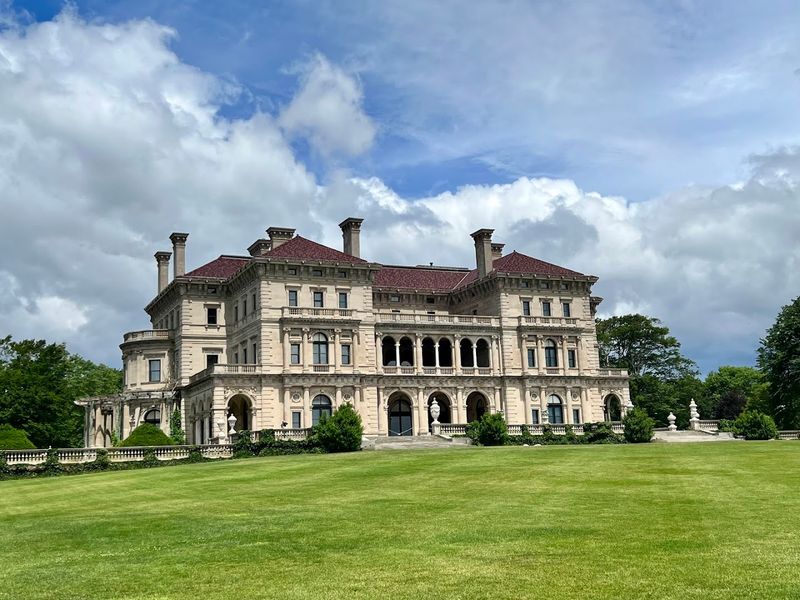
Calling The Breakers a summer cottage is like calling the ocean a puddle. Built in 1895 for Cornelius Vanderbilt II, this 70-room Italian Renaissance palace was the family’s seasonal retreat, though it lived more like a royal residence than a vacation home.
Perched dramatically on the Newport cliffs above the Atlantic Ocean, The Breakers was designed by architect Richard Morris Hunt, the same visionary behind Biltmore. Inside, every surface seems to compete for attention.
Soaring ceilings drip with gold leaf, marble columns stretch two stories high, and hand-carved fireplaces anchor rooms that feel more like museum galleries than living spaces.
The Great Hall alone could swallow most modern homes whole. European craftsmen were imported specifically to execute the intricate stone carvings and mosaic work throughout the mansion.
The dining room features alabaster columns and a painted ceiling, making dinner feel like an event fit for royalty. Today, The Breakers is managed by the Preservation Society of Newport County and remains the most visited historic site in Rhode Island.
Standing on its seaside lawn with ocean breezes rolling in, it is almost impossible not to feel a little envious of those Gilded Age summers.
Hearst Castle – San Simeon, California
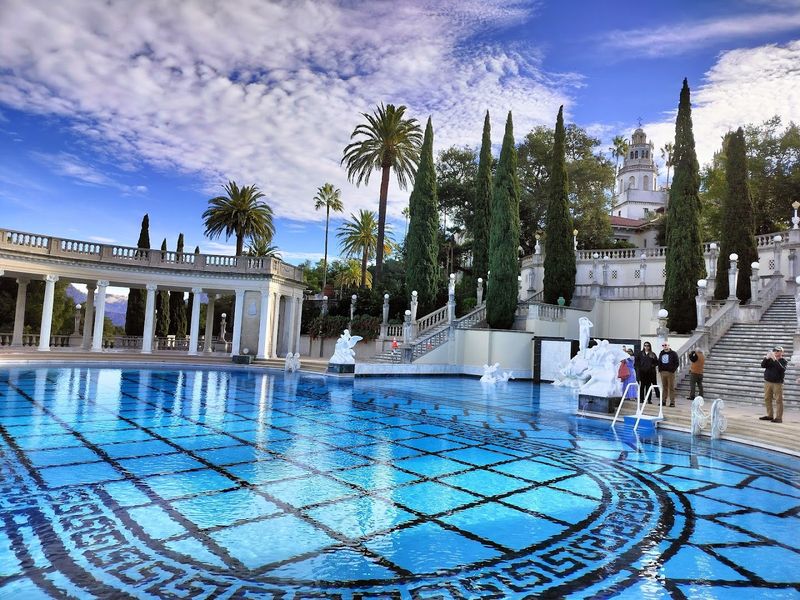
William Randolph Hearst did not build a home — he assembled a legend. Hearst Castle sits 1,600 feet above the Pacific Ocean in San Simeon, California, and took nearly 28 years to construct.
Media mogul Hearst worked alongside architect Julia Morgan, one of the first women to earn a degree from the Ecole des Beaux-Arts in Paris, making this estate doubly historic.
The property spans 90,000 square feet across the main house and three lavish guest houses. Hearst filled every room with antiques, tapestries, and artwork collected from castles and palaces across Europe.
Ancient Roman columns frame the outdoor Neptune Pool, which remains one of the most photographed swimming pools in the world.
Guests invited to Hearst Castle were treated to film screenings, elaborate dinners, and zoo animals roaming the grounds freely. Yes, Hearst had his own private zoo.
Hollywood legends like Charlie Chaplin and Cary Grant wandered these halls during the estate’s golden era. California State Parks now manages the property, offering guided tours that feel like walking through a living museum.
Hearst Castle is proof that when you combine unlimited money with unmatched taste, the results are genuinely unforgettable.
Oheka Castle – Long Island, New York
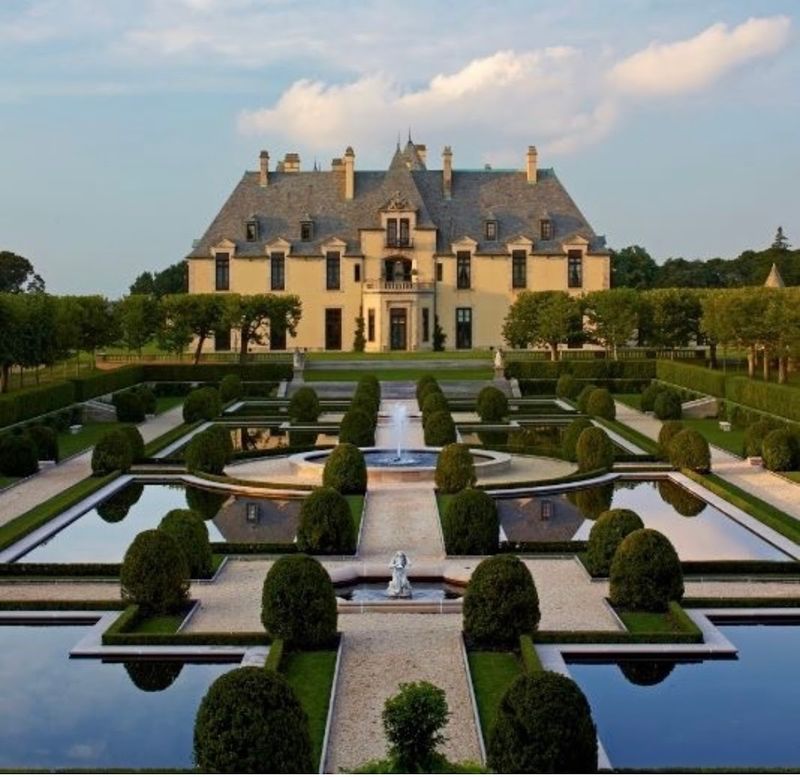
Oheka Castle sounds like something pulled from a fairy tale, and honestly, its history is just as dramatic. Built between 1914 and 1919 by financier Otto Hermann Kahn, this French chateau-style estate on Long Island’s Gold Coast is the second-largest private home ever built in the United States, covering over 109,000 square feet.
Kahn spared absolutely no expense. He had the land artificially elevated by 100 feet so the castle would command sweeping views of the surrounding landscape.
Formal French gardens were installed at enormous cost, and the estate employed hundreds of staff to keep everything running smoothly. Kahn also reportedly spent lavishly entertaining guests, turning Oheka into a social hub for New York’s elite.
After Kahn’s death, the property fell into disrepair and was used as a military training facility and later a school. A multi-decade restoration effort eventually transformed it into the luxury hotel and event venue it is today.
Taylor Swift even filmed her music video for “Love Story” here, giving Oheka a thoroughly modern moment of fame. Staying overnight in one of its hotel rooms means sleeping inside a genuine piece of Gilded Age history, which is a pretty spectacular way to spend a weekend.
Fallingwater – Mill Run, Pennsylvania
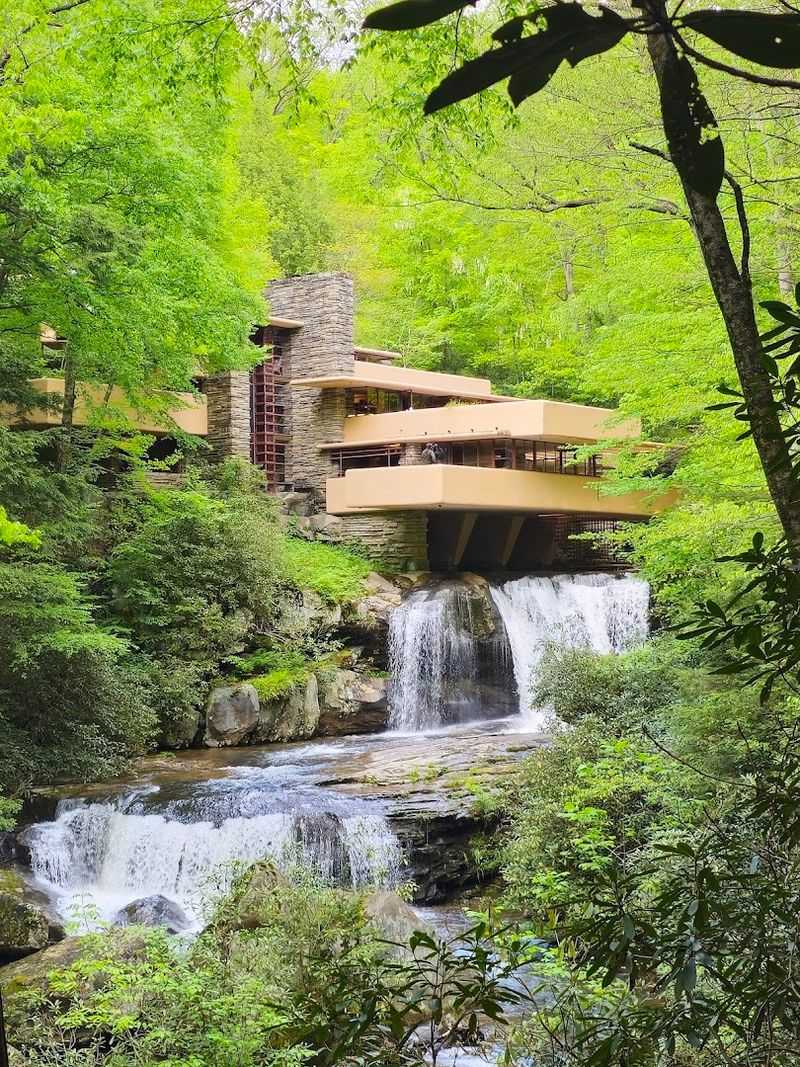
Most mansions announce their wealth loudly. Fallingwater whispers it, and somehow that makes it even more impressive.
Designed by legendary architect Frank Lloyd Wright in 1935 for department store magnate Edgar Kaufmann Sr., this masterpiece in the Pennsylvania woods redefines what luxury architecture can look like.
The house is literally built over a waterfall. Wright designed the structure so that the sound of Bear Run creek could be heard from nearly every room, blurring the line between indoors and outdoors in a way that felt radical then and still feels magical today.
Cantilevered terraces extend over the rushing water, giving the home an almost floating quality that photographers have chased for decades.
Fallingwater was named the best all-time work of American architecture by the American Institute of Architects. Wright completed the design in just two hours after months of delay, reportedly sketching the entire plan when Kaufmann called to say he was driving over to check on progress.
The story may be slightly embellished, but the result is undeniably extraordinary. Today, the Western Pennsylvania Conservancy manages the estate, and tours sell out regularly.
Fallingwater proves that true luxury sometimes means working with nature rather than overpowering it.
Nemours Estate – Wilmington, Delaware
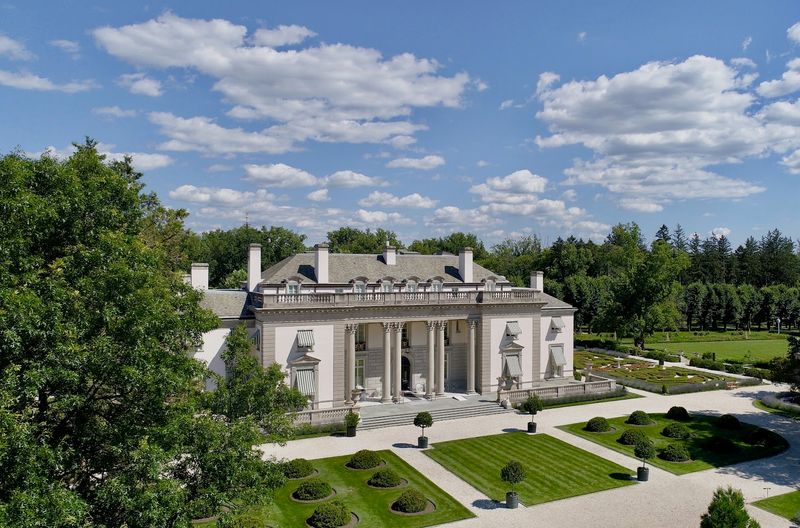
Few estates in America make Europe feel closer than Nemours. Built between 1909 and 1910 by Alfred I. du Pont, this Louis XVI-style chateau in Wilmington, Delaware, was directly inspired by the Palace of Versailles and makes absolutely no attempt to hide it.
The mansion stretches across 77 rooms, filled with antique French furniture, rare tapestries, and fine European artwork collected over decades. But the real showstopper at Nemours is the formal garden.
Stretching nearly a third of a mile, it features symmetrical pathways, reflecting pools, sculpted hedges, and ornate fountains that would not look out of place in the French countryside.
Du Pont named the estate after the French town where his ancestors originated, adding a personal layer of heritage to the already impressive property. He also included a cutting-edge garage housing his prized automobile collection and a bowling alley inside the mansion, because why not.
The Nemours Foundation, established after du Pont’s death, now operates the estate as a museum open to the public. Visitors consistently describe the formal gardens as one of the most breathtaking outdoor spaces in the entire country, and after one stroll through them, it is very easy to understand why.
Graceland – Memphis, Tennessee
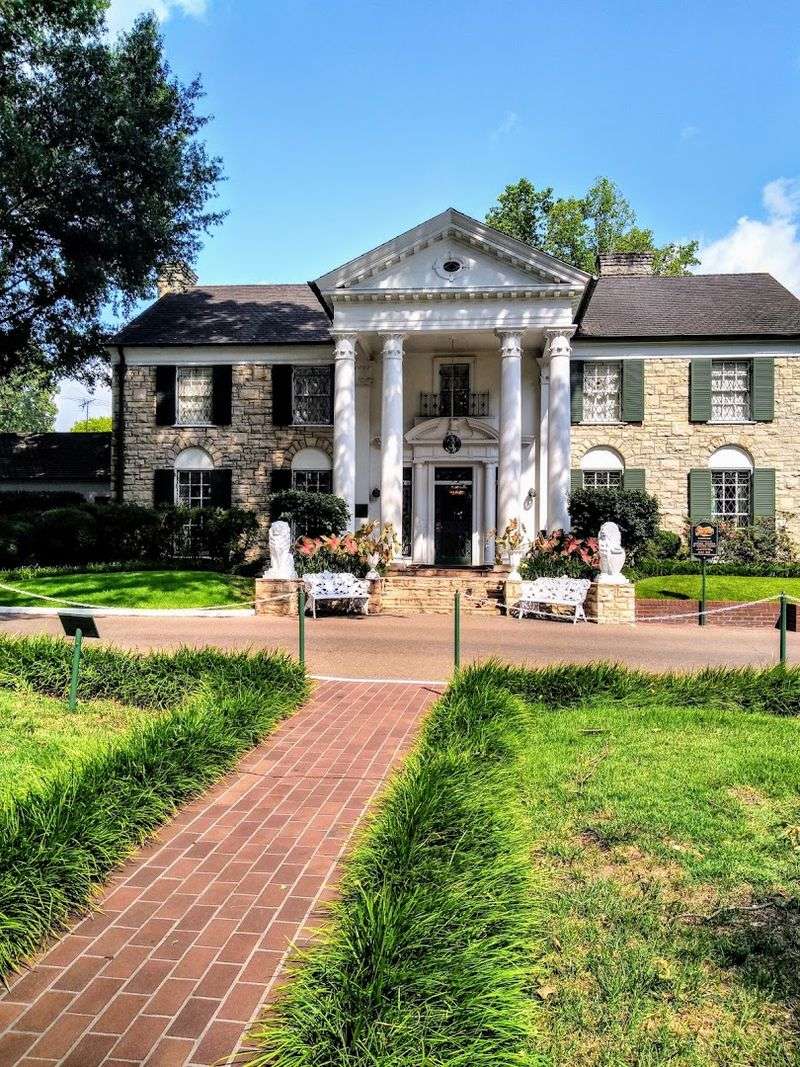
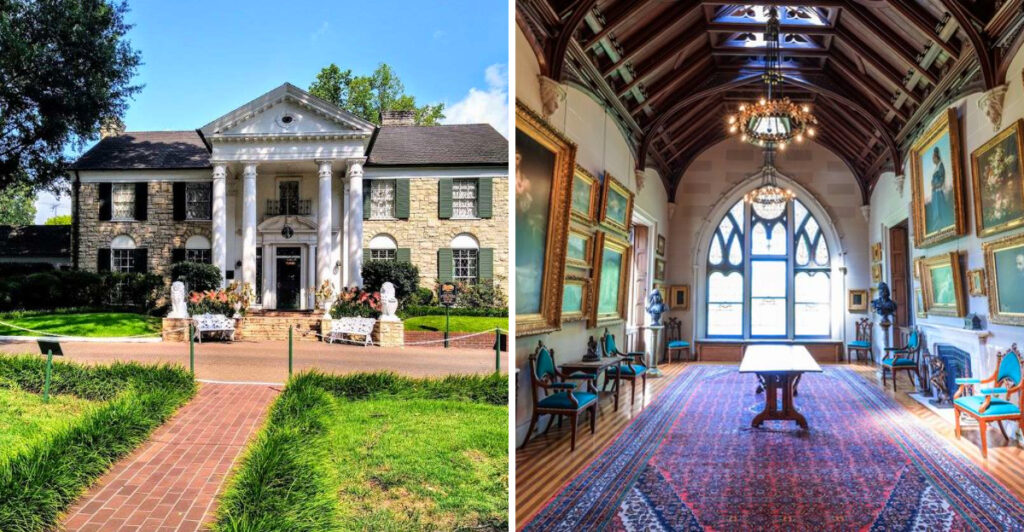
Not every mansion earns its legendary status through square footage alone. Graceland, the Memphis home of Elvis Presley, became one of the most famous addresses in the world through pure cultural magnetism.
Elvis purchased the colonial-style house in 1957 for $102,500, and it quickly became the backdrop for one of music history’s most extraordinary lives.
The interior reflects Elvis’s bold personal style in every corner. The Jungle Room features shag carpet on both the floor and ceiling, while the TV room is fitted with three screens so Elvis could watch multiple channels simultaneously, a setup that felt futuristic in the 1970s.
The kitchen was stocked around the clock, because the King of Rock and Roll did not keep regular meal hours.
Elvis lived at Graceland until his death in 1977, and the estate was opened to the public in 1982. It now attracts over 600,000 visitors annually, making it one of the most visited private homes in the United States, second only to the White House.
Graceland was added to the National Register of Historic Places in 1991 and designated a National Historic Landmark in 2006. Walking through its rooms feels less like a museum tour and more like spending time with a legend.
Vizcaya Museum and Gardens – Miami, Florida
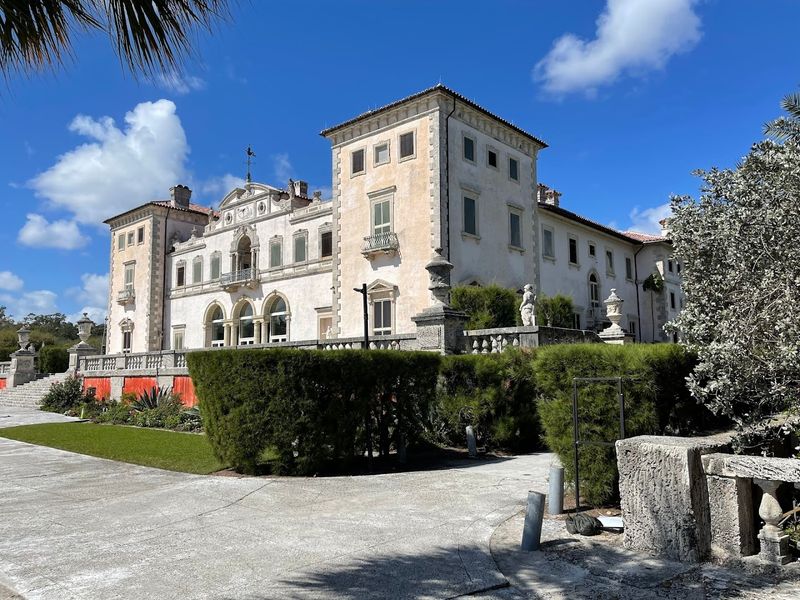
Imagine an Italian Renaissance villa somehow transplanted to a tropical paradise. That is exactly the experience Vizcaya delivers.
Built between 1914 and 1922 as the winter home of industrialist James Deering, this stunning Miami estate blends European architectural tradition with Florida’s lush, subtropical landscape in a way that feels genuinely dreamlike.
The main house contains 34 decorated rooms, each furnished with European antiques spanning four centuries of design. Deering worked with architect F.
Burral Hoffman and designer Paul Chalfin to create interiors that rival any European palace, featuring hand-painted ceilings, silk wall coverings, and carved stone fireplaces. The formal gardens surrounding the villa include fountains, secret grottos, and sculpted hedgerows arranged in a geometric Italian style.
Biscayne Bay laps at the estate’s edges, and a decorative stone barge anchored in the water serves as a breakwater, adding a theatrical flourish that perfectly captures Deering’s love of spectacle. Vizcaya was designated a National Historic Landmark in 1994 and operates today as a museum welcoming hundreds of thousands of visitors annually.
It has also hosted world leaders, including Pope John Paul II and U.S. presidents, adding diplomatic prestige to its already remarkable resume. Few places in America offer this particular combination of elegance and atmosphere.
Mount Vernon – Virginia
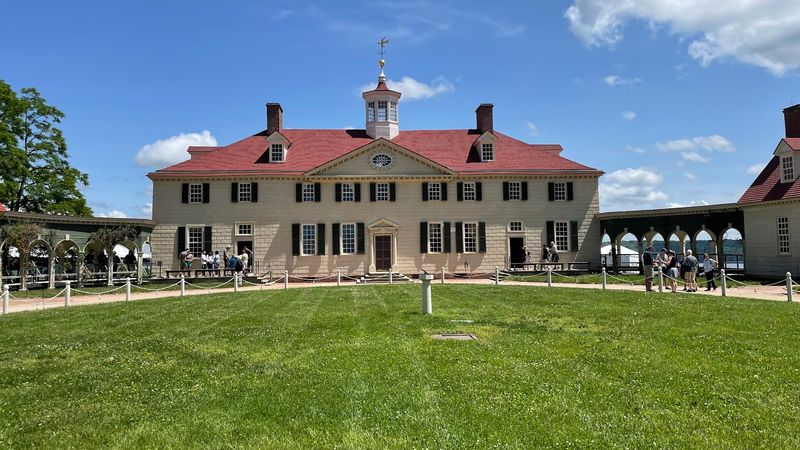
Before the Vanderbilts, before the Hearsts, there was George Washington, and his Mount Vernon estate set the standard for what an American home of distinction could look like. Situated along the Potomac River in Fairfax County, Virginia, Mount Vernon served as Washington’s beloved home for over 45 years, and his fingerprints are all over its design and evolution.
Washington was not just a general and president but also an obsessive home improver. He expanded the original modest farmhouse into a graceful 21-room mansion over several decades, adding the iconic two-story piazza that faces the river, a feature so clever and comfortable that it influenced American porch design for generations.
The grounds include formal gardens, a greenhouse, a working farm, and a distillery.
Mount Vernon was placed on the National Register of Historic Places and is now managed by the Mount Vernon Ladies Association, which has preserved it with remarkable care since 1858. Over one million people visit each year, making it one of the most popular historic sites in the country.
Unlike the gilded excess of later American mansions, Mount Vernon’s beauty lies in its simplicity and its deep connection to the founding of a nation. It is history you can actually walk through.
The Marble House – Newport, Rhode Island
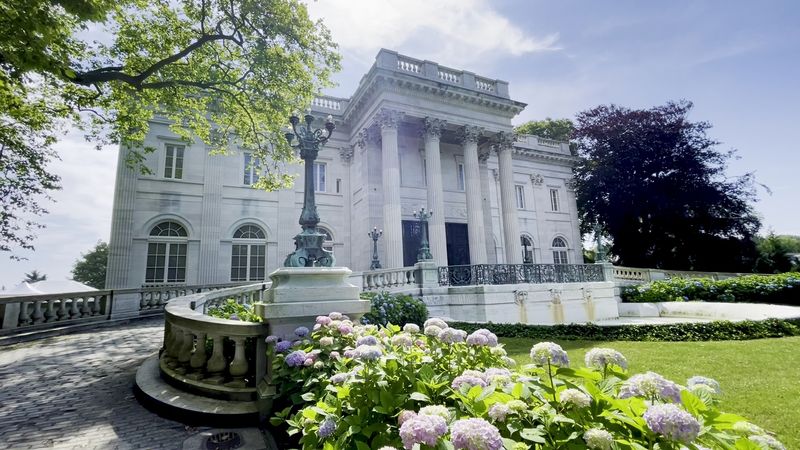
When Alva Vanderbilt wanted a birthday present in 1892, her husband William Kissam Vanderbilt gifted her a mansion made almost entirely of marble. As birthday gifts go, it set a bar that has never really been matched.
The Marble House in Newport, Rhode Island, consumed over 500,000 cubic feet of marble and cost approximately $11 million to build, equivalent to hundreds of millions in today’s dollars.
Architect Richard Morris Hunt modeled the design after the Petit Trianon at Versailles, and the interior execution is extraordinary. The Gold Ballroom is covered in gilded bronze and mirrors, creating a room so opulent it almost feels overwhelming.
The Gothic Room, decorated in dark carved wood, provides a striking contrast that shows just how thoughtfully the mansion was designed.
Alva eventually divorced William and became a passionate suffragette, hosting political meetings at the Marble House to advocate for women’s voting rights. She even built a Chinese teahouse on the grounds for these gatherings, adding a fascinating political chapter to the estate’s glamorous story.
Today the Preservation Society of Newport County manages the property. Visiting the Marble House means experiencing Gilded Age ambition at its most theatrical, which is either thrilling or slightly exhausting, depending on your tolerance for magnificence.
The Copper King Mansion – Butte, Montana
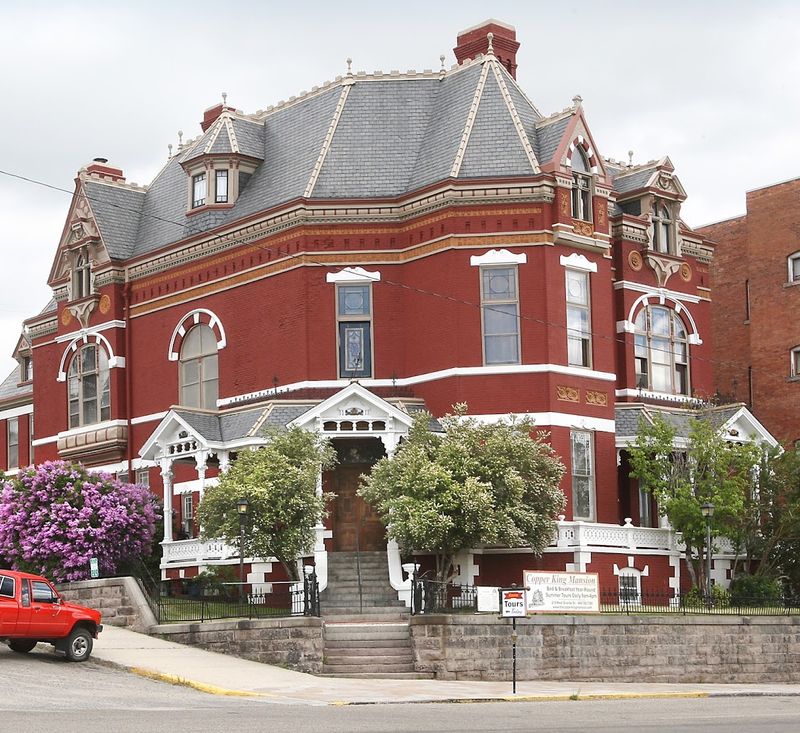
Butte, Montana, might not be the first city that comes to mind when you think of opulent historic mansions, but the Copper King Mansion makes a very convincing argument for reconsideration. Built between 1884 and 1888 by William Andrews Clark, one of the wealthiest copper mining barons in American history, this 34-room Victorian estate was designed to signal power in a town that ran on it.
Clark imported craftsmen and materials from across Europe and the eastern United States to create interiors that would not look out of place in a major city. Hand-painted ceilings, stained glass windows crafted by Tiffany artists, and intricate woodwork carved from rare hardwoods fill the mansion’s rooms.
A private theater on the upper floor hosted performances for Clark’s guests, because he believed entertainment was as essential as any other luxury.
The mansion is now a bed-and-breakfast and one of Montana’s most distinctive historic properties. Guests can sleep in rooms where mining millionaires once stayed, surrounded by original Victorian furnishings and art.
The Copper King Mansion tells the story of how raw industrial wealth transformed the American West, one extravagant room at a time. It is quirky, grand, and genuinely unlike anything else on this list.
Lyndhurst Mansion – Tarrytown, New York
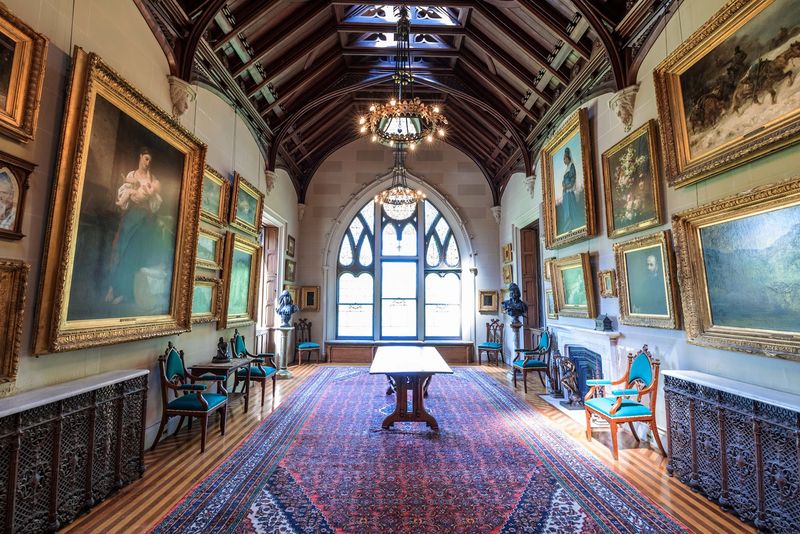
Lyndhurst looks like it belongs in a gothic novel, and that is precisely part of its charm. Perched above the Hudson River in Tarrytown, New York, this dramatic Gothic Revival mansion was originally built in 1838 for former New York City mayor William Paulding.
Its castle-like silhouette, complete with pointed arches and irregular towers, made it one of the most architecturally daring homes of its era.
Architect Alexander Jackson Davis designed the original structure and later expanded it significantly for subsequent owner George Merritt. The estate eventually passed to railroad tycoon Jay Gould, one of the most controversial financiers of the Gilded Age, who added a massive greenhouse and filled the grounds with exotic plants.
Gould’s daughter Helen lived at Lyndhurst until 1961, preserving much of its original character.
The National Trust for Historic Preservation now manages the property, and it is open for tours that showcase the mansion’s extraordinary interiors, including a stunning art gallery wing and rooms decorated with period antiques. The surrounding landscape features towering trees and river views that make the Gothic atmosphere feel completely earned.
Lyndhurst has also appeared in several films and television productions, lending its brooding beauty to stories that needed exactly this kind of dramatic backdrop.
Drumthwacket – Princeton, New Jersey
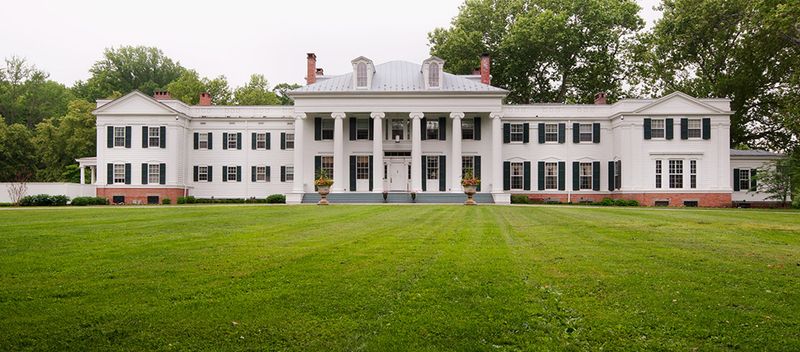
There is something quietly powerful about a mansion that doubles as the official home of a sitting governor. Drumthwacket, located in Princeton, New Jersey, has served as the official residence of New Jersey’s governor since 1981, giving it a dual identity as both a historic architectural gem and a functioning seat of state prestige.
The original structure was built in 1835 in a Greek Revival style, and the property has been expanded and renovated several times over the decades. Its formal rooms are used for official state functions, diplomatic receptions, and public events, meaning the mansion earns its keep rather than simply sitting pretty.
The grounds include formal gardens maintained with care that reflects the property’s public role.
The Drumthwacket Foundation, a nonprofit organization, raises private funds to preserve and maintain the estate, ensuring that New Jersey residents can take pride in a well-kept official residence. Public tours are offered periodically, giving citizens a chance to walk through rooms where policy decisions are made and history quietly unfolds.
Drumthwacket may not have the theatrical excess of a Vanderbilt palace, but its blend of architectural elegance and civic purpose gives it a dignity all its own. It is a mansion with a job, and it performs both roles admirably.
Rosecliff – Newport, Rhode Island
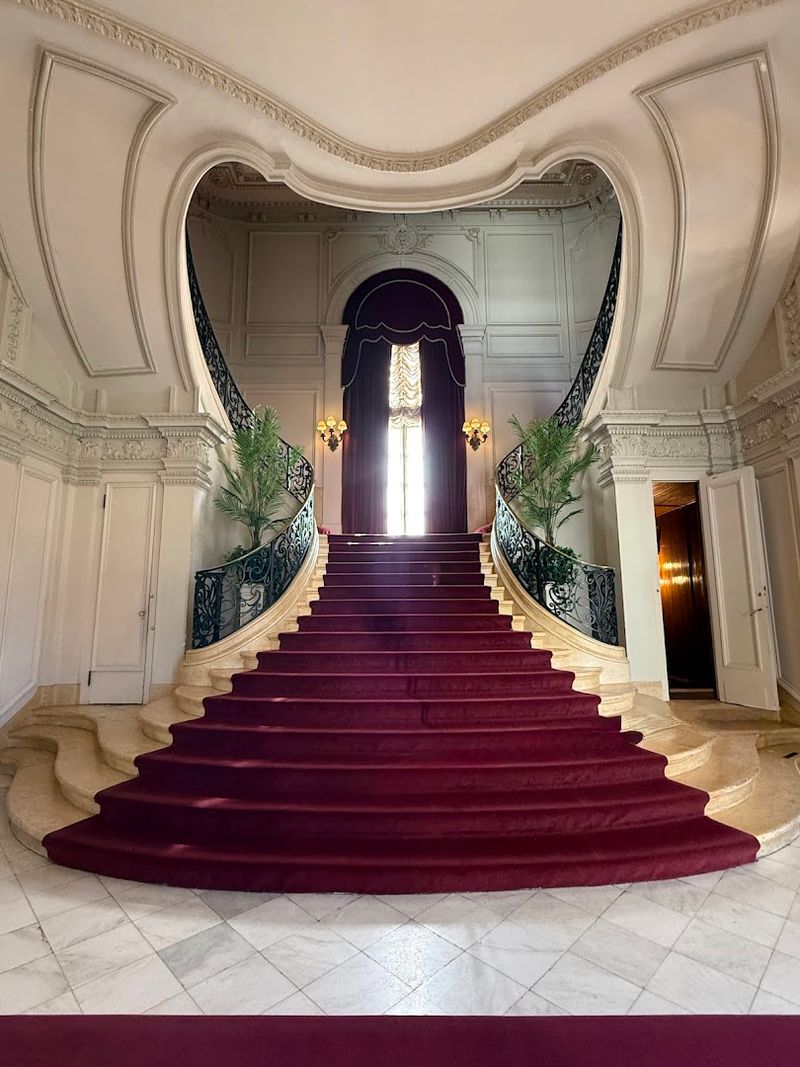
Rosecliff has a ballroom that has hosted parties so legendary, Hollywood came calling more than once. This elegant Newport mansion, completed in 1902 for silver heiress Theresa Fair Oelrichs, was modeled directly after the Grand Trianon at Versailles, and Stanford White’s design captures that French grandeur with impressive accuracy.
The centerpiece of Rosecliff is its ballroom, the largest in Newport at 40 by 80 feet, featuring a heart-shaped double staircase that became the stuff of social legend. Oelrichs threw spectacular parties here, including her famous White Ball of 1904, where everything from the decorations to the guests’ attire followed a strict white color scheme.
The mansion sat oceanfront, making summer gatherings feel especially magical with Atlantic breezes drifting through open windows.
Rosecliff has appeared in several major films, including the 1974 version of The Great Gatsby and 27 Dresses, cementing its reputation as one of America’s most cinematic historic homes. The Preservation Society of Newport County manages the estate today, offering tours that walk visitors through its beautifully preserved rooms.
Standing in that famous ballroom, it takes very little imagination to picture the glittering gatherings that once filled it with laughter, music, and the particular electricity of an era that believed luxury had no ceiling.
Share this story