 Unearth The Voyage
Across the United States, historic forts help you step into the moments that shaped the nation. These sites reveal military innovation, contested frontiers, and everyday life from the colonial era through the World Wars.
You will find coastal strongholds, frontier posts, and monumental masonry that still commands attention. Use this guide to choose meaningful stops for your next trip and understand why each fort matters.
1. Fort Sumter (South Carolina)
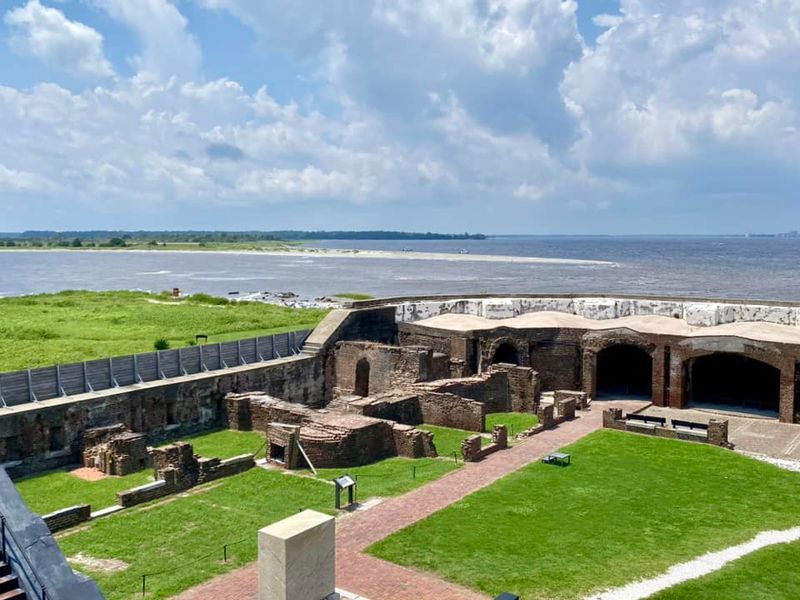
Fort Sumter sits at the mouth of Charleston Harbor, where the first shots of the Civil War rang out on April 12, 1861. When Confederate artillery opened fire, the Union garrison held out for 34 hours before surrendering, marking the war’s explosive beginning.
Today, the fort’s battered brick walls and surviving casemates frame sweeping harbor views that help you picture the clash.
Access is by National Park Service ferry, which adds context during the cruise with narration and skyline vistas. Once ashore, you can examine artillery pieces, interpretive exhibits, and fragments of wartime masonry that reveal shifting tactics and technology.
Rangers explain how supply lines, diplomacy, and local geography shaped the standoff.
The museum at Liberty Square in downtown Charleston deepens the story with timelines, artifacts, and personal accounts. Plan for changing weather and bring water.
Even brief visits feel substantial, thanks to concise signage and clear historic framing.
2. Fort McHenry (Maryland)
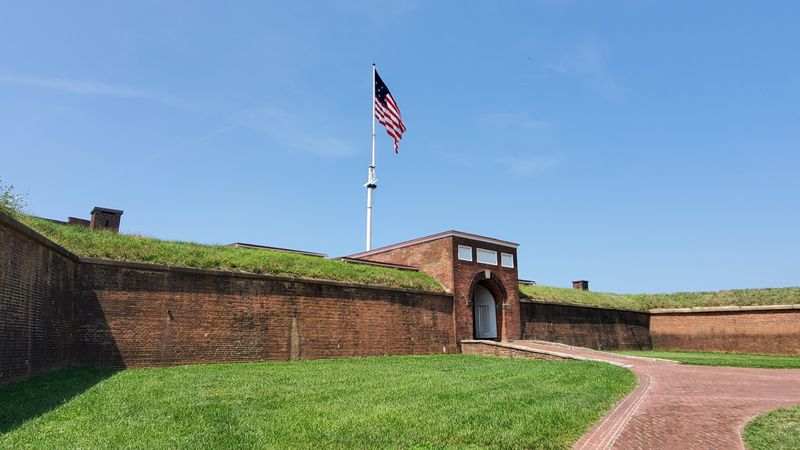
Fort McHenry guards the entrance to Baltimore and became a national symbol during the War of 1812. In September 1814, its defenders withstood a British bombardment, inspiring Francis Scott Key to write the poem that became The Star-Spangled Banner.
Walking the star-shaped ramparts, you can trace cannon positions and understand how the fort’s geometry directed fire.
Ranger talks and the visitor center film connect lyrics to lived experience, emphasizing resilience and timing. Exhibits show period uniforms, artillery shells, and the story of the huge garrison flag that signaled endurance at dawn.
You can join daily flag changes, a thoughtful ritual that underscores continuity.
Trails loop the waterfront, offering views of Baltimore’s skyline and shipping lanes that explain the site’s strategic value. Wayfinding is clear, accessibility is strong, and the narrative is focused.
Schedule at least two hours to absorb the setting, museum, and ceremonies.
3. Fort Ticonderoga (New York)
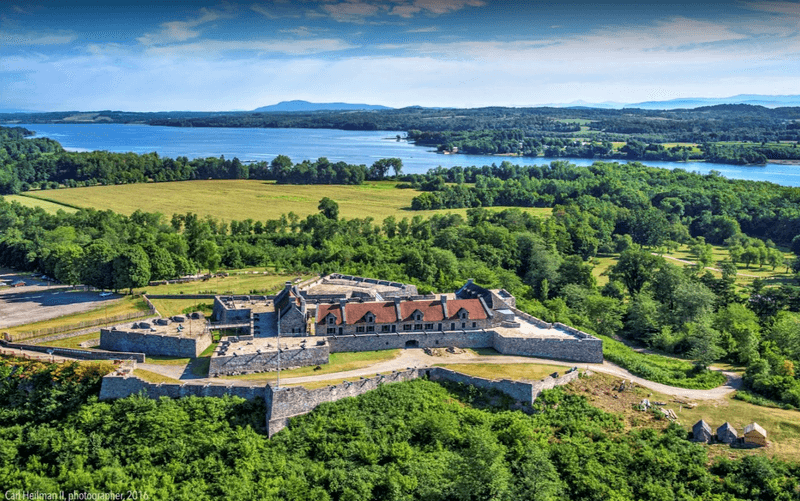
Fort Ticonderoga commands the narrows of Lake Champlain, a vital corridor during the 18th century. The French built the stronghold as Carillon, and it changed hands multiple times during the French and Indian War and the American Revolution.
In 1775, Ethan Allen and Benedict Arnold led a surprise capture, securing artillery later hauled to Boston.
Today, the site blends museum-quality collections with living history. You can watch musket demonstrations, explore reconstructed barracks, and view rare artillery that illustrates transatlantic technology transfer.
Gardens and sweeping lake views make it easy to grasp why this ridge was contested.
Seasonal programs rotate themes, so each visit reveals new regimental stories or logistics insights. The nearby Mount Defiance overlook offers context on terrain and lines of sight.
Plan a half day to cover exhibits, ramparts, and the King’s Garden, then consider pairing with a boat cruise.
4. Castillo de San Marcos (Florida)
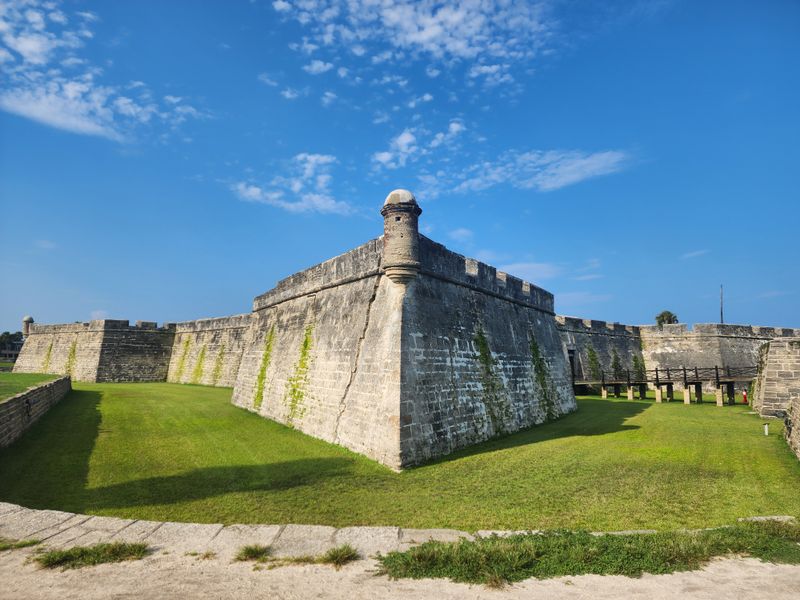
Completed in 1695, Castillo de San Marcos is the oldest masonry fort in the continental United States. Its coquina stone absorbed cannon fire, making it remarkably resilient through sieges by British forces.
Located in St. Augustine, the fort anchors centuries of Spanish, British, and American rule along Florida’s Atlantic coast.
Walking the bastions, you will see gun ports, sentry boxes, and the original layout that protected the harbor and town. Exhibits explain coquina’s unique properties and how engineers designed layered defenses against evolving artillery.
Costumed programs and cannon firing demonstrations add measured drama without overshadowing solid interpretation.
The setting is highly photogenic, with the Matanzas River and historic district steps away. Expect timed entry during peak seasons and plan extra time for the roof views.
The National Park Service provides concise signage and ranger talks that keep complex colonial history clear.
5. Fort Monroe (Virginia)
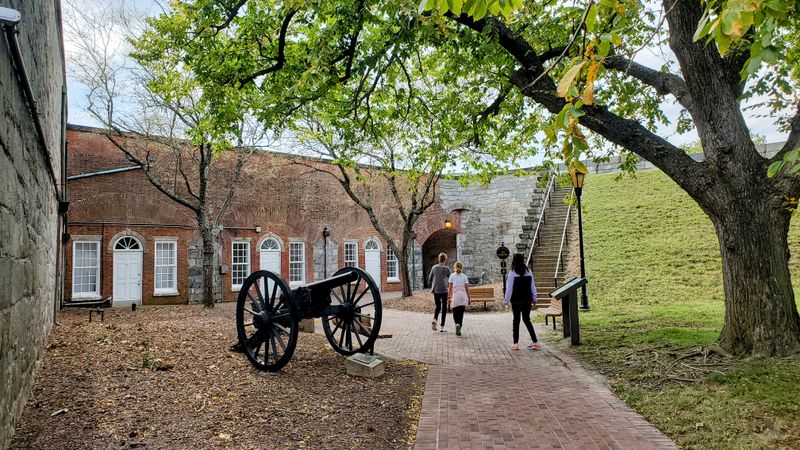
Fort Monroe, nicknamed Freedom’s Fortress, spans American history from early coastal defense through the Civil War. In 1861, Union control enabled enslaved people to seek refuge, prompting a contraband policy that undermined slavery.
The stone-walled fort sits on a strategic peninsula at the mouth of the Chesapeake Bay.
You can cross the bridge, explore casemates, and visit the museum to understand artillery evolution and daily garrison life. The property includes Jefferson Davis’s cell, chapel, and waterfront batteries that framed Hampton Roads.
Interpretive panels connect coastal trade routes, ship traffic, and fort design choices.
Trails, beaches, and nearby lighthouses round out a balanced visit that pairs outdoor scenery with strong context. Parking is straightforward, and the site’s free-access areas invite unhurried exploration.
Plan several hours to walk the ramparts, then follow the self-guided driving tour for broader regional history.
6. Fort Knox (Kentucky)
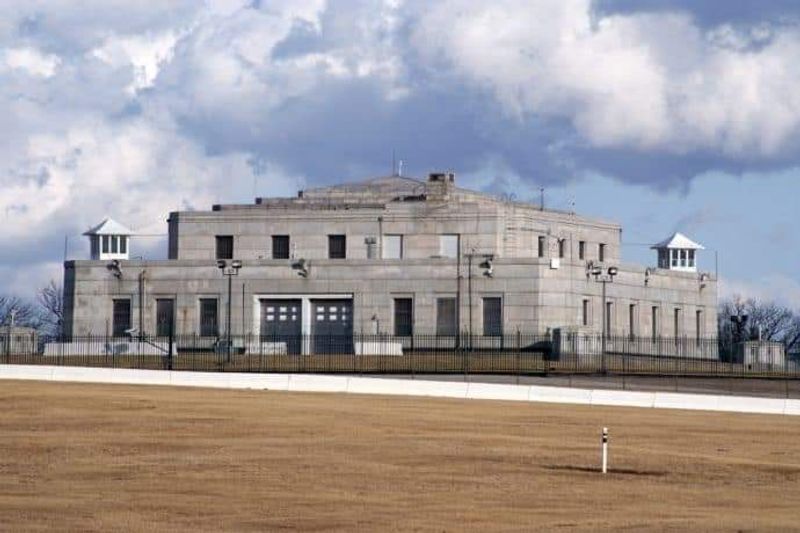
Fort Knox is widely recognized for the U.S. Bullion Depository, but the installation’s military story is broader.
Training grounds, the Armor School legacy, and Cold War missions shaped tactics, logistics, and mechanization. While the Depository is not open to the public, surrounding museums and memorials offer solid access points.
The General George Patton Museum of Leadership features armor history, artifacts, and exhibits on command decisions. You can trace the evolution from early tanks to modern doctrine and see how leadership training adapted to changing threats.
Off-post views of the Depository provide context without compromising security.
Plan ahead for base access requirements, which can change. Nearby trails, monuments, and interpretive markers round out a half-day visit.
Approach Fort Knox as a living installation with layered history, not just a vault, and you will leave with a clearer sense of American military development.
7. Fort Laramie (Wyoming)
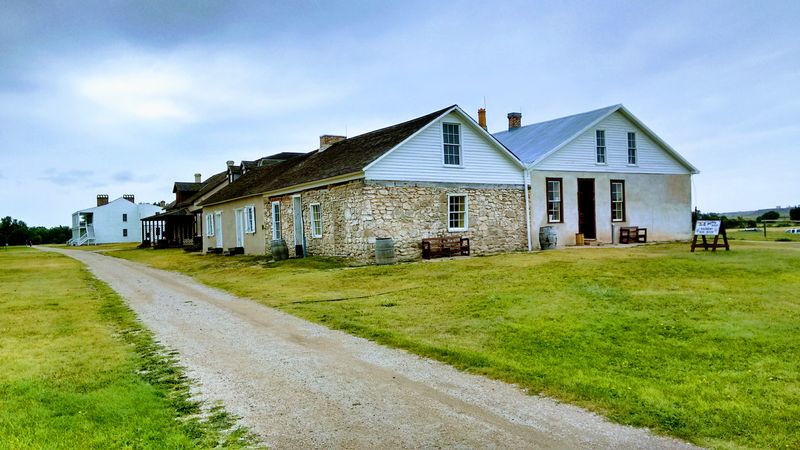
Fort Laramie anchored travel and diplomacy on the northern Plains. Established as a fur trade post, it evolved into a major Army hub along the Oregon, California, and Mormon Trails.
Treaties signed here attempted to define boundaries and relationships among the U.S. government and Native nations, with lasting consequences.
Walking the parade ground, you can step into barracks, officers’ quarters, and a post bakery that conveys daily routines. Rangers discuss supply chains, uniforms, and the tension between migration and sovereignty.
Restored structures and evocative ruins sit side by side, so you can compare building methods and lifespans.
Nearby trail ruts and the confluence of the Laramie and North Platte Rivers clarify why the site mattered. Plan for sun and wind, bring water, and allocate time for the visitor center exhibits.
The tone is thoughtful and balanced, emphasizing multiple perspectives.
8. Fort Point (California)
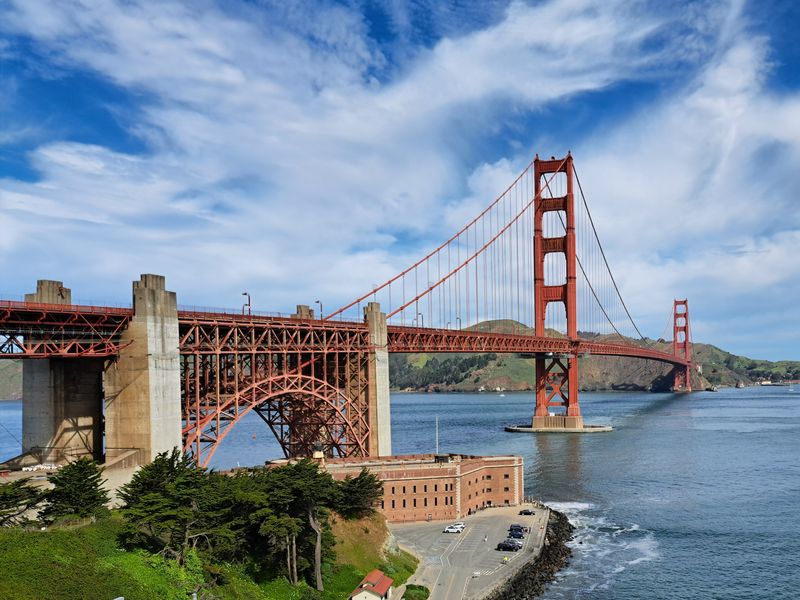
Fort Point stands beneath the Golden Gate Bridge, a striking meeting of 19th-century brickwork and 20th-century engineering. Built during the Gold Rush era, the fort protected San Francisco Bay with tiered casemates and heavy guns.
Although it never fired in anger, its design reflects national concern over coastal threats.
Inside, soaring brick arches frame the parade ground and vaulted casemates where artillery once stood. Exhibits explain masonry techniques, armaments, and the strategic calculus behind the harbor defense network.
From the roof, views of the bridge, Marin headlands, and shipping lanes reveal why the site mattered.
Fog, wind, and waves create atmosphere, so dress in layers and check hours, which can vary. Photography is superb, especially at sunrise or under low clouds.
Pair a visit with the nearby Presidio trails for a fuller sense of San Francisco’s layered military landscape.
9. Fort Vancouver (Washington)
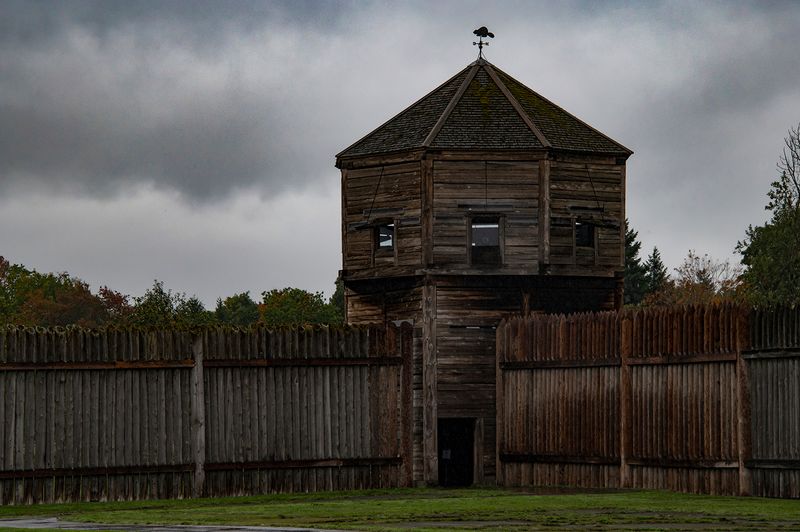
Fort Vancouver served as the Hudson’s Bay Company headquarters for the Pacific Northwest in the early 1800s. The post coordinated trade across vast distances, linking Indigenous communities, settlers, and global markets.
Later U.S. Army operations expanded the site’s role, reflecting shifting borders and priorities.
Within the reconstructed palisade, you can tour workshops, the Chief Factor’s House, and gardens that sustained daily life. Interpreters demonstrate blacksmithing and cooking, showing how multinational crews kept the operation running.
The nearby Pearson Air Museum adds aviation history tied to the Army’s presence.
Trails connect the fort to the Columbia River waterfront and downtown Vancouver, so you can extend your walk. Clear signage and ranger programs keep the narrative grounded and approachable.
Expect seasonal events and rotating exhibits that highlight archaeology, material culture, and the region’s environmental history.
10. Fort Pulaski (Georgia)
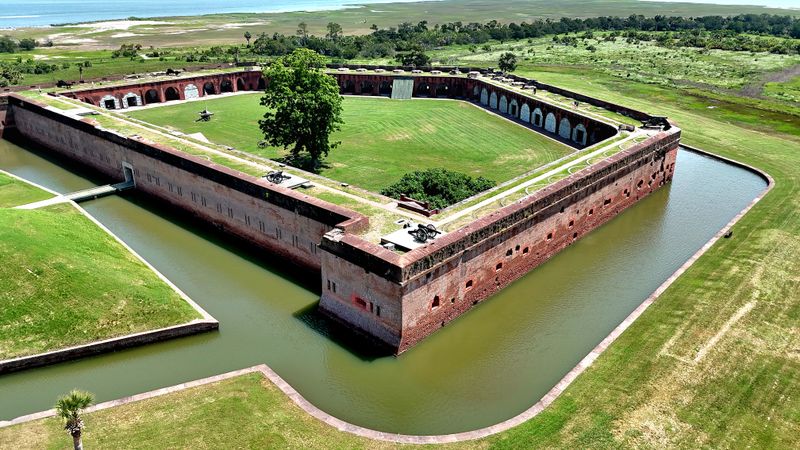
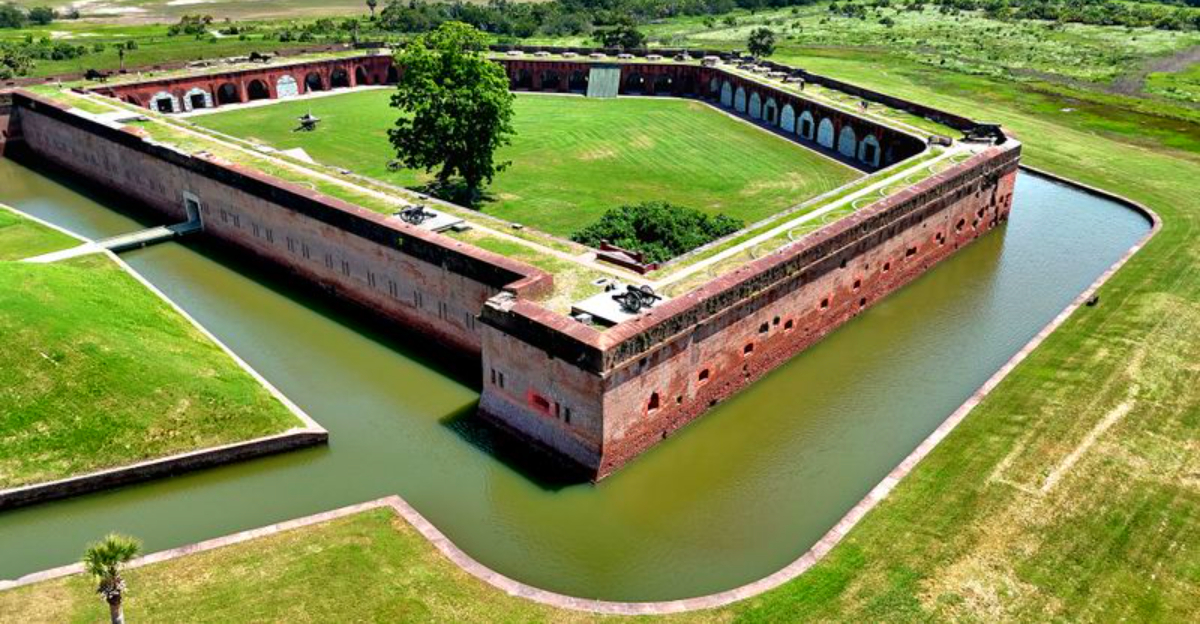
Fort Pulaski sits between Savannah and the Atlantic, where its 1862 siege changed military engineering. Union troops used rifled cannons to breach the fort’s brick walls from over a mile away, proving masonry forts vulnerable.
The quick surrender shocked observers and reshaped coastal defense planning.
Today, you can cross the drawbridge, examine the jagged breach, and see artillery mounts that illustrate range and accuracy. Exhibits explain logistics, troop movements, and the physics behind rifling.
Trails lead to Cockspur Island Lighthouse and marsh views that outline approaches used by both sides.
Bring insect repellent and water, especially in humid months. The site balances outdoor exploration with concise interpretation, making complex technology accessible.
Allocate a couple of hours to tour the casemates, walk the perimeter, and absorb how one battle redirected strategy far beyond Georgia.
11. Fort Snelling (Minnesota)
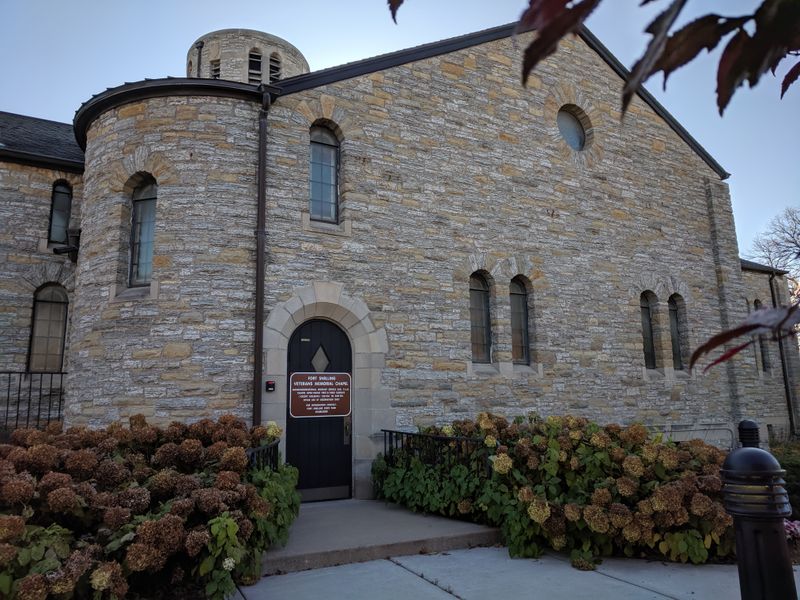
Fort Snelling overlooks the confluence of the Mississippi and Minnesota Rivers, a place of deep significance for Dakota people and later U.S. authorities. Built in the 1820s, it anchored military presence in the Upper Midwest, shaped trade, and influenced settlement patterns.
The site also interprets difficult histories, including the U.S.-Dakota War of 1862.
Reconstructed buildings and costumed interpreters convey daily routines, from drills to blacksmithing and cooking. Exhibits at the visitor center expand the timeline into the 20th century, including World War service.
Outdoor overlooks provide wide river views that make geography central to the story.
Programming emphasizes multiple perspectives, encouraging thoughtful reflection rather than quick snapshots. Plan for a few hours and expect a mix of demonstrations and self-guided exploration.
Clear wayfinding, seating, and shade help families pace the visit comfortably through changing weather.
12. Fort Zachary Taylor (Florida)
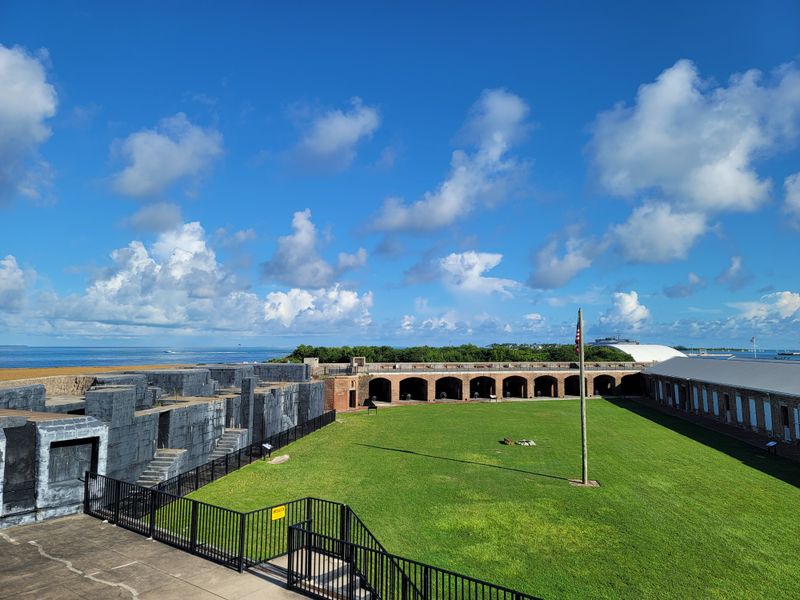
Fort Zachary Taylor anchors the southwest edge of Key West, pairing Civil War history with a popular beach. Built of brick with thick casemates, the fort helped secure Union control of the Gulf shipping lanes.
Its long-term modifications reveal how coastal artillery adapted to new technologies.
Inside, you can wander gunrooms, climb to the top for ocean views, and see large-bore cannons recovered and displayed. Park rangers outline construction techniques and the island’s strategic role, from blockade duty to later coastal defense upgrades.
The setting feels relaxed but remains informative.
Bring swim gear and sunscreen, since the adjacent beach offers excellent snorkeling around the jetty. Simple amenities and trails make it easy to combine history with a low-key afternoon.
Arrive early for parking and gentler light, then linger for sunset over the water.
13. Fort Jefferson (Dry Tortugas, Florida)
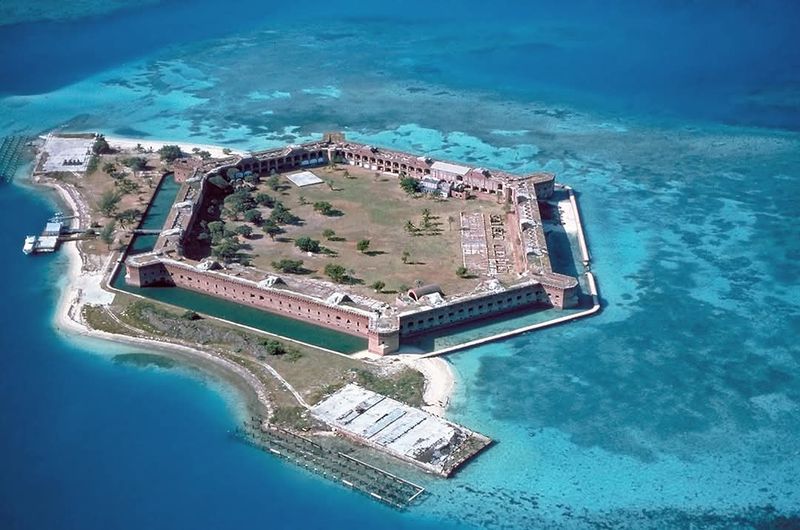
Fort Jefferson rises from the Dry Tortugas like a brick island, one of the largest masonry forts ever built. Constructed to control Gulf shipping lanes, it never reached full armament but served as a lighthouse station, coaling point, and Civil War prison.
The remote setting is part of the appeal.
Access is by ferry or seaplane from Key West, so reservations are essential. Once there, you can circle the moat wall, explore vaulted casemates, and snorkel over clear reefs just offshore.
Rangers explain construction challenges, water collection systems, and life on an isolated outpost.
Pack sun protection, snacks, and a camera, as services are limited. Wildlife viewing ranges from seabirds to fish gliding beneath the dock.
The site blends engineering ambition with natural beauty, making a full-day excursion that feels both educational and restorative.
14. Fort Scott (Kansas)
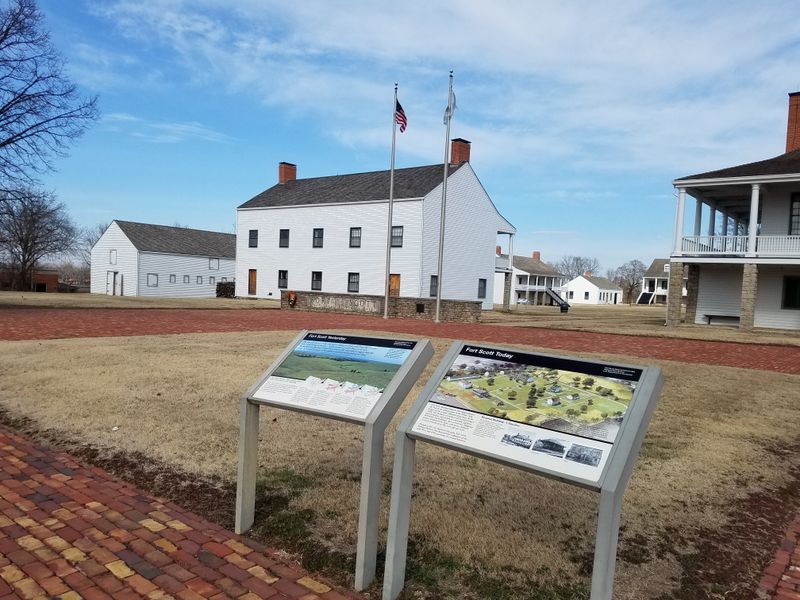
Fort Scott sits at a crossroads of antebellum tension, Bleeding Kansas conflict, and Civil War logistics. Established in 1842, it guarded the permanent Indian frontier before becoming a supply hub and hospital network.
The fort’s tidy parade ground and preserved buildings make the timeline easy to follow.
Inside furnished quarters, you can see how officers and enlisted personnel lived and worked. Exhibits detail the dragoon presence, railroad influence, and shifting federal policies on expansion and sovereignty.
Ranger talks keep the narrative grounded, emphasizing documents and diaries over legend.
Walking paths connect the blockhouses, stables, and ordnance features, so you can design a steady loop. Downtown amenities are close, allowing a comfortable half-day visit with breaks.
Expect thoughtful interpretation that avoids drama and keeps complex events clear and credible.
15. Fort Union (New Mexico)
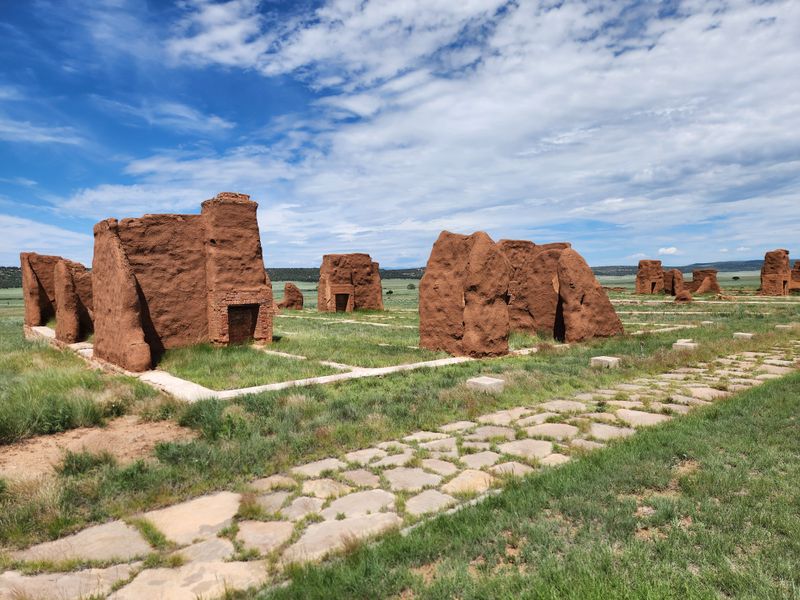
Fort Union guarded the Santa Fe Trail and became the largest military post in the Southwest during the mid-1800s. Its mission centered on escorting wagon trains, maintaining supply lines, and projecting federal authority across a vast region.
Today, adobe ruins and long sightlines convey both scale and isolation.
A self-guided trail winds through quarters, hospital sites, and the massive depot area, with panels that balance military detail and trade context. You can walk beside preserved wagon ruts, a direct link to overland commerce that shaped the region.
Rangers discuss construction methods and environmental factors that affected durability.
Weather changes quickly, so bring layers and water. The views toward the Sangre de Cristo range help explain route choices and why protection mattered.
Allocate an hour or two for a measured circuit, photography, and time to absorb the spacious setting.



