Iceland has a way of making you question whether what you are looking at is real. The country is packed with waterfalls that look like they belong in a fantasy film, not on a road trip itinerary.
Some of them thunder into deep volcanic canyons, others fan out like a bridal veil across an entire mountainside, and a few are so hidden that reaching them feels like discovering something private. Whether you are planning your first trip to Iceland or your fifth, this list covers 15 waterfalls that each bring something completely different to the table.
From the Golden Circle to the remote Westfjords, these are the falls that stop people mid-step and send them reaching for a camera. Keep this list saved because it is the kind of guide that makes a trip go from good to genuinely unforgettable.
Gullfoss, South Iceland
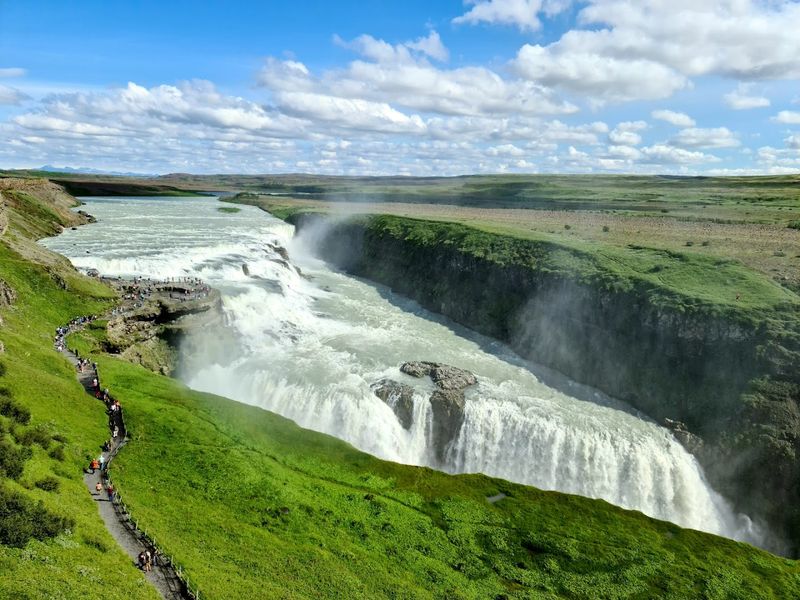
Few waterfalls announce themselves the way Gullfoss does. Long before you reach the edge of the canyon, you can hear the roar and feel the mist in the air.
The Hvítá River crashes down in two separate tiers, and the combined effect is something that feels bigger than any photo can capture.
What makes Gullfoss especially worth visiting is how many ways you can experience it. Multiple viewing platforms give you wide canyon shots from a distance, and closer paths let you stand near enough to feel the spray on your face.
The scale shifts depending on where you stand.
Gullfoss is a cornerstone of the Golden Circle route, which means it pairs naturally with Þingvellir and Geysir on a single day trip. Even among experienced Iceland travelers, this waterfall tends to produce a moment of quiet awe that catches people off guard.
It earns its reputation every single time.
Seljalandsfoss, South Iceland
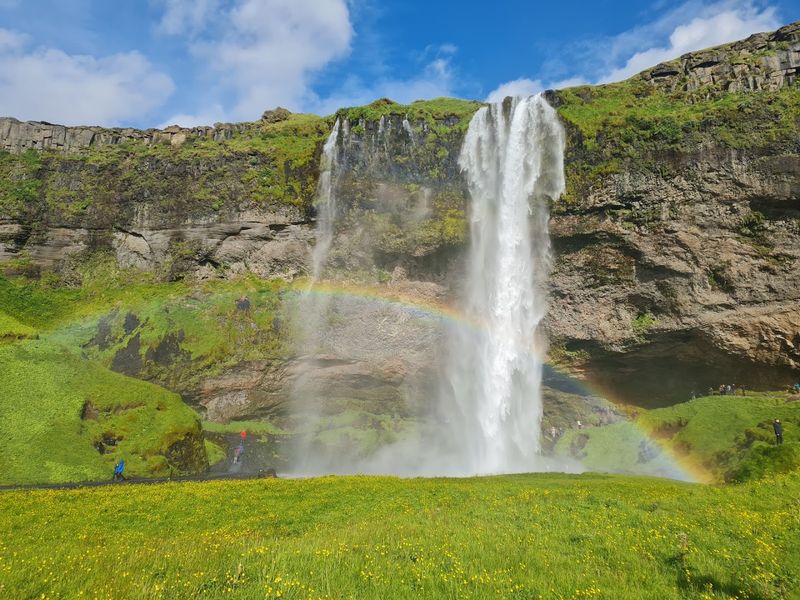
Seljalandsfoss offers something most waterfalls never could: the chance to walk behind it. A narrow path curves around the base and leads directly behind the falling curtain, which transforms a standard viewpoint into a full sensory experience.
The perspective from inside is completely different from anything you see in photos.
The trail can get slippery, especially near the back where the spray is heaviest, so waterproof boots and a rain jacket are practical choices rather than optional ones. Going in summer means longer daylight hours and a better chance of catching the late golden light hitting the falls from the front.
Seljalandsfoss sits right off the Ring Road on the South Coast, making it one of the most convenient major waterfalls to include in a day trip. Its tall, elegant shape draws attention from the road itself, and the walk-behind feature gives it a personality that sets it apart from every other waterfall on this list.
Skógafoss, South Iceland
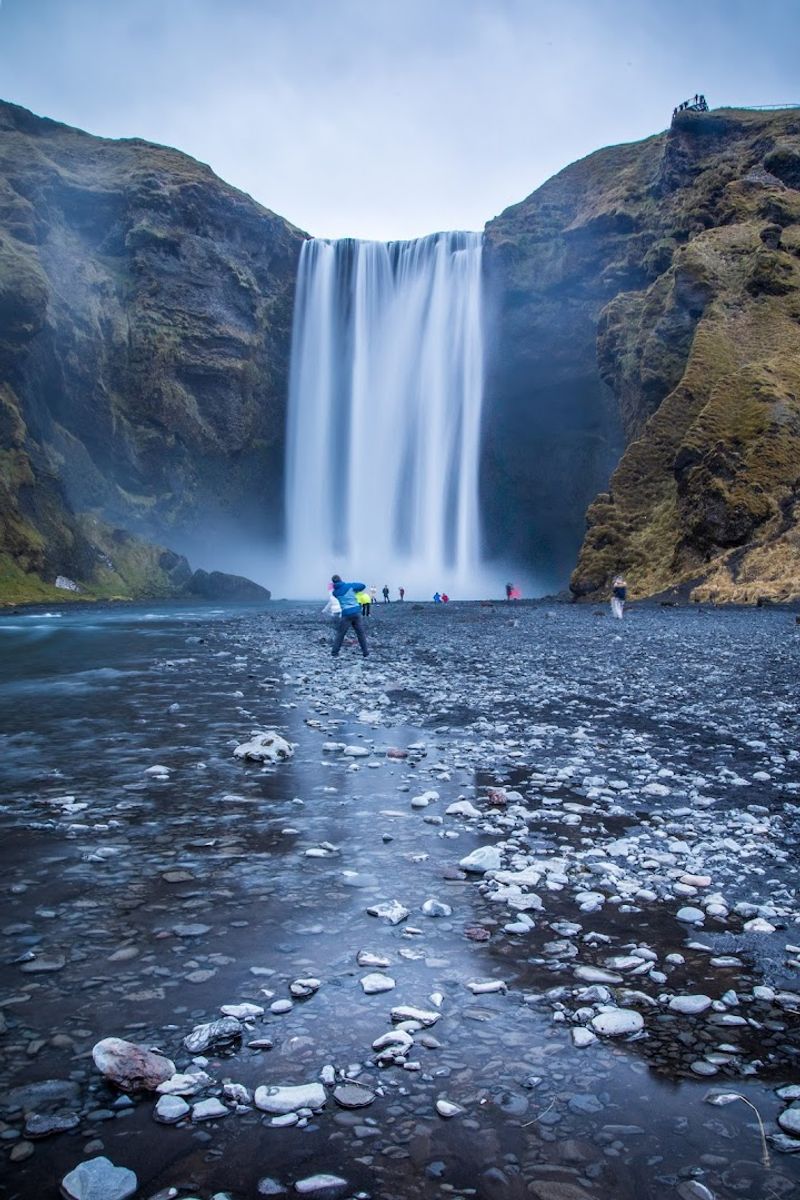
Skógafoss is the kind of waterfall that makes a strong first impression and then keeps delivering. Standing at its base, you get the full force of a 60-meter drop that stretches about 25 meters wide, creating a wall of mist that regularly produces rainbows on clear days.
It is genuinely hard not to stop and stare.
The staircase running alongside the falls is one of its best-kept highlights. Climbing it takes only a few minutes, and the view from the top overlooks not just the waterfall but the entire South Coast landscape stretching toward the sea.
That upper viewpoint changes the whole experience.
Because Skógafoss is right off the Ring Road near the village of Skógar, it connects easily with other South Coast stops like Seljalandsfoss and the black sand beach at Reynisfjara. It is also the starting point for the Fimmvörðuháls trail, which adds an adventurous option for hikers who want to keep going after the falls.
Dettifoss, North Iceland
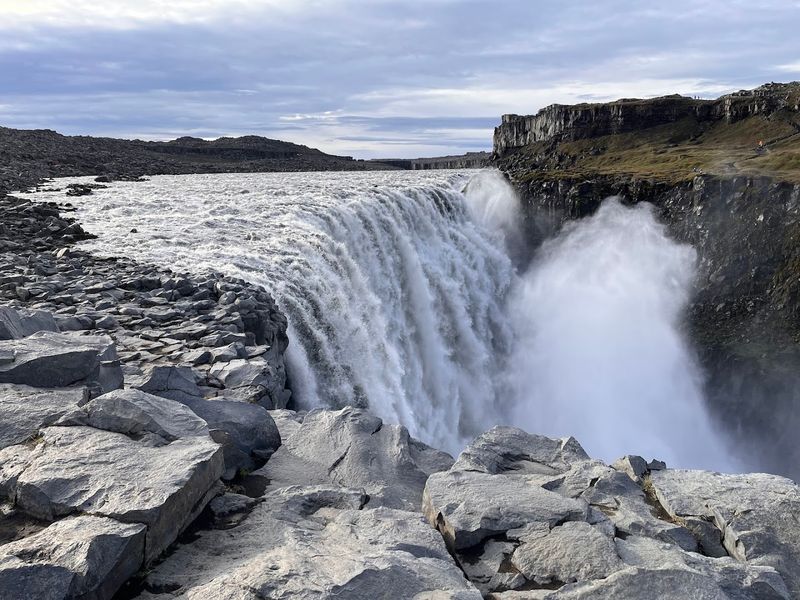
Dettifoss does not try to be pretty, and that is exactly the point. Recognized as Europe’s most powerful waterfall, it sends a massive volume of glacial water crashing into Jökulsárgljúfur canyon with a force that shakes the ground beneath your feet.
The spray reaches visitors long before they reach the edge.
The surrounding landscape is nothing like the green hillsides you find in South Iceland. Dettifoss sits in a raw, volcanic terrain that looks more like another planet than a nature park.
That setting amplifies the drama of the waterfall itself, making the whole scene feel ancient and completely untamed.
There are viewing areas on both the east and west banks of the canyon, and each side offers a different perspective. The west bank road is paved and easier to access, while the east side gives a closer but rougher experience.
Either way, Dettifoss is the kind of waterfall that stays with you well after you have driven away from it.
Goðafoss, North Iceland
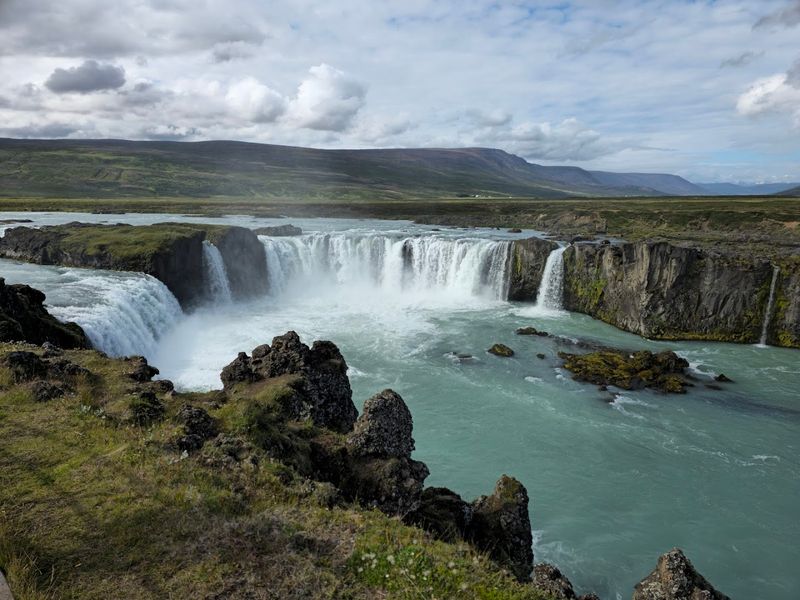
Named the Waterfall of the Gods, Goðafoss carries a story that goes back over a thousand years. According to Icelandic history, when Iceland officially adopted Christianity in the year 1000, a chieftain threw his Norse god statues into these very falls.
That backstory gives the waterfall a meaning that goes well beyond its appearance.
And the appearance is already impressive on its own. Goðafoss spreads across a curved, horseshoe-shaped ledge with water that runs blue and white depending on the light and season.
The shape makes it one of the most naturally photogenic waterfalls in the northern part of the country.
Its location near the Ring Road between Akureyri and Lake Mývatn makes it an easy addition to a northern Iceland itinerary. Viewing areas on both sides of the river give visitors options depending on the light and time of day.
For a waterfall with this much visual and historical character, it is surprisingly accessible and never feels rushed.
Svartifoss, Vatnajökull National Park
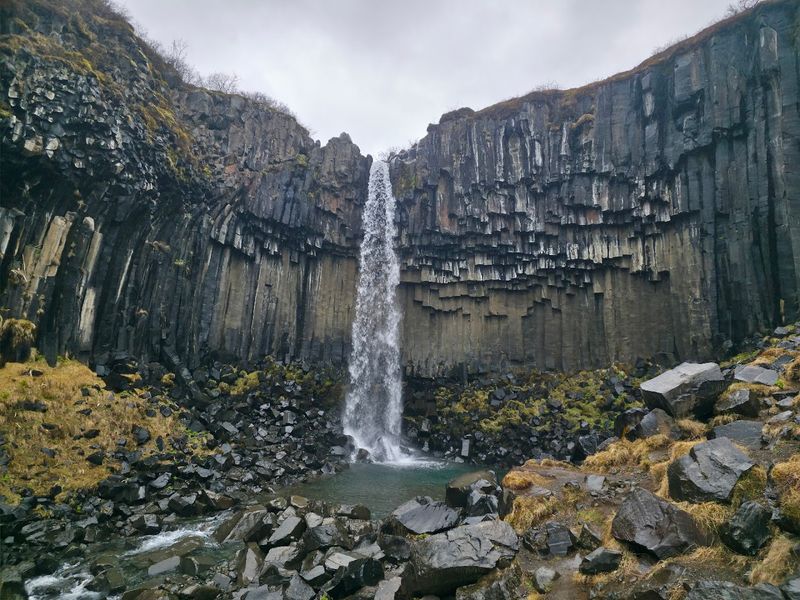
Svartifoss earns its place on this list not just for the waterfall itself, but for the geological theater surrounding it. The falls drop in a clean, graceful arc, but it is the ring of dark hexagonal basalt columns framing the scene that makes visitors stop and look twice.
The whole composition feels almost architectural.
Reaching Svartifoss requires a hike through the Skaftafell area of Vatnajökull National Park, which is one of Iceland’s largest and most visited protected areas. The trail is well-marked and manageable for most fitness levels, with the round trip taking roughly two to three hours depending on pace and side detours.
The columns at Svartifoss are said to have inspired the design of Hallgrímskirkja, the famous church in Reykjavík, which adds an interesting architectural connection to the visit. That link between a remote natural feature and a landmark building in the capital is the kind of detail that makes a waterfall feel like more than just a scenic stop.
Dynjandi, Westfjords
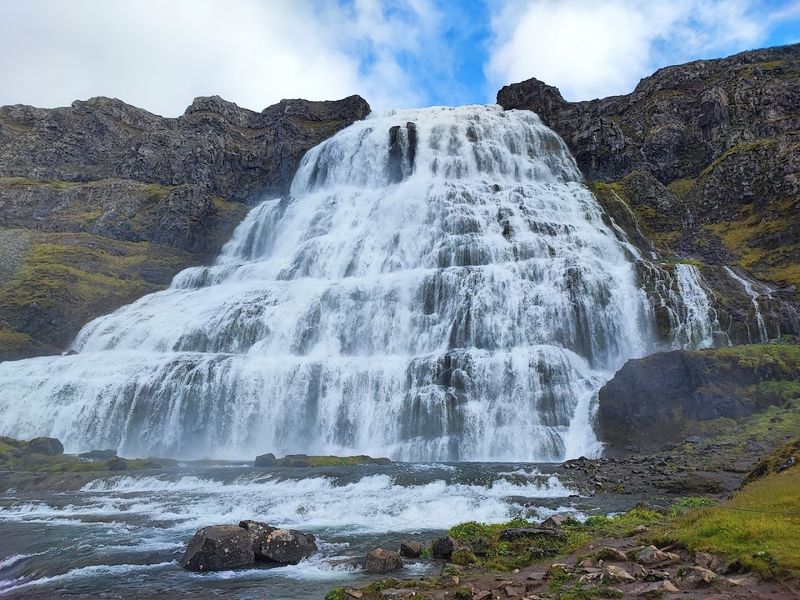
Getting to Dynjandi takes real effort, and that is part of why it feels so rewarding. The Westfjords region of Iceland is one of the least visited parts of the country, which means the road to this waterfall involves winding coastal drives and a noticeable absence of tour buses.
By the time Dynjandi comes into view, the journey itself has already set the mood.
The waterfall fans down the mountainside in a wide, tiered shape that gets broader as it descends, reaching about 30 meters wide at its base. That fanning silhouette is unlike anything else in Iceland and makes it one of the most distinctive waterfalls in the entire country.
The total drop is roughly 100 meters.
Several smaller waterfalls cascade down the same hillside below Dynjandi, so the walk to the main falls passes through a series of smaller but beautiful water features. The whole area feels unhurried and expansive.
Dynjandi is the kind of place that rewards travelers who are willing to go a little further than the standard tourist route.
Hengifoss, East Iceland
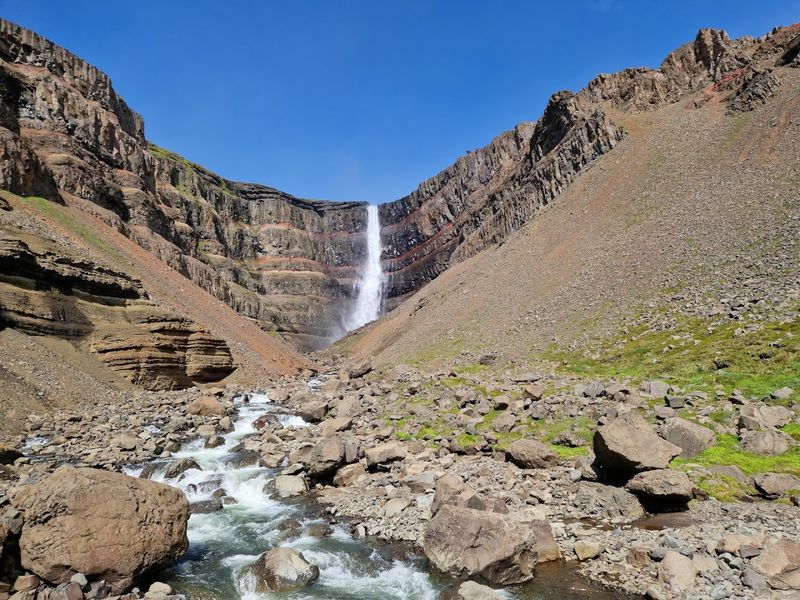
Hengifoss has a look that sets it apart from every other major waterfall in Iceland. The cliff face behind the falls is layered with alternating bands of red clay and dark basalt, creating a striped geological record that dates back millions of years.
That coloring gives the entire scene a dramatic and almost surreal quality.
At around 128 meters, Hengifoss ranks among the tallest waterfalls in Iceland. The hike to reach it takes about 45 minutes to an hour each way and climbs steadily through open moorland with views of the surrounding valley.
It is a genuine hike, not a short stroll, but the trail is well-established.
On the way up, the trail passes Litlanesfoss, another striking waterfall framed by basalt columns that is worth stopping for on its own. That combination makes the Hengifoss hike one of the best two-waterfall experiences available in East Iceland.
The area near Lagarfljót lake provides a scenic regional context that many travelers overlook entirely when planning an Iceland trip.
Gljúfrabúi, South Iceland
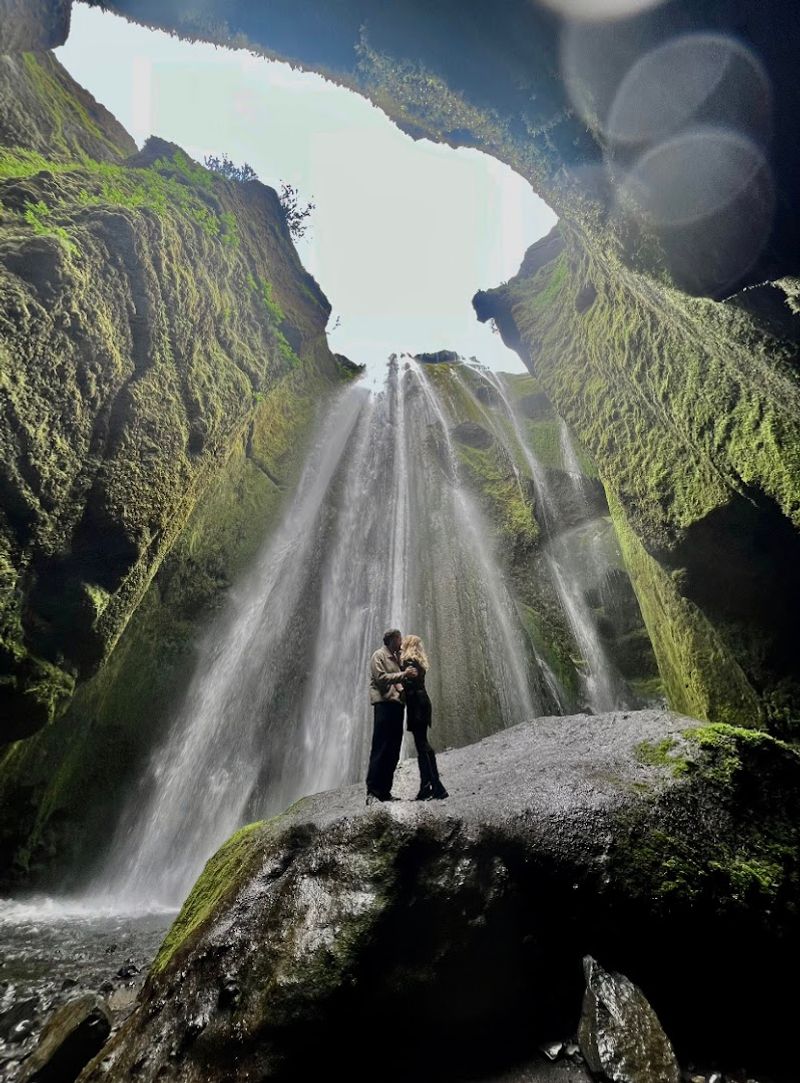
Gljúfrabúi is hiding in plain sight, just a short walk from its much more famous neighbor Seljalandsfoss. Most visitors drive past without realizing it is there.
The waterfall is partially tucked inside a narrow canyon slot, which means you have to approach carefully and peer through a gap in the rock to understand what you are actually looking at.
Getting the full view requires wading through a shallow stream that runs through the canyon entrance. Waterproof footwear is genuinely necessary here, not just a suggestion.
Once inside, the waterfall drops from above into a small enclosed space that amplifies the sound and creates a misty, enclosed atmosphere unlike anything else on the South Coast.
Because it sits so close to Seljalandsfoss, adding Gljúfrabúi to a visit costs almost no extra time. But the payoff is significant.
Travelers who find it often say it becomes one of their favorite memories from the South Coast, precisely because it required a little more curiosity and effort to discover than the waterfalls you can see from the parking lot.
Háifoss, South Iceland Highlands
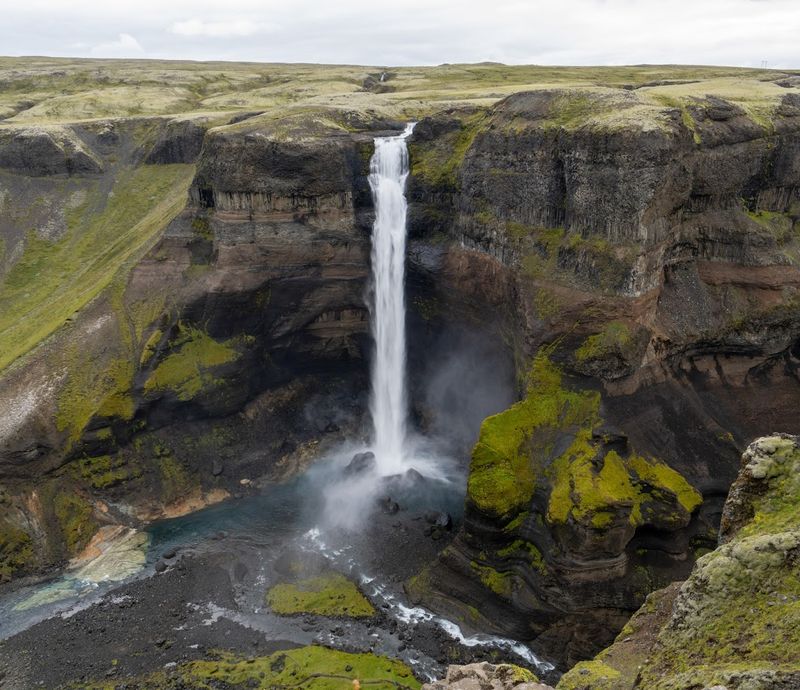
Háifoss sits in the Þjórsárdalur valley and drops roughly 122 meters into a deep canyon, making it one of the tallest waterfalls in all of Iceland. What separates it from better-known giants like Gullfoss or Skógafoss is the setting.
The surrounding highland landscape is wide, open, and noticeably quieter, which gives the whole experience a more remote and personal feel.
Access to Háifoss typically requires driving a highland road, and conditions can vary depending on the season and recent weather. Checking road status before heading out is a practical step that makes a real difference.
A 4×4 vehicle is often recommended, especially outside of peak summer months.
The canyon viewpoint near the falls also overlooks Granni, a second waterfall that drops alongside Háifoss into the same gorge. Seeing both together from the canyon rim is one of the more striking panoramic moments available anywhere in the South Iceland highlands.
For travelers willing to plan ahead, Háifoss delivers a payoff that feels genuinely proportional to the effort involved.
Aldeyjarfoss, North Iceland
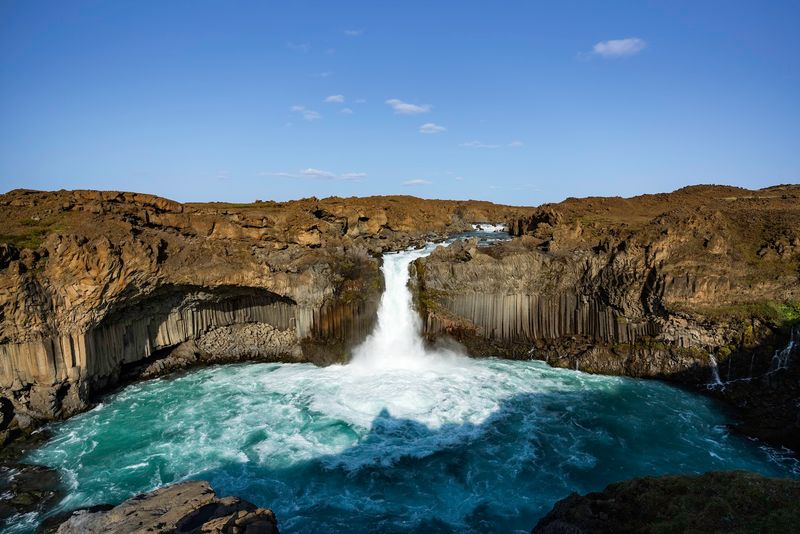
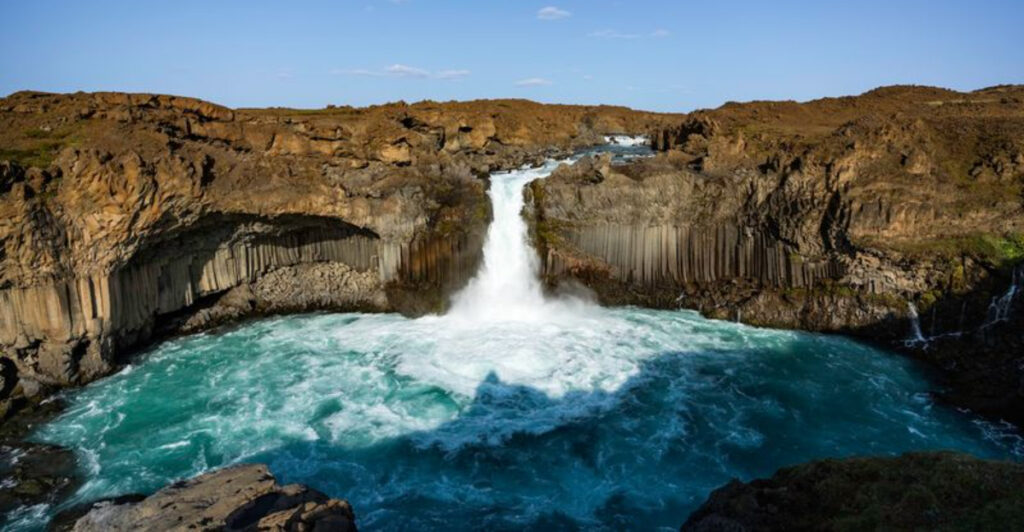
Aldeyjarfoss sits on the Skjálfandafljót river in the northern highlands, and it has a sculptural quality that makes it feel different from other Icelandic waterfalls. Dark hexagonal basalt columns line the canyon walls in dramatic formations, and the water drops into a pool that shifts between turquoise and white depending on the light and flow.
Getting there requires leaving the main Ring Road and heading into less-traveled highland territory. Depending on the season and the specific route taken, a 4×4 vehicle may be necessary.
That extra logistical step is part of what keeps the site relatively uncrowded compared to the South Coast giants.
The surrounding landscape is stark and open in the way that highland Iceland tends to be, with no trees and a strong sense of exposure to the sky and terrain. Aldeyjarfoss is not a quick roadside stop.
It is a destination that takes a bit of planning, and the reward is a waterfall that genuinely looks like it was carved by a sculptor rather than shaped by natural forces over thousands of years.
Litlanesfoss, East Iceland
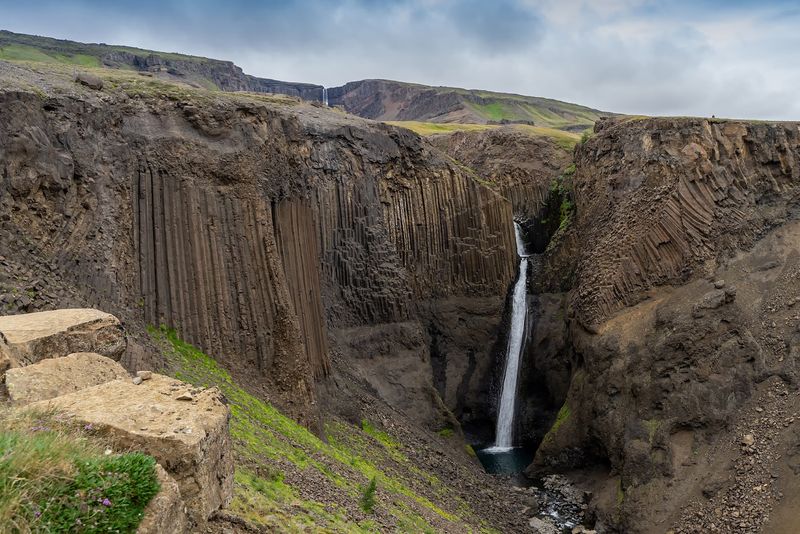
Litlanesfoss tends to get treated as a warm-up act for Hengifoss, which is a bit unfair given how striking it is on its own. The waterfall drops through a canyon lined with some of the most symmetrical and photogenic basalt columns in East Iceland.
The geometry of those formations creates a natural frame that makes every photo look intentional.
The columns at Litlanesfoss rise tall on both sides of the falls, creating a corridor effect that draws the eye directly to the water. That visual structure is different from Svartifoss in the south, where the columns arc overhead.
Here, they stand like pillars flanking the cascade on either side.
The trail to Litlanesfoss branches off the Hengifoss hiking path, so most visitors encounter it naturally on the way up or back. Spending a few extra minutes here rather than rushing past is genuinely worth it.
The combination of basalt architecture and falling water makes Litlanesfoss one of the most geologically interesting short stops available in the entire East Iceland region.
Öxarárfoss, Þingvellir National Park
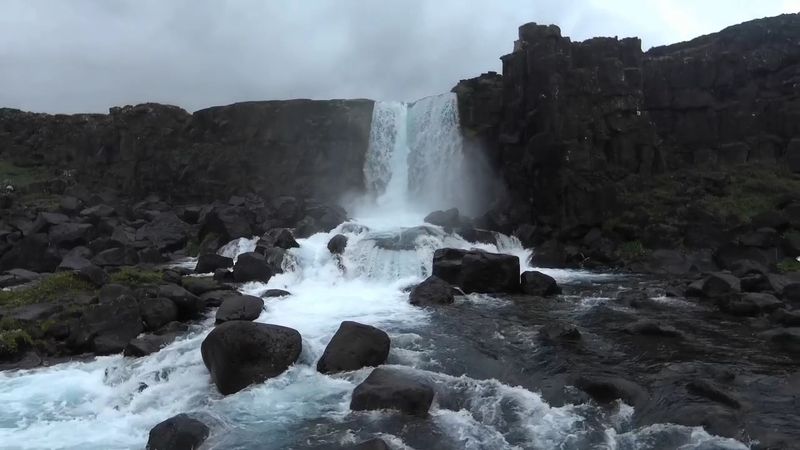
Öxarárfoss might be modest in size compared to the towering falls elsewhere on this list, but its location inside Þingvellir National Park gives it a weight that larger waterfalls cannot match. Þingvellir is a UNESCO World Heritage Site where the North American and Eurasian tectonic plates visibly meet, and where Iceland’s parliament, the Althing, was established in 930 AD.
The walk to Öxarárfoss passes through the dramatic rift valley terrain that makes Þingvellir so geologically significant. Tall canyon walls of dark basalt rise on either side of the path, and the waterfall itself appears where the Öxará river tumbles over a ledge into a clear pool below.
The setting feels ancient in a way that is hard to describe.
Because Þingvellir is already a core stop on the Golden Circle route, Öxarárfoss requires almost no extra effort to include. It is a short walk from the main visitor area.
For a waterfall that sits at the intersection of Icelandic history, geology, and natural beauty, the experience it offers is quietly powerful and completely out of proportion to its physical size.
Selfoss, North Iceland
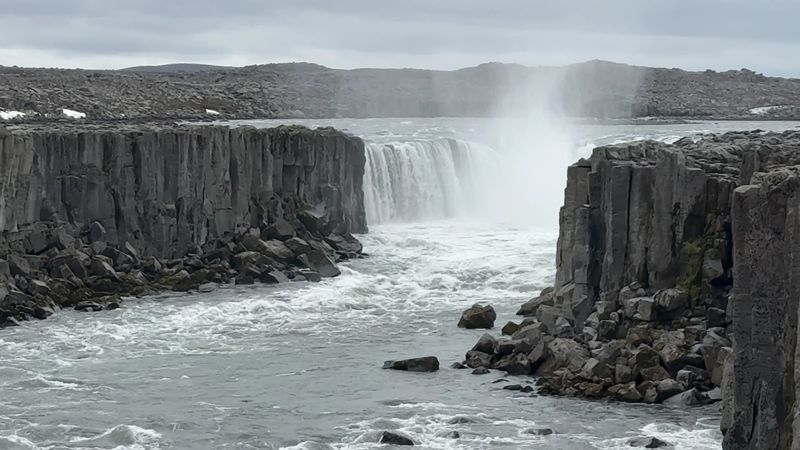
Selfoss and Dettifoss are neighbors on the same river, but they could not feel more different from each other. Where Dettifoss is raw and thunderous, Selfoss spreads across a wide, uneven rocky ledge in a broad, layered curtain of water that moves with surprising elegance for a waterfall in such a rugged setting.
The contrast between the two is part of what makes visiting both so worthwhile.
Selfoss sits upstream from Dettifoss on the Jökulsá á Fjöllum river, and reaching it involves a short walk from the Dettifoss parking area. The path crosses volcanic terrain that gives the whole area its distinctive lunar quality.
The river here carries glacial sediment that gives the water a gray-blue tone rather than the clear blue found in many other Icelandic rivers.
Because most visitors focus their energy and attention on Dettifoss, Selfoss often gets a quieter crowd. That relative calm makes it easier to stand at the edge, take in the full width of the falls, and appreciate a waterfall that rewards patience and a willingness to look beyond the obvious headline attraction nearby.
Kirkjufellsfoss, Snæfellsnes Peninsula
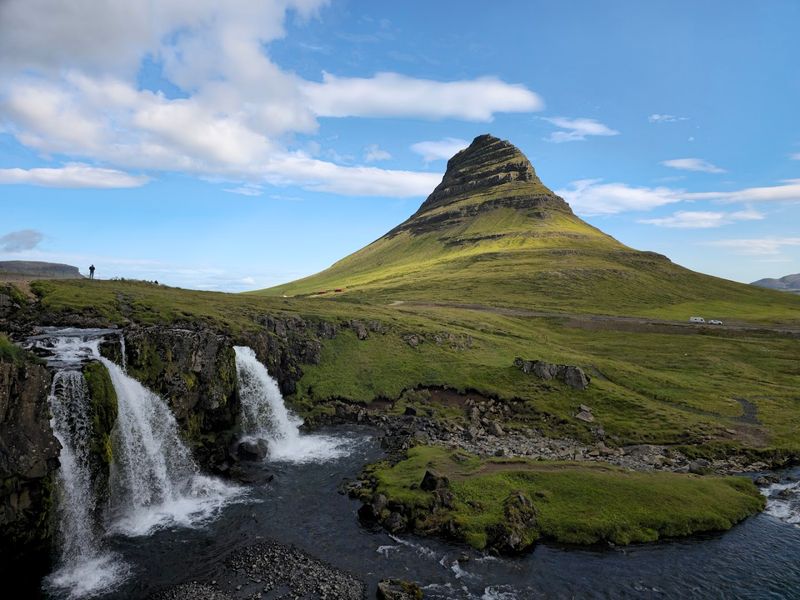
Kirkjufellsfoss is one of those places where the waterfall and the backdrop work together to create something greater than either one alone. The falls themselves are relatively small and gentle, dropping in a few parallel streams over mossy rocks.
But positioned in front of Kirkjufell mountain, one of the most photographed peaks in Iceland, the whole composition becomes something iconic.
Kirkjufell’s distinctive arrow-like summit rises sharply behind the falls, and on clear days the reflection in the pool below adds another layer to an already striking scene. The mountain gained additional international recognition after appearing in the television series Game of Thrones, which brought a new wave of visitors to the Snæfellsnes Peninsula.
The waterfall is easy to access from the town of Grundarfjörður, with a short walk from the roadside parking area. It works well as part of a full Snæfellsnes day trip that also covers the glacier, lava fields, and black pebble beaches the peninsula is known for.
Even without the mountain backdrop, Kirkjufellsfoss has a quiet charm that stands on its own.
Share this story