 Unearth The Voyage
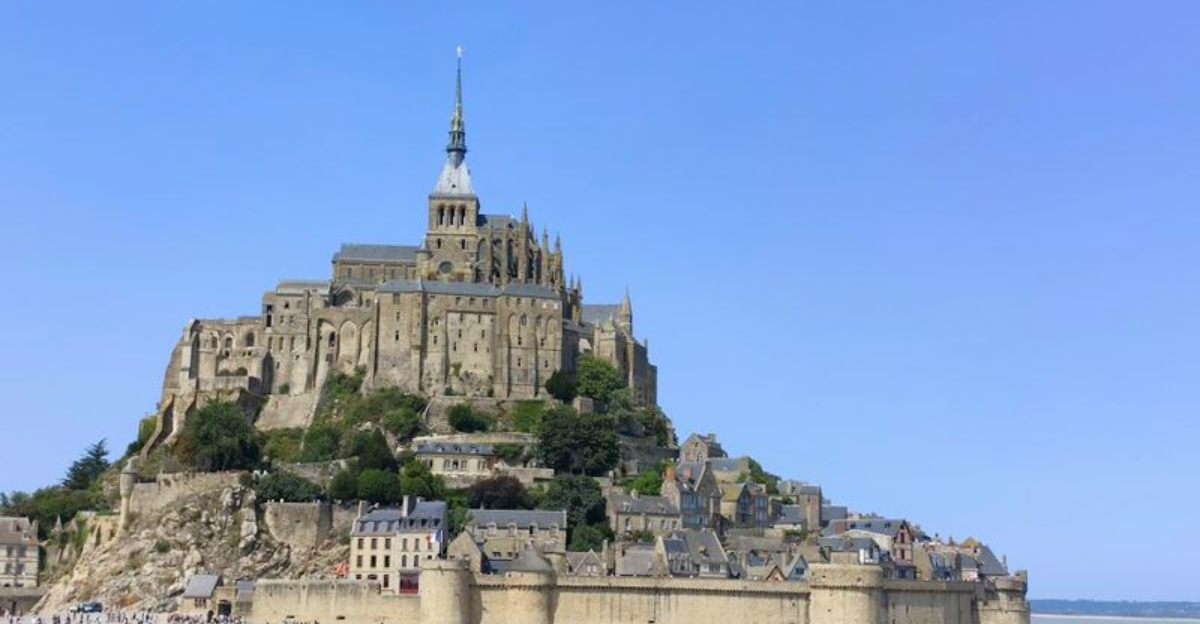
France is home to some of the most breathtaking churches ever built, each one telling a story that stretches back hundreds of years. From towering Gothic spires to walls made almost entirely of stained glass, these buildings pushed the limits of what medieval builders thought was possible.
They shaped the way churches were designed across the entire world. Get ready to explore 15 French churches that are as jaw-dropping today as they were the day they were completed.
Notre-Dame de Paris
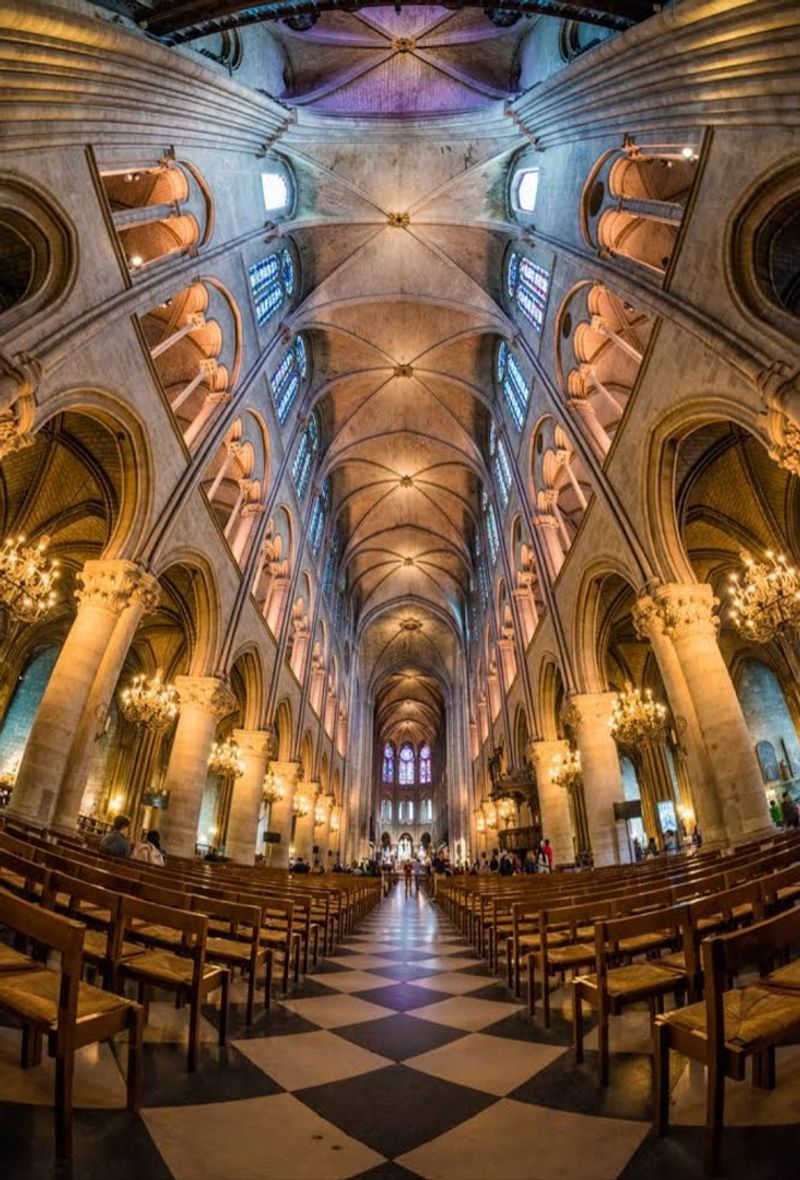
Few buildings on Earth have survived fire, revolution, and centuries of history quite like Notre-Dame de Paris. Construction began in 1163, and the cathedral took nearly 200 years to complete.
That alone should earn it some serious respect.
The twin towers rise nearly 69 meters above the city, and the iconic rose windows splash color across the stone interior like a medieval light show. Flying buttresses wrap around the exterior like outstretched arms, allowing the walls to be thinner and the windows to be much larger.
This was groundbreaking engineering for the 12th century.
The 2019 fire shocked the world when the spire collapsed on live television. Yet restoration efforts moved faster than anyone expected, and the cathedral reopened in December 2024.
Visiting Notre-Dame feels like stepping into a living history book. Every carved figure on the facade tells a biblical story, and the sheer scale of the building makes even the most seasoned traveler pause and look up.
It remains the most visited monument in France, drawing millions of visitors each year who come to witness its enduring power firsthand.
Chartres Cathedral
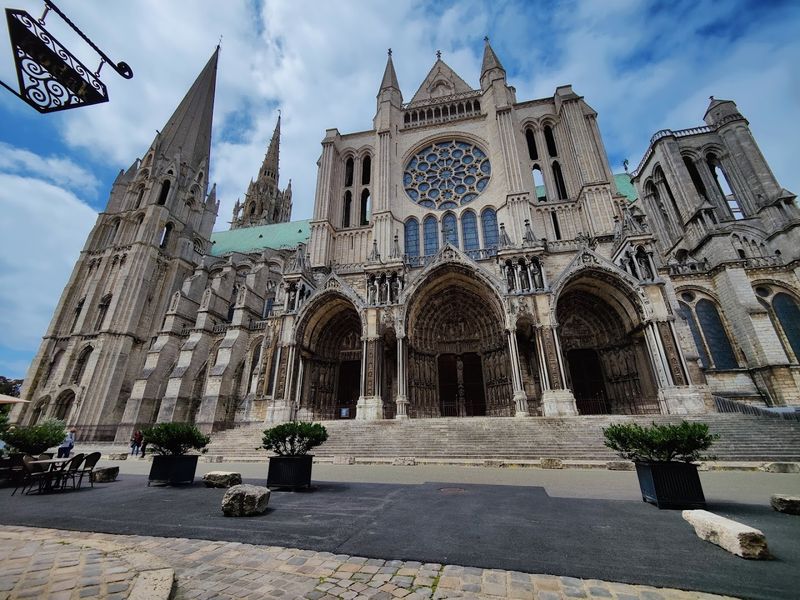
Walk into Chartres Cathedral on a sunny afternoon and the light hits you first. Over 170 original stained-glass windows from the 13th century still filter sunlight into colors so rich they look almost unreal.
No other cathedral in France has preserved its medieval glass so completely.
Built mainly between 1194 and 1220, Chartres replaced an earlier church destroyed by fire. Builders worked at remarkable speed, which is why the cathedral has an unusually consistent Gothic style throughout.
The two mismatched towers actually add charm rather than awkwardness, giving the building a quirky, human quality.
Chartres also features one of the most complete sculptural programs of any medieval church. Thousands of carved figures cover the portals, depicting saints, angels, and scenes from the Bible with surprising expressiveness.
Architectural scholars consider its proportions nearly perfect, and the cathedral served as a direct model for several later Gothic masterpieces. UNESCO added it to the World Heritage List in 1979, recognizing its outstanding value.
Whether you are interested in architecture, history, or art, Chartres delivers something memorable at every turn. It is genuinely hard to leave without feeling a little bit awed.
Reims Cathedral
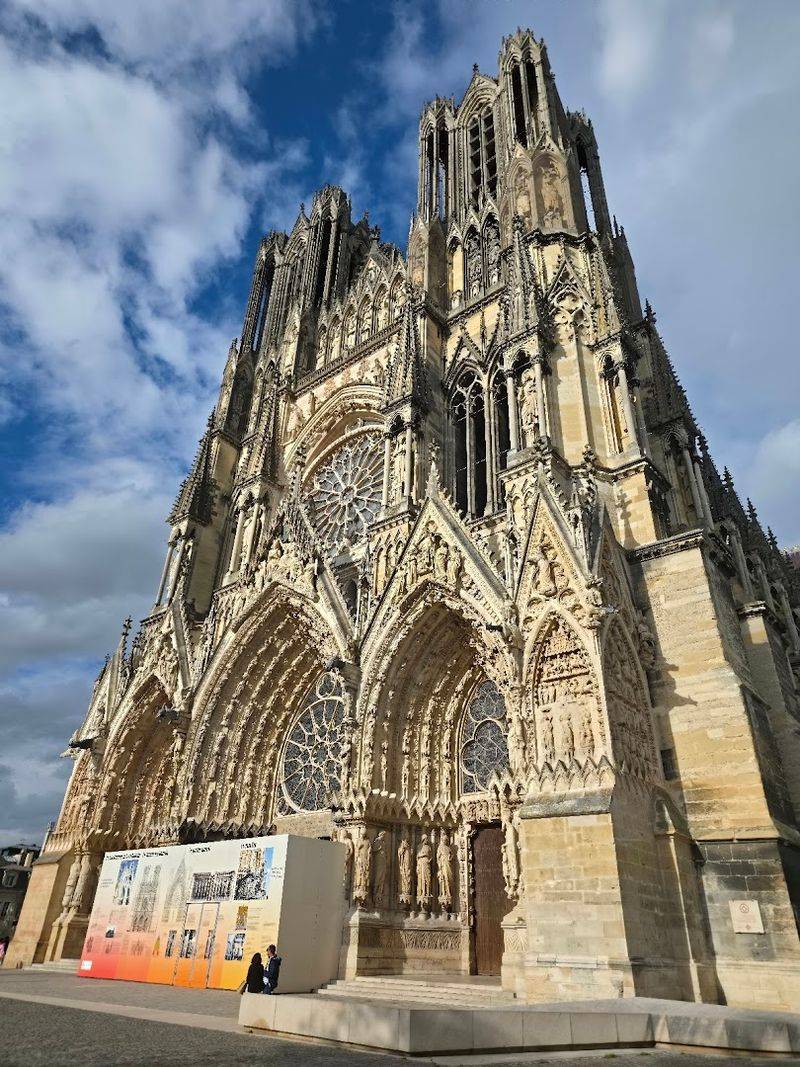
Thirty-three French kings were crowned inside Reims Cathedral, which makes it arguably the most historically loaded church in the entire country. Construction began in 1211, but the ambition behind every carved figure and soaring arch feels timeless.
This place was built to impress royalty, and it still does.
The west facade is jaw-dropping. Over 2,300 sculpted figures cover the surface, telling stories from scripture and French history in stone.
Among them is the famous Smiling Angel, a figure so serene and warm that it became the symbol of the entire city of Reims. The interior continues the drama with tall nave arcades and luminous stained-glass windows designed by Marc Chagall in the 20th century.
World War I left serious damage on the cathedral, with German bombardment destroying much of the original glass and blackening the stone. The restoration effort lasted decades and brought together craftspeople from across Europe.
Today, the cathedral stands as proof that great architecture can survive even the worst that history throws at it. A visit to Reims is part church tour, part history lesson, and completely unforgettable.
The sheer density of art packed into one building is almost overwhelming.
Amiens Cathedral
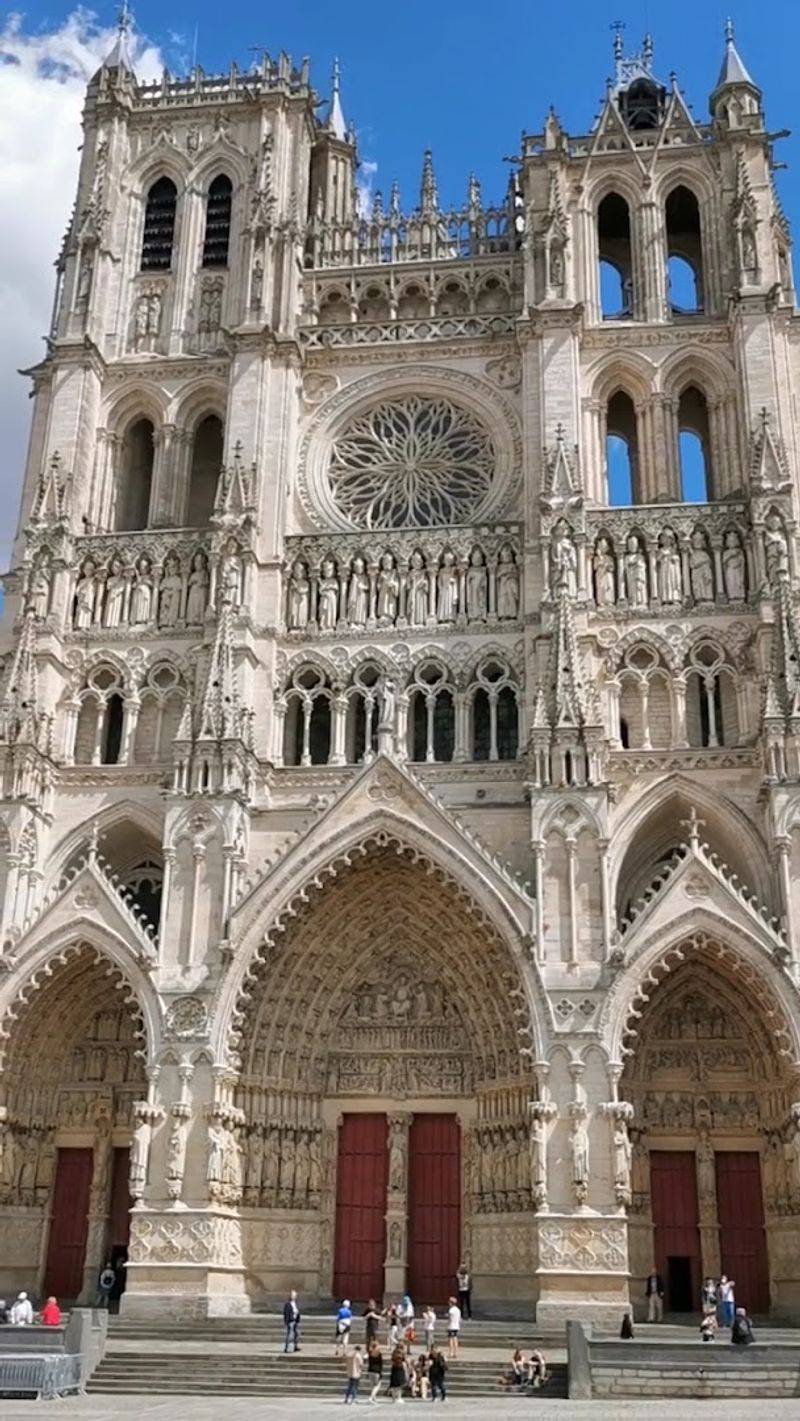
Amiens Cathedral is the largest Gothic cathedral in France by interior volume, and standing inside it for the first time genuinely feels like someone turned up the gravity. The nave rises to 42.3 meters, making it one of the tallest Gothic interiors ever built.
Medieval builders were clearly not interested in playing it safe.
Construction moved quickly by medieval standards, with most of the building completed between 1220 and 1270. That speed created a rare consistency in style, giving Amiens a visual harmony that more piecemeal cathedrals lack.
The west facade is packed with sculpted figures, and the famous Beau Dieu, a serene statue of Christ, stands at the central portal welcoming visitors with quiet authority.
The choir screen inside features remarkably detailed polychrome carvings depicting scenes from the lives of Saint Firmin and John the Baptist. These were hidden under whitewash for centuries and only rediscovered in the 1800s.
UNESCO recognized Amiens as a World Heritage Site in 1981. If you only have time for one cathedral in northern France and you want maximum Gothic drama per square meter, Amiens is your answer.
Its combination of scale, artistry, and structural boldness puts it in a league of its own.
Basilica of Saint-Denis
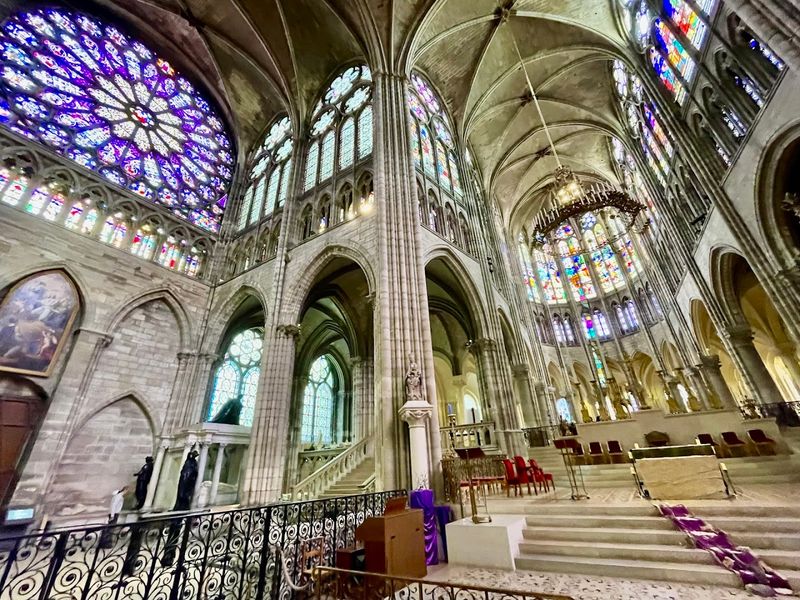
Every architectural revolution needs a starting point, and for Gothic architecture, that starting point is the Basilica of Saint-Denis. Abbot Suger oversaw its reconstruction in the 12th century with one obsessive goal: flood the church with light.
His solution changed church design forever.
Suger introduced rib vaults and large stained-glass windows working together in a way no one had combined before. The result was a structure that felt weightless compared to the heavy Romanesque buildings of the time.
Suddenly, walls did not need to be thick and solid to hold up a roof. Builders across Europe took notice immediately.
Beyond its architectural fame, Saint-Denis served as the burial place of French royalty for over a thousand years. The tombs inside are extraordinary works of art, featuring detailed effigies of kings and queens carved in marble and stone.
Walking through the royal necropolis feels genuinely eerie in the best possible way. Napoleon Bonaparte, despite not being buried there, recognized its importance and ordered major restorations in the early 19th century.
The basilica sits just north of Paris and is surprisingly easy to visit, yet many tourists skip it entirely. That is their loss and your opportunity for a quieter, deeply fascinating experience.
Sainte-Chapelle, Paris
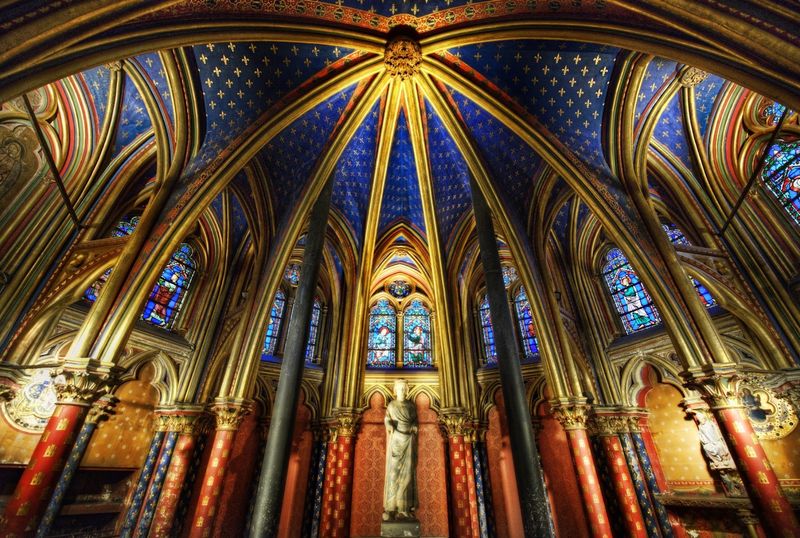
Imagine standing inside a jewel box the size of a small church. That is essentially the experience Sainte-Chapelle offers, and it never gets old no matter how many times you visit.
Built between 1242 and 1248, this royal chapel was constructed specifically to house the Crown of Thorns and other relics purchased by King Louis IX.
The upper chapel is the real showstopper. Fifteen massive stained-glass windows rise from floor to ceiling, covering over 600 square meters of glass.
On a bright day, the interior glows with reds and blues so intense they feel almost electric. The stone structure is reduced to the thinnest possible framework, making the building feel more like a lantern than a church.
Sainte-Chapelle represents the peak of Rayonnant Gothic style, a phase where architects became almost obsessed with maximizing glass and minimizing stone. The 1,113 individual scenes depicted in the windows tell stories from the Old and New Testaments in stunning visual detail.
Each panel rewards close attention. The chapel sits within the Palais de la Cite on the Ile de la Cite, just steps from Notre-Dame.
Arriving early in the morning before crowds build is strongly recommended. The silence paired with that extraordinary light is genuinely magical.
Strasbourg Cathedral
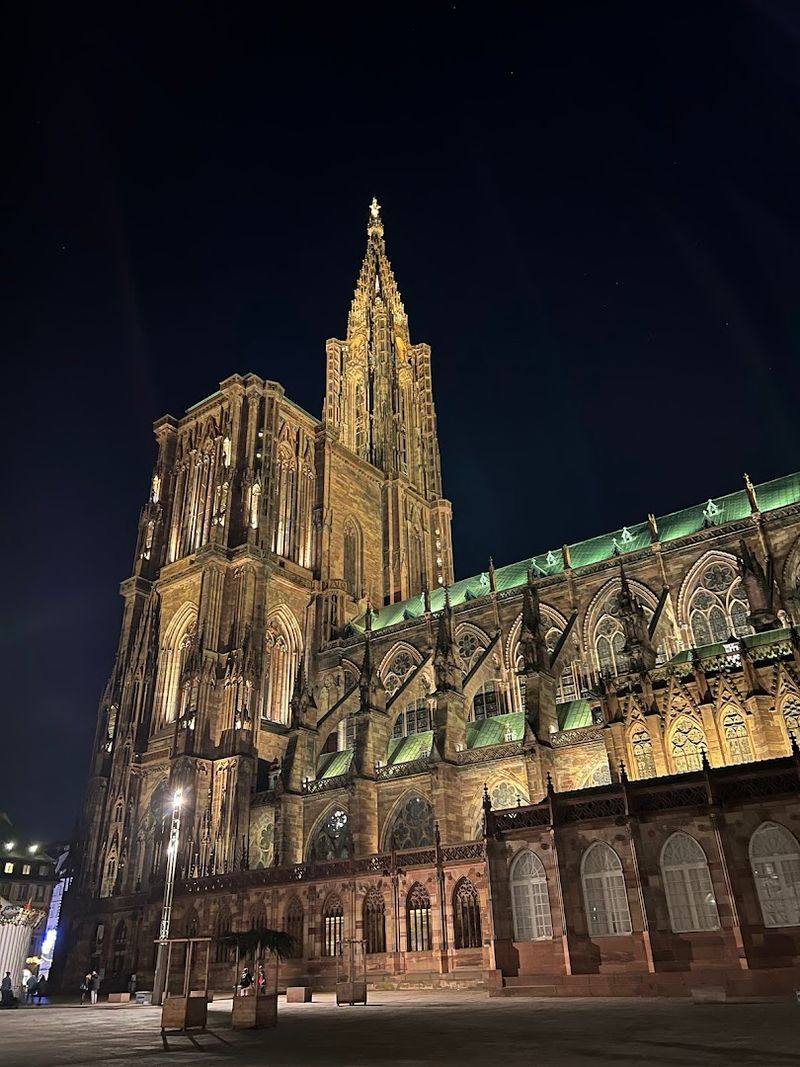
For 227 years, Strasbourg Cathedral held the title of tallest building in the world, a record it kept from 1647 to 1874. That single fact tends to stop people mid-sentence when they hear it.
The single north spire reaches 142 meters, and the south tower was never completed, giving the building an asymmetry that somehow works perfectly.
Built from warm pink Vosges sandstone, the facade glows at sunset in a way that stone cathedrals rarely do. Construction stretched from the 11th to the 15th century, layering Romanesque foundations beneath increasingly elaborate Gothic upper sections.
The transition is visible if you know where to look, making the building a fascinating timeline of medieval architecture.
Inside, the astronomical clock is a must-see attraction. Built in the 16th century and redesigned in the 19th, it features moving figures that perform a mechanical parade at noon each day.
The pillar of angels nearby is another highlight, a slender column carved with extraordinary delicacy. Strasbourg sits in the Alsace region, which has historically shifted between French and German control, and the cathedral reflects that cultural blend beautifully.
Victor Hugo described it as a gigantic and delicate marvel, and honestly, that description still holds up today without needing any updates.
Rouen Cathedral
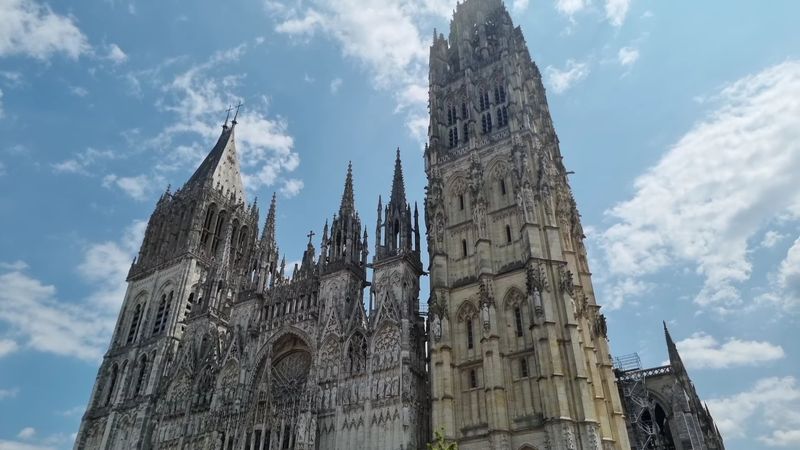
Claude Monet painted Rouen Cathedral more than thirty times, obsessing over the way light changed its elaborate stone facade throughout the day. That kind of artistic dedication tells you something important about how visually compelling this building really is.
The facade looks almost like stone lace, carved in such fine detail it seems impossible that human hands produced it without power tools.
Construction at Rouen stretched across several centuries, from the 12th to the 16th, meaning the building passed through multiple phases of Gothic style. The result is an architectural timeline carved in limestone, where Early Gothic simplicity gradually gives way to the wild, flame-like decoration of Flamboyant Gothic.
The central spire, added in the 19th century using cast iron, is the tallest in France at 151 meters.
Joan of Arc was tried and burned at the stake in Rouen in 1431, and the cathedral witnessed many of those turbulent events firsthand. The interior holds the tombs of several important historical figures, including the heart of Richard the Lionheart.
Rouen itself is a gorgeous medieval city, and the cathedral anchors its historic center magnificently. Seeing the building at different times of day, just as Monet did, reveals how dramatically the stone changes color and character with shifting light.
Laon Cathedral
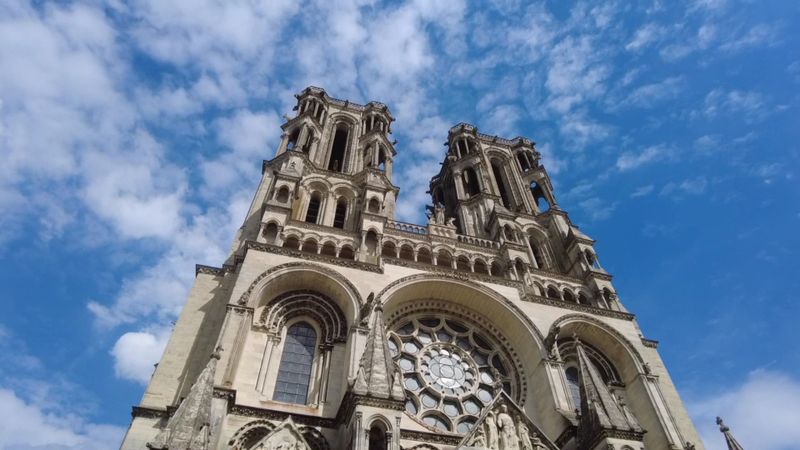
Perched dramatically on a hilltop above the surrounding plains, Laon Cathedral announces itself from miles away. Built between the 12th and 13th centuries, it is one of the oldest Gothic cathedrals in France and one of the most architecturally influential buildings most people have never heard of.
That oversight is genuinely worth correcting.
The five towers are Laon’s most distinctive feature. Four of them are open, and if you look closely, you can spot stone oxen peering out from the tower openings.
According to legend, they honor the animals that hauled building materials up the steep hill during construction. It is an unexpectedly charming detail on an otherwise serious building.
The interior showcases the transition from Romanesque heaviness to Gothic lightness with impressive clarity. The four-story nave elevation, with its gallery level, triforium, and clerestory, became a template that influenced Chartres, Reims, and Notre-Dame de Paris.
Architectural historians treat Laon as essential reading in stone. The rose windows are among the earliest examples of this form in French Gothic architecture.
Laon is less crowded than the big-name cathedrals, which means you can actually stand quietly and absorb the space without dodging tour groups. That breathing room makes the experience feel more personal and rewarding.
Albi Cathedral
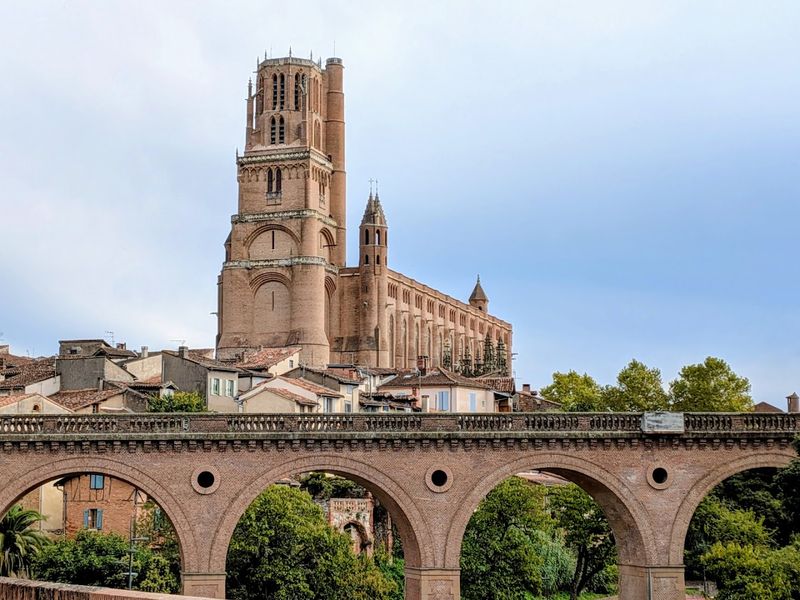
Nothing quite prepares you for your first glimpse of Albi Cathedral. Most Gothic cathedrals reach upward with delicate stone tracery and pointed spires.
Albi looks like it was built to survive a siege, which is essentially true. Construction began in 1282 in the aftermath of the brutal Albigensian Crusade, and the Church wanted a building that communicated absolute authority and permanence.
The entire exterior is built from red brick, unusual for a cathedral of this scale and ambition. The walls are thick, largely windowless on the lower levels, and flanked by round towers that look more like a fortress than a house of worship.
The contrast with the surrounding landscape of southern France is startling and unforgettable.
Step inside, however, and the mood shifts completely. The interior explodes with color and decoration.
A richly painted ceiling stretches overhead, and an elaborate stone choir screen of astonishing intricacy separates the nave from the choir. The walls are covered with 15th-century frescoes including a massive Last Judgment scene of remarkable detail.
UNESCO designated Albi as a World Heritage Site in 2010. The city of Albi itself is charming, built largely from the same warm red brick, making the cathedral feel like a natural extension of its surroundings rather than an imposing outsider.
Bourges Cathedral
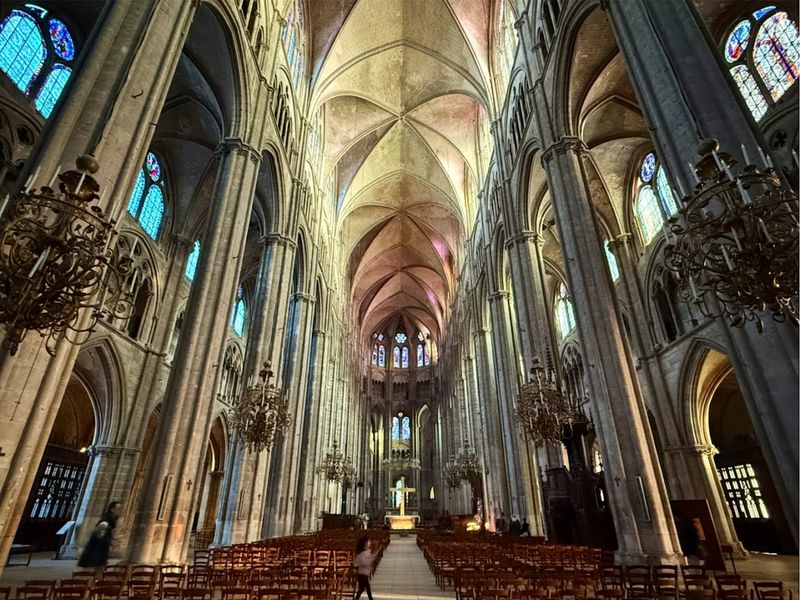
Bourges Cathedral breaks the rules that most Gothic cathedrals follow, and it is better for it. There is no transept, which means the interior flows as one uninterrupted space from entrance to altar.
Walking in feels less like entering a cross-shaped church and more like stepping into a vast, luminous hall that keeps revealing new details the further you go.
Construction began around 1195, and the building was largely complete by the mid-13th century. The west facade features five elaborate portals, each filled with sculpted figures of exceptional quality.
The double-aisle design creates a layered interior with five nave levels visible from the center, producing a dramatic visual depth that very few Gothic buildings can match.
The stained-glass windows at Bourges are considered among the finest in the world. The ambulatory windows at the east end date from the early 13th century and glow with an intensity that makes the choir feel genuinely sacred.
UNESCO recognized the cathedral as a World Heritage Site in 1992. Bourges sits in the geographic heart of France and is often overlooked by tourists rushing between Paris and the south.
That is a genuine shame, because the cathedral rewards careful attention with layers of detail that take hours to fully appreciate. Architectural enthusiasts consistently rank it among France’s absolute best.
Sens Cathedral
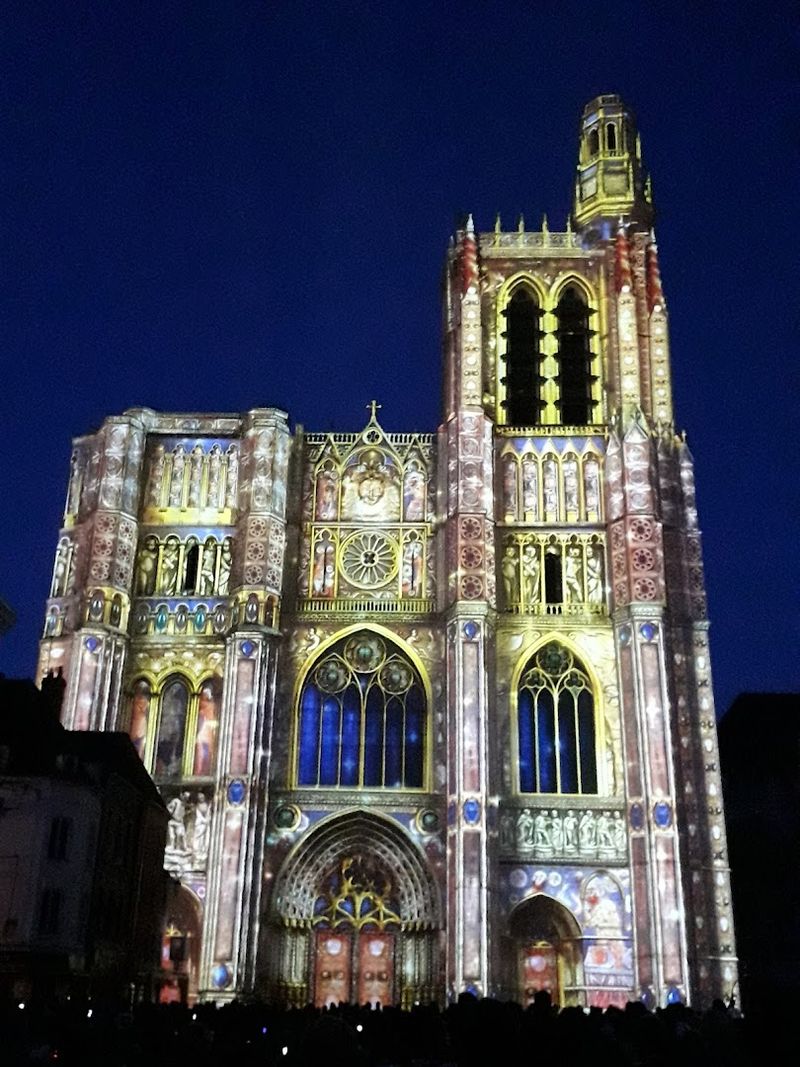
Sens Cathedral quietly holds one of the most important titles in architectural history: it is among the very first Gothic cathedrals ever built. Construction began around 1135, decades before Notre-Dame de Paris, making it a genuine pioneer rather than a follower.
The master builder William of Sens later exported this new style to Canterbury Cathedral in England, spreading French Gothic across the Channel.
The interior uses alternating thick and thin piers to create a rhythmic visual pattern that was genuinely novel at the time. The nave is wide and relatively simple compared to later Gothic cathedrals, but that simplicity is actually a feature rather than a flaw.
You can clearly see Gothic ideas forming and solidifying in real time as you move through the space.
The treasury at Sens is extraordinary and often overlooked. It contains one of the richest collections of medieval textiles, goldsmith work, and liturgical objects in France, including items associated with Thomas Becket, who spent time in Sens during his exile from England.
The rose windows added in later centuries bring welcome color to the interior. Sens is a small, relaxed city in Burgundy, and the cathedral sits comfortably at its center.
Visiting feels refreshingly unhurried compared to the crowds at more famous Gothic sites. History this significant deserves more attention than it typically receives.
Toulouse Cathedral (Saint-Etienne)
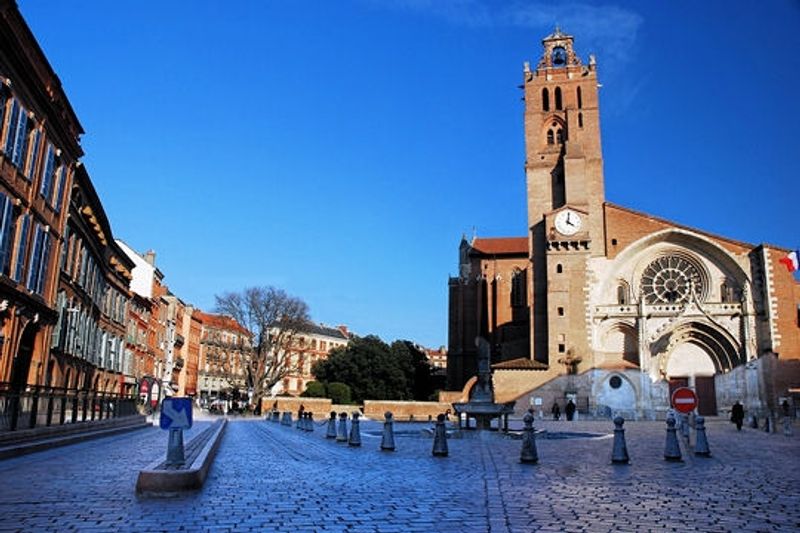
Toulouse Cathedral is the architectural equivalent of a building that could not quite make up its mind, and that indecision turned out to be its greatest asset. The nave and choir are visibly misaligned, the Romanesque and Gothic sections clash rather than blend, and the overall silhouette is gloriously lopsided.
It should not work, and yet it absolutely does.
Construction stretched across several centuries, with different patrons, different architects, and different ambitions each leaving their mark. The original Romanesque nave from the early 13th century was later joined to a Gothic choir that was clearly intended to replace it entirely but never did.
The result is a building that functions as a living archive of changing architectural taste and interrupted ambition.
Inside, the contrast between the two sections is even more striking. The Romanesque nave feels heavy and earthbound, while the Gothic choir reaches upward with far more lightness and ambition.
A large Gothic window floods the choir with color, highlighting the dramatic tonal shift between the two halves. The cathedral holds an important collection of medieval sculptures and tapestries.
Toulouse itself is a vibrant, lively city built from pink brick, and the cathedral fits right into its eclectic, energetic character. For architecture lovers who appreciate buildings with a complicated backstory, Saint-Etienne is genuinely fascinating material.
Mont-Saint-Michel Abbey Church
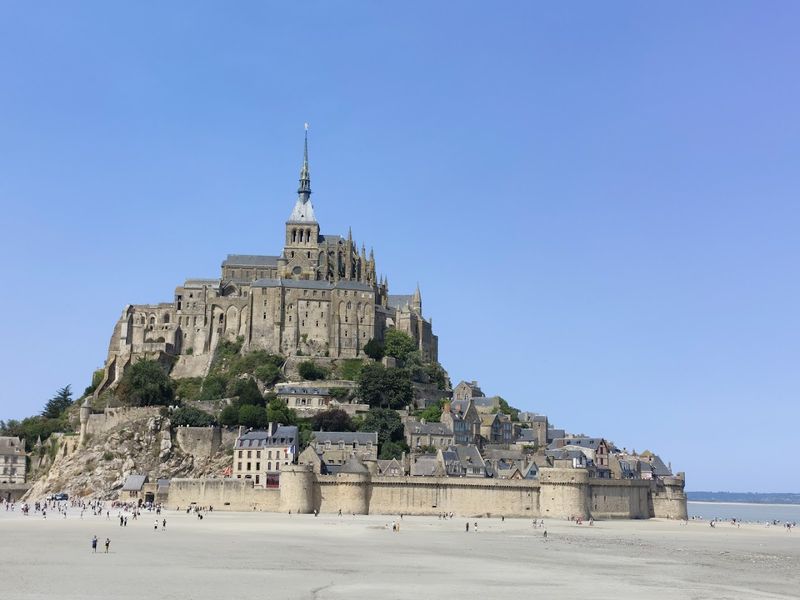
Rising from a tidal island off the coast of Normandy like something out of a fantasy novel, Mont-Saint-Michel is one of those places that genuinely looks better in person than in photographs, which is saying something given how spectacular the photographs already are. The abbey church at its summit crowns the entire rocky formation, visible from miles across the surrounding bay.
Construction began in the 10th century and continued for hundreds of years, layering Romanesque foundations with Gothic additions as tastes and techniques evolved. The north side of the island features La Merveille, a stunning Gothic complex of halls and cloisters built in the early 13th century that clings to the rock face with almost reckless confidence.
The engineering required to build at this angle, on this surface, remains impressive even by modern standards.
The abbey church itself is relatively restrained compared to the grand Gothic cathedrals of northern France, but its setting amplifies everything. The view from the church terrace across the bay is breathtaking.
At high tide, the island becomes completely surrounded by water, reinforcing the sense of isolation and drama. Over three million visitors come each year, making it one of France’s most visited sites.
Arriving early in the morning, before the crowds fill the narrow streets, transforms the experience entirely into something almost meditative.
Saint-Maclou Church, Rouen
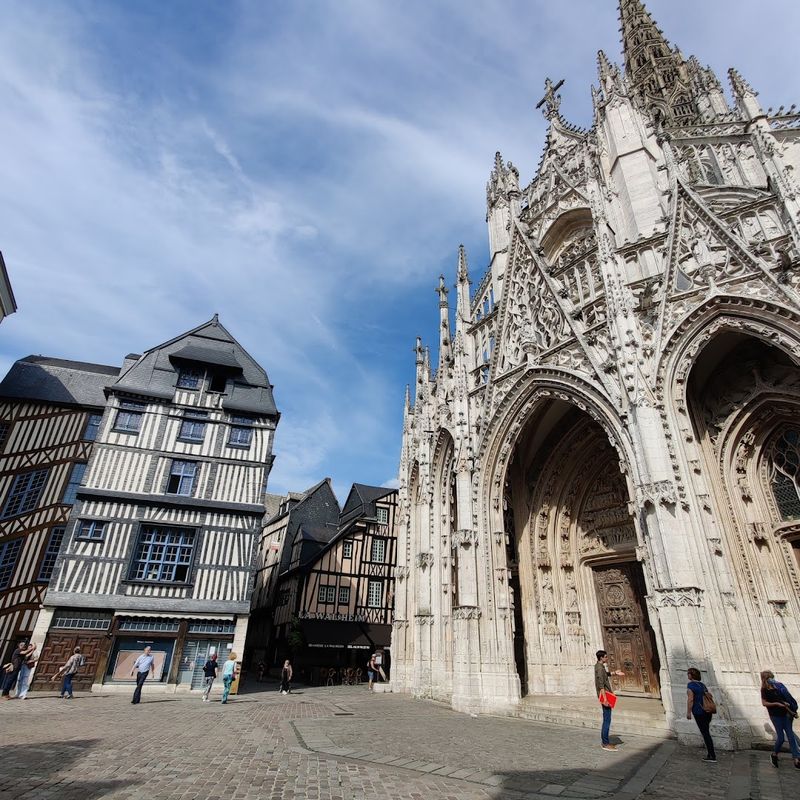
If Gothic architecture had a showoff phase, Saint-Maclou Church in Rouen is its finest exhibit. Built between 1437 and 1521, it represents Flamboyant Gothic at its most extravagant, a style named for the flame-like curves that ripple through its carved stonework.
Every surface seems to be in motion, reaching and curling and twisting with restless energy.
The porch is the highlight, featuring five carved portals of extraordinary detail. The central door panels are covered with Renaissance carvings added in the 16th century, creating a fascinating overlap of two distinct artistic periods.
The overall effect is dense, layered, and genuinely dazzling up close. Bring patience and good eyesight, because the details reward careful looking.
Saint-Maclou is modest in scale compared to Rouen Cathedral just a short walk away, but that smaller size actually works in its favor. The intricate decoration feels more concentrated and intense, like the architects were determined to pack as much artistry as possible into every available centimeter of stone.
The church is surrounded by a charming square lined with timber-framed houses, making the setting as picturesque as the building itself. Nearby is the Aître Saint-Maclou, a medieval ossuary courtyard that adds a genuinely eerie historical footnote to the visit.
Together, they make for an unforgettable afternoon in one of Normandy’s most rewarding cities.



